What’s cooking in the Indian-Saudi pot?

LIVE Updates: Saudi Crown Prince, PM Modi Hold Bilateral Talks Today

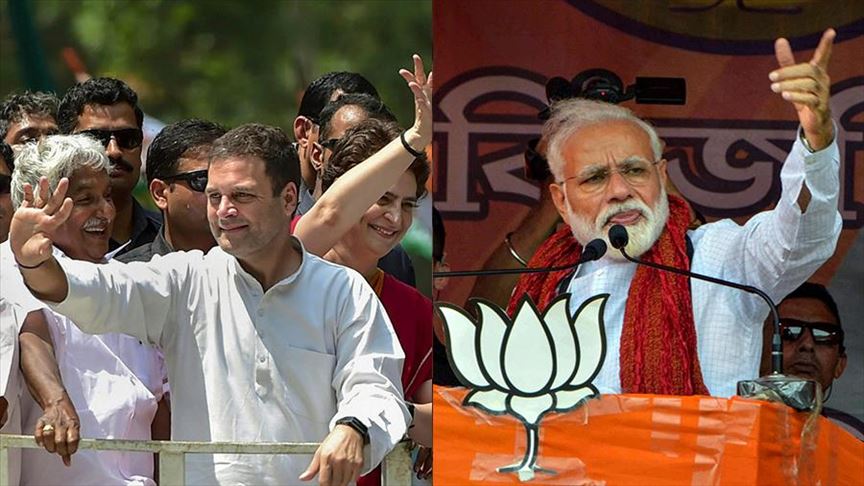
[Saudi Prince MbS and Modi at Palam]

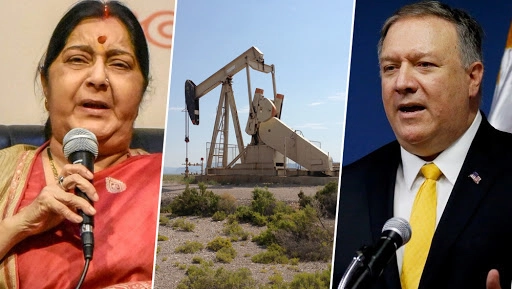
The one — some may argue — the only bit of Prime Minister Narendra Modi’s foreign policy that managed depart form the expected was his gambit in courting Saudi Arabia and the Gulf states. What’s not clear is the game plan or the thinking behind these moves. True, this approach has achieved several things: It has firmed up the Saudi source of energy and, with Riyadh leading the Arab pack in the Gulf, also lessened the psychological distance between Delhi and the Sauds on the one hand, and on the other, encouraged the Gulf states (known in the colonial era as the Trucial states) to be unusually helpful when it comes, for instance, to handing over to India Indian nationals who sought safe haven in these parts after committing crimes or being complicit in acts of terror and find the host nations, to their alarm, ready to hand them over to Indian authorities. Further, Modi’s personal success with the Sauds and the Gulf emirs and Sheikhs also strengthens the India-Gulf economic connection in terms of improving the prospects of these countries importing skilled and semi-skilled Indian labour and strengthening the flow of remittances that are propping up the economies of several Indian states, particularly Kerala, UP, and Bihar. Just Saudi Arabia accounts for some $12 billion in remittances, and together with the Gulf nations, make up for the bulk of around $70 billion sent home by Indian workers.

These secular strands of a bilateral relationship with Saudi Arabia contrasts sharply with the ties of shared religion, Islam, and strategic security cooperation strongly hinted at in the reports of long standing about the Pakistani A-Bomb being at Riyadh’s disposal if the latter ever finds itself in dire military straits — a quid pro quo for the Saudis generously funding Pakistan’s sourcing its  “Islamic Bomb” and missile programmes from China starting in the mid-1970s. General Zia ul-Haq, it may be recalled, as Brigadier led the Pakistan army-manned Palace Guard for the Saud Family in Riyadh. This arrangement of personal protection may still be active. It is for a reason that Pak COAS General Qamar Bajwa’s immediate predecessor, Gen. Raheel Sharif, post-retirement, accepted the offer to lead the army of Islamic states that the ruling Saudis dreamed up. It is another matter, that Gen-Raheel has no actual army to run!

This is the context in which Modi tried to get some traction on the Pulwama attack by getting however distant an acknowledgement by Mohammad bin Sultan (MbS) of a Pakistani hand in the suicide bomber attack on the CRPF personnel. This was plainly a fool’s errand because the almost Saudi supremo had already made clear during the Pakistan leg of his trip that he was happy to consolidate the Saudi stake in Pakistan by economically rescuing it from imminent bankruptcy with an emergency injection of $20 billion, something Washington cannot any more afford to do. But this Saudi action has the Trump Administration’s support because Riyadh’s willingness to financially help out Islamabad also acts as a brake against the Imran Khan regime sliding helplessly into Beijing’s strategic lap and economic servitude, courtesy CPEC.

Hence, Washington’s publicly siding with India in calling for branding Azhar Masood, the Jaish-e-Mohammad emir,  as a terrorist under the UN aegis doesn’t really impose a cost in terms of an alienated Islamabad which would hurt the US plan for a face saving getaway for its forces out of Afghanistan. This last is all that the US Special Representative Zalmay Khalilzad is interested in securing from the Afghan Taliban. All the American talk of achieving regional peace, etc. being so much smokescreen for US’ real intent. In the event, Washington relies on China to veto the “Masood terrorist” campaign mounted by Delhi even as America pleases Modi by seemingly being on India’s side. Clever.

Whether or not Modi has a larger foreign policy scheme or not for West Asia in being effusive in his welcome, MbS certainly does. For one thing he is embarked on cleaning up his act after his role in the killing in the Saudi consulate in Istanbul of the Washington Post columnist Adnan Khashoggi was revealed by the Tayyip Erdogan government. Erdogan wants Turkey to displace Saudi Arabia as the putative head of the sunni bloc of Islamic countries. The situation is piquant — Saudis have the oil and money to buy allegiance; Ankara has the nous of a modern nation-state which also boasts of technological and military proficiency. Erdogan last year visited Delhi, part of his agenda being to polish Turkey’s image with the subcontinental Muslim community, by offering his good offices as a mediator on Kashmir. MbS has come avisiting with exactly the same mission as peace-maker on Kashmir between India and Pakistan that he spelled out in Islamabad. The chances of Riyadh being so accommodated by Delhi is minus-zero but the optics for MbS in Pakistan were too good to pass up. In India, the visiting Saudi leader no doubt cagily brought up the possibility of his being the honest broker with Modi, which met the same fate as the Indian PM’s effort to persuade him of the Pakistani hand in the Pulwama incident. So, it was a wash, with both parties refusing to make an issue of the other side not agreeing with its position.

But MbS has still another angle in mind. Ramping up the imagery of closeness to India — manifested in much hugging and embracing — Modi’s diplomatic innovation helps Riyadh  in the Islamic world if India, with the second largest Muslim population after Indonesia and, in a few short years, headed to be the largest Muslim nation in the world, is seen to be on its side not only in the competition with Erdogan and Turkey for leadership, but in the more significant sunni-shia tussle underway with Iran for influence in, and control of, West Asia.

This is the quick sand India has every chance of getting sucked into because whatever the level of security and strategic cooperation with Saudi Arabia and the Gulf nations, it pales before the potential that Iran holds out. Iran,  through Chabahar, is the gateway to Afghanistan and Central Asia and, as I have argued, is one end of a naval pincer that can not only close in on Pakistan’s Gwadar but also the Chinese navy operating out of Gwadar and ex-Djibouti, making China’s maritime presence in western Arabian Sea tenuous (especially if PLAN is also denied access to Humbantota in crisis – a Chinese Company’s 99-year lease notwithstanding). Indeed, Iran’s strategic importance to India matches Vietnam’s and, hence, Modi will have to be careful of not getting India embroiled in a US-backed Saudi struggle with Iran.

The more troubling aspect of MbS’s reach to Modi and India and his clucking hypocritically in sympathy about the perils of terrorism is that Saudi Arabia has single-handedly birthed and grown the extremist wahabbi menace over the last 40 years that  has mutated into the hideous Islamic State. IS, according to news reports, is fighting its last in its stronghold of Mosul in Iraq. This may actually, however, be the beginning of a massive internal security problem for India — the Pulwama attack by a radicalised local Kashmiri being but a warning sign. One can expect ISI to quickly exploit the opening so provided by funneling beaten Islamic State stalwarts hailing from Central Asia and other proximal areas, into joining Jaish and Lashkar and fighting the kafir with the aim of setting up the ambitious caliphate in a less trying milieu than Syria and the Levant. All things considered, it is unlikely Mohammad bin Sultan will mind such a denouement.

Posted in Afghanistan, Africa, asia-Pacific/Indo-Pacific, Asian geopolitics, China, China military, civil-military relations, Decision-making, domestic politics, Geopolitics, Great Power imperatives, guerilla warfare, India's China Policy, India's Pakistan Policy, India's strategic thinking and policy, Indian Army, Indian ecobomic situation, Indian Navy, Indian Ocean, Indian para-military forces, indian policy -- Israel, Iran and West Asia, Indian Politics, Intelligence, Internal Security, Iran and West Asia, MEA/foreign policy, Military/military advice, Nuclear Weapons, Pakistan, Pakistan military, Pakistan nuclear forces, society, South Asia, Special Forces, Sri Lanka, Strategic Relations with the US & West, Terrorism, UN, United States, US., Vietnam, Weapons, West Asia | 6 Comments

India Has To Solve The Pakistan-Sourced Terrorist Problem By Itself 

Image result for pics of pulwama

[In the wake of the Pulwama suicide attack]

[Published in BloombergQuint. com on Feb 18, 2019 in my occasional Realpolitik column, at https://www.bloombergquint.com/opinion/india-has-to-solve-the-pakistan-sourced-terrorist-problem-by-itself#gs.Iohjmoso  ]

Owing to the image Prime Minister Narendra Modi has projected of himself and his
government as strong and decisive, many media commentators are of the view that a telling response to the blowing up of 40 Central Reserve Police Force troopers in Pulwama is on the anvil. They appear to be influenced more by his rhetoric than his actions, but shouldn’t hold their breath waiting for an Indian counter.

Nothing very much is likely to transpire by way of meting out condign punishment to
Pakistan despite the near universal condemnation of this terrorist act and of Pakistan’s role in facilitating it and the US government signalling its acceptance of Indian retaliation as self-defence. This last matters because successive Indian governments in the new Century have cravenly sought Washington’s permission before doing anything remotely adventurous. Recall that after the 2001 attack on Parliament – a far more serious provocation because it was targeted directly at India’s sovereignty, the US Embassy handed over to the Atal Bihari Vajpayee regime detailed aerial maps of the Jacobabad air base with portions of it that housed US military assets clearly marked out; the implication being that India was free to hit any other part of that Pakistan Air Force base it wanted to. In the event, India did nothing, even after general mobilization for war and the two armies eyeballing each other for six months before Delhi and Islamabad called it quits. It was a sheer waste of time and resources. To believe that in the present situation, Delhi will act differently, forcefully, is to expect the untoward, which
won’t happen.

Delhi’s idea of coercive diplomacy is to get other countries to do something about the
Pakistan-sourced terrorist problem that it won’t do itself, such as prosecute seriously punitive actions and impose costs. Thus, the Ministry for External Affairs (MEA) is reportedly burning the wires to convince friendly countries to pressure Islamabad to rein in terrorist outfits like the Jaish-e-Mohammad (JeM) and Lashkar-e-Tayyaba. Nursed by the Pakistan Army’s Inter-Services Intelligence (ISI) to fight its proxy war in Jammu and Kashmir, JeM, in this instance, uploaded to the net the video of the suicide bomber Ahmed Dar’s last testimonial for the Jihadi cause filled with stock Jaish fulminations.

There are two factors that have emboldened Islamabad to stay with its enormously
successful strategy of covert warfare against the Indian state. Because it needs Pakistan to be the frontline state anchor for its policy of military withdrawal from Afghanistan, the United States will not risk alienating it by pushing the UN too hard in declaring the country a “state sponsor of terrorism”. China has stood four-square behind Pakistan for decades now, having nuclear missile-armed it and cultivated it as a near perfect foil to India’s regional ambitions and as a means of keeping India militarily preoccupied with the subcontinent. With the China-Pakistan Economic Corridor, moreover, Beijing is realizing the expansive contours of its expansive Belt and Road Initiative that affords Chinese trade and military all-year access to the warm water port of Gwadar on the Balochistan coastline, and pleasing Islamabad is one of Beijing’s major aims. It thus avers with a straight face that Azhar Masood, the Jaish leader, does not fit the UN standard of terrorist and nor does Pakistan as state sponsor of terrorism. The overlapping of US and Chinese interests means Pakistan is immune to any external pressure that Delhi is able to mobilize and, in any case, can continue prosecuting its covert war in Kashmir using terrorist proxies.

As Delhi has lacked the wit over the years to utilize open trade and commerce with Pakistan to build-up stakeholders in the Pakistani Establishment for an entente cordiale with India, Modi’s decision to rescind the Most Favoured Nation status for Pakistan will have little impact because the bilateral trade of some $3 plus billion is small compared to its potential — $30 billion. There’s no other ready leverage that Delhi can wield considering the two countries are virtually on par as far as deployable conventional forces and their nuclear arsenals are concerned.

What is left is the dirty option of mounting intelligence operations to physically terminate leaders of anti-India terrorist outfits, such as Hafiz Sayeed and Azhar Masood. Such precision targeting to eliminate the terrorist leadership by covert means will have cascading effects on the morale of the radicalized youth in the Srinagar Valley who are in the forefront of the so-called intifada in Kashmir. This is a doable strategy that Delhi, for unknown reasons, seems loath to implement.

The other is to pay Pakistan back in the same coin: Stoke the ambitions of the mainly Pakhtuni Tehreeq-e-Taliban Pakistan (TTP) and its impulses to fight the Pakistan
army and state. Indeed, TTP’s fighting qualities are sufficiently developed and effective to simultaneously fight the Pakistan army in Pakistan and the US-led NATO forces in Afghanistan. It is a wonderful asset for India to support and grow with moral and materiel support, and to develop as a bargaining card when the two sides do sit down across the table to talk and hammer out a mutually acceptable solution for Jammu & Kashmir once the 2019 general elections are out of the way.


Posted in asia-Pacific/Indo-Pacific, Asian geopolitics, China, China military, civil-military relations, Culture, Decision-making, Geopolitics, Great Power imperatives, guerilla warfare, India's China Policy, India's Pakistan Policy, India's strategic thinking and policy, Indian Air Force, Indian Army, Indian ecobomic situation, Indian Politics, Intelligence, Internal Security, MEA/foreign policy, Military/military advice, Pakistan, Pakistan military, society, South Asia, Strategic Relations with the US & West, Terrorism, UN, United States, US. | 4 Comments

Talk of avenging Pulwama attack hot air: Here’s how to deal with Jaish-e-Mohammad, other terrorist groups

Image result for pics of Indian soldiers in kashmir

(After the Pulwama attack)

It is funny how, and with what ease and confidence, Islamabad time and again reduces India to a blabbering mess. Over 40 CRPF men get blown up by a suicide bomber who rams his RDX-laden Scorpio into a bus on Route 44 and, as if on cue, the Indian media screams for action, demands demarches and what not, television cameras zoom in on grieving families demanding badla, bickering politicians turn sober and cluck in feigned sadness, a cowering Home Minister promises a fitting response and the Prime Minister, more magisterially, assures the people that the death of the latest lot of martyrs won’t go unavenged. And, in the background, are heard murmurs of telling punitive action in the offing. Meanwhile, in GHQ, Rawalpindi, the generals have a quiet chuckle seeing the same tamasha across the border being replayed for the umpteenth time.

Pakistan government knows it is on to a good thing. As co-legatees of Chanakayan statecraft Pakistani decision-makers, I have long argued, are better practitioners of kuttayuddha (covert war) than their Indian counterparts, who are handicapped by the idea of doing the right thing in the right way and according to, what else, international law and accepted practice which no self-respecting country, incidentally, observes when its vital interests are on the line. India is the sole exception. Because covert warfare is necessarily dirty and prosecuted without scruples, it is apparently beyond this country’s ken to engage in. In the event, it is left hoping that, other than the regulation bombast emanating non-stop from Indian news channels, that international denunciation will bring Islamabad to heel. Well, good luck!

Army soldiers take positions during an encounter with militants at Sirnoo in Pulwama. PTI

Pakistan is no amateur at this game. It was party to managing (with an assist from the US Central Intelligence Agency) the proxy fight using the Afghan mujahideen to push the mighty Soviet military out of Afghanistan in the 1980s without seeding enduring enmity with Moscow. It is a far lesser task to use radicalized Kashmiris to discomfit India that acts as a punching bag of a nation. Pakistan is emboldened because there’s China as a backstop to Pakistani terrorist ventures, ready to blunt any international opprobrium. Never mind that its own restless Uyghur population in Xinjiang is susceptible to the Islamist virus, and the sunni hotheads in Jaish could, in a slightly altered context, be the medium to stoke Uyghur militancy.

So, how do you deal with the pestilence called Saeed Hafiz, Azhar Masood and others of that ilk and their scrofulous followers bent on attempting – albeit materially and infrastructure-wise supported and encouraged by their minders in the Pakistan Army’s Inter-Services intelligence (ISI) —  the impossible? Loosening India’s hold on Jammu And Kashmir is no easy thing to try and do for Pakistan. But that’s not what ISI hopes to accomplish. It is intent and itching to draw the Indian military and the state into a brawl with the natives, not get Delhi so riled up that it overcomes its self-imposed inhibitions.  Equally, India — big in every way and enjoying a huge margin of safety and of error, seems unable to summon the necessary nerve and the gumption to do anything remotely incautious.

All the talk of air/missile strikes, more surgical strikes, etc “to teach Pakistan a lesson” is a lot of hot air because if the Modi government had it in mind to actually unleash an aerial strike, for instance, it would have done so instantaneously after the suicide attack, not informed the media about the ruling party contemplating such actions. Moreover, the standard operating procedure on the other side is that as soon as a big terrorist operation is mounted, the Pakistan military firms up its forward lines, puts its SILLAC air defence system out of Sargodha on 24/7 radar sweeps to detect any aerial approach by India, and field formations assume a war-ready posture, prepared for any affray that an angry, perennially reactive, India may care to launch.  Which is to say such Indian response has zero prospects.

I have long argued that the answer to Pakistan’s use of asymmetric means is not for the government to approve the army’s formal counter-strike proposals, which to-date have proved futile in deterring ISI from waging a covert war, leave alone cowing GHQ, Rawalpindi, into restraining itself on this count. But rather that time is nigh to physically target and eliminate trouble-makers like Hafeez and Azhar.

Two options have always been readily available to Delhi. One is the sniper solution – a designated covert team infiltrated into Pakistan around Muridke in Pakistani Punjab, HQrs of Jaish, say, with one or two master marksmen to take out these terrorists, and for this team to be exfiltrated after the deed is done. The trouble here, again, is that the Pakistan army is besting India in this department, meaning that either Pakistan army sharp shooters or a few Kashmiri natives rigorously trained for sniper shoots have been making life miserable for the Indian armed forces – army and para-military for many years now. Their use of the Chinese Zijiang M99 Sniper Rifle, rated as one of best five of its kind in the world, has been exemplary. Its ability to precision hit targets at 1,800 metre range, ie, almost 2 kilometers, has played havoc with Indian troops in the Valley and elsewhere.  It is something the army, para-military and the J&K and Indian governments do not publicly acknowledge. The Indian army snipers, on the other hand, make do with a dated Russian piece – the Dragunov SVD when the newer, more advanced, Chukavin, with 1,600 metre range, is in the market. Worse, the Dragunov ammo stock is so low at only 25 percent of requirement that Indian snipers get to fire just 4 or 5 rounds for practice per year! This is a joke.

The other, more effective, option is right in the National Security Adviser Ajit Doval’s supposed area of expertise – activating RAW and other sleeper cells in Pakistan for attacks to execute Sayeed, Masood, et al. If successful, it will put the fear of God into these miscreants without disturbing the general tenor of bilateral relations. The Pakistan government cannot publicly object to their killing because it does not own up to sponsoring them in the first place. Moreover, there are lots of ways to make their elimination look like accidents.  This is the very essence of kuttayuddha that the Indian government, intelligence and military are distanced from, but which Islamabad has grasped. It is also the only thing that will, in fact, work.

————

[Published in Firstpost.com, Feb 16, 2019 at https://www.firstpost.com/india/talk-of-avenging-pulwama-attack-hot-air-heres-how-to-deal-with-jaish-e-mohammad-other-terrorist-groups-6098781.html \

Posted in Afghanistan, asia-Pacific/Indo-Pacific, Asian geopolitics, China, civil-military relations, Culture, Decision-making, Geopolitics, Great Power imperatives, guerilla warfare, India's Pakistan Policy, India's strategic thinking and policy, Indian Air Force, Indian Army, Indian para-military forces, Indian Politics, Intelligence, Internal Security, MEA/foreign policy, Military/military advice, Missiles, Pakistan, Pakistan military, Relations with Russia, Russia, SAARC, society, South Asia, Special Forces | 11 Comments

The Rafale conundrum: Who induced PMO to accept extortionist terms and how did France get such a sweet deal?


Image result for pics of anil ambani in rafale aircraft

(Anil Ambani preparing for a Rafale sortie)

Akin to the exquisite Chinese torture by water endlessly hitting the forehead, drop at a time, leading the victim to own up, confess, recant, the drip, drip, drip publication in newspapers of hitherto unknown tidbits and classified documents related to the procurement of the Rafale combat aircraft from France may be driving the ruling Bharatiya Janata Party (BJP) government to distraction.

It has certainly undermined its carefully tended case regarding this high-value deal, and impacted Prime Minister Narendra Modi’s reputation for uprightness. The hope, nursed by some in government, that Part B of the Comptroller and Auditor General of India’s (CAG) Report on the ‘Acquisition of 36 Rafale Aircraft through IGA (Inter-Government Agreement)’ tabled in Parliament on 13 February would rescue the ruling party has been belied. What it actually does is confound the already existing confusion about the real cost of the deal.

The predicament the Modi dispensation finds itself in is due mainly to a bunch of crucial documents relating to the Rafale transaction leaked to The Hindu and splashed on its pages in the last couple of weeks. Particularly damning has been the dissenting note about the IGA by three Ministry of Defence (MoD) officials and members of the Indian Negotiating Team (INT) — Adviser (Cost) MP Singh, Finance Manager (Air) AR Sule, and Joint Secretary Rajeev Verma. Also, of interest is the article in The Wire by former MoD Financial Adviser Sudhansu Mohanty, who indicated that the direct negotiating track set up by the National Security Adviser Ajit Doval obviously on Modi’s say-so was outside the ambit of the Defence Procurement Procedures, and had rendered INT redundant.

The dissent document which The Hindu published and the CAG report are crucial to understanding why the ill-advised initiative by the prime minister to speed up the Rafale procurement by cutting INT out of the negotiating process and getting Doval and the Prime Minister’s Office (PMO), with limited domain competence and expertise, to finalise a deal with Paris, has backfired. That the three dissenters eventually signed the final acceptance of IGA may be attributed to bureaucrats’ desire to avoid rubbing the government the wrong way because that could result in punitive actions — postings in the boondocks, troubles with promotions and retirement pay, etc.

A Rafale fighter aircraft. Reuters

Not all arms deals are created equal. Most go through the bureaucratic grind and long testing trials over years before the competing products are shortlisted, which is when corruption usually occurs in terms of changing the rank order to favour this or that supplier/country. It is facilitated by middle-men servicing political leaders, bureaucrats and even uniformed personnel in the decision-making loop and their tendency to pelf and personal profit via commissions and considerations in kind.

Rafale, too, went through a trying testing regime. However, while the usual commission-mongering, at least during the NDA government’s tenure, was missing, the PMO’s role in ensuring that Anil Ambani’s Reliance Defence gains from the offsets attending on the Rafale buy and so admitted by the then French President Francoise Hollande, is as apparent as Ambani’s playing the part of the intermediary – something that has not been plumbed as it should be — between Modi and PMO on the one hand and the French government and the French supplier Companies, Dassault Avions and MBDA, the missile maker, on the other hand. It substantiates suspicions about Modi’s crony capitalism which may have led to New Delhi agreeing to extremely generous terms and conditions in the IGA for Dassault and MBDA. More on this later.

The dissenting note stated plainly that the IGA did not meet the main criteria laid down in the Indo-French Joint Statement of April 10, 2015 of expeditious delivery of the Rafale aircraft on “terms that would be better” than those in the 2007 MMRCA deal that Dassault had acceded to. It was pointed out that IGA, instead of sticking to the “firm and fixed” price basis for negotiation mentioned in the original Request For Proposal, had accepted an escalation formula advanced by the French parties resulting in a 55.6 percent increase over the “benchmark price”, i.e., the cost-figure (calculated by IAF) as the high end of the acceptable price range for aircraft and weapons package of €5.06 billion. The dissenters deemed the resulting €7.87 billion price tag for 36 Rafales unreasonable. They also mentioned that EADS had offered the Typhoon Eurofighter at a 20 percent discount without any escalation clause. Another 5 percent discount was seen by INT as a negotiating margin that could be extracted from EADS for a total 25 percent discount. This would have eventuated in a cost figure markedly lower than anything Dassault was offering for Rafale. Using the EADS offer to leverage a better price for the 36 Rafales never, however, occurred to the PMO negotiating the terms in the IGA.

More significantly, the IGA did away with sovereign guarantees and payment to vendors through an escrow account operated by the French government, which would have made Paris accountable for any default on the contract by Dassault and MBDA. It made for huge savings to France in bank charges, which as the CAG Report suggests, were not passed on to India or factored into the final price calculations by IGA and, in any case, was 5.3percent higher than what Dassault had quoted for the MMRCA. Further, the French government, per the dissenting note, ignored the pleas by INT to apply the commercial rates offered by industrial suppliers for the MMRCA to the 36 Rafale purchase. In the event, the French insisted and received in the IGA a virtual license to act in their own best commercial interests or France’s national interest without fear of penalty, with India requiring to exhaust all avenues of international arbitration to redress its grievances before approaching the French government to make good.

Indeed, with Paris minimising its financial exposure and that of the French Companies, and getting a deal so tilted to benefit France in every way, one wonders if the PMO, clueless about the technical and financial nuances of high-value deal making, simply accepted the French draft as IGA. This in fact is what seems to have happened with a Joint Secretary in PMO, as The Hindu disclosed, calling up a senior French official to inform him about some French conditions or the other that had been accepted.

The CAG report makes many of the same points the dissenting note did with respect, for instance, to the sovereign and bank guarantees, escrow account, etc. But it does not take the extra step of faulting the IGA and hauling up the government for making do with a “letter of comfort” that by way of legal commitment means nothing but imposes a severe financial burden on the country. At the core, the difficulty, and the CAG hints at it, was with reconciling the costs of an MMRCA deal for 126 aircraft with 18 Rafales bought in flyaway condition and the rest produced with transfer of technology and under license in India to fit the buy of only 36 aircraft, with Paris no doubt demanding that the total cost figure of the originally contemplated MMRCA deal not be tampered with.

The CAG Report observed that such small number of aircraft nowhere filled the “wide gap in the operational preparedness of the IAF”. The enhanced costs of producing the aircraft at HAL involving 2.7 times more man-hours per Rafale, however, provided the government the rationale to junk the license production portion of the deal, with the monies thus saved channeled into the 10 year spares package promising 72 percent-75 percent serviceability of the Rafales in IAF fleet.

But the CAG does not comment adversely on the other device to jack up the costs by €1.4 billion — the India-specific Enhancements (ISE), which the dissenters, using the €348 million that Dassault charged for the Mirage 2000 upgrade programme as a measuring stick, slammed as “exorbitant and unrealistic.”

Moreover, it isn’t clear why the need for ISE arose in the first place if the idea was to hew to the Joint Statement that required delivery of aircraft “in the same configuration as had been tested and approved by IAF..with longer maintenance responsibility by France.” Seemingly, these enhancements were of no great import, in any case, because IAF proposed postponing six such enhancements as a “cost reduction measure,” something MoD rejected.

Under the IGA, moreover, Dassault has been allowed to incorporate the ISEs only after the last Rafale is inducted into service some 71 months after the IGA was signed — a month longer, incidentally, than the MMRCA deal the INT had negotiated. But CAG is skeptical about Dassault meeting delivery timelines owing to the backlog orders for the aircraft and the French Company’s annual production capacity of only 11 aircraft – something the dissenting note too flagged while marking the Dassault capacity at 8 aircraft per year.

Except, CAG accepts on faith the government’s belief that the delivery of the Rafales will somehow adhere to the laid down time-table, thereby implicitly accepting that, with the French government absolving itself of all fiduciary responsibility, IAF is at the mercy of the supplier firms.

The real problem with the CAG report is elsewhere. Its conclusion that IGA was 2.86 percent cheaper than the MMRCA deal hammered out by the Congress party-led UPA government is based on its calculation of savings of 4.77 percent in services and product support, 17.08 percent in the ISE category and 1.05 percent in weapons package while conceding increases in cost in several other categories — 6.54 percent in engineering support as also in Performance-Based Logistics (the 10 year spares and service support scheme). But the figures are fully redacted and the workings completely obscure.

How the CAG arrived at any of these figures is a mystery. The opposition claim that the CAG report is tainted because the Comptroller General as Finance Secretary oversaw the financial aspects of the Rafale deal overlooks the fact that all CAGs are political appointees and the assessments they produce are political documents which try and put the best possible spin on controversial deals, which is why select civil servants are placed in that position.

This brings us to the conundrum of just how France managed to get a deal so favourable to it which, in turn, brings the role of Anil Ambani to the fore. On 12 February, The Indian Express reported that Ambani met with top French defence ministry officials — all advisers to defence minister Jean-Yves Le Drian, a week or so before Modi landed in Paris in the first week of April 2015. Le Drian’s Industry Advisor, Christophe Salomon described their meeting with Ambani as “confidential, and planned, as you can imagine, with very short notice.” The Indian Express report suggests that the Reliance Defence owner may have used the occasion to alert the French defence ministry about Prime Minister’s Modi’s Rafale decision coming down the pike and, in the event, for the French government to prepare its act together with Dassault and MBDA with respect to firming up terms, conditions, and price parameters of their liking. It is a matter of conjecture as to what, in the circumstances, motivated Ambani: Obtaining a good deal for India or a great deal for his Company?

It is reasonable to speculate, going by the Indian Express report, that the tycoon had a tip-off, allowing the use of the deal to set up his company as a major defence industrial entity in the country. This can be inferred from the statement of the Defence Minister Nirmala Sitharaman that “No offset contracts have been signed so far. If two private firms come together, that doesn’t require permission from the ministry. And if it is consistent with the DIPP’s [Department of Industrial Policy & Promotion’s] policy, they go ahead with it. To think that that has something to do with the inter-governmental agreement in the purchase of Rafale is just unfounded.”

That the Rafale deal, apart from the PMO, did not involve any other agency of government may be read in the statement the then Foreign Secretary K. Jaishankar made to the press on the eve of the Modi-Francoise Hollande meeting. “In terms of Rafale, my understanding is that there are discussions underway between the French company, our Ministry of Defence, the HAL which is involved in this”, said Jaishankar. “These are ongoing discussions. These are very technical, detailed discussions. We do not mix up leadership level visits with deep details of ongoing defence contracts. That is on a different track.” If the PM sprang a surprise on the country, MEA, MoD and HAL too were unaware of the “track” they were moving on being separated from the one the PM and his PMO had already taken to reach a decision.

That the decision to go with Dassault was early communicated to Ambani is evidenced in the fact that, as part of the offsets requirement, Reliance Defence assisted by Dassault, began investing in production infrastructure ere the IGA was signed, has already plugged into Dassault’s supply chain and is supplying parts and assemblies for the Dassault executive jet programme and is expected to output the whole Falcon 2000 LX jet by 2022 at its Nashik facility. This means that Ambani had a commercial stake not only in Dassault bagging the Rafale deal but doing so on preferential terms and conditions. The IGA that transpired reflects this last aspect.

It is therefore not too outlandish to conclude that Ambani served as a two-way communications channel in the Rafale deal – conveying to Paris the PMO’s thinking, and prompting the PMO to accept near extortionist terms and conditions that, for such a big international weapons deal, are unique.


[Published in Firstpost.com Feb 14, 2019, at https://www.firstpost.com/india/the-rafale-conundrum-who-induced-pmo-to-accept-extortionist-terms-and-how-did-france-get-such-a-sweet-deal-6086261.html


Posted in arms exports, asia-Pacific/Indo-Pacific, Asian geopolitics, civil-military relations, corruption, Culture, Decision-making, Defence Industry, domestic politics, DRDO, Europe, Geopolitics, Great Power imperatives, India's strategic thinking and policy, Indian Air Force, Indian ecobomic situation, Indian Politics, MEA/foreign policy, Military Acquisitions, Military/military advice, Missiles, society, South Asia, Technology transfer, Weapons | 1 Comment

Rafale: A political disaster foretold

Image result for pics of modi in paris

(Modi enjoying a boat ride down the Seine in Paris with President Hollande in April 2015)

On April 17, 2015 — some 11 days after Modi had made the surprise announcement in Paris when on a state visit about his government’s purchase of 36 Rafales, the French combat aircraft, an op-ed of mine published in The New Indian Express titled “Impatience seals worst possible defence deal” (http://www.newindianexpress.com/columns/Impatience-Seals-Worst-Possible-Defence-Deal/2015/04/17/article2767483.ece ), was the first article in the Indian press critical of this transaction, one that foresaw the political squall the BJP regime was heading into.  (This piece was also posted on this blog — https://bharatkarnad.com/2015/04/17/impatience-seals-worst-possible-defence-deal/

In the first few paras of that piece I said about this prime ministerial initiative that it “was portrayed as Modi’s ‘out of the box’ solution for a problem that didn’t really exist. Plainly, he mistook the hard, extended, bargaining between the two sides as evidence of red tape, and cutting it as his unique achievement. But impatience is a liability in international relations and can cost the country plenty. Rather than pressuring French president Francois Hollande and the French aviation major, Dassault, which is in dire straits and was in no position to resist sustained Indian pressure to deliver the Rafale and the technologies involved in toto to India, Modi eased off, promising a munificent $5billion-$8 billion for 36 Rafales off the shelf minus any reference to the L1 (lowest cost) MMRCA tender offer, possibly a buy of another 30 of them, and no onerous technology transfer obligation. It is a turn that must have astonished Hollande and Dassault with its exceptional generosity….” and concluded, prophetically, that “Previous prime ministers have been victimised by bad advice, and paid the political price, for instance, Rajiv Gandhi with regard to the Bofors gun. Modi will have to carry the can for this Rafale transaction—a boondoggle in the making. With the opposition parties …waking up to its potential to politically hamstring the BJP government and mar Modi’s prospects, anything can happen.” It also mentioned how the then defence minister Manohar Parrikar, favouring the speedy, economical, enlargement of the Su-30 fleet to meet the urgent requirements of IAF, was blindsided by the Modi decision. I repeatedly  warned of a brewing political storm over Rafale in my writings and in the posts on this blog, ever since.

That day of reckoning has arrived.

Whether Modi manages to rides out this crisis is besides the point; that he cannot and will not escape the taint is certain. What is making it progressively difficult for the Modi dispensation to explain away a plainly flawed approach to military procurement by the PM taking the matter into his own hands and bypassing the established processes is that it has left a paper trail. The PM, in his capacity, can call in the Defence Secretary and instruct him to accelerate the acquisition process. But that’s a fry cry from his intervening forcefully at the price negotiation stage to, in effect, have his own representative — in this case the NSA, Ajit Doval, set up a separate negotiating track, which is absolutely barred by the settled “rules of business” of the GOI. The Prime Minister was bound to pay a political price.

When bureaucrats in the decision loop are bypassed for any reason by the political poohbahs, they usually make sure to not end up becoming the fall guys. The remarkable thing is that it took so long — nearly four years — for the dam to burst, document drip at a a time. Considering that so many MoD officials were involved in the price negotiation committee over the years, all of them no doubt squirreled away copies of potentially “hot” files for just such an occasion as has now come to pass. Copies of the most sensitive documents are a safeguard, evidence to absolve themselves of any responsibility for things going wrong, as has happened re: the Rafale. Many of these dissenting officials, incidentally, were abruptly posted out of MoD not too long ago, which added to the general discontentment of the babus in the govt at-large and in the Defence Ministry in particular  with Modi and his way of doing things.  This to say that it was only a matter of time before these documents were “leaked” to the press.

But why at this time? Babus, in their careers, develop very sensitive antennae. With Rahul Gandhi’s charge of corruption getting the traction it has — something the ruling BJP did not anticipate, the bureaucratic ill will towards Modi oiled the predisposition of those having the precious information about what really occurred to make the notings available to media persons. N. Ram, owner and sometime editor of the Leftist ‘The Hindu’ newspaper, and a longstanding “Cadillac communist” was the perfect vehicle for such leakage, because it segued in with the “mahagatbandhan” the numerous “socialist”-minded political parties are putting together to take on the BJP in the coming general elections.

The entire tranche of files and related documents on the Rafale deal have apparently been handed over to Ram. This is obvious from the numerous hints in Ram’s two Hindu stories to-date — the one featured in today’s edition being more damaging because it provides evidence of PM-run parlays with the Elysee Palace, which seemed more intent on  accommodating the French government and aviation major, Dassault Avions, than in chiseling away at the humungous price tag for the total Rafale transaction.

Worse, for Modi, this revelation contradicts his government’s case before the Supreme Court that the latter had been given all the information about the Rafale deal and the deal-making processes and that the PMO had no hand in any of it. This is important because the Modi regime is basing its defence on the Supreme Court finding nothing amiss with the mechanics of how the final contracted price was arrived at, when it is obvious it was not given  all the files related to the reservations the PNC had with respect to a Joint Secretary in PMO acting as a plenipotentiary in working out the provisions in the deal that are all to the advantage of France and the French vendor.

This entire Rafale file-load with Ram means the Modi government will have to be careful about what it says to wriggle out of a hole it has dug itself into because it can, in no time be shown to be a lie with some pertinent document or the other being splashed on the front page of The Hindu.

It is still a wonder why Modi was convinced to buy the 36 Rafales which, as I have argued, will be the classic ‘white elephants’ — good for nothing very much beyond Republic day flypasts. Surely, Doval couldn’t have advised him about the finer points of this fighter plane mainly because he knows so little about things military. There’s also no personal corruption involving Modi — that’s for certain. The prime minister is too upright a person for that.  Modi may, however, have sought some benefits from the deal to accrue to the Ambanis and Reliance Defence possibly in return for funds for the BJP’s election campaign, which kind of exchange incidentally, is par for the course. Nothing new here, and the BJP did not originate such means of financing political parties either.

I have speculated (in my books, including the latest — Staggering Forward: Narendra Modi and India’s Global Ambition) that in this context, perhaps, the reason for Modi siding with the Rafale was that France promised some highly strategic good to India. Like for instance, access by Indian nuclear weapons designers to the French inertial confinement fusion complex in Bordeaux. ICF is the means short of physical underground testing to improve thermonuclear warhead designs and to modernize the strategic arsenal, wherein miniaturized thermonuclear explosions are obtained by targeting high-intensity laser beams on small nuggets of fissile material.

This may be the aspect the Modi govt does not want to disclose and is part of the “secrecy” clause in the deal. OK. But is Modi’s desire to escape the Russian embrace so powerful as to overturn its relationship with Moscow based on decades of extremely sensitive strategic cooperation such as the access BARC weapons directorate scientists have long enjoyed to the Russian ICF at Troitsk outside Moscow? Where was the need to beggar the country to buy the Rafale to access Bordeaux when Troitsk was always available as was the Su-30 for a fraction of the price Modi pledged to Hollande?

Posted in arms exports, asia-Pacific/Indo-Pacific, Asian geopolitics, Decision-making, Defence Industry, domestic politics, DRDO, Europe, Geopolitics, Great Power imperatives, guerilla warfare, India's strategic thinking and policy, Indian Air Force, Indian democracy, Indian ecobomic situation, Indian Politics, MEA/foreign policy, Military Acquisitions, Military/military advice, Nuclear Policy & Strategy, Nuclear Weapons, Russia, russian assistance, South Asia, Strategic Forces Command, Technology transfer, Weapons | 19 Comments

Another foolish China-siding gesture in the works?

Image result for pics of Indian foreign secretary v gokhale with chinese leaders

[Foreign Secretary Gokhale with Chinese Foreign Minister Wang Yi]

President Donald Trump has announced a general military withdrawal of US military forces from various locations, in the main, Iraq and Afghanistan. These two countries are semi- permanently destabilized, turned into perennial hot spots-cum-enduring sources of worry for countries in the vicinity owing to the original, ill-advised, armed American intervention. So, the US scooting out of trouble they created for themselves and the world is not new, having done it first in Vietnam  and, in this Century, in Iraq and Afghanistan — in each case being bloodied by hard-charging denizens of these states who felt hard done by the Americans and decided to act.

The people most allergic to foreign dictation are, of course, the Vietnamese and the Afghans — the latter a particularly nettlesome lot and, in the modern era, the only Asians not to be conquered and colonized by the West. So when the Americans with their crass over-confidence chose to  go punitive and hunt for the al-Qaeda leaders in the hills and remove the Taliban regime in Afghanistan that hosted them after 9/11, it was only a matter of time before they were served their just desserts. After spending $50 billion annually for the last 17 years for a total of some $850 billion  — in excess of trillion $ actually if the costs of the prep, etc are counted — an exhausted US is hightailing it back to CONUS, letting Kabul and the rest of that country slip back to the Taliban. So much for going nowhere fast and losing  a fortune in the bargain — just the sort of deal Afghans have time and again imposed on intruders.

What the US Special Envoy Zalmay Khalilzad is negotiating with the Taliban is plain: a fig-leaf for an American military pullout. He may not get it. The Taliban who sense power once again in their grasp have rejected out of hand Washington’s suggestion of peace talks involving all Afghan parties, and vetoed sitting across the table with the Ashraf Ghani government reps considered by them as American puppets. Indeed, the growing irrelevance of the Ghani regime is reflected in the report of  the Special Investigator General for Afghan Reconstruction, which the Pakistani press reports as revealing the tenuous hold of the US-assisted Kabul government. It controls only 219 of Afghanistan’s 407 districts, or 54 % of the territory. This claim is however refuted by independent sources who say the Afghan security forces securely control only 35% of the country, of the rest 12% is controlled by the Taliban and 34% is contested ground.

After six days of hard negotiations (January 21-26)  in Doha from which the Ghani government was excluded on Taliban’s say-so, two things are clear. One, that no deal was hammered out, nor is any on the horizon. And secondly that the Taliban are divided between the hardliners who are willing to talk and the extremists who believe the consolidation of jihad and the spirit of the fighting cadres will suffer by merely interacting with US. While the former are keen to hasten American departure by hammering out a face-saving way out for Washington, the latter more dominant school are convinced US troops will, in any case, leave before Trump gets into the 2020 presidential election cycle and, therefore, no concession need be made to the US, in which event, Kabul will fall into its lap like a plum.

All the stuff about Khalilzad and the Taliban coming to an understanding about a ceasefire followed by a coalition government to run the country, and the US being allowed to retain a small force in Afghanistan is a lot of diplomatic hoo-ha.  Afghans are no damn fools when deal with Americans who they see as intent on cutting and running.

The Ghani government was also kept out of the soiree in Moscow of Afghan leaders from various factions — the Northern Alliance leaders Atta Mohammad Noor, Yunus Qanuni, Mohaqiq, a collection of Pathans, such as former president Hamid Karzai, Hanif Atmar and Syed Hamid Gilani, and a Taliban team headed by Sher Mohammad Abbas Stanakzai. This Meet too, other than showing a Russian hand in the pot, achieved little.

The Modi dispensation, as ever dependent on Washington to do its hard work, was taken aback by Trump’s decision to get the US forces out at any cost because, apparently, it isn’t aware that America is already humiliated, its vaunted Special Forces-led effort proving no match for the Taliban. But more, Modi, Doval and Co., seem unable to grasp the simple truth that there’s no fight left in the Americans and Trump is not one — as he has proved — to fight a war for another country’s sake, least of all India which he views as a contemptibly weak country he can jerk around at any time. Like on H1B visa and “chain immigration” issues.

In this context, Delhi’s interest has been defined at a pollyanna-ish level for consumption by the West as the need to safeguard the infrastructure built by Indian engineers with Indian money and the ongoing investment in other development projects — all worth more than $3 billon, and its policy of doing good by the Afghan people. The dark side of India’s apprehensions has, however, to do with “Islamic inclusivism” but in an emirate that the Taliban have offered as a sop. What it means is anyone’s guess. However, the return of Taliban rule it is feared would have battle-hardened Taliban fighters, the various Lashkars in Pakistan preoccupied with  Kashmir, Islamic State remnants streaming back from the Syrian war zone, and activated IS sleeper cells, all  relying on Pakistan’s tested infrastructure to support  terrorism, combining to  realize the longstanding Islamic fantasy of Ghuzwatul-Hind — a prophecy of the Islamic conquest of Hindustan that finds repeated mention in the Hadith.

Except, this madcap notion exactly overlays the extremist Hindu fear and dislike of Muslims that the RSS ideology reflects, and which fuels the paranoia and over the past five years has led Modi repeatedly to spurn peace initiatives by Pakistan, most recently by Prime Minister Imran Khan.  If Imran, like earlier Pakistani PMs, dutifully talks about “atrocities” in “Indian-occupied Kashmir”, why is it surprising? But, equally, both he and the Man who really matters in that country, General Qamar Bajwa are one in hinting that such ejaculations should be taken as the usual wallpaper — an inert aspect — of Indo-Pak diplomacy  and ought not to prevent the two sides from talking formally to each other. Common sense, which is generally missing in our foreign policy, would suggest that talks, any kind of formal or even back-channel dialogue, is more likely to incentivize Islamabad and, depending on the stakes created by these talks and actions Delhi could mount in support of them, motivate it to clamp down on the jihadis, than if Modi carried on as he has done.

So instead of working with Islamabad to put a lid on potential Islamist troublemakers that the Imran regime is wary about, what the Modi government is contemplating is partnering China in containing the Afghanistan problem. It is a policy balloon the MEA has put out to see if it flies. Is working with China the answer, considering Beijing has remorselessly reduced India into a nonentity in the subcontinent, and shrunk its vestigial influence in the extended region in every possible way? Who’s the source of such damn fool ideas?

It is not hard to surmise that it comes from the Chinese-speaking quarter of the Ministry. These diplomats who have spent long years in China or on the China watch, like their counterparts in other countries are mesmerized by the zhanguo — “the central kingdom” to a point where they become Beijing’s apologists, promoters of the Chinese perspective, and even protectors of China’s interests to the detriment of that of their home country. We have such a  mandarin, Vijay Gokahle, heading the Foreign Office. On what basis does Gokhale think the interests of India and China converge on any thing, and Afghanistan in particular? Beijing would rather have Pakistan in the driver’s seat. Does that suit Messrs Modi and Doval?

India has the choice to get together with Imran-Bajwa’s Pakistan and the Afghan disputants and, using diplomatic finesse, get the US, Russia and China out of the huddle and, progressively, out of the game. Because of its anti-Pakistan prejudice Modi will obviously reject this option. Or, it can be the spoiler, injecting India forcefully into the Afghan mix by channeling a lot of monies and war materiel to trusted friends in the Northern Alliance and to certain sections of the Afghan Taliban and Pakistani Taliban Delhi has long cultivated, and otherwise to emerge as a party every side wants not to muck around and mess up things for everybody. It is the sort of disruptive role Modi has shown he has no imagination to conceive or stomach to implement.

So the third safe, passive, option of doing nothing beckons and is what Modi will choose: India, as always, will squirm on the sidelines, ride on the American military bandwagon as far as it will go, then jump off and clamber on to the Chinese jalopy. Except, the road the last will take is the CPEC.

Posted in Afghanistan | 7 Comments

How’s HAL not culpable for the Mirage 2000 crash (with addendum plus)?

(Mirage 2000 crash site)

So Squadron Leaders Sameer Abrol and Siddarth Negi of the Aircraft and System Testing Establishment (ASTE) are dead in a frontline Mirage 2000 2-seater combat trainer aircraft HAL had just upgraded. They were on an “acceptance sortie” to assess whether  the aircraft was good to re-enter squadron service. Then again, anything DPSUs/HAL touch — as my previous post suggested — turns to ashes.

There are many strange and curious things attending on this accident. For one thing the Mirage 2000 is designed for positive instability in pitch, meaning the plane always pitches upwards, which attribute combines with the leading edge flaps on the wings to enhance lift. Both these features ensure that the aircraft tends to be nose up and rearing to go. So how come it failed to clear the barrier at the end of the HAL runway?

It may be reasonably speculated that there obviously was enough runway distance from beginning its run, gathering speed on tarmac, to throttling up for actual takeoff for the two pilots — both good and experienced combat jocks, otherwise they wouldn’t be attached as test pilots to ASTE — to realize that the aircraft was not responding, and they were heading into the crash barrier. Possibly surprised, they may have activated the Martin-Baker zero-zero ejection system a trifle late. (The zero-zero system is supposed to eject pilots safely even when the plane is mobile on the ground.) Should a reconstruction of the event, in fact, show this to have been the case, then HAL will happily blame the pilot for the mishap and wash its hands off the accident.

[Plus: This aspect should have been included in the original post early last evening: There’s the issue of the apparent disjunction between the pilots powering up and the engine not responding adequately. I mean if there was sufficient takeoff distance but the plane failed to negotiate a takeoff then what other conclusion is there to reach?  One can assume,  moreover, that in an aircraft undergoing upgrade the state of the electronic interfaces between command and the jet power plant would be a priority for close examination. In the event, the finger again points at HAL.]

[Addendum, 2056 hrs: Then again, eye witnesses, according to a retired HAL test pilot who informed me, say they saw the nose wheel collapse on the takeoff roll itself, and when the pilots ejected, one of them landed right in the burning wreckage, and the other was fatally injured. This deepens the mystery around the escape system, especially because the aircraft had just been upgraded.]

In any aircraft upgrade programme, wouldn’t it be mandatory for its critical systems and sub-systems to be upgraded as well? Surely the ejection system is crucial enough for safety reasons to warrant upgradation. But was it so upgraded to the more advanced Martin-Baker Mk-18 configuration at least? If not, why not? And whose fault is it that the ejection system upgrade was not insisted on as part of the aircraft upgrade? IAF?

Assuming the 2-seater had retained the old MB system, did HAL during the upgrading process at a minimum not  repeatedly test the system, check its pyrotechnics package to ensure the explosive component was in good condition and did not require to be replaced with a fresh charge so that if fired it would blow the canopy off its moorings and, simultaneously, eject the pilots clear off the wreckage? Very likely HAL did none of these things because if the system had been checked, tested and okayed, it couldn’t have malfunctioned at the first instance of use.

As is usual in such accidents, a board of inquiry will be constituted, and the chances are Abrol and Negi will be blamed for “pilot error”, and HAL will go scott free. Indeed, HAL is rarely, if ever, held accountable for anything that goes wrong on aircraft it has worked on, or produced, i.e., assembled.

But what’s with HAL and failure of nose wheels? Not too long ago, an IAF test pilot attached to HAL, Nashik, took a Su-30MKI the DPSU unit manufactured up for a spin. While landing, the nose wheel failed to deploy, forcing the pilot into a touchdown on rear wheels leading to the nose coming down hard on the tarmac and the aircraft being damaged. The BOI that followed, led by an engineer but with nobody from the flying branch on the board, held the pilot wholly responsible for this event! How the pilot is responsible for a machine that’s freshly off the HAL factory floor, put together by this “nav-ratna” DPSU in its own facilities according to its own lax standards of production, boggles the mind.  But this is how that episode panned out.

Will HAL be held culpable for the Mirage crash when the antecedent conditions are less transparent?

Posted in Afghanistan, arms exports, civil-military relations, Culture, Decision-making, Defence Industry, domestic politics, DRDO, Europe, Indian Air Force, Military Acquisitions, Military/military advice, South Asia, Technology transfer, Weapons | 12 Comments

HAL and IAF — made for each other

Image result for pics of Indian Chief of Air Staff at HAL

(Chief of the Air Staff Air Chief Marshal BS Dhanoa at HAL)

On Republic Day, there’s no more serious matter to ponder than the negative synergy generated by the Combine of the military and DRDO-DPSU that’s pile-driving  India into subservience, emphasizing its dependency on foreign armaments and strengthening its subordinate state status in the world.

The political leaders across the ideological spectrum wax rhetorical about arms self-sufficiency being round the corner but neither have the interest nor intellect, leave alone any understanding of issues pertaining to national security, to implement anything remotely sensible and are quite happy to be led by their noses by military chiefs offering skewed “professional advice” and generalist bureaucrats with vested interest in the status quo. Hence, the god-awful system of defence production geared to military procurement from abroad flourishes.

Exactly around this time last year, Air Marshal Harish Masand (Retd) wrote Defence Minister Nirmala Sitharaman offering her some information about how Hindustan Aerospace Ltd. actually works and why this premier Defence Public Sector Unit (DPSU), one of MoD Department of Defence Production’s ‘navratnas’, is in so sad a state and in such disrepair that the Modi government has been forced to blame HAL’s weaknesses — its inability to even screwdriver various aircraft together from imported kits very efficiently, something it has done for most of the last 60-odd years, its low labour productivity, and dismal quality control — to justify buying 36 French Rafale combat aircraft off the Dassault Avions shelf.

Air Marshal Masand, for those who may not be aware, is a VrC and, until his retirement, was simply the best fighter pilot in the Indian Air Force, his aircraft of choice — the MiG-29, which he rates as the best fighter plane, ton for fighting ton.  Indeed, in display flying, he repeatedly and abrasively showed up the French Mirage 2000 that his Service was sold on. In the process, he gained the ire of his seniors and compatriots, ensuring that despite the requisite seniority and a spectacularly good record in service that would have put him in the running for the Chief of Air Staff post, his career was sidelined.

In many respects, he is the Air Force analogue of the great General Hanut Singh in the army. Utter professionals and sticklers for doing the right thing, neither attained the heights their gallantry awards, seniority, honesty and proven competence should have  guaranteed them. I recall CAS ACM SP Tyagi,  who could have retrieved Masand’s career when he assumed office in late December 2004  but didn’t, telling me that Harish was “not a team man” — a phrase curiously used by Masand’s juniors who made it as AOCs-in-C. In the Indian military, it is necessary to fall in line with the pet peeves and projects of the Service and the Service Chief of the day and, most importantly, to be a team man or you are out. So, out went Hanut and Masand.  But that’s par for the course. The best and the brightest in the armed forces rarely make it to 4-star rank. Comparing and contrasting them with the usual strategically dim-witted sort who do pretty much explains why the Indian armed forces find themselves in the sorry straits they are in now.

With military leadership lacking foresight, it is natural, because no real demands are made on them, for DPSUs-DRDO to also be short-sighted and show the same slack will and lassitude, and to be content with doing as little as possible for as much moolah as they can corner. Displaying minimal technological innovation,  commercial sense and market logic, the DRDO-DPSU Complex moves hand-in-glove with the military to waste national resources on arms imports — the new means, incidentally, of transferring wealth from a poor country to rich countries, not unlike what India suffered during the hey day of colonialism.

The political leadership in the country is squarely to blame. No armed service’s Chief of Staff is ever dismissed for wrong advice to buy this, that, or the other that prolongs the country’s arms dependency and misery, and DRDO-DPSU heads are not hauled up for gross ineptitude of their organizations in ingesting technology, not developing advanced designs and products, and  for failing to manage a labour force so unmotivated and with such bad work ethic as to be an economic liability.  All this because there’s no  accountability anywhere in the Indian government system.

It has made for an institutionalized business model built on wastefulness  followed by the military-DPSU-DRDO Combine, and in the case of IAF, the HAL-DRDO Complex, that Masand described in his letter to Sitharaman and in a piece (“What ails HAL”) that he has just published in the Indian Defence Review (at http://www.indiandefencereview.com/news/what-really-ails-hal/ ) thus: “If HAL can buy something for $10, it would rather pay $100, and if DRDO can do a job in on year, it would rather take ten.” Masand can speak authoritatively  on HAL’s functioning because, as Wing Commander in the early 1980s, he was in-charge of the MiG-21 bis upgrade programme, whose original cost of $850 million in 1994 was, owing to financial crunch, pruned by MoD to $626 million (Rs 2,000 crores). However, Masand’s strict oversight brought the programme in on time and without cost over-runs. The $224 million that was cut proved in excess of need for the MiG bis programme, but it hints at the kind of built-in margins for loot that the armed services personnel and MoD officils in the procurement loop, and DRDO, and DPSU share in. With the screwdriver tech capability-ceiling of HAL (and Mazgaon, etc.) translating into cost (of CKD/SKD kits) plus 2% profit, the government can claim profitability for DPSUs and keep them going. Masand’s letter to the minister expressing his willingness to provide her the inside dope on how and why DRDO and DPSUs, in which the nation has invested heavily, regularly produce miserable results, of course, went unheeded.

For effect and show, the military/IAF will complain incessantly about DRDO and DPSUs/HAL being the great villains, whose consistent failures over decades in delivering the promised products in time has lost them the trust of the armed Services/IAF and compelled them,  or so they claim, to import just about every major item in sight, reinforcing India’s shameful standing as the largest buyer of arms and imperiling the country’s security.  However, the profligacy and R&D and industrial shortcomings of DRDO-DPSUs serves the military fine because it means a perennial rationale for importing stuff.

On the rare occasion when indigenous weapons system design and development projects do get off the ground and into production stage after overcoming every obstacle erected in their path,  such as the Tejas LCA and the Arjuna Main Battle Tank, the armed services delay their induction and mass production using any and every ruse they can think of. Thus, despite Arjuna MBT besting the Russian T-90 in every test category, in every weather condition, in all terrains, the army has been reluctant to buy it in large numbers on the ground that it is too heavy and cumbersome to transport easily. The obvious solution for this problem would have been for the government, MoD, and the army to agree by consensus that the home-grown design — the most important aspect of any weapons systems in terms of production — needed a small tweaking to reduce the weight and size.

Likewise in the case of the Tejas. Because the design is an NAL-DRDO product, the intelligence on the plane, its source codes, etc are all entirely with India. This design can be upscaled and modified to obtain the Advanced Medium Combat aircraft, the proposed follow-on aircraft to Tejas, or miniaturized to realize a weapons-bearing, long endurance, war-drone. India can do whatever it wants with it and will finally free the country and the IAF of the importitis disease. But no, that’s not what has happened. Far from writing finis to buying foreign combat aircraft, IAF is compounding its logistics and operational problems by going in for yet another type of aircraft to make up the balance 126 MMRCA, even as the indigenous AMCA project is shunted out of sight. The excuse being the depleting squadrons, which the IAF frequently makes public through a compliant media and which the political leadership of the day, in order not to appear änti-national”, ends up funding. Whether manned combat aircraft anymore has relevance in the coming age of remotely-controlled drone swarms is never considered.

So the Tejas has been held up with the IAF insisting that the LCA be delivered in battle-ready state with fully certification and all avionics, weapons, FCS, etc integrated and tested, which harsh conditions, incidentally, are NOT imposed on imported fighter planes! And in any case, such a deliberately elongated induction process is contrary to the practice of the far more advanced air forces who induct new aircraft into the fleet even as they are undergoing the various stages of certification for air worthiness, on-board weapons and avionics integration and testing, etc. This is the case, for instance, with the US Air Force which is flying the F-35 while going through the certification steps with the problems detected and corrected based on feedback from pilots. This has required design tinkering of the aircraft and of the on-board sub-systems by Lockeed, the aircraft supplier. In other words, improvements in the aircraft, whole and in parts, to make it fully operational proceed in parallel with the aircraft’s induction. System and sub-system rectifications and technical solutions are then retrofitted on to aircraft already in the fleet, as is happening with the F-35. It saves time and money even as it speeds up acceptance of the aircraft by the force’s fighter jock community.

Had this procedure been followed for the Tejas, its scaled-up production and induction, instead of being delayed for another 3-4 years, would have begun some five years back and the Tejas by now would have filled at least 2 squadrons even at HAL’s desultory annual production rate of some 8 aircraft. As things stand, IAF has still to sign a production contract and HAL, in turn, has still to activate its second production line, which would increase the rate to 18 Tejas per year. Given the paucity of fighter planes, why wouldn’t the government-MoD do the obvious thing and farm out the production of the Tejas to several private sector companies — L&T, Mahindra Aerospace, Tata Defence Systems, and even Reliance Defence, for surge production of the LCA as I have been advocating for many years? This will mandate NAL-DRDO transferring full technology to the private sector along with the source codes, operational algorithms, etc. This, of course, is being resisted because it will set up the private sector as a genuine and far more capable competitor to the DRDO-DPSU complex and possibly drive them out of the business or, as is equally likely, motivate HAL/DPSU -DRDO to become more efficient and effective, but who wants that?

HAL/DPSU-DRDO would rather have the present state of affairs continue in perpetuity with MoD facilitating custom for them with licensed production of imported goods. Periodic controversies, like the one attending on the purchase of 36 Rafales, is great and serves the purpose of keeping the situation in as-is condition forever. The IAF, in the event, couldn’t be happier. In this sense, the IAF and HAL and, in the larger context, the Indian military and DPSU-DRDO do, in fact, work well together!

Posted in arms exports, asia-Pacific/Indo-Pacific, Asian geopolitics, civil-military relations, corruption, Decision-making, Defence Industry, domestic politics, DRDO, Europe, Geopolitics, Great Power imperatives, India's strategic thinking and policy, Indian Air Force, Indian Army, Indian democracy, Indian ecobomic situation, Indian Politics, MEA/foreign policy, Military Acquisitions, Military/military advice, Russia, russian assistance, russian military, South Asia, Strategic Relations with the US & West, Technology transfer, United States, US., Weapons | 5 Comments

The Right People

The Swarajya magazine (started by Rajaji to foster a freemarket-small government ideology and right-of-centre thinking in the country) has a series of videographed interviews at length (1 hr 45 minutes plus!!) called ‘The Right People’. I was so interviewed the other day and that interaction is now uploaded. Perhaps good for a Sunday viewing when there may be little else to do.

Posted in Afghanistan, Africa, arms exports, asia-Pacific/Indo-Pacific, Asian geopolitics, Bangladesh, Bhutan, Central Asia, China, China military, civil-military relations, corruption, Culture, Cyber & Space, Decision-making, Defence Industry, domestic politics, DRDO, Europe, Geopolitics, Great Power imperatives, India's China Policy, India's Pakistan Policy, India's strategic thinking and policy, Indian Air Force, Indian Army, Indian democracy, Indian ecobomic situation, Indian Navy, Indian Ocean, indian policy -- Israel, Iran and West Asia, Indian Politics, Intelligence, Internal Security, Iran and West Asia, Japan, Maldives, MEA/foreign policy, Military Acquisitions, Military/military advice, Missiles, Myanmar, Nepal, nonproliferation, Northeast Asia, NRIs, Nuclear Policy & Strategy, Nuclear Weapons, Pakistan, Pakistan military, Pakistan nuclear forces, Relations with Russia, Russia, russian assistance, SAARC, society, South Asia, South East Asia, Strategic Forces Command, Strategic Relations with the US & West, Technology transfer, Terrorism, Tibet, United States, US., Vietnam, Weapons | 7 Comments

Timid, timid India and Taiwan

Image result for pics -- taiwan president in india

A piece of American street wisdom says “to deter a bully on the block, punch him in the mouth.”

There are two ways of hitting Beijng in the face with tremendous effect — pass on the most lethal strategic hardware to Vietnam and any other country on China’s border that wants it, and build up relations with Taiwan. By arming a feisty bantam weight Hanoi to sock it to a heavy weight — a strategy China has used against India by  nuclear missile arming Pakistan and, in parallel, by stoking warmth in what to-date has been a hesitant stance adopted by Delhi  vis-a-vi Taiwan, India will put in place the one-two punch in the region China will learn to dread.

Ah, yes, but when has any Indian government — BJP or Congress — shown that kind  of grit and “don’t mess with India”-attitude when dealing with China, or displayed the intent to do Beijing real harm in order to bring the Yellow Emperor of the day, presently Xi Jinping, in line? All that blood-rushing fighting spirit is summoned only where Pakistan is concerned — a country that has never posed a a danger and cannot be a credible threat no matter how hard it tries. But belabouring Pakistan makes all the weak willed, non-strategic minded politicians and officials in and of government and, by extension, the people at-large, feel satisfied even as it exacerbates the Hindu-Muslim divide in the country, a political risk the political class and vested interests are willing to run.

Did India ever issue the sort of public demarche China has done? Did it ever warn Beijing to refrain from building up Pakistan’s nuclear weapons and missile muscle, or  the United States from turning a Nelson’s eye to Beijing’s nuclear missile proliferation activity as counseled by Dengxiaoping? Or, in recent years when China has been bolstering Pakistan’s weapons manufacturing capacity? And does anybody believe that Beijing or Washington  would give a fig about India’s complaints? No. So shouldn’t China’s warning be consigned to the waste paper basket?

What is necessary now is to twist the Taiwan knife in China’s belly. Beijing for the first time has shown signs of real fear, with its foreign ministry spokesperson warning about rupture in diplomatic relations with countries onpassing to Taipei submarine related technologies. Taiwanese papers have noted that an Indian naval team experienced in submarine diesel power plant has visited with the Taiwan submarine project as have Mitsubishi technologists experienced in working on the Harushio-class submarine for the Japanese navy. The US too is providing some ancillary technologies.

The Chinese unease is palpable because once the Taiwanese diesel-electric attack submarine fructifies, it will endanger the Chinese Navy’s ambitious plans for dominating the seaboard on the East Sea, and all the capital ships China is churning out in huge numbers  from its shipbuilding complexes  in Shanghai, Harbin, etc  will be nice juicy targets. Should the oceanic approaches become hostile, China’s trade routes become vulnerable and the Chinese economy potentially hostage to Taiwan’s submarine-led offensives. China will then stop showering threats like confetti.

It is unlikely Tokyo will be deterred from continuing with its assistance program, or will  terminate its submersible tech-transactions. It is India, however, that may heed China’s call to cease and desist, considering that Prime Minister  Narendra Modi and his MEA make much of the so-called “Wuhan spirit”, which is another way of saying that the BJP regime, like its gutless predecessors, seems more inclined to be in Xi’s good books than to strategically hinder and hamstring China which is in India’s national security interest to do. This when not a day passes without some news, information, or tidbit about Chinese strategic and conventional military help and assistance to Pakistan and its aggressive forays in other adjoining states.

An Indian government with the strategic wit and gumption would make neutral noises but keep transferring technical know-how for anything Taipei expresses interest in, because let there be no doubt that Taiwan is Beijing’s diplomatic jugular. My last book ‘Why India is Not a Great Power (Yet)’ detailed the extent of India’s cyber cooperation with Taipei, and Taiwan’s role in building up a Chinese language fluent Military Intelligence cadre of officers, and how a fully mapped Chinese cyber grid that Taiwanese military Intel has penetrated is on offer in exchange for things Taiwan would like India to do, among which, of course, is recognizing its sovereignty.

Knowledge of the Chinese cyber grid will indicate the chinks in it that Indian cyber attack programmers can exploit. This is no small advantage in hybrid war in which China seeks to knock off Indian financial networks and power and communications grids as a first step in hostilities.  Diplomatically recognizing Taiwan is a final card to play against Beijing, short of which can be established a two-way traffic of military technologies with India offering, in the main, submarine, Brahmos cruise missile, and nuclear weapons technologies — this last particularly important because Taipei’s nuclear weapons capability forcibly shutdown by the US in 1988, needs a little time to get up to speed.

There’s so much India can do to punch China in its solar plexus and so little that has actually been done, especially with respect to Taiwan, which gets my goat.  India’s ties with Taiwan are now like its relations with Israel were prior to 1992, mostly undercover. It was a relationship that Israeli leaders famously described as one involving a courtesan, a description that Taiwanese Presidents  may well echo.  In fact, the nearest India came to interacting formally with the Taiwanese head of state was during President  Ma Ying-jeou’s “surprise stopover” in Mumbai on his way to some African countries in April 2012.

Indeed the current Taiwan President Tsai Ing-wen was reportedly upset that Delhi which had promised to send an Indian delegation of several Members of Parliaments to her inauguration on May 20, 2016, permitted only a junior BJP leader Vijay Jolly to represent India on that occasion — a development passed off by MEA as a bureaucratic snafu when, actually, the Modi dispensation was afraid about how President Pranab Mukherjee on a state visit scheduled for May 24 would be received  in Beijing. According to Taiwan’s Foreign Ministry, 700 representatives from 59 countries, including 39 countries with which Taiwan has no formal diplomatic ties such as India, Japan and the US, attended the event.

In fact, in her inaugural address, Tsai outlined what she called Taiwan’s “New Southbound Policy” as a central component of her national development strategy and involved deepening agricultural, business, cultural, education, trade and tourism links with ASEAN, Australia and New Zealand and specifically mentioned expanding the “dynamic relationship” with India. The Taiwan apple is low hanging fruit that Modi better pluck soon, or see it wasted as has happened with so many other strategic opportunities.

The greatest debility of Indian foreign and military policy conducted mostly by bureaucrats or incrementalism-minded prime ministers is its risk averse, almost cowardly, nature — the reason why more spirited small countries, such as Pakistan, with the gall to stand up to bullying big powers, win respect worldwide and so easily score over India.


Posted in arms exports, asia-Pacific/Indo-Pacific, Asian geopolitics, China, China military, civil-military relations, Culture, Cyber & Space, Decision-making, disarmament, DRDO, Geopolitics, Great Power imperatives, India's China Policy, India's Pakistan Policy, India's strategic thinking and policy, Indian Air Force, Indian ecobomic situation, Indian Navy, Indian Ocean, indian policy -- Israel, Indian Politics, Intelligence, Japan, MEA/foreign policy, Military Acquisitions, Military/military advice, Missiles, nonproliferation, Northeast Asia, Nuclear Policy & Strategy, Nuclear Weapons, Pakistan, Pakistan military, SAARC, society, South Asia, Strategic Forces Command, Strategic Relations with South East Asia & Far East, Strategic Relations with the US & West, Taiwan, Technology transfer, United States, US., Weapons | 10 Comments