Canadian PM Mark Carney caused a sonic boom at the World Economic Forum in Davos, Switzerland, last week by deflating US President Donald J Trump without much ceremony. He called a spade a shovel, told Trump where to get off, and won rousing acclaim from everyone for showing the gall that leaders of other countries, who have been at the receiving end of Trump’s increasingly wayward, intentionally hurtful, policies, have gritted their teeth but shied away from doing. Carney also laid out a road map for those countries that fear they cannot do without the US on their side and without Trump’s benevolence. He advised Middle Powers to cast aside complacency, and come together to mind their trade and security and to thwart “American hegemony”.
It was an extraordinary address because it broke through the barrier of fear and reticence of confronting America. Particularly, for Canada because the US accounts for 77% of Canada’s goods exports, 46% of total foreign direct investment, and over 60% of Canada’s merchandise trade (per 2023-2024 figures). If despite such US stranglehold on his country’s economy, Carney stomped on Trump and dared him to do his worst, it shows that Ottawa has had it with Trump and his unending shenanigans — a sentiment evidenced in the speeches by European leaders who followed Carney, such as the German Chancellor, Friedrich Merz, and President Emmanuel Macron in Paris who warned the US about the European Union retaliating with a trade “bazooka”, and by an European legislator who in parliament told Trump “to f***k off”!
Even as the Davos meet ended, a bunch of European NATO members, perceiving a serious military danger from Trump, airlifted troops to Nuuk to show solidarity with a Danish military contingent deployed for the defence of Greenland against America, indicating just how radically the security situation has changed, resulting in NATO, along with the liberal, rules-based, international order, coming apart. In Carney’s words — “We are in the midst of a rupture, not a transition” — a phrase that sounded the gong on the prevailing disorder. (If you haven’t heard Carney’s Davos speech, do so — it is stunning in its eloquence and refreshing in its unvarnished view of the current international affairs. See https://www.youtube.com/watch?v=izDAOvHz5Wc )
Further, as if to show that Canada and the world had economic alternatives, Carney sought rapprochement with China, slashing the 60%+ tariffs on Chinese electric vehicles to 6% as a curtain raiser to a possible trade agreement with Beijing. A discombobulated Trump, used to foreign leaders letting him walk all over them, and shaken by Carney’s unexpected and devastating onslaught, threatened, what else, 100% tariffs. Ho hum!
Less exposed than Canada but visciously targeted by Trump with 50% tariffs, India ended up doing a bit of what Carney recommended. Its exporters found alternative markets for their wares but this trend did not motivate Delhi to up the ante and, in callibrated fashion, pull away from America. Buckling under pressure, it chose instead to comply, acquiescing in Trump’s demand to stop the buys of Russian oil. The Centre for Research on Energy and Clean Air reports a 29% month-on-month drop in the Indian offtake of Russian energy.
Restraint is unlikely to earn India and Narendra Modi any respite, because Trump will only pile on more pressure because, alone among large countries, it succumbed. A bully will not relent unless the bullied stands up to him — the reason for Carney and even the British PM Keith Starmer growing a spine, and then he will slink away. As Trump has time and again done when confronting a Putin or a Kim Jong-un, and now Carney.
The former BJP Rajya Sabha MP Swapan Dasgupta somewhat optimistically thinks the stereotype of the Hindu as “mild” and “patient” that Swami Vivekananda decried, has been replaced by Modi’s “assertive” Indian, and that India has acquired a more aggressive persona. If so, this change is nowhere reflected in the country’s America policy. In fact, the Modi government’s non-reactive, submissive attitude will only impel Trump to heap more scorn and humiliation on Modi and the country.
So far the Narendra Modi dispensation has studiously avoided saying or doing anything (Re: Trump projects — 50% tariffs, Venezuela, “Board of Peace” for Gaza, FTA under negotiation) that it fears would aggravate already bad relations. The external affairs minister (EAM) S Jaishankar, on his part, limited himself in this period to his politically safe and favourite schtick of dumping on terrorism and Pakistan, and getting passing foreign dignitaries to nod sympathetically. Thus, we had the Polish and the Spanish foreign ministers clucking censoriously even as Islamabad, on US instructions, funnels Pakistan Ordnance Board-produced artillery shells and small arms ammunition to Ukraine through the Warsaw-Kyiv rail link. And, just as futilely, the EAM has been plugging multilateralism from every available forum when it is actually on its last legs, just as the United Nations is. It proves that, as always, Delhi is the last in the station to know that the train it had long hoped to ride first class in, has gone off the rails. More generally, the Indian government seems to not even understand anymore what matters in international affairs, or even what the currency of exchange is. Psst.. it is hard power! Like in the good old days of gunboat diplomacy!
The rest of the world seems to have grasped this reality. And is responding as Carney, Merz and other European leaders did at Davos, including the President of the European Commission Ursula von der Leyen, all of whom said the old order is gone, never to return, and called for “independence” from the US, for military self-sufficiency, and for seeing the old style alliance as a vehicle for national subordination. They also agree on genuine free trade agreements as the solution, with von der Leyen referring to the FTA with India to be announced this Republic Day week as potentially the most economically potent agreement EU is signing.
Then there is Modi’s India, that still believes America is the answer to its prayer, when Trump has made it abundantly clear that he is contemptuous of Modi and his pretensions, and that he’d take every opportunity to kick India in the teeth. But that’s the sum and substance of Modi-Jaishankar’s “three monkeys” US policy — see nothing, hear nothing, say nothing, verily fitting into Carney’s box of states that “go along to get along”. Delhi seems entirely oblivious to, or completely in sync with, the truism the Canadian leader also mouthed that “Sovereignty is the ability to withstand pressure”. What we are, therefore, witnessing is the Indian government’s determination to make good on relations with the US even if as an appendage, notwithstanding the traditional ally-appendages in Europe seeking an escape from thralldom.
It suggests that there is no one in the Indian government that can read Washington, or indeed Beijing. Because, if there were, in fact, somebody of note, Delhi would not step repeatedly into traps set by the US (civilian nuclear deal, Op Sindoor, technology transfer, free trade agreement) and China (LAC, trade imbalance), and look foolish. Sure, the commentariat has finally woken up to the perils of proximity to the US, but warnings had been repeatedly and consistently issued by this analyst in his books, blog, and other writings over the past 30 years about an absolutely unreliable America that Delhi needs to deal carefully with.
A deeper understanding of a foreign country comes from spending a lot of time there. But where America is concerned, there is no one in the government — not a single person that I know of, who has resided there for any length of time (Jaishankar pulled a short 3-year stint as political counsellor in the Washington embassy in the mid-1980s), and can leaven policy discussions within establishment circles with any special insights. Our diplomats and civil servants are like Indian academics and media persons — acquainted with America in arranged settings (official interaction, university and think tank seminars and conferences, or US State Department-hosted tours, and the like) that leave them dazzled, and yearning to somehow relocate there or, better still, to get their progeny settled with green cards!
From the enduring Indian national interest perspective, what Trump has done is to be welcomed! He has clarified the options for the Modi regime by closing the H1B visa gate for techies and prospective Silicon Valley millionaires, and the daily news of Indians getting shot, mugged, or harrassed, has put the NRI community on notice. The overconfidence of the Indian settler in the pre-MAGA days led to excesses. Such as the 90-foot-tall statue of Lord Hanuman, dubbed by some over-clever NRIs who installed it, as the “Statue of Union” in Sugar Land, Texas. Besides being considered an eyesore by the enraged local Texans, it is a goad for the Christian Nationalists of the American south and southwest that make up the MAGA flock. So far they have restricted themselves to mocking the Monkey God, reviling Hindus as savages, Hinduism as satanic, and Hindu religious symbols as an affront to Christianity. Soon they may take a hammer to the statue, and run the Indians out of the town.
The US east and west coasts are considered relatively liberal. But so was Texas until recently, whence the large NRI community in Houston, say. The upside is that the pesky Khalistani element among the Sikh Americans has gone quiet, and will stay quiet. After all, they can’t tell when Trump and MAGA will turn fully on them, and they may need Delhi’s support. As it is, the turbaned Sikhs are in the same category as the Hanuman statue — a magnet for the crazies to beat up on “bin Laden” look-alikes. Just as the red tika on sari-ed women’s foreheads, in the 1990s, drew the skinheads into physically attacking them in New Jersey.
What Messrs Modi, Jaishankar, et al, have not learned is that Trumpian transactionalism is not some stumble that will pass in 2029, but here to stay as the new pillar of American foreign policy. Delhi can still strike a deal here, a bargain there, if the price is right, and here Modi, to earn goodwill, has gone overboard with a spate of government-to-government deals for assorted military hardware and weapons platforms. But, rather, by its very nature, transactionalism will lead only to more transactions, not to what Modi had hoped — some grand scheme of comprehensive cooperation organically linking India to the US through intermeshed economies and the large NRI community in America, to stabilise South Asia, Asia and the Indo-Pacific!
With the FTA with the EU round the corner — what with von der Leyen and her colleagues as special guests at tomorrow’s Republic Day parade, I fear a disappointed Modi government will now think the EU will be what the US failed to be, and fall with relief into the European lap, to be as thoroughly exploited this time by the Europeans!
The Indian Air Force is the most luckless airforce in the world and its leadership is to blame for it. Once marked out as the leading force of an “Icarian India” with its span stretching from the Maghreb to Australasia, it is now reduced to something that is repeatedly beaten by so puny a thing as the Pakistan Air Force. What a fall! To pretend the IAF can take on the PLA Air Force, is to dream! But dream on!
In a pattern of longstanding, the IAF has been led by persons apparently determined to steer the force into the ground, much like the hot-dogging pilot with deficient flying skills, who destroyed the export potential of the Tejas by flying the plane into the desert sands at the UAE airshow a few months back.
It is nevertheless a mystery — the kind of hook Paris has into the Indian government. It is as if the Quai d’Orsay can make the Modi regime, the latest in the line, to do virtually anything it wants it to do. Forget about how French defence companies keep tabs, nurture support for the wares they peddle by courting promising military officers, Wing Commander level up, with all kinds of comfy attention, and by conducting lavishly hosted trips to Paris with all its allurements for the flagrank, and even media persons. And one hears too tid-bits of information pertaining to monies diverted into accounts of the ruling party of the day. But these are secondary factors. The real reason for France’s success lies elsewhere — in its promises relating to nuclear technology that it does not intend to ever deliver on, but means to use to successfully string India along. Our Prime Ministers, who are as inncocent of any technical knowledge as their generalist civil servants they rely on for advise, are seduced by such promises.
At the top are the twin nuclear promises relating to the transfer of miniature nuclear reactor technology to power submarines and aircraft carriers, and to provide Indian nuclear scientists access to the French Inertial Confinement Fusion (ICF) chamber — the Laser Megajoule facility near Bordeaux. The ICF creates extraordinarily high temperatures by firing lasers at nuggets of fusion fuel to create miniature thermonuclear explosions that help refine Hydrogen Bomb designs, something sorely needed because the Indian thermonuclear device tested in 1998 was a dud. What with the late, little lamented, Dr R Chidambaram, the greatest disaster to befall the nation’s nuclear weapons project, singlehandedly ensuring the capping of the Indian arsenal at the low yield fission level with his argument that India needed no additional testing beyond the 1998 tests, and then seeing to it that the small ICF facility in Indore was run into a state of such disrepair as to render it non-functional.
Hence, the importance of the French carrots dangled before the donkey of an Indian government that made Delhi successively buy the Mirage 2000, the scorpene diesel submarine, and now the Rafale — all incredibly wasteful deals that because of time and cost overruns have ended up costing the exchequer a third more than their original price tags of tens of billions of dollars — totaling hundreds of billions of dollars, and all because the Indian government never applied its mind, because it has no mind to apply.
The IAF’s procurement priorities are realised, aided and abetted by the apparatus of state that does not know its arm from its elbow where air warfare or any other military or mil-tech issue is concerned, and relies on advice from the very source — the Chief of the Air Staff who, personally, has the most to gain from it. Isn’t there a conflict of interest here? I am referring strictly to the metric the military services informally use to evaluate their chief of the day — whether he acquires for the service a prized foreign fighter plane, an aircraft carrier, or an imported tank, helicopter fleet, or artillery system. To be fair, the navy and army are no different — but these services are less egregious, less in the public’s face, in their acquisition objectives. The IAF keeps cawing about such deals enabling the service to reach its 42.5 squadron strength, that was recommended by the JRD Tata Committee post-1962 War. Technology has since moved on, but not so the IAF — it is sticking to that figure to cover up for its ills.
Because, performance-wise, what has the IAF, outfitted with the latest Western aircraft as per its wishes, done in war? In the 3-day farce — Op Sindoor, for instance, it managed to get one or more of its Rafales — supposedly the most advanced plane in its inventory, shot up on the very first day, and just like that over a billion dollars went down the drain. It matched the 1999 Kargil conflict record, when again, it lost two aircraft on the trot on the very first day.
What the IAF has done magnificently well, however, is burnish the reputation of the Pakistan Air Force and its indigenously assembled ex-Chinese JF-17, even though it was the J-10Cs that secured for the PAF its IAF Rafale kills. So much so, that combined with the IAF piloted Tejas mishap, countries like Indonesia that had seriously considered buying the Indian aircraft begged off, bought the Pak-built JF-17s instead and then, by way of spillover beneficial effect, also bought the drones the Pakistan defence industry produces! Bangladesh, Iraq, and Libya have lined up to buy the Block II version of the 4.5 generation Pakistan-made Chinese aircraft complete with an AESA (Active Electronically Scanned Array) radar and a Chinese off boresight air-to-air missile from a family of PL missiles that brought down the Indian Rafales, all available for a paltry $30 million.
India excepted, there are no Third World countries around anymore for Western countries to rip off. They have all wisened up. Why would they go in for a 4.5 gen Rafale — Iraq and Libya are also where the French feverishly pitched this plane, that India is paying $337 million per piece for when, for the same amount, they can buy ten JF-17s? Or, the $337 million could have bought 2-3 Tejas Mk1A, an aerodynamically and otherwise far superior aircraft to the JF-17. So, India remains the lone village idiot who gets fleeced left and right!
However, the math indicates an even more ruinous outcome: With Rs 3.2 lakh crores, or US $38.4 billion (at the conversion rate of INR 83-84 for a US dollar) committed for 114 Rafale, where’s the money for the Modi government to spare for any indigenously designed and developed aircraft? And, mind you, this sum only accounts for the platforms, all the weapons — the A2A Meteor and the A2G Hammer missiles cost a whole deal of extra, again in the billions of dollars! But comfortingly for HAL, the deal will only have it do what it has ever done — screwdriver 96 Rafales from semi-knocked down kits at its assembly lines, as it did the MiG-21s, MiG-27s, Jaguars and Su-30MKIs without, in the process, gaining for the country even an iota of combat aircraft design and development capability.
Further, the Rafale draft-contract stamps India as the go-to country for any Western government keen on having its defence industry subsidised by the Indian taxpayer. Not to miss out out on the feast, the German Chancellor Merz too came hither, happily flew kites with Modi and, for his troubles, pocketed a multi-billion dollar contract for the HDW 214 diesel submarine. This when the country makes nuclear-powered submarines for God’s sake!, and needed only to buy a conventional sub design and few select technologies, like optronic masts, which the Germans would have happily sold for a fraction of the cost of the entire, and entirely redundant and useless, HDW 214 package!
To return to the Rafale, the French were so brazenly confident that they could force the issue that Dassault did not concede a millimeter, and the final contract involves no transfer of source codes. This means that integrating every little Indian designed and produced ordnance or avionics tech, will necessitate going to the French company which will charge a hefty sum to do the needful — talk of bleeding a customer to death, and this will be for the duration of the aircraft’s 35-year service life. Moreover, indigenisation of the Rafale production starting at 30% will never exceed 60%! The negatives of such deals are many, and have been publicly raised for years and years now — mostly, I confess, by me in my writings. But these issues are not unknown to Indian defence ministry negotiators. In the event, the price negotiation team, involving IAF brass, should be held accountable for defalcation. May be a future government will investigate these deals.
Then again, official Indian negotiating teams are the darlings of Western governments for a reason — they play the perfect saps and suckers, and can be sold any bill of goods. Go ask the American negotiators how surprisingly easy it was to get the Jaishankar-led MEA team to agree to non-resumption of nuclear testing as condition for “civilian nuclear cooperation” in the 2008 nuclear deal with the US!
But for Air Chief Marshal Aman Preet Singh the Rafale purchase will prove a boon, cementing his reputation within the air force, at least. But it will just as surely relegate the IAF to the category of a third rate, foreign-dependent force — a status it was sliding towards for some time now, and fully deserves. In comparison, PAF is a second rate air force because it does more with less, even as the IAF, in contrast, is habituated to doing less with more. And, of course, the Rafale deal, as expected, will sound the deathknell for the Tejas Mk1A, Mk 2, and the advanced medium combat aircraft programmes — starved of funding so that the French firms led by Dassault can prosper.
But what does Aman Preet Singh care? Like his army and navy counterparts, he has specialised in talking up atmbirbharta to please the ignorant political bosses while plonking for imported goods. Predictably, Singh is in the running to replace General Anil Chauhan as CDS! If his record as CAS is any guide, Good Bye theaterisation!
The Prime Minister ceaselessly lectures the people about taking pride in swadeshi, and asks young talent to contribute to India’s startup-nation credentials, but his government still ends up getting pressured into buying imported weapons systems even as the military services chiefs pay no end of lip service to the desirability of arms self-sufficiency! But the record is irrefutable that, other than impoverishing the country, none of these exorbitantly priced Western armaments have done much of anything in actual military operations other than failing.
The Tashkent-born, Sergey Gorokhovsky, rechristened Sergio Gor, is seen by many in the MEA and in the Modi government as a deus ex machina that will put the derailed bilateral relations wih the United States back on track. They are apparently as unfamiliar with the Washington reality and the relative standing of people in Trump’s vicinity as the Indian media and commentariat.
Gor has the usual chequered history of a foreign-born trying desperately to fit in any which way and to find his place in the American society. Gor’s Jewish parents left the disintegrating Soviet Union for Israel in 1994 before relocating to the US five years later. Along the way, the young Uzbek got Catholic schooling and converted to Catholicism. Predictably, he chose rightwing anti-Communist Republican party political channels to make a mark and serve his ambition. Gor is like any of a host of Indian-origin Americans, some of whom latched on to the liberal Democratic party ideology and followed a similar path to visibility in the political realm.
Essentially, the Russian-speaking Gor, a publicist and pamphleteer, who worked with the late Senator John McCain before tacking to the Trumpian wind that took Washington by storm, was rewarded with a not too important line job as head of personnel appointments at the White House. This designation sounds grander than is actually the case because most senior appointees in the current US Administration represent different constituencies and had their separate lines to Trump. Indeed, Gor began canvassing for the ambassadorship to India, perhaps, after realising that he was losing out in the race for an influential policy-making job as assistant to the US President that Stephen Miller was closing in on. The Delhi embassy was an attractive consolation prize, considering he would enjoy four years of vice-regal life, of being fawned over by the Indian government, its functionaries at his beck and call, genuflecting before him at Roosevelt House.
Yes, it is the same Miller who fleshed out the US designs for Venezuela by saying, in effect, that America had a greater right to Venezuelan natural resources (mainly oil) than Russia and China which had heretofore hogged them, and who, with condescension dripping from his lips, explained to CNN the Hobbesian world Trump is shaping. “We live in a world, in the real world… that is governed by strength, that is governed by force, that is governed by power”, which he said defined “the iron laws of the world since the beginning of time.”
Misreading of Gor’s relative importance in the Washington hierarchy by the Indian Establishment is of a piece with Jaishankar and his MEA cohort believing that Trump’s second term as President would herald the Golden Age of India-US cooperation! Op Sindoor saw the dunking of such expectations in a tank of ice-cold water. It occasioned Trump’s show of utter contempt for Modi and for India because of his conviction that he had read the Indian PM well enough to know that slapping him down would not lead to Delhi reacting adversely, and that he could personally insult Modi and put India’s economic nose out of joint with the imposition of tariffs that no other country faced, as long as Trump now and then salved the Indian PM’s ego by calling him a “good friend” and, as Gor did, talking of India as “essential” to peace in the Indo-Pacific, and just so long as America continued to draw benefits from the four foundational accords — General Security of Military Information Agreement (GSOMIA), Logistics Exchange Memorandum of Agreement (LEMOA), Communications Compatibility and Security Agreement (COMCASA), and Basic Exchange and Cooperation Agreement for Geospatial Intelligence (BECA).
Thus, the offer of membership in the Pax Silica, conceived to counter China’s advances in the microchip field and to firm up a stable supply chain, as a curtain-raiser to Gor’s ambassadorial tenure was counterpoised the very next day by Trump musing about a 25% tariff for any country with economic links with Iran atop the 50% tariffs Indian exports already face, with the threat held out of the tariffs being increased to the 500% level when all trade becomes nonsense. In like vein, the US Commerce Secretary Howard Lutnick dismissed the free trade agreement under negotiation as of little account and asked the Indian government to get to the back of the line of countries seeking FTAs, just because, as he revealed, Modi failed to call Trump when the latter expected him to!
So much for India’s essentiality and Modi’s closeness to Trump! But Modi’s and India’s being treated as doormat is acceptable to the PM’s advisers, who have been counselling restraint and still more restraint in dealing with Trump, who knows a punching bag when he sees it. This when the evidence clearly shows that a display of self-respect as reflected in a coldish reception to Gor, graduated standoffishness, and dilution of the foundational accords, combined with showy assertions of common interest with the EU and the leading European states and with Russia, would have had a tremendous impact, conveying to Washington the costs of taking Delhi for granted, and daring Trump to seek some other counterweight to China in Asia, which is not there.
But back to Gor, and his supposed access to Trump, and how it is expected to benefit India. If he was as valuable to Trump as people here make him out to be, why would the American President let him go, cart him off to distant Delhi? The fact is Gor cannot just pick up the phone, call Trump, and get some wrinkle or the other the Modi regime wants ironed out, to be done in a jiffy. With regard to Trump and Gor, it is more a case of a servitor being accommodated. But out of sight, out of mind, really matters where a US president like Trump is concerned, whose attention span is as short as his impulsiveness is electric. Gor did little in policy terms whilst in Washington, and can do even less from Delhi other than to snuffle Trump’s insults
Haile Selassie, Emperor of Ethiopia, addressing The League of Nations in Geneva on June 30, 1936, invoked the collective security clause and, with great gravitas and grace, asked this council to act against the aggressor, Italy, with no confidence whatsoever that his pleas would beget the desired action. The Italian dictator, Benito Mussolini, had used a small dispute over an Ethiopian oasis town in the Ogaden region to invade Ethiopia a year earlier to realise what he considered Italy’s right to it’s own set of colonies in Africa to match the British East African Territories, and German Tanganyika — the very grandly conceived Africa Orientale Italia, comprising other than Ethiopia, an annexed Somalia and other smaller principalities. It was an age when even middling European powers thought nothing of carving up parts of the non-white world as their own eminent domains. “What reply shall I have,” Selassie famously asked the League, as great power representatives tried to avoid meeting the Emperor’s fierce gaze, “to take back to my people?”
It marked the beginning of the end of the League of Nations set up by the victorious powers of the First World War at the 1919 Treaty of Versailles to preserve peace, their interests and their order.
Nicolas Maduro, the erstwhile President of oil-rich Venezuela, is no Selassie. But, Ethiopia’s fate consumed the League. Maduro’s forcible removal by US Special Forces may have started the unravelling of the UN in slow motion. Unexpectedly for Trump, the independently elected Vice President of the country, Delcy Rodriguez, has asked for an expeditious return by the US of Maduro, and otherwise demanded America keep it’s hands off her country. Moscow, and Beijing — which has invested over USD 70 billion mostly in it’s oil industry, will definitely want a restoration of the status quo ante, failing which a Rodriguez dispensation with no obvious links to the US, when what Trump wants is a pliable government in Caracas which will hand over the country’s oil fields to US companies to run, a’la Aramco in Saudi Arabia.
But, as the UN Secretary General warned, such unilateral action bodes ill because, he declared, it will set a precedent. So, what’s new? Even for the level of brazenness, the manner in which the hemispheric hegemon — the United States of America, exercised it’s geostrategic Monroe Doctrine imperatives and ordered the capture of the presidential compound in Caracas, after securing a nearby military airfield, and spirited away Maduro and spouse out of the country aboard USS Iwo Jima, must surely herald something unprecedented — a return to a time when powerful countries did what they pleased. The US President Donald J Trump made plain his reasons — no, not the violation of democratic norms by Maduro, but that America now had the largest oil field in the world under it’s control, and can force the price of oil down to cents on the barrel. It is the hoary issue of controlling natural resources. If China did the same thing by cornering rare earths reserves worldwide over the last 15 years but by stealth, Trump means to do it by rougher and readier means.
On Venezuela’s request the UN Security Council will be convening to discuss the matter today. For the record, Washington claims “narco-terrorism” as instigating its military intervention and has justified it under the self-defence provision of the Charter. Russia and China have accused America of straightforward aggression, violative of all UN norms of peaceful conflict resolution.
It will be interesting to see what India’s official position will be — as of 0530 hrs IST 4th January 2026, there was no reaction from Delhi. Will it stand by the principle of inviolate sovereignty and join in condemning the US at the UN and elsewhere. Or do what it did in 2019 when the Venezuelan-US relations last flared up, and Delhi urged peace, neutrality, and similar pablum. Because Maduro’s hijacking sets another kind of precedent. Thus, a country can charge and try in absentia leader of another country and then arrange for his shanghai-ing out of his country to face imprisonment in the country that indicted him. It would be a free for all, and no leader will be able shake off the fear of a similar thing happening to him. Specifically, Narendra Modi has been held legally responsible by many Western human rights agencies for the killings of Muslims in Gujarat when he was CM. He could be waylaid in any foreign country he’s visiting and transferred to face trial. If it happened to Maduro today, it could happen to Modi, or Mohammad bin Sultan of Saudi Arabia or anyone else, tomorrow. It’d be chaos. I mean, who is to stop, say, the Local police apprehending (with Xi Jinpeng’s connivance, of course) Trump when he is visiting Beijing for breaking some Chinese law, in which case what can Washington and the US military do short of initiating WW3? Such are the complications, the Trump actions have set in motion, considering the UNSC will do no more than what the League did faced by Ethiopia’s case.
Actually, it is in India’s vital interest to ensure a complete breakdown of the UN system by sharpening the big power clashes of interest.
India has benefitted nothing from the UN once Nehru, in his surfeit of good feelings for China offered the permanent security council seat offered India by the US and the Soviet Union in 1955-56 to it’s mortal enemy — Maozedong’s China. India has ever since been like the beggar with its nose on the glass panes — wanting what those in the inside have. The Indian government, with the benighted MEA in the lead, believe that it is only a matter of time and turn of events before India is permanently seated. That is about as likely as snow in The Delhi summer, because there’s China barring India’s entry. No, there has to be a new system, a new order, and it is time the Modi regime does what is needed — ek dhakka or dau, to collapse the UN as is.
The only Indians who benefitted from the UN and the Bretton Woods financial institutions — truth be told — are the hordes of diplomats and civil servants — and only because they could speak and draft documents in passable English language better than their Third World counterparts, and who parlayed short stints at these orgs and their numerous agencies into comfortable dollar-indexed pensions and residence abroad, or at home. The country otherwise got a short shrift. Recall how the US and the UK played Nehru such that he submitted the Kashmir issue to the UNSC in 1948 and permanently stymied India?
India has no stake in the existing structures and systems of international order. The pity is our political leadership lacks the strategic druthers to break and disrupt such that a new order emerges where India has more say.
President Donald Trump hosts a bilateral meeting with Prime Minister Narendra Modi of India, Thursday, February 13, 2025, in the Oval Office.(Official Photo by Molly Riley)
As 2026 rolls in, the jauntiness and confidence in the country’s foreign policy on display just a year ago is nowhere in evidence. Then, Donald J Trump had been re-elected to a second term, and Prime Minister Narendra Modi, egged on by his minister for external affairs with skin in the game, S Jaishankar, who had doubled down on centering India’s foreign policy on the United States and riding it’s coattails, felt they had hit jackpot. They acted as if Trump was the answer to their fervent prayers and they had four years to capitalise on the Howdy-doody spirit they hoped would propel bilateral relations to another level and pitch India into the big league. They plainly did not expect the cratering of ties that happened instead.
Op Sindoor was supposed to benchmark the convergence of interests. Of India and America reaffirming their interest in dealing squarely with terrorism in the process of stamping it out. Delhi had given Washington notice of the retaliatory action in the works for the ISI-managed Pahalgam massacre in April. Washington waited with interest. Except, Trump saw it as an easy occasion to claim a supernumerary role for himself as peacemaker in an operation Delhi had assured him would be so limited as to end before anything really started. And was genuinely surprised when the Modi regime in high dudgeon rejected any such role, putting a crick in his campaign for the Nobel Peace Prize —which Trump thought was his by right because his bête noire and predecessor, Barack Obama had won one in 2009 for doing even less!
But why was Trump surprised? Because he read Modi as another Third World hanger-on and anticipated he’d fall in line with the Trumpian charade of a great peacemaker let loose on an unwary world. The reaction to show Modi and India their place in his scheme of things swiftly followed. The foolish-sounding Asim Munir — replay his silly speech to a bunch of startled NRPs, comfortably settled in the West, getting an earful of jihad when all they sought was a photo op with the new Emir of Pakistan, suddenly was given audience at the White House he had been hankering for. Not to miss out on the main chance, he applied the grease on thickly for the gilded Trump to slide in on. And just as suddenly, Munir found himself anointed Trump’s man in S Asia and Pakistan as US’ go-to friend in the region. To fit his newly exalted station, he elevated himself to Field Marshal!
More importantly, Munir is now installed as the guardian of Trump Family’s billion dollar crypto interests and newly developed interest in that country’s gold and copper reserves in Reko Diq. Depending on how willing Trump is to protect his mining concessions, American secret forces — courtesy private armies run by Blackwater, a company controlled by Eric Prince, ex-US SEAL, for the Pentagon, will be deployed in Baluchistan and get into a fight with the hardy Baloch fighters, perhaps the doughtiest in the world. It’ll involve the Baloch gangs lording it over Karachi — these are not Dhurandhar fiction, turning fully against the intruder-invader Americans, and the facilitator Pakistani state, and then THE GAME will be on! Hopefully, India will have a say in what transpires. Because Russia and China will certainly be there and active, doing their utmost to make life immensely difficult for Washington, and putting the future of the state of Pakistan in serious jeopardy.
For the nonce, it has left Modi and Jaishankar baffled, seeing their foreign policy edifice of cards come crashing down around them. But, when in doubt, they reverted to what they consider safe — carrying on with the US on American terms. Thus, even as Trump has left Indian foreign policy in a shambles, Jaishankar continues with the country’s Indo-Pacific policy as Secretary of State Marco Rubio has decreed it as if nothing’s amiss, nothing has happened to push relations southward. It is Jaishankar’s touching belief in a policy of being more loyal than the king, nursing the fond hope that things will be back to normal. But when the new normal is less forgiving India should be more prepared, not less as is the case now.
Lacking any show of guts, will, and wiles by India, China is seemingly the master of all it surveys in Asia, daily offering not just Japan but also America provocations as an indecisive Trump recedes with tail between his legs, talking up a big ship navy one moment, and displaying readiness to cut a separate deal with Xi the next, leaving Delhi in particular up the proverbial creek.
Alas, these facts staring the Modi government in the face cannot be long ignored. Trumpian Washington has moved on from Modi, and India has to wean itself away from the chimeric comforts of a one-sided never-never relationship. The sooner it does so the better for the country and for Modi to save what face he is still left with. Rather than gear up for the challenge, the Indian government is choosing to show its rump to Beijing — more trade, more visas for Chinese businessmen, and more talk about more talks, as a gesture of submission.
Bangladesh is once again on the boil, and the internal situation there is trending such that India’s intervention may become necessary to once and for all to not only lance the Bangladeshi boil but to end a geostrategic problem threatening India’s territorial integrity. India cannot and should not any longer tolerate a country on its eastern flank threatening to become China’s military proxy and extremist Islamist outpost. With an inimical Dhaka making things difficult, potentially the Indian army’s XXXIII Corps can be pincered between Dok La and the Siliguri Corridor. It is time for India to militarily pinch off Bangladesh’s northern Rangpur Division, thereby straightening and rationalising the border roughly on the west-east Balurghat-Gaibandha line.
Delhi has a strong justification for a couple of territorial revisions. Firstly, the forcible amalgamation of Pakistan-occupied Kashmir (POK) – a campaign that would have had a head start had the army been sprightly and offensive-minded enough to take the Haji Pir Salient in Operation Sindoor, as argued in a post anticipating Indian retaliation after Pahalgam in late April. And secondly, widening the 60 km long, 17–22 km wide Siliguri Corridor — India’s “Achilles’ heel”, by absorbing Bangladesh’s northern-most Rangpur Division, because in Dhaka’s hands, it poses an existential threat. Widening the Corridor is, therefore, a national security imperative, especially now that Bangladesh is in military cahoots with China.
Integrating the Rangpur Division into Assam (not West Bengal) would increase India’s margin of error when dealing with the Chinese PLA entrenched in the Dok La trijunction of India, Bhutan, and China just 30 kms uphill from the Corridor. India can do it the easy, or the hard way. The ideal solution would be, of course, to induce Dhaka to negotiate a peaceful handover of the 16,185 sq km sized Rangpur Division to preempt a Bangladesh-China military hookup. The Indian government can offer to buy off outright the Division adjoining the Corridor on the Bangladesh side for $10-$20 billion — thereby easing that country’s outstanding debt-problem (of $104 billion), as a one-time permanent settlement. Failing that, Dhaka would have to give an absolute and enforceable guarantee with a treaty that it will not, under any circumstances, create a strategic nexus or work militarily in concert with China (or Pakistan).
Should Dhaka ever, at any time, for any reason, resile from this undertaking, or falter on this guarantee– formalised in a bilateral agreement, India should feel free to slice off what a keen student of geostrategy, the Bharatiya Janata Party Chief Minister of Assam, Himanta Biswa Sarma, who has been ahead of the curve on this matter, identified in a May 2025 post on ‘X’ (previously Twitter), as the two corridors in Bangladesh at even greater risk – its ‘two chicken necks’ as he put it. He was referring to the 80 km long ‘North Bangladesh Corridor from Dakhin Dinajpur to the South West Garo Hills’, which if cut off would sever the Rangpur Division from Bangladesh.
And the ‘Second [being] the 28 km Chittagong Corridor, from South Tripura to the waters of the Bay of Bengal. This corridor, smaller than India’s chicken neck,’ Sarma correctly observed, ‘is the only link between Bangladesh’s economic capital and political capital.’ But the threat of annexing the Chittagong Corridor as well can be held in abeyance to moderate any severe reaction by Dhaka to the loss of Rangpur. Indian government and the Assam state government and their agencies should keep up a steady drumbeat about the strategic vulnerability posed to the Indian northeast by an ill-disposed Bangladesh conniving with adversaries, so that a valid and substantive justification is available for decisive action to realise territorial revision.
The absorption of the Rangpur Division would firm up an already strong Indian military presence in the Corridor with the S-400 centered layered air defence now augmented with an additional brigade distributed over three strong points at Bamuni, Kishanganj and Chopra – a standing force that can, at any time, move in on the Rangpur Division. Provocative statements about capturing the Siliguri Corridor and detaching the Indian northeast from the mainland regularly emanating from many quarters in Bangladesh only build up the Indian case for a surgical operation, offering India a rationale for militarily grabbing the territory that it must have. Assimilating a small piece of Bangladesh and converting the Siliguri Corridor into a toughened neck of a mountain goat — not anymore a chicken’s neck, would moreover give more room for the three army brigades deployed there.
In such a situation Bangladesh, aided by Pakistan, will no doubt canvas for the usual political US intervention to prevent Delhi’s remapping its border. But a stern warning, quietly conveyed, about such interference imperilling the foundational accords and the FTA, should prove dissuasive. The US is far from the super power it once was and needs every bit of help to deal with China, and India is not the country the Nixon-Kissinger duo tried to bully in 1971. Further, America’s criticality to India’s economic future is exaggerated. After the initial downturn in exports post-Trump tariffs, did Indian industry and exporters not find alternative markets? Further, where else can Apple, Microsoft, Google, Amazon, and Facebook sell their wares or gather the massive data for their AI large language models under development? And can Silicon Valley import talent in bulk from anywhere else as it can from India? It would really help if the Indian government did not buckle under the slightest US pressure, rather than imposing counter-pressure, by accelerating the country’s movement to de-dollarising trade as BRICS is doing, and using other leverages. Stiffening the stance vis a vis the US combined with nuclear missile arming of states bordering China — conventional Brahmos missiles should only be a start, will send a complementary message to Beijing. A payback, like vengeance, is best served cold.
But the Modi government is unlikely to stand up to Washington or, nearer home, even initiate a diplomatic dialogue with Dhaka to explore a territorial transaction — a latter day “Louisiana Purchase” to buy the Rangpur Division, or to configure a treaty guaranteeing a denatured Sino-Bangladeshi threat to the Siliguri Corridor on the pain of decisive Indian military action. Moreover, a military operation for territorial revision against Bangladesh is beyond anything the Modi regime can even contemplate, considering it is, among major governments, possibly the last true believer in a liberal international order that frowns upon such activity and is nearly extinct, because the main props of this order — the US and Russia, are torpedoeing it. US President Donald Trump is spoiling for a fight with Venezuela, and is on the cusp of starting military hostilities to oust the Nicolas Maduro government, besides warning of other military actions to hive off Greenland from Denmark, at the European end, and at the Central America end, the Panama Canal Zone from Panama. And Russia is bloodily dismembering Ukraine.
But like the previous Indian governments, Modi’s too preemptively stumbles, bumbles, and bends its knee to Washington and Beijing, and inspires no confidence it will aggressively do the right thing by the country where national security is concerned. Look what happened in Sindoor, when Trump insulted and humiliated Modi and deliberately pedestalised “Field Marshal” Asim Munir, and all the Indian government did was diplomatically shuffle its feet.
If the ruling BJP — an avowed nationalist party lacks the guts to revise the Siliguri Corridor map, what can be expected from political parties — Congress and Trinamool Congress who, over decades, methodically padded the electoral rolls with Muslims from Bangladesh to stay in power in the bordering states of Assam and West Bengal?
The issue of the 18 million-odd residents in the Rangpur Divisional area, however, is a socio-political problem that will have to be given careful consideration, and reasonably should, as part of the military operation, lead to this population being pushed into Bangladesh, to eliminate the possibility of Bangladeshi revanchism. Or it will only enlarge the communal demographic Bomb in the Indian east, and in the context of the diminution of the Hindu population in, and the institutionalised mistreatment of Hindus, in Bangladesh, it is a potentially volatile and nested issue the country cannot afford to have.
Hindus, who in 1947 constituted over 28% of the then East Pakistan territory, and 13% in 1971 at the time of the creation of Bangladesh with India’s military help, is now whittled down to less than 8% (some 13 million). The religious rightwing Jamaat-e-Islami party never forgave India for midwifing an independent Bangladesh — and its anti-India bias is what Jamaat and its extremist offshoots have been propagating, attended by progressively greater levels of violence. In Pakistan, the condition of Hindus is lots worse. The Hindu population plummeted from 14.6% of the population in 1947 to 1.2% (or, 3.1 million) today, in good part because the Hindu population transferred en masse to India, and since then owing, among other things, to regular abduction and forcible marriage and conversion of teenage Hindu girls — a programme backed by the mullahcracy.
This did not occur to me when I posted the original. But the 13 million Hindus remaining in BD are near about in size to the 18 million Muslims in Rangpur Division for full and clear transfers of populations — zeroing out Hindu population in Bangladesh for the 18 million Muslims in Rangpur Div, rendering BD a fully religiously homogenous country per Jamaat-e-Islami’s desire, and helping India obtain a more secure border in the east. This is a clean break solution that, as I argued in an earlier post, should have been the basis of Partition in 1947 as Dr BR Ambedkar, the sanest leader in the freedom movement, had strongly advocated.
By way of context, Muslims in India — 9.8% (35.4 million) of the population post-Partition has grown unhindered to some 14% (200 million) in the present day– the third largest Muslim population in the world.
Before Prime Minister Narendra Modi and Russian President Vladimir Putin sat down to talk turkey at the 23rd India-Russia summit yesterday, the Wall Street Journal published a story by its Delhi Bureau chief (https://www.wsj.com/world/india/putin-and-modi-deepen-relationship-that-has-drawn-trumps-anger-bef8f813) saying that Dmitry Peskov was wrong in signalling that the visit would result in consequential deals for “Russian jet fighters” (Su-57) and “missile air-defence systems” (S-400). “Indian officials”, the story said, “have quietly discouraged the idea that any such agreements will emerge during the visit.” US President Donald Trump’s displeasure at any arms deal in the offing was known to Delhi.
Considering that Peskov is the official spokesman for Putin and, in some circles, tagged as the man to succeed him in the Kremlin, calling him out this way was an extraordinarily risky thing to do — because what he said represented Putin’s views. While the Russian President may forgive the Indian government because, well, Modi, as if to compensate, laid on the praise for Putin a bit thick at the formal state dinner last night, Peskov may be less forgiving. Being publicly contradicted is a variety of personal slight, and diplomatic slights are rarely forgotten by men on the way up who eventually make it to the top. (Remember Mani Shankar Aiyar’s “chaiwallah” jibe against Modi that ended up in a huge circle of collateral damage around the Congresswallah?)
The official Indian position, moreover, was anticipated by Tina Dolbaia, a Russia expert at a WashingtonDC think tank — the Center for Strategic and International Studies, who said, as the Journal reported, that “India would need tacit US approval to pursue major new deals [because] A US law allows for sanctions on countries that purchase major defence hardware from Russia.” What? Really?!!
So, Trump is driving India’s Foreign and Military Policy? I’d like to give the benefit of the doubt to the Modi regime, thinking it cannot be so daft, and believe that the formal decision to go in for the Su-57, S-400, and the miniature nuclear reactors with total tech transfer and production rights, is being held in abeyance — a ruse to be used in the mean time as leverage against America. Fine, but leverage to get what?
Surely, Delhi was not expecting a turnaround in the US strategy and to commit more fully to the Indo-Pacific because that, as the US National Security Strategy document released by the White House two days back, said clearly, won’t happen. The Trump Administration has indicated it will concentrate on itself — on one-sided trade deals, capturing energy sources and critical mineral reserves anywhere by any means, and on hemispheric security — Central and South America (whence the underway efforts to remove the Maduro regime in Venezuela). So, India cannot expect to once again be a free rider on security. It will have to rely on itself.
But, whatever Washington says, what does the Modi regime really desire from the US — ah, yes, technology! It is difficult to see just why people like Modi, Jaishankar (and the entire MEA caboodle — and, in this respect, refer the op/ed in today’s Indian Express by Shyam Saran, a former Foreign Secretary) see the US as a leader in advanced technology and as willing to part with it to India! When the facts are that, by almost any metric China is now in the technology vanguard in the most cutting edge areas — Artificial Intelligence, Quantum computing, semiconductors, digital connectivity, biotech, and greentech (see the eye-opening report on China’s tech leap by the Mercator Institute in Germany, https://merics.org/en/china-tech-observatory ), and the US has transferred NO technology or military hardware of any note to India in the last 70-odd years!
The only reason India may end up getting the F-35 is because Trump will succeed in pressuring Modi to buy this phenomenally useless combat aircraft — an absolute lemon and operational liability that spends more time on the ground than in the air. The US Government desperately needs foreign buyers to amortise the $2 trillion programme cost sunk into it by Lockheed and the American tax payer — and guess who stands out as the prime sucker they can unload this dud on? The petro-rich, brain-empty Arab states aside, you guessed it — INDIA with some officers holding high posts in the IAF actually salivating over getting it — the very definition of masochism! Trump is confident he can arm twist Modi and India to do anything and, with Jaishankar and IAF assisting, get him to buy anything, and that “good friend” Modi won’t hold his being repeatedly humiliated on Sindoor, or having his nose rubbed in the dirt by rewarding Pakistan and being pally with “Field Marshal” Asim Munir, against him!
But does the Indian government think it cannot do without the US on its side? When the 50% tariffs were imposed, Delhi hyperventilated but, after a period of discomfiture, found that the Indian exporters had found other markets. And that the Indian industry was generally humming, the dip in exports to the US notwithstanding. The lesson that Delhi should have drawn was that if the US is not all that critical to the country’s economy, it is even less relevant to India’s defence. This then should have been the baseline seriously to mobilise an “all of nation” effort and become genuinely atmnirbhar. Whenever the government has trusted local entrepreneurs and talent to deliver, they have. That hasn’t occurred.
One also despairs about the Indian government ever getting anything right at any time in the geostrategic field, even as one marvels at China getting every thing right all the time in every sphere, and now has Trump’s America running for its life! And this is the formidable adversary India, willy nilly, has to take on. Or, it can opt for the easy way out as it has always done — just lie down and let Beijing walk all over us, doing which India has had lots of practice over the years.
[Field Marshal Asim Munir presenting a picture to PM Shehbaz Sharif of Pakistani guns supposedly in action against India in Sindoor, except it is a 2019 picture taken from the net of PLA firing guns in an Exercise in China!]
Having US President Donald Trump mouth off something or the other about Pakistan getting the better of India in the “3-day war” in May this year, is one thing. But when a US Congressional Report repeats it, and fleshes out the points, one may conclude that this is now the settled view of the US government. Given the power of the Western media and academia, this will be the standard narrative the world over that the Indian government and military will find impossible to counter.
This was predictable because, like on earlier occasions, the Indian military in this fracas again ended the Sindoor proceedings without a decisive result, handing the Pakistan army — which is more competent in crafting a winner’s narrative than actually fighting anybody (India, Baloch freedom fighters, Tariq-e-Taliban Pakistan), the opportunity with Trump’s help to put out the story of its great victory over Indian arms!
This is the reason I have long warned in my writings that if Delhi carries out military retaliation against Pakistani for terrorist acts within India, it should not go half-cocked or settle for other than a decisive physical result that cannot be denied by GHQ-Rawalpindi or Islamabad. Thus, immediately after the 2019 Balakot strike I pointed out that, if the message to be sent to Pakistan was not to resort to terrorism, it made no sense for the IAF to use a precision weapon — the Israeli Spice 2000 that, because of targeting errors, actually missed hitting what needed to be hit anyway, and uprooted a few trees. What should have been sent in was waves of strike aircraft dropping 500 kg bombs to flatten the Balakot hilltop, accompanied by a combat air patrol component for protection, inviting the Pakistan Air Force into a full-fledged fight.
That would have been unexpected and stunned the PAF and GHQ-R into inaction and compelled them to reconsider its use of the asymmetric weapon — terrorism. I said all this in a subsequent meeting in Vayu Bhavan with the then air chief, Air Chief Marshal BS Dhanoa, and a few of his Principal Staff Oficers, none of whom could come up with a satisfactory explanation for the selection of the weapon or, generally, the tactics.
I argued in that and subsequent posts that the the loss of large chunks of POK alone would be disincentive enough and deter GHQ-R in the future from conducting terrorist strikes. But once again — talk of the Indian government and military happily repeating the same mistake! — the army stopped its action after hitting Muridke and Bahawalpur and offered a ceasefire on May 7 that was contemptuously rejected by Director General, Military Operations, Pakistan army — according to his Indian counterpart Lt Gen Rajiv Ghai. Then, as I disclosed, in reaction to Indian intelligence picking up Munir’s boast to Prime Minister Shehbaz Sharif based on the downing by PAF of several IAF aircraft that he’d “finish of” India in 48 hours, the Indian military attacked the night of May 9/10 and preemptively destroyed a whole bunch of value targets on the other side including, significantly, the PAF’s central command and control centre on Nur Khan Base, Chaklala. See “The ’48 hours” — is why Munir beame a Field Marshal?” posted on May 24, 2025https://bharatkarnad.com/2025/05/24/the-48-hours-is-why-munir-became-a-field-marshal/
With air dominance achieved, the army was offered on a platter an extraordinary opportunity to take Haji Pir, which it did not. Instead of instantly triggering Indian army units to converge on the Bulge from Uri, Mandi and Poonch, to take Haji Pir with the Indian Special Forces cutting of the salient on the north-south Uri-Poonch line, the army sat on its hands. Haji Pir is the area through which Pakistan army’s Inter-Services Intelligence infiltrates terrorists into Jammu and the Srinagar Valley.
If an “arm chair” strategist like myself could, see the political-military value in it, and conceive of such an operation, why did the army’s MO Directorate not plan and push for such action? Because, it turns out, nobody had anticipated the success of the Indian May 9/10 missile attacks and, therefore, no one in the army had planned for a contingent operation to capture Haji Pir, or any other major feature in POK.
The lack of decisive military results has time and again, cost India, the Indian government and military dear (a phrase I keep repeating!) in terms of serious reputational damage. Sindoor has incurred, perhaps, worse damage.
On November 18 was released the 2025 Report to US Congress of the US-China Economic and Security Review Commission (at https://www.uscc.gov/annual-report/2025-annual-report-congress). Most such reports while attributing information in them to public sources are published after they are vetted by American intelligence agencies. Saying the May 7-10 clash “drew global attention” because Pakistan “leveraged” Chinese weapon systems and “live inputs” from Chinese intelligence, the Report stated categorically that “Pakistan’s military success over india…showcased Chinese weaponry” with the aerial combat, in particular, “serving as a real world field experiment.” And then added that “Pakistan’s use of Chinese weapons” had resulted in the downing of “French Rafale fighter jets” before conceding that of the three Indian combat aircraft shot down — a scaling down of Trump’s latest figure of loss of eight Indian aircraft, “not all may have been Rafales”, meaning at least one was (the one shot over Bhatinda that I mentioned).
Going forward, this then will be the narrative attached to Sindoor. All the bleatings by Indian government and military officials to the contrary, notwithstanding. Because we never learn any lessons, India, its government and its military are fated to repeat the mistake of retaliating small. Already, there have been a number of terrorist attacks since Pahalgam without an Indian response. So what’s the worth of Prime Minister Narendra Modi’s threat he made after Sindoor that any terrorist incident will occasion a hard Indian reaction?
There’s something after all to the Israeli attitude — not the Hamurabi Code of an eye for an eye, but both eyes for just looking as if you mean to hurt!
Sometimes developments come to such a pass and a situation emerges that, one senses, teeters on a consquential turn of events. The Russian President Vladimir Putin’s December 4-5 visit for the 23rd India-Russia Summit is one such event. In many ways, it is a make or break situation for Prime Minister Narendra Modi’s foreign policy. To its great demerit it early discarded his “India First” dictum, latching on, curiously, to Donald J Trump’s “America First” edicts, based on a complete and thorough misreading of the US President and American policy generally. It put a dunce’s cap on 30 years of Indian policy that espied premium and profit in edging closer to the US — a move begun by PV Narasimha Rao in the mid-1990s, and recommended by just about any and everybody prominent in the public opinion space at the time and since.
Among the policy influencers giving the lead was the late K. Subrahmanyam, ex-IAS, who held a special place in the Indian establishment, not least because he was virtually the institutional memory on national security matters whom, political leaders across the board, heeded. Unmoored from a Soviet Union that was falling apart by the hour, it was perhaps understandable that KS and others believed, as Narasimha Rao did, that India should close-in with America in the hope that doing so would benefit the country, help it to take giant economic and technological strides in the manner China did when assisted by the US.
The difference is China had Dengxiaoping India, unfortunately, had no comparable leadership. Modi promised much and delivered some, but consider how much more the country would have gained from a genuine unshackling of the private sector.
If the Nixon-Kissinger US policy raised China’s stock to an extent that it now rivals America, power-wise, this outcome has made Washington wary of repeating the same mistake with India. India will simply not be allowed to unilaterally mine the US for technology — one of the Modi government’s main reasons for intimate relations, nor will its exports enjoy the kind of sustained economic penetration Chinese industry was permitted. And almost every meaningful transaction will come with strings attached.
Thus, India was originally promised a total transfer of technology for the GE 404IN20 jet engine technology by Trump in his first term. He reversed it soon thereafter to Delhi’s chagrin, with the US President insisting Delhi buy these power plants. The demand is relatively huge — engines for as many as 352 Tejas light combat aircraft to be inducted into the Indian Air Force. In a 2021 deal, India contracted to pay $716 million for 99 engines. Only TWO engines were delivered as of September 2025! Undeterred, HAL signed a still bigger $1 billion deal for 113 jet engines. We can expect that the supply will be strung out and the Tejas bulk production delayed sporadically and in a manner to disrupt the smooth and steady induction into IAF and to periodically bring Delhi to its knees, as a means of extracting some concession or the other. In short, the Modi regime has made the success of the Tejas programme and IAF’s effectiveness hostage to passing American foreign policy interests.
In his second term, Trump has been especially harsh on Modi, believing that the Indian PM’s unwillingness to publicly acknowledge his fake role in ending Sindoor, cost him the Nobel Peace Prize. Trump’s bitterness led to his latest outburst a couple days back when he not only repeated his claim that it was the Indian PM who pleaded with him to restore peace with Pakistan, but — something new — that he had to threaten 350% tariffs on both countries to bring the military clash to a close!
Trump’s personal vendetta resulted in the imposition of 50% tariffs on Indian trade. And his threat to sanction Indian companies for importing Russian energy was activated just when he gave Kyiv a November 27 deadline to fall in line with his peace solution for Ukraine, or face an immediate cutoff of military aid and intelligence assistance! The timings of these two developments indicate that Russian energy imports by India was only an excuse for threatening US sanctions and increased tariffs — a punitive policy Trump had decided way back that Delhi would be subjected to no matter what, just so Modi was shown his place!
Except, Trump’s peace deal involves UKR President Volodymyr Zelensky agreeing to surrender all of the eastern region of Donbas to Russia that the two states have been bloodily fighting over for the past three years, and for Ukraine not to join NATO or even have an army! It is a warning to allies and partners alike that it is perilous for any country to have the US for an ally or partner, or rely on America for anything, least of all national security.
Yet, here was Defence Minister Rajnath Singh flying to Honolulu to sign on Oct 31 a 10-year framework for India-US defence partnership! Even as in the previous week, petroleum minister Hardip Puri, signed an accord for annual import of 2.2 million tonnes of liquified natural gas, declaring that this deal had nothing whatsoever to do with the Free Trade Agreement being negotiated, or the threat of US sanctions. The government agencies and private companies meanwhile moved to shutdown the Russian energy import channels! And the FTA negotiators from the commerce ministry too prepared to cede ground by incorporating provisions in it already offered the UK, EU, etc of opening Indian government procurement to international bidders, and to not require foreign tech companies to part with source codes or anything else that might remotely help India’s self-sufficiency drive in the military technology sector! And Delhi is on the point of surrendering the country’s digital sovereignty. The Modi government then showed just how much Trump means to his diplomacy, by having a rethink about the next G20 Summit just because Trump declined to attend it!
With Trump intentionally insulting and humiliating Modi any time a TV camera is near by, and his Administration missing no opportunity to hurt India’s economic and security interests, Modi and his government’s response has been startlingly submissive. There is so much holding back and ingratiating behaviour by the PM, his minions, and the Indian government, it is unbearable! It is as if Washington has done India no wrong, and even if it has, that it doesn’t really matter! It is an attitude that ulimately reflects on the country. To be so taken for granted reveals just what Trump thinks of India under Modi — not all that different, it appears, from how he perceives a pliant Pakistan under his favourite “Field Marshal”, Asim Munir!
If after 5 years of dealing with a wayward and impulsive Trump, who’s proved himself a consummate bully who will kick you in the nuts if you bend, Delhi keeps bending. May be even at this late date, Modi and Jaishankar and the rest of them could learn from Mira Nair’s spawn and New York city’s mayor-elect, Zoran Mamdani’s meeting in the White House with Trump. He won the elections in the face of Trump doing everything he could to defeat him. He held his own, talked back, and won praise from the US President, and had political analysts announce something known to all, except our MEA and Indian government, that Trump respects “strength and winners”. But, Modi and India are seen by Washington as neither strong nor as winners and is, perhaps, why the US President thinks that India can be reined in and jerked around at will to suit America’s purpose. Delhi to-date has, by its compliant posture and policies, only confirmed Trump-Washington’s view.
Why hasn’t Modi built on the political-economic understanding with Brazil and South Africa, by coupling the military cooperation aspects of IBSA (India-Brazil-South Africa) which periodically has its navies in the southern oceans, stressing this unique “three continents” initiative in military-security terms? And why doesn’t he talk to Putin about joining IBSA which group I have elsewhere advocated as BRIS — BRICS minus China, which would seminally serve India’s security interests at the expense of China’s? Delhi has to begin seeing its external relations in their military aspects, and stop leaning on the US whose attitude is “what can you do for me?”, not what we can do together.
It is in this situation that Putin visits Delhi. Russia’s biggest concern is not NATO or Europe, but how to keep America and China at bay. India is Moscow’s high card, and Kremlin is leaving nothing to chance. Russian commentaries suggest Moscow is a bit shaken by Modi regime uncharacteristically wagging its tail around Trump, even as he kicks India around. Putin thinks that this is the time to draw India closer, and decided to restore the relationship by pulling out all the stops. The Russians are offering a genuine 5th-gen Su-57 stealth twin-engined Su-57 — the US F-35 equivalent — with absolute complete technology transfer — no ifs and buts, including the jet engine, AESA radar, and the weapons load at around @$60 million — about $10 million more than what an off-the-shelf buy’d cost. It’d be a far more economical bridge to an era of unmanned aerial warfare.
Indians, who have been under the impression that Russian combat aircraft and other military hardware are not the equal of the Western items, must take publicity campaigns and advertisements a little too seriously. In metallurgy and rugged construction Russia excels; the difference in electronics/avionics is “athara-bees” (18-20) — in operational terms this slight gap means nothing. The real difference as I have stated repeatedly are innumerable pleasure trips for everyone in the procurement loop to Paris and Istress versus those to Moscow and Irkutsk (the main Sukhoi factory site)!
The Russian terms compelled Dassault to up its game for 114 Rafale as MFA (medium fighter aircraft) in addition to the 36 already contracted for, and to propose its production in India to supply the supposed overflow of international demand unmet by its French manufacturing units. But, it is a transaction that involves transfer of only 60% of the technologies!!
Dassault has made clear it will not budge from its position of “No source codes” for the aircraft — so it is just the usual assembly-screwdrivering deal from imported Semi-Kocked Down/Completely Knocked Down kits — HAL’s specialty. And Paris’s attitude was reflected in Dassault’s rather angry response to the German company Thyssen-Krupp Marine’s willingness to onpass the diesel HDW 214 submarine technology, including source codes, to India for the navy’s Project 75i. Because source codes means affording India not just the ‘know how’ but also the ‘know why’, and Paris was mad as hell that Berlin was giving away the store. It is the sort of development by a fellow West European arms supplier France would do its damndest to dissuade, deter and prevent.
With Dassault and France treating India with such disdain, the real question is why does Modi’s Delhi and the IAF show the Frenchies so much respect — getting slapped in the face only to have the Indian government turn around and want more of the same? It is as if official India sees no other source for military products!
Then again, if not India, which sucker, would keep buying over-rated, over-priced military goods? Ah, yes, I forget — we have oodles of dollars, we are a trillion $ economy!!
In this respect, see how the US government and Western arms suppliers quickly rose up as one to charge China with waging a public opinion campaign to bad-talk Rafale and try and push its own JC-10 post-Sindoor. When the Rafale is, if not a bonafide dud, it is near enough to one in that it nowhere delivers the promised performance. Its supposedly fantastical Spectra avionics suite at the heart of the machine, was a manifest disaster. It failed to pick up, as was revealed in my first post at the time of Sindoor, not just the Pakistan Air Force JC-10, the Chinese PL-15E air-to-air missile it fired from a safe standoff range deep withing Pakistan, but also the Saab 2000 Erieye airborne early warning and control system loitering and cueing the PAF aircraft and missiles to Indian aircraft that were then targeted. So, when the Indian Rafale was brought down over Bhatinda, its pilot had no idea who downed his aircraft, and how.
In the charged milieu of contested narratives, the Tejas 1A’s going down at the Dubai Air Show will provide fodder for the very strong foreign lobby in the IAF — which has always made a monkey out of the Indian government and the country, and will use this incident to push the acquisition of more Rafale. At a stroke, it will kill the Tejas programme and its successor AMCA project as retired Air Marshals publicly canvas for this aircraft even as those serving whisper into ever-receptive ears that Tejas is desi maal, nothing as good as the French stuff, and push for the “safer” Rafale aircraft!
The unpalatable truth is this: It was again a hot-doggin’ pilot who was at fault. Abhinandan in a MiG-21 picked a fight with a Paki F-16 and got shot down over Pakistani territory, begetting us the military-diplomatic embarrassment in February 2019. In Dubai, the Tejas pilot, Wing Commander Namansh Syal — trying to show off to a captive audience, over-estimated his own aerobatic-combat flying skills and competence and, as likely happened, in his downward roll, got disoriented — which happens to the best of fliers, and came too close to the ground to pull up safely — it was NOT loss of power! It is a clear enough case of “controlled flight into terrain”. The machine — the Tejas LCA — is NOT at all to blame. One hopes the court of inquiry investigating this mishap will come to this obvious conclusion. The record of such in-Service inquiries in the past, however, does not inspire confidence that it will do other than blame the machine rather than own up to pilot error, and put the Tejas programme in danger.
The Modi government — defence Minister Rajnath Singh ji, please ensure that this accident is not used as an excuse by the IAF to sideline the Tejas 1A, 2, and AMCA in any way — as the service may be inclined to do and as, in fact, it has done in the past. The Dr Raj Mahindra-designed HF-71/72 — successor to the Marut HF-24, was run right off the drawing board and into the trash bin in the 1970s by the IAF brass, just so the Jaguar — an Anglo-French plane could be purchased — a decision that sank the budding indigenous aerospace industry like a stone. Ironically, the Jaguar was far less steady in low level flight than the HF-24 it replaced. Indeed, in a straight contest the HF-72 would have beaten the Jaguar hands down.
More Rafales in the fleet is a bad option and should be ditched along with the ridiculous deal for producing the 1970s vintage M-88 jet engine that only a brain-addled combo of HAL-DRDO-IAF-Defence Ministry could have preferred over the Kaveri jet engine project that the private sector tandem of L&T and Godrej Aerospace had offered to takeover — which was negatived. This is how local defence industry gets (dis)incentivised by Modi’s atmnirbharta policy.
In any case, more Rafales would be disastrously wrong for two main reasons that the Modi government better ponder seriously. Firstly, because Rafale is only a 4.5 gen combat aircraft, just like the Tejas, when what the Russians are offering is a fully 5th-generation Su-57 and, as a 2-for-1 deal, also the single-engined Su-75. The two-seat configuration that IAF insisted on for the Su-57 (then labelled T-50) when the proposal for collaboration to jointly produce this aircraft was first mooted 15-20 years ago, is what is available to the IAF. And secondly, turning down this offer would signal Moscow that India is not interested in getting close to Russia or in retaining its “strategically autonomous role” in world politics, and that it will bandwagon with America — a proven high-technology Scrooge, whatever the cost. The occasional buys of S-400s and such, won’t convince Putin otherwise. India will then face the music of being frozen by Washington into a third rate power bereft of choices and without the latitude to stand up for itself, and being played by the US. This is what Trump has done to all of America’s allies of long standing — and Delhi wants to join this disillusioned crowd?
In contrast, the Russians assisted us in the most sensitive technology programme — the nuclear-powered ballistic missile firing submarine, and has never quailed from handing over the latest, most advanced tech, while the US makes a song and dance about parting with even 1970s technology, and cannot be expected to do any better in the future. Washington, for instance, is rethinking giving Australian Navy its Virginia class nuclear powered attack submarines. Australia! — part of AUKUS (Australia-UK-US), a revived Anglosaxon confederacy! In 1971, the Soviet Union offered the Tu-22 Backfire longrange high altitude strategic bomber the IAF led by PC Lal and the Government by Indira Gandhi lacking strategic sense, rejected. Now there are people in high places convincing themselves and Modi that Trump and his successors in office can be relied on to hand over remotely first-rate tech. What foolishness is this?!
The IAF Chief of Staff, Air Chief Marshal Aman Preet Singh is personally in a difficult spot, for another reason. He is reportedly in the running along with the more dyed-in-saffron army chief, General Upendra Dwivedi, to replace General Anil Chauhan as Chief of Defence Staff next year, with an additional 3 years of service tagged on. One false step, or a decision that is seen as going awry, will tank his chances. And the potential false step/flawed decision may pertain to the Su-57 or Rafale issue.
[Modi at the Gandhi statue outside the Indian embassy (the building to his left) on Massachusetts Avenue, Washington DC]
A recent extended interview of mine conducted by Dr Hindol Sengupta, a professor at OP Jindal University, for his ‘Global Order’ podcast, may be of interest. It deals with a bunch of issues pertinent to current developments
An earlier interview, post-Sindoor — “India’s biggest mistake in Op Sindoor and why India must get a megaton bomb” may also be of interest at https://www.youtube.com/watch?v=W5Bsxwn_bKc
It is a fascinating subject — how leaders take the measure of each other, what happens subsequent to the first few meetings when the impression gets cemented, and how that impacts policy. In one of their first meetings, the wartime US President Franklin Roosevelt, seeking to convey an idea that had occurred to him, barged into the British Prime Minister’s living quarters to discover Winston Churchill standing stark naked in the room. Unruffled, the PM famously drawled “Britain has nothing to hide!” The two leaders got along rather well thereafter!
Nothing as revealing has happened between the Indian Prime Minister Narendra Modi and the US President Donald J Trump. But both being, personality-wise, in the same narcissist-autocrat mould — with everything that happens within their governments, and by their governments, being about themselves, may have had mirror impressions of the other.
Very likely, Modi must have been reassured that, unlike the quicker-on-the-ball and more cerebral Barack Obama, who had a Pakistani as his room mate at Columbia University and was familiar with the subcontinental ways — Trump could be pata-oed with a lot of people screaming it up in support, and the colour and the frenzy of a big Indian tamasha. Whence the two big “get to know” PR events in Houston (“Howdy, Modi!” — arranged by the Indian embassy and the Indian NRI community) and in Ahmedabad (“Namaskar, Trump!” — courtesy the Gujarat State and Central governments) would have convinced him of this, especially as Trump, in his first term, wanted to make sure that every noisy American at the Houston circus would convert into a vote for him in the 2020 Presidential elections. Modi, perhaps, calculated that having Trump attend the Ahmedabad do would signal his closeness to Trump, and his ability to get India’s interests realised in the US and the West, and also help him out in the 2024 general elections.
Modi’s belief that he could get what he wanted from the Trump Presidency was, however, misplaced. Indeed, over the past decade, he was able to extract nothing of note from America, even as his government has shaped not just its energy policies around American santions, but India’s relations generally with Russia, and with Iran, while surrendering a great deal of digital sovereignty to boot as well (as revealed in the previous post). But Modi’s flattering of Trump reached its limit when the US President virtually demanded the Indian leader endorse the American’s self-propagated case for the Nobel Peace Prize for terminating Sindoor. Had Modi given in, there was no guarantee Trump’d have kept from hosting Munir and moving the US policy Pakistan-wards. But there was every certainty the Prime Minister would have had the somewhat tenuous credit for Sindoor from being slashed from underneath him providing, at the very least, a lot of campaign fodder to the opposition in the Bihar state elections.
So, it is clear Trump has got most everything he desired from Modi, including huge multi-billion dollar purchases by Delhi of transport aircraft, P-8I maritime recon planes, and vintage M-777 mountain-use light howitzers. And, especially, the “four foundational accords” — the 2016 Logistics Exchange Memorandum of Agreement (LEMOA), the 2018 Communications Compatibility and Security Agreement (COMCASA), the 2019 Industrial Security Agreement (ISA), and the 2020 Basic Exchange and Coooperation Agreement (BECA). India thus placed itself squarely in the crowded American security tent in Asia without obtaining any real security benefits and, worse, shortchanged itself in terms of negotiating leverage. Sharing of spatial digitised data vide BECA has permitted the US, for instance, an entry point into the Indian satellite communications setup, meaning it may have gained for Washington access that can be used, if its interests so dictate, to onpass critical military information to Pakistan, China, any other adversary!
The only thing the Modi regime retained for Delhi was the decision on the logistics support the US forces could avail of, but only on a case-by-case basis, and the level of participation in the military activity of the Quadrilateral of US, Japan, Australia, India. The fact that India had, in fact, got little in return for putting out with so much was evidenced in the tremendous frustration expressed by many who served in the US government about India’s not doing that little bit extra!
Of course, Delhi’s stalling tactics, and unwillingness to engage militarily in Quad Indo-Pacific operations more fully were also because Russia had to be kept in good humour both as arms supplier and as source of critical mil-tech that Washington would not part with, and as counterweight to both America and China. The US understood this as India furthering its traditional balancer role. With the Quad not pulling its weight, the Biden Administration in 2021 announced the formation of AUKUS — Australia, UK, US, an uncomfortable reminder to the peoples of the Indo-Pacific of an old world Anglo-saxon confederacy.
Now, let’s view this picture from the American angle.
Trump is a professional New York city schmoozer — who cultivated pals everywhere — no knowing when someone might be of use! — to advance his family-commercial-real estate interests. As President in his second term, he has only become more brazen in exploiting his position, leaving no opportunity unexploited to increase his personal and family wealth. This was the reason why Trump cottonned on to Asif Munir, who promised to lay Pakistan at Trump’s feet to use as he saw fit. Islamabad facilitated a crypto currency base in the country — a move to personally enrich Trump, who has invested hugely in it, and offered concessions to US mining companies to extract whatever minerals they can find in the country. And he hinted, after his 2nd White House lunch and meeting with Trump of Pakistan’s pleasure in playing the Central Asia frontier policeman and outpost for America and Western interests, and assist in curtailing China in the region. And Pakistan’s history of having its generals in the US pocket and, more formally, as a longtime American client state quickly cemented the new deal. The US has enough of a hold on the Pakistan establishment and armed forces — as it has, to be fair, on the senior-most echelons of the Indian bureaucracy, MEA, and military (with liberal entry visa/green card issuals for progeny, as well), to ensure this.
Modi was a less known commodity to Trump, but the deals he secured from the Indian PM without parting with much in exchange was because Modi wore his admiration of America and American life too much on his sleeve not to have his American counterpart exploit it to the fullest, which Trump did. All it required was for Trump to pay Modi attention, talk up their supposed “friendship” and, from the other end of his mouth, skewer the Indian Prime Minister with his insistence that it was he who stopped Op Sindoor cold, and in his latest pronouncement, that 8 aircraft were shot down in the 3-day fracas — the tally of Indian losses apparently going up everytime Trump opens his mouth! It is, in fact, Trump turning Modi’s trademark hugs and embraces inside out to string Modi along, even as he plays kitty-ball with Munir, letting slip a reference about Pakistan conducting “nuclear testing” aimed at simultaneously unsettling India and pumping up Islamabad.
What could be plainer? Well, the Panchtantra tales has precisely such cautionary story — recall the one about the monkey inserting itself between two cats squabling over a pat of butter only to have the ape, doling out a “balanced” share of the goody to each, which involved, it first divying up the butter and, in the process of balancing, taking a little from the portion of one cat and then from that of the other cat until the monkey consumed all of it! Same monkey business here, once again, which, as on earlier occasions, has ended up equating/hyphenating India and Pakistan, cutting Modi and India to Pakistan’s size and proportionately elevating Munir and Pakistan!!!
The Modi government has not learned anything after repeated humiliations heaped on the Prime Minister and insults to India. Now the Trump Administration is dangling a US presidential visit to keep Delhi on the hook. Not sure why such visits are so prized by the Indian government and why Indians generally so desire to please the US and the West, and are prepared to suffer no end of indignity, and to jump through all kinds of hoops.
The irony is that while Munir and Islamabad are entirely aware that whatever the cost to the country of playing up to Trump and the US, the benefit to Pakistan is in the deliverables by way of military assistance — especially crucial tactical military intelligence feeds in realtime that have made a difference in the past, Modi and New Delhi have deluded themselves into believing, evidence to the contrary notwithstanding, that it is they who are in the driver’s seat, and able to get more out of continuing to be nice to Washington!
The question to ponder is whether there’s a point in the bilateral relations beyond which the Modi regime will not allow itself to be pushed, and won’t budge? There seems to be no such point — to wit, the Free Trade Agreement being negotiated which, reportedly, has all sorts of giveaways and concessions to America. Except, there is a worrying trend for Modi, who has invested so much political capital to stay on the right side of Washington. One of the main pillars of his US policy — Indians and the NRI community in America cultivated as potential South Asia policy influencers, are under assault from Trump’s MAGA (Make America Great Again) support base what with the techie flow channel (higher education visa = green card, Indian IT techie posting = green card) being shut down, is crumbling right before our eyes.
According to sources not far removed from the policy Establishment, the 1994 Manipur cadre IAS officer and Commerce Secretary, Rajesh Agarwal, has surrendered India’s digital sovereignty by succumbing to, what else, US pressure. A draft-Free Trade Agreement (FTA) he has negotiated and awaiting Prime Minister Narendra Modi’s approval, accepts the American viewpoint that India’s “digital trade barriers” are a hindrance to free trade and will have to be done away with.
Nothing in New Delhi ever remains secret for long, and the bureacratic grapevine about the arrangement to further the FTA with the US, is even more revealing. Significantly and, perhaps, with the PM’s consent, where the FTA negotiations with America are concerned, Agarwal reports NOT to his own minister, Piyush Goel, but directly to the Minister for External Affairs, Subrahmanyam Jaishankar. Jaishankar, it may be recalled, has engineered the policy of appeasing Trump. And, yes, is the same person who, as Joint Secretary (Americas) in MEA and lead negotiator in 2008 of the 123 Agreement for civilian nuclear cooperation with the US, surrendered India’s sovereign right to conduct nuclear testing and to obtain a tested thermonuclear deterrent. It advanced, in the process, not the country’s interests but the longstanding American nonproliferation goal of restricting India to the low-yield fission weapon threshold.
There’s no end to how much, and how methodically, Jaishankar is stripping India of its strategic independence. The surrender of digital sovereignty now — a generous giveaway to the US, is something that American trade representatives plainly did not expect so easily to obtain. Jaishankar is the Indian government’s expert in waving the white flag before the engagement even begins and, it is hardly surprising that he wrangled the authority to shape the FTA to benefit America. Courtesy Jaishankar, Bye! Bye! India’s absolute right to thermonuclear security and now digital security. Jaishankar can plead that in 2008 he did the Prime Minister’s bidding, and that it was Manmohan Singh who demanded he secure that agreement at any cost, because it would be an economic “Open Sesame” for the country to tap into the wealthy US market and, in the bargain, to reform and liberalise its own economy. Is Jaishankar’s excuse henceforth to be that sacrificing India’s digital sovereignty is what Modi instructed him to do?
Modi and India are not in the same league as Xi and China, of course. But the contrast in the reaction of the two countries to Trump’s economic bullying could not be starker, more different. It reflects in China’s case the “long view” strategic mindedness that has always animated Chinese policies leading to its capture over the past two decades of all rare earth resources outside PLA-occupied Tibet and Xinjiang for use in case the US ever acted up. That time was now, and no sooner Trump issued a ban on advanced software and semiconductor chips to China, Xi cutoff all supply of Chinese-controlled rare earths magnets in particular — central to electric vehicles, the automobile industry and industry in general, and to the production of sophisticated American military hardware, until Trump cried Uncle! The US President’s request for a meeting with Xi is being pondered by Zhongnanhai even as Trump is getting hot under the collar! This is strict reciprocity — an immediate tit-for-tat measure that merely confirmed to Washington that it was China, and not Modi’s India, it was dealing with.
The Modi goverment, on the other hand, quickly fell in line with the ever fluctuating Trump diktat. It bought energy from Russia initially because Washington okayed it. It was misrepresented by Jaishankar among others in the government as India asserting its sovereign right to buy oil cheaply from wherever it is available. Indeed, Trump publicly declared and repeated at the recent ASEAN summit in Kuala Lumpur that Modi in fact ended Op Sindoor after he threatened India with “250% tariffs”, and how the Indian PM promised to zero out Russian oil imports. Sure enough, the pretence of ‘national interest’ prompting Indian oil buys from Russia lasted only until Trump sanctioned the Russian energy majors Rosneft and Lukeoil earlier this week whereupon the public sector Indian Oil and the private sector Reliance, taking their cue from the government, quickly changed tack and stopped buying Russian oil on a coin. So, the conclusion was right after all that India is suseptible to pressure on all issues and on all counts, Trump’s pressing Modi led to the Indian government terminating the oil trade with Russia.
Trying to cover the government’s tracks on preemptive compliance with the US policy changes, Jaishankar complained ineffectually about the energy import standards being unfairly imposed — China has not been so sanctioned, etc. Boo-hoo! And to squawk about the Ukraine War needing to end so India can resume oil supplies from Russia implying, note this, acceptance of the fact that Trump’s decision is what persuaded the Modi dispensation to sever India’s connection to Russian oil!! So Trump essentially decides who India buys oil from, not India’s national interest! If one part of Trump’s public declaration is correct — that his oil sanctions on Russia ended India’s Russian oil purchases, how can the other part of the same Trumpian statement issued in the same breath — that he forced an end to Sindoor be “arrant nonsense” as senior Indian officials got up the guts to label it some 5 months after the event?
Meanwhile, surprise, surprise, Indian imports of American oil shot up to nearly to half a million barrels per day, making up the projected Russian oil cutoff. The Indian government’s patent inability to look beyond its nose meant that it was not prepared to react by instantly switching its trade, except an alternative market for Indian goods was not cultivated. It placed India in its familiar role as beggar, pettitioning Trump for reduced tariffs and for a waiver of sanctions on Chabahar — the Iranian port central to India’s Afghanistan and Central Asia policy, when keeping this channel open for trade serves the US interest as well. With Washington extending its waivers, the impression of India as a client state was confirmed. Trump then bolted down this impression and worse by saying as regards Sindoor that both Munir and Modi told him that “You should let us fight”!! At a stroke it elevated Trump/US as the entity to decide whether the two countries fight at all, and personally equated Munir and Modi and, at one remove, Pakistan and India! And then cushioned the blow by calling the two countries “tough people”. REALLY!
Whatever the truth, the fact is Trump at once mocked Modi and to, blunt the sharp edge of his mockery, laid it on a bit thick on the flattery front, hoping the Indian PM can be flattered out of reacting badly as well. Trump: “I’ll tell you what, Prime Minister Modi is the nicest looking guy, [someone] you’d like to have as your father” and then added, “[Modi] is a killer,…tough as hell.” [All Trump quotes in Jennifer A. Dlouhy, “Trump says He Threatened 250% Tariffs on ‘Killer’ Modi”, Bloomberg, Oct 29, 2025, https://www.bloomberg.com/news/2025-10-29/trump-says-he-threatened-250-tariffs-on-killer-modi-pakistan ]
Flattery works — who should know this better than Trump?! Succumbing to its also covers up for the Indian government’s strategic myopia — intrinsic to its decision and policy making, and is an official trait welcomed hugely by the US, the West, and China who waste no time exploiting to the max.
So the US not only dictates who India buys its energy from, who it can fight and how, but also its geopolitics!
With regard to the FDA with the US, what has Agarwal got in return for India giving up its digital sovereignty, pray? Reportedly, reduced tariffs to the 15% level!? Satisfactory, Mr. Jaishankar?
When Shakespeare’s Richard III had his horse lanced from underneath him at the Battle of Bosworth Field, his lament — “My kingdom for a horse” is apparently taken literally as a negotiating strategy by Messrs Jaishankar and Agarwal — who, between them, have, in fact, given away strategic India for a song!
The Polish sociologist Stanislaw Andrezki aptly described India as a “land of subjugations”, but know this, that in the nuclear-digital age that is upon us, foreign subjugation is actually internalised and mainstreamed in the manner Jaishankar has done in gutting India’s thermonuclear weapons, and now his bureaucratic tool, Agarwal, is doing in kicking India’s digital sovereignty over the side, vide negotiated accords, albeit accompanied by rousing nationalist rhetoric on the sidelines voiced by Modi, Rajnath Singh and assorted others. Cry, the beloved country (the title of Alan Paton’s sorrowful account of his benighted homeland — the apartheid-ridden South Africa, that now fits the 21st century to-date India to a T, but for quite different reasons)!
Agarwal’s resume’ refers to an MA from IIFT (Indian Institute of Foreign Trade) run on subventions from Commerce Ministry. That makes him, unusual for GOI, a round peg in a round hole. But, does he understand even a bit of the digital world he has to have a grasp of? Assuming he does, the trouble is in the talks to hammer out an FTA with the US, he is taking his marching orders from Jaishankar — a generalist with no known specialisation other than international affairs (JNU) but with talent for an aphoristic turn of phrase — useful in a diplomat, but not essential, and a pronounced tilt US-ward, evidenced in his career in MEA. So, lack of domain knowledge bothers Jaishankar little, as long as the negotiation is tending in the direction of the Big Tech Companies — almost all American, which is what Agarwal is meant to ensure.
But what’s digital sovereignty all about?
No country in recent times has been as profligate as India in gifting away the technology space and space for technological growth and development with indigenous talent and resources within the country. The government sector does not seem to be even aware of what’s at stake. Take the example of the National Payments Corporation of India (NPCI) — a single platform for all financial transactions described as a “unique achievement and only sovereign digital ecosystem winning worldwide appreciation” according to one assessement by experts. News reports suggest that NPCI is teaming up with OpenAI — the leading US Artificial Intelligence firm — talk of getting the fox into the henhouse! — OpenAI could then weaponise the platform, unbenownst to NCPI, and discover one day, as Nayara Energy — the Indo-Russian oil refining and marketing company did, that Microsoft hired to provide services, shutdown Nayara operations without any notice! This is but a taste of what may be in the offing by being reckless in allowing big tech companies entry into the Indian milieu. Imagine the disruptive power Washington would wield through the agency of OpenAI over the Indian economy should this collaborative venture take off! The Modi PMO should instruct NCPI to void the deal immedately and kick OpenAI out of its premises before any real harm is done. In fact, no Indian LLM (large language model) under development should be allowed any foreign connection for any reason. And that guardrail has to be erected as of yesterday!
Nayara Energy is but one instance, of the Indian government allowing a noose to be placed around NCPI. Amazon Web Services (AWS) is actually working with Indian government tech incubators to guarantee that the next IP (Internet protocol) model is erected on AWS platform! Talk of lacking any common sense, leave alone displaying tech competence. The US-led West and China, moreover, have been relentless in compromising the World Trade Organisation (WTO). This is no bad thing to happen because under its aegis the Indian government has surrendered “significant industrial policy space”. The threat to undermine it would be enough during this WTO crisis for India to win back this space. Instead, the Commerec Ministry has made concessions on source code access — India cannot anymore demand source codes for any capital hardware purchase, including in a license production deal, cross-border data flows, open government data, compulsory licensing, and asymmetrical access to government procurement — most of them made during Agarwal’s time as Commerce Secretary.
Movement of skilled labour is a big agenda point for Modi to consolidate his electoral hold on the growing Middle Class, but even when the US and European states have conceded this point, it has not stopped Trump, say, from closing the H1B visa channel, or protecting the rights and the physical wellbeing of Indian techies working in America, what with MAGA gunning for them and for any ethnic Indian, in fact. But this seamless flow of skilled labour surely cannot explain, leave alone justify yielding on the country’s “core digital interests”. Rather than using Indian brainpower, as the abovementioned assessment says, “as leverage ” we are actually allowing the US and the West through their Big Tech Companies to pay them with what they most want from India — high-tech manpower hires to assist them in digitally colonising India.
The US is, moreover, insisting on provisions in the FTA that prevent “(1) India from imposing taxes on digital players headquartered in the US, (2) India from leveraging its data advantage and creating national digital champions, including through sharing anonymised government data exclusively with Indian domestic entities, and (3) India from effectively regulating the digital sector.”
How does all of this serve the National Interest, Modiji??
The US, according to those who have knowledge of trade negotiations, “can secure the above and many other [insidious] objectives in the digital sector by getting India to agree to JUST THIS ONE SENTENCE in the trade accord: Both countries agree to grant non-discriminatory treatment to digital services, and suppliers of these services, from the other country.” It cannot be allowed to be inserted/included in the FTA text — and Agarwal better be alert to any variations on this theme being brought into the working draft document.
The homework has already been done by well-meaning Indian entities desirous of protecting the country’s sovereignty and digital space in its entirety that people like Jaishankar have made playthings of. The pity is Prime Minister Modi does not seem to quite appreciate the looming digital danger staring the country in the face. He seems happy to give audience to Sundar Pichai of Microsoft and Satya Nadella of Google/Alphabet in the expectation that these India-origin types will think of India’s interest, when, in reality, these NRIs, as the Indian government, ought to have realised by now are worse than useless in speaking up for India and its interests, what to speak of advancing them.
Recall that with Trump’s punitive policies at a high pitch not a single NRI notable spoke up for India; many of them actually argued that India had a “bad narrative” on Op Sindoor they couldn’t possibly propagate, when the truth is the Indian techies in America are fair weather sailors, happy to board the Indian ship, join in Howdy Modi! kind of circuses in America, but just a bit of headwind gets them into a tizzy and into a “distanced from India”-mode. India owes them nothing. The Nadellas and the Pichais of the world look out for themselves and the US firms they head, especially when the bottomline suggests that “the potential gains of a digital sovereignty framework could be in the trillions of dollars [for India] as compared to a few billions invested [in India]” by these foreign entities.
And if the United States of America is Modi’s great model to emulate, perhaps, the Prime Minister and his minders should look at how the Trump government has moved to impose sovereign oversight on foreign companies, like Tik Tok. It ringfenced it from its Chinese parent, subjected its algorithm use to domestic control/royalties, and confined sensitive operations to ‘transparent’ clean rooms” thus ensuring foreign tech companies “comply with national rules when governments act decisively.”
Ironic then that this is the US that insists the presumably free, independent and sovereign Republic of India not take steps needed to guard its own sovereign digital space and industry in every way possible in the manner Washington has done to protect its digital environment. And, more alarmingly, that this is the United States of America dictating to the Modi government to leave “Digital India” open to “free trade” and extremely vulnerable to American companies, and to other international predators.
The digital peril Messrs Jaishankar and Rajesh Agarwal have deliberately, and with great forethought, put the Indian nation in, suggests that Digital Sovereignty is no part of the Indian government’s thinking on internal or external security. The supposedly hypernationalist regime that Narendra Modi runs in New Delhi is seemingly OK with all this.
The 47th summit of the 10-member ASEAN (Association of South East Asian Nations) and five dialogue partners — India, Japan, South Korea, US, and China is set to begin in Kuala Lumpur on Sunday, October 26. Prime Minister Narendra Modi will be attending, as will US President Donald Trump. The MEA hopes that the two can meet on the sidelines. What the ASEAN expects to get out of this conference is Trump’s promise to reduce US tariffs.
The Indian government, which has no sense or instinct for US domestic politics or American foreign policy, has in mind something more ambitious. Modi means to use the occasion to turn on his charm and try and put the derailed bilateral ties back on track, and otherwise to convince Trump about the wrong path he has taken by befriending Munir and Company at India’s expense.
This effort has about as much chance of success as a spitball’s in hell!
In fact, there is every reason to expect that Trump will exchange some inanities with Modi, mention their warm friendship a couple of times, and agree with Modi on issues a, b, and c, only to come out to the waiting media and announce that Modi had approved x, y and z, involving matters the two leaders never touched on! And that’s the danger no leader can avoid when meeting Trump. But Modi has lots more to lose than the run of the mill European leaders massaging his ego.
Trump’s trademark diplomatic method of confusing, inventing issues out of thin air, bamboozling the world, and forcing the leader he has lately been with to scramble and backpedal, and generally to be on the defensive, pleading that something else all together was actually discussed. It is as unique as Modi’s equally familiar opening with hugs and embraces that have by now grown stale, lost its element of novelty and surprise. Trump has time and again bet on the fact that India wants more from the US than America seeks from India, and the difference is what, he thinks, provides him with the leverage and the latitude to sculpt a narrative designed to show him as beating up on a difficult and recalcitrant India.
Modi and his MEA minders should ensure that the Indian PM never again agrees to any one-on-one meetings with Trump, even less a joint Press conference — the US President’s favourite stomping ground!
Fiction and sheer invention being Trump’s diplomatic oeuvre, Modi is at a distinct disadvantage with the Western media, and why I have been warning against the Indian PM meeting with Trump alone at any time for any reason. Because that only offers the American another opportunity to make a monkey out of Modi. Trump’s diplomacy was recently on display when he loudly claimed the Indian Prime Minister had promised to terminate all energy imports from Russia when, as the MEA was at pains to point out, Modi had undertaken to do no such thing. On Sept 16, Trump called to offer Modi birthday greetings, and on Oct 22 Diwali Greetings!
No publicly personal relationship has quite crashed and burned as the ties between Modi and Trump did, post-Sindoor, with the latter making it a point to insult the Indian PM and go full-punitive against India and all because the latter would not, pet cockatoo-like or, more appropriately, Field Marshal Asim Munir-like, roll over and parrot to the Press the US President’s worthiness for the Nobel Peace Prize for ending Op Sindoor and, nonsensically, saving the world from a nuclear armageddon!
In retrospect, Modi made the gravest strategic error by calling the White House after the Indian missiles had been fired at the terrorist facilities in Muridke and Bahawalpur on May 7 to inform the US President that the Indian strikes were limited retaliation for the Pahalgam massacre.
Why did Modi feel compelled, besides Jaishankar putting him up to it, to inform Trump at all? The US National Security Agency — the largest most technologically advanced and powerful intelligence agency in the world whose satellites would have picked up the Indian missile firings and relayed it instantly to the NSA processing centre outside Washington DC via the Australian relay station at Pine Gap, outside Alice Springs and, with a time lag of just a few minutes, reached Trump. So Modi was telling him nothing he did not already know. But the act of Modi telling him is what marked India out in the pecking order as a subsidiary power trying to preempt Trump from lashing out. It did not work.
Not sure why Modi feels it imperative to please the US President, when Trump insults and humiliates in return. Because going strictly by his transactionalist tilt, it is Trump’s America that will be hard put strategically to replace India in the Indo-Pacific, to economically find a market as vast as India’s to sell to, and to replenish its STEM talent pool with year-on-year hordes of incoming Indian graduates from IITs and regional engineering colleges that provide state-subsidised education that American companies polish up. Indian talent has fueled the Silicon Valley’s rise and helped the US remain on top of the technology mountain.
And yet it is India and Modi that act the supplicant when they hold more cards than Delhi credits itself with. Trump’s cabinet colleagues are beginning to realise this and why India cannot be bullied into a Free Trade Agreement (FTA) or anything else, or force it away from buying Russian military hardware — more S-400s and possibly also the Su-57 multi-role combat aircraft (after the fiasco the French Rafale turned out to be in Sindoor, leading to whole squadrons being restricted to faroff tarmacs). And why India will continue to buy oil from Russia, soon from the Arctic Sea reserves as well — and Trump can go take a hike! Have you seen how all the loud mouths talking trash to India — Counselor to Trump, Peter Navarro, Treasury Secretary Scott Bessent, and Commerce Secretary Howard Lutnick, have gone silent?
But Trump is motivated foremost by pecuniary benefits to self and family, and here the burgeoning market for high end luxury apartments/villas with the Trump stamp — the characteristic goldish blingy garishness, offers Delhi direct leverage. The Wall Street Journal the other day carried a newsreport that proclaimed India as the “Trump Organisation’s biggest foreign market for real estate projects”. Trump is raking in the moolah (some $12 million in 2024) for simply lending his name to real estate developers in Gurgaon and elsewhere in the National Capital Region (NCR) — among them Pankaj, Roop and Basant Bansal (and their M3M Group), the Lodha Group, and the RDB Group in Kolkatta, most of them, unsurprisingly, in trouble with the law on charges of money laundering, securities fraud, bribery, tax evasion, and/or defrauding customers.
May be the best way to impress Trump would be to darken the prospects of his family’s 12 new NCR real estate development projects that have been anounced, by dragging these Indian real estate developers deeper into a legal morass and begin, for instance, by restricting the flow of license fees on these new projects to the Trumps. As many investigations have shown, like the Indian developers he consorts with, Trump too has had serious run ins with the law. Better still, the Indian Tax and Enforcement Division, and Haryana state police and other agencies, can begin turning on the heat until these Trump-friendly Indian developers start squealing and, the Bansals, who are supposed to be in thick with the ruling Bharatiya Janata Party, ask Modi to treat them with kindness, and approach Eric Trump, the President’s son, fronting the Trump enterprise, to have his father talk to Modi for relief that can then be doled out in spoonfuls to keep the Trumps hanging. It will give the Indian PM and government the much needed upper hand.
This is what a pink paper, not known for criticism of government policies, said on Oct 3 about the Modi regime’s move to allow Indian subsidiaries of foreign arms manufacturing corporations to bid for defence procurement contracts as Indian entities. “In a move that could severely undercut India’s domestic defence industry, the Modi government is considering allowing wholly owned local subsidiaries of foreign original equipment manufacturers (OEMs) to qualify as ‘Indian vendors’ in defence procurement. This long-pending demand of multinational arms makers, discussed by a special task force led by former cabinet secretary Rajiv Gauba, threatens to hand the lucrative defence market to global giants while sidelining homegrown firms. Instead of strengthening indigenous manufacturing, the government appears set to empower foreign corporations at the expense of Indian companies, raising questions about its oft-repeated rhetoric of Atmanirbhar Bharat.” (https://economictimes.indiatimes.com/news/defence/govt-likely-to-recognise-foreign-defence-companies-local-arms-as-indian/articleshow/124278267.cms)
The instant conversion of a foreign company into an Indian one that foreign equipment manufacturers have been clamouring for just so they can crowd the genuinely home-grown Indian companies out of the bids for military hardware, is recommended by a taskforce chaired by Gauba, whose tangential exposure to defence issues was as a young IAS officer appointed private secretary to defence minister George Fernandes in the late 1970s. It means, essentially, that he is another successful babu, our very own “Sir Humphrey” (from that BBC comedic takeoff on the British civil service — “Yes, Prime Minister!”), who has next to no domain expertise in defence and national security but does fine winging it in all policy areas, just so things don’t change very much! And a policy failure is portrayed as roaring success!
It is exactly the sort of civil servant Prime Minister Narendra Modi seems to have a liking for even if what Gauba advises be done will gut especially the Indian private sector defence industry that is still at the takeoff stage because it has been prevented from actually taking off by the BJP government’s atmnirbharta policies that promote only superficial arms self-sufficiency.
That Modi, like Gauba, cannot distinguish between “Made in India” — where the entire weapon system is designed, developed, and produced in the country, and “Make in India” where any foreign goods can be imported in disaggregated kit-form and assembled or screw-drivered — something the Defence public sector units — HAL, Mazgaon, the Avadi tank factory, et al, have been doing for the past 70 years, was pointed out by me way back in 2015 or thereabouts when the PM started talking about atmnirbharta without detailing his agenda. 11 years later we know what that means.
It is not that Modi (or a Gauba) does not understand the difference, but that he is into taking a shortcut for a policy that far from making the country atm nibhar will drive it further into foreign arms dependency while sounding the deathknell for worldclass private sector companies that have come up — not because of, but despite, the government. The L&Ts, Godrej Aerospace’s, Bharat Forge’s, Mahindra, and hundreds of other large firms and SMSEs that produce components, ancillaries, and sub-assemblies that have together built nuclear submarines, complex space systems and what not, now find themselves up a creek, even as the state-funded DPSUs who are corporatised only in name and wouldn’t survive a day were they to actually compete with L&T, Bharat Forge, and so on, prosper.
But Modi, a couple of months back, publicly disclosed what he meant by atm nirbhar — his “Make in India” policy, he said, involves “Indian toil”. So, for the PM it is enough that Indians employed in these Indian factories of foreign arms companies, being set up here in the hope of getting the exact bonanza they are getting now, will be screwdrivering vintage second rate military hardware the Indian military seems to be enamoured by. So, at least, the country should have no illusion that it is getting anything more than an ersatz arms self-sufficiency. And the contracts these foreign companies masquerading as Indian firms will generate will be but a channel to divert national wealth into defence industries abroad, but now indirectly! But, this policy wrinkle will simplify procurement by bypassing the “jhanjat” of tech transfer. So nothing has changed, will change! This is next generation reform.
It is clear why the Gauba Task Force on “next gen reforms” was constituted — mainly to provide justification for a policy that already had Modi’s stamp — the policy in the PM’s words of “GLOCAL” — GLObal + loCAL! Hurray, Go Glocal!!
There would be NO problem at all if foreign arms producers established their manufacturing units here to avail of lower labour and running costs, produce military goods exclusively and strictly for EXPORT. But now when this policy is implemented, the local private sector defence industry — the sharp edge, will suffer the proverbial double whammy. It will not be able to underbid these foreign-companies in Indian guise in deals from the Indian armed services, and the armed services will indent for major weapons platforms directly in g2g (govt-to-govt) deals with foreign countries because there’s no restriction to their global tendering. That’s how a whole bunch of exorbitantly priced items made their way into the Indian order of battle — Rafale aircraft, Scorpene diesel submarines, T-90 tanks, and similar ridiculous buys whose sell-by date has long since expired.
Welcome to India — the dumping ground for antique Western weaponry, and at humoungous hit to the national exchequer! But India is a rich country with a $21.87 trillion economy (in Purchasing Power Parity terms) per International Monetary Fund data — the third wealthiest in the world (after China and the US), don’t you know!
Anytime the Government of India ends up doing the country’s national security apparatus real harm, there’s always a government commission, committee, or taskforce providing the road map, that it can blame for things going wrong. That dirty work is now being done by the Gauba Taskforce that has striven to kick the legs from underneath the halfway, half-hearted effort mounted so far by the Modi regime to have the country become a supposedly militarily significant power propped up by a hollow indigenous defence industrial might.
Surely, in the Gauba taskforce report the case will be elaborately made about out how and why foreign arms companies permitted entry into the Indian market through such means will ultimately help Indian defence industry “mature” and thrive. There will be lots of technical business jargon, and colourful “pies” and venn diagrams — stuff Modi likes in the presentations made to him. And very likely that part of the report will be authored by someone called Janmeya Sinha, chairman, Boston Consulting Group (BCG), India. BCG is a major consultancy hired by American defence companies when they make their sales pitches to the Pentagon. The Indian station of the BCG now is part of the Indian government’s decision making to ease the entry of US companies into the Indian defence sector. Can there be a more obvious Trojan Horse that we are pulling right into our battlement? Guess whose instructions the Indian branches of Lockeed, General Atomics, General Dynamics, Boeing, Northop Grumman, etc. will follow? Government of India’s/Indian Defence Ministry’s or Washington’s — and that too, Trump’s America???
But this turn in India’s defence economics of putting the foreign fox — BCG — in the Indian hen house — India’s defence procurement decisionmaking process, seems by now quite routine. There’s no ministry or Department of the Government of India that has not recruited one of these Western consultancy firms — Mckinsey & Co., Pricewater-houseCoopers (PwC), Deloitte Touche Tohmatsu Limited, Ernst & Young Global Limited and KPMG International Limited, to tell them what they already know but want the imprimatur of foreign consultants. In the period 2017-2022, 308 consultancy assignments valued at some Rs 500 crore from various government ministries, departments and organisations, are in the books. (https://indianexpress.com/article/express-exclusive/in-5-years-16-ministries-gave-rs-500-crore-work-to-big-five-consultants-9018061/) This is a new kind of scam the Indian government is now a willing partner in. It begets the kind of situation the country had until recently when the Department of Telecommuications was a Huawei fort inside the BSNL and government.
But this development seems in the mainstream of the Modi government’s recent initiatives that see nothing wrong in signing Free Trade Agreements left and right drawn up by that shortsighted commerce minister, Piyush Goel, and his bunch of babus, with provisions in them to permit British and European companies to bid for all Indian government procurement contracts at the central, state and local levels worth $750 billion annually, which will void the Indian industry. There are other provisions in them that will bar Indian entities from demanding the transfer of source codes as part of sales deals to enable the re-engineering, say, of weapons and other systems for retrofitment on imported hardware and weapons platforms, to fit India’s needs and requirements. Hence, Dassault Avions’ refusal to part with source codes for the Rafale aircraft means that DRDO cannot integrate Indian designed and produced missiles and ordnance into the IAF Rafales. And even for the most minor modifications the IAF will have to go to the French company — an endless revenue stream for Dassult! Apparently Paris had alerted the French defence industry to New Delhi’s agreeing to such provisions in the soon to be formalised FTA with EU (and also with the UK and the US).
Is there to be no end to India’s sucker-hood? Apparently not, because Modi’s atmnirbharta policies are cementing India’s reputation as a classic sucker, the yokel who time and again is taken for a ride! But worse, considering this trend of foreign elements dictating the course of the nation’s security, economic, commercial, and trade policies, and everything else, India can’t be far from full-blown Banana Republic status.
——–
[ACM AP Singh, Chief of the Air Staff, in the Tejas cockpit]
Three months after Operation Sindoor, Air Chief Marshal Amar Preet Singh, just the other day came out with the fantastical claim that the IAF had shot down/shot up/destroyed as many as 12 to 13, even 15, Pakistani military aircraft, ranging from F-16 and JF-17 fighter planes, C-130 transporters, to the Saab Erieye airborne early warning aircraft, besides damaging numerous PAF air bases and radar installations while, ironically, rubbishng Pakistani claims of IAF losses as so much fiction. Why he suddenly woke up this late in the day to voice such patent nonsense, is not clear.
If it was IAF’s belated attempt to challenge the successful Pakistani narrative pushed by Field Marshal Asim Munir that convinced US President Donald Trump — the wrecking ball bringing down the bloated US government, who was inclined any way to give the benefit of doubt — if there was any, to Pakistan about just how the three day “WAR” panned out, it failed! Trump has repeatedly stated publicly that 5 to 7 IAF were lost in that operation.
This is credible information because, as I keep iterating, the Indian government and military are so fully penetrated through human intelligence, electronic intel, and most importantly, and so transparent because of the high resolution 24/7/365 satellite imagery, especially from low earth orbit satellites with sub-10 cm resolution that can spot a football from space. Do you reckon, Washington does not know in excruciating detail just how many aircraft and air bases were shot up in either India or Pakistan? Are aircraft, Brahmos missile, drones and loitering munitions not bigger than a football?
So, even if we believe nothing else the US President says, one can trust what Trump said about IAF losses. If the Air HQ knows better, now is the time for AP Singh to furnish the evidence to contradict Trump’s figures, and to back his own claims of the destruction of 12-15 PAF aircraft — any photo imagery, satellite imagery (even if nowhere reaching the minute resolution levels of the US Kh-11 ‘Big Bird’ optical intel satellite constellation), infrared thermal imagery, sensor reads, signals intercepts, absolutely anything to prove the Air Chief Marshal was right, will do. But, of course, no such proof or evidence will be provided. This only doubles the mystery about why such ludicrous claims were made at this time.
The air chief said he would not help out the Pakistanis by releasing information about Indian losses in Sindoor. Ummm! So he thinks the Americans won’t give it to GHQ, Rawalpindi? And then he wondered if there was even a single photo evidence of a downed IAF aircraft, when actually there is –hasn’t he seen the Rafale debris video from a Bhatinda native — it is there, available on the internet. In the day of mobile telephony it is always better to say nothing, than to open your mouth and get immediately refuted.
AP Singh’s boast of a 300 km deep “kill” within Pakistan and of radar suppression is, however, more believable — but some evidence will be helpful, if only to inspire confidence that when the Indian military brass speak, they are not always serving up dollops of “khyali pulao”! And when thrown a dolly about declining squadron strength, the IAF chief promptly talked of 114 more Rafale, what else! Yea, the same Rafale, whose high-value Spectra avionics and electronic warfare suit laid such a big egg in Sindoor. The same Rafale whose source codes are unavailable, so DRDO is unable to retroactively mesh Indian missiles with its fire control system. So, a fleet of this frightfully expensive and intrinsically flawed aircraft is going to go up against the Chinese Air Force? Good Luck!
Talk of volunteering one’s neck for the Israeli chopping block! Pakistan has gone and done it.
At least two things, known for quite some time now, have come out of the nuclear closet. Firstly, that Saudi Arabia has finally owned up, formalised an arrangement with a nuclear proxy. Having financed Pakistan’s acquisition of nuclear weapons and missile technology from China in the 1980s, Riyadh is now asserting its seignorial rights to the Pakistani Bomb but cleverly putting Pakistan up as its nuclear front man to face Israeli ire. And secondly, that it is, in fact, what was always claimed for it but mostly by foreign analysts — an “Islamic Bomb”, meaning that it will be at the service of shia and sunni rulers alike, enlarging in a very real sense the role of Jinnah’s “New Medina” as the literal protector of the Prophet’s estate — the old “Medina” spreading over South Asia, Southeast Asia, the Gulf, and the Maghreb.
The statements by an Iranian general and Pakistani ministers support just such a reading. “Pakistan has told us that if Israel uses nuclear missiles, we will also attack it with nuclear weapons.” So declared Mohesen Rezai, Senior Islamic Revolutionary Guard Corps (IRGC) general to the Press in Tehran (http://timesofindia.indiatimes.com/articleshow/121873943.cms). Pakistan defence minister Khwaja Asif dilated on the topic some more. “We have not named any country whose attack would automatically trigger a retaliatory response”, he stated coyly. “This is an umbrella arrangement offered to one another by both sides…not an aggressive pact”, he clarified. “This agreement will not be hegemonical arrangement…We don’t have any plans to conquer territory or attack anyone” — which must come as a relief to someone — but who, it isn’t at all clear! Further, he described offering its nuclear weapons to other Islamic states as a “fundamental right”, and “sacred duty” to protect the holy Islamic sites in Saudi Arabia. Not to be outspoken by a cabinet colleague, foreign minister Ishaq Dar disclosed, more mysteriously, that “some other countries want to enter into an agreement of this nature.” Abbas then topped of by going overboard. “What we have, our capabilities, will absolutely be available under this pact” to the regime of the Saudi ruler, Crown Prince Mohammed bin Salman, before iterating Pakistan’s bonafides as a “a responsible nuclear power” — a status, he claimed, has “never” been challenged. So all the regular N-sabre rattling emanating from west of the Radcliffe Line must be sounds of one hand clapping — do you hear it?!
It is plain that it was Riyadh that put Pakistan upto it — though the grand opportunity to project Pakistan’s “power” in the Islamic world and beyond must have appealed strongly to Asif Munir FM, because he is thus annointed the “Guardian of Mecca and Medina”! That such a treaty has been in the works for a while now is a load of nonsense. A couple of things happened that made Salman want a nuclear weapon at his beck and call: The Israeli air strike on the Hamas leadership in Qatar carried out with Trump’s consent, showed that the “good faith” notions cementing the September 2020 Abrahamic Accords between Israel, UAE and Bahrain that Trump orchestrated his first time around, has come unglued. Indeed, Trump now wants to expand these Accords to include Saudi Arabia, Syria and Lebanon. That won’t succeed. What Riyadh has realised is Israel can’t be stopped, and America is only a bystander once Tel Aviv decides to act. In the event, Salman apparently believes that having a live nuclear option offers him better leverage with the US and in the region than relying on Trump’s word, which counts for nothing — a view his “good friend” Modi no doubt now agrees with! That was the fun part for Munir and Pakistan.
Now comes the hard part – MOSSAD!
Ever since the news got out in the Eighties — I was the vehicle for this bit of news being made public, courtesy my chance meeting in the Kiryat Shimona kibbutz during the June 1982 Lebanon War with the redoubtable Major General Aharon Yaariv, former Head of Military Intelligence — that Israel, in cooperation with India, had almost pulled off the bombing of the Pakistani nuclear weapons labs at Kahuta in early 1982.
General Yaariv, who cut his teeth in the pre-Israel paramilitary, Haganah, in 1948, at the age of 63 was called up from the Reserve for active duty, for the Israeli advance into Lebanon. He relayed to me the details of the planned joint Indo-Israeli air strike operation that Prime Minister Indira Gandhi pulled out of at the last minute, creating no end of frustration in Tel Aviv. Yaariv, who directed the mission to hunt down and execute the killers of the Israeli athletes at the 1972 Munich Olympics, was exasperated as hell, telling me, as I remember vividly, that India doesn’t seem to know its own interests. Who is to say he was wrong? The Indian goverment is like that only!
Incidentally, the Kahuta op was to be a near repeat of the Israeli strike to take out Saddam Hussein’s nuclear power reactor — Osiraq, near Baghdad in June 1981, an attack ordered by PM, Menachim Begin. It too involved F-16s for ordnance delivery, and F-15s flying escort, and was to be staged out of Jamnagar and Udhampur.
It put the fear of Allah in Pakistan army Generals, because thereafter they began making representations to the Israeli government saying the Pakistani nuclear weapons would under no circumstances be used for other than against India. It was during Parvez Musharraf’s tenure as COAS and then President that Pakistan’s efforts to reassure the Israelis were at their strongest.
Neither Tel Aviv nor Mossad was ever convinced, however. Now with Salman flaunting his finger on the Pakistani nuclear weapons, and Rezaei in Tehran sounding off, guess who has been pushed up and centre into Mossad’s crosshairs?
Munir and cohort don’t quite know, to mix metaphors, the noose they have stuck their necks into. Watch out, and consider the ingenious ways other than the more straightforward tactics, the Israelis will now be mobilising against them. They would be well advised to at least become familiar with the methods that may be used to eliminate the more prominent among them who had a hand in this decision, along with the leading scientists and engineers working for the Strategic Plans Division, Chaklala. Strange things may begin to happen! Field Marshal sahab, order your copy fast of ‘Rise and Kill First’ — Mossad’s operational motto, and the title of a book by Ronen Bergman, on targeted Israeli assassinations! Some of these kill ops were nursed over years.
Israel is not India, Mossad is not RAW, and Benjamin Netanyahu is not Narendra Modi. Expect action.
Good Luck, Pakistan army flag rankers! You’ll need it.
You can never go wrong under-estimating the Indian Air Force and the Indian government’s strategic foresight. They prove this again and again until now when attaching the adjective ‘strategic’ to any defence-related decision they take, is to stray into oxymoron territory.
Why? Well, consider just the following two cases.
Three weeks back we learnt from defence minister Rajnath Singh that the French jet engine maker, Safran (earlier Snecma) would help India design and develop its own jet engine — no, not by building on the Kaveri 35VS engine that produced 81 kiloNewtons (kN) of thrust in a dry test — which, incidentally, is some 9kN more than the 73kN thrust developed by the engines on the Rafales flying with the IAF currently. And, notwithstanding some Rupees 20 BILLION the country has sunk into the Kaveri project, including setting up the impressive jet engine facility at the GTRE (Gas Turbine Research Establishment), Bengaluru. But rather by forking over $10 BILLION to Safran for passing off the Snecma M88-4 engine with some tinkering, as some new fangled power plant for the Tejas 1A and Mk2.
Except, the M88 is a design product of the 1970s, that is, it is an over 50 year OLD jet engine!
The defence minister very proudly declared that the indigenous twin-engined advanced medium combat aircraft (AMCA) would be powered by this engine. Sure its power is going to be increased to 120kN but on the same old design. In other words, by the time the AMCA — a supposedly 5th generation aircraft is airborne realistically no earlier than 2040, the engine it will be outfitted with will already be 70+ years old!!!
Why is soooooooo wrong a decision not obvious to the Defence Ministry and Government of India?!!!
Well, if the old turbofan technology is what the IAF and defence ministry were satisfied with, then why did they turn down the joint proposal by the Indian industrial giants — Larsen & Toubro and Godrej Aerospace to develop the Kaveri Derivative Engine (KDE) with 75 kN thrust for the Tejas 1A and a 98kN version for the Tejas Mk-2, predicated on their accessing all Kaveri source codes, testing data, and design and structural knowledge? The KDE proposes to incorporate, moreover, the afterburner tech developed by Godrej in collaboration with Brahmos Aerospace and a prototype is here, meaning it would be an ALL INDIAN jet engine from start to finish, or isn’t that what the Modi government wants? It will void relying on the American GE 404 and GE414 engines whose flow is susceptible to America’s geopolitical interests of the moment. Consider that between 2021 when the contract was signed for the GE 404 and now, exactly one or two engines have been delivered, along with no end of excuses! Indeed, Godrej AS have already delivered two fully operational 48kN dry thrust turbofan engines for the longrange Ghatak drone (unamanned combat aerial vehicle), displaying its tech mastery plus its promise that it can scale up its capability to manufacture 98kN jet engines to power the Tejas Mk2. In any case, KDE is the way to go for India to become a jet engine maker.
For a government that incessantly crows about atmnirbharta, NOT trusting Indian private sector companies in the military tech sector is incomprehensible, while TRUSTING GE and Safran, whose interest is in stringing India along, not in making it self suffcient. In this regard, there are two reasons why the choice of Safran as partner is mighty suspicious. It had a consultancy-collaboration contract to help get the Kaveri over the hump with the help of Snecma M88 engine technolgies. And this was part of the 2015 offsets deal! (So we know how offsets are treated by foreign companies. In fact, I know of many of these firms including the cost of “seminars”, trips for Indian military personnel, etc as part of the offsets!!) Except that contract collapsed two years later because GTRE accused Snecma of reneging on the transfer of critical technology that was promised and contracted for! So, the latest deal with Safran is a double payment — it pocketed its part of the contract for the 36 Rafale in 2016, and now gets another $10 billion to transfer the technology it was supposed to in 2016 but did not!
This leads to the second factor — France’s utmost reluctance to part with technology. French defence companies, recently publicly upbraided the German submarine Thyssen Krupp Marine company for offering the source codes for its HDW 214 submarine for the Indian navy’s Project 75i — another boondoggle (we will get to it another time)! They were upset that Thyssen would set a precedent, and they too’d be compelled to do the same thing in the future. But here the Indian government came to the rescue of French, German, and every other Western supplier. The Free Trade Agreement the Piyush Goel-led commerce ministry negotiated with the UK and is negotiating with the EU and the US, permits Western supplier firms to deny transfer of source codes for their wares!
To get back to the M88. It is OLD tech. The latest advances in jet engine design and technology — the Variable Cycle Engine (VCE) that will soon be equipping modern combat aircraft is in its final stages of development in many leading countries. The VCE is distinguished by the fact that its turbofans rotate at different speeds enabling the optimising of fuel efficiency and thrust in subsonic, transonic and supersonic flight modes. The M88 and other engines of that generation and their variants had to be designed to optimise either thrust or fuel efficiency, they could not have both. With VCE you do.
Two foreign companies were in the running for the engine deal — Rolls Royce of the UK, and Safran. The curious thing is that Rolls Royce, it is said, promised the VCE but over a longer time span because it is still under development. France-Safran has no such underway project, and is into extending the life of the basic M88 design as much as possible, and which design improvements now will be subsidised by the Indian taxpayer with the $10 billion payout! Safran originally offered only 50% tech transfer but matched Rolls Royce after the latter offered 100% tech transfer with source codes, et al. On the source codes, despite Indian government pressure, Dassault did not relent on transferring Rafale source codes. Hence integrating Indian missiles and other armaments on the Rafale aircraft, is impossible. Dassault is angling for separate contracts to integrate specific Indian weapons! There go more billions of dollars into Dassault account! Why because no one in the Indian defence ministry had the wit to include transfer of source codes in the original contract.
Sure, Britain is an American hanger-on trying to humour Trump by doing things like having King Charles entertain him soon at the Windsor Castle to massage his ego just so he reduces the tariffs on British exports! And yes the bad experience, for instance, with the British Sea King anti-submarine warfare helicopters with the Indian Navy may have influenced the decision to go with Safran. Sea Kings were instantly grounded when the US imposed sanctions on India for the 1998 nuclear tests, because the rotary aircraft had American Pratt & Whitney engines. But the record shows that France is no more trustworthy.
Recall that in the 1982 Falklands War, the Argentine Navy operated the Super Etendard armed with the anti-ship AS 39 Exocet cruise missile. After the Argentines sank the Royal Navy destroyer HMS Sheffield (on May 4) as also several landing ships not long after the establishment of the British naval blackade on April 30, London asked Paris for the performance parameters and other design details of the Exocet, which the French promptly handed over. It helped the British to neutralise the Exocet — there were no further sinkings of RN ships. The point is there is no guarantee of what France may do by way of informing adversary nations about their hardware in Indian employ. Not, of course, that the Indian military has any secrets — just about every weapon system used by the armed services has a Western or Russian pedigree. And weapons platforms wholly of Indian design, like the Tejas light combat aircraft, are actively disfavoured by the services. And lest there be any misunderstanding, the Tejas LCA was imposed on the IAF by the Modi government.
But having done the right thing by the Tejas, the government went ahead and torpedoed the plane’s chances by handing the full production contract over to the defence public sector unit HAL — supposedly a “navratan”! This wretched DPSU like its kindred Mazgaon Dockyard, Avadi Heavy Vehicles, etc., guzzles money and survives only because the Department of Defence Production in the Defence Ministry thinks it is its remit to keep these DPSUs afloat. In all the years since their inception thay have not done anything remotely innovative by way of technology. Unless you count screwdrivering weapons platforms from knocked down kits innovation!
The more obvious solution would have been to have DRDO transfer the Tejas source codes, etc to L&T and Godrej Aerospace for them to set up additional Tejas production lines of their own, as I have been advocating in these posts, thereby augmenting the HAL production rate of 16 aircraft per year. With the second HAL assembly line that rate would go up to 32 aircraft annually. But the IAF requirement already contracted for is 180 Tejas 1A and Mk2 aircraft. At a 32 aircraft production clip, it will take HAL 6 some years — and that is a theoretical minimum. In reality, HAL delivered just TWO this past year because, well, of GE’s delay in sending the F404 engines! Precisely the reason why the Defence ministry should still choose the indigenous KDE option.
Additional L&T and Godrej production lines for Tejas and for the 73kN KDE power plant would have made the Tejas enterprise entirely independent of foreign engines and potentially a huge revenue generator if these private firms were also tasked,simultaneously, to sell Tejas abroad, find an international market for it. And this is the option NOT selected by the Defence Ministry.
The Defence Secretary Rajesh Kumar Singh at a media event last week explained why the IAF and the other two services bank on imported hardware. “There is always a tradeoff between what you can buy of the shelf and what you develop over time in terms of what the forces need immediately. We have trid to provide them”, he said, ” the flexibility through the emergency procuremenrt process….There is a tradeoff in the short term, but in the long run, the intent is to go fully indigenous in all of these capabilities.”
This immediate need-indigenous capability tradeoff as I pointed out in my 2015 book Why India is not a great power (yet), is not convincing, and is actually the reason why India remains an arms dependency and will continue to do so into the future. This is because a small number of Rafale aircraft, say, bought to meet urgent needs becomes the wedge in the door for the IAF to get more of the same foreign aircraft at the expense of the indigenous, also 4.5 generation Tejas aircraft. The Tejas programme was put through the meat grinder to realise a perfect aircraft without kinks, in the hope that it would simply die! The funding for the imports as a consequence is assured, not so for the home grown item which is made to jump through unending hoops. Does anybody care to remember that the Tejas was found unacceptable by the IAF because weapons had not been integrated into it, delaying its induction by 4-5 years. BUT, the IAF was happy to fly the Mirage 2000 without any weapons for several years before they were outfiited with them! Because IAF had not contracted for the weapons! Or, did but did not get them with the platforms as contracted.
And, does anybody ask about the deficiences of the imported plane? So, how did Rafale fare in Sindoor, pray? The Spectra electronic warfare suite at the heart of this supposedly advanced high-tech combat aircraft and constituting — by rule of thumb — some 20% of the price of the plane, proved a DUD. Spectra is described by Wikipedia as a system incorporating “radar warning, laser warning, and missile appoach warning for threat detection plus a phased array radar jammer and a decoy dispenser for threat countering”. OK. So, what happened? None of these do-dahs worked! Its radars and sensors could not pick up the Pakistani Saab 2000 Eriye Airborne Warning and Control System surveilling the Indian skies and specifically tracking the Rafale once it came into its view as target of interest. And the Spectra had even less clue about the Pakistan Air Force JC-10 loitering in passive mode before closing in for weapon release, leave alone about the PL15E air-to-air missile it fired, resulting in the targeted Rafale getting downed in Aklia village outside Bhatinda. And, the country is supposed to pay tens of billions of Euros for 114 more such lemons?!!!
In the IAF and the Indian Navy brass, the French defence industry has found a bunch of connivers who are making a perennial sucker out of India. (On the navy and 75i, another time.) Then again, with Mirage-Rafale-Scorpene buys requiring repeated trips to Paris and its allurements catered for as part of the offsets, no one will object to buying these pieces of hardware, especially as the Indian government is complicit. It behaves as if it has all the money in the world to waste, except when it comes letting the Indian private sector in, when every paisa gets counted. The fear among many military personnel and defence civilians is that this easy channel of corruption — Paris trips being only the proverbial tip of the iceberg, would be eliminated.
India paid some Rs 59,000 crores for 36 Rafales, or Rs 1,640 cr per aircraft in 2015, and Rs 62,000 crores for 26 Rafale Marine, or Rs 2,385 cr for each aircraft to adorn an Indian deck, for a total of Rupees one lakh twenty-one thousand crores, so far for 62 aircraft. Notice the inverse relationship between the cost of aircraft and their price. How much will the 114 more Rafales cost? Who knows! Dassault can quote any damned price they want, and the supplicant Indian government will pay it, with dozens of guaranteed trips to, oh yes, Paris by the Price Negotiation Committee! Another among the routine Third World country scams that go unnoticed! That’s the price the country pays for NOT DESIGNING and making its own weapons systems, even when it is perfectly capable of doing so, if only Modi and Rajnath Singh looked beyond the DPSUs.
The fact, specifically, is that the IAF is a foreign aircraft junkie and has been since its birth, doing whatever it can to get its next fix of non-performing junk of flying metal. The reason this is allowed is that the Defence Ministry and PMO act like indulgent parents of a dope addict — who, they think, can do no wrong. Except in real life, the defence ministry-PMO are bereft of domain expertise and very nearly oblivious to developments in warfare generally, and air warfare in particular, and choose to leave it to the “professionals” to do right by the country. But all the Vayu Bhavan brass seem to do is make self-serving decisions.
Photographs often reveal the subsurface reality as nothing else does. Just call up the trove of Modi-Trump pics on the net and what you see in most of them is Modi fawning over Trump, looking up endearingly at him, just too eager to please. The one with a bemused Melania (look at her eye, above) looking on as Modi embraces the US President ardently even as the latter reciprocates stiffly, is comical.
It suggests just how much Modi wants Trump to like him, and wants him to muster the intimacy the PM himself feels for the American — why? is not clear. It also suggests that the Indian leader is stuck in time, in the heyday of the “Howdy, Modi!” phase of their personal relations, but that Trump has moved on. As has US policy from centering on India to pivoting on the extended region. It is the reason why the 38-year old, Russian-speaking Sergio Gor, in-charge of personnel at the White House is the ambassador-designate not just to India but to the entire region, including presumably Pakistan and other South Asian states and Central Asia. Gor’s nomination can be a good thing for India, because the US will, per strategic logic, need an anchor for its regional policy and it cannot be any other country than India. This fact can be used by New Delhi to shape Gor’s mindset, Trump’s attitude, and the US policy. The more likely thing to happen is Gor tending the Kurilla way, and India being in the outhouse.
General Michael Kurilla is the recently retired chief of the US Central Command, who described Pakistan as a “phenomenal partner” in fighting terrorism, and couldn’t quite contain himself when praising the Pakistan army and its chief! Gor can then be expected to look upon Pakistan as the less difficult, more pliable, client state led by Field Marshal Asim Munir who, reportedly, has parked his wife and children in America where they have taken up US citizenship. With the Trump Family’s crypto and mining businesses dictating US policy, and Munir promising implicitly to add hugely to the US President’s personal wealth while, no doubt also enhancing his own family’s fortunes, this is the direction the US will be heading in.
Being on the outs with America is, in any case, what India should prudently prepare for. Instead, the Modi regime seems inclined to cling to the hope that treating Trump like some old style oriental potentate would prompt him to shower favours on India. On Friday (Sept 5), Trump said he’ll “always be friends with Modi”. When queried if he was ready to reset relations, he replied with a non-sequiter — “India and the United States have a special relationship”, adding that “There’s nothing to worry about. We just have moments on occasion.” And then he kvetched again about India buying oil from Russia and about his 50% tariffs to punish the country. The Indian prime minister reacted instantly and in an embarrasingly effusive manner: “Deeply appreciate and fully reciprocate President Trump’s sentiments and positive assessment of our ties. India and the US have a very positive and forward looking Comprehensive and Global Strategic Partnership”. This, as a Sunday newspaper felt constrained to point out, was only a day after Trump had posted on social media that the US had “lost” India to “deepest, darkest” China! And his prime attack dog, the commerce minister Edward Lutnick, had confidently predicted India would “say sorry” and return to finalise a free trade agreement! There was no reminding Trump by Modi in his response that the Indian government acts and will do so always on the basis of the country’s national interest, not on someone else’s say-so, that India is energy deficient and will continue to buy oil and gas from the cheapest source, and that Russia is an old friend and will remain so. This Modi and his regime did not do and, therefore, would Trump be wrong in assuming he can kick Modi and his government around every time he initiates these “moments”, and can compel them to do his bidding without disrupting or harming Indo-US ties?
Former Indian ambassadors to the US contacted by the media for their reactions uniformly said reponding “politely” to Trump was the right thing to do. No one said that making up with America is fine, but Washington ought to be put on notice if not by Modi than by Jaishankar, that India is not a Munir-ruled Pakistan to be trifled with. Nor did any amongst them criticise the external affairs minister for instead stressing the warmth in Modi’s personal relations with Trump! It appears there are no costs, no consequences for Trump treating India with disdain and its leader with contempt. National self-respect must mean something. If it doesn’t it must say something about us, and how much we lack by way of self-esteem.
Recall that Zhouenlai’s proffered hand was ignored by John Foster Dulles, Eisenhower’s Secretary of State, in the 1950s. The Chinese state never forgot that insult and no Chinese leader shook hands with Western leaders again until Nixon on his breakthrough trip in 1972. Aware of this incident and how it had rankled the Chinese Communist brass, Nixon walked the length of the red carpet at the airport with outstretched hands, and it was only after Nixon stood before him for a few seconds still with his hand out did the great Mandarin deign to shake it. That’s how nations win respect, and not when leaders snivel around for attention. China is a nation with a long memory. India is without one no matter how much hurt and humiliation is heaped on it. This is a historical fact.
Which way America tilts wouldn’t really matter all that much if Indians and their government had a sense of themselves and of the country’s geostrategic and economic importance in the world, and did not approach the US, or anyone else, as a supplicant. The Italian film maker, Pier Paolo Passolini, visiting in the 1950s called India “a nation of beggars”. The indigent still clog our cities, and Indian politicians, diplomats and bureaucrats have their metaphorical hand out. So, what has changed?
There may, however, be a general awakening, including wthin the government and the community of retired babus and the like, specifically to the danger Trump and the US pose India, Reflecting the unease. Arvind Virmani, a former chief economic adviser wrote on social media “I am …gradually coming around to the view, that a large fraction of US elites prefer an India which is weak & subservient to the US and/or China over a strong India. The puzzle is why?”
WHY? Because as I have been at pains to emphasise over the last 35-odd years, that the US, like all big powers, is unscrupulous in pursuing its interests, but it is more venomous than others. India meanwhile has been busy trying to act the vishwa this, vishwa that, and to be a “responsible state”, and has ended up mostly hurting itself. Soft power, the government thinks, is all that India need have. What hard power and military muscle the country prides itself on couldn’t withstand the slightest pressure from Trump during Sindoor. The Modi regime seemed as eager as the Munir Gang on the other side to end that farce of a “war”. There are no points awarded, no gains registered, in international relations for restraint. And no national interest is served by restraint. It is always the narrowly defined national interest that has to be realised at all cost and by any means, and in extremis. There’s just too much of the supposedly elevated thinking the Indian government seems afflicted by. It has time and again been conned into believing that what’s good for America/the West is good for India, into supporting idiotic causes like nuclear disarmament and nonproliferation, into asserting that shared democratic values, etc. matter. They don’t.
Have long maintained that because India and the Indian government have shown they are completely bereft of any strategic sense, the country’s interests would be better served if MEA and Defence Ministry merely aped Beijing and did what the Chinese do, and how they do it. The trouble is we can’t even do that. China proliferated nuclear missiles to Pakistan without a second thought. But merely mentioning a strictly reciprocal gesture of transferring nuclear missiles to states on China’s border to equalise the strategic situation, has our netas and babus breaking into cold sweat. Doing anything that Washington or Beijing frowns upon is likewise No Go. It seems there is nothing that India does as well as playing the victim. We also refuse to learn lessons from our own experiences, leave alone from others’.
What should the Indian government’s response have been to Trump’s attempt to reconnect?
The reaction ought to have been standoffish, with only the MEA spokesman saying something to the effect that “The Indian government notes President Trump’s interest in repairing relations with India, but trust cannot be easily restored. The US government could make a start by unconditionally removing the unfair and unjustified tariffs imposed on Indian exports.” That’s it. Nothing more! It would have set Trump thinking that India is harder to deal with than he thought. With Modi nor Jaishankar mentioning tariffs, the White House is free to believe the Indian government is fine with it!
It could put some teeth into this stance moreover by, for instance, holding all major capital acquisition/military procurement deals on hold. And doing the same to the free trade agreement neotiations. And to ensure India did not again step into any trap set by Trump’s whimsy-as-US-policy, the government should actively facilitate Indian exporters’ finding alternate markets for their goods, and to conspicuously ramp up economic and other relations with Russia, EU, China, and BRICS, and military cooperation with Australia and Japan — US allies that have about had it with Trump’s tariffs and unpredictable policies, and displayed it with more anger than New Delhi has shown. Especially now that the Pentagon has made public its intention to concentrate US resources on securing the homeland and the Western hemisphere leaving Asia, presumably, to China to lord over. This is G2 in the making I have been warning about. It is precisely the incentive needed for Asian states to cooperate, collaborate and mobilise to strategically tie down China — an evolving milieu New Delhi appears unmindful of. And for India to join Israel and Japan to develop advanced technology, freed from the oppressive American pressure and concerns.
[Making a point — Modi with Putin & Xi in Tianjin]
Narendra Modi and Donald Trump are hewn from the same narcissistic-autocratic Alpha leader cloth. And their clash may be pictured as between two tough mountain goats in a hard head-butting bout, neither backing down, and each trying to push the other over the cliff.
Trump was being Trump when, his hopes of the Nobel Peace Prize dashed by Modi’s refusal to support the nonsense about the US President’s role in ending Op Sindoor, he raked the Indian PM over the coals. He obviously expected that imposing 50% tariffs on India would lead to a chastised Modi folding, a’la Zelensky, and suing for peace. And, having shown up the Indian leader as his vassal, he’d then respond by magnanimously announcing a reduction of tariffs to the 25% level to Modi’s great relief! That didn’t work. Next, he had Peter Navarro, his Trade representative whom fellow economists call “stupid” and worse, try and exert pressure on New Delhi by ramping up the rhetoric about Ukraine being “Modi’s war” and India a “laundromat” for Russia’s ill-gotten monies. That didn’t work either, leaving the US Treasury Secretary, Scott Bessent, who had berated India for buying Russian oil, to tone down the invective by telling Fox News that “at the end of the day we will come together.” Nope, that isn’t happening!
Instead, the next thing that actually happened was India walked out of the Free Trade Agreement negotiations (as Navarro tells it), and Modi betook himself to Tianjin for the Shanghai Cooperation Agreement summit to talk things over with Putin and Xi Jinping. But not before first flying into Tokyo, there to sign a ramped up defence cooperation agreement with Japan, and publicly to support Japanese claims on the Senkaku Islands in the East Sea disputed with China — an “in your face” move that must have rocked Xi and his team back on their heels. Because they surely expected a cowed down Modi to be more malleable. So, for the first time in his tenure as prime minister — and for the first time, in fact, since whenever, that an Indian leader showed spunk and spine. That he did so before entering the lair of the dragon, is particulary commendable.
One so wishes Trump had mistreated Modi in this manner in his first term, just so the country was spared the ensuing spectacle of the leader of a proud country acting like a servile and obsequious nobody in the court of Trump. Still, now with Modi humiliated he reacted as he should have done all along — standing his ground, and telling Trump and Xi Jinping where to get off!
The most interesting thing to happen in Tianjin, incidentally, was outside the conference hall. Modi and Putin, it is said, spent a whole hour together inside the latter’s posh armoured vehicle, before reaching the summit site. Whatever they talked about, they seemed at the end of their closed interaction inside Putin’s car — no doubt swept clean of Chinese listening devices, and not anywhere outside where their conversation may have been picked up — to have a spring in their step as they walked in seperately to be greeted by Xi. Bet, it wasn’t just niceties they exchanged!
It is good to see the Indian PM with a chip on his shoulder for being treated shabbily, and publicly at that, by the US President. I had said in my 2018 book ‘Staggering Forward: Narendra Modi and India’s Global Ambition’ that Modi’s “creeper vine foreign policy” of wrapping itself around America, would NOT turn out well for India. It turned out even less well for Modi, personally, especially when he had invested so much political capital in building Trump up as his “good friend” and India’s relationship with America, as special — an enterprise hurrahed along by retired diplomats, generals, JNU academics, and lay media commentators. All these people, not surprisingly, beseeched Modi in op-eds in the wake of his breakup with Trump, to grin and bear the personal hurt, and for India to absorb the tariff pain, and generally to behave like a nation of Gungadins!
Shame! Shame!
What is galling is why the government never got its story right, off the gate, on the Russian oil at the centre of this brouhaha. At the Bratislava Forum early in the year, foreign minister S Jaishankar said that India was buying oil from Russia at discounted rates at Washington’s behest. More recently, petroleum minister Hardip Puri told BBC that India’s decision to buy Russian energy was for purely commercial reasons — it was available cheap. So, which is it, because it matters? Apparently, Jaishankar was being more candid. But he also revealed that New Delhi was happy doing first Biden’s and later Trump’s bidding, and buying oil just because at that time the international oil price stability served the interests of the US and European states who needed diesel and other refined oil products that they previously secured from Russia directly. In fact, so convoluted is the energy politics that the diesel produced by the Reliance refinery in Jamnagar from processed Russian crude actually makes up some 15% of the Ukrainian requirement of diesel! So, would India not be hurting Kyiv’s war effort by stopping Russian oil purchases?
To return to Tianjin, as if to cement the fracture in relations with the US, Modi in his formal speech at the summit, said: “India and Russia have a special and privileged partnership. In the most difficult and testing times, India and Russia have always stood by each other,” and added that India “eagerly” awaits Putin’s visit later in the year. With respect to China, Modi was straightforward. “Our cooperation is linked to the interests of 2.8 billion people of our two countries”, he asserted. “This will also pave the way for the welfare of all humanity. We are committed to advancing our relations based on mutual trust, respect, and sensitivity.” Not to be outdone in sentiment, Xi referred to the world “undergoing rapid transformations and international instability. China and India are the two major Eastern powers and the most populous countries in the world…We uphold”, he declared, “strong commitment: advancing the unity and revival of developing countries and promoting human progress are important strategies. As good friends and partners who support each other, integrating and uniting should be the right path for China and India.”
Under assault from Trump, it indicates a certain solidifying of the RIC (Russia-India-China) grouping, which effect will spill over in the economic realm into a strengthened BRICS, with Brazil, like India, smashed with 50% tariffs. Brazil has, remained defiant, with President Luiz Inácio Lula da Silva ensuring that his predecessor, Jair Bolsonaro, charged with treason, whom Trump tried to save by threatening tariffs, will be tried in court. Indeed, Lula is fortifying the military guard around Bolsonaro lest he try and escape, perhaps, with American (CIA) help.
What Trump has unwittingly achieved is solidarity of all the major non-NATO countries that together will be too much for a receding power like America or even the US+NATO to handle.
What Modi has to now ensure is that India does not lose the leverage it has gained with the US and China. He will have to resist the pleadings from the corporate world and the internal leanings of the MEA under Jaishankar, to reach an understanding with Trump. The US President finds himself up a creek and there’s no reason to rescue him by having the Indian governement climb down from its principled position.
There’s the deal for 113 GE 414 jet engines, for starters. Modi can drive a hard bargain by demanding that GE hand over source codes to India — a demand that should be made with the French firm, Dassault Avions, as well for the source codes for the ridiculously expensive 4.5 generation Rafale and Rafale-Marine aircraft, on the pain of rescinding the deals for them. It is the French, we must remember, who not too long ago admonished Thyssen-Krupp for promising to furnish India with the source codes for the HDW 214 diesel submarine with Air Independent Propulsion for the Indian navy’s Project 75i. (More on these deals, hopefully, in a future post.)
With regard to the US and China, moreover, India has to conduct its foreign policy nonlinearly — something China and America have always done expertly with India. Thus, because US healthcare depends on generic drugs produced cheaply by Indian pharma companies, their import is exempt from Trump’s tariffs. Jewelry, leather goods, etc are not exactly great things for India to export and the fact that they are tariffed, well, what the heck they may be routed into the US market via third countries. The consumer goods, let Indian manufacturers find alternate markets in Africa and Latin America for them by producing them more cheaply than China does. Hey, that’s the marketplace logic. Swim or sink! The Modi government has also instantly to diplomatically stop opening H1B type visa doors for would be Indian techie immigrants to the US, West European states, and Australia that they prefer to go to. There are cultural resistance movements in all these countries against Indians in their midst. It reflects on the country that so many want to escape it.
RIC and BRICS are fine by way of balancing the US economically and politically. But China too has to be balanced, but militarily and here BRIS (Brazil-Russia-India-South Africa) and Modified or Mod Quad (India-Japan-Australia and the US replaced by a group of Southeast Asian countries) should be diligently pursued, and loose and informal securitised dyads and triads of, say, India-Japan-Australia, India-Japan-South Korea, India-Indonesia-Philippines, India-Vietnam-Philippines, etc — as I argue in my next book that I am currently finishing, will provide precisely the overlapping military protection for regional and sub-regional countries without the impedimenta of formal alliances, etc.
Shouldn’t Modi, at least now, after seeing India getting kicked with tariffs, and the closing of H1B visa channel and restrictions on entry of Indian students — because both he and Jaishankar have been going round over the years preaching “labour mobility” to advanced countries who are not listening anymore, do what he has long promised but not delivered — “Reform, Perform, Transform”? Or, is it forever to remain just a slogan?
With digitisation successfully implemented, has the Prime Minister ever wondered why the government portals dealing especially with licenses are always not working? Because this is how the babus make money? And why are the babus still permitted discretionary power — a means of generating bribes? And why are there so many licenses to open and conduct business, any way? And why are so many paper documents needed in the digital age for bureaucratic oversight? Where, in fact, is the “ease of doing business” that the government keeps boasting about?
And what happened, PMji, to getting the government out of the business of business? Why not, in this respect, start by privatising the defence public sector units? You corporatised them, good. Now let them go to the market for capitalisation, sell shares, as L&T, Mahindra Godrej Aerospace, et al, do, and have them compete for military contracts instead of, as happens now, the Department of Defence Production in the Defence Ministry, in sweet heart manner, channeling contracts to the hopeless and resources- wasting HAL, Mazgaon Dockyard, etc.
Please, Modiji, pay attention to these aspects of administration. Artificial Intelligence can remove the need for most of these armies of peons, clerks, section officers clogging up the system. Let AI take over these roles, allowing you to drastically prune the central government — which would lead, in its train, to the shrinking of state and local governments.
But efficient and effective AI requires that the mountains of laws, rules, regulations, to simply be discarded whole — these are the remnants of the British Raj. Time they were given the heave ho. And with the government bringing in Constitutional Amendments left and right, why not do the country and its people the ultimate service of removing Article 311 in the Constitution that provides lifetime security of employment to government employees, chaprassi on up, as a means of sprucing up the government?When public servants know that their continued employment depends on their effectiveness and efficiency in office, they will perform and, voila!, the Indian society will be transformed!! No Indian Prime Minister then would have to go on bended knees to foreign leaders to offtake employable youth to avoid an explosive social powder keg from developing at home.
These reforms and such steps are what will push India into the great power category by 2047. Looking to the US, China or anyone else for help and assistance which, in any case, will be unavailable, is not going to get India there.
People ask if I feel vindicated with Trump and the US turning on Prime Minister Narendra Modi and India, and heaping insult on humiliation with a 50% tariff that’s the highest imposed on any country. There’s something to be said after all about the satisfaction with saying “I told you so!” But I have been saying so for decades, and satisfaction wears off quickly to be replaced by frustration at the amateurs in Delhi trying to play in the realpolitik major league and being nowhere up to scratch.
The desperate diplomatic lunges by NSA Ajit Doval towards Moscow is to be followed soon by the country’s leading pusher of good relations with America at any cost — even India’s sovereignty — S Jaishankar, our esteemed external affairs minister (EAM).
(Incidentally, IFS officers in MEA, I am told, are surprised and appalled by the extent to which Jaishankar is pushing the “give in to Trump”, “buy peace with Trump” lines, and by how much he is willing to compromise the national interest.)
Meanwhile, Xi Jinping sits pretty in Zhongnanhai watching, as is every Asian government and regime, India getting kicked around by Trump with a mewling response from New Delhi. This even as China is the biggest importer/buyer of Russian oil and gas via direct pipelines to the energy sources in Siberia and suffers no proportionate tariffs because, well, Beijing can deny exports to the US of rare earths magnets critical to many US weapons systems. So we have, as someone noted, the deliciously surreal scenario of a country withholding supply of something to another country needing it to fight the supplier state! But Xi is a cool hand at this game. And must be licking his chops awaiting Modi’s state visit — the first in 7 years when he too can turn the tourniquet, seek a modus vivendi on the LAC on Chinese terms, which, in any case, the PLA has snatched on the ground.
Or, for that matter, what do you think Putin’s treatment of Jaishankar would be when he visits Moscow to once again seek support now that Trumpian America has kicked India to the curb? And why he’d be met with a mix of barely concealed contempt, condescension and not a little schadenfreude, even as Putin too would happily turn the screw, but more silkily. Russian oil might become dearer for a start!
Modi’s response to Trump’s relentless attacks is to say he is prepared to “pay a heavy price. [And] India is prepared to pay a heavy price.” Brave words and fine, but a predictable and nearly useless response other than as a warning to the Indian people to tighten their collective belt for the leaner times ahead. Because, all it will do is to motivate Trump and to an equal degree Xi, and even Putin/Peskov/Lavrov in Moscow to see just how far the US can push India around, or to put it differently, what Modi’s breaking point is, if there’s a breaking point.
But the question is how did Modi get India into this position? Obviously because, advised and prodded by Jaishankar, he gave every indication that he’d walk the extra mile in placating and pacifying Trump, and preparing to move all the country’s eggs into America’s basket, leaving the country overly vulnerable. Except Trump understands how he’s relatively placed with the other leaders. With Putin and Xi, he knows he can’t do other than play it straight. Modi, he realises is a clinger, with a policy of clinging to any passing coattail, and can be dealt with abruptly and with a dismissive attitude.
Modi is not a Luiz Lula da Silva of Brazil nor a Claudia Sheinbaum of Mexico, a Berkeley PhD in energy management and hence clearly an intellectual overmatch for Trump. Lula shot down Trump with his gringo-jibe, and Sheinbaum has been, as the online political magazine, Politico, described her, “icy cool”, refusing to rise to his bait, but taking actions beneficial to both countries. Like hammering the drug cartels. Trump therefore finds nobody to bully except Modi. And because he finds Modi cowed, the Indian PM can expect yet more bullying, and still more after that next bout, until Modi stands up and and says no more!
But, where and who can Modi turn to now — Kremlin? Dusting off India’s attribute as a geostrategic leverage against both the US and China is the best bet. But, perhaps, on stiffer terms. And Modi will take himself to Beijing and deal with Xi from a much weaker position. He may not get kicked in the face as he bends his knee, as he was by Trump, but he won’t come away with consideration either.
Things however have got to such a pass, it has now become personal. Here Modi is up a creek. He has always acted the inferior with Trump — and that’s the way the latter likes it. The US President has seen all Europe and the Asian Far East Asian allies accept his economic diktats. And everybody’s on board to humour his conceit as a peacemaker and win the Nobel Peace Prize to match the one awarded to President Barack Obama in 2009 for doing nothing more strenuous by way of peacemaking than delivering a speech in Prague. Quite literally! So why not double down — and this is a piece of advice to the Nobel Peace Prize Committee — on the joke they authored: Hand the damn thing to Trump keen on besting Obama at every thing, and let’s be done with it!
Azerbaijan and Armenia appreciate the joke only too well as their leaders have accepted Trump’s invitation to sign a peace accord in the White House to buttress its present occupant’s supposed peacemaking reputation! The chances are that Trump does not know where either of these countries is, or what peace it is which he has allegedly mediated and over what (Nagorno-Karabakh, an Armenian Christian enclave that’s been virtually ethnically cleansed of Armenians in the wake of the war between them in 2020). But these are details, and unimportant! It is the peacemaker role he was robbed off by the Indian government refuting his involvement in Op Sindoor which, in Trump’s imagination, he had ratcheted all the way up to a near nuclear exchange!! One can see how compelling that narrative might have been to the Nobel Committee in Stockholm had it an iota of truth in it, which the Indian government, spoiling it for Trump, said there wasn’t. General Asim Munir, quick to spot an opportunity to massage Trump’s ego, had Islamabad write an official note thanking the US President for his fictional “peace-making” intervention, and won Trump’s confidence. As easy as that! And then followed Trump’s venomous actions against India, ensuring some four decades of painstaking diplomacy, of building up India-US relations, of getting India over the hump of its deep down and well merited distrust of America, went up in smoke.
The upside is Modi may be cured of his unrequited love for Trump and America and, if the PM has any sense, he may care to put Jaishankar out to pasture as well, in the main because he is associated principally with fleshing out the US tilt in Indian policy that has proven to be such a monstrous disaster. Because, as long as he is still pulling the strings in the MEA, there will be no movement toward equilibrating the Indian foreign policy between Asia-minus China, Russia, EU and the US with BRICS, the security-related BRIS (BRICS minus China) to militarily balance China without America that I proposed (in my 2018 book — Staggering Forward: Narendra Modi and India’s Global Ambition), and with the same objective in mind, a Modified Quadrilateral (India, Japan and Australia) with the US in this group replaced by a bunch of Southeast Asian nations — so that a loose overarching security architecture does not have to depend on an unreliable and untrustworthy America. (An analog of this seems to be what President Emanuel Macron of France has in mind for an exclusively European defence system.)
Alternative security arrangements, more organic to Asia, need to be conceived and considered by the Indian government and the military, because to continue to bank on any external power for strategic security against China is to set India up for more surprise and humiliation in the future of the kind it is suffering at Trump’s and America’s hands.
Ultimately, it is a matter of national self-respect and goes beyond Modi or any other Indian leader of the day. Modi may be willing to stomach Trump’s obloquy; but the nation cannot bear to be so deliberately dishonoured.
When Sir Thomas Roe presented himself in the Mughal Emperor Jehangir’s court at Agra in 1614 as the ambassador of Elizabeth I of England, he did so on the condition he would not observe the rituals of paying obeisance — all the bowing and scraping, to the Badshah. But Roe was an effective enough salesman to have his social transgressions tolerated, because in next to no time he came away with a royal firman permitting the English a trading post in Surat. Apparently, Jehangir didn’t think much about allowing the firangis an economic toehold on the subcontinent. Had he foreseen that small measly presence being parlayed by Britain in time and by strategem into the Raj – the crown jewel of its worldwide empire and the Pax Britannica that followed, he might have had second thoughts. But early 17th century was not exactly Marshall McLuhan’s global village, and inconceivably long distances and a remote kingdom “saat samandar paar” seeking to buy spices, etc. would have been seen as affirming the status of the “Great Moghul”. So Jehangir may be excused his inflated sense of self-importance, and ignorance of geostrategics.
But, what is Prime Minister Narendra Modi’s excuse for gifting India’s sovereignty to Britain 411 years — read that again, four hundred and eleven years — later, this time in the digital realm and, once again, by way —what else— of a trading arrangement? Now it is not spices but sovereignty over source codes and the ever-growing mountains of accumulated and aggregated uniquely Indian government data that foreign countries covet, and the sovereignty over which the Indian government has agreed to surrender to Britain as part of the Comprehensive Economic & Trade Agreement (CETA). So what Modi has sacrificed, in effect, is the country’s digital security and sovereignty.
Seeing the wide, self-satisfied, smile of commerce minister Piyush Goel as he signed CETA even as his British opposite number smirked (or did I imagine that?) like the Cheshire cat in Alice’s Wonderland, whose smile remained even as the feline disappeared, it is plain that neither Goel nor the so-called trade “experts” in his ministry have even a smidgeon of understanding of what “digital sovereignty” is, or comprehend the enormity of what they have so breezily given away. But giveaways, as I have time and again mentioned in my books and other writings, are an Indian government standard. So, what’s new? Goel is a minion of little importance, but he took his tasking orders from the PM. So it is Modi who has to answer for imperiling and compromising the nation’s digital future.
Ironically, around the time Goel was claiming a “gold standard” for CETA and asserting that no sensitive sector was compromised — by which he just meant agriculture, GM foods, Modi in his Varanasi constituency was waxing eloquent about swadeshi and dilating on the global economy, which he said, faced “multiple uncertainties and an atmosphere of instability. In such a scenario”, he declared, “countries across the world are focusing on their own interests”, before exhorting everyone to “remain vigilant about our economic interests.”
Either, Goel has not got the message, or he is doing his master’s bidding. If it is the latter then it suggests that neither Modi, nor anyone else in the vast Government of India, quite has the hang of the digital world, and how the PM’s talk of zealously protecting India’s “economic interests” and his minister’s making India-generated data about everything (every little digital transaction, digitized bank account data and digitized bits of personal information of a billion and 400 million Indians however gathered) a universal commons, as it were, where any country can graze and mine data for its purposes, are contradictory policies. And with Goel & Co. formally conceding access to Indian “government data” and opening up government procurement to the British, will the European Union, the United States, Japan, and whichever other country seeks a free trade agreement be far behind in demanding similar consideration?
Indian government procurement contracts at the central, state, and local levels worth some $750 billion annually are now opened to bidding by foreign companies — a more deleterious development for local industry cannot be imagined, but here we have the Modi regime permitting it! This subject has been dealt with in previous posts.
This post is about the two other issues: First, digital sovereignty, and secondly, the quite astonishing negotiating error of not including major streams of transfer of India’s wealth to America by the Commerce Ministry when negotiating an FTA with the Trump Admin. After all, what is trade but the transfer of wealth from one country to another.
But first, digital sovereignty. It has two components — “source codes” and “digital data”. Source codes refers to the software behind all goods and services. “The most surprising giveaway”, write Smita Purushottam and Parminder Jeet Singh in an op/ed — “What has been missed is India’s digital sovereignty”, The Hindu, Aug 2, that everybody in government ought to read, “is on India’s sovereign right to seek ex-ante access to the source code for foreign digital goods and services, even for those deemed sensitive.” (Ex-ante, is a Latin phrase denoting predictions and forecasts about future events, and with reference to CETA means that India cannot insist on source codes for anything the country may buy from the UK even though software is integral to nearly all products and services.) This, as Purushottam and Parminder point out, is “a 180-degree turn away from [India’s] steadfast stand in the World Trade Organisation”.
The source code issue in defence is exemplified, for instance, Dassault Avions refusing to part with the source codes from the Rafale combat aircraft that the Indian Air Force and navy have bought at enormous expense to the exchequer (at last count exceeding $35 billion). No source codes means India cannot integrate its missiles to this combat platform. Why has the Modi government not insisted on source codes as part and parcel of the multibillion dollar deals? Perhaps, Paris was aware for many years that New Delhi was prepared to cutout the source code issue from its FTAs , as now proven by CETA. Who knows?
Purushottam is a former Indian ambassador to Switzerland and founder of a remarkable little organisation — SITARA (Science, Indigenous Technology, Advanced Research Accelerator), comprising a team of domain expert volunteers in the forefront of pushing indigenous technology to an Indian government and military inclined, at the drop of the proverbial hat, to “buy foreign”. I know of no other diplomat who, in retirement, has done more substantive work in the nationalist cause. And Parminder is arguably the leading expert on digital sovereignty in the country. Their views are known to the government. Both of them should have been an inalienable part of the Commerce Ministry teams negotiating the FTAs, but are not.
Incidentally, the US, recognizing that security, regulatory and law enforcement imperatives require source codes, reversed its stand on source code prohibitions. Washington likewise backtracked on “granting equal and non-discriminatory access” to government data (which in an earlier era represented “government transparency”) to foreign countries in its FTAs. The Modi government, in its wisdom or lack of it, has taken an exactly reverse tack to what America has done even when such modified position grievously hurt the national interest.
But the Modi regime — flowing against the current — reversed itself , for no sensible reason, on the source codes and access to government data issues thereby centrally endangering India’s digital sovereignty and, principally, national security. It has created a new vast vulnerability from what was an extraordinary position of strength — its massive government data bank generated within India that the UK and other foreign countries will now be able to exploit at will. “It is incomprehensible”, write Purushottam and Parminder “why India with intention to become an Artificial Intelligence (AI) super power” would accept in principle that government data “is not a sovereign resource.” Facilitating easy foreign access to this data will, they warn, “erode India’s competitive advantage” in using its own data to create Indian AI products. Such as its own large language models. And further, that foreign states with access could easily weaponise the massive Indian information bank against India.
After all Artificial Intelligence is nothing more than machines discerning patterns in mountains of data — the larger the data pool the better, at phenomenally high compute speeds, to provide options to the decision maker in the corporate world, government, and the military.
Providing further evidence that Goel and his Commerce Ministry babus are a bunch of reckless dunderheads, they agreed to further consultations with the UK government on “free flow of data” and “data localisation” — the two most contested issues in the AI field, and denotes they write, “a dangerous regress and visible vulnerability” with regard to the country’s long held positions. Again, the US as the leader in the AI field along with China, has withdrawn from propagating these issues, even as India heads blindly into digital bondage because, as Purushottam and Parminder also point out, FTA texts will end up defining the global digital order. In this situation India can opt for the Western big-tech-oriented digital architecture or preserve its digital autonomy and sovereignty — it cannot do both at the same time. And once in, and the deeper India is entangled, the more difficult it will be for the country to extricate itself.
As in the foreign and military policy spheres, in the digital area too the Indian government has so far blundered along, keeping its head above water by being “reactive”, with no “clear road map” of where it wants to go. This policy path of not knowing where to go and how to get there is a liability dragging down the country. Per Purushottam and Parminder what is desperately needed is the formulation of “a full-fledged digital security” and “digital industrialization” policy, which alone will enable the government to negotiate from a strong position and to “create the space to become a digital super power” rather than remain a “digital colony”, which is what FTAs like CETA will end up doing.
—————
But, alas, the national interest is hostage to the tender mercies of the generalist diplomats and civil servants running the show, even as Modi believes he is doing so! In the recent past, it obtained for the country the 2008 nuclear civilian cooperation deal negotiated by the generalist joint secretary and now minister, S Jaishankar, that strangled India’s ambitions of becoming a hefty thermonuclear weapons power until such time as the country gets a government with the will and the gumption to resume open-ended high-yield thermonuclear tests in the face of American opposition, and repays China for its nuclear missile arming of Pakistan by nuclear missile arming every country on the Chinese border. And now we have these generalist IAS-wallahs and their ilk screwing things up things fatally for India and complementing Jaishankar’s surrender of the country’s thermonuclear security by surrendering its digital sovereignty as well, all without flinching.
But not content with undermining India digitally they are now ensuring, under Goel and the aegis of the Modi dispensation, that India slips into the status of America’s economic vassal. Or, why else would the instructions go out from the PM’s office to every ministry to make lists where concessions can be made, and products and services can be bought to reduce the trade deficit with the US? The Modi regime behaves like a mangy dog with its tail between its legs when approached by a bigger one making noises.
If with respect to digital security and sovereignty, the Commerce Ministry had better learn from Messrs Purushottam and Parminder and recover the lost ground fast, with respect to the nitty gritty of negotiating with Trump’s trade reps, the country’s interest would have been better served had they heeded Ajay Srivastava’s advice. Srivastava, a 1989 batch trade officer, left the comforts of a sarkari job to start a think tank — Global Trade Research Initiative (GTRI), which is doing yeoman service for the nation. In a Reuters story published by Business Standard, May 26, Srivastava revealed the fundamental flaw in Minister Goel and his Commerce Ministry’s strategy of limiting the negotiations to what Washington desires, just trade where India has a $44 billion surplus, a figure that has got Trump hot under his collar.
But this is only the visible part of the trade imbalance iceberg. What the Indian side has not done, Srivastava reveals, is bringing to the negotiating table the US revenues generated in India for the American education, digital services, financial activities, intellectual property rights payments, Hollywood, Netflix and entertainment industry, royalties, and defence sales sectors, which when added up would turn the tables all the way around, and show a $35-$40 billion US surplus. More than enough for India legitimately to justify imposing higher tariffs on these unaccounted American export sectors and activities the “massive earnings” from which, Srivastava says, “do not show up in the narrow goods trade statistics. When you factor them in…the US…is sitting pretty.”
Srivastava deconstructs the “the non-trade” figures of the US trade surplus with India thus: Indian students payout to American universities in Fiscal 2025 is $35 billion ($25 billion in tuition and $10 billion in living expenses); Tech giants — Google, Meta, Amazon, Microsoft, et al earn from India some $15-20 billion, American Financial Institutions and Consultants earn another $10 -$15 billion, and Global Capability Centers that create and innovate new technologies, services, and products for the American majors take in $10-$15 billion, and IPR payouts in pharmaceuticals, et al amount to $1-$1.5 billion. All this adds up — at the highest end of the revenue scale to some $86.5 billion. (Not sure why in the Reuters story Srivastava pegs this transfer of Indian wealth to only $35-$40 billion when it is more than twice that amount!)
So, how come the geniuses led by Goel in the Commerce Ministry, and other resident economic geniuses in the Government of India (in the PM’s panel of Economic Advisers, for instance) missed such a vast amount of wealth being yearly shuffled off to the US right before their eyes? Talk of being robbed blind. Shouldn’t Modi demote Goel to Animal Husbandry or something lesser and send the generalist babus assisting Goel responsible for this ridiculous situation, packing?
It is a situation where the Modi government is cringy and fearful of the next Trump strike, when the figures show that, far from India being on the defensive — something the Indian government reflexively adopts in any interaction with the US and the West, the Modi regime should be on the offensive in the trade negotiations with the Trump Administration, and talk of raising tariffs on US imports to equalize the transfers of wealth.
But will Modi, even at this late stage, do what’s beneficial for the National Interest and scrap any talk of any more buys to placate Trump, and stand up to Washington or, will he, as is likely, do as he has done repeatedly — cave in to every big power in sight — to the US, China, and whoever else next comes before him?
The perils and pitfalls of getting close to America and Trump were obviously not studied in any seriousness by the Indian government before Narasimha Rao began the movement in the early 1990s towards a US-tilted foreign policy — the dangers of which I have been warning incessantly about in my books and other writings. This skewed policy took wing with Manmohan Singh’s regime when his chief negotiator S Jaishankar, then MEA joint secretary (americas), fetched for the country the most disastrous one-sided nuclear cooperation deal (2008) imaginable that killed off India’s chances of ever emerging as a muscular thermonuclear weapon state. That policy flowered even more with Modi starting in 2014 with S Jaishankar again, this time as minister Sancho Panza, that has resulted in a policy of multi-billion dollar arms buys to gain American friendship that resulted in all sorts of vintage weapons and platforms (M-777 howitzers, C-17s, C-130s) in Indian inventory at huge cost, and has landed the country in such a sorry pass that these days Trump seeks by choice to beat up on Modi and India in lieu of anyone else to bully and badger!
Readers of this blog may have noticed the recent flurry of articles and op/eds by the country’s media commentariat (featuring retired foreign secretaries, diplomats, and such) suddenly discovering how perfidious America can be — something that I have been sounding the tocsin about over a very, very long time. The media has been party to popularising the view that Donald Trump in his second term would come through for his “friend” Narendra Modi and help India reach the “viksit Bharat” goal which, incidentally, is still the delusion driving the country’s foreign policy. After being slapped silly and mercilessly taunted by Trump, it is still not certain Modi will take umbrage. Or, to put it another way, how much more outrageously and offensively would Trump have to behave for Modi to respond? Because it is not just Modi who is being denigrated but also India, or is the Prime Minister unaware of this?
The confusion and perplexity at this adverse turn of events is mirrored in the actions of Modi, Jaishankar, and the MEA-NSC lot that had laid such great store by Piyush Goel and his commerce ministry babus reaching a “mutually beneficial” Free Trade Agreement (FTA) with America, little anticipating that the Indian government was rushing headlong into a tariff ambush Trump was laying for them. That Trump’s intention from the start has always been more than tariffs was plain enough — it is to make America’s European and Asian treaty allies and strategic partners, especially India, also its economic vassals. Economic vassalage, Trump and his advisers have determined, would be easiest to impose on Modi’s India considering how the Indian PM and his foreign minister, Jaishankar, have sought to ingratiate themselves, in big ways and small, to Washington and the West generally since 2014.
The immediate impact of 25% US tariff on Indian exports is bad enough, exceeding the 15% rate arbitrarily imposed on Japan, and 19% on Philippines and Indonesia in Asia. It is the Indian contracts for Russian oil and military equipment that are going to draw the biggest penalties and these imposts will amount to tens of billions of dollars. The grander aim appears to be, proverbially, to kill two birds with a single stone, i.e., to collapse the BRICS combine in which India, China and Russia are prominent members. BRICS, potentially an economic giant, is seen as the greatest danger to the US retaining its economic status as the ‘numero uno’ power. His fear is that BRICS is large enough, has the most dynamic economies of the world, to do serious damage to America’s standing if it also leads the charge in de-dollarising international trade. India’s rupee-rouble energy and defence transactions, and China’s preference for trading with Southeast Asian nations in its own currency — yuan, is for the US a red flag.
But to undermine BRICS, the US first seeks to reduce the strong alpha male-strong man leadership of the leading countries in this grouping — Putin, Xi, Modi, Luiz Lula da Silva, and Cyril Ramaphosa in the eyes of their domestic audiences. Putin is nearly immune to Washington pressure. Xi holds the promise of a state visit to Beijing that Trump wants as leverage for the US to not behave outrageously towards China. In fact, such is Xi’s command over Trump, and Washington is so eager to please Beijing, the Taiwan President Lai Ching-te was refused a transit through the US to visit the only three Latin American states that recognise Taiwan — Paraguay, Guatemala, and Belize. And this mind, is the America the Modi regime had all along hoped would act in terms of India as bulwark against China! Ramaphosa was insulted in the White House with Trump creating a controversy out of thin air by talking of “white genocide” of South African farmers. The South African, in turn, mocked Trump’s understanding of anything, leave alone anything related to Africa, and South Africa in particular. The recently elected President Lula in Brazil, however, took the fight to America. Calling Trump’s tariff threat “blackmail”, Lula, doubling on the provocation, declared that “the gringo will not order this president around.” Suitably elated with their man showing brass, Brazilians have responded by increasing their popular support for their presidente.
Contrasting Lula’s or even Ramaphosa’s strong reaction to a deliberately insulting Trump to Modi’s, who caved in instantly to Trump’s “request” (by the US president’s own account) and ended the Sindoor hostilities, is to realise just how little America really thinks of Modi and India, and contrarily how much Lula’s telling Trump where to get off has raised Brazil’s profile in the world at a time when European states and Japan are falling over themselves to prostrate before the US President. In fact, if as Viktor Orban, the Hungarian Prime Minister and arguably the leader with the keenest personal insight into Trump, said that the EU’s conceding a 15% tariff rate was the consequence of Trump having the European Commission chairperson, Ursula von der Leyen , who negotiated this deal, “for breakfast”, then by his reckoning, the Trump Administration surely made a lunch out of the Indian minister Goel and his commerce ministry bumblers, and more centrally of the Modi government. But is there even a squeak out of New Delhi other than Rajnath Singh’s unconvincing rebuttal on Sindoor in Parliament to Trump’s unending insults?
What is unfolding is a tragedy for India masquerading as power play. The next time Trump talks of his “friend” Modi, New Delhi should be prepared for another American strike! The fact is the US President and his advisers have concluded that Modi is an easy mark and India a pliant enough state for Trump to crown his tariff war with success by arm-twisting India into America’s economic fold. Because manipulating Ramaphosa, Lula, Xi and Putin is deemed a more onerous task.
I mean, would Modi even remotely consider setting Trump and the US right by, say, freezing all defence acquisitions from America, informing Boeing about a stop to offtaking its passenger aircraft by any Indian airline, creating difficulties in the case-by-case consideration of any American request with regard to the four foundational accords? And, mull not offering Washington leverage by ending all talk in official channels of H1B visas for Indian techies (who will take care of themselves)?
[Jaishankar & other SCO foreign ministers with Xi presiding]
India is tending irrefutably downwards in the external realm, perhaps, for the first time in Prime Minister Narendra Modi’s 11 years in office to-date.
The fiasco of Op Sindoor May 7-10 was the curtain raiser. I had wondered in a post on the mystery of no deaths other than that of family members of the Terrorist Azhar Mahmood in the Indian strikes on Muridke and Bahawalpur on May 7. That was cleared up early by foreign minister S Jaishankar’s revelation that Islamabad had been pre-warned about the incoming missile attacks on Muridke and Bahawalpur along with an assurance that no military facilities would be struck, and that this was a pre-offer to GHQ, Rawalpindi, to “stand down” after the attacks went through. And how in the wake of the effective May 10 missile and drone barrage, as it were, it was the Pakistan military that sought a ceasefire. (https://www.youtube.com/watch?v=KiVNgeKrm-E)
This raises the legitimate question: whether Jaishankar, who is tasked with implementing Modi’s policies re: US — to get close, and China —to give no offence, wasn’t being too clever by half. Jaishankar who apparently prides himself on knowing the American system decided he’d win some brownie points with Washington by alerting the Trump Administration to the M-B strikes before Islamabad was contacted. It boomeranged on India in two ways.
Firstly, Pakistan military, confident that the Indian armed services would be lax, not expecting a hard Pakistani response because New Delhi had given the game away (with its warning of specific targeting) saw it as an opportunity, using the Saab2000 AEWACS and the Chinese satellite guidance, to take down a few unsuspecting IAF aircraft. And also confident that with the US government put in the know by New Delhi, the Indian response even to the takedown of IAF planes — which in Asim Munir’s mind evened out the exchange and the Pak military’s ego was salved, would be limited. This proved to be the case. Why else, if the Indian government felt that it had militarily the upper hand, would it accept Pakistan’s offer of ceasefire May 10 considering Pakistan had hit back and its narrative was gaining traction worldwide at India’s expense? Recall that not a single country supported India’s actions.
Secondly, by informing Washington first, or at all, Jaishankar had set Trump up for an easy boastful diplomatic romp, and the Modi regime for a fall. Not one to miss out on hyperbolicising the “nuclear” aspect of any conflict, especially one that can be given a religious colouring an India-Pak, Hindu-Muslim, skirmish and trumpeting his own exaggerated role in defusing a flashpoint. He is so desperate for a Nobel Peace Prize — remember he wants to match Obama, who won the prize for nothing more than a single peace speech in Prague— surely, in his blunderbuss fashion Trump has done more!!
Short of broadcasting it through PIB, the Modi government had made the restricted nature of India’s Pahalgam retaliation amply clear, once it broached the topic of Indian strikes to the Trump Admin. So, any follow up actions by the Indian army to capitalise on the situation were ruled out, given that there was no offensive warlike disposition of the army, in any case.
What then was the whole Sindoor episode about other than to polish up Trump’s fictional narrative to boost his Nobel chances??? The government put out that Modi was steaming in frustration with Trump for stealing his thunder, by taking undue credit for shutting down any Indian military escalation as Washington claimed was the case when, other than, the intra-mural (as I called it) motivation to show up Munir for his puerile “48 hour” threat with the Indian May 10 missile attacks, nothing else was on the cards.
What this episode revealed was Modi’s low standing with Trump because of the latter’s conviction that the Indian PM would not publicly and personally refute his claims’s of his alleged central role in ending Sindoor. And further, that the Indian leader would swallow the insult of Munir’s notable welcome at the White House without in any way damaging the prospects of the Free Trade Agreement with India under negotiation, or hurting the general direction of bilateral relations. Again, Washington was proved right. Because commerce minister Piyush Goel, was gung-ho about an FTA, lining up India for concessions and economic giveaways, including $750 billion worth of annual Indian central, state, and local public procurement that, following the FTA lead with UK and EU, will permit American firms to bid for — driving a stake through the heart of Indian industry.
But Indian-origin —who else? — Washington Beltway think tankers are demanding more. Of India! One of them wants the Modi dispensation to reciprocate years of what he calls America’s “strategic altruism” with more giveaways. Perhaps, the American altruism includes Zbigniew Brzezinski — President Jimmy Carter’s NSA’s policy of encouraging China’s proliferation of nuclear weapon and missile technologies to Pakistan starting in 1979, continued by the incoming Reagan administration, in return for Pakistan army ISI’s staging the CIA’s mujahideen operation to undermine the Soviet military presence in Afghanistan. Just, may be, Jaishankar’s attitude resonates with such advice and India is returning love and bouquets for Trump’s brickbats!!
But shouldn’t the PM be concerned with the “practical” advice he has been getting from his foreign minister, Jaishankar, on how specifically to handle Washington and Trump, in particular? Japan, America’s closest ally in Asia, for example, decided to cancel the scheduled 1st July 2×2 meeting of foreign and defence ministers, to protest Trump’s tariffs and his pressuring Tokyo to increase its defence spending to 5% of GDP. And then here’s Modi’s India, pushed by Jaishankar, revealing plans for a surprise attack on Pakistani heartland, and expecting not only that Washington would be simpatico with the Op’s anti-terrorist slant, but would back it in the venture, entirely misreading the historically strong US commitment to Pakistan, and Trump’s special love and longing for tough-talking generals and in Munir’s case, a self-appointed “Field Marshal”. And more, the Indian government is preparing to “open up” India for American business — as reward for the Trump Admin doing what? Courtesy Jaishankar, for showing up Modi as a weak-kneed leader, and for getting political-diplomatic mud on India’s face. And for the Indian military — not known for being offensive-minded, reinforcing its reputation only for small time actions against a small time foe?
At the other end, there was Jaishankar’s trip to Beijing ostensibly to attend the SCO foreign ministers meet. But his being in the city for several days before the start of the conference led, as a Taiwan-based Indian academic noted, in snide Chinese media reports of India seeking to mend its relations with China and preparing in effect to do what it does best — kowtow! Indian industry’s shortages of rare earths materials and base chemicals for its pharmaceutical factories and electronics components for its telecommunications manufacturers, and the troubling matter of an active Chinese military role with its Beidou LEO satellite constellation the PAF plugged into during Sindoor, and China’s successful forays in winning over the states neighbouring India — Nepal, Sri Lanka, Bhutan, Bangladesh and, of course, Pakistan, are all seemingly concerns inducing New Delhi to cry Uncle! And for Jaishankar to go cup in hand to his counterpart, Wang Yi.
This dependence on China was engineered by MEA fixated on warm relations with China over decades. After all, what does the Indian Foreign Service officers believe their remit is?? It is apparently not to think strategically, whether in economic or military terms. Because if economic strategies were their concern, they would have long ago warned the Indian government to incentivise the production of electronics components and base chemicals and such, and urged setting up a rare earths refining capacity. Just to make clear, rare earths minerals are available everywhere in lesser or larger quantities — so mining and refining becomes ultimately a costing exercise — what is the country willing to pay for getting indigenously-produced rare earths, that’s the question. In Jaishankar’s MEA calculus, rare earths and base chemicals from China constitute an economic option — no more informed than the Chawri Bazar trader who imports some lampshades! Meanwhile, the Chinese leadership and state were busy cornering not just the global rare earths market by taking ownership of mines and unmined reserves in Africa, Central Asia and South America, but also the manufacturing jobs, and leading the charge on cutting edge science and technology, especially the defining technology of tomorrow — Artificial Intelligence, to boot.
Meanwhile, a decade plus into his job, Modi is still mulling over whether and how much to de-bureaucratise the economy! And ease up on the land, labour and taxation laws to allow investment flows in the manufacturing sector to flood in.
So, how about military strategics? Well, the less said the better I still have the then Foreign Secretary K Raghunath’s words ringing in my ears when I asked him in an NSAB’s session with MEA in 1998 about India’s alighting on a tit-for-tat measure — and I have recounted this interaction umpteen time on this blog and in my books, of nuclear missile arming countries on China’s periphery with nuclear weapons — an albeit belated response to Beijing’s cold blooded equipping of Pakistan with the same along with the transfer of all requisite technologies and designing expertise, even as the US rode shotgun on this illicit commerce. And all that the wretched MEA babu had to say to the NSAB was that reciprocal action was “NOT A PRACTICABLE SOLUTION”!!!
Did anyone in Zhongnanhai caution Chairman Dengxiaoping against such n-proliferation when he embarked on his “Nuclearising Pakistan” actions because it was not befitting “a responsible state”? Or, did anyone in Washington cry halt! when the US first proliferated to Britain and later France, and still later permitted France to nuclear-wise help Israel get over the weapons hump? Or, anyone in Kremlin stop Khrushchev from sending in the mid-1950s nuclear weapons and missile materials, technologies, and experts to China to beef up Communist bloc solidarity?
It falls then to the “responsible state” theming MEA to successfully canvas AGAINST India doing what all the major countries have done when proliferation served their national interests — PROLIFERATE to do in the enemy, the more recklessly the better to have the intended effort. Would Beijing be acting the way it does now with India had New Delhi grown a bit of spine and transferred entirely indigenously developed weapons technologies and expertise to states seeking absolute security against China?
Guess who stops India now from doing the same? It is Modi’s fear of the US and China, and the efforts by MEA personages, like Jaishankar, to bolster that fear to ensure not only that India does NOT use the self defence provision — Article 51 of the UN Charter to onpass sensitive N-tech to friendly countries bordering China, but actually to hamstring the country by pushing it towards shackling itself with still more constraints. Such as membership in, say, the Nuclear Suppliers Group, the MEA craves as they have already done vis a vis missile technology by having India sign the Missile Technology Control Regime, join the Wassenaar Agreement, the Australia Group, et al. These are MEA personnel seeking to curry favour with Washington and European governments because their children all reside in the US and the West. A former IFS man and Congress party apparatchik Mani Shankar Aiyar reckoned that over 95% of senior Indian diplomats’ progeny are so placed! Senior Indian military officers too have been part of this game for some 30 years now.
Everybody in the Indian government seems to be up for sale. Who in the Indian government can an Indian citizen anymore trust to do well by the country?
US ambassador John Galbraith during the Kennedy years confessed that a cabinet decision would be communicated to him for a bottle of Scotch! This was the Sixties. Today the price has gone up and is in the form — not of secret offshore accounts — that’s passe’ — but of sons and daughters of officials being taken care of by “scholarships” to Ivy League universities, jobs with Western companies, and resident visas. Talk of a “bikauu” (purchasable) Third World Indian government bureaucracy!
India’s ultimate foreign and military policy tragedy is that foreign interests have always driven them. If, in the early years Nehru relied on the Mountbatten-Blackett duo, in the main, to shape the external policy and national security outlook and approach, today we have our own leaders, diplomats, secretaries to the government and the lot, and senior military officers channeling India into the American/Western dependency trap, while mouthing the “strategic autonomy”-“Nonalignment 3.0” claptrap
This has been a bad year for Prime Minister Narendra Modi and, therefore, for India and Indian foreign-military policy.
First, the reelection of Donald Trump to his second term as US President isn’t panning out the way Modi had hoped. It seems the Indian PM mistook the American’s transactionalist statecraft for the kind of personalised diplomacy Modi thinks he is good at. Op Sindoor proved that the PM had got it all wrong — and this was the second big shock. Far from reining in General Asim Munir on the terrorism issue, Trump pressured India into pulling out from a conflict that was moving towards an end favouring Delhi, to save Pakistan from a serious military situation and Munir his job. And far from reacting badly, we have foreign minister S Jaishankar moseying over to Washington to reassure the US that “our defence partnership is today truly one of the most consequential pillars of the relationship” and for the US defence secretary, Pete Hegseth, to indicate what such a partnership really means: “complete several major pending US defence sales to India”. Rajnath Singh, supportive of Hegseth’s understanding, asked the latter to hurry up and deliver Apache attack helicopters! In other words, Modi’s India is willing to eat crow to remain on America’s side, and help its defence industry along by buying all its old hardware but expensively, even if it results in the blighting of the prospects of the indigenous Tejas, AMCA and the Light Combat Helicopter, for starters.
The third bad turn of events is upon us — the likely announcement on his 90th birthday by His Holiness, the 14th Dalai Lama — the embodiment of the Buddha on earth, of his successor by “reincarnation”. He has already declared that his reincarnation will be announced even if by means of “emanations” and that the 15th Dalai Lama would be a “free land” born Tibetan, which rules out China the nearest thing to George Orwell’s authoritarian, heavily policed, state of “1984”. The emanations path suggests itself when the Dalai Lama has to be found even as the current one is alive. “There have been notable instances of recognized emanations in recent times within the Nyingma and Sakya schools of Tibetan Buddhism”, writes Kelsang Aukatsang, the Dalai Lama’s representative or ambassador to the US, leading to the recognition of “a 13- or 14-year-old, [to] transmit [Dalai Lama’s] wisdom [to], and ensure continuity in spiritual leadership. This would also resolve the long-standing issue of an interregnum—the often decades-long gap between the death of a Dalai Lama and the maturity of his recognized reincarnation.”
“Interregnums are often precarious; throughout Tibetan history, regents of young Dalai Lamas have faced challenges in maintaining authority” says Aukatsang. “Such gaps in leadership have historically led to factional infighting, financial mismanagement, weakened central authority, political instability, and increased vulnerability to external threats.” Another important reform to ease the succession crisis that is possibly up for consideration, he explains, “is the creation of a council charged with implementing the Dalai Lama’s written instructions on succession. This body should include representatives from the four major schools of Tibetan Buddhism—Nyingma, Kagyu, Sakya, and Gelug—as well as Bon, Tibet’s indigenous, pre-Buddhist tradition. By establishing such a council and clearly outlining its mandate, the Dalai Lama would address a critical gap, as there is presently no formal mechanism to ensure that his succession guidelines are carried out, or by whom. This council should report to the Gaden Phodrang Trust. A diverse, credible council would offer both transparency and expertise for what is likely to be a complex and contested process as well as guard against mounting efforts by the [Chinnese Communist Party and [President] Xi [Jinping] to co-opt this sacred tradition for political ends.”
A furious Communist China which, has indulged in skullduggery in extremis, wants to control the agency of the Dalai Lama in order to establish full and complete control over the Tibetan population and crown its 70 year long campaign of Tibetan genocide, by reducing the spiritual head of Tibetan Buddhism to a Chinese Communist Party apparatchik. It is insisting that only Beijing has the authority to appoint the new Dalai Lama and, in fact, proposed the “golden urn” path to selecting the next Dalai Lama by drawing the name from among several candidates. This method was used only once, to select the 11th Dalai Lama.
Except, as Aukatsang reveals, “Any possibility of finding common ground with the Chinese leadership on the issue of succession was shattered in 1995, when China hijacked the reincarnation process of the 10th Panchen Lama, the second-ranking religious figure in Tibet. The Chinese government abducted the legitimate 11th Panchen Lama, then just 6 years old, and his family, installing a state-approved replacement. The real Panchen Lama has been missing ever since, making 2025 the 30th year of his enforced disappearance.” ( https://foreignpolicy.com/2025/07/02/dalai-lama-reincarnation-china-tibet-relgion/ )
After deeply mulling the relevance of the institution in the modern day of the Dalai Lama to Tibetans, to Tibet, to Buddhism, and to the world, and whether he shouldn’t end it — because China’s grip on Tibet is only strengthening, His Holiness decided to everyone’s relief that there would be a successor. Because he said of the overwhelming demand from his advisers — the high lamas, the Tibetan exile community in India numbering some 85,000, and [bcause of] representations by Buddhists and Buddhist organisations in the Himalayan region, and by “Mongolia, Buddhist republics of the Russian Federation, and Buddhists in Asia including mainland China.” These constituencies of the Dalai Lama could be mustered for a response to a question someone might ask — as Joseph Stalin did when there was talk of involving the Pope in peacemaking during the Second World War: “The Pope! How many divisions has he got?”
In all the three bad turns enumerated above, it should be apparent to all that it was the Indian government that brought them on, and is responsible for them.
And this bad record it seems will continue. Consider the uneasy silence of the MEA and the Indian government on the issue of recognising the 15th Dalai Lama when his reincarnation is announced by the 14th. Is it a prelude to India capitulating? Beijing has already made it plain that it would look askance at New Delhi siding with the Tibetan Government in Exile, because it claims the installation of the 15th Dalai Lama is central to its “One China” principle.
Considering what’s at stake, it is a glorious opportunity for Prime Minister Modi to prove he is no pushover and that he cares less whether Xi and Zhongnanhai would be troubled and upset with India’s support for the institution of a free Dalai Lama in a free India, and if that means the Chinese People’s Liberation Army acting up on the 4,700 kms long disputed border, well, the Indian military is up for it!
It is an opportunity for Modi and the Bharatiya Janata Party regime to reverse the worst foreign policy mistake India made during Jawaharlal Nehru’s time of ceding Tibet without a fight, of pulling back from covertly supporting the Khampa rebellion in the late 1950s, and thereafter doing everything possible to help elevate Communist China. In 1955-56, it generously handed over the UN Security Council permanent seat vacated by Chiangkaishek’s Taiwan and offered to India by both the US and USSR, over to Mao’s China and, in a similar fit of self-abnegation, Atal Bihari Vajpayee, even more weak-headed and weak-kneed than Nehru, in 2003 approved and facilitated China’s entry into the World Trade Organisation! India has been Beijing’s favourite diplomatic, economic and military punching bag.
But what can a punching bag do other than Nothing?
Is everybody’s punching bag what Modi wants India to be known as? If not, then there’s a strategic opportunity staring him in the face. First, loudly declare the Indian government’s whole-hearted support for the “sovereign status” of the 14th Dalai Lama and the Tibetan government in exile in Dharamsala, and, for the 15th Dalai Lama — whenever that reincarnation is announced.
Next, boldly issue a demarche to the Xi regime that India resiles wholly from the previous one-sided acceptance of the “One China” concept. But that New Delhi might re-consider the “One China” principle ONLY IF the Chinese government formally recognises the “One India” principle, inclusive of the erstwhile “princely kingdom” of Kashmir, inclusive of all of Pakistan-occupied Kashmir and the principalities of Hunza, Nagar, Yasin, Koh-Ghizer, Punial, Chilas, Darel, and TangirHunza in the greater Gilgit-Baltistan region, and the Shaksgam Valley gifted illegally by Ayub Khan to China in 1963. And make these exchanges public.
The simple bargain: China can have “One China” if India gets recognition from Beijing for “One India”. And it should be made amply clear that this “One China” DOES NOT INCLUDE TAIWAN — a separate entity, with which India could establish formal diplomatic relations.
The Indian government needs to end — the lily-livered poufs inhabiting the China Study Group, the apex body that habitually misshapes the country’s China policy, permitting! — India’s policy of unilateral giveaways, and declare that hereon bilateral relations with China will be on a strictly reciprocal basis. You do something, India will return it in exactly the same measure. And that means New Delhi doing an — Om Ganeshesynamah! on transferring, overtly or covertly, strategic/nuclear warheaded missiles, including the Brahmos supersonic cruise missiles, to any country on China’s border which wants absolute security for itself! This move is entirely legal under the Self-Defence Article 51 of the UN Charter.
Revenge, as US President Richard Nixon said, is “a dish best served cold”.
Putting steel in India’s China policy will, moreover, automatically alert the US, Europe, the world to a changed India, raise its stock and standing and, in Asia, where India does not command much respect, increase the desire to strategically partner it in forming a strong bulwark against Beijing’s hegemonistic tendencies. It will be the first time, Modiji, that India would really amount to something.
It is time India, Mr Prime Minister, walked its talk. Your government cannot keep yakking about terrorism and Pakistan — seemingly the full time occupation of Jaishankar and his MEA, even as China makes trouble for the country every which way without Delhi responding in any form. There’s no reason to fear China — it has more troubles than it acknowledges, and its military is good, but mostly on paper. It has never been lately tested in operations. The Indian army is, if nothing else, an operationally blooded force — faced live fire for the last 70-odd years, in insurgencies in the northeast, in Kashmir. The PLA, in contrast, has NOT been in battle since it was hammered by the Vietnamese irregulars in 1979 — even before the regular Vietnamese forces took the field!
[And, Mr Prime Minister, would you please dissolve the wretched China Study Group? Because there’s no greater national security liability.]
The statement in the Press today that made a splash was by the Indian Defence Attache, Jakarta, Captain Shiv Kumar, Indian Navy (https://www.hindustantimes.com/india-news/op-sindoor-losses-due-to-restrictions-on-hitting-military-targets-navy-officer-101751204975610.html). It was in reply to the issue of five downed IAF aircraft in Op Sindoor — three Rafales, and one each of Su-30MKI and MiG-29, raised by Tommy Tamtomo, Vice Chairman of the Indonesia Centre for Air Power Studies at a seminar on “Analysis of the Pakistan-India Air Battle and Indonesia’s Anticipatory Strategies from the Perspective of Air Power”. The Pakistan Air Force actions were part of its Operation Bunyan-um-Marsoos.
“India lost a lot, but Pakistan also lost a lot. Maybe more than India,” Tamtomo said at the seminar before disclosing that PAF losses were six fighter jets, two AWACS aircraft and a military transport plane.
Tamtomo’s figures of IAF and PAF losses were no doubt conveyed to Jakarta by the PAF, which has a close relationship with the air force of Indonesia — not just a fellow Muslim majority state but, population-wise (242 million), the largest Islamic state in the world, and verily Dar al-Islam.
Captain Kumar admitted the downing of IAF aircraft without confirming the numbers of aircraft lost, and attributed these losses to “the constraint given by the political leadership to not attack the military establishments and their air defences…No military installations, no civil installations, nothing which was not connected to terrorists was to be targeted,” he added. “After the loss,”, he explained, “we changed our tactics and went for their military installations. We first achieved suppression of enemy air defences (SEAD) and destruction of enemy air defences (DEAD)… and that’s why all our attacks could easily go through using surface-to-air missiles and surface-to-surface missiles…On May 8, 9 and 10, there was complete air superiority by India,”
It is revealing that even as the defence ministry spokesperson declined to comment on Kumar’s supposedly controversial remarks, the Indian embassy in Jakarta likely prompted by the MEA piped in, saying, what else, that Captain Kumar was quoted “out of context”. It went on to elaborate that “The media reports are a mis-representation of the intention and thrust of the presentation made by the speaker. The presentation conveyed that the Indian Armed Forces serve under civilian political leadership unlike some other countries in our neighbourhood. It was also explained that the objective of Operation Sindoor was to target terrorist infrastructure and the Indian response was non-escalatory.”
Unwittingly, the Jakarta Embassy put its finger on the nub of the issue — the instructions of “the civilian political leadership” which the IAF scrupulously followed apparently to its detriment.
Before examining the IAF’s part in this Sindoor fiasco, let us consider the political leadership’s role which, in this case, means Prime Minister Narendra Modi’s role. Nothing, of course, is known about how and why Modi articulated the instructions as Captain Kumar has relayed them, and whether the PM consulted any outside experts or merely told his cabinet of noddy-heads, and that was that. If he did ask the defence minister Rajnath Singh and foreign minister S Jaishankar for their views, what if anything meaningful might they have chimed in with?
There was almost a fortnight between the Pahalgam killings (April 22) and the first day of Sindoor (May 7) so there was more than enough time for all the parties involved in decision making in Delhi to deliberate deeply before alighting on the punitive military response. In lieu of any real information or even leaks to the media, one can only speculate about what happened. So, permit me to indulge in speculation.
The terrorist attack was the provocation. Reasonably the retaliation would involve striking back at the terrorist groups — Lashkar-e-Tayyaba, Jaish-e-Mohammad, the usual suspects. It was a really tremendous decision by Modi to not restrict the strikes to Pakistan-occupied Kashmir but to hit the LeT and JeM bases at Muridke and Bahawalpur — across the international border, thereby establishing an important and necessary precedent for the future. It was a response that had been contemplated for a few decades before Modi got up the nerve to finally order it. Fine!
The strikes went home, but obviously the Pakistanis had intel/forewarning, because they had emptied the madrassahs in these terrorist centres of people. It is a mystery though why the chief JeM villain, Masood Azhar, was in the know but his family was not informed, whereupon there was that very public lamenting by Masood about his loss.
The important thing to wonder is what Modi expected to happen by way of a Pakistani response. Was he really briefed by RAW (?), Jaishankar (?) or someone else to believe that immediate post-strikes on M&B there would be no Pakistani miltary reaction? Not even after Director General, Military Operations, Lt Gen Rajiv Ghai’s call to his Pakistani opposite number, telling him about the very limited intent behind the hits on just the terrorist bases, and Major General Kashif Abdullah’s brusque and abrupt ending of that conversation?
It is clear that the Indian army was on alert but did not expect to go into action because there were no hard preparations whatsoever for any ingress into POK or across the international border and, CNS Tripathi’s statements about ships on station and his force’s readiness to rattle some Pakistani naval teeth, notwithstanding, the Indian Navy was not really expecting to blockade/blowup Karachi — harbour, city, or whatever.
Why was this so? Why did no one in the government or in the armed services, expect a military response? Could it be because the government was assured that the Pakistan military would swallow its pride and lump it? If so, by whom?
Or, was it the view in government, perhaps Jaishankar’s/MEA’s, that with so transparent and forthcoming an approach, the Pakistan military would be deterred from reacting “disproportionately” for fear of creating ruction with the US, etc.
That doesn’t however explain why if the Indian armed forces were on alert to thwart an angry reaction, the IAF — and this is where the CAS, Air Chief Marshal AP Singh, has some explaining to do, the Indian fighter planes were patrolling the border on a chowkidari mission without a clue about the Saab 2000 Erieye AEWACS (aerial early warning and control system) surveilling the Indian air space, tracking the Indian aircraft, and cueing the Pakistani JC-10s for the kills with the longrange PL-15Es fired safely from standoff range well within Pakistan.
The $ million Question: Where were the IAF’s radar mounted Embraer ERJ145 Netra AEWACS to monitor Pakistani air space and pick up on encrypted electronic signals passing between the Saab and the JC-10s? Obviously the Netras were altogether absent from the order of battle, why so? No Netras is why the Indian aircraft were flying in buddy formation, one behind the other, with the plane in the rear scanning the enemy air space. If so, then how is it that none of the buddy aircraft picked up on PAF’s loitering AEWACS or even the JC10s.
In this situation, it was natural that the PAF would capitalise on the opportunity — intimated by Ghai’s call to Abdullah which signalled to GHQ, Rawalpindi, that the Indians were not up for a full-fledged conflict, thereby setting up the unsuspecting IAF aircrft nicely for the kill. But after the first Rafale or whatever went down, why did the Air Ops under Air Marshal AK Bharti not instantly pull back the IAF patrollers deeper inside the country to avoid the easy targeting by the enemy, and reconsider how to neutralise the Erieye for starters. And how come the next four combat aircraft were downed in quick succession in like manner? Isn’t there a communications system linking aircraft to ground control and to each other — so how come none of the pilots in the aircraft downed later were aware of what was coming at them? And how come the IAF Ops centre couldn’t figure out the information fusing between the Saab, JC10s and the PL15Es, and how innovatively the PAF was using its assets?
Bharti’s statement at the May 11 media briefing that “We are in a combat scenario; losses are a part of combat. The question you must ask is if we have achieved our objective of decimating the terrorist camps. The answer is a thumping yes” was self-serving to say the least. Because the real question to ask is whether the downing of 5 combat aircraft — let’s take Tamtomo at his word, valued in excess of a BILLION DOLLARS worth the destruction of a few measly buildings in Muridke and Bahawalpur?
Sure, the strategic strikes on May 9 midnight-May 10 morning earned the IAF air dominance, OK. But what did the Indian military do with it? Why did the army do nothing with the open skies other than adhere so strictly to Modi’s orders that Ghai and Co. at the MO Directorate forgot they could use the freedom from aerial hindering by PAF to push for some real territorial gains — Haji Pir, etc as I have detailed in my previous posts, which would have radically changed the Kashmir reality.
But to return to the Prime Minister’s thinking: Surely there’s no equal to him on the political scene in his ability to read the politics of the country. But while he may have good common sense instincts, surely, he would have benefited from someone/anyone in the miltary, or from outside, telling him to drive the wedge when he could into POK.
And, by way of a lesson for the PM for the future: Decide your initial objective but warn the military that what follows after the first shot is fired is entirely their outlook, their business to see to the end, and for them to not do nothing while awaiting further instructions — but to rush through once the door is flung open!
The civilian control of the military is commendable, but once in war the control has to be ceded to the military. A war cannot be run from 7, Race Course Road. Not mind, that the Indian military would have done much with the control, had it been ceded to them in Sindoor. It is too passive-defensive-reactive a force by habit of mind to do anything of note in war
At the heart of the problem India has always had with Pakistan and China is this: While India in a fight always behaves, for no good reason, with an elevated sense of purpose, propriety and self-imposed restraint, the attitude of a scrappy Pakistan in particular is that it is in a knife fight. Guess what happens every time?!
Asked yesterday about requesting Israel to hold off attacking Iran in order to get a peace initiative going, US President Donald Trump replied that he could make such a request but it is difficult to ask “the winning side” to stop! [‘The Source’ with Kaitlin Collins, CNN, June 20, 2025]
Now extrapolate that comment to his intervention May 9-10 in the India-Pakistan clash that Trump insists he ended, but complains he has not received the publicity or the credit for! — and what can one conclude? Essentially, that by America’s reckoning India was NOT WINNING — or why else, by the Trumpian logic, would Modi stop the Indian military operation when he did?
Indeed, why did India end its actions as soon as Trump came on the scene? Prime Minister Modi’s and external affairs minister S Jaishankar’s weak, flustered, and entirely unconvincing reactions that successfuly striking the important Pakistan air force bases, including the PAF command, control, communications hub at Nur Khan in Chaklala, was in fact the sole strategic objective, having achieved which the Indian government had no further interest in prolonging the “war”, is laughable. Surely, there was more planned than just these aerial attacks. What could those plans be? Perhaps, “kabaddi tactics” — army lingo, as a former theatre commander told me, for taking some terrain features across the LOC? But Sindoor was bereft of even such small actions.
Or, just may be, Trump’s call put Indian military plans — whatever they were — on hold after the aerial strikes, as the Indian PM scrambled — almost a reflex tendency of the Indian government in the new millennium, to please and pacify the US President by ending Sindoor right there and then.
Except, it spelled a tragic end to what could have been game-changing developments, including a deliberate hiving off of, say, the Haji Pir Salient, a significant portion of Pakistan-occupied Kashmir territory that could have been executed with a Division-size force, with the Pakistani forces inside the Bulge aerially bombed into pulp with Indian air dominance, for the Indian army units to mop up.
Such an end would have left the Pakistan army high and dry — an entity for the Pakistani people to mock — after all could General Asim Munir have declared a great victory as he did after Sindoor, with the Indian tricolour flying over Haji Pir? Munir, far from awarding himself the Field Marshal’s baton might have seen his “superiors” in the Corps Commanders Conference — all graduates of the Pakistan Military Academy, Karkul, handing him — a parvenu from the Officer’s Training School, Mangla, his backside on a platter, and an ignoble retirement. Instead, he lunched with Trump, heard the US President tell him (according to BBC News in Urdu) how “honoured” he [Trump] was to meet him, and to say “I love Pakistan” and, satisfyingly, saw a re-hyphenation India and Pakistan. He returned home with his celebrity as the Prophet’s own — the Man who would realise Gazwa-i-Hind, burnished!
And all because, as usual, the Indian leadership lacked the strategic sense and understanding to push for the military advantage staring them in the face! This has happened many times in the past, most egregiously, when Indira Gandhi terminated the 1982 operation that would have led to the Israeli Air Force, staging out of Jamnagar and Udhampur, bombing the crap out of Kahuta, with the underground weapons complex at nearby Golra then under construction, and ending the Pakistani nuclear weapons programme and aspirations for good. But the likes of PN Haksar and other advisers prevailed, and Indira G called off the action — for fear, get this! – of negative international opinion! That Israeli op had planned on IsAF F-16s dropping precision bombs and F-15 flying escort (combat air patrol), and would have worked as did the previous such Israeli action in 1981 that took out the Osiraq reactor complex in Baghdad.
Now consider an alternative scenario and outcome: Prompted by US intel and US Central Command CINC army General Michael Kurilla that Pakistan is too useful to the US to allow it go down, Trump calls Modi, say, the evening of May 9th. Aware of the missile strikes planned for midnight, the Indian PM commits to nothing. By 1000 hrs May 10th the situation is clear — missiles have taken out most of the major Pakistani air bases and radar complexes (such as Sargodha) and no coordinated PAF air activity is now possible. Such actions as the PAF can still muster would be from satellite fields without the infrastruture to sustain heavy actions. So, India achieves air dominance over Pakistani skies.
Assuming the Indian air force had anticipated this turn of events and a cued-in army had instantly begun probing actions by 1200 hrs and full push into the Haji Pir area by 1600hrs. All this would have happened after Trump called again, by when Modi would have stalled the White House by simply not getting on the phone — very busy with engagements, etc, after all the PM has a country to run that is multiple times more complex than the US, so very busy! Meanwhile, the US Kh-11 satellites and their humint penetrated deep inside GOI would have alerted Trump that the Indian army would take Haji Pir. A desperate Munir-Shehbaz would call Trump for help. Trump would find Modi not coming to the phone — again, very busy! By May 15-16, with IAF raining down bombs and Indian 155mm howitzers continuously pounding the Pakistani army formations inside the Haji Pir Bulge for the previous 5-6 days and the Indian army taking care of details, the Haji Pir, in this shock Indian action would have been vacated of any Pakistani presence, or would have had a “bag” of Pakistani army POWs.
So, finally when the PM would reach a phone, he could explain to Trump how he was busy, among other things, propitiating the Lord God of Odisha, Lord Jagannath, etc and gone into great detail about Odisha culture and so on, and bored Trump to tears. It would have completely thrown off Trump, mystified him no end, and upended his talking points. And Modi would explain to Trump the new reality on the ground — Haji Pir in J&K and how all was well with the world. And alert Trump to the fact that in case of future terrorist incidents, more parts of POK would similarly, automatically, and permanently be annexed and absorbed, and quote the relevant sections of international law on ceasefire lines, to stress the legitimacy of Indian military actions!
The US President’s relaying any idiotic Pakistani nuclear threat could have been met with a quiet dare to Munir to just try it. That would have done it for Munir, Pakistan, and American interference in Kashmir affairs. The trouble is India never finishes the job. At Simla in 1972, with 93,000 Pakistani POWs as leverage, Indira G could have enforced a victor’s peace — and wrenched all of POK including Gilgit Hunza and Baltistan from Pakistan, and formally settled the border on this new line stretching all the way from Gurdaspur to Skardu and points north. But the Indian PM succumbed to Zulfiqar Ali Bhutto’s sweet words and promises.
In Sindoor, taking Haji Pir would have incentivised Islamabad — on the pain of losing more and more of its POK in this manner, to formally accept the new LOC established as the international boundary. And ended the two-front nonsense the Indian military is so preoccupied with that it ignored for five decades the very real China threat until Galwan in 2020 knocked some sense into them — the previous major faceoffs in the Depsang Plains and in Dokla in 2017 apparently ringing no loud alarm bells.
Instead, what’s the scene post-Sindoor? Trump is publicly and playfully contemptuous of Modi, Munir lunches at the White House, the CDS futilely accounts for the Indian aircraft lost on May 7th, and the Defence Secretary, Rajesh Kumar Singh refers to Trump’s invitation to Munir — not Shehbaz Sharif — and the General’s running the show on the other side of the Radcliffe Line — as “an embarrassment” as if that is some great revelation!
Slim Pickings, ain’t it? This when India could have had so much more if only the Indian armed services were more on the ball and geared to grabbing military opportunities on the battlefield by their forelocks, and the Indian leaders had shown more self-respect, held their nerve, and brushed off Trump’s pressure. That, incidentally, would certainly have drawn regard and respect from Trump, who is in awe of strongmen, alpha leaders, who stand up to him. Recall how Kim Jong-un of North Korea tamed him, and Putin has him on a leash. And why he called Munir to the White House and, insultingly as an afterthought, also invited Modi — who thankfully had the good sense to decline. This last was the only good thing the Indian PM did post-Sindoor.
[Israeli PM Netanyahu & IsAF planes on flight line]
US President Donald Trump forbade Israel from striking Iranian nuclear sites. Because he wanted credit for a nuclear deal with Tehran he was in the process of negotiating. Netanyahu told Trump during his April visit — nothing doing, forcing the US government to pullout Americans from the region. In the face of American opposition, Israel unleashed a devastating series of air strikes very early this morning that may not have taken out the deep — half-mile deep underground centrifuge uranium enrichment facility at Fordow in the mountains near Qom, for lack of both the big deep earth penetrator bomb and large bomber aircraft to carry and drop it. US’ nonparticpation meant Israel did not have this combo of decisive weapon and delivery system.
But the strikes may have hit the secondary centrifuge plant at Natanz, other N-installations in Isfahan, ballistic missile factories, and longrange missile batteries as well. Not a country to leave a job half done, separate IsAF sorties decapitated the Iranian nuclear program and military leadership — killing the chief nuclear scientists and engineers and military authority, including Major General Mohammad Bagheri, Chief of Staff of the Iranian defence forces, and Major General Hossein Salami, chief of Pasdaran — Islamic Revolutionary Security Guard. The aerial war is being complemented, moreover, by Mossad activity on the ground inside Iran to neutralise, among other things, Iranian air defence systems, in a combined operation called ‘Rising Lion’. Interestingly. Rising Lion is open-ended with Mossad and IsAF acting in tandem to denature the Iran threat, once and for all.
Switch to Sindoor situation May 10. Air-to-ground strikes with long range missiles fired from Indian airspace — mainly Brahmos and Scalp, had afforded India near complete air dominance with the destruction of the C3 (command, control, communications) hub making coordinated air activity by PAF nearly impossible. The Indian army, at that point, should have pivoted smartly to a land offensive to, at a minimum, capture and reclaim Haji Pir in the disputed territory of Pak-occupied Kashmir. Of course, the Indian army had not prepared for any such “strike and annex” operation — the Indian military never prepares for capitalising on any half-chance offered on the battlefield, and of course it was not nimble enough to mobilise and push with the forces in the Uri, Mandi, Poonch subsectors to take the Salient in Pakistani hands, which has been a thorn in India’s fight against terrorism.
Instead, the next thing we see is the Indian Director General, Military Operations, for no good military reason — unless he was instructed by the Modi government to do so, accepting a Pakistani request for ceasefire! Sure, the fact that the Modi regime reacted so bitterly against Trump’s claiming success for ending this “three day” farce of an India-Pakistan “war”, suggests Prime Minister Modi was indeed arm-twisted into ending hostilities. The US has made no bones about just how close it is to Pakistan and why it is indispensable to American plans for the region. The retiring commander-in-chief, US Central Command, General Michael Kurilla, spelled it out — he praised Pakistan as a “phenomenal” partner in the fight against the Islamic State Khorasan.
The duo of Modi and Jaishankar seem, however, not to be convinced by something Washington daily broadcasts — that Trump is for “America First” and would kick NATO and Asian allies and partners aside if that served his purposes. They really believe India can close in with America and displace Pakistan. What does Kurilla know! So, we witnessed the jaunts at Indian taxpayer’s expense by MPs to faroff points to convince disinterested countries that (1) terrorism is bad, (2) Pakistan is terrorism Central, and (3) that India had won Sindoor! As far as I can make out, these trips, some to Islamic countries, had zero impact — Shashi Tharoor’s mellifluous verbosity, in particular, not making the slightest dent in Washington or New York.
The difference — and the real story here — is that while the Israeli PM Benjamin Netanyahu, claiming self-defence, attacked Iran and attacked again, even as Tel Aviv fights with Hamas in Gaza — the classic 2-front situation, and shrugged off US attempts at intervention, Modi gave into Trump without much coaxing and called off Sindoor before it had accomplished anything of note. And this when for Israel, US is a lifeline — for India, only a provider of resident visas for family members of senior GOI and military officers! The poor Chief of Defence Staff General Anil Chauhan was left handling the detritus of the Indian government’s buckling under. But, by his own reckoning, was just hitting Pakistani air bases the sole objective of the Operation by which outcome Sindoor is to be judged? That’s what Jaishankar said in Europe! How does it make any military sense to take out Pakistani air defence (SILLACS in Sargodha, etc) and PAF activity, and follow up with doing NOTHING?
It has always been a wonder to me just how quickly the Indian government and establishment folds at the merest hint of US/Western pressure — its own stated policy and the national interest, apparently of no account. This basic weakness at the heart of the Indian system is why India will remain forever — a middling power of little consequence.
It is not just Modi, Indira Gandhi, to remind everybody, was the one who called off — at the very last minute — the Israeli airstrikes in 1982 that were to be staged out of India that I have detailed in my books and in posts on this blog, to bomb Kahuta, and thus taken a nuclearised Pakistan off our concerns. We neither do the job ourselves, nor allow good friends to do it! What we do, however, is pretend and pretend some more about how Great and Good India is, even as a lowly, bankrupt, Pakistan regularly gets up our collective nose.
But, by way of compensating for lack of political will and fortitude to stand up for the national interest, and for genuflecting before Trump, Xi, anybody else, the Indian government keeps denuding the country’s treasury to fund wasteful procurements of useless combat aircraft — more Rafales or F-21s, Su-57s, more this and more that, most of this stuff that the Ukraine War has proved is obsolete, just to give the impression India has a great military — a military that rarely takes the initiative to do anything meaningful on the battlefield, is asked to do nothing meaningful, but merely to look good with new and shiny weaponry!
This was a June 2, 2025 discussion on Sindoor and its fallout between the two principal discussants hosted by ‘Ignition’ forum under the aegis of the Shiv Nadar Foundation. It may be of interest because Raghavan reflects the MEA’s viewpoint and perspective to a fault! This Ignition event was held at the Westin Hotel in Gurgaon.
[WARNING: I misspoke on the 1965 War — India had 14 DAYS of ammo and spares, when Pakistan was left with only 4-5 days when the ceasefire was called! Sorry about this, it happens in a live discussion!]
[A properly trim General Asim Munir getting his Field Marshal’s baton from a glum-looking PM, Shebaz Sharif, and an effusively servile, President Asif Ali Zardari — a revealing pic of the investiture ceremony posted by Dr Moeen Pirzada, a Pakistani journalist ]
Some critical bit of information on Op Sindoor has come to hand. The success of the Pakistan Air Force in innovatively using its ex-Chinese JC-10C platform, the PL-15 air-to-air (A2A) longrange missile, and the ex-Swedish Saab 2000 AEWACS (airborne early warning and control system), in bringing down an IAF Rafale outside Bhatinda on May 7, went to Pak army chief General Asim Munir’s head.
Brimming with an excess of confidence, he vaingloriously guaranteed Prime Minister Shehbaz Sharif and senior members of his cabinet that he “would sort out the Indians in 48 hours!” 48 hours!! As promised by Munir, the initiation of his plan for an aerial attack by missiles and drones on important IAF and Indian strategic nodes, was scheduled for 0100 hours May 10.
Unfortunately for Munir, his boastful declaration in Islamabad was picked up by Indian intelligence. And an ambitious counter-plan for a slate of surprise, simultaneous, mass attacks on critical targets was prepared. A combination of Indian fighter aircraft firing Scalp air-to-ground (A2G) missiles and the Brahmos supersonic cruise missiles, and land-based Brahmos went in a little past midnight May 10, and preempted the Pakistani plan. The devastation caused by the Indian attacks spelled the end to Munir’s fanciful strike scheme, resulting in Director General, Military Operations, Pakistan army, Lieutenant General Kashif Abdullah, who had haughtily turned down the Indian DGMO’s offer of ceasefire after Indian missiles had struck Muridke and Bahawalpur on May 7, now called his opposite number Lieutenant General Rajiv Ghai, waving a white flag.
But, how did this happen?
Because the first wave of missiles destroyed the carefully chosen and strategically crucial target — PAF’s central command, control and communications (C3) centre — the nerve centre of the Pakistan Air Force, housed at the Nur Khan air base in Chaklala, outside Rawalpindi, home also to Pakistan’s Strategic Plans Division — the country’s nuclear secretariat. The PAF, it turns out, had no redundant communications setup.
With the entire C3 hub in ruins, the communications links to all the principal PAF air bases hosting combat aircraft, missiles and drones, disappeared as well. These bases were further attrited by the waves of Indian missile and airborne A2G attacks on the bases (Sukkur, Bholari, Jacobabad, et al). The low level air defence SILLACS (Siemens Low Level Air Control System) in Sargodha, it would appear, was separately struck as well.
There was a touch of the usual intra-mural oneupmanship — a feature of all India-Pakistan interactions, in the quiet jubilation at the Indian end, and much satisfaction at Munir and the Pak ‘establishment’ being “sorted out”!
Incidentally, the attack on PAF’s C3 hub at Chaklala collaterally took out a C-130 transporter parked 100 yards away on the tarmac, and the A2G Scalp attack decimated one of the six Saab 2000s parked in the hangar at Bholari. These night time strikes permitted the Pakistanis to clean up the debris at all these stricken airbases before dawn. Two JF-17s may also have been hit.
So, how did the PAF get the Rafale?
The Indian strike sortie comprised the lead Rafale that was to fire its weapon and a buddy Rafale 150 kms to the rear, flying at a higher altitude, and using its radars to scan and surveil the Pakistani airspace to find targets. After finding an appropriate target, the target info was to be transmitted to the lead Rafale for it to engage the enemy. Except, the PAF strike triad, getting inside the IAF sortie’s OODA (Observe, Orient, Decide, and Act) Loop, oriented to target and fired before the Rafale pilot could cue to his target. A second can make a world of a difference. That Pak A2A missile brought down the IAF plane.
What is difficult to understand is why the Spectra electronic warfare system on the Rafale failed so miserably in picking up the PAF’s strike triad before the latter homed in for the Rafale kill? Indeed, the Rafale pilot apparently had no reaction time — his radar spotted the incoming PL-15 when the latter was just 50 kms away and moving in fast. 50 kms afforded the IAF pilot just over TWENTY NINE seconds — just enough time to activate his ejection seat and to land safely.
The Spectra EW system in the Rafale was ballyhooed as extremely advanced tech and was supposedly the standout feature of the French aircraft developed by two French companies — Thales and MBDA. But let Wikipedia describe Spectra: “Thales Spectra EW — Système de Protection et d’Évitement des Conduites de Tir du Rafale (literally: System of Protection and Fire Lines Avoidance of the Rafale) or SPECTRA is a fully internal electronic warfare system jointly developed by Thales Group and MBDA France for the Dassault Rafale. The full SPECTRA integrated electronic warfare suite provides long-range detection, identification and accurate localisation of infrared homing, radio frequency and laser threats. The system incorporates radar warning, laser warning and missile approach warning for threat detection plus a phased arrayradar jammer and a decoy dispenser for threat countering. It also includes a dedicated management unit for data fusion and reaction decision.” The SPECTRA system also consists of two infrared missile warning sensors. Whew!! Impressive, right?
So, what happened??? Well, SPECTRA did NOT work. And the Indian taxpayer paid Rs 64,000 crores for this junk???.
Munir, in the event, got his Field Marshal’s pips in the main because, after the shooting down of the Rafale, Pakistan impressed every one, and with China and the Chinese media leading the cheering section — JC-10s in the PLAAF, for instance, sported six Rafale decals as kills on the sides of their cockpits (!), and won the military narrative and the regional and international media’s attention. Still, it was for a glaring defeat that Munir becomes Field Marshal?
This is a big IF, but shouldn’t the Indian military have asked Modi to ward off Trump’s pressure for “peace”, and immediately pivoted to a ground offensive to take Haji Pir, and exploited the air superiority achieved by Indian missile strikes by early light, May 10? With Haji Pir in the bag, there would have been no Pakistani pretence of victory, and Munir would have gotten the boot. It would, moreover, have forcefully and permanently rearranged the Pakistan army and government’s thinking about Kashmir, as I had argued when advocating the capture of Haji Pir in my April 30 post. We had large enough forces, including armoured elements, in Uri, Mandi and Poonch to affect such a move.
Did any service chief, any senior military man, alert the Prime Minister the morning of the strikes that such an opportunity had suddenly opened up, and that annexing Haji Pir in POK was at once possible and legally permissible? And, that India need never go back to restoring the status quo ante? I believe not.
This opportunity, alas, may never come again because China will be sure to help plug all the “gaps” revealed by Sindoor in Pakistan’s military capabilities and armed posture
The trouble is the Indian military has never been very nimble and, like the Indian state, can’t seem to walk and chew gum at the same time.
It is as if the Indian government and its media/commentariat echo chamber, have only now — post-Operation Sindoor and, apparently, for the very first time, discovered that it is a cruel, unforgiving, harshly transactionalist world out there! Not a single friendly leader that Modi hugged and cultivated and, to please whom he bought billions of dollars worth of exorbitantly priced armaments from for the Indian armed forces and rescued their defence industries from insolvency at the expense of the indigenously designed and developed weapons systems and a funds-starved Indian defence industry, returned the favour by standing four-square behind him and India.
Or, offered to join in campaigning internationally to put Pakistan in the dock! The fact is MEA will be hard pressed to collect a political consensus to push Pakistan once again into the ‘Grey List’ of the Financial Action Task Force tracking the funding channels benefitting terrorist gangs. Just for context, at, no time, was Pakistan ever in danger of making the ‘Black List’ — not even at the height of the US-led “Global War on Terror” in the wake of 9/11. Because, that would have permanently damaged Pakistan economically, which the US and Western camp will, under no circumstances, permit.
In the event, other than lending a polite ear, it is unlikely the seven Parliamentary teams sallying forth to the various capitals of the world will be able to convince any country of note — but of what?? That Pakistan harbours/nurses Islamist terrorists? No one doubts that. That India was in the right to strike at Pakistan in retaliation? Who contests that? So, what’s this public relations exercise about, other than affording the selected MPs some time in more salubrious climes?
But let us define the setting.
From the moment the Indian missile attack went in and the Muridke and Bahawalpur targets were hit on May 7, and the latest round of India-Pakistan hostilities was on, the main thing that happened was that Pakistan’s nuclear bluff was called. It proved what I have maintained for over three decades in my books and writings — that Pakistan is in no position to trip a nuclear exchange, and that there was a vast nuclear overhang for India to exploit conventionally. But the Indian government and military — listening to the nonsense of nuclear flashpoint and what not emanating from the US and the West, have stayed their hand and encouraged the Pakistan army to believe it is more powerful than it really is, and that it could freely indulge in costless needling of India.
Still, all any body heard from abroad once Indian missiles hit home, were calls for restraint by New Delhi, but there was zero international political support for the job India had undertaken to suppress Islamist terrorism originating in Pakistan. And this mind you, when New Delhi believed it had a cut and dry case — Pakistan-sponsored terrorists killed Indian tourists in Pahalgam after ascertaining their religious identity, and India retaliated with a view to imposing penalties on the Pakistan army for running the terrorist show.
Restraining India seemed to be the objective of almost all Western countries that Modi had hoped would hurrah him along on his mission to snuff out Islamist terrorism. Foreign minister S Jaishankar’s preparing the diplomatic ground in the interim period between Pahalgam and Sindoor for the Indian military reaction, met with no success, only borderline moralising! It goaded a plainly upset Jaishankar, who saw his diplomatic handiwork of several years of a policy of clever-talking unravel in Europe, to reject such official standoffishness on the Pahalgam issue. India wants “partners, not preachers” he harrumphed, missing out on the delicious irony that not too long ago, it was Modi sagely advising Presidents Vlodomyr Zelensky and Vladimir Putin, about this not being “an era for war” — a message fecklessly conveyed also to Israel with Gaza on its hands.
Far from securing any backing from Kyiv and Moscow for Modi and India, now it was New Delhi’s turn to get the mealy-mouthed treatment from everyone in sight! Should we be surprised? Such are the perils of being sanctimonious about war. Not appreciating that war is only another instrument of statecraft and that India, in fact, has used it in the past to advance its interests, can result, as in this instance, in its coming back to bite us in our collective arse! Every country that has had to put up with India’s “moral high ground” pronouncements, is enjoying this moment of India’s discomfiture. If this is not schadenfreude, I don’t know what is.
It raises the bigger question: Why did the Indian government act as if it was entitled to international support, to universal accolades, for attacking terrorist strongholds inside Pakistan? After all, everyone is aware that India always shies away from delivering a decisive blow as it did in Sindoor, that it does not really have what it takes to subdue even a minor foe, what to talk of terrorism. And that India and Modi are more talk than action. This being the case, is India worthy of respect from anybody? Manmohan Singh was far worse — he sat mumbling, and did nothing after 26/11 in 2008.
The lamentations in print and on television — boo hoo! — by the lot of high-strung TV hosts and media commentators about India’s abandonment by the big powers, and the world not really giving a damn about what India was doing or not doing vis a vis Pakistan as long as New Delhi did not escalate matters, mask an unpalatable truth. The international community has about had it with the periodic eruptions in the subcontinent, featuring the same tired cycle of terrorism, blood-curdling rhetoric followed by military actions and reactions with negligible effect that the jingoistic press and media on either side, hyperbolise with unbelievable claims and counter-claims, followed by an abrupt end to hostilities, and a return to the status quo ante, with the original problem remaining largely unaddressed!
How is any of this serious stuff? Because even as a pantomime a 3-day “war” amounts to silliness.
Having taken the offensive, India should have done something hefty as a follow-up to hitting Muridke and Bahawalpur. Like permanently wrenching the Haji Pir Salient and/or Skardu from Pakistan’s grasp, and promising more such territory-grabbing ventures in the future as response to terrorist incidents, until little is left of PoK with Pakistan. Because India did not opt for an intense land war and failed to cut off big slices of Pakistani territory, the Pakistan army gloried in India’s incapacity to do any such thing or even to impose huge costs. It has, in fact, incentivised General Asim Munir to persist with his policy of deploying terrorists in Kashmir — the next terrorist incident is not far round the corner, daring India to do its worst — which GHQ, Rawalpindi, believes it will be able easily to handle as it has done so many times in the past. On the other hand, India’s campaign of taking out the terrorist leaders residing in Pakistan one or two at a time, is obviously not a deterrent enough.
But given its institutional tendency to do everything by half-measures, the Indian government finds itself once again between and betwixt — and in something of a military and political jam. Why?
Firstly, because Trump — with whom, according to foreign minister Jaishankar, Modi has a “personal relationship”, turned rogue and the tables on India. Unbidden, he intervened as a “peace maker”, and decreed an end to the India-Pakistan clash. Such tactics ran into a wall on the Russia-Ukraine Front. With India, predictably, Trump had instant success. Modi buckled under immediately and, just like that, New Delhi accepted a 3rd party — US — role in the affairs of India. And, 30 years of Indian diplomatic effort — a good part of it managed by Jaishankar with the 2008 nuclear deal as its crowning achievement, to de-hyphenate India and Pakistan in the policy matrices of a whole bunch of Western countries New Delhi considers important, went down the drain.
The Modi government tried to wipe the egg off its face for succumbing so easily to the barest American pressure, by futilely challenging the Trump thesis that Modi and Sharif had approached him to mediate — a blatant lie, of course. The MEA pointed out, with chronological referencing, that it was the Pakistan army’s Director General, Military Operations, who called his Indian counterpart on May 9 about a ceasefire, which was not formally accepted until the next day. Even if Trump was irrelevant to the situation, the question is, why was the Pakistani offer of ceasefire accepted at all?
Because even then India could have restored some self-respect by insisting, that its military would stop when New Delhi decided Pakistan had been punished enough, that is after, say, Haji Pir was in Indian hands — however long it took to accomplish that, and that it was not for the US or any third party, without any locus standi in the matter, to dictate anything. The end-state of this to-ing and fro-ing suggests the ceasefire was accepted because of the firman from Trump, which incidentally fits in with the timeline!
The issue then is Trump’s firman to stop firing, which Shehbaz Sharif speedily accepted. Why was it issued when it was? Was it because by May 9, it became clear to Washington, as it did to Munir & Company, that with their amply depleted stock of missiles, if India continued with the pace of missile firings that peaked on May 10, Pakistan would have no option other than to wave the white flag? Indeed, according to Dr Moeen Pirzada, one of the better informed telejournalists, that point of surrender would have been reached by Pakistan by May 12 at the latest. (See https://youtu.be/gLt6MFzLdkQ). If Dr Pirzada had this information, how come RAW or Air Intel/Military Intel did not? And if they did, and had conveyed it to the Modi regime, then things turn darker. But the Indian military’s calling it a day just when the enemy is on the point of giving up, is also part of an old pattern. Recall that India announced a ceasefire in the 1965 War when Pakistan had run down their stocks of spares and stuff to one week’s supply and the Indian military still had 14 days worth left (according to the Indian Official History of that war).
In this context, it is not clear what to make of Rajnath Singh’s statement that the stoppage of hostile actions is just a pause. If this means India suddenly igniting another round, hey, …. we’ll wait and see. For my money, it means nothing — just another emission of hot air.
By May 9, however, the international media line was established by the maddeningly impulsive Trump who, displayed the special brand of viciousness he reserves for his supposed friends. He not only repeated his claim that he had engineered the ceasefire by invitation, but embarrassed Modi some more by doubling down on his revelation that he had used trade as lever to get Modi in line, with nary a mention anywhere of the Pakistani terrorist incident that had sparked the Indian response in the first place, which would have laid the blame for Pahalgam at Islamabad’s door. So, this is the story our circumambulating MPs will try and squelch. Except, these trips are not worth the money being spent, because their arguments will sway no government.
All this is significant only because Modi, now in his 3rd term as PM, has put so much store by intimate relations with America as a means of displacing Pakistan in Washington’s affections and in the US’ security architecture in Asia — a ridiculous venture considering Pakistan, as I keep pointing out, is indispensable to America — its selling points being its comprehensive weakness and manipulability — qualities that Islamabad has, time and again, cashed in on. Until now when it is not the nuclear overhang that saves Pakistan from condign Indian punishment but Washington standing in the way. And India has lacked a strong leader to ward off American pressures.
Does Modi want to make India bend to Washington’s every whim, as Pakistan happily does? Not that the Indian government has not done so repeatedly in the last 30 years, but it will have to become more conspicuously subservient, in the manner Islamabad is. That is how Trump likes it. This is surely not what Modi desires for India.
In that case, Modi has, for starters, to reverse what Piyush Goel, the Commerce Minister, has done by agreeing to all sorts of provisions in the draft Free Trade Agreement with the US inimical to Indian national interest, that is replicating the disastrous FTA he has obtained with the UK, where British companies will be allowed to bid for all Government of India contracts amounting to hundreds of billions of dollars annually, and is a deathknell for Indian industry. Modi should simply junk the proposed FTAs with the US, and with its sidekick, UK. And take it from there.
And Modi has to begin straight talking with Trump and without the usual frills. This has so far not happened. May be the PM has to bear the late Henry Kissinger’s warning in mind when dealing with the US, and especially Trump, that to be America’s enemy is dangerous, to be America’s friend is fatal!
Then there’s the Indian military’s performance.
The “three day” war, besides its joining the annals of military absurdity, has brought into question the lead service in Op Sindoor, the Indian Air Force’s competence in air operations. IAF’s coordinated effort with the army to put up an air defence wall against Pakistani missiles, however, was a great success and immensely laudable. In contrast, the radars attached to the Chinese HQ-9 and HQ-16 surface-to-air missiles (SAMs) on Pakistan’s side proved a damp squib — they picked up no Indian incoming.
However, in air ops, it was a different story. In the very first hours of the operation a number of IAF combat aircraft were shot down — the question is: Which aircraft and how many? Pakistan claims downing five Indian fighter planes — 3 Rafales, 1 Su-30 and 1 Mirage 2000. The IAF/GOI have been quiet on this subject, suggesting that the claims may not all be a figment of Fizaya’s imagination. The IAF’s operations in-charge, Air Marshal AK Bharti, cannot brush of such catastrophe as the usual “losses” in war. Rafales were shot down for sure, otherwise the Rafale squadrons would not have been grounded after that first awful day apparently for fear of losing more aircraft.
Much worse, the IAF is so fixated on manned aircraft, it did not foresee the exorbitantly priced French Rafale as a fading asset in the coming age of longrange missiles. And, much, much worse, it did not anticipate how the Pakistan Air Force would innovatively use its Chinese and Swedish assets — the J-10C medium multi-role fighter, its consequential longrange weapon — the Chinese P-15E air-to-air (A2A) missile, and the Saab Erieye AWACS. Why did no one in IAF focus on such use of Chinese assets by PAF? Isn’t it the Air Intelligence’s job — assuming it has any sources in Pakistan independent of other intel agencies, to intimate what the PAF was up to, and for the Ops directorate to factor in this intel for action with adequate countermeasures before sending up the Rafales to do Beyond Visual Range combat, or did everybody really expect that there would be the old style dogfights?
Moreover, high attrition rates seem by now to be an IAF standard — recall the first day of the Kargil conflict — 2 aircraft went down — a helicopter and a Mig-21. And we were told then that, that was because the IAF had not practised combat operations in the mountains! With one of the two live fronts entirely mountainous, what air war actually was the IAF preparing for?! What excuse will Air HQ come up this time around for losing however many high value aircraft in Sindoor. Will they at least show some slight humility, even professionalism, and conclude, albeit belatedly, that Rafale was redundant to need, and that the indigenous Tejas would have done just as well as a weapons carrier — and what matters is the A2A radar-guided Meteor missile. And that, this missile integrated with Tejas would form a more cost-effective combo than the Rafale-Meteor tandem. And if the French missile firm, MBDA, is reluctant to mesh the Meteor with Tejas, France can be told to take their 36 Rafales and shove it. And, in any case, one would expect the IAF to terminate importing this over-hyped plane to meet its so-called Medium Fighter Aircraft requirement, when Tejas is available.
Not sure why the IAF and the Indian government are so squeamish about cornering a supplier country-France/company- Dassault Avions, and demanding they — the sellers — do what we — the buyers, customer — want, and have us routinely take dictation from them, as is the case at present.
If the air chief ACM Amar Preet Singh doesn’t initiate such professionally necessary moves, one hopes there are enough sensible people in the Prime Minister’s Office to put an end to India buying more Rafale for any reason — the least of them to meet the IAF’s extremely questionable medium fighter aircraft requirement. Especially, with the home-made Tejas, also a 4.5 generation fighter aircraft, that will fare better as well in war and can be mass produced by parcelling out big Tejas production contracts, as I have been pleading for years, to private corporations to compel the defence public sector unit — HAL, known mainly for shoddily screwdrivered aircraft to, for the first time, face competition. In a fair competition, HAL will be beaten to a pulp by L&T and/or Tata. (I am not mentioning the Defence Ministry under Rajnath Singh because as defence minister he has revealed himself as too much in thrall to the babus to push anything genuinely strategic for the country.)
And, no, Lockheed’s salivating at replacing Rafale in the IAF fleet with the F-35 with Trump’s help, and the assistance of many serving IAF officers and a load of retired Air Marshals, will hopefully only remain an American dream. Because the F-35, an even more calamitously bad combat aircraft, will be the worst sort of nightmare in Indian service. The IAF’s reputation, already in a dive, will be impossible then to rescue — what to talk of the hit the Indian treasury will take. Modi should tell Trump — No, thankyou, keep the F-35 to yourself. The trouble lies in Modi’s inordinate desire to please America, to be in Trump’s good books, and that’s the joker in the pack.
There are many in the higher reaches of the government and the military, who disrespect Russian military hardware. The effective layered air defence provided by the S-400 must has rattled them a bit. Along with the locally-produced Akash surface-to-air missiles (SAMs), the air wall shut out the Pakistani missiles — reason why Indian airbases and military facilities were not hit in any big way, and not for want of Pakistani forces desperately firing off ordnance at them.
Not too long ago, an insufferable NRI type visiting India — Mukesh Aghi, “President” of some non-government entity called “US-India Strategic Partnership Forum”, declared that India should “play a pivotal role in rebuilding America” and to “Align yourself with what Trump is trying to achieve, which is America First”!!! One can but pray that Aghi’s agenda is NOT Modi’s agenda.
Perhaps, the PMO, MEA and every other agency of the Indian government should hang big boards in their offices saying “AMERICA IS NO ONE’S FRIEND, TRUMP IS NO ONE’S BUDDY” — a line from one of my posts after Trump’s election in November last year. And to craft India’s foreign and military policies accordingly.
1) President Trump said a little while ago that ‘We stopped a nuclear conflict. I think it could have been a bad nuclear war. Millions of people could have been killed.’ Were India and Pakistan, in your assessment, truly on the verge of atomic Armageddon last week? Or is it typical Trumpian overstatement?
A: It is the usual Trumpian hyperbole. The nuclear swords were nowhere near being unsheathed as the US President makes out. It is in his interest, however, to vastly exaggerate his role as ‘peacemaker’, considering he has been frustrated in Ukraine and Gaza, so Op Sindoor was a godsent for him.
2) CNN reported that US Vice President Vance, Secretary Rubio and White House Chief of Staff Wiles were alerted by intelligence on Friday that compelled the US to get quickly involved in resolving the India-Pakistan crisis after initially shrugging off any involvement. Apparently, the ‘intelligence’ was about an Indian airstrike coming perilously close to breaching one of Pakistan’s nuclear storage sites. Could we have done so considering both India and Pakistan have a list of each other’s nuclear sites, precisely to avert that dire possibility?
A: Indian missile attack on Chaklala — HQ Strategic Plans Division — Pakistan’s nuclear secretariat, may have been a wakeup call. But the ops cell of SPD is situated underground which the Indian missile could not have, and was not, designed to penetrate. The message sought to be conveyed to Pakistan was the seriousness of India’s intent. Whether its was so accepted is questionable.
3) If this information to the White House came from the Pakistanis, could it have been truthful? Could it have been classic ISI deception designed to alarm the Americans, get them involved in finding a resolution and get them to persuade the Indians to call a cessation of hostilities especially when Pakistan is in no economic condition to continue a long war?
A: Sure, it is quite possible the Indian attack on Chaklala (and also allegedly on targets in the Kirana Hills where there might be some nuclear testing facilities) was exploited by Islamabad to get the Americans to step in to stop the proceedings. But that is not the reason for the American intercession. The fact is the US cannot afford to let Pakistan go under, or to suffer grievous harm because it is at once the most pliable and the most critical ally in Southwestern Asia which it simply cannot do strategically without. It is this fact of international life Messers Modi, Jaishankar and the MEA seem not to appreciate with their futile attempts to try and replace Pakistan with India in America’s strategic calculus. Islamabad knows its value, its indispensability, to the US and the West generally and, therefore, keeps pushing the envelope. In the event, if India ever girds up its loins to militarily wrench important areas of POK from Pakistan, it will have to do so in the face of active American opposition. Understand that!
4) Should India have accepted the offer of a ceasefire when its military objectives were incomplete?
A: No. But then it does not seem the Indian government and the military had any LOC-changing, POK territory-grabbing, objective in mind for Op Sindoor. And a golden opportunity to exercise the option of making a lasting impression on the Pakistan army was lost. More so because Pakistan had opened the doors for Indian actions to grab vital pieces of POK when Islamabad announced it had “suspended” the 1972 Shimla Accord, which legitimised that ceasefire line — the LOC as virtually a boundary. The chance was thus missed to rationalise, i.e., to straighten, the LOC as I had advocated in my ‘Security Wise’ Blog of April 30, by capturing the Haji Pir Bulge at one end, and even Skardu at the other end to link up with the Indian control of the Saltoro Muztagh to the Siachin Glacier.
The short point is, a military operation has to impact an adversary’s thinking and mindset in the manner desired. Had Haji Pir and/or Skardu been taken, the message would have gone out not just to General Asim Munir and his cohort in the Pakistan army but to the Pakistani people that every terrorist incident in India would lead to substantial loss of territory in POK. This would have proved a powerful motivation for GHQ, Rawalpindi, to give up its use of terrorism as a successful tool of asymmetric warfare against India.
5) Do you think India had no option but to accept the ceasefire because the government would not want to displease Mr Trump?
A: Have never understood the tendency of the Indian government, whether under Manmohan Singh and now Narendra Modi, to bend its knees to Washington. It is, by now, a reflex Indian policy. Think of the leverages India has that the government does not use. Its geostrategic location and resources. Without India’s help and assistance the US policy of containing China in the Indian Ocean with India’s position astride it, and in Central Asia with its geographic reach to the north, is null and voided. And what about the “access to the Indian market” economic leverage? No economy, not the American, not the Chinese, can do without selling to India, peddling their wares to Indians. The government scrupulously avoids using it against the US and China, or in the context of the Free Trade Agreements being negotiated left and right. It is hardly a surprise that India, far from getting respect, has a burgeoning reputation for its timidity and for being a sucker.
6) Or was a ceasefire okay with the government and military because 1. We had achieved militarily more than what we set out to especially during days two and three of the conflict, and 2. Because the nightly drone attacks from Pakistan had scared and unnerved the unprepared-for this population in north Indian cities?
A: Of course, the Indian people have no experience of war, are easily rattled, and are jingoistic only upto the point nothing happens in a crisis! If this is a given, surely, the government would have factored this aspect into its calculations before embarking on the punitive drone and missile strike mission. And what great results have been achieved with these hits on Pakistani targets, pray? Indeed, if anything, the damage is so easily repairable, the Pakistani government, army and people are already celebrating the ending of the 3-day “war” as a great win for Pakistan! If anything Sindoor has led to elation in Pakistan as to how well its military handled India.
7) As one of India’s premier national security experts, what is your assessment of Operation Sindoor?
A: Sindoor served as a symbolic gesture more than it achieved a substantive aim. What, after all, was the purpose of the minimal military actions we saw unfolding in realtime? It is not at all clear. Will it prove a deterrent for the Pakistan Inter-Services Intelligence (ISI) from mounting terrorist actions in the future in J&K and elsewhere? Of course not, especially with the restoration, for all intents and purposes, of the status quo ante. So, what was it all about? Sure, as I suggested in my Blog post of May 7, a psychological barrier has been breached with the strikes on the campuses of the Lashkar-e-Tayyaba in Muridke and of the Jaish-e-Mohammad in Bahawalpur. But the effect should not be overstated. Because the Pakistani authorities had vacated both areas of people the day before the Indian missiles struck, suggesting the Pakistan army had intelligence on the incoming Indian attacks. Still, strikes on Pakistan’s Punjabi heartland is a threshold crossed.
8) By striking a wide number of terrorist targets in the first round on Tuesday night and military airfields in consecutive rounds on Wednesday night/Thursday night, did we inflict enough punishment on the ISI and the Pakistan army for the horrific Pahalgam attack?
A: No. Sindoor has caused some deaths and material losses, true. But the destroyed physical facilities can be quickly rebuilt, And youth schooled in little else but Koran in extremist-run madrassahs provide a steady and unending supply of jihadis and mujahideen. So net result: Sindoor will make no difference whatsoever to Pakistan’s attitude to Kashmir or to use of Islamist terrorism.
9) What surprised you most about Operation Sindoor?
A: I was surprised by just how restrained the Indian military effort actually was in contrast to the rhetoric following the Pahalgam massacre on April 22, when Modi talked of “unimaginable consequences”. So were any of the Indian strikes during Sindoor unimaginable? I was astonished, as well, that the government and the military did not prepare for swift and telling actions to oust the Pakistanis, at least, from the Haji Pir Salient that offers the ISI with the main infiltration routes into the Srinagar Valley from south of the Pir Panjal Range. One would have thought the time lag between Pahalgam and Sindoor would be used to get the forces ready for capturing Haji Pir. It was captured by 1 Para in the 1965 War only to be returned at the Tashkant talks in exchange for Chhamb that the Indian army lost. (Except, Chhamb was lost again to the Pakistan army in 1971, this time for good.)
10) Did any aspect of Operation Sindoor disappoint you?
A: Absolutely everything except the symbolic hits on Muridke and Bahawalpur, for the reasons detailed above.
11) Do you believe Marc Rubio’s assertion that India agreed to discuss all issues with Pakistan at a neutral venue? Would External Affairs Minister S Jaishankar and National Security Adviser Ajit Doval, who Rubio interacted with, given the Americans such an assurance? Has the Trump administration restored the hyphen with Pakistan that vexed India’s leaders and diplomats for years?
A: There’s some confusion about what it is the Jaishankar-Ajit Doval duo agreed with the US Secretary of State Marco Rubio on. According to retired dipomats, who may or may not be plugged into the official loop, that “neutral site” was accepted on ambiguous terms. That does not detract from the fact that New Delhi wilted under American pressure. Whatever the truth, the fact that the Modi regime accepted the US as an intermediary establishes a bad precedent that Pakistan will capitalise on in the future both because it formally defines America as an enforcer against India, and because it re-hyphenates India and Pakistan — a giveaway which is a manifest diplomatic disaster. One had hoped that South Asia had left behind the hyphenation phase for good.
12) In a sense, does this conflict redefine war, when adversaries don’t cross their territory, but hurl swarms of drones and missiles at each other? Can such a stratagem be limited in its duration and geographical spread?
A: Yes, in fact, this is medium-term future war in embryo. Weapons with lethality and range will be more important than platforms, like combat aircraft. This future will transition soon to Artificial Intelligence-driven autonomous weapons systems slaved to fused information dissemination systems aided by quantum computing with the ability to surveil and prioritise target sets, in effect, to war solely by machines. Such wars were first imagined by HG Wells in his 1898 book — the War of the Worlds! Except, Wells’ adversary were Martians invading the earth!
13) Do you believe India achieved its objective — of punishing the terrorists and their sponsors — this time more than it did in 2016 (the surgical strikes) and in 2019 (the Balakot air strikes)? Unlike those two military events where evidence was rather inconclusive and sparse, there is enough photographic and video evidence this time to satisfy sceptics.
A: With the hysterical TV, press and social media coverage, where are the skeptics? The few of us, saying “Hang on! Look at the evidence” are drowned out. Not sure what great effect the 2016 response to the Pathankot attack, had. Further, as analysed in my wriings, the 2019 Balakot operation was a sheer failure with the Israeli SPICE 2000 GPS-guided bombs overshooting the target, and a farce even, with the IAF MiG-21 pilot, Abhinandan, captured the next day, returned, and given a gallantry award for getting shot down!
14) Will such forceful military action get the terrorists and their sponsors in the ISI and Pakistan army to end their campaign of murder and mayhem? Or is that highly unlikely given that using terror to hurt India is a long established Pakistan military doctrine and not one the ISI/Pakistani army will renege from no matter what India’s actions? The terrorists may lie low for a while before resuming their sinister campaigns.
A: Pakistan lost nothing in Sindoor for its army to change its mind about the utility of terrorism as an asymmetric weapon to keep the Indian government and military unsettled. Why would they give it up?
15) Prime Minister Modi just declared that future terrorist attacks will be dealt with militarily, like the one we saw last week. This seems like a directive from the Mossad stylesheet. But Israel bombing weakened neighbours is very different from India taking on Pakistan each time — God forbid — terrorists strike in the Kashmir Valley, especially as some Indian defence observers have pointed out there is near parity between the two militaries. Is this new ‘doctrine unrealistic with the possibility of continued and sustained actual military confrontation like we have not seen and the possibility of this going off message in an extremely dangerous way?
A: Please don’t compare Modi’s list to Mossad’s modus operandi, which is nothing as catholic! Israelis never leave anything they start half done.
16) Since the ISI and the Pakistan army won’t call off their beasts, what options does India have to prevent horrific acts of terror like Pahalgam 22/4?
A: If the Indian government won’t use the incidence of Pakistani sponsored terrorism to territorially diminish POK, there is no disincentive whatsoever to ISI to divert from its strategy that has pushed India to the wall.
17) What has been the fallout of Operation Sindoor in Pakistan in your opinion? This entire episode, beginning with the Pahalgam attack, was seen by Pakistan-watchers as a gambit by Asim Munir to shore up his own and the army’s battered-by-Imran Khan image? That the Pakistanis would once again see Munir and the army as the only guardians of national interest, able to protect them, against India. Has that illusion been shattered by India’s deep strikes into Pakistani territory? Why do you think the Pakistan military failed to thwart India’s attacks?
A: Whatever the other fallout, the Pakistani military, surely, would worry about just how porus and ineffective its air defence systems proved in preventing Indian drone and missile salvo firings. Otherwise, the Op Sindoor worked out according to their script!
18) What about the Chinese presence in this 72-hour war? Beyond the anodyne statements asking India and Pakistan to observe restraint, was China a not visible participant in this conflict by transmitting satellite-conveyed observational intelligence to GHQ Rawalpindi and, of course, by pitting Pakistan’s Chinese weapons against India’s Western origin armaments.
A: China visibly gloated — did anybody notice the self-satified smirk on the face of the Chinese government spokesman when he advised retraint? Its client, the Pakistan Air Force, in particular, professionally combined its Swedish Saab Erieye AWACS to spot IAF aircraft as targets in Indian airspace, the small numbers of the Chinese J-10C fighters armed with the apparently deadly Chinese long range PL-15E air-to-air missile (A2A), flying in passive mode until cued to the target by Erieye, and firing on Indian aircraft for very good effect. There was no comparable IAF performance. Indeed, after the first day the Rafale was grounded along with its much touted Meteor A2A missile with the supposedly largest kill-cone of any A2As of some 65 degrees. This grounding suggests a Rafale was shot down by a Pakistani PL-15 over (Bhatinda? in) Indian territory, and why the IAF did not want to risk another such Pakistani hit.
19) What does the almost direct Chinese involvement in the 72-hour war augur for future conflicts with India? Could the Indian Army confront a two front situation in the future, and how could we overcome it?
A: The lesson Beijing would have learned is that there is, cost-benefit wise, no better option than to keep the Pakistan military supplied copiously with its most advanced armaments, certain that in hostilities with India these would be used for maximum effect. And that this, in turn, would burnish the image and reputation of Chinese-built military hardware in the exponentially growing international arms bazaar and increase its arms exports, besides showing up India and its military as not even the equal of Pakistan.
20) Was the rapprochement of October 2024 with the Chinese a mistake? Why did we reach out to the Chinese after four years of asserting how badly the India-China relationship was? What, in your assessment, was the reason for this? Was it the uncertainty of dealing with the Trump administration that led us to this folly?
A: Prime Minister Modi and the external affairs minister Jaishankar should answer this. Sure, in Trump’s world it is good for India to have relations with China as policy leverage. But considering that the status quo ante on the disputed border with China as of 2020 has not been restored and China has made no concessions elewhere, such as in trade and investments and, on the other hand, Trump has time and again succeeded in making Modi look like a chump who can be pressured into doing whatever Washington wants, including buying, as is strongly rumoured, military hardware including the hopelessly bad F-35 “so-called 5th gen” warplane. The fact is whatever the policy the Indian government is pursuing is not working. How much more evidence do they need?
21) 60 years ago, Britain negotiated a ceasefire between India and Pakistan after repeated skirmishes in the Kutch. A couple of months later, India and Pakistan fought a brutal war. Could we see a replay this year, especially with an ambitious and unpredictable general at the helm of Pakistan’s army? Will Pakistan use this pause in battle to rebuild its arsenal with Chinese help and perhaps some part of the billion dollar loan that the IMF had just given Islamabad (who is to know, right?)?
A: Look, it is clear the $1.3 billion IMF loan was the means to influence Islamabad into accepting the termination of Sindoor. There’s another $7.4 billion tranche of credit awaiting clearance. So, GHQ, Rawalpindi, will do nothing until that second lot of money is in their hands before letting the ISI allow the LeT/JeM cadres, now grouped under ‘The Resistance Front’, to once again launch terrorist acts in J&K, and possibly elsewhere in India. If Modi is to be taken at his word, this will mean many more Sindoors, hopefully, with different results!
The usual, unsatisfactory, inconclusive end to Sindoor. And that too inside of three days of start of military operations! What is equally surprising is how quickly we accepted US mediation, unless the entire Op Sindoor was planned on the basis that after a few days of slinging things around in which the Indian military would be permitted to do as much damage to the Pakistan military as possible, the US would step in with the arm twister of IMF credit of $1.3 billion, to bring Islamabad in line.
In the Deccani Hindustani lingo of my childhood in Dharwad, the Op Sindoor was all padenga, padenga, phoos!
The public rhetoric of our leaders in the aftermath of the April 22 Pahalgam massacre promised something very big — recall Prime Minister Narendra Modi talking of “unimaginable” consequences for Pakistan. So were small time exchanges of drone and missile strikes for three days unimaginable?!! There were NO plans to take the Haji Pir Salient or Skardu in the Northern Areas, or to do anything remotely aggressive other than striking Muridke and Bahawalpur — which broke through the system of self-inhibition, the “psychological factor” that I referred to in the previous post, and showed some political will, established a precedent, and injected a bit of credibility into the Indian threat to treat any and every terrorist incident hereafter as casus belli, “cause for war”. This was fine, but not good enough.
“Saab Erieye AWACS patrolling silently J-10C fighters flying in passive mode PL-15E missiles—the export PL-15E, the domestic variant with over 300 km reach and Mach 5 speed—locked in and fired The Rafale didn’t even know it was targeted until the missile was 50 km away. At that speed, the Indian pilot had 9 seconds. Not enough to react. Not enough to survive.”
The IAF presence over J&K was sparse in 2 of the 3 days. Why?
“Because every time a fighter lifts off, Pakistani radars pick it up. Because the Erieye sees what Indian radars can’t. Because the PL-15 launches from outside Rafale’s threat envelope. Because the Rafale, once India’s silver bullet, has been turned into a $250 million sitting duck.The IAF now flies 300 km behind its own borders.”
It’d be only right to note that while a spendthrift IAF invested in prohibitively priced weapons platforms, like the Rafale, the PAF invested in the “kill chain” inclusive of a few J-10Cs, Saab AWACS and mostly long range A2A ordnance. (With respect to the Rafale refer https://www.epw.in/journal/2024/41/perspectives/strategic-autonomy-national-security.html.) Recall how the Rafale was ballyhooed by Air Chief Marshal BS Dhanoa, CAS at the time of the failed 2019 Balakot strike who, not too long ago rued the fact that he did not have the Rafale for that action.
A highly regarded retired Air Marshal reminded me not to take the stories of US support for PAF’s claims for the IAF Rafales downed except with the greatest skepticism. Absolutely true that the US defence companies are mighty keen to have the Trump Admin push the far more useless and expensive F-35 on Modi’s India and IAF. Even with that caution in mind, PAF’s choices in expenditure are still commendable.
Also because, the PAF has initiated a new method of air warfare with an adjoining country — combat aircraft staying well back in their own air space, firing longrange air-to-air (A2A) and air-to-ground (A2G) weapons with exceptional support. Except, Rafales cost $250 million each. The fleet of 36 is now depleted. This is of larger consequence than the damage done by Indian missiles to frontline Pakistani airstrips and air defence systems. Sindoor has definitively proved that Rafale is an overhyped combat aircraft.
If all the IAF meant to use the exorbitantly priced Rafale for was as a standoff weapons platform, then wouldn’t the Tejas, as I have always been advocating, been as good an aircraft to trigger longrange A2A and A2G missiles, at a fraction of the cost? Will the Indian Ministry of Defence and the Modi PMO even at this late date not rethink the Rafale deal that is in the works to meet IAF’s spurious medium fighter aircraft requirement for nearly 100 Rafales to cost additional thousands of billions of US dollars in hard currency? And will the IAF at least now do the nationalistic thing, save the country a treasure trove of hard currency, and save its flagging reputation, and finally throw off its yoke of imported aircraft and opt for the Tejas instead??? More will be be revealed about the Rafale in the Sindoor ops in the days to come. Time for the IAF, for its own good, to begin distancing itself from this aircraft. (There are very good reasons why no other other major air force opted for this aircraft as my innumerable posts on the Rafale in this blog, suggest.)
Within hours of the announcement of the ceasefire this evening, the Pakistan army frontline units on the LOC opened up with artillery in the Poonch and Rajouri sectors of J&K. This is the Pakistan army the Indian government expects to be actually deterred by the Indian military threat of striking the Punjab heartland, especially in the wake of India being militarily in good condition to capture Pakistani territory in Pakistan-occupied Kashmir, but did not? And, this is the Pakistan army that is expected to foreswear terrorism as a tool of asymmetric warfare that has had the Indian army on edge in Kashmir for the last two decades? Well, Good Luck! (Even without the Koran-spouting General Asim Munir, who might become the first big Pakistani casualty.)
The Indian government and military seem to be so caught up in the cycle of petty military actions and outcomes, apparently forgetting Modi’s and defence minister Rajnath Singh’s exhortation to the nation to “Think Big, Act Big!”
Attacks launched at 1:44 AM this morning on nine terrorist targets within Pakistan and Pakistan-occupied Kashmir, including headquarters of the Lashkar-e-Tayyaba in Muridke outside Lahore and of the Jaish-e-Mohammad in Bahawalpur, both located in the Punjab heartland of Pakistan, are significant.
Significant, chiefly because a huge psychological barrier has been breached by the Indian government with precision guided munition strikes, to minimise collateral damage. This strike is something of a climacteric in that the Indian military will henceforth consider militarily engaging with Pakistan in a more frontal manner.
Per a statement by the Indian Ministry of Defense, the actions were “focused, measured, and non-escalatory in nature”; “No Pakistani military facilities” were targeted and “demonstrated considerable restraint in selection of targets and method of execution.”
The Pakistani government was, perhaps, distracted by the announcement of a major air drill scheduled for today that accounted for the massed presence of air assets strung along the border leading to the Pakistanis letting their guard down somewhat. It helped mask the execution of the first phase of Sindoor.
Islamabad first claimed downing two IAF aircraft, upped it to three aircraft, and a little later five Indian planes. On the face of it, these claims are an exaggeration; but a couple of drones may have been shot down. The ball is in General Asim Munir’s court. Depending on what’s struck by Pakistan’s in-coming, the 2nd phase of ‘Sindoor’ will be implemented.
For reasons not readily discernible, India has been inhibited in the past in using its marked conventional military edge against Pakistan. It has not fought “wars” with Pakistan to a decision, as happened in 1971. Inconclusive conflicts, and the reluctance of the Vajpayee (BJP) and Manmohan Singh (Congess) regimes to mount harsh and sustained military retaliation after terrorist strikes on Parliament — the symbol of India’s sovereignty in 2000, and on Mumbai in 2008, encouraged General Headquarters, Rawalpindi, to actually believe Pakistan is the military equal of India. And, worse, that India run by “lalas” (the usual Pakistani denigration of Indians) don’t have the stomach for a fight, etc further stoking the myth of “martial races” that the Pakistan army has a large stake in.
The Modi government has finally broken through the Indian state’s own system of self-deterrence, of inhibitions, by striking terrorist havens deep inside Pakistan, giving proof of its intent to physically demolish facilities and installations within Pakistan being utilised in the until now successful use of terrorism as asymmetric warfare, and going well beyond hunting down individual terrorist leaders, which programme too will continue. After all, the Hydra-headed monster needs to have its heads cutoff everytime a new set of heads are sprouted, in the manner Israel has contained Hamas and Hezbollah.
Sindoor has also signalled that India is prepared to escalate if the Pakistan army wants escalation — the choice of the escalatory level being Munir’s to make. The Pak COAS is under the pump. He can believe his own army’s well entrenched advertisements about itself and Pakistan, and choose to go disproportionate. He could order counter strikes on military targets within India, which will surely draw swift and heftier Indian conventional response at every turn. It should rightly open up the possibility of Indian military actions — which hopefully the army is preparing for, to take the Haji Pir Bulge, or even Skardu. This action-reaction sequence could lead to Munir contemplating what Pakistani strategists and commentators have a little too readily, albeit rhetorically, evoked — the nuclear button. Except, in their telling in a nuclear exchange “Hindu India” is destroyed but, magically, the “Land of the Pure” is spared damage!
Munir has no alternative other than to back down. After his vituperative Koran-spouting performance before an audience of Non-Resident Pakistanis the other day, that will mean losing face. But better a lost face, or even a rationalised LOC with Haji Pir and Skardu in Indian hands, than one’s own country lost as irradiated ruins. The fact is Pakistan’s threat of nuclear first use is manifestly silly besides being suicidal. Having brought the proceedings to this pitch, GHQ-R can do little else now than say nothing and lump it. Especially because no one is buying Pakistan’s case of Pahalgam as a “false flag” Indian operation, etc. Had it been otherwise, it would have registered at the UN Security Council meeting yesterday where Pakistan, a temporary member, found other member states openly voicing skepticism about Pakistan’s view.
Still, a Pak army chief mouthing the kind of Gazwaihind-nonsense that Munir did suggests, he is more likely to be deposed by a cabal of sensible corps commanders, prompted by Washington, Riyadh and UAE than that he will be left free to inflict even worse damage on his own country. Munir may want to go down as a ghazi. His fellow generals are unlikely to follow him, faced as they are with no good options but with every incentive to retire to their ill-earned farmhouses!
[And could we have a bit better informed media — PLEASE! Or does the Indian public have to learn from blah-blahing ignoramuses about “Pashtun regiments” in the Pakistan army; so, what next “Sindhi” formations marching through the Cholistan Desert to occupy India to fulfill Munir’s fevered dreams?!!]
[A PAF (ex-Chinese) F-7P taking off from possibly the Lahore-Islamabad motorway]
It is despairing to hear and see a string of former generals, RAW, IB officials and the like, prodded by television hosts, daily emitting a lot of nonsense and hot air about what the Indian military may be planning to do, or should do, without anybody coming up with any definite ideas of how the Indian military should proceed. The contemplated Indian retaliation is, of course, for the heinous killings of domestic tourists on the Baisaran meadow in Pahalgam April 22 by terrorists from the Lashkar-e-Tayyaba (LeT) and Jaish-e-Mohammad (JeM) groups operating under a newly created and secular sounding nom de guerre — The Resistance Front (TRF).
The situation reminds me of the competitive “yellow journalism” of the mid-1890s one has read about, practised by two American media barons of that time — William Randoph Hearst running the New York Journal and Joseph Pulitzer the New York World, each trying to out-do the other with sensational headlines and coverage of the Cuban rebellion against Spanish colonial rule, that eventually prompted US President William McKinley to intervene in Cuba. The story goes that Hearst hired a famous illustrator, Frederick Remington, to provide sketches of the action in Cuba. Remington reached the island state during a leantime and wired back that nothing much was happening in Havana, only to have Hearst famously instruct him to stay put, saying “You furnish the pictures, I’ll furnish the war”!
Whatever any one says everyone, including China and the US, wants a fight and the situation is being media primed to deliver it, if only to see what Modi will do. The irony, of course, is that Modi’s rhetoric about “This is not an age for war” that he freely ladled out to Russia and Ukraine, Israel and Palestinians, has come back to bite him. For too long Indian leaders have gotten away with moralising about war only to have war or threat of war on our borders reveal them as poseurs. Jawaharlal Nehru got his comeuppance in the 1962 War. It remains to be seen if Pahalgam will be a climacteric for Modi.
Except, a lot of time has been wasted by the PM and the MEA trying to drum up international support for prospective Indian retaliatory actions which, by the way, has not been forthcoming. As reported in the media, the Indian government failed to insert a bare mention of “Pahalgam” in the UN security council resolution. It shows up the meagre returns on Modi’s activist diplomacy.
India does not need anybody’s permission or support to retaliate harshly against Pakistan for its asymmetric terrorist warfare undermining national security. Get on with planning and successfully executing punitive military actions to capture the Haji Pir Salient and Skardu (described below in broad brush terms) and don’t stop until these geostrategic goals are achieved — even in the face of international opposition. The trouble is India has never shown the spine to stand up for itself and its interests.
The Indian media is not actively promoting war, it is true, but is doing the next worst thing — speculating inanely about what India may be planning to do. Something is bound to occur because, well, Prime Minister Narendra Modi is caught between — in the circumstances — his moderate rhetoric, “India will identify, track, and punish every terrorist, and their backers” and his more bombastic, almost Trumpian-sounding but inherently vaporous threat, of visiting something “unimaginable” upon Pakistan. Rising to the bait, Bilawal Bhutto, following in his grandfather’s footsteps, promised a river of blood should India deny his country the Indus waters — slightly scaled down rhetoric, I suppose, compared to then Foreign Minister Zulfikar Ali Bhutto’s thundering on about a “thousand year war” with “Hindu India” at the UN in the wake of the 1965 War.
General Asim Munir, Pak COAS, has suddenly gone silent after his incendiary speech, in the Zulfikar vein, to well-heeled nonresident Pakistanis (NRPs) last week at an event in Islamabad — a counterpart of the annual Indian jamboree — “Jan Pravasi divas” except with anti-Hindu/anti-India venom, befitting a progeny of a backwoods mullah from UP who ventured a hijr across the Radcliffe Line. There were copious quotations from Koran — which apparently Munir is well versed in. The better educated among the NRPs sitting on sofas were plainly bemused, some of them even managed to look appalled, by their slightly unhinged-sounding army chief holding forth in recognizably “butlerish” English.
But there was more drama in New Delhi yesterday when Modi, in a meeting with the armed services chiefs of staff did something the latter did not expect. Cleverly, he not only shifted the onus and responsibility of choosing an appropriate retaliatory response for Pahalgam on to their professional shoulders — a decision that rightly is in the political domain and for him and his cabinet alone to make, but also of its success or failure.
Apparently, the TV cameras were allowed into the room after the PM had authorised the military brass to do what they think best. Because, the CDS and services chiefs looked sort of ashen, perhaps, because they suddenly found their metaphorical plates piled high with too much “political” stuff, besides having to alight on a set of significant military actions. It is the proverbial hot potato a politically adept PM has tossed to them.
No matter what happens or does not happen by way of the usual slow to get started Indian retaliatory reaction and Pakistani riposte, Modi wins (in terms of domestic politics). He can point to the armed services chiefs being afforded the freedom to choose whatever military actions they thought would have impact; should they succeed, he will be praised for respecting the military and doing the right thing in leaving it to the professionals to garner success. Should the chiefs fail in their choice of telling action, or worse there are operational snafus and failure looms, or still worse — an Abhinandan sort of embarrassment recurs except this time there’s no return of pilot(s), the CDS and the service chiefs will get hung by their lanyards. But Modi will be in the clear, even if he is met with derision and, internationally, loses face.
Our chiefs of staff and military commanders, the great Sagat Singh (as GOC 17 Mountain Division beating the Chinese PLA into submission in 1967 and retaining the Nathu La Pass, and as IV Corps commander helilifting his units across the Meghna River to ensure the “surrender in Dacca” in 1971) aside, have been conspicuously hamhanded in conceiving and conducting actual offensive operations. To wit, the failed 2019 Balakot aerial strike misorganised by IAF. It will be interesting to see what the CDS and the armed Services chiefs come up with this time that will have a salutary effect on the pesky but professional Pakistan army, considering they are working with Modi’s carte blanche.
Assuming all the commotion created by the two sides has not dissipated the tension, and the situation is being propelled towards some kind of reckoning, there’s consensus at least that India cannot any longer be subjected periodically to excesses by Pakistan-sponsored terrorists, that this cycle has to be broken, and a price imposed on Pakistan.
Unfortunately, the less visible option Modi would have liked to chose is what he voiced — identifying, tracking, and punishing the terrorists, and their backers, along the lines of apprehending Tahawwur Rana. That will take a few years. This is so because the Indian government has gotten into a bad habit of reflexively bending its knee to US, China, any big power. And because US President Donald Trump, who says he is “running the world”, declares that India and Pakistan would resolve the tensions in their relations amicably and without ruction, and also because US Vice President-cum-India’s damaad, JD Vance, has urged a “responsible solution”. OK, then!
But the Indian military chiefs have been hoist by Modi with the popular demand for retribution. Because holding the Indus Water Treaty “in abeyance” means nothing. Abeyance is not abrogation. It merely means in practical terms that India will be more forceful, first, in exploiting the three eastern rivers — Ravi, Beas and Sutlej, before turning its sights on the three western Rivers — the Indus and its two tributaries — Chenab and Jhelum. So, denying Pakistanis even “a drop” of any of these waters is not a practical proposition in the here and now, and cannot be engineered out of thin air in the near or even mid-term. Constructing the dam infrastructure and system of subsidiary dams, etc on the eastern rivers to divert them fully to flow through India — assuming it is at all, practicable, will take India some two decades to realise. In all this time, the western river waters will be available to Pakistan. So, that is hot air and gas, and won’t silence the Indian public baying for blood.
Many militarymen have taken to writing, and most of them end up waffling, having little to offer. For instance, take the former army chief General MM Naravane. The title of his piece — “Pahalgam attack deserves retaliation, India can borrow from US, Israel playbook” (https://theprint.in/opinion/pahalgam-attack-deserves-retaliation-india-can-borrow-from-us-israel-playbook/2600084/) promised more than the article delivered. “Let [Pakistanis] be on tenterhooks for a while till they start jumping at shadows”, he advised. “Meanwhile, we must build up global support through political, diplomatic and military channels of communication, for our retaliatory measures for when (not if) it happens, which could be in multiple domains, both kinetic and non-kinetic. It is time for India to bare its fangs and not fall prey to calls for restraint, or third-party assurances. India can always borrow from the US or Israeli playbook and draw support from international law which allows for such responses.” There was no elaboration on what aspects of the Israeli and US “playbook” Naravane wishes the Indian armed forces to replicate. In short, hot air!
Lt General HS Panag (Retd), the former Northern Army commander, is more no-nonsense in his analysis and recommendations. So, I was surprised that he set no definite goals for the incursion he recomends across the LOC (https://theprint.in/opinion/dont-act-hastily-keep-pakistan-on-the-edge-then-strike-decisively-repeatedly/2600446/). Like Naravane, he is against India “hastily blowing the war bugle”. Fine, India is doing just that, taking its time. Next, Panag suggests prosecution of “a short and intense limited war below the nuclear threshold [to] be exercised preemptively when the adversary least expects it” with the aim of pushing back the LOC “0-15 km to threaten strategic objectives before nuclear weapons come into play [and for] All launch pads used for facilitating infiltration [to] be captured.” This, he argues, “would force Pakistan to sue for peace as the China-Pakistan Economic Corridor would come under threat.”
Good he mentioned the “0-15 km” depth to which he’d like Indian forces to penetrate into Pakistan-occupied Kashmir. Considering that almost all of Pakistan army’s cantonments and concentration areas are near the international border and the LOC, debouching from them will be easier for Pakistani army units to affect than for Indian army formations which have to travel longer distances with their trains of equipment. Panag, apparently, just wants an advance across the entire LOC front with no specific purpose in mind. In the event, instead of a “limited war” we may have a replay of the 2002 disaster — Operation Parakram, with all the eyeballing ending in a bored mutual withdrawal after Vajpayee called it a day. The worst that can happen with Panag’s sketch of a plan is the Indian army will be stuck at the Zero end of the “0-15km” depth he plans to occupy! So, no that won’t do.
Pravin Sawhney, a former Major (Artillery), who publishes a defence monthly, contends problematically that the Pakistan military (1) “will outmatch Indian military in a war by a convincingly huge margin”, (2) “has much stronger strategic level which directly impacts the operational level of war”, (3) has the battlefield edge owing to the Chinese Beidou satellite constellation it relies on in cyber warfare and in munition guidance and, more generally, in electronic warfare, air defence, drones, and owing to induction of certain Artificial Intel systems, courtesy CENTIAC (Centre of Artificial Intelligence and Computing) under the Pak Air Force, which also enjoys a better pilot to aircraft ratio.
Actually, by my assessment, the only real military edge Pakistan enjoys is in the quality of its fighter pilots. This has historically been the case.
The hot-headed Pakistanis have afforded us strategic opportunity. Time to exploit it. Reacting to India’s changed stance on the Indus water treaty, Islamabad announced a “suspension” of the 1972 Simla Accord, rendering the Line of Control (LOC) in J&K a live ceasefire line that can be changed by either side using military means to advantage itself. In this context, does it not make sense for the Indian army to cross it to achieve certain specific aims?
The first thing to do is to put the Indian army’s holding formations on alert along the international border from Gujarat to Gurdaspur to threaten imminent action at anytime anywhere across it.
Having thus nailed the Pakistan army to static defence and inviting it to risk moving additional units to the LOC, the Indian army can take the Haji Pir salient last captured by Indian 1 Para in the 1965 War but returned to Pakistan for Chhamb that the Indian army lost to Pakistani forces (and lost it again in the 1971 War, for good).
The Haji Pir Salient (HPS) is a fat thumb sticking into India, and integrating it into the Indian J&K is eminently doable. There are only so many defensive forces the Pakistan army can push into the salient. Engaging them from three sides, with Special Forces pinching off the salient on the Uri-Poonch Line with this line quickly reinforced and firmed up with induction of Indian forces, will compel the Pakistani forces inside the salient to fight, to fight to get out of the encirclement, or to face destruction in detail. Remember any territory lost across a ceasefire line remains lost. HPS could be a cauldron, a killing field. An Indian Haji Pir would at once rationalise that part of the border and cutoff the easy south-of-Pir Panjal route used by ISI to infiltrate its jihadis into the Valley, as they did the LeT/JeM cadre into Pahalgam.
A similar lightning foray can be made in the far north to take Skardu — HQ, Forces Command, Northern Areas, Pakistan army some 40 kms across the LOC. Skardu in Indian hands will rationalise the line of control to the Saltoro Muztagh and India’s Siachin Glacier, and weaken a Sino-Pakistani linkup in the area proximal to the Shaksgam Valley gifted by Ayub Khan to China.
Hard geographic-geostrategic objectives-endpoints have to be articulated for any operations the Indian military undertakes; just advancing on a broad front across the LOC as Panag recommends ill-serves the cause Modi has set the Indian armed services. Capture of Haji Pir and Skardu are the sorts of consequential actions the military brass tasked with doing something of lasting and visible effect, should prioritise.
By the way, there’s not a spitball’s chance in hell that either or both of these operations will trip the nuclear wire primarily because it is disputed territory across a ceasefire line. Secondly because Pakistan becomes extinct in an all-out N-war. And thirdly, because the pampered Pakistan army officer cadres have too much to lose and cannot afford such a nuclear exchange, all their threats being so much hollow posturing that Western thinktanks and their ilk inject with credibility to advance American interests in South Asia.
But, there are two things, the Modi government and the Indian military simply cannot allow to happen once the action starts. Firstly, India should under no circumstances succumb to pressure from Washington, Beijing, UN or anybody else and stop its operations short of taking Haji Pir and Skardu and otherwise substantively altering the Line of Control. It is this LOC alteration that will have a permanent effect on GHQ, Rawalpindi, and profoundly reorder its thinking, outlook and approach to J&K. Asim Munir and fellow-believers can keep rehashing the “Two Nation Theory” in the aftermath of Haji Pir and Skardu in Indian hands, should the General survive such Indian successes.
The fact is, after suspending the 1972 Simla Accord, Pakistan is in no position to stop India from hugely changing the LOC!
The terrorists have been identified, their antecedents ascertained, and the J&K Police Intel presently are involved in tracing the family connections, if any, of the above four attackers in Pahalgam who killed 26 tourists. The fact that Home Minister Amit Shah rushed from Delhi to Srinagar — even as Prime Minister Narendra Modi decided instantly to not cut short his state visit to Saudi Arabia, is the surest sign that no instant retaliation is in the offing. Because there’s simply no established system of instant retaliation. So the latest terrorist incident will be treated as sui generis and by the time investigations are completed, conclusions reached and the nature of punitive action decided on, the zest for a hardbitten response will have dissipated.
Predictably, “high level meetings” in Srinagar and in New Delhi have followed and, for all intents and purposes, little else will happen in the near time. That’s for sure, except more yacking.
Several generals featured on television news programmes talked of a menu of options available to the army and the government. To be realistic they are referring to the physical wherewithal for action — equipment, etc. It does not, however, amount to actual and ready plans for retaliatory action or ready target sets to be distributed to strike teams. There are no such plans to choose from and no prepared list of targets to go after, or set up for counterstrike/elimination. There was no instant retaliation after the December 13, 2000 terrorist attack on Parliament — the symbol of India’s sovereignty when even the US the usual pressurer of India to do nothing, expected an Indian reaction. Or after the seaborne attack on Mumbai in 2008, when US pressured the Manmohan Singh regime to do nothing. So India’s not reacting is, unfortunately, quite normal.
The Pahalgam incident is, of course, a Pakistan army-ISI operation propelled by COAS Munir’s notice soon after he took over from General Qamar Bajwa that the Pakistan army would give up its “passivism” on the border. That should have sounded the tocsin and the intel agencies and the state and central police agencies as well as the army ought to have gone on alert, which did not happen. Munir’s speech in Rawalpindi a few days ago, where he reiterated the basis of the “Two Nation” theory and Pakistan’s claims on J&K should have set our antennae whirring. This Pahalgam massacre that followed, marked a revival of terrorism with a bang that caught the Indian state unawares and flatfooted.
The ISI chose a strange time for a terrorist strike though. The US government arranged for the 26/11 terrorist attack planner Tawwawur Rana, a Canadian citizen, to be repatriated to India. Vice President JD Vance is visiting the country and this terrorist strike will, therefore, stay in his mind and when he returns to Washington he is likely to be amongst those who will argue with Trump for facilitating or, at least not hindering, an Indian military strike deep enough inside Pakistan to blow up, say, the LeT HQrs at Muridke — because that’s the level of response that is now called for. But, it is doubtful the Indian government will muster the boldness for such response. The former Pak foreign minister, Mahmud Kasuri, recalls in his memoirs that after the 26/11 attack, US senators John McCain and Lindsay Graham visited him to sound him out on the possible Pakistani reaction to India mounting a retaliatory strike against Muridke. Naturally, he hinted to the Americans that the action-reaction sequence could escalate to the nuclear level. That apparently dampened any enthusiasm the Manmohan Singh regime had for striking Muridke, and that was the last anyone heard about a like response.
Sure, in recent times, several terrorist leaders have been assassinated in Pakistan, But these are apparently not salutary enough for Munir and his gang who seem determined to stir things up because he calculates that Pakistan has less to lose in comparison to India with a healthy economy, etc. And that this fact alone should deter New Delhi from mounting a harsh response. The threat of Pakistan initiating nuclear weapons use is the stock backup card, Munir thinks, will work.
Have long maintanied and detailed in my books why the N-threat by Pakistan is hollow — the exchange ratio does not play out in GHQ, Rawalpindi’s favour. This scenario has been gamed so many times in so many locations and the results are the same: For the loss of two Indian cities, Pakistan will cease to exist, in the Spenglerian sense, as a social organism. Moreover, I have argued, it will never be allowed by the generals to get to that stage because such a war will zero out the 30% of the Pak economy controlled directly or indirectly by the army/military which has allowed Pakistani officers to live out prosperous retired lives. So, there’s great incentive for them to not cross the nuclear rubicon — reason why I have contended India can actually afford to conventionally escalate, to up the ante. That requires the Indian government to hold its nerve, and that is a big ask.
Further, as a cradle of Islamic terrorism, Pakistan is in the crosshairs also of the US Nuclear Emergency Support Teams (NEST) comprising Special Forces trained to take out terrorist state nuclear arsenals such as the Pakistani nuclear inventory. Something that special units within the Israeli Mossad are geared to do as well. May be it is time the Indian government actively cooperated in particular with Israeli agencies to contain this threat.
Modi’s statement from Riyadh could result, as in the past few years, in covert operations to bump off this or that Lashkar-e-toiba operative or field commander residing within Pakistan. But such plans take time to evolve and execute.
In the mean time a durable solution has to be considered. Assuming the Kashmiri youth in the Valley have jobs, gain from tourist traffic and generally don’t want to risk the attention of the army’s Rashtriya Rifles/Intel groups, and like the above identified perpetrators of the Pahalgam killings, are foreign born and, in any case, staged out of Pakistan/POK, then the Israeli border solution suggests itself as the remedy. It is a bloodyminded but high-tech solution worth pondering: An electronic wall of sensors — movement sensors, thermal imagers, audio sensors along the length of the LOC activating high rate of fire machine guns placed in overlapping arcs of fire along the border. Anyone trying to sneak in from the other side will immediately cue the machine guns in that area to range in on the intruders for immediate targeting-to-kill. In other words, these machine guns slaved to banks of sensors promise automaticity of fire response and almost certain death to intruders. This is what Israel created on the Gaza border, but were surprised when the Hamas countered it — which they were able to do only because the Israeli security forces were lulled into complacency. As were the Indian security forces in J&K today.
The machines guns firing first, for humans to ask questions later is, perhaps, the tandem the Indian government agencies need to implement. You intrude, you get shot. Good solution.
Sure enough, US President Donald Trump did what he promised he’d do — upset everyone’s economic applecart, including America’s. His “reciprocal tariffs” across the board on every country trading with the US makes no economic sense. But he is delusional enough to believe that disrupting the world trading order will somehow find America at the top at the end of a period of turmoil that he has loosed on the world. All the US Treasury Secretary had to say (to CNN) was that, instead of instantly retaliating, the affected countries should “take a deep breath” and do nothing, certainly “not escalate” by imposing more tariffs on American goods and commodities.
In one sense, it may be seen as the last gasp of a creaky old great power making its exit with a bang!
Charged by the Trump Administration of imposing an average tariff of 52%, the counter US tariff on India is 26%. China’s figures in the same categories are 67% and 34% over and above the 10% already imposed on Chinese exports to the US. America’s Asian partners are not spared. Japan’s 46% tariff rate draws 24% tariff; and corresponding figures for Israel are 33% and 17%, South Korea’s 50% and 25%, and Taiwan’s 64% and 32%. It proves, what I wrote in a post a few months back, that Trump is no one’s buddy and America is no one’s friend.
Taiwan is almost equated with China for tariff punishment, which is curious considering US Defence Secretary Pete Hegseth said in a ‘secret memo’ to the Pentagon brass disclosed by the Washington Post, that preventing Chinese takeover of Taiwan was the priority even if this means “assuming risk” in Europe. This last premise owes much to Trump’s pally relationship with President Vladimir Putin and his willingness to throw Ukraine overboard if that secures — and this plays on Kremlin’s historic apprehensions about China — a US-Russian entente to stop China — perceived as the more onerous threat to both the US and Europe.
Actually, such a concert serves India’s strategic purposes well, and New Delhi should stoke this policy tendency in Washington and Moscow as much as it can. With the US and Russia militarily stretching China in the east and the west on the Eurasian landmass, Southern Asia and the subcontinent will get less attention from the PLA, which’s in India’s national interest.
Yes, but what about Taiwan? With extortionist tariffs, whether intended or not, crippling the Taiwanese industry and economy, Trump has happily ensured, writes ‘Typhoonmax’ — a reader of this blog in response to the previous post, that China need never “invade Taiwan i.e. [Trump’s] tariffs will probably encourage the Taiwanese to cut a Hong Kong style ‘one China two systems’ type reunification deal with Mr Xi.” Exactly right, and the Goumindang (KMT) opposition party of the late Generalissimo Chiangkaishek that for a very long time ran the “nationalist” government in Taipei, may facilitate such a transition because, well, it too claims Taiwan is part of China it hopes to once again rule!
Such a denouement would be bad for India, because strategically, this’d permit Beijing the luxury of taking its eye off Taipei and redeploy its military forces now massed on the Fujian coast, to its “Western theatre” — Tibet and Xinjiang where Chinese strategists espy the most potent threats not just from India, owing to the disputed border, but also from Tibetan and Uyghur (in Xinjiang) secessionist sentiments and from the spread of Islamic terrorism.
The insurmountable problem for India — no great revelation this — is the phenomenal rise of China. Any visitor to China — and I have visited that country several times, cannot but be astounded by its spectacular and visible economic and technological growth. Shanghai is an obvious showcase for everything that’s gone right for China. Looking at Pudong from the Embankment in Shanghai is verily to see the future. Haven’t been there — but Thomas Friedman in the New York Times column, has talked up the newly constructed Huawei campus in Pudong as the centre of technological advances for the world.
Experts who have studied China’s rocketing rise attribute it to the Communist rulers from the beginning investing in STEM disciplines — science, technology, engineering, mathematics primary school level up, when Jawaharlal Nehru was building the “new temples” of India — the Bhakra Nangal Dam, etc. but in the education sector, the IITs and IIMs that have produced the feedstock for the US and West European economies — providing efficient engineers and managers for their burgeoning post-World War Two economies. It was a lovely fit. But Nehru paid no attention to primary schools in the countryside and in the cities and to raising the quality of education provided. So these “schools” other than remunerating the “teachers” who pocketed their pay and went home, offered such absymally bad education, virtually no formal education, they became assembly lines for producing rank illiterates, who joined mofussil “colleges” and graduated in illiteracy, and then hankered for sarkari jobs, and once in them lowered the quality of governance! It was, in effect, an unvirtuous cycle of scam sustained on public monies. But surely, Nehru did not intend all this to happen. But in a manner of speaking, he did encourage precisely the seeding of the urban talent pool groomed in IITs/IIMs for technology serfdom, different only in degrees from the indentured labourers from eastern UP, Bihar, and Tamil Nadu the British colonial government shipped off to run England’s lucrative plantation economies in the Indian Ocean (Sri Lanka, Mauritius, Seychelles) in the Pacific (Fiji) and in the Caribbean (Trinidad and Tobago). It made the Indian state and society incapable of technology creation and innovation on mass scale. Upskilling this sea of illiterates to service an AI-laced technological future is plainly beyond the Indian state’s capacity. What happens now? Who knows!
But sticking with the coolie stream seems to be still a policy priority. Look at the disproportionate political-diplomatic capital expended by the Modi regime in opening the H1B visa (and equivalent) route for swarms of would be IT coolies! The fact is IITs and IIMs have not produced technology inventors and innovators. All that the great software factories of Bengaluru and Cyberabad — Infosys, Wipro, TCS, et al, make money out of is by writing code — their bread and butter — which is glorified coolie job, that is now being done better and immeasurably faster by Artificial Intelligence. May be Indian engineers will become skilled in wielding the AI to, what else, get work abroad.
But the troubling and worrying question is this: Is there any original software written in India? The minister in-charge realised this only a couple of days back that there’s none! Even more where’s a ‘Deepseek’ kind of revolutionary technological invention? China seems to have these inventors and innovators coming out in droves. They are adding high-octane fuel to the already astounding pace of progress by that country. India is near zero in this realm of technology creation what with a bureaucracy-heavy state system configured to squelch innovation and technolgical advancement. For all the rhetoric — look at the state of tech MSMEs in India. And then look at the prime tech entity in govt sector — DRDO, the screwdrivering specialists, and one begins to appreciate how badly off the country really is in this sphere! Clearly, the necessary technology creation/innovation ecosystem is absent in India. But, how is it that the even more, bureaucracy-wise, turgid “state socialism with capitalist characteristics” ideology and system in China is now the source of endless and astonishing new technologies?
It may be because, as I have repeatedly mentioned on this blog over the years, Indian culture. It has refined the science of abstraction — most famously in conceiving the mathematical symbol “zero” and the decimal system. Great kings and empires in India, however, created no monuments of practical use. There was no tradition of science application. The zero and the decimals did not fetch the natives of this land engineering advances. It had to go via the Arabs to Greece and to spread to rest of Europe for its engineering possibilities to be actualised.
The Chinese culture on the other hand was high on the applications of knowledge — they invented just about anything one can think of — paper, paper money, gun powder, seisomograph, wheelbarrow, compass — oh-look up Wikipedia! And the merit-based civil service — the Mandarinate! Ruling dynasties were known by the massive public works they constructed — the Great Wall started in the 7th Century BC and built over the next 2,000 years — think of it!, the Grand Canal on the Yangtze River and associated system interlinking rivers, the oldest of these dating back to the 5th Century BC! Indian kings and that lot left behind nothing to remember them by — oh, sure, Taj Mahal, what good did that do for the people? In fact, the only enduring public work one can think of by an Indian ruler is what’s come to be known as the Grand Trunk Road built by Sher Shah Suri in the 16th Century, connecting Kabul to Bengal.
There’s a reason Indians are culturally attuned to not being good at creating anything practical from the knowledge they have — the caste system, which looks down upon those who work with their hands. I remember Sam Pitroda telling me in the late 1980s that he hails from a family of carpenters — work that won his father no respect. He somehow made it to America where working with his hands he designed electronic switching systems and got patents that made him rich! So culture, in effect, has been an obstacle to modernity, to the establishment of a flourishing industrial sector even. Of course, the caste restrictions are breaking down, and it is a good thing too, but not fast enough to make a difference. The other aspect encouraged by the British was to make servants of Indians who for a small but regular pay would do anthing for the firangi, serve anyone for a consideration! The Raj turned Indians into servitors, yes, and also dependents with the state portrayed as maibaap. Hence arose a nation of servile babus, from the ICS at the top to everyone down to the lowliest sweeper — who looked for security in his regular monthly pay. This was also the main reason for the military labour in the Mughal times shifting over to serving the East India Company and later the British Indian Army. There was nothing ‘martial’ about any of it.
China was never weighed down by such cultural impedimenta. It however needed a Communist apparatchik to release the brakes on the people’s aspirations — and this the great helmsman, Chairman Dengxiaoping, did with some common sense directives to unshackle the Chinese genius for craftsmanship and commerce, and build up the economy that way. Of course, he had America helping out by opening up its market and transferring military tech to firm up the PLA — all this as part of the Cold War game of turning the power balance against the Soviet Union. In the sheer mass and the drudgery of the Communist system in China, Deng’s successors still found that the country needed to catch up with the tech front rankers. So, the next thing they did was fast-forward the process by simply getting the very best brains from all over the world via its “Thousand Talents” programme which has spawned its adjunct — “Thousand Young Talents” programme for Chinese youth which is now advancing the economy with technology inventions and innovations.
And here’s India, which has yet to find its Deng.
I may have mentioned this but one of the pioneer theorists of quantum computing and one of the really heavyweight algorithm writers who once worked in our nuclear programme and then in the soul-crushing confines of CDAC (Centre for Development of Advanced Computing), Indore, took up the offer from an elite Chinese University after he failed to find Rs 3 crores here at home to set up a centre for algorithm writing. Mind you, he approached, I know, everybody from the highest in the govt and IT industry but got nothing from them except hot air and pat on the back. The Chinese so valued him, he was given his own newly established centre to run manned by the best and the brightest among Chinese STEM students for him to train. His annual remuneration package? $1 million (in hard currency) as virtually pocket money + beautiful house in the elite part of town + expenses! This was some 10 years ago. He may be making multiples of that money now and has the satisfaction of seeing his work manifested in high-tech devices and technologies. May be it is coincidence, but it is after he shifted there that China launched the first operational quantum tech satellite in the world!
But, I digress!
Sure, there’s no comparison between India and China. Each country has had to work through its set of problems. The Indian government works on the principle that there’s all the time in the world to do things, the slower, more evolutionary, the better — a legacy of the Indian freedom movement leaders being mostly lawyers working the margins of legal minutiae and comfortable with the system the British left behind that produced more paper than good decisions or good governance. In China, the revolutionaries with their peasant vigour uprooted the old system more thoroughly, and gave themselves a chance.
Realistically speaking, India is no match for China economically and technologically, and will never be because there’s no hint of radical reforms animated by an Elon Musk-ian type of “move fast, break things”-approach to making over the government and the improbably sluggish Indian system generally. So, besides hoping for a fruition of the Russian-US nexus strategically to contain China, is there anything India can do to brighten its prospects at a time when Trump — whom Modi painted as his good friend, has dumped on India? The Modi government, as has been suggested, can ease the entry of Chinese companies — the tech leaders in their fields — to set up factories in India with Indian investors, and repatriate profits but with the proviso that inside of 3-5 years all the components that go into the product lines would be manufactured here.
But economic cooperation should be no reason not to try and do China in, in terms of aiding and abetting two causes — those of a “Free Tibet” and of an independent Uyghur East Turkestan Movement, and in strategic military field by proliferating Brahmos supersonic cruise missiles to Southeast Asian countries and Agni SRBMs and MRBMs at “friendship prices” along with any other Indian produced military hardware, excluding nothing. That’s what secret understandings between states are for!
The greatest flaw in the Indian institutional strategic mindset is that it is not strategic, because it is too set along linear lines. If India trades with China, it cannot also undermine it in various military ways, etc. China believes in just the reverse– that good economic relations is no excuse for not screwing the adversary in every other respect. The twain don’t meet, and is the reason why the Indian government learns nothing and the country is supine, keeps getting it in the neck everytime.
One other lesson the Indian government refuses to learn. Trump has done India a favour by proving once again that he doesn’t care for India any more than he worries about — name any country, Uruguay! But the tariffs have done us one big favour — it is showing the way for Modi to “free marketise” Indian agriculture — get the Indian State out of the farmer’s life and business, scrap the minimum purchase price for agricultural produce, etc., and he can blame America for holding India’s feet to the fire! Once they become competitive, these same wealthy farmers (from Punjab and Haryana) who sit on well-fed dharnas at the slightest pretext and are as far removed from the subsistence agriculturists all over the country, as China is technologically from India, will thank Modiji for allowing them to find markets in the far corners of the world. This is potentially the only gain!
But, much worse, may be in the offing. Trump may cajole or coerce Modi into buying high-priced, ridiculously useless military hardware, like F-35 combat aircraft. Buying more C-130s/P8Is/C-17s is one thing. The Modi government, which made a humungous mistake by buying Rafale, will compound it many times over if it goes in for the F35 — it will be 100s of billion of dollars (in life time cost) down the gutter. It will, mark my words, spell the end of the indigenous Tejas programme — 1A, Mk 2, AMCA, the end of the IAF as a serious force, and of India as an independent and sovereign variable in the global balance of power system.
[IAF Chief, ACM AP Singh, taking COAS, Gen. Upendra Dwivedi, up for a Tejas spin]
The 42-squadron strength the IAF has flogged as its desired combat fleet size was originally spun out of the 50 squadron fleet recommended by the Committee chaired by JRD Tata in the wake of the 1962 War — fully 63 years ago, when ordnance was delivered by manned bombers. The 50 became 35 for want of resources before getting jacked up to 42 in the 1980s.
A 2-front wartime deployment plus reserve in the context of the PLAAF and PAF may have been the basis for settling on the 42 number. In reality though, it is just a number that’s gone up and down and up again — a function of the country’s finances, where it has been stuck for the last 35-odd years. But it is treated by the IAF as some kind of divine revelation, not to be trifled with. So, everytime any Chief of the Air Staff opens his mouth, it is to complain, issue dire warnings, about the “capability gap” attributed to the strength of the combat aircraft fleet declining to 30 squadrons, what with the phasing out of all MiG-21s from service by this year end, and the other fast obsolescing aircraft — Jaguars, Mirage 2000s and MiG-29s, that will need, the IAF brass claim, replacing inside of a decade, etc. The all-purpose panacea? 42 squadrons!
Sure enough, the recently elevated Air Chief Marshal AP Singh mouthed the same words. With print and television media faithfully relaying the CAS’ concerns and the talking heads on TV screens and press commentators echoing this oft-repeated nonsense — and this view, as intended, as always got a multiplier boost. The IAF has been very effective in getting what it wants by repeating this “procurement” spiel over the years, and pressuring the government into making ill-advised buys.
It led to the deal for 36 4.5 generation Rafales that Prime Minister Narendra Modi signed for during his April 2015 trip to France despite the by then deposed defence minister Manohar Parrikar’s well known doubts about this aircraft owing to the escalating unit cost, up from Rs 526 crores negotiated during the UPA government’s time, according to the Congress party, to Rs 1,670 crores, or over three-fold increase.
Further, the 36 Rafales in the Indian air orbat have nowhere met the the 70%-75% availability standard agreed on vide the Inter-Governmental Agreement of 23 September 2016, or 27 of the 36 Rafales being available at all times. This standard was demanded of Dassault because the frontline Su-30 MKI has serviceability rates of 55%-60% — the reason why Parrikar, by far the best defence minister the republic has ever had, suggested indigenously producing the Su-30MKI to meet IAF’s needs, and as the only imported component in the future fleet, with the Tejas (1A, 2, AMCA) as the bulk force aircraft. No wonder Parrikar was a bane, and pain in the you know what, for the IAF!
Whatever the Rafale deal has not done for India and the IAF, it did for the French aerospace industry — rescued it from insolvency. I had warned then — read my posts 2012 onwards! — that the initial 36 aircraft would be the wedge for additional 114 Rafales to fill IAF’s requirement of medium role fighter aircraft (MRFA). And also for the 26 Rafale Marine to equip the Indian aircraft carriers. The pitch for the naval version revolved around the commonality of spares and service support with the IAF Rafales. The flyoff of sorts then is pro forma, because now the IAF will argue it already has the servicing infrastructure for Rafale aircraft, and the Service would like very much to be less diversified to ease the logistics nightmare it has all along nursed!
In the event, there will be a “competition” for the MRFA deal — featuring versions of some of the same aircraft that have been in the running in the last 30 years — Lockheed F-21 — a differently designated F-16 Super Viper configuration, the Swedish Gripen, Russian MiG-35/57, and the Boeing Super Hornet F-18, that will be staged mostly for show. Unless…
Unless, the Modi government — like the preceding Congress and BJP regimes, again bends to Washington’s will. Except, Trump now will impose his terms, arm-twist Modi as he did on the tariffs issue getting New Delhi scrambling to accommodate. The question is which aircraft choice will he impose? Who knows why he publicly pushed Modi on the F-35 Lightning. May be he has bought stock in Lockheed! No US President has been so brazen in profiting from his office — it is almost refreshing! But he could go, equally, with the Viper or the Hornet. Whatever, India stands to be struck by Lightning or stung by the Viper/Hornet, and guess what gets hurt? Yep, the indigenous Tejas Mk 1A, Mk 2, and the advanced medium combat aircraft. The country cannot afford to buy yet another lot of foreign aircraft and, at the same time, develop and fly the Indian-designed, home-made Tejas family of fighter aircraft that could be the backbone of the country’s defence industry into the future. It can have one or the other.
Oh, yes, we have all heard IAF Chiefs crying crocodile tears over Tejas and how it is so dear to the service’s heart, how much it is committed to it, etc, etc. But, how, only for the nonce, the option of buying an imported combat aircraft off the shelf and assembling the balance of the requirement in India — preferably by private sector companies, will strenghten the Indian defence industry that, regretfully, cannot be avoided! It is a practised line that has been dutifully voiced by all CASs after PC Lal in the early 1970s. It was Lal who offered this explanation for choosing to kill off the advanced successor — the HF-71/72 to the HF-24 Marut, just so he could buy the British Jaguar. The Marut was created by the legendary World War Two Focke-Wulfe designer of the main Luftwaffe fighter FW109, Dr. Kurt Tank. The HF-71/72 was the product of the uber-talented Dr. Raj Mahindra, who resigned from HAL after IAF chose Jaguar, and with him into oblivion went the last purely Indian designed combat aircraft until the Tejas. The irony was IAF pilots flying the Jaguar vouched for the HF-24 as the better, more stable, low level strike aircraft!
That tragedy is endlessly repeated by the institutionalised shortsightedness of the IAF. The current chief, AP Singh, the former chief test pilot in the Tejas programme, and his successors, may end up doing to the Tejas 1A, 2, AMCA what Lal did to the HF-71, except it will be death by a thousand cuts. Meanwhile, the usual kind of defence minister — a military-wise illiterate, will read from whatever script is given him, and from one end of his mouth praise Tejas and, from the other end of his mouth, talk of meeting the “urgent” need of the IAF with imports. Jai Ho, Atm Nirbhar Bharat!!
The merciless tag-team beatdown of the Ukrainian President Volodymyr Zelensky by the US President and Vice President, Donald Trump and JD Vance, in the White House was unprecedented in the annals of history. Such humiliation in another era would have led to war. The new German chancellor, Friedrich Merz, called it “deliberate escalation”. In the present time, when Ukraine cannot fight without American arms, and Europe while showing solidarity with Ukraine cannot do much by way of rescuing Kyiv’s armed forces from backing into a military cul de sac, it is the humiliated Zelensky who has had repeatedly to bow and scrape and say how thankful he is for all the assistance rendered his country by the US. It didn’t work.
US Arms aid was cutoff, leaving the former Ukrainian Deputy Prime Minister Dmytro Kuleba to wince and write (in the New York Times) that “It is now Europe’s war”. Europe cannot, of course, mobilise its defence industry overnight, but even so war against whom — Russia? Except, Trump followed up the Zelensky encounter by halting all US offensive cyber operations against Russia. If such incentives and his promise of trade and investment and possibly a place for Moscow in the European community induces Russia to detach itself from China, then a very grand strategy is indeed afoot to isolate China, one geared to minimising its influence and power in Eurasia and in the Indo-Pacific. This is all to India’s good — and this is the prospect the Indian government has been offered to get it to commit more forcefully to the Quad. In that situation, NATO serves no useful purpose.
But a junked Atlantic alliance giving way to a European Treaty Organisation (ETO) of the kind hinted at by Emannuel Macron of France, or a “coalition of the willing” mooted by Keir Starmer of the UK, both of which are proposals the Chancellor Merz would happily support as a counterpoint to the fading NATO. But either or both of these groupings will do what? Range against Russia backed by the US? Meanwhile, the European Union, quite literally kicked to the curb by Trump hopes that by joining India, it can add to its international weight by association. This explains the visiting EU Commission’s pleas to the Modi government to forge comprehensive links. All these parallel developments offer tremendous opportunities to New Delhi, the possibilities boggle the mind. It is that kind of inflection point.
So, why the hesitation? Because Prime Minister Narendra Modi still sees benefit in putting great store by the US. This much is evident from the to-do list he returned from Washington with, which he is bent on realising. A lot of things mentioned in it are good for India, like deregulation, opening up the agricultural and dairy sectors to competition from American exports, and clarifying land and labour laws that remain untackled and have been huge impediments to the country’s quickly replacing China as a manufacturing hub and deal with rising unemployment. Other things in it, such as increasing the purchases of high value defence hardware — depending on what’s for sale, may not meet Indian military needs. And the push to get India to buy a whole bunch of Westinghouse AP 1000 enriched uranium-fueled light water reactors is also problematic. If such power plants are to be in the private sector as commercial enterprises, with combines of Indian and foreign companies investing in power complexes, then this option needs every encouragement. With the Adani group mustering the resources to get in big in the nuclear energy business, it is a welome sign. Because this will free the government to finance the building of 700MW CANDU and breeder power stations. There’s after all an insatiable hunger in the growing Indian economy for energy, and excess of power is good and, therefore, more nuclear plants the better.
But here’s the rub. With the Modi regime intent on propelling export trade but also a more diversified exports basket not dominated by software and Information Technology-related goods and services, India could quickly find itself at odds with the US, and more fully in Trump’s tariff crosshairs. And, as he has understood after his US sojourn, Trump is so not sentimental and would as readily screw India if he thinks it has complied inadequately with his demands, as he did Canada and Mexico by raising across the board tariffs (as of last night) of 25% on their exports.
Trump has proven he is no respector of friends or of the sanctity of security alliances. But he respects power, and therefore, is reverential, subservient even, with Vladimir Putin in Russia and Xi Jinping in China, who will brook no rhetorical nonsense from him, even less hurtful actions. Beijing promised immediate retaliatory tariffs to match Trump’s additional 10% over and above the previous 25% tariff hike that kicked in as of yesterday. And Canada and Mexico were not spared, in part because Chinese companies set up factories in these neighbouring countries to avail of trade on concessional terms under the North America Free Trade Agreement. Now NAFTA too stands trashed.
If Trump all but kowtows to Moscow and Beijing, he is equally admiring of recklessly defiant leaders who can do America harm. Like Kim Jong-un of North Korea who, it may be recalled, called Trump’s bluff in 2018 of “fire and fury” by aiming his IRBMs at Guam — the large US base mid-Pacific, and then testing intercontinental range ballistic missiles just so the next time Trump acts up, he can aim them at Los Angeles! Kim’s chutzpah made Trump eat his own threats and fetched him a deferential visit from the US President who makes foreign policy as he goes along and by his impulse of the moment! The proof? Trump sacrificed a draft agreement on February 28 which was there for the taking that, in effect, gave away the entire store of Ukraine’s mineral reserves for America to extract as reimbursement for the $350 billion worth of US arms Trump claims was delivered to Kyiv over the past three years of its war with Russia, just because, well, he felt like humilating poor Zelensky.
So, it is clear what works when dealing with Trumpian America — Power. Fair enough. That’s the way international relations have always worked. What’s new is the almost gratuitous pleasure Trump takes in beating up on lesser friendly states just because he can!
India does not have the kind of power that makes Trump go weak in his knees. But India boasts of two things of unmatched strategic value — its geographic location dominating the Indian Ocean Region that the US simply cannot do without if it means seriously to take on China. And, economically just as important, its vast market. These are powerful leverages India has so far not used to get what it wants by way of advanced technology, say. New Delhi should use the Indian location and access to its market more aggressively, doling out a little access at a time in return for good behaviour and friendly US policies. Instead, Modi and his predecessors, Manmohan Singh and Atal Bihari Vajpayee, have gone on bended knees to Washington, pulled their punches, and tried desperately hard not to give offence even when American policies, such as on nuclear nonproliferation, expressly targeted India.
The next time Modi is summoned for a “working visit” by Trump, the Indian PM should ask him to come over for a visit, instead, without fanfare to sort out issues. His ministerial lackey, S Jaishankar in MEA, can speak softly and wax rhetorical about “multialignment” or whatever else he thinks fit to dilate on — it is of little account. But the Prime Minister himself when meeting Trump should be hard as nails, not nice, when making it plain that there can’t be a compartmentalised US approach to India — Washington can’t be accommodating in one area and adversarial in another. And that he has been voted to power to further India’s interests, not America’s. And India would be compelled to put the bilateral relationship on the backburner if it finds its interests or sovereignty in any way undermined or impugned.
And, in summits with Trump or any future US President, he should conduct his business in Hindi, forcing the US to use interpreters, thus affording the Indian side the leeway to back out of commitments subsequently deemed as unwise — over “language differences”. This is the secret behind the consistent success of Chinese negotiators — they always use Mandarin, even as MEA and GOI negotiating teams generally give away the store speaking English! (For example, Jaishankar surrendered the country’s sovereign right to test its nuclear weapons in order to secure the ill-advised 2005 civilian nuclear cooperation deal with the US.)
But such a hard stand is never taken by Modi (and Jaishankar). They seem happy receiving a few pats on their backs for this and that from Western leaders, who view it as an Indian negotiating weakness to ruthlessly exploit. Varied Indian interests are not cohesively advanced also because of the Indian government method of functioning in silos, which meshes with Washington’s compartmentalised policy outlook. Each ministry and department of government acts as a sovereign entity, with its own singular view of the national interest and how to pursue it! Policy coordination is rare. In his decade in office, Modi has not addressed, let alone rectified, this basic structural-procedural problem at the heart of Indian policy and decision making, which is an immense liability when it comes to dealing with foreign countries. In tackling the US, it can result, more often than not, in self-goals.
Modi should also be aware of one other pitfall of meeting formally with Trump that the Zelensky episode highlighted — never again agree to a joint public press conference that can be turned into a media tamasha and, at any moment, into an occasion for Trump to put the Indian PM on the spot (as he did the last time by announcing the offer of the F-35 aircraft) or, if he feels like it, publicly insult him, upbraid him, or make fun of him.
[Family meet in the White House, or serious business?]
The Indian Prime Minister’s “working visit” with Donald Trump went off script in a major way now and again. As expected, Narendra Modi was publicly manhandled. In a bid to embarrass the visitor, Trump gleefully related to the media the Indian leader’s discomfitted reaction — “No, no, I don’t like that” — when told by the US President he would tariff Indian exports out of the American market if New Delhi failed to comply with his wishes, and made sure Modi would lump it. Whether he was adequately advised by S Jaishankar and his MEA on how to tackle Trump or not, the PM hoped to revive a measure of bonhomie from past years to help redirect the punitive threats. That went for a six and some!
Trump also pushed the F-35 as the priority defence item to peddle despite the lack of any serious Indian interest in it. After all, the Service’s procurement strategy was plain enough to all. Once the 36 Rafale buy went through, it was viewed as the gateway for more Rafales filling the 126 MRFA (multi role fight aircraft) requirement, making the F-35 redundant. Still many senior airmen nurse the view that 2-5 squadrons of F-35 can serve as sort of a bridging solution until the local advanced medium combat aircraft (AMCA) , which reportedly is at the “metal cutting stage”, becomes available a decade or so from now.
Those who instinctively go ga ga at the remotest possibility of Western, particulaly, American military hardware in Indian colours and that includes all of the Indian press, TV, and social media, should acquaint themselves with just how much of a costly headache the F-35 is proving to be for the US Air Force (and for the 19 other air forces) flying it, and why. They could read, for instance, the April 14, 2024, report on this aircraft by the US Government Accountability Office (GAO). Stealth — it’s prime attribute is not a problem. But everything else (propulsion system, cooling system, thermal management system, spares availability, etc.) apparently is!
The US GAO Report concludes that “The F-35 fleet is not meeting most of its performance goals, including those for availability and for reliability and maintainability, according to DOD and contractor data. We have reported on the performance of the F-35 fleet, especially aircraft availability, across several GAO reports. We have consistently found that the F35 fleet is not meeting its availability goals, which are measured by mission capable rates (i.e., the percentage of time the aircraft can perform one of its tasked missions), despite increasing projected costs.”
With just about anything that can go wrong regularly going wrong with it, this plane spends more time in the hangar than in the sky. Moreover, to-date some eleven F-35s have gone down in malfunction-related accidents worldwide. The F-35, in short is, if not a dud, than far less of an operational asset it was expected to be. By the way, with a price tag of $110 million, the plane currently costs nearly $40,000 per hour (twice as expensive as the Rafale) to fly, and $6.8 million annually to “operate and sustain” (as calculated by the USAF for reduced flight hours!).
So far, over a trillion US dollars have been invested by the US government into the F-35 programme, making this aircraft the costliest that America has ever produced with no end to the rising sustenance costs. That’s an awful lot of money and is the reason why Trump is determined to flog it to friendly foreign countries to recover some of the sunk cost. But cost-benefit and cost-effectiveness are not Trump’s concerns. He cares only to rack up a sale for the US defence industry. Made aware of the IAF’s reputation for preferring over-priced foreign armaments and of the Indian government’s policy of using arms purchases to improve bilateral relations, Modi was an easy mark. Trump teed up the India sale and tried to force Modi’s hand with a public announcement of the offer of the plane during the latter’s visit. It will be a disaster if this aircraft is allowed into the country’s fighter fleet. But should that somehow happen, the IAF chief of the day will have to carry the can, and have a lot of explaining to do.
On to “Muska chaska”. [To give credit where it is due, this phrase tripped off the tongue of my friend, Dr V Siddhartha, Principal Scientific Adviser to the Government of India, 2009-2010, and irrepressible wit!]
Yes, folks, we are getting the Tesla EVs, likely imported China-produced kits — the unkindest cut — from which the vehicles will be assembled here. Modi can mitigate the effects by tasking the defence public sector units that have done little else but screwdriver this and that for 60 years, to do the same with the Tesla. It will leave the better managed, more energetic, private sector defence industry to do the heavy lifting for a change, and prove how much better they are at innovating advanced technology and manufacturing military hardware of every description. Musk angled for Indian-assembled Tesla cars enjoying tax and other concessions the Indian government reserves for foreign companies investing in more complete manufacture of their products in the country! And that may have been the point of Musk’s motivation for meeting with Modi in the White House with Elon’s numerous children in attendance.
Modi’s intent was more obvious — it doesn’t hurt to do favours for the Number 2 in Washington or, as he is referred in some circles “co-President” — a word coined to get the Donald’s hackles up, and speed up a divorce between two ego-boosted persons which everybody expects will occur sooner rather than later. The terms Musk sought are not that big a thing. But if Modi and his advisers expected that pacifying Elon would help moderate Trump’s position on retaliatory tariffs, etc. that hope was short lived.
In fact, Trump followed up his meeting with Modi by doing something more gratuitous — deliberately roiling the political waters for Modi by publicly ranting about the misuse of the taxpayer’s money and holding up the $18-$21 million USAID grant to India to increase Indian voter participation as evidence of US government waste. Except, this sum turned out actually to be assistance to Bangladesh — something Trump was surely briefed about before he created trouble for Modi. Trump, moreover, did not budge an iota on the counter tariffs issue, but put the Modi regime under the pump. If Modi ever thought Trump gave a damn for him, for India, or for Indian interests, he should have been disabused of it by now.
The result was that a pressured Prime Minister did what he should have done immediately and on his own after he was elected in 2014 to implement his election promise — “less government, more governance”, announced the convening of a Deregulation Commission. The problem is such a Commission presided over very likely by some retired finance ministry babu will do little of any consequence in deregulating the economic landscape and leave the country exactly where it is now where the old system of interminable decisionmaking and graft still prevails and the system will only slouch towards genuine and farreaching improvement in the “ease of doing business” area.
Trump’s threats also prompted more urgent action by the Modi dispensation. A Committee was convened to ascertain from all ministries the list of things they allowed imports of, how much of it was of US origin, and what concessions to offer to Washington in terms of goods, like Bourbon whiskey and Harley Davidson motorcycles, where tariffs could be safely reduced with minimal hurt to local industry and agriculture. Such measures won’t satisfy Trump though, who is demanding virtually open access to US agricultural and dairy products to the Indian market — a political time bomb for Modi because of its domestic economic repercussions at the grassroots level.
Worse, Samsung, Motorola, and other topline manufacturers who switched to producing smart phones, automotive parts and ancillaries, and other quality goods in India for export to the American market after Washington’s nudging them to “friend shore” their production and supply chains as alternative to China, now find themselves up a creek, their products attracting the Trump tariff. The fact is Trump has said he’d rather transnational companies that produce all the stuff they sell to Americans to relocate to the US and make them in America and, in the process, increase jobs in the US and government revenue.
It puts Modi and India between a rock and a hard place, as it does a number of other countries, most notably South Korea and Thailand that are in the same rocky tariff boat. It reminds everybody — as Ukraine and the NATO European states are discovering in another context, the wisdom in the famous Kissingerism that it is dangerous to be America’s enemy, but fatal to be America’s friend!
But, this is exactly the path Modi has taken over the last 10 years — believing that playing by American rules, closing in with Washington, will gain for India a vantage point in global politics and economy it cannot otherwise secure. But, it is for a reason that Europe and the most powerful state in it, Germany, after nearly 75 years of US tutelage, wants out. The victor in recent German elections, Friedrich Merz, of the right-of-centre Christian Democratic Union party, has called for “independence” from America — think of that! — as his foreign policy priority. It is in this context that it was good to have a former ambassador in Moscow, DB Venkatesh Varma, actually ask in an op-ed for something I have been advocating for a long time — to stop India’s slide towards US proxy status, reminding his readers that “proxies always end up as the doormats of history”.
It is astonishing to witness how easy it has been for Washington to drive New Delhi’s foreign policy and economic agendas, and to see just how pliable Modi is and his sidekick, Jaishankar, always was. The proof of this was in Modi’s unwillingness to go toe to toe with Trump and exercise the leverage this country has. The PM could have told Trump in the clearest language possible that it is America that CANNOT do without India’s strategic location and helpful policies to militarily contain China in Asia, which may or may not be the US objective, and that US, Europe, and the rest of the world will have to EARN their access to the vast Indian market that will soon outstrip the Chinese market in potential customers, but he did not. Myopically, such market access is being given away to the US, UK, et al, by the Commerce Minister Piyush Goel for few substantive returns.
Then again, there’s no telling when Trump will cut a deal with Xi Jinping for a G2 kind of arrangement for America and China to rule the world. Indications of this happening is why I have argued for reversing the trend in the last few years of weakening India-Russia ties per US dictates, because of Moscow’s inherent fear of a revanchist and powerful China reclaiming all territory east of the Lena River in Siberia.
Instead, we saw a disconcerted Modi and Jaishankar returning from Washington, doing things Trump bid them do. President Volodymyr Zelensky may have overestimated Ukraine’s strength and staying power in warring against Russia but at least he stood his ground and won the world’s respect, however hopeless the task of protecting his country’s territorial sovereignty may have been from the beginning. But Modi is erring seriously in underestimating India’s strategic and economic value, and his habit of reflexively kowtowing to US, Russia and China, is disturbing and will end up selling India short.
There’s not an inkling anywhere in the media here about Narendra Modi’s “working visit” Feb 12-13 with President Donald J Trump — meaning there will be no state organised hoopla, piping of the visitor to the White House, etc. There’s business to be done and Trump is ready to shove the Indian PM into the corner. From what can be gleaned, there seems to be quiet confidence in Washington that Trump will, as he has in the domestic realm, have his way in the external world as well. With the Japanese Prime Minister Shiberu Ishiba standing unhappily by his side, Trump announced that trade would hereafter be conducted by America on strictly “reciprocal” basis with all countries. So Japan will be unable anymore to draw economic benefits as a treaty ally.
Modi is next in line to have his arms publicly twisted. Because Trump made it a point at the same press conference to first explain that hereon it will be tariff for tariff, and then to list the, primary targets. “I think that’s the only fair way to do it that way nobody’s hurt. They charge us, we charge them. It’s the same thing, and I seem to be going in that line as opposed to a flat fee tariff.” The old system with different countries having specific US tariff regimes to negotiate are over. The threat to impose tariffs on all imports was no empty campaign rhetoric.
Under the Reciprocal Trade Act that the US Congress is readying, foreign countries, Trump said in a campaign video, “will have two choices — they’ll get rid of their tariffs on us, or they will pay us hundreds of billions of dollars, and the United States will make an absolute fortune.”
“If India, China, or any other country hits us with a 100 or 200 percent tariff on American-made goods, we will hit them with the same exact tariff. In other words, 100 percent is 100 percent. If they charge us we charge them — an eye for an eye, a tariff for a tariff, same exact amount,” he stated at the press conference with Ishiba.
But where India is concerned, what is Trump really after?
It is clear India has disappointed the US Department of Defence and the strategic enclaves generally — the biggest supporters of a close relationship, with its standoffish attitude to military cooperation to obtain which Trump in his first term even coined the phrase “Indo-Pacific”. Other than hosting and participating in the bi-annual multinational Malabar naval exercise, New Delhi has done precious little to join the other Quad States (Japan, US and Japan) to strategically encircle and hinder China from realising it’s globe-girdling naval ambitions. In lieu of permitting the stationing of US carrier task force at an Indian base and otherwise to stage and embark American forces for operations in the proximal regions, which the Modi regime considers politically infeasible, it’d have been enough, many senior Indian naval officers in on the Indo-US policy dialogue claim, had the Modi government defined India’s strategic task and contribution to be, say, to actively and relentlessly press and pressure the Chinese naval forces west of Malacca to give the PLA Navy a pause.
Instead, Modi and his foreign minister, S Jaishankar have tried to once again pull off the old Indian diplomatic trick of playing the ends off against the middle and gaining from the willingness of major nations to afford New Delhi the necessary leeway to do this. Except, striving to keep so many balls in the air forever has made for a loopy foreign policy, especially because it has confused the US, China and Russia, in the main, that they are all equally the ends and the middle! These Big Three are nevertheless convinced they are being played. But the space India has exploited is precisely because the US and Russia are not willing to jerk India by pulling on the reins. That is, until now.
Trump is determined to end this, some experts here consider, artful Indian shilly-shallying. How much he succeeds will depend on whether Modi is willing to stand up for India’s vital national interests. The odds are — and this will be borne out by the outcome of the working visit — that like his predecessors and per his own record of two terms, he will succumb to Trump’s armtwisting, wishing all the while that he had the more manipulable Kamala Harris to deal with.
The main issues are these: Inadequate Indian military inputs into Quad to restrict China in the Indo-Pacific, large arms purchases from the US, the Russia arms and energy supply connection, and the Chabahar port in Iran at the centre of India’s North-South corridor project to attract Central Asian trade and commerce as alternative to the China-Pakistan economic corridor, and Tehran as a counterweight to the overwhelming sunni Muslim power in West Asia.
For all these issues Trump will push America as the answer.
He has already indicated he wants India to buy a whole lot of armaments from the US — most of them old hardware, with the potential Indian purchases seen as a means for American defence companies to clear their inventories of antique hardware discarded by the US and Western militaries that even Eastern European states are unwilling to accept as grant assistance. India in effect will part with tens of billions of dollars in hard currency to obtain a tech-wise incapable force. Recall the deal that fetched India the M-777 light howitzer that’s giving the Indian army no end of trouble? And the EMALS — electromagnetic launch system that was prioritised for Indian sale since 2015 and would have gone through had New Delhi not momentarily lapsed into common sense and rejected the 3rd carrier the Navy was gunning for at the expense of the nuclear-powered attack submarine. (Refer my May 2015 post — “US defence bait is potent but impractical symbolism”, https://bharatkarnad.com/2015/05/29/us-defence-bait-is-potent-but-impractical-symbolism/) Well, the Pentagon is preparing a list of more such items, with the Stryker nuclear battlefield combat vehicle at the top. Enamoured by this platform that its US counterpart, incidentally, opted out of, the Indian army will be hard put to find a role for it that is commensurate with its cost what with the availability of better more economical local options. (See my post “Stryker?! When local options are available”, https://bharatkarnad.com/2023/11/13/stryker-when-local-options-are-available/ )
For the Russian Smersh S-400 air defence system, Washington has long offered the less effective Patriot-3. And Trump has been touting American shale gas and oil for energy deficient countries relying on Russia, which alternative source Petroluem minister Hardeep Puri has already said the government is cottoning on to. The only question that remains is when will the point be reached when Moscow decides its interests are more effectively served by joining the Chinese bandwagon of arming Pakistan to the gills with first rate weapons systems that could paralyse India militarily because, truth be told, it won’t take much.
For the Chabahar port that India has invested in for strategic reasons and as the gateway to the sea for Central Asia, Trump will naturally bring up IMEC (India-Middle East Economic Corridor), which if chosen will leave India with no alternative or fallback communications line or geopolitical leverage.
If the Modi government had even the barest strategic sense and, more importantly, the guts, gumption and the will to stand up to Trumpian America (or, China for that matter), he would reiterate to Trump in the plainest possible terms what Jaishankar may have told his minions that concessionary terms for Indian exports of manufactures will accelerate China’s decline as the global workshop, that skilled Indian talent helps the likes of Elon Musk and the US to retain the technological edge even if at India’s expense, that Russia is both India’s and US’ friend and strategically helps by distracting the Chinese military at the Siberian end and that, in any case, India did quite well with Russian arms and can make do with them, once again should the ties with the US go south — a warning Trump cannot airily disregard.
As for the larger geopolitics, inclusive of Chabahar, India-Iran relations and Indo-Russian relations, Modi should have one response: An iron commitment as India’s contribution to Indo-Pacific security to hereon be militarily proactive vis a vis the Chinese Navy in the entire oceanic expanse west of Malacca, leaving two aircraft carrier task groups of the 7th Fleet out of Yokohama and its air complement to blunt the PLA Navy and its plans for the Taiwan Strait and the East Sea. Such an undertaking will immediately address Pentagon’s peeve about India doing less than nothing to help contain a galloping China, and to persuade Trump to let India be.
About allowing more Indian skilled talent into the US, the less Modi talks of the H1B visa the better. Everybody and his proverbial uncle in the leadership circles in the US and the West has about had it with the Indian PM’s pleadings to let in more Indian engineers and science grads as a way of pleasing his middle class voter base. The US’ intake of Indian STEMers will be whatever the American economy and system requires. The US is in a position to absorb what it needs because the best and the brightest from all over the world aree attracted to the promise it holds out. Instead of doing to the Indian government system what Trump is doing in Washington — taking an axe to the bloated government rolls, Modi is busy continuing to rely on the existing govt structure to deliver on his campaign rhetoric. Good Luck with that policy!
Because countries like Vietnam, that are following the Trumpian route to making the govt more receptive to the private sector, have already stolen a march over India, and will be beyond India’s ability to catch up with in the manufacturing sector. Time, therefore, for Modi to stop pushing the H1B stuff and regain a bit of self-respect for the nation. Or, there will be more humiliations in tow, like the C-17 returning the illegals in chains to Amritsar.
It is never too late for a pushback to Trump’s bullying. But that will require erecting guardrails for the India-US relations — something I have been advocating for several decades now (lately in a December 2023 post — “India needs to erect guardrails in its relations with America, https://bharatkarnad.com/2023/12/02/india-needs-to-erect-guardrails-in-its-relations-with-america/). It is what Jaishankar and his cohort in MEA are frankly incapable of doing, because they are all — virtually to a person — personally invested in good relations with America at any price, at any cost.
Couple of days ago, Prime Minister Narendra Modi, in a justly celebratory mood, commissioned three warships in Mumbai — INS Surat (4th and the last of the Project 15B) stealth missile destoyer, INS Nilgiri (Project 17A) multi-purpose stealth frigate, and INS Vaghsheer (last of the Kalvari-class, Scorpene) diesel submarine. Making a show of it was to sort of match, optics-wise, the enormous splash China made Dec 26, when it flew two entirely new stealth aircraft — the revolutionary, tailless, all wing, 3-engined J-36 that was, as intended, a gut punch to the US Air Force, which prides itself as being in the forefront of aerial combat tech, and the more conventionally designed lambda-wing J-50. And earlier, the Chinese had inducted the CH-7 long endurance armed drone even as the Adani Drishti-10 MALE (medium altitude long endurance) drone, a variant of the Israeli Elbit company’s Hermes 900, tumbled into the sea on its first flight off Porbandar.
Militarily pitting India against China even on paper is a one-sided game. In practice, as the army’s run-ins with the PLA on the LAC have shown, it is even more so because the Indian military lacks the ability to strategically surprise its adversaries. The Indian government in the national security field and the Indian armed forces are so predictable in thir actions, reactions, in their choice of armaments and weapons platforms, in their tactics and strategy, and so keyed to looking good, making a grand impression with pricey armaments, rather than building a cost-effective and efficient military, that even a mangy state like Pakistan has the gumption to challenge India and get away with it. In a sustained war with China, the outcome would be, well, shattering. Senior military officers agree with this assessment but won’t say it.
Weapons are the hard edge of any confrontation and the armaments a nation equips its military with tells a lot about the government, of course, but also the strategic quality of its armed forces. Case in point: The low quality Indian low yield fission based nuclear deterrent that succeeds more in self-deterring the government from flexing that particular muscle than dissuading the enemy! Contrasting case: China. In 1956, when Khruschev offered to permanently deploy Russian submarines carrying nuclear warheaded rockets in Shanghai, Maozedong’s response was, fine, but whose finger, he wondered, would be on the trigger! That sort of forward and offensive logic has permeated Chinese security thinking always, and led to the Mao regime initiating the project to produce nuclear-powered submarines alongside the programme to develop the Dong Feng family of strategic missiles headed by the prioritised intercontinental range ballistic missile able to reach the arch-enemy US’ heartland. India’s integrated guided missile project under APJ Abdul Kalam begun some 30 years later, in the 1980s, prioritised 150 km short range missiles (Prithvi)! So much for India’s “strategic” mindset — start small, stay small!!
The Indian government is once again on the cusp of a critical decision. Limited resources mean, it has to choose between approving large (60,000 ton) aircraft carriers with the navy pushing for nuclear propulsion, or six nuclear powered attack submarines (SSNs); the same 90MW miniature nuclear power plant driving the SSBNs is expected to power the SSNs and the proposed carrier. The larger carrier, if approved, will be built by the Cochin Shipyard that produced the IC-1, the new Vikrant, is in the process of building the second carrier (IC-2), and will be able majorly to refit (when it comes due) Vikramaditya (ex-Russian Gorshkov) to extend its life by 10 years.
The construction of a new class of boats — the SSNs, will be undertaken by the submarine manufacturing complex at Vizag headed by the navy and the private sector industrial giant, Larsen & Toubro, experienced in manufacturing the Arihant and Arighaat nuclear powered ballistic missile-firing submarines — SSBNs, with the third, Aridhaman, presently undergoing sea trials. For L&T to put together the SSN will be merely to extend its product line! So production is not the issue.
What is at issue, however, is the naval brass pushing for the carrier at the expense of the SSN. The carrier vs submarine is an old tussle within major navies, and has been resolved only in terms of both the carrier and submarine programmes being funded by the two countries with apparently the financial resources to spare — the US and China. But that option is unavailable to India.
A former CNS, Admiral Sunil Lanba summed up the attributes of the two types of vessels, fairly: “An aircraft carrier gains its strength from being visible, the submarine from being invisible. The carrier can show the flag, make a nation’s presence known, act as a show of force, or display support via a friendly visit. The submarine, on the other hand, is discreet. It can be quietly dispatched to keep an eye on things or it can apply pressure without being overt. This stealth allows a submarine to put a massive amount of uncertainty into the mind of an enemy.” (See his “Indian Navy Submarine Force – Way Ahead”, SP’s Naval Forces, Issue 3, 2022, https://www.spsnavalforces.com/story/?id=808&h=Indian-Navy-Submarine-Force-Way-Ahead )
The finest sailor-scholar the navy has produced, Rear Admiral KR ‘Raja’ Menon, a submariner who retired as Assistant Chief of Naval Staff (Operations) has been in the forefront in navy circles opposing the carrier. His argument that makes ample sense is this: Does the navy want a couple of very large ships or afford many more smaller warships, because the more the capital ships in the fleet the bigger the country’s sea presence in the vast expanse of the Indian Ocean. And that, the Indian navy has to be seen on the waters, and that counts for more than a single carrier with its escort flotilla steaming here and there, perhaps, making an impression whereever it goes exercising “sea control”, but leaving the rest of the ocean bare of Indian warships. It is an argument bolstered by the fact that for the cost of a single carrier with its combat aircraft complement, the navy can have 3-4 missile destroyers/frigates.
I restated Menon’s case against the aircraft carrier in my 2015 book — Why India Is Not a Great Power (Yet), and added two other factors. The first one was its immense vulnerability to supersonic cruise missiles like the Brahmos that the Chinese Navy has, and which technology has been transferred to Pakistan, so soon PN will have the Babar cruise missile in numbers. I did not then reckon — because the technology had not matured, with aerial/underwater drones and drone swarms that now pose the greatest threat to big warships, with aircraft carriers being manifestly the proverbial “sitting ducks”. The second argument I made — to augment Raja Menon’s point, was that for a relatively small navy, the force fraction dedicated to protecting the aircraft carrier at sea, would strip away what sea presence the Indian Navy would otherwise be able to muster. It is also worth bearing in mind that India has 50 capital ships (carriers, frigates, destroyers, submarines, mine sweepers, corvettes) in a fleet of 150 ships, China has some 140 capital ships in a fleet totalling some 360-odd ships!
The carrier-wallahs have not been able to offer convincing refutation of these anti-aircraft carrier theses and their utility to the navy and the nation at this point in time when resource scarcity stares the country in the face. But what they have been able to do, because several naval aviators have been naval chiefs, is to successfully institutionalise the carrier outlook in the Indian navy, even as no submariner to-date has risen to the top post to promote, preserve and protect the submarine arm. The value of the submarine is thus under-rated and the arm gets the short shrift in Nausena Bhavan. Not only are submarines less visible, so it seems are the submariners running these deadly weapons platforms because there are not many of them in the top ranks of naval leadership. And over the years that has led to the submarine’s derogation in the government’s approach and policy.
The aircraft carrier vs submarine debate toggled up to a higher gear ever since the “30-year (2000-2030) submarine building plan” was mooted in the mid-90s by the head of the submarine directorate, Rear Admiral AK Singh (later Vice Admiral, and FOCINC, Eastern Command) and okayed by the then naval chief, Admiral Vishnu Bhagwat, and the Vajpayee government. The modified version of the plan was for 18 diesel submarines (Project 75 and Project 75I) and 6 SSNs. The last of the six Project75 Scorpenes was just delivered by the Mazgaon Shipyard Ltd. Like the other defence public sector units, MSL is a money guzzler with the unenviable record of routinely clocking 20 year delays in delivery that upended the 30-year plan, until now when there’s money enough for SSNs or for carriers, not for both.
All things considered, the submarine is a better bet. An SSN is better still, because it is more potent, silent and lethal and, once out of the harbour, can remain on patrol for quite literally ever, but in practical terms, 3 months at a time — max endurance for a crew before it needs replacing with a new team — the only reason for the boat to touch shore. Nuclear power, moreover, endows the submarine with tremendous closing speeds (40 knots) to effectively shadow and kill Chinese aircraft carriers of the Liaoning-class or even the latest, 60,000 tonner, Fujian-class capable of of 30 knots speed, and thereafter to scoot.
It is a good thing that the commonsense virtues of the nuclear hunter-killer submarine are being appreciated by many within the Integrated Defence Staff under General Anil Chauhan and that matters. Because it is IDS that is tasked with inter se prioritisation of procurement programmes between the armed services, and between the combat arms within the armed services. India will have two light carriers, sufficient to show flag in peacetime, and stay safely quartered during wars! What is desperately needed are sharp naval teeth to tear into China’s globe-girdling pretensions, and that’s where a fleet of SSNs lurking in the approaches to the Malacca, Lombok and Sunda Straits, will ensure the Liaonings and the Fujians remain east of these narrows, and out of India’s and the Indian navy’s way. And further, that the Chinese trade, in the crosshairs of Indian submarines, generally, will remain for ever hostage to Beijing’s good behaviour.
And keeping PLAN out of the Indian Ocean can be touted to Washington as India’s seminal contribution to the Quad. Important because the US is frustrated with New Delhi doing so little to put military pressure on China — the principal aim of the Quad. An angry Trump has demanded allies and partners do more. India is unlikely to be exempted from such asks, nothwithstanding the good memories from the twinned “Howdy, Modi!”-“Namaste, Trump” events the reinstalled President may recall. The Indian Navy is not, after all, there principally to rescue Tsunami victims and sealift Indian labourers stranded in distant war-torn countries — a distinctly tertiary activity that foolish Indian politicians gush on about as if Indian naval forces are some kind charitable org, like Red Cross!
Many of us are waiting with bated breath for the decision of the Cabinet Committee on Security to come down. But many more, especially war planners in China’s Central Military Commission and in PLA Navy’s Southern Fleet HQrs on Sanya base in Hainan Island, will be curious to see which way the Indian worm turns.
The Government of India so lacks strategic sense, and makes grievously wrong military procurement choices so often, no one should be surprised if they screw it up again.
The external affairs minister, S Jaishankar, for some reason, dislikes “polemics”. Derived from the Greek word for war, polemos, and defined by Oxford Dictionary as “a strong verbal or written attack” and as the “practice of engaging in fierce discussion”, he has time and again attacked those he claims indulge in it. Because over the last 25 years, no other policy analyst or commentator has so consistently, relentlessly, substantively, and harshly criticized the country’s extant foreign and national security policies, and questioned the quality and credibility of India’s nuclear arsenal and related deterrence strategy — a particular bugaboo with Jaishankar — and fleshed out hardline alternatives to existing policies in some six-odd books and innumerable writings, I presume, his diatribes are directed at me! Whence this response.
Curiously, Jaishankar’s father, the late K. Subrahmanyham (KS), whose views he often indirectly invokes, and alludes to, if only to validate his own “realist” take on the world, appreciated — even if he did not wholly accept — my approach, that Jaishankar derides. KS and I agreed on almost nothing but our exchanges in the first National Security Advisory Board, in the drafting of the nuclear doctrine, in various conferences at home and abroad, and in one-on-ones in his offices in IDSA, and elsewhere, involved unresolved argumentation without ever lapsing into opinion-mongering which, alas, passes for strategic thinking within the portals of government, the military, and in the press and media — something Subrahmanyam readily agreed was the case.
It may be interesting to juxtapose Jaishankar’s abhorrence of hawkish policy polemics against his father’s more catholic (with small c!) attitude to it. Consider the ‘blurb review’ Subrahmanyam wrote for my 724 page 2002 tome — Nuclear Weapons and Indian Security: The Realist Foundations of Strategy (with a second edition in 2005) published on the book jacket. This is what he said in toto: “This is a monumental effort at interpreting the evolution of Indian national security perspective since Independence. Bharat Karnad has painstakingly researched into American and British secret documents recently declassified and released to the public. His comprehensive study encompasses the numerous shortcomings and failures in the decisionmaking structure and processes of political leadership, bureaucracy, and armed forces leadership over the last half a century.He has been able to unearth many hitherto publicly unknown facts in respect of the country’s nuclear policy and weapon acquisition process. He advocates a ‘hawkish’ policy. His advocacy based on vast research and logically coherent within his preferred framework of values and perceptions. There is a lot to learn from this book and a lot to contest. It is a very valuable, timely, and provocative contribution to the national security debate of a kind and quality not hitherto attempted.” He was gone by the time my later books were published, but I venture to say they would have met with, albeit, his grudging approval.
On Dec 15, 2024, Jaishankar, released a magazine — India’s World, apparently a “platform” for his alter ego in the Press and media, C. Raja Mohan — langotia yaar from their time together at the Jawaharlal Nehru University — an institution best known for producing ideological and other chameleons with a certain kind of talent but absolutely no convictions!
Jaishankar lauded the new periodical as “an additional forum for debate and argumentation in our country” and expressly as a vehicle to “change”, as he put it, the “Track 1-Track 2, government-think tank, official-academic” “dynamic” to promote “realism” through “our public space discourse” that should neither be “theological [nor] polemical.” Then, in his very next breath, as it were, he undercut the need for any such forum, with a startling declaration that “Track 1” — meaning the MEA habited by foreign service careerists like himself, “has been consistently ahead of Track 2 when it comes to diplomacy, foreign policy, and keeping up with the world. In fact, if you look at many of the big ideas, much of the advocacy of change, I would say really it’s interesting that Track 1 has outpaced Track 2” in the “last 25 years”! ( For his remarks, refer https://www.mea.gov.in/Speeches-Statements.htm?dtl/38804/Remarks+by+External+Affairs+Minister+Dr+S+Jaishankar+at+the+Launch+of+Indias+World+Magazine )
This must come as news to many, even as his paens to Track 1 display not only lack of humility but an exaggerated view of careerist infallibility — something the intellectually more gifted Subrahmanyam never betrayed.
I can understand and even empathise with the self-congratulatory tone but only if it is deserved! The Minister’s claims of Track 1 being “ahead” of the curve is maintainable only if by “Track 2” Jaishankar means the host of academics who act like echo chambers for the government and a welter of thinktanks, including those funded by the three armed services that are into event management (‘Raisina Dialogue’, anyone?) and who consider their brief as bounden duty to prop up the line the MEA, defence ministry, the military services, or whoever is paying their bills, is putting out, and whose research activity amounts to imitating the government-funded IDSA in embroidering the policy of the day of the regime, ministry, or patron armed service.
IDSA, it may be recalled was led for a long while by Subrahmanyam. Whatever he may have intended for it, this thinktank has evolved into something ineffably sad led mostly by a string of retired diplomats with little intellectual leanings. The quality of IDSA’s body of “research” is so unoriginal it disrespects the man whose name the institution now bears — Manohar Parrikar. Parrikar, the only defence minister to-date of the Indian republic who, as an IIT-trained engineer had a problem solving mindset, and in the face of political pulls and bureaucratic pushes within the defence ministry, settled unflinchingly on the right track. He tended to military hardware choices based on cost-benefit calculations (like more Su-30 MKIs, not new aircraft — Rafale), and preferred basic changes in the defence procurement policy framework that would have given the lead role to the more efficient, productive, and effective private sector defence industry in defence production. Unfortunately, Parrikar was found unsuitable and shunted back to Panjim, and far from following up on his innovative policy tracks, these were ditched, and the defence ministry babus recovered their generalist “know nothing, take the easy way out” decisionmaking turf. They succeeded in miring the atmanirbharta (arms self-sufficiency) programme, for instance, in the ‘Make in India’-‘Made in India’ confusion at the centre of it. Sure, if Track 2 is what this lot of thinktanks and academics is about, then Jaishankar is right — where’s the need for them?
Jaishankar’s claims about “Track 1” is preposterous nonsense, however, once, the Centre for Policy hoves into view. Unlike the sarkari/semi-sarkari “thinktanks”, CPR is the only one of its kind that took its role seriously as a source of alternative policy ideas and tacked to an independent policy wind, and was recognised worldwide for producing first rate policy research, offering alternative policy templates and advice to ministries and departments of government over the years. How many people know, for instance, that at the December 2009 Copenhagen climate summit, a CPR faculty member, now a young international law Don at Oxford University, was hired by the Danish government for its summit secretariat and channeled inside dope to the Indian delegation to help hone its tactics and shape its positions? Or, that CPR did the original work on river waters and the Farrakka Barrage? And that its faculty pretty much shaped the country’s environment laws? MEA has been particularly reluctant to give credit to CPR’s work in the foreign policy field, even though the 2012 ‘Nonalignment 2.0’ Report (https://cprindia.org/wp-content/uploads/2021/12/NonAlignment-2.pdf ) saw Manmohan Singh’s 2nd NSA, MK Narayanan, sing its praises at its release. Written under the then Centre’s President, Bhanu Pratap Mehta’s guidance it, in fact, forms the unacknowledged general policy framework of the Modi government, and is the basis for Jaishankar’s crowing about Track 1 being miles ahead of Track 2.
If CPR’s ‘Nonalignment 2.0’ was geared for the MEA mainstream, alternate thinking on national security-dominated foreign and military policies and calculus, was found in my many books. (This aspect is elaborated by third parties in several chapters, including by Manmohan Singh’s NSA, Shivshankar Menon in Kanti Bajpai, ed., How Realist is India’s National Security Policy? published by Routledge in 2023) The ideas and concepts in the books and my writings were transmitted and entered the government, ministerial, and military thought circles and policy streams through various routes — interactions with political leaders (in my case, direct contacts and communications with the late Jaswant Singh and KC Pant), seminars and conferences here at home and abroad, and interactions with senior officers of the armed services and paramilitaries via lectures at higher training institutions, formation “study weeks”, and conferences called by theatre commanders, and the Strategic Nuclear Orientation Course (SNOC) I was tasked to conceive and conducted for Brigadier rank officers and equivalent and above for many years. SNOC, incidentally, reflected the then chairman Chiefs of Staff Committee and CNS Admiral Arun Prakash’s singular conviction that the armed services needed, what he called “ginger groups”, within them that “thought outside the box” and challenged the mainstream views especially on strategic issues. The present state of strategic understanding of nuclear security and deterrence in the military generally can be gauged from the fact that the Centre for Joint Warfare Studies, run by the army, that was supposed to carry on with the course dropped it some years back resulting in the armed services having no worthwhile knowledge of nuclear warfare and deterrence. The Strategic Forces Command does not count because it is manned by officers on rotational postings.
Indeed, the 2008 Indian-US nuclear deal that Jaishankar believes is the crowning glory at least of his career and is being projected as the peak achievement of the recently deceased Prime Minister, Manmohan Singh, and as opening the doors for the Modi regime’s bettering of relations with the US, was also CPR’s “finest hour”. Providing realtime, technically proficient, analysis and warnings in op-eds and other media interfaces about the pitfalls for the country in this deal and its various provisions, a few stellar nuclear stalwarts — former chairman of the atomic energy commission PK Iyengar, ex-director of BARC, Trombay, AN Prasad, President of the Nuclear Regulatory Commission, A Gopalakrishnan, alongwith this analyst, almost derailed Jaishankar’s handiwork — the N-deal. (For these prophetic essays that are still relevant, see Iyengar, Prasad,Gopalakrishnan, Karnad, Strategic Sellout: Indian-US Nuclear Deal, Pentagon Press, 2009).
While the late Manmohan Singh was perfectly correct in seeking a rapprochement with the United States as a pathway to India’s economic prosperity, he did not dictate the contents of the deal nor how it was to be negotiated. That was left to the tender mercies of the “professional” — Jaishankar, as Joint Secretary (Americas) in MEA, the lead Indian negotiator. Rather than stick immovably to core principles protective of national security and the national interest — as, say, the Chinese negotiators invariably did in key negotiations with the US government, starting with the Nixon Administration in the 1970s, that obtained for China massive investment flows and manufacturing wherewithal to set it up as the premier trading nation it is today, and advanced military and aviation production tech from the US that has turned the PLA into a modern entity, Jaishankar compromised and compromised some more at the negotiating table and ended up stripping India of its sovereign security imperative to conduct thermonuclear tests.
When some 20 years from now the official documents of these talks will be declassified on the 30-year schedule of the US National Archives, it will be become plain just how much Jaishankar’s lack of appreciation of the nuclear military angle and his willingness to surrender the country’s strategic security — something the American negotiators sensed, and ruthlessly capitalised on, resulted in advancing America’s longstanding nonproliferation goal of gutting the Indian nuclear weapons programme. By then many of us will have been long gone, and Jaishankar’s heinous role in thus strategically hobbling India will have faded into history.
Had Jaishankar played hardball, the US would have relented because there were many powerful ‘long view’ elements in the Pentagon and the White House even then, for instance, who were pleading to have India in America’s corner in the coming clash against China in Asia. But then the country had Jaishankar, who is partial to a policy tilt US-wards as the steward at MEA, as was Subrahmanyam. And when is a father’s son in the same business not influenced by the paterfamilias?
Worse, from India’s point of view, another former generalist diplomat, Natwar Singh, as the Minister of State in MEA, far from reining in Jaishankar’s negotiating bias and tendencies, pushed Manmohan Singh to accept the final document that the US Secretary of State Condoleeza Rice’s team had managed to get out of Jaishankar. The last time I met the late Natwar Singh, some time before he passed away, he regreted his “haste” in seeking the nuclear deal, which I took as a confession that he had erred in bolstering the negotiating process and its end product. Conclusion: Jaishankar did his job reprehensibly, seemingly unmindful of the ramifications of signing away the nuclear testing option and was thus complicit in India’s nuclear and strategic reduction.
To clarify the record some more, Manmohan S was not convinced by Natwar’s case for Jaishankar’s draft agreement, and sought clearance from the then chairman, atomic energy commission, the lily livered Anil Kakodkar, whom Natwar coerced into acquiescing in the deal. By then the political situation, thanks to CPR’s public campaign against it, had heated up in Delhi with uneasy coalition partners making noises against it. It led to the Congress Party chief Sonia Gandhi asking Manmohan Singh to hold off on signing it. It is at this juncture that Manmohan Singh took ownership, saying essentially that he had negotiated in good faith and now that an accord was ready he could not back down from it, and offered his resignation. It was a power play Sonia G could not resist and the N-deal went through.
Kakodkar could offer no worthwhile defence when his senior colleagues such as Iyengar accused him of perfidious behaviour in accepting the deal. Slack-jawed, he, in turn, passed the buck to the still more disreputable R Chidambaram, whom he succeeded as the bossman in Trombay. Going against every evidence including the data produced by Director, Field Testing at Pokhran, Dr. K Santhanam, Chidambram farcically declared the fizzled 1998 S-1 thermonuclear test a great success and, further, that India never needed to test again! This last was apparently the scientific premise and the green signal for Jaishankar’s compromises that resulted in a ban on India’s resuming nuclear tests written into the N-deal text that has kept this country’s weapons technology frozen and capped at the basic low yield fission weapons level Washington wanted it at that a puny Pakistan is at— the better for the US to play off the two squabbling South Asian states. FYI, Chidambaram is Jaishankar’s uncle! Wheels within wheels! It shoved the Indian weapons programme into the well of despond it is presently wallowing in, even as Pakistan’s nuclear arsenal is marching ahead with an intercontinental ballistic missile and cruise missile tech the Chinese have helpfully provided Islamabad via the North Korean route.
By the way, all my books and writings in such severely realist vein, is what has got under Jaishankar’s skin, getting him to issue a warning against me for rubbishing the Indian nuclear weapons inventory and the country’s manifestly flawed deterrent posture. This I readily I admit, I do, because unlike him, I do not care for the country and its people, its government and military, to remain deluded about India being up to scratch on the thermonuclear front vis a vis China just so Jaishankar escapes his responsibility for crafting an accord massively damaging of vital national security interests.
Over the last 35-odd years, I have made the case for vigorously proactive foreign and military policies, expansive geopolitics (based on a collective security architecture in Asia to ringfence China, having Israel and Japan at the two ends, the Southeast Asian countries as the vulnerable underbelly poviding a fighting frontage on the South China Sea, and India as the pivot able to switch forces and resources east and to the west articulated in my 1994 book — Future Imperilled: India’s Security in the 1990s and Beyond), which the MEA has accepted as its plan form. And I have advocated in these books an LAC-deployed nuclear posture involving not only the resumption of open-ended thermonuclear testing which a properly primed Washington would happily accommodate because of the strategic necessity to shore up its Asian partnerships, but also the jettisoning of the No First Use principle exclusively against China to counter PLA’s manifest comprehensive conventional military superiority. It may not prevent the territorial creep by the PLA but it will deter China from escalating the hostilities that may occur. My stress has been on a singleminded focus on China as the primary threat, the realisation of a strictly reciprocal “eye for an eye”-China strategy inclusive of equipping China’s neighbours with nuclear missiles as a belated response to Beijing’s nuclear missile arming Pakistan — a recommendation that a gutless Indian government has, some 25 years after I first made it in NSAB, watered down to transferring conventional Brahmos cruise missiles to Philippines, Vietnam, et al.
These books also argued just why relying on the US is foolish and foolhardy — a point amply proved by the Trump Presidency the first time around that will be hammered in again come January 20, 2025 when he reoccupies the White House, cementing America’s record as an inconstant friend and partner, not one to be trusted in any manner, for any reason, certainly not with India’s strategic security or even for military high-tech. It is something other Asian states are beginning to acknowledge but the Modi-Jaishankar foreign policy blithely ignores. Consider just this: If the China behemoth is what America fears, why does it stop India from testing to get high yield Hydrogen Bombs to match China’s and thus somewhat neutralise Chinese strategic power? Wouldn’t that help the US cause as well? Do such actions inspire confidence in the US as friend and quasi-ally?
And yet, here we have Jaishankar trumpeting his supposed foreign policy successes in terms of depending on the very same US for India’s security, technology advancement, and access to its market for Indian talent, exports and economic wellbeing. This when the new avatar of Trump promises even greater stringency in tariffing all trade out of business, erecting walls to keep out foreigners, including the likely outcome of the MAGA clash with Vivek Ramaswsami-Elon Musk over an open green card regime that Indians have monopolised, and which will likely end, terminating the H1B visa joyride the Indian government has been witlessly promoting at the expense of improving the job prospects for the youth at home so they don’t have to seek a future abroad. Recall too that Trump shut down the US collaboration to develop the Indian Kaveri jet engine. But he will be overjoyed to sell anything the Indian military wants, but not the “know how and know why” to make India a competing seller of military goods. Oh, no! But Modi, Jaishankar and MEA, like the Bourbons in France remember nothing and learned nothing, and are positioning India to run into the new Trump Administration’s buzzsaw. With what results will become clear soon enough.
Jaishankar does not think any advocacy over the years for a “hawkish”, more nationalist, less compromising, stance should be the template for India’s foreign and military policy, plans and posture. Rather he is animated by the potential and possibilities promised by diplomacy and diplomatic methods, reflected in his flexible attitude to bartering away vital national interests.
Let us, in this context of clashing polemics, peruse Jaishankar’s other points made at the magazine function. He has propounded India as “Vishwabandhu” — a concept he settled on after Modi had strained everyone’s credulity with the vaporous notion of India as “Vishwaguru”. Except, vishwabandhu is a mirror image of the Nehruvian nonalignment — the same old, same old, especially because that’s how the Western policy audience it is targeted at, perceives it. Like in the 1950s, India has feet in both camps — US-West and Russia-China, and expects to gain from it. But Jaishankar insists it “signifies” something new — a “realism, which is contemporary [and] ambitious”. Is the nation’s terminal ambition then to remain content with managing this “feet in both camps” posture? Seemingly so, because he went on to describe this posture management policy as somehow ending in India becoming “a leading power”! Even this low level ambition may be beyond India’s reach but he, perhaps, believes in magic because reality is more unforgiving. “Positioning” India in this a manner, according to him, will result in the country having “the most friends, the least problems, the best relationships, the minimal baggage”. This “optimal” positioning, he suggests, is best in a “global landscape” that’s “become very volatile,…very turbulent, …very uncertain.”
Meaning, in troubled times he wants India to jump on to the American bandwagon as NATO countries and many Asian states have long done and chosen to continue to do, but are now questioning their wisdom in doing so, with many of them trying to take corrective measures. Such as an all-European armed force and nuclear deterrent. Jaishankar doesn’t reckon that by climbing on to Washington’s lap Modi will have to do what leaders in Tokyo, Seoul, Taipei, Singapore, Manila, Jakarta routinely do — kiss the US President’s….. That is where this kind of thinking will get India. All the fancy diplomatic traipsing around Jaishankar has done with the incoming Trump’s NSA, Mike Walz, will avail of little if the Modi regime refuses to dance to Trump’s tune.
The fact is the Vishwabandhu stuff is sustainable only for so long as the three major players — the US, Russia and China play along, and massage New Delhi’s conceit about India being above the fray and too important to alienate. What happens if the US sanctions India more frontally for its energy trade with Russia, or for buying more Russian hardware at the expense of counterpart American offers, and if China and the US reach a modus vivendi — the G2 conceived during Barrack Obama’s tenure to run the world, leaving India economically high and dry, and military-wise up a creek because one of the main tenets of keeping Washington humoured is, as Modi and Jaishankar have discovered, buying more of their high-value military hardware and weapons and surveillance platforms? Will THIS lead to “Viksit Bharat” that Jaishankar explained “means India’s rise”?
Still more problematic is his contention that amidst “uncertainty”, “predictability …and stability” are needed “more than anything else.” Actually, for a riser like India what is requried is for it to be disruptive like hell, to “move fast, break things” as Elon Musk is advising Trump to do. Instead, Jaishankar hopes to get the country over this hump with the same antique remedy, a “mixture of offense, of defense, of hedging, of prudence, of joining in rebalancing, of participating in globalization, or to be more accurate, re-globalization, hopefully on different terms, of taking advantage of interdependence, …accelerating multipolarity and of utilizing for our benefit fully the impact of technology.” In short, to carry on doing what New Delhi has been doing — fiddling on the margins as the statist Modi has done in not overhauling the economic system at home and proving himself the last true prop for the Nehruvian socialist state as I argued in my 2018 book Staggering Forward: Narendra Modi and India’s Global Ambition — a thesis now backed by his one time economic adviser Surjit Bhalla! (See Bhalla’s Dec 8 Indian Express op-ed — “When dreams of Viksit Bharat stumble over Nehruvian impulses”, https://indianexpress.com/article/opinion/columns/when-dreams-of-viksit-bharat-stumble-over-nehruvian-impulses-9709073/) So laggardly have been Modi’s economic, land, and labour reforms, Vietnam has raced ahead in replacing China in the global supply chain as the preferred source of quality manufactured goods, including mobile telephones, for the US and the West, even as India is scratching around, too late as always to do anything much or to benefit hugely from it.
But here’s Jaishankar articulating his geopolitics as a “world in concentric circles. So you have a neighborhood, first, you can say, a SAGAR in the oceans, the Act East and Indo-Pacific to the East, the Gulf and the whole Link West and the IMEC to the West, leading all the way up to Eurasia and to Europe.” Except, very little of any of this has actually taken off. Because, for one, the “neighbourhood first” is a disaster with MEA and Indian intel having no inkling, leave alone initiating prompt actions to preempt the ouster of Sheikh Hasina from Dhaka, or to prevent the turn of events in Kathmandu. With Pakistan army returning to Bangladesh and Nepal closing in with Beijing, our South Asia policy is in tatters — the rethink by Colombo and Male proving small consolation. Because the Indo-Pacific is contested primarily by the US and China, India is out in the cold as New Delhi has neither made bold to take forceful steps to undermine Chinese buildup east and west of the Malacca Strait nor is prepared to tie in more fully militarily with at least some of the Quad countries. And because, IMEC, I2U2, etc are still a gleam in the eye compared to Chinese BRI’s expanded footprint.
The second larger circle is “the world stage” where, with not much evidence by way of support, he Jaishankar claims India is “a player of consequence, a player to whom others turn to” before proceeding to mislabel India’s trademark risk averse policy as “bashful”, and to talk of “a multi-vector foreign policy” without anywhere mentioning that the single most powerful vector in a big country’s foreign policy quiver — distantly deployable hard military power, is missing in India. Because the Indian armed services, mirroring the government’s prejudces and reticence, never prioritised acquiring such capability. Without it, the country is minus an expeditionary forces muscle and is unable to make a splash as argued at length in my 2015 book — Why India is Not a Great Power (Yet).
But then Jaishankar shrinks our ambitions and horizons and sets us all straight by saying, without much ceremony, that India under Modi’s watch and during his time at the steering wheel, seeks nothing more than to become a “middle and upper middle power”. Almost as if India is a bright lower class Indian seeking a H1B visa hoping eventually to make good under the American sun! With this small goal in mind, he states, that “We need to focus and play regional contradictions to our benefit,…create sets of balances whose aggregate actually favors India’s rise” before rounding in on “a grand strategy” that he promises, will make the country a “leading power one day”. That “one day”, however, is seemingly so far away, he feels it necessary to amplify that his “plan [is not] for today or tomorrow, but for the next generation, maybe even beyond that” and that the BJP regime “is actually planning …., trying to expand its footprint [but] lightly”. He thereafter proceeds to console such countrymen as are by now thoroughly discombobulated by his verbal diarrhea as they have long taken Modi’s rhetoric of far grander results faster a bit more seriously than they should have done, by saying what his regime is attempting is only “a beginning, and beginnings, at the end of the day, are the start of processes.” So, there is is a process to contend with as well once the beginnings are done with. Oh, Boy!
Next, Jaishankar pitches in with some diplomatic backpedalling, referencing what he calls “a multi-generational foreign policy… a mix”, by his account, “of the old and new, the issues that we have historically confronted, many of them [that] have not gone away.” so, yea, insecure borders, terrorism, yadda, yadda, so what is new?
Further, he talks of the foreign policy laying “much greater stress on economic diplomacy” than in the past 10 years.And he regurgitates what the PM has been bellowing from the rooftops for a while now about making India central to the global supply chain by “rerouting”. Except, as already pointed out, such rerouting is limited by the Modi government’s seeming incapacity to create a business-friendly ecosystem more than in words, which the existing system of regulatory controls won’t permit because the babudom is in no hurry to speed the country’s progress if it cuts into their power, and because Modi is unwilling radically to transform it. So India is destined to trudge along, while Asian states like Vietnam and Malaysia with more nimble regimes steal a march.
He then muddles into an area that’s obviously beyond his ken by suggesting that the country leapfrog the grimy smokestack industrial stage, and step smartly into the “the digital era” — a bill of goods last sold by the former University of Chicago economist, Raghuram Rajan, who was imported as economic adviser to the PM and preached ridiculously that India need only specialise in software and financial services while relying on Chinese and other manufacturers for its material needs! Jaishankar finally alights on the “global workplace” to enlarge which, he says, has been the one point agenda of the Modi government over the last decade, with every passing leader from the West being pigeonholed for more H1B visas and equivalents for trained Indian manpower to use as an unemployment pressure valve. Really enthusiastic now, he next reels out statistics pertaining to the export of skilled talent “growing in leaps and bounds [and] of some 33-34 million Indian nationals and persons of Indian origin working abroad” before assuring everyone in the audience that “these numbers are going to go up dramatically in the coming years [and] going to see an explosion in mobility because there will be a demand for talent coupled with very sharp demographic deficits in different parts of the world.” And that’s a change this government is eagerly awaiting.
For most self-respecting countries, it’d be a matter of the greatest national shame for its prime minister and foreign minister to proclaim to the world that its economy and systems are so weak and rotten, the country simply cannot afford to have the local engineering, scientific and managerial talent stay at home and make good. For Modi and Jaishankar, however, it is an accomplishment to boast about!
And all the promised goodies, moreover, that are supposed to deliver prosperity to India are external and likely realised in the country’s “tomorrows” — India-Middle East Economic Corridor, the International North-South Transport Corridor, the trilateral highway ending up, in the minister’s words, “somewhere in the Gulf of Tonkin”. “When you put all these connectivity initiatives in place” Jaishankar purred, they [will] take years…, maybe a decade to realize” all of which is something to look forward to because “a lot of this connectivity is going to run through India”. This to say don’t expect any results anytime soon.
And he paints the international scene without “fixed point collaborations” as allowing India to be a member of QUAD one day, member of BRICS the next, and participate in SCO on the third day and simultaneously “lead the Global South” and “be present at G7 meetings.” It calls, he says, “for a different kind of flexibility and nimbleness” that will require India to be a first responder in the extended neighbourhood [and] part of an international response whenever such a thing is warranted.”
By way of summation, he talks of “open architecture, more multiple choices, but much deeper involvement, many more complex decisions” and no guarantee of success (it will be “very hard to predict how it’s going to go”) but India, Jaishankar says, will avoid getting into “the kind of defensive crouch into which we had, for a variety of reasons, got into”. Pray, how is the country to escape its “defensive crouch” if the Indian military, by its own devising and the government’s assistance, is reduced to a near nullity? Ah, yes, import arms– this Jaishankar does not recommend. But then he has found no role for the Indian military in regional and international relations for him to expatiate on in this or earlier speeches! Such is the pixilated reality Jaishankar is selling to Indians.
Having made it his business to think small, and to make India a dependency palpably shrinking, in the process, India’s ambitions to a middle power, and otherwise conceiving of every possible way and some to make the country a peonish secondary power surviving on the lifeline the West, the Gulf countries, or whoever else throws it as India sinks under the weight of its unemployed millions by offering a few lucky Indians jobs in their countries, Jaishankar, our minister for external affairs, asks us all “tothink big, to think long, but to think smart.”
OK, then!!!
I am frustrated and all tired out, as many others may be, by the small-time ambitions and plans and matching strategy and policies for this country that Jaishankar constantly, mind-numbingly, and endlessly verbalises. If any of it makes any sense to anybody, I am happy to be tutored in the intricacies of the current foreign policy because I, for one, can’t make head or tail of it, other than to point out that what the country may be getting into is a real national security pickle.
Come January 20, 2025, Donald J Trump will be re-installed as US President after the Joe Biden interregnum. And leaders all over are wondering what their rank-order will be in his court. The first invitation sent out to a foreign leader to attend Trump’s inauguration, not surprisingly, was to the Prime Minister of Hungary, Viktor Orban, who visited him in his MaraLago home. Orban is a leader Trump has lauded for his autocratic ways, and whom he would readily emulate if allowed to do so by a US Congress his Republican Party controls. Except, the two Houses of the American legislature, especially the US Senate (upper house), are more respectful of their own separate and distinct identities, roles, and prerogatives. They more often stymie their own party’s president than, say, the Hungarian Országház (House of the Nation) has done Orban since he assumed office, or indeed the National Democratic Alliance, with a majority in Parliament, has done its Prime Minister in India, Narendra Modi.
President Xi Jinping of China received such an invitation yesterday. Should Xi betake himself to Washington, he could soon be busy cutting mutually beneficial deals with Trump. And this is the US the Modi regime expects to rely on for assistance against China?
By the way, Modi has yet to receive his invitation.
But the Indian government has been outfront currying favour, extolling Trump’s return to power in Washington, with the External Affairs Minister, S Jaishankar, claiming “a personal relationship” between Modi and the US leader, and revealing — in a self-satisfied way — that Modi’s call of congratulations after the elections was among the first three from foreign leaders that Trump answered. India, he implied, hoped to ride the American bandwagon on two counts. According to Jaishankar, India “missed the manufacturing bus in the 1990s, early 2000s” and hopes to make up for it by benefiting from the global supply chains moving away from China. Except, because of the by now trademark tardiness of the Modi government in reforming the regressive land acquisition and labour laws, most of these supply chains have already set up shop in Vietnam and Malaysia, transnational companies being impressed less by the rhetoric of “reform, perform, transform” than by the actual “ease of doing business” on the ground, where the needle has moved very little. India may thus miss the manufacturing bus once again, exacerbating the already impossible unemployment situation in the country, and keeping the country rooted in the ranks of Third World states.
And Jaishankar praised Trump for putting the Quad on the rails during his first term, and pooh-poohed Trump’s threat to punish countries for de-dollarising international trade by imposing 100% tariffs on BRICS countries, saying because the US was India’s largest trade partner New Delhi had no interest in hurting the dollar. The problem is will the incoming Trump Administration see trade in local currencies that this group is certainly pushing, to wit, the new rupee-rouble trade agreement, as undermining the primacy of the American currency? If it does, then India will get it in the neck because, unlike Russia with energy and minerals to sell, and China with every consumer item produced under the sun and, by cornering vast mineral resources all over the world, as the prime source of rare earths and minerals to sell, India has nothing to offer except its manpower. This Modi and Jaishankar have not been shy of highlighting.
But, as mentioned in the previous post, transacting in scientific, engineering and managerial talent in a buyer’s market is an iffy proposition. Any number of East and Central European states — the preferred sources of white manpower, would happily export trained engineersand scientists, were it not that Indian technical talent comes cheaper. Despite this selling point, the buyer can still set his terms. It means the US holds the whiphand, and there’s nothing India can do about it.
This is unlike China, which had the strategic foresight to emphasize from Maozedong’s time, high quality education particularly in mathematics and the sciences at the lower and high school levels until now when it has developed a solid STEM base and has emerged as peer rival to America, and India is nowhere in the picture. Because Nehru’s India, instead invested in building renowned institutions of engineering and management — IITs and IIMs, paving the way for millions of Indians graduating from these institutions over the years to settle down in the US and Europe. Meaning, these science, engineering and management graduates, their education entirely subsidized by the Indian taxpayer, were merely polished up by American universities for high-tech jobs in the post-industrial economies in the US and western Europe. A more one-sided bountiful arrangement to transfer intellectual and, potentially, material wealth from a poor India to the rich West cannot be conceived, short of the brigandage of the kind indulged in by the East India Company. Recall that the estimated wealth transferred from India to Britain in the latter’s imperial hey-day was in excess of $45 TRILLION (at current exchange rate)!!! An analyst some 50 years ago calculated that the shift of Indian technical talent to America was worth many times more than all the development and food aid amounting to $10 billion the US had given India in 1960s and 1970s.
But America’s “Dil maange more“! Mukesh Aghi, President of the non-government US-India Strategic Partnership Forum was pretty plain in his messaging about life for the rest of the world in Trump’s second presidency. He urged India to “play a pivotal role in rebuilding America” and to “Align yourself with what Trump is trying to achieve, which is America First”!!! And, here we have the poor souls, Modi and Jaishankar and the rest of the Indian bureaucratic caboodle and the Indian military, fondly believing the US, other than compelling India to buy American weaponry, will help them build a modern and economically prosperous India!
So, may be, the people in the Indian government need to alter their sights somewhat. For no small reason because Trump has indicated where he is headed. He nominated an out and out Khalistani sympathizer, Harmeet Dhillon, to the powerful post of Assistant Attorney General for civil rights in the US Justice Department. The Chandigarh-born, newly minted Californian, Dhillon has been pretty ranty on X (Twitter) about “India’s death squads targeting diaspora Sikhs”, etc. and is something of a Republican Party activist and celebrity in the American Sikh community. If Biden’s Democratic Party officials gleefully wagged an admonitory finger at India’s record on minority rights, wait till Harmeet assumes office and sinks her teeth into American Sikh grievances against the Indian state. Who knows, she might actually charge Home Minister Amit Shah and/or NSA Ajit Doval with masterminding the alleged assasination attempt against Gurpatwant Singh Pannun, a Khalistani terrorist and chief mischief-maker, terminating in a trice the possibility of either Shah or Doval visiting the US anytime soon lest they get arrested on American soil.
Luckily for Modi Kash Patel, a fellow Gujrati, may help out and then again, perhaps, not. Kash’s adoring father commenting, without a hint of irony, on his son’s nomination as head of the Federal Bureau of Investigation, wrote: that until recently Kash was managing his motel or potel — as roadside inns/hotels owned by the enterprising Patels from East Africa are known, now he will be managing the FBI! Assuming he is confirmed by the US Senate, Kash as head of this agency could go one of two ways on the Khalistan issue. Other than his promise to disembowel the FBI by ridding the agency of its intelligence collecting functions, which he deems is redolent of the “deep state” in the US that Trump and his acolytes are determined to bring down, he could ‘deep six’ the case against the alleged Indian government-hired assasins — Nikhil Gupta and Vikas Yadav, and otherwise ditch Harmeet Dhillon’s efforts to embarass the Indian government. Or, he can fan the embers of Dhillon’s campaign and pretty much end Modi-Jaishankar’s official lovefest with America. Unless Trump steps in to stop the slide in bilateral relations.
It is said of highly professional intelligence agencies that what they consistently do well is focus on the leaders of countries their government deals with, to try and find some weakness, some sore spot, a well hidden secret in the present or from the past, perhaps, marital discord, or sexual peccadilloes, or evidence of sexual deviance, of a lover squirrelled away in some safe house somewhere, or a woman scorned who can be turned to provide the dirty on the leader, something, anything, that the leader would rather keep away from the public eye, and to use this or that piece of information to get that leader of that government of that country to do as he is told, to take this decision, make that policy, announce such and such friendly step, or sign a specific deal. Information is a foreign state’s leverage and it is the stuff of external intelligence gathering.
The biggest intelligence coup of recent years is Putin’s KGB — the Russian Federal Security Service reportedly videographing, among other things, Trump during one of his business tours, pre-presidency, to Russia enjoying the company of blondes and a “golden shower”. Do you wonder why, where Moscow is concerned, Trump is a mewing pussycat?
Indian leaders have always had their weaknesses. There were obvious giveaways. Nehru had this thing for Edwina Mountbatten, and Whitehall used it without compunction to scuplt many of India’s policies during the Interim government when Lord Mountbatten was Viceroy and, a short time later, as the first Governor General of free India got Nehru to do many things London asked for. It is as if nothing had changed.
Prime Minister Morarji Desai’s Defence Minister Jagjivan Ram’s openness in the mid-1970s to baksheesh — reportedly conveyed by MI6 via Whitehall to British Aerospace led, it is said, to the purchase of the Jaguar low level strike aircraft — the first of the numerous billion dollar defence deals that have followed, and are better known for the inevitable tales of corruption, “commissions” and payment in kind — “scholarships” and jobs in foreign companies for the progeny of babus and politicians in the decision loop — the preferred mode to “grease palms” these days, attached to the deals than for the hardware they procured.
Then again, Central Intelligence Agency and the Indian government have the goods, for instance, on a certain “Raoul Castro” relating to some travel activity out of Latin America and into Boston involving contraband.
And, it did not take long for the CIA to home in on Gautam Adani — Narendra Modi’s financial backer, and his Adani Group as possible pressure points. Indeed, there was enough information conveyed by many Western governments (such as the Australian) to Washington about Adani sitting in on meetings their PMs had with a visiting Modi, and how contracts involving the Adani Group fructified. And then Adani made the serious error of falling afoul of the so-called “sunshine laws” prohibiting corrupt practices by firms conducting business in, or seeking investments from, the American marketplace. Not sure how agnostically these laws are applied, but they seem more like legal flypaper to catch errant foreign businessmen. But Washington and CIA believe they have the hook to dangle Modi on, or at least to get the Indian PM to dance to their music. Of course, nothing will come of it, and Gautam Adani is free to travel anywhere he wishes to go as long as he never steps on American soil. A little like the travel ban imposed on Modi for the alleged human rights abuses by his government in Gujarat, after the Godhra train burning in February 2002. May be Adani should hereafter approach the “Sheikhs of Araby” — much safer bet, for investment.
But Adani is not the usual sort of prime ministerial crony. He may have increased his wealth manifold no doubt. But unlike almost everyother intimate of the PM in times past — think of “Captain” Sharma and the Italian fixer for Snamprogetti in India, Ottavio Quattrocchi, fluttering around Rajiv Gandhi in the 1980s, who were in it only to pad their secret Swiss or Cayman Island bank accounts, Adani is alone in furthering India’s strategic reach, clout and presence globally. His control of ports on the IMEC (India-Middle East-Europe Corridor) route — the infrastructure counterpart and competitor to China’s Belt and Road Initiative, is critical to India’s geopolitics. Adani has equity in three Greek ports (Kavala, Volos, and Alexandrapouli) as the trade gateway to Europe, and of the ports in Haifa, Israel, Colombo, Sri Lanka, and in Daresalam, Tanzania, and his ownership in Western Autsralia of coal and other extractive industries, all of which afford India the kind of strategic leverage New Delhi could not have imagined a few years ago. He is an agile proxy for doing things the Indian government is no position to do.
But, unless everyone has misjudged him, Modi, like Donald Trump, is loyal to his minions but only upto a point. Meaning, he is not going to go down with the Adani ship, should it begin taking water. So Adani may not be quite the instrument to armtwist the Indian prime minister that foreign agencies believe he is. But this episode, following so quickly on the Nijjar killing incident in Canada that was deliberately blown up into a major diplomatic hungama, and finally the brouhaha over the Pannun affair, with the US government virtually insisting that, at a minimum, the decision to bump off the Khalistani terrorist be formally attributed to the NSA, Ajit Doval, and he be hauled up legally for it. That didn’t work. But it should alert Modi to the fact that the US and Western bloc countries, generally, are desperate to secure something to manipulate Modi with, maybe because Washington feels he is growing too big for his boots.
In the Nijjar, Pannun and Adani episodes Washington’s role was significant, and far from benign. Where interstate relations are concerned, Modi needs reminding that America is no one’s friend, and the incoming US President Trump is no one’s buddy. Because as the former German Chancellor, Angela Merkel, observed in her recently published memoirs (as reported by the New York Times) that Trump “believed that all countries were in competition with each other, in which the success of one was the failure of the other” and rejected the proposition “that the prosperity of all could be increased through cooperation.”
Trump, in other words, is a zero sum gamer, and Modi can expect no give whatsoever from him in his second term. It is something the Indian PM needs to bear in mind to prevent his policies from straying too far from genuine strategic autonomy, and listing too much America-wards.
[Launch of the hypersonic missile from the Kalam test range]
The hypersonic test firing took its time coming. From its look, it is a low 6 Mach-end 1,500 km medium range missile. More like the Russian Kinzhal. That it was fired from a TEL (transporter, erector, launcher) suggests it is either already deployed, or in the process of being fielded. This is good news.
The government took an unconscionably long time to field the Agni-V IRBM and successfuly tested the Agni-Prime with maneuvering re-entry vehicle (MARV) only in 2020. Advanced Systems Laboratory (ASL) should have been permitted to proceed parallelly, with developing and testing the hypersonic glide missile earlier than the programme was authorised to do so. The hypersonics, because they do not break out into space, are powered by air-breathing scramjet engines, and can rink and dink in their trajectory to target — are virtually impossible to get a radar fix on for an anti-ballistic missile system intercept. So, the US Patriot-3s, the Israeli Arrow-3s — the best of the current ABM systems, are of no avail.
This is fine. With the basic design tested, what needs to happen as priority are three things: Firstly, a real long range 8,000 km variant has to be rapidly developed, productionised, and fielded. Because of the Indian government’s characteristic strategic short-sightedness, the country has tarried too long with the short range and medium range stuff — the Prithvi’s and the 700 km Agni-1s. The Strategic Forces Command all these years was, therefore, denied the option readily to take out Bejing with multiple vectors, especially an un-interdictable hypersonic missile.
Secondly, an aircraft-launched version of this glide vehicle has to be tested soonest to afford a more versatile and flexible strike option.
Except, the hypersonic edge will last only so long as the Chinese don’t field a glide intercept system of the kind the US is developing and hopes to have working by the mid-2030s. And what the Americans can do, the Chinese have proved they can do faster!
The rate of production of missiles by Bharat Dynamics and other wasteful defence public sector units has been abyssmal — so bad, it is enough to make a grown man cry! It is therefore time, as I have been arguing — futilely it turns out — for some 20 years now, for the production of all missiles (as also the Tejas LCA, AMCA) to be farmed out to the far more competent, efficient, profit-minded private sector companies. That’s the only way we’ll have formidable forces in near to mid-term. And really get India on the path to genuine defence industrial powerhouse status that Modi’s atmnirbharta rhetoric has promised.
Thirdly, and most importantly, ASL, Hyderabad — one of the few, truly accomplished, units in DRDO, needs to quickly pivot its tremendous R&D capability to get a variant of the hypersonic as a space-borne system to the testing stage. The Chinese “Long March” missile operates on the Fractional Orbital Bombardment System (FOBS) mode. The warhead in the FOBS regime is released in space for re-entry to hit target, which is impossible for any system to track. That’s the system the Indian hypersonics require to transition to fast. It will make the Indian hypersonic FOBS a truly frightening piece of weaponry.
Because India has always been a technology laggard more because of government decisions than lack of indigenous talent and capability, Hypersonic FOBS is the way, for the country for a change to be in the vanguard rather than, as always, bringing up the rear.
The thing to fear, however, is the government’s lassitude in critical decisionmaking. In 2023, for instance, the BrahMos corp advertised that “If we want a hypersonic missile, we will take only eight years to develop it after the approval from the government.” That approval never came. Had it done so, there’d have been by now two competing lines that would have produced better hypsersonic missiles! This is how the arms race is lost to an immensely more agile and far-thinking adversary — China.
An extraordinary political comeback by Donald J Trump — a convicted felon and an out and out conman who opened his mouth only to spew lies and rubbish, was re-elected 47th President by the bulk of American voters who cared only that their hero “pissed off” everybody and trampled on whatever was deemed “politically correct”.
Those in India who think that this a return to the good old “Howdy, Modi!” times ought to remember that his first term was marked by purely self-centered transactionalist view of American national interest. He will double down even more on this and on his isolationist impulses, insisting on getting more and giving less. Trump has no ideology, no scruples and, in the wake of his handpicked majority in the US Supreme Court, there will be no guardrails on his presidential actions either. He is quite literally free to act the dictator he has promised he will be “on Day One”!
But whether he throws his political opponents in jail, appoints cronies and sycophants as his ministers, legislates laws to fill his own pocket and benefit his family businesses, incarcerates those he and his supporters particularly hate — a long list with homosexuals and transgenders in the van, and otherwise runs riot on the domestic scene, is of no concern to India and Indians. The good thing for New Delhi is that Washington will be less inclined — given its own dismal record on view — to anymore make an issue of human rights violations in India, as the Biden-Harris Administration did. Trump officials may even be more indulgent when it comes to, say, Pannun and his ilk being mysteriously offed!
Linked to that issue is the plight of Punjabi and Gujarati families in India, who have mortgaged their land and wealth to fund the illegal entry of “dunkies” into America (through Mexico and Canada) of their sons and male relatives pursuing their dreams who, with Trump translating his election promise into policy, will find a negative return on their investment. These illegals, however long they may have resided in the US, will be rounded up and deported back to India. Newspapers are already reporting the US Immigration and Naturalisation Service, perhaps anticipating Trump’s return, sending several plane loads of “illegals” back to India. Get used to it. These flights will become more frequent.
Trump’s antipathy to Third World immigrants may spare the “techies” but they may have to jump through many more legal and qualification hoops. Still, that route will be open, but barely, to these “booted and suited” variety of Indian economic refugees, not little because Trump’s billionaire backers, among them Elon Musk — himself a onetime illegal immigrant from South Africa, require a steady flow of technically proficient IT guys and such to man their high-value firms. But non-techie economic refugees, particularly Sikh and Gujarati youth — the ones without software and similar credentials, who can barely speak the English language but who, once on US soil destroy their Indian passports and ask for “political asylum” — conjuring up all manner of Indian hell they supposedly escaped to convince the US INS officials, will find it hard going. Because such pleas will now fall on deaf ears. In effect, asylum as a means of illegals regularising their presence in America, is terminated. It will also end a source of embarrassment to India and the Indian government.
But let’s get down to brasstacks. To recall, Modi’s hugging Trump and the two walking hand-in-hand down the Houston ramp, did not prevent the latter from remembering that Harley Davidson motorcycles weren’t getting a fair shake, and imposing extortionst tariffs on Indian steel and alumium, and other products, effective overnight, in return! Among his main election planks was his threat to impose a 65% tariff on all imports. He may have in mind to penalise China, but Indian imports will be in the same bag. The out for New Delhi will be to fork out more of what Washington wants — like tariff-less access to the Indian market for its dairy and meat products — which will be a priority because he has won Wisconsin and Michigan, Ohio and Indiana — states with dairy-heavy economies!
The point to make is that unless Modi is willing to play hardball — and return fire with fire, which given the PM’s and Jaishankar’s personal investment in good relations with the US, is unlikely, India will be taken to the cleaners.
Trump has made clear to his treaty allies and security partners, for instance, that the US will expect European and Asian states, long accustomed to free-riding on the American security coattails, to payup for having US troops and military assets on their territories. With Ukraine now being compelled to make peace with Russia on Putin’s terms — which was always on the cards (as my posts on this Blog made plain from the start), this message will get hammered in. The lesson for Messrs Modi, Jaishankar, et al, is that India hereafter will have to fend for itself when militarily dealing with China, but, of course, Trump will be only too happy to sell his good friends — India, Japan, South Korea, Taiwan, other Asian countries and NATO members, expensive weapons systems and other stuff for billions and billions of $$$$$. Such sales will, of course, keep the US defence industry in the clover, create more American jobs, and strengthen his domestic support base. Who can argue with that?
The thing I contended in my 2018 book — Staggering Forward: Narendra Modi and India’s Global Ambition (Penguin), prophetically it turns out, is that such Trump policies would force India to become self-dependent, and genuinely autonomous as regards its own indigenous defence industry. But this outcome is only if Modi stops bending his knees to foreign countries — the US, China, European states, by way placating/pacifying them with continued access to the Indian market, when such access should be sold very, very dear — something that Piyush Goel, the Commerce Minister, signing every free trade agreement passing his table, has NOT been instructed to do. As part of Modi’s foreign country pacification program is India’s readiness to sign massive deals for military equipment as gestures mainly to generate goodwill. What else was the $4 billion deal with the US for 30 M9 Sea Guardian drones? And the multi-billion dollar contract with France for the Rafale Marine fighter aircraft to outfit the navy’s aircraft carriers?
By way of a curtain raiser, watch out for preemptive knee-bending when the Indian government announces that Elon Musk’s Tesla will be allowed to set up a factory to make electric vehicles with tax holidays and other concessions that he demanded of Modi, which were earlier denied him. It will be justified, of course, on the PM’s “Green” agenda grounds. Elon Musk contributed $75 million to the Trump campaign, made his social media platform X (twitter) a megaphone for Trump, and now virtually has a carte blanche economically.
The result of the presidential election only emphasises the point I made in December last year on this blog (https://bharatkarnad.com/2023/12/02/india-needs-to-erect-guardrails-in-its-relations-with-america/). If Trump’s 1st term in office was prelude to his 2nd term, we can expect a piling up of excessive US pressure and punitive policies because Washington knows that New Delhi buckles under when in duress. This makes erecting guard rails for Indo-US relations an urgent strategic imperative the country cannot do without.
There are numerous nuclear, military and foreign policy recommendations and suggestions in my books and writings over the last 40 years that have been picked up and implemented, naturally without any public acknowledgement, that have given me great satisfaction.
But, for the first time an idea of mine to advance seriously substantive defence cooperation with a foreign country, Israel, is being pursued by that country’s government, even though all along I had hoped and wished it was an Indian regime that would initiate it!
Some 22 years ago, the then Israeli Home Minister, Uzi Landau, and his adviser — one of the most influential heads of Mossad (1989-1996), Shabtai Shavit, on a visit to Delhi, met with me in my office at the Centre for Policy Research. The subject was defence cooperation. We talked about a number of things, but a programme for defence industrial cooperation involving a merger of our respective strengths that I proposed, is what perked their interest. After a meaningful exchange of glances, Landau and Shavit requested me to flesh out what I had in mind.
Based on the history of close but covert relations India had with Israel from 1948 to 1992 when formal diplomatic relations were established, and especially the memorable episode not widely known in India of Levi Eshkol, the long time Director General of the Ministry of Defense (1948-1963) flying into Mumbai, secretly, in a long range military cargo plane in late October 1962 with the first Israeli shipment of ammunition and artillery shells the Indian army desperately needed to fight the Chinese People’s Liberation Army at the Himalayan heights, I suggested the two countries needed to seriously enhance defence cooperation. (Incidentally, Israel was not only the first country to offer India military aid in 1962, but also the first promptly to deliver it. The next year, Eshkol became the 3rd Israeli prime minister.)
In the barest form, what I outlined to Messrs Landau and Shavit was that India and Israel jointly manufacture conventional arms and weapons platforms, and research, develop, and test advanced systems; that this would be economical, and the production scalable to meet the needs of the armed forces of both the countries, and ensure low unit price. And it would permit both states to avoid diplomatic pressure by powerful arms supplier countries in crises.
These aims would be furthered, I argued, by
the Israeli defence industry keeping some select production lines humming as fallback, but the Indian defence industry being tasked to produce, in bulk, the small arms, machine guns and light machine guns, and ammo, long range guns and shells to meet the requirements of both countries, inclusive of the Uzi automatic machine pistol (named, like the Kalashnikov, after its designer — Uziel Gal), artillery, and even the Merkava main battle tank (currently deployed in its Mark 4 version) — called the “mother tank” because of the protection it provides;
Indian defence firms paying royalty for technologies from Israeli systems that would be incorporated into Indian designed armaments and platforms;
having the surge capacity to replace on an accelerated basis the attrited war materiel to meet the suddenly spiking needs of either/or both countries engaged in war, or for stocking up in preparation for war, and free the two states from being disadvantaged on the battlefield owing to depleting stores;
the excess Indian manufacturing capacity, in peacetime, besides servicing the two militaries, producing slightly de-rated items in the product line for exports, with a suitable scheme for sharing profits — the objective being for this Combine to emerge as a leading arms supplier in the world;
India investing in and helping fund R&D in cutting-edge military technology projects by Israeli companies, and having Indian scientists and engineers work alongside their Israeli counterparts in India and Israel on shared project work in every aspect of systems design and development, to promote cross-pollination.
I put forward this proposal to Prime Minister Ariel Sharon when he visited New Delhi in 2003. And then followed up by making the case to Israeli ambassadors. The last time I did so was with Alon Ushpiz (2011 – 2014) who returned home to be appointed, a few years later, as DG, Foreign Ministry.
This proposal was, however, just a bridge too damned far for the persons in the Indian govt and military I conveyed it to.
But all the advocacy over time may have left some paper trails in Tel Aviv, and the Gaza War no doubt helped drive home the point about just how vulnerable Israel really is when engaging in high-intensity operations to find that, at high rates of war materiel attrition, the Israeli Defence Force (IDF) was coming perilously close to exhausting its War Stock and War Wastage Reserve and can’t sustain fastpaced warfighting for too long.
The skyrocketing war demand has led as, Indian Defence Research Wing reports (https://idrw.org/israel-looks-to-indian-defense-firms-for-weapons-production-amid-supply-strain/), to the Israeli government and defence industry approaching Indian companies to license produce Israeli weapons and systems for the IDF to offtake. Among these systems are drones, electronic warfare systems, precision guided munitions and missiles. This is far less than the more comprehensive cooperation plan to mesh the defence industries of the two countries I had pitched to Landau and Shavit, but it is a beginning.
There have been Indo-Israeli projects. Such as the one to produce a long range surface-to-air missile. Except, as I pointed out in my writings and to an Israeli ambassador, the division of labour was skewed — with India exclusively producing the low value backend items, while the Israeli company designed and produced the high value LRSAM motor, guidance paraphernalia like the thermal seeker, etc. — this even though India funded the project in its entirety — in other words Indian monies financed the R&D of a new missile for a tech that the Israelis retained! Can’t blame the Israelis for taking advantage of a clueless Indian defence ministry’s defence production department’s agreeing to such a one-sided deal which, after all, is par for the course. The defence ministry always drafts contracts beneficial to the foreign country/company! Baap ka paisa hai!
Hearteningly, the IDRW report hints at the Israelis approaching Indian private sector firms, which is a damn good thing, and would be just the course for the latter to gain foreign customers and credibility with an Indian government fixated on the wasteful and quite hopeless defence public sector units, and for the country’s defence industry as a whole to takoff.
[Jaishankar with his Chinese counterpart, Wang Yi]
Woke up this morning, and was startled by Indian newspaper headlines heralding a new dawn in Sino-Indian relations. All the breathless reporting about agreement being reached on the “patrolling points “northeast of the Y-Junction on the Depsang Plains — proximal to the strategic Chinese lifeline to its western Xinjiang province, is an instance of an over-eager Indian government jumping the gun. The clearest evidence of this? As of 2:30PM IST, there was no like intimation of this serious development by Beijing, which has said not a thing.
Assuming Jaishankar is right in that some outline of an accord has been reached — then it must be only an agreement in principle — as in agreeing to discuss how actual disengagement will take place. In real terms, this means next to nothing! Because, unless the modalities of the Chinese units withdrawing their stranglehold on the Charding-Ninglung Nala Junction and of Indian forward troops re-establishing their right by actually renewing patrolling, are worked out there is NO accord! And to hammer out the terms and protocols could take months, if not years! Indeed, this seems like the usual diplomatic tactic the Chinese have used in the past to string India along with an ‘Alice in Wonderland’ promise of jam yesterday, jam tomorrow, no jam today!
Jaishankar, however, has put himself in a spot because he told the Press that the modalities would be worked out within 10 days. TEN DAYS? Let’s wait and see! He may have set himself up to have egg on his face!
Why has the Modi government put itself in this situation? The upcoming BRICS summit is the reason some say. Because both Russia and China are keen that India decelerate its strategic cooperation efforts with the US and the West. If Beijing is so concerned, why hasn’t Jaishankar used it as leverage against the Chinese?
As a foreign service officer, Jaishankar’s chosen language for training was Russian. But Russia is the one place he never saw any significant time in. MEA’s tested and proven career management practices! But he did spend more than 3 years as our emissary to China without having a clue about the Mandarin language — its nuances and tonal complexities! So, if what the Chinese said to him was proverbial “Greek and Latin” to him, how did he communicate with Zhongnanhai during his tenure as ambassador? Through his fellow IFS juniors on his staff, of course. But how good was their Mandarin? By the way, the NSA, Ajit Doval, has even less Mandarin language skills, but he is the lead border dispute negotiator!
It is the same “failure to communicate” that may have always dogged Jaishankar’s current parleys with his Chinese counterpart Wang Yi. (Old timers may remember that this phrase refers to the most famous line uttered by the grizzled Hollywood veteran, Strother Martin, in the 1967 Paul Newman film — ‘Cool Hand Luke’ — “What we have here is failure to communicate!”) It may have led to our EAM misreading his Chinese interlocuters and, advertently, misrepresenting what was said to him, what with him having to rely on interpreters, and Beijing playing on the Modi regime’s desperation to show some progress, any progress, however ephemeral! Because, Modi’s China policy is one great big failure in which Beijing has held all the high cards.
This Chinese advantage is only because New Delhi is not willing to play the game by the rules of strict reciprocity. So, China proliferated nuclear missiles and technologies to Pakistan, and India did not respond by transferring nuclear missiles to states on the Chinese periphery as would have been justified by the UN’s Article 51 self-defnce provision.
And, since the 2017 Doklam and the 2020 Galwan encounters, it is the Chinese PLA that has strengthened its tactical positions in Ladakh, held Indian forces away from the Xinjiang Highway, even as the Special Frontier Force unit that occupied the Kailash Range heights with a bold and bracing nightime action, were ordered off the peaks for nothing in return. China has had to pay no price in terms of, say, losing its access to the Indian market that the Indian government generously affords it. Nor has Delhi insisted that Chinese tech companies, in particular, wishing to do business here, establish joint ventures and be required by law to transfer all the technology of the products they sell to the Indian people, to their Indian partners, and to manufacture every small sub-component and widget that goes into their products in India itself. Or, to get the hell out, and stay out! These are conditions, by the way, China insists on for any foreign company, including Indian firms operating in China. But no, the Indian government has no such set of pre-conditions. The result: a humungous trade imbalance — just in the first six months of 2024, the trade deficit grew to $42 billion — the highest it has ever been! Meaning $42 billion of India’s wealth has been shifted to the Chinese khazana!
New Delhi’s idea of sticking it to China is to take years and years before making a decision to permit Taiwan to set up a proto-consulate in Mumbai — when, India should have happily let Taipei convert its so-called Trade Office in Delhi into a full-fledged embassy which it really is, long ago — one that can fly the Taiwanese flag (which, by the way, it is not allowed to do!)
The Indian government acts so cowed down by China, it is ridiculous. The pusillanimity of the political class is mirrored by the military leadership with the armed services’ Chiefs of Staff regularly and routinely calling for resort to diplomacy as priority which, in turn, fuels the Modi dispensation’s desire to obtain a border agreement, and to resume trade and other relations with Beijing that are manifestly tilted against Indian interests. This is the unvirtuous cycle India is locked into. Go figure why this is considered good for the country.
Michael Rubin of the American Enterprise Institute in Washington has suggested something that’s never occurred to us Indians and even less to the Indian government — to lead the charge on branding Canada as “State Sponsor of Terrorism”. It would have devastating consequences for that country if the Financial Action Task Force follows up with sanctioning Ottawa. For years, New Delhi has focussed obsessively on Pakistan, leaving the equally dangerous source of international (Sikh) terrorism — Canada — free to continue stoking a cause that long ago became extinct in Punjab. The Modi government should now take up this task as top foreign policy priority, and on a war footing.
The blowing up of Air India plane Kanishka — flight AI-82 on June 23, 1985, over the North Atlantic Ocean killing 329 passengers and crew is the biggest aviation terrorism incident to-date. It took the Canadian government, the Royal Canadian Mounted Police (main police agency), and intel agency over 20 years to investigate and take the perpetrators to court, and then did not have enough evidence to convict the two men accused in the conspiracy, Ripudaman Singh Malik and Ajaib Singh Bagri, who got away scott free, and Inderjit Singh Reyat who put together the explosive device, served some jail time. The shoddy police work, no doubt overseen by Liberal Party ministers, is one thing. But that terrorist outrage should have prompted the Indian government to seek international condemnation of Canada as state sponsor of terrorism, and take it to the FATF. Now that the two countries have vacated their respective high commissions of senior diplomats, it is time Modi ordered the MEA to go hammer and tongs in a campaign to villify and isolate Canada as a promoter of terrorism.
The more the Liberal Party government’s popularity has eroded in Canada, the more strongly its leader and Prime Minister Justin Trudeau has sought to strengthen his support among the burgeoning Sikh immigrant community settled in large discrete pockets (around Toronto in the east and Vancouver in the west) — a policy initiated by his father and also PM, Pierre Trudeau — yea, dynastic politics is live and well in Canada as well!! — of affording Sikhs virtually free access to the country and encouraging the Khalistan cause.
Indeed, the Liberal Party in Canada has been the analog of the Congress Party in Assam where it helped enlarge its voter base by unscrupulous means — allowing Bangladeshis streaming illegally into the state across a porous border and immediately legitimizing their electoral clout by handing out voter cards, ration cards and other state and national identity documents. Such means helped Congress to rule Assam uninterruptedly for a very long time. It is exactly the same policy being followed by the Trudeau regime to hang on to power by its fingernails. He hands out resident visas to Sikhs once they somehow manage to reach the Canadian shores, often on forged passports and farzi visas. Until now when backing the Sikhs in their quixotic venture has become a political imperative for the ruling Liberal Party to retain power, even if the Khalistan Movement is really a cover for the growing criminal activity of Sikh gangs engaged in extortion rackets, trafficking in drugs and women, and running prostitution rings.
Rubin argues (https://www.aei.org/op-eds/opinion-india-should-designate-canada-as-a-state-sponsor-of-terror/ ) that Trudeau “errs by confusing militancy with legitimate religion” and suggests that Ottawa ponder the conclusion of the ‘Bloom Review’ — the report of the Independent Faith Engagement Adviser appointed by the UK government 5 years ago to monitor religious extremism among the immigrant population. That Review said that “Subversive, aggressive and sectarian actions of some pro-Khalistan activists and the subsequent negative effect on wider Sikh communities should not be tolerated.” And why the Canadian leader’s strategy of seeking protection for his otherwise legally unmaintainable Sikh policy by dragging the “Five Eyes” Intelligence sharing combine of exclusively English-speaking Anglosaxon countries (US, UK, Australia, Canada, New Zealand) into the fray, has precipitated a “crisis” with Trudeau asking the US government/CIA to validate his claims of New Delhi’s complicity in the killing of the Khalistani terrorist Hardeep Singh Nijjar last year. It has put the Biden Admin in an icky position. The “Five Eyes” members — US and UK, however, felt compelled to maintain solidarity with Trudeau and officially to wag a finger at India even though Trudeau himself confessed that what his government had by way of evidence is “intelligence information” not something that would stand up to legal scrutiny in court.
Rubin concludes: “Subjectivity, be it in the United Nations, the Financial Action Task Force, or on various country’s terror lists, undermines institutions; objectivity strengthens them. As such, India can do Canada, the United States, and Western Europe a service by designating Canada as a terror sponsor for its safe haven, if not support, for Khalistani militants. Western finger wagging does not defeat terror; financial crackdowns, arrests, and extraditions do. Ottawa and, for that matter, Washington (where President Joe Biden recently welcomed Sikh militants at the White House) may not like the limelight but as both capitals lecture others, the best way to avoid such unpleasant attention is to make substantive reform.”
Rubin followed up a few days later with an op/ed ( https://www.aei.org/op-eds/the-us-must-stand-with-india-against-canada/ ) in the Washington Examiner, pointing out that “Juxtaposing the Trudeau temper tantrum toward India with Canada’s muted response toward Pakistan in the aftermath of the 2008 Mumbai bombings simply reinforces the point” and that “Nijjar openly advocated violence against his opponents and endorsed terrorism to achieve his aims. His death, even if caused by India, was no loss.” Canada, he adds, “may be America’s neighbor and second-largest trading partner, but to side with Ottawa over New Delhi would be wrong. Trudeau’s progressivism may mirror the Biden administration’s, but his erraticism should concern Washington. He puts ego above national interest”. And he advised President Joe Biden for the US not to “sacrifice its India ties to help extricate Trudeau from a hole of his own digging. Biden must cut Trudeau loose and embrace Modi. Not only truth and justice but also 21st-century security and a grave and growing terrorism threat demand it.”
[Gurpatwant Singh Pannun]
But to focus on Gurpatwant Singh Pannun — the man at the centre of India’s differences with the US. Pannun realised sometime in the mid-2000s that there was a lucrative career to be made out of being a pusher and propagandist fulltime for Khalistan in North America and Britain, because his lawyering business in the US — such as it was, was not flourishing. Accordingly, the clean-shaven Pannun grew a beard, covered his head in a patka, to conform optically to the image of a Khalistani, and began frequenting and sounding off in anti-India protests in New York (such as the one against Modi for the killing of Muslims after Godra)! But Pannun and his ilk also saw how the early Khalistan backers in America, such as Ganga Singh Dhillon, funded by the US Central Intelligence Agency, made a very good living out of remaining in the public eye and playing on the grievance-fueled sentiments of the Sikh diaporas in the US, Canada, Britain, and Australia for a Sikh homeland carved out of Indian Punjab.
But first, a bit of history.
The Khalistan movement in the West got off the ground after the twin 1984 events: Operation Blue Star — a disastrous military operation Indira Gandhi ordered to rid the country of the Jarnail Singh Bhindranwale incubus she had created out of political whole cloth to contain the Zail Singh-dominated Congress party machine in Punjab and, later that year, her assassination by her Sikh bodyguards that led to the horrific massacre of Sikhs in the congested lanes and colonies of Delhi.
It was a cause the Pakistan Army’s Inter-Services Intelligence quickly converted with large dollops of funding, operational planning, and arms training of malcontents in Indian Punjab, into a potent separatist movement that began to gain traction among the youth of certain aggrieved sections of the Jat Sikh community. (The Jat Sikhs were especially incensed, it may be recalled, with the Indira G government’s decision to reduce the Sikh strength in the army from around 5+% to some 2% to make room in it for youth from other communities.) The charismatic Bhindranwale, always accompanied by a retinue of fierce-looking bearded youngmen with bandoliers strung across their chests and carrying bolt action Enfields — verily the vanguard of the Khalsa nation as they advertised themselves, struck fear in the Punjab population and occasioned admiration among the disaffected.
Except, that Khalistan dream died a lingering death when Jarnail Singh perished in the storming of the Golden Temple by the Indian army, and the redoubtable KPS Gill, heading Punjab Police, followed up by brutally finishing off what remained of the Khalistani presence in the state, both underground and overground. He did so by recruiting young Jat Sikh men from families who had seen their fathers, older brothers and relatives serving in the military or police, retired from the services, or employed at the lower levels of the state government, being bloodily shot by the Khalistanis seeking to impose a reign of terror in the countryside, and raping their sisters and looting their homes. These select young avengers in the ranks of Punjab Police commando were afforded the licence by the redoubtable Gill to hunt down these Khalistani killers, and eliminate them “like dogs”. The terrorised Khalistanis quite literally ran for their lives to Pakistan and from there to Canada, to Britain, to America, to Australia, to wherever they could find refuge, however they could get there.
The Khalistan movement in the West today is, for the likes of Pannun, mainly a commercial enterprise. They view it as a means of earning moolah by peddling dreams, and taking over gurdwaras there and channelling contributions by the faithful into their personal accounts. Thus enriched and on easy street, Pannun, in particular, finds that turning himself into a public nuisance pays, especially when he talks bombastically of dismembering India, and starting movements in the Indian northeast and elsewhere “to Balkanise and disintegrate the Union of India” as one of his posters declared. It gains him Delhi’s attention and alerts Washington to the possibilities. And this the dangerous aspect to this Khalistan game.
The Paki ISI still sees in these Khalistani yahoos a means of discommoding India and Indian interests and presence abroad — an activity Indian intelligence has been tracking diligently. But the wave of point blank shootings of state-protected terrorists (belonging to groups like Babbar Khalsa, etc) inside Pakistan responsible for planning and carrying out terrorist acts in India, sent shivers particularly through the Khalistani ranks abroad. They had not reckoned with the toothless Amma of an Indian government suddenly sprouting fangs. After Nijjar’s killing in June last year in Surrey, British Columbia, that Canadian intel had an inkling of but couldn’t prevent, Khalistani activists and sympathizers in the West were on tenterhooks — they didn’t know what awaited them round the corner.
And then the manifestly amateurish operation to take out Pannun came to light. It was appalling to find desi Intel minders who used whatsapp for communications and tasked a freelancer to recruit a hitman. Next they’ll do what? Advertise in New York Times that India is going after X, Y and Z? With the issue going so public, the Biden Admin’s ego was engaged, and they created a brouhaha. But Washington has been placated by the stringing up of a scapegoat — a mid-level RAW officer. (The lightweight Justin Trudeau and Canada can go stew in their own pot!)
It is an axiom of spycraft that governments think of the killings of their intel agents and assets as par for the course, as long as this is done on the sly and, to use an American idiom, “the shit doesn’t hit the fan”. This is the operating principle of all self-regarding intel agencies — create no public ruckus while conducting your business. By all means, kill off your enemies but do so without getting in the host country’s face. But, Pannun and others like him who know that survival depends on the protection provided them by Western laws and governments, have an incentive to cry themselves hoarse shouting wolf, and to be as publicly vocal as possible about real and imagined threats to their life and limb from Indian agencies. It is in this light that the fiasco related to the planned operation to kill Pannun must be seen.
But this shouldn’t fool anyone into thinking that Washington (CIA), London (MI 6), Ottawa, or Canberra don’t espy profit in keeping their fingers in the Khalistani pie, and cultivating that leverage for use in future contingencies.
That said, guardrails have to be erected, especially against a friendly America. Washington has to be told firmly that if CIA feels free to kill off “undesirables” for endangering its national interest — for God’s sake, it bumped off Homi Bhabha (by blowing up his Air India flight to Geneva) to prevent India from going weapons nuclear in the mid-1960s!, no person imperilling India’s territorial integrity would be spared, whatever the cost to bilateral relations. Unfortunately, this is not the attitude of the Modi government, which has served up a RAW officer as a sacrificial offering. Given the policy tilt, this is unlikely to be a one-off concession. Jaishankar has not brought up the matter of 61 Indian extradition requests to the US government, as a pink paper reported, for terrorists/criminals such as Tahawwur Hussain Rana who planned the 2008 Mumbai strike or Goldy Brar whose gang killed the singer Sidhu Moosewala or Ramachandran Viswanathan, a money launderer, residing in the US. Washington feels free to act tough on supposed Indian lawbreakers while shielding Indian criminals in its midst wanted by Indian authorities.
A contrary attitude to dealing with the enemies of state, is Israel’s. It tolerates not a smidgeon of danger from any quarter or source, from anywhere in the world. And shrugs off pressure. The Biden Admin warned against Israelis going into Rafah. This is precisely where the IDF advanced, and Mossad tracked down and killed the Hamas chief Yahya Sinwar. It goes proactively after those who mean Israel ill. Its reputation is so fearsome and inspires so much dread everwhere, that after Indira Gandhi got cold feet in 1982 and, to her great discredit, called off at the proverbial last minute the planned Israeli air strike operation to bomb the Pakistan nuclear weapons complex at Kahuta — a mission that was to be staged out of Indian bases in Jamnagar and Udhampur, an Islamabad, frightened out of its wits, thereafter assured Tel Aviv that it would never ever be part of any effort to do Israel harm in any way, including by giving its A-bomb to the Saudis, which was rumoured to be the deal for Riyadh’s financing the Chinese transfer of nuclear weapons and missile technologies to Pakistan, and to please therefore spare Kahuta!
Actually, there is a need in India for a ‘Special Operations Executive’-type of organisation that Churchill created in wartime Britain. It has to be outside RAW, operate under deep cover, and tasked to deal with dispatch against Indians and Indian-origin foreigners who grievously harm India and its national interest, or threaten its territorial integrity, because the fast-expanding Indian disasporas the world over, could source real problems in the future.

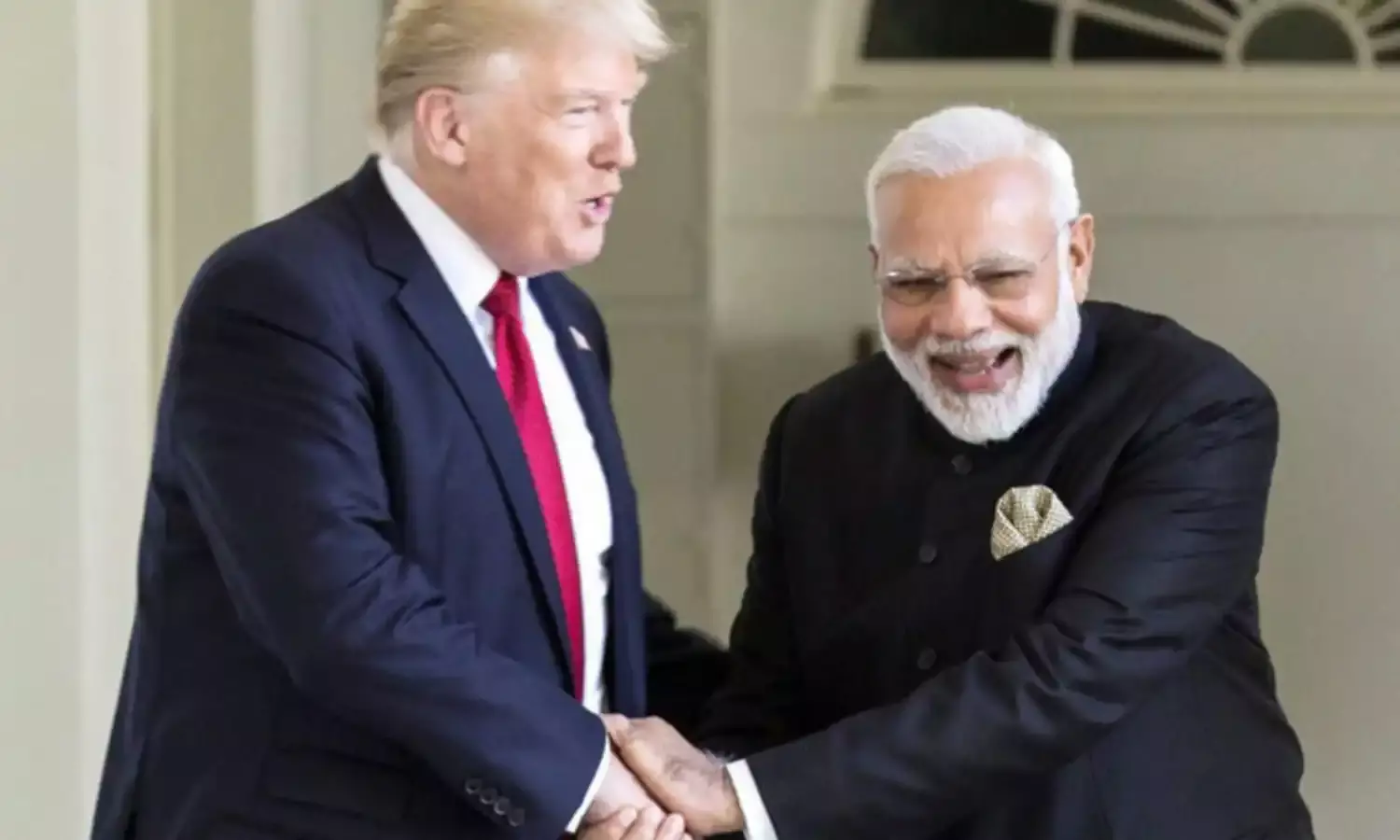

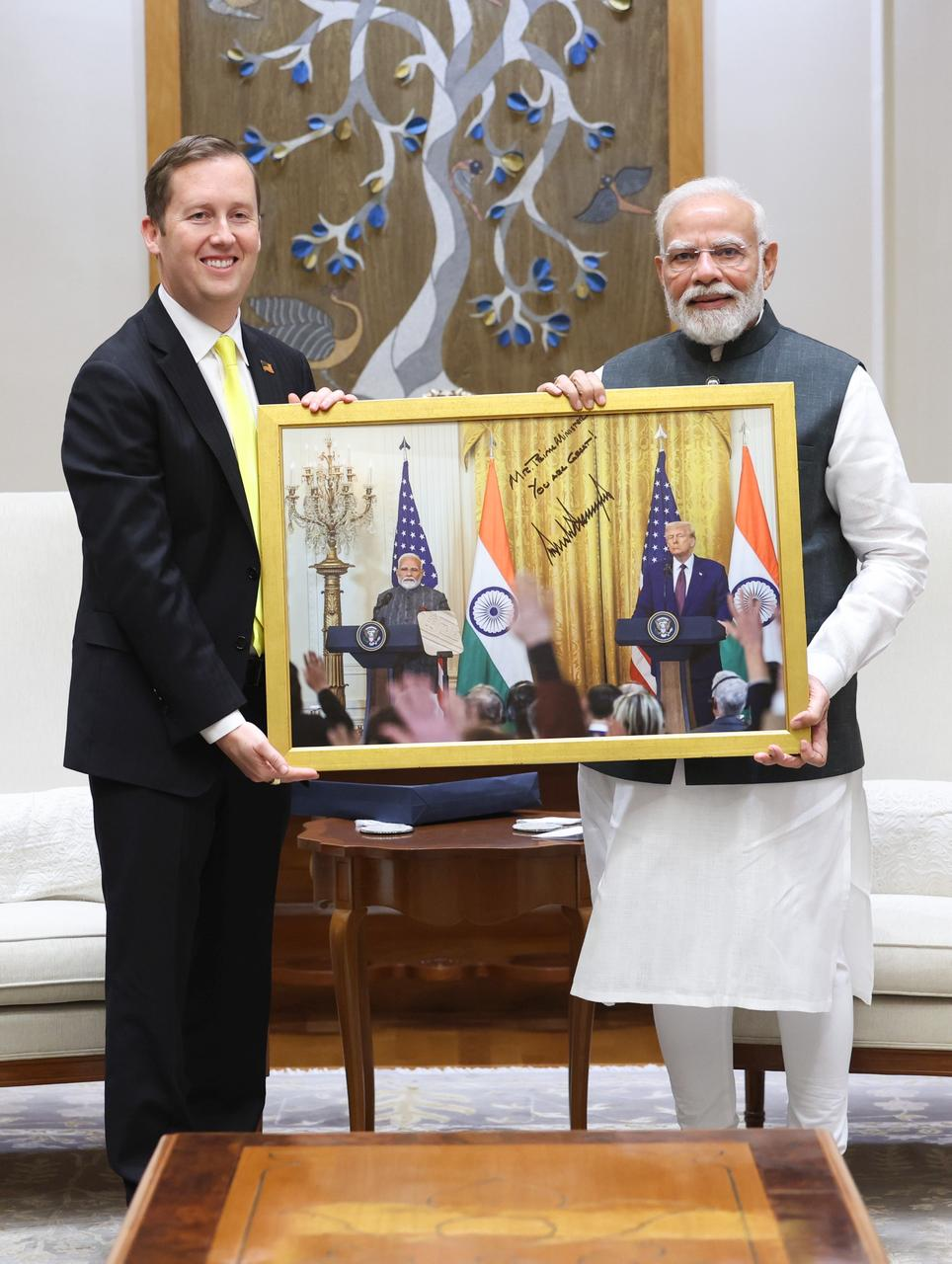
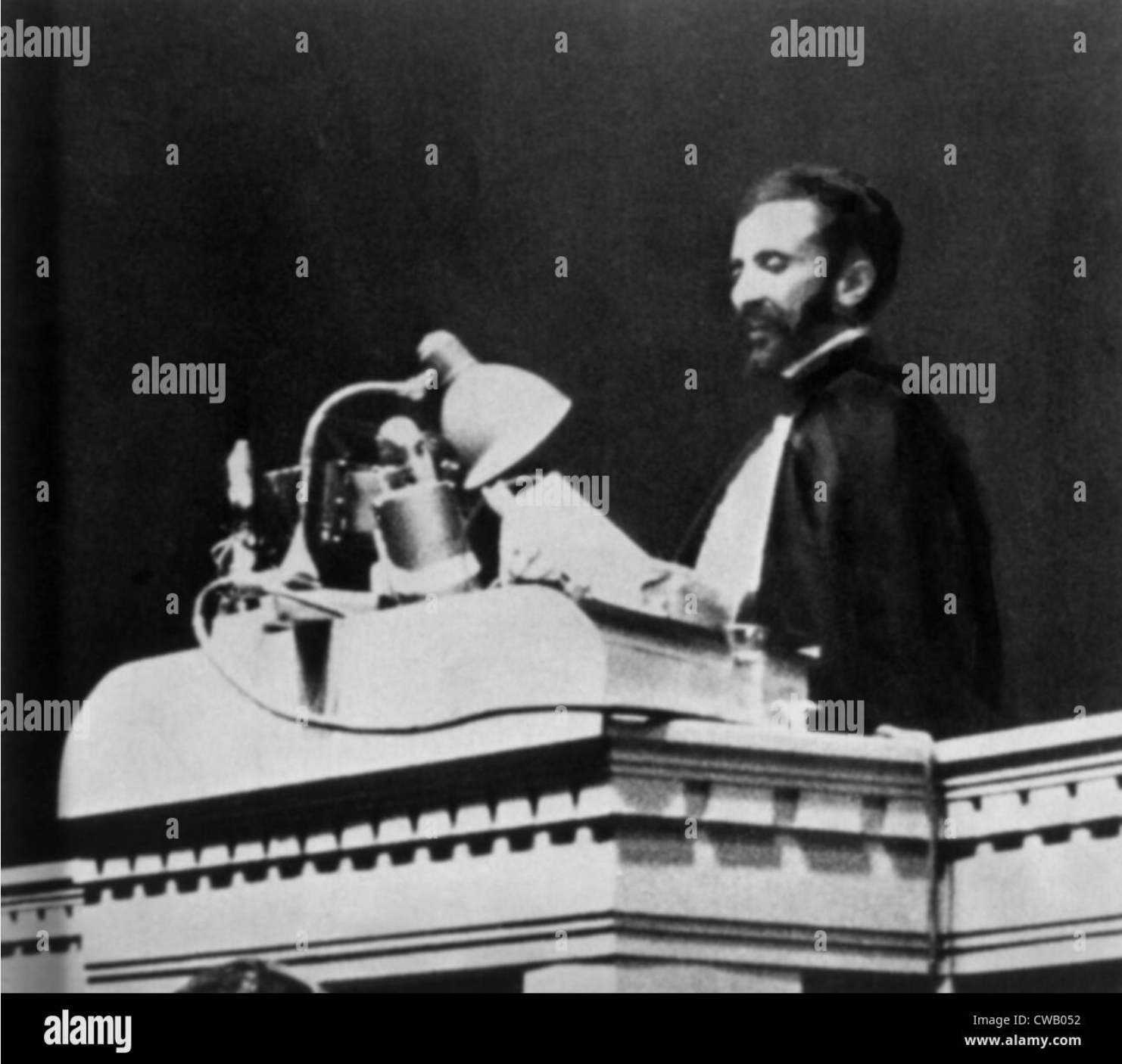
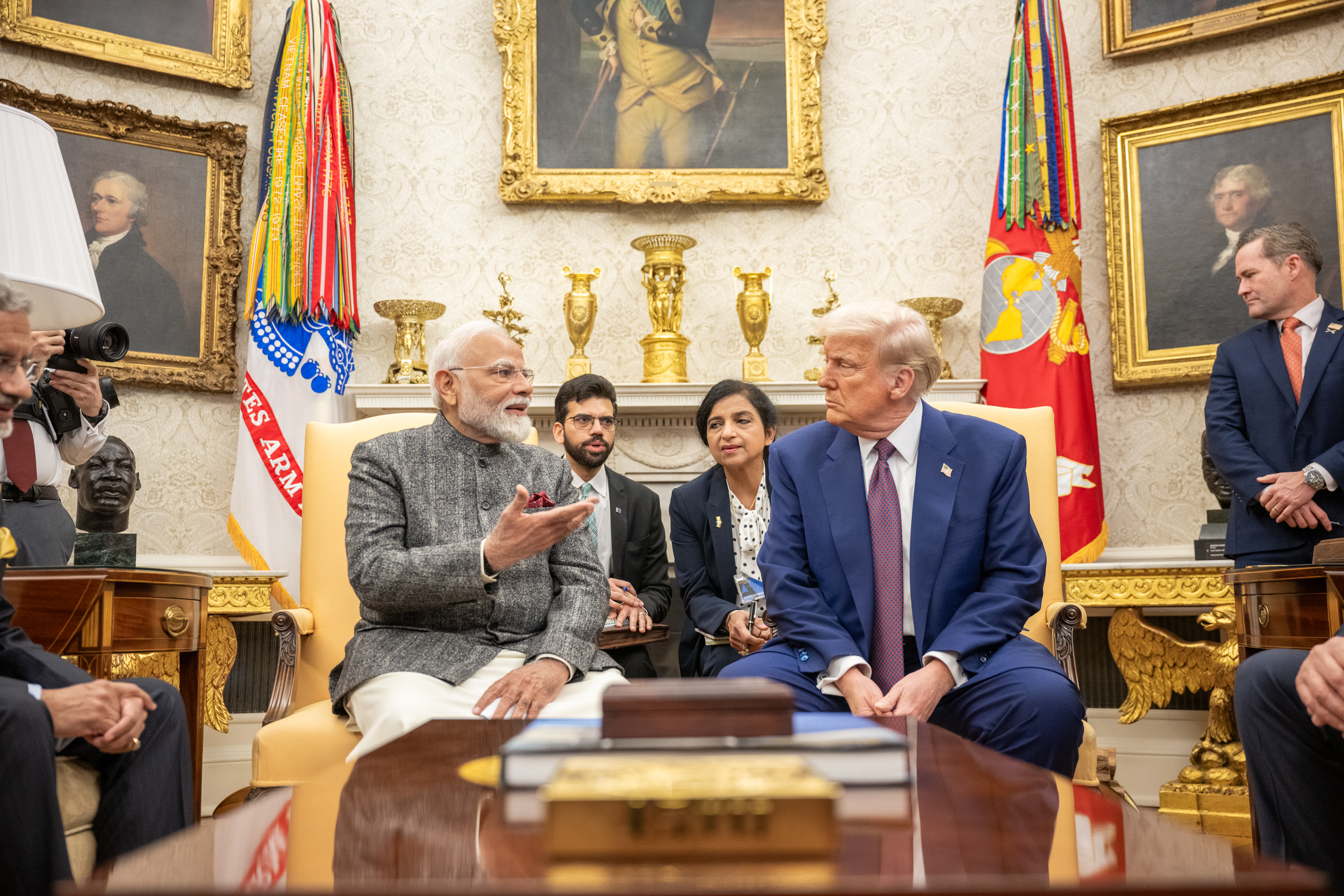


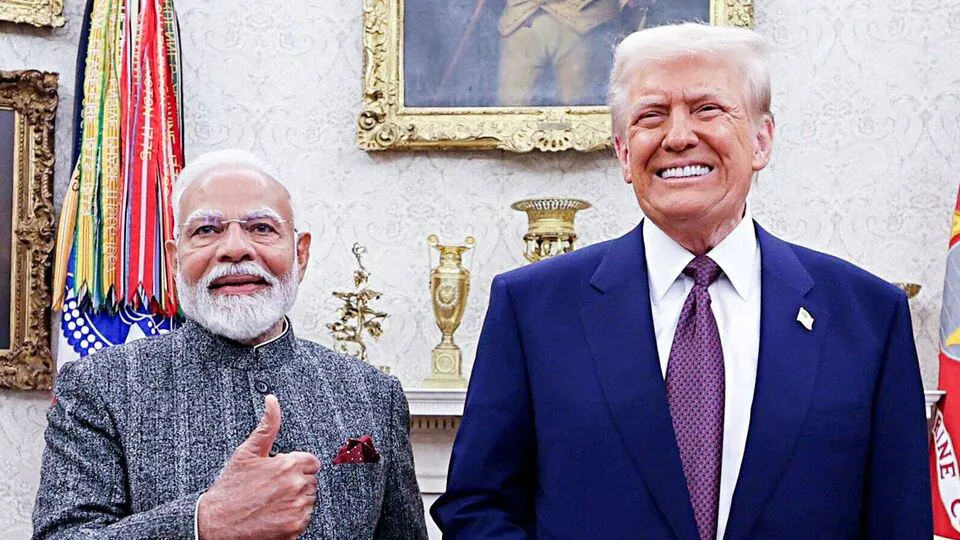
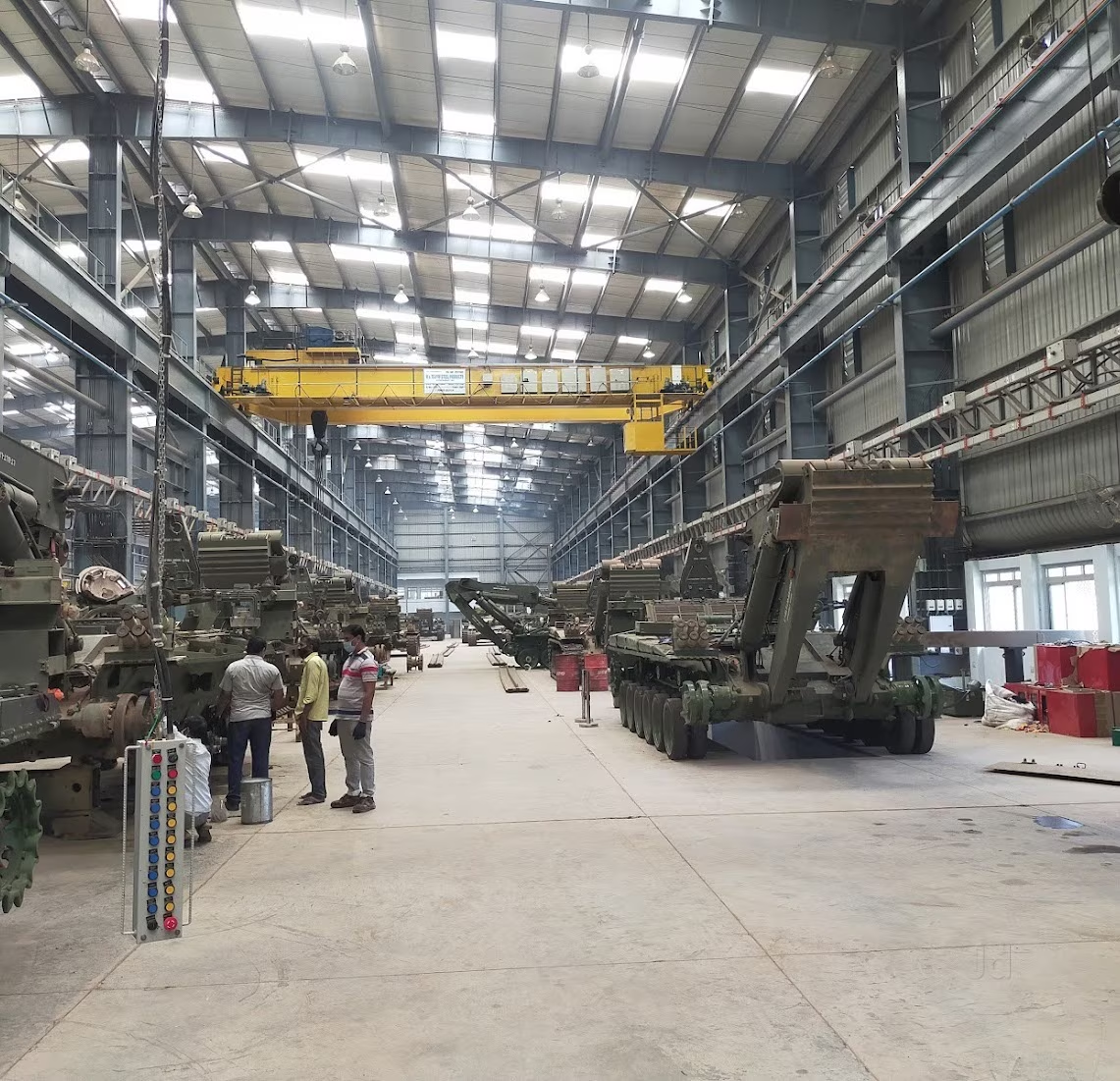
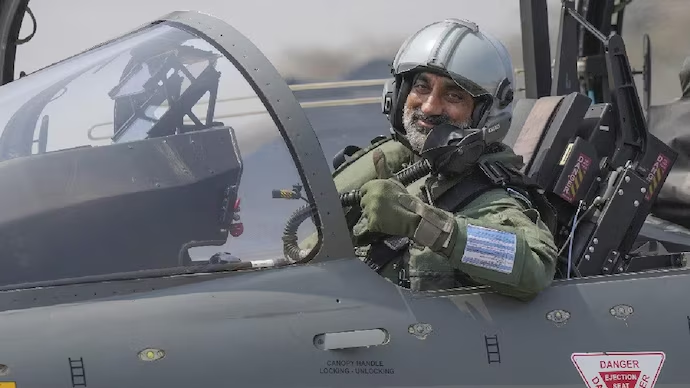
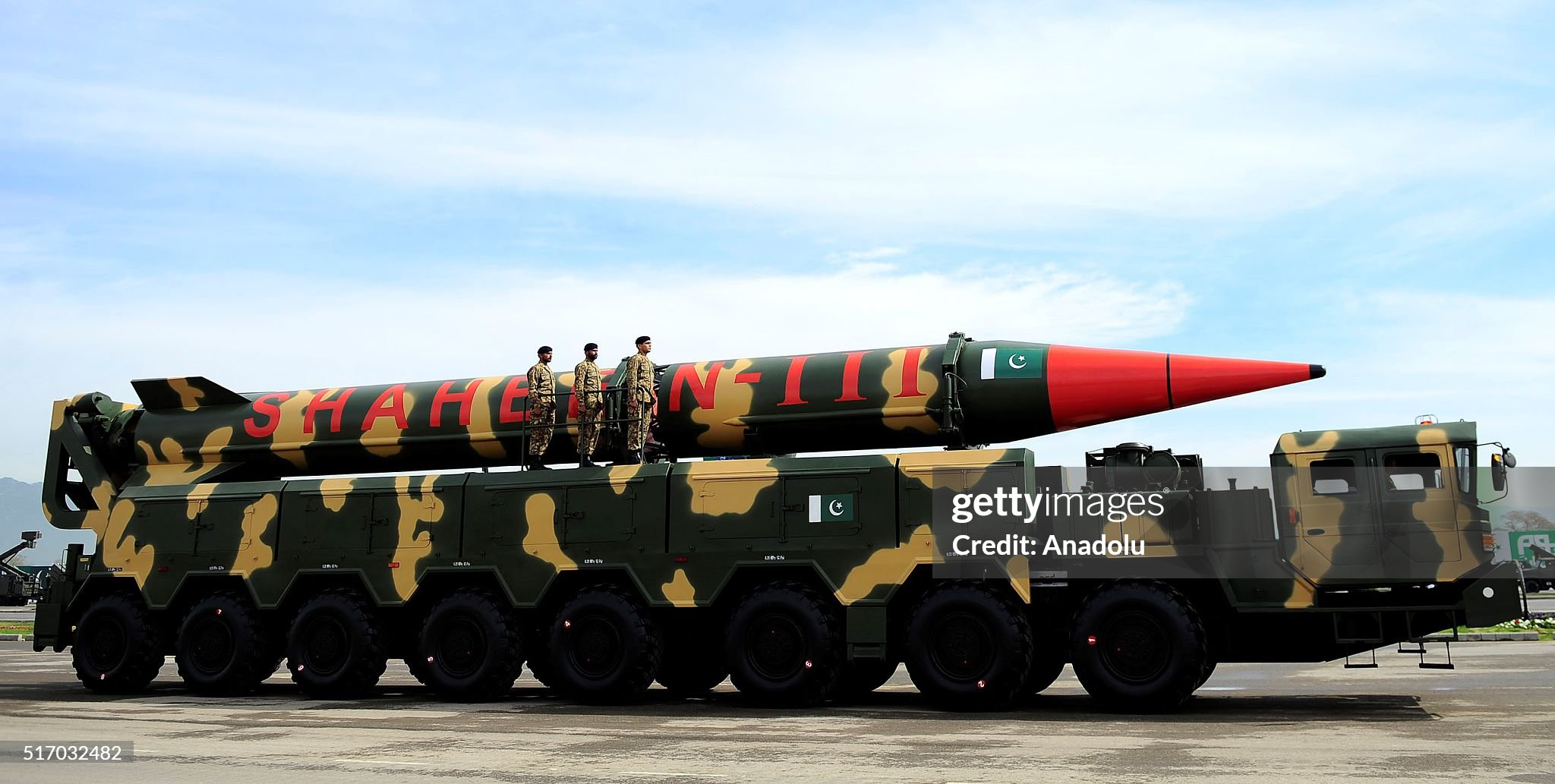
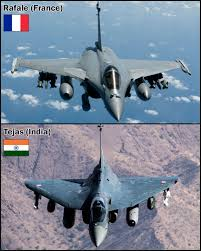


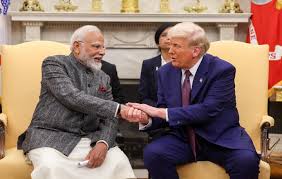
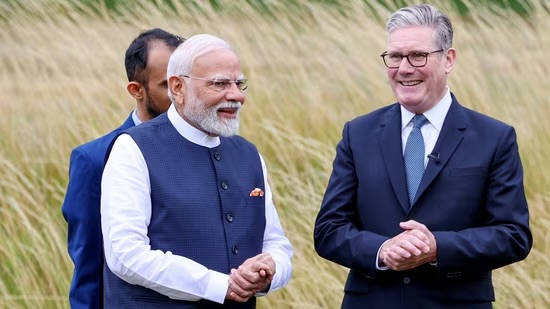
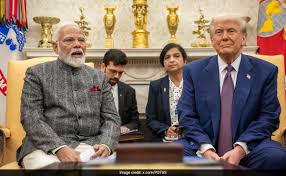


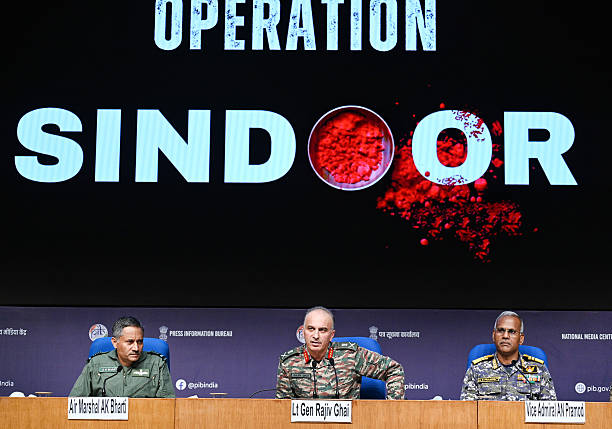
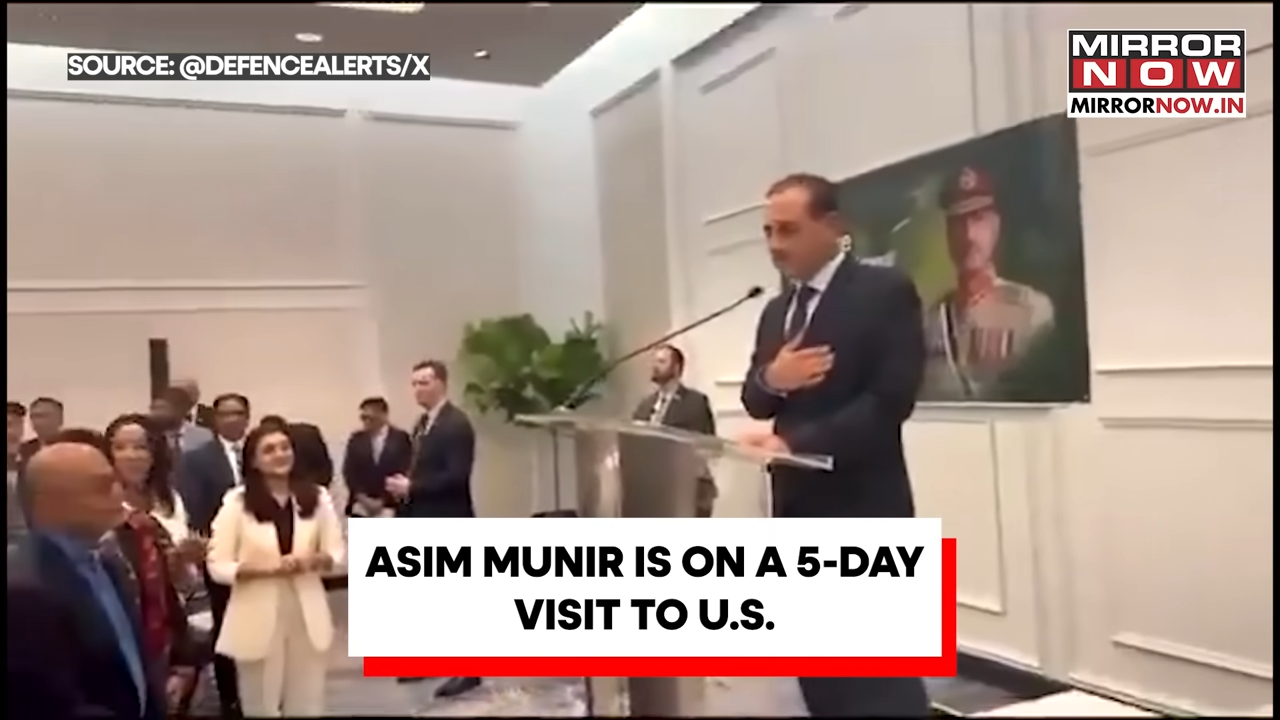




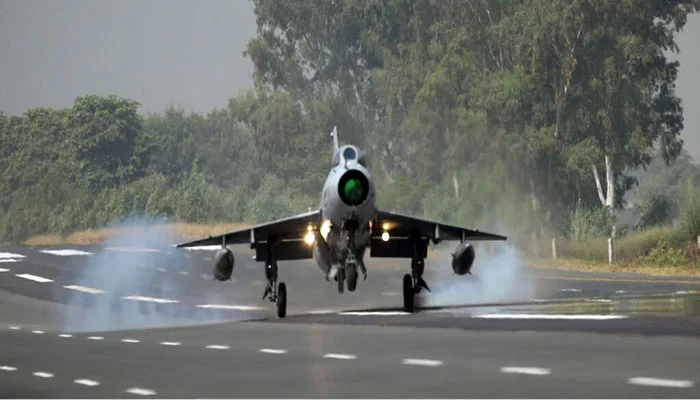
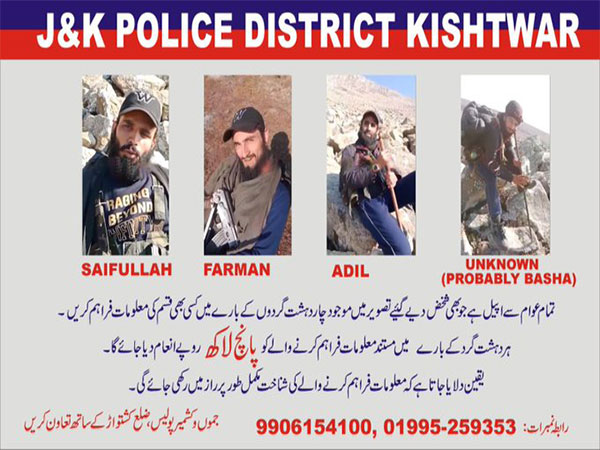
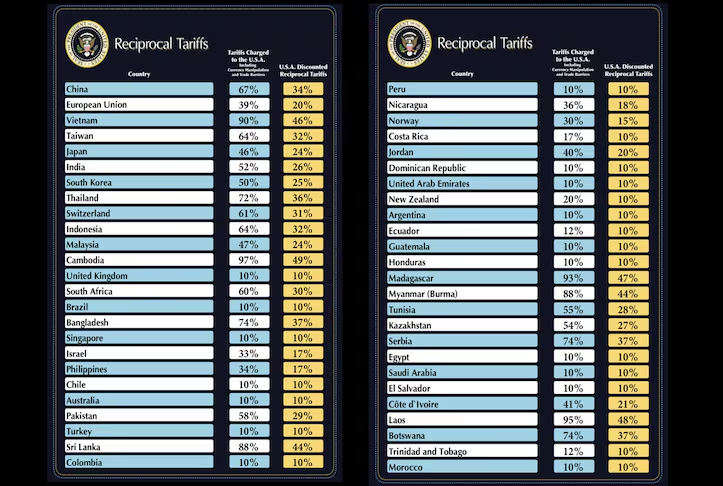
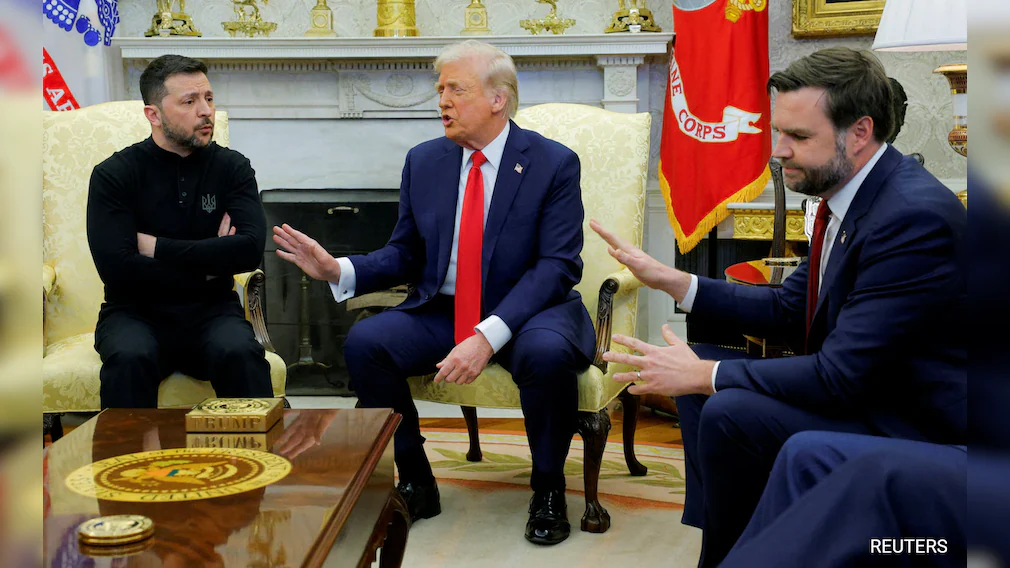
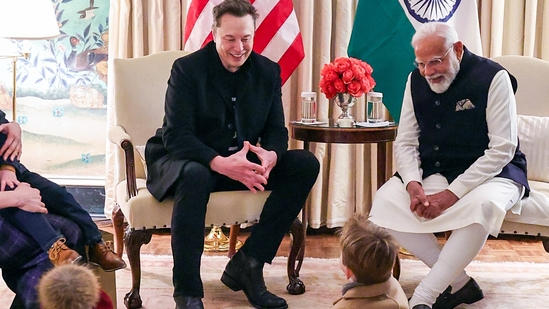

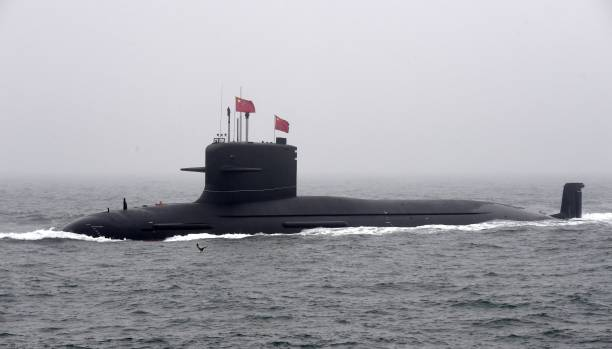


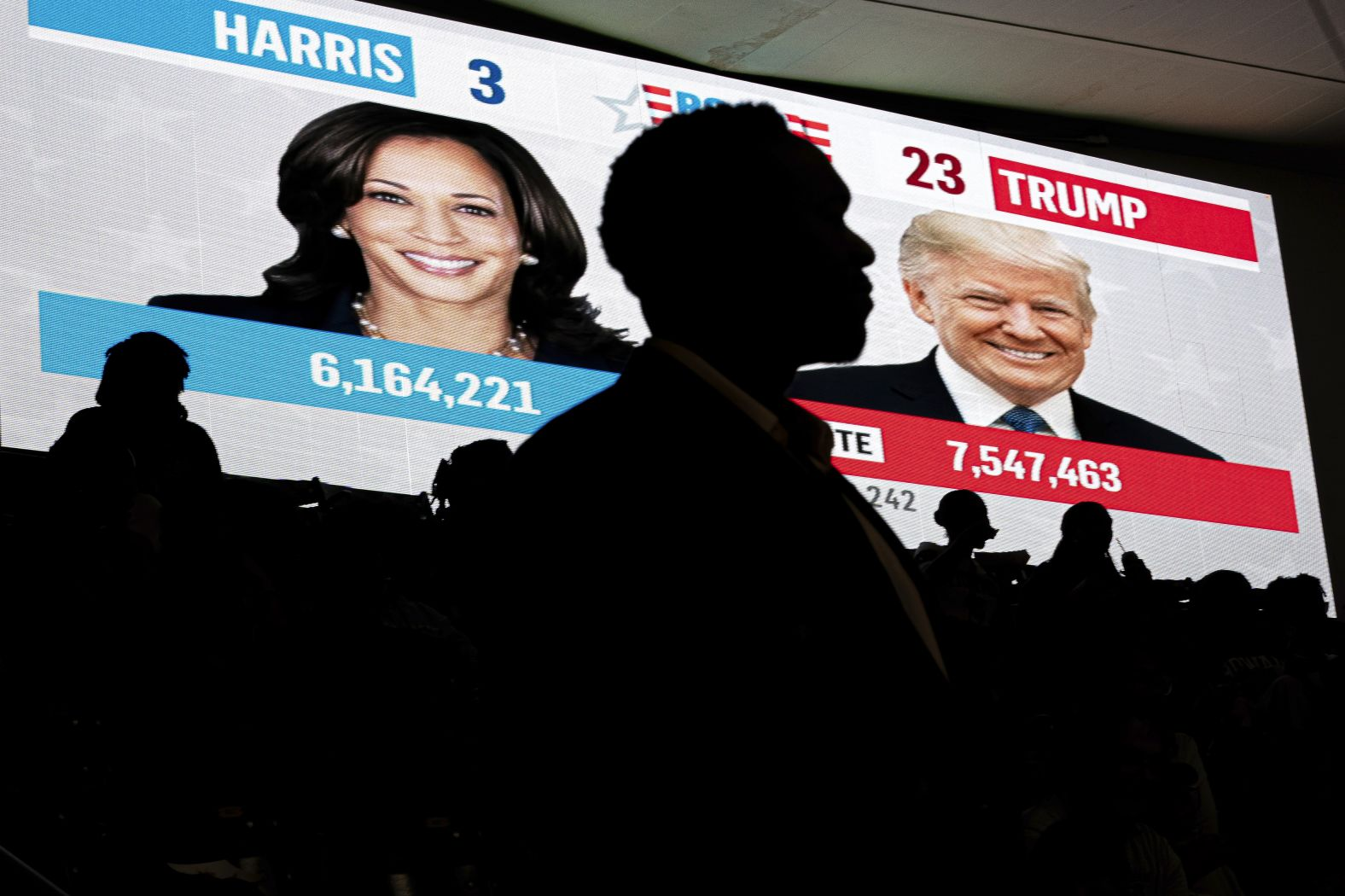

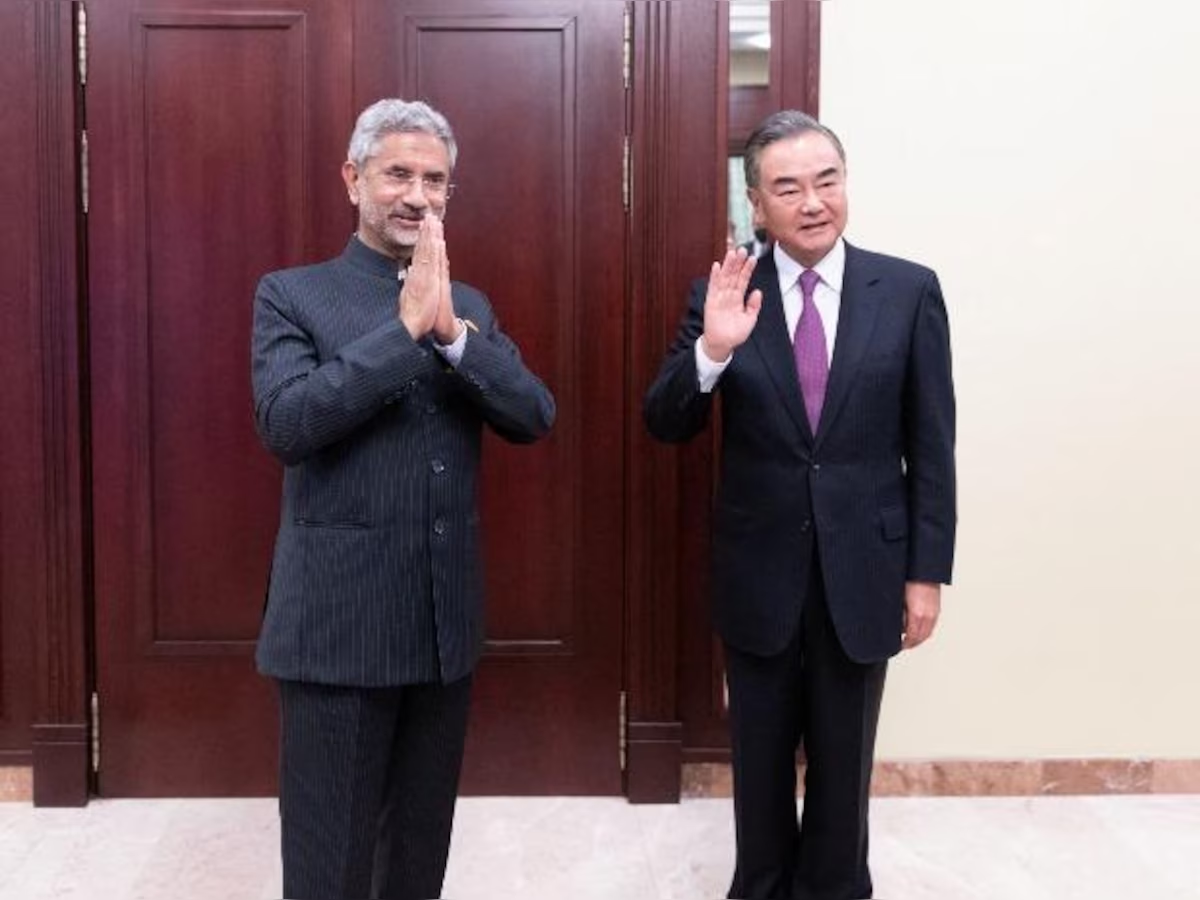


 Security Wise