Another foolish China-siding gesture in the works?

Image result for pics of Indian foreign secretary v gokhale with chinese leaders

[Foreign Secretary Gokhale with Chinese Foreign Minister Wang Yi]

President Donald Trump has announced a general military withdrawal of US military forces from various locations, in the main, Iraq and Afghanistan. These two countries are semi- permanently destabilized, turned into perennial hot spots-cum-enduring sources of worry for countries in the vicinity owing to the original, ill-advised, armed American intervention. So, the US scooting out of trouble they created for themselves and the world is not new, having done it first in Vietnam  and, in this Century, in Iraq and Afghanistan — in each case being bloodied by hard-charging denizens of these states who felt hard done by the Americans and decided to act.

The people most allergic to foreign dictation are, of course, the Vietnamese and the Afghans — the latter a particularly nettlesome lot and, in the modern era, the only Asians not to be conquered and colonized by the West. So when the Americans with their crass over-confidence chose to  go punitive and hunt for the al-Qaeda leaders in the hills and remove the Taliban regime in Afghanistan that hosted them after 9/11, it was only a matter of time before they were served their just desserts. After spending $50 billion annually for the last 17 years for a total of some $850 billion  — in excess of trillion $ actually if the costs of the prep, etc are counted — an exhausted US is hightailing it back to CONUS, letting Kabul and the rest of that country slip back to the Taliban. So much for going nowhere fast and losing  a fortune in the bargain — just the sort of deal Afghans have time and again imposed on intruders.

What the US Special Envoy Zalmay Khalilzad is negotiating with the Taliban is plain: a fig-leaf for an American military pullout. He may not get it. The Taliban who sense power once again in their grasp have rejected out of hand Washington’s suggestion of peace talks involving all Afghan parties, and vetoed sitting across the table with the Ashraf Ghani government reps considered by them as American puppets. Indeed, the growing irrelevance of the Ghani regime is reflected in the report of  the Special Investigator General for Afghan Reconstruction, which the Pakistani press reports as revealing the tenuous hold of the US-assisted Kabul government. It controls only 219 of Afghanistan’s 407 districts, or 54 % of the territory. This claim is however refuted by independent sources who say the Afghan security forces securely control only 35% of the country, of the rest 12% is controlled by the Taliban and 34% is contested ground.

After six days of hard negotiations (January 21-26)  in Doha from which the Ghani government was excluded on Taliban’s say-so, two things are clear. One, that no deal was hammered out, nor is any on the horizon. And secondly that the Taliban are divided between the hardliners who are willing to talk and the extremists who believe the consolidation of jihad and the spirit of the fighting cadres will suffer by merely interacting with US. While the former are keen to hasten American departure by hammering out a face-saving way out for Washington, the latter more dominant school are convinced US troops will, in any case, leave before Trump gets into the 2020 presidential election cycle and, therefore, no concession need be made to the US, in which event, Kabul will fall into its lap like a plum.

All the stuff about Khalilzad and the Taliban coming to an understanding about a ceasefire followed by a coalition government to run the country, and the US being allowed to retain a small force in Afghanistan is a lot of diplomatic hoo-ha.  Afghans are no damn fools when deal with Americans who they see as intent on cutting and running.

The Ghani government was also kept out of the soiree in Moscow of Afghan leaders from various factions — the Northern Alliance leaders Atta Mohammad Noor, Yunus Qanuni, Mohaqiq, a collection of Pathans, such as former president Hamid Karzai, Hanif Atmar and Syed Hamid Gilani, and a Taliban team headed by Sher Mohammad Abbas Stanakzai. This Meet too, other than showing a Russian hand in the pot, achieved little.

The Modi dispensation, as ever dependent on Washington to do its hard work, was taken aback by Trump’s decision to get the US forces out at any cost because, apparently, it isn’t aware that America is already humiliated, its vaunted Special Forces-led effort proving no match for the Taliban. But more, Modi, Doval and Co., seem unable to grasp the simple truth that there’s no fight left in the Americans and Trump is not one — as he has proved — to fight a war for another country’s sake, least of all India which he views as a contemptibly weak country he can jerk around at any time. Like on H1B visa and “chain immigration” issues.

In this context, Delhi’s interest has been defined at a pollyanna-ish level for consumption by the West as the need to safeguard the infrastructure built by Indian engineers with Indian money and the ongoing investment in other development projects — all worth more than $3 billon, and its policy of doing good by the Afghan people. The dark side of India’s apprehensions has, however, to do with “Islamic inclusivism” but in an emirate that the Taliban have offered as a sop. What it means is anyone’s guess. However, the return of Taliban rule it is feared would have battle-hardened Taliban fighters, the various Lashkars in Pakistan preoccupied with  Kashmir, Islamic State remnants streaming back from the Syrian war zone, and activated IS sleeper cells, all  relying on Pakistan’s tested infrastructure to support  terrorism, combining to  realize the longstanding Islamic fantasy of Ghuzwatul-Hind — a prophecy of the Islamic conquest of Hindustan that finds repeated mention in the Hadith.

Except, this madcap notion exactly overlays the extremist Hindu fear and dislike of Muslims that the RSS ideology reflects, and which fuels the paranoia and over the past five years has led Modi repeatedly to spurn peace initiatives by Pakistan, most recently by Prime Minister Imran Khan.  If Imran, like earlier Pakistani PMs, dutifully talks about “atrocities” in “Indian-occupied Kashmir”, why is it surprising? But, equally, both he and the Man who really matters in that country, General Qamar Bajwa are one in hinting that such ejaculations should be taken as the usual wallpaper — an inert aspect — of Indo-Pak diplomacy  and ought not to prevent the two sides from talking formally to each other. Common sense, which is generally missing in our foreign policy, would suggest that talks, any kind of formal or even back-channel dialogue, is more likely to incentivize Islamabad and, depending on the stakes created by these talks and actions Delhi could mount in support of them, motivate it to clamp down on the jihadis, than if Modi carried on as he has done.

So instead of working with Islamabad to put a lid on potential Islamist troublemakers that the Imran regime is wary about, what the Modi government is contemplating is partnering China in containing the Afghanistan problem. It is a policy balloon the MEA has put out to see if it flies. Is working with China the answer, considering Beijing has remorselessly reduced India into a nonentity in the subcontinent, and shrunk its vestigial influence in the extended region in every possible way? Who’s the source of such damn fool ideas?

It is not hard to surmise that it comes from the Chinese-speaking quarter of the Ministry. These diplomats who have spent long years in China or on the China watch, like their counterparts in other countries are mesmerized by the zhanguo — “the central kingdom” to a point where they become Beijing’s apologists, promoters of the Chinese perspective, and even protectors of China’s interests to the detriment of that of their home country. We have such a  mandarin, Vijay Gokahle, heading the Foreign Office. On what basis does Gokhale think the interests of India and China converge on any thing, and Afghanistan in particular? Beijing would rather have Pakistan in the driver’s seat. Does that suit Messrs Modi and Doval?

India has the choice to get together with Imran-Bajwa’s Pakistan and the Afghan disputants and, using diplomatic finesse, get the US, Russia and China out of the huddle and, progressively, out of the game. Because of its anti-Pakistan prejudice Modi will obviously reject this option. Or, it can be the spoiler, injecting India forcefully into the Afghan mix by channeling a lot of monies and war materiel to trusted friends in the Northern Alliance and to certain sections of the Afghan Taliban and Pakistani Taliban Delhi has long cultivated, and otherwise to emerge as a party every side wants not to muck around and mess up things for everybody. It is the sort of disruptive role Modi has shown he has no imagination to conceive or stomach to implement.

So the third safe, passive, option of doing nothing beckons and is what Modi will choose: India, as always, will squirm on the sidelines, ride on the American military bandwagon as far as it will go, then jump off and clamber on to the Chinese jalopy. Except, the road the last will take is the CPEC.

Posted in Afghanistan | 7 Comments

How’s HAL not culpable for the Mirage 2000 crash (with addendum plus)?

(Mirage 2000 crash site)

So Squadron Leaders Sameer Abrol and Siddarth Negi of the Aircraft and System Testing Establishment (ASTE) are dead in a frontline Mirage 2000 2-seater combat trainer aircraft HAL had just upgraded. They were on an “acceptance sortie” to assess whether  the aircraft was good to re-enter squadron service. Then again, anything DPSUs/HAL touch — as my previous post suggested — turns to ashes.

There are many strange and curious things attending on this accident. For one thing the Mirage 2000 is designed for positive instability in pitch, meaning the plane always pitches upwards, which attribute combines with the leading edge flaps on the wings to enhance lift. Both these features ensure that the aircraft tends to be nose up and rearing to go. So how come it failed to clear the barrier at the end of the HAL runway?

It may be reasonably speculated that there obviously was enough runway distance from beginning its run, gathering speed on tarmac, to throttling up for actual takeoff for the two pilots — both good and experienced combat jocks, otherwise they wouldn’t be attached as test pilots to ASTE — to realize that the aircraft was not responding, and they were heading into the crash barrier. Possibly surprised, they may have activated the Martin-Baker zero-zero ejection system a trifle late. (The zero-zero system is supposed to eject pilots safely even when the plane is mobile on the ground.) Should a reconstruction of the event, in fact, show this to have been the case, then HAL will happily blame the pilot for the mishap and wash its hands off the accident.

[Plus: This aspect should have been included in the original post early last evening: There’s the issue of the apparent disjunction between the pilots powering up and the engine not responding adequately. I mean if there was sufficient takeoff distance but the plane failed to negotiate a takeoff then what other conclusion is there to reach?  One can assume,  moreover, that in an aircraft undergoing upgrade the state of the electronic interfaces between command and the jet power plant would be a priority for close examination. In the event, the finger again points at HAL.]

[Addendum, 2056 hrs: Then again, eye witnesses, according to a retired HAL test pilot who informed me, say they saw the nose wheel collapse on the takeoff roll itself, and when the pilots ejected, one of them landed right in the burning wreckage, and the other was fatally injured. This deepens the mystery around the escape system, especially because the aircraft had just been upgraded.]

In any aircraft upgrade programme, wouldn’t it be mandatory for its critical systems and sub-systems to be upgraded as well? Surely the ejection system is crucial enough for safety reasons to warrant upgradation. But was it so upgraded to the more advanced Martin-Baker Mk-18 configuration at least? If not, why not? And whose fault is it that the ejection system upgrade was not insisted on as part of the aircraft upgrade? IAF?

Assuming the 2-seater had retained the old MB system, did HAL during the upgrading process at a minimum not  repeatedly test the system, check its pyrotechnics package to ensure the explosive component was in good condition and did not require to be replaced with a fresh charge so that if fired it would blow the canopy off its moorings and, simultaneously, eject the pilots clear off the wreckage? Very likely HAL did none of these things because if the system had been checked, tested and okayed, it couldn’t have malfunctioned at the first instance of use.

As is usual in such accidents, a board of inquiry will be constituted, and the chances are Abrol and Negi will be blamed for “pilot error”, and HAL will go scott free. Indeed, HAL is rarely, if ever, held accountable for anything that goes wrong on aircraft it has worked on, or produced, i.e., assembled.

But what’s with HAL and failure of nose wheels? Not too long ago, an IAF test pilot attached to HAL, Nashik, took a Su-30MKI the DPSU unit manufactured up for a spin. While landing, the nose wheel failed to deploy, forcing the pilot into a touchdown on rear wheels leading to the nose coming down hard on the tarmac and the aircraft being damaged. The BOI that followed, led by an engineer but with nobody from the flying branch on the board, held the pilot wholly responsible for this event! How the pilot is responsible for a machine that’s freshly off the HAL factory floor, put together by this “nav-ratna” DPSU in its own facilities according to its own lax standards of production, boggles the mind.  But this is how that episode panned out.

Will HAL be held culpable for the Mirage crash when the antecedent conditions are less transparent?

Posted in Afghanistan, arms exports, civil-military relations, Culture, Decision-making, Defence Industry, domestic politics, DRDO, Europe, Indian Air Force, Military Acquisitions, Military/military advice, South Asia, Technology transfer, Weapons | 12 Comments

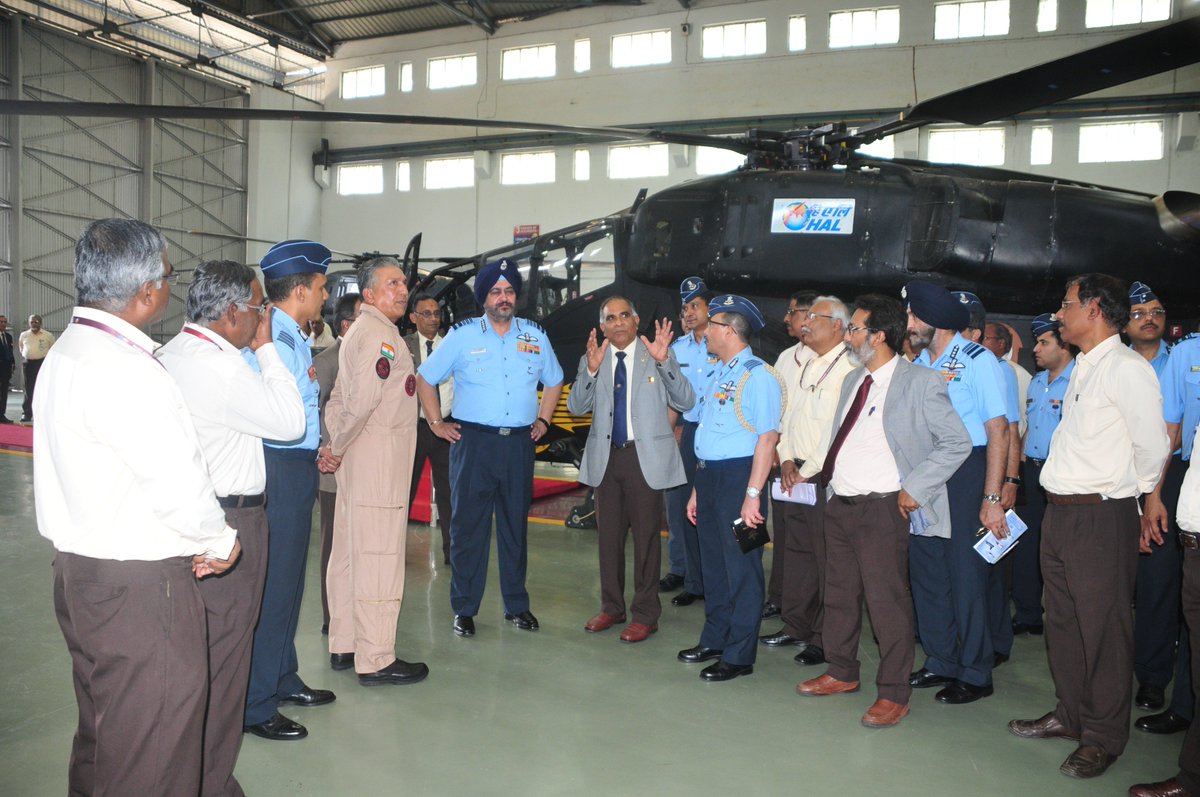
HAL and IAF — made for each other

Image result for pics of Indian Chief of Air Staff at HAL

(Chief of the Air Staff Air Chief Marshal BS Dhanoa at HAL)

On Republic Day, there’s no more serious matter to ponder than the negative synergy generated by the Combine of the military and DRDO-DPSU that’s pile-driving  India into subservience, emphasizing its dependency on foreign armaments and strengthening its subordinate state status in the world.

The political leaders across the ideological spectrum wax rhetorical about arms self-sufficiency being round the corner but neither have the interest nor intellect, leave alone any understanding of issues pertaining to national security, to implement anything remotely sensible and are quite happy to be led by their noses by military chiefs offering skewed “professional advice” and generalist bureaucrats with vested interest in the status quo. Hence, the god-awful system of defence production geared to military procurement from abroad flourishes.

Exactly around this time last year, Air Marshal Harish Masand (Retd) wrote Defence Minister Nirmala Sitharaman offering her some information about how Hindustan Aerospace Ltd. actually works and why this premier Defence Public Sector Unit (DPSU), one of MoD Department of Defence Production’s ‘navratnas’, is in so sad a state and in such disrepair that the Modi government has been forced to blame HAL’s weaknesses — its inability to even screwdriver various aircraft together from imported kits very efficiently, something it has done for most of the last 60-odd years, its low labour productivity, and dismal quality control — to justify buying 36 French Rafale combat aircraft off the Dassault Avions shelf.

Air Marshal Masand, for those who may not be aware, is a VrC and, until his retirement, was simply the best fighter pilot in the Indian Air Force, his aircraft of choice — the MiG-29, which he rates as the best fighter plane, ton for fighting ton.  Indeed, in display flying, he repeatedly and abrasively showed up the French Mirage 2000 that his Service was sold on. In the process, he gained the ire of his seniors and compatriots, ensuring that despite the requisite seniority and a spectacularly good record in service that would have put him in the running for the Chief of Air Staff post, his career was sidelined.

In many respects, he is the Air Force analogue of the great General Hanut Singh in the army. Utter professionals and sticklers for doing the right thing, neither attained the heights their gallantry awards, seniority, honesty and proven competence should have  guaranteed them. I recall CAS ACM SP Tyagi,  who could have retrieved Masand’s career when he assumed office in late December 2004  but didn’t, telling me that Harish was “not a team man” — a phrase curiously used by Masand’s juniors who made it as AOCs-in-C. In the Indian military, it is necessary to fall in line with the pet peeves and projects of the Service and the Service Chief of the day and, most importantly, to be a team man or you are out. So, out went Hanut and Masand.  But that’s par for the course. The best and the brightest in the armed forces rarely make it to 4-star rank. Comparing and contrasting them with the usual strategically dim-witted sort who do pretty much explains why the Indian armed forces find themselves in the sorry straits they are in now.

With military leadership lacking foresight, it is natural, because no real demands are made on them, for DPSUs-DRDO to also be short-sighted and show the same slack will and lassitude, and to be content with doing as little as possible for as much moolah as they can corner. Displaying minimal technological innovation,  commercial sense and market logic, the DRDO-DPSU Complex moves hand-in-glove with the military to waste national resources on arms imports — the new means, incidentally, of transferring wealth from a poor country to rich countries, not unlike what India suffered during the hey day of colonialism.

The political leadership in the country is squarely to blame. No armed service’s Chief of Staff is ever dismissed for wrong advice to buy this, that, or the other that prolongs the country’s arms dependency and misery, and DRDO-DPSU heads are not hauled up for gross ineptitude of their organizations in ingesting technology, not developing advanced designs and products, and  for failing to manage a labour force so unmotivated and with such bad work ethic as to be an economic liability.  All this because there’s no  accountability anywhere in the Indian government system.

It has made for an institutionalized business model built on wastefulness  followed by the military-DPSU-DRDO Combine, and in the case of IAF, the HAL-DRDO Complex, that Masand described in his letter to Sitharaman and in a piece (“What ails HAL”) that he has just published in the Indian Defence Review (at http://www.indiandefencereview.com/news/what-really-ails-hal/ ) thus: “If HAL can buy something for $10, it would rather pay $100, and if DRDO can do a job in on year, it would rather take ten.” Masand can speak authoritatively  on HAL’s functioning because, as Wing Commander in the early 1980s, he was in-charge of the MiG-21 bis upgrade programme, whose original cost of $850 million in 1994 was, owing to financial crunch, pruned by MoD to $626 million (Rs 2,000 crores). However, Masand’s strict oversight brought the programme in on time and without cost over-runs. The $224 million that was cut proved in excess of need for the MiG bis programme, but it hints at the kind of built-in margins for loot that the armed services personnel and MoD officils in the procurement loop, and DRDO, and DPSU share in. With the screwdriver tech capability-ceiling of HAL (and Mazgaon, etc.) translating into cost (of CKD/SKD kits) plus 2% profit, the government can claim profitability for DPSUs and keep them going. Masand’s letter to the minister expressing his willingness to provide her the inside dope on how and why DRDO and DPSUs, in which the nation has invested heavily, regularly produce miserable results, of course, went unheeded.

For effect and show, the military/IAF will complain incessantly about DRDO and DPSUs/HAL being the great villains, whose consistent failures over decades in delivering the promised products in time has lost them the trust of the armed Services/IAF and compelled them,  or so they claim, to import just about every major item in sight, reinforcing India’s shameful standing as the largest buyer of arms and imperiling the country’s security.  However, the profligacy and R&D and industrial shortcomings of DRDO-DPSUs serves the military fine because it means a perennial rationale for importing stuff.

On the rare occasion when indigenous weapons system design and development projects do get off the ground and into production stage after overcoming every obstacle erected in their path,  such as the Tejas LCA and the Arjuna Main Battle Tank, the armed services delay their induction and mass production using any and every ruse they can think of. Thus, despite Arjuna MBT besting the Russian T-90 in every test category, in every weather condition, in all terrains, the army has been reluctant to buy it in large numbers on the ground that it is too heavy and cumbersome to transport easily. The obvious solution for this problem would have been for the government, MoD, and the army to agree by consensus that the home-grown design — the most important aspect of any weapons systems in terms of production — needed a small tweaking to reduce the weight and size.

Likewise in the case of the Tejas. Because the design is an NAL-DRDO product, the intelligence on the plane, its source codes, etc are all entirely with India. This design can be upscaled and modified to obtain the Advanced Medium Combat aircraft, the proposed follow-on aircraft to Tejas, or miniaturized to realize a weapons-bearing, long endurance, war-drone. India can do whatever it wants with it and will finally free the country and the IAF of the importitis disease. But no, that’s not what has happened. Far from writing finis to buying foreign combat aircraft, IAF is compounding its logistics and operational problems by going in for yet another type of aircraft to make up the balance 126 MMRCA, even as the indigenous AMCA project is shunted out of sight. The excuse being the depleting squadrons, which the IAF frequently makes public through a compliant media and which the political leadership of the day, in order not to appear änti-national”, ends up funding. Whether manned combat aircraft anymore has relevance in the coming age of remotely-controlled drone swarms is never considered.

So the Tejas has been held up with the IAF insisting that the LCA be delivered in battle-ready state with fully certification and all avionics, weapons, FCS, etc integrated and tested, which harsh conditions, incidentally, are NOT imposed on imported fighter planes! And in any case, such a deliberately elongated induction process is contrary to the practice of the far more advanced air forces who induct new aircraft into the fleet even as they are undergoing the various stages of certification for air worthiness, on-board weapons and avionics integration and testing, etc. This is the case, for instance, with the US Air Force which is flying the F-35 while going through the certification steps with the problems detected and corrected based on feedback from pilots. This has required design tinkering of the aircraft and of the on-board sub-systems by Lockeed, the aircraft supplier. In other words, improvements in the aircraft, whole and in parts, to make it fully operational proceed in parallel with the aircraft’s induction. System and sub-system rectifications and technical solutions are then retrofitted on to aircraft already in the fleet, as is happening with the F-35. It saves time and money even as it speeds up acceptance of the aircraft by the force’s fighter jock community.

Had this procedure been followed for the Tejas, its scaled-up production and induction, instead of being delayed for another 3-4 years, would have begun some five years back and the Tejas by now would have filled at least 2 squadrons even at HAL’s desultory annual production rate of some 8 aircraft. As things stand, IAF has still to sign a production contract and HAL, in turn, has still to activate its second production line, which would increase the rate to 18 Tejas per year. Given the paucity of fighter planes, why wouldn’t the government-MoD do the obvious thing and farm out the production of the Tejas to several private sector companies — L&T, Mahindra Aerospace, Tata Defence Systems, and even Reliance Defence, for surge production of the LCA as I have been advocating for many years? This will mandate NAL-DRDO transferring full technology to the private sector along with the source codes, operational algorithms, etc. This, of course, is being resisted because it will set up the private sector as a genuine and far more capable competitor to the DRDO-DPSU complex and possibly drive them out of the business or, as is equally likely, motivate HAL/DPSU -DRDO to become more efficient and effective, but who wants that?

HAL/DPSU-DRDO would rather have the present state of affairs continue in perpetuity with MoD facilitating custom for them with licensed production of imported goods. Periodic controversies, like the one attending on the purchase of 36 Rafales, is great and serves the purpose of keeping the situation in as-is condition forever. The IAF, in the event, couldn’t be happier. In this sense, the IAF and HAL and, in the larger context, the Indian military and DPSU-DRDO do, in fact, work well together!

Posted in arms exports, asia-Pacific/Indo-Pacific, Asian geopolitics, civil-military relations, corruption, Decision-making, Defence Industry, domestic politics, DRDO, Europe, Geopolitics, Great Power imperatives, India's strategic thinking and policy, Indian Air Force, Indian Army, Indian democracy, Indian ecobomic situation, Indian Politics, MEA/foreign policy, Military Acquisitions, Military/military advice, Russia, russian assistance, russian military, South Asia, Strategic Relations with the US & West, Technology transfer, United States, US., Weapons | 5 Comments

The Right People

The Swarajya magazine (started by Rajaji to foster a freemarket-small government ideology and right-of-centre thinking in the country) has a series of videographed interviews at length (1 hr 45 minutes plus!!) called ‘The Right People’. I was so interviewed the other day and that interaction is now uploaded. Perhaps good for a Sunday viewing when there may be little else to do.

Posted in Afghanistan, Africa, arms exports, asia-Pacific/Indo-Pacific, Asian geopolitics, Bangladesh, Bhutan, Central Asia, China, China military, civil-military relations, corruption, Culture, Cyber & Space, Decision-making, Defence Industry, domestic politics, DRDO, Europe, Geopolitics, Great Power imperatives, India's China Policy, India's Pakistan Policy, India's strategic thinking and policy, Indian Air Force, Indian Army, Indian democracy, Indian ecobomic situation, Indian Navy, Indian Ocean, indian policy -- Israel, Iran and West Asia, Indian Politics, Intelligence, Internal Security, Iran and West Asia, Japan, Maldives, MEA/foreign policy, Military Acquisitions, Military/military advice, Missiles, Myanmar, Nepal, nonproliferation, Northeast Asia, NRIs, Nuclear Policy & Strategy, Nuclear Weapons, Pakistan, Pakistan military, Pakistan nuclear forces, Relations with Russia, Russia, russian assistance, SAARC, society, South Asia, South East Asia, Strategic Forces Command, Strategic Relations with the US & West, Technology transfer, Terrorism, Tibet, United States, US., Vietnam, Weapons | 7 Comments

Timid, timid India and Taiwan

Image result for pics -- taiwan president in india

A piece of American street wisdom says “to deter a bully on the block, punch him in the mouth.”

There are two ways of hitting Beijng in the face with tremendous effect — pass on the most lethal strategic hardware to Vietnam and any other country on China’s border that wants it, and build up relations with Taiwan. By arming a feisty bantam weight Hanoi to sock it to a heavy weight — a strategy China has used against India by  nuclear missile arming Pakistan and, in parallel, by stoking warmth in what to-date has been a hesitant stance adopted by Delhi  vis-a-vi Taiwan, India will put in place the one-two punch in the region China will learn to dread.

Ah, yes, but when has any Indian government — BJP or Congress — shown that kind  of grit and “don’t mess with India”-attitude when dealing with China, or displayed the intent to do Beijing real harm in order to bring the Yellow Emperor of the day, presently Xi Jinping, in line? All that blood-rushing fighting spirit is summoned only where Pakistan is concerned — a country that has never posed a a danger and cannot be a credible threat no matter how hard it tries. But belabouring Pakistan makes all the weak willed, non-strategic minded politicians and officials in and of government and, by extension, the people at-large, feel satisfied even as it exacerbates the Hindu-Muslim divide in the country, a political risk the political class and vested interests are willing to run.

Did India ever issue the sort of public demarche China has done? Did it ever warn Beijing to refrain from building up Pakistan’s nuclear weapons and missile muscle, or  the United States from turning a Nelson’s eye to Beijing’s nuclear missile proliferation activity as counseled by Dengxiaoping? Or, in recent years when China has been bolstering Pakistan’s weapons manufacturing capacity? And does anybody believe that Beijing or Washington  would give a fig about India’s complaints? No. So shouldn’t China’s warning be consigned to the waste paper basket?

What is necessary now is to twist the Taiwan knife in China’s belly. Beijing for the first time has shown signs of real fear, with its foreign ministry spokesperson warning about rupture in diplomatic relations with countries onpassing to Taipei submarine related technologies. Taiwanese papers have noted that an Indian naval team experienced in submarine diesel power plant has visited with the Taiwan submarine project as have Mitsubishi technologists experienced in working on the Harushio-class submarine for the Japanese navy. The US too is providing some ancillary technologies.

The Chinese unease is palpable because once the Taiwanese diesel-electric attack submarine fructifies, it will endanger the Chinese Navy’s ambitious plans for dominating the seaboard on the East Sea, and all the capital ships China is churning out in huge numbers  from its shipbuilding complexes  in Shanghai, Harbin, etc  will be nice juicy targets. Should the oceanic approaches become hostile, China’s trade routes become vulnerable and the Chinese economy potentially hostage to Taiwan’s submarine-led offensives. China will then stop showering threats like confetti.

It is unlikely Tokyo will be deterred from continuing with its assistance program, or will  terminate its submersible tech-transactions. It is India, however, that may heed China’s call to cease and desist, considering that Prime Minister  Narendra Modi and his MEA make much of the so-called “Wuhan spirit”, which is another way of saying that the BJP regime, like its gutless predecessors, seems more inclined to be in Xi’s good books than to strategically hinder and hamstring China which is in India’s national security interest to do. This when not a day passes without some news, information, or tidbit about Chinese strategic and conventional military help and assistance to Pakistan and its aggressive forays in other adjoining states.

An Indian government with the strategic wit and gumption would make neutral noises but keep transferring technical know-how for anything Taipei expresses interest in, because let there be no doubt that Taiwan is Beijing’s diplomatic jugular. My last book ‘Why India is Not a Great Power (Yet)’ detailed the extent of India’s cyber cooperation with Taipei, and Taiwan’s role in building up a Chinese language fluent Military Intelligence cadre of officers, and how a fully mapped Chinese cyber grid that Taiwanese military Intel has penetrated is on offer in exchange for things Taiwan would like India to do, among which, of course, is recognizing its sovereignty.

Knowledge of the Chinese cyber grid will indicate the chinks in it that Indian cyber attack programmers can exploit. This is no small advantage in hybrid war in which China seeks to knock off Indian financial networks and power and communications grids as a first step in hostilities.  Diplomatically recognizing Taiwan is a final card to play against Beijing, short of which can be established a two-way traffic of military technologies with India offering, in the main, submarine, Brahmos cruise missile, and nuclear weapons technologies — this last particularly important because Taipei’s nuclear weapons capability forcibly shutdown by the US in 1988, needs a little time to get up to speed.

There’s so much India can do to punch China in its solar plexus and so little that has actually been done, especially with respect to Taiwan, which gets my goat.  India’s ties with Taiwan are now like its relations with Israel were prior to 1992, mostly undercover. It was a relationship that Israeli leaders famously described as one involving a courtesan, a description that Taiwanese Presidents  may well echo.  In fact, the nearest India came to interacting formally with the Taiwanese head of state was during President  Ma Ying-jeou’s “surprise stopover” in Mumbai on his way to some African countries in April 2012.

Indeed the current Taiwan President Tsai Ing-wen was reportedly upset that Delhi which had promised to send an Indian delegation of several Members of Parliaments to her inauguration on May 20, 2016, permitted only a junior BJP leader Vijay Jolly to represent India on that occasion — a development passed off by MEA as a bureaucratic snafu when, actually, the Modi dispensation was afraid about how President Pranab Mukherjee on a state visit scheduled for May 24 would be received  in Beijing. According to Taiwan’s Foreign Ministry, 700 representatives from 59 countries, including 39 countries with which Taiwan has no formal diplomatic ties such as India, Japan and the US, attended the event.

In fact, in her inaugural address, Tsai outlined what she called Taiwan’s “New Southbound Policy” as a central component of her national development strategy and involved deepening agricultural, business, cultural, education, trade and tourism links with ASEAN, Australia and New Zealand and specifically mentioned expanding the “dynamic relationship” with India. The Taiwan apple is low hanging fruit that Modi better pluck soon, or see it wasted as has happened with so many other strategic opportunities.

The greatest debility of Indian foreign and military policy conducted mostly by bureaucrats or incrementalism-minded prime ministers is its risk averse, almost cowardly, nature — the reason why more spirited small countries, such as Pakistan, with the gall to stand up to bullying big powers, win respect worldwide and so easily score over India.


Posted in arms exports, asia-Pacific/Indo-Pacific, Asian geopolitics, China, China military, civil-military relations, Culture, Cyber & Space, Decision-making, disarmament, DRDO, Geopolitics, Great Power imperatives, India's China Policy, India's Pakistan Policy, India's strategic thinking and policy, Indian Air Force, Indian ecobomic situation, Indian Navy, Indian Ocean, indian policy -- Israel, Indian Politics, Intelligence, Japan, MEA/foreign policy, Military Acquisitions, Military/military advice, Missiles, nonproliferation, Northeast Asia, Nuclear Policy & Strategy, Nuclear Weapons, Pakistan, Pakistan military, SAARC, society, South Asia, Strategic Forces Command, Strategic Relations with South East Asia & Far East, Strategic Relations with the US & West, Taiwan, Technology transfer, United States, US., Weapons | 10 Comments

A Liability Called Rafale

Illustration by Tanmoy Chakraborty

A fully loaded Rafale is only as capable as the Su-30, MiG-29 and Mirage 2000. The talk of Su-30/Rafale for distant nuclear delivery against China is a joke.

Per current plans, by 2025 and with the induction of the 36 Rafales bought in flyaway condition, the IAF will have between 272 and 312 Su-30MKIs or 17-20 squadrons upgraded to the ‘Super Sukhoi’ configuration, more than 90 Jaguars or five squadrons, more than 60 MiG-29s or four squadrons, and over 50 Mirage 2000s or three squadrons-totalling 34 squadrons of 4.5 generation aircraft. Seven squadrons of the indigenous Tejas Mk-1A and Mark-2-also 4.5 generation-replacing MiG-21 for short-range air defence means an IAF force profile of 41 squadrons (by mid-2030s).

So, what’s wrong with this force structure? Other than Jaguar for low-level strike and Tejas, the Rafale has, with full ordnance loading, the same operational range and capability as the Su-30, MiG-29 and Mirage 2000. These are all medium multi-role combat aircraft (MMRCA) which, given range constraints, can be optimally fielded against Pakistan alone and in border affrays against China, but have zero strategic reach and worth. So, the talk of Su-30/ Rafale for distant nuclear delivery against China is a joke. This fits in with the IAF’s thinking and conduct as a tactical adjunct in the region of superior extra-territorial air forces (Royal Air Force in colonial times and the US Air Force in the immediate post-1962 war period and, perhaps, in the future). Whence the service’s emphasis solely on short- to medium-legged aircraft with no interest whatsoever in acquiring long-range strategic bombers, such as the Tu-22 ‘Backfire’ (first offered in August 1971) or the more lethal Tu-160 ‘Blackjack’, either of which could long ago have been purchased or leased from Russia. It would have enlarged the IAF’s operational/ mission envelope and firmed up the manned, recallable vector for nuclear as well as conventional deterrence of China. The IAF has had no bomber after the phasing out of the medium-range Canberra.

Until the April 2015 Rafale announcement by Prime Minister Narendra Modi, the erst­while defence minister, Manohar Parrikar, correctly favoured the option of quickly and economically augmenting the fleet of Su-30s-rated the best fighter aircraft in the world. It had several merits. For the price of one Rafale, the country would have had two Su-30s and Hindustan Aeronautics Ltd, Nashik, which assembles this aircraft, would have had a contract to produce more of them. The ‘Super Sukhoi’ version of the Su-30, more­over, meets the Rafale level of on-board data fusion capability. The upgrade of the Su-30 is, therefore, a critical need, except it is now imperilled by the Rs 59,000 crore down pay­ment for the Rafale, which leaves little funding for anything else.

The Rafale’s only other attribute is the exorbitantly priced Meteor air-to-air (A2A) missile, whose effectiveness is exaggerated. Even the most advanced A2A missiles have limited ‘kill zones’. The certainty of tracking, identifying, targeting and hitting enemy aircraft diminishes markedly beyond 50-80 miles. Worse, with so few Rafales and such high investment, the IAF will be loath to deploy them in war because every Rafale lost would mean over Rs 1,600 crore down the drain and, proportionately, a seriously attrited force.

Besotted by Western-origin aircraft, the IAF had hoped to use the initial order of 36 Rafales as a wedge to procure 90 more. That ruse being blown, it has indented for 114 new type single-engine MMRCA. With Donald Trump turning up the pressure, the 1960s vintage, museum-ready F-16 is likely to be the gap filler. It will pose no danger to the Pakistan Air Force that has been operating this plane for 30-odd years, but will fritter away resources and exacerbate an already hellish logistics problem for the IAF, created by the unmanageable diversity of aircraft in its inventory, each requiring its own expensive maintenance infrastructure.


Posted in arms exports, asia-Pacific/Indo-Pacific, Asian geopolitics, China, China military, civil-military relations, Culture, Decision-making, Defence Industry, domestic politics, DRDO, Europe, Geopolitics, Great Power imperatives, India's China Policy, India's Pakistan Policy, India's strategic thinking and policy, Indian Air Force, Indian ecobomic situation, Indian Politics, MEA/foreign policy, Military Acquisitions, Military/military advice, Missiles, Nuclear Policy & Strategy, Nuclear Weapons, Pakistan, Pakistan military, Relations with Russia, Russia, russian assistance, SAARC, society, South Asia, Strategic Forces Command, Strategic Relations with the US & West, Technology transfer, United States, US., Weapons | 26 Comments

Review of ‘Staggering’ in the Journal of Contemporary Asia

Undergraduate international relations (IR) students know IR theorists try to make sense of the world by imposing an ideological order. This exercise is dominated by the often contentious dichotomy between realism and liberalism. It is widely agreed in IR circles that realism underlies the international system and remains dominant. Nowhere is this more apparent than in the USA, where US ruling elites, despite their repeated assertions of high-minded liberalism, implement hard-nosed realist policies.

Bharat Karnad has long argued that India must embrace a nationalist/realist orientation. Karnad critiques Indian foreign policy from a doctrinaire realist perspective. He believes India will not play its rightful role as a world power until it ditches its longstanding malaise and embraces a total make-over based on doctrinaire realist principles. He asserts that “At the heart of the failure of India’s foreign policy after Jawaharlal Nehru is that a succession of prime ministers, including [Prime Minister Narendra] Modi, have viewed international politics from the vantage point … of a ‘subordinate state’” (398). To overcome this subordinate mindset, India must systematically apply the three essential realist principles of nationalism, hard power, and national interest. Karnad is a professor at the Centre for Policy Research, and like any good think tanker, does not simply make a theoretical critique, but provides his reader with a series of detailed policy proposals to address the problems he identifies.

I previously reviewed Karnad’s Why India is Not a Great Power (Yet), when it was published by Oxford University Press in 2015. Staggering Forward is a continuation of his realist effort with a specific emphasis on India’s current prime minister and the policies of his government. This reviewer does not embrace many of Karnad’s hard-core realist principles yet finds this book refreshing and challenging, nevertheless. Karnad is an original thinker not afraid to go outside the usual academic comfort zone. He enthusiastically presents his thesis and policy recommendations and challenges the reader to take him seriously.

It is easy to agree with Karnad that since India emerged from 200 years of colonial dominance in 1947 it has yet to come into its own. It remains in the thrall of great powers, most particularly the USA, China and Russia. India’s government professionals, whether diplomats, military officers or civil servants have not completely embraced the notion that India can go it alone, without the patronage of a great power.

Karnad asserts that India has for too long been obsessed with the wrong enemy, devoting too many diplomatic and military resources to its rivalry with Pakistan. As the subcontinent’s dominant power, Karnad believes that India should make the concessions necessary to normalise its relationship with Pakistan and that doing so would free the country to address the challenge presented by the rise of China. It is clear that India and China will be locked in a protracted rivalry in the decades to come and that India has to gear up to meet this challenge.

Karnad is no friend of India’s Congress Party and the left. He sees Modi’s Bharatiya Janata Party as the saviour of India. That said, he is no friend of Modi’s Hindu nationalism and its extremist agenda. He supports a right of centre party not in thrall to its thuggish elements. Karnad’s assessment is that religion and politics do not mix and that India cannot move forward unless it embraces its tolerant “composite culture,” and establishes friendly relations with Pakistan and the world’s Muslim states based on mutual respect.

Karnad recommends that India break free from its “subordinate mindset” and assert its independence on the world stage. He is particularly critical of India’s relationship with the USA and advises India to reject US overtures to enter into a “strategic relationship,” preferring that the nation devise its own partnerships to provide a security regimen for Asia that no longer relies on US patronage. Karnad devotes considerable space to detailing what he views as US duplicity regarding India. Karnad argues that India “needs least of all … the assistance of a dysfunctional, unreliable and receding America” (391). While he may be a bit too simplistic in his assessment of the USA and its prospects in a post-Trump era, Karnad’s longing for an assertive country that stands up to power, defends its own national interests and does not accept coercion from powerful states is well made.

As a realist, Karnad believes a nation state cannot play its rightful role in the world without a strong reservoir of hard power. Like his realist compatriots he believes hard power is based on a strong and capable military backed by a strong economy. Thus, Karnad sees military solutions for all manner of problems. He rejects India’s Nehruvian-Gandhian antecedents to embrace the assertion of military power to secure and defend Indian national interests, and when necessary, to coerce other states to fall into line behind Indian policies. This leads to a hawkish set of recommendations for a muscular India. He wants the military to focus on self-sufficiency in weapons production, updating India’s nuclear weapons arsenal, entering into co-operative military relationships with Asian states ringing China to prevent Chinese hegemony in Asia, and restructuring the Indian military to enable credible force projection not only in the Indian Ocean region but throughout Asia.

Highly critical of what he views as India’s outdated and outclassed military, Karnad asserts that India is far behind China militarily and will not catch up any time soon. This, he argues, leaves India no option but to embrace nuclear weapons. He urges the Modi government to toss aside US proliferation concerns and undertake a thorough modernisation of India’s nuclear forces. He is aggressive in wanting India to make it clear to China that “first use” is on the table and that India is prepared to use tactical and strategic nuclear weapons to deter and defeat Chinese military aggression. If all of this is not troubling enough, his most disturbing recommendation is to support the provision of nuclear weapons for Taiwan, South Korea and Japan as a means of proving a credible Asian security system no longer reliant on the US nuclear umbrella.

Like other die-hard realists, Karnad sees no credible role for human rights concerns in India’s foreign policy. Over the course of the book Karnad calls for India to ignore human rights abuses by the governments of Iran, Russia and Myanmar, for example. He asserts that attention to such abuses will interfere with India’s cultivation of close ties. Whereas liberals would critique this approach as a willful sacrifice of India’s soft power advantage, Karnad seems unconcerned, claiming that India’s long-term reliance on its civilisational soft power assets is overrated.

Most policy analysts and policymakers are more nuanced than Karnad is in this book. While hawkish, Staggering Forward, which clocks in at a lengthy 476 pages, includes such a huge array of ideas that readers from differing ideological perspectives are likely to find validity in some of them.

That said, Staggering Forward is overly long. The purpose of the book is to convince the reader of the urgency of making policy corrections and to embrace Karnad’s realist corrections. This could have been done more effectively if the book were shorter. In many ways it is a didactic work and, as such, could have made its points forcefully while being succinct. Instead, Karnad relies on repetition, stating his points numerous times at different points throughout the book. There are instances where Karnad showers the reader with details, most particularly on arms production and technology and nuclear weapons. Much of this information is not particularly relevant or interesting to the general reader. It is “too far down in the weeds,” and not really necessary to make the point.

That said, Karnad is a dynamic and original thinker who deserves to be taken seriously. Indian policymakers and analysts of India need to read the book, give it the attention it deserves, give serious consideration to its specific policy recommendations and provide thoughtful critiques.

Posted in arms exports, asia-Pacific/Indo-Pacific, Asian geopolitics, Central Asia, China, China military, civil-military relations, Decision-making, Defence Industry, domestic politics, DRDO, Geopolitics, Great Power imperatives, India's China Policy, India's Pakistan Policy, India's strategic thinking and policy, Indian Air Force, Indian Army, Indian democracy, Indian ecobomic situation, Indian Navy, Indian Ocean, indian policy -- Israel, Iran and West Asia, Iran and West Asia, MEA/foreign policy, Military Acquisitions, Military/military advice, Myanmar, Nuclear Policy & Strategy, Nuclear Weapons, Pakistan, Pakistan military, Russia, SAARC, society, South Asia, South East Asia, Strategic Forces Command, Strategic Relations with South East Asia & Far East, Strategic Relations with the US & West, Taiwan, United States, US., Vietnam, Weapons, West Asia | 7 Comments

What will it take for India to see reason?


Image result for pics of modi and trump

On January 2, 2019 US President Donald Trump slammed Pakistan for “housing” America’s enemies and for doing nothing for the $1.3 billion it used to receive as aid which he had earlier terminated. Because every bit of anti-Pakistan spouting by Trump is celebrated by the Indian Press as if it is some great big gong given India by Washington, surely it must have been unprepared for Trump saying virtually in the next breath that he looked “forward to meeting the folks from the new leadership in Pakistan [and] we will be doing that in not-too-distant future”. That a Trump-Imran Khan meeting is in the works was confirmed by the Pakistan Foreign Office.

The Modi government, however, was undoubtedly taken aback when, on this same occasion, he showered contempt and derision on India’s $3 billion plus development assistance over the last few rears to Afghanistan that, among other things, saw libraries being built and stocked in Afghan educational institutions. It is activity he summed up as Delhi funding a “library”. “You know what that is? That’s like five hours of what we spend. And, we are supposed to say ‘Oh, thank you for the library.’ I don’t know who is using it in Afghanistan.” MEA was left impotently raging against Trump’s unfair take on India’s contribution.

The fact is Trump will not be satisfied short of Delhi defining its engagement in Afghanistan by deploying boots on the ground as part of the coalition effort to contain the Taliban forces, the aim of defeating them on the battlefield having been given up long ago. Because this won’t ever happen, India will always be at the receiving end. Except Trump’s barbs reveal the US’ long term objective of courting Islamabad at the cost of Delhi, something Modi, his PMO and MEA seem unable to reconcile to, and the still larger meta-strategic goal of “balancing” India’s power by arming and sustaining Pakistan by rendering it ever more pliable that they won’t even acknowledge.

Making allowance for Trump’s allergy to reading anything, including policy briefs — whence his remark about the Afghan library, and to generally winging it on instinct and impulse, the issue that Prime Minister Narendra Modi even at this late date will be compelled to ponder is just how much American insult and policy waywardness is too much for the Indian national interest to bear, and should yesterday not have been soon enough for this country to finally assert itself in its own backyard? Underlying these concerns are Modi and the compromised Indian officialdom’s desire to get close to Washington at any cost. including self-respect.  This when Trump’s actions on a daily basis prove why the US cannot be trusted and  is an immensely unreliable partner.

Does the PM, moreover, not realize India’s position as the central pillar of a security architecture, leave alone southern Asia, in Asia at-large? And that if the approaches to the subcontinent are to be protected, the entry of interloper countries — whether it is the US, Russia or China, into South Asian affairs, especially  Afghanistan, have to be resisted? And because such entry is usually in the guise of “peace” initiatives, that these have to be undermined? But this requires a concert of the countries in the region and coordinating actions with Imran Khan’s regime, which thus becomes a necessity.

The opening has been offered by Imran Khan with his ‘Kartarpur corridor’ (KC). It only remains for Delhi, rather than seeing it as a terrorist/Khalistani/ISI  trap, to convert it into a strategic opportunity. This won’t happen if the PMO, the NSAB and just about every agency supposedly consulted by Modi is filled with Doval’s select friends and veterans  from the spook-world of RAW, IB, MI, etc. The result of such monopolizing of the prime minister’s time by persons who have spent their time in the shadows is predictable and is on display. Modi’s political gut said he should run with Imran’s KC proposal, described by him as the coming down of another Berlin Wall. But under pressure of contrary advice he turned around, and in the process doused Islamabad’s enthusiasm.

Rustam Shah Mohmand, among the more perceptive practitioners — he was Interior Secretary and ambassador — and analysts in Pakistan, feels much the same way. Afghanistan, he writes, “should not be a battleground for proxy warfare. Both India and Pakistan must begin to explore avenues for cooperation in Afghanistan. Regional countries must create an environment for the US to pull out all its troops within a time frame. The insurgency will abate only when foreign forces have left the country.”

https://tribune.com.pk/story/1880080/6-road-map-peace-afghanistan/

Pak COAS General Qamar Bajwa has time and again offered an olive branch, and talked of the sheer instability engendered by extremist Islam as the principal threat to Pakistan. This threat has at its core the Daesh/IS element now raising a presence in Jammu & Kashmir. Indeed, Mohmand  is of the view that, with the US military solution only strengthening the Taliban hold on Afghanistan, the fear of the daesh establishing itself in that country is what’s driving Russia and China to seek a coalition government in Kabul headed by the Taliban. Moscow apprehends as Beijing does that Daesh will soon infiltrate their territories with Muslim populations, and the Daesh standard will be borne aloft by discontented Tatars and Muslims in Russian Caucasus, and by Uyghurs.

If this is a fair reading of the situation in Afghanistan, and it seems to be, then it makes ample sense for India  and Pakistan to join in supporting a coalition-run Afghanistan, while attempting to whittle away at the influence wielded by the US, China and Russia both with Ashraf Ghani-led Kabul and the Taliban, and for Delhi to call a summit of India, Iran and Afghanistan to agree on a cooperative agenda and ways of pushing it. After all, with Chabahar Tehran is, willy-nilly, in the game. This is an eminently doable task. Particularly because even the Taliban are appreciative of the Indian projects such as the Zaranj-Delaram highway, perhaps, for the wrong reasons — they can more easily transport raw opium — the main source of revenue — for processing in laboratories on the Iran border for onward transmission to the West and other markets. In any case, most of the Taliban will happily respond to a joint peace move by India, Iran and Pakistan than depend on the merciless ministrations of extra-territorial powers with uncertain outcomes. Further, the Taliban have no truck with the Daesh, and will gladly fight them if sufficiently incentivised, and which financial inducements Delhi can readily offer (because the economic health of Iran and Pakistan do not permit them to).

But when has Modi shown any real strategic vision and, importantly, inclination for a regionally inclusive policy that involves trusting Pakistan to do the right thing for itself, the region, and India? In the context of Modi’s supping with Xi and hugging Trump, which has fetched India little and has not weakened China’s or America’s overarching resolve to keep India down by diminishing it, Delhi’s ignoring the potential and possibilities of an India-Iran-Pakistan entente — the ‘triple entente’ for a new age, is egregious.

Posted in Afghanistan, asia-Pacific/Indo-Pacific, Asian geopolitics, Central Asia, China, China military, Culture, Decision-making, Great Power imperatives, India's China Policy, India's Pakistan Policy, India's strategic thinking and policy, Indian ecobomic situation, indian policy -- Israel, Iran and West Asia, Internal Security, Iran and West Asia, MEA/foreign policy, Military/military advice, Pakistan, Pakistan military, Russia, SAARC, society, South Asia, Strategic Relations with the US & West, US., West Asia | 1 Comment

What’s different about US foreign policy and diplomacy in the Trump era

The talk by Dr Jon Dorschner, former US diplomat who pulled time in the Delhi embassy and is currently Professor of Political Science at the University of Arizona, Tucson, and the Q&A session that followed, on 21st December, 2018,  at the India International Centre, New Delhi, hosted by CPR, were particularly interesting. These sessions on the topic — ‘What’s different about US foreign policy and diplomacy in the Trump era’ were enlivened by Dr. Dorschner’s honesty and candour.
The videos available on the net:
1. Talk:
2. Q&A:
Posted in Afghanistan, asia-Pacific/Indo-Pacific, Asian geopolitics, China, China military, Decision-making, Defence Industry, domestic politics, Europe, Geopolitics, India's strategic thinking and policy, Indian Ocean, Iran and West Asia, Japan, MEA/foreign policy, Military Acquisitions, Military/military advice, nonproliferation, Northeast Asia, Nuclear Policy & Strategy, Pakistan, Russia, russian military, society, South Asia, South East Asia, Strategic Relations with the US & West, United States, US., Weapons, West Asia, Western militaries | Leave a comment

India’s Net Loss In 2018 From Geopolitical Shifts

Published in my ‘Realpolitik’ column in Bloombergquint.com 

——————-

Geopolitical developments are a double-edged sword. These can be seen as opportunities to capitalise on with a view to strengthening a relationship or turning an adversary into a friend, or they can be wasted and a historical partner, as a result, can be alienated, and primed to make common cause with a rival, or reinforce the animosity of a foe. All strategic concerns of great powers and would-be great powers, such as India, as a rule, have at their core keeping the neighbourhood pacified. India’s record in this respect has, alas, not been stellar. Delhi’s big brother attitude has rankled. Barring Bhutan, no adjoining state or country in the middle-abroad, has had other-than-ambiguous or troubled ties with India. The tenure of the Bharatiya Janata Party government, in this regard, has been no exception, which is an ironic outcome of Prime Minister Narendra Modi’s strenuous diplomatic efforts to serve his widely advertised “neighbourhood first” policy.

That said, the geopolitics in South Asia in 2018 have become more conducive to India’s interests.

India’s Net Loss In 2018 From Geopolitical Shifts

Pushback To China’s Belt And Road

President Abdulla Yameen, owing to his Bonapartist tendencies, persuaded the people of the Maldives to turf him out in the last general elections and install in his place the gentler, more democratic-minded, Mohammad Solih. Solih, much to Delhi’s delight, immediately announced a return of his country to its traditional India-friendly posture and, on his first trip abroad, was rewarded in Delhi with Modi’s trademark hugs and a check of $1.5 billion, perhaps, as a down payment on the debt Yameen ran up with Beijing. This has ended the traction China’s Belt and Road Initiative or the “maritime silk route” was gaining in the southwestern Indian Ocean, which was further compromising India’s security grid in this watery expanse. This is a plus.

Prime Minister Narendra Modi attends the inauguration ceremony of  Ibrahim Mohamed Solih, in Male, Maldives on Nov.  17, 2018. (Photograph: PIB)
Prime Minister Narendra Modi attends the inauguration ceremony of Ibrahim Mohamed Solih, in Male, Maldives on Nov. 17, 2018. (Photograph: PIB)

In the same oceanic quadrant but nearer India’s peninsular tip, Sri Lanka has proved a difficult nettle for India in recent times to grasp. The latest political turmoil in this island-nation was triggered by President Maithripala Sirisena’s ouster of Prime Minister Ranil Wickremesinghe on the charge that the latter was involved in an assassination plot against him, and led to the appointment of the China-friendly Mahinda Rajapaksa to the PM’s post. It was, however, a decision reversed inside of a fortnight by the Supreme Court, leading to Wickremesinghe regaining his chair and India breathing a sigh of relief. Whether Sirisena’s paranoia will subside enough to allow peaceful coexistence with Wickremesinghe is still an open question.


Amidst this political game of musical chairs, grave geostrategic damage has, however, been done to India’s security interests by Colombo’s inability to service its multi-billion dollar debt to China. Beijing converted that into a 99-year lease of the Hambantota port.

So, however friendly a Sri Lankan dispensation in the future, the Indian Navy will be hard-put to impose the supposed secret condition in the Hambantota deal that no Chinese naval vessels can dock and replenish there in wartime.

Signage for Hambantota Port in Sri Lanka. (Photographer: Atul Loke/Bloomberg)

China’s plan has suffered drawbacks with Myanmar, Thailand and Malaysia, who have shelved or curtailed the more ambitious BRI infrastructure projects.


If the Maldives and Sri Lanka are taken out of the BRI scheme, the Chinese military, on its part, will not have landfall between the synthetic islands it has created mid-channel in the disputed South China Sea and Djibouti on the Horn of Africa and in Gwadar on Pakistan’s Baluch coast. It will require the Chinese Navy to negotiate the narrows of the Malacca, Lombok and Sunda Straits that India is in a position to control.

Further, the understanding with France for its naval and other forces to use Reunion Island in the southern Indian Ocean and Base Heron in Djibouti will enable India to mount close surveillance and otherwise crowd out Chinese military assets, other than its northwestern quadrant, in the Indian Ocean.

China’s Military Entry Via BRI

The definite military angle to the China-Pakistan Economic Corridor, in effect, allows a Eurasian land power for the first time in history to access the all-year warm water port of Gwadar on the Arabian Sea – an aim Britain, the dominant power of the 19th Century, successfully prevented the expansionist Czarist Russian Empire from achieving, and which effort was at the heart of the so-called ‘Great Game’ that so agitated India’s colonial overlords of that era.


The troublesome aspect of CPEC is not only the increasing military-industrial collaboration between China and Pakistan, but the fact that, under the guise of protecting its labour and construction paraphernalia, almost an army division worth of Peoples’ Liberation Army troops are already deployed in Baltistan. This could be the kernel of a permanent Chinese military presence in Pakistan-occupied Kashmir and hence in the subcontinent. This is no small matter for India to worry about because hereafter the Indian military will have to factor into its operational plans Chinese and Pakistani armies, air forces and navies coordinating their actions in any affray with India.

SamaDana, Not DandBhed With Pakistan

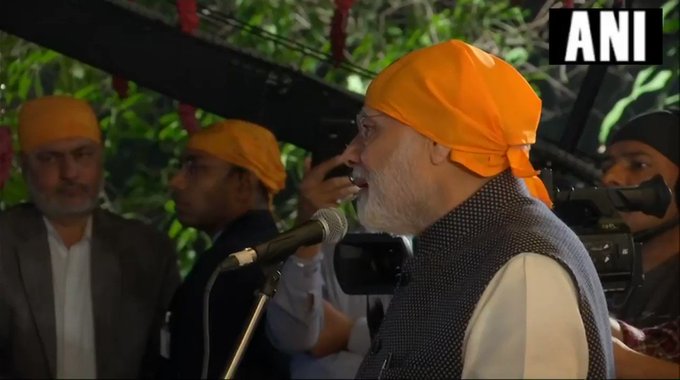
It is for the overarching geopolitical reason of denying China a toehold in Pakistan that the Bharatiya Janata Party government reacted positively to Prime Minister Imran Khan’s peace overture of the ‘Kartarpur Corridor’ with Prime Minister Narendra Modi referring to this project as the breaking of another “Berlin Wall”.

Embedded video

ANI

@ANI

: Prime Minister Narendra Modi says on , “kisne socha tha ki Berlin ki deewar gir sakti hai. Shayad Guru Nanak Dev Ji ke aashirwad se, Kartarpur ka corridor sirf corridor nahi, jan jan ko jodne ka bahut bada karan ban sakta hai”

But instead of moving forward and resuming dialogue that Pakistan has been seeking, Delhi, for no apparent reason, settled down to its usual truculence. The trouble is, governments in independent India have, from the beginning, lacked an appreciation of strategic geography. This is strange considering this was the prime imperial legacy the departing British left us with, which didn’t form the backbone of India’s foreign policy.

Geographic imperatives suggest that India’s overarching strategic objective should be to regain for India, in cooperation with the other subcontinental states, the unified military-strategic and economic space lost in 1947.

This simply can’t be done without Pakistan first being co-opted by any and all means. True, smaller states abutting India—Nepal, Myanmar, Bangladesh, Sri Lanka, Yameen’s Maldives, and even Bhutan—are discovering the advantages of extracting benefits from Delhi by cultivating Beijing. This is par for the course.


It is also true that allowing Indian Sikhs easy access to Kartarpur is a public relations success for Islamabad and may be part of the Pakistan Army’s asymmetric warfare by other means. After all, the North-America-based Sikhs For Justice, a forum pushing for a ‘referendum’ by Sikhs all over the world on a separate state of Khalistan carved out of the Indian state of Punjab, is courted by Pakistani authorities. However, even if the SFJ follows through on its malign intent with Pakistani help, it cannot grow beyond being a nuisance at most.


This only emphasises the importance of turning Pakistan around. India has tried to overawe Pakistan with its military superiority, diplomatically beat it with the terrorism stick, and to economically pressure it by permitting only truncated trade. None of it has worked.

Maybe it is time to wield generosity as a political tool to win over Pakistan and, by the same means, the rest of the neighbourhood, because the strategic gains of doing so are immense.

Time to try Chanakya’s ‘sama’ (compromise, agreement) and ‘dana’ (grants, material aid, assistance) rather than remaining stuck on using ‘dand’ (economic sanctions, violence and military threats) and ‘bhed’ (stirring up domestic trouble) that has only fetched rancor and ill will?

Over-Tilt To America

And finally the Modi regime, in a sense, has outsourced its strategic security to the United States, hoping America’s supposed military strength in the Indo-Pacific region will be a backstop to India’s armed posture. To curry Washington’s favour, Indian governments in the twenty-first century of every political stripe—headed successively by BJP (under Atal Bihari Vajpayee), Congress (led by Manmohan Singh), and again BJP (helmed by Modi)—have done everything, including accepting limitations on India’s strategic capability growth by not resuming thermonuclear testing and shelving the intercontinental range ballistic missile programme to genuflecting to Washington over the H1B visa issue.

It has hurt the country’s strategic prospects by alienating Iran by falling in with the American designs on Iran and reducing the off-take of Iranian oil and gas.

It imperils India’s presence in Chabahar and connectivity to Afghanistan and Central Asia. Elsewhere, it has irked Russia and risked the warfighting capacity of the Indian armed services that are equipped to the extent of 70 plus percent with Russian hardware.

Prime Minister Narendra Modi with the President of Iran, Hassan Rouhani and the President of Afghanistan, Mohammad Ashraf Ghani, during the Trilateral meeting, in Tehran on May 23, 2016. (Photograph: PIB)<a href="https://www.facebook.com/sharer/sharer.php?u=http://pibphoto.nic.in/photo//2016/May/l2016052383745.jpg"><i><br></i></a>
Prime Minister Narendra Modi with the President of Iran, Hassan Rouhani and the President of Afghanistan, Mohammad Ashraf Ghani, during the Trilateral meeting, in Tehran on May 23, 2016. (Photograph: PIB)

All this in return for what? For promises of dated defence technology, such as the antiquated F-16 combat aircraft? Because there surely has been no give on the U.S.’ part on anything else. Indeed, if anything the Donald Trump administration has tightened the H1B screws on the Indian information technology industry.

Moreover, given the disadvantages accruing from the over-tilt to America, skepticism about its reliability and credibility as ‘strategic partner’ should have long ago begun informing Indian policies. This has still to happen.

In the context of the impulsive and unpredictable Trump, who has systematically dismantled the U.S. international security and trade infrastructure—by dissolving the Trans-Pacific Partnership, weakening the North Atlantic Treaty Organization, withholding joint military drills with the South Korean forces, withdrawing abruptly from Syria and Afghanistan and, in the face of Chinese provocations, urging Japan to buy American armaments in lieu of U.S. military support—Delhi continues to depend on Washington to pull India’s chestnuts out of the China-fueled fire. Really?

Posted in Afghanistan, Africa, arms exports, asia-Pacific/Indo-Pacific, Asian geopolitics, Central Asia, China, China military, Culture, Decision-making, Europe, Geopolitics, Great Power imperatives, India's China Policy, India's Pakistan Policy, India's strategic thinking and policy, Indian Air Force, Indian Army, Indian ecobomic situation, Indian Navy, Indian Ocean, indian policy -- Israel, Iran and West Asia, Indian Politics, Iran and West Asia, Japan, Maldives, MEA/foreign policy, Military Acquisitions, Military/military advice, Myanmar, Nepal, North Korea, Northeast Asia, Pakistan, Pakistan military, Relations with Russia, Russia, society, South Asia, South East Asia, Sri Lanka, Strategic Relations with South East Asia & Far East, Strategic Relations with the US & West, Technology transfer, Terrorism, United States, US., Vietnam, Weapons, West Asia | 6 Comments