Intrigued to find an op/ed with the title “Drawing borders in the air” in the Indian Express (1 July 2024) by Air Marshal Diptendu Choudhury (Retd). The title evoked for me the writings of Lt Gen Francis Tuker, commander of the famed 4th Indian Division in the Allied 8th Army in the Maghreb in World War Two who, in 1945, framed “Icarian” India’s military future in terms of its “air boundaries” stretching from the Australian Isthmus across the Indian Ocean to North Africa.
Disappointed, that the piece turned out to be just a pitch for more French Rafale fighter aircraft.
Conceived in the mid-1970s as a follow-on to the Mirage 2000, the Dassault Avions Rafale is among the top end of 4.5 generation combat planes, but strictly 20th century vintage. India signed up for 36 of these in 2015 but that deal was, as I had warned in 2013, the first small numbers buy that proved to be the proverbial foot in the door for France to sell not just lots more of these progressively antiquated fighter aircraft over time to the Indian Air Force, but also of the carrier aircraft Rafale-Marine for the Indian Navy. It is the purchase of 114 additional planes for the air force Choudhury was making a case for, at a time when several 6th gen combat aircraft projects are underway — because they are so damned exorbitantly expensive — as consortia undertakings in Europe (including France), and as separate Boeing and Lockheed programmes for what the US Air Force calls the NGAD (New Generation Air Defence) aircraft — that the Pentagon hasn’t yet committed to. Perhaps, because all manned aerial weapons platforms, as fighting systems go, are already OBSOLETE! As Rahul Gandhi said (in another context) — Ta Ta, Good Bye!
Long range drone swarms on sorties, controlled in a fused lateral (drone to drone, drones to command drone, or d-swarm command pilot in aircraft with drones as “wingmen”), and air-to-ground communications web, in a mix with ballistic and cruise missiles, will likely constitute the composite forces of tomorrow. Actually, the pilot in the kill chain is already absolutely redundant. But the air forces in wealthy countries of the West, and more guardedly in Russia and China, are combining with their aerospace industries — perhaps, for one last time! — to indulge the fighter-jock communities in their midst with the 6th gen planes! This is so, as I have long maintained, because the US, European countries, and now China can — if it comes to it — afford their follies. Can India? Apparently, yes, going by the Indian von Richthofens!
Choudhury listed four main reasons for the extra Rafale in IAF livery. Firstly, that there are the Chinese J-20s — described by him as “fifth generation stealth fighters” stationed in Xigatze, that in tandem with the lurking J-10s are ready to do India harm. J-10s are Chinese copies of the Israeli Lavi — its schematics and tech purchased from Israel in the 1980s when the US compelled Tel Aviv to buy its F-16s at the expense of the locally designed and developed Lavi, forcing the Israel Aerospace Industries to sell Lavi tech to the Chengdu Aircraft Corporation to amortise its costs. Secondly, that it will help the IAF maintain an asymmetric force advantage. Thirdly, as a bridging, multirole, force between the current obsolescing fleet of Su-30s, MiG-29s and Mirage 2000s and the future IAF fleet of AMCA (advanced medium combat aircraft), Tejas Mk 1A and Tejas Mk-II, that will take another decade before it becomes operational. And finally, that it will “reduce dependence” on Russia and “prevent” relying on a “temperamental” US.
Brief counters:
There’s NO such thing as a STEALTH aircraft. Indeed, there’s no aircraft that cannot be detected by low frequency radar — a World War Two invention! A few years back, some may recall newspapers reported the Chandigarh air station (or some such thing) crowing it had detected a PLAAF J-20. Yea, well. It is an untested, unproven, aircraft. And J-10 is a longer, heavier, less agile Lavi because Chengdu put in a Russian AL-31 jet engine. (The prospective Lavi Pratt & Whitney power plant being inaccessible to it.)
India has no symmetric or asymmetric force advantage on the LAC that the PLAAF cannot correct in short order by flying in large numbers of aircraft from mainland bases. Even so, the current strength IAF aircraft mix will be able to handle for some time to come even large numbers of Chinese aircraft off Tibetan plateau bases because the Chinese planes taking off from high altitude bases, will be severely handicapped, hoist with the optimum fuel load-weapon load dilemma that IAF aircraft taking off from the plains won’t face.
As a bridging fleet, Su-30 MKIs would fare better operationally and economically: On a full weapon load basis, for the cost of two Rafales with various onboard missiles — Mica A2A (air-to-air), short range Hammer A2G (air to ground), Scalp cruise A2G, and the long range A2A Meteor, IAF can acquire FIVE Su-30s rated by many renowned international aviation experts as presently the best air dominance fighter. Manohar Parrikar — arguably the best defence minister the country has ever had, was no fool when he chose the Su-30MKI option instead of Rafale (and, for his troubles, was shunted back to Goa!)
Eliminating Russia and the US from the supply side of the Indian demand side aircraft procurement economics makes ample sense only if the savings are funnelled into the indigenous AMCA, Tejas 1A, Mk-2 programmes, and not carted to France to sustain its aerospace sector into the future, as the Air Marshal recommends. He also suggests the IAF rely on France for its future aviation needs because, reading between the lines, he doesn’t think the Tejas line or the AMCA will amount to much! May be, he thinks France is immune to American arm-twisting. If so think again! (Then again, who in IAF wants to miss out on repeat visits to Paris to negotiate the deal for the additional Rafale?!)
Choudhury is rooted in the here and now, displaying no concern about the Artificial Intelligence-driven autonomous weapons direction, tech-wise, that warfare is taking. Living with the comfortable certainties of manned platforms of the past is all very well for retired Air Marshals to do as a pastime, except it reflects the Air HQ’s thinking and could be the Indian Air Force’s death knell. For the Modi government to accept such counsel will only confirm the view that, where national security is concerned, it doesn’t know what it is doing.
My last book — Staggering Forward: Narendra Modi and India’s Global Ambition, published in 2018 by Penguin in time for the 2019 general elections was prophetic in many respects. Most importantly in its conclusion that reeked of disappointment with his record in office in his first term (2014-2019). Modi, I rued, was too much the statist to go in for a radical structural overhaul of the system and actually shrink the government, get it out of the economy, as he had promised to do and pave the country’s path to prosperity. This because there were precedents galore to prove that deregulating the economy, freeing it from punitive-minded government oversight, had worked rapidly to industrialise other countries and to generate mass employment — the number one social-political-economic problem confronting India.
But Modi seemed determined, instead, on replicating the success he had obtained in Gujarat by having a small group of babus around him doing his bidding. I had warned then that what worked at the state level wouldn’t work at the India level, and that proved to be the case. He squandered the opportunity to rid the system of its socialist controls, particularly on the private sector, that are baked into the thinking and functioning of the state. And, India will now level off and, alas, far from making it with sustained double-digit growth, will fall back into the 6% class that may keep the country from sinking, not lift it into the top rank.
Modi has barely made it back to power. Modi fatigue was a factor. There was a little too much of the PM in every setting, and it grated. The question is how much of his policy thrust which, in the economic sphere is in the right direction, but in foreign and defence policy fields suffers from lack of vision, of Halford Mackinder’s “map reading habit of mind”, and coherence, might be retained?
His tenure and policies hereon will be dictated by coalition imperatives. Luckily for him, the Telegu Desam leader Chandra Babu Naidu was the original modernizer, who conceived of Cyberabad as an Information Technology-Business Process Management services hub and, among politicians, has generally been ahead of the curve in using technology to improve government efficiency. Nitish Kumar somehow managed to survive the snakepit of Bihar politics for nearly two decades and might be satisfied with some cabinet post (likely Railways). These two are unlikely to impede Modi’s policies but will dampen the PM’s urges, whenever he espies political trouble, to indulge in communally polarising statements and politics.
The trouble is with this unanticipated political reverse, Modi and the ruling Bhartiaya Janata Party may just decide to play it safe and go full hog with populist policies — more freebies, more revadis, and suck the vitality and vigour right out of the economy.
But what if Naidu and Nitish heeded Sharad Pawar’s siren call and joined up with the Left-leaning opposition to bring back the perpetrators of Indira Gandhi’s kind of socialism — not Nehru’s more idealistic and harmless variety, who last ran riot during the Manmohan Singh era, now joined by the Akhilesh Yadav gang of ‘samajwadis’ whose tendencies are a strong-arm variation of Indira’s socialism that Rahul Gandhi has treatened to bring back? There will once again surface the milieu in which the public exchequer is treated as personal bank. Indira’s “garibi hatao” mantra, it may be recalled, kicked the garib into more garibi!
I am an Edmund Burke-ian conservative who ardently believes in minimal role for government in national life. I was, perhaps, the first commentator to laud Modi in 2011 (yes, that far back!) who welcomed him as a prospective Prime Minister and who, after “Rajaji” (C Rajagopalachari), Piloo Mody, and their Swatantra Party in the 1960s, offered a solid right-of-centre political alternative to the country and its people weighed down by the follies of ‘socialists’ in high places for whom socialism had delivered! For the rest, socialism has been a plague, the cause of ruination of the country. I was impressed by Modi’s 2014 campaign slogans — “less government, more governance”, “the government has no business to be in business”, etc., that pointed to the emergence of a desi Edmund Burke. I was thrilled. I had a further cause for jubilation when Modi, in 2014, ran with my 2002 “India First” concept as his lodestar for India’s foreign and military policies. It is another matter he did not follow through on it, or on his slogans.
It was a short-lived dawn.
Modi’s failure to get the government out of the economy, his reliance principally on the defence public sector units to achieve an ‘atmnirbhar Bharat’, his unwillingness, ironically, to talk about native talent and genius and the private sector, not trust them to lead the economic charge, convinced me that Modi was much less than he publicly made himself out to be, and that I had imagined him to be.
With the return full-steam to coalition politics, the slight possibility of Burke-ian conservatism flourishing in India, has died a premature death.
The surprising extension in service of a month afforded the incumbent army chief General Manoj Pande has scrambled the calculations about who his successor will be. The race that was supposedly between the current Vice Chief, Lt General Upendra Dwivedi, and the next senior most officer — the GOC-in-C, Southern Command, Lt General AK Singh, is now more open. All the other theatre commanders, by their seniority — Lt Generals MV Suchindra Kumar (Northern Command), NS Raja Subramani (Central Command), Manoj Kumar Katiyar (Western Command), Dhiraj Seth (South Western Command), Manjinder Singh (Training Command), and Ram Chander Tiwari (Eastern Command) have been brought back from the paddock, to the gate.
There is something fundamentally unfair about the seniority principle dictating promotions in the military, and a very good thing that the Narendra Modi government, is giving it a burial. It had earlier jettisoned seniority considerations when elevating General Bipin Rawat as army chief, Admiral Karambir Singh as the navy chief, and established a precedent by bringing General Anil Chauhan out of retirement to fill Rawat’s spot as Chief of the Defence Staff. Its decision to extend Pande’s service came a trifle late in the day it is true, and suggests that the PMO had a last minute epiphany, realising that restricting the choice of candidates for the COAS post did not serve its interest-qua-national interest.
Let’s be clear about one thing. All appointments to the armed services’ Chiefs of Staff positions are political, have always involved political calculations.
Indira Gandhi had had enough of being overshadowed by her flamboyant army chief, General SHFJ Manekshaw, who effortlessly took away a lot of the credit for cleaving Pakistan/liberating Bangladesh from her, and did not want him succeeded by Lt General Premindra Singh Bhagat, a combat engineer (Bombay Sapper) and the first Indian to win the Victoria Cross in the Second World War (for personally clearing 15 minefields in Ethiopia over 55 miles in four days and, for his troubles, having his ear drums punctured, among other injuries). What made him even less attractive was the fact that alongwith Lt Gen Henderson-Brooks, he was tasked with inquiring into the 1962 War fiasco. The Henderson-Brooks Report, still classified, honestly deconstructed the Indian army’s greatest humiliation and operational breakdown, and pointed to the calamitous political failure that presaged it. The finger was pointed squarely at Indira’s father and first Prime Minister Jawaharlal Nehru, and his responsibility for it. Nehru first misassessed the China threat, then did nothing to build up the army to take on the PLA, leave alone enable it to preempt or reverse the steady encroachment early 1950s onwards into the Aksai China area of Ladakh. Why have a genuine war hero as army chief daily reminding her of her father’s culpability for that pol-mil disaster?
She arranged for Mankeshaw to stay on for an additional fortnight just so Bhagat retired, and she could install the nondescript General GG Bewoor as COAS. But conscious of Bhagat’s credentials and that she had done him wrong, she appointed him Chairman of the Damodar Valley Corporation — the single biggest source of (hydro) electricity in the country at the time. Likewise, she overlooked the seniormost officer, Lt General SK Sinha, and hoisted the more pliable Arun Vaidya as army chief in July 1983; sure enough, the latter delivered on Operation Blue Star a year later.
Seniority, in principle, is a fundamentally flawed, unfair, and abysmal standard for deciding who becomes Chief of Staff of an armed service. It is the lazy government’s way of appointing someone, involving no political vetting of the candidates, no requirement for the top leadership to apply their mind. The country using this system might occasionally luck into a great officer, just right for the particular service. But this is rare. The element of automaticity and determinism, is appalling for various reasons.
While it is the merit lists at the NDA stage, actual commissioning stage, etc. that gets an officer his baseline seniority, to go up the ladder, it helps to refine and deploy the courtly arts — chaploosi, ji huzoori, and flattering the boss to secure good CRs at every stage. There is quite too much of this, and it has reached such levels as to truly become a military liability. Those who simply are not constituted to bow and scrape get winnowed out. The result: Among the really competent, only a few manage to rise to the very top, and then more because of luck than by the dint of their own effort and the glow of their achievements.
At the stage of COS selection, as in the instant case, for seniority to emerge as the decisive metric presumes that all the contending Lieutenant Generals — Dwivedi, Singh, Kumar, Subramani, Katiyar, Seth, and Manjinder, are equally acceptable in political terms, which presumption may be wrong. By way of shortlisting, it is logical to conclude, for example, that Pande’s extension rules out Dwivedi and AK Singh. Among the rest, seniority becomes irrelevant. There’s a minimum line of political acceptability the final selectee will have to meet. But that said, the dossiers on each of these officers will doubtlessly be perused, and a subjective judgement made by Modi, possibly Shah, Rajnath and Doval, in the main, about who among the remaining Lieutenant Generals can be trusted more dilgently to pursue the goals of “de-Britishing” the senior service, solidfying the Agniveer/Agnipath programme, etc., and not impeding the CDS General Chauhan’s assigned task of securing jointness and theaterisation.
This is not “politicising” the military, but getting it to align itself to the norms and values of the ruling party — a perfectly legitimate exercise in a representative democracy. Should the Congress party return to power, it can just as legitimately revert to the old regimental recruitment patterns, end the Agniveer programme, etc as promised by Rahul Gandhi. Of course, too much of such to-ing and fro-ing may institutionally tie up the armed services in knots, and not be such a good thing for the country.
Finally, the Modi government ended the smouldering resistance within the military by notifying the Inter-Services Organisations Act (ISO). I had suggested some 20 years ago to the KC Pant-chaired government committee studying higher defence reorganization and reforms, that whatever the CDS/integration/jointness scheme the committee decided on, it should be imposed on the armed services by government dictat because sending it to the three services for their viewpoints would be to consign it to the trash heap. But it was sent to the services and it delayed the realization of an integrated military because, simply put, the services chiefs had too much at stake, and too much to lose to not try and prevent it by any and all means.
Whether again a time lag will be allowed to develop by Modi between the Act and its coming into force with the actual announcement of the independent theatre commands is a matter of conjecture. Hopefully, there’ll be no footdragging at the Services headquarters end, and its full and complete implementation will follow immediately.
What isn’t clear from newsreports though, is what’s to become of the Services Chiefs of Staff and their respective establishments, and whether this most frictive issue has been resolved?
One of the main reasons why the Chief of Defence Staff system did not quite takeoff is because while General Bipin Rawat was appointed the first CDS in December 2019, there was no system for him to head — it was all Chief, and no Indians! What power and authority accrued to Rawat was what he scratched around to obtain — in the early days he was assigned a single room in the South Block basement and virtually no staff! The CDS at the time was an accumulation of lesser roles and decisionmaking authority — the minimum the Services chiefs thought they could dispense with while retaining most of the meaningful bureaucratic turf for themselves, as a means of slowing down, even stymieing, armed services integration without being accused outright of stalling the process. And that was the big problem — there was no CDS system to REPLACE the separate loci of power in the military when Rawat was installed as CDS. Has that big wrinkle been ironed out?
With the (ISO) law backing the theaterisation initiative, the armed services chiefs will find it more difficult to hold back Chauhan, assuming he is driven to achieve what he was tasked to do, because he now wields the whip hand.
It is reported that Chauhan set up a whole bunch of committees and what not, to address the various aspects, of integration and theaterisation. This is all very well, but it also suggests that no singular road map has as yet been marked out, otherwise the government would have announced that as well. This is bad news because it again provides elements within the ancien regime who hate to see major organisational change, leave alone genuine transformation, the time and the inclination to try and use the interstices in the existing system to delay actual theaterisation by obfuscating matters, raising extraneous issues at every turn and, generally, preempting a fast-paced race to the end-state.
At the heart of the problem is, and has always been, the unwillingness of the services chiefs of staff to surrender any turf whatsoever. Alone among the major militaries of the world, the Indian armed services are still run on the pattern the pre-Second World War British military was: Strictly separate services. This means the service chief in India is the administrative head of the service, the planning head, the procurement head and every other head and, the role they most covet, the operational head of the service. The separate service standard was junked by Britain owing to the exigencies of fighting the Second World War when far flung Allied theatre commands became a necessity and were expeditiously installed.
India has never fought a long war, and the armed services have not the faintest idea, clue, or experience, of what that would entail. No conflict India has been in since 1947 has lasted more than 12-13 days! And hence, the inefficient, wasteful and triplicating separate services setup endured because it was never really tested by sustained warfighting. In the event, the three services could get away — when it came to military jointness — by arguing that the small steps reluctantly taken would get the military there, and that there was, in any case, no need for it, as the air force stationed an officer at each of the army’s commands, etc. as if that made up for anything, least of all rational expenditure of manpower and financial resources in peacetime as much as in war. Economising is apparently the main motive for the ISO; it is as good if not better than any other reason, as long as the purpose of integrated commands is served.
But, let’s get the sequence right! First, comes integration under CDS, next comes theaterisation. Often in the media, the two are synonymous, or conflated.
With the ISO, CDS is now formally elevated as the single source of military advice to the Prime Minister and the Government of India, unlike the confusion the PMs in the past faced when having to make sense of three services chiefs advising different things on the same subject. Hopefully, it also supersedes the existing farcical system where a babu, the defence secretary, is responsible for the country’s security! It is also reported that the 17 separate theatre commands are to be rationalised into three integrated operational commands: the Lucknow-based command for the China front, the Jaipur command for the Pakistan front and an Oceanic Command set up in Karwar. There’s little else on the topic in the public realm.
If the models of military integration in the more advanced countries are worth emulating then integration should ensure, to the extent possible, that a theatre command has fighting platforms in all three mediums. CDS should be solely responsible for war planning, force structuring, budgetary allocation, and procurement.
For a subcontinent-sized country, moreover, three operational commands are too few. More reasonably, given the vast expanse of the Indian Ocean — and with the Indo-Pacific concept in mind — the single Karwar command makes little sense. A more effectively distributed military power would be two Peninsular commands — East (Vizag) also encompassing the Myanmar land border, and West (Karwar), inclusive of the formal land border with Pakistan (upto Gurdaspur), with a smaller Udhampur-based integrated command for operations on/across the Line of Actual Control in J&K. It will reflect India’s emerging concerns where Pakistan is no more than a tertiary threat and deserves proportionate attention. That’s a big swing from the present when the bulk of all forces are, detrimentally for India, Pakistan-oriented.
A Third, Kochi-based, Southern Command should be the land-based air heavy element, permitting two of the three aircraft carriers the navy has decided unwisely to invest in, on station in the east and the west, and earning their keep by deploying deep out in the Indian Ocean basin in the arcs southern tip of Western Australia -Southeast Asian straits — Sunda, Lombok, Malacca, and Simonstown-Gulf. An adversary venturing nearer shore can be dealt with adequately by landbased air.
Because China assumes primacy as India’s main and only strategic, aerial, maritime and landward threat, the length of the China front under one command is asking for trouble. Two of them — China Front East and China Front West with the territorial division east and west of Lucknow with HQs located as forward-based as possible, seems a more prudent solution considering the different terrain specificities and appropriate fighting platforms — high altitude desert in the west, mainly mountains-valleys in the east (except on the northern Sikkim plains). And the Strategic Forces Command should be retained hopefully, manned by a specially trained nuclear cadre of officers — something Pakistan Strategic Plans Division has done from the word go.
To summarize: 1 Strategic Forces Command, 3 peninsular commands, 2 landbound anti-China commands plus the minor LOC command (for Pakistan contingency), and 5 support commands — special forces, logistics, cyber-elint, transport, military infrastructure (merging into it the Border Roads Organisation), for a total of 12 integrated commands. This is a far better, more efficient, more practicable use all-round of fighting and support assets.
And, what are the services chiefs of staff to do? As in most other advanced militaries, they will be administrative heads of their armed services responsible for and, in charge of, overall facilitation of the integrated operational commands and career management of the officer cadres, officer and family welfare, retired servicemen affairs, Agniveer programme, etc.
The entire force integration enterprise will pivot on how the transition is affected, and the reward structure and promotions scheme put in place to accommodate it. This is going to be the diciest part. Just to indicate the degree of difficulty: How to come up with an equalization metric to judge, say, 6 months on a warship, 8 months in a Rashtriya Rifles counterinsurgency unit in the Srinagar Valley, and 1 month (for a pilot) on an active ALG (advanced landing ground) in Ladakh, for the purposes of promotion to next higher rank in an integrated command?
[The Two Amigos — NSAs Ajit Doval and Jake Sullivan]
All of a not so sudden, we have news of India covertly creating alleged mayhem all over the map — in Pakistan by supposedly bumping off a bunch of jihadi terrorists under the protection of Pakistan Army’s Inter Services Intelligence in Lahore and elsewhere, in Canada by eliminating a Khalistani terrorist, Harpreet Singh Nijjar, masquerading as a Gurdwara prabandak in Western Canada, in Australia where Mike Burgess, Director General of the Australian Security Intelligence Organisation (ASIO) charged an Indian “nest of spies” with trying to steal sensitive technology and, curiously, airport security protocols!
And the Washington Post kicked in with a story a couple of days back that named the officials allegedly involved in the plot to do away with the Khalistani fugitive and terrorist, Gurpatwant Singh Pannun residing in the US. RAW chief Samant Goel, the story charged, supposedly ordered Pannun’s kill, and another RAW official, Vikram Yadav, ostensibly directed the operation in the field. More damagingly, the story — no doubt sourced from the White House and US intel agencies, hinted that Modi’s National Security Adviser, Ajit Doval, was in the know of this operation and, hence, was the top man in the chain and in, some sense, culpable. This story apparently sprang out of frustration at the Washington end about the lack of progress in the “meaningful” investigation the Indian government had promised the Biden Admin in late autumn last year.
But does Washington really expect Modi to offer up the heads of Messrs Doval, Goel, & Yadav to satisfy the US government’s metric for “meaningful” investigation? Really?!!
In a November 29, 2023, post on this blog (“The Pannun Affair reveals a penetrated Indian government communications system, and the atmnirbharta policy as a joke“), I had pointed to the possibility that the original info of Indian involvement in the Nijjar and Pannun cases may have been by an Indian intel/high government official turned by CIA, or owing to electronic intel intercepts. “It is curious the Modi regime has not denied an Indian government role in the conspiracy that Washington claims to have foiled to do in America a Nijjar to the Khalistani troublemaker Pannun,…leaving him free to do mischief in both countries, and in the UK”, I wrote in that post. “Why hasn’t Delhi demanded details from the US government as it did from Trudeau? Doesn’t GOI want to know just how the US became aware of this supposed plot, and through which channels, and why the Americans are so confident about their accusation? Where’s the evidence? And was it generated by NSA/CIA/DIA or some other American agency, or is it, as likely as not, another US mole at work in the Indian embassy on Massachusetts Avenue in Washington, or out of New Delhi?”
“In the context of a thoroughly exposed and vulnerable Indian official system,” I added in that aforesaid post, “PMO was apprised by the US of what it had by way of irrefutable evidence. It may explain New Delhi’s cagey response, promising investigation and punitive action regarding the Pannun affair, something Trudeau was unable to draw from Delhi in the Nijjar case.”
Two questions arise: (1) Why did the Modi government simply not issue a denial and then stick by it thereafter? And (2) Was the “evidence” the US govt provided forensically parsed by Indian technical intel people to pinpoint who the original Indian source might be who may have alerted the US intel in the first place, and what sort of electronic means the US used to ascertain the sequence of events and Goel’s and Yadav’s roles in it?
The original mistake the Modi government made was not to stick with its first reaction, to the effect, that all such stories were a bit of hoo-ha and nonsense, and that India was a responsible state that did not indulge in such low jinks. This should have been the Indian government’s permanent position on all such issues. Except, with every Lahore hit, or some kill mission going askew (with the bomb going off near some compound wall, or something), there was Prime Minister Modi publicly glorying in the fact that “hamne ghus ke mara hai” — words the defence minister has used repeatedly to also crow about some successes on the other side of the Radcliffe Line.
Military (Uri, Balakot) and covert actions are thus conflated, and official Indian responsibility broadcast by the PM and his defence minister for intelligence actions in Pakistan, just to score some political points against the opposition parties at home. This is the height of amateurishness and the Indian national interest and Indian intelligence agencies may not survive it.
Doval or someone else should have advised Modiji and Rajnathji to not comment at all on such matters, and to apprise for them the high cost of their doing so. Because now, Pakistan, with good reason, is expected to present the assassinations of numerous Pakistani citizens in Pakistan as Indian terrorist acts to the Financial Action Task Force in Paris, and put India in the dock for terrorism! This is turning the tables.
The PM’s and Rajnath’s boasts also bolster the Canadian and US allegations of an official Indian hand in the killing of Nijjar, and of the attempted assassination of Pannun in the US.
No intel ops in a foreign land (including, neighbouring states), especially ones to get rid of enemies of the state, are ever owned up by any government. When some info about such ops does leak out in the public realm, a stiff upper lip is maintained, with only a ‘nonsense’ or ‘no comment’ on offer — always the only correct response. And should some foreign government make an issue of it, as Washington has done in the case of Pannun, the Indian government using the same official channel, should ask the US formally to investigate the assassination of, say, Dr Homi J Bhabha, the nuclear visionary, in the Air India Bombay-Geneva flight in February 1966 that heartlessly also killed the hundred odd innocent passengers also travelling in the Boeing aircraft, by a timed plastique explosive going off in the plane’s cargo hold. To repeat, this op was hands-on mass killing conducted by the CIA assistant head of clandestine operations, Robert Crowley (and so confessed by him in a book I have refrred to in an eearlier post).
The Pannun investigation, New Delhi should tell the Biden Admin in the plainest words, will proceed exactly in parallel with the Bhabha inquiry in Washington.
The Washington Post in its April 30 editorial harrumphed that “The United States needs stronger laws and other measures to fight transnational repression; Congress is considering legislation and should act. How the India case is handled will also send an important signal. If it turns out that India’s security officers plotted to murder on these shores and then escape accountability and punishment for doing so, others will be encouraged to kill with impunity. The United States cannot let this happen.”
In the above, replace in the text, India for the United States, and United States for India, and Parliament for Congress, and that should be the Indian government’s stand.
And, please Modiji, Rajnathji and all the other ji’s in the cabinet, who feel the urge rhetorically to beat up on Pakistan and otherwise to sound off in public on such issues — DON’T!! Think of something else to say!
Let RAW and other agencies continue doing what has always been done in the covert business of state since time immemorial. That’s what CIA, MI6, et al do. Enemies of India cannot be allowed to go scott free, or spend their retired lives unmolested in a foreign country on ill-gotten gains, epecially turncoats, who sold the country off for the proverbial pieces of silver. (Like Ravinder Singh, former head of counter-intel, RAW, last heard living in New York City — in Jackson Heights?).
Harsh punishment not meted out to informers, terrorists, etc. will only encourage more Indians in high positions, and other villains, to do the nation in.
The Indian government always has its tail between the legs, is diffident, when facing down the US and the West, and China. One of the reasons the Albanese government in Australia did not raise Cain over the “nest of spies” issue, is because Canberra is keen to have future military cooperation and stronger economic ties. The US is in no position to alienate India because without New Delhi’s central blocking role in the Indian Ocean, America’s ‘China containment’ strategy goes down the drain.
Stand up for India, Modiji. Jaishankar, et al, will do the same!
FINALLY, the Multiple Independently-targetable Re-entry Vehicle (MIRV) system-armed Agni-5 intermediate range ballistic missile (IRBM) — the Divyastra was successfully test-fired yesterday. Nearly twenty years late.
The MIRV tech has been collecting dust at the Advanced Systems Laboratory (ASL), Hyderabad, for the last 19 years. It was a project lovingly shepherded to near completion by RN Agarwal, the then Director, ASL. He wanted to complete it by the time he retired in 2004. But the project missed the deadline by a year. In part because Dr Agarwal’s approaches since 2002 to the first BJP government of Atal Bihari Vajpayee for approval of a test launch of a MIRVed Agni did not elicit the response he had hoped for. The Vajpayee PMO, with Brajesh Mishra, the National Security Adviser-cum-Principal Private Secretary to the PM, heading it, repeatedly said NO! But Agarwal’s spirited campaign for the Indian MIRV project cost him a promotion. He was passed over for the post of DRDO chief and Secretary to the Govt of India (GOI), because Mishra feared Agarwal would use the DRDO pulpit to push MIRV, which Mishra did not want. The head of the Arjun Main Battle Tank Project, Dr M Natarajan, was appointed to lead DRDO instead.
The Manmohan Singh regime wouldn’t OK the MIRV test, and Narendra Modi didn’t either until sometime in late 2022 when he greenflagged the Divyastra test launch.
I had long ago called for the militarisation of Indian Space Research Organisation (ISRO), specially its satellite package injection into designated orbit-technology, which is MIRV in embryo. But there is no reason to doubt Agarwal’s contention that ASL developed the more demanding MIRV tech by itself. Because, MIRV cannot tolerate deviation in “injection velocity” exceding 0.1 metre per second; in comparison for satellite placement, 5 to 8 metre deviation is permissible.
The nose cone geometry of the MIRVed Agni-5 (Prime) — Divyastra IRBM, can carry multiple N-warheads. But, like Agni-1 medium range ballistic missile, Agni-2, and Agni-3 — in fact all Agni’s, the Divyastra is configured to carry either a single megaton weapon, or as many as eight smaller yield nuclear warheads and decoys. For the test launch, the three MIRVed warhead variant was, perhaps, used, with each of the warheads releaseable at one second intervals during which time the missile travels 4.4-5 kms. Its elliptical target zone is calculated as roughly 50 kms by 150 kms.
[By the way, all this information and more on the Indian MIRV tech and Agni missiles was featured in my 2008 book — India’s Nuclear Policy published by Praeger in the US and, the South Asian edition, by the local Pentagon Press.]
But, PLEASE NO TALK anywhere and ever OF THE DIVYASTRA USE AGAINST PAKISTAN by any GOI officials and military officers. India’s reputation has suffered irreparable harm as it is over the years by the government’s and armed forces’ fixation with Pakistan as threat. Think of an elephant frightened by a mouse.
MIRV is a strategic attack and nuclear deterrence multiplier — because more nuclear weapons can be carried on a smaller number of missiles. So, why wasn’t MIRV tested before now?
Brajesh Mishra feared that a successful MIRV test would imperil the Vajpayee government’s policy of rapprochement with the United States, which was upset already, firstly, because Washington had no inkling of the 1998 tests, and secondly, because the S-1 test intimated India’s thermonuclear weapon interest. But the George W Bush Administration ensured during Manmohan Singh’s tenure via the 2008 nuclear civilian cooperation deal negotiated — need I repeat again — by the current foreign minister, S Jaishankar, who was then Joint Secretary (Americas) in MEA. It guaranteed that India would not become a thermonuclear power.
This happened because Jaishankar agreed, in essence, to put a lid on Indian nuclear testing as demanded by his lead American counterpart and, in the bargain, strategically sold India out. The political cover for this concession was Vajpayee’s “voluntary” test moratorium announced in Parliament on May 28, 1998. The deal carries the explicit threat of termination of the deal, if India resumed nuclear testing. It achieved America’s express arms control goal of “capping and freezing” India’s strategic weapons at the sub-thermonuclear level.
‘Strategic Sellout’ is, in fact, the title of a book of essays published in 2009 — a compilation of op’eds and such by the late Dr PK Iyengar, former Chairman, atomic energy commission, and Drs AN Prasad, former Director, BARC, Trombay, and the late A Gopalakrishnan, former chair, atomic energy regulatory commission, and myself, written realtime even as this deal was being negotiated, vehemently opposing each and every deleterious provision in it, as it became known. It was prophetic in how things have turned out, nuclear policy-wise for India, since. India has gained little by way of advanced nuclear technology because the really critical stuff like the plutonium reprocessing tech is, in any case, unavailable to India — deal or no deal! And because no Indian PM — not Manmohan and until now not Modi either, has had the guts to ram resumed nuclear testing down the US throat — even when it clearly is in the national interest to do so. Absent new ThN-tests, India is fated to remain in China’s strategic shadow.
The great villains here are R Chidambaram and Anil Kakodkar. Chidambaram, a crystalographer of middling merit, who did some good work early and for the rest of his career coasted on it, who was installed as successor to Iyengar by Dr Raja Ramanna mainly because of his pedigree, IISc, Bangalore, — Ramanna’s alma mater, when Prasad, BARC director, had better credentials because of his hands-on weapons experience. In this respect, Chidambaram’s calculation of the ‘equation of state’ for plutonium wasn’t as great a thing as it is made out to be. A graduate student of Freeman Dyson’s at Princeton University, calculated it correctly, for God’s sake! Chidambaram was unenthusiastic about the Shakti tests in 1998, and thereafter was the main opposer of nuclear test resumption in government circles as Science & Technology Adviser to Manmohan Singh, from which position he was pushed out by Modi.
Chidambaram is the last man standing to still believe that (1) the 1998 fusion test was a success, and (2) computer simulation with the existing limited computing capability is good enough replacement for actual physical explosive testing to rectify any weapon design weaknesses identified by the 1998 tests! And he’s ensconced as Tata Chair in BARC, still ruling the roost, and preventing any movement in official quarters towards a new nuclear testing regime. Shouldn’t Modi eject him from BARC? Hasn’t he done enough harm?
Kakodkar was a weak-willed engineer who replaced Chidambaram and advised Jaishankar during the civil nuclear deal negotiations. At a crucial moment in Washington, when the deal hung in balance, and a befuddled Manmohan Singh on a state visit to the US, asked him for final advice on whether to proceed with it or not, he gave the thumbs up, dooming India’s thermonuclear prospects. Kakodkar was never able to face the likes of Iyengar again.
Indian strategic weapons programmes have all displayed the same disurbing pattern — they all went into government-induced hibernation just when they needed to be most active. India achieved the N-weapons threshold with the plutonium reprocessing plant in the Spring of 1964 — seven months before the first Chinese atomic test. But it went to sleep until the 1974 test when, rather than weaponise, Indira Gandhi sent it back to snoozing, and yet again after the 1998 tests the same thing again, and that winter of hibernation for the thermonuclear weapons projects has still to end.
In the meantime, the programme weathered Shastri’s interegnum when India came closest to accepting the offer of a Western nuclear umbrella — Ukraine’s present conditions as a war-wrecked country is a stark reminder of taking American promises of nuclear security seriously! And the foolish Gandhian idealist, Morarji Desai, who as PM and prodded by the US, all but ordered closure of the nuclear weapons work in Trombay. [Read my 2002 book, with 2nd ed in 2005 — Nuclear Weapons and Indian Security for all the alarming details!]
One of the main reasons the Indian weapons programme is in the dokldrums is because of a lack of quality leadership. By February 1966, the great visionary and driver of the dual-use N-programme, Homi Bhabha, was assassinated by a CIA timed explosive on board an Air India flight he was taking to Geneva, according to a published confession by a former assistant director of clandestine ops of the agency, Robert Crowley. And, to the country’s great ill-luck, the Indian nuclear weapons programme had no strategic-minded scientists appointed to lead the AEC after Iyengar — only Chidambram, who was afflicted with serious strategic myopia and deserves to be in a purgatory, and a lot of engineers without familiarity of nuclear weapons science and technologies who, if they have distinguished themselves at all have done so as slotted functionaries, not leaders.
For Your Information, R Chidambaram is Jaishankar’s uncle (a cousin of the late K Subrahmanyam).
[Defence Secretary Aramane and CINC, PACOM, Admiral Aquilino at INDUS-X]
If one mulled the statement by Defence Secretary Giridhar Aramane at the INDUS-X (India-U.S. Defense Acceleration Ecosystem) summit held February 21, and knows a bit of history of the 1962 War, it was hard to escape the sense of deja vu! Aramane’s spoutings reminded one, in a way, of Jawaharlal Nehru’s abjectly pleading letters to US President John F Kennedy of November 19, 1962, begging for American military help.
Of the two letters — the first is considered — 60 years later, to be so humiliating and self-debasing, the Indian government insists still that Washington not declassify it! The shaming quality of this letter may, however, be deduced from the bit more measured second letter — available in the public realm — that Nehru had Ambassador BK Nehru hand over to the White House the same day after the fall of Se La and Bomdi La. In this latter, equally infamous, missive he pleaded — and this is by way of information for readers of this blog — among other kinds of military assistance, for 12 squadrons of “all-weather fighters” manned by American pilots plus an additional two squadrons of B-47s to “neutralise” PLA bases in Tibet.
This is Nehru (2nd letter): “The Chinese threat as it has developed involves not merely the survival of India, but the survival of free and independent Governments in the whole of…Asia…We are confident that your great country will…help us in our fight”.
This is Aramane speaking: “We are standing against a bully [China] in a very determined fashion. And we expect that our friend, the US, will be there with us in case we need their support. It is a must for [India], we have to [stand up to China] whether we can or we can’t…We have to [have] the strong resolve that we will support each other in the face of a common threat, [this] is going to be of critical importance to us”.
So, where’s the resonance? It is in the basic and fundamental presumption and belief underlying both that the United States will come readily to India’s help. This is usually the attitude of those who take Washington’s rhetoric at face value, have not deeply studied US history leave alone that country’s alliance dynamics, and to the extent they are familiar with the US it is only as tourists. As Narendra Modi was during his numerous visits to that country as an RSS pracharak and, now PM, as state guest, and short-term residents — diplomats/civil servants, such as Jaishankar, who have pulled career stints in Washington/New York/Chicago/Houston/San Francisco — the last four cities being the locations for Indian consulates, and come away duly impressed (as most foreign visitors from the Third World naturally are).
One of the themes I have repeatedly iterated in my books and writings, and in interactions with government officials and military officers over the past four decades, is just how infirm, unpredictable, and unreliable the US really is as an ally or strategic partner, or even just as a friendly state. And why it is downright foolhardy and extraordinarily risky to lean on Washington for assistance in a crisis, and factor this into India’s plans and policies for prospective hostilities with China. There is ample historical evidence for such a conclusion that I have adduced, and is the sort of thing one would expect a professionally-run government to bear in mind.
But this concern has apparently has not been paid heed by successive Prime Ministers and their Offices (PM/PMOs), or any of the line ministries — the Ministry of External Affairs (MEA), even less the Ministry of Defence (MOD). So, with Manmohan Singh shaking his head, as Joint Secretary (Americas) Jaishankar negotiated that ignoble civilian nuclear cooperation deal with the George W Bush Administration which, because it bars India from nuclear testing, prevents the country from ever becoming a bonafide thermonuclear weapons power, in other words, this deal has fated India to remain permanently in China’s strategic shadow. And, here is Jaishankar, 15 years later, as minister for EA doing what his tilt US-wards from his time in the Washington embassy has inclined him to do — not advise caution to the PM when dealing with the US.
If proof were needed of America’s inconstancy as friend, ally or strategic partner, look no farther than Ukraine. President Zelensky began the fight with Russia on the basis of promises of sustained US military aid. So, how’s that going Volodomyr? Is there anything for New Delhi to learn from Kyiv’s predicament, Shri Jaishankarji?! No, nothing? OK, so much for diplomatic experience and persipience.
That makes Aramane — for no fault of his own — important in the scheme of things. What does Aramane, who as Defence Secretary is actually the PERSON responsible for the defence and security of the country — NOT the the military Chiefs of Staff, as armed services officers are only too fond of reminding anyone who will listen about the prevailing anamalous system of authority and responsibility in the Government of India, bring to the table?
Well, let’s see. An IAS officer of the Andhra Pradesh cadre, Aramane has never been within sniffing distance in his career of a posting in MOD. Naturally, that qualifies him to be Defence Secretary. But before getting to South Block he was Secretary, Roads & Highways. So, perhaps, he was brought in and has obtained an extension in service in MOD to oversee the programme of construction of roads and other infrastructure on the Line of Actual Control. He is a civil engineer by calling and road building is in his line of professional work (assuming he remembers anything from his engineering college days),. Even if can’t, he is nevertheless better off than the generalist counterparts gumming up the works in the rest of the government. As an engineer with, hopefully, a problem-solving mindset — the thing that distinguishes him from his civil service brethren, he ought to better comprehend defence issues (as the late Manohar Parrikar was able to do as a former mechanical engineer and defence minister). At a minimum, that’d require him to do his homework before mouthing off. This he did not do.
Did he know what he was talking about when he was extolling “interoperability” at INDUS-X? One could sense the satisfaction in the CINC, US Indo-Pacific Command, Admiral John Aquilino, also sitting on the stage, putting away his own talking points, to let Aramane do the talking for him! Because, interoperability is the code word US officials and military officers have interminably used to flog their view since the American Defence Secretary, Caspar Weinberger, first visited Delhi in the mid-1980s that India should buy more US capital weapons platforms — more aircraft, more Apache attack helos, more Chinooks, more ships, more artillery, more this, more that, and rest of the obsolete or fast obsolescing hardware — production of Apaches, Chinooks, C-17s, etc., for example has ended. These are all staple Indian buys that help unclog the US military inventories even as Delhi forks over hundreds of billions of dollars for them — but uhnn uhnn.. no submarines! — monies that could have been invested in indigenous design and development projects in the private sector for any chance of success!
Then agaion, may be Aramane did not get Jaishankar’s Memo because isn’t the EAM broadcasting — even if it is only for form sake, that Indian foreign policy aims at achieving “equilibrium”? And how pray is this equilibrium to be realised with the Defence Secretary, in effect, endorsing more capital arms purchases from the US — something the Kremlin has always preceived as forever a part of the Russian field?
Hasn’t Aramane thus given away the core secret of Modi’s disequilibrated foreign policy?
There are good reasons for redoubled skepticism about Narendra Modi’s policy of atmnirbharta (self-sufficiency) in armaments. My books and writings over the past decade have detailed why it seems to be more a political slogan than a serious substantive programme the Indian government, Defence Ministry, and the Indian military are committed to.
While the services’ chiefs of staff ceaselessly talk of atmnirbharta, in actual practice indigenous weapons programmes aren’t afforded half a chance to survive an imports-tilted military procurement process. There are many villains to blame for this state of affairs, for the country’s still being an abject arms dependency — a shameful status annually broadcast by the Stockholm International Peace Research Institute. In March 2023, SIPRI reminded the world that India had once again topped the list of countries with the highest arms imports, accounting for 11% of global arms sales (followed by Saudi Arabia at 9.6%), a position it has held, incidentally, since 1993, i.e., in a time span covering both Congress Party and BJP governments. This factual record pretty much hollows out the current claims for ‘atmnirbhar Bharat’ in defence.
There are many culprits, in the main — Defence Research & Development Organisation and the armed services. DRDO has grown fat on promises it has made to the nation and the military without consistently delivering on them. No DRDO project has EVER produced a piece of military hardware within the original time and cost parameters. Indeed, it has perfected a modus operandi detailed in my 2015 book — Why India is Not a Great Power (Yet), that perpetually feathers its own nest whilst shrugging off responsibility. This is how it works: the initial financial outlays on any major programme are used, not to invest in technology creation, installation of production wherewithal or related activity, but in building staff quarters for the prospective project personnel complete with officers’ clubs amd swimming pools! After a few thousand crores are first spent on this extraneous construction and passage of several years of colonising some new parcel of hundreds of acres of defence land usually in and around Bangalore or Hyderabad, DRDO goes back to the government asking for funds to actually get the project going! By then the original weapon system the project was tasked to produce is, technology-wise, already approaching obsolescence, and the concerned armed service wants to have nothing to do with it. Worse, more often than not, the weapons system finally produced is the result of DRDO cobbling together something out of imported components and assemblies and pasting DRDO labels on the finished product! Thus, whole projects are rendered a gigantic waste of national wealth and resources whilst generally creating no worthwhile assets in-country.
On the more critical high tech projects such as, say, the nuclear-powered submarine and the Tejas light combat aircraft, the programmes shuffled along for years and years without any sense of urgency or accountability. Criticism of such DRDO projects is rarely voiced by services’ chiefs seeing what happened to the naval chief, Admiral Vishnu Bhagwat, when he did so in the mid-90s. The CNS had asked for a formal audit of the N-sub (Advanced Technology Vehicle) prgramme, and instead got an earful of high sounding nationalist sentiment — precursor to the Modi-era atmanirbharta rhetoric — from the then DRDO head, the late Dr APJ Abdul Kalam in a cabinet meeting that silenced all doubters — political and military alike. It was a tactic Kalam often employed to dissuade anybody from questioning or criticising DRDO.
The armed services discovered that the non-performing DRDO was a perfect foil and platform for them to secure imported fighting machines, preferably of Western origin, failing which from the Russian source, that their hearts desired. (Why the preference for Western? Which Indian Service minds repeated pleasurable trips for relays of senior officers to Paris, London, Stockholm, Washington, etc with all the frills, generously hosted by the governments/arms companies standing to make billions of dollars from Indian sales?) Further, the military alighted on four procedural hurdles to ensure DRDO projects never get delivered on time.
Firstly, the armed services refuse to become full stake holders or take ownership of any project that would, in effect, yoke their operational futures to speedy and successful completion of the projects and the rollout of the promised weapons system. Secondly, the military services demand that the very first tested and proven prototype meet all operational specifications — otherwise, it is thumbs down at the first instance! Thirdly, they change the QRs (Qualitative requirements) at will after the design is already consensually frozen, necessitating redesign, thereby inducing unconscionable time and cost overruns on the project, with the delays thus caused being used to pressure the government into allowing import of the desired foreign hardware the Services had their eyes on from the beginning! And finally, they refuse to follow the protocol all advanced militaries working in conjuncrtion with their defence industries do of “parallel development and induction”. This is how it works: Induct into service small numbers of the first prototype Mark 1 version that’s undergone initial certification. It enables continuous technical feedback on performance and design features so the system can be expeditiously improved ergonomically, and certain design kinks ironed out and features tweaked — flaws that become evident only with operational use by experienced users. The changes from the initial and subsequent feedback from frontline users (pilots, tank commanders, gunners, etc) are quickly inputted to ready on an accelerated schedule the finished product for final certification, and okayed for massive serial production.
Time and again, DRDO programmes have been thus hindered. The most egregious example is the Tejas LCA project that suffered from all the above hurdles and was forced to limp along, being reduced by the IAF to a plaything, using the resulting slow pace of the project to create a dire situation only to pressure the government into accepting the import solution!! It is a miracle Tejas somehow survived, avoiding the fate of the Dr Raj Mahindra-designed Marut HF-71 (the much improved variant of the Dr Kurt Tank-designed HF-24) that the IAF mercilessly killed off just so it could, in the early 1980s, buy the British Jaguar low level strike aircraft. Tejas emerged nevertheless as a great showcase of Indian talent and technological ingenuity inspite of the IAF’s dogged and stealthy attempts to undermine it at every turn until now, when under political pressure, the Service has grudgingly accepted it without, however, giving it and its successor twin-engined advanced medium combat aircraft project its full hearted support. Whence the buys of the prohibitively expensive Rafale fighter from France, etc. Hardly to be wondered why President Macron (like Francoise Hollande before him) is giddy with relief to keep the French aviation industry afloat by selling more such high value cost-ineffective combat aircraft to the premier Third World arms buying sucker in the marketplace –India!
The problem is the Indian military’s love for everything Western — colonial hangover anyone? It shapes the armed services’ contempt for any military goods of indigenous design and manufacture. In such a milieu, one would expect the politician in the defence minister’s post to step in, apply his mind, and order the armed services to stop their obstacle-erecting shenanigans, and to prove that the government means business where atmnirbharta is concerned, terminate the services of a couple of service chiefs — the only way to guarantee the message gets home to the military.
This, of course, won’t happen because since 1947, the late Manohar Parrikar apart, defence ministers have been overcautious headscratchers or provincial dolts. Expecting them to challenge the services’ chiefs is to expect far too much from them. After all, do you expect Rajnath Singh, who is routinely referred in senior military circles as a “duffer”, to act in the nation’s interest? No hope there.
What about responsible defence ministry bureaucrats applying the brakes on such excess, bearing in mind the government’s overarching goal of atmbirbharta? No luck there, either, because most civil servants Defence Secretary on down are generalists who are all at sea, learning on the job, for most of their tenures, and/or because they believe it is their remit to keep the underperforming DRDO and the horribly wasteful defence public sector units, such as HAL, Mazgaon, et al, from sinking. So, with an illiterate media as handmaid, what we have is propagation of the atmanirbharta myth with the usual periodic hooplas. Thus, everytime Garden Reach or Mazgaon Shipyard produces a warship, a missile destroyer, say INS Imphal, the boat is hailed as a tech marvel, the ultimate in local effort and technological development with “80% indigenous content”. Nowhere is revealed the god awful truth that the 80 percent indigenous is by weight, not value. And that this has been the case from the time the first Leander-class frigates were put together in the 1960s!
What happened to retard genuine indigenous design and development of industral age weapons systems such as warships, Tejas LCA and the Arjuna main battle tank, is now being faced by new age systems, like unmanned aerial vehicles (UAVs). Consider the Tapas BH-201 medium altitude, long endurance (MALE) UAV optimised for ISTAR (Intelligence, Surveillance, Target Acquisition, Tracking, and Reconnaissance) roles for the three services. Equipped with electro-optical and synthetic aperture radar packages to enable surveillance even in cloudy weather, it was designed to fly at 30,000 feet altitude for 24 hours. Initiated in 2016, the Tapas UAV by July last year had logged its 200th successful test flight and was handed over to the military for user trials, with the navy first up.
By Autumn 2023, however, with the joint trials underway, doubts began to be raised about Tapas UAV falling short by a few thousand feet on its cruising altitude and on its inability to carry weapons, which was strange because an attack capability was NOT in the original specifications! It is a drone meant for surveillane, for God’s sake! So how come the army and air force are getting away by rejecting the locally designed and produced Tapas because it cannot also carry ordnance which it was never meant to do? Anyway, these were the excuses the three armed Services trotted out for drastically cutting their offtake that had originally been pegged at 76 UAVs. Tapas, mind you, is a flying surveillance platform ready for use that is being ditched because the military suddenly woke up to the fact that they needed an armed drone! The army and IAF say they’d rather wait another 3-4 years for DRDO to develop the Archer NG (new generation) UAV with all of Tapas’ ISTAR prowess plus weapon carrying capacity.
Couldn’t the Tapas UAV, by way of an interim immediate solution, have been jerry-rigged by BEL/HAL to carry a weapon even if this reduced the drone’s cruising altitude and endurance? It is an obvious solution, but who wants that?
[the MQ-9B]
In the event, what does the Indian military propose to do in the meantime? Why, pay up $3 billion (!!!!) for 31 US-built MQ-9A/Bs UAVs, of course! The Sea and Sky Guardian American drones can fly for 27 hours at speeds reaching 240 knots and at 50,000 feet altitude, and 1,746 kilograms of payload capacity, inclusive of 1,361 kilos of external stores (per brochure info). The MQ-9A sale was in a limbo because the Biden Administration was holding it up for many months in order to armtwist the Modi regime into a “meaningful investigation” into the alleged Indian government role in the plot to assassinate a Khalistani terrorist enjoying safe haven in the US. Perhaps, Modi succumbed to American pressure, or told Washington where to get off, it isn’t clear which, but the US government has just cleared the transfer of the MQ-9A/Bs.
What this means is the Sea/Sky Guardians India has fully paid for will remain hostage to US policy dictates, even as the Tapas UAV languishes. And, more worryingly, that atmanirbharta in defence still remains what it has always been — a receding horizon.
As a labour-intensive force dealing with disputed borders in Jammu & Kashmir with Pakistan and the fungible Line of Actual Control in the Himalayan Range with China, the Indian Army has always been saddled with an unmanageable problem: How to have a substantial battle-ready force able to hold ground on two fronts and, at the same time, to curtail the mounting manpower-related payroll and pension expenses to ensure the latter does not crowd out the allocations for the former. This is, of course, as much an army problem as a Government of India problem and, in the larger context, a burning political issue.
It became a political issue once the political classes perceived the army as employment generator rather than seeing the Service as having a singular function — national defence. Once that line was breached, the follow-on troubles followed in its wake. Soon enough because of grassroots pressure for longer term, pensionable, army jobs the seven year colour service for the average jawan got extended to 15 years of active duty with a cushion of pension to fall back on at the end of it. The great thing about the original 7-year colour service was that the army boasted of young fighting men in the ranks who were fit and eager for use in aggressive actions. After all, the younger the jawans the more they’d be infused with the natural bellicosity of youth, which properly channeled with tough training, could transform collectively into formidable fighting units.
Once the service tenure got stretched to 15 years, however, the troopers aged and their fighting edge got blunted, and the army had to make-do with what they had. Except, the pension bill to the exchequer became a growing concern, and one can readily see why. Once a jawan is demobilised after 15 years of service, at 35 years of age or younger, he can look forward to the second half of his life on army pension indexed to the inflation rate, enjoying perpetual access for himself and family to good quality health care and to the canteen stores for everyday consumer items, including a ration of liqour, at wholesale rates. It is a financial drain on resources the country simply cannot afford. And because, wars have become rarer — even if death in military action has not, given the many insurgencies the army over the years has been called upon to put down in the northeast and in J&K. Still, an army career in the ranks became an attractive proposition for a goodly portion of the youth population in various parts of the country that were traditionally catchment areas for single-class regiments founded on the farcical notion of “martial races” the British sedulously promoted, but also in the rest of the country.
But single class units relied on a certain cultural homogeneity to bond members of a fighting unit together and to create the esprit de corps that, frankly, was a wonder for many advanced militaries of the world. On more than one occasion, I recall US military officers ruing the fact their army lacked such spirit, or could muster the elan that is a natural attribute of Indian Army regiments. I mean, a battalion of Virginia Volunteers does not exactly have the same ring or promise the fortitude in battle of a 3 Jat, 2 Maratha Light Infantry, Madras Regiment, 2 Kumaon, 1st Gurkhas, or any of a host of other storied units of the Indian Army. It is precisely this socio-cultural cohesion invaluable in operations that the Agniveer programme is blowing up with the Indian army becoming classless. Such, in any case, is the lament of the old timers.
Agniveers do solve the growing problem of the galloping spend on pensions. But they are not the solution of a return to the 7-year colour service norm. In Bipin Rawat’s time as army chief and then as first chief of the defence staff (CDS), it resulted in an unsatisfactory compromise that tried also to cling to the nativist tilt in the thinking of the Bharatiya Janata Party government of India as a martial nation. Commentators have noted that the Agniveer programme was, as Rawat had conceived it, only a pilot project to test the waters and to see if shorter active service norm could be reintroduced. But, as General MM Naravane, Rawat’s successor, reportedly claims in his memoirs, it was imposed on the three armed services by government fiat with no room for discussion or dissent by the services chiefs of the day. It is clear Naravane was unenthusiastic about the Agniveer concept but it isn’t clear he forsesaw the fatal problems now becoming evident, problems that because of the nature of the other two services, are less severe for the air force and navy.
The second batch of Agniveers has recently joined forward units without the army having the time to weigh the experience gained from their first year in service, and permitting it to tweak the programme accordingly. This did not happen. From its initiation, commanders in the field have been mindful of the political sensitivities attending on putting these short-termers in harm’s way — the fallout from the death of the first Agniveer in action with a Rashtriya Rifles unit in J&K in late October this year was salutary for Modi & his PMO, who had fast-tracked the Agniveer programme in the face of the army’s advising caution. The corrective measure the army adopted — with prompting from PMO — was to avoid further casualties in Agniveer ranks at all cost by tasking them with soft, time pass, missions — guarding depots, etc. in the rear areas. If the Modi government does not back down from its commitment and the Agniveers actually become the sole recruitment source, the endstate for the army will be the progressive thinning of a well trained bulk soldiery until it becomes incapable of undertaking any military action against China (and Pakistan), or even fighting insurgents. An army populated solely by Agniveers will then be good enough only to march down Rajpath in Republic day parades.
In other words, the Agniveer programme promises a younger force all right. But the army will soon find itself toothless — unable aggressively to field its all-Agniveer units. This will be its deathknell as a fighting force. From what I am given to understand, the army has decided to throttle back stealthily on the whole programme as prelude to — the political situation permitting — ending it altogether, but how it is going to achieve this with the Modi regime at the wheel, is unclear. With two years of the Agniveer experience, the army would prefer, it’d seem, a large pensions bill to a ceremonial force of mollycoddled short-termers.
The cruelest cut of the Agniveer programme is this: the Tenth Finance Commisssion in 1995 first proposed (incidentally in my report as adviser, defence expenditure, to the Commission), and accepted in toto by the Narasimha Rao government, that armymen retiring after 15 years colour service be the sole source of recruitment for all the paramilitaries – the Central Reserve Police Force, National Security Guard, Indo-Tibetan Border Police, Industrial Security Force, and the rest of that wasteful and ineffective caboodle. The army veterans channeled into these organisations would sharpen the operational quality of these outfits, require minimal re-training to enable them to operate in civilian settings, and result in huge savings with the dismantling of elaborate and expensive training establishments of the paramils, with each trying to emulate army training infrastructure and procedures of the army but because officered by the Indian Police Service members, ending up being neither fish nor fowl kind of agencies.
The army as source of trained manpower for paramils would have rationalised human resources usage, and greatly reduced the army’s pension payouts by deferring them by some 25 years. It would have also annually made more capital available to the three armed services for modernisation and to fill the “voids” in the war wastage reserve and the war stock whose depleted condition have long prevented the Indian military from fighting long duration wars to a conclusion.
This recommendation was never implemented because the Home Ministry then and since did not want to surrender any control over its in-house armed forces by ceding the recruitment turf to the army. But with Modi intent on making the Agniveer programme a success, his chief lieutenant, Home Minister Amit Shah, has jumped on the PM’s bandwagon. The Agniveers will thus be rewarded for their painless army service with cushy lifelong careers in the paramils! This even as army jawans after 15 years’ hard service and, age wise, still in their prime will continue to be forced into the pension mode!
[the British Army’s Brigade of Gurkhas]
Talk of the 1st Regiment of the Gurkhas (Malaun)! From what a former Gurkha officer, retired Major General Ashok Mehta, has revealed, the Indian government is considering ending the hoary scheme of recruiting by the Indian Army of Gurkhas from mostly the Pokhara region of Nepal, with the strategic-minded Chinese People’s Liberation Army, who else!, likely picking up the slack, and replacing India as prime recruiter!
A more ridiculously shortsighted self-goal decision by the Indian government is hard to imagine. But trust our leaders to dig holes for the country to fall into! This has happened so often in the past, the surprise is that this decision, if true, is not a surprise!
The Gurkhas carved out a unique military reputation for themselves as doughty fighters and fearsome khukri-wielders, first by fighting the British (Anglo-Nepalese War, 1814-1816), winning their respect, and then fighting for them as the vanguard in many wars of the empire, including subdueing the 1857 “Mutiny”. The image of the Gurkha was so pumped up by then that on many occasions, such as in the trench warfare of World War One, a lot of Germans unwilling to experience the business end of a khukri surrendered once they espied Gurkhas closing in with their “Ayo Gorkahli” war cry. A long line of British commanders attested to the Gurkhas’ fighting prowess, includng the greatest Allied field commander of the Second World War — William Slim heading XIV Army in Burma, who fought alongside the 1/6 Gurkhas in the Gallipolli campaign (1915), and was so impressed he sought transfer from a Warwickshire regiment he was a subaltern in to the Gurkhas and the Indian Army.
Since 1947 per a tripartite arrangement, Nepali Gurkhas have served in the Indian Army (current strength — 42,000) and in the Brigade of Gurkhas (strength: 4,000) of the British Army for ongoing deployments in Asia — in Brunei, Singapore and until 1999, in Hong Kong, and with a Gurkha unit in the lead in the 1982 Falklands War.
The short point: Gurkhas are the most heralded readily marketable bunch of mercenaries that Nepal has long cashed in on. Given an opportunity, every country would want to hire them to fight its wars.
In Nepal, according to the latest available statistics, in 2020 20.93% of its male population was in the youth bracket of 15-24 years of age, military service age. Or 3,276,431 young men in all. (Index Mundi, https://www.indexmundi.com/nepal/age_structure.html#google_vignette ). It is a country with little else by way of job creation assets. There’s no industry to speak of, and the small mountainside and valley plots can barely sustain subsistence agriculture. The youth roughly constitutes the labour market and prime source of income and remittance revenue for that country. Most Nepali youth choose to find livelihood across the unpoliced order in India — something they are legally allowed to do. The annual intake of Gurkha youth in the Indian and British armies ameliorated the problem somewhat. In mid-2023, the pensions-remittances from Nepali Gurkhas in Indian Army amounted to some 4.5 billion Nepali rupees — a substantial sum in the Nepalese context. But with the Indian Army potentially out of bounds, the Gurkhas, will happily find military employment elsewhere. The Australian army, for instance, is contemplating a Gurkha unit along the British lines. But the real danger is from China.
At the core, the cosy mutually beneficial order of Nepali Gurkhas in the Indian Army is being disrupted by — you guessed it — the Agniveer programme of the Indian Army! Prachanda, the head Communist in Nepali politics, is ideologically driven to get Nepal to siddle upto China under the rubric of “parity”, but is prevented from doing so by the people’s sentiment for India. But he has offered China the service of Gurkhas in PLA! Who is to say Beijing won’t capitalise on the situation New Delhi has deliberately seeded for itself?
Consider what will happen should the Gurkhas enter PLA in sizeable numbers. Nepal will gain from remittances and pensions, of course. But Indian formations on the LAC may have to deal with PLA Gurkha troops! If that isn’t a mind bender, large numbers of Gurkhas processed over time through service with PLA will likely congeal into a vested anti-India front in Nepal and veer the country more and more China-ward. Further, Nepalese as Chinese hire could cross over freely into India and embed themselves in the societies of Indian border states. Acting as subversive element, they could roil the already volatile politics of Bihar and Uttar Pradesh. It is not hard to speculate how these in-India Gurkhas in Chinese pay could create cyber mayhem for starters, pose a real military danger by being spotters of Indian targets, for instance, for long-range Chinese guided munitions fired from Chinese aircraft, and for Chinese missiles, and even battlefield tactical weapons, and emerge as a joint internal and external security threat.
Such scenarios can get hair-raising, but is not something that apparently concerns the Modi regime. But then geostrategic catastrophes often happen unannounced, but not this time! And the combination of the Agniveer-populated Indian army and Gurkhas forced into PLA is a humdinger!
On December 8 at an unrelated event in Moscow, the Russian President Vladimir Putin, out of the blue, praised Indian Prime Minister Narendra Modi, saying he “cannot be intimidated, threatened or forced to take any action or decision against the national interest of India. I know there is pressure on them.” And added, “To be honest, sometimes I am surprised by his tough stance on protecting the national interests of the Indian people.” Putin may well have been referring to New Delhi’s creative diplomacy linking Russian oil imports and non-support for Ukraine. But he may also have been sending a message to Modi to stand firm in rejecting the US’ incessant demands to hold the Indian official(s) responsible for planning to kill the Khalistani terrorist, Gurpatwant Singh Pannun, and otherwise tweaking this issue with the potential to undermine Indo-US relations.
The US Federal Bureau of Investigation chief Christopher Wray will be in Delhi this week with a docket of documents to impress his counterparts in the Indian intelligence agencies, and senior officals in government with “evidence” FBI, alongwith other American electronic and other spy units, collected about the involvement the Biden Administration alleged of RAW to assassinate Khalistani terrorists in the US, with Gurpatwant Singh Pannun, topping the list. After the killing of another Khalistani, Gurmeet Singh Nijjar, in western Canada, Washington, feared Pannnun was in line to be bumped off, and took preemptive action. The Biden Admin went public with “evidence” of this prospective hit — a hit a dope runner of Indian origin, it claimed, sought to arrange by hiring a minor drug trafficking gang member who, to be in the good books of US DEA (Drug Enforcement Agency), happily agreed to play the stool pigeon to implicate the Indian drug trafficker, and connect him to RAW. And how did the US ELINT units pick this info up, pray? Because these desi cloak & dagger guys, apparently used Whatsapp for communicating with each other! This suggests rank amateurs operating outside the RAW ambit, and for the Indian government rightly to claim distance from these nefarious goings-on.
Now, RAW may not be all that sophisticated in its methods, but surely it is not so doltish as to have one of its own — “CC1” use a very public platform — Whatsapp, for god’s sake!! Because if they were foolish enough to do this then they might as well have hung a placard round their necks saying “RAW” and marched around the embassies in question!
Obviously, this is bare-faced nonsense and invention springing out of Langley and the fertile CIA minds specialising in disinformation ops. That should have been the Indian government’s stand from the moment Washington went public with its accusation, rather than, as is normally the case when dealing with a friendly country with which it has some differences, bringing the issue up through official channels and far from public gaze.
But the Biden government went ballistic, but why? Possibly to embarrass the Modi regime and, who knows, per chance, to swing the Indian people’s votes in Madhya Pradesh, Chattisgarh, and Rajasthan against the Bharatiya Janata Party angling to displace the Congress party regimes in these states, because it deems Modi as getting too politically big for their convenience.
This is actually a more convincing explanation for the US blowing this thing up despite the risks of alienating the Modi government. But instead of taking a firm stand dismissing any and all American accusations as absolute fiction and then sticking by this position through thick and thin and no matter what, and refusing to entertain any evidence to the contrary manufactured by the disinformation factories of the US intel complex and propagated by the Western thinktanks and media (and their outlets in India and in the West-influenced Indian media) with record of being so used (Iraq), and rubbishing the proffered evidence as so much obvious cyber/electronic/imagery (the dope runner handing over $100,000 in currency notes in a car — oh, pleeez….!) fakery, the Indian government hoisted itself on to a hook by agreeing to investigate.
What’s there to investigate is the question I asked in my previous three posts, considering that the American case is hokey! And I had wondered whether the Indian government had rendered itself vulnerable by relying on Chinese and American communications hardware and software for even the most secret intra-govt communications. And that such dependence is at the heart of the country’s vulnerability. And in the event that it is a snap for any Western agency to tap into, keep tabs on, whatever is going on in the darkest recesses of the Indian government.
That the Indian official communications system is entirely penetrated, was not admitted, even if the Khalistan issue was alluded to in Rajya Sabha by foreign minister S Jaishankar on December 8. Repeating what the MEA spokesman had said in reaction to the first reports, Jaishankar referred to how “the nexus of organised crime, trafficking and other matters” had a “bearing on our own national security”, and why the Modi regime, he stated, had agreed to a scrutiny by a committee it is constituting for the purpose.
If what is generally known, by way of a rough division of labour in the foreign policy field is true, then National Security Adviser Ajit Doval is in-charge of all matters relating to Pakistan, Punjab, J&K, Islamic extremism and the residual Khalistan problem, and China, and Jaishankar deals with the US, Europe and the rest, and both compete for the Prime Minister’s ear. This competition is reportedly fairly intense, and for the Pannun affair to have unraveled in the way it has, has hurt Doval, and any investigation into this plot will, as is common knowledge, lead to Doval. But because Doval is far closer to Modi than Jaishankar, there’s NO way he will be fingered. That about limits the conclusions the Indian investigators will reach. Whether some subordinate officer is scapegoated remains to be seen. But should that happen RAW morale will plunge. The Modi government, in other words, is faced with bad choices all round and finds itself in an awful situation of its own making because it gave into its impulse of pacifying and placating America.
Can this Committee afford, therefore, to conclude other than that there was a crime-trafficking nexus active in the US which was plotting against Pannun? Will such conclusion be any more credible and, therefore, acceptable to Washington, than consistent denial byIndia of any role? Plainly, it will not be — but this could have been foreseen, no? So, why did Jaishankar and the government formally agree to such investigation? Because it was arm-twisted into doing so? OK. But then if this investigators can only conclude the obvious that there was no Indian involvement whatsoever, then the best solution would have been to adopt the standard response all countries who find themselves in such sticky situations do –deny, deny, and deny some more until everybody is sick and tired of Indian denials and choose to get on with the business of doing business with India! It is an option the Modi government cannot, unfortunately go back to. Instead, India is getting itself entangled in a web Washington is spinning.
[Modi & Biden]
With the Indian government duty-bound, as it were, to absolve itself and its intel agencies of any wrongdoing, and the US government just as serious about making its accusations stick in order to cow down New Delhi, there really is no way out. Had Delhi from the start said and maintained vociferously, as advised in my previous posts, that it had nothing to do with it, and dismissed all evidence the US presented as out and out fake, Washington would have had to reconcile to the fact that India was not going to own up to anything — no matter how much of “hard” evidence the Biden Admin presented to Modi.
If an Indian mea culpa was perceived as not remotely on the cards, and had the Modi regime succeeded in convincing Washington that there was absolutely no give in that respect, the US would have had to either lump it and let the matter slide into a void where other unresolved/irresolvable issues reside. Or, to take recourse to punitive actions and imperil the prospects of dealing jointly with China in the Indo-Pacific. This latter option is what the US too would have ended up preferring because for Biden or any other Administration Pannun’s wellbeing is of zero concern other than as virtue-signalling, and as a political stick to beat India with, compared to needing India to ringfence China. More importantly, it would have sent out a strong message to Pannun and Company in the West that they are in the crosshairs and nobody and no country can save them.



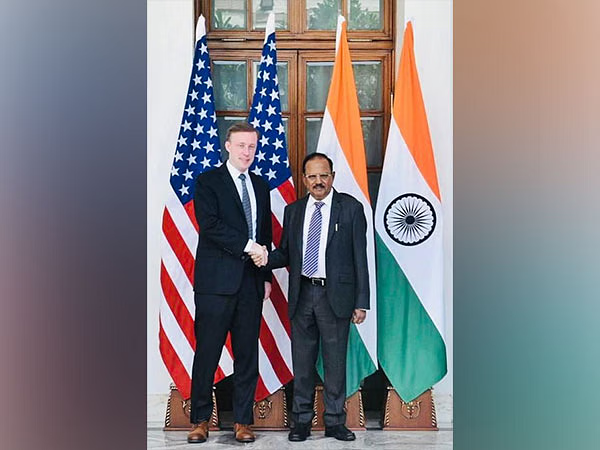
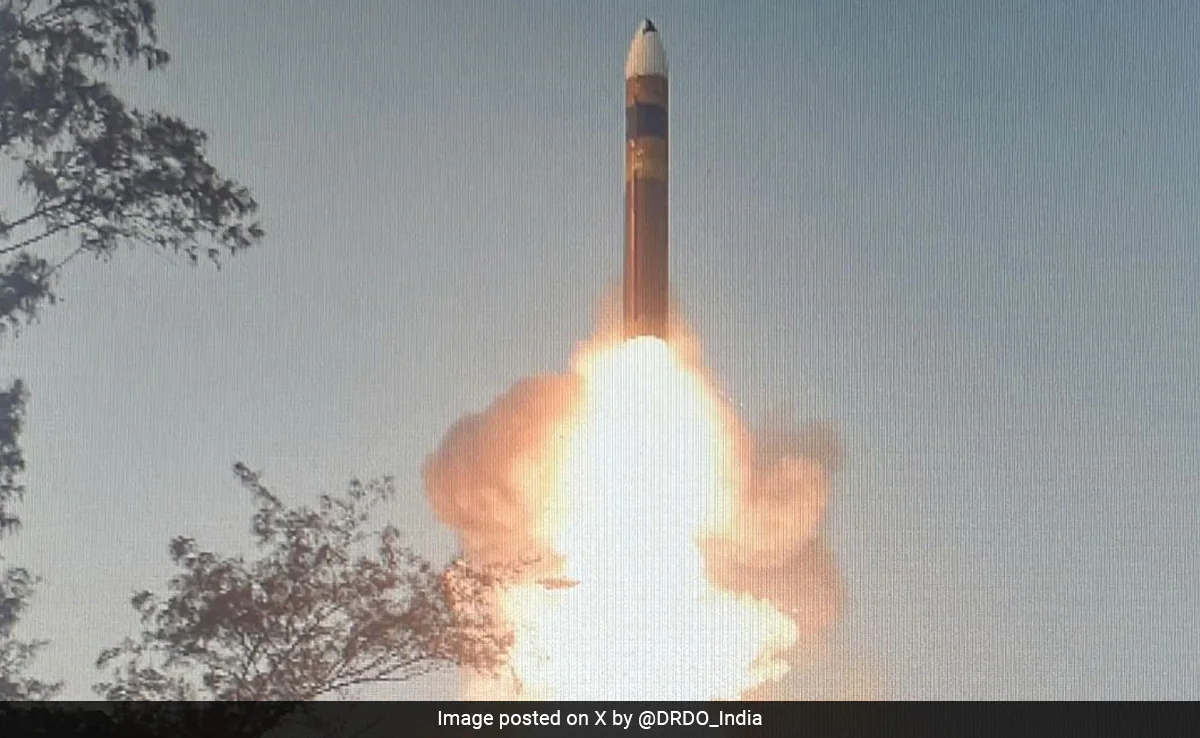
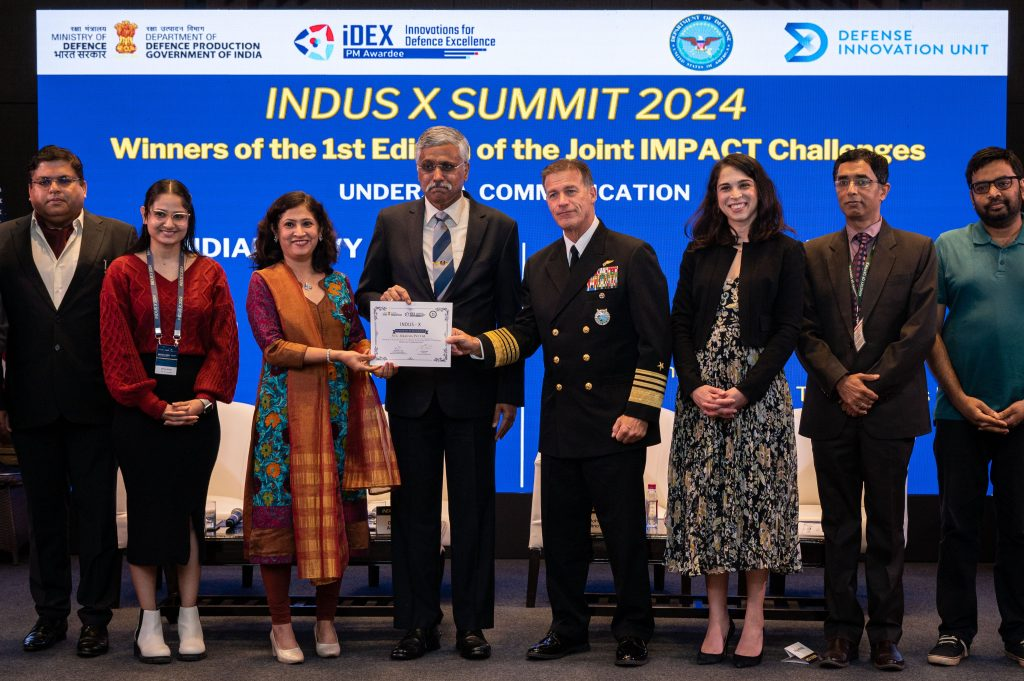


 Security Wise