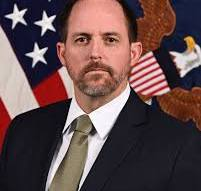
[Bradley D. Hansell, the boss of the new US unit — TSO — for cyber subversion]
Two developments should draw our attention. News reports say the US government attempted to win the presidential elections in Brazil for the rightwing-America friendly Flavio Bolsonaro, son of former President Javier Bolsonaro, who is in jail for trying to overturn the results of the 2022 elections. Despite US efforts, the current president Luiz Lula da Silva won a second term. The other is Prime Minister Narendra Modi’s warning yesterday about the economic danger to the country from “cyber terrorists” attacking its banking system. Modi may be perceiving the threat a little too narrowly, and also the sources of such threats. All major states have underway programmes to penetrate and disrupt adversary nations’ governments and economies. The most powerful such agency that, perhaps, had a hand in Brazil, and poses immediate and latent danger to India, is a new unit with the innocuous name of “Technology Support Office” controlled by the US Under Secretary of War for Intelligence & Security put together by the Trump Administration and operating for some time now. The online magazine, Politico, revealed the existence of the TSO, and its subversive agenda. More on this a bit later. But first let’s look at the outcome of the US Secretary of State Marc Rubio’s trip that’s related to TSO’s brief.
Rubio swaggered through Mumbai and the Reliance refinery in Jamnagar with the kind of pro-consul’s confidence that JN “Mani” Dixit once displayed as India’s High Commissioner in Colombo (in the 80’s, leading in steps to the disastrous IPKF intervention in Sri Lanka). Rubio did not give an inch — not on the tariffs on President Donald Trump’s Indian exports to America, not on Pakistan, and not on the restrictions affecting India’s H1B visa economy that the Modi regime is invested in! If anything, the screws are being tightened on the previously loose immigration system that allowed relatively easy resident status acquisition by Indian STEM (science, technology, engineering, mathematics) types. Spouses of H1B visa holders will not anymore easily secure a work visa, for instance. The hardest hit, however, are the less educated Indians who, in earlier times made it to America through the “dunkey” routes, and managed to make a living by driving taxis and trucks. Bunches of them are now being regularly hauled in by the Immigration & Customs Enforcement (ICE) and repatriated to India, often chained to their aircraft seats.
But STEM types — ideal immigrants on paper, the US government and society are discovering, tend to be less assimilative than earlier assumed and, in their new found settlements are aggressively pushing their Hindu faith that can get up the natives’ noses. Such “in your face” Indian presence, as expected, is fetching an awful reaction. “The overconfidence of the Indian settler in the pre-MAGA days led to excesses. Such as the 90-foot-tall statue of Lord Hanuman, dubbed by some over-clever NRIs who installed it as the “Statue of Union” in Sugar Land, Texas. Besides being considered an eyesore by the enraged local Texans, it is a goad”, I had warned in a January 26, 2026 post (“How not to tackle Trump“), “for the Christian Nationalists of the American south and southwest that make up the MAGA flock. So far they have restricted themselves to mocking the Monkey God, reviling Hindus as savages, Hinduism as satanic, and Hindu religious symbols as an affront to Christianity. Soon they may take a hammer to the statue, and run the Indians out of the town. The US east and west coasts are considered relatively liberal. But so was Texas until recently, whence the large NRI community in Houston, say. The upside is that the pesky Khalistani element among the Indian-origin Sikh Americans has gone quiet, and will stay quiet. After all, they can’t tell when Trump and MAGA will turn fully on them, and they may need Delhi’s support. As it is, the turbaned Sikhs are in the same category as the Hanuman statue — a magnet for the crazies to berate them, and physically beat up on the ‘bin Laden’ look-alikes. Just as the red tika on sari-clad women’s foreheads in the 1990s, drew the skinheads into physically attacking them in New Jersey.” Attacks on Indians in the US are increasing along with a wave of resentment against them in the MAGAverse in particular spawned as much by envy as jealousy, leading Vice President JD Vance, married to his Yale classmate Usha, dismissing NRIs in effect as “indentured labour” or cyber coolies (which, in fact, most of them are!). With Trump set to lose the November 3 Congressional elections and his political power, his MAGA supporters could take their anger out on the Indians they see around.
Nor did Rubio make excuses for Washington seeking a modus vivendi with China at the cost of Asian states, including India. In fact, he simply asserted that America would do whatever is in its interests and, no different he suggested, mockingly in equating India and the US on that score, than what Delhi does supposedly in India’s interests!
But, if Rubio’s primary mission this time around was solely to firm up a tie-up of the Reliance refinery and Venezuelan oil to ease the oil-sticker/affordability crisis at home, he failed because the turnaround of the situation even with the help of the Reliance refinery (processing nearly 2% of global oil) isn’t going to come before the November 3 Congressional elections that Trump and his Republican Party are set to lose. But Rubio succeeded in getting Reliance — and owing to its boss, Mukesh Ambani’s special reationship with PM Modi, and India, more fully into the US policy stable.
Ambani is committed to investing some $330 million to erect a refinery in the southern US state of Alabama and create thousands of jobs there. That Company is thus already part of the American energy sector, scene and infrastructure, and in the future, can be expected to do anything that Washington bids it do. The important thing to note: These transactions were not purely commercial deals, but approved by the Indian government as strategic leverage. Except, if the US and India both enter into a deal each thinks is a means to manipulate the other, guess which side actually ends up getting screwed?
The optics did not help. Foreign minister Jaishankar’s travelling to Mumbai — as if summoned by Rubio, did not look good. He defended himself by wagging his finger: “We are adults, let’s have an adult conversation”! His raising a precedent — Salman Khurshid’s entertaining his Pakistani counterpart Pervez Ashraf in Jaipur in 2013, was lame. Unless, he now hyphenates India with Pakistan!
The biggest success Rubio chalked up was to consolidate Delhi’s America policy along the lines Washington desires, in terms of insulating each policy stream. It is a strategy, as I have been iterating, of compartmentalising US-Indian relations. Thus, as Rubio made clear, the failure to reach a trade agreement, or the slapping of tariffs on India, he said, should not prompt Delhi to stop military cooperation! It amounts to India assisting the upkeep of US forces in the extended region, and to keep buying copious amounts of useless armament systems. And to rely on critical American technology just so the spigot can be turned on and off to bring a straying Delhi on line as per demand of the situation and US national interests. So, Elon Musk will be in a position to do with his Starlink Low Earth Orbit communications system what GE is doing with regard to the stop-start supply of its 404/414 jet engines for the Tejas and AMCA programmes, should the Modi regime, throwing caution to the winds, okay its operations in the country under Trump Administration pressure. Possibly, to save face at home, the Modi regime has conceived of a control override — a technical meansof ascertaining just what these communications networks are doing, and involve all foreign LEO satelittes.
This is no small demand and runs smack into the US government’s ability through Musk’s Starlink-Starshield to put critical services at risk — as happened when Trump, to punish Zelensky and Ukraine for not following his orders to stop striking deep Russian strategic targets, instructed the disabling of Ukrainian drones and missiles. This Starlink/Starshield did by slowing down the speed of transmission. As Musk disclosed, it is a switch the Pentagon has always operated. So, Good Luck with believing that the LEO services companies — Starlink and the French system Eutelsat will fall in, and hand Delhi the technical means to oversee their operations! The Modi government is best advised, in the event, to bar the entry of these foreign LEO systems into the Indian market altogether, than welcome them into our midst and then repent at leisure as they take over!
It is not just Starlink. Imports of any tech products especially with Huawei communications gear from China in the rear view mirror, have always had system-embedded bugs able to be remotely activated. Now there is as great a reason to fear US and Western military hardware/software packages in Indian inventories.
The net magazine, Politico, disclosed that the Trump regime has established “an elite new tech agency” — the super secret, super clandestine, Technology Support Office “to help covertly disrupt and sabotage foreign technology programs considered threats to American military superiority.” The TSO, directly controlled by US Under Secretary of War for Intelligence & Security, Bradley D. Hansell, the report said, is “largely built…by reorganizing two classified Pentagon intelligence programs that have conducted similar clandestine tech-sabotage efforts at a smaller scale since 2023. Hansell is a former Special Forces officer. By creating an agency dedicated to expanding that work, the Defense Department is signaling its intent to ramp up a range of aggressive covert activities abroad — potentially including cyberattacks, supply chain disruptions and disinformation operations.” It is meant to “counter foreign adversaries [that the Pentagon claims] are harnessing artificial intelligence and advanced commercial technologies, such as drones, in creative ways that could erode America’s military advantage.”
“While TSO lacks the legal authority to conduct clandestine operations directly” Politico amplified, “it works closely with senior U.S. military and intelligence officers to develop cutting-edge tools and strategies to disrupt adversaries’ access to critical defense technologies — or subvert them from afar”, reports Politico, adding that “TSO is staffed with engineers, special operators and intelligence officers, and its work spans everything from building bespoke hacking tools to planning elaborate deception operations that trick adversaries into installing faulty components — likely designed by TSO — in key foreign weapons platforms.” (My emphasis)
Considering the Indian military is almost entirely equipped with US, French, British, Italian, Swedish, German, and Russian warfighting systems (hardware and software), where does this leave the country? Because, other than the Russian items, the rest of the arsenal is accessible to the TSO, for example, for sophisticated malware injection owing to systems inter-connectivity. And, what’s the guarantee Moscow is not working its own version of TSO? In any case, it these are perils way beyond the ability of Indian counter electronic intelligence to cope with.
Obviously, the Indian government and Defence Ministry know nothing about the TSO that can potentially subvert India’s military and defence posture if and when it suits the US interests of the day to do so. US Deputy Secretary of State Christopher Landau winging his way thorugh Delhi earlier this year said in the plainest terms that even the dumbest in the Indian government and military would understand: He said the US would not let India emerge as an economic and trade competitor in the manner China was permitted to, implying it would use every means to keep India a subservient secondary power and dependency. TSO is yet another tool for Trump and his successors to use to achieve that and other strategic goals.
The Indian government is unique in not preempting such dangers and, indeed, in going out of the way, in fact, to not just continue splurging on foreign arms and systems, but in favouring foreign digital and cyber majors (Meta, Amazon, Google, et al), their platforms, operating systems, software, and now generative AI models to be used by official agencies, the country’s industry and commerce, and in exposing the country’s people and the vast consumer/customer base thet represent to them. Because the Indian government acts naively on the premise that “friendly” foreign countries mean no harm, and will do no harm!
In reality, India is being targeted by digital-cyber guerilla war waged against it by the US and China in particular that the government does not even acknowledge! It is a situation compounded by the fact that personnel in key positions in intelligence agencies, like in the rest of the Indian government, polity, the military and the corporate world are easily corrupted and compromised. The outcome is predictable.


