
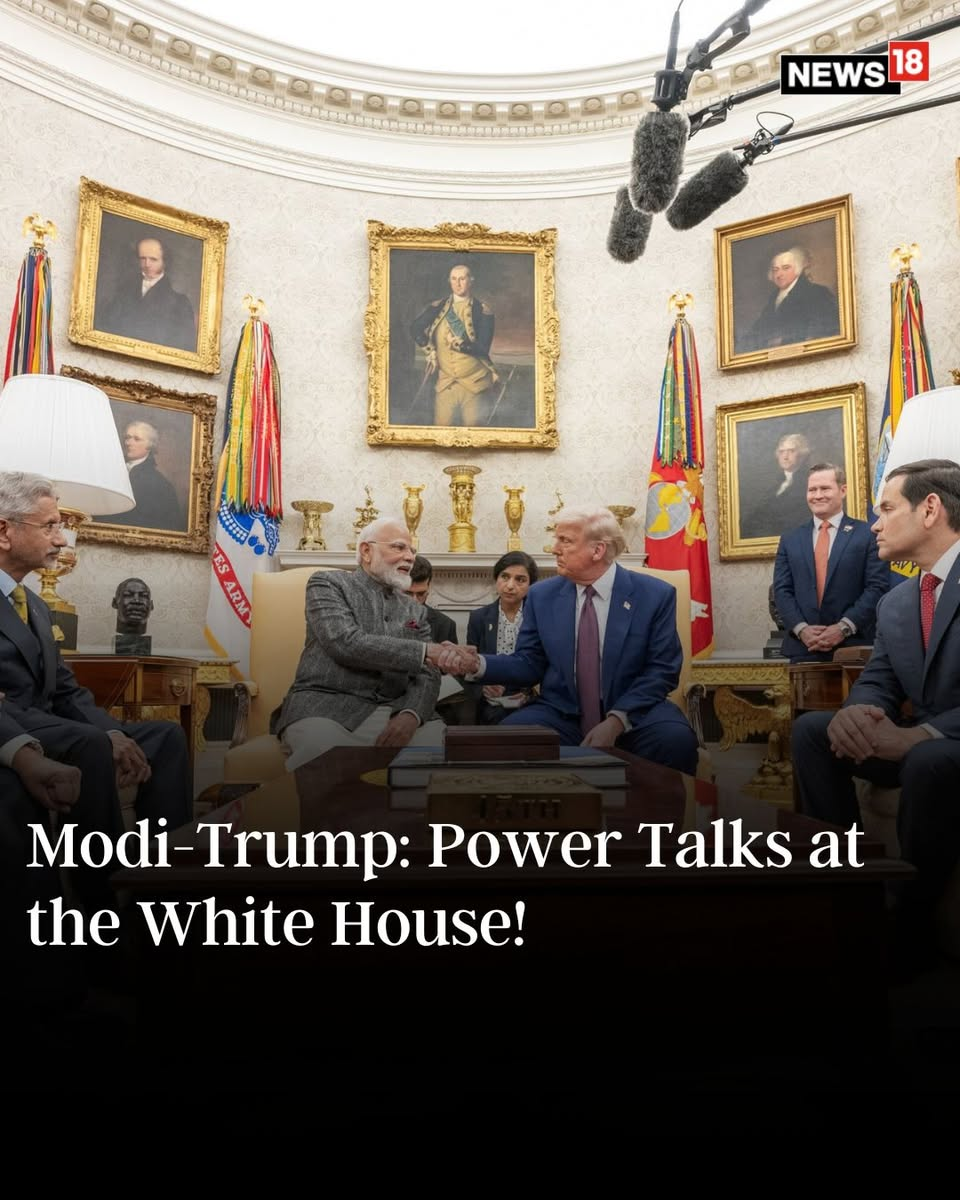
Marco Rubio is the go-to guy for the US President. Not only is he the US Secretary of State, but he has three other roles heaped on him by Donald Trump — National Security Adviser, Administrator of the now all but defunct U.S. Agency for International Development and, it is not clear why, Head of the National Archives! Rubio will be in India for three days starting tomorrow (May 23-26), and ambassador Sergio Gor has drawn up a schedule that will take him to major cities where he will have Indian capitalists and industrialists and their hangers-on fawn over him, ready to invest in and otherwise make America even richer!
In equal measure spooked, intimidated, and pressured by Trump, Indian corporations, desirous of retaining whatever small foothold they have in the US market, have felt compelled to buy into his “America First” in-shoring policy, meaning moving global industrial and manufacturing capacity to the US. To-date, Indian companies have collectively invested over $331.23 billion in the US to put up factories and generate employment, adding to America’s wealth and wellbeing, and to its industrial and economic heft.
This vast tranche of transferred Indian wealth breaks down as follows: $300 billion by Reliance Industries, $19.1 billion by the Indian pharmaceutical sector, $10 billion by the Adani Group, $900 million by the Abhyuday Group, $773 million by the Tata Group, $255 million by Jindal Group (JSW Steel), $100 million by Sterlite Technologies, another $87 million by Jindal Group proper, and $15 million by Jivo Wellness. [These figures are taken from an article by Navroop Singh and Nimja Parekh, “Predatory Economics: The Reality of America First” published in their consistently thoughtful and excellent Blog — Niti-Shastra on the Substack platform, which carries their well-researched and devastating critiques. The URL for this particular article is https://nitishastra.substack.com/p/predatory-economics-the-reality-of ]
Let’s be clear that India will be poorer by the $331.23 billion invested in the US — monies that are now not available to build the much needed infrastructure and to set up factories, create jobs at home, and generally to economically better India. This is zero-sum transactionalism, which would be fine had the Modi government adopted it as its policy to gain comparative advantage, rather than have Trump impose it on India to benefit America. Sure there’s no dearth of NRI types in the Washington Beltway commending Modi’s show of restraint in the face of unending provocations offered him personally and to the country in economic and other terms by Trump, especially since Sindoor. But the hope the PMO and MEA nursed since then that a subdued Delhi would win it better treatment from Washington has, once again, been proved very wrong.
Trump is a professional New York real estate wheeler-dealer who does not waste his time on property he cannot acquire, to polish up, turnaround and sell for profit. Likewise, he has moved on from India and Narendra Modi as I mentioned in my previous posts. In the region, he has found Asim Munir and the Pakistani state he runs far more congenial to augment his personal/family holdings (bitcoin) and US interests (Pasni as US naval/air base, minerals in Reko Diq and other places in Baluchistan, middle man with Iran). Because however much Modi wishes to cuddle up to Trump and accommodate the US, there is a limit beyond which he cannot. Munir faces no such systemic constraint.
So, what’s Delhi to do? Particularly because Messrs Modi & Jaishankar are sold on the notion that Trump after having his jollies with humilating India and taking the PM down several notches, will come around to giving the Indian leader a hand in warding off the Indian middle class pressure to keep open a channel for skilled labour outflows and, that the promise of a Free Trade Agreeent will soften his tariff stance. But Trump was Trump. He brought down the 50% tariff rate to 25% on Indian exports only because of the US Supreme Court verdict, but shuttered up the H1B visa window. And he dispatched Deputy Secretary of State Christopher Landau, and Under Secretary of Defence Elbridge Colby, to tell folks here where Modi and India stand with him.
In the event, these officials wasted no time in unsugaring the bitter pill, telling anybody in Lutyen’s Delhi who cared to listen that India should expect NO US favours, nor help and technological assistance, or any other consideration above and beyond any other country America deals with, and certainly nothing that’d boost India’s chances vis a vis China — a threshold, Landau warned, that would instantly trigger responses befitting a rival and competitor. But, that Trump nevertheless expects, as Colby stressed, India to “cooperate” in its own interests with the US in militarily restraining China, even as the US president butters up Xi Jinping for a separate deal with Beijing that will push Taiwan, and other Asian states, including India, into the line of Chinese fire.
So, what is the Modi regime planning to do when, starting tomorrow, it has Rubio’s undivided attention? Why, presenting him, as the media has reported, with a plan to revive the nuclear industry in the United States, of course! The plan is to encourage American companies to sell commercial nuclear reactors worth some $68 billion (Rs 6.5 lakh crores) to India, which can take its pick from light water, gas cooled, molten sodium, and modular reactors in small, medium and large sizes! These electricity generating nuclear plants are to be “joint ventures”. To attract US firms, the Indian government passed an enabling legislation — the 2025 SHANTI (Sustainable Harnessing and Advancement of Nuclear Energy for Transforming India) Act. It supercedes, essentially gets around, the “liability” barrier in the 2010 Civil Liability for Nuclear Damage Act of Parliament, that had kept out foreign vendors.
The two Acts differ majorly in two crucial respects: In Section 17(b) of the 2010 Law, operators were allowed to sue reactor suppliers for defective equipment or latent faults in reactor and related technologies that could result in explosions, fire and reactor core meltdown. SHANTI Act removes automatic technology supplier liability, with legal recourse limited to “explicit contracts or wilful misconduct”. And, as regards victim compensation, Section 46 in the 2010 Act which “allowed victims to additionally sue operators under other civil or criminal laws”, is entirely absent from the SHANTI Act, leaving victims with only restricted means of financial redressal.
(As an aside, I remember deposing before the Parliamentary Committee drafting the 2010 Act and arguing for the strictest liability provisions and for a clause enabling the victims to separately sue the operators. In a somewhat heated interaction with MPs I apparently said something that so incensed a legislator from Bihar, he created a ruckus, threatening to invoke a privilege motion against me for breaching the dignity of the House!)
The reason liability provisions need to be a deterrent is to ensure that the safest possible nuclear technology is deployed for commercial use. This is especially important in the context of the three nuclear reactor mishaps the world has so far seen. In March 1979, there was coolant leakage in one of the units of the nuclear energy plant in Three Mile Island, Pennsylvania, but the disaster was contained, and no deaths occurred, though the cleanup, etc cost upwards of $1 billion. The leakage was attributed to design flaws. People living around the nuclear complex in Chernobyl, Ukraine, were not so lucky in April 1986. The reactor core meltdown from leakage of the coolant resulted, according to the UN, in 4,000 long-term deaths in Ukraine, Belarus, and Russia, and 6,000 deaths across Europe and, per a report by the Paris-based Organisation of Economic Cooperation and Development, cost some $85 billion in nuclear rehabilitation and over $700 billion in all — “the most expensive disaster in history”. The earthquake and tsunami induced nuclear accident in 2011 at the Fukushima nuclear plant in Japan led to grid failure and the electric backup to cool the reactor failed, leading to breach in containment and the spread of “radioactive contaminants”. The clean-up cost $70 billion, and decontamination of the environment, and compensation to the people, cost $188 billion!
This to say that even a minor nuclear disaster has quite considerable human and infrastructure cost, and anything major can financially ruin a country. That is the reason why the US Nuclear Regulatory Commission (NRC) was extra-careful in assessing the Westinghouse AP1000 light water reactor technology, holding up its certification for many years on account of safety concerns. Early this year, the reactor design was finally certified. But no such certification has so far been given by the US NRC to any gas cooled or molten sodium nuclear reactor design or prototype, and to only only one model of modular water cooled reactor, that America is peddling.
With minimal liability, it is little wonder the US industry wallahs are exulting. The trouble is while the US reactor sales may enhance India’s nuclear energy capacity, none of the reactor technologies on offer are certified by US NRC for safety. In other words, India, in effect, is presenting itself to the US industry as a live laboratory, and Indians as guinea pigs, to test the functional safety of the reactors, their performance in India becoming the basis for these American companies to erect them in America!
This is called a “win-win situation” by Nolty Theriot, Senior Vice President, US-India Strategic Partnership Forum (USISPF).
But in money terms this means adding another $68 billion of India’s wealth to the $331-odd billion already transferred to Trump’s America by Reliance, Adani, Tata, Jindal, et al. That is a total of $400 BILLION of Indian wealth which is now US’!!
And like the $28 billion, that would be wasted on the Rafale combat aircraft and benefit France, leaving no monies for developing the indigenous Tejas line of aircraft — 1A, 2, AMCA, into a world class fighter line, the $68 billion spent on untested and uncertified American nuclear reactors, could instead be invested in the three distinct locally designed and developed reactor streams — CANDU, breeder reactor and thorium (molten sodium).
If Modi is so keen to triple the Indian civilian nuclear energy capacity — from some 9,000MW to nearly 30,000MW, he could do the following: Challenge Rubio and the USISPF to have American companies rifle up the entire $68 billion in the US stock market to build and operate nuclear power stations in India under their control with absolute guarantee of repatriating all profits. That way, US industry will be invested in India, and the Indian government will conserve the country’s financial, human and natural resources to design, develop and build uniquely Indian lines of natural uranium, plutonium and thorium reactors, which it can do considering the country has mastery over all three fuel cycles — one of only 3-4 countries to do so.
This is the only way for India to escape becoming a nuclear dependency of the US because, as per the 2008 civilian nuclear cooperation act, the fuel for the imported American reactors will have to be periodically imported from the US, and which supply can be stopped/disrupted at will, at any time for any reason, that Washington can think up. If these reactors are owned by US power companies, however, the US government will be more considerate in imposing sanctions, say. And with a regular supply of US fuel assured, these firms can be permitted profitably to run a chain of nuclear power plants in India in a closed loop.
This is win-win!!! And the only way to even the terms of exchange, Modiji. Or, prepare to have India continue to be exploited and booted around by Trump and the US.


why do you even try. They won’t listen.they don’t won’t to listen .everyone wants the American dream
professor what nuclear cooperation we have with russia??
In the main: Two VVER 1000 reactors at Kalpakkam producing 2,000MW + four more under construction for a total of 6,000MW
And technical assistance in building the Arihant-class SSBNs
.@BharatKarnad, Professor, you had mistakenly said VVER 1000 at Kalpakkam instead of Kudankulam. https://www.npcil.nic.in/content/579_1_NPCILPrecence.aspx
apart from above, what is your view on Jaitapur 6 X 1730 EPR French reactor, only running somewhat in 3 places around the globe.
Which is going to cost same or more than $68 billion dollars as time passes on after adjusting the inflation, profit etc.
That money should have gone to IPHR for further researching to push power up to 1000 or more to create own product as you have mentioned above in the article.
Please share your views on above.
Where did I mention Kalpakkam or Kudankulum, not in recent posts?
About investment instead in IPHR is what I have been flogging for years
including in this N-power related post
Sir, have you considered presenting your proposal for a more assertive foreign policy—including the strategic nuclear arming of China’s neighbors—to Rahul Gandhi? While he is currently in the opposition, his political positioning may make him more receptive to unconventional, high-stakes strategies than the current Modi administration, which has seemingly disregarded your counsel entirely.
Nope.
Professor, you’ve given a lifetime to this field. why still care about these politicians? The nuclear deal is clearly just deep-pocketed NRI lobbying disguised as policy. Why visit the circus if you already know the clown? Your writing on grand strategy and military doctrine is world-class; don’t waste your breath on the swamp of domestic politics.
I don’t get your logic. There is nothing wrong in become US vassal since it will help us in defeating the only enemy of India according to you, China.
If we become like Israel in Arabian Sea , what is wrong? If you want to see China ( so called existential threat according to you) destroyed, India should be a vassal state. Just look how US destroyed Iranian economy and Iran( according to your previous essays) for Israel, they will do the same with us to destroy China.
If your only logic is China hate, and that is what really matters.Then whatever Modi is doing is correct. Let US be so intertwined in Indian economy, be it datacenter, space, defence, nuclear reactors, as much as we intertwine USA, the more it acts as a deterrent for China.
The logic of India seeking a separate arrangement against China (minus America), if you have followed my books and writings, is driven by the fact of an utterly unreliable US (predating Trump) seeking a modus vivendi with China that undermines its Asian partners, including India
US has always been supportive of India. India has not been supportive by joining BRICS, SCO which are anti USA.
Oh, please!
Asked Google Gemini to how China can respond to India nuclear arming it’s neigbors and Gemini clearly says why Indian strategists have not been eager to do so.
You may give your rebuttal.
1. The Strategic Nightmare: The “String of Pearls” Going Nuclear
If India provides strategic nuclear arms to Vietnam, China would no longer feel bound by any remaining non-proliferation norms regarding India’s neighbors.
Bangladesh: The Ultimate Chokehold
China is already Bangladesh’s largest arms supplier, accounting for nearly 70% of its defense imports, and Beijing even constructed Bangladesh’s first submarine base (BNS Sheikh Hasina) at Pekua. Under Karnad’s logic, if India arms Vietnam, Beijing could easily turn Bangladesh into a nuclear-armed or nuclear-hosting state.
The Effect: This would place nuclear missiles right next to India’s highly vulnerable Siliguri Corridor (the “Chicken’s Neck”)—the narrow 22-kilometer strip of land connecting mainland India to its northeastern states. It would effectively render Northeast India strategically indefensible.
Sri Lanka and the Maldives: Maritime Encirclement
While Sri Lanka has traditionally tried to balance India and China, extreme economic vulnerability and Beijing’s deep-rooted “Global Security Initiative” (GSI) infrastructure leave Colombo with limited bargaining agency.
Rather than “boxing China in,” India would find itself hopelessly pinned down from the north (China), west (Pakistan), east (Bangladesh), and south (the Indian Ocean).
Pakistan actively wanted the nuclear bomb to counter India’s conventional size. Vietnam’s leadership, however, operates under a strict “Four Noes” defense policy: no military alliances, no foreign bases, no joining one country against another, and no using force.
Hanoi wants Indian BrahMos cruise missiles, advanced radar, and naval tech to make a Chinese invasion of its waters too costly. However, accepting nuclear weapons from New Delhi would completely cross Beijing’s red line, likely triggering a catastrophic Chinese preemptive strike or an economic embargo that would instantly collapse Vietnam’s export-driven economy. Hanoi’s primary goal is survival and wealth, not fighting a proxy war for India.
So much for AI! Nuclear missile-arming China’s neighbours as payback is the thing to do. It’ll induce the kind of caution in Chinese policy that Beijing’s policy of N-arming Pakistan did India’s. If only Delhi had the will to go ahead and do it. And “string of pearls”, have long maintained, is unmaintainable by China. But India’s “iron curtain” coming down on Malacca is a reality — something Chinese mil experts concede. This is real, not AI-generated mush. And Indian N-armed Vietnam’ll trigger, what? The last time I checked, the PLA got beaten (in the 1979 invasion) by Vietnamese irregulars, for God’s sake!
AI is a “stochastic parrot”. Asking it about strategy that too nuclear is a fool’s errand.
One thing to ponder about is how Sheikh Hasina despite being Pro India also allowed Chinese to build a submarine. No wonder USA took her out, since she was such a pragmatic leader. Credit to Modi ji for hosting her here.
Another wonderful article Dr Karnad. India is now the proverbial “blood bag” of the US empire. What are your thoughts?https://m.thewire.in/article/diplomacy/chess-piece-to-blood-bag-what-trump-xi-summit-could-spell-for-india
Transformation of India into a US dependency has been a theme of my writings and warnings since the late 1980s, and in my books starting with ‘Nuclear Weapons & Indian Security’ (2001). Keiji Mao’s metaphor of India as a “blood bag” for America, fits.
If we don’t invest in research and development, obviously we won’t have any leverage over anyone. GOI is at more fault here isn’t it?
Indeed the summary of the article is that U.S. is the prime threat to India rather than China.
Whatever success India has it’s because of access to raw materials for the pharmaceutical industry and Chinese technology for mobile phones assembling in India.
All big industrial houses in India are investing abroad. Biggest champion of so called Swadesi in India Ramdev, his jholaa chaap products have no market outside India.
feeling bad for what’s happening but cant india get independent from all this and stop these things from happening.
It is the government’s call
“That’s exactly what they’re counting on — that people who know will just shrug and say ‘government’s call.’ Someone with your understanding going on mainstream media or big podcasts could actually change that.”
Mainstream media and podcasters talk to whom they wish. I am normally not on their lists. Can’t force your way in.
“Sir, you’ve spent decades documenting every mistake, every sellout, every missed opportunity — and yet here we are, the same cycles repeating. At some point knowing everything and doing nothing is its own kind of failure. Is there no one in your network willing to actually act on what you know?”
It is not media network that will induce changes, but the political leadership within government.
Sir, if the political leadership won’t listen, the media won’t cover it, and the public remains unaware — what exactly is the point of writing? Because right now a teenager is reading this, understanding it, getting angry about it, and has nowhere to direct that anger. What are we supposed to do with this information?
Good question! I am 78. You are the future. Do what you can with this or any other piece of information.
Do you believe the US viewpoint that due to they spending all their ammunition in the Iran war, they cannot provide Japan and Taiwan, their top Asian allies, high-tech ammunition like the Tomahawks, ammunition for which payment was already provided? Does that mean that the US is not prioritizing QUAD due to Israeli pressure?
No, it is because the US did not expect Iran to fight. It exhausted US’ stocks of its most advanced standoff weapons — Tomahawks, THAAD, PAC-3s
even if us priotized quad , it will not deter china. They won’t give up their core interests without a fight. Unless there is some out of the box weapons development by the US like strategic defence initiative of president Reagan . Otherwise proxy war inside China is the only option to implode china.
Dr Karnad I saw in one of your interviews on a podcast recently, you again emphasizing that India being able to seize territory from PoK as a way of teaching Pakistan a lesson. You further mention that geopolitics does not give you a second chance like the one provided during the Operation Sindoor. How long before you think, Pakistan with Chinese support be able to ensure that India no longer enjoys any conventional military capability advantage particularly in the PoK/J&K region ? What are your thoughts on this issue ?
Pakistan is working to ensure India’s air dominance doesn’t happen again. Of course, China will help but its radars and stuff proved useless during Sindoor.
It may not be the worst outcome for the IAF to lose a battle or two to the PAF and also lose some territory in J&K in the process. This may help the IAF to be awakened from their stupor. What do you think ?
Nope. Territory once lost, stays lost.
Prof. Karnad, what is the probability of a Cuban operation by US?
High. ‘Coz just 90 miles away, small socialist state on its last legs, easy to beat