It is hard to know if the poet Horace, in 23 BC, was being satirical or optimistic about the future of Rome with his cry “carpe diem quam minimum credula postero”— ‘seize the day, trusting as little as possible in the next one’ — after Augustus Caesar had vanquished his domestic foes, ended the Republic and began the Empire by pacifying Iberia, conquering Egypt and installing himself as the pharoah.
The foreign policy comparisons
Horace came to mind with three recent, probably unrelated, events. In his column (The Times of India, 29 May), BJP Rajya Sabha MP Swapan Dasgupta fulminated against the “left liberal” and “global ‘woke’ fraternity” for slamming Narendra Modi’s management of, and his government’s performance during, the Covid-19 pandemic and hinted darkly at the “Old Establishment” forging “alliances with foreign entities” to pull down India and besmirch the Prime Minister. But there is also a minuscule group of socially liberal right-wingers that has been lambasting Modi 2016 onwards for something a lot worse – for not even making an effort to deliver on his election slogans and promises. “Minimum government, maximum governance”, “Government has no business to be in business”, and “atmnirbharta”, they argue, have remained just rhetoric in the Modi oeuvre, even as conservative precepts touting individualism and the rapid privatisation of the public sector are ignored.
On 2 June, a government order proposed to dock the pensions of retired intelligence officers and the like who reveal some skulduggery or cloak-and-dagger business in their memoirs, and tasked the current heads of departments they worked in to decide what revelation breached which sensitive information threshold. While unexceptionable — the vetting requirement is standard in CIA and MI 6, for example — department heads in the Indian context, however, are likely to play safe and redact all interesting stories. This may preserve national secrets but render a potential bestseller-manuscript dud on arrival, and aspiring memoirists sans fat book contracts.
The vetting directive and the shrill reaction to criticism generally suggest a thin-skinned Modi regime that wants to ensure its advertisements about itself are not publicly shredded. Unfortunately, such actions don’t burnish India’s democratic credentials or the Prime Minister’s personal reputation.
A day later on 3 June, four foreign service stalwarts – Kanwal Sibal, Shyamala Cowsik, Veena Sikri and Bhaswati Mukherjee — fronting for something called ‘Forum of Former Ambassadors of India’ (FFAI) published an apologia for Indian foreign policy post-2014 in The Indian Express. It started with an attack against “those who were at the helm of our foreign and security policies in the past”, “relentlessly” criticising “Prime Minister Narendra Modi’s foreign policies”. This article drew interest in part because Jyoti Malhotra highlighted in her 8 June column in ThePrint that FFAI is patronised by the Rashtriya Swayamsevak Sangh (RSS) – the ruling Bharatiya Janata Party’s ideological fount and political bedrock. These critics of Modi the FFAI is at loggerheads with, it turns out, are members of the Constitutional Conduct Group (CCG), which like FFAI, is of recent vintage. The former founded in 2018 is more settled with a proper Constitution, etc; the latter, currently better placed, is still finding its feet, its defence of Modi’s record marking its public debut. If CCG has in its ranks former National Security Advisor Shivshankar Menon and ex-Foreign Secretary Shyam Saran, who served Manmohan Singh and, by Dasgupta’s reckoning, constitute the “Old Establishment”, FFAI is led by Sibal, Foreign Secretary for a couple of years in the Atal Bihari Vajpayee government. At one level, this seems to be an intramural fight to influence the public perceptions of Modi and his policies.
And why the comparison isn’t worth it
There is, however, nothing to choose between the quality of CCG’s defence of the Manmohan Singh-era foreign policies, when the strategically debilitating civil nuclear cooperation deal with the United States was formalised, for example, and the policies of the successor BJP government during which the three “foundational accords” were signed with America, and the Quadrilateral (India, US, Japan, Australia) to contain China in the Indo-Pacific articulated. They are both equally incoherent and disjointed, reflecting the confusion at the heart of Indian foreign policy. (For substantive critiques of the foreign and national security policies under Manmohan Singh and Narendra Modi, refer respectively to my 2015 book Why India is Not a Great Power (Yet) and my 2018 book Staggering Forward: Narendra Modi and India’s Global Ambitions.)
Indeed, Sibal, et al, in trying to argue that CCG’s criticism is unwarranted because its leading members had a hand in crafting Manmohan Singh’s policies that Modi has persisted with, acknowledge that the BJP government has, Gulf countries apart, done absolutely nothing new in the foreign policy field, there being “clear continuities”, as they put it, in Modi’s approach to the neighbourhood, the United States, China, Russia, and the Quadrilateral – the “security diamond” (not “Indo-Pacific” they claim was) conceived by Shinzo Abe in 2007. But FFAI’s assertion, for instance, that “The Modi government has paid far more attention to its neighbours than the previous government”, does not mean relations with most of them have improved, nor that Modi’s “109 visits abroad, visiting 60 countries” other than as a record of his travel, really benefited India. These are the sorts of elementary mistakes CCG and FFAI representatives make in overstating the alleged successes of Modi and Manmohan Singh in external affairs.
Trouble is FFAI seeks protection from brickbats for the BJP government on the ground that in the throes of the Covid-19 pandemic it deems a “national calamity”, the country has to be “united”. This self-serving argument, smacking of the desire to ingratiate itself with Modi seeks, in effect, blanket immunity from criticism for those in power because India, after all, faces some calamity or the other all the time.
Where both Congress and BJP failed
Both the Congress and BJP governments can be seen to have failed if the ‘India First’ metric — originally conceptualised by this analyst in 2002 (‘India First’, Seminar, Issue 519, 2002) which Modi flogged in his first election campaign — is used to judge Indian foreign policy. This is so because the ‘India First’ tilt, predicated on overturning the regional and international status quo, has been missing. Reason why a heavyweight India has all along boxed in bantamweight-class, and desperately needs disruptive foreign and military policies to carve out an independent strategic space and role for itself with appropriately re-configured armed forces. But this sort of thinking is anathema to risk-averse Indian policymakers whether in the BJP or Congress, and their sympathisers in FFAI or CCG.
More damagingly, Indian regimes, of whatever ideological stripe, have stayed stuck in the subordinate State mindset, cementing the country’s standing as a pawn on the global chessboard. Preoccupation with the risk/reward calculus of band-wagoning with the US or Russia or China has resulted in nothing meaningful being done to make India, a nation with natural heft, a player. Or, to help the country to seize the moment.
The Indian army has one offensive mountain corps (OMC) and another — I Corps — one of the three Strike Corps previously assigned to the plains/desert sectors, recently converted to mountain warfare in the face of Chinese aggression in eastern Ladakh. As I have been arguing in my books and writings for the last 25-odd years, two OMCs are still nowhere adequate for sustained warfighting across the length of the disputed border — the Line of Actual Control (LAC) — in Chinese-occupied Tibet. The army requires a minimum of three OMCs equipped, not with heavy tanks (T-72s and T-90s) outfitting the remaining armoured Strike Corps (II and XXI) now that I Corps is out of the plains warfare picture, but with a genuine, high-altitude optimised, armoured vehicle for offensive operations on the Tibetan Plateau.
The heavy tanks are deployed in the XIV Corps sector on the Ladakh front and in the northern Sikkim plains, but with what level of effectiveness is unclear. The trouble is the T-72s and the T-90s do not perform at all well in the thin air and cold of the Himalayas. So, as I mentioned in my last book (‘Staggering Forward) on any morning, 40 percent of the tanks controlled by XXXIII Corps in the northeast, fail to start and need all kinds of extra ministering to warm up their engines before they can get going. One can readily see why they are a liability in the Himalayas and why a new breed of light tanks is desperately needed for the OMCs.
The army was not entirely unmindful of this requirement, having approved in 1986 the DRDO development of a light tank with a turret and 105 mm smooth bore gun on the Sarath armoured personnel carrier (ex-Russian BMP) chassis. But because they were mostly fixated on Pakistan, the army brass never got down to actually indenting for a light tank believing that such an acquisition would be at the expense of the Russian MBTs required for the western front. Even so, if it did not actually demand a light tank, the army did not kill the programme either. DRDO kept tinkering and periodically produced newer versions of the design.
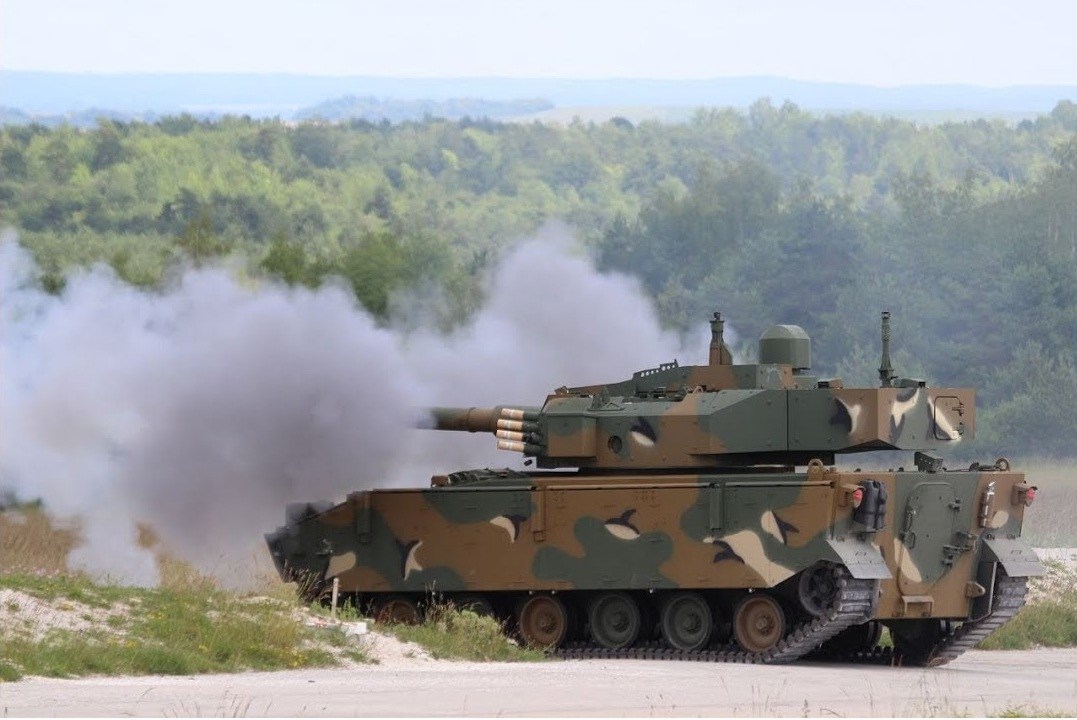
The latest such iteration is a genuine light tank (LT) to compete with the Chinese ZTQ-15 LT with a 105mm rifled gun with the PLA in Tibet. The Light Tank programme is one in which DRDO is partnering the private sector defence major, Larsen & Toubro. In the aftermath of the fiasco in eastern Ladakh the army finally woke up to the China threat that I have been warning about for ever, and looked around for a light tank to latch on to. The first instinct of the armour brass was to go in for the 18 tonner Russian Sprut — a product that was originally designed as an air-portable armoured vehicle to be dropped alongside Russian airborne forces. Except, given its manifest weaknesses as a fighting platform — too light and inoffensive, the Russian army rejected it. Only 25 units were built and stored. With Ladakh on fire, Rosoboronexport State Corporation — the Russian arms exporting agency, saw an opportunity to sell this lemon as a light tank to its longtime customer — the Indian army. Perhaps, persuaded by the reasons for its Russian counterpart turning down the Sprut, the Indian army too — fortunately for the country, did the same.
The DRDO-L&T light tank is a quite different and more serious animal. The army’s initial order is for two regiments worth some 40 light tanks, with another tranche of three regiments or 60 LTs in train. L&T has used the Vajra chassis and fit a turret and a 105 mm gun secured from CMI (Cockerill Maintenance & Ingénierie) of Belgium on it. Incidentally, Vajra is the mobile artillery gun system L&T produced with tech-transfer from South Korea, which originally got the engine and transmission technology from Germany, and delivered the same to the army within cost (Rs 2,400 crores) and ahead of schedule, possibly the first Indian military procurement project to do so!! The delivery of 100 Vajra systems was completed by February-March this year, when the last of the units had to be delivered to the army only by June!
As regards, the light tank, DRDO & L&T were able to accelerate its development because of the latter’s experience in designing the Future Infantry Combat Vehicle (FICV) and developing the requisite technology for it, and incorporating many of the features and technologies of the FICV into the LT. Thus, other than the engine, transmission and the gearbox everything else is indigenous, including the tracks and the hydropneumatic suspension. The turret and the gun can be produced in-house by L&T if there is a large enough army order for light tanks to enable the Company to scale up the production and make the whole thing financially profitable and, therefore, viable. In any case, the success of the Vajra artillery system and prospectively of the light tank, is what happens when you trust a proven private sector firm to produce military hardware, rather than leaving it to the laggardly defence public sector units. It usually works out rather well for the country. Indeed, the DRDO has been influenced by L&T’s efficiency in doing things, conducting the weapon development and production business.
In any case, the first of the LTs would have been with the army by now but for a new officer taking over earlier this year as Director-General, (Armour) at the army headquarters. Lieutenant General KS Brar, the new man in, proceeded to change the milspecs of the light tank, when his predecessor had accepted the prototype LT that was three tons above the designated 30 ton weight with the understanding that DRDO and L&T would quickly bring down the follow-on batch of tanks to meet the lighter weight threshold. General Brar, however, demanded that the LT weigh no more than 25 tons, which required redesigning and reengineering a whole new product. But, and this is admirable, he showed foresight in also insisting that this lighter tank integrate into it the mobile Tactical Communications System (TCS) and the Battlefield Management System (BMS) assigned to L&T and Tata respectively to develop. At 25 tons, moreover, the LT would be transportable by Il-76s and C-17s of the Indian Air Force.
The problem is the TCS and BMS projects have stalled for over a decade now because the Ministry of Defence has played the usual Scrooge when it comes to private sector companies — and been reluctant to defray in full the development costs of these two systems, without which financial support L&T and Tata, who designed and developed the TCS and BMS systems to prototype stage, find themselves unable to proceed beyond it.
What’s that old saw? For want of a nail, a horse could not have a horse shoe, without a horse the General could not lead his forces, without the General the battle and the war was lost! With generalist babus helming the Ministry of Defence and the Department of Defence Production (DDP), whose formal remit is to keep the wasteful and unproductive melange of DPSUs, Ordnance factories, and DRDO labs in the clover, the defence private sector gets shafted, and without the private sector in the game national resources are not maximally used and India’s armed services keep importing hardware to meet their urgent needs, and India’s security is rendered hostage to the policy whims and national interests of supplier countries. And India’s cause is lost.
By the way, the Ministry of Defence is quite happy to annually squander huge monies on DPSUs, Ordnance factories and DRDO — Rs 22,000 crores in 2021 for R&D alone, but is reluctant to fund L&T’s and Tata’s development costs for the TCS and BMS amounting to Rs 200-300 crores!! Who loses? Specifically, Indian armoured and mechanised forces. Because were Indian tanks — heavy and light, armoured personnel carriers and Infantry Combat Vehicles of the mechanized forces, to be equipped with the TCS and BMS, they would be able with the TCS on board, for instance, to have a video link to surveillance drones and unmanned aerial vehicles (UAVs) and realtime information on enemy’s force disposition “on the other side of the hill” and, with the BMS fusing data and communications links to all fighting platforms in theatre, the army and, with the appropriate communications interface, air force would be able to deploy their fighting assets more effectively to obtain decisive results.
This would be good for national security, right? Yea, but not so convenient for the risk-averse babus in MOD and DDP who worry that handing over development costs to private sector companies for projects that may not produce the goods, may lead in the future to investigations being launched by the government of the day into how public monies were thus siphoned off to some private sector company or the other, and to haul up the babus who made the decision years ago to so divert funds. So, why would these babus imperil their retirement years by doing the right thing? Safer for them to slough off tens of thousands of crores of rupees to the public sector — the DPSUs, Ordnance factories, and DRDO and see this level of country’s wealth go down the drain, year after year, with no questions ever asked, or accountability ever fixed for the sheer wastage of scarce financial resources and for nonperformance of the public sector units.
This is why India’s defence and security are being sucked steadily into the black hole of public sector from which the Indian government apparently cannot escape, even when it is led by Narendra Modi, who swore to rely more and more on the private sector — remember his 2014 campaign slogan/declaration “Government has no business to be in business!”? — and whose atm nirbharta policy, therefore, seems to be a cruel joke he is continuing to play on the nation. Because without a new system of administration, new “rules of business” for all ministries and departments of government, and rules of accountability for all public sector enterprises, Modi can talk up an atmnirbharta storm all he wants but it will leave nothing in its wake.
I concluded in my 2018 book — Staggering Forward: Narendra Modi and India’s Global Ambition, that Modi lacks the vision, the strength of his own conviction and especially the political will to fully and completely makeover the system, apparatus, and processes of the Indian government, and is too much the statist to, if not rid the country of the public sector incubus, than to more productively use its extensive and modern facilities for better outcomes. No one believed in the rightwng credentials of Modi more, and no one has been more disappointed than I to find — six years into his rule that Modi has turned out to be just another run of the mill “neta” worried about the next election, not a leader and visionary concerned with having a facilitative government and driving India to pull itself up by its own bootstraps in all sectors, starting with defence and national security — the first charge on any government.
[Telecom secretary Anshu Prakash — going to do whose work?]
Time and again bureaucrats, regularly and routinely, blow up technology self-sufficiency initiatives, defying Prime Minister Narendra Modi’s public professions of atm nirbharta in high technology. This is so for one of two reasons. Firstly, because the PM’s directives are simply ignored, especially by “technical” departments of government — such as the telecommunications ministry under cabinet minister Ravi Shankar Prasad. Or secondly, as I argued in my 2015 book — Why India is Not a Great Power (Yet), because each ministry and every agency within Government of India feels free to act as a soverign entity, the PM of the day — Modi — and his directives be damned!
In the case of the 5G technology, both these factors seem to be at at work. This is further to my statements on this subject on Defensive Offence forum (in my last post) where I mentioned that for the telecom ministry atm nirbharta apparently means keeping the Chinese majors Huawei and ZTE out, but handing over India’s telecom domain to Ericsson of Sweden, Nokia of Finland, and Samsung of South Korea. These foreign companies have set up units in India to assemble mobile phones from components imported from here and there but mostly from the parent firms. This screwdriverng level of technology the defence public sector units have specialized in, apparently satisfies the atm nirbharta standards for the generalist babus, in this instance, secretary and ex-officio Chairman of the Digital Telecom Commission, Anshu Prakash, IAS (Union Territory cadre) running the Department of telecommunications (DoT). Prakash, it is plain, has not the faintest clue about 5G or anything remotely technical relating to telecom. Lucky for Prakash his career, like those of other secretaries in GOI, does not depend on his knowing anything he pronounces on.
If Anshu Prakash has some slight knowledge in anything, it is Health. He was Health Secretary in Delhi government. So, how did this fellow become telecom secretary? For one of two reasons. One of them being luck of the draw — the reason why Prakash’s predecessor for the same reasons Aruna Subramanian was hoisted into the post. This is the value-neutral explanation. In that post she proved herself partial — as news reports and a previous post of mine related to her biases based on news reports, etc from her time in the ministry reveal, to China and the People’s Liberation Army offshoots Huawei and ZTE for the 4G+ systems in the country transitioning to 5G gear and systems. Huawei and ZTE have since been banned from the Indian market despite Subramanian’s best efforts, only to have the vacated space occupied, in her successor Prakash’s tenure as secretary, by Ericsson, Nokia and Samsung. This is as acute an internal security threat as when Huawei and ZTE were monopolizing India’s telecom scene. It is a danger the DoT-WPC are actually nurturing!
The other reason for babus getting prized secretary posts is because what the person did in his previous post pleased the central government, reason enough for empanelling him/her for promotion. This is a motivation for babus in contention to conduct their duties with an eye to pleasing the PM/central government of the day. What may have helped Anshu Prakash to be rewarded with DOT Secretary post is his clash as Chief Secretary, Delhi Government, with the elected Aam Admi Party (AAP) chief minister Arvind Kejriwal, when he claimed in end-February 2018 that he was attacked by AAP MLAs. Some weeks later he mobilized the UT cadre officers in the Delhi govt secretariat and led a “candle light march” to protest the physical danger they apprehended from the AAP. It certainly got Prakash noticed by Modi’s BJP govt which has been going hammer and tongs against Kejriwal eversince his re-election for a second term. This possibly got Anshu Prakash into DoT.
So, welcome to the Government of India world where generalist civil servants, such as Prakash, act in contravention of worthwhile measures ordered directly by the Prime Minister. So much for the systemic change affected by the Narendra Modi regime over the last 6 years and the power and authority exercised by the Prime Minister and his PMO run by the superannuated Gujarati-speaking Gujarat cadre IAS officer and Principal Private Secretary to the PM, PK Mishra, who is trying to emulate his namesake from Vajpayee’s time, Brajesh Mishra, in being at the master controls of the over-bureaucratized GOI. This last is something Modi in his 2014 election campaign promised he’d remedy, but hasn’t!!
What is it about Anshu Prakash and 5G that has got me — as it should every Indian — so incensed? The Economic Times on May 11 carried a story 9 ( https://telecom.economictimes.com/news/telecom-secretary-puts-on-hold-5g-trial-spectrum-allotment-to-saankhya-labs-iisc-bengaluru/82545622 ) of how the telecommunications ministry ostensibly headed by Ravi Shankar Prasad but actually run by the IAS babu, Anshu Prakash, has put on hold the allocation of spectrum to Saankhya Labs and the Indian Institute of Science (IISc), Bangalore — the institution founded by the Physics Nobel laureate CV Raman and funded by the Tata’s, and the only Indian science institution that consistently ranks among the top scientific research organizations in the WORLD, for the testing of their separate, entirely indigenous, 5G technologies developed by them. Why, pray?
Well, because Saankhya supposedly did not follow due bureaucratic process. So what did Saankhya Labs do? Did it do something heinous such as jerry-rig the process so its technology being tested could take undue and unfair advantage? Or because it tried some other underhand means? NO, NO, but actually because Saankhya did something lot worse! It followed the laid down rules a little too scrupulously!!! But let’s follow the story.
The ET report based on info from “Government and industry insiders” suggests that Saankhya and IISc erred by not applying for the spectrum directly online to the Wireless Planning & Coordination (WPC) wing of DoT, as mandated by the rules, but chose to approach “DoT’s Standards, R&D & Innovation (SRI) division”. “Minutes of an internal April 29 meeting of DoT’s SRI division show that specific directions were given to WPC’s Regional Licensing Office (RLO) in Chennai, ‘to issue experimental 5G spectrum licences to Saankhya Labs and IISc without any further delay by April 30’ itself. The RLO-Chennai was also ordered to grant such trial 5G spectrum to both applicants for six months, extendable upto 1 year. ET has seen a copy of the minutes of the meeting that was attended by senior officials of Saankhya Labs and IISc. Subsequently, Saankhya was granted in-principle experimental 5G airwaves in the premium 700/600 Mhz bands in Bengaluru to run trials for convergence of broadcast and broadband networks, while IISc was offered trial airwaves (in the 3.5 Ghz/2300-2400 Mhz bands) for testing in its campus lab.”
IISc, more experienced than Saankhya in dealing with GOI, tried to separate itself in this process, explaining to ET via its spokesman that “We have obtained a provisional license which was approved and signed by the Deputy Wireless Advisor, WPC …we are awaiting the grant of the final license, which is expected to happen in the coming weeks.” Saankhya, per ET, did not respond to its queries, which the pink newspaper took to mean confirmation of WPC’s charge that it had, in fact, done something wrong. This even though ET also informed its readers that “According to the meeting minutes of DoT’s SRI wing, Saankhya needs trial 5G spectrum as it has IPRs [Intellectual Property Rights] and its products have global appeal and also recognised by US Federal Communications Commission’. The SRI Division, DoT, apparently was impressed by the fact, as ET also reported that “Saankhya has reportedly received a certification from the FCC [Federal Communications Commission in the United States] for its broadcast radio head (BRH), which enables convergence of broadcast and mobile networks and helps digital terrestrial broadcasters boost their reach and market share.”
Meaning, Saankhya, a proven chip-designer, has developed a technology, for which it has secured US and other international patents and which tech America is keen on buying and incorporating into its telecommunications grid in order to advance it. It was reason enough for SRI Div in DoT to speedily approve a spectrum license for Saankhya, which action irked WPC because it was bypassed. In this internal, intra-agency, DoT turf war WPC, it would appear, packs bigger clout, with head babu Prakash, whose technical knowledge extends to near zero!
Notwithstanding SRI Div’s good reasons for issuing Saankhya the license, the ET story continues thus: “But government insiders said the hasty manner in which such trial 5G spectrum was issued to Saankhya and IISc did not go down well with top officials in the DoT’s WPC wing, and the matter was put on hold after a review by telecom secretary Prakash and Wireless Advisor G K Agrawal.” The ET quotes from a May 5 “internal [DoT] communication“ by Agarwal which says “As directed by Secretary (Telecom), when Joint Wireless Advisor (JWA) along with myself were also present, the matter (pertaining to decision on experimental licences) is to be kept in abeyance till further orders, and JWA, RLO (Regional Licensing Office)-Chennai be informed for necessary action.”
Let’s flesh out the issue some more of the trial spectrum allocation to Sankhya-IISc, which got derailed, which the ET story didn’t do. What follows is known to everybody and his uncle in the telecom field, in the industry at-large, and certainly beyond DoT in the rest of the government which, incidentally, leaks information like a sieve. Indeed, there’s no national secret not spilled by motivated government officials when it serves their purposes.
In 2019, the Department of Telecommunications (DoT) set up a Committee under Dr. Abhay Karandikar to decide on the rules for the issual of experimental 5G spectrum. Karandikar is Director of IIT, Kanpur, and earlier was Head of the Electrical Engineering Department IIT, Mumbai, head of its Research Park, and previously worked with ISRO and with the High Performance Computing Group at CDAC (Centre for Development of Advanced Computing), Indore. The Karandikar Committee — not headed by a babu and hence not intent on creating new bureaucratic bottlenecks which is what most such committees in any ministry end up doing, decided reasonably that if the Wireless Planning & Coordination (WPC) Wing of DoT — incharge of issuing licenses, failed to act on an application within 8 weeks of its submission, the license would be deemed as granted. It was this provision that WPC led by the above-mentioned GK Agrawal objected to vehemently. He may even have put down WPC’s objection on file.
But Saankhya, following the Committee’s rules, assumed that because they had not heard from WPC or anybody else in DoT that everything was go and it could proceed. It sought the license from the SRI office, Chennai, which was quickly given for the reasons of its acceptability in the US, the sort of American Good Housekeeping seal that has cleared bureaucratic logjams in GOI in other policy areas in the past in a jiffy.
In Nov 2020 Saankhya applied for “a radiating outdoor experimental license as per the policy” in the unused 700Mhz and 580Mhz bands. Per articulated policy, it did not require any such permission because this was way past the 8-week deadline for WPC decision imposed by the Karandikar Committee. But the company owning the towers on which the Saankhya tech systems needed to be installed insisted they get clearance from the WPC as it feared trouble without it. Repeated follow-ups up until March 2021 yielded no response from WPC. So, it is said, in early March 2021, Saankhya decided to approach the SRI Div within DoT. To resolve matters, in April 2021, Member (Technology), Telecom Commission, K. Ramchand called a meeting of all stake holders. [Correction: originally the text mentioned Peeyush Agrawal as Member Telecom. Agrawal, a lateral entry official, unfortunately, died within months of assuming office in 2018 and was replaced by Ramchand.] WPC head Wireless Advisor GK Agrawal, was also called for the meeting chaired by Ramchand but, conveniently, didn’t attend. The minutes of the meeting were circulated and an in principle approval given to both IISc and Saankhya, who attended this meeting, to start the trials for 6 months.
It brought a huffing and puffing GK Agrawal — the non-attendee at the Ramchand meeting, more interested in asserting and protecting WPC’s control of the licensing bottleneck — to secretary Anshu Prakash to whom this was all gobbledegook anyway. But to be fair to Anshu Prakash, GK Agrawal perhaps because of his objection on file — notings by stakeholders are sacrosanct and no secretary dares over-ride such objections put down on paper by even the junior most under-scretary in his ministry, and Prakash did not, but rather played along with the WPC head. Incidentally, the power of the officials — as in most GOI bureaucratic processes lies precisely in postponing/delaying decisions until, well, some potential beneficiary or the other coughs up … well, we know how that goes from umpteen such cases, don’t we?! So the inevitable happened, GK Agrawal on the basis, one presumes, of his noting prevailed on Prakash to stop the licensing process in its tracks under cover of a reexamination of the process, a usual time-consuming tactic, when all the secretary needed to do was read the report of the empowered Karandikar committee and throw out GK Agrawal’s objection which, considering his decision, Anshu Prakash didn’t do.
Meanwhile — and this reveals how a willing media is often used by officials in their intra-agency bureaucratic turf warfare, the Economic Times, having got the dope from someone in the DoT — who that source is, is fairly clear from the above exposition, published its story on May 11, which revealed the decisive meeting called by Ramchand, which as per the Karandikar Committee Report provisions, over-rode WPC. It was after the ET story falsely vilifying IISc and Saankhya became public that DoT formally informed these two spectrum allotees that their licenses were stalled pending inquiry. In other words, ET’s so-called investigative story was the hook on which DoT tried to hang its decision. Once the ET story came out there was one other casualty. Ramchand resigned a fortnight before his retirement possibly to avoid all the muck attending on this Prakash decision.
None of this could have escaped PK Mishra at the PMO. Why didn’t he take up the cudgels on behalf of the atmnirbharta policy that’s supposedly dear to the Prime Minister, and pull up Anshu Prakash, and especially GK Agrawal, and so send the right message to other babus up and down the GOI system gumming up the works on Modiji’s agenda that such obstructionism won’t be tolerated? Is it because IAS solidarity is so strong that PK Mishra didn’t want to collar Prakash, and get him transferred to public sanitation or some such department where his Health background would be put to better use?
“Daal main bahut kucch kala hai”, Modiji. If you don’t want these IAS babus and technical bureaucrats, who have grown fat, rich and lazy in their sinecures from saying no to all homegrown technology, and making a complete monkey out of you, and a nonsense of your atmbirbharta programme, you’d do well to pay attention to atleast your flagship policies, and see that the confusing welter of rules and regulations are streamlined and such bureaucratic barriers arbitrarily erected don’t hurt homegrown high tech, that incessant turf wars are curbed, and babus,such as GK Agrawal and Anshu Prakash, are punished for their recalcitrance and tardiness in realizing your aims and ambitions for a tech-wise self-sufficient and self-reliant India.
At a minimum, an investigation into just how and why the indigenous 5G technology is sought to be torpedoed, will be a good and salutary beginning.
It is not too late for you, PK Mishraji, to do the needful, before Modi rounds on you. There’s too much accumulating debris from policy and systemic failures in recent years that you may end up having to answer for.
A few hours before being discharged from a Delhi hospital forenoon today — yea, COVID or its variant/mutant put me there for the last nine days, despite my having taken the Astra-Zeneca double shot few weeks previously, so effects of this strain were, mercifully, relatively mild, which hints at just how relentlessly dangerous this virus is, but ‘am back online — I heard our esteemed External Affairs Minister (EAM) S Jaishankar on CNS-News18. I am not any more surprised by anything the MEA minister says or does. I am beyond that and fully into being simply appalled instead.
With cremation fires lighting up the cityscape, mofussil areas, and the countryside alike, and graveyards everywhere full to bursting and unable to accommodate the dead, a suited-booted Jaishankar, staring into the TV camera, unctuously mouthed inanities. Firstly, he informed the viewers that the covid pandemic was a global thing — shades of Indira Gandhi –or was it Rajiv Gandhi? — defending herself against charges of corrupton by saying corruption was a global affliction, remember that! — the easier it’d appear for the Modi sarkar to disavow any responsibility for the unfolding public health catastrophe. Incidentally some projections show the COVID surge is yet to peak, or that there is another corona tsunami in the offing, in any case, it is something the Modi regime is singularly responsible for. And because it was a global phenomenon India, Jaishankar implied, would be part of a global solution with every country pitching in to help. If that help doesn’t come– and there’s every reason to expect it won’t materialize anytime soon, what will the Modi regime do? Sit on its hands? Make a beggarly nuisance of India?
With every major country scurrying to mobilize its own national resources to meet its covid requirements — the demand for which cannot easily be estimated, depending as it is on the estimated population size and receptivity curve, and thus only able and willing to render mostly symbolic assistance — cryogenic oxygen chambers, O2 concentrators and the like, massive offloading of rawmaterials for vaccine manufacture in India, is unlikely. As I said in the preceding post, it’ll be months before Indian vaccine factories actually begin humming. Meanwhile, the Indian government will have to make do with palliatives, like maxing oxygen industrial scale production and delivering oxygen cylinders to hospitals, etc.– which activity, thanks primarily to the Indian private sector, the country has less to worry about. So, what else does Jaishankar expect the rest of the world to do?
In this respect he mysteriously mentioned the cabal of G-7 and the trio of India, South Korea and South Africa as a special group concerting, he hinted, to resolve covid issues whether specifically in India or in all these other countries as well, he didn’t say. That wasn’t helpful.
Secondly, and this was even more troubling because it indicates just how deep down the dependency complex is now rooted in the thinking of the Indian policy establishment, he equated — and did so, oh, so, smoothly — the pandemic situations in the United States and in Western European countries who had suffered badly from the pandemic and came out of them, with India’s present condition, by saying, by implication, that the governments in these countries know what’s best for India to do in its present circumstances!!!
Has Jaishankar not been watching the TV screen and CNN this past year and not seen there’s a universe of difference between the Covid crises in America and in the West, generally, and the one India is enmeshed in right now? Hasn’t he looked at wailing men, women and children in thousands daily on television, people begging for puffs of life-giving O2, and the macabre scenes being played out all over of dead bodies being lit up wherever they can be — any vacant roadside spot will do — because the shamhshan grounds are piled thick and high and cannot take anymore custom?
Does this self-consciously clever EAM not see the manifest, obvious, absolute chasm in SCALE and DEGREE of the problem India is facing, and the depressing quality of his government’s ameliorative efforts when compared to the problem the US and Europe faced with the spiking pandemic and how they dealt with it? This is a country with 1.3 billion people — nearly a billion more than America, with a public health infrastructure at a small fraction of the US’. What the heck can the Biden Admin advise Delhi to do that it doesn’t already know it should have done, and considering Modi isn’t inclined to do the one thing Anthony Fauci, President Biden’s chief medical adviser, has suggested he do — order a full lockdown, again, for fear of bringing the stuttering Indian economy to a grating halt, what’s there to listen to?
Sure, even otherwise in general terms what the Indian government should have done is known to everyone in the Health Ministry at the centre and in the state governments. Indeed, all those responsible are only too aware of how badly they have fouled up every which way and are left scrambling to make excuses when not, like the UP chief minister, Adityanath, threatening to take people to court for claiming oxygen shortage! The fact is Prime Minister Modi is so thoroughly flustered he has lost his bearings and, of course, his elan. As mentioned in an earlier post, he got complacent too quickly and once the kumbh mela and state elections in particular rolled around, he couldn’t summon the political will to at least call off his campaigning in West Bengal — the real pandemic facilitators, and now finds that the Indian system cannot cope with real adversity when it has come acallin’.
How concerned Modi is with the ravages of the virus on the society, economy, etc and with how badly large masses of the Indian people are being impacted by this unmitigated disaster of his making, is hard to speculate. But there’s little doubt why he wheeled out Jaishankar before the media: It was to try and prevent an already humungous personal public relations calamity for Modi from snowballing into something lot worse — being perceived by the West whose regard and attention he seemingly craves more than anything else, as no more than a run-of-the-mill showy incompetent Third World head of government. Whatever the positive aura he tried to create for himself over the past 6-odd years is now dust, especially abroad.
In the event, Jaishankar sought hard and predictably failed to do what his boss had asked him to do: Somehow cover up for Modi’s covid mismanagement and the sense of desperation it has spawned in the PM by mooting a global solution for a seriously, strictly, Indian problem he cannot avoid taking the blame for.
The Modi government sent an SOS to the Biden White House almost three weeks back. Adar Poonawala of the Serum Institute — the largest producer of vaccines in the world with global sales of 1.5 billion doses of vaccines for every malady ranging from Polio, Diphtheria, Tetanus, Pertussis, Hib, BCG, r-Hepatitis B, Measles, Mumps and Rubella, with high-tech production capacity of 500 containers per minute, pleaded with the US President via Twitter to release raw materials for making the Astra-Zeneca Covid vaccine. All that has happened in response so far is that Biden, Vice President Kamala Harris, and all the other Administration biggies have clucked in sympathy and expressed their “solidarity” with India and Indians. Much good that will do India or the 350,000 Indians daily detected as virus stricken and the almost 3,000 Indians dying all over the country every day.
Even as the US government sits on its hands it has, according to newsreports, stockpiled covid vaccines in government depots, in other words, it is hoarding, over 100 million doses — which it isn’t releasing for use abroad just in case there’s a surge need for them within America. It is rushing oxgen concentrators, ventilators and similar stuff but not the 37 raw materials the ‘Economist’ has identifed as needed by India — and the Serum Institute in particular — to bulk produce the vaccine. The reason for this blockage is that Biden has invoked the Defence Poduction Act for vaccine manufacture, which means the needed raw materials can only be deployed as priority to speedily meet domestic production requirements, and cannot be diverted to India or any other country.
Meanwhile, Pfizer and other vaccine producers, espying huge profit, want the US government to go the World Trade Organization route to fix vaccine prices and to protect intellectual property rights. What this means in practice is that Serum Institute will be starved of the raw materials and the vaccine production will soon grind to a stop at its facility in Pune once the current stock of ingredients runs out. Biden can short circuit this lengthy WTO negotiating process, but won’t for the simple reason that he does not want to rub the wealthy pharma industry, intent on making money, the wrong way.
Where does that leave our dear leader, Narendra Modi, who has worn his love for America on his sleeve? He has advisers around him, like External Affairs Minister Jaishankar, who won’t hesitate to push India into the US camp whatever the opportunity or occasion, and at whatever cost to the country. Washington may be thinking along the same lines and may extort, say, an Indian military role in Afghanistan or seek activation, as some have speculated, of the Logistics Support Agreement to embark US Special Forces from Indian bases for operations against the Afghan Taliban after September 11 when the American military presence in that country is formally zeroed out. This would be in exchange for release of covid vaccine raw materials.
The reason such a deal is very possible is because of the realist, transactional, nature of US foreign policy and the unvarying American attitude to the world which, I for one, have long admired, and which I have held up for GOI-MEA to emulate. There’s no place here for sentiment, for emotions, for fellow feeling — there’s just the unvarnished fact of the National Interest, and nothing else, and any and all means are usable to further it. Realizing the national interest by this reckoning is a zero sum game, and as Biden sees it, reduced stocks of raw material could come back to bite him politically were the pandemic to skyrocket again in the US requiring heightened emergency production of vaccines at home. Biden is covering all contingencies that could potentially impact the US and get him in hot water.
This sort of thinking is entirely foreign — pun intended — to GOI, which begins planning for a any catastrope after it has occurred, in the case of the Covid pandemic only after several thousand people had met their doom. And then the bureaucratism and the centre-states tussles take over. Consider the rough sequence of the pandemic reaction by the Government. After the first complete country-wide lockdown, India was among the few countries that seemed to have contained the virus. It led to Modi’s shipping the vaccines in stock to all over the developing world per World Health Organization guidelines. It resulted in Modi and India winning a lot of friends and encomiums. But, more dangerously, it triggered the complacency that is always just below the surface where the Indian government is concerned and which is the bane of the Indian system. No sooner was there the barest glimmer of success then Modi and the entire top ranks of GOI were cock-a-hoop and short of publicly high-fiving everybody in sight, radiating self-satisfaction.
And then the real Covid Tsunami hit which the GOI had neither foreseen nor prepared for. Worse, the state carried on as if nothing was amiss — with literally millions milling in the Kumbh Mela in Allahabad and election campaigns proceeding at pace in West Bengal and elsewhere — perfect mediums for the rapid spread of the virus throughout the length and breadth of the nation.
Confronted wiith an unfolding disaster Modi did the first thing he could think of — call on the United States for immediate help, confident that American planes would, without hesitation, be winging loads of the raw material to the Serum Institute and other production facilities. Hopefully, the Prime Minister now knows better that America makes haste only when its tail is in the wringer, not when India’s is. Washington is already talking about the response timeframe of months, not days, leave alone weeks — for the main items — the raw materials to be officially released and airlifted. By then, who knows what the human toll in India will be? And how much good it will do?
At a minimum, Modi should heed what this analyst has been warning for decades in his books and other writings — that to construct an Indian foreign policy edifice on the strategic partnership with the US is to build on a foundation of quick sand, where Indian contingencies are involved. But it is also to setup an automatic positive response-cum-pressure system India will be subjected to anytime Washington calls on Delhi for any assistance or help which, if they aren’t immediately complied with, will instantly trigger punitive US actions.
Assuming Jaishankar knows this, it is unlikely he has communicated any reservations — “Time to rethink our US policy”-kind of advice to the Prime Minister. But Modi should rely on his own political instincts and not bank on foreign countries to pull India out of the mess it peridocally gets itself into. Atm-nirbharta is so far mainly a mantra endlessly repeated without anybody in government or outside of it having the faintest idea of what it means. Modi should start by making the country self-sufficient in base pharma materials and chemical industrial necessities and incentivise their manufacture at home to ensure India does not again have to have its begging bowl out.
In the current crisis, GOI and its agencies, including the military, are filled with officials with scant knowledge of the US and how the American system actually works, in the main because, like all Third World officious types, they can’t get beyond the lure of America if not for themselves than for their children — green cards by hook or crook! — and hence, by habit, don pink-coloured glasses when viewing the US, including its invariably tardy reactions to life or death issues facing other countries.
The antidote to this raging Yankeeitis — and this, I admit, is derived solely from my personal experience — is exposure to America at an early age — in my case at the undergrad level. One then begins to understand the “belly of the beast”. But equally I began to appreciate just why the realpolitik the US unapologetically practices with weak states and strong alike is absolutely the right thing to do in a perennially unsettled and disorderly world. Having heard and interacted with American strategic realm heavyweights in graduate seminars at UCLA and in the larger California Arms Cntrol Seminar in the early to mid 1970s — and over 50 years since then, what has always impressed was their crystal-cut clarity of thinking, their precision when processing information and data, analytically dissecting situations and policies, and when proposing just as clear-headed solutions, which may not always be right but serves the US interest of the moment.
The world doesn’t change all that fast. Trust no big power to do the right thing by India, keep distance from all major states, do not sign any agreement that India is not ready to violate, and use the policy space that is thus created to maximize the benefits — are principles the Modi government and the MEA and military more generally should fruitfully follow, certainly when dealing with America.
Then there will be absolutely no reason for Delhi to trust in the US or be disappointed in case it does something unexpected, or even adverse, and less reason for Washington to be disappointed by anything India does in its own, singular, National Interest.
The most absolute ruler in the world today, other than Kim Jong-un of North Korea, is Vladimir Putin of Russia — not Xi Jinping in China, who has to play and balance a number of powerful entities and vested interests, especially the pampered People’s Liberation Army which, no surprise, has the run of the Treasury. It is the reason why the Communist party continues to be in the wheelhouse and Xi at the wheel. Putin has no such oppostion and rules virtually by decree. He also has the Stalinist State apparatus that never really disappeared, with KGB at its core, as his handmaiden.
Vladimir Putin spent long years in the State Committee for Security — KGB (Komitet Gosudarstvennoy Bezopasnosti). Posted to the Second Chief Directorate (counterintelligence) in Dresden in East Germany during the Cold War, he was shifted to the First Chief Directorate (Foreign Operations) and finally to the Fifth Chief Directorate (Internal Security). He thereby pulled time in the three most powerful arms of the KGB. In analyzing ‘alpha male’ leaders — Modi, Trump, Putin, Xi, and Erdogan in the first chapter of my 2018 book ‘Staggering Forward’, I emphasized how during his time in the 5th Directorate Putin cannily linked up with the Russian Orthodox Church and. after becoming President, returned to it all the properties and lands expropriated by the State in the 1917 October Revolution, and won its loyalty. The reason why the Church supports him fully and gets him votes during elections.
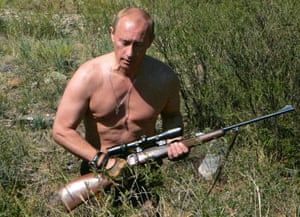
Putin is a martial arts expert, hunts with a Baikal Rifle, sea dives for fun, rides around in a Harley Davidson Lehman Trike hog, has authored a regime of physical exercises to keep fit, and inaugurated the new HQ in Moscow of the Russian military intelligence (GRU) by loosing off a few rounds at a moving target in its underground firing range. When this man — the Russian President, says “We know how to defend our interests”, Delhi better believe he will not take anything lying down.
The Biden Administration signalled the end of the 4-year Trump-honeymoon with Russia by announcing a slew of economic sanctions against Russian entities and notables. Moscow retaliated and then upped the game just to see what Washington would do. So, on the southern NATO tier, Putin massed over 40,000 Russian troops, including as BBC reported, “16 tactical groups”, on Ukraine’s eastern border and in Crimea that he had annexed in February 2014. Ukraine Defence Minister Andrii Taran informed the European Parliament’s Security and Defense Subcommittee that Russian military strength on Ukraine’s borders may soon “reach 56 battalion tactical groups with 110,000 troops”.
Russia’s objective to eventually re-absorb all of Ukraine is based on Russia-leaning separatists already controlling much of the Donbas country in eastern Ukraine roughly upto the line Mariupol-Petrivsk-Donetsk-Horlivka-Debaltseve-Luhansk. Speaking April 13 at the NATO HQ in Brussels, a shaken Ukrainian Foreign Minister Dmytro Kuleba warned that Russia was “openly threatening Ukraine with war and destruction of our statehood”. But unlike in 2014, he added, “Russia won’t be able to catch anyone by surprise anymore”. Kuleba got it wrong.
Putin has been beefing up Russian forces on the Ukrainian front for a while now not so much to catch Ukraine, NATO or the US by surprise but to see if the American President, Joe Biden, is risk-acceptant enough to chance a military confrontation. Indeed, Moscow is going the extra mile to needle Washington by choking off Ukranian naval access to its Black Sea ports. The Ukrainian defence minister Taran fears this Russian blockade in the Black and Azov Seas is designed to severely hinder his nation’s “important trade routes in international waters” accounting for $103 billion in foreign trade. This action suggests Putin is intent on economically strangling Ukraine and daring Biden to do something. That he can throttle the confrontation up or down at will is indicated by his latest move to de-concentrate his forces on the Ukraine border.
So far the US, other than venting hot air, has not reacted. Sustained Allied military action may, in any case, be difficult considering the NATO main air base in Incirlik in Turkey for a southern approach may be unavailable to US forces because America is in the same jam with Ankara as it is with Delhi — the S-400! President Tayyip Erdogan in Turkey has made clear — almost in so many words — that he will have the S-400 and, should Washington threaten CAATSA sanctions, NATO can go find another Incirlik for itself! By getting close to Turkey in the last several years, Putin may, in fact, have planned and prepared for a contingency as is developing. With so many chess-like moves (like cultivating Germany and other West European states with piped oil and gas), Putin has shored up his country’s security perimeter before going on the offensive. The point to make is this: Putin is a careful but ruthless player willing to push the envelope. For Modi to rub him the wrong way by sidling up to America may be to goad Moscow into unsheathing its numerous options which will only worsen the regional balance of advantage against India.
Consider how Erdogan in contrast is playing it. His stance, unlike Modi’s, is stern. Ankara is very sure what it brings to the table is something the US and NATO cannot do without. Modi, on the other hand, advised by the likes of Jaishankar, acts unsure, as if Delhi has no leverage at all with Washington. Thus, India’s peninsular expanse sticking halfway into the Indian Ocean, which makes it pivotal to any Indo-Pacific security scheme, is a basic fact of geography that is evident to any school child looking at a map but apparently isn’t visible to the Indian government. Or, why else would the Indian government be content with the US Secretary of State Anthony Blinken’s expressing satisfaction (in his January 30 telephonic talk with Jaishankar) with the state of bilateral relations which, other than the same old, same old — Malabar naval exercies, blah, blah, blah,… haven’t, in real terms, benefitted India much?
Trouble is the Modi government makes no demands on Washington, only concedes whatever the Americans want, as I have long been saying. Thus, Jaishankar did not challenge Blinken on the US not coming through on promises to transfer advanced military technology (made vide Defence Technology & Trade Intitiative 20 years ago!). Nor asked for a show of good faith by going beyond the transactional mindset and immediately reviving, say, the US participation in the Indian combat aircraft jet engine development programme which, Modi’s great and good friend, Donald Trump, abruptly terminated. Because Delhi makes few demands and doesn’t insist that these be met as condition for furthering cooperation, it has led Washington to assume it can rely on India to do whatever it bids it do without the US requiring to put out at all.
The Russian foreign minister Sergei Lavrov was recently in town to assess the extant state of affairs. He assured the Modi government that Moscow, while not an ally of China was only partnering it in the latter’s face-off with the US, and that it would do nothing to hurt India’s vital interests. In return, he was told that the boom of the CAATSA sanctions hanging over India’s head, notwithstanding, the $5 billion deal for the S-400 air defence system was on. Instead of picking up on the space Putin is deliberately leaving for Delhi to maneuver in by, for instance, carving out a loose security coalition with BRICS (Brazil-Russia-India-South Africa) out of BRICS by cutting out China, which I have detailed in my ‘Staggering’ book, Indian officials have been heard muttering within Moscow’s earshot about Delhi, may be, doing a rethink specifically on the S-400 contract and, more generally, on the time-tested military supply links with Russia. Modi, aided by his sidekick Jaishankar, seems intent on losing India the leverge with Putin and Russia. Wrong move!
Just to make sure India doesn’t deviate from its traditional policy line, Lavrov hopped across the Radcliffe Line and, in his meeting with Pakistan army chief General Qamar Bajwa, promised him whatever he wanted! By way of sprinkling gasolene on fire Moscow clarified that Russian arms supply to Pakistan would be limited to goods to fight terrorism with. One of the things in the pipeline, for instance, is the Kamov attack helicopter. May be these will be deployed by GHQ, Rawalpindi, in anti-terrorist ops!
The point to repeat and reiterate is this: Leaving aside for the nonce the matter of India’s faulty geostrategics, if the advanced quality of military technology is any of India’s concern — as it should be, then the record shows Russia has delivered, time and again — seminal assistance in the nuclear submarine project, Su-30MKI, etc. Waiting for the US to come through on anything remotely uptodate, technology-wise, is for the Indian armed services to wait “for Godot”. Not that this has deterred the present Indian government and the Indian military from yearning for America and the West to make good.
This lot needs to wise up fast though. Unrequited love is tolerable in adolescents. But not in alleged professionals (in PMO, MEA, MOD) tasked to safeguard India’s interests.
For those who have nothing better to do (!) on an early Sunday evening, please join the panel discussion on ‘Will India become a super power?’ hosted by the forum –‘Argumentative Indians’ today, April 18, 2021, at 5 PM IST.


:quality(70):focal(-5x-5:5x5)/cloudfront-us-east-1.images.arcpublishing.com/cmg/J4JM646HIZGTXL54PSLZ6IDO7I.jpg)