Recognizing the Taliban emirate increases India’s options

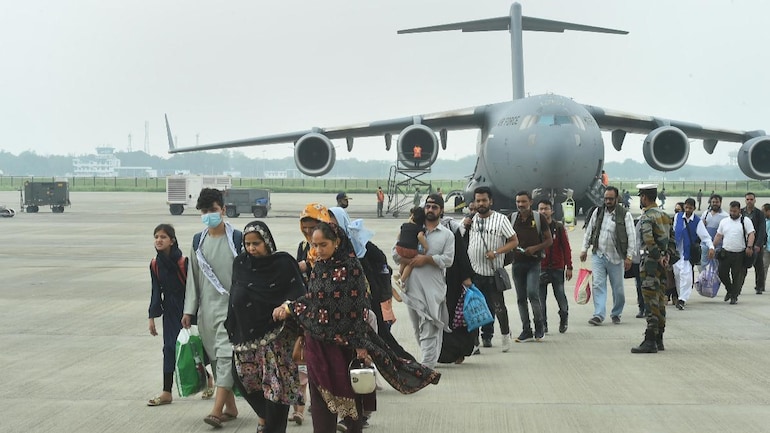
[Indians and Aghan dependents Airlifted from Kabul]

Wars occur, popular unrests happen, foreign interventions fail, governments fall, regimes change. These are constants of the Third World scene. Hence, there were no real surprises in the recent developments in Afghanistan. Predictably, the United States ran out of political will, the finger pointing over “Who lost Afghanistan” has begun in Washington, Ashraf Ghani got out of harm’s way, and the Afghan National Army disappeared like the two trillion dollars America spent on the “never ending war”. The only surprise was how with a minimum of fuss the Taliban reclaimed Kabul.

     Now comes the tricky part for all the countries with a stake in Afghanistan of doing a hard count of gains and losses, and configuring future policies.  This requires getting a fix on the prospective Taliban system, and the attitude of the five countries in play — India, Pakistan, China, Russia and the United States.

     An emir advised by a guardianship council is the sort of sunni dispensation outlined in two Taliban-sourced documents — the 1998 ‘Dastur Emarat Islami Afghanistan’ drafted by some Islamic scholars at the bidding of the previous emir, Mullah Omar, and the ‘Manshur Emarat Islami Afghanistan’ of 2020 vintage. Both papers reject electoral democracy as lacking sanction of the Shar’ia. The leadership cohort headed by Habaibullah Akhundzada and Abdul Ghani Barader have so far sounded reasonable, promised an inclusive government and amnesty, but armed opposition is nevertheless coalescing. 

     Because the Taliban are a force of mostly Gilzai tribesmen, other Pashtun tribes could join the Tajiks, Baloch, and the shia Hazaras in making common cause with the former President Ashraf Ghani’s deputy, Amrullah Saleh, and NSA, Hamdullah Mohib, controlling several intact Afghan army units, and the Tajiks loyal to Ahmad Massoud congregating in the Panjshir Valley. With Col. Abdul Dostam mobilizing the Uzbek faction, resistance is firming up, potentially stronger than the Northern Alliance of yore.  

     India, Pakistan, China and Russia fear that, contrary to its pronouncements, the Taliban could coordinate with the al-Qaeda, Da’esh (Islamic State), Lashkar-e-Tayyaba and Jaish-e-Mohammad elements who were part of its victorious sweep through Afghanistan to respectively foment trouble in Kashmir, Talibanize Pakistan (via Tehreeq-e-Taliban Pakistan — TTP), radicalize the Uyghur Muslims of Xinjiang (by infiltrating armed militants through the Wakhan Corridor), and to spread “terrorist ideology” in the seven Muslim majority enclaves (Tatarstan to Bashkortostan) in Russia’s southern tier. China believes it can buy the cash-strapped Taliban’s compliance with massive credit and infrastructure projects (in return for concessions to mine lithium, gold, and copper, and extract oil and gas Afghanistan is rich in). Russia, publicly pro-Taliban, thinks it can encourage the adjoining Central Asian states to help the Panjshir opposition, which Tajikistan is already doing. Pakistan hopes its ISI can work the Quetta and Peshawar shuras it has hosted since the US initiated the war in 2001 to defang the TTP. All three countries are convinced they need to formally recognize the Taliban regime at the earliest to effectively pursue their separate goals.

     India mindlessly followed the US lead and got out. America has reinforced its reputation for unreliability and India, by forsaking a Kabul presence and direct dialogue with the Taliban leadership, has lost the ability to closely manage its interests. Rather than “wait and watch”, India should garner first mover advantage by immediately recognizing the Afghan emirate. As a surprise move in the face of Western efforts to isolate the Taliban regime, India’s interests will be accommodated by the grateful mullahs, also because, TTP aside, it will be a counter-leverage against Pakistan. A diplomatic foothold will consolidate India’s influence and more effectively neutralise anti-India groups, such as the Gulbadin Hekmatyar-led Hizb-e-Islami, active in Kabul.  This move, moreover, can draw on the enormous goodwill and popularity India enjoys, courtesy Bollywood musicals, Afghan cricketers in the IPL, etc. with the nearly 30% of the urban population the Taliban need to connect with.

     The now experienced firm of Barader and Akhundzada understands that establishing an emirate is one thing. But constituting an “inclusive government” is something else, and that strict implementation of the Sha’ria will deny it the legitimacy it craves in a still West-dominated world. However, association with a democratic India will, to some extent, soften the Afghan emirate’s image, raise its acceptability levels, and incentivise the ruling clique to foster substantive relations with India. New Delhi can offer more development projects and this work has been appreciated by the Taliban for good reason. The India-financed and built Zaranj-Delaram Highway, for instance, has eased the transportation of opium poppy from remote fields to makeshift heroin processing labs on the Iran border, and increased manifold Taliban’s revenues from the illicit drug-trade.  

     The benefit of such a realist and clear-sighted policy is that it does not prevent India from maintaining its longstanding links with the Panjshir coalition.  Indeed, the first mover recognition – the carrot, and the threat to strengthen ties with the resistance – the stick, wielded together will serve India’s strategic interests better than any other option can.


————

Published in Times of India, August 27, 2021 with the title — “Taliban recognition: India should be a first-mover as it serves our interests” in ‘Face-Off’ arguing for Afghan emirate recognition, with former ambassador to Afghanistan, Gautam Mukhopadhyaya, making the government’s “wait and watch” case, at https://timesofindia.indiatimes.com/india/times-face-off-with-the-taliban-takeover-of-kabul-a-thorny-question-confronts-india-should-we-recognise-the-taliban-two-experts-examine-options/articleshow/85675208.cms

Posted in Afghanistan, asia-Pacific/Indo-Pacific, Asian geopolitics, Central Asia, China, corruption, Culture, Decision-making, Geopolitics, geopolitics/geostrategy, Great Power imperatives, India's China Policy, India's Pakistan Policy, India's strategic thinking and policy, Indo-Pacific, Iran and West Asia, Islamic countries, MEA/foreign policy, Pakistan, Pakistan military, Russia, SAARC, society, South Asia, Terrorism, United States, US., West Asia | 50 Comments

What should India’s Talibani Afghanistan policy be? Main point — recognize the Taliban government IMMEDIATELY

[Riding in to power]

The US has high-tailed it out of Afghanistan. A pithy, darkly humourous, speculation of what will happen next in America in the wake of its military humiliation by a ragtag Taliban force, was provided by the mountaineer, Joydeep Sircar, who corresponds with me fairly regularly. “By the end of 2021”, he confidently prophecies, “Hollywood will produce multiple movies showing how heroically the Americans fought and defeated the Taliban as a first step towards airbrushing history. By 2025 a large portion of the American public will believe the USA won in Afghanistan. American military thinkers will produce scholarly works showing Afghanistan was a victory because the USA took 20 years to run away whereas the USSR took only 7, and managed a higher Taliban body count. [Indian army officers] deputed to the US War College will come back full of dollars, and praise the US skill in seizing defeat out of the jaws of stalemate.”!!! He could have added by way of a last line that a bored US will then scout the map to see where it can intervene next to change a regime or build a nation.

The Afghan National Army (ANA) the Americans funded and sustained over 20 years simply melted into the countryside, or the urban chaos, Taliban having done an exemplary job of signalling to those wearing military and police uniform that unless they abandoned their posts and all ideas of fighting, when caught they’d be shot like dogs, or hung from the nearest rafter. But how and why did this happen and with such suddenness and finality? Mohan Guruswamy has come up with some revealing statistics that point to the problem. Over the last 20-odd years the US and the West annually poured into Afghanistan grant-in aid worth $60-$70 Billion. The Ashraf Ghani dispensation (and before him Hamid Karzai’s) yearly spent about $11 Billion. The revenue it generated totaled $3 Billion. Simple Math suggests that this left roughly $68-$78 Billion as “loose change” for Hamid Karzai (2001-2014) and Ashraf Ghani (2014-2021) to play around with. This was the scale of corruption — a readily accessible and replenishible trough of hard currency every minister and senior official and military officer liberally helped himself to. It sapped, in the process, the fighting spirit of the army and the police and hollowed out the government. Signs of this were available with the ANA desertion rate of some 9% before Biden’s announcement of full military pullout rising to some 26% after it. The Taliban needed to merely tip over the shell of the Ashraf Ghani regime and of the ANA.

With the Taliban in Kabul and a warning from Washington to not in any way hinder the evecuation of American citizens, the only activity being witnessed is at the Kabul airport where masses of people are seeking desperately to get the hell out, some — as seen in video clips — even clinging to the tyres in the landing systems of giant C-17 transport planes as they took off, being shaken loose as the aircraft gained altitude, and plunging to their death.

This time around though the armed Taliban motorized units in Kabul seem more disciplined, and are doing things differently. They haven’t as yet dynamited the new India-funded and built Parliament building, for instance, as they did the Bamiyan Buddhas during their first stint in power, 1996-2001, under the one-eyed Mullah Omar. In fact, the official directive to the residents of Kabul is to carry on with their lives as usual but to respect the prohibitions on women. Whence, large bill-boards featuring women models selling this or that have been blackened. And the Taliban field commanders holding court in the presidential palace, pending the imminent presence of their leaders, are posing in the grand hall, not tearing it up.

The new Talibani emirate in the offing will be run by a trio. There is Habaibullah Akhundzada who is emerging as the spiritual head, Mullah Abdul Ghani Barader the founder, along with Mullah Omar, of the Taliban, heading the negotiations with the interlocuters from various countries, including India, in Doha, and the likely future Emir, and the man in-charge of military operations and controlling the fighting cadres — Mullah Omar’s son, Mullah Yaqoob. It will be interesting to see how the tensions between the stalwart, Barader, and the scion, Yaqoob, get worked out, or don’t and with what results, once the regime starts functioning.

But how do developments affect the neighbouring states and how are they preparing to handle their prospective relations with a Taliban government?

Of all the proximal countries, Pakistan is at once in the most advantageous position and, danger-wise, the most exposed. It has earned leverage with the Taliban owing to hosting and housing the leaders and their families in Quetta and in Peshawar for two decades after they were run out of Kabul by George W Bush’s regime-changing intervention post-26/11 attack on New York in 2001. Both these cities now boast tribal shuras presided over by these leaders comprising Afghans, who to- and fro- and longtime refugees from camps dotting the Pakistani side of the Durand Line in the Khyber-Pakhtunkhwa province (KPP) that notionally separates the two countries.

The problem for Pakistan that I alluded to in a previous post on this subject is this, the refugee Taliban element along with the Haqqani Network led by Sirajuddin Haqqani dominating the FATA (Federally Administered Tribal Areas) in northwestern Pakistan is only tenuously under Barader-Yaqoob’s control. Their ambition could drive them to want their own fief and to fight for an independent Pakhtunistan incorporating the southern Afghanistan belt and KPP. So, even though Taliban Central may feel beholden to ISI, the Taliban in Pakistan who form the bulk of the Tehreeq-e-Taliban Pakistan (TTP) have no such loyalty, and have, in fact, waged a war for many years against the Pakistani state. More recently, some of the TTP foot soldiers have gone across the Durand Line to assist the Taliban mainforce take Kabul, which they didn’t expect to be the child’s play it turned out to be. So, one can readily see how grave a threat TTP poses to Pakistan. The issue for ISI is whether Islamabad can cash in on Taliban gratitude and get it translated into a pacified TTP on the ground.

For China the Taliban takeover is a double-edged sword. They have the monies to simply bribe the Taliban into complying with their objectives. These are to (1) keep Islamic extremists — al-Qaeda and Islamic State (Da’esh), in the main, nesting in Afghanistan, from staging armed infiltrations into the Muslim Uyghur province of Xinjiang through the strategic Wakhan Corridor and stirring up that pot — a prospect Beijing is paranoid about, and (2) facilitate the Belt & Road Initiative (BRI) of which CPEC (China-Pakistan Economic Corridor) is flagship venture, and other rail-road, and oil-pipeline connectivity projects in Central Asia. China will also offer its trademark infrastructure buildup programme and as a financial fallback option for the Taliban who in government will be strapped for cash because of two things. Firstly, Afghanistan government’s financial holdings (some $9.4 Billion) are held in US treasury bonds, etc., and the Biden Administration has announced Talibani Kabul will not be allowed access it. And, secondly, Taliban generates most of its independent revenues — which helped it finance its war — from growing poppy and converting it into heroin for mostly the US and West European markets, and amounts to a whopping $8-$10 Billion annually. Should Washington also further constrict this latter illicit trade with more world-wide policing, Taliban will be in trouble. This is the reason why the Taliban have been fairly well behaved to-date. But China would not care to have this drug trade directed to its mainland, and will be just as apprehensive of that possibilty. Beijing will, of course, be happy to fork over oodles of monies as also millions of dollars worth military hardware of all kinds, to prevent this from happening. But for all these considerations Beijing, as is its wont when dealing with Third World states it wants to have transition into clients, will extract a steep price. In Afghanistan’s case, it is its extraordinary natural resources and mineral wealth. Soon we will be hearing about Kabul approving generous concessions to Chinese companies to tap into Afghanistan’s oil and natural gas reserves, and to mine coal, iron ore, gold, copper, lead, and zinc.

Does China ever not come out on top?

Russia’s concerns are different. It wants to minimize the role of the US and the West in Afghanistan and Central Asia at-large. Indeed, Russian Foreign Minister Sergey Lavrov has asked the Chinese government to coordinate its Afghanistan-related policies with Russia, and together to build up an anti-US front in Eurasia, which goal President Xi Jinping will be extremely enthused by. At the same time, though Moscow will strive to keep the Central Asian ‘stans from being tempted by Beijing’s economic promises and gravitating militarily towards China. It wants a return of the Soviet-era sphere of influence in Central Asia and Afghanistan is a key player for some of the same reasons that China perceives it — it does not want the Islam of al-Qaeda and Da’esh to spread to Central Asia or to its own smaller provinces around the Caspian Sea.

India has a few things going for it that other countries don’t. Barader and his leadership team in Doha have let it be known publicly that the Taliban appreciate the good development work India has done and the projects it has invested in in their country and, short of interfering militarily in Afghanistan’s internal affairs — something he warned Delhi against doing, have no interest whatsoever in diverting excess fighting manpower from their country to Kashmir or any such external cause. The Afghan cultural goodwill for India, moreover, transcends the Taliban-nonTaliban divide. Everybody there loves Bollywood films and cricket (especially after the success of several local boys in IPL). So much so that it was said during the Soviet occupation period that the Russians found an easy way to round up the Taliban in the cities and towns: Raid cinema theatres mid-show of Bollywood blockbusters where the bearded AK47-toting cadres, otherwise of severe mien, would be found dancing in the aisles and singing along in the song sequences! How strategists underestimate the power of Bollywood naach-gaana!

The trouble for India is not from the Taliban or the TTP. But from the Lashkar-e-Tayyaba (LeT) and Jaish-e-Mohammad (JeM) fighters who too went north to help the Taliban establish the emirate and, having done their bit, will now feel free with ISI encouragement to turn their attention to Jammu & Kashmir. Taking on these war-seasoned LeT and JeM fighters will not additionally tax the Indian army, which has become expert in tackling them. Rather the core problem for India is how to preempt China from putting down strong roots in Afghanistan?

Offering more development aid and infrastructure assistance and generally building on Afghan goodwill is one way. But how can Delhi ensure China does not corner all the Mining concessions in Afghanistan and, by other means, enhance its strategic presence in that country? There’s only one way — and I’ll stress this: IMMEDIATELY RECOGNIZE THE TALIBAN GOVERNMENT IN KABUL before eveyone else does. The first-mover advantage will impress Barader and Co. no end and incline them, pari passu, to give weightage to Indian proposals in contestation with China in economically developing that country, once we also offer military goods at “friendship prices” and our diplomats emphasize and keep propagandizing China’s inhumane treatment of Uyghur Muslims.

Such formal recognition will require a 180 degree turnaround from the position the Modi government has so far adopted — more, it seems, to please the Biden White House than to serve India’s national interest, of not recognizing the Taliban government owing to its bad human rights record and its plonking for a manifestly undemocratic system — which’s in line with the US policy. I am not sure how it helps India’s cause for its government to be a thekedar (guardian) of democracy in the region.

A former ISI chief, retired Pakistan army Lieutenant General Assad Durrani has, perhaps, mischievously suggested that India buy the Taliban government’s compliance on various issues, pointing out that even the US military that was supposedly fighting the Taliban in Afghanistan paid them $150 million annually to enable smooth passage of American truck convoys carrying supplies sustaining the American military operations in Afghanistan. Such payouts are actually a reasonable and realistic way around such Talibani intransigence as might be encountered!

Posted in Afghanistan, arms exports, asia-Pacific/Indo-Pacific, Asian geopolitics, Central Asia, China, China military, corruption, Culture, Decision-making, Europe, Geopolitics, geopolitics/geostrategy, Great Power imperatives, India's China Policy, India's strategic thinking and policy, Indian ecobomic situation, Indo-Pacific, Islamic countries, MEA/foreign policy, Military/military advice, Pakistan, Pakistan military, Russia, russian military, SAARC, society, South Asia, Terrorism, United States, US., Weapons, West Asia | 86 Comments

Partition pathologies: Why keep picking at a drying scab on a wound?

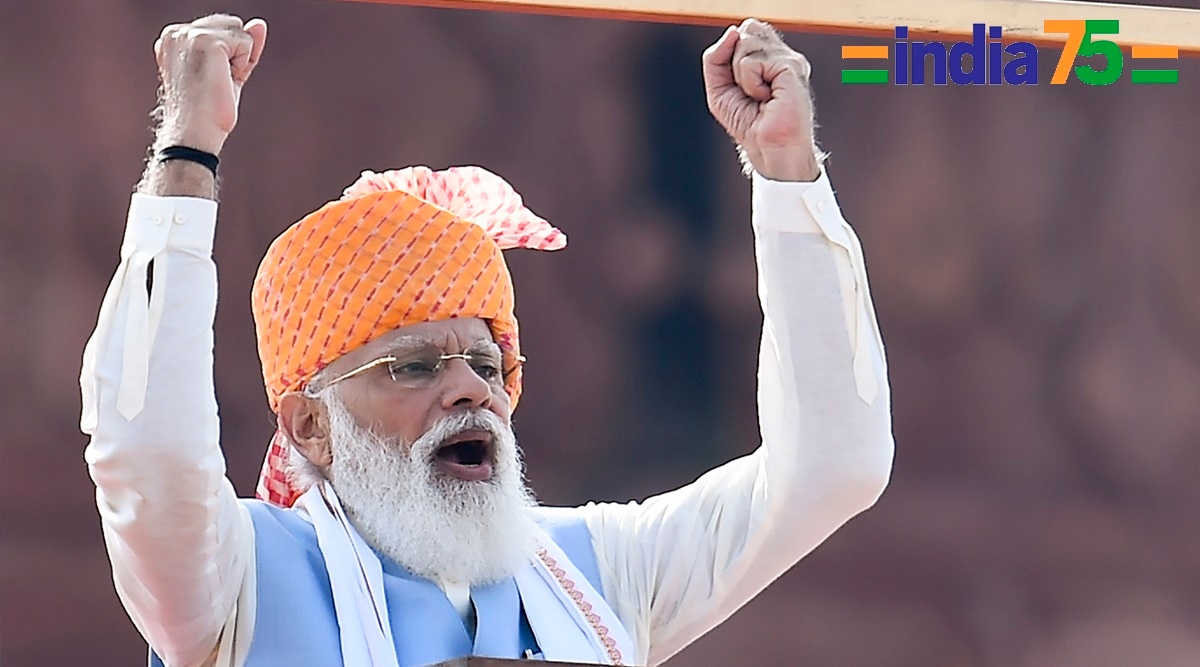
Narendra Modi's Independence Day Speech at Red Fort
Modi at the Red Fort

One wonders if Prime Minister Narendra Modi asked his foreign minister S Jaishankar what he thought about his idea of India hereafter commemorating August 14 — Pakistan’s Independence Day — as ‘Partition Horrors Rememberance Day’, before he tweeted it and the Home Ministry notified it. Because it has very real, god-awful and enduring ramifications.

Partition happened, Independence followed but 74 years after that bloody bifurcation the deep wound was drying out, developing a thickened scab in the process of perhaps leaving a small scar indicating the psychological recovery of the peoples on either side of the Radcliffe Line from the trauma impacting Punjabis in particular who lived through that time of excesses committed by, and against, Hindus, Sikhs and Muslims, in that horrid August of 1947. Except, August 14 will now keep reminding Indians about that ghastly period when sense had left the people. It will be like periodically picking on a scab until the dried up wound is raw again, which will keep the wound from drying out.

Modi’s observation that the displacement of millions of innocent people and loss of lakhs of lives owing to the “mindless hate and violence caused by the partition” and his hope that this Day will “keep reminding us of the need to remove the poison of social divisions, disharmony and further strengthen the spirit of oneness, social harmony and human empowerment” is, in the event, somewhat disingenuous, though politically and electorally, perhaps, productive. Bad memories long since interred will thus be stirred up on a yearly basis. The Pakistan government called it a “political and publicity stunt that only seeks to divide” and called it a “hypocritical and one-sided” invocation of “the tragic events and mass migration that occurred n the wake of independence”. The opposition parties here have slammed it as “divisive and diversionary politics”.

My wife is a Punjabi. My father-in-law was from Mogha, East Punjab, on this side of the Radcliffe Line where his family owned land; my mother-in-law was from Miani, Sargodha District, West Punjab, on the other side of the R Line. Her sister was married to an Inspector in the Punjab Police and was the one most to suffer the pangs and terrors of Partition. How she and her three young sons, one virtually a babe in arms, made the perilous and palpitating journey in a train from Lahore put on it by her husband’s Muslim colleagues in Punjab Police who escorted her from Dera Ghazi Khan, and how every moment on that wretched death train in its stop and start journey with men with bloodlust in their eyes and knives and swords in their hands entering and exiting the compartments killing passengers crammed into them but somehow missing my wife’s aunt and her then very young cousins huddling terror-stricken underneath the lower berths, the mother quite literally sleeping on her baby son, hoping he won’t cry and give them away, was an unforgetable passage that passed into family lore.

So, Partition was very, very bad; emotions and memories jangling and jostling on the tip of the eye colouring the post-1947 world as it passed by for that generation of Punjabis. My father-in-law’s hate for Muslims, however, was at once visceral and sublime. This was a man who when at St. Stephen’s College (as he recalled those days) befriended Zia ul-Haq (yea, ex-Probyn’s Horse and army chief who imposed the nizam-e-mustafa on Pakistan, and finished off its future) and ribbed him incessantly, calling him “Mullah” for being a strict namazi.

Hailing from a family with roots in the pleasantly temperate and sedate environs of Dharwad (in north Karnataka), I could never make head or tail of this kind of anti-Muslim rage and hate. And still can’t.

But I see that unthinking rage against Pakistan reflected even now in some retired and serving Punjabi military officers as they tortuously try and explain to me why the Indian army, navy and air force need to prioritise taking down Pakistan militarily. For the life of me I can’t see how they don’t see the obvious that Pakistan is a small, big-talking, military nuisance and sideshow at best, and why the institutionalised antipathy towards Pakistan is a strategic liability that has dragged India down since 1971 when ironically, having reduced Pakistan to its western wing, the Indian government and the military brass rather than moving on and making preparations to take on China, gave into their base and myopic instincts and began fixating on Pakistan instead.

Little wonder India has slipped down in the world. This even as China has gone from strength to strength, taking care to keep Pakistan afloat nuclearly and otherwise, just enough to have India on edge, and all this as it laughs its way to Great Power. Whatever else Partition Horrors Remembrance Day does, it will perpetuate India’s bottom-feeder status but, hey, we will have a lowly Pakistan for company. That should make us happy and keep the world entertained with South Asia’s never ending Punch and Judy show!!

Posted in asia-Pacific/Indo-Pacific, Asian geopolitics, China, China military, civil-military relations, Culture, Decision-making, domestic politics, Geopolitics, geopolitics/geostrategy, Great Power imperatives, India's China Policy, India's Pakistan Policy, India's strategic thinking and policy, Indian Air Force, Indian Army, Indian Navy, Indian Politics, MEA/foreign policy, Military/military advice, Pakistan military, Pakistan nuclear forces, SAARC, society, South Asia | 42 Comments

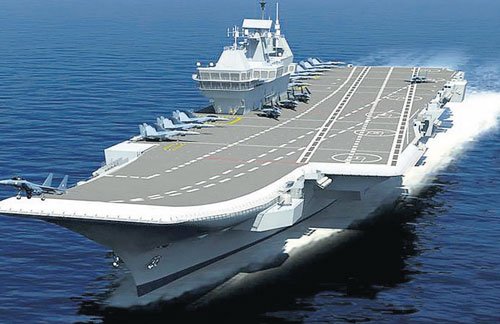
INS Vikrant — a naval liability

INS Vikrant to get LRSAM Cover Soon - ELE Times
INS Vikrant

Indian warship building has finally come a full circle after 250 years. It was in the 1780s that the Royal Navy impressed by the man’o wars in the 100 ton-1,000 ton range made from hardy Malabar Teak that the team of shipwrights under the Parsi master builder Luwji Nusserwanji Wadia constructed at the East India Company’s shipyard in Bombay for the trading firm’s use, ordered a number of frigates from the Wadias for its frontline service. Now the Kochi shipyard has turned out what will doubtless be the flagship of the Indian navy — a 40,000 ton aircraft carrier, the new INS Vikrant, presently undergoing sea trials.

Still, the country is not all there yet. Just as the HMS Cornwallis type of ships of Bombay pedigree were, in the heyday of Pax Britannica, equipped by 3 ton guns wrought in Britain, most of the high value weapons and other hardware on board Vikrant are of foreign origin as are the aircraft designated to fly off its deck.

So, we are still stuck with that inconvenient reality since the follow-on to the Leander-class frigate, the Godavari-class, were built at Mazgaon in the late 1970s, that while 80-85% of the carrier is indigenous, it is more by weight than by value. The 15-20% of the weight made up by the shipborne guns, missiles, sensors, and data/information fusion, navigation and other paraphernalia enhancing situational awareness constituting the high value end of technology and the bulk of the cost of the aircraft carrier, are all imported.

That said, the capability to construct aircraft carriers is no mean achievement. It is just as consequential as India’s capacity to design and build its own nuclear-powered ballistic missile-firing submarines (SSBNs). Except the Indian carrier-making capability is coming to fruition just when the age of the large ships is coming to a close. The Wadia shipbuilders never transitioned from sail to steam-powered ships and hence slipped into a backwater. There’s every danger that unless the Indian Navy and shipyards adjust fast to the naval requirements of the future, they too could soon become relics.

Which brings the discussion to the operational value of aircraft carriers in the coming era of supersonic and hypersonic cruise missiles and remotely piloted automoumous weapons platforms. Here I can do no better than reprise the arguments I made against this type of warship in my last two books — on pages 350-351 in ‘Why India is Not a Great Power (Yet)’ published in 2015 and on pages 373-376 in ‘Staggering Forward: Narendra Modi and India’s Global Ambition’ released in 2018.

There are three main negatives of the aircraft carrier, other than their extreme vulnerability, as mentioned. to supersonic and, soon hypersonic, anti-ship cruise missiles that will be in the employ of all potentially adversary navies. These are:

1) Aircraft carriers are prized targets, both because of their symbolic value and enormous cost — the Vikrant price tag is US$ 8-10 billion with its complement of strike aircraft and early warning and anti-submarine warfare helicopters. So, the enemy will prioritise their destruction early in a war by any and all means — strikes by land-based and carrier-based combat aircraft, by ballistic and cruise missiles launched from air, ships and submarines, and submarine-fired heavy torpedoes. In the event, an aircraft carrier at sea is all but unprotectable considering the kind of guided ordnance that can be fired at it, not just singly but in salvoes from too many firing points that cannot all be adequately covered.

2) Even so, by the very nature of this ship, a navy would mobilize a dense, layered, defence for its protection. At a minimum, this will mean that six to eight frigates and missile destroyers and a submarine used as picket will need to be deployed as an escort flotilla for a single carrier. Unless, the Indian Navy grows to have some 300 capital ships, taking away a large fraction of the current naval strength of some 50 capital ships just to protect aircraft carrier assets makes no sense whatsoever, especially as such protection will result in a seriously thinned-out sea presence of the navy even in the proximal waters of the Indian Ocean. With Vikramaditya and Vikrant in the Eastern and the Western Fleets respectively, say, as many 16 surface combatants and two Kilo-class submarines as pickets will instantly become unavailable to the navy for any of a host of other missions in case of hostilities. This to say that deploying carriers will prevent a very large fraction of the naval force from being available for a range of offensive and defensive sea control and sea denial missions.

3) For the cost of a single aircraft carrier, moreover, the Indian Navy could have secured as many as 3-4 each of the multi-purpose frigates, missile destroyers/mine sweepers and diesel submarines, or a mix of any of these war ships. In a time of financial austerity, it makes more sense to augment fleet strength than to induct one or two flashy aircraft carriers.

Serious doubts have begun to be voiced in the US naval quarters and security enclaves generally about the survivability and hence the continued utility about the large 100,000 ton Gerald Ford-class nuclear powered aircraft carriers for many of the same reasons adduced above. But let’s assume the Indian Navy is, in fact, able to protect its carriers as it claims, the question to ask is whether it serves the national security interests better for two aircraft carrier groups to be able to hold sway over two mobile circular areas, each of 250 miles in radius centered on the carriers in the vast expanse of the Indian Ocean, what to speak of the immeasurably vaster oceanic areas of the Indo-Pacific, than a whole bunch of smaller (2-3 ship) flotillas and submarines, singly or in packs, creating hell for adversary navies? The latter is obviously the more cost-efficient and operationally versatile option.

Surely, an objective analysis will show what I long ago concluded that INS Vikramaditya, the new INS Vikrant and the third carrier, INS Vishal (whenever its construction is approved) are high cost sitting ducks ready to be shot up at will by the enemy, and a real all-round liability for the Indian Navy and the country.

————

Published in the Chanakya Forum, Aug 9, 2021, at https://chanakyaforum.com/ins-vikrant-a-naval-liability/

Posted in arms exports, asia-Pacific/Indo-Pacific, Asian geopolitics, civil-military relations, Decision-making, Defence Industry, Defence procurement, DRDO, Europe, Geopolitics, geopolitics/geostrategy, Great Power imperatives, India's strategic thinking and policy, Indian ecobomic situation, Indian Navy, Indian Ocean, Indo-Pacific, Military Acquisitions, Military/military advice, Missiles, South Asia, technology, self-reliance, United States, US., Weapons, Western militaries | 32 Comments

Should India Reassess its One-China Policy?

‘Argumentative Indians’ website had this panel discussion July 26 with Jay Ranade (former China specialist in RAW), Manjeev Puri, an ex-diplomat, Major General SB Asthana (Retd), Chief Instructor, Unted Service Institution of India, Shruti Pandalai of IDSA, and yours truly.

Posted in Afghanistan, arms exports, asia-Pacific/Indo-Pacific, Asian geopolitics, Australia, Central Asia, China, China military, civil-military relations, Culture, Cyber & Space, Decision-making, Europe, Geopolitics, geopolitics/geostrategy, Great Power imperatives, India's China Policy, India's strategic thinking and policy, Indian Air Force, Indian Army, Indian Navy, Indo-Pacific, Japan, MEA/foreign policy, Military Acquisitions, Military/military advice, Missiles, Northeast Asia, Nuclear Policy & Strategy, Nuclear Weapons, SAARC, society, South Asia, space & cyber, Strategic Forces Command, Strategic Relations with the US & West, Taiwan, Tibet, UN, United States, US., Vietnam, Weapons | 5 Comments

What is Delhi finally getting about America?

May be an image of 1 person, standing, sitting and indoor

[Jaishankar-Blinken talks at Hyderabad House]

It is not a coincidence that the announcement in Washington of the appointment of the Indian origin lawyer Rashad Hussain as Ambassador at-large for Religious Freedoms followed in the wake of the US Secretary of State Anthony Blinken’s India trip and meeting with his Indian opposite number, S. Jaishankar. The US side had indicated that the issue of the deteriorating human rights situation in India would be raised, and Blinken did so. and tried to preempt the obvious counterstrike by accepting that the conditions and treatment of Blacks and other minorities in America is nothing to crow about. In this context, Jaishankar’s combatively framing the discussion in terms of how the two countries handle their diversity were apt tactics. That said, and the brazen hypocrisy of it notwithstanding, the US government will continue attacking India on this front. And one can expect Hussain will be mouthing off, making visits to India every time there’s a communal incident or eruption, and testifying before committees of the US Congress that will increasingly grate on Delhi’s nerves. Best for Jaishankar & Co., to brace for this onslaught.

Having long ago set itself up as “the shining house on the hill”, the US has habitually worn its democratic system and values on its sleeve even when its human rights record at home was abysmal. In the Cold War years before the 1965 Civil Rights Act, Blacks in the US did not have the right to vote and, in the American South, lived in an apartheid-like system of racial discrimination, including separate public utilities for Blacks. All the while Radio Free Europe, with powerful transmitters on the Warsaw Pact periphery, interspersed with Jazz and popular American music, broadcast 24/7 the virtues of freedom to the peoples of Eastern Europe, supposedly under the Soviet yoke. One thing the US doen’t display in its public posture is a sense of irony.

This to say that the Narendra Modi government cannot but expect to be at the receiving end of bad press in the US and the West, especially if it is unable to prevail on BJP-run state governments to tamp down severely on the extremist Hindu loony fringe. The RSS chief Mohan Bhagwat’s attempts at narrowing the communal divide by saying Hindus and Muslims and other minorities of the subcontinent share the same DNA, and hence are brothers albeit with different religious affiliations will hopefully contain the more rabid elements, and prevent them from periodically providing Ambassador Hussain the stick to beat India with.

It is clear the Biden Administration seems intent on keeping the human rights situation in India and the geostrategic imperatives of collaborating with Delhi to keep China leashed in the Indo-Pacific, in different policy baskets. In other words, Washington hopes to be free to criticize India in the same way it does China on the matter of the East Turkestani Uyghur Muslims, say, but expects that India, recognizing the larger game in play, will ride out the American barbs and militarily cooperate with it. The onus is thus on Delhi to accommodate Washington, and not the other way around.

There’s a problem here. One hopes Jaishankar made it plain to Blinken that this double-faced approach won’t do. This is no small thing, not something Delhi can safely ignore, because it undermines Modi’s central premise for his pro-America, pro-West stance, namely, that India is a part of a concert of democracies facing an authoritarian China in Asia and the world, even if it is obvious that Indian democracy has still very, very far to go to maturation. But whatever the quality of its democracy, India is still nominally a democratic state in the developing world. This counts, but not for much.

The ruction over India’s democratic status apart, how did the rest of the July 28 Jaishankar-Blinken meeting go? Quad, Afghanistan and covid were reportedly the three main issues on the table. Re: Quad — surely any talks over China and the Indo-Pacific would have to be contextualized by the discussions Wendy Sherman, the US Deputy Secretary of State had with the Chinese foreign minister Wang Yi July 25-26. This is what the US State Departgment spokesman Ned Price had to say: “The Deputy Secretary underscored that the United States welcomes the stiff competition between our countries—and that we intend to continue to strengthen our own competitive hand—but that we do not seek conflict with the PRC.” Had he stopped at strenghtening America’s “competitive hand”-bit, that’d have been fine. But his declaration that the US “does not seek conflict” raises the legitimate question about how far Washington would go in avoiding it? The most the US will do is send warships, on ocassion an aircraft carrier group on FONOPS (freedom of navigation patrols) through the Taiwan Strait or the South China Sea or, as happened some three weeks ago, deploy 25 F-22s from air wings in Alaska and Hawaii to Guam for in-theatre operations. These are largely symbolic gestures, not real commitment to fight.

America’s will to stand up to China is as suspect as India’s under Prime Minister Modi. Except, India is a frontline state and has much more at stake vis a vis China than does the US, and a much smaller margin of error. This isn’t helped by Delhi’s ridiculous optimism coveyed to the press about the 12th meeting of army commanders in Chushul leading to the PLA withdrawing from the Y-junction on the Depsang. It marked the kind of unrealism attending on Modi’s China policy dictated by that bunch of proven appeasers — the “China Study Group/Circle” whose list of flawed recommendations over the years would shame amateur sinologists everywhere.

Re: Afghanistan — Blinken may have responded to Jaishankar’s apprehensions at the turn of the events in the aftermath of America’s precipitate withdrawal by assuring the latter that the US means to continue supporting th Afghan National Army (ANA) by bombing and rocketing Taliban concentrations preparing for attacks on ANA garrisoned provincial capitals, cities and district capitals. There is also a mystery about where the attacking aircraft are taking off from — there have already been several strike sorties to-date. It can’t be carrier aircraft from ships stationed in the north Arabian Sea because they don’t have the range with full ordnance load to reach Taliban targets and get back. Bahrain and the base at Duqm in Oman too can be ruled out for the same reasons. There’s absolutely no doubt then that — notwisthanding promises to Mullah Ghani Baradar, the chief Taliban negotiator that Pakistan won’t allow any foreign power to use Pakistani military facilities against the Afghan Taliban, Islamabad has been arm-twisted by Washington to permit American combat aircraft to use the PAF base at Jacobabad for their anti-Taliban flights. The Jacobabad base has been available to the US Air Force/Navy/Special Forces for a long time now.

Blinken may have queried Jaishankar about what Delhi proposes to do to protect its investments in Afghanistan. Other than some reports in the Pakistani media that the Modi regime has dispatched some 3,000 troops — army or paramil isn’t clear, the Indian government’s response to appeals from President Ashraf Ghani in Kabul for military aid and assistance has teetered on uncertainty. Vivek Katju, a former foreign service colleague of Jaishankar’s, calls it “strategic paralysis”. The paralysis is less over what and how much of various military items to ship to Kabul; more over the substantial policy to adopt with regard to Afghanistan’s future and what role if any to play in shaping it.

India has a choice of some Taliban factions to support, fianancially and otherwise, but no real prospect of getting a regime of its choice. The existing Ashraf Ghani dispensation on the other hand is just the kind of progressive, liberal, government it’d like to see flourish in that country. It makes no sense for Delhi to support a Taliban govt of any kind but it makes ample good sense to try and sustain to the extent it can the Ghani government and, in parallel, begin putting back together the old Northern Alliance, just in case, the Taliban push to take over the cities and major towns and Kabul becomes shove. This will be the bloodiest phase of the underway civil war. The northern Alliance will have to be helped in every possible way to take back the border posts the Taliban have captured on the Amu Darya River accessing Tajikistan and Uzbekistan in particular, and to join with Iran in fielding a substantial and well armed Hazara shia militia to keep northwestern Afghanistan out of Taliban hands. The numerous forums, including the Russia-Afghanistan-Pakistan “troika”, where there’s endless talking, seem to be of little use under the circumstances, and India loses nothing to be no part of any of them.

Re: COVID — Whatever Blinken may have said, with the Delta variant of Corona virus now spreading like wildfire in America, it is doubtful President Biden will agree to increase exports of vaccine making materials for India to ramp up its vaccine production. One wishes the Modi govt, instead of going with begging bowls to the US and the Western pharma – Pfizer, et al for the vaccines, had invested more fully in the Indian Company, Bharat Pharmaceuticals, to scale up its production of its indigenously researched, designed, tested and winning product, Covaxin, as the low cost and effective vaccine alternative for India and the developing world.

Posted in Afghanistan, asia-Pacific/Indo-Pacific, Asian geopolitics, Central Asia, China, China military, Decision-making, Geopolitics, geopolitics/geostrategy, Great Power imperatives, India's China Policy, India's Pakistan Policy, India's strategic thinking and policy, Indian Army, Indian democracy, Indian para-military forces, indian policy -- Israel, Iran and West Asia, Indo-Pacific, Iran and West Asia, Islamic countries, MEA/foreign policy, Military/military advice, Pakistan, Pakistan military, Relations with Russia, Russia, SAARC, society, South Asia, Special Forces, Strategic Relations with the US & West, Terrorism, United States, US. | 15 Comments

Two developments: One strange, the other a big mistake

No link between NRC and NPR, says Amit Shah - The Hindu
Umm..said the wrong thing?

Something monumental happened and no one noticed. Not the Ministry of Defence, not the Ministry for External Affairs — the two ministries that will be most affected. Unless they have known about this and are quietly reconciled to this development by stealth. Or, because they do not take seriously the seminal change announced by Amit Shah, the Home Minister.

The undisputed Number Two in the Narendra Modi government, Amit Shah made public something that was at once strange and stunning. No one has commented on his statement or even reacted to it. Delivering the KF Rustomji Lecture on July 17 at the 18th investiture ceremony of the Border Security Force, Shah remarked that he “used to think if there is a security policy of this country or not?” This is a reasonable thing to wonder about. I have done so too. Then he elaborated a bit by adding a qualifier. “Till Narendra Modi became the prime minister”, Shah declared, “we did not have any independent security policy.”

But for the insertion of Modi into that line, I would agree with this conclusion. That India’s foreign and military polices and, therefore, the national security policies are not “independent” is, after all, a theme I have been dilating on for the better part of the past 25 years, especially in the context of America’s conspicuous role in the last decade and half in shaping and channeling Indian government’s thinking. So, you can understand my nearly jumping out of my skin at finding the Home Minister seemingly seconding my view, leading me, for an instant, to expect that Modi, having belatedly recognized the flawed policy system he was working with, had decided on a structural overhaul and a radical change of course.

That joy lasted the proverbial half second — the time it presumably took Shah to read the next line in his speech, which brought me down with a thud accompanied by much befuddlement. This effect would have been replicated on anyone who was paying attention to Shah.

The Home Minister, it turns out, was not referring to any foreign influences on Indian foreign and military or security policies, but rather was expressing his elation at the country’s “security policy” being unshackled from the malign influence of — wait for it — India’s “foreign policy”!!

To quote Shah per a newspaper report: the country’s security policy he declared “was either influenced by foreign policy or it was overlapping with the foreign policy” — both, by his reckoning, bad things to happen. “Our idea is to have peaceful relations with all” he continued, “but if someone disturbs our borders, if someone challenges our sovereignty the priority of our security policy is that such an attempt will be replied in the same language.” He added that this new security policy was a “big achievement” and “I believe without [it] neither the country can progress nor democracy can prosper.” He then congratulated “Modiji [for doing] this big job” before revealing that this policy had already been operationalized.
(http://timesofindia.indiatimes.com/articleshow/84499031.cms )

Is that too much to take in all at once?!

National security considerations are at the apex and dictate foreign and military policy choices and options. In the event, if Shah is to be taken at his word, it means primarily that the “security policy” making is now in the Home Ministry’s bailiwick, and secondarily, because disturbances on the border, “peaceful relations with all” and “challenges [to] our sovereignty” are apparently not “priority” with either the MEA or MOD, the Shah-led Home Ministry will put in place measures to implement these priority jobs. In other words, the task of managing relations with Bhutan, Bangladesh, Sri Lanka, Maldives, and Pakistan are now transferred from South Block to Sardar Patel Bhavan. China, because it does the intimidating where India is concerned, is left for the MEA and MOD to handle. The MEA, MOD and the armed services on their part will feel relieved that in this new Shah scheme they will have something to do other than sit on the sidelines unprofitably twiddling their thumbs.

Then again, it may just be that nothing has changed and Amit Shah does not know what he is talking about. This is a real possiblity given how ministers read babu-drafted speeches they can’t make head or tail of, in which case, Home Secretary Ajay Kumar Bhalla and his minions ought to be blamed for making the Home Minister sound, well, as not quite there! In this policy realm, is there anything more outlandish than what Amit Shah said?

The interesting thing is why did Shah, even in his muddled fashion, say what he did? May be the Home Minister is in an aggrandizing mood and believes diplomacy with adjoining states would be conducted better by him and his boys, and would like to wrench decisionmaking turf from the MEA and MOD, and find more military missions and such for the BSF and other paramils under his control to carry out? Or, with the neighbourhood blowing up around us the Home Minister is a bit jealous of his colleague, the external affairs minister, S Jaishankar for being, willy nilly, in the public eye. Except the foreign minister is in the limelight lately for the wrong reasons.

EAM Dr. S. Jaishankar leaves for 3-day official visit to Russia - NewsOnAIR  -
Missteping along

Diplomats, it is said should think twice or thrice before saying nothing. Jaishankar, perhaps, feels that because he has graduated from the ranks of babu to minister, he can let his mouth run wild, the diplomat’s characteristic tact be damned! He let this happen around the same day that Shah was asking the MEA to keep off security policy in order to make it more “independent”. What? How? Don’t ask!

Speaking to a virtual audience of his BJP partymen in a foreign policy training session, Jaishankar couldn’t resist boasting. “Due to us, Pakistan is under the lens of FATF and it was kept in the grey list”, he asserted. “We have been successful in pressurizing Pakistan and the fact that Pakistan’s behaviour has changed is because of pressure put by India by various measures.” He elaborated further: “FATF, as all of you know, keep a check on fundings for terrorism and deals with black money supporting terrorism. Also terrorists from LeT and Jaish, India’s efforts through UN, have come under sanctions.”

So, where was the diplomatic boo-boo?

FATF (Financial Action Task Force) is fairly unique in how it holds a targeted country’s feet to the fire. For instance, at the last FATF meeting in Paris in end-June Pakistan did not get a pass out of the institution’s ‘Grey List’ even though it fulfilled 26 of the 27 conditions because there was telltale evidence of the Lashkar-e-Tayyaba and Jaish-e-Mohammad terrorist outfits beneftting from monies Pakistani agencies had a role in laundering. By the same token, US will ensure, Pakistan never slips into the Black List which India wants, which will activate comprehesnive economic sanctions, because Islamabad is, owing to the civil war in Afghanistan, all but indispensable to America.

The trouble is this: Pakistan is in the FATF crosshairs because of its covert and overt support to the various terrorist outfits it has nursed for operations in Jammu & Kashmir which, in turn, keeps alive what, for all intents and purposes, is the dead 1949 UN Resolution 47 pertaining to Kashmir — the outcome of Jawaharlal Nehru’s referring the dispute to the UN.

India does not have to do a thing to keep Pakistan in the Grey List other than do what it has quietly been doing — list terrorist incidents traceable to Pakistan-based gangs and refer to their financial links to the Pakistan state. In that sense, the Indian government is merely an agency reporting terrorist incidents and the electronic/paper trails of terror financing; that this implicates Islamabad is by the way. This was done routinely and without fuss. Now Jaishankar has gone and spoilt it.

For the Indian foreign minister to publicly take credit and crow about India’s efforts in keeping Pakistan on the FATF’s warning list is to arouse suspicions among the European and other member states of this body about motives other than terrorism driving Indian government’s actions. Not that they are unaware of how much value and weight New Delhi attaches to keeping Pakistan on the FATF hook. But, for that very reason, they could at any time convert their decision into diplomatic leverage for use against India.

Indeed, the Pakistan Foreign Office was very fast in trying to corner India on just this point, claiming that New Delhi had “politicized” the FATF, and offered Jaishankar’s “confession” as it called his gloating, as proof for its charge. Such a claim is rendered credible because India is the co-chair of the Joint Group that assesses whether Pakistan’s warrants placement in the grey list in the first place. The more low key and objectively the Indian government acts in the FATF the more convincingly Pakistan crucifies itself by its own irrefutable acts of ommission and commission. Should Pakistan’s case of India politicizing the FATF take hold, however, Pakistan may well be let off on its good faith actions and for fulfilling most of the criteria and Indian interests will end up taking a hit

For Jaishankar to have thus imperilled India’s case and potentially loosened the FATF noose around Pakistan’s neck is an inexcusable mistake particularly for a supposedly seasoned former career diplomat to make. But then just may be Jaishankar felt pressured. Can it be Amit Shah and Jasihankar are both competing, trying to elbow each other out of Modi’s attention, by trumpeting the performance of the ministries they head?

Posted in Afghanistan, asia-Pacific/Indo-Pacific, Asian geopolitics, Culture, Decision-making, Europe, Geopolitics, geopolitics/geostrategy, Great Power imperatives, India's Pakistan Policy, India's strategic thinking and policy, Indian para-military forces, Internal Security, MEA/foreign policy, Pakistan, Pakistan military, SAARC, society, South Asia, Terrorism, UN, United States, US. | 26 Comments

Use the Afghanistan mess to mess with China in East Turkestan

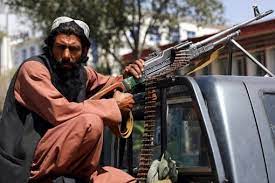
Kalashnikov-toting turbanators taking control?

In a punitive mood after the Islamic extremists whom the US had carefully nurtured and who, in the guise of the Al-Qaeda led by a one time CIA operative Osama bin Laden turned on their American masters and spectacularly brought down the trade towers in New York city and nearly finished off the Pentagon as well in Washington on 11 September 2001, the then US President George W Bush launched US forces to take out the medievalist regime of the one-eyed Mullah Omar in Afghanistan.

I had predicted then the Americans would be there for a while, but would be beaten black and blue and bundled out by the Taliban. 20 years later that prediction has come true.

Once again, and as is their wont, the US expeditionary forces showed as much punch as a bunch of pansies, running away from a fight as they had done from Saigon when between the Viet Cong guerillas and the People’s Army of Vietnam under the generalship of the legendary Nguyen Von Giap, US MACV (Military Assistance Command, Vietnam) was stomped into mulch, the last of the American troops and consular officials helicoptering out off the roof of the US embassy in end-April 1975.

Military defeat is the most wrenching of national experiences. The Chinese smash down in the 31-day Himalayan War 60 years ago (20 Oct-21 November 1962) so dented the image and reputation of the Indian army, it has still to fully recover from it. The Pakistan army, likewise, remains unreconciled to a sheepish-looking General AAK “Tiger” Niazi surrendering his pistol along with 93,000 troops in East Pakistan to General Jagjit Singh Aurora at the race course in Dhaka on 16 December 1971.

Military defeat cannot be masked. Or covered up. Or denied. The former US President Donald Trump’s sometime National Security Adviser, John Bolton, tried to do all three and, predictably, ended up sounding like a blithering idiot. With the last of the US forces decamping in C-130s in the dead of night, July 1, from the Bagram air base in Kabul, this shameful final act of cowardice and lily liveredness was sought to be explained away by Bolton. He claimed with a straight face on CNN that “We weren’t defeated. You have to be defeated to lose a war. We’ve given up because we’ve lost patience.”

Losing patience, walking away, from a war the US started, are synonyms for the American forces being pounced on and pummelled into submission — a result all the more stark considering the $1,200 Billion US spent in Afghanisan over the past two decades in a failing venture, before finally being run out of a country whose people, unlike Indians in India, have historically not taken kindly to foreigners tresspassing into their country. The humiliation at the hands of a scruffy band of sandal-wearing, Kalashnikov-toting, turbanators will be difficult for the US to live down. One thing is certain though, in the aftermath of their twin military fiascos in Iraq and now Afghanistan, Americans will not be sallying forth on a new military adventure any time soon.

And this is the US and the American military the Narendra Modi government is happy to outsource India’s strategic security against China to?!!

Still, with the Yanks out of Afghanistan and President Ashraf Ghani and the Afghan National Forces (ANF) hanging on for dear life at least in Kabul and the other cities, which uptill now have been spared the Taliban rush, New Delhi has to be clear-minded about its aims and surefooted in crafting a policy that will serve India’s national interests in the short, medium and long term.

Kabul is an invaluable prize for the taliban for a reason — the capital with all the embassies and international presence will legitimize its rule; without it, Taliban are only another set of pretenders. Washington has said a violent takeover of Kabul and other cities by the Taliban will lead to the US withholding diplomatic recognition. This is the reason why the loose Taliban High Command has tried to be reassuring about its behaviour once in power this time around — though the actions of its foot soldiers in the areas it has occupied have increased apprehensions about that country being pushed back into the dark ages — with the girl child imperilled, women’s rights suspended, and music and colourful garments attracting Taliban lashes, when not worse.

The pivotal issue is how long and credibly the ANF can keep up its morale and fight the Taliban surge that swept through 85% of the Afghan countryside. The July 16 incident in Dawlatabad in northwestern Balkh province where a 22-strong ANF Special Force element who, after putting up a valiant fight until their ammo ran out, tried to surrender only to have the Taliban, not conversant with Geneva Conventions or other niceties of war, simply line them up and shoot them down in cold blood. This along with the Taliban edicts to women to go into purdah and the men to not smoke or shave, will do one of two things. It could steel the hearts and the nerves of ANA commanders who with their troops are deployed in and around Kabul and in the 34 provincial capitals, into deciding they would rather risk an honourable battle and go down fighting than meet a dog’s death. Or, they may take a chance on the Talibans’ mercy and heed their call to surrender. In either case, the probability of the Ghani government surviving is problematic. Unless, and this is the big if, ANF holds on to Kabul and successfully repels waves of Taliban onslaught. There’s enough ammo and artillery shells with the ANF to do so in the short and medium term. Some eight Indian Air Force C-17 sorties to Kabul in the recent past, each with 40 tons of military supplies, will have increased the ANF stock of ample prepositioned stores the US left behind on its rapid exit out of the country.

The Afghan ambassador in Delhi, Farid Mamundzay, said the Ghani government and the ANF have an advantage in two decisive respects. It has some 400,000 troops and more than adequate military stores of all kinds, as against only 70,000 in the Taliban ranks. And they have air power which the Taliban don’t. Whence his request to India for help in augmenting the ANF’s helicopter force. 35-40 attack hepters, he thinks, would do the trick and he hopes other than India, the US and Russia will respond with transfer of these fighting whirlybirds. There may be a problem with this reading of the situation. The American forces with excess of everything, especially air power, failed to leave much of a mark on the Taliban. How can an ANF armed hepter fleet of 40 some aircraft make any real difference? Besides, what’s to prevent the Taliban from periodically blunting this edge by mounting attacks on city air fields like the one that a fortnight back destroyed two Blackhawk hepters on the ground in Kunduz? Or, intensifying their new tactic of assasinating helicopter pilots with the ANF?

But Ambassador Mamundzay is absolutely right in identifying the US, Russia and India as the three countries that can prevent the Taliban from taking over the country by sustaining an arms supply line. Moreover, under cover of the US forces marshalling its forces in the area, Russia is strengthening its military presence in the adjoining Central Asian states under the aegis of the Collective Security Organization (CSO). The Central Asian governments are worried about a backwash from a Taliban takeover of Kabul and Afghanistan, and how they’d have to deal with Islamic extremism. So should a future Taliban dispensation in Kabul turn rogue, the CSO states would be happy to be part of a corrective action.

Actively courting the ire of the US, Russia and India, could place the taliban in a no-win situation. Taliban targets can be directly reached by US, Russian, and IAF strike aircraft rounding over the Gulf and staging out of their Farkhor base in Tajikistan. This is the reason why I have pleaded for a long time for a fully provisioned IAF forward placement of a Su-30 squadron at Farkhor. Indian, American and Russian air strikes can take a heavy toll on the Taliban morale and its barebones logistics chain set up for them and, for some time, even managed by the Pakistan ISI. It can, for instance, prevent them from concentrating their war materiel and numbers for concerted attacks on major cities, in particular Kabul. This is what US air power essentially achieved.

The trick for the Indian government is to continue playing on both sides. India can promise more development aid and infrastructure construction assistance to the Taliban. Further, Indian intel agencies have had productive contacts over the years with certain factions of the Taliban. Because the Taliban operate in discrete fashion, each faction in effect fighting its own subregional war for supremacy, it is not that difficult to act against some factions inimical to Indian interests without alienating the friendly ones. And because of the transactional nature of relationships with the Taliban, even the not so friendly sections can be won over by money and other considerations. Pakistani media is full of reports and commentaries suggesting the Indian support and subsidy for the Tehreeq-i-Taliban Pakistan (TTP) means Delhi holds a whiphand and can destabilize Pakistan at any time.

The ideal solution of course is for an inclusive coalition Afghan government that the Taliban have talked around without giving a clear yes or no answer in the various talks held in peace forums from Doha, Istanbul to Moscow. The Taliban obviously believe thay can wait out the Ghani regime and the patience of its external supporters, in the hopes of Kabul and other cities falling into their lap without a fight. In the meanwhile, they have strategically this time, prioritised the taking over of the main roads, check posts and entry points into Afghanistan.

The Taliban have already captured the border posts over the Amu Darya River connecting Tajikistan, Turkmenistan and Uzbekistan. They realized how because these routes remained in enemy hands, certain western and north western provinces became hotbeds of resistance that the Taliban, when they were in government last, were never able to quell. Thus, the Tajik Ahmed Shah Masood ruled the Panjshir Valley and Colonel Abdul Rashid Dostum, an Uzbek, with his 20,000-strong complement of ethnic fighters, was a spoiler. So, this time, not wanting to repeat the past, the Taliban have first overrun all border areas and main crossing centres with Tajikistan (Sher Khan Bandar, Panj River) , the Badhgis border with Turkmenistan, Islam Qala in the Herat province fronting on Iran, and the Wakhan corridor facing China.

The Durand Line on the Khyber and across the lower length of Afghanistan’s border with Pakistan is Taliban’s own play ground. Islamabad and GHQ, Rawalpindi, are rightfully worried that working in conjunction with the TTP, the Afghan Taliban, after pacifying the rest of their country and taking Kabul, will realize the old Afghan dream of regaining for Afghanistan its traditional border before the British Raj annexed the territory upto the Marghala Hills in Islamabad. That will be an unexpected denouement to the Independent Pakhtunistan problem! With the Baloch insurgent movements, moreover, operating out of southwestern Afghanistan and the secessionist movement in Balochistan on the boil, the emerging situation is fraught with the utmost danger for Pakistan.

This is where strategic good sense needs to inform India’s Afghanistan decisions. Delhi can play the old game of tightening the pincer on Pakistan — Baloch National Movement, Balochistan Liberation Army, et al, on one side and the Afghan Taliban-TTP on the other side. This will fetch small returns.

Or, it should opt to do the wise thing to subserve India’s metastrategic interests — use the back channel with Islamabad to, in return for Pakistan government settling on a Kashmir solution with the LOC as international border — loosened for to- and fro- movement by Kashmiris on either side, incentivizing, motivating and materially supporting the Afghan Taliban and TTP (away from Pakistan) and against Godless Communist China, and towards liberating fellow Muslim Uyghurs of East Turkestan (Xinjiang) and helping them throw off the Chinese yoke. The mountainous Wakhan Corrdor as Taliban guerilla war staging area is almost too perfect for this purpose. It is an enterprise that will have wide support of just about every country that wants to pull China down a peg or two and otherwise help that aggressive Communist state to implode, and which category includes, the US, Russia, most European countries and almost all Asian states.

Pakistan is small fry. Please Think and Act Big and real Strategic, Modiji. You can task your NSA Ajit Doval, with this his biggest Game.

Posted in Afghanistan, arms exports, asia-Pacific/Indo-Pacific, Asian geopolitics, Bangladesh, Central Asia, China, China military, civil-military relations, Culture, Decision-making, Europe, Geopolitics, geopolitics/geostrategy, Great Power imperatives, guerilla warfare, India's China Policy, India's Pakistan Policy, India's strategic thinking and policy, Indian Air Force, Indo-Pacific, Internal Security, Iran and West Asia, Islamic countries, MEA/foreign policy, Military/military advice, Pakistan, Pakistan military, Relations with Russia, Russia, russian assistance, russian military, society, South Asia, Special Forces, Terrorism, Tibet, United States, US., West Asia | 46 Comments

Maddening CDS-cum-Military Theaterisation Muddle (Augmented)

Bipin Rawat Takes Charge as India's First CDS - See Pics
Hail CDS!

India’s first Chief of the Defence Staff (CDS), General Bipin Rawat, has been visible and vocal the past few months on television and public forums explaining what his priorities are, starting with the theaterisation of military commands. Both the CDS and theaterization were recommended by the 1999 Kargil Committee chaired by the late K. Subrahmanyham. These were part of the reforms the Committee had suggested to realize ‘jointness’, absent which the country had managed to put one over the Pakistan army in the last border conflict but at great cost.

India and Indians can’t be thankful enough that there’s always the Pakistan army to rescue us from our military follies because, unmindful of its resource limitations, it screws up by not thinking strategically before lurching into action.

The lack of coordination (owing to the then air chief, Anil Tipnis, not satisfied with an ask for help by the army chief General Ved Malik, insisting on a written directive from the government to use aircraft) led to the Indian Air Force taking no part in the first two weeks of the hostilities. And when it finally was activated, it did so with armed helicopters which were promptly shot down as was a combat aircraft logging, in the process, a startling attrition rate and all inside the first few hours of deployment. The reason the IAF offered for this fiasco was that it had not prepared for war in the mountains!

In line with how the Indian system works — the country got the body first — the Integrated Defence Staff, the supposed secretariat for CDS, as recommended by the Kargil Committee, before the Indian government realized, some 20 years later, that something was missing and around 2019 attached a head, namely, the CDS, to the IDS body. Thereafter, moving with commendable speed, it filled this newly created post with the then soon-to-retire army chief, General Rawat, the sort of grounded infantryman anyone would be happy to take advice from.

But before being pitched headlong into the chair, Rawat failed, apparently, to take the precaution of inquiring from the government about his role, what was expected of him by way of agenda and priorities and, most importantly, what slate of powers the CDS post would be endowed with as these powers would have to be carved out of the decisionmaking turf the services chiefs lord over. This was necessary in order to implement decisions that would require the CDS to work through, over and around the inevitably resisting services chiefs of staff, each of them zealously protective of his own part of the field and preventing encroachment of any kind by any body. Once in the CDS’s chair, Rawat realized he was the proverbial fifth wheel of a running vehicle and served no useful purpose.

For all the pomp and ceremony attending on his CDS position Rawat found himself, in effect, as nothing more than head of the Integrated Defence Staff, but with bigger office and perks. For the Services chiefs he was an imposition but as primus inter pares (first among equals) and so designated by the Cabinet Committee as the single point source of military advice to the Defence Minister and, hence, the government, he could, in theory, insert himself in the military decision-making process with more consequence than the chairman, chiefs of staff committee (CCoSC) in the previous schema could. Except, the CCoSC was an established institution and over the years a gentleman’s understanding had evolved. Because the senior most serving chief served as chairman, each service chief would get his turn and, as chairman, had the opportunity to serve his service’s interests, push his service’s pet projects and programmes. Now insert into this mix a fourth four star but take out the old structure and what you get is a new player who is as much nuisance as inconvenience. It was a recipe for gumming up the works.

To correct this mess, the government then compounded it by creating without much thought or deliberation an organization for a CDS to head and so the country got yet another department of government — the grand sounding Department of Military Affairs (DMA), because IDS HQrs, a subordinate entity, obviously wouldn’t do. So DMA is now in place with a near full establishment on paper — AdSecs, Joint Secs, etc. Except no one from the superior civil services or the armed services wants to serve in it, because it is still a stand alone appendage with no real standing or power. Why, because, again, Rawat, in a tearing hurry to become secretary to government forgot that as army chief he was principal secretary to the government and, as a former CCOS pointed out to me, heading the DMA is actually a substantive demotion. In effect then, all the services chiefs actually bureaucraticaly outrank the CDS and head of DMA, Rawat!

And because Rawat didn’t take care before taking the job of fleshing out the power and authority of the CDS, which he could have done by exploiting to the max his Pauri-Garhwal connections to the powers that be, he and the CDS post are in the unenviable position of remaining transfixed between and betwixt. Because ultimate decisions, short of the PM, pertaining to national defence are still made by the Defence Secretary who retains the responsibility for the country’s military security, and outranks the CDS in every respect!

So, one can see why Rawat cannot push the theaterization of military commands through with the IAF standing in the way. The CAS Air Chief Marshal RKS Bhadauria explained in a TV intervew that his service was not against theaterization per se, but rather that it wants it done just “right”. Of course, if the IAF had its way, it will never happen because it is loath for the sake of jointness or anything else to give up its operational prerogatives and control over its assets. But for the deadlines set by the government, this would be grist for endless disagreement without closure. The IAF, more than the self-confident navy, has always been reluctant to dilute its separate corporate identity even if for a good cause. And it has not fought shy to go to any extent.

Just how petty the IAF can get was revealed by a former commander-in-chief (CINC) of the integrated Andaman Command — the first demonstration project for jointness. He reveals how the IAF refused, for instance, to cede its land to the Command, land where the CINC hoped to build living quarters and recreational facilities for IAF and other military personnel on base, at a time when airmen were living in tents. And not to give ground even in matters of protocol, he recalls how airmen waiting for a service bus invariably failed to salute the CINC passing in his car because he was from another service and how they went to great lengths to avoid doing so. When this CINC asked the IAF chief at the time about it, he was told that that was because the IAF men did not have their caps on. To avoid such protocol situations from arising the IAF component commander, under instructions from IAF Hqrs, then changed the location of the bus stop!

The Andaman Command experience points to the major issue at the core of the integration problem. The authority to write annual confidential reports (ACRs) of officers, which defines the limits of the CINC. In the current circumstances, CINC, Andaman Command, writes the ACRs of his deputy from a different service and of each of the component commanders. Except the final vested authority on the ACRs rests with the services chiefs in Delhi. Should the deputy chief or any of the component commanders act in any way considered detrimental to the interests of the service as determined by the chief, well he and his ACR are fixed, promotion prospects marred. In other words, even in an integrated setup, loyalty to the parent service is paramount or an officer gets it in the neck, hardly the incentive for officers serving in integrated commands to feel loyalty for the joint setup. Or, for the Command to come up with optimized battle plans and crisis solutions involving use of all resources. So what would the falloff be in terms of the Command’s military efficiency and effectiveness? I reckon it would not be insignificant.

A simple reform of making the CINC the final authority in ACR writing will do more to generate loyalty in an integrated military structure than all the endless gassifying on the subject by politicians and militarymen. This is the stickiest point and no service chief will make concession. It requires the defence minister and, if he is averse, the prime minister to simply lay down the law and, by diktat, affect this change. No debate on the topic, no discussion, no endless file pushing in the Defence ministry, no nonsense!

The other immediate issue are the proposed plans for theaterization. The trouble with them is their byzantine nature. There’s so much opacity and such a tangle of crossed lines it is hard to know whose authority will work when, where, and how, and over what. For instance, Rawat in a recent TV interview talked about his priority — the proposed integrated air defence command that will make a single commander in charge of all air space management, including all air activity by assets held by the three armed services, this to avoid, as he put it, fratricidal kills. (See https://youtube.com/watch?v=wwhbsvN9o_l .) These air assets are inclusive of everything from the army’s longrange artillery firing shells to 40 km range because at apogee they reach 15 km altitude in their ballistic course, drones, unmanned aerial vehicles, helicopters, to combat and transport aircraft, in other words every last thing of military use that flies.

Then Rawat talked of the extant complication: He tried to explain why because of the live borders with Pakistan and with China, the IAF’s northern and western air commands will continue as they are. He did not clarify just how all the flying objects with these two air commands will fold into the air management scheme overseen by CINC, Air Defence Command, and how utter confusion can be prevented. Untangling the operational control over the multitude of assets in these three commands will be a nightmarish exercise with what results will be decided by the outcome of the next war!

The aforementioned fomer Andaman command CINC believes there’s no way to resolve such problems other than for the three armed services chiefs to sit around a table with, perhaps, the CDS presiding, and working out just how and where the fighting assets in particular are to be distributed, located and controlled at literally every moment in time — which aspect will become crucial in case of crisis and hostilities. This is inherently difficult business, and the CDS and his staff will have to work the details out with Bhaduaria, Admiral Karambir Singh and General MM Naravane and their respective staffs, and find appropriately dynamic solutions.

The rest of us can only hope and pray our adversaries will show some consideration and not thrust a war on us before the three services chiefs and the CDS iron out the integration wrinkles.

On the larger issue of military integration, however, the minimum that is expected of the CDS is that he will be familiar with the other two services, their inventories, their capabilities, and of the whole host of specialist skills and competences they represent and embody. In this respect, Rawat has disappointed. He has not shown the necessary knowledge of, leave alone insights into, even the basics of air and naval warfare. Just how deficient he is in his appreciation was showcased by his calling the air force a mere “supporting arm” which, in this day and age, is inexcusable and almost a goad to the IAF to stand its ground against theaterization. Not content, Rawat then almost revelled in his ignorance of the differences in combat flying conducted by the air force and the navy. Sounding verily like one of the generalist babus populating the defence ministry, who can’t tell the business end of a gun from their elbow, he said he can’t see why IAF pilots cannot fly their aircraft off carrier decks, and naval pilots their planes from air bases!! In Rawat’s mind, flying is flying — what’s the big deal?!! The small matter of the vast and consequential differences in aircraft and in combat flying over land and at sea off aircraft carriers is for him of little concern. Ooh, boy!!!

With Rawat as CDS, the Modi government better begin to worry about the sort of military “integration” that may materialize under his charge, and its overall effects on the armed forces’ efficiency and effectiveness.

Posted in asia-Pacific/Indo-Pacific, Asian geopolitics, China, China military, civil-military relations, Culture, Decision-making, Geopolitics, geopolitics/geostrategy, Great Power imperatives, India's China Policy, India's Pakistan Policy, India's strategic thinking and policy, Indian Air Force, Indian Army, Indian Navy, Indo-Pacific, Military/military advice, Pakistan, Pakistan military, society, South Asia, Weapons | 55 Comments

Drone danger: Just waking up to it?

128382_600
Sure!

Drones which dropped small explosive packages on the Jammu air base just missed hitting — not by much — a helicopter unit parking area and the air traffic control tower. Consider this a trial run.

What if a parked hepter had been struck? Depending on whether it was armed and ready with a full ordnance load of missiles, rockets and bombs, and a full tank, and on how many other hepters were in the vicinity, this would have been a humungous fratricidal fire attack — the first exploding hepter destroying other aircraft.

That the realtime photoimagery or IR sensor guidance was available to the drone platforms and that the hepters were in the crosshairs suggests its handlers were after big targets and wanted this to have a big demonstration effect. Logically, then the attacked aircraft would have to be expensive ones; in this instance, that means the targets were the attack helos stationed at the Jammu AFB at the time, or deployed there for the nonce.

There are two types of high value attack hepters in service with the IAF — the AH-64 Apache and the Russian Mi-24. In rounded figures, the Apache costs Rs. 695 crores or US$ 100 million each; the Mi-24 comes in at around US$ 14 million. If it is officially contended that what the drones missed were utility/transport hepters then the unit cost of the Russian Mi-17 is some US$ 9 million.

Now, let’s calculate the exchange ratio — the ratio of the cost of the drone lost to the cost of the destroyed hepters — the adversary would have obtained had the attack operation succeeded. The cost of the drone, assuming it was equipped with miniaturised camera, etc and a communications link, wouldn’t have exceeded Rs. 2 lakhs or US$ 2,700. Had the drone taken out, say, one Apache worth $100 million the exchange ratio just in monetary terms would have been 1:37000!! Had two more Apaches been thus destroyed the ratio would have mounted to 1:111,000. If we assume a single Mi-24 was hit, the exchange ratio would have been still terrifically lopsided at 1: 5186. In case it was the Mi-17, the E-ratio would be 1:3333.

You get the idea.

A former CAS, S Krishnaswamy, has penned an op-ed, post-Jammu attack, when everybody has suddenly become alive to the threat posed by drones/UAVs. (https://indianexpress.com/article/opinion/columns/drone-detection-system-jammu-airfield-bomb-attack-7380116/). He says drones are means of terrorism, that “hundreds of drones” could be launched by Pakistan to “harrass” India, and then alights on the surefire solution senior Indian military officers always do when they get the problem wrong and are otherwise fresh out of ideas — he talks imports! By way of a throwaway line Krishnaswamy mentions helicopters in anti-drone role. Presumably, he is referring to the directed energy (laser) doo-dah on the Apache able to disable lowflying drones. The Apache in anti-drone role, however, is nonsense because it will require an improbably large fleet of AH-64s to be in the air all the time, 24/7/365! This Apache mention is a prelude to his recommending buying systems to detect and to destroy drones abroad.

From this ex-Air Chief Marshal’s piece — one thing is clear. He hasn’t a clue about the evolving nature of drones and neither does the IAF brass who, over the years, have never seriously mulled the drone/UAV as principal offensive weapon system and surveillance platform. Tool of harrassment — really??!! Nor how drones/UAVs are helping manned combat aircraft to obsolesce fast because anything worth targeting is more vulnerable to small, highly agile, inexpensive drones than a new fangled combat aircraft our blinkered fighter-jock community leading the IAF into the future may insist on procuring. And he and the IAF pooh-bahs know even less about indigenous capability.

In this respect, a small but revealing episode. The day before yesterday, out of the blue, a retired Vice Chief of the Air Staff called me up. He asked me to republish an op-ed of mine he says he read 10-15 years ago that warned about the danger from drones, which he said was “prophetic”. He recalled how he had gone with my article to meet the then Air Force Chief and his Principal Staff Officers to ask them to do what I had urged in that piece: Take drones seriously, because they are the future, only to be told by them that “Karnad is a maverick”. Maverick in IAF terminology is a term of abuse.

Actually, I first talked about drones and unmanned aerial platforms making combat aircraft obsolete in 1986 in a two part series published in the then Khushwant Singh-edited Illustrated Weekly of India. It was written from Washington and after discussing the subject with many leading lights in the US, such as Jacques Gansler, then Under-Secretary of Defense in-charge of acquisitions. Given the technology trend path, I had recommended in those articles that, rather than waste time and money on the Light Combat Aircraft project that was just getting started and which aircraft I predicted would be dated by the time it hit the tarmac, HAL, IAF and the Indian government would be better off if they concentrated on designing and developing a family of drones/UAVs for various roles in aerial warfare of the future.

It earned me, on my return to India, the anger of the then science adviser to defence minister V Arunachalam and a trip to the LCA project in Bangalore and a briefing by its director, Dr Kota Harinarayanan. Enjoyably, I was, perhaps, amongst the first outsiders to actually sit in a live LCA glass cockpit mockup with fly-by-wire, and engage in what can be termed a dynamic video game of an aerial fight of me in the LCA versus one, two, or three “raiders” being managed by the head of the avionics software group, a US-trained engineer. (This was a long time ago and I hope I got most things right about the B’lore trip!) And I liked what I saw.

It is another matter that seeing the IAF time and again make a hash of things by choosing yet another foreign fighter plane and waste national resources while stepmothering the indigenous LCA into near extinction, I have been all for the Tejas to make it and for its technologies to be continuously upgraded and for larger, more modern and lethal variants to be funded. Meaning, if the IAF is damn fool enough to believe manned aircraft will be viable well into the 21st century, then I’d rather the government pour national resources — your and my tax money — into the homegrown Tejas and Indian industry than in a deal for an imported item that will improve the bottomlines of Boeing or Lockheed or Sukhoi or Mikoyan or Dassault or Saab or EADS.

The reason I say the IAF brass are clueless is mainly because they seem entirely unaware of the drone/UAV technologies — hardware and software — of the most sophisticated kind being designed, developed and marketed in India. According to a hard count by Group Captain RK Narang, there are 26 private sector companies, who are at the cutting edge of drone tech and doing well. He made this list for SITARA (Science, Indigenous Technology & Research Accelerator) — a forum founded and headed by a retired diplomat, Smita Purushottam, which has relentlessly pushed indigenous technology and has repeatedly succeeded in getting the Prime Minister’s Office to intervene, especially in the telcommunications area where the Ministry of Telecommunications and its various agencies seem bent on sabotaging Narendra Modi’s atmanirbharta policy by letting in foreign 5G technology vendors by the backdoor. A seasoned IAF helicopter pilot and author of the usefully informative 2020 book — ‘India’s Quest for UAVs and Challenges’, Narang was, until he retired earlier this year, the leading proponent of UAVs in IAF. One suspects though that while his seniors in service indulged him by supporting his research, his recommendations were not taken too seriously by Air HQrs. Hope they will do so now.

It seems to me that were these 26 firms to work together per a single plan and integrate their resources, they would produce a world class series of surveillance, warfighting and attack drones including drone swarms operating in distributed (artificial) intelligence mode, as also anti-drone technologies. Such an enterprise should long ago have been underway with the IAF helming it. But considering its regressive mindset the chances of its doing so are, well, zero. In the main because IAF brass fear that drones/UAVs will divert resources from combat aircraft acquisition programmes they are wedded to come hell or high water! Such purchases will be made even if these aircraft stand next to no chance of surviving actual fight with drones. Indeed, these aircraft will be lucky to get off the ground in the face of attacking UAV/D-swarms.

Relying on DRDO to perfect its drone and anti-drone systems, like land-based and airborne low energy lasers to shoot down drones/UAVs, and IT systems to scramble their guidance loops, is unnecessarily to lose time and money. Most countries are fast-forwarding their drone/anti-drone projects by going commercial — that is, getting companies vending whole drone systems and related technologies for commercial use, to build more rugged and capable drones and unmanned aircraft to milspecs for military use. This is the way to go and Narang’s list of Indian companies should ideally be immediately involved and commissioned by the Ministry of Defence to have time-certain delivery of finished drone weapons and surveillance systems and anti-drone tech systems. Because this is private sector where time is money there’ll be no time or cost over-runs.

Except, as in all advanced technology areas where procurement is featured, the process is deliberately elongated by everybody in the acquisition hierarchy and in the DRDO in the hope that IAF and Indian govt will opt for the usual, derated, inherently compromised, foreign hardware, and that this will involve a lot of foreign trips, lavish “entertainment” — “commissions” anybody? and, who knows what else. Can the Indian firms provide them such goodies? Of course, not.

So import everything!! Third World/Fourth World modus operandi zindabad!!

Posted in arms exports, asia-Pacific/Indo-Pacific, Asian geopolitics, civil-military relations, corruption, Culture, Cyber & Space, Decision-making, Defence Industry, Defence procurement, domestic politics, DRDO, Europe, Geopolitics, geopolitics/geostrategy, Great Power imperatives, India's strategic thinking and policy, Indian Air Force, Indian ecobomic situation, Intelligence, Internal Security, Military Acquisitions, Military/military advice, Missiles, Pakistan, Pakistan military, Relations with Russia, Russia, society, South Asia, technology, self-reliance, Terrorism, United States, US., Weapons, Western militaries | 40 Comments