Toeing the American line

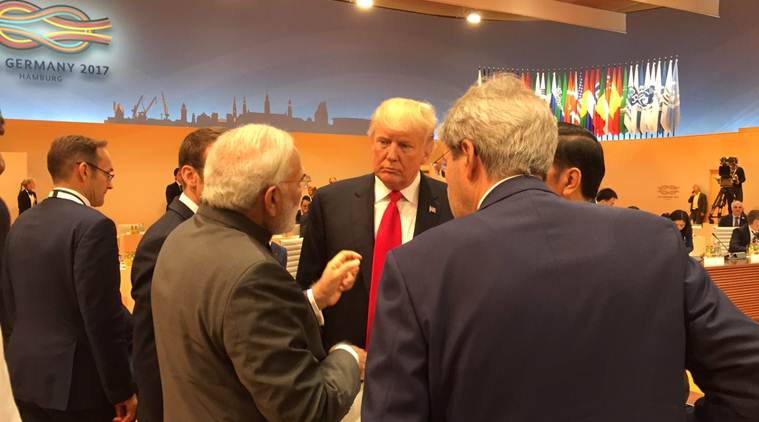
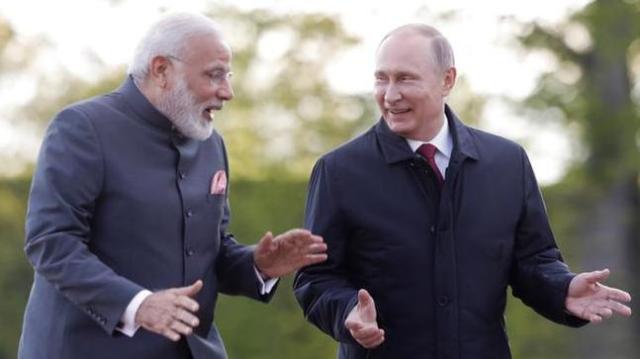
The Damocles’ sword of US sanctions will hereafter hang over India and compel New Delhi to toe Washington’s line on everything — Russia, Iran, non-proliferation, removal of tariffs on imports from the US, etc.

Moneycontrol Contributor@moneycontrolcom

Bharat Karnad

The 2×2 talks between the Indian and United States foreign and defence ministers — Sushma Swaraj and Nirmala Sitharaman, and Mike Pompeo and James Mattis respectively — scheduled for September 6, will end in India’s capitulation if the Bharatiya Janata Party (BJP)-led government of Narendra Modi signs the Communications Compatibility and Security Agreement (COMCASA).

This accord will enable the US to comprehensively penetrate — horizontally and vertically — India’s most secret communications and command and control networks, including the Strategic Forces Command overseeing nuclear security. Official sources have said that the Modi dispensation is satisfied by Washington’s assurances that no information, classified or otherwise, routinely picked up by the US agencies monitoring and listening in on the Indian national security communications traffic will be divulged to third parties. Scout’s honour!

The level of gullibility displayed by the Indian government’s trusting Washington to do the right thing is astonishing, considering the US record is one of consistently selling India short. For instance, the intelligence picked up by US agencies in 2008 that the Pakistan Army’s Inter-Services intelligence-controlled terrorist groups were planning a seaborne attack on Mumbai was not conveyed to Delhi and the 26/11 mayhem ensued. This mind you when Delhi had made common cause against terrorism with Washington in the wake of the 9/11 strike on New York.


The COMCASA, following up on the Logistics Exchange Memorandum of Agreement (LEMOA) that will allow US troops and military assets to stage military operations in the extended Indian Ocean region out of Indian air, naval and army bases will formally mark the loss of India’s strategic autonomy. What may derail this accord, at least temporarily, and discomfit immediate US plans, is something else altogether — India’s buy of the S-400 air defence system potentially drawing economic sanctions under the recently passed US law, Countering America’s Adversaries Through Sanctions Act (CAATSA).

The troubling Section 231 in this Act says that sanctions are mandated on any entity or entities engaging “in a significant transaction with . . . the defense or intelligence sectors of the Government of the Russian Federation,” and Section 235 deems sanctionable “any transactions in foreign exchange that are subject to the jurisdiction of the United States” and prohibiting “any transfers of credit or payments between financial institutions or by, through, or to any financial institution, to the extent that such transfers or payments are subject to the jurisdiction of the United States and involve any interest of the sanctioned person.”

The prickliness of the issues involved has led to an impasse. A former MEA official, Rakesh Sood, in superficially outlining in an op-ed piece the well-known problems with CAATSA, offers no solution other than suggesting unhelpfully that the two sides think “creatively”.

Ashley Tellis of Carnegie, who pulls weight in Washington and, incidentally, with Modi, doesn’t doubt that the S-400 system is the best of its kind in the world and that the combination of the Patriot surface-to-air missiles and the Theatre High-Altitude Air Defence system the Americans have offered is not a match. Even so, he conceives of three options for Delhi. The Modi government, he says, can “scuttle” the S-400 deal and buy into the lesser US system, or string Russia along and “defer payment” to avoid precipitating sanctions, or “Make a deal with Trump” — the option Tellis favours, by speedily agreeing to several high-value transactions for US hardware — the F-16 combat aircraft for the Indian Air Force and the F-18 carrier aircraft for the Indian Navy, that are “lucrative enough to the United States and remarkable in its potential geostrategic impact.” India’s purchase of these 1970s vintage aircraft will certainly be lucrative for America alright but what “remarkable …geostrategic impact” they will have, is a mystery!

Tellis’ solutions are basically premised on Delhi’s malleability. Except this last is an attribute inherent in Modi’s US policy animated by his conviction that accommodating the US will fetch dividends. Alas, the past and current developments reveal America as eminently untrustworthy. The fact is the waiver of sanctions on the S-400 means nothing, because it is one-off.

The Damocles’ sword of sanctions will hereafter hang over India and compel New Delhi to toe the US line on everything (Russia, Iran, non-proliferation, removal of tariffs on imports from the US, etc.). The irony is that the supposedly “nationalist” BJP government has reduced India to this state.


[Published in MoneyControl with title ‘India must not surrender its foreign, defence policy to United States’, Sept 3, 2018 https://www.moneycontrol.com/news/politics/opinion-india-must-not-surrender-its-foreign-defence-policy-to-united-states-2911101.html


Posted in arms exports, asia-Pacific/Indo-Pacific, Asian geopolitics, Decision-making, domestic politics, Europe, Geopolitics, India's strategic thinking and policy, Indian Air Force, Indian democracy, Indian ecobomic situation, Indian Navy, Indian Politics, Intelligence, MEA/foreign policy, Military Acquisitions, Military/military advice, Pakistan, Pakistan military, Russia, russian assistance, russian military, society, South Asia, Strategic Relations with the US & West, Technology transfer, Terrorism, United States, US., Weapons, Western militaries | 17 Comments

Limitations in our heads


Image result for pics of virat kohliImage result for pics of haider ali

(Kohli, Haidar Ali)

Trust the Indian cricket team to collapse ingloriously as they did in Southampton yesterday. Surrendering sheepishly  from a winning position this time, when they were in the 140s for 3 wickets, repeating the pattern of loss in the 2nd Test at Edgbaston with the same scoreline — 2 down for about the same number of runs. What started the slide on both occasions (if I recall the details of the Edgbaston defeat properly) was the Captain — and the only fighter in the desi outfit, Virat Kohli, showing every intent and determination to reach the target, getting past the 50-run threshold and showing signs of settling in to shepherd a win, but failing. It began a slide that saw India stymied and out of the game then, and again at the Ageas Bowl, this time downed by an even bigger margin. No guts, no fortitude, no patience, no sense of fighting spirit whatsoever. Just some plain mindless thrashing about with the bat by the likes of Pandya and Pant. So, instead of being in a position to replicate the Don Bradman-led Aussie team of 1948 of coming up from 2-down to win the 5-match series, the Indian team folded as is their wont without so much as a whimper after Kohli’s inning.  Something similar happened in the T-20 game I watched this summer in Cardiff where after Kohli came the deluge. So whatever the format India loses once the Captain is out.

Kohli, usually the only Man standing — among lily-livered team-mates, is the fissile core around which the Indian cricket team either sizzles or fizzles, mostly the latter on foreign soil where series wins against cricketing powers are rare.  Why is this so? Kohli explained to an English cricket reporter that for the Indian players the problem is that “the limitations” of their ability are “in their heads”. The implication was clear: Get over this, over the feelings of inadequacy, and lo! and behold, life may become simpler, and being victorious becomes the norm, not the exception. Apparently, Virat has overcome his sense of his own limitations and become the master of the field whose very presence radiates outwards to envelope teammates and to sow apprehension in the adversary.

Doesn’t what Kohli say have resonance for the country, an all-time loser nation that the Polish sociologist Stanislaw Andreski tellingly described India as “the land of subjugations” —  used to losing, and always prepared deferentially to make peace on the enemy’s terms?  Ni victory of arms  of native forces officered by the British doesn’t count, and neither does the 1971 War for Bangladesh — a sort of intra-mural win by a bigger more powerful part of the once British Indian Army over a smaller, weaker, part. That leaves the country’s cupboard bare of anything remotely resembling military success.

And the cricket team’s falling apart ere the captain departs the field is the analog of India’s historical pattern. Adversaries from Alexander the Great’s days quickly learned that any native Indian army could be run off the battlefield simply by getting rid of the king — sitting conspicuously on the war elephant at the centre of the Indian ranks — verily the ‘Gajpati’ beloved of the ancient Indian order-of-battle — directing battle from his perch — but as easy to bring down as his pachydermal mount, with a storm of well-aimed arrows and hard-thrown spears. Once the leader is taken out, the native armies inevitably broke and ran, deserting their king and country. The result: Porus in chains and his realm — all of the lands on the Indus and its tributaries in the Punjab become a plaything of the Macedonian monarch. An unending chain of foreign conquerors and looters since have feasted of  India’s wealth, succeeding by following Alexander’s script to fell Indian states.

And yet Indians learn no lessons from history, from regular humiliations of the past. So the “honour”-minded Prithiviraj Chouhan defeats Mahmud Ghori in the first Battle of Tarain in 1192 AD, displays compassion or foolishness, does not pursue a defeated and wounded foe, only to see him return the next year for the 2nd engagement at the same site, but this time gets isolated, whereupon, taking no chances, Ghori promptly ends the former’s life.  See any parallels between the compassion shown Ghouri as a matter of Rajput chivalry and modern India’s priding itself as a “responsible” state invariably having its interests trfampled underfoot by “friends” and foes alike??

And see how instead of ridding their minds of self-doubt and jettisoning feelings of weakness and limitation, as Virat Kohli has done, our leaders are suffused by the infirmities of the state and society and therefore are risk-averse in extremis, always ready to compromise?

It is not for no reason that Waterloo was coupled to the playing fields at Eton. Though  the Duke of Wellington never said anything about it. But he did come away impressed with the Peshwa army at the 1803 Battle of Assaye and his wars with Tipu Sultan in the Deccan. The pity is the Peshwa forces were in a position to force the issue at Assaye, but didn’t. And Haidar Ali, likewise, had run the British forces ragged, according to the then Colonel Arthur Wellesley (the Duke before he was ennobled) and brought them on several occasions to the point of defeat, but rather than waging a war to oust the firangi from the land for once and for all — difficult at the time, it is true, given too many divisions in the land and everybody fighting each other rather than the Brits — he ended the First Anglo-Carnatic War in 1769 with the Treaty of Madras with the submissive British. These are the situations when Wellington first and repeatedly used his famous phrase — “This was a close-run thing!”, subsequently made famous at Waterloo. Small consolation for Indians.

(In Wellesley’s subsequent wars against Haidar’s son, Tipu Sultan, he learned the lesson to not take the Indian king head on. In the last of the Anglo-Carnatic wars, he instead did what Clive had done at Plassey  — bribe a court insider — another Mir — Mir Sadiq — Tipu’s vazir, to in the dead of night open the gates to the impregnable fort of Seringapatana on the Cauvery River. That was 1799. Has much changed since then with COMCASA on the anvil and LEMOA already signed and India with leaders with their heads still full of their own and the country’s supposed limitations?)

Posted in Afghanistan, asia-Pacific/Indo-Pacific, Asian geopolitics, civil-military relations, corruption, Decision-making, domestic politics, Europe, Geopolitics, India's strategic thinking and policy, Indian Army, society, South Asia, United States, US. | 8 Comments

Why Not Show Pakistan The Same Consideration Shown To China?

The strikingly silly hoo-ha on Indian television over the non-event of the quip-a-second cricketer Navjot Singh Sidhu – a rank made-for-television entertainer and Punjab government minister, embracing the Pakistan Army Chief General Qamar Javed Bajwa at the swearing-in ceremony of a fellow cricketer, Imran Khan, as Prime Minister – only reveals how easily something so trivial can be transformed into jingoistic excess.

Meanwhile, Prime Minister Narendra Modi, in a letter to his incoming Pakistani counterpart, has welcomed Khan’s assuming power as an opportunity to reset bilateral ties.

Why Not Show Pakistan The Same Consideration Shown To China?

The operative parts of Imran Khan’s optimistic messages are his hinting at trade as the ‘Open Sesame’ to a genuine rapprochement between the two countries of the subcontinent, and the need to resume dialogue to resolve the Kashmir dispute. What exactly is so offensive or untoward about this? Surely, it is nobody’s case that ramping up bilateral growth and economic and investment interlinks won’t improve the chances of peace, and ensure it becomes the new normal in South Asia.

In fact, it was the Indian High Commissioner in Islamabad Ajay Bisaria who in May this year talked of potential annual trade of $30 billion if only the Pakistan government eased up on its regime of restrictions.

A good part of this trade would involve the formalisation of the indirect ‘switch trade’ that presently takes place with Indian consumer goods of all kinds – marked for export to Dubai on merchant ship manifests, offloaded with the same ships anchoring outside the immediate Karachi waters. The annual loss of revenue to the Pakistan exchequer from this informal channel is in billions of dollars. It is money the Tehreek-e-Insaf party government can use to fulfil its election promises in the social welfare sector. After all, Pakistan’s hard currency reserves dwindling to less than $9 billion cannot but worry Imran Khan to conniptions.

So, there’s every incentive for Islamabad to accept the formalisation of the informal Indo-Pak trade. And here is the new Pakistan PM talking about just this, and generally about open trade tempering a needlessly rancorous relationship.

Why Not Show Pakistan The Same Consideration Shown To China?

Also Read: Pakistan Should Beware an Easy Chinese Bailout

It is a promising opening that the Bharatiya Janata Party government, if it has any strategic sense, should jump at widening by:

  • adopting a facilitative mindset,
  • initiating enabling measures,
  • clearing lines of credit and approving banking channels, and
  • preemptively easing the processes of encouraging commerce.

That said, it is also clear that General Headquarters in Rawalpindi is no more likely to terminate its terrorism leverage it can utilise to keep the Indian armed forces and government distracted, than India giving up on supporting Baluch freedom fighters to keep the Pakistan army committed and unsettled – as revealed by Prime Minister Modi in his 2016 Independence Day address from the Red Fort.

Covert options will be nursed by both sides until such time as they both decide that their favoured jihadis/freedom fighters are more trouble than they are worth.

This won’t happen any time soon, however.

Lashkar-e-Taiba chief Hafiz Saeed votes in the general election in Pakistan, on July 25, 2018. (Photograph: AP/PTI)

In any case, which country does what first before the dialogue caravan begins rolling becomes moot once both capitals seriously assess what’s at stake.

The chief beneficiaries of a squabbling India and Pakistan are China and the United States.

They are able to play off the South Asian states against each other, egging on one and then the other, to serve their distinct national interests.

For instance, the U.S. has been vocal about its anti-terrorism stance but Washington has time and again made plain—and this has not been paid attention to by Delhi—that their concern is mainly with Pakistan assisting the Afghan Taliban factions fighting the NATO forces in that country, and not with Lashkar-e-Taiba, Jaish-e-Mohammed, Masood Azhar, or Hafiz Saeed.

Consider China: The so-called China-Pakistan Economic Corridor is increasingly recognised by Pakistanis as a debt trap that would permit the Chinese to put down roots and redo the ‘East India Company’ scene from some 300 years ago.

An exclusive, heavily guarded, colony to house the 50,000 strong Chinese labour force working on CPEC is coming up in Gwadar, and resembles the small fortified trading post the British set up in Surat with a firman secured by the British ambassador Sir Thomas Roe from Emperor Jehangir some four centuries ago.

What may transpire in the years to come cannot be anything but disastrous for Pakistan.

A  shipping container sits beyond an excavator outside a workers camp, operated by China Overseas Ports Holding, in Gwadar, Balochistan, Pakistan, on  July 4, 2018. (Photographer: Asim Hafeez/Bloomberg)
A shipping container sits beyond an excavator outside a workers camp, operated by China Overseas Ports Holding, in Gwadar, Balochistan, Pakistan, on July 4, 2018. (Photographer: Asim Hafeez/Bloomberg)

What is certain, however, is that the Belt and Road Initiative, of which CPEC is part, will load Pakistan with debt amounting to over $90 billion on the original $46 billion credit funding by Chinese banks. While Imran Khan has no choice other than to assure Beijing about his government’s commitment to CPEC, he can’t be unmindful of how Sri Lanka’s Hambantota port and related infrastructure project has panned out. In lieu of Colombo’s inability to service the debt, China has secured a 99-year lease for it.

Other Asian states are awakening to the danger that easily available Chinese credit portends. The prospect of unpayable debt and subsequent Chinese takeover has motivated Myanmar, for instance, to limit its risk and financial exposure by reducing the Chinese stake in its Kyakpau seaport multi-nodal project from $7.6 billion to $1.3 billion, and Malaysia to simply terminate two Chinese-funded projects worth $22 billion.

Wouldn’t a desperate Pakistan, if offered half a chance, grasp eagerly at an alternative?

The vast and cascading benefits of open trade with India are:

  • The multiplying revenues generated by allowing India’s Central Asia and Afghanistan trade to access the Karachi-Peshawar highway.
  • The royalty on gas piped through the 1,814 kilometre long, north-south Turkmenistan-Afghanistan-Pakistan-India pipeline that India has signed up for and expected to transfer 33 billion cubic feet of natural gas.
  • The $7 billion plus 2,135 kilometre long, west-east Iran-Pakistan-India pipeline terminating in Barmer, which will shift 30 million standard cubic meters each of natural gas per day to India and to Pakistan.

This is the scale of energy that both India and Pakistan desperately require to fuel their economic progress.

The supreme tragedy is that the strategically handicapped and permanently shortsighted Indian governments, particularly in the new century, have sacrificed the greater strategic good for the trivial satisfaction of discomfiting Pakistan and in the process pushing the latter more seriously into the China orbit.

It is an endless action-reaction sequence with Pakistan, in turn, always ready to cut off its nose to spite India’s face. So China gains.

Apparently, the Indian government is quite sanguine about Pakistan emerging, in the decades ahead, as a full-fledged Chinese colony and a Chinese People’s Liberation Army military base, and does not care to do anything positive to head off this eventuality.

The irony couldn’t be missed: Just as the Siddhu-Bajwa hug was unnecessarily creating heat and fogging up the Indo-Pak picture, prime minister Modi was meeting with General Wei Fenghe, Chinese defence minister and former commander of the PLA Rocket Force, and saying soothing things, like “Maintenance of peace and tranquility in the border areas is indicative of the sensitivity and maturity with which India and China handle their differences, not allowing them to become disputes” and referring to Sino-Indian relations as “a factor of stability in the world”.

Prime Minister Narendra Modi with the Defence Minister of China, General Wei Fenghe during a meeting in New Delhi on  August 21, 2018. (Photograph: PIB/PTI)
Prime Minister Narendra Modi with the Defence Minister of China, General Wei Fenghe during a meeting in New Delhi on August 21, 2018. (Photograph: PIB/PTI)

Also Read: Emperor Xi And The Kowtow Imperative

He went on to praise the “increased momentum” of high-level contacts, including in the defence sphere.

What must Wei make of this except that Modi, like previous PMs, is a sap?

Have any Chinese leaders ever gone dreamily overboard in their rhetoric the way their Indian counterparts routinely do?

And this when, in reality, China is the gravest security challenge that India faces but, ostrich-like with its head buried in the sand, it refuses to even acknowledge. It is seemingly convinced, in the manner Nehru was vis-a-vis Mao’s China, that to act adversarially towards China is to make an enemy of it.

Prime Minister Jawaharlal Nehru with the Chairman of the People’s Republic of China, Mao Zedong at Beijing, on October 23, 1954. (Photograph: Ministry of External Affairs)

It is a line, incidentally, that Mandarin-speaking Indian diplomats continue to profess, and which Modi, to his great demerit, has bought into.

So, let’s set the scene: There is an unresolved border with China that the PLA periodically violates at will with small incursions that number in the hundreds every year and, occasionally in more conspicuous actions such as at Dok La in the summer of 2017 or previously in Demchok. Secret Chinese military documents mention the need to once again “teach India a lesson”.

On the world stage, China consistently trips India up diplomatically and undermines Indian interests, and because Delhi has put a premium on it, prevents the possibility of this country becoming a permanent member of the U.N. Security Council. Further, it exploits India’s open market to exacerbate India’s balance of payments problem in excess of $70 billion annually owing to unbalanced trade.

Chinese goods stand on display in a stall near the Nathula Pass in Kyongnosla, Sikkim, India. (Photographer: Prashanth Vishwanathan/Bloomberg)

And China has initiated a ‘hybrid war’ with India (using persistent cyber attacks), bulked up its military capabilities on the 4,000 kilometre-long Line of Actual Control and formed the secret ‘Fourth Fleet’ specifically to counter this country’s control of the Indian Ocean with permanent bases in Djibouti and Gwadar.

And still, the Indian government agrees to military exchanges and joint war exercises with the PLA and is committed to interminable talks concerning the undelineated border!

Why doesn’t the Modi government then adopt the same approach to Pakistan, which has problems with India that are similar to those China does but on a far smaller scale that can do this country less harm, when dealing with China can do India no end of harm?

Why not restart a dialogue on an open-ended basis with Islamabad to:

  • resolve the Kashmir issue,
  • open the Indian markets to Pakistani trade, and
  • have high-level military exchanges and joint war games with the Pakistan military.

Meanwhile, Indian and Pakistani troops on the LoC can continue gunning it out if they must, and ISI and RAW can keep at their covert operations.

The returns for India from having a more catholic and multi-pronged Pakistan policy of talks at the government level, unhindered two-way trade and cultural and sports exchanges, and small arms duels on the LoC will beat by miles any good that being pals with China will ever do.


Modiji, Ajit Dovalji, keep your eyes on the strategic ball – worry about the China threat bearing down on this country. But first, stop jumping on to the table every time the Pakistani mouse squeaks.


Also do watch and hear my videographed comments on this subject put up with my ‘Realpolitik’ column, Published as BloombergQuintOpinion, 


Posted in asia-Pacific/Indo-Pacific, Asian geopolitics, Bhutan, China, China military, Culture, Decision-making, Geopolitics, Great Power imperatives, India's China Policy, India's Pakistan Policy, India's strategic thinking and policy, Indian Air Force, Indian Army, Indian ecobomic situation, Indian Navy, Indian Ocean, MEA/foreign policy, Military/military advice, SAARC, society, South Asia, Tibet | 13 Comments

Livestreaming the launch event today (Aug 30) of ‘Staggering Forward’

The launch of my book ‘Staggering Forward’, published by Penguin, will be  livestreamed from seminar rooms # 1, 2, & 3, 1st floor, the new multipurpose Hall, India International Centre, New Delhi, 6:30 PM – 8 PM, Thursday, today (August 30). The event will feature, among other things,a panel discussion with the veteran BJP leader Yashwant Sinha, the Congress leader Jairam Ramesh, the former National Security Adviser, Shivshankar Menon, ex-navy chief Admiral Arun Prakash (Retd) and the author, and moderated by Col. Ajai Shukla (Retd.), consulting editor on strategic affairs for the ‘Business Standard’. This should be a lively affair.

Livestreaming may be accessed through the CPR website at  https://bit.ly/2N1Y9v2.


Posted in arms exports, asia-Pacific/Indo-Pacific, Asian geopolitics, China, China military, civil-military relations, corruption, Culture, Decision-making, Defence Industry, domestic politics, DRDO, Europe, Geopolitics, India's China Policy, India's Pakistan Policy, India's strategic thinking and policy, Indian Air Force, Indian Army, Indian democracy, Indian ecobomic situation, Indian Navy, Indian Ocean, indian policy -- Israel, Iran and West Asia, Indian Politics, Iran and West Asia, Japan, Maldives, MEA/foreign policy, Military Acquisitions, Military/military advice, Missiles, Myanmar, Nepal, nonproliferation, North Korea, Northeast Asia, NRIs, Nuclear Policy & Strategy, Nuclear Weapons, Pakistan, Pakistan military, Relations with Russia, Russia, society, South Asia, South East Asia, Sri Lanka, Strategic Forces Command, Strategic Relations with South East Asia & Far East, Strategic Relations with the US & West, Technology transfer, Terrorism, United States, US., Weapons, West Asia | 11 Comments

What’s with Modi on Maldives?

Image result for pics of abdulla yameen and modi

[Yameen in Beijing with Xi]

Has the Prime Minister lost it? Lost all sense about what works to keep the neighbourhood out of China’s grasp? Lost his marbles over the need to administer Abdulla Yameen, the calculating autocrat in Male, a dose of Indian hard power? Isn’t it time, Narendra Modiji, for you to wake up and appreciate that while your forbearance goes unappreciated by the Maldivan President, a brace of Indian warships dropping anchor off his residence promising a little roustabout, may clear his head, define his limited options, faster than the Indian PM can say “vishwa guru” (which is what he wants India to be recognized as!)

Despite every provocation, including the latest of asking Delhi to remove forthwith its helicopters loaned to the Maldives govt, the Indian ambassador being called in and given a talking to about Subramanyam Swamy’s colourful advice to “invade” Maldives should Yameen attempt to fool around with the voting process in the soon-to-be-held presidential elections and, simultaneously, keeping China among other countries informed of these developments, the BJP regime led by Modi seems unconcerned. The MEA has dismissed Swamy’s  public counsel as so much hot air of a kind frequently emitted by that source and, at the same time, wondered what the world will think of India, which has clamoured for a rules-based order, if it did anything so rash because, after all, India is a “responsible” state.

This stance of being responsible, acting responsibly, in all situations and circumstances even as the ship of India’s national interest, carefully riddled with holes by a Maldivan upstart, is sinking right before our eyes is ridiculous to say the least. Who the heck is Modi and the traditionally spineless MEA seeking to impress with India’s catholicity? Trump and the US, rinky-dink European powers? Who, and for what purpose? Does the PM think it will burnish India’s image and improve its chances of becoming a great power the easy way — by acclamation? WHAT?

The principle of “responsible behaviour” has never been observed by any major country since the founding of sovereign states under the Treaty of Westphalia in 1648. So Modi seems intent on setting a new standard for India to hew to, alas, to its own grievous detriment. China is in the process of taking charge of an entire atoll under the figleaf of building tourism infrastructure as part of BRI (Belt and Road Initiative) while constructing electronic intelligence gathering stations for monitoring Indian naval communications traffic. This is a start. And by way of diversion squawking incessantly about Indian military buildup of the Indonesian port of Sabang. Soon we may see a version of what the Chinese accomplished mid-channel in the South China Sea — artificially extended small islands bristling with surveillance, tracking and targeting radar slaved to long range artillery and missile systems, thereby severely undermining the extant Indian radar grid in the southern Indian Ocean and putative Indian Naval control of the strategic Eight and Nine degree channels.

What will it take for Modi to act, to send in two teams of the navy’s MARCOS (marine commandos) — more than enough, to take care of Yameen and his team of weasels and pack them off to exile to whichever country wants them. Perhaps China.

Unfortunately, enough is never enough for Messrs Modi, Doval. Modi’s overarching desire to keep the West happy by seeking Washington’s prior approval for any forceful action against Yameen reminds me of the hopeful arriviste waiting to be invited to join a club and doing anything and every thing to ingratiate himself with its powerful members, and even following the rules that they talk of but never ever follow.

There is no remedy for such lack of self-respect and, even more, for Modi’s rank unwillingness to further the country’s interests at any cost. There’s however an explanation. His own subaltern background and entrenched subaltern values and thinking drive him to do this — to seek America’s praise, part and very much parcel of his aspirational foreign policy of overtilting to the US on the one hand and, would you believe it, of placating China on the other hand.

After all the PLA can act up on Xi’s say-so at anytime on the LAC, give the Indian army a  drubbing, and sink Modi’s chances of retaining power in the 2019 general elections. So Beijing has to be pacified. In this context, rubbing China the wrong way on Maldives or any other issue becomes imprudent. Whence, Yameen is allowed to do as he wishes at India’s expense.

Posted in asia-Pacific/Indo-Pacific, Asian geopolitics, China, China military, Culture, Decision-making, domestic politics, Europe, Geopolitics, Great Power imperatives, India's China Policy, India's strategic thinking and policy, Indian Navy, Indian Ocean, Indian Politics, Maldives, MEA/foreign policy, Military/military advice, Missiles, SAARC, South Asia, South East Asia, United States, US., Weapons | 13 Comments

Indo-US tech trade and US-North Korea talks — Bluetick News

Image result for pics of pompeo and mattis

[Pompeo, James Mattis and Bolton, left to right, in line]

With the main govt TV channels (including Lok Sabha TV and Rajya Sabha TV) closed off to my views and mainline private channels not interested in exploring topics of strategic interest in any depth or even at all, the news channels on the Net (through the Facebook portal, etc) offer a glimmer of hope. One such service is the Bluetick News calling in specialists and giving them time to talk at relative length.

Here are two recent appearances — the Aug 3 one on Indo-US military tech trade of some relevance with the upcoming Sept 6  2×2 talks in Delhi that Sushma Swaraj and Nirmala Sitharaman will have with US Secretary of State Mike Pompeo, Defence Secretary James Mattis, with NSA John Bolton, who will not be there but will have inputted into both Pompeo’s and Mattis’ thinking by way of President Trump’s White House contribution  and, an earlier one, from June 14 when the US-North Korea confabulations were the talk of the day:

  1. https://www.facebook.com/blueticknews/videos/2156868091247506/
  2. https://m.facebook.com/story.php?story_fbid=972766069571946&id=857132567801964


Posted in arms exports, asia-Pacific/Indo-Pacific, Asian geopolitics, China, China military, Decision-making, Defence Industry, domestic politics, Geopolitics, Great Power imperatives, India's strategic thinking and policy, Indian Air Force, Indian Army, Indian ecobomic situation, Indian Navy, Indian Politics, MEA/foreign policy, Military Acquisitions, Military/military advice, nonproliferation, North Korea, Nuclear Policy & Strategy, Nuclear Weapons, South Asia, Strategic Relations with the US & West, Technology transfer, United States, US., Weapons | 12 Comments

‘Staggering Forward’– an invite!

E-invite_Staggering Forward (2)

This is an invitation to all the esteemed readers of the ‘Security Wise’ blog to join in the event to launch my latest book – ‘Staggering Forward: Narendra Modi and India’s Global Ambition’ published by Penguin, scheduled for Thursday, August 30, at 6:30 PM, at the new Multi-purpose Hall, Seminar rooms 1,2 & 3, 1st Floor, India International Centre.

The book is both an analysis of Modi’s persona, leadership qualities, and method of governance  in the context of the other strongmen-alpha male leaders on the international stage, in the main, Trump, Putin, Xi, Erdogan and  Shinzo Abe, and a critique of his government’s foreign and military policies, including the ‘Make in India’ programme relating to defence and attaining arms self-sufficiency.

The event will feature a panel discussion with Yashwant Sinha, Jairam Ramesh, Shivshankar Menon, Admiral Arun Prakash (Retd) and the author, and moderated by Col. Ajai Shukla (Retd), consulting editor on strategic affairs with Business Standard.

Mr Sinha, a stalwart BJP leader and sharp critic of the Modi regime and Mr Ramesh of the Congress Party, with the quicksilver intellect,  should make this a particularly interesting occasion!  And the former NSA, Menon, and ex-CNS, Admiral Prakash will no doubt provide the ballast

Those among the readers of this blog in the Delhi capital region, hope you will all be able to make it to the event.

Posted in asia-Pacific/Indo-Pacific, Asian geopolitics, civil-military relations, Culture, Decision-making, Defence Industry, domestic politics, Geopolitics, Great Power imperatives, India's strategic thinking and policy, MEA/foreign policy, Military/military advice | 18 Comments

Vajpayee — Nehruvian in domestic politics, yes, but also strategically foolish

Image result for pics of vajpayee and Dalai lama

[The Dalai Lama and Vajpayee, PM)

Amidst the paens of praise and hossanas being sung to honour the memory of the recently departed former Prime Minister, Atal Bihari Vajpayee, it may be churlish to bring up the wrong things done during his time at 7, Race Course Road, especially in the foreign-cum-national security policy fields.

That Vajpayee needs to be justly admired for his Nehruvian grace and forbearance of the political opposition, and in particular his political instincts to do the right thing at the right time to avert crises that his coalition government of disparate ideological elements in the country (including the cantankerous Mamata Bannerji) was prone to, is a political commodity of immeasurable value. But that said, it must also be candidly admitted that he tried too hard too become the Prime Minister Jawaharlal had hoped he’d become in terms of hewing a little too close to Nehru’s external follies — chief among these being  China given much too much rope to hang India with. Indeed, no greater damage was done the country’s “permanent” national interest than his decision during his 2003 state visit to formally recognize the Tibetan Autonomous Region (TAR) as an inalienable part of China in exchange for, get this, Beijing’s acknowledging Sikkim as part of India! (The always clever Chinese put one over the Indian Foreign Service genuises, with Brajesh Mishra, Vajpayee’s National Security Adviser and also Principal Private Secretary and, for all intents and purposes related to the functioning of the Indian government — the unelected, de facto prime minister, in the van.

To make matters worse, while the mention of Delhi’s acceptance of TAR as inalienably Chinese was straightforward in the joint communique issued at the end of the Indian PM’s state visit, Beijing’s  supposed “concession” on Sikkim was ambiguous at best. This was diplomatic surrender subsequently dressed up as a foreign policy coup! It left the Dalai Lama ever since twisting slowly in the political winds rifling through the Sino-Indian relations, and India without its prime diplomatic leverage. The Dalai Lama’s strategic utility was thus willfully zeroed out once the status of TAR was so shortsightedly stamped. It helped India’s ‘Tibet card’ go up in smoke.

Whatever Brajesh Mishra’s machinations, why did Vajpayee agree to this dastardly act? To improve the prospects of warm ties with China — a country that swears by India’s adversarial position. How is such levels of Vajpayee’s strategic foolishness and gullibility different than Nehru’s bending over backwards to lift China’s status, promote it as a power in the 1950s at India’s expense. Nehru was convinced that China would behave responsibly if only it was accorded all the rights and privileges of great power, whence he handed over the permanent seat in the UN Security Council offered India (to replace Generalissimo Changkaishek’s Taiwan) by both the US and USSR to Mao’s China instead. It was the first instance of national self-abnegation that has since become Delhi’s policy norm. It was an example of astonishing foreign policy generosity that Mao — ever the arch realist, reacted to by calling Nehru an “imperialist running dog”! China has never looked back, and India has not moved forward strategically from that point.

Now consider the equally problematic courting of the US at any cost that served as Vajpayee’s policy. It resulted in the Next Step in Strategic Partnership (NSSP) that paved the way, in a short period of time, to the 2008 India-US civilian nuclear cooperation deal that Manmohan Singh, who otherwise had no great foreign policy successes to his credit, insisted upon even as Sonia Gandhi, his political master and regime driver, was less convinced about its merits. But Manmohan made it a prestige issue and Mrs Gandhi held out for as long as she could without compelling her man to lay down his “mukhota” role and terminate the Congress government. Being out of power was apparently too high a price for Sonia to pay. The NSSP then was the decisive breakthrough that America desired and obtained, and which led in slow stages to the overt US tilt of Narendra Modi’s foreign policy 20 years later.

The question to ponder is, how come Vajpayee so readily accepted Brajesh Mishra’s pushing this line of India’s needing to make peace with the US on Washington’s terms? Especially when, it may be recalled, that in May 1998 Vajpayee’s attempt in a secret letter to US President Bill Clinton to justify India’s nuclear test explosions as a means of acquiring the “absolute” weapon and deterring China, was promptly leaked by the Clinton White House to the Chinese and the New York Times. So much for a trustworthy America. In that letter to Clinton, Vajpayee reiterated his moratorium decision, and in essence sealed the future of the Indian nuclear arsenal as a half-cocked deterrent.

Vajpayee met once formally with the National Security Advisory Board of which I was member in end-1998 and chiefly distinguished himself with his trademark pause and pause some more before mumbling some banality or the other (that I can’t for the life of me remember). I met with the PM in a passing sort of way on two other occasions at his Race Course residence, once I clearly recall, for the launch of DP Mishra’s biography, or collection of speeches or something equally unmemorable. (The former Congress Madhya Pradesh chief minister DP Mishra was, of course, Brajesh’s father). On no occasion did Vajpayee do other than confirm he had no deep insight into anything remotely foreign. Indeed, as relayed in my 2002 750-page tome ‘Nuclear Weapons and Indian Security’, Vajpayee almost seemed a sap for any one who was advising him at the moment.

During his days as external affairs minister in the Morarji Desai regime, for example, he was advised by the US ambassador Robert Goheen no less, and almost gave away the whole store by agreeing to sign the 1968 non-proliferation treaty as a non-nuclear weapon state. He was prevented from going ahead with this policy of devastating self-inflicted damage only because of an MEA secretary, MA Vellodi, who with some inspired bureaucratic runarounds and flim-flammery that has been insufficiently appreciated by the nation to-date, held off his minister until PM Morarji in a fit of hard-headedness for a change nixed it altogether!

This is the point I am making: How can Vajpayee be seen as other than a foreign and national security policy liability when he could so easily be influenced by his adviser(s) of choice? Such a doubtful record as Vajpayee’s has, it turns out, a simple enough explanation.  Vajpayee was intellectually lazy, did not seriously apply his mind, and gave Brajesh Mishra and that advisory caboodle too much freedom and leeway to set the policy course, chart out particular policy details and he did not really care about the costs to the country of ill-advised initiatives put up for his consideration. (In my writings, I have delved into how seriously Brajesh Mishra damaged India’s national interest.)

This state of affairs was buttressed by Vajpayee’s near complete lack of insight into, and interest in, global power politics — a lacunae undergirded by surprising innocence of anything remotely strategic. (Why else would he cutoff testing at six tests — one of them the failed thermonuclear test explosion and then be convinced that India was now a thermonuclear weapons power that thereafter needed to do nothing more with regard to testing?) And why did the PM not have confidence that his own undoubted talent for political  management at home could be transferred to international affairs, and that he had to rely on so-called “professionals” such as the IFS-er, Brajesh Mishra?

This is to say that however one slices the foreign and military policy record Vajpayee comes up short. In the event, performance ought to be the metric to judge his prime ministership rather than his obvious and notable talent for “feel good” folksiness and poesy.

Posted in asia-Pacific/Indo-Pacific, Asian geopolitics, China, China military, civil-military relations, Culture, Decision-making, disarmament, domestic politics, Geopolitics, Great Power imperatives, India's China Policy, India's strategic thinking and policy, Indian democracy, Indian Politics, MEA/foreign policy, Military/military advice, nonproliferation, Nuclear Policy & Strategy, Nuclear Weapons, Relations with Russia, Russia, South Asia, Strategic Forces Command, Strategic Relations with the US & West, Tibet, UN, United States, US. | 19 Comments

IAF control of combat aircraft development at HAL: Is that a good thing?


Image result for pics of HAL production line of Tejas

[HAL Marut HF-24 production line]

The Rafale deal has gone into a death spiral. With BJP stalwart leaders Yashwant Sinha and Arun Shourie making a cogent case about things going awry with the purchase of 36 Rafale combat aircraft from France and fueling charges of corruption and crony capitalism (re: Dassault Avions’ choice of Anil Ambani’s Reliance Defence as offsets partner), and with Rahul Gandhi piling on with accusations along the same lines, especially overjoyed that his Congress Party has finally ‘Rafale’ to tar Prime Minister Narendra Modi and the ruling Bharatiya Janata Party with. This means that in popular discourse, Rafale will soon resonate in the same negative way with voters as ‘Bofors’ did, and still does. These developments have followed the script I had outlined  soon after the PM announced the Rafale buy in Paris in April 2015. [Look up my posts on Rafale from that time.]

The Indian Air Force brass and the Nirmala Sitharaman-headed MOD realize they are in a mess not of their immediate making. Sitharaman’s brandishing of supposed contract papers in Parliament sidestepped the fact that these documents do indeed provide for secrecy but only related to the “commercial” terms of the deal, not for what it will all cost — a sum that will have to be intimated one way or the other to Parliament, CAG, etc and will come into the public domain. In any case, Vayu Bhavan, should be aware, as Dassault and the French government of Emmanuel Macron , perhaps, are that the slight chance of the 36 Rafales being the proverbial “wedge in the door” that will open to a still richer contract for 100 additional Rafales with the full complement of the exorbitantly priced A2A Meteor and A2G Scalp missiles and spares holdings for 72% serviceability, etc., has evaporated.

Worse, no one hereafter in the political class or MOD will for a long time touch Dassult-related goods with a barge pole anymore than they will agree, for instance, to the HDW 214 conventional diesel submarine offered by the Marine Division of Thyssen-Krupp Company of Germany for the Indian Navy’s Project 75i. This is because of the payoffs & commissions scandal that accompanied the contract for six HDW 209 submarines (which along with deal for the Bofors gun) marked the tenure of Prime Minister Rajiv Gandhi in the 1980s. That’s the inevitable fate of any high value defence contract skirting procedures in any way, or otherwise failing to “manage” the perceptions of the reality of “corruption”.

The Modi government may be trying to divert attention from the political kerfuffle over Rafale by its decision to hand over control of HAL, B’lore, to the Indian Air Force. It is reported, that this been done to minimize the time and cost overruns on the Tejas light combat aircraft production programme, particularly its upgraded Mk-2 variant.

Indian newspapers seems to be willing carriers of a lot of defence-related “fake news” — fake, in the sense, that their reporters are rarely knowledgeable enough to separate the chaff from the grain and usually regurgitate whatever is told them by MOD, and the PR offices of Armed Services HQrs without ever cross-checking for the truth. Thus, in an early Aug story, one particular daily repeated the stuff about huge delays in the LCA programme initiated in 1983, and in securing the Final Operational Clearance for the aircraft, without mentioning that the real funding of the project began only in 1999 and the fact that ADA had a prototype flying by 2006 was a commendable achievement, and that the FOC problems are as much a function, as stated repeatedly in my posts on this blog, of the IAF insisting on a battle-ready fighter plane with fully integrated weapons and the avionics suite working tickety-boo even as every other major air force, including the US Air Force, allows for the operational fine tuning of a new combat aircraft in parallel with its induction.  So FOC follows induction, not the other way around  as per IAF’s modus operandi. Moreover,  the Indian press  do not report the fact that on a comparable basis the Rs 8,000 odd-crores invested in the LCA so far and the 18-odd years it has taken for the Tejas betters the record of Lockheed Martin and the US govt which have spent in excess of ONE TRILLION US Dollars and taken over 20 years to field the latest combat aircraft for use by the three US military Services — the F-35, which has turned out to be such a bad aircraft and so ineffective as to be a laughing stock of the aviation world! And to think that F-35 is parented by Lockheed, which over the last 100 years has designed literally hundreds of combat aircraft.

Now juxtapose the F-35 development by Lockheed with the extraordinary performance of the LCA project, and what do you get — a consistent display of bad faith by IAF’s not believing in Indian talent and not trusting indigenous combat aircraft. And, despite the heinous history of the IAF deliberately and in cold blood, as I have written, killing off the indigenous multi-role HF-73 designed by the gifted designer Dr. Raj Mahindra, the successor to Dr. Kurt Tank’s Marut HF-24 (which decades after its killing and because it is safe to do so, is now praised by IAF chiefs such as ACM Krishnaswamy in my new book — ‘Staggering Forward: Narendra Modi and India’s Global Ambition’ to be released in market Aug 15, as an extraordinary  low level strike aircraft in its time that was also able to achieve super-cruise without afterburners), in favour of the British Jaguar in the mid-1970s that could do neither! The IAF’s preferring the Jaguar wiped out the painstakingly built-up Marut technological and R&D base and, more significantly, two entire generations of Indian aircraft designers and developers at HAL, forcing the ADA and the LCA project in 1983 to start out anew, from zero technology and design and development base.

Which last brings us to the core of this post: the IAF’s control of HAL and combat aircraft programme in the country. What motivated the Modi regime to do this is not known because the country has experience of long years of the IAF brass running the HAL, an experience that should have been salutary and warned against letting foxes guard the hen house! Consider the disastrous record of HAL under several IAF officers, including a couple of CASs and senior Air Marshals, to get an idea of what may be in store.

Air Chief Marshals PC Lal, OP Mehra and LM Katre were chairman, HAL, in 1966-69, 1971-73 and in the early Eighties respectively. In between the tenures of Mehra and Katre, the post was occupied by Group Captain Baljit K. Kapur (whose claim to fame is that he seeded a milieu of corruption in HAL, spawning the most notorious arms agent, Sudhir Choudhrie — his nephew, that the country has known, who acquired deep pockets and exploited his even deeper connections in the military, the political class, and the bureaucracy, to forge multi-billion dollar defence deals and then escaped trouble by bribing his way out of two CBI investigations. See https://timesofindia.indiatimes.com/india/Sudhir-Choudhrie-High-flying-arms-dealer-may-finally-be-grounded/articleshow/31300678.cms )

Lal and Mehra were centrally at HAL controls when the HF-24 was being produced, and which aircraft was so callously treated by the air force that brand new Maruts were actually flown out of HAL assembly line and straight into junk yards! Messrs Lal, Mehra, Kapur and Katre were all aware of Dr Mahindra designing the HF-73 and did less than nothing to promote it with the Service that the three (minus Kapur) went on to head or had led as CAS. Air Marshal SJ Dastur was chairman and known for decisiveness but, like his fellow GDPs, did little to push indigenous effort, or to create a sustainable aviation industry in India but like all these characters was content to have HAL screwdrivering imported aircraft under license manufacture schemes.  Indeed, these airmen may be seen to have been complicit, even guilty owing to their acts of omission and commission, to do away with the indigenous capability altogether over time in conspiracy with the Vayu Bhavan.

Had any Indian PM after Jawaharlal Nehru, who nursed the Marut programme and imported Kurt Tank of Focke-Wulfe fame for the purpose, been strategic visioned and utterly nationalist, or had there been a nationalist-minded IAF chief or a self-sufficiency driven chairman in HAL cockpit, and taken on himself the onus of building on the base that  Tank had erected in Bangalore, Indian combat aviation industry would have been two decades ahead of China today. Think of it. And then think of all the excuses a succession of Indian prime ministers, Chiefs of Air Staff, and chairmen of HAL have since given to explain why the country is in the pits, and one begins to understand the problem that is at hand, but one that is amenable to a solution by strong-willed leadership.

A nationalist-minded air chief determined to see India become self-sufficient in combat aircraft would have ensured — that with or without the Indian government’s help —  the IAF prioritised fighter aircraft design and development in-country and, as a self-respecting chairman, HAL, accelerated their production. Then again, IAF has never had a true nationalist at its apex. It has thus transpired that India, which started out with a bang by designing, developing, manufacturing and flying the HF-24 — the first supersonic aircraft fully crafted nose to tail outside of Europe and North America, was reduced in slow stages to a country that meets all its aircraft needs from abroad, and the IAF to a minor, tactical- level force without the professional nous to even appreciate the need for a strategic bomber in the fleet and, therefore, without one, and also without a genuine strategic capability and, worse, hardware requirements-wise, a full-blown foreign dependency!

So, what gives Prime Minister Modi the confidence that an HAL with an IAF officer in-charge will fare any better than with a DRDO/HAL time-server in the chair? Because theatre commands are prized as are the top posts in the air hierarchy in Delhi, some sodden fool of an Air Marshal will be hoist with the charge of HAL where he will do Vayu Bhavan’s bidding — which is to pave the way for buying more aircraft from the West!!  To suggest as some have done that all aspects of combat aircraft production, including design and development, be brought under the IAF would be to risk the Tejas Mk-2 and the successor Advanced Medium Combat Aircraft programme being run into the ground, the better for Air HQrs to then make the case to the government in the future that IAF needs to import more aircraft!

The answer is to de-bureaucratize the aerospace sector, compel ADA to transfer Tejas technologies with source codes — the know why and know how — to the private sector so that credible, hard driving, profit-generating, private sector aircraft producers that get into foreign sales from get-go, can emerge from the present morass to offer competition to the DPSUs. This will do HAL a lot of good in making it sharper, more efficient, and help India to rise as a consequential all round air power that doesn’t have an air force operating at the sufferance of numerous vendor states.

Posted in arms exports, asia-Pacific/Indo-Pacific, Asian geopolitics, China, China military, civil-military relations, corruption, Culture, Decision-making, Defence Industry, domestic politics, DRDO, Europe, Geopolitics, Great Power imperatives, India's strategic thinking and policy, Indian Army, Indian democracy, Indian ecobomic situation, Indian Politics, MEA/foreign policy, Military Acquisitions, Military/military advice, Missiles, society, South Asia, Technology transfer, Weapons | 13 Comments

Will Modi buckle under Trump’s pressure on Iran?

Image result for pics of Modi and Iranian leader rouhani

[Modi & Rouhani in Tehran)

US President Donald Trump did what is by now the new normal, tweeted a pixilated policy — this time regarding the reimposition of sanctions on Iran. He twittered thus:  “The Iran sanctions have officially been cast. These are the most biting sanctions ever imposed, and in November they ratchet up to yet another level. Anyone doing business with Iran will NOT be doing business with the United States. I am asking for WORLD PEACE, nothing less!” An official statement that followed, saying “We urge all nations to take such steps to make clear that the Iranian regime faces a choice: either change its threatening, destabilising behaviour and reintegrate with the global economy, or continue down a path of economic isolation”, further confused and roiled the situation.

What “WORLD PEACE” has to do with pressuring Tehran to agree to rescind and re-negotiate the nuclear deal is anyone’s guess. Except throwing “world peace” into this mix Trump thinks will elevate his pressure tactic into a moral action. And what has the Hassan Rouhani regime done that is so “threatening” and  “destabilizing” other than maintaining the Hezbollah in the field against Israel and in Syria — which last is supported by Moscow? In fact, the liberally inclined Rouhani went out on a limb to strike the N-deal, in the face of virulent opposition from the more belligerently nationalist elements in Iranian society headed by the Pasdaran (the Revolutionary Guard) and including the more conservative sections of the Shia clergy and the “bazaari” (the powerful small trader class) support base. Now he is being asked to eat crow by Trump.

An exasperated Western Europe — its good faith, traditional friendliness, and patience taxed beyond limits by Trump’s talking down NATO and arm-twisting member states into spending 4% of their GDP on defence and security, have given up on the USA. America, they say, can go it alone, particularly because China and Russia, signatories to the Iran nuclear deal, too have joined the West European countries in firmly declaring that they will  not tolerate Trump’s policy waywardness.  European governments have already instructed their private sector corporations and companies to ignore US sanctions, and are  proceeding to provide them legal cover with appropriate legislation.

Federica Mogherini, the European Union’s (EU) High Representative for Foreign Affairs,  declared in no uncertain terms that “We are doing our best to keep Iran in the deal, to keep Iran benefiting from the economic benefits that the agreement brings to the people of Iran, because we believe this is in the security interests of not only our region but also of the world. If there is one piece of international agreements on nuclear non-proliferation that is delivering, it has to be maintained. We are encouraging small and medium enterprises in particular to increase business with and in Iran as part of something [that] for us is a security priority.” She added that it is a “fundamental aspect of the Iranian right to have an economic advantage in exchange for what they have done so far, which is being compliant with all their nuclear-related commitments”.  This EU position directly clashes with Trump’s view of the Iran deal as “a horrible one-sided deal that should never, ever have been made”. ( https://www.theguardian.com/world/2018/aug/07/eu-foreign-policy-chief-calls-on-firms-to-defy-trump-over-iran ) This when Tehran agreed to stop enriching uranium to bomb-grade, switch off its centrifuge cascades, and ship out 95% of its fissile material stock!

Sure, Western Europe is trying to keep two policy balls in play. Around the same time that Trump twittered, European Commission president, Jean-Claude Juncker,  visited Washington and, to get around recent disagreements, decided with Trump to increase tariff-free trade. Except with the EU firming up on the Mogherini line, it is Trump — mark my words — who will blink first. So, who exactly is going to fall behind Trump? Which countries will back him?

Plainly, the Trump Administration expects that by the time the heavier tranche of sanctions comes on stream by November and dollar transactions for Iranian oil begin  attracting sanctions, governments that have shown jelly-like stomach for  a fight, will succumb. Xi Jinping’s China and Erdogan’s Turkey — amongst the largest buyers, have indicated they are prepared to carry on buying Iranian oil regardless. Modi’s India, however, has not revealed its cards yet. It has set up banking channels to avoid payment tangles, etc. But with 2×2 Talks coming up, and US secretary of state Mike Pompeo and defence secretary James Mattis flying into Delhi September 5, consultations in PMO and MEA are veering to an indecision on Iran.

As revealed in the last several years, Modi is an instinctive accommodationist where America is concerned. But the political costs of being seen as buckling under US pressure and to come out as more loyal to Trump than the EU, are too high — with general elections in sight — for Modi to risk going over fully to the US side. Besides, if the American advice is followed and ties with Tehran thinned out, there are valid fears that India’s strategic stake in Chabahar will be endangered. But that will be the least of India’s troubles. It may be wise to reflect on what Guy Verhofstadt, a former prime minister of Belgium, said about the dilemma Trump has compelled its friends to face. US’s Iran stance “shows yet again”, he said, “why we as Europeans must strengthen our foreign policy to be able to shape relations with the greater Middle East independently from the US.” Then there’s the fact that US sanctions violate, as the Russian Foreign Ministry has pointed out,  UN resolution 2231 [on the Iran deal] and international law.

India then will be arrayed more fully against Russia and China, both of whom have strongly reaffirmed their links to Iran. Further, exploiting the absence of economic and trade competitors — the US and EU (assuming that after all the bellicose noises it subsides to a pussycat and purrs along with Trump as could happen) — from the Iranian market place, Beijing is quickly deploying its trademark devices — large investments, big infrastructure projects, a deluge of consumer goods to drag an Iran, bereft of alternatives, into its fold. That will be a disaster for India.

The Speaker of the Iranian legislature, Ali Larijani, has suggested using the certain economic isolation of his country, consequent to the sanctions. Tehran, he said, should focus “on the domestic economy, reform its structure and facilitate investment, and …increase Iran’s resilience [all of which] offers a good prospect for the country.” It is precisely the opening that Delhi should have used to prise open the Iranian market and economy still wider for the Indian private and public sector companies to rush in with manifold increases in trade and commerce. China has espied the chance and is racing to capitalize on it.

It is India’s greatest misfortune  that there has been no Indian government in the new Century (or, in the old one for that matter) with like expansive national strategic vision to be able to see  such opportunities and grasp them, or the  iron will to stand its ground and stare down big power bullies, and to do what’s in the country’s national interest.

It is manifestly in India’s interest to be close friends of Iran and Russia, to follow tit-for-tat policies with China, to be less gullible and more wary of the US, and to be guided by its track record, rather than by the smarmy talk emanating from Washington and Trump of the ‘Indo-Pacific’, etc. The reality is India’s and US’ interests converge but only and exclusively as regards China. Iran is not in this cone of convergence. So, sure, by all means cooperate with the US to confuse, contain, and corral China. But this should under no circumstances result in India’s turning into a camp follower or, worse, a lap dog. This last, however, is precisely what seems to be happening with Modi’s government and, sorry to say this, the higher echelons of the Indian military (reflected in such decisions as the Navy’s — slammed by the CAG — to go in for 8 more P-8I MR aircraft equipped with the faulty Harpoon-II anti-ship missiles. See  https://economictimes.indiatimes.com/news/defence/cag-raises-stink-over-2009-p8i-naval-aircraft-deal-says-upa-bought-costly-plane/articleshow/65306934.cms . This when, as is known in naval circles, the hypersonic Russian Kaliber missiles were available for the asking.)

Well, how Delhi proceeds on Iran in the face of American dictation, will be a good measure to judge the country’s independence. No bad metric to keep in mind with the 71st Independence Day round the corner.


Posted in Afghanistan, arms exports, asia-Pacific/Indo-Pacific, Central Asia, China, China military, civil-military relations, Culture, Decision-making, Europe, Geopolitics, Great Power imperatives, India's China Policy, India's strategic thinking and policy, Indian Air Force, Indian Army, Indian democracy, Indian ecobomic situation, Indian Navy, Indian Ocean, indian policy -- Israel, Iran and West Asia, Iran and West Asia, MEA/foreign policy, Military/military advice, Missiles, Russia, society, South Asia, Strategic Relations with the US & West, United States, US., Weapons | 41 Comments