Israeli attack on Iran’s N-facilities — very unlikely

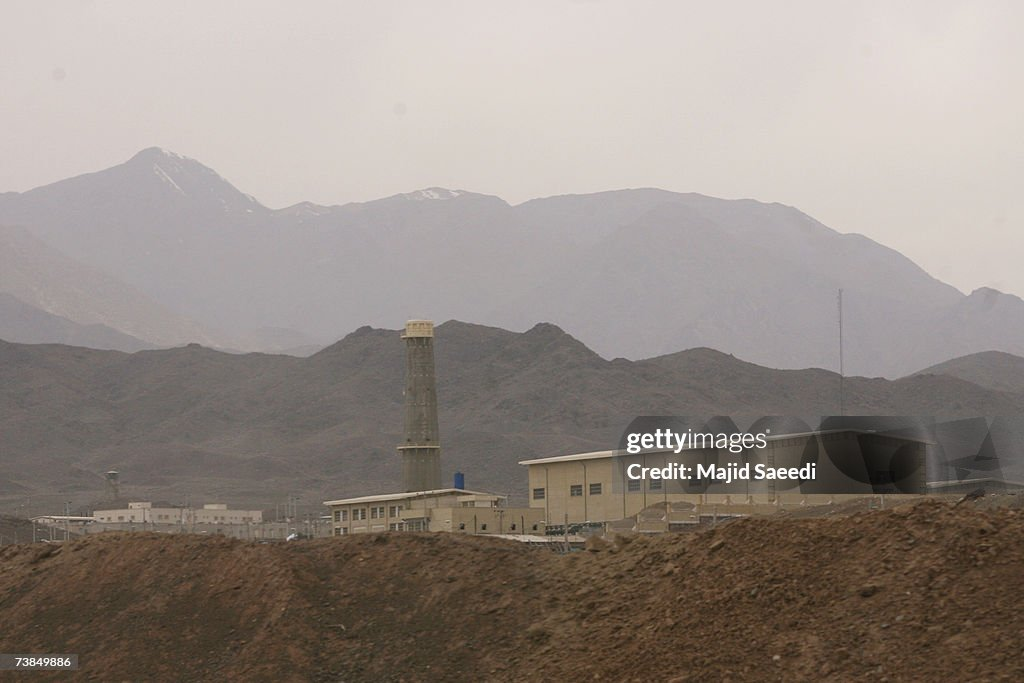
[Natanz centrifuge unit]

On the first anniversary of the Oct 7 Hamas attack on Israel that has unravelled the region and pushed the world, some alarmists claim, to the brink of the Third World War, it may be useful to look at certain salient developments. Anybody who is aghast or surprised at the sustained brutality of Israel’s retaliation in which the Israeli Defence Force (IDF) razed Gaza City to the ground using indiscriminate aerial bombing and heavy artillery fire, virtually eliminated Hamas by bombing whole residential areas where Hamas members resided and individually hunted down the cadre that survived such strikes, and eviscerated the Hezbollah organisation entrenched in southern Lebanon, is apparently unaware of the essential Israeli mindset animating its approach to national security problems — “Rise and Kill First”! This, incidentally, is the title of a book by Ronen Bergman dealing with Mossad’s seemingly endless campaign of targeted assassinations carried out the world over with lethal imaginativeness and ruthless efficiency.

These characteristics of Mossad’s working were illustrated, most recently, in the spectacular operation of exploding pagers that, at a stroke, decapitated Hezbollah, killing most of its top leadership, including its emir, Hassan Nasrallah, and communications chief, Mohammad Rashid Sakafi. It required penetrating and controlling parts of a global supply chain involving design units and factories stretching from Japan and Taiwan to Hungary. Ironically, the Hezbollah had switched to pagers to enable its leaders to communicate with frontline commanders, fighters, and support staff without worrying about Mossad listening in, which is what it feared was happening! That Prime Minister Benjamin Netanyahu activated the kill order despite Nasrallah agreeing to a temporary ceasefire, indicates both Tel Aviv’s bloody-mindedness but also just how determined it is to zero out threats, even if it means undermining the underway efforts at peacemaking. Tehran then responded, unwisely, by opening up with a barrage firing of long range ballistic missiles on Tel Aviv which did little consequential damage. But it provided the rightwing regime in Israel a ready excuse to extend hostilities to Iran if it chooses to do so. Netanyahu is now deciding whether or not to escalate in the face of intense presure from the Biden Administration against such action. And, this is where matters presently stand.

The biggest uncertainty now is not the goal Netanyahu will set Mossad and IDF as regards warring with Iran — because he has long made public his intention to take out critical Iranian nuclear facilities, and remove this nuclear threat to Israel once and for all, but whether he will actually order such a strike. In this respect, recall that in 2009, Mossad and the US Central Intelligence Agency launched a joint cyber strike with the deadly stuxnet software that put a large bank of centrifuges at Iran’s nuclear facility in Natanz out of action. Indeed, so severe were the results of that attack Tehran decided it needed time to recover and “rebuild” this uranium enrichment capability and agreed on an executive agreement — not a treaty — the Joint Comprehensive Plan of Action (JCPOA) with a consortium of leading states — the US, Britain, France, China, Germany, Russia and the European Union, in the hope of using it as a political-diplomatic cover but, formally, in return for a partial lifting of US sanctions.

What was surprising was the extent Tehran went to show good faith to obtain the JCPOA. According to a White House Fact Sheet, between October 2015 and January 16, 2016 when it was signed, the government of Hassan Rouhani “Provided unprecedented access to its nuclear facilities and supply chain; Shipped 25,000 pounds of enriched uranium out of the country; Dismantled and removed two-thirds of its centrifuges, & Removed the calandria from its heavy water reactor and filled it with concrete”, and shipped some 70 tons of Heavy Water to Qatar, presumably, for safekeeping.

And then the best thing that could have happened from Iran’s point of view, actually happened. Ill-advised, US President Donald Trump on May 8, 2018 announced US withdrawal from JCPOA, calling the agreement “a horrible one-sided deal that should have never, ever been made” and adding, as an afterthought, “It didn’t bring calm, it didn’t bring peace, and it never will.”

A relieved Iran quickly revved up its nuclear programme. With 19,000 centrifuges working, inside of 2-3 months enough bombgrade uranium was outputted for 9 nuclear weapons. Compare this to the situation under JCPOA when Iran had only 6,104 centrifuges cranking out high enriched uranium (HEU) that was barely enough for a single bomb and, as the White House Fact Sheet crowed, when “all 4 pathways to bomb [were] blocked.” The blocked pathways being HEU at Natanz and at another centrifuge facility in Fordow, weapon-grade fissile material via the Heavy Water route, and via covert production owing “to extraordinary and robust monitoring, verification, and inspection” by the International Atomic Energy Agency (IAEA).

Iran has three main targetable nuclear weapons-related installations, if the Heavy Water reactor at Arak able to produce around 9kg of weapons-grade Plutonium annually sufficient for a single bomb is discounted, because of the gutting of its core with cement, and which plutononium pathway to the nuclear weapons in any case is unavailable to Iran as it lacks a spent fuel reprocessing facility. There are the two centrifuge facilties at Natanz and Fordow, the installations in Isfahan to convert uranium to uranium hexafluoride gas — the Uranium Conversion Facility — for running the centrifuges for enrichment to bombgrade, and the one to convert HEU into metal — the Fuel Plate Fabrication Plant, to configure the metalised uranium into fissile cores for weapons, and the main weapons design centre — the Tehran Research Centre. Iran also has a nuclear power plant complex in Bushehr on the Gulf coast with a single 1,000MW VVER Russian light water reactor operating since 2013 and two more 1,000MW VVERs under construction. Hitting it might lead to the contamination of the Gulf waters.

But there are problems with some of these target sets. Natanz, for instance, is located near the shia religious city of Qom. Bombing it may result in collateral damage to religious sites, institutions and in the deaths of the shia clergy, and that would surely trigger an enhanced religious war and an anti-West upsurge in the region. Built for enrichment on a commercial scale with 50,000 potential centrifuges, of these around14,000 are said to be installed and only 11,000 actually functioning and capable of refining uranium to up to 5% purity. Except, post JCPOA the enrichment has gone up to 60% purity or nearly 90% weapon grade at both the Natanz and Fordow sites, with the latter having 1,000 plus centrifuges operating there, a small portion of them of an advanced type (IR-6 machines) enriching uranium to up to 60%.

Having learned from the Israeli strike on the Iraqi Osirak reactor in 1981, Iran installed the centrifuges in Natanz and Fordow in caverns excavated deep inside the Zagros Mountain Range in central Iran, rendering them nearly invulnerable. As General Frank McKenzie, retired commander of the US Central Command, told CBS News recently, “The Iranian nuclear target is a very difficult target. We have special capabilities that allow us to get at it. The Israelis do not have all of those capabilities. They can certainly hurt this target if they choose to, if they choose to strike it. But again, because of its size, complexity and scope and how it’s expanded over the last 10 years, it’s a very difficult target to take out.”

It is precisely these special American earth-burrowing weapons that Netanyahu craves in order to carry out strikes, which Washington is denying him. This is what has restrained Tel Aviv so far, and not as has been bandied about by some in the Indian media that Israel lacks tanker aircraft to facilitate the 2,000 mile flights to Iranian targets and back by Israeli strike aircraft. There is such a thing as “buddy refuelling” — additional F-15s and F-16s with transferrable fuel as payload for mid-flight refuelling accompanying the contingent comprising F-15s pulling combat air patrol for the striking F-16s. And the Tehran Research Centre is not singly worth attacking because the scientists and engineers will have been relocated to safety.

Or, Netanyahu can simply wait out the Biden Administration and hope Trump returns to power because in his presidential campaign he has been urging Israel to bomb Iran’s nuclear facilities “first” and “worry about the rest later”. But even an impulsive re-elected Trump may hesitate in allowing Netanyahu a free hand in 2025 because Russia will come in strongly against any such action, and Trump has never not deferred to Putin (whether on Ukraine, or other issues).
Posted in asia-Pacific/Indo-Pacific, Asian geopolitics, Culture, Decision-making, Defence Industry, disarmament, Geopolitics, geopolitics/geostrategy, Great Power imperatives, Iran and West Asia, Islamic countries, Nuclear Policy & Strategy, Nuclear Weapons, Russia, sanctions, United States, US., war & technology, Weapons, West Asia, Western militaries | 100 Comments

Extraordinary tech innovation by IISc, the Indian govt better not screw up!

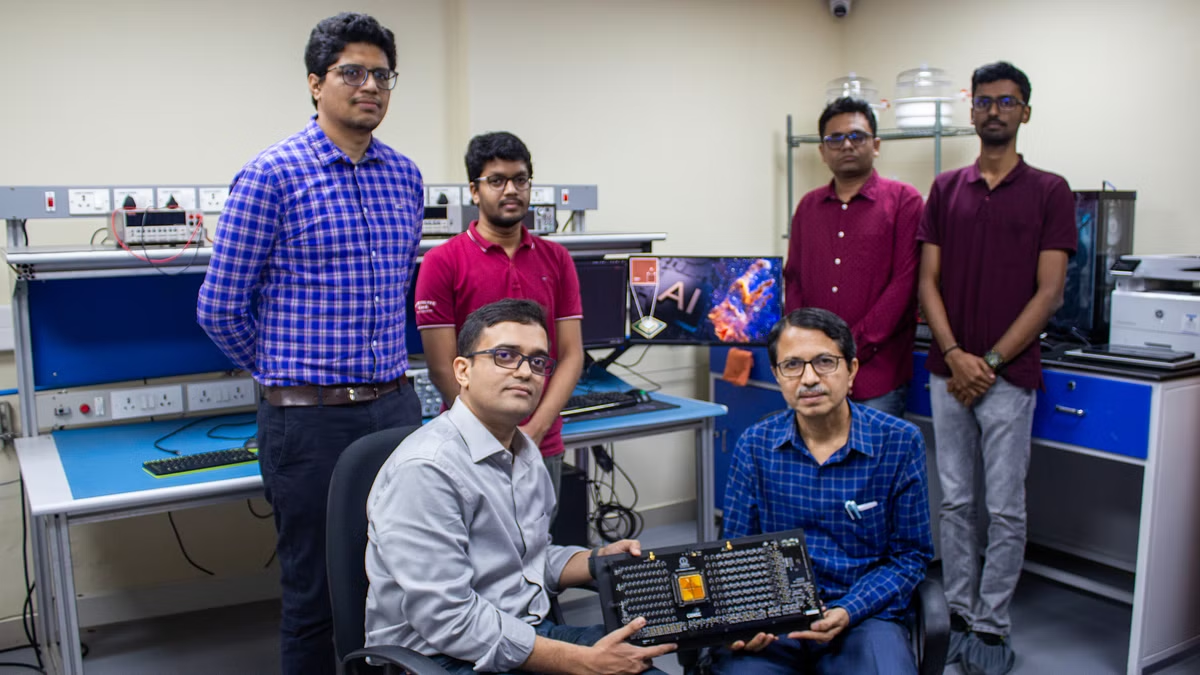
[The IISC team: seated in front: Sreetosh Goswami (left) and Navakanta Bhat (right). Standing behind (from left to right): Deepak Sharma, Bidyabhusan Kundu, Santi Prasad Rath, and Harivignesh S ]

The Security Wise Blog is doing something unprecedented — reproducing below an article published elsewhere. It is an account of a technological breakthrough in the field of ‘molecular kinetics’ announced September 11 and written up in accessible language by the Indian Institute of Science (IISc) for TechXplore and is available at https://techxplore.com/news/2024-09-neuromorphic-platform-significant-efficiency.html. It is featured here to give this phenomenal indigenous tech innovation the widest possible exposure.

The ‘integrated neuromorphic chip’ or ‘brain on chip’ that is expected to accrue from the R&D by the project team headed by Professor Sreetosh Goswami, combined with normal desktop computers will actually amount to an immensely more economical alternative to the still nascent Quantum Computing technology!!

The development of this tech innovation was revealed in a technical paper published in the reputed international British journal, Nature. The reference is: Sreetosh Goswami, Linear symmetric self-selecting 14-bit kinetic molecular memristors, Nature (2024). DOI: 10.1038/s41586-024-07902-2www.nature.com/articles/s41586-024-07902-2

This Centre for Nano Science & Engineering at IISC, Bengaluru, is funded by the Indian taxpayer through MEITy (Ministry of Electronics and Information Technology). What the Modi government needs to ensure is that Goswami and his team — Deepak Sharma, responsible for “the circuit and system design and electrical characterisation, Santi Prasad Rath handling synthesis and fabrication, Bidyabhusan Kundu tackling the mathematical modelling, and Harivignesh S crafting bio-inspired neuronal response behaviour” are incentivised in every possible way to remain and conduct more research in India.

Because the neuromorphical chip has myriad uses, including military, the Indian armed services will be well advised to do something unusual for them — touch base with this IISc team to see how they can fund practical military applications for this chip. Because the molecular film concept was developed in collaboration with Stanley Williams of Texas A&M University and Damien Thompson of University of Limerick, Ireland, there is every likelihood the team members will now be tempted by universities and chip companies in the US and Europe to work for them. The reason why GOI needs to do whatever is necessary to keep these young IISc scientists and engineers in India is, therefore, obvious.

Indeed, for further development of the chip, it may be best to get Indian private sector Companies to join up with IISc, rather than channel the project into the “brain dead” public sector realm (DRDO, etc.)

————

The TechXplore article:

Neuromorphic platform presents significant leap forward in computing efficiency 

by Indian Institute of Science

Neuromorphic platform presents huge leap forward in computing efficiency 
Implementation of VMM. Credit: Nature (2024). DOI: 10.1038/s41586-024-07902-2

Researchers at the Indian Institute of  Science (IISc) have developed a brain-inspired analog  computing platform capable of storing and processing data in an astonishing 16,500 conductance states within a molecular film. Published today in the journal Nature, this breakthrough represents a huge step forward over traditional digital computers in which data storage and processing are limited to just two states.

Such a platform could potentially bring complex AI tasks, like training Large Language Models (LLMs), to personal devices like laptops and smartphones, thus taking us closer to democratizing the development of AI tools. These developments are currently restricted to resource-heavy data centers, due to a lack of energy-efficient hardware. With silicon electronics nearing saturation, designing brain-inspired accelerators that can work alongside silicon chips to deliver faster, more efficient AI is also becoming crucial.

“Neuromorphic computing has had its fair share of unsolved challenges for over a decade,” explains Sreetosh Goswami, Assistant Professor at the Centre for Nano Science and Engineering (CeNSE), IISc, who led the research team. “With this discovery, we have almost nailed the perfect system—a rare feat.”

Neuromorphic platform presents huge leap forward in computing efficiency
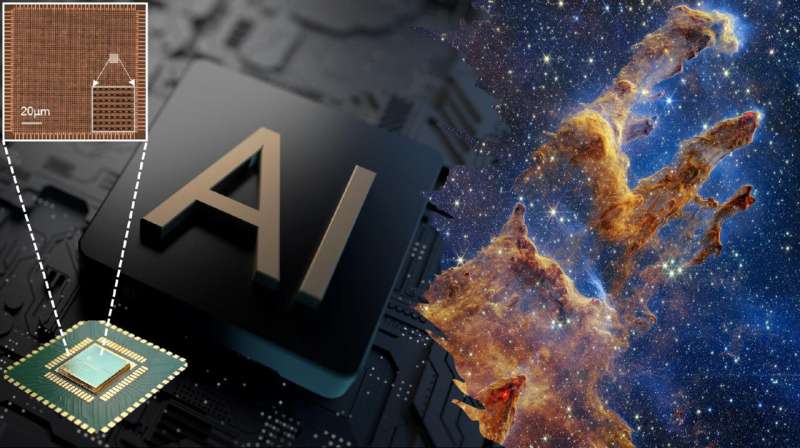
Using their AI accelerator, the team recreated NASA’s iconic “Pillars of Creation” image from the James Webb Space Telescope data on a tabletop computer – achieving this in a fraction of the time and energy required by traditional systems. Credit: CeNSE, IISc

The fundamental operation underlying most AI algorithms is quite basic—matrix multiplication, a concept taught in high school math. But in digital computers, these calculations hog a lot of energy. The platform developed by the IISc team drastically cuts down both the time and energy involved, making these calculations a lot faster and easier.

The molecular system at the heart of the platform was designed by Goswami, Visiting Professor at CeNSE. As molecules and ions wiggle and move within a material film, they create countless unique memory states, many of which have been inaccessible so far. Most digital devices are only able to access two states (high and low conductance), without being able to tap into the infinite number of intermediate states possible.

By using precisely timed voltage pulses, the IISc team found a way to effectively trace a much larger number of molecular movements, and map each of these to a distinct electrical signal, forming an extensive “molecular diary” of different states.

“This project brought together the precision of electrical engineering with the creativity of chemistry, letting us control molecular kinetics very precisely inside an electronic circuit powered by nanosecond voltage pulses,” explains Goswami.

Tapping into these tiny molecular changes allowed the team to create a highly precise and efficient neuromorphic accelerator, which can store and process data within the same location, similar to the human brain. Such accelerators can be seamlessly integrated with silicon circuits to boost their performance and energy efficiency.

A key challenge that the team faced was characterizing the various conductance states, which proved impossible using existing equipment. The team designed a custom circuit board that could measure voltages as tiny as a millionth of a volt, to pinpoint these individual states with unprecedented accuracy.

The team also turned this  scientific discovery into a technological feat. They were able to recreate NASA’s iconic “Pillars of Creation” image from the James Webb Space Telescope data—originally created by a supercomputer—using just a tabletop  computer. They were also able to do this at a fraction of the time and energy that traditional computers would need.

The team includes several students and research fellows at IISc. Deepak Sharma performed the circuit and system design and electrical characterization, Santi Prasad Rath handled synthesis and fabrication, Bidyabhusan Kundu tackled the mathematical modeling, and Harivignesh S crafted bio-inspired neuronal response behavior. The team also collaborated with Stanley Williams, Professor at Texas A&M University and Damien Thompson, Professor at the University of Limerick.

The researchers believe that this breakthrough could be one of India’s biggest leaps in AI hardware, putting the country on the map of global technology innovation. Navakanta Bhat, Professor at CeNSE and an expert in silicon electronics led the circuit and system design in this project.

“What stands out is how we have transformed complex physics and chemistry understanding into groundbreaking technology for AI hardware,” he explains. “In the context of the India Semiconductor Mission, this development could be a game-changer, revolutionizing industrial, consumer and strategic applications. The national importance of such research cannot be overstated.”

With support from the Ministry of Electronics and Information Technology, the IISc team is now focused on developing a fully indigenous integrated neuromorphic chip.

“This is a completely home-grown effort, from materials to circuits and systems,” emphasizes Goswami. “We are well on our way to translating this technology into a system-on-a-chip.”

Posted in asia-Pacific/Indo-Pacific, Asian geopolitics, civil-military relations, Culture, Decision-making, Defence procurement, Geopolitics, geopolitics/geostrategy, Great Power imperatives, India's strategic thinking and policy, Indian Air Force, Indian Army, Indian Navy, Military/military advice, society, space & cyber, Technology transfer, technology, self-reliance, war & technology | 95 Comments

Plan for Partial Theaterisation is Unsatisfactory on Many Counts

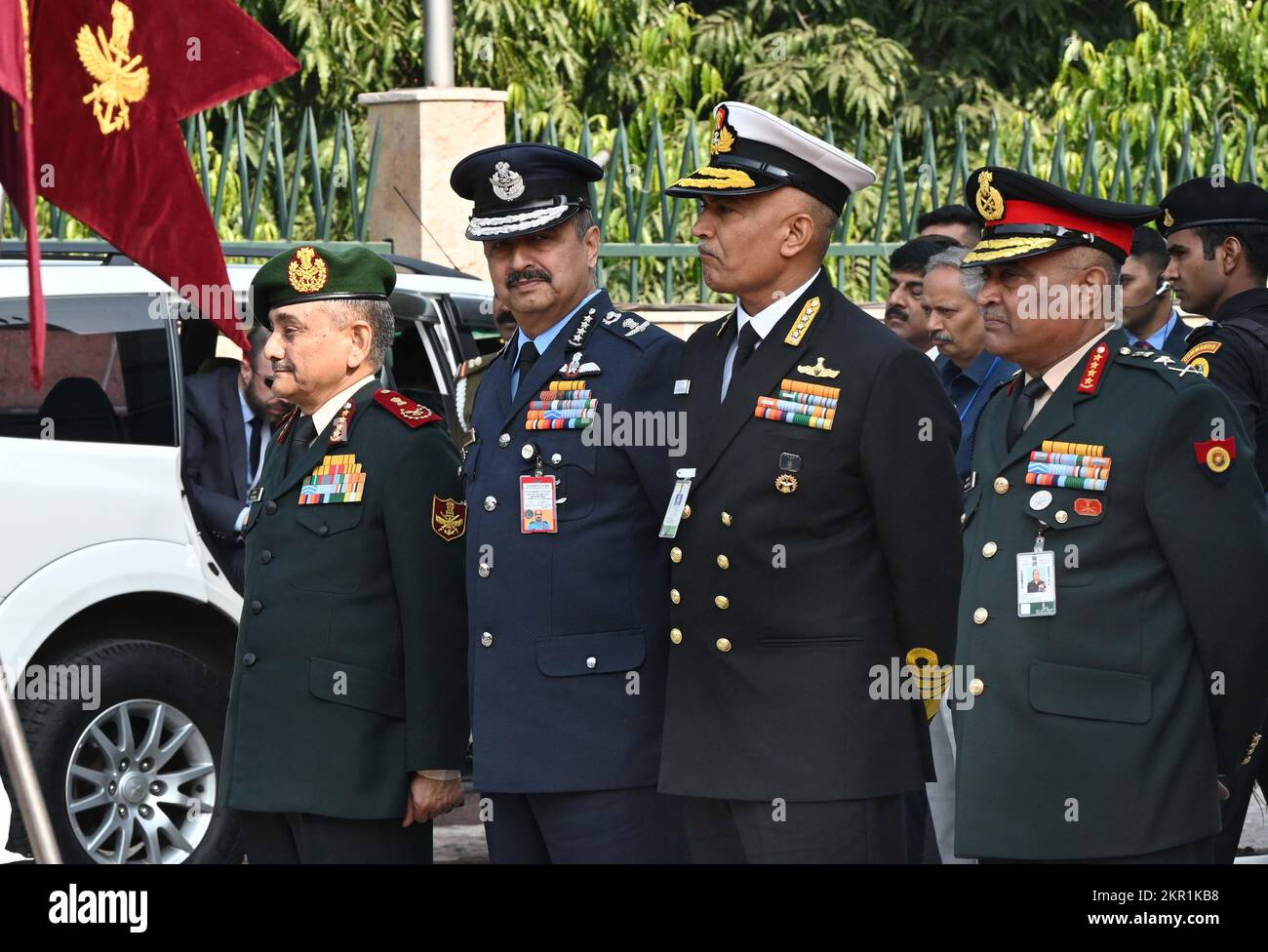
[CDS Gen Anil Chauhan with CAS, ACM VR Chaudhari, CNS Adm Hari Kumar, COAS Gen Manoj Pande — left to right]

Earlier this year in June, in an hour-long session with the Chief of Defence Staff in his South Block office, General Anil Chauhan, was forthcoming on many issues I raised. Regarding theaterisation, he seemed pleased when revealing to me that approval for it had been secured from the then three armed services’ chiefs of staff — General Manoj Pande, Admiral Hari Kumar, and Air Chief Marshal VR Chaudhari. “They have signed off on it”, he informed me. Pande and Hari Kumar have since retired. Chauhan then outlined the theaterisation blueprint with some of the details that were officially made public in Lucknow at the Joint Commanders’ Conference on September 4.

Among the proposed purportedly transformative changes is the restructuring of the current 17 separate commands under the three services — 7 with army, 7 with IAF, and 3 with navy, plus the two “integrated” commands — Strategic Forces Command (SFC), and the Andaman-Nicobar Command into three “theatre commands” — Maritime or Peninsular Command, China Front Command based in Lucknow, and the likely-Jaipur HQed Command for Pakistan contingencies, each to be headed by a 4-star rank officer. It means the elimination of the Thiruvananthapuram-based Southern Air Command and the Jaipur-based army’s South Western Command. Chauhan also clarified that his predecessor, the late General Bipin Rawat’s interest in fast-forwarding a single command for the air defence of the country had been de-prioritised. Perhaps, because of the complexities involved. (On this see my my blogpost of July 10, 2021 — “Maddening CDS-cum-Military Theaterisation Muddle (Augmented)” at https://bharatkarnad.com/2021/07/10/maddening-cds-cum-military-theaterisation-muddle/)

The Press has reported on how the political-bureaucratic circles may baulk at creating three new 4-star billets in the military who, like the armed services’ chiefs of staff, will outrank secretaries to the Government of India, and why such a step is necessitated by the fact that the theatre commanders will have operational control of fighting formations and units from all the three services.

Chauhan, in his quiet way, has achieved something quite spectacular — in that no one quite believed that he would be able to get theaterisation over the Air Force hump! IAF was the unmoveable barrier that frustrated all efforts at “jointness” in the past, arguing, in effect, that ceding any control over aerial fighting assets to a non-flier (from a sister service) would imperil India’s air power because only a professional combat fighter pilot sufficiently appreciates and understands the demands and vagaries of air warfare.

IAF had its way until now only because of lack of political will, even though the Kargil Committee and the Defence Higher Defence Reorganisation committee under the late KC Pant recommended theaterisation. Previous Prime Ministers having at best only a passing interest in matters military, did not care enough about more effective and efficient use of military resources via jointness and theaterisation. It was this political disinterest that an officer cadre of ignoramuses, domain expertise-wise — the generalist civilian bureaucrats, clogging up the Defence Ministry MOD who have long viewed putting the clamps on the military as part of their remit, stoked.

Chauhan, who was recalled from retirement to serve as the 2nd CDS, may have succeeded where Rawat failed maybe because he was expressly tasked by the Prime Minister with realising theaterisation and assured of every assistance to move the process along. There’s little doubt that the Chief of Air Staff was prodded by the PMO, or Chaudhari thought it prudent not to stick his neck out once he recognised the lie of the land. The only good thing about a military system where all the powers are vested in the Service Chief is, that with the bureaucracy falling in line with Narendra Modi’s wishes, any institutionalised reluctance would be at the cost of the Service chief himself and this rendered him more persuadable. Chaudhari, it is apparent, had no stomach to go up against the PM/PMO. Whatever the reason for the CAS’ playing ball, it smoothed the way for Chauhan to draw up his “blueprint”.

The plan for 3-Theatre Command setup, however, is problematic mainly because it amounts to partial theaterisation and has nested problems. To sketch a few of them:

  1. A military reorganisation plan is likely to be successful if is geared to a total makeover, and its actual implementation is in steps. But if all that’s proposed, in this case, a 3-theatre command structure — then given the bureaucratic tendency — military and civilian, to tolerate as little change as possible, that’s where the jointness may, willy-nilly, terminate, assuming the 18-month timetable for establishing these Commands works out.
  2. One obvious reason why theaterisation has been limited to 3 Commands is because there are three Armed Services and each can have a Theatre C-in-C, it simplifies the distribution of the loaves and fishes of office — Army takes the China Front Command, Air Force the Pakistan Front Command, and the Navy takes the Maritime Command.
  3. This is bad news, because all the other other capabilities that would benefit from centralisation may be left out of the theaterisation programme for good, or postponed to the never-coming tomorrow! Thus, there will be no separate Joint Planning Command, no Joint Procurement Command, no Special Forces Command, no Joint Logistics Command, no Joint Transport Command, no Joint Training Command, no integrated Air Defence Command, no centralised Tri-Services Military Intelligence Command, and no Support Services Command. And the proposed theaterisation that is only partial will become an end-state, permanent. Meaning baby steps will result in stunted theaterisation.
  4. And for the purposes of coherence, why has the maritime ANC (Andaman-Nicobar Command) not been folded into the Maritime/Peninsular Command, rather than have it hang out by itself awkwardly outside the ambit of the Maritime C-in-C? Won’t that lead to needless confusion over turf, and command and control?
  5. And, finally, what’s the guarantee that this theaterisation schemata will not stumble when it comes up before the Cabinet Committee on Security for approval, considering the civilian bureaucrats in MOD will be trying desperately to torpedo the 3 extra 4-star rank posts under the guise of strengthening civilian control of the military? Recall that MOD babus manoeuvered for years to prevent SHFJ Manekshaw from getting the remuneration due his rank until an appalled President APJ Abdul Kalam visiting the old Field Marshal in his hospital bed in Coonoor (Nilgiris), ordered it.
  6. Talking of ‘Field Marshal’, does it not make sense for the Theatre Commanders to be 4-star, and to salve the egos of the Services Chiefs, who will be stuck only with administrative roles, having lost their most prized operational control of forces to the Theatre Commanders, to elevate them to the active Field Marshal/Marshal of the Air Force/Admiral of the Fleet rank, making it easier for them to swallow the theaterisation pill? After retirement, these Field Marshals can go on half-pay. The small British Army — a fraction of the size of the massive Indian Army, for instance, has other than the 4 “Royal Field Marshals”, eight FMs on “half pay”.
Posted in asia-Pacific/Indo-Pacific, Asian geopolitics, China, China military, civil-military relations, Culture, Decision-making, Defence procurement, domestic politics, Geopolitics, geopolitics/geostrategy, Great Power imperatives, India's China Policy, India's Pakistan Policy, India's strategic thinking and policy, Indian Air Force, Indian Army, Indian Navy, Indo-Pacific, Intelligence, Military Acquisitions, Military/military advice, Nuclear Policy & Strategy, Nuclear Weapons, Pakistan, Pakistan military, society, South Asia, Special Forces, US., Weapons, Western militaries | 44 Comments

Let Private Sector also produce the Tejas LCA

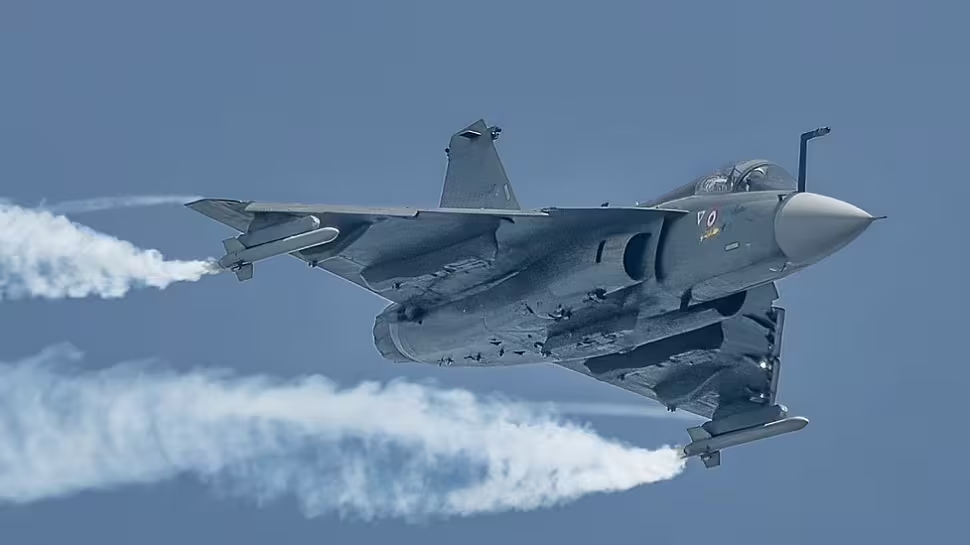
[Tejas — up in the air]

There’s leadership transition at HAL, and Director (Engineering and R&D) DK Sunil is expected to take over at company HQrs in Bengaluru, replacing CB Ananthakrishnan, a former Chief Finance Officer. However this CFO got to be head of HAL, the results are there for everyone to see. HAL’s flagship programmes — the Tejas light combat aircraft and the Prachand Light Combat Helicopter are floundering in terms of production schedules. That’s what happens when a bean counter is put in charge of a strategically important programme.

(Look what David Calhoun, an accountant, did to the venerable Boeing Company. He ‘strip-mined’ the company’s industrial and other assets to pad up the revenues, drive up notional profit and the company’s stock price as also his own remuneration package, and ran a once great aerospace giant into the ground with the laxly manufactured Boeing 737 MAX — doors flying off mid-flight, etc.)

Dr Sunil is a software radio designer with several patents, who won his spurs at the Strategic Electronic Research Design Centre (SLRDC), Hyderabad, working on combat avionics systems. One can expect that his engineer’s mindset will help him to sort out some basic problems. So, what’s the trouble?

The same old ailment afflicting all defence public sector units, in the main, no honest acknowledgement of its limitations as a production entity. Having done little else than produce, under license, various foreign aircraft, starting with, as a private enterprise — Hindustan Aircraft Ltd, assembling the Harlow Trainer, Curtiss Hawk Fighter and Vultee Bomber during the Second World War, and after its nationalisation — a whole series of fighter aircraft — Gnat, MiG-21, Jaguar, Su-30, it did not know how to sell its own indigenously-designed combat aircraft. So, the Dr Raj Mahindra-designed Marut HF-71 happened. It was the successor fighter aircraft to, and derived from, the remarkable HF-24 engineered in Bengaluru by the German chief designer of the Focke-Wulfe fighter bombers for Hitler’s Luftwaffe, Dr Kurt Tank.

Even though underpowered, the 24 was so aerodynamically perfect, it could supercruise without afterburners! IAF veterans who flew it, can’t stop praising it as the stablest aircraft for low level flying they had ever piloted, certainly better than the Jaguar that IAF Chief, PC Lal, and defence minister Jagjivan Ram contrived to buy from the UK, and which deal kicked the legs from underneath the HF-71. Oldies may recall that during the post-Emergency government of Morarji Desai, Jagjivan Ram in MOD, was accused in an article in the magazine ‘Surya’ published by Maneka Gandhi, of taking millions of pounds sterling in commissions from British Aerospace for approving the Jaguar purchase.

The HF-71 was, like the 24, optimised for several roles but was more advanced, more capable, with longer range, and manifestly more effective in low level strike operations than the imported Jaguar. But between Lal and Jagjivan, it didn’t have a chance. The HF-71 programme was thus deliberately killed and, along with it, the country’s painstakingly cultivated homegrown capacity to design and make its own combat aircraft. So began the air force’s inglorious record of ensuring nothing came in the way of West European imports — the latest in the line of such acquisitions being the Rafale, and of HAL screwdrivering foreign aircraft together! The disheartened chief designer of the 71, Dr Mahindra, resigned — not that anyone in the IAF, the defence ministry, or the government of India, cared.

In fact HF-71 and that episode isn’t mentioned in any online official history of HAL, and even the HF-24, gets only a passing mention. Perhaps, it reminds too many people of why so much has gone wrong.

With the passing from the scene of Mahindra, that entire generation of aircraft designers trained by Dr Tank was lost. So, when in the mid-1980s, the indigenous Tejas project was cranked up, it had to start from a near zero baseline — the reason why the regaining of all the necessary designing skills and competencies took time. Something the illiterate Indian Press and media fed on Vayu Bhavan PR never questioned. Rather, the Tejas programme was blamed and still is, for time and cost over runs and for imperilling national security! It was a prelude to making the case for the air force needing imported aircraft to continue to keep in fighting trim — an exercise that included joy rides for TV reporters in pressure suits going gaga over Gripen, Rafale, and whichever other foreign aircraft was in the running for the multi-billion dollar Medium Multi-Role Combat Aircraft contract!

Meanwhile, Russian aircraft buys tootled along. But after the demise of the Soviet Union, when the Russian arms industry found it had to survive by itself, it discovered what the Western suppliers had done late 1940s onwards with the first purchases of the French Fuga-Mystere and the British Vampire, that a liberal distribution of commissions, etc to any and everybody in the Indian defence procurement loop, helped make the sale. Starting with the Su-30, the Russians too joined in this game of arms procurement bonanzas.

This diversion into a bit of history is to contextualise what the next chairman, HAL, Dr Sunil shouldn’t do. However full HAL’s orderbooks and however limited its production capabilities, his predecessors in office did what all DPSU heads do — insist every piece of hardware produced in the country be made within the DPSU’s premises. It is a wrong tack for HAL to take because it is impossible for it to produce 324 Tejas LCAs to equip 18 squadrons in any reasonable timeframe. Considering, its annual production rate is only 6-9 aircraft per year. With an additional production line that number will go up to 18 Tejas annually, meaning it will take HAL 18 years to fulfill the order if everything else works tickety-boo. Because the 2nd Tejas line is yet to get on stream, it will be the centenary year of the republic or later before the last of HAL’s LCAs enters service.

Except, Tejas is a 4.5 gen combat aircraft at a time when 6-gen combat aircraft will soon begin flying. Are you getting a whiff of what the IAF may be up to? How long, do you think, it will be before IAF and the media begin canvassing for a 5.5 gen or 6 gen MMRCA costing hundreds of billions of dollars because, well, HAL is falling way short of producing the Tejas? It is a fine way of also killing the successor Advanced Medium Combat Aircraft. Neat, and a very successful strategy!

This is the reason why I have been advocating for some 20 years now that GOI at least wise up and instruct NAL/DRDO to onpass the Tejas source codes to private sector majors — L&T, Tata, and Mahindra Aerospace and, if GOI is serious, for these three companies to be incentivised with tax holidays and whatnot, to open two production lines each for the 1A and subsequent models of Tejas and the AMCA, for a total annual production of 144 Tejas aircraft, such that the entire IAF requirement is met inside of THREE years from the green signal. It may end for good the military’s foreign fixation.

This is the way, hear me Pradhan Mantri Narendra Modiji, for high value employment to be generated at home rather than in France, UK, US and elsewhere, for the atmanirbharta programme to acquire teeth, for the rapid manufacture of Tejas also for the Trillion-dollar export market, for the Indian defence industry of private and public sectors working in tandem to become an aerospace tech power, and for India finally to take wing as a self-respecting, arms self-reliant nation!

Posted in arms exports, asia-Pacific/Indo-Pacific, Asian geopolitics, civil-military relations, corruption, Culture, Decision-making, Defence Industry, Defence procurement, domestic politics, DRDO, Europe, Geopolitics, geopolitics/geostrategy, Great Power imperatives, India's strategic thinking and policy, Indian Air Force, Indian Army, Indian ecobomic situation, Indian Navy, Indo-Pacific, MEA/foreign policy, Military Acquisitions, Military/military advice, Russia, russian assistance, society, South Asia, Technology transfer, technology, self-reliance, United States, war & technology, Weapons, Western militaries | 35 Comments

Mr. MIRV — Dr. RN Agarwal, RIP

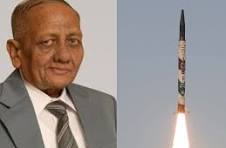
[Dr RN Agarwal]

Small in stature, with a wizened appearance, Dr. RN Agarwal looked like something out of the Lord of the Rings. He is the only bania — from a community that routinely produces traders and businessmen partaking of the nation’s commerce, I have known whose eyes lit up when speaking of ejection velocities and servorocket motor firings for inertial guidance. When the history is written of the strategic programme, RN will be identified as the father of the Indian MIRV (Multiple Independently-targetable Reentry Vehicle).

After meeting him at an annual meeting of the DRDO Directors Conference in Delhi I addressed in the early 2000s, he invited me to Hyderabad to speak to the scientists and engineers at the Advanced Systems Laboratory. It was an instant bond with the man, and I lost no opportunity to cement it by meeting him whenever I was in the city, in his modest home on the outskirts of a DRDO unit. And each time, I came away with a better understanding of how the Defence Ministry and DRDO misfunction!

The memory of RN Agarwal needs to be treasured, because his MIRV took the Integrated Guided Missile Development Project initiated by Dr APJ Abdul Kalam in the 1980s that produced the Agni-series of ballistic missiles, several giant steps forward and into the force multiplier-mode. He ensured that a single Agni missile would carry as many as three to five nuclear warheads on divergent targets 150 miles apart. The nosecone geometry of the Agni-5 Prime missile has since been modified to deliver 12 warheads. RN developed technologies, such as the heat shield with the ablating “skin” to protect the warheads homing in on targets, from the intense heat (approaching 5000 degrees Fahrenheit) on reentering the earth’s atmosphere, for the MIRV project that he led and which, most significantly, as head of ASL, Hyderabad, he prioritised and propelled forward. He oversaw the MIRV development from research, design, and development to sub-assembly, assembly prototype-testing phase. The MIRV was ready for test-launch by 2002. A full TWENTY TWO YEARS later the Indian government got up the nerve to order a test launch of the MIRV-ed Divyastra Agni-5 Prime, four months ago in March.

RN’s greatest regret was he couldn’t persuade the lilly-livered BJP government of Atal Bihari Vajpayee, to allow him to test the MIRV, even greater than his disappointment at being passed over for promotion to be the boss of DRDO and Secretary to the Government of India. The head of the Arjuna MBT project was selected to be the top honcho in DRDO Bhavan. So much for the government’s strategic thinking. As a sop, Agarwal was awarded the Padma Bhushan, that he’d have gladly traded in for a testlaunch of a MIRV-ed Agni.

In both these decisions — to not test the MIRV tech, and to not promote Agarwal, Vajpayee’s National Security Adviser and Principal Private Secretary, Brajesh Mishra, was the man who counselled caution. He feared that testfiring MIRV would upset Washington, and appointing Agarwal to lead DRDO would result in the fastforwarding of the MIRV tech, which would again be the proverbial red rag before the American bull. The tragedy is it is this fear of what the US would do/might do to India by way of sanctions, etc. that has animated India’s strategic policy ever since, topped by the 2008 Civilian Nuclear Deal negotiated by S Jaishankar, then Joint Secretary (Americas) in MEA and now Modi’s Minister for External Affairs. For all intents and purposes, by barring India from resuming thermonuclear tests, this Deal has frozen and capped India’s nuclear arsenal to the tested and proven low yield 20 kiloton fission level — Pakistan’s level, as the US government intended.

The two greatest damagers of India’s strategic national interest — the Mir Jaffers of the modern era, are firstly Dr R Chidambaram, who, from the Bhabha Chair he fills in his decrepitude in Trombay, still propagates the nonsense he did as chairman of the atomic energy commission and, for a decade and half as Manmohan Singh’s and then Modi’s “Science & Technology Adviser”, that the Indian thermonuclear bomb that fizzled in 1998 is, with a little computer-jiggery, fit to feature in the Indian Strategic Forces as a credible high-yield thermonuclear weapon/warhead! It was advice Chidambaram’s distant nephew, Jaishankar — yes they are related! — apparently took to heart when he surrendered India’s right to have reliable and trustworthy fusion weapons, which requires India to resume underground testing, whatever the cost, because the hydrogen bomb that was tested in 1998, failed — the technical word is “fizzled”. Without the high yield Hydrogen Bomb/warhead, there’s no way India can reach even notional strategic parity with China.

In fact, Jaishankar’s virtual American opposite number, Ashley Tellis, has now come to the same conclusion, that India does indeed need to conduct many more thermonuclear tests to obtain proven thermonuclear armaments. And he has advised his government to not impose sanctions, if India does test again. But timidity is by now so hardwired into the Indian state, the Modi regime is unlikely to take this open hint to go ahead and test! Tellis, it may be recalled, shepherded the nuclear deal at the Delhi end as adviser to US ambassador Robert Blackwill, and at the Washington end as National Security Assistant to President George W Bush. That open-ended testing was an imperative was a conclusion that a few of us had reached on May 11, 1998 after the S-1 thermonuclear test owing to telltale signs of failure. It was backed up by the demi-official letter to the PMO by the director, field testing, Pokhran, Dr K Santhanam, who reported the fizzling of the fusion device and urged new tests.

This lot of sceptics included Drs PK Iyengar, Chidambaram’s predecessor, AN Prasad, Director, BARC, who should have succeeded Iyengar but was sidelined by Dr Raja Ramanna who chose his IISc fellow alumnus, the wretched Chidambaram instead, and A Gopalakrishnan, ex-head of the Nuclear Regulatory Commission. The failed fusion weapon test was the reason why we had all tried desperately hard, alas, in a losing cause, to stop that Deal in the period leading up to it in 2008, with a series of prophetic articles in the Press critical of it. (For those who are interested, these articles, still relevant, are collated in the book — “Strategic Sellout: Indian-US Nuclear Deal”, published by the local Pentagon Press in 2009.) In another setting, an enemy of the state, like Chidambaram, would have been sent to the Gulag.

The other enemy of state was Brajesh Mishra, who in many ways was much worse. He undermined two strategic technologies, when he sided with Chidambaram against Iyengar and, next, when he ditched the MIRV that Agarwal was pleading be tested. Mishra also negatived the policy I had proposed in 1998 in a meeting of the (First) National Security Advisory Board with the then Foreign Secretary, Krishnan Raghunath, of reciprocating China’s nuclear missile arming of Pakistan by nuclear missile arming all countries on China’s periphery, as an albeit belated, tit-for-tat gesture to equalise the strategic situations. This policy, in a diluted form, led to the Modi government — 20 years later — to selling the conventionally-armed Brahmos supersonic cruise missile to Philippines.

With Chidambaram in Trombay and an NSA like Mishra in PMO, what chance did the national interest have? Then again, Mishra was followed by ex-Foreign Secretary, MN Dixit, ex-chief, Intelligence Bureau, MK ‘Mike’ Narayanan, former Foreign Secretary, Shivshankar Menon, and now another former IB head, Ajit Doval. Between alternating IFS and IPS NSAs, India’s strategic fate has hung all along by a thread!

And true patriots and nationalists, like Agarwal, pass from the scene largely unknown, unheralded. Rest in Peace, Dr RN.

Posted in asia-Pacific/Indo-Pacific, Asian geopolitics, China, China military, civil-military relations, corruption, Culture, Decision-making, Defence Industry, Defence procurement, DRDO, Geopolitics, geopolitics/geostrategy, Great Power imperatives, India's China Policy, India's Pakistan Policy, India's strategic thinking and policy, Indo-Pacific, MEA/foreign policy, Military Acquisitions, Military/military advice, Missiles, Nuclear Policy & Strategy, Nuclear Weapons, Pakistan, Pakistan nuclear forces, sanctions, society, South Asia, Strategic Forces Command, Strategic Relations with the US & West, United States, US., war & technology, Weapons | 78 Comments

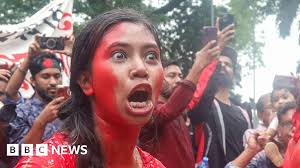
The Great Bengal Tragedy

[Bangladeshi blood lust]

Dhaka University students have always been the vanguard of change in a benighted Bangladesh. The massacre by the Pakistan Army of students and select professors — proponents of Bengali nationalism in East Pakistan in March 1971 — killings expressly ordered (Operation Searchlight) by General Tikka Khan, GOC-IN-C, East Pakistan, to quell the nascent separatist movement, backfired spectacularly. Many date the inevitability of an independent Bangladesh to that sorry episode.

It was Dhaka Univerity students again leading the campaign against job quotas in government services for family members of the Mukti Bahini and other sections of society, which precipitated the ouster of Prime Minister Sheikh Hasina Wajed. It was the usual raucous agitation common to the subcontinent — a lot of thunderous speeches signifying nothing. And then Hasina sent in the special riot police to literally knock some sense into them. It angered the students into violence — the wedge the Jamaat-i-Islami’s student wing — Islami Chhatra Shibir were waiting for to kick in the door of the Awami League regime. Under the cover of this popular protest, it pursued its larger agenda of pogrom against the Hindu minority. Repeated bouts of ethnic cleansing of Hindus from Bangladesh by the Jamaat-Shibir have resulted over the years into a substantial 22% minority at the time of Partition being whittled down to less than 3% of the 170-odd million strong population today. The Shibir has been very clear about its objective of zeroing out the Hindus of the country by sword or by conversion. They are almost there.

The communal politics of the subcontinent are simply dreadful and a continuing tragedy. Pakistan has been nearly cleansed of Hindus, as is Bangladesh now. The trouble is these cleansings on either flank make the condition of Muslims in India tenuous, paradoxically, at a time when their numbers have grown healthily to some 14% of the population, or nearly 200 million — the only religious minority that, numbers-wise, is flourishing in South Asia. It sets up a deadly dynamic of Indian Muslims feeling more and more beleagured as the majoritarian sentiment grows less tolerant with newsreports and reliable personal accounts reaching India of Hindus in Pakistan and Bangladesh being subjected to ceaseless violence, dishonour, degradation, and death. These naturally stoke Hindu outrage in this country which, if it gains critical mass, could become unstoppable, snowball into something truly horrendous. The trouble is very soon there will be no atrocities to commit against Hindus, because there will be no Hindus left in either Pakistan or Bangladesh. A tipping point will then be reached as regards the Muslims in India because Jinnah’s principle of minorities as “mutual hostages” will be voided.

The pity is Jamaat-i-Islami in Pakistan and in Bangladesh and their youth wings do not care what happens to the sizable population of Muslims in India. But the view of the Hindu Mahasabha at the time of Partition that there be a complete exchange of populations between “Hindu India” and “Muslim India” to prevent the piecemeal elimination of minorities may then begin to make sense, gain new adherents, with what consequences can only be imagined.

But to return to developments to our immediate east, the speed with which the Awami League government fell apart, does arouse suspicions about a foreign hand. After all, Hasina had placed her Awami League loyalists and people close to her party chieftains, in almost all the strategic posts in the government, especially the police, and appointed Major General Mohammed Hossain Al Morshed in April this year as head of the National Security Intelligence and, earlier, a distant relation, General Waker-uz-Zaman (ex-East Bengal Regiment), as army chief in December 2023. So, what went wrong?

Hard to say, but some rumours suggest that Hasina’s denying permission for the use by the American Navy of a base, possibly Cox’s Bazar, led to the US conspiring with Generals Morshed and/or Waker to depose her — with the student protest providing ample cover. Another story has it that Beijing, upset with Hasina handing over the $1 billion Teesta River development project to India, to crown a series of connectivity projects across Bangladesh linking West Bengal to the states in the Indian Northeast, that she had approved, was only the latest move in a series that also saw her turn to India for arms supplies, and was the poverbial last straw. And that China used the same Generals the US is supposed to have done, to do its work. Choose whichever account you are partial to, because one thing is certain — the regime change did not happen because the denizens of Dhaka U willed it so, or because the Jamaat, whose leadership ranks were decimated by Hasina, was acting in cahoots with the opposition Bangladesh National Party of Khaleda Zia — a largely spent force!

However it happened, the Nobel laureate, Muhammad Yunus (whiling away his exile in Washington) was waiting in the wings, so to say. He did not need much coaxing to agree to lead an interim government in Dhaka, which could be in power for as long as it takes to obtain a regime acceptable to many internal and external interests. India is one of those external players who cannot be ignored. But, the Modi government did get a blackeye owing to its being lulled so easily into complacency by the RAW station, Dhaka, assuring NSA Ajit Doval that all was good. So, when the eruption happened the Indian government was as surprised, and had as short prior notice as Hasina did to pack a satchel and board a helicopter taking her to Kolkatta for an Indian VIP fleet plane to fly her from Dum Dum to Delhi.

The most impassioned, heartfelt, and insightful comments and writings about the happenings in Bangladesh in the Indian media are, not surprisingly, by Hindu Bengalis. In a strange but remote sort of way I feel drawn personally to the Bengal drama. My father, a newly minted civil engineer from the College of Engineering in Pune (at a time when there were only four other engineering colleges in British India — at Guindy, Karachi, Jadavpur, and the Thompson College of Engineering at Roorkie), was selected in 1944 to join the Indian Railway Service of Engineers. This was when the Warrant of Precedence was: Viceroy; C-in-C, India; Commissioner, Railways, etc. For graduating engineers in those days, the railways were it.

My father, an adventurer at heart and a topper in the merit list, who had never travelled north of Mumbai chose Bengal Assam Railway to see the rest of the vast country and the world, with his probationary period spent at the HQ, BA in Sealdah. As required, he quickly became proficient in Bengali, a prerequisite to serving there — a frontier railway in the east and counterpart of the North West Frontier Railway in the west that reached Landi Kotal through the Khyber Pass on the Afghan border — the two railway systems at its two ends tying India together.

Newly married in 1946, my Dad took his then 19-year old wife, who had not travelled beyond Mumbai either, from our home town of Dharwad in what was then the Bombay Presidency and is now in Karnataka, to Calcutta. They reached the once imperial capital just a few days before the great Calcutta killings of 1946 occassioned by the Bengal Chief Minister Shahid Suhrawardy’s call for “Direct Action Day” that saw some 6,000 people killed — the biggest mass murder in the Partition era 3-day stretch, August 16-19.

Protected by armed railway police, my parents were terrified witnesses to many of these random knifings in the street fronting on their home in Tollygunge (I think). My mother was so traumatised she aborted the baby — her first, that she was carrying — my would have-been older sibling. That was her introduction to Calcutta and the Bengal-Assam Railway. She never quite got over it. Over time the memory of the horrors faded, of course but, perhaps, not the fear that had settled deep down within her that no amount of absorbing Bengali culture — speaking the language fluently, engaging in “Rabindro sangeet”, etc., could eraze. My parents considered themselves honorary Bengalis. When I think of the Hindus in Bangladesh today, I speculate about my mother’s state of mind in Tollygunge in August 1946, and break out into cold sweat.

Posted in Afghanistan, asia-Pacific/Indo-Pacific, Asian geopolitics, Bangladesh, China, civil-military relations, corruption, Culture, domestic politics, Geopolitics, Great Power imperatives, India's Pakistan Policy, Indo-Pacific, Intelligence, Internal Security, Islamic countries, MEA/foreign policy, Pakistan, Pakistan military, society, South Asia, Special Forces, Strategic Relations with the US & West, Terrorism, United States, US. | 38 Comments

Modiji be the Bridge for Iran-Gulf, Not Peacemaker in Ukraine!

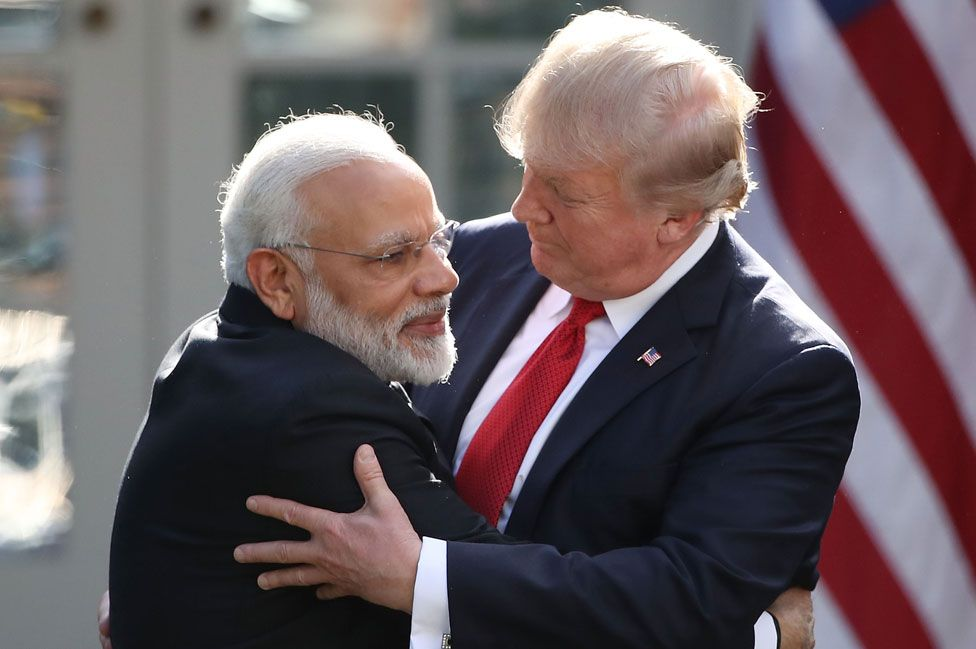
[Good friends]

An AR-15 slug grazed US Presidential candidate Donald Trump’s ear. 2 cms to the right and the world would have witnessed in real time the splattering of his brains by the 5.56mm shell fired from 150 yards out from an unsurveilled elevation. Lucky for him, the 20-year old assassin didn’t use a proper sniper rifle and dial in the expected ballistic deviation at 100 yards as a professional might have done. But damned good shot any way.

(Between “the gas operated, air cooled” Armalite-15 designed by the legendary Eugene Stoner and the Kalashnikov it is hard to know which is the better infantry assault rifle. The former was in the running for the main US military personal weapon. The US Army chose the wrong, heavier, less versatile, rifle that jammed often in operations in Vietnam, forcing US troops to abandon their MR-16s for the AK-47s they picked from the dead Viet Cong they had killed in firefights. The selection of the MR-16, an AR-15 derivative created a big controversy in America. Looking at reports at the time and talking to some people in Washington — this was the mid-1980s and with the Rajiv Gandhi regime in Delhi — I had written that the Indian government/Indian Army should get the manufacturing license from the Colt Company and produce it here in India. It would have been a stupendously good choice for the Indian military. I am quite sure the Indian army never even looked at this option — but that’s another story, but par for the course for missing opportunities! And then compounded the mistake by not asking for a Kalashnikov factory from the Soviet Union. But I am straying!)

Surviving the assassination attempt is expected to buff up Trump’s image and may help him return to the White House. (But this guy is no hero. His rich father got a flunkie doctor to get him a deferment from serving in the Vietnam War in the 1960s on the pretext of a bone spur in the foot!). By sending a message to his “good friend” Trump, Modi may have reminded the would-be US president to keep India and the Indian PM in his good books. It won’t matter. It was after the ” Howdy, Modi” event in Houston that Trump, miffed by what he thought were unreasonable taxes on American goods, kicked India out of the list of developing countries benefitting from the Generalised System of Preferences programme that permitted Indian imports on concessionary terms. And abruptly terminated the then ongoing project for Indian production of the GE 414 fighter jet engine.

True, his deputy NSA Matt Pottinger, mindful of the growing threat from China, tried hard to prevent the Trump Admin from dumping on India — central to the US plans for the Indo-Pacific. And he may return in a high capacity in the 2nd Trump govt. And, unlike the Biden Admin which seeks to have Ukraine fight to the last Ukrainian, Trump is honest enough to want no skin in the Ukraine War and has repeatedly asserted that he would stop aid to Kyiv and pull out of NATO, affording Putin a clear run in Europe, should he chooose to do so. The American humourist Christopher Buckley cruelly mocked Trump and his MAGA (Make America Great Again) electoral base in his satire — Make Russia Great Again, an absolutely hilarious read but uncomfortably close to ground reality! But given how deeply Trump is disliked in America outside the 35% of the population he can rely on, hoisting him as a hero for surviving a kill attempt won’t assuage them, especially women appalled by his extreme views undermining liberal values and norms, including especially on abortion and access to means of contraception (birth control pills, etc). So, his chances in the US general elections are iffy at best, even if the doddering Biden at odds with his own molting Democratic Party, are contriving to hand the elections on a plate to Trump and his Republican Party.

How will Modi’s playing peacemaker in Ukraine as many here are urging, in the event, in any way serve India’s national interest? It won’t win any points with Trump — because he’s already with Putin! And as regards, the Biden dispensation, New Delhi’s exercising strategic autonomy has already gotten up Washington’s nose — as the US plenipotentiary Eric Garcetti untactfully made clear, putting the Modi govt on notice not to subject the Ukraine war to — laugh out aloud!! — ”cynical calculations”. Come again Mr Ambassador? Please explain how Indian realism is cynicism, and US cynicism (re;Ukarine, say) is realism? So, may be those who think India has more traction in Washington than is the case should hold off. Because if Biden or the Democrats return to power as may happen — they are already mad, they will get madder still. As far as they are concerned, India with this offer is only salting the American wound with Indian defiance.

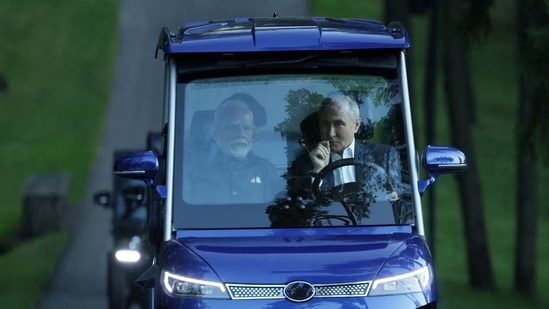
[Old good friends]

And, such Ukraine do-gooding intent won’t sit easy with Putin either. It is one thing to smile and shrug off good friend Modi’s banal evocations of Ukrainian children being killed in a Russian missile strike, and quite another thing to have a Third World busybody poking his nose into what Moscow takes more seriously than New Delhi ever has — geopolitics, geostrategics, the imperatives of geography and the need for a chain of buffer states to check the adversarial encroachment in its near-abroad — its exclusive sphere of influence. Stalin understood that, and strongarmed Roosevelt and Churchill into conceding entire Eastern Europe at the 1945 summit of the Allies in Yalta as a buffer, a strong cordon sanitaire. What’s Crimea and the Donbas region of Ukraine in comparison?

But between Putin and Washington’s warnings issued by Garcetti, Modi is actually in a hard place. India still has leverage with US and Russia because both see it as strategically “indispensable” to containing/ handling China. But his colleague manning MEA, Jaishankar, will now have to begin earning his ministerial keep. So far he has gotten away largely by being facile, though his most memorable take alluding to the Ukraine war — “Europe has to grow out of the mindset that Europe’s problems are the world’s problems but the world’s problems are not Europe’s problems” uttered at the Global Security Conference in Bratislava in 2022, was on point, and stunning in its effect. But that effect was diluted with his follow on view that “But this idea that I do a transaction – I come in one conflict because it will help me in conflict two. That’s not how the world works.” Unfortunately, that’s exactly how the world works! Particularly because he had in mind India’s differences with China — and India would like nothing better than to have both the US and Russia assisting it to take Beijing on. Isn’t that the whole game right now? Or, am I missing something?

So, Jaishankar will have in fact to backtrack rhetoric-wise, because in reality India has gone some distance in servicing the military needs of these two powers — signing with Russia this year a logistics support accord of the kind signed with the US in 2016 as a quid pro quo, in transactional mode. So videsh mantriji, keep your eye on the ball!

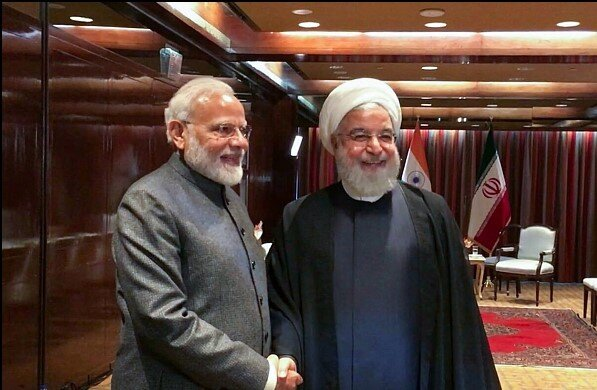
[India and Persia a.k.a. Iran — still older friends?]

But if the itch to play peacemaker is irresistible, Modi has a better chance of success were he to get Iran into an entente with the UAE and Saudi Arabia, thereby also bridging the sunni-shia divide and winning the gratitude of the Islamic world in the bargain. The one truly tremendous foreign policy achievement Modi will be long remembered for is how he has transformed India’s relations with countries in the Arabian Peninsula, ranging from Saudi Arabia at one end to Oman and Muscat at the other end. At home in his carryings on, Modi sports a stern and severe persona. Abroad, he slips easily into his ‘Hail Fellow Well Met’ demeanour, winning over world leaders of every background and description. It is a talent no Indian Prime Minister outside of Jawaharlal Nehru has displayed. There’s not a single international or regional leader who seems to have escaped coming under his thrall. It might be as much calculation on their parts, as it is on Modi’s, but getting UAE’s Sheikh Mohammed bin Zayed Al Nahyan to authorise the building of a Hindu temple in Dubai is more than just a gesture of friendship. It is UAE signing up with India for a larger strategic purpose. And combined with Saudi ruler Sheikh Mohammed bin Sultan’s decision to invest in the $44 billion oil refinery and petrochemicals complex in Ratnagiri on the Maharashtra coast, indicates a serious India-Saudi-UAE strategic triad in the offing.

Considering UAE has already made overtures to Tehran, Modi’s jumping in at this moment in time as the diplomatic medium to get Iran, now under a new reformist management of a heart surgeon, Dr Masoud Pezeshkian, to agree to a peace conference with Saudi Arabia and UAE, and thereafter constituting a peace council to sustain amicable relations all round and to interface with the US and the West, would be a master stroke. The agreement for Chabahar port signed last fortnight is the wedge to get Tehran on board. And depending on how these forums fare, New Delhi could later cajole Israel into this combine as well. With India keeping its hand in, it could emerge as a hugely consequential regional entity. This is a deal Modi can crown his diplomacy with.

This is far easier for Modi to do than for him to muck around — even if he is so inclined — in Ukraine and getting his fingers burned. Because let’s be clear Russia has won, and will keep what it has annexed and considers integral to Russia — the three oblasts (administrative regions) of Crimea, Donetsk, and Luhansk habited by Russian-speaking people and declared by Moscow as merged into the Russian union. That’s a done deal, and there’s nothing, but nothing realistically the US and West-supported Zelensky regime in Kyiv can do about it. Except make peace with Putin. On Putin’s terms.

Posted in asia-Pacific/Indo-Pacific, Asian geopolitics, China, China military, Culture, Decision-making, Europe, Geopolitics, geopolitics/geostrategy, Great Power imperatives, India's China Policy, India's strategic thinking and policy, indian policy -- Israel, Iran and West Asia, Indo-Pacific, Iran and West Asia, Islamic countries, Israel, MEA/foreign policy, Military/military advice, Relations with Russia, Russia, russian assistance, russian military, society, South Asia, Strategic Relations with the US & West, United States, US., war & technology, Weapons, West Asia, Western militaries | Tagged , , , , | 36 Comments

IAF — so unprepared for the future, it is ridiculous!

[Rafale in IAF]

Intrigued to find an op/ed with the title “Drawing borders in the air” in the Indian Express (1 July 2024) by Air Marshal Diptendu Choudhury (Retd). The title evoked for me the writings of Lt Gen Francis Tuker, commander of the famed 4th Indian Division in the Allied 8th Army in the Maghreb in World War Two who, in 1945, framed “Icarian” India’s military future in terms of its “air boundaries” stretching from the Australian Isthmus across the Indian Ocean to North Africa.

Disappointed, that the piece turned out to be just a pitch for more French Rafale fighter aircraft.

Conceived in the mid-1970s as a follow-on to the Mirage 2000, the Dassault Avions Rafale is among the top end of 4.5 generation combat planes, but strictly 20th century vintage. India signed up for 36 of these in 2015 but that deal was, as I had warned in 2013, the first small numbers buy that proved to be the proverbial foot in the door for France to sell not just lots more of these progressively antiquated fighter aircraft over time to the Indian Air Force, but also of the carrier aircraft Rafale-Marine for the Indian Navy. It is the purchase of 114 additional planes for the air force Choudhury was making a case for, at a time when several 6th gen combat aircraft projects are underway — because they are so damned exorbitantly expensive — as consortia undertakings in Europe (including France), and as separate Boeing and Lockheed programmes for what the US Air Force calls the NGAD (New Generation Air Defence) aircraft — that the Pentagon hasn’t yet committed to. Perhaps, because all manned aerial weapons platforms, as fighting systems go, are already OBSOLETE! As Rahul Gandhi said (in another context) — Ta Ta, Good Bye!

Long range drone swarms on sorties, controlled in a fused lateral (drone to drone, drones to command drone, or d-swarm command pilot in aircraft with drones as “wingmen”), and air-to-ground communications web, in a mix with ballistic and cruise missiles, will likely constitute the composite forces of tomorrow. Actually, the pilot in the kill chain is already absolutely redundant. But the air forces in wealthy countries of the West, and more guardedly in Russia and China, are combining with their aerospace industries — perhaps, for one last time! — to indulge the fighter-jock communities in their midst with the 6th gen planes! This is so, as I have long maintained, because the US, European countries, and now China can — if it comes to it — afford their follies. Can India? Apparently, yes, going by the Indian von Richthofens!

Choudhury listed four main reasons for the extra Rafale in IAF livery. Firstly, that there are the Chinese J-20s — described by him as “fifth generation stealth fighters” stationed in Xigatze, that in tandem with the lurking J-10s are ready to do India harm. J-10s are Chinese copies of the Israeli Lavi — its schematics and tech purchased from Israel in the 1980s when the US compelled Tel Aviv to buy its F-16s at the expense of the locally designed and developed Lavi, forcing the Israel Aerospace Industries to sell Lavi tech to the Chengdu Aircraft Corporation to amortise its costs. Secondly, that it will help the IAF maintain an asymmetric force advantage. Thirdly, as a bridging, multirole, force between the current obsolescing fleet of Su-30s, MiG-29s and Mirage 2000s and the future IAF fleet of AMCA (advanced medium combat aircraft), Tejas Mk 1A and Tejas Mk-II, that will take another decade before it becomes operational. And finally, that it will “reduce dependence” on Russia and “prevent” relying on a “temperamental” US.

Brief counters:

There’s NO such thing as a STEALTH aircraft. Indeed, there’s no aircraft that cannot be detected by low frequency radar — a World War Two invention! A few years back, some may recall newspapers reported the Chandigarh air station (or some such thing) crowing it had detected a PLAAF J-20. Yea, well. It is an untested, unproven, aircraft. And J-10 is a longer, heavier, less agile Lavi because Chengdu put in a Russian AL-31 jet engine. (The prospective Lavi Pratt & Whitney power plant being inaccessible to it.)

India has no symmetric or asymmetric force advantage on the LAC that the PLAAF cannot correct in short order by flying in large numbers of aircraft from mainland bases. Even so, the current strength IAF aircraft mix will be able to handle for some time to come even large numbers of Chinese aircraft off Tibetan plateau bases because the Chinese planes taking off from high altitude bases, will be severely handicapped, hoist with the optimum fuel load-weapon load dilemma that IAF aircraft taking off from the plains won’t face.

As a bridging fleet, Su-30 MKIs would fare better operationally and economically: On a full weapon load basis, for the cost of two Rafales with various onboard missiles — Mica A2A (air-to-air), short range Hammer A2G (air to ground), Scalp cruise A2G, and the long range A2A Meteor, IAF can acquire FIVE Su-30s rated by many renowned international aviation experts as presently the best air dominance fighter. Manohar Parrikar — arguably the best defence minister the country has ever had, was no fool when he chose the Su-30MKI option instead of Rafale (and, for his troubles, was shunted back to Goa!)

Eliminating Russia and the US from the supply side of the Indian demand side aircraft procurement economics makes ample sense only if the savings are funnelled into the indigenous AMCA, Tejas 1A, Mk-2 programmes, and not carted to France to sustain its aerospace sector into the future, as the Air Marshal recommends. He also suggests the IAF rely on France for its future aviation needs because, reading between the lines, he doesn’t think the Tejas line or the AMCA will amount to much! May be, he thinks France is immune to American arm-twisting. If so think again! (Then again, who in IAF wants to miss out on repeat visits to Paris to negotiate the deal for the additional Rafale?!)

Choudhury is rooted in the here and now, displaying no concern about the Artificial Intelligence-driven autonomous weapons direction, tech-wise, that warfare is taking. Living with the comfortable certainties of manned platforms of the past is all very well for retired Air Marshals to do as a pastime, except it reflects the Air HQ’s thinking and could be the Indian Air Force’s death knell. For the Modi government to accept such counsel will only confirm the view that, where national security is concerned, it doesn’t know what it is doing.

Posted in arms exports, asia-Pacific/Indo-Pacific, Asian geopolitics, Central Asia, China, China military, civil-military relations, corruption, Culture, Decision-making, Defence Industry, Defence procurement, DRDO, Europe, Geopolitics, geopolitics/geostrategy, Great Power imperatives, India's China Policy, Indian Air Force, Indian ecobomic situation, Indo-Pacific, Israel, Military Acquisitions, Military/military advice, Missiles, Relations with Russia, Russia, russian assistance, russian military, society, South Asia, Technology transfer, technology, self-reliance, Tibet, war & technology, Weapons, Western militaries | Tagged , , , , | 55 Comments

Too late to deliver, Modiji

My last book — Staggering Forward: Narendra Modi and India’s Global Ambition, published in 2018 by Penguin in time for the 2019 general elections was prophetic in many respects. Most importantly in its conclusion that reeked of disappointment with his record in office in his first term (2014-2019). Modi, I rued, was too much the statist to go in for a radical structural overhaul of the system and actually shrink the government, get it out of the economy, as he had promised to do and pave the country’s path to prosperity. This because there were precedents galore to prove that deregulating the economy, freeing it from punitive-minded government oversight, had worked rapidly to industrialise other countries and to generate mass employment — the number one social-political-economic problem confronting India.

But Modi seemed determined, instead, on replicating the success he had obtained in Gujarat by having a small group of babus around him doing his bidding. I had warned then that what worked at the state level wouldn’t work at the India level, and that proved to be the case. He squandered the opportunity to rid the system of its socialist controls, particularly on the private sector, that are baked into the thinking and functioning of the state. And, India will now level off and, alas, far from making it with sustained double-digit growth, will fall back into the 6% class that may keep the country from sinking, not lift it into the top rank.

Modi has barely made it back to power. Modi fatigue was a factor. There was a little too much of the PM in every setting, and it grated. The question is how much of his policy thrust which, in the economic sphere is in the right direction, but in foreign and defence policy fields suffers from lack of vision, of Halford Mackinder’s “map reading habit of mind”, and coherence, might be retained?

His tenure and policies hereon will be dictated by coalition imperatives. Luckily for him, the Telegu Desam leader Chandra Babu Naidu was the original modernizer, who conceived of Cyberabad as an Information Technology-Business Process Management services hub and, among politicians, has generally been ahead of the curve in using technology to improve government efficiency. Nitish Kumar somehow managed to survive the snakepit of Bihar politics for nearly two decades and might be satisfied with some cabinet post (likely Railways). These two are unlikely to impede Modi’s policies but will dampen the PM’s urges, whenever he espies political trouble, to indulge in communally polarising statements and politics.

The trouble is with this unanticipated political reverse, Modi and the ruling Bhartiaya Janata Party may just decide to play it safe and go full hog with populist policies — more freebies, more revadis, and suck the vitality and vigour right out of the economy.

But what if Naidu and Nitish heeded Sharad Pawar’s siren call and joined up with the Left-leaning opposition to bring back the perpetrators of Indira Gandhi’s kind of socialism — not Nehru’s more idealistic and harmless variety, who last ran riot during the Manmohan Singh era, now joined by the Akhilesh Yadav gang of ‘samajwadis’ whose tendencies are a strong-arm variation of Indira’s socialism that Rahul Gandhi has treatened to bring back? There will once again surface the milieu in which the public exchequer is treated as personal bank. Indira’s “garibi hatao” mantra, it may be recalled, kicked the garib into more garibi!

I am an Edmund Burke-ian conservative who ardently believes in minimal role for government in national life. I was, perhaps, the first commentator to laud Modi in 2011 (yes, that far back!) who welcomed him as a prospective Prime Minister and who, after “Rajaji” (C Rajagopalachari), Piloo Mody, and their Swatantra Party in the 1960s, offered a solid right-of-centre political alternative to the country and its people weighed down by the follies of ‘socialists’ in high places for whom socialism had delivered! For the rest, socialism has been a plague, the cause of ruination of the country. I was impressed by Modi’s 2014 campaign slogans — “less government, more governance”, “the government has no business to be in business”, etc., that pointed to the emergence of a desi Edmund Burke. I was thrilled. I had a further cause for jubilation when Modi, in 2014, ran with my 2002 “India First” concept as his lodestar for India’s foreign and military policies. It is another matter he did not follow through on it, or on his slogans.

It was a short-lived dawn.

Modi’s failure to get the government out of the economy, his reliance principally on the defence public sector units to achieve an ‘atmnirbhar Bharat’, his unwillingness, ironically, to talk about native talent and genius and the private sector, not trust them to lead the economic charge, convinced me that Modi was much less than he publicly made himself out to be, and that I had imagined him to be.

With the return full-steam to coalition politics, the slight possibility of Burke-ian conservatism flourishing in India, has died a premature death.

Posted in asia-Pacific/Indo-Pacific, Asian geopolitics, corruption, Culture, Decision-making, Defence procurement, domestic politics, DRDO, Geopolitics, Indian democracy, Indian ecobomic situation, Indian state/administration, Indo-Pacific, society, South Asia, space & cyber, technology, self-reliance | 19 Comments

Disregarding seniority in military promotions — no bad thing to happen!

[The standing COAS aspirants]

The surprising extension in service of a month afforded the incumbent army chief General Manoj Pande has scrambled the calculations about who his successor will be. The race that was supposedly between the current Vice Chief, Lt General Upendra Dwivedi, and the next senior most officer — the GOC-in-C, Southern Command, Lt General AK Singh, is now more open. All the other theatre commanders, by their seniority — Lt Generals MV Suchindra Kumar (Northern Command), NS Raja Subramani (Central Command), Manoj Kumar Katiyar (Western Command), Dhiraj Seth (South Western Command), Manjinder Singh (Training Command), and Ram Chander Tiwari (Eastern Command) have been brought back from the paddock, to the gate.

There is something fundamentally unfair about the seniority principle dictating promotions in the military, and a very good thing that the Narendra Modi government, is giving it a burial. It had earlier jettisoned seniority considerations when elevating General Bipin Rawat as army chief, Admiral Karambir Singh as the navy chief, and established a precedent by bringing General Anil Chauhan out of retirement to fill Rawat’s spot as Chief of the Defence Staff. Its decision to extend Pande’s service came a trifle late in the day it is true, and suggests that the PMO had a last minute epiphany, realising that restricting the choice of candidates for the COAS post did not serve its interest-qua-national interest.

Let’s be clear about one thing. All appointments to the armed services’ Chiefs of Staff positions are political, have always involved political calculations.

Indira Gandhi had had enough of being overshadowed by her flamboyant army chief, General SHFJ Manekshaw, who effortlessly took away a lot of the credit for cleaving Pakistan/liberating Bangladesh from her, and did not want him succeeded by Lt General Premindra Singh Bhagat, a combat engineer (Bombay Sapper) and the first Indian to win the Victoria Cross in the Second World War (for personally clearing 15 minefields in Ethiopia over 55 miles in four days and, for his troubles, having his ear drums punctured, among other injuries). What made him even less attractive was the fact that alongwith Lt Gen Henderson-Brooks, he was tasked with inquiring into the 1962 War fiasco. The Henderson-Brooks Report, still classified, honestly deconstructed the Indian army’s greatest humiliation and operational breakdown, and pointed to the calamitous political failure that presaged it. The finger was pointed squarely at Indira’s father and first Prime Minister Jawaharlal Nehru, and his responsibility for it. Nehru first misassessed the China threat, then did nothing to build up the army to take on the PLA, leave alone enable it to preempt or reverse the steady encroachment early 1950s onwards into the Aksai China area of Ladakh. Why have a genuine war hero as army chief daily reminding her of her father’s culpability for that pol-mil disaster?

She arranged for Mankeshaw to stay on for an additional fortnight just so Bhagat retired, and she could install the nondescript General GG Bewoor as COAS. But conscious of Bhagat’s credentials and that she had done him wrong, she appointed him Chairman of the Damodar Valley Corporation — the single biggest source of (hydro) electricity in the country at the time. Likewise, she overlooked the seniormost officer, Lt General SK Sinha, and hoisted the more pliable Arun Vaidya as army chief in July 1983; sure enough, the latter delivered on Operation Blue Star a year later.

Seniority, in principle, is a fundamentally flawed, unfair, and abysmal standard for deciding who becomes Chief of Staff of an armed service. It is the lazy government’s way of appointing someone, involving no political vetting of the candidates, no requirement for the top leadership to apply their mind. The country using this system might occasionally luck into a great officer, just right for the particular service. But this is rare. The element of automaticity and determinism, is appalling for various reasons.

While it is the merit lists at the NDA stage, actual commissioning stage, etc. that gets an officer his baseline seniority, to go up the ladder, it helps to refine and deploy the courtly arts — chaploosi, ji huzoori, and flattering the boss to secure good CRs at every stage. There is quite too much of this, and it has reached such levels as to truly become a military liability. Those who simply are not constituted to bow and scrape get winnowed out. The result: Among the really competent, only a few manage to rise to the very top, and then more because of luck than by the dint of their own effort and the glow of their achievements.

At the stage of COS selection, as in the instant case, for seniority to emerge as the decisive metric presumes that all the contending Lieutenant Generals — Dwivedi, Singh, Kumar, Subramani, Katiyar, Seth, and Manjinder, are equally acceptable in political terms, which presumption may be wrong. By way of shortlisting, it is logical to conclude, for example, that Pande’s extension rules out Dwivedi and AK Singh. Among the rest, seniority becomes irrelevant. There’s a minimum line of political acceptability the final selectee will have to meet. But that said, the dossiers on each of these officers will doubtlessly be perused, and a subjective judgement made by Modi, possibly Shah, Rajnath and Doval, in the main, about who among the remaining Lieutenant Generals can be trusted more dilgently to pursue the goals of “de-Britishing” the senior service, solidfying the Agniveer/Agnipath programme, etc., and not impeding the CDS General Chauhan’s assigned task of securing jointness and theaterisation.

This is not “politicising” the military, but getting it to align itself to the norms and values of the ruling party — a perfectly legitimate exercise in a representative democracy. Should the Congress party return to power, it can just as legitimately revert to the old regimental recruitment patterns, end the Agniveer programme, etc as promised by Rahul Gandhi. Of course, too much of such to-ing and fro-ing may institutionally tie up the armed services in knots, and not be such a good thing for the country.

Posted in Afghanistan, asia-Pacific/Indo-Pacific, Asian geopolitics, Bangladesh, China, civil-military relations, corruption, Culture, Decision-making, domestic politics, Europe, Geopolitics, geopolitics/geostrategy, India's Pakistan Policy, India's strategic thinking and policy, Indian Army, Indian democracy, Indian Politics, Indo-Pacific, Military/military advice, SAARC, society, South Asia | 13 Comments