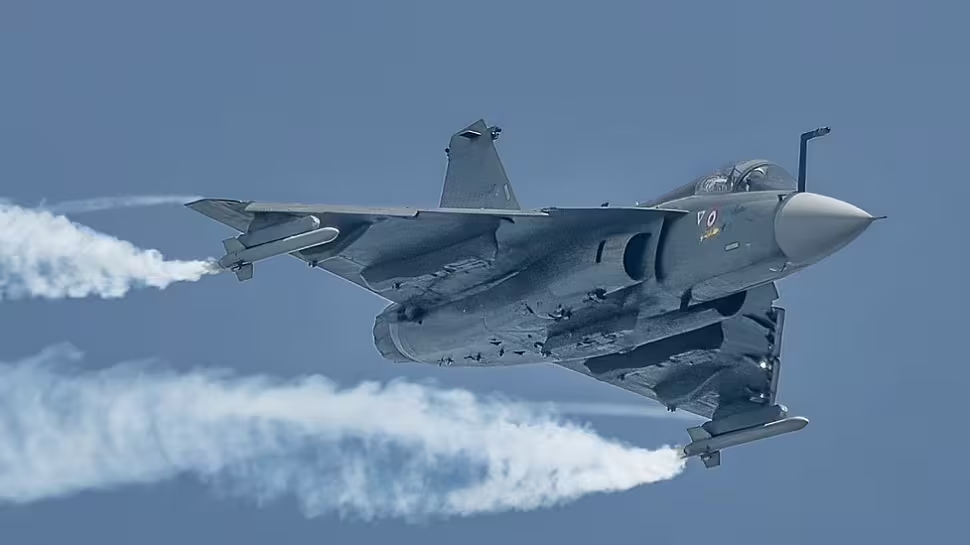
Agniveer project a disaster, Gurkha decision a catastrophe

             [Army training Agniveers]

As a labour-intensive force dealing with disputed borders in Jammu & Kashmir with Pakistan and the fungible Line of Actual Control in the Himalayan Range with China, the Indian Army has always been saddled with an unmanageable problem: How to have a substantial battle-ready force able to hold ground on two fronts and, at the same time, to curtail the mounting manpower-related payroll and pension expenses to ensure the latter does not crowd out the allocations for the former. This is, of course, as much an army problem as a Government of India problem and, in the larger context, a burning political issue.

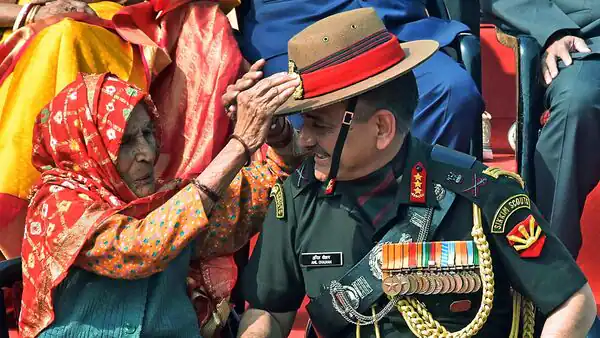
It became a political issue once the political classes perceived the army as employment generator rather than seeing the Service as having a singular function — national defence. Once that line was breached, the follow-on troubles followed in its wake. Soon enough because of grassroots pressure for longer term, pensionable, army jobs the seven year colour service for the average jawan got extended to 15 years of active duty with a cushion of pension to fall back on at the end of it. The great thing about the original 7-year colour service was that the army boasted of young fighting men in the ranks who were fit and eager for use in aggressive actions. After all, the younger the jawans the more they’d be infused with the natural bellicosity of youth, which properly channeled with tough training, could transform collectively into formidable fighting units.

Once the service tenure got stretched to 15 years, however, the troopers aged and their fighting edge got blunted, and the army had to make-do with what they had. Except, the pension bill to the exchequer became a growing concern, and one can readily see why. Once a jawan is demobilised after 15 years of service, at 35 years of age or younger, he can look forward to the second half of his life on army pension indexed to the inflation rate, enjoying perpetual access for himself and family to good quality health care and to the canteen stores for everyday consumer items, including a ration of liqour, at wholesale rates. It is a financial drain on resources the country simply cannot afford. And because, wars have become rarer — even if death in military action has not, given the many insurgencies the army over the years has been called upon to put down in the northeast and in J&K. Still, an army career in the ranks became an attractive proposition for a goodly portion of the youth population in various parts of the country that were traditionally catchment areas for single-class regiments founded on the farcical notion of “martial races” the British sedulously promoted, but also in the rest of the country.

But single class units relied on a certain cultural homogeneity to bond members of a fighting unit together and to create the esprit de corps that, frankly, was a wonder for many advanced militaries of the world. On more than one occasion, I recall US military officers ruing the fact their army lacked such spirit, or could muster the elan that is a natural attribute of Indian Army regiments. I mean, a battalion of Virginia Volunteers does not exactly have the same ring or promise the fortitude in battle of a 3 Jat, 2 Maratha Light Infantry, Madras Regiment, 2 Kumaon, 1st Gurkhas, or any of a host of other storied units of the Indian Army. It is precisely this socio-cultural cohesion invaluable in operations that the Agniveer programme is blowing up with the Indian army becoming classless. Such, in any case, is the lament of the old timers. 

Agniveers do solve the growing problem of the galloping spend on pensions. But they are not the solution of a return to the 7-year colour service norm. In Bipin Rawat’s time as army chief and then as first chief of the defence staff (CDS), it resulted in an unsatisfactory compromise that tried also to cling to the nativist tilt in the thinking of the Bharatiya Janata Party government of India as a martial nation. Commentators have noted that the Agniveer programme was, as Rawat had conceived it, only a pilot project to test the waters and to see if shorter active service norm could be reintroduced. But, as General MM Naravane, Rawat’s successor, reportedly claims in his memoirs, it was imposed on the three armed services by government fiat with no room for discussion or dissent by the services chiefs of the day. It is clear Naravane was unenthusiastic about the Agniveer concept but it isn’t clear he forsesaw the fatal problems now becoming evident, problems that because of the nature of the other two services, are less severe for the air force and navy.

The second batch of Agniveers has recently joined forward units without the army having the time to weigh the experience gained from their first year in service, and permitting it to tweak the programme accordingly. This did not happen. From its initiation, commanders in the field have been mindful of the political sensitivities attending on putting these short-termers in harm’s way — the fallout from the death of the first Agniveer in action with a Rashtriya Rifles unit in J&K in late October this year was salutary for Modi & his PMO, who had fast-tracked the Agniveer programme in the face of the army’s advising caution. The corrective measure the army adopted — with prompting from PMO — was to avoid further casualties in Agniveer ranks at all cost by tasking them with soft, time pass, missions — guarding depots, etc. in the rear areas. If the Modi government does not back down from its commitment and the Agniveers actually become the sole recruitment source, the endstate for the army will be the progressive thinning of a well trained bulk soldiery until it becomes incapable of undertaking any military action against China (and Pakistan), or even fighting insurgents. An army populated solely by Agniveers will then be good enough only to march down Rajpath in Republic day parades.

In other words, the Agniveer programme promises a younger force all right. But the army will soon find itself toothless — unable aggressively to field its all-Agniveer units. This will be its deathknell as a fighting force. From what I am given to understand, the army has decided to throttle back stealthily on the whole programme as prelude to — the political situation permitting — ending it altogether, but how it is going to achieve this with the Modi regime at the wheel, is unclear. With two years of the Agniveer experience, the army would prefer, it’d seem, a large pensions bill to a ceremonial force of mollycoddled short-termers.

The cruelest cut of the Agniveer programme is this: the Tenth Finance Commisssion in 1995 first proposed (incidentally in my report as adviser, defence expenditure, to the Commission), and accepted in toto by the Narasimha Rao government, that armymen retiring after 15 years colour service be the sole source of recruitment for all the paramilitaries – the Central Reserve Police Force, National Security Guard, Indo-Tibetan Border Police, Industrial Security Force, and the rest of that wasteful and ineffective caboodle. The army veterans channeled into these organisations would sharpen the operational quality of these outfits, require minimal re-training to enable them to operate in civilian settings, and result in huge savings with the dismantling of elaborate and expensive training establishments of the paramils, with each trying to emulate army training infrastructure and procedures of the army but because officered by the Indian Police Service members, ending up being neither fish nor fowl kind of agencies.

The army as source of trained manpower for paramils would have rationalised human resources usage, and greatly reduced the army’s pension payouts by deferring them by some 25 years. It would have also annually made more capital available to the three armed services for modernisation and to fill the “voids” in the war wastage reserve and the war stock whose depleted condition have long prevented the Indian military from fighting long duration wars to a conclusion.

This recommendation was never implemented because the Home Ministry then and since did not want to surrender any control over its in-house armed forces by ceding the recruitment turf to the army. But with Modi intent on making the Agniveer programme a success, his chief lieutenant, Home Minister Amit Shah, has jumped on the PM’s bandwagon. The Agniveers will thus be rewarded for their painless army service with cushy lifelong careers in the paramils! This even as army jawans after 15 years’ hard service and, age wise, still in their prime will continue to be forced into the pension mode!

          [the British Army’s Brigade of Gurkhas]

Talk of the 1st Regiment of the Gurkhas (Malaun)! From what a former Gurkha officer, retired Major General Ashok Mehta, has revealed, the Indian government is considering ending the hoary scheme of recruiting by the Indian Army of Gurkhas from mostly the Pokhara region of Nepal, with the strategic-minded Chinese People’s Liberation Army, who else!, likely picking up the slack, and replacing India as prime recruiter!

A more ridiculously shortsighted self-goal decision by the Indian government is hard to imagine. But trust our leaders to dig holes for the country to fall into! This has happened so often in the past, the surprise is that this decision, if true, is not a surprise!

The Gurkhas carved out a unique military reputation for themselves as doughty fighters and fearsome khukri-wielders, first by fighting the British (Anglo-Nepalese War, 1814-1816), winning their respect, and then fighting for them as the vanguard in many wars of the empire, including subdueing the 1857 “Mutiny”. The image of the Gurkha was so pumped up by then that on many occasions, such as in the trench warfare of World War One, a lot of Germans unwilling to experience the business end of a khukri surrendered once they espied Gurkhas closing in with their “Ayo Gorkahli” war cry. A long line of British commanders attested to the Gurkhas’ fighting prowess, includng the greatest Allied field commander of the Second World War — William Slim heading XIV Army in Burma, who fought alongside the 1/6 Gurkhas in the Gallipolli campaign (1915), and was so impressed he sought transfer from a Warwickshire regiment he was a subaltern in to the Gurkhas and the Indian Army.

Since 1947 per a tripartite arrangement, Nepali Gurkhas have served in the Indian Army (current strength — 42,000) and in the Brigade of Gurkhas (strength: 4,000) of the British Army for ongoing deployments in Asia — in Brunei, Singapore and until 1999, in Hong Kong, and with a Gurkha unit in the lead in the 1982 Falklands War.

The short point: Gurkhas are the most heralded readily marketable bunch of mercenaries that Nepal has long cashed in on. Given an opportunity, every country would want to hire them to fight its wars.  

In Nepal, according to the latest available statistics, in 2020  20.93% of its male population was in the youth bracket of 15-24 years of age, military service age. Or 3,276,431 young men in all. (Index Mundi, https://www.indexmundi.com/nepal/age_structure.html#google_vignette ). It is a country with little else by way of job creation assets. There’s no industry to speak of, and the small mountainside and valley plots can barely sustain subsistence agriculture. The youth roughly constitutes the labour market and prime source of income and remittance revenue for that country. Most Nepali youth choose to find livelihood across the unpoliced order in India — something they are legally allowed to do. The annual intake of Gurkha youth in the Indian and British armies ameliorated the problem somewhat. In mid-2023, the pensions-remittances from Nepali Gurkhas in Indian Army amounted to some 4.5 billion Nepali rupees — a substantial sum in the Nepalese context. But with the Indian Army potentially out of bounds, the Gurkhas, will happily find military employment elsewhere. The Australian army, for instance, is contemplating a Gurkha unit along the British lines. But the real danger is from China.

At the core, the cosy mutually beneficial order of Nepali Gurkhas in the Indian Army is being disrupted by — you guessed it — the Agniveer programme of the Indian Army! Prachanda, the head Communist in Nepali politics, is ideologically driven to get Nepal to siddle upto China under the rubric of “parity”, but is prevented from doing so by the people’s sentiment for India. But he has offered China the service of Gurkhas in PLA! Who is to say Beijing won’t capitalise on the situation New Delhi has deliberately seeded for itself?

Consider what will happen should the Gurkhas enter PLA in sizeable numbers. Nepal will gain from remittances and pensions, of course. But Indian formations on the LAC may have to deal with PLA Gurkha troops! If that isn’t a mind bender, large numbers of Gurkhas processed over time through service with PLA will likely congeal into a vested anti-India front in Nepal and veer the country more and more China-ward. Further, Nepalese as Chinese hire could cross over freely into India and embed themselves in the societies of Indian border states. Acting as subversive element, they could roil the already volatile politics of Bihar and Uttar Pradesh. It is not hard to speculate how these in-India Gurkhas in Chinese pay could create cyber mayhem for starters, pose a real military danger by being spotters of Indian targets, for instance, for long-range Chinese guided munitions fired from Chinese aircraft, and for Chinese missiles, and even battlefield tactical weapons, and emerge as a joint internal and external security threat.

Such scenarios can get hair-raising, but is not something that apparently concerns the Modi regime. But then geostrategic catastrophes often happen unannounced, but not this time! And the combination of the Agniveer-populated Indian army and Gurkhas forced into PLA is a humdinger!

Posted in asia-Pacific/Indo-Pacific, Asian geopolitics, Australia, China, China military, civil-military relations, Culture, Cyber & Space, Decision-making, Defence Industry, domestic politics, Europe, Geopolitics, geopolitics/geostrategy, Great Power imperatives, guerilla warfare, India's China Policy, India's strategic thinking and policy, Indian Air Force, Indian Army, Indian Navy, Indian Ocean, Indian para-military forces, Indian Politics, Indian state/administration, Indo-Pacific, Internal Security, Iran and West Asia, MEA/foreign policy, Military/military advice, Missiles, Nepal, Pakistan, Pakistan military, SAARC, society, South Asia, South East Asia, Strategic Relations with South East Asia & Far East, Tibet, Western militaries | 39 Comments

Placating the US has Modi govt in a pickle

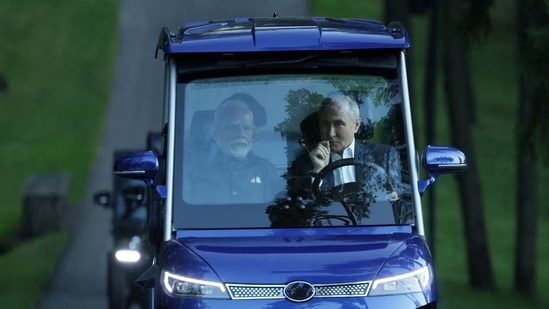
[Putin & Modi]

On December 8 at an unrelated event in Moscow, the Russian President Vladimir Putin, out of the blue, praised Indian Prime Minister Narendra Modi, saying he “cannot be intimidated, threatened or forced to take any action or decision against the national interest of India. I know there is pressure on them.” And added, “To be honest, sometimes I am surprised by his tough stance on protecting the national interests of the Indian people.” Putin may well have been referring to New Delhi’s creative diplomacy linking Russian oil imports and non-support for Ukraine. But he may also have been sending a message to Modi to stand firm in rejecting the US’ incessant demands to hold the Indian official(s) responsible for planning to kill the Khalistani terrorist, Gurpatwant Singh Pannun, and otherwise tweaking this issue with the potential to undermine Indo-US relations.

The US Federal Bureau of Investigation chief Christopher Wray will be in Delhi this week with a docket of documents to impress his counterparts in the Indian intelligence agencies, and senior officals in government with “evidence” FBI, alongwith other American electronic and other spy units, collected about the involvement the Biden Administration alleged of RAW to assassinate Khalistani terrorists in the US, with Gurpatwant Singh Pannun, topping the list. After the killing of another Khalistani, Gurmeet Singh Nijjar, in western Canada, Washington, feared Pannnun was in line to be bumped off, and took preemptive action. The Biden Admin went public with “evidence” of this prospective hit — a hit a dope runner of Indian origin, it claimed, sought to arrange by hiring a minor drug trafficking gang member who, to be in the good books of US DEA (Drug Enforcement Agency), happily agreed to play the stool pigeon to implicate the Indian drug trafficker, and connect him to RAW. And how did the US ELINT units pick this info up, pray? Because these desi cloak & dagger guys, apparently used Whatsapp for communicating with each other! This suggests rank amateurs operating outside the RAW ambit, and for the Indian government rightly to claim distance from these nefarious goings-on.

Now, RAW may not be all that sophisticated in its methods, but surely it is not so doltish as to have one of its own — “CC1” use a very public platform — Whatsapp, for god’s sake!! Because if they were foolish enough to do this then they might as well have hung a placard round their necks saying “RAW” and marched around the embassies in question!

Obviously, this is bare-faced nonsense and invention springing out of Langley and the fertile CIA minds specialising in disinformation ops. That should have been the Indian government’s stand from the moment Washington went public with its accusation, rather than, as is normally the case when dealing with a friendly country with which it has some differences, bringing the issue up through official channels and far from public gaze.

But the Biden government went ballistic, but why? Possibly to embarrass the Modi regime and, who knows, per chance, to swing the Indian people’s votes in Madhya Pradesh, Chattisgarh, and Rajasthan against the Bharatiya Janata Party angling to displace the Congress party regimes in these states, because it deems Modi as getting too politically big for their convenience.

This is actually a more convincing explanation for the US blowing this thing up despite the risks of alienating the Modi government. But instead of taking a firm stand dismissing any and all American accusations as absolute fiction and then sticking by this position through thick and thin and no matter what, and refusing to entertain any evidence to the contrary manufactured by the disinformation factories of the US intel complex and propagated by the Western thinktanks and media (and their outlets in India and in the West-influenced Indian media) with record of being so used (Iraq), and rubbishing the proffered evidence as so much obvious cyber/electronic/imagery (the dope runner handing over $100,000 in currency notes in a car — oh, pleeez….!) fakery, the Indian government hoisted itself on to a hook by agreeing to investigate.

What’s there to investigate is the question I asked in my previous three posts, considering that the American case is hokey! And I had wondered whether the Indian government had rendered itself vulnerable by relying on Chinese and American communications hardware and software for even the most secret intra-govt communications. And that such dependence is at the heart of the country’s vulnerability. And in the event that it is a snap for any Western agency to tap into, keep tabs on, whatever is going on in the darkest recesses of the Indian government.

That the Indian official communications system is entirely penetrated, was not admitted, even if the Khalistan issue was alluded to in Rajya Sabha by foreign minister S Jaishankar on December 8. Repeating what the MEA spokesman had said in reaction to the first reports, Jaishankar referred to how “the nexus of organised crime, trafficking and other matters” had a “bearing on our own national security”, and why the Modi regime, he stated, had agreed to a scrutiny by a committee it is constituting for the purpose.

If what is generally known, by way of a rough division of labour in the foreign policy field is true, then National Security Adviser Ajit Doval is in-charge of all matters relating to Pakistan, Punjab, J&K, Islamic extremism and the residual Khalistan problem, and China, and Jaishankar deals with the US, Europe and the rest, and both compete for the Prime Minister’s ear. This competition is reportedly fairly intense, and for the Pannun affair to have unraveled in the way it has, has hurt Doval, and any investigation into this plot will, as is common knowledge, lead to Doval. But because Doval is far closer to Modi than Jaishankar, there’s NO way he will be fingered. That about limits the conclusions the Indian investigators will reach. Whether some subordinate officer is scapegoated remains to be seen. But should that happen RAW morale will plunge. The Modi government, in other words, is faced with bad choices all round and finds itself in an awful situation of its own making because it gave into its impulse of pacifying and placating America.

Can this Committee afford, therefore, to conclude other than that there was a crime-trafficking nexus active in the US which was plotting against Pannun? Will such conclusion be any more credible and, therefore, acceptable to Washington, than consistent denial byIndia of any role? Plainly, it will not be — but this could have been foreseen, no? So, why did Jaishankar and the government formally agree to such investigation? Because it was arm-twisted into doing so? OK. But then if this investigators can only conclude the obvious that there was no Indian involvement whatsoever, then the best solution would have been to adopt the standard response all countries who find themselves in such sticky situations do –deny, deny, and deny some more until everybody is sick and tired of Indian denials and choose to get on with the business of doing business with India! It is an option the Modi government cannot, unfortunately go back to. Instead, India is getting itself entangled in a web Washington is spinning.

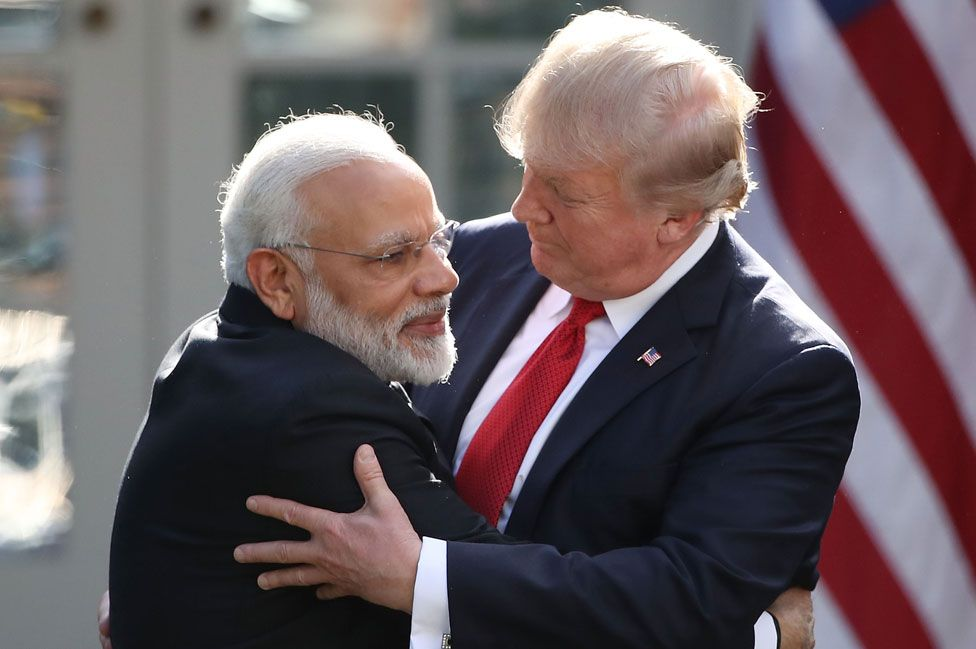
[Modi & Biden]

With the Indian government duty-bound, as it were, to absolve itself and its intel agencies of any wrongdoing, and the US government just as serious about making its accusations stick in order to cow down New Delhi, there really is no way out. Had Delhi from the start said and maintained vociferously, as advised in my previous posts, that it had nothing to do with it, and dismissed all evidence the US presented as out and out fake, Washington would have had to reconcile to the fact that India was not going to own up to anything — no matter how much of “hard” evidence the Biden Admin presented to Modi.

If an Indian mea culpa was perceived as not remotely on the cards, and had the Modi regime succeeded in convincing Washington that there was absolutely no give in that respect, the US would have had to either lump it and let the matter slide into a void where other unresolved/irresolvable issues reside. Or, to take recourse to punitive actions and imperil the prospects of dealing jointly with China in the Indo-Pacific. This latter option is what the US too would have ended up preferring because for Biden or any other Administration Pannun’s wellbeing is of zero concern other than as virtue-signalling, and as a political stick to beat India with, compared to needing India to ringfence China. More importantly, it would have sent out a strong message to Pannun and Company in the West that they are in the crosshairs and nobody and no country can save them.

Posted in asia-Pacific/Indo-Pacific, Asian geopolitics, China, China military, Culture, Cyber & Space, Decision-making, Defence procurement, domestic politics, DRDO, Europe, Geopolitics, geopolitics/geostrategy, Great Power imperatives, Indo-Pacific, Intelligence, Internal Security, Islamic countries, Israel, Japan, MEA/foreign policy, Military Acquisitions, Military/military advice, NRIs, Pakistan, Pakistan military, Relations with Russia, Russia, russian assistance, sanctions, society, South Asia, South East Asia, space & cyber, Strategic Relations with the US & West, Technology transfer, technology, self-reliance, Terrorism, Tibet | 27 Comments

India needs to erect Guardrails in its relations with America

[Modi with US Secretaries of State and Defence, Anthony Blinken and Lloyd Austin]

In international affairs, relationships with friendly states are in greater need of guardrails than ties with adversaries because the worst can be assumed about the latter and protective measures taken. It is a hard fact apparently for the Indian government, MEA and defence ministry to digest that the friendlies require to be defenced against more diligently because the basis and assumptions of convergence of interests on which the edifice of national security cooperation and collaboration is built may be all wrong and wonky. Particularly when the other side has a quite different take on how everything should pan out. Hence, even as the US Federal Bureau of Investigation is moving the Gurpatwant Singh Pannun case in court, the US State Department is blithely assuring India that nothing has changed re: America’s partnering India in the Indo-Pacific, confident that New Delhi will happily overlook India’s own national security interests! Come again! Really?

Containing China is in the interest of both India and the US, of course. But, get this, the US has decided to go punitive on India over some intended harm it alleges would have been done to its citizen. That the US acts according to its momentary interests is well known. including targeting of its closest allies. Thus, in Israel’s case Washington is weighing travel bans on the extremist Yeretz Israel settlers in the West Bank area of Palestine — a US shot across Benjamin Netanyahu government’s bow to mind Blinken’s advice to cease and desist in Gaza, or else. Tel Aviv responded today by cocking a snook at Washington and resuming its aerial and long range bombardment of Gaza as it had promised to do! The right response that shut Washington up.

India, is dubbed a “strategic partner”. But the Biden Administration superceded shared security concerns with talk of India violating the human rights of a Pannun. Plainly, the Narendra Modi regime had not expected such adverse reaction, nor factored it into its calculations. Just how persnickety Washington can get on the human rights score was known to the PM who as the Gujarat chief minister suffered the personal indignity for years of being barred entry into the US owing to his alleged role in the 2002 anti-Muslim riots — the only Indian politician to-date so treated by the US. It was an ostensibly principle-based ban, and was lifted the moment Modi became prime minister!

Meaning, it is at the discretion of the US President of the day to react or not to react and how, to intended and unintended “human rights provocations” by allies and strategic partners. Skating on thin political ice at home, President Biden in this instance decided he did not want to upset the “progressive Left” in his own Democratic Party by being inattentive to alleged Indian silencing of a US citizen, not with a tight presidential race looming once again with Donald J Trump. The White House then upped the ante by approving a US Congressional Hearing on this supposed Indin plot in which GOI, RAW & IB officers will be named, a lot of dirty laundry will be washed, and the Modi government will be hung out publicly to dry. Modi’s NSA, Ajit Doval, can expect to have his name bandied about a lot at these Hearings.

The question is: Why did Biden think there would be no negative consequences for the bilateral ties by proceeding as he has done on the Pannun affair? Well, because he knows that Modi and his foreign policy implementer, S Jaishankar, are too fully into pacifying the US to suddenly grow a spine and stand up to Washington and, even less, aggressivley to take him on as, say, a Xi would.

Given India’s supplicatory attitude of long standing, the Modi dispensation hopes to catch a break because of the shared meta-strategic concerns re: China. Except, the very NRI community in the US that Modi dotes on and whose interests his government has bent over backwards to promote by making the issual of more and more H1B visas and of renewing them with ease, etc his foreign policy priority, ironically, is in the forefront demanding action against this country. The likes of US Congresswoman Premala Jayapala, for instance, are usually the first to dump on India for the flimsiest of reasons because it is an easy way to prove their allegiance to America at the expense of their country of origin. So much for NRIs being our foreign policy assets!

What’s the Modi government to do? Well, the wrongest thing for it to have done is what it proceeded to do — promise an investigation into the US charges, thereby admitting some level of culpability, rather than simply stonewalling, saying nothing other than sticking with the line that the Indian government has nothing whatsoever to do with the alleged plot, to point to violent intra-Sikh community weangles, and otherwise vigorously and volubly discounting all the supposed evidence FBI has collected by charging it was created out of thin air and imaginative cyber fakery that the US agencies are well rquipped to produce, and that too involving a stool pigeon of the US Drug Enforcement Agency. How storybook silly, is this? About tracing any communications to Indian officials — bah! This is so much electronic spoofing and voice replication — technically easy to do!

Has any Modi government representative adopted this position? NO. Then again, has the US ever admitted responsibility for any of the acts of violence, including assassination, it has committed abroad over the decades? No! Against Indian citizens (Shastri, Bhaba, et al)? No! (See the blog post previous the last one) Does any major country ever acknowledge any of its “black” operations? No! So, why is the Modi regime being so lily-livered, putting itself in a position from which it cannot escape responsibility? Why did it buckle under at the first sign of pressure?

Well because like the previous Manmohan Singh regime, and the Vajpayee government before that, and the Narasimha Rao regime prior to that, the Modi government too believes mistakenly that India has more to gain strategically and economically from good ties with the US than vice versa, until now when such thinking has calcified into a policy mindset and become a real huge impediment to this country pursuing its own strategic interests in its own way rather than as a camp follower and a strategic appendage of the US. Scan Indian newspapers, other media, even retired Indian officials speaking to foreign reporters, or any Indian commentators, especially including ex-diplomats and militarymen, and what you find is their advice for India to, in effect, turn tail as Washington approaches.

What requires stressing is that we need to put up guardrails mandating blunt talk with the US government about what the Indian government will not tolerate, and to draw some redlines for the US State Department. Among a host of guardrails should be a clear understanding that any campaign of the Khalistan-type with secessionist rhetoric advocating violence, will not fall within the pail of free speech because it will be viewed by New Delhi as infringing on India’s sovereignty, and will be dealt with as the US government deals with foreigners it consideres “enemies of the state” — not nicely. And that the Indian government is prepared to stand its ground even if it means trashing the four “foundational accords” and rolling back the convivial strategic relations achieved so far by India and the US. Plain talking is a curative for a lot of the coercive nonsense Washington tries ceaselessly to pull on India.

It may be interesting to consider the Dec 1 Washington Post editorial reflecting the US establishment’s view: It harrumphed thusly [with my reactions within square brackets]: The Pannun case, it said “has crossed a red line for the United States, a grave affront to sovereignty that demands an honest ,and complete investigation, with the perpetrators brought to justice and all the facts made known. Any foot-dragging or coverup will weigh upon all the other worthy efforts to build a strategic partnership. [It is as if India gains more from China’s strategic discomfiture than the US!].[Pannun’s group. it said] advocates that some or all of Punjab province in northern India secede and form an independent Sikh state. [Note: inference — a Sikh state carved out of India may be no bad thing, which amounts to condoning, even promoting, Khalistan!] ….The United States has good reason to forge closer ties with India, a democracy and rising economic power that is a valuable counterweight to China. But much depends on how India responds to the indictment. A string of Biden officials have signaled this to India in recent months.” [So India is warned. Now what? Oh, right! Washington — Try and keep China down without India holding up the northern end of southern Asia on the Tibet line and the Indian Ocean end. Good luck!].”

Besides drawing the redlines for Washington on what India will not countenance by way of the remotest hint at balkanisation and danger to internal security, the Modi government should publicly demand also — as the Biden Administration has done vis a vis the supposed plot against Pannun — that the US government investigate to India’s satisfaction the assassinations by the US Central Intelligence Agency of Prime Minister Lal Bahadur Shastri and the nuclear stalwart Dr Homi J Bhabha — killings claimed by no less than the CIA’s then head of clandestine operations, Robert Crowley, in order to bring to international notice the US government’s ongoing policy and programme of physically eliminating inconvenient foreign personages. Remember the late President of Chile, Salvador Allende — his assassination ordered by the late and little lamented Henry Kissinger, and engineered by CIA in September 1973?

Instead, of installing guardrails, given the GOI’s institutional tendency, the PMO/MEA will likely listen quietly to official US complaints and threats of punitive action if Delhi doesn’t do this, that or the other. India and Indians desperately want a government to show self-respect, some back bone, and not to dance to whatever tune the US rings up. The trouble is a pliable New Delhi — terminally bent and coerced, invariably gives in and responds as Washington expects it to.

Posted in asia-Pacific/Indo-Pacific, Asian geopolitics, Central Asia, China, China military, Cyber & Space, Decision-making, Europe, Geopolitics, geopolitics/geostrategy, Great Power imperatives, India's China Policy, India's strategic thinking and policy, Indian democracy, Indian ecobomic situation, Indian Ocean, Indo-Pacific, Intelligence, Internal Security, MEA/foreign policy, NRIs, sanctions, society, South Asia, space & cyber, Strategic Relations with the US & West, Terrorism, Tibet, Trade with China, United States, US. | 10 Comments

The Pannun Affair reveals a penetrated Indian government communications system, and the atmnirbharta policy as a joke

[BJP protest: that’s Pannun on the poster]

The critical and most worrying aspect of the Gurmeet Singh Nijjar and Gurpatwant Singh Pannun episodes that no one is paying attention to is just how deeply and extensively the US has penetrated the Indian government’s communications network and thoroughly compromised it. It is doubtful if even the most secret discussions in Cabinet meetings and in the Prime Minister’s Office are safe from the prying eyes and ears of the US National Security Agency (NSA), leave alone Indian embassies in North America and, perhaps, elsewhere.

NSA operates the largest constellation of satellites in low and high earth orbits, and maintains continuous worldwide electronic surveillance generating tons of elecronic intelligence daily. Only Russia and China have erected formidable electronic/cyber barriers to protect at least the communications networks carrying their most highly classified information and data. The NSA, incidentally, has the highest funding priority of any American intelligence agencies, its budget in hundreds of billions of dollars. The bulk of the analysing is done by CIA, among other intelligence receipients, of the raw NSA data. Incidentally, the largest CIA spend is on analysing incoming NSA and other data and information.

Pressed by the US not to reveal the electronic channels or to compromise the NSA means through which the intercepts were received is, in fact, the reason why the Canadian Prime Minister Justin Trudeau has not onpassed “evidence” that New Delhi has demanded about the alleged Indian official complicity in the killing of Nijjar. This bit of intelligence was given by the US to Ottawa under the “Five Eyes” intelligence sharing arrangement. If disclosed it would disclose to the Indian government the weaknesses in the Indian communications system or, much worse, pinpoint the mole inside the Indian High Commission as the source. Canada does not have the technical capability to monitor such communications traffic by itself. The US does, and cued the Trudeau dispensation to the contents of telephone calls the RAW station chief supposedly had with whosoever was on the outside.

It is curious the Modi regime has not denied an Indian government role in the conspiracy that Washington claims to have foiled to do in America a Nijjar to the Khalistani troublemaker Pannun who conveniently enjoys dual citizenship of the US and Canada, leaving him free to do mischief in both countries, and in the UK. Why hasn’t Delhi demanded details from the US government as it did from Trudeau? Doesn’t GOI want to know just how the US became aware of this supposed plot, and through which channels, and why the Americans are so confident about their accusation? Where’s the evidence? And was it generated by NSA/CIA/DIA or some other agency, or is it, as likely as not, another American mole at work in the Indian embassy on Massachusetts Avenue in Washington?

It is important for Indians to know. After all, it was not very long ago that the Head of RAW’s Counter-Intelligence Operations (!!!) — a Rabinder Singh (if I recall the name right), was identified as being on CIA’s payroll. Before he could be nabbed, he was spirited away by the Americans — with not a little help from Indian insiders — to Kathmandu, and flown to New York city, where last heard he was reportedly living safe and sound, presumably on the CIA’s dime.

In the context of a thoroughly exposed and vulnerable Indian official system, PMO was apprised by the US of what it had by way of irrefutable evidence. It may explain New Delhi’s cagey response, promising investigation and punitive action regarding the Pannun affair, something Trudeau was unable to draw from Delhi in the Nijjar case.

The more serious issue New Delhi and the Indian public ought to worry about is whether the Indian government has any secrets at all worth leaking? Or, is it taken for granted by Indian agencies that Washington is privy to any and all communications within the government between PMO, RAW and other intelligence units, MEA, Home Ministry, are tapped 24/7/365 (366 in leap years!)? Is this an uncomfortable reality the Indian government has to live with?

Such communications surveillance and monitoring, moreover, is facilitated also by the fact that the entire Indian official network, like the commercial mobile telephony infrastructure, is based fully on imported hardware and, run by foreign software.

This last is a problem a few of us have been futilely squawking about for years, and which SITARA (Science, Indigenous Technology and Advanced Research Accelerator) — a pioneering organisation founded and run by retired ambassador Smita Purshottam and engaged in yeoman service to the nation, has majorly flagged. It has repeatedly warned the PMO and other departments of the government at the highest levels, of the national security perils of relying on foreign communications gear with frame embedded bugs and on malware infested imported software.

SITARA has had the occasional success. But, by and large, the various departments and ministries of the government seem unconcerned about the perils of purchasing whole European, Chinese and American systems and associated hardware, and usually Western software driving them, because the inherent dangers are not fully appreciated by those in authority. And this, mind you, despite the availability of safe, protected, indigenous counterpart tech of high quality. This is so eggregiously wrong an attitude and policy it boggles the mind, making one wonder if the government willfully makes itself vulnerable, its atmnirbharta rhetoric so much farce!

The fact is the Indian government and its myriad agencies, including the Indian military, despite all the evidence, continue to trust Indian technology, talent and industry IMMENSELY LESS than they do foreign tech, countries and suppliers. This despite Indian firms, mostly MSMEs, having developed fantastically advanced communications technologies and algorithms. And this despite being aware of the trouble such procurement policies can cause with all government communications being open secrets to the US and the West, and to China.

Now try conducting a half-way effective foreign policy when the parties you deal with are all in the know of the nuts and bolts of it!

Despite some little awareness of this fatal weakness in some sections of some ministries, the Indian government has NOT holistically addressed it, nor sought comprehensive solutions to zero out the risk . The problem has to be tackled on a warfooting. The government needs to invest massively in the private sector MSMEs and other tech innovators, producers and manufacturers in the country such that the necessary communictions wherewithal is entirely, completely and certifiably of Indian origin.

India, right now, has standout Indian startups that have already invented, patented and produced elements for a potential 6G photonic communications system using light quanta to carry voice, information, and data. They are pleading for investment, and custom from the government, but find themselves beating their heads against a stone wall. And then there are Indian companies, like Reliance Communications, which imported Nokia hardware from Finland in crates for their Jio mobile telephony service and labeled it indigenous, who enjoy the Indian government’s largesse!

SITARA has been informing and canvassing with the PMO, Department of telecommunications, et al, for funds for these small tech innovation companies to integrate their various technologies into a prototype system for the GOI departments to test. But the government appears disinterested, apparently stuck in the global-free trade stream of thinking — that more advanced countries long ago trashed.

It has compelled many brilliant but frustrated Indian talents to shift their small ventures (that I know of) to Singapore and Silicon Valley, with US firms, like Qualcom, running after them, offering technology development facilities, a de-bureaucratised business ecosystem, investment capital, and undertakings to buy their cutting edge technologies.

In this dismal scene we can be certain of one thing though: Once these technologies are fully developed and mature, they will be offered for worldwide sale in a few short years, and come back to India with the California cachet and the Silicon Valley stamp, whence the Indian government and the Indian military and hundreds of official agencies and units will scamper after them, ready to fork out thousands of billions of Indian taxpayers’ dollars in hard currency!

Such are the contours of the latest saga of technology development unfolding as tragedy in India.

Posted in asia-Pacific/Indo-Pacific, Asian geopolitics, China, corruption, Culture, Decision-making, Europe, Geopolitics, geopolitics/geostrategy, India's strategic thinking and policy, Indian democracy, Indian ecobomic situation, Indian state/administration, Indo-Pacific, Intelligence, Internal Security, MEA/foreign policy, SAARC, society, South Asia, space & cyber, Technology transfer, technology, self-reliance, US. | 13 Comments

The US — Huffy about Pannun? A bit rich!

[BARC, Trombay]

Washington Post carried a story Nov 23 about a supposed attempted assasination of the Khalistani activist in North America, Gurpatwant Singh Pannun, that apparently was foiled by US agencies. And how a disturbed President Joe Biden brought up this matter with the Indian Prime Minister Narendra Modi when the latter was on a state visit to the US in June this year, and demanded of Modi that those responsible for planning the hit be hauled up. This episode has come to public notice only now — meaning it was leaked to the press by some one in the Biden Administration at this time almost as as if in support of the Canadian PM Justin Trudeau’s charge made a few months back that there was an official Indian hand in the killing of the Khalistani extremist Gurpreet Singh Nijjar in Surrey, in the western province of British Columbia.

More to the point, US National Security Council spokeswoman Adrienne Watson huffed to the Post that “We are treating this issue with utmost seriousness, and it has been raised by the U.S. government with New Delhi. And added that “Indian counterparts expressed surprise and concern,” and “stated that activity of this nature was not their policy.” And that the Modi regime would look into it.

MEA spokesman Arindam Bagchi reacted by confirming that Washington had, in fact, “shared some inputs” regarding the “nexus between organized criminals, gun runners, terrorists and others” that he suggested as the probable cause of the failed assasination, but asserted that “India takes such inputs seriously” and that the “necessary follow-up action” would be taken. This official Indian reaction was labeled “oblique” by the Post.

Firstly, Bagchi may care to educate the Washington Post correspondent in New Delhi, George Shih, that ‘Shri’ is an honorific like ‘Mr’, and not part of the name his parents gave him — which mistake was doubtless part of Shih’s eye-catching contribution to the Post story!

But seriously, God knows, go anywhere in the world, find two Sikhs or two Indians for that matter, and you’ll discover three political and social factions, and because all intra-Punjabi NRI interactions tend to be heated, or get heated soon enough, an exchange of choicest abuses followed by someone pulling a gun or a knife is not unheard of. This being the Indian diasporic reality, why did Bagchi in a sense recant his original and entirely plausible explanation of the purported assassination attempt against Pannun, by promising that the Indian government would look into into US allegations? What’s there to look into? Canadian newspapers in areas of large Sikh presence are full of local news stories of turbaned/mona sardars presiding over crime syndicates and running around killing each other right and left in gang wars as occurred during the heyday of Jarnail Singh Bhindranwale’s “reign of terror” in Punjab.

Without speculating about the reasons why Washington sought to publicise this episode at this time, let’s consider what the Indian government’s correct response should have been. On the topic of political assasinations isn’t the complaint by the US a bit rich? Or, are we all inhabiting Pollyanna-land? Why are Americans, like the Canadians earlier, getting hot under their collars about Pannun — the object of a likely Sikh dissenter who wanted to bump him off?

Assassination is a staple of all intelligence agencies throughout history. Arthashastra and Suntzu’s writings, in fact, discuss in detail when and where to carry them out, and how. In the modern day, US Central Intelligence Agency, UK’s MI6, France’s Direction Generale de la Securite Exterieure, Russia’s KGB ( Komitet gosudarstvennoy bezopasnosti) and its external succesor agency — Foreign Intelligence Srvice (SVR), China’s Ministry of State Security and, of course most notably, Israel’s Mossad, are leaders in the field. 

Hence, Bagchi should have been instructed to shut the Washington Post reporter up by recalling for him the CIA assasination in September 1973 of the leftist Chilean President Salvador Allende. And Modi should have followed up privately with Biden, and Jaishankar publicly, by demanding of the White House, even if very belatedly, investigations into the CIA’s killings of Prime Minister Lal Bahadur Shastri in January 1965 and, a mere 16 days later, of the Indian nuclear visionary and chairman of the atomic energy commission, Dr Homi J Bhabha alongwith with a whole bunch of innocent passengers on board the January 24, 1965, Air India flight AI 101, Bombay-Geneva, that crashed on Mount Blanc courtesy a timed explosive put in the plane’s cargo hold by a CIA agent.

That CIA agent was Robert Trumbull Crowley, who retired as Assistant Director of Clandestine Operations in CIA and was second in command of the Agency’s Directorate of Operations (Wikipedia). Crowley admitted these heinous killings.

Known as the “Crow” in the Agency, Crowley confessed to journalist Gregory Douglas about these hits a little before his death in 1993, confessing perhaps because of feelings of remorse, or to salve his conscience, or whatever. These confessions, by the way are in Douglas’ 2013 book — Conversations with the Crow, published by Basilisk Press (which can be downloaded at https://ia601409.us.archive.org/12/items/conversations-with-the-crow-pdf/conversations-with-the-crow-pdf.pdf ).

But let the Crow do the talking on these targeted assassinations.

By way of context, the Crow avers: “We had trouble, you know, with India back in the ’60s when they got uppity and started work on an atomic bomb…the thing is, they were getting into bed with the Russians.” Referring to Homi Bhabha, he says: “That one was dangerous. He had an unfortunate accident. He was flying to Vienna to stir up more trouble when his Boeing 707 had a bomb go off in the cargo hold, And they all fell on a high mountain in the Alps. After that, no real evidence left, and the world became much safer ….”.

Referring to Shastri, Crowley said, revealing his pathological racism: “Well, I call it as I see it. At the time, it was our best shot. And we nailed Shastri as well. Another cow-loving raghead. Gregory, you say you don’t know about these people. They were close to getting a bomb, so what if they nuked their deadly Paki enemies? So what? Too many people in both countries. Breed like rabbits and full of snake-worshipping twits. I don’t see what the Brits wanted in India for the life of me. And then threaten us? They were in the sack with the Russians, I told you. Maybe they could nuke the Panama Canal or Los Angeles. We don’t know that, but it is not impossible.”

And he added, mistakenly, about Shastri that he was: “A political type who started the program in the first place. Babha was a genius, and he could get things done, so we aced both of them. And we let certain people know there was more where that came from. We should have hit the chinks, too,
while we were at it, but they were a tougher target.”

By publicly asking for an investigation by the US government now, New Delhi will achieve several things. Firstly, it will publicize assasssinations as a part of the espionage business, one in which the CIA and intelligence agencies of other Western powers have excelled, and for whom it has been routine activity. Secondly, it will signal Washington to not act holier than thou. And, lastly, it will send an unalloyed warning to Pannun and others desiring Khalistan that they are safer demanding a sovereign Sikh state carved out of Canada, the US and UK where the bulk of them presently reside and there is ample land (in the first two countries mentioned) to accommodate their ambitions, than ever again even thinking of Punjab.

Just so no one thinks that the programme of assasinations is passe, in recent years, according to the indian government, 9 — count nine! — Bhabha Atomic Research Centre nuclear scientists, including two very promising young radiochemists, have died mysteriously. Refer “The Strange Disappearance of India’s Nuclear Scientists”, an October 12, 2021 published in the online magazine ‘Unrevealed Files’ at https://www.unrevealedfiles.com/the-strange-disappearance-of-indias-nuclear-scientists/ . Connect these killings with the 1994 espionage case lodged against Nambi Narayanan heading ISRO’s cryogenic rocket engine project, that delayed India’s getting the cryogenic rocket engine by a decade, and one espies a pattern of strategic sabotage mostly by the in-system Indian collaborators of foreign powers.

The CBI found the case against Dr Narayanan to be absolutely false/ The two main culprits pushing it were, curiously, the Directors General of Police of Gujarat and Kerala, no less, R.B. Sreekumar and Siby Mathew, respectively! Sreekumar and Mathew instead of being drawn and quartered, or executed, or rotting in jail, faced no real punishment and are presumably living out their lives on their ill-gotten gains.

Shouldn’t the National Security Adviser Ajit Doval of the Indian Police Service, whose parent cadre is Kerala Police, do something about incarcerating for life these two treasonous crooks and service mates of his — Mathew and Sreekumar, to make an example of them for the horde of 5th columnists active within the Indian system?

—–

The still larger point to highlight is this: Why does GOI/MEA go weak in the knees and rush into a defensive pose when dealing with the US Government, when they have every right and duty to go on the offensive? After all, as I keep reminding everyone, it is the US that needs India more in the emerging China threat-centric world order in the Indo-Pacific, NOT the other way around, The Indian government’s getting so basic a geostrategic appreciation wrong is really troubling.

Posted in asia-Pacific/Indo-Pacific, Asian geopolitics, China, corruption, Culture, Decision-making, Europe, Geopolitics, geopolitics/geostrategy, Great Power imperatives, India's China Policy, India's strategic thinking and policy, Indian Politics, Indo-Pacific, Intelligence, Internal Security, MEA/foreign policy, Nuclear Weapons, SAARC, satellites, society, South Asia, technology, self-reliance, Terrorism, United States | 20 Comments

India’s dilemma: Are Hamas fighters terrorists?

[Hamas fighters — possibly a poster]

The Indian government has been hoisted on to the horns of a dilemma. The rightwing coalition government in Israel of Benjamin Netanyahu, not unreasonably, seeks universal branding of the Hamas (Harakat al-Muqawama al-Islamiya — Islamic Resistance Movement) as a terrorist organisation in order to justify its all-out military campaign launched in the Gaza Strip. It was in response to the surprise combined arms attack October 7 on the nearby Israeli kibbutz (farming cooperative) and small towns across the “iron wall” the Israelis built along the border with Gaza to keep themselves safe. Had this Iron Wall worked as advertised, there would have been no Israel-Hamas war.

The so-called “Iron Wall” is a high advanced-tech steel wire fence interspersed with towers mounting machine guns slaved to banks of surveillance sensors, including aerostats (large ground-tethered balloons with radars and thermal sensors, cameras, and other devices that maintain a 24/7 vigil). The machine guns automatically fire in “kill zones” that cover the length of the wall on the Israel-Gaza border the instant sensors at any time detect breaches of the wall.

It is a solution, incidentally, the Indian government considered buying into to prevent infiltration across the Line of Control in J&K by Pakistan-based jihadi groups. But it was deterred by the high price. Just as well, because while it cost Israel a billion dollars to install this protective border complex, it took the lead Hamas elements only a few seconds to “blind” the thermal and imagery sensors, and a few precision drone bomblets dropped on the towers, to render the wall useless, and allow the Hamas fighters to flow unimpeded into Israel. The Israeli “iron dome” air defence system, was likewise defeated by a too large barrage of rockets fired from within Gaza.

So far so conventional military-wise innovative. Combined with the motorised gliders and high-quality coordinated actions by air, land and seaborne units conducted in “radio silence”, ‘Operation Al-Aqsa Flood’ marked the Hamas out as a force that had transited from hit and run actions to planning and carrying out a genuinely imaginative military breaching operation, and a uniquely effective proto-military in embryo of a future independent state of Palestine, whatever its current relationship with the civilian Palestinian Authority running the show in Gaza.

After the initial successes in nullifying the Israeli wall, the combined arms units began moving inland. And that’s when things began going very wrong. The Hamas fighters went rogue. Rigged up in proper battle uniforms and gear, they reverted to being terrorists — indiscriminately shooting up unsuspecting Israelis on the streets, lobbing grenades into basements filled with terrified defenceless people seeking shelter, surging into the Kibbutz Be’eri and killing everyone they saw on sight as they roamed the gated compound, and taking hundreds of men, women and children hostage. It lost Hamas its hard won status as a conventional military force deserving of respect.

In other words, Hamas proved to be a terrorist group after all, like the Lashkar-e-Tayyaba in Kashmir — a fact the Israeli PM Benjamin Netanyahu reminded his good friend Narendra Modi about, by declaring the LeT a terrorist outfit in the runup to the 15th anniversary of the heinous 26/11 seaborne strike by the Lashkar on Mumbai in 2008. (Of course, the then Congress party government of Manmohan Singh, memorably, did nothing by way of retaliation.) It has put the Indian Prime Minister in a bind, especially because the Modi government has come out in favour of a “two-state solution” for Palestine that the Israelis are skeptical about. This is a compromise the Indian government has pushed and is a later development. Because, with the partition of India in mind, New Delhi in 1948 opposed the partitioning also of Palestine.

Netanyahu’s gambit is not only to blunt the political effects in West Asia of New Delhi’s advocacy for Palestine and Israel coexisting together, but also of the Mission of Arab foreign ministers making the rounds of various capitals presently in India seeking Modi’s support for, in effect, ending the Israeli military operations against Hamas, an option Netanyahu rejected out of hand when mooted by the US.

The Modi government cannot but revel in Israel’s coming down on India’s side where LeT and other Pakistan-sponsored jihadi outfits are concerned. But equally, it has to be mindful of the consequences of its adopting a too-pro Israel stance on Modi’s wildly successful policy of cultivating the Gulf states and Saudi Arabia.

Had Hamas’ initial military actions not degenerated into rank terrorism, Modi’s problem might have been trickier to deal with. But now New Delhi cannot but side with Tel Aviv because Hamas’ deplorable behaviour is akin to the LeT’s targeting mainland Indians and Indian troops in Kashmir. And if a harsh Indian response to LeT terror is appropriate in J&K, so is Israeli belligerance in Gaza.

The specific issue of India reciprocating by labelling Hamas a terrorist gang and thus legitimating the Israeli conduct of war in Gaza can be put off for the nonce, but cannot be avoided for long. Not if the conflict in West Asia festers and undoes the lasting rapprochement between Israel and UAE and Bahrain, with Saudi Arabia to follow, promised by the September 2020 Abrahamic Accord. Because then both the sides will be calling in their IOUs.

Posted in asia-Pacific/Indo-Pacific, Asian geopolitics, civil-military relations, Culture, Decision-making, Geopolitics, geopolitics/geostrategy, Great Power imperatives, guerilla warfare, India's Pakistan Policy, India's strategic thinking and policy, Indo-Pacific, Intelligence, Internal Security, Iran and West Asia, Islamic countries, Israel, MEA/foreign policy, Missiles, Pakistan, society, South Asia, Terrorism, US., war & technology, Weapons, West Asia | 13 Comments

Stryker ?! Why, when local options are available?

[Stryker ICV]

Like the one-time ruling Bourbons in France, the Indian government and military remember nothing, learn nothing!

Another India-US summit/2×2 or whatever meeting, yet another multi-billion dollar arms deal benefiting, this time General Dynamics Ltd and the US defence industry generally. This is in line with the Indian government’s consistent policy in the Narendra Modi era of buying American military hardware everytime US notables pass through Delhi, or come a-calling, of signing some large arms deal or the other, supposedly to ensure India is in good nick with the Administration of the day in Washington, DC.

The recent visit by US Secretaries of State and Defence, Anthony Blinken and Lloyd Austin, respectively, fetched for America a deal for the General Dynamics product — the Stryker infantry combat vehicle (ICV) ostensibly to replace the roughly 2,000 Russian lightly armoured and armed BMP-2 personnel carriers in service with the Indian army. A more ridiculous and redundant arms buy is hard to imagine if the ‘atmanirbhar Bharat’ principle is kept in mind. Of course, by now atmnirbharta or the arms self-sufficiency notion is so attenuated, it means whatever anybody wants it to mean!

The operating principle seems to be — and this has been so articlulated, if in not so many words, by defence minister Rajnath Singh, which is that because the strategic concerns of India and the US converge re: China, anything the US offers by way of a weapon/weapon system/weapon platform is ipso facto good for the Indian military. So, the Stryker deal may be the precursor for more such transactions to keep the US government happy with Indian monies upkeeping the US defence industry in return for all kinds of rubbishy hardware whose need is not immediately evident.

The US army has the Bradley fighting vehicle and the Stryker infantry carrier in its inventory — two different platforms for differently nuanced battlefield roles. The Bradley is supposed to carry some 6-odd fully outfitted troops right into the battle area, for them to dismount and fight. The Stryker with lighter armour and a weapon — a machinegun, is also meant to carry troops but to an area proximal to the main battlefield — but not the site of actual battle, to allow troops to get out and to manoeuvre in larger space.

In fact, it is precisely the similarity in missions/roles that has led to the questioning of the Stryker in US army circles. And to the move not so much to discard it — because no armed service will ever admit it made a mistake in conceiving of the platform in the first place and expended a lot of funds in securing it, as to upgun it (to 30mm) and fit a mutipurpose turret able to take different weapons ranging from 30mm to 100mm guns, which actually compounds the confusion about its operational utility.

In this context, how does the Stryker fit into the Indian army’s plans? What is absolutely unclear is the rationale for the Stryker in Indian conditions, considering it is turning out to be something of a lemon with the US army. If the Stryker is thought of only as an interim solution to when a genuine light tank can be fielded by XIV Corps formations in Ladakh and in the upland plains of Depsang or in northern Sikkim, then it is an awfully expensive one. The all-up unit cost with full ordnance load of a Stryker could be anything between US$ 15-30 million depending on what version/variant the Pentagon is willing to part with.

Procuring it makes no sense when Tata has a tracked Futuristic ICV in the works. Were Tata to be assured that their product would be inducted (after prototype testing) if it were fast-tracked — this FICV would be available in about the same time frame the Stryker joint production program would get underway here. Then again, if the Stryker is for the Indian army’s consumption alone, why the qualifier ‘joint’ for its production? That’s a mystery as there’s no other potential buyer for it anywhere on the horizon. Indeed, were an assurance on an FICV to be offered all comers in the local defence industry, Bharat Forge and Mahindra too would enter the competition. These companies have already sold lightly armed & armoured wheeled vehicles (light special purpose anti-mine vehicles) to the security forces involved in counterinsurgency antiterrorism operations, as Tata has done with its Kestrel. They would all up their game and develop tracked/wheeled ICVs from new designs in next to no time. Each of these special vehicles has been produced with European help and tech transfer — important for the GOI-MOD-armed services brass who go into brain freeze contemplating wholly indigenous military hardware.

With oodles of prospective profit as effective motivator and driver of defence industries everywhere, why persist in a regressive policy of outsourcing a weapons platform based on automotive/vehicular technologies in a realm in which India has attained the necessary takeoff threshold? The reasonable premise here is that to assign such a high value, high priority, project to the public sector DRDO-Avadi tank factory combine, would be to court the usual disaster.

Why not instead challenge Indian private sector firms to produce in record time something better than Stryker, a challenge they would happily take up, even as other or the same Indian companies are incentivised to design, develop and manufacture, in parallel, on an accelerated schedule a 30-35 tonne genuine light tank to counter the Chinese ‘Black Panther’ ZTQ-15 light tank (with 105mm gun with auto-loader) equipping the PLA? Such an Indian light tank would also be a definite bestseller in the Third World arms bazaar and progressively reduce the unit cost to the Indian army.

The Indian army needs to bear in mind, however, that to field the Stryker or a Tata/Mahindra/Bharat Forge variant against the ZTQ 15 at the Himalayan heights would be to take a knife to a gunfight. The army, like its sister armed services, has over the years made no end of mistakes when it comes to arming itself, usually wastefully at the Indian taxpayer’s expense while reinforcing the country’s dubious status as a prime arms dependency. Unless the contract for it is stalled or sidetracked, which can easily be done, the Stryker in Indian army’s employ will only continue with this Service’s dismal capital acquisitions record.

Posted in arms exports, asia-Pacific/Indo-Pacific, Asian geopolitics, China, China military, civil-military relations, Culture, Decision-making, Defence Industry, Defence procurement, DRDO, Europe, Geopolitics, geopolitics/geostrategy, Great Power imperatives, guerilla warfare, India's strategic thinking and policy, Indian Air Force, Indian Army, Indian ecobomic situation, Indian Navy, Indian para-military forces, Indo-Pacific, Internal Security, Military Acquisitions, Military/military advice, Missiles, society, South Asia, Technology transfer, technology, self-reliance, Terrorism, United States, US., war & technology, Weapons, Western militaries | 12 Comments

2036 Olympics in India? No, but, perhaps, 2060

The apparent success of the G20 summit in New Delhi in September this year no doubt spurred Prime Minister Narendra Modi into envisioning India as host of the 2036 quadrennial summer Olympic Games, which timeline is a bare 13 years away. If India does actually bid for the Games it will be commendable only as a show of the BJP government’s confidence that it can pull off such a gigantic global event. In reality, however, India has not a spitball’s chance in hell to be accorded such privilege.

In the main because the International Olympics Committee (IOC) is ever so picky about where these Games are staged and values the optics of a first class, First World site, perhaps, more than it does the actual competitive physical exertions on the fields of play (as long as they pass off without controversy!). Countries aspiring and eager to host the Games have to meet — and this is an unspoken condition — First World standards not just in the necessary infrastructure — massive modern stadia, large sized swimming pools, a world class velodrome, etc., but for the society to reach that level as well. Even if India is able to afford the price tag — just the sports infrastructure cost China $20 billion 15 years ago, the First World Western public social standards (of cleanliness, of law and order, etc) is a hurdle India cannot cross. It is not as if all that’s required is for the Central and Delhi governments to do what they did for the G20 conference — potemkinise parts of the city the foreign dignitaries would transit for the duration by clearing the underpasses of beggars and destitutes, filling some potholes, giving a new coat of paint to road dividers, placing flower pots at every turn, etc.

Speaking of flower pots — the lack of any basic civic sense or respect for public property in the population, which the IOC puts much store by — remember they prize Western social sensibilities, was evidenced on the day after the summit when whole families — and these did not appear really impoverished, descended on the roads and traffic roundabouts and simply ransacked whatever was not bolted down. The flower pots gracing the roads in Lutyen’s Delhi, for instance, were emptied by these scavengers of the mud and the flowering plants right where they were placed, who then happily decamped with the plastic pots they plan to put to better use. All this activity was, mind you, in full view of the media and no police anywhere in sight! The Times of India next day carried a page one picture of a smiling mother and son carrying away their loot. That photo and the accompanying story would by itself be a disqualification for an appalled IOC, if everything else was on the up and up, which it isn’t.

This might hurt Modi’s amor propre, but the hints of First World prosperity — the metro railways, ‘cyber hubs’ in many cities, notwithstanding India does not remotely meet the eye test of a coming power. Motor past the new airports in the country and one is plunged into the trademark Indian over-populated urban chaos with no urban planning worth the name, decrepitude, filth, and traffic jams everywhere, with lane driving an entirely alien concept to most Indians taking to the road. Whence, two lanes are converted to five with every bit of space occupied by every sort of wheeled vehicle imaginable jostling to get ahead, even as people nonchalantly breathe air so foul IOC board members would baulk at overflying the country let alone landing to take in the scenery.

India is nowhere near a developed state — the absolute prerequisite for any winning Olympics bid. It is still only a slightly improved version of the socialist Third World country it has been since 1947. Little substantive change has occurred because, despite Modi’s election promises of thinning the government and minimizing the government’s role, the sarkari hand is still heavy with everyone who somehow manages to get on the public payroll being guaranteed a life of relative ease and a career doing little except further gumming up the works. As cogs in an over-large brain-frozen bureaucratic state not much more is expected of him. Hardly surprising then, as many have argued, that every caste and sub-caste is agitating for ‘sarkari naukri’ for their youth, and a reservation quota for the purpose. This hankering for government jobs (to wit, Maratha protests) may be reducing even a once vigorous and economically vibrant free enterprise-minded Maharashtra state to a coastal variant of benighted Bihar. “It is all very well to speak of a market-led society”, writes Sanjay Srivastava in the Indian Express of Nov 2, 2023, with Modi’s electoral plank in mind, “but if this happens in a context of an overweening state presence in everyday life, no one is silly enough to actually believe it.”

An overweening government is why India will forever remain under-developed, its people used to government doles wanting more and more freebies until the productive portion of the economy sinks under the weight of the cost of government and the monies it ladles out in the form of unending subsidies and synthetic job creation by padding its rolls. And why the country’s bid for Olympics will continue to be dismissed with barely concealed contempt.

In Asia, Japan had its coming out party as a phoenix rising from the ashes of abject military defeat in World War Two in 1964 with the Olympics and marked the occasion as a technological power by inaugurating the Shinkansen (Series 0, Hikari) ‘bullet train’ speeding at 130 mph — then the fastest in the world . When Seoul had its Olympics in 1988, it marked South Korea’s similarly accelerated ascent from absolute penury and the devastation of war to economic powerhouse and First World state — the first of the ‘little dragons’ to come to the fore. Ten years later, China at the 2008 Beijing Olympics (and with the Winter Olympics last year) spectacularly showcased its all round prowess and new found status as the peer-rival to the United States. The Games also were a salute in kind to the foresight of the ‘Great Helmsman’ — Dengxiaoping who exchanged Maozedong’s ‘Red Book’ for good sense and unleashed the private sector and individual enterprise.

For India’s bid not to be perfunctorily rejected therefore necessitates India’s first making the steep climb to become a genuine developed country in all respects. The rate at which India is actually progressing, however, and realistically speaking, even a bid for the 2060 Olympics — when the population is expected to stabilise around 1.6 billion people — appears a bit optimistic.

Posted in asia-Pacific/Indo-Pacific, Asian geopolitics, China, Culture, Decision-making, domestic politics, Europe, Geopolitics, geopolitics/geostrategy, Great Power imperatives, Indian democracy, Indian ecobomic situation, Indian Politics, Indian state/administration, Indo-Pacific, Japan, Northeast Asia, society, South Asia, United States, US. | 13 Comments

Bharat Karnad: India geostrategy, nuclear arsenal, and assassination of Homi Bhabha 

This is a wide-ranging interview conducted via video a little over a month ago by Dr. Stephen Hsu, Professor of Theoretical Physics and of Computational Mathematics, Science & Engineering at Michigan State University, East Lansing, Michigan, USA, for his ‘Manifold ‘ podcast No. 46.

It may be of interest.

Posted in Afghanistan, asia-Pacific/Indo-Pacific, Asian geopolitics, Bangladesh, Central Asia, China, China military, civil-military relations, Culture, Decision-making, disarmament, Europe, Geopolitics, geopolitics/geostrategy, Great Power imperatives, India's China Policy, India's Pakistan Policy, India's strategic thinking and policy, Indian democracy, Indian ecobomic situation, Indian para-military forces, indian policy -- Israel, indian policy -- Israel, Iran and West Asia, Indian state/administration, Indo-Pacific, Intelligence, Iran and West Asia, Islamic countries, Israel, MEA/foreign policy, Military/military advice, Missiles, Myanmar, nonproliferation, North Korea, Northeast Asia, Nuclear Policy & Strategy, nuclear power, Nuclear Weapons, Pakistan, Pakistan military, Pakistan nuclear forces, Russia, society, South Asia, South East Asia, space & cyber, Strategic Forces Command, Strategic Relations with South East Asia & Far East, Strategic Relations with the US & West, Taiwan, technology, self-reliance, Tibet, Trade with China, UN, United States, US., Vietnam, war & technology, Weapons | 13 Comments

Hamas action out of Gaza: Does it open up possibilities for action against anti-India terrorist groups?

[Hamas rockets from Gaza streaking towards Israeli settlements]

The Hamas operation staged out of the Gaza Strip against the adjoining settlements in southern Israel yesterday was astonishing in its complexity and effectiveness. It was not terrorist action, but an extraordinary full-fledged military operation, carried out in complete radio silence, combining absolute surprise with precision coordinated moves involving fighting assets in air, sea and land.

To conceive of such a plan was mindboggling enough. To actually carry it out with such success without Mossad or any other Israeli intellignce unit getting a whiff of it is unthinkable. I mean, where did the Hamas units practice these actions? In Iran? Perhaps. Because this operation couldn’t have been carried out without repeated and intense exercises and live gaming anywhere else. Because it certainly would have been noticed if done in Gaza, or in Jordan, or even in the Sinai Peninsula. Think of it — a coordinated attack by powered gliders, seaborne commando, and bulldozers as infantry-carriers ploughing through the walls Israel had erected to protect its border towns. The operation got underway under the cover of a rocket barrage that overwhelmed the ‘Iron Dome’ — the vaunted Israeli tactical air defence system! What chutzpah (a Yiddish word derived from Hebrew denoting audacity, and pronounced ‘hutspah’)!

Of course, the Hamas aim was to kill Israelis indiscriminately and also to take a large number of them as hostages for eventual exchange of prisoners because the only thing the Israeli state values more than its territory are its people. The casualty-death rate of some 1,250 Israelis in a population of some 10 million may not seem large in absolute numbers. But it becomes earthshaking when one realizes — just to get a perspective — the potential proportionate effect on India if 87,000 Indian citizens were killed in a surprise terrorist attack in a population of 1.3 billion. It is a readymade setting for a ferocious blood-fevered response, and Palestinian Gaza would by now have been decimated but for the fact that the Israeli Defence Force (IDF) does not know where the Israeli hostages are hidden by Hamas, and they cannot take a chance of hurting any of them. So, of course, known Hamas facilities will be bombed as has already been done. But a full Israeli retribution will have to await the hostage return, which fact has bought Hamas a bit of time and even leverage with Jerusalem. But agencies or persons in nearby Islamic countries if they are fingered as having the remotest role in the Hamas operation, will get it in the neck.

And then there is Iran — Israel’s Number One sworn enemy with a prime role in the Hamas op, and against whom IDF would very much like to move soonest. Except, there’s a little political complication. Leading Israeli strategists doubt if US President Joe Biden’s statement issued in support of Israel, tolerates precipitate Israeli reaction. “It is not clear”, writes Eldad Shavit, a former Mossad agent and colonel in Israeli Defence Intelligence, now with the Institute for National Security Studies, Tel Aviv, “whether [the US] would support an Israeli response against Hezbollah (or other actors) or would act independently to fulfill its warning.”

The reason Israelis are right is that US security promises are one thing. But quite another thing for IDF to attack Iran frontally and endanger a likely reworked Iranian nonproliferation agreement junked by Trump that’s on the anvil and which, Washington has long argued will address the Israeli government’s fears of Tehran covertly crossing the nuclear weapons threshold. The US fear is also that it may ignite yet another theatre of war with Russia and China jumping in on Iran’s side. But the Israeli PM Benjamin Netanyahu faces a dilemma. He cannot not react violently and order punitive strikes, or something visibly lethal and still keep his government in power, as he has only a slim margin of safety relying as his Likud Party does in the knesset (Parliament) on other rightwing parties, some more extreme than his own. It will be interesting to see how Netanyahu resolves this problem — do something in Gaza and possibly hurt the hostages, take action against Iran and face American wrath, or do neither of these things and see his regime fall.

But to get back to the Hamas action — the uniqueness of this multi-medium, multi-pronged, Hamas operation and the success it fetched is all the more stunning compared to Russia’s failed but ambitious curtain raiser-action to take Kyiv and end the hostilities on the very first day of the war against Ukraine that has gone on for over a year and pretty much dragged the Russian military’s reputation through the mud. On that first day (February 24, 2022), Russia’s plan involved simultaneous paradropped Spetznaz (Special Forces), row upon row of low-flying Su-25 ground attack aircraft, and armoured columns converging on the Ukrainian capital. All this came to nought when the paracommando got shot up when descending, and those who landed were hunted and killed, the Su-25s lost their punch owing to intense and accurate Ukrainian Igla (manpads) strikes and ack-ack, and Russian tanks got bogged down in their advance for a host of reasons.

So, the unexpectedly imaginative Palestinian actions will have several effects: It will pump up the military reputation of, and legitimate, Hamas as Arab Palestine’s premier fighting arm and, proportionately, take down Israel’s well-earnd reputation for a proactive military stance, preparedness and precocity, and especially Mossad’s preternatural situation awareness. It is, moreover, the first notable Islamic military success in, what, a millenniumm?! Islamic military successes have been so few and far between, Muslim peoples everywhere will bask in Hamas’ reflected glory for a while. Politically, it will compel all Islamic countries to fall behind Hamas and the Palestinian cause — blighting certainly in the medium term future the prospects of the Abrahamic accords that the supposed leader of the sunni Islamic world, Saudi Arabia, was all set to join in order to forge an ostensibly permanent Israel-Arab peace. That’s gone for a toss. The calls for jihad against Israel in the Islamic bloc will revive, gain new adherents, new strength, new financing, and Hamas’ future has suddenly brightened beyond its wildest dreams.

But militarily, it is shia Islamic bloc leader, Iran, which will have the most to crow about, and whose image will be burnished because the low level powered-glider descent of the aerial attacking force– the great military innovation in these hostilities, was something Tehran’s shia armed militia in southern Lebanon, Hezbollah, tried out first in 2007 against Israel, and tips and lessons from which action were doubtless onpassed to the Hamas command. It will also be seen as avenging Israeli assassinations over the years of Iranian nuclear/missile scientists and, in January 2020, of the head of the Quds Force — the lead offensive element of the Pasdaran (Iranian Revolutionary Guard), Major General Qasem Soleimani in Baghdad.

What’s the fallout, if any, for India? Michael Rubin, a former Pentagon staffer presently with the conservative think tank — American Enterprise Institute in Washington, DC, for one fears that the Hamas action will resonate in terrorist (ISI-aided Laskar-e-Tayyaba, Harkat ul-mujahideen, Jaish-e-Mohammad, Tehreeq-i-Taliban Pakistan) circles in Pakistan and extremist outfits in J&K, arrayed against India, and that some of these groups would be tempted to try and execute a still bigger bang operation. In the event, if there’s again a Mumbai-type attack or strike on Parliament or worse, India should be prepared to pull out terrorist gangs root and branch from Pakistan, or where ever else they may be found. This is a plausible case for a very hard Indian reaction. May be this is what Prime Minister Narendra Modi is thinking, whence his whole hearted support for Israel even at the cost potentially of harming relations with the Gulf countries with whose leaders he has developed a special warmth.

But should the Indian government not ponder more sustained, harsher, response targeting the violent Khalistani groups residing in safe havens in the US, Canada, and Australia? Ah, there’s the rub!

Posted in Africa, asia-Pacific/Indo-Pacific, Asian geopolitics, Australia, China, China military, Culture, Decision-making, Europe, Geopolitics, geopolitics/geostrategy, Great Power imperatives, guerilla warfare, India's Pakistan Policy, India's strategic thinking and policy, indian policy -- Israel, Indian Politics, Indo-Pacific, Intelligence, Iran and West Asia, Islamic countries, Israel, MEA/foreign policy, Military/military advice, Missiles, Pakistan, Pakistan military, society, South Asia, Strategic Relations with the US & West, Terrorism, United States, US., West Asia | 85 Comments