
Prime Minister Narendra Modi’s stumble up the steps in Kanpur on December 17 was symbolic of the country staggering into the future instead of striding confidently into the third decade of the new Century. Most of India’s woes have been self-inflicted. The BharatiyaJanata Party government that came to power in 2014 promising a world of real and radical change – recall the rousing slogans “India First”, “Less government, more governance”, and “Government has no business to be in business”, has well into its second term delivered on none of them. What it has produced is a country emerging as America’s poodle and as appeaser of China – India’s primary security threat and strategic, ideological, and economic rival in Asia and, at home, a relentless drive to polarize India along communal and religious lines for petty political gain that bids fair to rent the social fabric and engender lasting turmoil.
Ironically, at the same time as the Modi regime rammed the Citizenship Amendment Act (CAA) through Parliament, a law apparently ultra vires of the Indian Constitution (Article 14) that set off deep social tremors all over the country, the neighbouring Pakistan—Indian government’s favourite whipping boy, took the first strong steps towards liberal democracy and the rule of law. That country’s Supreme Court did the unthinkable – tried the coup de’atatist and former Pakistan Army chief, General Parvez Musharraf, for treason and sentenced him to death for violating the Constitution! Clearly, the two countries seem headed in opposite directions.
If the political situation is on the boil, India’s economic plight is alarming. Rising unemployment and a growth rate that many fear will soon subside to the socialist era “Hindu rate of growth” of 3%, means that millions of youth – the so-called “demographic dividend” that Modi earlier talked up, the bulk of them unemployable “educated illiterates” unattended by government skilling programmes, could combine with the violent street protests stirred by CAA, to render India truly ungovernable. Whether the disturbances remain on the front page or not, Modi’s cynical politics and widening resistance to it, are bound to exacerbate centre-state relations and further roil the economic prospects. This slide in India’s political and economic fortunes is mirrored by the Modi government’s failures in the external realm.
As it is, by staying with a policy sourced from Narasimha Rao’s time, and continued by subsequent Prime Ministers – Manmohan Singh and now Modi, of getting close to the United States apparently at any cost, India’s freedom of diplomatic action and ability to leverage its contingent or “issue-based” support has eroded markedly. Playing off the US against Russia, Russia against China, and US against China to benefit India, is not easy when Delhi has already revealed its cards, namely, intimacy with Washington, estranged partnership with Moscow, and wary accommodation of China.
With respect to America, Manmohan Singh mumbled (whence President George W. Bush’s half-jokey comment that he needed a translator when talking to the Indian PM). Chanting the mantra “20,000 megawatts by 2020”, he pretty much surrendered the country’s sovereignty by signing a civilian nuclear deal with the US that barred India from conducting new thermonuclear tests. 2020 is nigh, there’s no sign of the promised nuclear energy surge, but there’s the Indian strategic deterrent limited to proven fission bombs. It has put India in no position to ever challenge China’s proto-hegemony in Asia. The only way India can throw off these shackles is to resume hydrogen bomb testing and leaving it to Washington to call off the deal. This the US cannot do because geostrategically it has no other friendly state that is also hefty and can help contain China, which is striving to displace the US as the predominant power. Indian leaders it would appear have no sense of the country’s inherent strengths or of the leverage it can wield if it has a mind to.
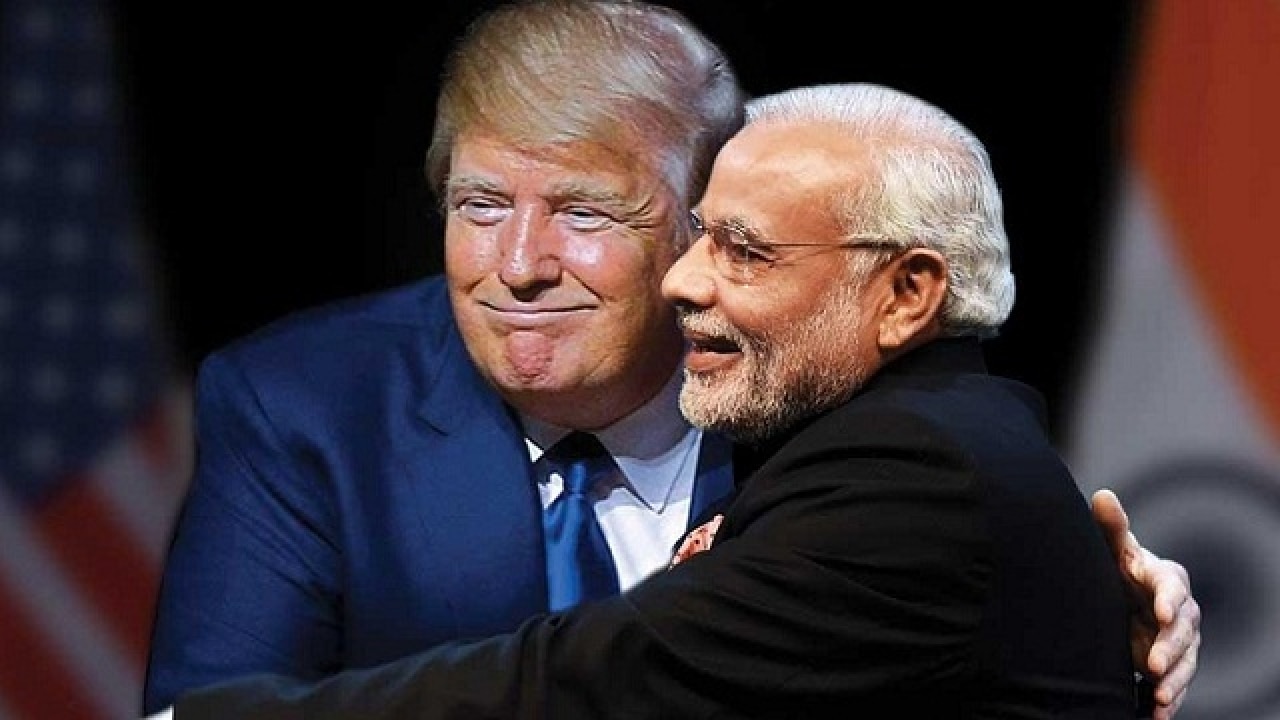
Modi has proved that he is not the one to unshackle India. His innovation—if you can call it that is unrestrained embracing, and his deployment of arms purchases to achieve unambitious goals. Global leaders may have gotten used to his hugs and learned gamely to reciprocate. But their seeming effusiveness has not translated into enduring gains for India. His bonhomie with US President Donald J Trump has led to no give whatsoever on Washington’s part on any of the issues Modi has flagged. So every time Modi meets with Trump, he signs up for more P-8I maritime reconnaissance aircraft and transport planes – C-17, C-130, the staple buys. In return, for enriching the US defence industry, Modi asked for small things and got smacked in the face. He lobbied hard for a loosened H1B visa scheme to benefit Indian techies. It fetched a tightened immigration regime instead, forcing Indian companies –on the pain of loss of market — to invest in the US resulting in the reverse flow of capital and employment gain for America. Supplicating for easier entry for its manufactured export goods, Delhi was pressed to ease restrictions on imports of American dairy and meat products.
All the talk of advanced military technology collaboration and transfers from Vajpayee’s time have begotten nothing except first Barack Obama’s and now Trump’s pressuring India to go in for the antiquated F-16 fighter plane decked out with shiny bells and whistles and a new moniker — F-21, and for its production line as well to service, other than the aircraft with IAF, a non-existent market. It is a project that’s likely to be furthered under the ‘Make in India’ programme that the Indian Air Force head Air Chief Marshal RKS Bhadauria has called a sham. It will add to the $14 billion worth of military hardware purchases from the US Modi has already committed to.
India’s relationship with America however one-sided, has complicated its ties to Moscow. A once steady friend is now openly flirting with Pakistan, promising it latest armaments, and handing over Mi-35 attack helicopters and, at the other end, forging strong military technology and manufacturing links with China. India is hit with a double whammy. Desperate to keep President Vladimir Putin in good humour, Delhi contracted for the S-400 anti-aircraft air defence system it didn’t really want but bought anyway as gap filler in India’s layered ballistic missile defence (BMD) which won’t work because there’s no technology anywhere that can fend off salvo firings by enemy states of missiles and rockets. India desperately wants the second Akula-class nuclear powered hunter-killer submarine. But Putin has tied it to other capital military deals such as the Amur-class diesel submarine for the navy’s Project 75i and, the more commendable 50 ton T-14 light tank for the army’s mountain offensive corps. With both the US and Russia angling to monopolize the Indian arms market at the expense of the indigenous weapons design, development, and manufacture programmes (such as the Tejas Light Combat Aircraft, its derivative Advanced Medium Combat Aircraft, Arjuna main battle tank) India’s national interest is gutted.
In bilateral trade with China of some $100 billion, India’s deficit is some $65 billion. Seduced by Xi Jinping’s promises of investment in infrastructure and of imminent resolution of the long simmering border dispute, Modi has played footsie with Beijing. During his nearly six years in office there has been no Chinese investment nor a border accord, but there has been frequent summiting and partaking of the “Wuhan spirit” and, lately, the Mamallapuram spirit, which appear to be merely exchanges of vaporous rhetoric and nothing substantive on the ground to show for it. But Beijing has no complaints. It gets to keep its beneficial trade imbalance intact, and notwithstanding every assessment claiming the PLA-funded Huawei Company’s 5-G technology as cyber Trojan Horse, it remains in the running to outfit the Indian telecommunications system.Talk of being taken for a ride! But that’s not the half of it.
China is Pakistan’s sheet anchor and makes no bones about it. Besides financing the China-Pakistan Corridor (CPEC), Beijing is the champion of Islamabad’s causes and protector of its interests in the UN and other international fora. On December 16, in the latest such initiative, it moved a resolution in the Security Council to discuss the Kashmir issue, and has prevented the Financial Assistance Task Force from sanctioning Pakistan for sponsoring terrorism. Despite China’s manifest antipathy to India, Modi has refrained from using market access to trip up the Chinese economy, or in a belated response to Beijing’s dastardly proliferation of nuclear missiles to Pakistan, from arming the states on China’s periphery and in the South China Sea with nuclear and long-range weapons to strategically straighten out Beijing.
In this decade of diplomatic shuffle, old friends with historic ties have been given the heave-ho, disrespected, and even discarded on Washington’s say so. Though central to India’s strategic plans for a presence in Afghanistan and Central Asia via the rail and road grid radiating northwards from Chabahar port that Delhi said it would fund, Iran has been treated as a pariah, the flow of Iranian oil has been drastically scaled back and energy reliance on Tehran cut from 13% to less than 2% in three years, and the Iran-Pakistan-India gas pipeline has been shut down for good. So cheap energy has been sacrificed for the pricey nuclear power that Manmohan Singh and now Modi are determined to buy by procuring exorbitantly priced reactors from the US, Russia, and France, courtesy the 2008 nuclear deal. In a similar fit of strategic short-sightedness, India has gone slow on intense military cooperation with Japan – the one country China is apprehensive about. It has even turned down Tokyo’s offer to transfer the production line of the US-2, the finest maritime multi-role aircraft in the world.
India in the last ten years has done little of note other than beef up its image as a foolish giant of a nation, at once gullible, exploitable, spendthrift and self-abnegating, fulfilling every big power’s wish as a friend or, as China would happily attest, as an adversary.
———-
[A shortened version of this piece appeared in my occasional ‘Realpolitik’ column in BloombergQuint.com, 28 December 2019, at https://www.bloombergquint.com/opinion/indias-foreign-policy-a-decade-of-regression-and-squandered-opportunities ]