
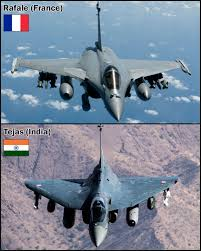
You can never go wrong under-estimating the Indian Air Force and the Indian government’s strategic foresight. They prove this again and again until now when attaching the adjective ‘strategic’ to any defence-related decision they take, is to stray into oxymoron territory.
Why? Well, consider just the following two cases.
Three weeks back we learnt from defence minister Rajnath Singh that the French jet engine maker, Safran (earlier Snecma) would help India design and develop its own jet engine — no, not by building on the Kaveri 35VS engine that produced 81 kiloNewtons (kN) of thrust in a dry test — which, incidentally, is some 9kN more than the 73kN thrust developed by the engines on the Rafales flying with the IAF currently. And, notwithstanding some Rupees 20 BILLION the country has sunk into the Kaveri project, including setting up the impressive jet engine facility at the GTRE (Gas Turbine Research Establishment), Bengaluru. But rather by forking over $10 BILLION to Safran for passing off the Snecma M88-4 engine with some tinkering, as some new fangled power plant for the Tejas 1A and Mk2.
Except, the M88 is a design product of the 1970s, that is, it is an over 50 year OLD jet engine!
The defence minister very proudly declared that the indigenous twin-engined advanced medium combat aircraft (AMCA) would be powered by this engine. Sure its power is going to be increased to 120kN but on the same old design. In other words, by the time the AMCA — a supposedly 5th generation aircraft is airborne realistically no earlier than 2040, the engine it will be outfitted with will already be 70+ years old!!!
Why is soooooooo wrong a decision not obvious to the Defence Ministry and Government of India?!!!
Well, if the old turbofan technology is what the IAF and defence ministry were satisfied with, then why did they turn down the joint proposal by the Indian industrial giants — Larsen & Toubro and Godrej Aerospace to develop the Kaveri Derivative Engine (KDE) with 75 kN thrust for the Tejas 1A and a 98kN version for the Tejas Mk-2, predicated on their accessing all Kaveri source codes, testing data, and design and structural knowledge? The KDE proposes to incorporate, moreover, the afterburner tech developed by Godrej in collaboration with Brahmos Aerospace and a prototype is here, meaning it would be an ALL INDIAN jet engine from start to finish, or isn’t that what the Modi government wants? It will void relying on the American GE 404 and GE414 engines whose flow is susceptible to America’s geopolitical interests of the moment. Consider that between 2021 when the contract was signed for the GE 404 and now, exactly one or two engines have been delivered, along with no end of excuses! Indeed, Godrej AS have already delivered two fully operational 48kN dry thrust turbofan engines for the longrange Ghatak drone (unamanned combat aerial vehicle), displaying its tech mastery plus its promise that it can scale up its capability to manufacture 98kN jet engines to power the Tejas Mk2. In any case, KDE is the way to go for India to become a jet engine maker.
For a government that incessantly crows about atmnirbharta, NOT trusting Indian private sector companies in the military tech sector is incomprehensible, while TRUSTING GE and Safran, whose interest is in stringing India along, not in making it self suffcient. In this regard, there are two reasons why the choice of Safran as partner is mighty suspicious. It had a consultancy-collaboration contract to help get the Kaveri over the hump with the help of Snecma M88 engine technolgies. And this was part of the 2015 offsets deal! (So we know how offsets are treated by foreign companies. In fact, I know of many of these firms including the cost of “seminars”, trips for Indian military personnel, etc as part of the offsets!!) Except that contract collapsed two years later because GTRE accused Snecma of reneging on the transfer of critical technology that was promised and contracted for! So, the latest deal with Safran is a double payment — it pocketed its part of the contract for the 36 Rafale in 2016, and now gets another $10 billion to transfer the technology it was supposed to in 2016 but did not!
This leads to the second factor — France’s utmost reluctance to part with technology. French defence companies, recently publicly upbraided the German submarine Thyssen Krupp Marine company for offering the source codes for its HDW 214 submarine for the Indian navy’s Project 75i — another boondoggle (we will get to it another time)! They were upset that Thyssen would set a precedent, and they too’d be compelled to do the same thing in the future. But here the Indian government came to the rescue of French, German, and every other Western supplier. The Free Trade Agreement the Piyush Goel-led commerce ministry negotiated with the UK and is negotiating with the EU and the US, permits Western supplier firms to deny transfer of source codes for their wares!
To get back to the M88. It is OLD tech. The latest advances in jet engine design and technology — the Variable Cycle Engine (VCE) that will soon be equipping modern combat aircraft is in its final stages of development in many leading countries. The VCE is distinguished by the fact that its turbofans rotate at different speeds enabling the optimising of fuel efficiency and thrust in subsonic, transonic and supersonic flight modes. The M88 and other engines of that generation and their variants had to be designed to optimise either thrust or fuel efficiency, they could not have both. With VCE you do.
Two foreign companies were in the running for the engine deal — Rolls Royce of the UK, and Safran. The curious thing is that Rolls Royce, it is said, promised the VCE but over a longer time span because it is still under development. France-Safran has no such underway project, and is into extending the life of the basic M88 design as much as possible, and which design improvements now will be subsidised by the Indian taxpayer with the $10 billion payout! Safran originally offered only 50% tech transfer but matched Rolls Royce after the latter offered 100% tech transfer with source codes, et al. On the source codes, despite Indian government pressure, Dassault did not relent on transferring Rafale source codes. Hence integrating Indian missiles and other armaments on the Rafale aircraft, is impossible. Dassault is angling for separate contracts to integrate specific Indian weapons! There go more billions of dollars into Dassault account! Why because no one in the Indian defence ministry had the wit to include transfer of source codes in the original contract.
Sure, Britain is an American hanger-on trying to humour Trump by doing things like having King Charles entertain him soon at the Windsor Castle to massage his ego just so he reduces the tariffs on British exports! And yes the bad experience, for instance, with the British Sea King anti-submarine warfare helicopters with the Indian Navy may have influenced the decision to go with Safran. Sea Kings were instantly grounded when the US imposed sanctions on India for the 1998 nuclear tests, because the rotary aircraft had American Pratt & Whitney engines. But the record shows that France is no more trustworthy.
Recall that in the 1982 Falklands War, the Argentine Navy operated the Super Etendard armed with the anti-ship AS 39 Exocet cruise missile. After the Argentines sank the Royal Navy destroyer HMS Sheffield (on May 4) as also several landing ships not long after the establishment of the British naval blackade on April 30, London asked Paris for the performance parameters and other design details of the Exocet, which the French promptly handed over. It helped the British to neutralise the Exocet — there were no further sinkings of RN ships. The point is there is no guarantee of what France may do by way of informing adversary nations about their hardware in Indian employ. Not, of course, that the Indian military has any secrets — just about every weapon system used by the armed services has a Western or Russian pedigree. And weapons platforms wholly of Indian design, like the Tejas light combat aircraft, are actively disfavoured by the services. And lest there be any misunderstanding, the Tejas LCA was imposed on the IAF by the Modi government.
But having done the right thing by the Tejas, the government went ahead and torpedoed the plane’s chances by handing the full production contract over to the defence public sector unit HAL — supposedly a “navratan”! This wretched DPSU like its kindred Mazgaon Dockyard, Avadi Heavy Vehicles, etc., guzzles money and survives only because the Department of Defence Production in the Defence Ministry thinks it is its remit to keep these DPSUs afloat. In all the years since their inception thay have not done anything remotely innovative by way of technology. Unless you count screwdrivering weapons platforms from knocked down kits innovation!
The more obvious solution would have been to have DRDO transfer the Tejas source codes, etc to L&T and Godrej Aerospace for them to set up additional Tejas production lines of their own, as I have been advocating in these posts, thereby augmenting the HAL production rate of 16 aircraft per year. With the second HAL assembly line that rate would go up to 32 aircraft annually. But the IAF requirement already contracted for is 180 Tejas 1A and Mk2 aircraft. At a 32 aircraft production clip, it will take HAL 6 some years — and that is a theoretical minimum. In reality, HAL delivered just TWO this past year because, well, of GE’s delay in sending the F404 engines! Precisely the reason why the Defence ministry should still choose the indigenous KDE option.
Additional L&T and Godrej production lines for Tejas and for the 73kN KDE power plant would have made the Tejas enterprise entirely independent of foreign engines and potentially a huge revenue generator if these private firms were also tasked,simultaneously, to sell Tejas abroad, find an international market for it. And this is the option NOT selected by the Defence Ministry.
The Defence Secretary Rajesh Kumar Singh at a media event last week explained why the IAF and the other two services bank on imported hardware. “There is always a tradeoff between what you can buy of the shelf and what you develop over time in terms of what the forces need immediately. We have trid to provide them”, he said, ” the flexibility through the emergency procuremenrt process….There is a tradeoff in the short term, but in the long run, the intent is to go fully indigenous in all of these capabilities.”
This immediate need-indigenous capability tradeoff as I pointed out in my 2015 book Why India is not a great power (yet), is not convincing, and is actually the reason why India remains an arms dependency and will continue to do so into the future. This is because a small number of Rafale aircraft, say, bought to meet urgent needs becomes the wedge in the door for the IAF to get more of the same foreign aircraft at the expense of the indigenous, also 4.5 generation Tejas aircraft. The Tejas programme was put through the meat grinder to realise a perfect aircraft without kinks, in the hope that it would simply die! The funding for the imports as a consequence is assured, not so for the home grown item which is made to jump through unending hoops. Does anybody care to remember that the Tejas was found unacceptable by the IAF because weapons had not been integrated into it, delaying its induction by 4-5 years. BUT, the IAF was happy to fly the Mirage 2000 without any weapons for several years before they were outfiited with them! Because IAF had not contracted for the weapons! Or, did but did not get them with the platforms as contracted.
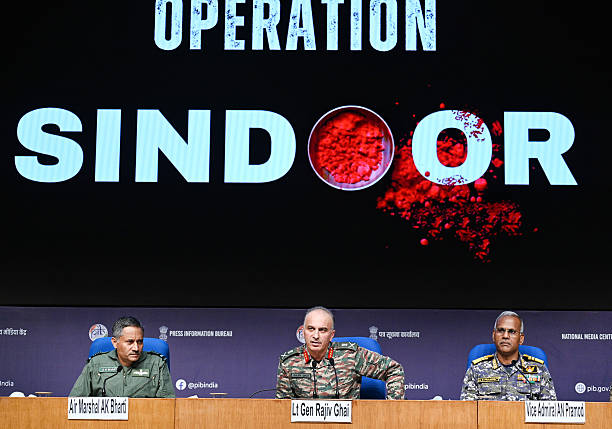
And, does anybody ask about the deficiences of the imported plane? So, how did Rafale fare in Sindoor, pray? The Spectra electronic warfare suite at the heart of this supposedly advanced high-tech combat aircraft and constituting — by rule of thumb — some 20% of the price of the plane, proved a DUD. Spectra is described by Wikipedia as a system incorporating “radar warning, laser warning, and missile appoach warning for threat detection plus a phased array radar jammer and a decoy dispenser for threat countering”. OK. So, what happened? None of these do-dahs worked! Its radars and sensors could not pick up the Pakistani Saab 2000 Eriye Airborne Warning and Control System surveilling the Indian skies and specifically tracking the Rafale once it came into its view as target of interest. And the Spectra had even less clue about the Pakistan Air Force JC-10 loitering in passive mode before closing in for weapon release, leave alone about the PL15E air-to-air missile it fired, resulting in the targeted Rafale getting downed in Aklia village outside Bhatinda. And, the country is supposed to pay tens of billions of Euros for 114 more such lemons?!!!
In the IAF and the Indian Navy brass, the French defence industry has found a bunch of connivers who are making a perennial sucker out of India. (On the navy and 75i, another time.) Then again, with Mirage-Rafale-Scorpene buys requiring repeated trips to Paris and its allurements catered for as part of the offsets, no one will object to buying these pieces of hardware, especially as the Indian government is complicit. It behaves as if it has all the money in the world to waste, except when it comes letting the Indian private sector in, when every paisa gets counted. The fear among many military personnel and defence civilians is that this easy channel of corruption — Paris trips being only the proverbial tip of the iceberg, would be eliminated.
India paid some Rs 59,000 crores for 36 Rafales, or Rs 1,640 cr per aircraft in 2015, and Rs 62,000 crores for 26 Rafale Marine, or Rs 2,385 cr for each aircraft to adorn an Indian deck, for a total of Rupees one lakh twenty-one thousand crores, so far for 62 aircraft. Notice the inverse relationship between the cost of aircraft and their price. How much will the 114 more Rafales cost? Who knows! Dassault can quote any damned price they want, and the supplicant Indian government will pay it, with dozens of guaranteed trips to, oh yes, Paris by the Price Negotiation Committee! Another among the routine Third World country scams that go unnoticed! That’s the price the country pays for NOT DESIGNING and making its own weapons systems, even when it is perfectly capable of doing so, if only Modi and Rajnath Singh looked beyond the DPSUs.
The fact, specifically, is that the IAF is a foreign aircraft junkie and has been since its birth, doing whatever it can to get its next fix of non-performing junk of flying metal. The reason this is allowed is that the Defence Ministry and PMO act like indulgent parents of a dope addict — who, they think, can do no wrong. Except in real life, the defence ministry-PMO are bereft of domain expertise and very nearly oblivious to developments in warfare generally, and air warfare in particular, and choose to leave it to the “professionals” to do right by the country. But all the Vayu Bhavan brass seem to do is make self-serving decisions.





 Security Wise