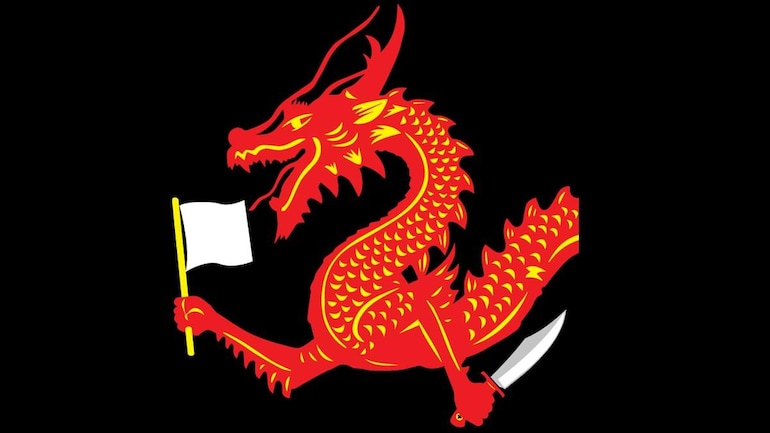
China’s approach to conflict resolution is unique. It works because it is surrounded by countries militarily weaker than itself and/or unwilling to up the military-political ante. First step: It uses force to change the status quo on the ground. Second step: the new territorial fait accompli is then legalized spuriously by some “law” or new rules and regulations the Xi regime issues to endow this initial status quo-changing action with post-facto legitimacy. Step Three: Beijing then uses this new territorial reality and supporting laws, etc. to demand that the victim nation adjust to the new reality on the ground so obtained by the Chinese military, and exercise restraint for the sake of order and stability!
The Xi cohort has had considerable success with this approach because the victimised states fall into the trap of accepting the new ground reality and doing what’s asked of them.
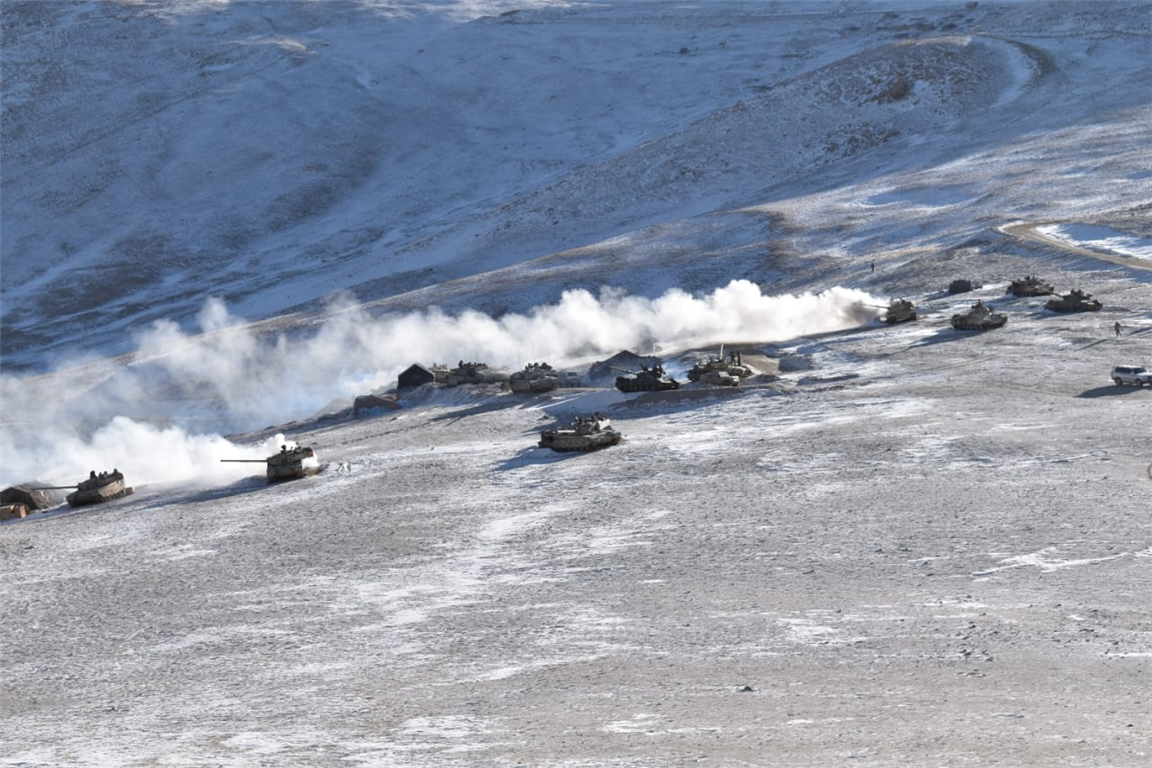
China has repeatedly pulled this three-step , besides eastern Ladakh, in South China Sea and in the East Sea. In the context of the supposed “disengagement” in Ladakh that, incidentally, has left the People’s Liberation Army units still in place on the Depsang Plains and in control of the Y-Junction, the Chinese Foreign Minister Wang Yi was at his oiliest.
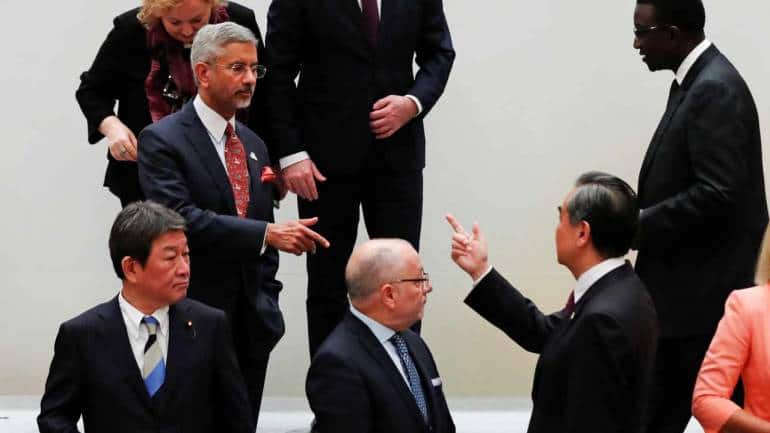
Deliberately disregarding the fact that successive Indian governments in their desperate desire for peace on the disputed border have taken Beijing at its word, studiously followed Chinese instructions, accepted Chinese pre-conditions, and engaged in endless fruitless discussions at various levels,including at the Special Representative-level involving Indian NSA, Ajit Doval, designed to wear out the other side, Wang on the occasion of the National People’s Congress adopted an avuncular tone at a media event last Sunday. “It is important the two sides manage disputes properly” he said, “and at the same time expand and enhance cooperation to create enabling conditions for the settlement of the issue.” Having spouted this nonsense he then revealed that Beijing had neither moved from its original stance nor in its intention to impose its expansive claims on India. He used his reference to the Galwan incident last summer to say that “the right and wrongs at (sic) what happened at the border area last year are clear, so are the stakes involved.” He akso asserted China’s commitment “to settling the boundary dispute through dialogue and consultation” but without compromising its claims because “we are resolved to safeguarding our sovereign rights.”
But apprehensive about India finally responding more consequentially to Chinese provocations in South Asia such as its deep inroads into Pakistan, Nepal, Sri Lanka, and even Bangladesh, by transferring Brahmos supersonic cruise missiles and other armaments to Asian states (Philippines, Vietnam, Indoensia, etc) contesting Chinese claims in the South China Sea, and firming up purposive partnerships in the Indo-Pacific — such as the Quadrilateral, a concept that falls owing to the proven unreliability of the US as partner but which the Modi government seems anamoured with, Wang warned of the negative impact of the Indian reaction on Sino-Indian friendship! Love such gall!! “China and India are each other’s friends and partners, not threats or rivals”, he averred. “The two sides need to help each other to succeed instead of undercutting each other. We should intensify cooperation instead of harbouring suspicion at (sic) each other.”
Obviously, Wang and his foreign policy team in Zhongnanhai are convinced the Indian government is a fool and will, once again, play it, and do China’s bidding. And, who is to say, they are wrong? After all, the Indian forces — steered “expertly” by the China Study Group (CSG) and MEA — withdrew post haste from the high points on the Kailash Range without requiring the PLA to reciprocate in like terms, didn’t they? The PLA pullback eastwards from Finger 4 to the Sirijap plains on the Pangong Lake shoreline can almost instantly be reversed by motor-mobile Chinese troops using metalled roads to reoccupy all the Fingers up to the Indian Dhan Singh Thapa post on Finger 3. Will the Indian Special Frontier Force commando be able to as quickly regain, unmolested, the highpoints on the Rezang La-Rechin La Ridge?
Then again, the geniuses in CSG and MEA didn’t discern the historic pattern (outlined above) in the Chinese policy in Ladakh and evidenced elsewhere as well. Like in the South China Sea. Had they done so and alerted the Indian military, the latter’d have been better prepared for, and not been surprised by, the PLA moves in eastern Ladakh in April-May 2020. So now mull over what Wang said vis a vis the South China Sea.
“Countries in the region and around the world in recent years can all see clearly that the factors for instability and security risks in the South China Sea come mainly from outside the region,” Wang said, referring to the US naval ships, including nuclear aircraft carriers, loitering in the sea expanse within the ‘9-dash line’. Such American sailings almost dared the Chinese Navy to do something and thus establish an operational baseline. The Chinese Navy did not rise to the bait. Instead Wang lied saying China and ASEAN had reached common understanding on maintaining peace and stability in the South China Sea. The truth, however, is that there is no understanding and agreement that Beijing itself has not repeatedly violated. It did not deter Wang from charging the “the US and some other Western countries” with thereby creating “instability in the region”.
In a similar situation with regard to the Senkaku (Diaoyu) Island chain in the East Sea, he responded to Japan’s concerns about a new Chinese law permitting its Coast Guard to fire on ships not respecting Chinese territorial claims on the sea by assuring Tokyo that that law was not targeted at any particular nation, especially not Japan.“The key to Sino-Japanese relations is to have perseverance, and not to let short-term events cause disruption,” he clucked soothingly.
The prompt for Wang’s statements was seemingly US President Joe Biden’s promise to beef up US military presence and security arrangements involving traditional allies and partners in the Indo-Pacific, and the upcoming virtual meet Washington has scheduled with Narendra Modi, Yoshihide Suga, and Scott Morrison, heads of government respectively of the three other member states of the Quadrilateral — India, Japan, Australia, a loose grouping Wang has dubbed the ‘Indo-Pacific NATO’. “An improvement in Sino-Japanese relations”, Wang concluded, “would be mutually beneficial for our people and regional stability and peace. It should not be taken for granted and we should treasure it.”
It is clear what Delhi must do. As I have long maintained, assuming that strategic mindset and sensibility are absent in the Indian government, members of the CSG and MEA should stop taxing their little heads and simply emulate China strategically, do what Beijing does which is this:
Step 1: Stop talking about how the Indian army CAN occupy vantage points along the Line of Actual Control, including sites well inside Chinese claim lines, and task the army to do precisely that, without losing time, in short, surrepititiously occupy these strategically located high points.
Step 2: Play up the 1962 Resolution of Parliament, which has force of law; better still, legislate a new law — call it ‘Restoration of Territories Act’, to sanctify all actions, steps and measures implemented to restore the India-Tibet border as existed in 1950 when the PLA invaded and occupied Tibet, and voice the country’s determination to implement bother the letter and spirit of this law, and call out Beijing to respect Indian sovereignty and to not heedlessly jeopardize the traditionally warm and friendly relations between the two countries by resorting to any precipitate actions leading to the breakdown of peace, etc. and here MEA can do what it does best — wax abstract, rhetorical, whatever. In Mandarin.
Step 3: Accelerate the buildup of infrastructure and forces on LAC buildup, and enlarge the system of provisioning and logistics system to enable sustained warfighting. After all, now with two offensive mountain corps (I and XVII) in the field a far larger, longer and stronger supply chain becomes necessary.
Step 4: Forward deploy nuclear-tipped short and medium range Agni ballistic missiles in Ladakh theatre as tripwire in case a conventional Chinese military advance gains traction. And pre-warn beijing about the Agni missiles and talk of them as a like response to the augmentation of Chinese SRBMs and MRBMs on the Tibetan Plateau — the densest such concentration outside the Fujian coast opposite Taiwan.
Step 4: Quite literally dump bunches of the Brahmos supersonic cruise missiles on priority basis on the militaries of all countries disputing Chinese claims on the South China Sea, including states that have not sofar been active/aggressive in advancing their claims — Brunei and Malaysia. And make the deals for the Brahmos unrefusable by making them available at low to very low “friendship prices”. This will require the tripling and quadrupling of Brahmos missile production. This can be facilitated by handing over the job to the more productive and efficient private sector. And along with these missiles should be sent, as per the deals, Indian army artillery teams to operate and service these Brahmos batteries and to train host country crews
As advocated in my 2018 book (‘Staggering Forward’), this single measure of bulking up littoral and offshore Southeast Asian states with the Brahmos missiles will “narrow the seas” to the Chinese Navy’s detriment and the advantage Beijing thinks it has gained by constructing new islands out of coral reefs, sand and cement mid-channel will be instantly neutralized. Because now Chinese warships passing through these narrower waterways on either side of these ersatz islands will be easy targets for the coastal Brahmos batteries of numerous nations. It will have the effect in crisis of bottling up the powerful Chinese South Sea Fleet in its Sanya base on Hainan Island.
Step 5: While all this is taking place, Delhi should take the offensive in bewailing the record of Chinese aggression and its history of inhumane activities, including the ‘ethnocide’ of the Tibetan people in Tibet and, in recent years, the Uyghurs in Xinjiang, and take their case to the International Court, etc. At the same time, MEA should weekly enjoin Beijing to not let any of this spoil bilateral ties, and to even out the playing field for Indian companies in the Chinese market.
Step 6: Ask of Chinese companies what Beijing asks Western companies in China to do — sell in the Indian market but only on the condition that they transfer the technology-set whole — designs, source codes, and process and manufacturing technologies to Indian government certified Indian commercial entities. And not permit them to escape this obligation by doing what Huawei is trying to do now after the imports of its 5G system was banned. Correctly reading the atm nirbharta campaign as a sham — the Huawei India head says the company would be happy to jointly manufacture all its 5G telecom equipment in India by transferring its “production nodules” to an Indian firm — which is another way of saying — screwdriver tech. No way, Jose!
Such are the sort of steps India must implement to take the game to China on the pain of being driven from the Asian strategic field altogether. But will the Indian government, even in these dire circumstances, do any of this? Nah!