
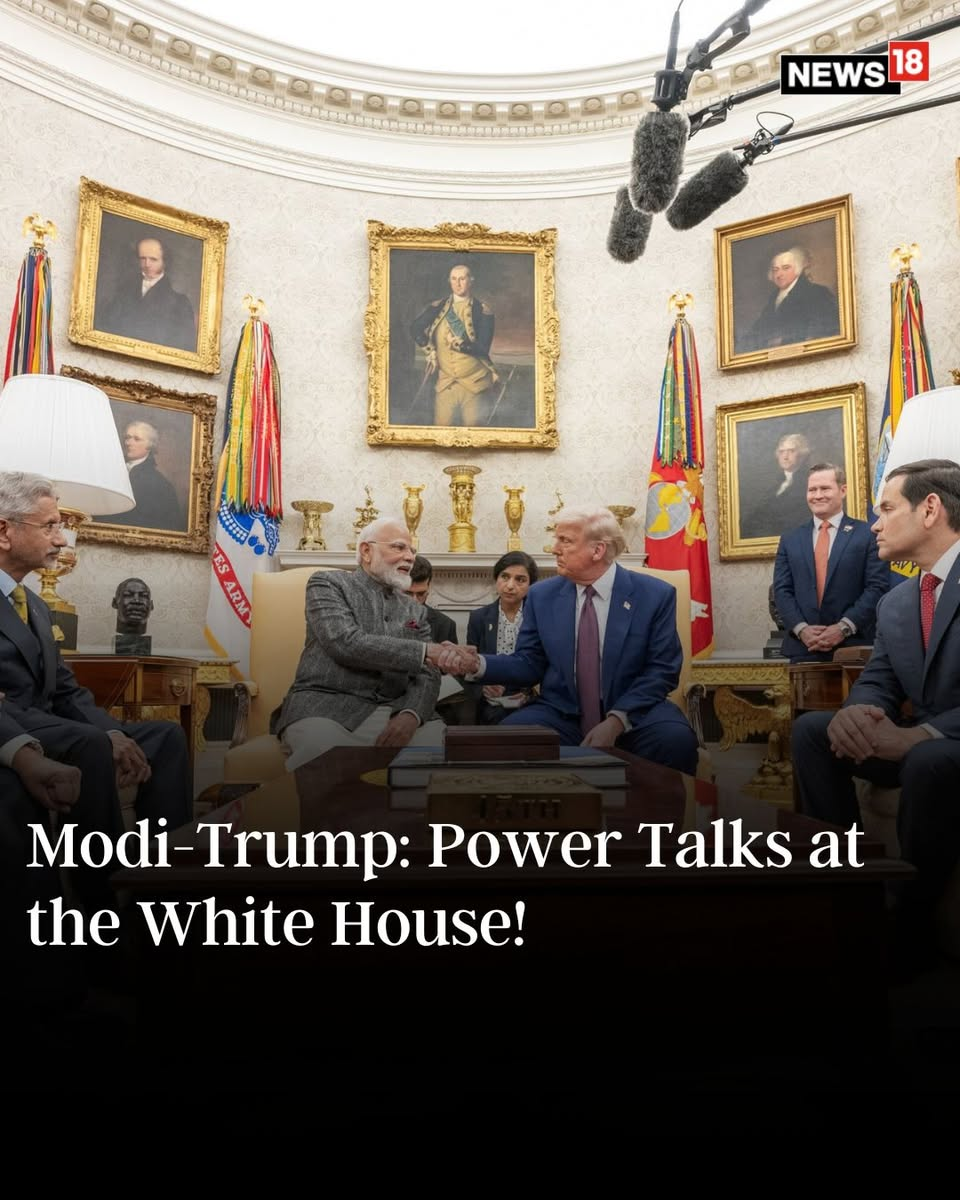
Marco Rubio is the go-to guy for the US President. Not only is he the US Secretary of State, but he has three other roles heaped on him by Donald Trump — National Security Adviser, Administrator of the now all but defunct U.S. Agency for International Development and, it is not clear why, Head of the National Archives! Rubio will be in India for three days starting tomorrow (May 23-26), and ambassador Sergio Gor has drawn up a schedule that will take him to major cities where he will have Indian capitalists and industrialists and their hangers-on fawn over him, ready to invest in and otherwise make America even richer!
In equal measure spooked, intimidated, and pressured by Trump, Indian corporations, desirous of retaining whatever small foothold they have in the US market, have felt compelled to buy into his “America First” in-shoring policy, meaning moving global industrial and manufacturing capacity to the US. To-date, Indian companies have collectively invested over $331.23 billion in the US to put up factories and generate employment, adding to America’s wealth and wellbeing, and to its industrial and economic heft.
This vast tranche of transferred Indian wealth breaks down as follows: $300 billion by Reliance Industries, $19.1 billion by the Indian pharmaceutical sector, $10 billion by the Adani Group, $900 million by the Abhyuday Group, $773 million by the Tata Group, $255 million by Jindal Group (JSW Steel), $100 million by Sterlite Technologies, another $87 million by Jindal Group proper, and $15 million by Jivo Wellness. [These figures are taken from an article by Navroop Singh and Nimja Parekh, “Predatory Economics: The Reality of America First” published in their consistently thoughtful and excellent Blog — Niti-Shastra on the Substack platform, which carries their well-researched and devastating critiques. The URL for this particular article is https://nitishastra.substack.com/p/predatory-economics-the-reality-of ]
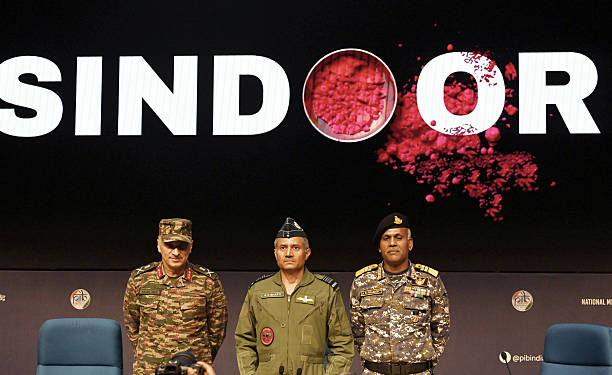
Let’s be clear that India will be poorer by the $331.23 billion invested in the US — monies that are now not available to build the much needed infrastructure and to set up factories, create jobs at home, and generally to economically better India. This is zero-sum transactionalism, which would be fine had the Modi government adopted it as its policy to gain comparative advantage, rather than have Trump impose it on India to benefit America. Sure there’s no dearth of NRI types in the Washington Beltway commending Modi’s show of restraint in the face of unending provocations offered him personally and to the country in economic and other terms by Trump, especially since Sindoor. But the hope the PMO and MEA nursed since then that a subdued Delhi would win it better treatment from Washington has, once again, been proved very wrong.
Trump is a professional New York real estate wheeler-dealer who does not waste his time on property he cannot acquire, to polish up, turnaround and sell for profit. Likewise, he has moved on from India and Narendra Modi as I mentioned in my previous posts. In the region, he has found Asim Munir and the Pakistani state he runs far more congenial to augment his personal/family holdings (bitcoin) and US interests (Pasni as US naval/air base, minerals in Reko Diq and other places in Baluchistan, middle man with Iran). Because however much Modi wishes to cuddle up to Trump and accommodate the US, there is a limit beyond which he cannot. Munir faces no such systemic constraint.
So, what’s Delhi to do? Particularly because Messrs Modi & Jaishankar are sold on the notion that Trump after having his jollies with humilating India and taking the PM down several notches, will come around to giving the Indian leader a hand in warding off the Indian middle class pressure to keep open a channel for skilled labour outflows and, that the promise of a Free Trade Agreeent will soften his tariff stance. But Trump was Trump. He brought down the 50% tariff rate to 25% on Indian exports only because of the US Supreme Court verdict, but shuttered up the H1B visa window. And he dispatched Deputy Secretary of State Christopher Landau, and Under Secretary of Defence Elbridge Colby, to tell folks here where Modi and India stand with him.
In the event, these officials wasted no time in unsugaring the bitter pill, telling anybody in Lutyen’s Delhi who cared to listen that India should expect NO US favours, nor help and technological assistance, or any other consideration above and beyond any other country America deals with, and certainly nothing that’d boost India’s chances vis a vis China — a threshold, Landau warned, that would instantly trigger responses befitting a rival and competitor. But, that Trump nevertheless expects, as Colby stressed, India to “cooperate” in its own interests with the US in militarily restraining China, even as the US president butters up Xi Jinping for a separate deal with Beijing that will push Taiwan, and other Asian states, including India, into the line of Chinese fire.
So, what is the Modi regime planning to do when, starting tomorrow, it has Rubio’s undivided attention? Why, presenting him, as the media has reported, with a plan to revive the nuclear industry in the United States, of course! The plan is to encourage American companies to sell commercial nuclear reactors worth some $68 billion (Rs 6.5 lakh crores) to India, which can take its pick from light water, gas cooled, molten sodium, and modular reactors in small, medium and large sizes! These electricity generating nuclear plants are to be “joint ventures”. To attract US firms, the Indian government passed an enabling legislation — the 2025 SHANTI (Sustainable Harnessing and Advancement of Nuclear Energy for Transforming India) Act. It supercedes, essentially gets around, the “liability” barrier in the 2010 Civil Liability for Nuclear Damage Act of Parliament, that had kept out foreign vendors.
The two Acts differ majorly in two crucial respects: In Section 17(b) of the 2010 Law, operators were allowed to sue reactor suppliers for defective equipment or latent faults in reactor and related technologies that could result in explosions, fire and reactor core meltdown. SHANTI Act removes automatic technology supplier liability, with legal recourse limited to “explicit contracts or wilful misconduct”. And, as regards victim compensation, Section 46 in the 2010 Act which “allowed victims to additionally sue operators under other civil or criminal laws”, is entirely absent from the SHANTI Act, leaving victims with only restricted means of financial redressal.
(As an aside, I remember deposing before the Parliamentary Committee drafting the 2010 Act and arguing for the strictest liability provisions and for a clause enabling the victims to separately sue the operators. In a somewhat heated interaction with MPs I apparently said something that so incensed a legislator from Bihar, he created a ruckus, threatening to invoke a privilege motion against me for breaching the dignity of the House!)
The reason liability provisions need to be a deterrent is to ensure that the safest possible nuclear technology is deployed for commercial use. This is especially important in the context of the three nuclear reactor mishaps the world has so far seen. In March 1979, there was coolant leakage in one of the units of the nuclear energy plant in Three Mile Island, Pennsylvania, but the disaster was contained, and no deaths occurred, though the cleanup, etc cost upwards of $1 billion. The leakage was attributed to design flaws. People living around the nuclear complex in Chernobyl, Ukraine, were not so lucky in April 1986. The reactor core meltdown from leakage of the coolant resulted, according to the UN, in 4,000 long-term deaths in Ukraine, Belarus, and Russia, and 6,000 deaths across Europe and, per a report by the Paris-based Organisation of Economic Cooperation and Development, cost some $85 billion in nuclear rehabilitation and over $700 billion in all — “the most expensive disaster in history”. The earthquake and tsunami induced nuclear accident in 2011 at the Fukushima nuclear plant in Japan led to grid failure and the electric backup to cool the reactor failed, leading to breach in containment and the spread of “radioactive contaminants”. The clean-up cost $70 billion, and decontamination of the environment, and compensation to the people, cost $188 billion!
This to say that even a minor nuclear disaster has quite considerable human and infrastructure cost, and anything major can financially ruin a country. That is the reason why the US Nuclear Regulatory Commission (NRC) was extra-careful in assessing the Westinghouse AP1000 light water reactor technology, holding up its certification for many years on account of safety concerns. Early this year, the reactor design was finally certified. But no such certification has so far been given by the US NRC to any gas cooled or molten sodium nuclear reactor design or prototype, and to only only one model of modular water cooled reactor, that America is peddling.
With minimal liability, it is little wonder the US industry wallahs are exulting. The trouble is while the US reactor sales may enhance India’s nuclear energy capacity, none of the reactor technologies on offer are certified by US NRC for safety. In other words, India, in effect, is presenting itself to the US industry as a live laboratory, and Indians as guinea pigs, to test the functional safety of the reactors, their performance in India becoming the basis for these American companies to erect them in America!
This is called a “win-win situation” by Nolty Theriot, Senior Vice President, US-India Strategic Partnership Forum (USISPF).
But in money terms this means adding another $68 billion of India’s wealth to the $331-odd billion already transferred to Trump’s America by Reliance, Adani, Tata, Jindal, et al. That is a total of $400 BILLION of Indian wealth which is now US’!!
And like the $28 billion, that would be wasted on the Rafale combat aircraft and benefit France, leaving no monies for developing the indigenous Tejas line of aircraft — 1A, 2, AMCA, into a world class fighter line, the $68 billion spent on untested and uncertified American nuclear reactors, could instead be invested in the three distinct locally designed and developed reactor streams — CANDU, breeder reactor and thorium (molten sodium).
If Modi is so keen to triple the Indian civilian nuclear energy capacity — from some 9,000MW to nearly 30,000MW, he could do the following: Challenge Rubio and the USISPF to have American companies rifle up the entire $68 billion in the US stock market to build and operate nuclear power stations in India under their control with absolute guarantee of repatriating all profits. That way, US industry will be invested in India, and the Indian government will conserve the country’s financial, human and natural resources to design, develop and build uniquely Indian lines of natural uranium, plutonium and thorium reactors, which it can do considering the country has mastery over all three fuel cycles — one of only 3-4 countries to do so.
This is the only way for India to escape becoming a nuclear dependency of the US because, as per the 2008 civilian nuclear cooperation act, the fuel for the imported American reactors will have to be periodically imported from the US, and which supply can be stopped/disrupted at will, at any time for any reason, that Washington can think up. If these reactors are owned by US power companies, however, the US government will be more considerate in imposing sanctions, say. And with a regular supply of US fuel assured, these firms can be permitted profitably to run a chain of nuclear power plants in India in a closed loop.
This is win-win!!! And the only way to even the terms of exchange, Modiji. Or, prepare to have India continue to be exploited and booted around by Trump and the US.



 Security Wise