Some people just look the part. May be it was the rakish tilt of the Australian bush hat sported by the Gurkhas, and underneath it the broad, bluff, face, and a cheery confident demeanour. But the late, well respected, Bipin Rawat fit the cinematic image of the likeably tough, plain speaking infantry General.
General Rawat, heading the military affairs of the country as the first Chief of the Defence Staff died because of errors commited by a spatially disoriented pilot, not because of bad weather.
The crash in the Nilgiris of the Mi-17, the workhorse utility helicopter of the Indian military, that killed the CDS and others is already being attributed, a little too conveniently, to “weather conditions” by retired IAF officers on television programmes. The truth is that IAF stalwarts and the Service itself instinctively and institutionally shy away from blaming the real reason for many aircraft crashes — pilot error, because doing so, they believe, would reflect poorly on the training and competence of the pilots in question, and of IAF pilots generally.
Indeed, what may have really happened in Coonoor is this: The helicopter rose from the valley floor to 6,000 feet altitude in an attempt to clear the mountain tops for its final descent into the Wellington bowl crested by the Defence Services Staff College. But, in the light mist that was hugging the mountainside, a momentarily disoriented Wing Commander Prithvi Singh Chauhan piloting the craft simply flew into the mountainside instead of turning away from it. However, experienced the pilot, spatial disorientation is a fact of life and happens oftener than is admitted by authorities in India .
This rendering of the incident conforms with the eye witness accounts related on TV newscasts by tea plantation workers and others who witnessed the accident as it unfolded. One moment they saw a helicopter rising into view, the next a fireball as the plane rammed into the tall trees on the mountain slope, its rotors scything through them, even as the aircraft crumbled into a melted metallic mess.
A recent analog of the Rawat accident is the mishap that killed the Los Angeles Lakers basketball star, Kobe Bryant, and eight others in February this year. He was riding with his friends in a Sikorsky S-76B helicopter he had hired with a pilot with 10 years flying experience and over 8,500 flying hours on this type of aircraft. Taking off in clear skies from an Orange County airport in southern California Kobe’s helicopter veered towards the Pasadena Hills where they were supposed to alight. Except, the hills skirting the Pacific Highway suddenly shrouded over by mist rolling in from sea is where the disoriented Sikosky pilot, misjudging his landing site, slammed his aircraft into the hillside, failing to clear the top by some 30 feet.
During a public hearing held by the US National Transportation Safety Board (NTSB) to consider the likely cause of this crash, its chairman Robert Sumwalt said the pilot most likely suffered from an episode “of spatial disorientation,” described by him as “the powerful, misleading sensations that can confuse a pilot conducting a visual flight who loses visual references, and what types of training can be effective in countering this effect.” “We have seen this accident before, unfortunately,” confrmed NTSB board member Michael Graham. “Helicopters continue the VFR (visual flight rules) flight into meteorological conditions and unfortunately lose control of the aircraft due to spatial disorientation.”
The country has lost a good man, a good soldier and solid miltary leader in Rawat. His loss is not going to be mitigated by the IAF blaming the weather for it. The Indian Air Force has to become more responsible and to begin assessing realistically why air accidents occur in the country, and why pilot disorientation in flight — not at all an unusual phenomemon, is not acknowledged as the prime cause for the many fatal crashes its aircraft annually suffer. Advanced air forces have no problem owning up to the occasionally spatially disoriented pilots crashing aircraft.
Hopefully. starting with the ‘Court of Inquiry’ looking into this Mi-17 mishap, the IAF will begin to honestly accept and possibly acknowledge pilot error in terms of sheer disorientation as the reason for such aircraft accidents.
The official read on the summit between Prime Minister Narendra Modi and Russian President Vladimir Putin on December 6, alongside the inaugural2x2meeting of the foreign and defence ministers of both countries — respectively S. Jaishankar and Rajnath Singh, and Sergei Lavrov and General Sergey Shoygu, is too sanguine for comfort.
Indian foreign policy is dictated less by geostrategics or long-term policy calculations than by immediate tactical political concerns, in the instant case, the need to pacify Moscow. So, the Modi regime is doing what Indian governments have done in the new millennium to get big powers on its side — appeasing them with arms purchases. To palliate Moscow, a draft mutual military logistics support agreement, similar to the Logistics Exchange Memorandum of Agreement signed with America in 2019, has been readied to strategically equalise the situation. It is topped by a new spate of arms contracts for short range air defence systems, helicopters, assault rifles, etc worth over $5 billion.
This is in line with balancing India’s buys from the US over the last 20 years for mostly 1960s vintage military technology – M-777 light howitzers, C-130 and C-17 transport planes, and in New Delhi’s acquiescing in Washington’s ploy to use the 2012 Defence Trade and Technology Initiative (DTTI) not to promote any worthwhile collaboration in the military high-tech sphere, as was promised, but to push for production of obsolete American weapons systems in India, such as the 1970s vintage F-16 fighter aircraft.
All this because Washington is convinced the Narendra Modi government values the fact of the production of something/anything in India, and not what is produced. It suggests the confusion at the heart of Modi’s Atmanirbharta programme and his government’s failure to use DTTI to pit the high-quality military hardware Russia provides along with technology transfer against the dated tech the US offers to make the point that the differential in technology and the American unwillingness to part with high-end tech are too significant a factor to ignore. That’s the kind of plain talk Americans understand but the Indian side is reluctant to deploy.
This is the arms supply scene in a nutshell and the backdrop for the Modi-Putin summit. The trouble is this meeting comes at a difficult time.
What restricts Russia
Western intelligence agencies, the Ukrainian government, and NATO, which are tracking real-time build-up and offensive maneuvering by 100,000 Russian troops in the Donbas region of the border with Ukraine — a former constituent republic of the USSR and now member of NATO — believe invasion is imminent. Moscow long ago made it clear it would not countenance an expansion of NATO, and to prove it is serious, snatched Crimea from Ukraine in Spring of 2014 and wants to add parts of eastern Ukraine, to its bag if it can. Russia has drawn the “red line”, indicating Ukraine is within its sphere of influence. The Biden Administration has responded by promising to beef up Ukrainian defence capability.
Short of a Russian invasion, that’s where matters will stand. Except, determined to dominate its periphery, Putin could create an international flashpoint by using some Ukrainian defensive step as pretext to attack.
If Moscow initiates hostilities, New Delhi can expect to be squeezed in a power play. Washington will demand that India, as a fellow democracy, act in concert with the West to oppose the Russian aggression. Depending on the timing of possible Russian hostilities, the 9 December virtual conference of democracies called by President Joe Biden to which India and Pakistan are invited — the old hyphenation there? — but, strangely, not Bangladesh or Sri Lanka, could end up as a means of pressing Modi to join the “democratic” consensus on Ukraine and to pressure his government, which mistakenly believes India is in no position to resist.
Putin , on the other hand, will expect India to be mindful of Russia liberally dispensing advanced weaponry and sensitive military technology (think Arihant-class nuclear powered ballistic missile-firing submarines!). He will hope that New Delhi will say or do nothing to irk Russia. Whether Modi will be able to side with Washington — how much and how successfully, without upsetting Russia, is the game to look out for.
In this regard, Jaishankar and Rajnath Singh in their 2×2 meeting will no doubt make much of New Delhi risking punitive provisions in the Countering America’s Adversaries Through Sanctions Act or CAATSA to stick with the $5.43 billion deal for five squadrons of the Russian S-400 air defence system.
However, there was never any chance of CAATSA being invoked because the US has too much to lose strategically if it does so. India is central to the security of the ‘Indo’ part of the Indo-Pacific and pivotal to holding off China, especially with President Xi Jinping itching to validate his newly acquired “helmsman” status by precipitating a showdown on Taiwan. Washington also doesn’t want to lose the political foothold it has gained in New Delhi over the last 25 years, courtesy Indian PMs putting out for the US, and a host of American think tanks who have set up shop in New Delhi and are manned by retired civil servants, senior military officers and diplomats peddling US-tilting policy options to the government.
Pakistan: Russia’s leverage against India
Except, there’s Putin. No slouch at the strategic chess game, the Russian President has already made a blocking move, putting in place Russia’s new Pakistan policy to ensure Modi does not deviate much, or go overboard on Ukraine, or other combustible issues. Sometime back, Moscow agreed to sell assault helicopters to the Pakistan army. On 26 November, Moscow and Islamabad initialled a wide-ranging draft-accord for economic coopertion, topped by a proposal for a 1,100km long north-south gas pipeline to stream 12.4 billion cubic metres of Russian gas to Pakistan, a deal to be formalised by February 2022, and for collaboration in the telecommunications, information technology, and various other fields.
Should New Delhi not heed these warnings, Putin will surely up the ante. Instead of making do with second-rate Chinese copies of Russian hardware (JF-17, a Chinese version of MiG-21), Pakistan may be able to access the latest and progressively more advanced Russian military equipment.
The geopolitics-minded Putin will not push India beyond a point though. He wants India in Russia’s corner as he expects relations with China to sour sooner rather than later, owing to clashing interests and friction points. Among these is the Russian fear of Chinese annexation by stealth of natural resources-rich Siberia. There’s already a flood of Chinese petty businessmen and labourers settling down in the Siberian districts adjoining the Chinese border, taking local Russian wives, and spawning not just a new breed of colonisers of the vast empty spaces in the Russian Far East but a consequential demographic creep that could lead to Chinese-origin people becoming a majority, in time to buttress Beijing’s claims on that part of Russian territory. Beijing is, after all, expert at alluding to some historical event or the other of a Chinese emperor or his emissary long ago reaching Vladivostok and points north or whatever and etching “a nine-dash line” in Siberia, who knows! — to claim all of it as China’s eminent domain!! Who is to say this won’t happen? It is, in any case, a nightmare prospect many Russian strategists worry about.
The other probable cause for a falling out is Central Asia. Beijing is rapidly advancing its BRI (Belt Road Initiative) objectives via rail, road, air and telecom connectivity schemes along with massive commercial investments that are increasingly making the Central Asian Republics economic captives of China. It is stoking Moscow’s fears of a China growing too big too fast to contain. It is a subject where the interests of Russia converge with those of India and even the US, none of whom cares to have China dominate Asia, or even the Central Asian economies, which last could potentially have “a narco-terrorist” Afghanistan , an “insolvent [Pakistan] with nuclear weapons”, and India. in that order, falling like nine pins to the status of tributaries of China.
Where Modi’s going wrong
But Modi, hoping for rapprochement with China, has adopted a conciliatory attitude advised by the apex China policy forum within the government — the China Study Group (CSG) — appeasing Beijing by backing its contention that it has not intruded into the Indian side of Line of Actual Control. Reality is, over 1,000 sq miles of Indian territory northeast of the Y-Junction in the Depsang Plains in eastern Ladakh has been de facto annexed by the Chinese People’s Liberation Army.
Such defeatist counsel is emblematic of a soft-headed Indian foreign policy. Look at what it has fetched the country: An India not doing anything proactive, or acting assertively and on its own to protect its territory and vital national interests. Instead, it is trying desperately to appease big powers by making arms purchases to get them on its side in a possible military conflict with China while seeking to postpone such contingency by appeasing the adversary with an approach that soft-pedals its aggression.
But such appeasement of friends and main adversary won’t obtain a more congenial correlation of forces. Nor is it a substitute for India needing to fight its own battles by itself and preparing to pay the price for it, because one thing is certain — the status quo ante in Ladakh that Jaishankar keeps talking about as a prerequisite for normal relations, will not be restored at the negotiating table.
[PM Narendra Modi inaugurating the gigantic statue of Sardar Vallabhbhai Patel, near the Sardar Sarovar dam]
I ask this question because many of us see the dots but don’t connect them. Aakar Patel, a Gujrati and sometime India head of Amnesty International, did in an article after the 2014 general elections about four Gujrati leaders who have — for good or ill — shaped India and its politics. He wittily summed up the Gujju Maha-Four and posed his own question thus: “One hundred years ago, a Gujarati man arrived from South Africa to save Indians from the British. Some years after that a Gujarati man arrived from London to save Muslims from Hindus. Some years after that a Gujarati man arrived to save India from disintegration. This year a Gujarati man arrived to save India from corruption, underdevelopment, lack of hygiene and other stuff. The question is: Why do you people need so much saving? And why must Gujarati Man always have to do it?” considering his state constitutes only 5% of the country’s population. (https://www.livemint.com/Leisure/9bPcjodNrxhX8bZaj7q2wK/An-introduction-to-the-Gujarati-man.html)
Aakar Patel was, of course, referring respectively to Mohandas Karamchand Gandhi, Mohammad Ali Jinnah, Vallabhbhai Patel, and Narendra Modi. His mock-serious query, however, raises an interesting issue of whether there is, in fact, an identifiably Gujrati way of statecraft, just as there’s supposedly a distinctly British way of diplomacy, and of war, or an American way of conducting international relations, or even a Pakistani way of war. Patel identifies the Gujrati trait of showing no talent for war or things military which he attributes to the fact that the last time Gujratis actively took up arms was against the invading Afghan looter Allauddin Khilji and then in a losing effort in 1297 AD. “Useless at fighting, Gujarati Man”, he writes, “has forgotten the smell of freedom, so long has he been under the thumb of Afghan, Mughal, Maratha and Englishman.”
While all the fighting spirit was thus leached out of Gujratis and other Indians in a system of peace imposed by elements external to the state when not foreign to the subcontinent, the natives of Gujrat did what other Indians didn’t do as well — channel the violence and competitiveness natural to homo sapiens into business and politics, until now when the Gujrati brand of business and politics reflects unmatched cunning, ruthlessness and amorality — qualities which if yoked to advancing national security, for instance, would have done the country a lot of good. Instead, Gujratis in particular became productive camp followers of the British in their colonizing efforts in Africa, opening up the African hinterland to petty commerce with their “dukus” and earning the eternal hostility of black Africans as exploiters (which is evident to this day in Kenya, Tanzania, and Uganda). The Maha-Four characterised these Gujrati qualities in their politicking on the national scene.
This Gujrati behaviour was, however, unlike that of the other people in what was pre-1947 India, who seemed so beaten down and sapped of will the British were surprised at just how easy it all was, how owing to very little resistance from the locals, they had taken over India. When not in a triumphalist vein attributing the acquisition of this territorial jewel in their crown to the manifest destiny of an all-conquering race, the British pointed to the “cowardice” of “the Hindoo” — an agnostic description, incidentally, to cover all the peoples of India — Hindu, Muslim and others alike, as the reason for their success.
Robert Orme, the historian who as secretary to Robert Clive travelled with him on his military campaigns in the Gangetic Plains wrote after the Battle of Plassey (1757) that brought down Sirajudaulla, Nawab of Bengal, and laid the foundations of the British Raj, that the Indian was the “most enervated inhabitant of the globe [who] shudders at the sight of blood, and is of a pusillanimity only to be excused and accounted for by the great delicacy of his configuration.” It was an impression reinforced by the vegetarianism practised by many Hindus, which is also of paramount social concern in Gujrat. Except, the passivity and pacifism displayed by the Indian populace was only for the firangi because Indians, whenever permitted to do so, happily cut each other’s throat, driven by localised animus that curiously spared the British during the Raj. It was a short step from there for Rudyard Kipling by the end of the 19th Century to commend colonialism and to enjoin the US to carry the “White man’s burden” until then supposedly borne manfully by Britain, of bringing order to much of the world peopled by “lawless breeds”.
So, what has this bit of social-colonial and imperial history got to do with with Gujrati statecraft? Every thing!
Central to the Gujrati mindset is “dhanda” — business — and the pursuit of personal profit. By its very nature, it involves genuflecting before the powerful and compromising and conciliating with them and, generally, avoiding activities disruptive of good relations, like tension-mongering, violence and war. In this context, posturing is permitted, not so taking matters to a breakdown of ties. And should things not work out, to consider use of force but only against the weak.
Judging the main actions of each of the first three among the Gujju Maha-Four by the above metric reveals that (1) the three freedom movement leaders — Gandhi, Jinnah (until the 1920s) and Patel were, like all members of the Indian National Congress, collaborators with the British who did not believe in, nor advocate, the violent overthrow of the Raj but were committed to winning freedom legally, through “Constitutional means”, i.e., by working within the limits dictated by the British, (2) Patel, ever the practical Gujrati, pushed for Partition based on his experience of Muslim League ministers making the Nehru-led Interim government (1946-47) non-functional, this even as Gandhi, typically sent mixed signals about conceding Pakistan (and Jawaharlal Nehru opposed it); (3) Patel, unlike Nehru, also supported the giving of Jammu and Kashmir to Pakistan in return for Jinnah accepting Junagarh and Hyderabad in India, and was for a complete exchange of populations to enable India and Pakistan to emerge as wholly Hindu and Muslim respectively, which proposal was negatived by Nehru, and (4) Gandhi, Patel and Jinnah all trusted the English enough to want continued close association with Britain after independence despite Britain’s horrific colonial record — an intolerably demeaning system of racial apartheid, its long standing policy of sharpening Hindu-Muslim differences eventuating in the bloody partitioning of the country, and sustained looting of India and transfer to Britain of unimaginable wealth that, in current value, amounts to some $47 TRILLION according to recent calculations by the Columbia University economist Utsa Patnaik.
A similar pattern of behaviour fueled by the same dhanda imperative informs Modi’s actions and policies. Consider this: Very like Gandhi, Jinnah and Patel, Modi is very mindful of appeasing the powerful, taking care not to upset or alienate either the US or China, and reluctant to respond aggressively to even the direst provocation offered by them.
Thus, notwithstanding the American record of over 60 years of subterfuge, sabotage and stratgems that, in the main, sought to “balance” India in South Asia by conventionally arming Pakistan, and to keep India non-weapons nuclear, failing in which aim and for the sake of restoring “balance”, approving China’s transfer of nuclear weapon and missile technologies and design expertise to Islamabad, and the fact that the US pressured the Congress party regime of Manmohan Singh to refrain from reacting to the seaborne strike on Mumbai by Pakistan ISI-sponsored terrorists, Modi trusts America to do right by India.
Modi, from day one in office, courted the US, going out of his way to accommodate Washington by aligning Indian policies with US strategic interests. He signed the three “foundational accords” — LEMOA, COMCASA, BECA, for instance, that could result in US armed forces utilizing Indian bases for military operations in the Indo-Pacific — the reason why his Congress party predecessor Manmohan Singh refrained from doing so because he felt it was politically risky.
And Modi very early bought into Xi Jinping’s transparently bogus line of a concert of India and China for the greater good of Asia. This was to be cemented by the airy promises Xi made in Wuhan and reiterated at the Mammallapuram summit of tens of billions of dollars worth Chinese infrastructure investment funds to turn India into another version of Shanghai. A Prime Minister would have to be particularly naive and gullible or, as is more likely, predisposed to act in this way, to fall for this Chinese approach. But Modi fell for it.
His belief in the value of friendship with China is such that he has persisted with the policy of not demanding recognition of “One India” inclusive of all of Jammu & Kashmir for recommitting to the “One China, two systems” that Beijing has flogged, and with the “No tit- for-tat” policy — of not responding in kind, even if belatedly, to Beijing’s proliferating nuclear bombs and missiles to Pakistan by speedily onpassing nuclear warheaded medium and short range missiles and other armaments to countries on China’s border — Vietnam, Indoensia and Philippines. And, two years into the Chinese absorbing 1,000 sq kms of manifestly Indian territory in the Depsang Plains adjoining the Karakorum Pass in eastern Ladakh and the construction of “villages” on disputed territory in Arunachal Pradesh and in the trijunction area with Bhutan, he remains unwilling to even admit the Chinese PLA have annexed Indian land. And, far from instructing the army to vacate the Chinese military presence from Ladakh by any and all means and at whatever cost, he has, in effect, formalized the Chinese claim lines on the Pangong Tso by coupling the withdrawal of PLA units from terrain features — Fingers 3 and 4 — on the northern shore of the lake, with the retreat of Indian SFF units from the Kailash Range, thereby losing India a major foothold and the last vestiges of negotiating leverage with China.
So, OK, Modi is a realist about Indian military capabilities and aware of the difficulty of forcibly removing the PLA from Indian real estate. But why did he have to walk the extra mile to second Beijing’s stated position that its army had not intruded into Indian territory even an inch by, in fact. claiming “Koi andar ghus ke nahin aya hai”? In any case, one can see why Xi desires rapprochement with Modi’s India (on Chinese terms, of course).
Meanwhile, our esteemed foreign minister S Jaishankar, conforming to the PM’s policy proclivities, mouthed inanities such as his contention that Sino-Indian relations were going “through a bad patch”, as though the dispute with China is some small clubhouse disagreement at the Delhi Gymkhana about which the Indian government does not need to be disagreeable. And, that Beijing has understood the message he has been trying to send since the Galwan encounter first came to light in May 2020 that the restoration of territorial status quo ante is the precondition for resumption of normal relations, as if China cares two hoots for the return of normalcy because even a supposedly strained relationship has not hurt annual Chinese exports to India, which remain in excess of $70 billion. So, what’s the incentive for China to pullback its forces from the sizeable area it has grabbed? In other words, Jaishankar’s self-proclaimed clear messaging has not registered on Beijing.
And as regards the US, Jaishankar has assumed the role of America’s bullhorn in the region. Addressing a Bloomberg economic event November 19, unprecedentedly for India’s foreign minister, he justified the US posture, calling the reality of a strategically receding America, post-military defeat in Afghanistan, “ridiculous” and advising the audience “not to confuse” the ongoing global “rebalancing” with USA’s “decline”. He sounded verily like an earnest junior public relations staffer at the US Embassy! This was ineffably sad both because of the optics and because of substance, considering US President Joe Biden and the newly designated “Helmsman”, Xi, had decided in their November 15 virtual summit “to chart a more positive course” as reported by the US Institute for Peace. Meaning, Washington is prepared to cut a seperate deal with Beijing, leaving its Asian allies and strategic partners, including India, to scurry around to secure their own interests the best they can!
Then again, if you don’t acknowledge a problem, it doesn’t exist!
[he Indian Army deploying M-777 ultra-light howitzers i Tawang District]
National security expert Bharat Karnad, emeritus professor of national security studies at the Centre for Policy Research is not surprised at the Chief of Army Staff General Bipin Rawat’s comments on the precarious security situation on both our northern and eastern borders.
Prof. Karnad spoke out to Rediff.com‘s Senior Contributor Rashme Sehgal about how the Chinese have now turned their focus towards our eastern border.
The first of a two-part interview:
Why has General Rawat stepped into troubled waters by contradicting the US department of defence report highlighting that China is building a 100 house civilian village in Arunachal Pradesh?
Apparently, General Rawat is unable to resist his urge to rise to every media bait, rather than refer the question, as he should have done, to the MEA which articulates the country’s responses on all external-related issues.
ISRO satellites would have confirmed to our military intelligence wing by now whether this construction has taken place on the ground? MEA spokesperson Arindam Bagchi said on Thursday that India had taken note of the DOD report and that this was not unexpected since China had undertake similar construction activities. Even if this construction is taking place to accommodate their military, this is akin to a warning signal for us.
Yes, Indian satellites have enough resolution to identify encroachments by the Chinese even in mountainous areas and, over time, to pinpoint the structures that have come up.
Such information would have been available to the Defence Image Processing and Analysis Centre (DIPAC) and hence to the military, defence ministry, MEA and the rest of the government as soon as the first ingress was made by the PLA many years back.
This much is evident from the Pentagon report’s mentioning that ‘these infrastructure development efforts’ had occasioned ‘consternation’ in the Indian government, and the subsequent MEA statement that such illegal buildup by China has been ongoing for several ‘decades’ which, in fact, is a damning indictment of the government as much as of the army, and the Indian military, generally.
This is not the first time this has happened. We were witness to the strange drama where Prime Minister Modi said on June 19, 2020 that there ‘is and has been no intrusion by the Chinese’ which contradicted the press note issued by the MEA on June 17 after External Affairs Minister S Jaishankar had spoken to his Chinese counterpart Wang Yi that the Chinese had crossed the LAC and erected a structure there?
This is obviously a case — all too frequent in the Government of India, of the right hand not knowing what the left hand is doing, and the brain of this entire organism — the PM and the PMO, not being sure what the immediate response and the longer term policy should be and therefore unable to coordinate positions taken by the PM, MEA, and the armed services.
The PLA occupies 1,000 square kilometres of our land. We appear to have agreed to their terms in Hot Springs and the Depsang Plains. What effect will this have on our army commanders when they go for talks with their Chinese counterparts on this contentious issue?
India may have agreed to keep talking and, presumably, negotiating with the Chinese for the restoration of the status quo ante, which Foreign Minister S Jaishankar has repeatedly said is the prerequisite for return of normalcy to bilateral relations.
Except, by withdrawing from the Kailash Range heights held by the Special Frontier Force units in return for minor pullback by the PLA from terrain features Fingers’ 3 and 4 on the Pangong Tso, India not only lost the army several important vantage points, but the Modi government the negotiating leverage to obtain the PLA’s withdrawal from the Y-Junction on the Depsang Plains.
And, it has permanently unsettled India’s negotiating strategy, assuming there is one, by accepting, ipso facto, the Chinese annexation of the area proximal to the Karakorum Pass of national security interest to India.
What will the repercussions of this be for India given that there are 23 such ‘areas of differing perception’, be along the entire length of the India-China boundary stretching from Ladakh to Arunachal Pradesh to the east?
Why wouldn’t so strategically-minded an adversary, such as China, not militarily exploit to the maximum Indian timidity, stupidity, and cupidity all along the LAC and legitimate, as it has done so often in the past, the fait accompli of incremental territorial grabs which, by the way, is its strategy and policy as implemented on the ground?
Already, after 13 rounds of talks, it appears as though India has conceded Hot Springs and the Depsang Plains to China, so it should come as no surprise that the Chinese are now asserting themselves in the Eastern Sector?
Having secured their western flank by first pushing and then freezing the Indian forward line in Ladakh, the PLA are now begining to concentrate their attention on Arunachal Pradesh they call ‘South Tibet’ to acquire which is Xi Jinping’s dream end-state.
‘Xi is keen that the remaining three territories still outside the Chinese ambit — Taiwan, Arunachal Pradesh, and the Senkaku Islands in the East Sea — be absorbed by the Communist regime by the time the centenary of the revolution rolls around in 2049.’
General Rawat made a very strange statement at the Times Now Summit where he has said, ‘Locals (in Kashmir) are giving information about terrorists. Now they are saying they will lynch the terrorists which is a very positive sign that is coming in. If there is a terrorist operating in your area, why should you not lynch him?’
Don’t confuse two separate issues. If the locals, suffering from collateral damage of anti-terrorist actions by the army and state police are fatigued enough to be driven to ‘lynch’ a terrorist in their area, that is their business and, in a sense, not preventable.
Had General Rawat advocated open lynching of such miscreants, then that would be an objectionable thing for the CDS (Chief of Defence Staff) to do. But that is not what Rawat said.
India and the US already have a military intelligence sharing agreement. How successful has this proved in the past?
The intelligence-sharing arrangement has been there for some twenty years now.
The trouble is that while the US secures ‘raw intelligence’ from us, what we get in return is ‘processed’ intelligence that is run throuh several filters by the US agencies keeping in mind American national interests and policy vis a vis, say, China and Pakistan, before it is passed on to Indian intelligence.
This is neither particularly helpful nor equitable.
For instance, the US government had prior information about the 2008 seaborne strike on Mumbai but gave no inkling of it to New Delhi.
Rahul Gandhi tweeted that ‘our national security is unpardonably compromised because the government has no strategy.
It is natural for Opposition leaders to make hay while the sun of misreading China and the attendant policy discomfiture shines on Prime Minister Narendra Modi.
With Xi Jinping set to remain in power for life, will we see an increase in the aggressive policies being pursued by China?
Xi has just had the Communist party plenum declare him ‘the helmsman’.
The last beneficiary of this title was Deng Xiaoping, who singlehandedly guided China into becoming an economic and trading powerhouse and the fairly wealthy country that it is now.
Xi, it turns out, is only a wannabe Deng, but without any of the foresight shown by that genuinely great Chinese leader in realising for China its supposed old imperium.
Xi is keen that the remaining three territories still outside the Chinese ambit — Taiwan, Arunachal Pradesh, and the Senkaku Islands in the East Sea — be absorbed by the Communist regime by the time the centenary of the revolution rolls around in 2049.
It was a very clever political move that foreign minister S Jaishankar pulled yesterday by instructing the MEA spokesperson publicly to differ with the Chief of the Defence Staff General Bipin Rawat and the military on the worrisome matter of “dual use” Chinese habitations that have sprung up on the Indian side of the Line of Actual Control (LAC). Based, presumably, on photo imagery correlated with digitised terrain mapping data available to the US government, the Pentagon in its 2021 annual report to the US Congress on Chinese military power stated categorically that several of these modern hamlets have recently been put up by the PLA on the Indian side of the claim line.
Instead of waiting for the MEA to pronounce on these “villages” — which issue was bound to be raised Rawat, prompted by the media, rose to the bait and, fell in with the line he thinks is Prime Minister Narendra Modi’s position voiced last summer that no Chinese intrusion has taken place anywhere along the LAC. The simple minded General conceded that such buildings had indeed come up. But he suggested these were on the Chinese side of the LAC and were for the purpose of “billeting” the civilians and PLA soldiers posted to the Indian front. The little space he left himself to maneuver out of possible trouble was his qualifying his reference to the LAC with the Indian army’s and government’s “perception” of it. This sort anbiguity has allowed the army and the government to escape accountability for the Indian territory absorbed by China. Except, Modi’s ill-considered remark exonerating China was so laughably wrong he has not repeated it for fear of further damaging his credibility, which fact Rawat had not noted before reacting in the same vein.
But Jaishankar had. With his antennae picking up signals that this issue could become the proverbial political hot potato should the opposition go to town about the Modi regime accepting the Chinese land grab without as much as a squeak, the foreign minister sought deftly to distance himself and his Ministry from Rawat and the military. At his behest, the MEA — assuming it is speaking for Modi and the BJP goverment, not Rawat — immediately contradicted the CDS. Stating that the Chinese had, in fact, violated the LAC and constructed these villages on illegally occupied Indian land, it disclosed it had made a “strong protest against such activities”, as if such protests by a meek and timid India ever register on Beijing. But it left Rawat dangling in the wind.
Such a preemptively defensive MEA statement was considered necessary by Jaishankar because the Pentagon report had also put him in an embarrassing situation by declaring baldly that “these infrastructure development efforts” had occasioned “consternation” in the Modi government, which makes it plain that the GOI, MEA and the Indian army were all aware of the Chinese ingress well inside Indian territory for quite some time. It also reveals that they did not want to publicly complain, convinced that what the Indian people don’t know won’t hurt them, and that making a brouhaha over lost territory would only pressure the Modi government to try futilely to recover the said parcels of land — something the Indian army is not capable of, and hence that it was sensible to say and do nothing! And then Modi’s best friend power, the US, had to go and spoil it.
This was also the logic behind Modi’s original statement in 2020 summer about “koi andar ghus ke NAHI aya hai” and the army’s attempt to misdirect by referring yesterday to a biggish encampment that has emerged in Longju on territory lost in 1959 which does not address the issue of the many other such pucca villages built by the PLA on the Indian side of the LAC since.
What’s not a surprise are the Chinese villages on Indian territory — a result, I said in my 2018 book, of Beijing’s policy of creeping territorial aggrandizement that requires the local PLA and Communist Tibetan authorities to build on newer pieces of Indian land before periodically presenting what’s built and the real estate so annexed as faits accompli that a passive-reactive Indian government and armed forces feel compelled to reconcile to because, well, they can’t do much about it.
What’s more interesting, is the larger game that’s on where the institutional rift opened up between the MEA and the military doesn’t matter all that much. The military by itself being a light weight in intra-governmental politics and power games, Jaishankar’s showing up Rawat on this issue is really to get at the CDS’ patron, his fellow Pauri-Garhwali, the National Security Adviser, Ajit Doval. If Rawat is made to look like a political liability, it will reflect poorly on Doval and proportionately strengthen, Jaishankar hopes, his hand and relative power positioning in Modi’s court.
[The canisterised Dong Feng-31 missiles on parade in Beijing]
There’s not a thing China does wrong strategically and not many things India does right. Whence my advice to the government in my 2015 book – Why India is Not a Great Power (Yet), that owig to its institutionalized inability to think and act strategically, it should merely imitate whatever China does.
What China is doing is building up its nuclear forces, reaching the threshold of 1,000-odd deliverable nuclear weapons and still larger numbers of missiles. The Pentagon in its 2021 (annual) report to the US Congress on Chinese military power conveyed this piece of information with as much alarm as surprise. Why so? Because successive US administrations have trusted in the line taken by the likes of Jeffrey Lewis rather than the assessments of experts like Lawrence Korb and the Pentagon’s own intel supplied by the US Defence Intelligence Agency, who counted the missile silos, the very long tunnels bored into mountain sides as missile emplacement and firing sites, monitored the traffic to them as picked up by satellite imaging and other sensors, and came up with more realistic numbers of nuclear missiles with the PLA Second Artlliery Strategic Forces (SASF). Indeed, the US DIA had concluded by the late 1990s that China had some 800 nuclear weapons and missiles. The 200 or so added since then is par for the course.
This was the SASF figure I based my analysis on and suggested in my 2002, (2nd edition in 2005) book — Nuclear Weapons and Indian Security, that because the likely operational strength of the Chinese arsenal would be some 500 missiles, with the rest held in reserve, and because a goodly number of these are India-targetable medium range ballistic missiles (MRBMs) and intermediate range ballistic missiles (IRBMs), the minimum Indian strategic force size needs prudently to be around 475 thermonuclar weapons and delivery systems, without counting the reserves. And that, this force size should be elastic enough and automatically increase to be within striking distance of whatever weapons level China attains over the years. This was necessary I argued to ensure that (1) notional strategic parity is maintained, (2) the Chinese conventional military prowess is blunted, and (3) China is never able to wield the psychological edge of thermonuclear superiority in any prospective confrontation. By my 2002 standard, the Indian SFC should now have a minimum of approx 900 nuclear weapons.
But with the “minimum deterrence”-wallahs having the ear of the government from the beginning and convincing all incoming PMs about the supposed wisdom of small nuclear forces, successive governments have thought nothing about taking an axe to India’s own nuclear weapons manufacturing capability to please and pacify external powers, chiefly the US. So, the civilian nuclear deal was negotiated with America and the option of resuming testing signed away. In keeping with the minimalist thinking, the freedom of policy choices and military options too was surrendered by agreeing to the Missile Technology Control Regime and the Wassenaar Arrangement. And by seeking membership in NSG, New Delhi will ensure India cannot respond, even if it wanted to in the future and belatedly, to Beijing’s nuclear weapons and missile proliferation to Pakistan by hurting China in equal measure by arming its neighbours with like strategic armaments. Having thus painted itself into a corner, Manmohan Singh and now Narendra Modi are embarked on a policy, as I have argued, that is tantamount to outsourcing India’s strategic security to the US.
As if to prove that this is indeed the case, India has let Pakistan outpace it in producing nuclear warheads and bombs. The Pakistan army’s Strategic Plans Division has in excess of 150 nuclear weapons; India’s Strategic Forces Command, on the other hand, has apparently leveled out at 110 weapons or thereabouts. And as mentioned in a previous post, India has been even more niggardly in producing and fielding Agni-5s and, more detrimental to the national interest, has consigned the indigenous MIRV-technology that enables a single missile to carry multiple warheads to the rubbish heap. What else does refusing to test and induct the MIRV system mean?
But minimum this, and minimal that, sort of thinking fits in with the advice on China given by an unending line of foolishly optimistic mandarin-speaking diplomats, intel types, and their ilk crowding the China and East Asia Desks in the MEA, the Beijing ambassador and Foreign Secretary posts, and the apex level policy forum — the ‘China Study Circle/Group’ (CSC). CSC and all within it are terminal misreaders of Beijing’s intentions, underestimators of Chinese military strength, and unapologetic surrenderers of India’s military and other initiatives because they value Sino-Indian relations more than they do the national interest. The CSC has been so wrong about China so often, it is a surprise anybody takes it seriously. But hark, the Indian government does! Even though, no Prime Minister in his right mind should have done other than terminated this cabal long ago and those within it dismissed from service with extreme prejudice. Instead, CSC continues in its merry way — pushing India deeper into the hole it has dug for the country and the Indian military.
The last such bit of harmful counsel was the negotiating parameter that resulted in the pullback of the Special Frontier Force units from the Kailash range — the only Indian action that showed initiative and was of some consequence, in exchange for the PLA withdrawing from ‘Finger 3’ on the Pangong Lake. These worthies expected that the Chinese, suitably softened, would suddenly start behaving like a good neighbour and withdraw from the Y-Junction on the Depsang Plain, to allow the Indian army to once again patrol Gogra, Hot Springs, and other points proximal to the Karakorum Pass. Predicatbly, India fell for a Chinese mirage and, thanks to CSC, lost the slight leverage it had with the occupation of the Kailash heights.
The expertise of these desi China specialists and professional policy bunglers stops at a benign reading of the Chinese threat. They mirror the kind of nonsense the China lovers in the US have been spewing for decades. These MEA mandarins and CSC members propagate the view about the Chinese Communist party leadership being driven by the purest of motives, and believing in “no first use”, and in “minimum deterrence” and, despite the altercations on the border and PLA’s relentless massing of forces in the Tibet theatre, why the Modi regime should talk it out with Beijing, and similar piffle. Those more besotted among them try to display their deep understanding of everything Chinese by citing all kinds of supporting evidence — gobbeldygook references to party plenums, Confucius, “warring kingdoms”, Suntzu, and obscure warriors, strategists and whatnot, that while, perhaps, plausible sounding, are usually off kilter. In the main because their rationalizations and justifications of Chinese actions are informed more, it seems, by sentimentalism and delusions of what could have been if only Xi Jinping had not sported his hardline approach. Dengxiaoping’s “long handshake” with Rajiv Gandhi in 1986 is still recalled, and the illusory promise of ‘Chindia’ — the combined Asian powerhouse of the two countries in the new Century is mulled over.
Characteristically, these thinly veiled China sympathizers have habitually missed out on the traditional animus fueling Beijing’s India policy. Lest it be forgottgen, Deng strategically screwed India; he was the architect of the policy that has proved the most strategiclly damaging — establishing Pakistan as a nuclear weapons state. Except, it is only another version of Maozedong’s clear-eyed ruthlessness in pulling India down by showing up the Indian army in 1962 as an imperial era ‘paper tiger’ with pretentions. If Rajiv Gandhi was taken in by Deng’s avuncular behaviour, Atal Bihari Vajpayee (and his alter ego — Brajesh Mishra) by Jiang Xemin’s promise of peace, and if Modi, had drunk a little too much of the Wuhan and Mamallapuram “spirits”, he is now sobered enough to crash down to the earth, what with his government seemingly so bewildered by Xi’s actions in eastern Ladakh and along the Line of Actual Control that his China policy is stranded in a “no man’s land”. Who is to blame for this state of affairs other than the consistently gullible Indian leaders and their compromised advisers in MEA and CSC?
Just how confused the Modi government is is plain from the non-use of the weighty economc leverage provided by denying Chinese exports access to the Indian market. It has resulted, ironically, in Chinese exports touching a new high (some $67 billion in 2020!), further skewing the balance of payments problem already hugely favouring China. It is not as if Indian exports to China are high value or big revenue earners as, say, German exports to China are — some 700,000 Mercedes Benz passenger cars were reportedly sold in 2020. So, India has little to lose by legally restricting Chinese exports. After all, China is the prime enemy country, is it not? Then why accord it favourable treatment? Shouldn’t Chinese exports to India be severely curtailed, and Indian retailers, including petty shopkeepers, deterred from stocking and selling Chinese goods and light manufactures, on the pain of punitive fines and even jail time? Why this has so far not been done is a mystery, considering such measures are legitimate under the GATT and Doha Round provisions for fair and equitable trade, and because it is the right of countries to protect their economies from being inundated with cheap goods and stuff produced by heavily subsidized Chinese industries.
A fearful Indian government shies away from undertaking even reciprocal actions in the economic, diplomatic and military spheres in response to Xi’s precision targeted policies and actions. In the event, for Modiji to believe India can become China’s equal by carrying on strategically as it has these past few decades, is to do a lot of day dreamin’. But, dreams cost nothing.
——-
[WingCo Abhinandan with the then CAS ACM BS Dhanoa in a 2-seater MiG-21 Bison]
The news about Wing Commander Abhinandan making a time-grade promotion to Group Captain made me think about what brought him notoriety. He is perhaps the only fighter pilot in history to be awarded a gallantry award — Vir Chakra, for being shot down over enemy territory after a questionable, if not imaginary, kill by him of an enemy warplane. The IAF and the Indian government doubled down on the story that the combat aircraft Abhinandan shot out of the skies was a Pakistani F-16 even when it had too many holes in it. He was welcomed back, feted as a war hero with the then Air Chief, BS Dhanoa, even flying a celebratory sortie with him in a twin-seater MiG-21 Bison. Such are the small successes IAF is now reduced to.
Not to go into the details of this episode, but what really happened? In broad brush terms, Abhinandan was obviously hotdoggin’ it, picked up an adversary aircraft on his radar, went after it in hot pursuit, fired off a shortrange R-60 air-to-air missile. That missile hit something; he claimed it was an F-16. In the heat of the pursuit, he little realized he had intruded into Pakistani airspace and, too late to maneuver and scoot out of trouble, found himself and his MiG-21 shot down by a PAF plane that had him in its “cone”.
But it was not an F-16. The fact that no team from Lockheed Martin — producer of the F-16 aircraft, hightailed it to India or Pakistan to ascertain the details of that engagement is proof enough that no hardware of their’s was involved.
If it was not a PAF F-16, many IAF veterans speculate what Abhinandan had in his sights was an ex- Chinese-built JF-17. Two parachutes were observed floating down after that fighting incident, conforming to the fact of two pilots of two downed aircraft. So, why have Abhinandan and the IAF stuck to the F-16 story? Because, well, there is more glory in shooting down a frontline F-16 than a Chinese ripoff of a Russian MiG-21 — the JF-17.
And why was Abhinandan so speedily released? For one thing because, it is said, the IAF, backed by the Modi government,warned PAF that should anything happen to Abhinandan in captivity, or he not be returned forthwith, it was prepared to go to war — a threat that worked, especially on the Imran Khan government. The question arises: Why did the IAF make such a threat? Because, Abhinandan’s father, also a MiG fighter pilot, Air Marshal Simhakutty Varthaman, retired in 2012 as commander-in-chief, Eastern Air Command, and the IAF brass had made his son’s expeditious release by Islamabad, its personal business.
The troubling question: Would the IAF HQ have gone to bat for Abhinandan as aggressively, and decorated him with a VrC, had he not, in a sense, been IAF royalty?
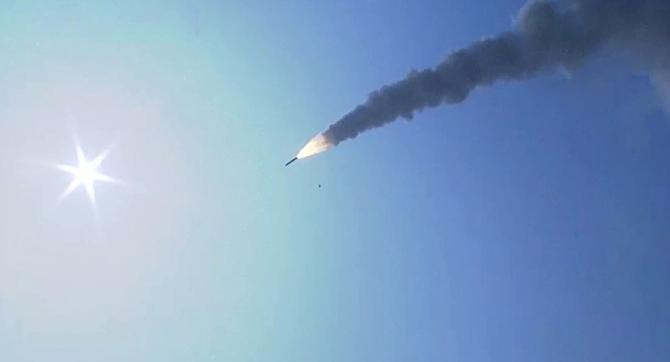
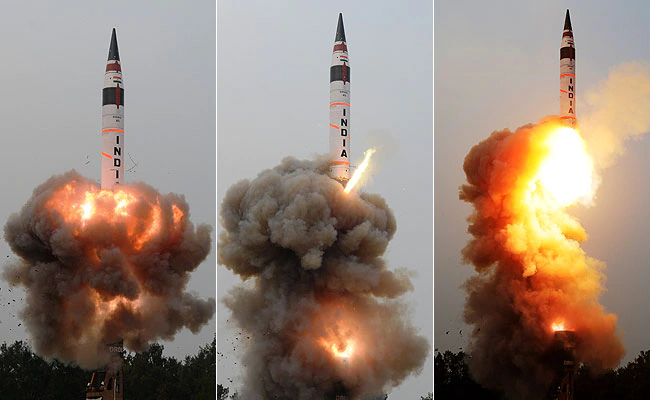
A decision approving a series of test firings of the Agni-5 intermediate range ballistic missile (IRBM) has been pending for the last 10 years. When it was finally taken by Prime Minister Narendra Modi it was done, it seems, again on a one-off basis, and with some reluctance. As to why this should be so is one of those mysteries only Modiji can unravel. It is clear the trigger for the test launch of Agni-5 was not some longview calculation in the wake of the news of the spectacular Chinese test of a Fractional Orbital Bombardment System (FOBS) in the guise of testing a hypersonic glide vehicle, but an attempt by India, a nuclear minnow, to say: Hey, notice me — I’m in the game too!!
Just how far ahead China is may be guaged from the Chairman, US Joint Chiefs of Staff, General Mark Milley, calling the Chinese achievement “significant” and a near “Sputnik moment” for America.
First re: Milley’s Sputnik ejaculation. The US was startled out of its wits when the Soviet Union in October 1957, launched the first man-made satellite — the 80kg, football-sized, orbiter — Sputnik-1, which event the History Division of the US National Aeronautics and Space Administration (NASA), heralds as the “Dawn of the space age”. Incidentally, NASA was created by the stirred and much shaken Eisenhower Administration in 1958. It led, in that period, to the US handily winning the space race by landing Neil Armstrong on the moon in May1969, and meeting President John F Kennedy’s May 1961 challenge to the American science & technology community and industry to do so by the end of that decade.
The shock in a complacent Washington at China’s successfully testing FOBS is as great as when a doubting US was rendered aghast at the Soviet Union’s pulling off a Sputnik some 65 years ago. We can now expect a full-fledged arms race in space to get underway with American companies being pushed, pulled, prodded and incentivised to, as soon as possible, have the US military not just field an array of FOBS, but also technology to neutralize hypersonic glide weapons able to home in on targets at 21 kms per second (Mach 5 to Mach 7 speeds) after transiting through space and re-entering the earth’s atmosphere.
The Chinese FOBS occasioned the 5,000 km Agni-5 IRBM test, which was a sort of small, “me too” reaction by India. There’s no parity, of course, because DRDO’s hypersonic programme is having the usual kind of troubles with this tech relating to the design of the glide vehicle (for smooth reentry) as also with the propellant mix for the initial and terminal phases of hypersonic flight. It may not be like for like, but Agni-5 is the only weapon available to India to blunt Beijing’s tendency to show India up as a strategic nonentity and to prevent nuclear bullying of the kind the Indian army, in the conventional arena, routinely suffers at the hands of the PLA on the disputed border.
Hence, the great mystery about the Indian government’s reticence in showboating with the A-5. And why it is that these Agni’s aren’t regularly fired into the southern Indian Ocean after pointedly sending Beijing notices warning Chinese naval and merchant ships to keep off the designated target areas (whether there are any Chinese ships in the vicinity or not); the idea being to make a splash on the minds of Chinese strategists who are contemptuous of what they consider India’s strategic pretensions.
At the heart of this tragedy is a wimpy Indian government. Consider the pattern: Talented and highly motivated missileers at the Advanced Systems Laboratory, Hyderabad, design and develop missiles of various kinds and associated weapons technologies only for things to come to a shuddering halt as Delhi dithers endlessly first on testing, and then on inducting and deploying these systems, thus keeping the country in a state of peril.
In the CEP (circular error probable) metric to assess accuracy of missiles, the Indian A-5 is as good as any missile in the world. In the event, the country should by now have had, quite literally, hundreds of these missiles — conventional and nuclear warheaded, to provide flexible strike options to take out the most distant countervalue or counterforce targets in China. Alas, test firings of the A-5 have been few and far between, and even though there are variants of the A-5, including one that is road mobile, the A-5 technology would gain refinement from many more and regular test firings. The strategic situation versus China is aggravated, moreover, by a low production rate of Agni-5s with its numbers to-date in the arsenal constituting only a fraction of the desired strength. But at least the A-5 has some testing behind it. They also remain relatively exposed owing to a marked deficiency of invulnerable mountain tunnel complexes to store and stockpile these Agni’s and, in crisis, to trundle out into firing positions clear of the mountainous overhang. The tunnel complexes is was I had advocated during my time on the first National Security Advisroy Board and then in my 2002 book — Nuclear Weapons and Indian Security.
The equally indigenous MIRV (multiple independently maneuverable vehicle) technology that allows a single missile to carry several warheads and to fire them at widely dispersed targets has not been so lucky. Designed, developed and readied for testing as far back as 2001-2002, the MIRV design and tech has been collecting dust in ASL ever since. Three governments in the new millennium –Vajpayee’s, Manmohan Singh’s and Modi’s, have felt no urgency whatsoever to give the green signal to test the MIRV prototype! More likely, as I have argued in my books, they have succumbed to American pressure to not test and induct this disruptive tech. Meanwhile, China took only a couple of years, from design to deployment, for its MIRV-ed missiles to enter the PLA strategic rocket forces’ inventory. [For details of the Indian MIRV tech, see my 2008 book — India’s Nuclear Policy].
If all these factors were not liability enough, we have the Indian government whose lack of strategic intellect is shocking, if not surprising. The collective ignorance of the phenomenon of nuclear deterrence and its dynamics in the highest reaches of the government, the military, in the bureaucracy, generally, and in MEA in particular, is a sad but costly joke at the expense of national security. It is evidenced in the statement issued by the Indian government following the IRBM test launch: “The successful test of Agni-5 is in line with India’s stated policy to have credible minimum deterrence that underpins the commitment to ‘No First Use’.” !!! This is on par with the endlessly repeated piece of idiocy mouthed by politcal leaders, military chieftains, and addle-brained diplomats alike that “nuclear weapons are meant for deterrence, not war fighting.” These strategic-nuclear illiterates are also convinced, for instance, that India’s gazetted doctrine emphasizing “massive retaliation” works even though the last two decades have clearly proven otherwise with even Pakistan mocking India’s nuclear posture by continuing to play the terrorism card and by speedily building up its stock of tactical nuclear weapons whose first use pronouncements, it surmises and the record bears it out, clearly deters India from exploiting its conventional military edge.
Despite the examples of Kim Jong-un threatening to take out Tokyo and the mid-Pacific US military island base of Guam in response to Trump’s talk of “fire and fury” that led to Trump slinking away and earlier, of China preparing to go with nuclear first use if the US tried to impose its military will, Delhi sticks with the simpletonish, one dimensional, view of the utility of nuclear weapons. Hence, the voicing of half-understood concepts like ‘minimum deterrence’ and ‘no first use’ from the Indian government and its representatives. It has consigned the country to a state of permanent strategic disadvantage and left it with no means to leverage a more respectful Chinese attitude to India’s national interest and its position on LAC, or to dissuade Beijing from pushing and pressuring this country at every turn. Xi Jinping and his team are by now only too aware that the Indian worm — nuclear or otherwise, does not turn.
[Modi going to inspect a Guard of Honour presented by the Bhutanese Army in Thimpu]
“Who will not want a friend and a neighbour like Bhutan?” an elated Prime Minister Narendra Modi asked rhetorically, after wrapping up his visit to Thimpu, August 19, 2019. “The two countries are living the definition of true friendship.”
He had just concluded a warm, friendly, and successful visit during which 10 Memoranda of Understanding were signed in several fields ranging from space, avaiation Information Technology, power and education. Modi also inaugurated the Rs. 4,500 crore, 720MW, Mangdechhu hydroelectric power plant in central Bhutan, one of a series of power projects India has helped finance and build over the years to harness that country’s rivers to the tune of 10,000 MW — a milestone reached last year. It is electricity an energy starved India buys back at remunerative prices in a virtuous cycle of joint Indo-Bhutanese planning, Indian investment and construction, and goodly economic returns for both parties.
Two short years later, it was the turn of Beijing on Oct 14, 2021 to crow that the “deadlock” had been broken in the talks begun in 1984 with Bhutan to settle the border, and that the latest (24th) virtual round — of characteristically interminable negotiations (a tactic the Chinese use to break the opposing side’s patience and resolve), had resulted in Thimpu agreeing to a three step process for final demarcation of the disputed Sino-Bhutanese border, and the establishment of formal diplomatic ties.
Soon India will no more have Bhutan to itself . Wth a doubtless big, fully manned, Chinese embassy in Thimpu contesting the diplomatic space with India, the Chinese will overwhelm the Bhutanese with offers of infrastructure projects and easy credit to built them and, perhaps, a Chinese military training scheme and transfer of armaments to compete with IMTRAT (Indian Military Training Team). Bhutan too will begin doing what other South Asian states — Sri Lanka, Bangladesh, Nepal and Maldives, have learned to do do — profitably play New Delhi off against Beijing. That’s the least of the problems though.
What’s really worrisome is that MEA had no inkling about this development, was caught unawares and was surprised by this breakthrough coming down the pike. For Bhutan, an Indian protectorate in all but name, to keep such an important decision — one to cut a deal with Beijing a secret, suggests Thimpu may be willing to agree to an exchange the Chinese had proposed in 1997: Beijing giving up its claims in central Bhutan for territory in western Bhutan that includes the Doklam trijunction with India. Except, per an earlier three way agreement, any decision on Doklam has to be in consultation with India. It will be interesting to see how Thimpu and Beijing manage this, assuming MEA doesn’t just lay down as is its habit and let the Chinese run a steamroller over its diplomats.
Doklam is where Chinese ingress by way of roadbuilding southwestwards towards the Siliguri corridor — the “chicken’s neck”, had almost sparked hostilities in June 2017. Some 270 Sikkim-based Indian troops alongside two bulldozers had then stopped the Chinese road construction. That standoff did not, however,result in a PLA withdrawal from that area and the Chinese completed the road. Then in mid-2020, while India was preoccupied with the Chinese transgressions in eastern Ladakh, Beijing laid claim to the Sakteng wildlife sanctuary in eastern Bhutan. In response, India proposed constructing a road through the Yeti region of Bhutan to Tawang, cutting the distance to Guwahati by 150 kms to enable faster shifting of land forces in an emergency. It is not known whether there’s progress, if any, in this project. And this is where matters stand today.
The historic pattern is that India always reacts and reacts some more, never ever taking the initiative at any time for anything in terms of aggressively occupying contested land, especially where China is concerned. It seems fearful of the inevitable Chinese response, which it apprehends the Indian military will not be able to deal with. The Indian army is silently complicit in this arrangement because it doesn’t — if it can help it — want to tangle with the PLA handing it, in the process, the psychological edge. Signalling in any way reluctance to engage in military action is tantamount to ceding ground.
How one wishes for a dashing General Sagat Singh to emerge from somewhere, take charge, and get a fist up PLA’s nose, as he did as GOC, 17 Division, at Nathu la in 1967.
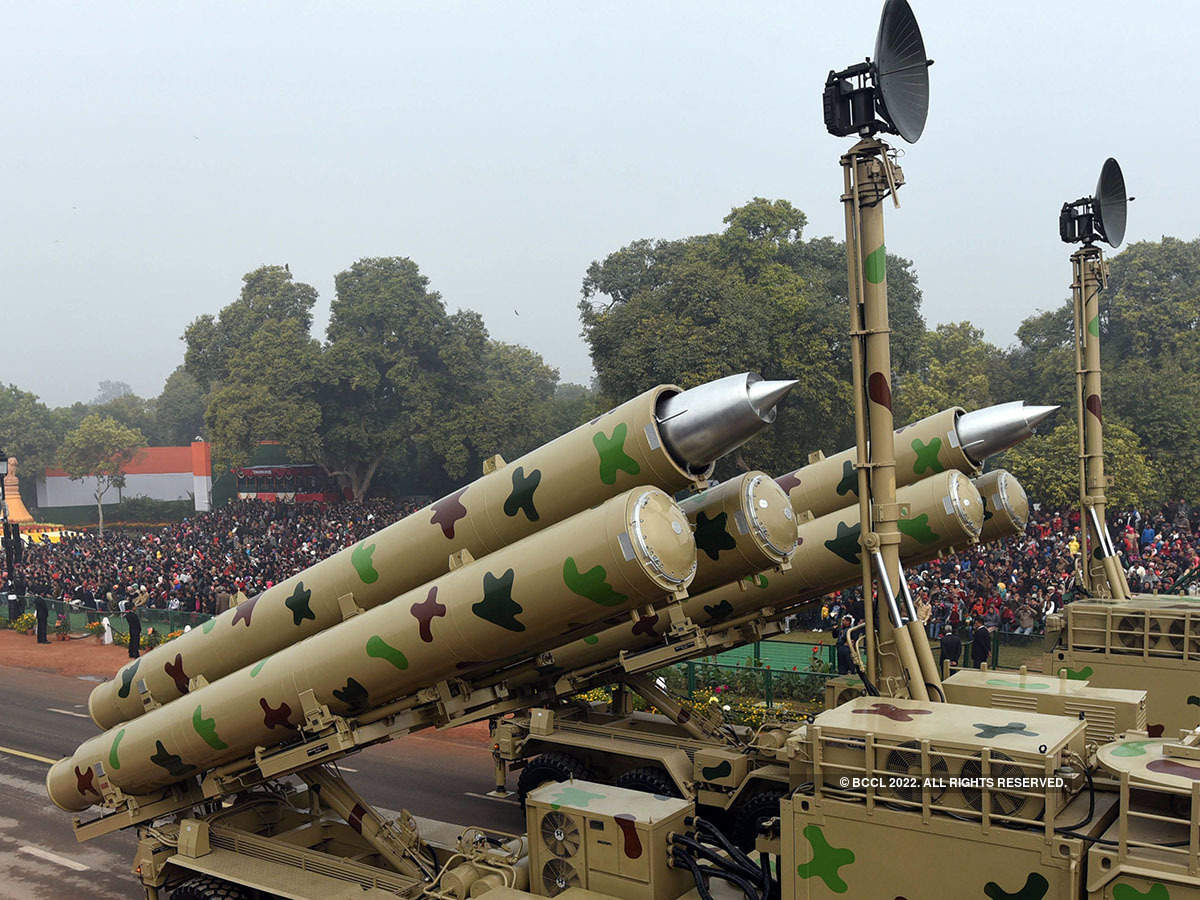
Meanwhile, with Bhutan in the bag China has about finished its grand geostrategic design of encircling India, and confining it to its subcontinental strategic coffin. Circlement and counter-encirclement are at the core and the very essence of Chinese military maneuvering and strategy. It is something the strategically dim-witted Indian government has historically been unable for some incomprehensible reason to even envision, let alone practice. So, while India’s neighbourhood is now palpably under Chinese control with Pakistan posing as Beijing’s stalking horse, the Chinese periphery is terra incognita and, owing to Indian diplomatic and military passivity, is getting beyond India’s political-military reach. In this respect consider the heavy weather the Indian government has made over the last 20 years of merely transferring Brahmos cruise missiles to Vietnam when this should have been A-1 priority. Indulging periodically in Malabar naval exercises with the US and other navies in the seas WEST of the Malacca Straits is not going to cut it.
Ah, yes, but as I have always reassuringly reminded everybody, there’s fortunately Pakistan to berate and beat up on, and threaten more Balakots with — no matter that the original Balakot aerial excursion, as I had mentioned in a post soon after that “operation”, was a bad joke, a non-event. (Refer my March 19, 2019 post — “IAF goofs and Delhi’s post-Pulwama debacle: A post mortem” at https://bharatkarnad.com/2019/03/19/iafs-goofs-and-delhis-post-pulwama-debacle-a-post-mortem/)
Pakistan, I suspect — Home Minister Amit Shahji please note — would welcome your verbal “sturm und drang” topped with such harmless military Indian actions!
An imminent Sino-US war over Taiwan makes for sensational analysis, but is unrealistic and, military-wise, unsound assessment of likely hostilities. A spate of ill-informed media commentaries and the like have been published, many of them by Mandarin-speaking former diplomats who ought to know better. A former Foreign Secretary Shyam Saran, for instance, in an op-ed (https://www.thehindu.com/opinion/lead/a-taiwan-flashpoint-in-the-indo-pacific/article36933319.ece) propagated the questionable thesis about China initiating an offensive on the grounds of a growing power imbalance — of Beijing acting sooner to forcfully reunify Taiwan with the mainland because doing so later would mean having to contend with a more powerful enemy lineup with a nuclear submarine equipped-Australia firming up the forward maritime stance of the new military alliance on the block — AUKUS (Australia-UK-US).
Further, his contention of bilateral Taiwanese capital stock worth some $188.5 billion in 1991-2020 or 15% of Taiwan’s GDP invested in China versus China’s $2.4 billion investment in the island-nation trade far from adding up as evidence actually suggests a contrary conclusion — a disincentive for Beijing going to war in the context of other sources of FDI slowly drying up, and China getting slowly economically isolated.
The massive flyovers staged in recent days by the PLA Air Force over Taiwan are, moreover, no more precursors of war than the US Navy periodically despatching its warships on freedom of navigation patrols (FONOPs) through the Taiwan Strait, or US troops regularly visiting Taiwan to jointly train with the Taiwanese armed services. As actions go, these are more show of force and symbolic than provocative. Had the Chinese planes dropped bombs or the Taiwanese air defence systems brought down an intruding aircraft or two is when the fat would be on fire. This last won’t happen because the Democratic Progressive Party government in Taipei, convinced America would offer no more than expressions of solidarity in defence of Taiwan, has no reason to challenge Beijing. And because all the talk out of China, including by Xi Jinping, about reunification — peaceful or otherwise notwithstanding, PLA simply does not have the capacity for a sustained military invasion and capture of the offshore island, especially one that, intelligence and cyber-wise, long ago penetrated the mainland defences and would have almost instantaneous knowledge of any decision to invade made by the CMC (Central Military Commission), which would void the surprise element. The PLA generals know all too well that an invasion would trigger an all-out Taiwanese response.
More than half of any Chinese invasion fleet is expected to be sunk by concentrations of shore-based Harpoon cruise missiles supported by a host of Taiwanese air and sea launched land attack and anti-ship cruise missiles — the 120 km range Hsiung Feng II, the 150km Hsiung Feng III, and for strategic deterrence the 600 km range Hsiung Feng IIE, and the 120km short range Wan Chien ballistic missile. Taipei is also developing on a war footing masses of the 2,000km range Yun Feng cruise missile to reach Beijing. And any attempts at aerial bombing is negatived by a dense and effective Taiwanese air defence. But even without the Yun Feng, Taiwan’s missile forces can, at a minimum, devastate the entire manufacturing base around Shanghai and its hinterland and up the Fujian province coast opposite Taiwan, and fully wreck the flourishing Chinese economy. Taipei knows this, and so does Beijing.
Sure, the 2049 dateline looms by which Xi Jinping would ideally like to see a reunified China with Taiwan accommodated in some version of a “One China, two systems” compromise. But while Xi may be an ideological blowhard, he is not a military idiot, however much he is urged by certain higher sections of the PLA command to once and for all and early sort out the Taiwan problem. So, where’s the question of war?
Indeed, just to clarify the Taiwan situation for an Indian audience, the possibility of forcible reunification of Taiwan with China is less of a flashpoint than Kashmir is — and this when the prospects of the Pakistan army attempting to wrench Jammu & Kashmir from India’s grasp is less than zero — whatever posturing Indian generals and militarymen eager to justify a wonky Pakistan-fixated Indian force structure and the ocassional brain-addled Pakistani politicians, may say.
From an Indian perspective, nothing would better serve India’s national interest than for China’s economy to get it in the neck and for Beijing to get diplomatically sidestreamed with a PLA misadventure against Taiwan, and one would very much hope that Xi is somehow persuaded by his military chieftains to start a real hard affray that Taipei is compelled to react violently to. But because this is unlikely, what’s next best India can do, proactively?
It has been Taipei’s policy before the DPP regime under President Tsai Ing-wen hove into view of Taiwan prudently disinvesting from China and moving its monies to more politically receptive climes. It was the context for the Taiwanese trade representative in Delhi — ambassador by another name, complaining to me some 20 years ago that the Indian government was doing nothing much, if anything, to attract Taiwanese investment capital in order to kickstart India’s development as a manufacturing hub for the world — something Indian governments Vajpayee’s onwards have been yacking about but doing little substantively to realize, and to otherwise assisting Taiwanese capitalists and manufacturers to do for India what they did for China in the Eighties and after.
The BJP government of Narendra Modi, on its part, seems entirely unmindful of the need to intensely cultivate Asian investors and companies, especially Taiwanese, Japanese and South Korean, to shift their production bases to India with attractive tax holidays, automatic “one window” clearances, and extensive language training and cultural acclimatization to speedily create a class of Mandarin-speaking Indian youth, say, to act as intermediaries, whose absence the Taiwan ambassador in Delhi long ago asserted was the single biggest obstacle — the other being the oppressive bureaucratism of all state authorities, state and central, to the flow of Taiwanese capital and production wherewithal into India. It is a problem the Indian government has failed to address.
While Modi’s ardour for Chinese infrastructure investment may have dropped down to realistic levels owing to happenings in eastern Ladakh and elsewhere along the extended Line of Actual Control, it is replaced by a hope of convincing American companies for FDI increases and manufacturing investment. Except, the Biden Administration’s priority is not India’s economic betterment, but welcoming investors from everywhere just so that the so far “jobless growth” produces more employment in the US.
Taiwan, Japan and South Korea are the biggest investment and technology sources India can productively tap, which the Indian government has done little to court and incentivize. It is time the DRDO, IISc, Bengaluru, and the IITs begin collaborating, for example, with the National Chung-Shan Institute of Science and Technology in Taipei that is designing and helping local companies produce world class weapons, platforms amd sensors to arm its own military. This is so because the Modi dispensation, unfortunately, is hung up on the US and the West as the locus geneses of these things, enabling Washington to play New Delhi like a fiddle with S. Jaishankar, the most destructively pro-American diplomat in history as first Foreign Secretary and now foreign minister advancing Modi’s harmfully overt policy tilt. Just what such policies have fetched India and how much real weight Modi packs in Washington, in the US, the West and in the world generally, as a result was evidenced from not a single major American newspaper covering the recent Modi-Biden meet in the White House, the so-called Quad summit in Washington Sept 24 — what little exposure this last event got related to the nuclear submarines to Australia-angle, and from the fact that Modi addressed a near empty hall in the UN General Assembly, September 25.
The sooner Modi appreciates that India’s future is tied to the future of Asian states whose interests too clash with those of China, the lesser will be the delay for the present counterproductive US-dependent Indian strategic security policy to correct itself and get back on track to genuine “strategic autonomy”.
Other than the necessary economic initiatives to attract Taiwanese, Japanese and South Korean investment capital and manufacturing, and technology, the Modi government can signal India’s strategic intent by ordering regular and frequent sailings of Indian warships and flotillas, through the disputed waters of the South China Sea, of course, but more meaningfully also through the Taiwan Strait with Indian naval vessels carrying out, to begin with, simple jackstay-kind of exercises with the Taiwan Navy and docking pointedly at major naval bases on the island-state’s east coast, such as Su’ao, headquarters of one of its leading units — the 124th Fleet.
Isn’t it time India responded in kind to Chinese naval sailings in India’s Indian Ocean domain and Chinese surface combatants and submarines docking at Karachi or in Humbantota at will?
Whatever the other effects of the Taliban takeover of Afghanistan, it has transformed global geopolitics. It sparked four notable geopolitical events. Apprehending China as potentially the principal beneficiary of the emerging order in Central Asia and, through its most important regional client, Pakistan, in southern Asia and, possibly, the Indian Ocean region as well, the United States countered with a new military alliance with its old Anglo-saxon partners — AUKUS (Australia, United Kingdom and US) to replace the moribund Cold War-era ANZUS (Australia, New Zealand, US).
Paris reacted with vehemence with a visibly agitated French foreign minister Jean-Yves Le Drian calling it a “stab in the back”. Not only because France lost a US$ 65 billion contract with Australia for its Barracuda diesel submarine that would have kept its high-tech military sector in the clover for a while but because a supposedly trusted, traditional ally, the US, trumped it by offering a nuclear-powered attack submarine (SSN) along with its production expertise, something Canberra could not refuse. It led to Paris renewing its call for a European security alliance that Germany too supports and for the same reason that NATO, rather than protecting Europe and advancing European interests, acts as a handmaiden of the US.
Besides damning AUKUS as a destabilizing move and a strategic provocation, Beijing has reacted by mooting an Africa Quadrilateral of China, Russia, France or Germany, and a group of African countries as counterweight, also to the India-Japan-US-Australia Quadrilateral. But this Africa Quad is a stillborn idea, their immediate anger aside, because neither France nor Germany intends to deal a deathblow to NATO, and because few of the prospective African member states want to alienate the US.
That leaves the future of the original ‘Security Diamond’ or Quadrilateral to contain China that the former Japanese prime minister Shinzo Abe had conceived in 2007 up in the air. AUKUS has occasioned serious doubts about the utility of the Quad other than as its strategic backup — a distinctly subsidiary role neither India nor Japan signed up for. In order to mollify hurt sentiments and to preempt a rethink on the Quad by New Delhi and Tokyo, President Joe Biden convened the Quad summit in Washington and scheduled one-on-one meetings with Prime Ministers Narendra Modi and Yoshihide Suga September 24-25. But these meetings have not dissipated the confusion and doubts about America’s intentions.
Arming Australia with a fleet of nuclear attack submarines is, however, a US decision with a fallout. Apparently, Washington considered the fast-changing Asian and international ‘correlation of forces’ to be alarming enough to part with its military crown jewels — technologies constituting the Virginia-class SSN firing Tomahawk long range cruise missiles, a deal that includes the wherewithal to manufacture the boat. To speed up the process of nuclearizing the Australian Navy, moreover, the US reportedly is even considering handing off to the Aussies the three Guam-based Los Angeles-class SSNs as platforms for training crews and maintenance personnel. Until now, the UK was the only country to benefit from such American technological largesse, with Britain being helped to produce eight Trafalgar and Astute-class SSNs and four heavier Vanguard-class nuclear powered ballistic missile-firing submarines (SSBNs).
An Australian Navy with Tomahawk-equipped SSNs does three things. It terminates any plans President Xi Jinping may have had to invade Taiwan with a naval armada and forcibly assimilate it into mainland China by 2049, the centenary year of the Communist revolution, by when Beijing expects the country to surpass the US as the wealthiest country in the world and as a military power to be at least the equal of America. Secondly, it heralds the end of the inequitable nuclear nonproliferation order based on the 1968 Non-Proliferation Treaty. With the US onpassing lethal nuclear technologies to an ally, Washington will be in no position any longer to preach nonproliferation and sanction proliferators.
And thirdly, it starts the clock on Japan and South Korea acquiring nuclear arsenals of their own, convinced as they would be by now that while the US will go to any extent to protect its interests and those of its fellow Anglosaxon partners, and AUKUS is evidence of it, traditional Asian allies of the US cannot bank on Washington to effectively deliver extended nuclear deterrence against an aggressive China. Thinking along these lines began in recent years in Tokyo and Seoul around when the Republican presidential candidate Donald Trump in 2015 advised the Japanese government to go get nuclear weapons to tackle the nuclear sabre rattling North Korean dictator Kim Jong-Un. And this when the far more onerous security threat then as now continues to be China. The US reticence in challenging Beijing militarily is as pronounced with the Democrat Joe Biden in the White House as when Donald Trump was president. But it meshes with America’s long term objective of a G-2 ruling condominium with China that was first outlined by President Barack Obama. AUKUS only furthers this aim.
Most of these developments are unhelpful from the Indian perspective. For instance, building up Australia’s naval muscle will not lessen the Chinese pressure in the Himalayas. But the alacrity with which Washington transferred its most sensitive military technologies to Australia has contrasted badly with the American foot-dragging evidenced in the 2012 India-US Defence Trade and Technology Initiative that, other than hot air and shrill sales pitches for the antique F-16 (dressed up as a modern F-21) fighter aircraft, has to-date produced no transfer of advanced technology or any collaborative project.
On the collective security front, with AUKUS emerging centre stage, the Quad has receded into the background as has India’s importance. India can, however, avoid becoming a bit player in an US security scheme by organizing an India and Japan-led modified Quadrilateral (Mod Quad) with Taiwan replacing Australia and a group of Southeast Asian nations substituting for the US, with AUKUS free to cooperate or not with the Mod Quad militaries in restricting China’s options. India has no other alternative to retain its independent strategic status and standing.