

[Modi at AeroIndia 2023]
Striving to make India a technology power self-reliant in armaments in the 21st Century and aware that the public sector never was, is not now, and never will be in a position to realize this grand objective by itself, Prime Minister Narendra Modi at AeroIndia 2023 in Bangaluru urged the burgeoning private sector companies in the country “to invest in India’s defence sector as much as possible”. He reminded them that their investment “will create new avenues for …business in many countries …apart from India [and that] there are new possibilities and opportunities” they “should not let go”.
Fine words from Modi laden with sentiment that over the last several years has fueled his atmnirbharta policy. If defence self-sufficiency could be obtained by rousing rhetoric and public exhortations alone, India would long ago have attained it. The problem is the eco-system for technology creation and innovation is being methodically stifled by officials of the over-bureaucratized Indian state. Despite the Prime Minister’s harangues, and PMO’s pressure and pushing and pulling, the Government of India system is such that the various agencies in it have neither uniformly followed the PM’s atmanirbharta directives nor, more importantly, internalized them. It has left the bureaucratic/technocratic nabobs ruling their small fiefs in innumerable ministries and departments of government free to impede at will the atmnirbharta initiatives. They selectively use old rules and regulations still on the books to justify decisions even when these have been superceded by new instructions! In other words, they cherry pick the rule and regulation to torpedo projects and programmes promoting atmnirbharta.
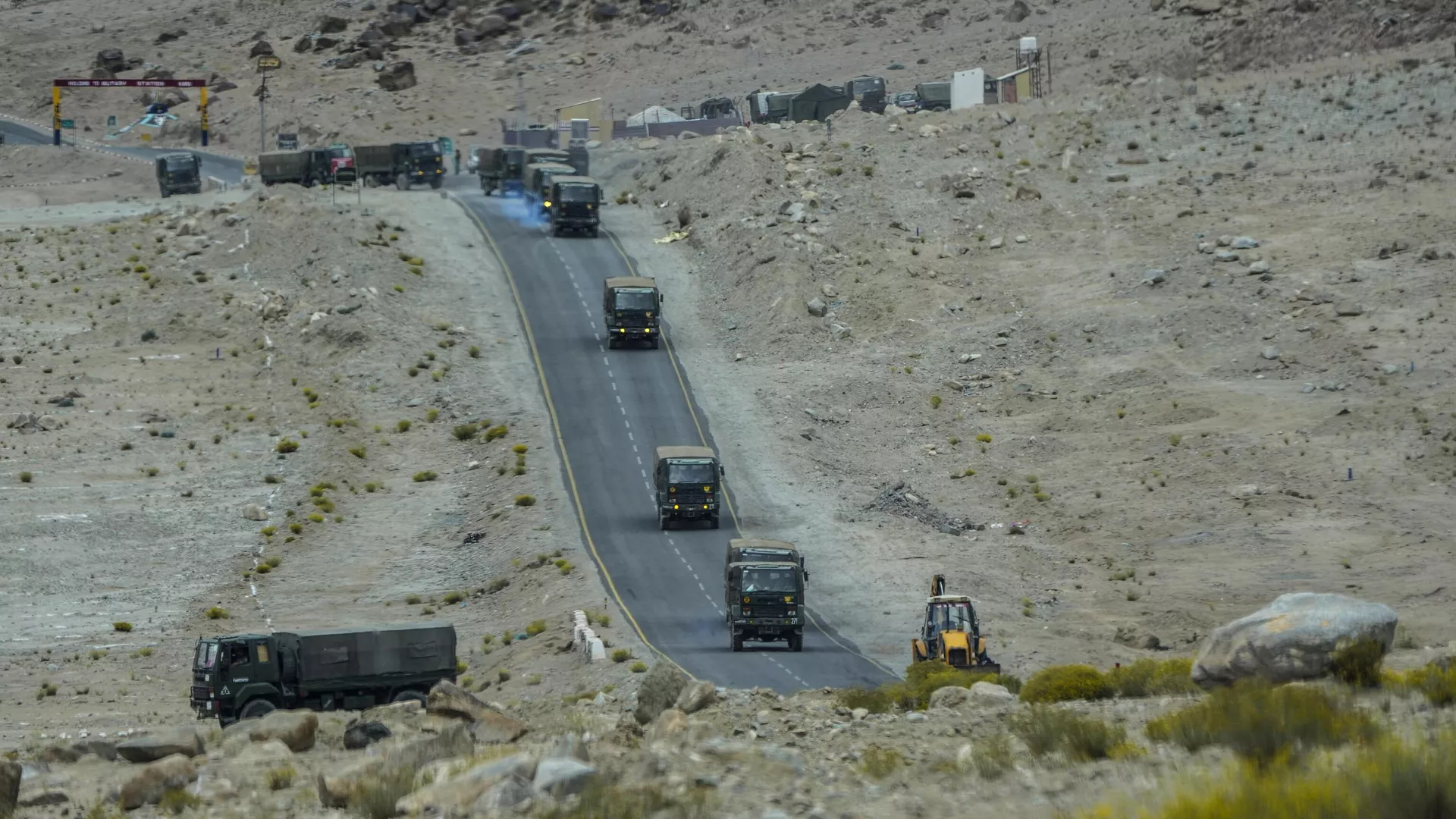
Take the case of a critical Tactical Communications (T-Com) project the Indian army has embarked on to obtain a secure, mobile, battlefield telecommunications net with system integrity for deployment along the borders, especially useful on the overlong Line of Actual Control in the mountains. System integrity is assured by having at its core technology that both hardware- and software-wise is ABSOLUTELY free of embedded bugs and malware — something that can only be guaranteed if it is wholly of Indian origin. Otherwise, the frontline army formations equipped with foreign tech will be as exposed and vulnerable to enemy cyber atacks and foreign penetration and manipulation as the rest of the country is by China’s Ministry of State Security.
This is so because the Indian Government did not display — surprise! surprise! — the strategic nous and foresight to prevent Huawei and other Chinese companies from freely selling at cut rate prices 4G gear developed by them with massive Chinese state subsidies, to public sector communications companies — BSNL and VSNL, and also to numerous private sector firms who entered the business some 20-odd years ago. As a result, the nationwide mobile telephone system, parceled out among several private sector firms and majorly based on Chinese telecommunications tech, serves as remotely activated intelligence sensors/platforms in situ for Beijing to exploit. China can monitor communications within India, subvert the Indian and state government decision processes, shut down power grids and industry, disrupt the economy by throwing the market and financial institutions into turmoil, and otherwise ruin this country at any time. This is Suntzu’s basic principle of strategy of winning without war at work!
The communications technology in question is radio telephony and involves voice/information modulated on to radio waves at radio frequencies meshing with internet protocol, etc. The technology to convert voice and data and to propagate this package via radio waves, is at the centre of it. It is used by all advanced militaries. The Indian armed forces are only now seeking it. Civilian mobile telephony is facilitated by static towers dotting the urban terrain and the countryside to which are attached “networking boxes” for voice/data conversion and radio propagation The military, however, has to have masts with antennae connected to these boxes that are latched on to mobile platforms to enable forwardly placed military units within range to access, via mobile telephones, a ready, all-weather, 2-way encrypted channel of communications with the unit commander/command centre. A collection of such mobile platforms can effectively cover an extended border to subserve tactical military operations.
The Indian army has woken up to the need for such a T-Com system. A ‘Project Management Office’ in the Signals Directorate, Army HQrs, a couple of years back drew up the military specifications (milspecs) for such a battlefield communications system, and companies were invited to tender initially for a “sample” system of 200 “networking boxes” connected to 10,000 mobile phones worth Rs 200 crores. The incentive was that on approval of technology, the winning bidder can expect to get the much larger contract for 5,000 of these boxes, each costing rupees one crore, for a deal valued at Rs 5,000 crores.
Some 22 companies entered the competition, 20 of them system integrators — meaning they have purchased various commercially available tech and components mostly from abroad and cobbled together a T-Com system that meets the milspecs, and involves no original, proprietory, technology of their own. Only two companies in the competition are Original Equipment Manufacturers (OEMs) with their own patented technology, inclusive of hardware, software and the necessary algorithms. These firms — Lekha Wireless Solutions Pvt. Ltd and Signaltron, are both Bangaluru-based and in the micro, small and medium enterprises (MSME) category — the sort of companies Prime Minister Modi has publicly heralded as the cutting edge of the nation’s efforts to become a technology power. Signaltron even designed its own chip for its tech system!
In pre-bid meetings held last year, the two MSMEs informed the army Signals’ project management office and the Integrated Financial Adviser (IFA), Ministry of Defence — the nodal person approving this contract, that they were not in a position to meet one of the three “eligibility criteria” as per old corpus of rules that companies bidding for this contract were required to meet, namely, the one relating to the value of turnover which had to be greater than 30% of the project cost of Rs. 200 crores. This financial requirement has been superceded by a newer rule that mandates exceptions be made for MSMEs, which the IFA studiously ignored in this case. The other two criteria concerning evaluation of technology and ability to manufacture were easily met by both firms. Lekha and Signaltron were pointedly advised at these meetings to proceed regardless, and to prepare their technology for technical evaluation in February 2023.
Then, out of the blue, in end January this year, the two Indian MSMEs got a formal letter from the IFA rejecting their bids, thereby removing their technologies from even the technical evaluation stage. Incidentally, the army signals officers interfacing with these two companies had already become familiar with the technology of at least one of them, and were generally impressed by its quality and performance. In the wake of this sudden jolt, the MSMEs sought an explanation from the IFA, pleaded for meetings and, at a minimum, technical evaluation of their technologies. They received no response to repeated entreaties. Meanwhile, the formal evaluation of T-Com technologies, all of them foreign sourced, offered by the 20 other ‘system integrator’ companies, which began on February 8 ended on February 14, leaving Lekha and Signaltron the only bidders with patented and proven tech with a Valentine Day’s gift of being summarily kicked out of the technical evaluation phase and hence the bidding process as well!
In this tragic chain of events, hearteningly, the Department of Telecommunications (DOT), that was once a steadfast pusher of Huawei products, has turned the corner and is now one of the strongest supporters of indigenously-developed telecom technology. Senior DOT officials helped the two MSMEs negotiate the Byzantine maze that is the Government of India bureaucracy, opened doors for them in the Defence Ministry, and even wrote supportive letters, presumably, to the IFA. It made not the slightest difference. Indeed, it was DOT that helped Lekha to launch a pilot project for its radio-connected communications system in 100 villages in two Karnataka Districts (Tumkur and Mandya) to demonstrate its technology. More disquieting still, Lekha, a winner of the Innovation for Defence Excellence (IDEX) award in 2019, whose technology was cleared for field trials in 2021, and by next year expects to field original 5G technology, is presently outfitting 5 warships of the Indian Navy with a maritime variant of its T-Com technology in a deal worth some Rs 6 crores. If the army needed any military validation of Lekha’s technology, all the army project office had to do was inspect the underway naval project Lekha is successfully prosecuting. This was not done. Many industry-wallahs suspect the reason is lack of any real appreciation in the army of the new technology concerned with radio telephony as many in the Signals branch regard it as another version of Wi-Fi and, hence, do not want to challenge the civilian IFA’s decision!
Then again, because every department of the Indian government works in silos, and each armed service likewise functions in silos with different combat arms within each of these services functioning in their own mini-silos, no one person, no one organisation, in the entire MOD has any holistic idea of what technology is being employed where and being tested by whom, and with what results. So, every service and the IFA, under the slogan of atmnirbharta, goes off on its own in the technology arena, does its own thing! Atmnirbharta is the last thing this whole frightfully wasteful mess of a technology acquisition system has on its mind, and it doesn’t matter that it is sans vision, a long term road map, and accountability. It is also apparently beyond corrective measures, and does not give a damn for the Prime Minister’s defence self-reliance directives, dismissing it as so much political hot air, reducing Modi and his PMO, in the process, to passive spectators of this continuing boondoggle!
So, which are the companies likely to win the army’s T-Com contract? Why, two public sector units (PSUs) of course! — ECIL (Electronics Corporation of India) and BEL (Bharat Electronics Ltd). These two PSUs, not known for technology creation and innovation, have survived by doing the usual defence PSU stuff — screwdriver imported technologies, or tinker with them. In the present army’s T-Com case, ECIL and BEL are Trojan Horses for technologies from Ericsson of Sweden and Nokia of Finland, respectively. And Sweden and Finland recently joined NATO. So, if it is not China doing the damage, it will be NATO countries holding the Indian army’s battlefield-related operational command and control communications at risk. It seems the army is prepared to court such risk. Shouldn’t the Chief of the Army Staff, General Manoj Pande do something about this?
And, why, pray has the Integrated Financial Adviser, MOD, made this manifestly anti-national, anti-atmnirbharta decision? People in the know speculate that permitting Lekha and Signaltron to prove their technology and secure the T-Com deal would “open up a can of worms” because the present IFA and past incumbents in the post have over the years consistently and regularly disqualified Indian MSMEs from winning such technology contracts on the basis of the financial eligibility criterion that for obvious reasons they cannot meet (or they would not be counted among small and medium enterprises!). That there are considerations on the side offered by foreign OEMs to incentivise such decision-making cannot be ruled out, considering just how infused with corruption the entire defence procurement system is.
Disappointed and despirited, Lekha and Signaltron are being told by their contacts in MOD that the decision of the Integrated Financial Adviser, can only be reversed by “higher ups”, meaning by the PM and by Rajnath Singh who, alas, is a know-nothing, do even less cow belt politician who in technical defence matters has no clue about anything (but, if it is any consolation to anyone, is markedly better than one of his predecessors in office also from Uttar Pradesh, the late Mulayam Singh, who spent his entire tenure as Raksha Mantri kvetching about files not being translated into Hindi!).
It will require Modi and his PMO to wield the whip to bring this obdurate IFA to heel, and afford Lekha and Signaltron an opportunity to get their patented tech evaluated and approved, and to win the T-Com contract. It will help the winning MSME to scale up its capabilities for bigger, more challenging, national security tasks ahead, and send a message of hope to a down-in-the-dumps defence MSME sector. Either Modi pulls up the IFA and makes an example of him by punishing him with a posting to some far corner of the Lakshwadweep Islands where he can do little harm, or alternately hands him his retirement papers. Or, by doing nothing, prompts hordes of babus to make mincemeat of his atmanirbharta policy and programmes, leaving India exactly where it always was — a perennial arms dependency.







 Security Wise