[At SCO meeting of Defence Ministers — Rajnath Sigh and General Li Shangfu]
In a separate bilateral April 27 on the occasion of the Shanghai Cooperation Organization meeting of defence ministers, Rajnath Singh and People’s Liberation Army General Li Shangfu began and ended their session with the Indian leader refusing to shake hands with his Chinese counterpart to show host country India’s disquiet about China’s continued unwillingness to disengage from forward positions in the Demchok area and in the Depsang Plains where PLA is in commanding position. The Narendra Modi government’s expectation was that the first step involving the pullback especially by the Indian Special Frontier Force unit entrenched on the Kailash Range heights and, therefore, directly threatening the sub-sectior-wise important PLA garrison in Moldo, would be quickly followed up by the Chinese withdrawing from the Y-Junction on the Depsang Plains and the Demchok area. The perennial sap that it is, India found its expectation belied as the Chinese failed to deliver on the promise. Instead was witnessed the predictable spectacle of Shangfu acting as if nothing whatever is amiss in Ladakh and pleading for New Delhi to end the military standoff and normalise relations, entirely ignoring Rajnath’s assertion that the Chinese need to restore the status quo ante as existed in Spring 2019 before the PLA got into blocking positions, annexed that belt of Indian territory and, by way of reminder of who is boss, precipitated the bloody encounter on the Galwan River.
Not that Rajnath’s snub is going to resonate with Shangfu in the manner, say, US President Dwight Eisenhower’s Secretary of State John Foster Dulles’ pointedly ignoring Chinese Premier Zhouenlai’s proffered hand did in Geneva at the 1953 Indo-China peace conference. It was so resounding a public insult and hurt Beijing’s amour propre so deeply US President Richard Nixon, to salve the Chinese ego, made amends 20 years later when seeking an “opening to China”. He approached Chairman Maozedong with a big ingratiating smile and hands outsretched well before he got to anywhere near the aging supremo. America was forgiven but the incident has never been forgotton by Beijing which insists that Chinese diplomats still affect a certain hauteur when interacting with US officials at all levels and in every instance.
A weak-willed India and its government historically lacking strategic vision and thinking, tactial military nous and, despite six decades of experience of Chinese behaviour, has willfully suspended its disbelief and, by way of a default policy, accepted new sets of promises and commitments to maintain peace and harmony on the border. The result of the Indian government and its negotiators being so easily suckered is that Chinese leaders, PLA generals and government officials alike in meetings with their Indian counterparts can barely conceal their contempt (reflected in the above pic: a tense Rajnath facing an amused Shangfu!)
Beijing plays for time and tests India’s patience, straight facedly repeating the stock phrases about India, in effect, needing to move on and, by the by, to help the Chinese economy get back on its feet by accepting increased Chinese exports even if it means exacerbating the current trade deficit of some $70 billion!
But if Rajnath’s disdainful gesture is not a one-off thing but, rather, a calculated turn in the country’s strategy — a harbinger of a hard-nosed attitude and more stringent China policy, then the following logical follow-up steps are necessary:
For starters, instead of tippy-toeing around the option, New Delhi has to begin actually applying the tourniquet on bilateral trade, gradually closing off market access, firstly, to Chinese light manufactures and capital consumer goods (mobile telephones of every description, MG cars, Haier household goods — airconditioners, washing machines, etc.) and, secondly, shutting the door on the Chinese teleecom giants — Huawei, ZTE, etc,
The trouble is the government does not seem to be very resolute about a more confrontationist policy. The Indian government ruled that no telecom company, public sector or private sector, can go in for any 5G Chinese telecom gear for system modernization or conversion. Does this ban not uniformly apply? If it does then why has Vodafone Idea, for example, not got the message? Because recently Vodafone chose the Chinese company ZTE’s 5-G transmission gear worth Rs 220 crore to upgrade its network. Vodafone did so, it confessed, because of the competitive price on offer. But low priced bids, everybody knows by now, is made possible solely because of institutionalised subsidies provided such firms by the Chinese government. Except, such subsidies can be the reason, under World Trade Organization rules, to kick Chinese companies out of the Indian market for good by imposing punitive tariffs on them to make their products uncompetitive price-wise. It is a legal remedy the Indian government has so far not availed of regarding any commodity or goods when, in fact, no Chinese manufacture is not state subsidised in some manner or the other.
More worryingly, how did the ZTE-Vodafone transaction manage to escape the attention of various agencies of government tasked with putting an end to such deals? Surely, the National Security Council Secretariat has not approved of this contract as is required to be done. But if this deal is proceeding regardless, is it an indication — and it is the best spin on this development — that the Modi regime is leaving a little negotiating slack for itself, trying to see if the abeyance of a ban on residual deals involving Chinese telecom tech can be used to lever more give on Beijing’s part in border negotiations? This reading seems right considering the Coordinator for National Cybersecurity, retired army Major General Rajesh Pant, did not respond to a press query regarding the ZTE hardware sale in question.
If such deals are perceived as genuine leverage against China, then the Indian government is wrong on two counts. Firstly, the Xi Jinping dispensation has showed time and again it would rather the export revenues of Huawei/ZTE plummet than cede contested territory. Secondly, even if any concessions are made by the Xi Jinping government it will be to a United States it considers its peer rival and whose market it cannot do without, not to India. For instance, Huawei tried to offset Washington’s security concerns by offering American telecom companies source codes and operating algorithms for its 5G gear. No such offer has been made to India.
That is why vis a vis China, India, policy-wise, is in a zero sum context and has to blunt with the severest measures Beijing’s attitude that it can extract territorial, economic, trade, and political benefits by pressuring New Delhi and running diplomatic circles around the Indian government.
It is best to know that any Chinese 5G gear integrated into private sector telecom networks will instantly compromise the national tcommunications grid, by providing Chinese official hackers the pathways to penetrate only minimally protected central and state government communications networks. In fact, a Chinese telecom customer in Europe such as Germany, for instance, which has otherwise been reluctant to follow Washington’s lead, has become mindful of potential security breaches that could undermine its domestic and NATO communications systems. It has ordered its entire communications grid to be purged of all Chinese-origin components. German agencies have concluded — and this is of particular relevanve to India — that even if such gear is inspected and checked, and Chinese source codes are made available, not all embedded bugs can be detected or neutralised, and hence it is best to keep Chinese telecom equipment out.
(2) Treat all active negotiation channels with China, standoffishly including the apex Joint Working Group involving NSA level talks to resolve border issues, in the same pro forma way with designated Indian reps attending the meetings, marking their presence, and repeating the Indian position of no normalcy without restoration of the status quo ante on the LAC (as of Spring 2019), and showing no impatience whatsoever. It will signal to China that two can play at this game and that India is there for the long haul, that bilateral ties will continue to be in a political limbo for as long as it takes Beijing to restore the old LAC and, in line with the new, hopefully, strictly reciprocal policy, that this stance will now be backed by a slow but definite closing of the trade window and of market access.
Let’s see how Beijing reacts if such a course were followed..
Council for Strategic Affairs Distinguished Lecture: India’s Nuclear Doctrine: Need for Change Sat, Apr 22, 2023, 10:00 AM available at https://www.youtube.com/watch?v=7vR-a6iddrA
Something of interest: In the interactive part of my above virtual talk, you’ll find Ambassador William Burns partaking of the discussion and suggesting as an aside that he hadn’t heard about the planned joint Indo-Israeli aerial attack on Pakistan’s nuclear weapons complex at Kahuta (outside Islamabad) in the 1982-1983 period — with Israel providing all the hard power and India the use of its air force bases and other military infrastructure in support of this operation. Israel the year before on 7 June, 1981, had taken out the Iraqi reactor complex, it may be recalled, with precisely this mix of F-16s to strike and F-15s flying combat air patrols to neutralise any resistance by Iraqi interceptors.
Coming from the current Director, US Central Intelligence Agency, William Burns, his professed ignorance of any such Kahuta strike operation is unbelievable. Then again, the fact that CIA was deliberately kept in the dark by the Israelis is, well, believable. The Israelis may have calculated, or had an inkling, that any forewarning would lead to Washington pressuring Tel Aviv to cease and desist from such preemptive action that would have killed off a potential nuclear threat in the bud. Israel’s doubts about US intentions may have found echoes on the Indian side considering Indian intel agencies began tracking 1979 onwards Chinese moves to transfer fully worked nuclear weapon and missile designs, materials and manufacturing expertise to Pakistan.
Dengxiaoping on his January 29, 1979, state visit to the US had intimated — in a sense, sought permission from, President Jimmy Carter, to carry out such transfer. He got an OK, whence US’s complicity in China’s nuclear missile arming of Pakistan. By 1978, the Soviet-leaning and India-friendly People’s Democratic Party of Afghanistan regime of Nur Muhammad Taraki and Hafizullah Amin was well ensconced in Kabul, and was seen by Carter’s NSA Zbigniew Brzenzinski as both tilting the power balance in South Asia against the US and posing a threat to Pakistan. its pliable ally in the region. With a Soviet-friendly government of Indira Gandhi in India as well, it may have convinced the Carter Administration to let China onpass nuclear weapons and missile technologies to Pakistan. Indeed, General Zia ul-Haq building on Washington’s antipathy towards India dating from the Kissinger era used precisely the emerging great power situation post-1987 Saur Revolution in Afghanistan to justify Washington’s turning a blind eye to, and therefore, encouraging China’s nuclear assistance.
In my talk I erred twice (because I misremembered dates). I said the Kahuta strike operation was slated for “1986”, when it was actually 1982-83. And, I said Deng sought permission for nuclear weapons aid to Pakistan from George W Bush when, clearly, it was from President Jimmy Carter. This is to set the record straight.
China’s unexpected diplomatic success in finessing a deal between Saudi Arabia and Iran — the poles, respectively, of sunni and shi’ia Islam between which the Muslim world is ostensibly strung, has sparked a little peace-making race.
Because all international negotiations are for geopolitical gain, it may be reasonably assumed that Beijing’s planting itself so conspicuously in Riyadh and in Tehran, has ensured for China virtually limitless sources of oil and gas to meet its burgeoning energy needs. With Gwadar on the Baloch coast too in its grasp, the prospect of its energy traffic through Malacca and Sunda Straits being disrupted at will by India, US and any hard-headed littoral and offshore state in Southeast Asia, singly or in groups, is now less of a strategic concern. With this combination of energy source and Gwadar, the Malacca-Sunda bottleneck stands outflanked, making possible an apparently uninterrupted and uninterruptible energy lifeline to serve both its “all-weather friend”, Pakistan, and its Far-western provinces (Chinese-occupied Tibet and Xinjiang, in the main) that are otherwise cutoff from the sea and, therefore, the world.
Encouraged by its negotiating success in West Asia, China may be preparing to reprise its role in Ukraine. It has had the immediate effect of blunting the effects of bad press its military coercion against Taiwan is attracting. With Emannuel Macron, the peripatetic President of France who, perhaps to escape the labour unrest he uncorked in his country has taken to foreign travel to calm the political jitters, is in the forefront of European leaders asking Chinese President Xi Jinping to capitalise on his close relations with the Russian bossman,Vladimir Putin, and end the conflict in Ukraine. Realizing he may have gone out on a limb in courting Xi Macron, post-Beijing visit, urged all countries to eschew following either US or China!
These developments find the Narendra Modi government in something of a pickle. China’s Saudi-Iranian success has transcended in diplomatic and strategic value India’s policy in the Gulf of courting Saudi Arabia and UAE while tippy-toeing hand-in-hand with Iran — to-date its stellar diplomatic achievement. Now there’s an opportunity offered by Ukrainian President Volodymyr Zelenskyy’s appeal to New Delhi to use its good offices to get Kremlin to accept a peace deal, an appeal the visiting Ukrainian Deputy Foreign Minister, Emine Dzhaparova, formally reiterated yesterday in MEA while also trying to cadge an invitation from Modi for Zelenskyy to attend the G-20 September summit in India. G-20 working group meetings in Arunachal Pradesh on March 25-26 went off without a hitch with China boycotting it, and the one scheduled in Srinagar (Jammu & Kashmir) on May 22-23 may not be attended by China (to win brownie points with Islamabad). The proof of success of Modi’s Gulf policy will be Saudi Arabia’s participation in it, and will clue us to the attitude of the Organization of Islamic Countries on the Kashmir issue.
A lot of successful diplomacy being one upmanship, Modi can hardly resist the chance of outshining Xi by bringing peace to Ukraine. So, let’s set the context before considering the pros and cons of India’s foraying into high value peacemaking and the likely results.
The bulk upload to the net of secret US intelligence files, presumably by a Pentagon insider, relating to Kyiv’s current military strategy and plans reveals Ukraine’s military limitations in waging an unending war. Russia is far better placed particularly with regard to military manpower. Putin has been reluctant to mobilize his country’s resources to the fullest because, well, he doesn’t need to. He has other means available to him to bring Ukraine to its knees. For one thing, the Wagner Group of fighters comprising prisoners and criminals trawled from Russian jails and penal colonies who are incentivised not to fail, has fetched Moscow unheralded success in the crucial battles on the Bakhmuth-Soledar Front. It has made nonsense of Kyiv’s plans for an offensive southwards and eastwards to cut off Russia’s early established Donbas landbridge to the Crimean Peninsula, which last was bloodlessly annexed by Putin in 2014.
In fact, the leaked American documents paint a frightfully grim picture of Ukrainian forces suffering hugely from attrition, from sheer physical exhaustion and, worse, fast-depleting ammunition and artillery shell stocks requiring ammo, for instance, to be rationed to its frontline troops. Nothing is better guaranteed to break the Ukrainian fighting spirit. Rapid NATO re-supply cannot correct the emerging disparities. While Abrams and Leopard tanks, armoured combat vehicles, lethal drones, and long range guns firing precision-guided munitions pulled from NATO reserves can be hauled to forward Ukrainian battlefields, and operational support from US cyber wherewithal and satellite-borne realtime intel feeds can be upped at any time, soon there may be no Ukrainians to man these weapons systems, crowning the cynical US strategy of fighting to the last Ukrainian. Given Ukraine’s smaller population base, the conditions are going to tilt more and more against its military, . This is why Zelenskyy is calling for peaceful foreign interventions to secure an end to the fighting. A desperate Kyiv is happy to accept such help from any quarter, and especially China and India.
We know what China’s “skin in the game” is; what is India’s?
In his recent meetings with Indian foreign minister S Jaishankar, the US Secretary of State Anthony Blinken encouraged India to get in on Kyiv’s side, if not by openly supporting the Ukranian cause than by utilizing New Delhi’s long standing ties with Moscow and Prime Minister Modi’s personal rapport with Putin to get Kremlin to negotiate. The Indian government has not so far reacted positively to Washington’s prompting or Kyiv’s repeated appeals because, being terminally risk-averse, its instinct and impulse in most such situations is to plonk for discretion as the better part of venturesomeness. The fear of an adverse turn of events such that an Indian peace initiative turns into a political and diplomatic liability is the looming spectre influencing official thinking. Because, absent the sort of economic and strategic cushion that China can fall back on, New Delhi could end up alienating Russia for pushing too hard, and earning Washington’s ire for not pushing hard enough. And this is where matters stand.
The problem is this: New Delhi’s obvious priority as mediator will be to obtain a ceasefire. But why would Putin agree to one when he sees the Donbas corridor connecting the mainland to the Crimean Peninsula and the Black Sea secured, Russian forces entrenched roughly on the line Kharkov-Kherson, Ukrainian forces wilting across the entire front, and US and NATO unwilling to follow up their arms supply measures by putting their own boots on the ground? And, if Ukraine is left to fend for itself, how long can it last? Any which way one sees it, Ukraine will be compelled to accept peace on Russian terms, except the longer the war lasts the greater the possiblility of that country quite literally being ground to dust. But, why would Putin agree to India pulling Ukraine’s chestnuts out of the fire?
For two reasons. The best way for Putin to keep India engaged but distanced from the US-NATO led security coalition towards which it is gravitating, is to enhance Modi’s global stature by crowning his efforts at mediating the Ukraine conflict with success. Kremlin has nothing to lose by allowing such a peace because the solution will not stray far from the prevailing staus quo on the ground. It will involve terminating the carnage, formalising the territorial bifurcation with much of the Donbas absorbed into Russia and with provision for rationalizing the new border along straighter lines to enable consolidation of Moscow’s control of Crimea and command of most of the Black Sea coast — the original objective of its “special operation”. Ukraine can return to normalcy and to rebuilding and economically reviving the country with the help of a mini-“Marshall Fund” programme for Ukrainian reconstruction, to which Russia could be persuaded to contribute notionally, and thereby indirectly to accept some responsibility. This combined with a formal undertaking from the US and the West to not pursue Putin in the International Court at the Hague for human rights abuses, will put a closure to a trying experience for the world at-large. Modi will forever be beholden to Putin and Russia for burnishing his reputation, and will be Moscow’s friend for life.
The other reason for Putin to drop such a massive diplomatic success into Modi’s lap is metastrategic. It will raise India’s stock and, by the by, cut Xi Jinping, who is wallowing in his recent diplomatic triumphs, and China down to size. Historical Russian wariness of China coupled to the reality of an overweaning Beijing regime is actually a hurdle in Russia’s realising its strategic designs in Eurasia. Moreover, the longer the resource-draining war in Ukraine continues, the more Russia is weakened and China grows more powerful in relative terms. The all-round disparity between the two countries will widen until soon enough Putin will be reduced to a supplicant in Xi’s court. It is a denouement Putin will devoutly wish to avoid at all cost.
The incentive for Modi and India to midwife peace in Ukraine is, at a minimum, to deny Xi and China diplomatic and political edge in the internationaal arena. Building up India is in the strategic interest of both the US and Russia and curiously for the same reason — India as a credible economic, political, and military counterweight to China in Asia and the Indo-Pacific will ease the strategic burden and uncertainties for the two great powers who are rivals but are finding it equally difficult to get a handle on China.
These are the fortuitous circumstances India finds itself in. Modiji, don’t miss this opportunity — take a dive into big tme peacemaking. Who knows, there might be a Nobel Prize for Peace awaiting you as reward for your endeavours! After all Barrack Obama won one for doing nothing unless you call making that one high-sounding speech in Prague in April 2009 promising a nuclear disarmed world, something.
[Explosion of the Russian “too big to use” 60 megaton — “Czar Bomba” over the test site at Semipalatinsk on 30th October 1961]
A bit of serious reading is required by Indian decisonmakers and lay public alike on the issue of the missing thermonuclear security of the country in a milieu in which, even in government and the military, “opinions”, not informed views and perspectives, generally prevail. Hence, I am reprodcing below an article that the Indian army’s thinktank — Centre for Land Warfare Studies, New Delhi, requested me to write for the winter 2022 edition of its professional publication — CLAWS Journal. It is featured in pages numbered 25-43 of the recently released Journal issue.
———–
Getting Serious About Thermonuclear Security:
Need for New Tests, Augmented Capability and First Use Doctrine & Posture
By BHARAT KARNAD
Abstract: India has been an economic and military punching bag for China. This is India’s fault because it has done less than nothing to counter the pummeling except occasionally reacting (as on the Galwan) and then only defensively. It is time India, a nuclear laggard, adopted the strategy conventionally weak nuclear weapons states (Pakistan against India, North Korea against the US) have successfully wielded against stronger adversaries by threatening nuclear first use, and by substantiating such threat by laying down short fuse, forward nuclear tripwires. For an India that has historically quailed before China, making this new more assertive stance credible will require significant measures — resumption of thermonuclear testing, emplacing a differentiated two-tiered doctrine that replaces the impractical “massive retaliation” strategy with flexible and proportional response notions pivoting on nuclear first use but only versus China while retaining the “retaliation only” concept for everyone else, and alighting on a tiered posture supported by the buildup of ‘soft’ strategic infrastructure (a separate strategic budget, specialist nuclear officer cadres in the three services, and a mechanism for oversight of nuclear weapons designing activity). It is a doable strategy the Indian government should not shy away from.
—————
India from the get-go did little right, nuclear military-wise, and has paid the price for it. Strung out between moral pretensions, ideals of a peaceful world, strategic myopia, and foreign pressure, Indian governments have not pursued a straightforward policy the nuclear visionary, Homi J. Bhabha, urged 1962 War onwards — a series of open-ended underground tests of progressively higher yields culminating in a thermonuclear arsenal.[1] It was a practicable policy once the weapons threshold was attained in March 1964.[2] Instead, in the following decades there were sporadic nuclear tests aimed at scoring political points or making short term political capital, not securing a credible strategic deterrent. Bhabha’s strategic vision, moreover, got directed by the Trombay leadership of the 1970s and 1980s into the small arsenal-minimum deterrence channel that conformed with government views.[3] It led to the testing “moratorium” in the wake of the 1998 Shakti series despite the government being informed of the thermonuclear/boosted fission device (S-1) “fizzling”, and to the 2005 civil nuclear cooperation deal with the United States conditioned on India not testing again. More alarming still, the nuclear weapons programme was nearly terminated by Prime Minister Lal Bahadur Shastri in 1965 in return for joint US-UK security assurances.[4] And but for some inspired bureaucratic shuffling by an MEA official (M.A. Vellodi), the Bomb project would have been axed by Prime Minister Morarji Desai, ten years later, on the altar of Gandhian values.[5] It would seem Indian nuclear weapons face greater peril from the country’s leadership than from external adversaries.
Whereas Pakistan had a clear idea why it wanted nuclear weapons — to prevent India from doing a Bangladesh in what remained of that country post-1971 War, there was no such clarity on the Indian side.[6] Nuclear weapons were considered a moral abomination and danger to world peace and, after the 1974 test, as variously an antidote for chemical and biological weapons and even for terrorism. Even a humiliating military defeat in 1962 did not result in the hard-earned capability being converted into nuclear weapons. It is not clear why getting to the nuclear well but not drinking from it was thought to serve the national interest. It set the precedent for dealing the same way with other advanced technologies as well. The multiple independently targetable re-entry vehicle (MIRV) technology, for instance, has been on the DRDO shelf since 2001-2002, but permission for prototype testing is still awaited.[7]
It is not clear why getting to the nuclearwell but not drinking from it was thought to serve the national interest.
The country is in an extended strategic rut, but this is not recognized because of a sense of complacency – the Indian Establishment’s besetting sin where national security is concerned. Three sets of corrective decisions need to be taken fast: to (1) resume open-ended nuclear tests to obtain a panoply of proven nuclear and high-yield thermonuclear weapons and, in parallel, rapid test-launches and induction into service of long range MIRV-ed missiles; it will instantly endow the Indian strategic deterrent with clout, credibility and reach; (2) revise the “massive retaliation” doctrine with ‘credible minimum deterrence’ undertones into a two-tiered set of guidelines centered on nuclear First Use to tackle China, and retention of retaliation only principle for Pakistan, and configuring a deterrent posture accordingly; and (3) install the ‘soft’ but vital infrastructure supportive of the strategic forces. This article briefly discusses why these decisions are necessary.
Resumed thermonuclear testing is key
Commonsense is a precious commodity in short supply in the Indian milieu when it comes to nuclear weapons. Unless a new weapon technology is iteratively tested, its performance proved in all conditions to the satisfaction of the end-user, it is not deemed a reliable battle-ready system. It is a metric the armed services use for conventional military hardware. So, it is curious the Indian military accepts the performance of the more consequential thermonuclear armaments on the say-so of the government/Defence Research & Development Organization (DRDO)/Bhabha Atomic Research Centre (BARC). This is, perhaps, because the uniformed brass does not want to make a fuss over something it knows little about. Naturally, the judgment of experts is trusted. Except, the experts in this case are the very BARC-DRDO scientists and technologists who design and produce these weapons, and have a vested interest in proclaiming them first rate and, in the past, have rendered advice the government wanted to hear. For example, regarding the 1998 thermonuclear test.
Despite K. Santhanam, Director, Field Testing, Pokhran, writing to the government immediately after the S-1 test on May 11, 1998, that the hydrogen bomb had “fizzled” and advising more tests, the Vajpayee regime declared it a roaring success, and announced on May 28 a testing moratorium.[8] R. Chidambaram, then chairman of the atomic energy commission (AEC), and his BARC cohort did two things to provide scientific cover for furthering the government’s political agenda of improving relations with the US but at the expense of the national interest. They claimed success for the hydrogen bomb on the basis of unconvincing seismic data, and despite nuclear veterans such as P.K. Iyengar, former chairman of the atomic energy commission and initiator of thermonulear weapons project, and A.N. Prasad, former director, BARC, strongly contesting such claims and offering technical assessments of the failure. [9] Chidambaram further asserted that India need never test again because between computer simulation and component testing the country would always have dependable thermonuclear weapons.[10] Chidambaram and his successor at AEC, Anil Kakodkar, have been charged with “dereliction” for “obscuring the failures of their thermonuclear device design”, which Ashley J. Tellis suggests, getting the sequence wrong, “spurred Vajpayee’s decision to end nuclear testing prematurely before the performance of India’s highest yield warhead – which even at its maximum delivers just about 20 percent of the explosive power of China’s largest weapon – could be credibly demonstrated.”[11] In any case, it enabled Vajpayee to forge the ‘Next Steps in Strategic Partnership’ with Washington, and his successor Manmohan Singh to sign the civil nuclear deal with the US conditioned on India not testing again.[12] The nuclear deal and Chidambaram’s stance did lasting damage to the weapons programme.
Computer simulation can replace physical nuclear weapon tests only if a country has “exascale” computational capability (i.e.,“one billion billion” – 18 zeroes — operations per second) that only the US, Russia, and China have. Place the fastest Indian supercomputer, Pratyush, with the Indian Institute of Tropical Meteorology capable of 20 petaflops (15 zeroes) capacity alongside, and the problem becomes evident.[13] Assuming optimistically that BARC has a 150 petaflop supercomputer (a level Pratyush expects to reach, finances permitting), it is still dwarfed by the US ‘Summit’ and the Chinese ‘Sunway TaihuLight’ exascale supercomputers. More daunting still, in October 2021 China claimed revolutionary technological breakthroughs with its ‘Zuchongzhi 2.1’ supercomputer featuring superconducting quantum computing and photonics quantum computing that is “10 million times faster” than ‘Summit’![14]
India has to conduct open ended tests to secure a modicum of such data, which will be infinitely more accurate than information derived from ICF and computer simulation.
Next, consider the scale of resources required. What China spends is unknown. But US, for example, spends upwards of $5 billion annually on simulating thermonuclear explosions at its many weapons labs, and has as many as 700 highly rated scientists and engineers at each of these locations. These simulations are driven, moreover, by realtime injection of data from actual miniature thermonuclear explosions produced at an inertial confinement fusion facility (ICF), where plutonium pellets are bombarded by high intensity lasers to create fusion phenomena.[15] Because India lacks the financial, technological and skilled manpower resources to replicate such experimental and computational capability in scale, resumption of underground thermonuclear tests is imperative. Vast explosion physics and material science data collected from actual weapon tests create a body of information about how temperature, pressure, density and other factors affect plutonium during a thermonuclear explosion and assist in designing better weapons. India has to conduct open ended tests to secure a modicum of such data, which will be infinitely more accurate than information derived from ICF and computer simulation.
The US has carried out 1,032 nuclear tests and fired 1,132 devices/weapons prototypes with total actual yield of 196,514 kilotons; USSR/Russia 727 tests, 981 devices fired yielded 296,837 KT; China 47 tests, 48 fired, produced 24,409 KT; North Korea six tests, six fired, yield of 197.8 KT; and Pakistan two tests, six fired yielded 51 KT. In the thermonuclear category, China has carried out nine tests, one 300KT boosted fission shot in 1965 and eight megaton (MT) weapons tests in the 3 MT-4 MT range.[16] China’s weapons programme, besides design and material help, also benefitted from Russian thermonuclear test data (as did the UK, French and Israeli fission and fusion weapons projects from American test data) and Pakistan and North Korea from Chinese test data transferred to them as part of the “rogue nuclear triad”.[17] As sensitive information sharing is ongoing within this triad, Islamabad and Pyongyang may not have to test again to enhance their strategic weapons profiles. With this triad in mind, any of the six nuclear tests, two of them thermonuclear, North Korea conducted in the last two decades offered reasonable cause to India to resume testing but New Delhi did not avail of it.
India is apparently satisfied with its three tests, six devices fired yielding a total of 70 KT, including the failed thermonuclear.[18] According to Richard Garwin, one of the premier US thermonuclear weapons designers, some 2,000 things have to go right for a fusion device to explode to full yield. How are his Indian counterparts to discern which and how many of the two thousand things went wrong with the S-1 device, without a host of new tests, leave alone design new and upgraded thermonuclear weapons based on flawed data from one fizzled test? He also added that “without nuclear tests of substantial yield, it is …impossible to have any confidence in a large-yield two-stage thermonuclear weapon”.[19] Chidambaram’s view, therefore, that a little tinkering with the basic design and some computer simulation is sufficient to validate Indian hydrogen bomb designs and upgrades, is absurd. Yet the government-BARC act as if Indian fusion weapons are the equal of thermonuclear armaments in other inventories.
In any case, if the Indian government had made up its mind not to test again, and knew it lacked ICF and the computational wherewithal, it should have at least extracted from the US its thermonuclear test data in return, the first time for the 1998 moratorium decision and, the second time, for the 2005 nuclear deal. This, incidentally, is what France did for ceasing nuclear testing after its last series of N-tests in 1996.[20] It makes one wonder why the Indian government rarely acts in the country’s best interests.
To begin doing strategically correct and impactful things for a change, the Indian government should immediately order frequent test launches of MIRV-equipped long range missiles on a speedy induction schedule to provide targeting versatility and, more urgently, full-bore thermonuclear tests of yields in the 300KT-low megaton range, and get the deep excavation work underway soonest to prepare L-shaped tunnels at depths around 2,000 metres.
The US was never in a position to prevent India from testing and weaponizing had it been determined to do so, but it offered an excuse for Indian leaders to escape making difficult decisions. Jawaharlal Nehru in the early Sixties declined to proceed with weaponization, and in 1974 Indira Gandhi got cold feet after just one test. Had either of them proceeded with nuclear weaponization Washington could have done little about it. In the emerging international “correlation of forces”, US is unlikely to impose sanctions for restarting nuclear testing because it needs India more than India needs the US, and would prefer a proven Indian thermonuclear arsenal discomfiting the PLA at the southern Asia end of the Indo-Pacific.[21]
A Two-tiered Nuclear Doctrine and Posture
The Indian establishment’s and the Indian military’s ambiguous attitude to nuclear weapons is reflected in the stock view of all and sundry that “nuclear weapons are for deterrence, not warfighting”. It undergirds the disturbing belief that possessing dread-inspiring bombs is good enough as symbols that their quality and quantity don’t matter, i.e, a 20KT Indian bomb has the same psychological and deterrent effect as a Chinese standard-issue 3.3MT warhead. This is the pixilated take on nuclear weapons and deterrence the Indian government has internalized and reflects a minimalization of nuclear weapons by political consensus. It eventuated in Prime Minister Vajpayee’s defining in Parliament on May 28, 1998, the two basic parameters of Indian nuclear doctrine and strategy — No First Use (NFU) and minimum deterrence.
A military doctrine is a guideline for action, not a straitjacket to squeeze strategy and operations into. The draft-nuclear doctrine produced by the First National Security Advisory Board (NSAB) in end-1998 encompassed Vajpayee’s parameters but, under the elastic rubric of “credible minimum nuclear deterrence” — credible relative to which adversary, minimum compared to what enemy force, and provisioned for strategic forces to grow and improve qualitatively. Inherent in NFU is the retaliation only principle, which the draft finessed to say “rapid punitive response”. It then passed into the hands of the National Security Adviser (NSA), Brajesh Mishra, a generalist civil servant of a type Dr. Santhanam dismissed as “a babe in the woods on nuclear matters.”[22]
Amateurism surfaced in several aspects. Unprecedented for any country’s nuclear doctrine, the draft document was made public supposedly to generate debate. It led, as some NSAB members had warned, to foreign public and official pressure (mainly from the US and Western Europe) to define the size and quality of the “minimum deterrent” India proposed to have. It is not known what assurances were conveyed to these countries. But the slow-paced growth of the Indian nuclear arsenal in the new millennium is, perhaps, a consequence. India could have produced 175-200 additional weapons/warheads by now using its stock of separated reactor grade plutonium to obtain an arsenal the size of China’s.[23] In any case, as of mid-2022, India had 160 weapons/warheads – the smallest nuclear weapons stock of any state, lagging behind Pakistan’s stockpile (of 165 weapons/warheads), and China’s (with 350 weapons/warheads expected to grow to 1,000-weapons by 2030).[24] Ignoring the draft doctrine, the government in 2003 formalized a “massive retaliation” strategy, and stepped into an existential muddle.[25]
Obviously, this strategy won’t work at any level against China – a comprehensively superior thermonuclear weapons-armed adversary. Mercifully, no Indian official has claimed otherwise. The infirmities in the massive retaliation strategy against Pakistan are many, and best illustrated by outlining certain contingent scenarios. The threat of the “massiveness” of response is supposed to so unnerve Islamabad as to dissuade it from initiating nuclear first use.[26] The scenario is for the Pakistani nuclearized 60mm Nasr rocket hitting the lead armoured units of an aggressing Indian formation that has broken through the forward defences, penetrated into Pakistani territory, and is poised for a “break out”, providing the Pakistan army with plausible cause for going nuclear. Needing to make good on its threat, India will have to decide how massive its “massive retaliation” has to be? Clearly, destroying several Pakistani tanks in return won’t do, but an enemy defensive formation? Or, by way of jumping a step in the escalation ladder and pursuing the Russian “escalate to de-escalate”-strategy, attacking Pakistan’s II Strike Corps headquarters in Multan with a bigger tacnuke?[27] The problem with escalation inherent in the intended Indian practice of massive retaliation is that it will deplete the weapons stockpile faster than Pakistanis can fire their weapons singly or in salvo, because the logic of such response requires more weapons to be expended in retaliation to achieve a greater level of destruction than is suffered by India from Pakistani first strike and follow-on attacks. Soon enough in this action-larger reaction sequence, Indian weapons will be exhausted even as Pakistan retains a residual force. In short, minimum deterrence is not compatible with “massive retaliation” strategy.
There’s another aspect to consider. Should Pakistan breach the nuclear taboo, the nature of subsequent action could be taken out of New Delhi’s hands by forces of nature. The winds in the winter campaign season blow west to east and could turn a Pakistani tactical nuclear strike inside Pakistan into a strategic war. How? Clouds bearing the resulting radioactivity could be carried by the prevailing winds into India where populations in border town and cities would be contaminated by radioactive rain, compelling the Indian government to skip the tactical response option and hit Pakistani cities.[28] Any which way massive retaliation is gamed it leads to unedifying outcomes — why it was jettisoned by both US and USSR early in the nuclear age.[29] It makes sense for India to revert to a flexible and proportional retaliation nuclear strategy implied in the “punitive response” notion featured in the NSAB draft doctrine. It provides a longer fuse, more political-military offramps for de-escalation, and dovetails with a small-sized nuclear force.[30]
Actually, Pakistan is not a serious threat and does not merit nuclear attention for two reasons. One, because the exchange ratio in a nuclear war so lopsidedly favours India – two Indian metro cities for the extinction of Pakistan as a social organism, in the Spenglerian sense. Pakistan army will do nothing to facilitate such a denouement.[31] And secondly, total war is inconceivable because India-Pakistan conflicts have historically been encounters of manoeuvre restricted in time, space and intensity and with little collateral damage. Nuclear sabre-rattling apart, shared culture, history, ethnicity, language, religion and social norms are, apparently, powerful inhibitors of wars of annihilation.[32]
China, on the other hand, is a different proposition and demands a more aggressive approach. Its policy driver is its vision of its centrality in the world with policies geared to subduing neighbouring states/regions into acknowledging this. Disrupting Beijing’s “tianxia” geopolitical design and policies and blunting the Chinese People’s Liberation Army’s military edge should, therefore, be the chief purpose of Indian policy.[33] Except, the chasm between China’s nuclear and conventional militaries and India’s is real and widening. India has no choice other than to opt for an asymmetric strategy successfully adopted by weak nuclear weapons states against conventionally stronger foes — Pakistan against India, North Korea against the US, and Russia trapped in a losing war in NATO-assisted Ukraine. These countries have laid down short-fuse forward tripwires and threatened nuclear first use.
In theory, India has a triadic deterrent. The air vector is the weakest because, absent a genuine strategic bomber, medium-range strike aircraft (Su-30 MKIs) are tasked with this role. However, the chances of mission success are bleak owing to the circuitous routing over sea of this aircraft and of aerial tankers for mid-course refueling, and complicated tactical routing over densely air defenced mainland China. Leasing six of the advanced ‘White Swan’ variant of the Tu-160 Blackjack strategic bomber from Russia is an obvious solution.[34] The sea vector has a different problem as the Arihant-class SSBNs are to be deployed in a protected “bastion” with restricted patrolling area in the Bay of Bengal.[35] But their protection will consume a large fraction of the navy’s submarine and surface combatant fleets, thereby reducing the availability of ships and submarines for other duties, such as sea presence. In this respect, the SSBNs so disposed will become as much an operational liability in crisis as aircraft carriers requiring equally extensive protection.[36]
The principle of not dividing a military force, mandates consolidating the nuclear fighting assets against China and involves, for a start, unilaterally moving nuclearized short range ballistic missiles (SRBMs) Prithvi and medium range (700 km) Agni-1 ballistic missiles (MRBMs) from the Pakistan border to the LAC in Ladakh and Arunachal Pradesh, and grouping them with, say, nuclearized Prahar/Nirbhay-type area weapons. (Longer-range Agni-5 Prime missiles from hinterland launch points can hit targets in Pakistan as well as in China.) This collection of weapons forming the second tier of a forward deterrent posture on the LAC will balance the Chinese SRBM/MRBM forces in Tibet, the largest such concentration outside the Fujian coast opposite Taiwan. These missiles can be converted to canisterisation on LAC sites for ready use in launch-on-launch (LOL) and launch-on-warning (LOW) modes.[37] China should be publicly warned, moreover, that firing of any missile southwards from the Tibetan Plateau would lead to LOL/LOW action because there’s no technology to distinguish nuclear from conventional warheads on incoming missiles, and prudence dictates that the worst be assumed.
Atomic demolition munitions (ADMs) – simple, compact, low-yield fission devices that can be easily designed and produced in bulk for placement in mountain sides of passes the PLA will likely negotiate, would constitute the tripwire and first tier. When triggered, the ADMs will bring down mountains on Chinese forces that have penetrated into Indian territory. The reason ADMs are ultra-credible weapons is because of their usability in that (1) they are activated only by enemy action, (2) there is no venting of radioactivity because the toppled mountains of earth/dirt will effectively absorb and entomb the gamma rays, and (3) they fit India’s passive-reactive-defensive military outlook and ideology vis a vis China.[38] Optics-wise, moreover, the biggest virtue of this first nuclear use (FNU) policy is that ADMs will act as guillotine with the rope-tug releasing the falling blade handed to the Chinese theatre commander. The only thing about the revised doctrine that should be made public is this new wrinkle — first nuclear use solely against China. It will end the era of silk-glove handling of China and may even earn for India a smidgeon of respect from Beijing.
Filling the soft strategic infrastructure void
By their very nature, nuclear armaments are hard, high-end, but minus the soft supportive infrastructure their political and military value gets diminished. In the years since India became a declared nuclear weapons state in 1998, the government has not addressed three critical voids facing the country’s strategic forces. The first is the absence of an Indian version of the JASON Committee in the US. Reputed scientists including stalwart weapons designers are appointed as its members with a brief to check and professionally evaluate the scientific and technical viability of new nuclear weapons designs conceived by the weapons laboratories, recommend solutions for glitches they may discover, and even suggest novel design improvements to increase performance. India desperately needs such a committee in light of the experience with R Chidambaram, who stifled the weapons programme, is accused by BARC insiders of letting the experimental ICF at the Centre for Advance Technology, Indore, go to ruin, and for opposing the renewal of testing.[39] Though essential, the BARC leadership is unsympathetic to having such oversight because they believe it questions their competence.[40] This is where the government, for the sake of national interest, will have to over-rule the nuclear establishment and constitute a JASON Committee-type mechanism to curb the excesses of another Chidambaram.
The second void in fact refers to a budgetary innovation. It is time there was a separate budgetary stream for nuclear forces and infrastructure (including the development of military bases in friendly island-nations and countries on the South China Sea and the Indian Ocean littoral).[41] A systemic solution was attempted during the Vajpayee government. It tried to implement a 1999 plan by Defence Research & Development Laboratory that mooted a “separate strategic weapons directorate” to indigenously design and develop long range, long endurance, weapons systems to ensure “strategic security” for the country. Such consolidation of the existing design, development, testing and production agencies under one roof would also have resulted in a singular funding stream. But despite Prime Minister Vajpayee and Defence Minister Jaswant Singh’s support this plan died because of bureaucratic politics.[42] Too often programmes relating to strategic systems and infrastructure — nuclear weapons development and acquisition, MIRV, nuclear powered ballistic and cruise missile firing submarines, N-powered attack submarines, intercontinental range and intermediate range ballistic and cruise missiles, lease of Tu-160s, hardening of nuclear command, control, communications (NC3) net, excavation of L-tunnels for tests, and of mountain tunnel complexes for long range missile storage and launch sites, etc., are sidelined because they compete with conventional military priorities. The defence budget should rise to the 3% of GDP level recommended by the 15th Finance Commission and the Parliamentary Standing Committee on Defence. A third of this enlarged defence allocation – 0.75%-1% of GDP, should be sequestered for the proposed Strategic Forces budget. Otherwise, the country’s meagre nuclear arsenal will continue languishing in the basement to carry on without political direction, until faced with Chinese nuclear coercion by when it will be too late.
The third element is the missing specialist nuclear officer cadre in the three armed services. “Without a specialist cadre that is fully versed and immersed in all aspects of nuclear deterrence — from designs of nuclear weapons and missiles to conceiving and designing command and control networks, from nuances in deterrence theory to practical problems of mobility, and from nuclear forensics to technology for secure command links”, I wrote in August 2012, “the country will be stuck with what we have: a Strategic Forces Command with military officers on its rolls who are professionals in conventional warfare but rank amateurs in the nuclear field. They have to perforce learn on the job, only for such learning to go waste once their three-year term ends, and they are posted elsewhere.”[43] With the navy running SSBNs, it is the first military service to appreciate the benefits of a dedicated band of specialist nuclear officers. But its efforts have run into the problem of reconciling too few nuclear platforms and too small an officer cadre generally to carve up a separate nuclear stream. The army feels no need to have one because it is not concerned with what the artillery units are asked to fire as long as they control the missile launch units, and the air force has no strategic bomber fleet to make such an officer branch worth its while. The consequences of the missing military nuclear specialists are two-fold. The knowledge of nuclear issues within the SFC being shallow, the commander and his team cannot write up the QSRs for anything relating to nuclear armaments and strategic forces and infrastructure, and have to be satisfied with whatever DRDO-BARC dish out. And such advice as they are now and then called on by government to give is usually ignored, leaving it to the equally clueless generalists clogging up the system of stove-piped decision making to come up with what passes for strategic counsel in government.
Typically, strategic nuclear capacity, capability and infrastructure deficiencies take 25-30 years to makeup. The Indian government and military cannot afford to stick to their habitual tardiness in implementing the corrective measures. Smaller, weaker, nuclear weapon states with, survival-wise, smaller margins of error (Pakistan, North Korea, Israel) are naturally more serious and proactive where their nuclear security is concerned. Large and powerful countries (US, Russia, China) are not any less driven because they compete with each other for primacy in the strategic realm. India, uniquely, is the only big state which manifests a stunning level of nuclear complacency and incompetence.[44] Sandwiched between two purposeful nuclear adversaries, for the Indian government to continue to do nothing to alleviate the situation would be to do something definitely wrong.
[1] Why thermonuclear weapons? Because, according to Richard Garwin, who first engineered the theoretical ‘Teller-Ulam’ configuration into a thermonuclear weapon, for a fission weapon to produce 200 kiloton yield would require 60 kg of plutonium or U-235, which amount of fissile material would suffice for 10 thermonuclear weapons in the megaton class, each weighing less than 1,000 lbs. See Bharat Karnad, Nuclear Weapons and Indian Security: The Realist Foundations of Strategy, Second edition [New Delhi: Macmillan India, 2005, 2002], p. 628.
[8] Karnad, Nuclear Weapons and Indian Security, pp. 400-420; Karnad, India’s Nuclear Policy, pp. 65-71; P.K. Iyengar, A.N. Prasad, A. Gopalakrishnan, Bharat Karnad, Strategic Sell-out: Indian-US Nuclear Deal [New Delhi: Pentagon Press, 2009].
[9] S.K. Sikka, G.J. Nair, Falguni Roy, Anil Kakodkar, “The Recent Indian nuclear tests – A seismic review”, Current Science, Vol 79, Issue 9, November 2000, https://www.researchgate.net/publication/237222667_The_recent_Indian_nuclear_tests_-_A_seismic_overview . Iyengar’s view based on various indices, such as large traces of the thermonuclear fuel — lithium deuteride, evidenced in the rock morphology in Pokhran, was that there was “partial thermonuclear burn”, not full combustion, and that’s a far cry from a workable weapon. See Karnad, Nuclear Weapons and Indian Security, pp. 412-413.
[10] Karnad, Nuclear Weapons and Indian Security, pp. 415-419.
[11] See his Striking Asymmetries: Nuclear Transitions in Southern Asia, [Washington, DC: Carnegie Endowment for International Peace, 2022], pp. 200-201. As special adviser to US ambassador Robert Blackwill, Tellis helped shepherd the 2005 Indian-US nuclear deal at both the Washington and New Delhi ends.
[12] It is revealing that Tellis describes the moratorium on testing as a self-imposed “constraint” derived from “the political failures of the BJP leadership”. Ibid.
[21] “We want to be India’s defence partner of choice for India: US Official”, The Hindu, November 3, 2022. Also refer Ashley Tellis’ statement to an Indian daily, see “Idea Exchange: India may be compelled to test again and when it does, it’s in the US interest to avoid penalising it”, Indian Express, October 31, 2022.
[22] Santhanam said this specifically about Manmohan Singh’s NSA, M.K. Narayanan, a policeman, but it applies to most generalist diplomats/civil servants/policemen who have so far been appointed NSA. See “NSA a babe in the woods on nuclear matters: Santhanam”, PTI, The Hindu, September 25, 2009
[23] The reasons and the logic for an Indian thermonuclear force of some 470 weapons/warheads is detailed in Karnad, Nuclear Weapons and Indian Security, pp. 614-646. A 2015 ISIS study estimated India’s then stock of separated reactor grade plutonium at 2.9 metric tons – good enough for as many as 125 weapons/warheads. This stock of plutonium has grown since then. See Elizabeth Whitfield, “Fuzzy math on Indian nuclear weapons”, The Bulletin of Atomic Scientists, April 19, 2016, https://thebulletin.org/2016/04/fuzzy-math-on-indian-nuclear-weapons/
[26] Shyam Saran, ex-Foreign Secretary and then Convenor of NSAB, was reported as saying this: “India will not be the first to use nuclear weapons, but if it is attacked with such weapons, it would engage in nuclear retaliation which will be massive and designed to inflict unacceptable damage on its adversary.” See Indrani Bagchi. “Even a midget nuke strike will lead to massive retaliation, India warns Pak”, Times of India, April 30, 2013. For a response, see Bharat Karnad, “India’s nuclear amateurism”, New Indian Express, 28 June 2013.
[27] For a case arguing why tactical nuclear warfare between India and Pakistan is impracticable, unrealistic and extremely unlikely, see Bharat Karnad, “Scaring-up Scenarios: An Introduction” in Gurmeet Kanwal & Monika Chansoria, eds., Pakistan’s Tactical Nuclear Weapons: Conflict Redux [New Delhi: CLAWS and KW Publishers, 2014]. On the “escalate to de-escalate” strategy, see Joshua Bell, “Escalate to De-escalate: Russia’s Nuclear Deterrence Strategy”, Global Security Review, March 7, 2022, https://globalsecurityreview.com/nuclear-de-escalation-russias-deterrence-strategy/
[28] Bharat Karnad, Staggering Forward: Narendra Modi and India’s Global Ambition [Gurugram: Penguin-Viking, 2018], pp. 326-330.
[31] Husain Haqqani, Pakistan: Between Mosque and Military [Washington, DC: Carnegie Endowment for International Peace, 2005], pp. 199-260.
[32]Bharat Karnad, “Key to Peace in South Asia: Fostering ‘Social’ Links between the Armies of India and Pakistan”, The Round Table: The Commonwealth Journal of International Affairs, April 1996.
[33] Karnad, Staggering Forward, pp. 154-220.
[34] Karnad, Why India is Not a Great Power (Yet) [New Delhi: Oxford University Press, 2015], pp. 335-336; Karnad, Staggering Forward, pp. 364-365.
[35] Admiral Arun Prakash, “Why the Arihant missile test was critical for India”, Hindustan Times, 18 October 2022
[36] On large aircraft carriers as operational liability, see Karnad, Why India is Not a Great Power (Yet), pp. 373-376.
[37] Tellis claims the Agni missiles are canisterised only to keep nuclear warheads stable in an airconditioned container, and are not ready for instant use. See his Striking Asymmetries, pp. 127-129.
[40] Karnad, Nuclear Weapons and Indian Security, pp. 328, 417.
[41] On the urgent need to build up the North and South Agalega island base in Mauritius, the Gan island base in Maldives, Trincomalee in Sri Lanka and Na Thrang in Vietnam, see Karnad, Why India is Not a Great Power (Yet), pp. 346-351.
A recent Sansad TV programme — ‘The Defenders’ featured a discussio on “China’s naval expansion” with Vice Admiral Satish Soni (Retd), former FOC-in-C, Southern Naval Command (Kochi) and, later, Eastern Naval Ciommand (Vizag) and myself, and may be of interset. It is available at https://www.youtube.com/watch?v=9WBThhZpWVQ
[Russia foreign minister Sergey Lavrov making a point at the Raisina Dialogue]
The first anniversary of Russia’s unfinished “special operation” in Ukraine coincided this year with the G-20 Foreign Ministers Meet, which last made available foreign dignitaries for the annual gabfest grandly dubbed the “Rasina Dialogue” that the Ministry of External Affairs (MEA) funds and sponsors. In other words, this is an out-and-out MEA affair that some Joint Secretary or the other should have orchestrated more carefully considering the session with the Russian Foreign Minister, Sergey Lavrov on Febeuary 4 almost blew up into a diplomatic incident.
In a session dealing with the Ukraine conflict, the host Sunjoy Joshi, ex-IAS, took on himself the role, embarrassingly, of an uninformed Inquisitor, grilling Lavrov with deliberately provocative questions entirely blaming Russia for the military intervention in Ukraine that revealed astonishing ignorance of the post-Cold War history of great power politics, Ukraine and NATO expansion. Indeed, Lavrov, a consumate diplomat, was pushed into losing his cool. He publicly upbraided Joshi for not doing his “homework” before the session. Any workaday TV news reporter would have done a better job of reading up on material and asking thoughtful questions, rather than leading ones designed to rouse and rile the Russian minister, who reminded the audience that India’s “specially privileged strategic partnership” with Russia is unlike any relationship New Delhi has with any other country. [See https://www.youtube.com/watch?v=nihwViCcUW4 ].
It raises an important Question: If MEA is paying the piper, Joshi ought to have been singing a tune more in line with India’s policy of artful equivocation on this issue. MEA failed properly to brief this out-of-his-depth host or even vet his list of questions. In the event, shouldn’t the Ministry’s superintendence of this annual event have been more direct and effective, rather than leaving the proceedings to the mercies of an ignoramus or, worse, a motivated ex-babu, who all but skewed Russian perceptions of India and its interests? The Indian government cannot afford these sorts of diplomatic snafus.
——-e
[Destroyed Russian tanks and armoured combat vehicles in the town of Bucha, Ulraine]
Now to tackle the great mystery of why the mighty Russian army is making such heavy weather of its annexationist intervention in Ukraine.
Given the flood of Western media reporting of developments in Ukraine over the past year that the Indian media gobbled up whole, an average Indian would be forgiven for thinking that Russia is backpedalling on the battlefield against the hard-charging Ukrainians amply supplied with all manner of military hardware, tactical and strategic intelligence, and unflagging political support from the US and the West. Let’s first be clear about where the Russian army is on the ground and how much of eastern Ukraine is in Russia’s possession. Russians now fully control much of the Donbas corridor — roughly the line Kherson-Kharkiv, habited by Russian-speaking people on the eastern periphery of Ukraine, which is the bridge connecting mainland Russia with the Crimean Peninsula captured by Moscow after a fast, uneventful, campaign in 2014.
As mentioned in my very first post on the topic in February 2022, the need for Russia to command the approaches to the Black Sea and its coastline, is a strategic imperative Moscow had to achieve at all cost. The first part of that objective was realized with the absorption of the Crimean Peninsula. With the Donbas corridor too captured with heavy loss of life and destruction of most of the large towns in it, Russia, for the first time is potentially more secure now than it has ever been since the unravelling of the old Soviet Union in 1992. It is not exposed anymore and vulnerable to possible US/NATO military interventions from the Dardanelles, with Turkey, a NATO member, as the staging area for a from-the-sea push against Russia’s relatively weak underbelly.
Fine. So, how come the ingressing Russian armoured columns lost over 500 tanks and the advance by the Russian army, generally, seems so tardy?
Plainly, the Russian army expected it to be cake walk. Rolling in leisurely as the tanks did over highways without a thought about being ambushed, they were sitting ducks for the Ukrainian anti-tank units firing off their Kornet portable anti-tank munitions from the old stock before being replaced by the newer NATO Javelins. The resulting disarray was as much among the forward troops as the command ranks, and manifested the absolute unpreparedness of the Russian army to fight an actual war. The turgid Russian military bureaucracy only compounded the problem of incomprehension up all the way to the Kremlin and down do the trooper who was promised a picnic but got lethal firefights instead. Kyiv’s resistance and President Volodomyr Zelenskyy’s emergence as a resolute wartime leader came as a rude shock to President Vladimir Putin, who was also surprised by the sheer volume of arms supply worth a stupendous $28 billion that the US funnelled into Ukraine emptying, in the process, the NATO stocks of shells and ammunition of all types, long range precision artillery, and even Leopard-2 tanks from the Polish and German inventories with American Abrams tanks awaiting transhipment. The American strategy to fight to the last Ukrainian is being well executed because, realistically, Ukraine has not a spitball’s chance in hell.
Still, why the Russian army’s lackadaisical approach in this conflict that Putin described as a “special operation”? Two reasons. Firstly, Ukraine has always been a problem for Russia, resisting assimilation to the maximum. And secondly, the Russian army always takes time to get up to battle speed. Let’s briefly examine each of these reasons.
There is Ukraine’slong history with Russia. And there’s Russia’s military troubles in Ukraine. Notwithstanding Putin’s claim of Ukraine being the “cradle of Russian civilization”, the largely Roman Catholic country has always nursed a separate and distinct cultural and political Tatar identity different from that of a Slavic Russia wedded to the Russian Orthodox Church. To go no further back than the civil war, the Bolsheviks and the Red Army had the most difficult time of it on the “south-western front”, meaning Ukraine. The revolutionary council of state for war presided over by Lenin and featuring, among others, Stalin and the founder and the first Political Commissar of the Red Army, Leon Trotsky, wrestled interminably with issues such as how much force to use against the rebellious Ukrainians without doing permanent political damage, how ruthlessly to fight the “White” Russian army massed around Kyiv and other major cities, and how to fight all out without alienating the Ukrainian masses — Lenin’s overarching concern, and with what consequences for the eventual Ukrainian Soviet in the nascent USSR. Perhaps, it is the kind of debate that preoccupies Putin and his advisers in the Kremlin today. Indeed, the indecision from the top got so militarily frustrating for the Red Army commander on that front — the redoubtable Marshal Mikhail Tukhachevski — inarguably the greatest military mind of the 20th Century who, for instance, first conceptualized “deep operations”, and whom Trotsky called “The reorganizer of the Red Army”, that he petitioned Trotsky to be allowed to prosecute a decisive war against the Ukrainian nationalists, or to be relieved of his command. (Tukhachevski and the cream of the Red Army General Staff were executed by a paranoid Stalin in the “great purges” and show trials of the 1930s.)
During the Second World War, Stalin’s Red Army had not only to face Hitler’s armies advancing on several fronts — Operation Barbarossa, June 1941, to occupy the European part of the Soviet Union, i.e., the line Archangel-Astrakhan, but had to deal with the rear area troubles in Ukraine (with its industry, grain, and oil fields) that Berlin had prioritised for capture, instigated by the Nazi-aligned nationalist armed groups under Stephen Bandera, and which forces also constituted the Ukrainian arm of the Gestapo. This to say that there’s an awful lot of bad blood between Russians and Ukrainians. Something akin to, yea, the Hindu-Muslim rift in the subcontinent!
The Russian army, historically, has been strategically surprised, taken time to react, to mobilize, and to get its forces up for a fight, before turning the corner and wiping out the adversary. It started in the modern era with Napoleon’s 1812 invasion of Russia, his march stalling on the outskirts of Moscow not little because of the withdrawal eastwards by the Czarist armies committed to a “scorched earth” policy of destroying any and everything the French army could possibly use, a situation aggravated by the onset of icy weather and not improved by its pyrrhic victory at the Battle of Borodino. It was exactly the pattern repeated some 129 years later by “General Winter” and the Red Army under Marshal Georgy Zhukov decimating the German land forces and winning the war in Europe for the Allies.
It is this history of the Russian army’s pattern of success the US and NATO do not want to be victimised by — the reason why US and NATO will absolutely avoid having their “boots on the ground” even if Ukraine becomes extinct — which is not on the cards. Russia will have its Donbas bridge to Crimea, and that’s it.
To most Indians and Indian policymakers unschooled in military history, perhaps, an analogy may drive home the point — India’s grab of Goa in Winter 1961. The Indian military prepared for it as if it was some major operation. The 17th Infantry Division and 50th Para Brigade were fielded along with three Indian warships, and all the air resources the Western air command required. This array of forces was pitted against a skeletal Portuguese military group comprising some 8,000-10,000 troops, one sloop. one patrol boat, and two passenger transports at Dabolim, the sole air base. The size of the Portuguese army units can be explained by their having to put down guerilla actions carried out by the Azad Gomantak force, and the Goa Congress materially supported by India. Nehru had given sufficient warning of forcefully taking Goa — as Putin had made known his plans to annex the Donbas corridor. It prompted US President John F Kennedy to plead for some time to convince the Portuguese dictator, Antonio Salazar, to decamp gracefully. Nehru decided to force the issue but his regime’s instructions to the military were to achieve the goal with minimum damage and loss of life. Just how worried Nehru was about not harming the Goan people may be guaged by the order to the Western Air Command to damage the Dabolim runway but not the terminal building. In the event, on December 18, IAF Canberra sorties dropped 63,000 pounds of explosives with partial effect because that night a Portuguese Constellation aircraft with military and civilian families took off safely for a low level escape to Karachi, outwitting Indian radar!
[Portuguese POWs in Goa — do they look as if they were fighting?]
Now consider what would have happened had NATO heeded Salazar’s calls for Western military intervention to thwart Nehru’s designs. No disrespect to the Indian armed services, but they’d have been up against it had NATO cleared and then secured sea and air supply corridors channeling armaments, troops and air and naval platforms and generally military reinforcements to Goa. Would the Indian army, navy and air force, realistically, have managed to even put up a fight, considering they didn’t against the more primitive Chinese PLA less than a year later?
It puts the Russian intervention in Ukraine in perspective, does it not?
Modifying Tata’s Boeing-Airbus deal with co-production at its core is an opportunity for institutional course correction.
In a podcast the other day, External Affairs Minister S. Jaishankar boasted that the Bharatiya Janata Party government of Narendra Modi is the most “strategic” of any the country has had. One may have expected then that, in the context of India’s requirement in the years ahead of 1,500-1,700 commercial aircraft, according to the Centre for Asia Pacific Aviation, and keeping the Aatmanirbharata (self-sufficiency) objective, the massive outgo of foreign exchange, and inherent economies of scale in mind, New Delhi would have helped configure the Tata deal for 400 single aisle and wide-body aircraft differently, premising it principally on co-production.
It would have laid down the principle of private sector companies consulting with the government while negotiating for capital acquisitions, and a template for aviation purchases generally, starting with the $115 billion contract Tata & Sons have signed with Boeing Company of the United States and the European Airbus consortium based in France. This deal is so big President Joe Biden crowed about it creating one million new jobs in America.
India’s belated insistence on co-production may upset Boeing and Airbus calculations. But they will concede the economic logic of making India a second production hub with converging global supply chains for their popular Boeing 737 and Airbus A-320 medium haulers as a cost-effective means of satisfying the burgeoning Indian and international demand for them, which Seattle and Toulouse by themselves will be hard-pressed to meet. Also, Washington and Paris can be expected to appreciate the strategic logic of thus firming up a partnership with India as a pillar for their Indo-Pacific policies.
In any case, New Delhi’s attitude should be clear and firm: co-production—that’s the deal, take it or leave it. What choice does either company have other than to take it? The customer is, after all, king.
Moreover, while Tata may sign the cheque, it is the country’s wealth being shipped out and the government has to have a say. Tata have so far only communicated an intent to buy aircraft; detailed contracts are still to be finalized. The Modi government ought to now ensure that clauses for co-production and system integration of these aircraft in India are central to the deal.
All these years, like the rest of the technology and common sense-challenged agencies of the Indian government when it comes to capital acquisitions, the Civil Aviation Ministry too acted as a “middleman” facilitating commercial deals with Boeing and Airbus and permitted politicians and babus to pocket millions of dollars in pelf. The Central Bureau of Investigation and the Enforcement Directorate are currently investigating decisions by the Congress regime of Manmohan Singh regarding the Air India-Indian Airlines merger and the subsequent order for 111 Airbus aircraft for Rs 70,000 crores.
Corruption apart, the Indian government had habitually played fast and loose with the country’s monies by letting airlines buy civilian planes that get the country little else in terms of substantial technological and manufacturing benefits. In return for the tens of billions in hard currency expended on buying planes of all kinds, a Boeing official revealed his company annually buys aviation goods and services from India worth a billion dollars. Is that a joke?
Now consider India’s main adversary—China, and how it has managed over the years to build up its civil aviation industry such that today most of its civil and military aviation needs are met by Chinese companies, such as the Commercial Aircraft Corporation of China (COMAC). It still buys long haul aircraft from Boeing and Airbus but that’s expected to end soon. The first of the COMAC models was the 100-seater ARJ-21, a flawed product Beijing peddles in Africa for half the cost of Boeing/Airbus aircraft. Its second model, the 170-seat C-919, however, is a medium range plane in the same class as Boeing 737 MAX and Airbus A-320 Neo that Air India is buying.
The first thing the strategic-minded Chinese leadership did was exploit the opening to the US via the Richard Nixon-era “ping pong diplomacy”. It prioritized procurement of aviation technologies by fair means and foul. The very year (1972) Nixon met with Mao Zedong in Beijing, the Chinese Aviation Company of Shanghai bought a single Boeing 707 and promptly reverse-engineered it into the passenger aircraft, Y-10. Helped by President Ronald Reagan’s “Orient Pearl” tech-transfer programme, the Chinese air force likewise rapidly modernized its frontline F-7 (MiG-21) fighter aircraft fleet with advanced US avionics.
Simultaneously, Beijing began a decade-long negotiations with McDonnell-Douglas that fetched in 1985 a deal to co-produce the MD-80 passenger aircraft for both the Chinese and international markets. In time, the American company’s entire assembly line and production wherewithal, including computer-assisted design, etc. were bought out. Despite assurances to Washington, the metal-bending machines meant for the MD-80, for instance, were immediately employed in Chinese combat aircraft production. China paid $1.2 billion for the whole transaction. It was, perhaps, big money at the time but it obtained for China the technological know-how, know-why, and the latest aircraft manufacturing and management techniques that it has since utilized to produce modern civilian and military aircraft, assisted by a sustained programme of electronically filching US designs, technological secrets, and proprietory information.
It is the sort of strategic singlemindedness the Indian government and military need to be capable of. Indeed, the Indian government on the one hand takes pride in sticking by agreements at any cost, as Jaishankar affirmed in that podcast and, on the other, despite the PM’s efforts stifles indigenously-developed technology just so foreign hardware can continue to be purchased by all and sundry, especially the armed services. Aatmanirbharata can go suck.
Modifying Tata’s Boeing-Airbus deal with co-production at its core is an opportunity for institutional course correction. If Prime Minister Modi grabs it, besides generating literally millions of high paying jobs and raising the quality of skilled manpower, he will establish India as a production centre for high value Boeing and Airbus aircraft with gains spilling over into the military aviation sector, and a magnet for other high-tech global industries. Lose it, and India remains a technology plodder and client state.
Striving to make India a technology power self-reliant in armaments in the 21st Century and aware that the public sector never was, is not now, and never will be in a position to realize this grand objective by itself, Prime Minister Narendra Modi at AeroIndia 2023 in Bangaluru urged the burgeoning private sector companies in the country “to invest in India’s defence sector as much as possible”. He reminded them that their investment “will create new avenues for …business in many countries …apart from India [and that] there are new possibilities and opportunities” they “should not let go”.
Fine words from Modi laden with sentiment that over the last several years has fueled his atmnirbharta policy. If defence self-sufficiency could be obtained by rousing rhetoric and public exhortations alone, India would long ago have attained it. The problem is the eco-system for technology creation and innovation is being methodically stifled by officials of the over-bureaucratized Indian state. Despite the Prime Minister’s harangues, and PMO’s pressure and pushing and pulling, the Government of India system is such that the various agencies in it have neither uniformly followed the PM’s atmanirbharta directives nor, more importantly, internalized them. It has left the bureaucratic/technocratic nabobs ruling their small fiefs in innumerable ministries and departments of government free to impede at will the atmnirbharta initiatives. They selectively use old rules and regulations still on the books to justify decisions even when these have been superceded by new instructions! In other words, they cherry pick the rule and regulation to torpedo projects and programmes promoting atmnirbharta.
Take the case of a critical Tactical Communications (T-Com) project the Indian army has embarked on to obtain a secure, mobile, battlefield telecommunications net with system integrity for deployment along the borders, especially useful on the overlong Line of Actual Control in the mountains. System integrity is assured by having at its core technology that both hardware- and software-wise is ABSOLUTELY free of embedded bugs and malware — something that can only be guaranteed if it is wholly of Indian origin. Otherwise, the frontline army formations equipped with foreign tech will be as exposed and vulnerable to enemy cyber atacks and foreign penetration and manipulation as the rest of the country is by China’s Ministry of State Security.
This is so because the Indian Government did not display — surprise! surprise! — the strategic nous and foresight to prevent Huawei and other Chinese companies from freely selling at cut rate prices 4G gear developed by them with massive Chinese state subsidies, to public sector communications companies — BSNL and VSNL, and also to numerous private sector firms who entered the business some 20-odd years ago. As a result, the nationwide mobile telephone system, parceled out among several private sector firms and majorly based on Chinese telecommunications tech, serves as remotely activated intelligence sensors/platforms in situ for Beijing to exploit. China can monitor communications within India, subvert the Indian and state government decision processes, shut down power grids and industry, disrupt the economy by throwing the market and financial institutions into turmoil, and otherwise ruin this country at any time. This is Suntzu’s basic principle of strategy of winning without war at work!
The communications technology in question is radio telephony and involves voice/information modulated on to radio waves at radio frequencies meshing with internet protocol, etc. The technology to convert voice and data and to propagate this package via radio waves, is at the centre of it. It is used by all advanced militaries. The Indian armed forces are only now seeking it. Civilian mobile telephony is facilitated by static towers dotting the urban terrain and the countryside to which are attached “networking boxes” for voice/data conversion and radio propagation The military, however, has to have masts with antennae connected to these boxes that are latched on to mobile platforms to enable forwardly placed military units within range to access, via mobile telephones, a ready, all-weather, 2-way encrypted channel of communications with the unit commander/command centre. A collection of such mobile platforms can effectively cover an extended border to subserve tactical military operations.
The Indian army has woken up to the need for such a T-Com system. A ‘Project Management Office’ in the Signals Directorate, Army HQrs, a couple of years back drew up the military specifications (milspecs) for such a battlefield communications system, and companies were invited to tender initially for a “sample” system of 200 “networking boxes” connected to 10,000 mobile phones worth Rs 200 crores. The incentive was that on approval of technology, the winning bidder can expect to get the much larger contract for 5,000 of these boxes, each costing rupees one crore, for a deal valued at Rs 5,000 crores.
Some 22 companies entered the competition, 20 of them system integrators — meaning they have purchased various commercially available tech and components mostly from abroad and cobbled together a T-Com system that meets the milspecs, and involves no original, proprietory, technology of their own. Only two companies in the competition are Original Equipment Manufacturers (OEMs) with their own patented technology, inclusive of hardware, software and the necessary algorithms. These firms — Lekha Wireless Solutions Pvt. Ltd and Signaltron, are both Bangaluru-based and in the micro, small and medium enterprises (MSME) category — the sort of companies Prime Minister Modi has publicly heralded as the cutting edge of the nation’s efforts to become a technology power. Signaltron even designed its own chip for its tech system!
In pre-bid meetings held last year, the two MSMEs informed the army Signals’ project management office and the Integrated Financial Adviser (IFA), Ministry of Defence — the nodal person approving this contract, that they were not in a position to meet one of the three “eligibility criteria” as per old corpus of rules that companies bidding for this contract were required to meet, namely, the one relating to the value of turnover which had to be greater than 30% of the project cost of Rs. 200 crores. This financial requirement has been superceded by a newer rule that mandates exceptions be made for MSMEs, which the IFA studiously ignored in this case. The other two criteria concerning evaluation of technology and ability to manufacture were easily met by both firms. Lekha and Signaltron were pointedly advised at these meetings to proceed regardless, and to prepare their technology for technical evaluation in February 2023.
Then, out of the blue, in end January this year, the two Indian MSMEs got a formal letter from the IFA rejecting their bids, thereby removing their technologies from even the technical evaluation stage. Incidentally, the army signals officers interfacing with these two companies had already become familiar with the technology of at least one of them, and were generally impressed by its quality and performance. In the wake of this sudden jolt, the MSMEs sought an explanation from the IFA, pleaded for meetings and, at a minimum, technical evaluation of their technologies. They received no response to repeated entreaties. Meanwhile, the formal evaluation of T-Com technologies, all of them foreign sourced, offered by the 20 other ‘system integrator’ companies, which began on February 8 ended on February 14, leaving Lekha and Signaltron the only bidders with patented and proven tech with a Valentine Day’s gift of being summarily kicked out of the technical evaluation phase and hence the bidding process as well!
In this tragic chain of events, hearteningly, the Department of Telecommunications (DOT), that was once a steadfast pusher of Huawei products, has turned the corner and is now one of the strongest supporters of indigenously-developed telecom technology. Senior DOT officials helped the two MSMEs negotiate the Byzantine maze that is the Government of India bureaucracy, opened doors for them in the Defence Ministry, and even wrote supportive letters, presumably, to the IFA. It made not the slightest difference. Indeed, it was DOT that helped Lekha to launch a pilot project for its radio-connected communications system in 100 villages in two Karnataka Districts (Tumkur and Mandya) to demonstrate its technology. More disquieting still, Lekha, a winner of the Innovation for Defence Excellence (IDEX) award in 2019, whose technology was cleared for field trials in 2021, and by next year expects to field original 5G technology, is presently outfitting 5 warships of the Indian Navy with a maritime variant of its T-Com technology in a deal worth some Rs 6 crores. If the army needed any military validation of Lekha’s technology, all the army project office had to do was inspect the underway naval project Lekha is successfully prosecuting. This was not done. Many industry-wallahs suspect the reason is lack of any real appreciation in the army of the new technology concerned with radio telephony as many in the Signals branch regard it as another version of Wi-Fi and, hence, do not want to challenge the civilian IFA’s decision!
Then again, because every department of the Indian government works in silos, and each armed service likewise functions in silos with different combat arms within each of these services functioning in their own mini-silos, no one person, no one organisation, in the entire MOD has any holistic idea of what technology is being employed where and being tested by whom, and with what results. So, every service and the IFA, under the slogan of atmnirbharta, goes off on its own in the technology arena, does its own thing! Atmnirbharta is the last thing this whole frightfully wasteful mess of a technology acquisition system has on its mind, and it doesn’t matter that it is sans vision, a long term road map, and accountability. It is also apparently beyond corrective measures, and does not give a damn for the Prime Minister’s defence self-reliance directives, dismissing it as so much political hot air, reducing Modi and his PMO, in the process, to passive spectators of this continuing boondoggle!
So, which are the companies likely to win the army’s T-Com contract? Why, two public sector units (PSUs) of course! — ECIL (Electronics Corporation of India) and BEL (Bharat Electronics Ltd). These two PSUs, not known for technology creation and innovation, have survived by doing the usual defence PSU stuff — screwdriver imported technologies, or tinker with them. In the present army’s T-Com case, ECIL and BEL are Trojan Horses for technologies from Ericsson of Sweden and Nokia of Finland, respectively. And Sweden and Finland recently joined NATO. So, if it is not China doing the damage, it will be NATO countries holding the Indian army’s battlefield-related operational command and control communications at risk. It seems the army is prepared to court such risk. Shouldn’t the Chief of the Army Staff, General Manoj Pande do something about this?
And, why, pray has the Integrated Financial Adviser, MOD, made this manifestly anti-national, anti-atmnirbharta decision? People in the know speculate that permitting Lekha and Signaltron to prove their technology and secure the T-Com deal would “open up a can of worms” because the present IFA and past incumbents in the post have over the years consistently and regularly disqualified Indian MSMEs from winning such technology contracts on the basis of the financial eligibility criterion that for obvious reasons they cannot meet (or they would not be counted among small and medium enterprises!). That there are considerations on the side offered by foreign OEMs to incentivise such decision-making cannot be ruled out, considering just how infused with corruption the entire defence procurement system is.
Disappointed and despirited, Lekha and Signaltron are being told by their contacts in MOD that the decision of the Integrated Financial Adviser, can only be reversed by “higher ups”, meaning by the PM and by Rajnath Singh who, alas, is a know-nothing, do even less cow belt politician who in technical defence matters has no clue about anything (but, if it is any consolation to anyone, is markedly better than one of his predecessors in office also from Uttar Pradesh, the late Mulayam Singh, who spent his entire tenure as Raksha Mantri kvetching about files not being translated into Hindi!).
It will require Modi and his PMO to wield the whip to bring this obdurate IFA to heel, and afford Lekha and Signaltron an opportunity to get their patented tech evaluated and approved, and to win the T-Com contract. It will help the winning MSME to scale up its capabilities for bigger, more challenging, national security tasks ahead, and send a message of hope to a down-in-the-dumps defence MSME sector. Either Modi pulls up the IFA and makes an example of him by punishing him with a posting to some far corner of the Lakshwadweep Islands where he can do little harm, or alternately hands him his retirement papers. Or, by doing nothing, prompts hordes of babus to make mincemeat of his atmanirbharta policy and programmes, leaving India exactly where it always was — a perennial arms dependency.
[Biden’s NSA, Jake Sullivan, & Ajit Doval in Washington, DC]
The US government and the Washington policy establishment has been aware for some time now of the brewing Indian dissatisfaction with America promising but not delivering advanced military and other technology. The Biden Administration has been wondering how best to try and mitigate the situation without altogether dismantling the present South Asia policy structure. It is an issue, many in Washington believe, was beginning to colour Prime Minister Narendra Modi’s evolving attitude to strategic cooperation with the United States in the Indo-Pacific.
This American take on the state of bilateral relations became clear in a seminar arranged not too long ago by a former senior Trump regime official at a Washington thinktank to facilitate my interaction with policy experts and the like. The topic was the state of Indo-US strategic linkages. Discussing the reasons for the halting progress in Indo-US strategic cooperation between the two countries, which has puzzled and dismayed many Americans, I elaborated why, in my view, this was so — essential lack of trust. Well into the discussion, my host asked me, point-blank to name the technologies the Indian military would like to get its hands on. I responded with indirection.
I mentioned assistance in developing a jet turbine engine for combat aircraft because it was an underderway collaborative venture that was abruptly terminated by President Donald Trump. Next I suggested silencing technology for diesel submarines that the US Navy has completely discarded in favour of an all nuclear fleet. And, in the context, moreover, of the Indian government’s unwillingness remotely to risk doing anything, take any action, however much it might be in the national interest, for fear of triggering an adverse US reaction, the need for Washington to signal New Delhi that sanctions won’t happen should India resume thermonuclear testing — something that is necessary for the country to obtain, for the first time, credible strategic forces featuring high-yield staged hydrogen weapons and, more importantly, deterrence-wise, psychological, parity with China.
These were deliberately hard asks and elicited mostly knowing smiles, because I had stepped into ‘no go’ territory and picked to see if there was any change or movement in the generally punitive-minded US’ India policy. For the most part, the US in the past 60 years obsessed about preventing India from securing an N-Bomb, failing which, sought to curtail, to the extent possible, its credibility. This America has succeeded in doing, thanks to the so-called “civilian nuclear cooperation deal” of 2008 negotiated by the present external affairs minister in his then avatar as Joint Secretary (Americas) in the Foreign Office. It has left this country with only the pretence of being a thermonuclear weapons state and the slimmest of chances of ever realizing Bhabha’s 3-stage plan to exploit the country’s vast thorium reserves for energy self-sufficiency. Among the many conditions accepted by Jaishankar were (1) nonresumption of underground nuclear tests that has left the thermonuclear weapons programme half-baked with a basic design that went phut in Pokhran in 1998, (2) a severe reduction in the number of the indigenous CANDU power reactors whose spent fuel was reprocessable into weapons grade plutonium, meaning both the sources and the quantity of weapons usable fissile material available to the weapons unit atTrombay were reduced, and (3) purchase by India of exorbitantly-priced light water power reactors from the US, France [and Russia] run on imported low-enriched uranium fuel which made India an energy dependency (like the arms dependency India already is), provided outside powers a stranglehold on power generation, putting Indian industry running on this electricity at their mercy, and starved the follow-on 2nd stage fast breeder reactor- and 3rd-stage thorium reactor-programmes of funds now diverted to buying imported reactors and fuel.
Moreover, even as the US policy of punishing India for not joining the 1968 Nonproliferation Treaty was on over-drive, successive Administrations after Richard Nixon-Henry Kissinger’s breakthrough with Beijing, helped China modernize its economy and its military and satellite sensor and launch capabilities with dollops of techological aid starting with the ‘Orient Pearl’ programme during the Reagan era to upgrade the avionics suite on the Chinese MiG — F-7 and, in order to counterbalance India in South Asia and as inducement for Pakistan to participate in defeating the Soviet occupation forces in Afghanistan approved in 1979-1980 — and this was President Jimmy Carter’s NSA Zbigniew Brzezinski’s most damaging diplomatic move, Dengxiaoping’s transferring nuclear weapons and missile technologies to Pakistan. So much for the US as the foundational pillar of the global nonproliferation order.
As regards, the conventional submarine technology I brought up: Nobody expects the US to part with submarine tech of any kind for any reason — it hasn’t done so to its closest ally, Britain. The idea was simply to guage the reaction of Americans who have served in the US government and been longtime part of the policy circles.
In this context, the new Initiative on Critical and Emerging Technologies (ICET), enunciated in Modi’s meeting with Biden last year, and fleshed out by the two National Security Advisers, Jake Sullivan and Ajit Doval, on Feb 1, like the 2012 DTTI (Defence Trade and Technology Initiative) may end up being more a bandied about acronym than a policy vehicle actually delivering anything of note.
Parallel to the Doval-Sullivan meeting, the visiting US Under-Secretary of State, Victoria Nuland, and Indian external affairs minister Jaishankar engaged in the usual persiflage that high officials of the two countries indulge in, occasion permitting. There was talk of, what else?, “policy convergences” presumably in dealing with China — the common threat, and of Washington’s supposed desire to help India become less dependent on Russian armaments — she called it “60 years of entanglement”, by doing what exactly? Why, relying on American arms instead, of course. This, incidentally, has been the strategic aim of US policy mid-1980s onwards when Reagan’s Defence Secretary Caspar Weinberger visited Delhi with “an open order book” for India to access any piece of US military hardware and technology, or so I was told then by Weinberger’s adviser in the Pentagon at the time, Michael Pillsbury.
India’s relations with Russia and meeting its military (and energy) requirements are two separate and distinct policy streams, as Jaishankar no doubt made clear to Nuland. But the US apparently wants to see them merged. Whence, ICET, notwithstanding the DTTI already on the anvil producing nothing. While it it is all very well to dangle a carrot before a mule with blinkers, it is necesary now and then to replace the old carrot with a shinier, plumper, carrot for which the animal can keep lunging, and in the process pull a heavier load. Thus, going beyond DTTI , ICET promises cooperation in semi-conductor chip design and fabrication, artificial intelligence, and cyber warfare which, Washington hopes, will increase the motivation for the Narendra Modi regime to become more overtly active in militarily hemming China, especially in the maritime sphere and, on the side, help out the US economy by finalising a Free Trade Agreement (which negotiations are stuck on disagreements in numerous product/industry areas) and the US defence industry by making the by now customary deals worth billions of dollars for transport and maritime surveillance planes (C-17s, C-130s, P-8Is).
While collaborating on Fabs, AI and cyber is for the future, the immediate lure is the proposed production in India of General Electric’s 414 jet turbine engine for fighter aircraft. Like the nuclear deal that drove a stake through the heart of the Indian nuclear energy programme, accepting licensed manufaacture of this jet power plant that Jaishankar, Doval and the air force are pushing to meet immediate needs violate Modi’s ‘atm nirbharta‘ policy and principle. The need was for Doval and Jaishankar to stand firm on technical assistance on a timebound contract to get the indigenous Kaveri jet engine developed at the DRDO-GTRE (Gas Turbine Research Establishment) flying. Absent such a programmatic thrust, the nascent aviation industry in the country will have a hollow core. No aviation industry anywhere without a servicable homegrown and designed combat jet aircraft engine to work with, has amounted to much.
Worse, there is no guarantee that proposals for collaborative ventures in the Fab, AI and cyber fields, or even for the GE 414 engine, will sail through at the Washington end, considering the US government’s approval process will require them to run the gauntlet of export controls and other procedural restrictions in the Pentagon and, even more onerously, in the US Department of Commerce — the final clearing agency. Indeed, it is such bureacratic hurdles that were, incidentally, hinted at by a senior US official who is reported as saying: “I think on both sides we were quite candid about the challenges that we pose to each other from a regulatory standpoint. In many cases that gets in the way of the vision of deeper and broader technology cooperation.” [The Hindu, Feb 2, 2023] The “regulatory” muddle will always provide the US with an out, an excuse to not deliver on high-tech on time, or even at all. But it will also enable Washington to string the Indian government along for as long as it serves the US purposes by promising just the regulatory reform needed as being round the corner to keep Delhi hooked.
It is a warning to the Modi government to heed the past and the record, and to consume all US promises of advanced technology with tons of salt. The trouble is the Indian government and the Indian military find it hard to resist the easy option — buy the proven GE 414 jet engine, than commit to, and invest in, and otherwise forcefully drive the Kaveri engine project to completion with or without external help, and whatever it takes, including involving private sector talents and capabilities in a project accorded national priority and realised in “technology mission” mode (that got us the Agni series of ballistic missiles).
Or, the country and government should prepare to see the Tejas 1A, the navalised Tejas, and the Advanced Medium Combat Aircraft, and the future of the aviation industry, in fact, held hostage by the GE 414 engine and, by extension, the US government. It will write finis to the nascent Indian aviation industry central to which is a homegrown design and development of a jet powerplant for combat aircraft — something to build around.
It is passing strange that, despite their questionable understanding of the national interest and, based on it, their negotiating records, Jaishankar and Company are allowed by ideologically differing governments repeatedly to cut crucial deals with the US that have amounted to putting a noose around the Indian strategic deterrent, and now will do the same with the defence, specifically aviation, industry and handing the rope to Washington with a hope and prayer that the Americans will desist from pulling it at a time of their choosing, for policy reasons of their own. .
KAL, the ascerbic cartoonist for the Economist weekly lauded for its perceptive take on current leaders, developments and issues, in a year-ender, created a satirical aviary of political birds (reproduced above). Among the fowls of varied provenance, he identifies, the centrally featured, “Jingo-headed zealot Modi Hindi Dominatus”!
KAL’s take on Narendra Modi — while not flattering — suggests the Indian Prime Minister is registering on the international public consciousness. No small achievement this in an age of instant sensations and celebrities when the premium is on being noticed, even if with alarm, than to be not noticed at all.
Scanning the Indian political horizon, there seems no rival in vaulting distance of Modi, who has taken a firm hold of the people’s imagination in a way that only Jawaharlal Nehru did in the Fifties but for very different reasons. While Nehru effortlessly projected the image of a patrician-aristocrat who had found his calling as a leader of the masses, Modi, just as easily, conveys the message to them that as one of them, he has risen through dint of hard work and with a bit of luck that often attends on political success, to now be at the helm of affairs in the country, with no danger from family and hordes of hangers-on to besmirch his reputation and pull him down. Indeed, the death of PM’s mother living with another son of hers some 700 miles from New Delhi evidenced just how scrupulous Modi has been in distancing his family from his post. It has given him a peerless reputation that no other Indian leader can ever hope to match.
Into his eighth year in office, it is his aura of incorruptibility that, more than any other factor, is his political strength and strongest selling point. It has settled Modi in the hearts of the electorate, winning him and his Bharatiya Janata Party their unstinting support. He provides hope for a people who have for too long experienced the Indian government as a system of spoils where the winner bends the rules for personal gain and his local minions and party bigwigs milk the teats of expenditure on public works, social welfare programmes, and almost all capital acquisition schemes of the government, especially in high value areas of defence, industry, and telecommunications. The severance of service recently of several senior officials in the Telecom Ministry, including a Joint Secretary — which level of officers in all ministries and departments/agencies constitute the executive arm of government, suggests just how deep rooted the rot is.
The scale of corruption reached an apogee during Manmohan Singh’s tenure — a trend the PM would do nothing to stop because as a front for Sonia Gandhi (sporting the halo of one who had renounced the kingly crown when it was first offered her in 2008, but happy to work the remote control) couldn’t, as the “Congressiyas” at all levels, long accustomed to raiding the public till under party and government cover, did just that.
Modi, in this respect, has run an exemplary regime with almost no hint of personal financial malfeasance from any quarter. Because Modi’s PMO rides herd on all large expenditure programmes and contracts in all ministries, it has left little or no scope for the minor and major officials in the procurement loops to make whooppee in the manner they were used to doing. Far from doing away with corruption, however, the officials determined on having the channel of under-table earnings stay intact, have learned to tradeoff the higher risk of exposure and punishment with demands for bigger payoffs. Hence, the paradox of corruption at the Joint Secretary secretary-level on up being down even as the volume of commissions, bribes, and other illegal gratification has increased (or, so say the bribe givers of the foreign and Indian corporate worlds required to do business with the Indian government)! The computerisation and digitalising of government business and other reforms, notwithstanding, the discretionary power of civilian officials/unifomed officers, particularly in the acquisitions loops, has been retained. This means this power, traditionally used for harrassment and weighting choices, remains the preferred means of extorting bribes in money and kind from foreign and in-country vendors, original equipment manufacturers, and anyone seeking government custom. Alas, this is how the machinery of government functions and is kept lubricated even in the Modi era.
Until Modi quite literally tears down the extant apparatus of government and rebuilds it as a much smaller, more effective, version of its previous self minus the impedimenta of laws and rules of business from British times, India will limp along — the system prodding “the best and the brightest” among the youth to seek avenues of self-betterment abroad, even as Asia to the east of us gallops along with China into modernity and a happy future. Such radical makeover of the government is unfortunately not what Modi, a statist and hierarchy-minded leader, has in mind to do. He believes, despite all the evidence to the contrary, that the system as-is will deliver with a bit of exhortaion from him here, a bit of tinkering by him there. It is a delusion, I concluded in my 2018 book — Staggering Forward: Narendra Modi and India’s Global Ambition, the PM will persist with to the country’s detriment. This is a pity because, having captured the people’s heart and mind, he is in a position to do, as only Nehru before him was capable of doing — completely alter the government and the way its works. Instead, he seems content with doing little in that respect.
But, none of this will harm his political prospects. Not little because the BJP cadre, mostly affiliated with the Rashtriya Swayamsevak Sangh (RSS), provides the party with a socio-cultural anchor that resonates with the traditional ways of thinking in the majoritarian Hindu society. It is hard, moreover, not to be impressed by RSS’ norms of high ideals, clean living, and its nationalist ideology, which can be faulted in its details, not in its basic thrust. Even more impressive is the fact that members of the RSS and, by extension, the BJP, actually live by these norms. As a high office-holder in RSS, Modi reflects the discipline of mind and of behaviour the organization inculcates in its followers. There is nevertheless dynasticism in his close circle of advisers and in BJP. But it is kept in tight check. His National Security Adviser Ajit Doval sought parliamentary seats for his sons from Uttarakhand but they were denied party tickets to fight elections. The PM’s confidante and Home Minister Amit Shah, likewise, was dissuaded from getting his son into politics in Gujarat. Jay Shah chose to head the state’s cricket board, a position he parlayed into running the Board of Control for Cricket in India (BCCI).
Historically, corruption has been the hallmark of all governments everywhere. Chanakya devoted many sections of his 3rd Century BC codicil, Arthshastra, to keeping tabs particularly on revenue collectors whom he did not trust to do right by the State. He recommended measures, including active intelligence, to police their activity. Mindful of the native proclivity to bribe giving and taking, and considering it indigenous to native systems of rule (Mughal and previous), the British expressly designed their system of colonial government to minimize it by restricting the role of Indians in government in purchases and service delivery, by installing financial advisers and the like for oversight at every turn. However well or ill it worked pre-1947, in independent India that system of government quickly turned into a bureaucratic nightmare — a viscousy mess of conflicting laws, rules and regulations that can delay decisions and implementation of decisions and ensure that what is implemented is not done well, leave alone wisely, with ambiguous file notings and paper-pushing as the default option for babus to fall back on.
So, the PM in his 2014 campaign talked of “Getting government out of business”, of creating a milieu where punitive rules are dispensed with and Indian entrepreneurs enouraged to be wealth producers and job-givers, to prosper in new tech and to generate, in the bargain, employment for the masses of aspiring youth, even as a helpful government with underway skilling programmes provides the necessary labour to drive industry. Eight years on, the government remains the main obstacle to the country’s rapid advancement in the economic sphere and on the atmnirbharta front in defence. Finance Minister Nirmala Seetharaman is still talking of investing in youth and in upskilling them, much as Modi did 8 years ago! For all his rousing rhetoric, the PM is surprisingly unwilling to rely on private industry as the vehicle for the country’s economic rise, and has been busy streamlining the dowdy, lossmaking, public sector enterprises rather than privatizing them. If his talk of reducing the footprint of government is just that — talk, where’s progress?
But a slate of unfulfilled promises will apparently not matter all that much when the general elections roll around in 2024. In fact, Modi’s re-election is now almost a certainty. His record of personal probity and upright behaviour is his ticket to victory, and will remain so as long as he contests elections. In comparison, there is Rahul Gandhi — the dynast flagbearer of the Congress party who, in a more congenial setting, would only need to nod his head for him to have the crown placed on it. In one way or another, the Congress party has shrunk into a cabal of fawning and calculating Gandhi family acolytes. So when Rahul G refers to the need for the opposition to come together and to propagate a rival ideology to compete with and defeat Modi, the question to ask is whether he is serious!
Consider how alive he is to the current reality and the social forces Modi has let loose. His “Bharat jodo” yatra may have earned Rahul a modicum of respect he didn’t earlier command. After all a man who “walks” the length of the country, albeit half of it in the airconditioned comfort of his travelling van, deserves some admiration. But then he got two things spectacularly wrong. First, the optics. Over the duration of the yatra, he sprouted a full greying beard and his looks, as a consequence, began acquiring a certain gravitas. He seemed by the time he entered the northern states to look more mature, more seasoned, less a “pappu”, which was good. But then the imagery got spoiled when he had his ex-scrap dealer of a brother-in-law, Robert Vadra, striding alongside him, reminding everybody that voting for Rahul and Congress meant possibly enabling the tainted Gandhis to return to feasting on the economic entrails of the nation. Who wants a return to that past?
More importantly, what is the ideology Rahul G hopes will upset Modi’s apple cart, come 2024? He hasn’t articulated any. But it is unlikely to be other than a return to the patronage socialism pushed by a strong central government — Indira Gandhi’s oeuvre. A revisiting of that economic disaster has to be avoided at all cost, because it will mean a return to having the public sector as the engine of economic recovery and rise, and we know how that went the last time. It realized, what became known derisively the world over as, “the Hindu rate of growth” of 2%-3% annually. Should Rahul skip to Manmohanomics the prospects would not be much better, because that’d involve tethering the Indian economy to that of the US. This’d be a recipe for India’s formally accepting a secondary power status tied to a receding power. Rahul’s and the Congress party’s vilification of the private sector leads to precisely these endpoints if their rule materializes. This is, in one sense, an ironic development because the Congress party boasts of more genuinely fecund intellects — Shashi Tharoor, Jairam Ramesh, to name two, than the BJP. Were they to be instructed by the party to rethink the Indian system of government and the role of the private sector in national life, they’d no doubt come up with a host of good ideas. But because Congress is wedded to some strain of socialism or the other, and Rahul has no bright ideas of his own to suggest as guideline, Messrs Jairam, Tharoor and Co. wallow in dated economic notions they believe will resonate with the Gandhi Family’s interests.
There’s, however, a Modi weakness that the opposition is in no position to exploit — his partiality to “crony capitalism”. Modi’s vulnerability is obvious, but Rahul’s line of political attack — “suited booted sarkar” won’t work, as the 2018 elections proved. That is because the masses too, it turns out, want to be suited and booted as Modi is in his “rags to riches” avatar as Prime Minister. It is an aspiration Modi long ago worked into the message he pitched to the public when subliminally shaping its expectations of his government in Gujarat and later at the Centre, namely, that there won’t be doles/freebies or “revadi” but there will be government assistance for people to pull themselves up by their bootstraps. It is another matter that despite his trying, the government hasn’t become more amenable to servicing people’s aspirations. So, when Govind Adani, with a straight face, claimed in a recent TV interview to India Today, that his proximity to Modi had nothing whatsoever to do with his rocketing rise from smalltime trader to multibillionaire tycoon, but implied that the Gujarati identity he shared with the PM may have led some people to reach that conclusion, it highlighted his implicit belief that whatever part proximity to Modi may have played, his success owes more to his own ambition, business acumen, and propensity to take risks that have fetched him big rewards. And who can dispute such a reading?
Modi is set to dominate the Indian and South Asian scene and, perhaps, to feature prominently in international politics in the years to come because an honest politician — however ruthlessly he may practise politics on home turf, is a rarity as most leading politicians and heads of government in the world at-large (barring the Scandinavian countries and, perhaps, Japan) are variants of Donald Trump in their venality.


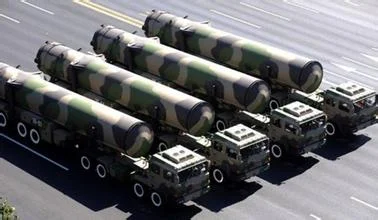


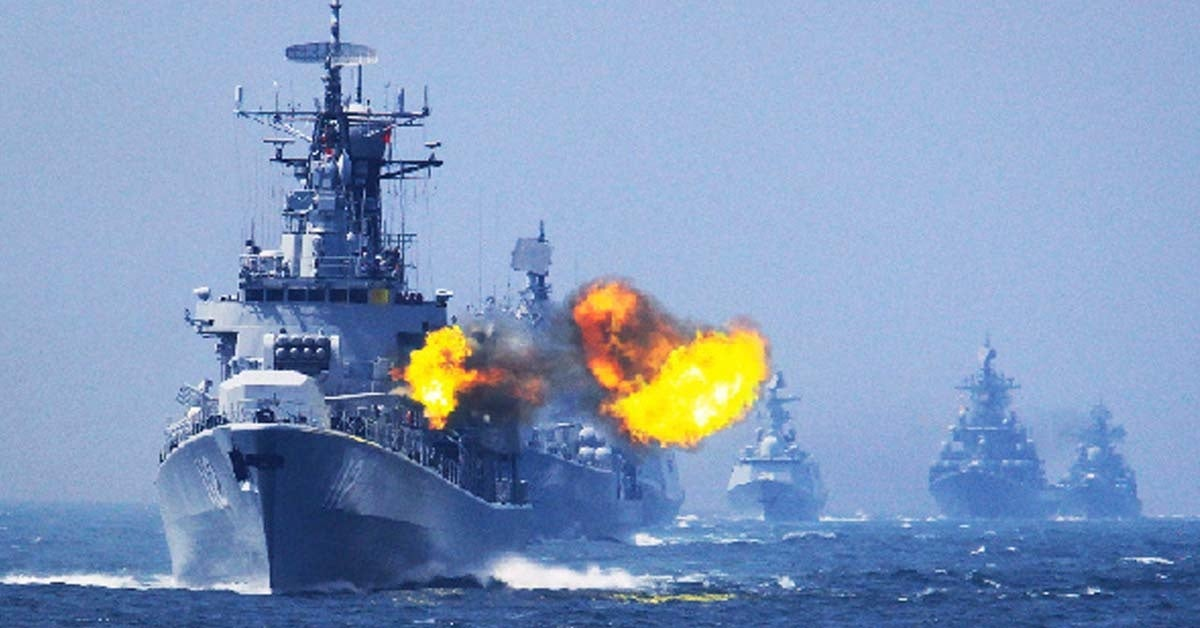
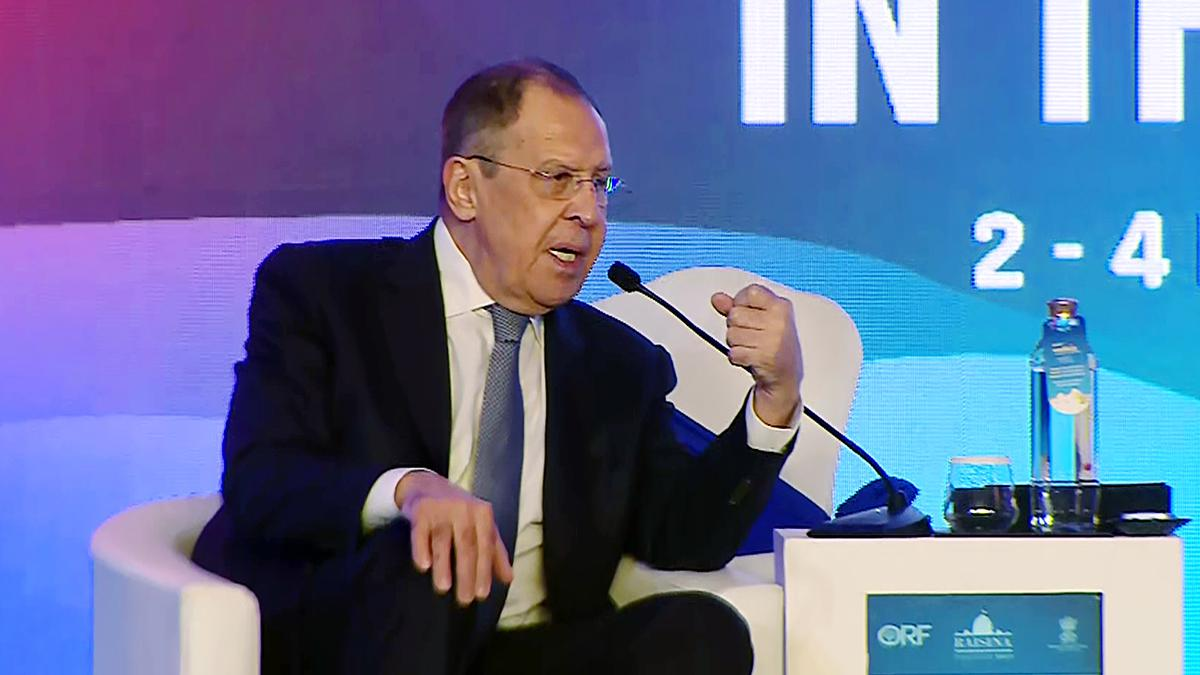
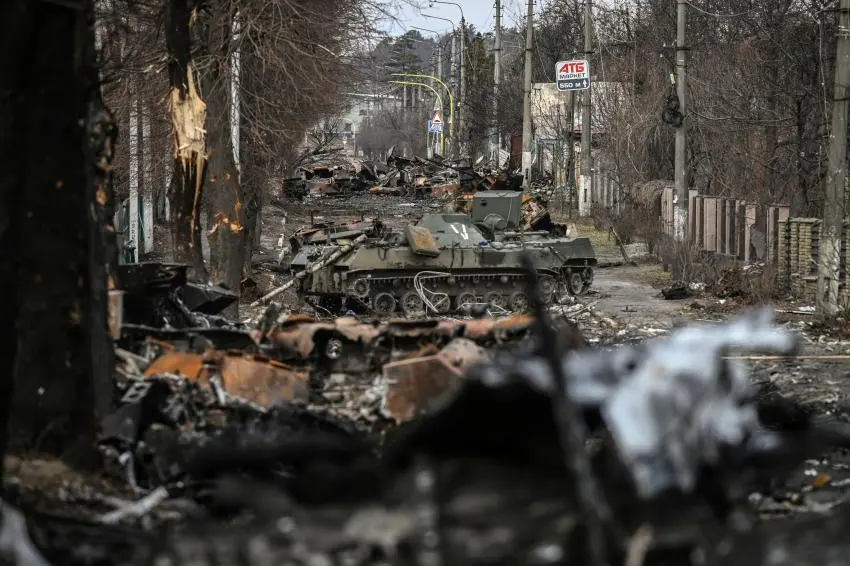


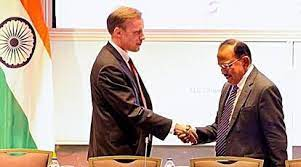


 Security Wise