
The statement in the Press today that made a splash was by the Indian Defence Attache, Jakarta, Captain Shiv Kumar, Indian Navy (https://www.hindustantimes.com/india-news/op-sindoor-losses-due-to-restrictions-on-hitting-military-targets-navy-officer-101751204975610.html). It was in reply to the issue of five downed IAF aircraft in Op Sindoor — three Rafales, and one each of Su-30MKI and MiG-29, raised by Tommy Tamtomo, Vice Chairman of the Indonesia Centre for Air Power Studies at a seminar on “Analysis of the Pakistan-India Air Battle and Indonesia’s Anticipatory Strategies from the Perspective of Air Power”. The Pakistan Air Force actions were part of its Operation Bunyan-um-Marsoos.
“India lost a lot, but Pakistan also lost a lot. Maybe more than India,” Tamtomo said at the seminar before disclosing that PAF losses were six fighter jets, two AWACS aircraft and a military transport plane.
Tamtomo’s figures of IAF and PAF losses were no doubt conveyed to Jakarta by the PAF, which has a close relationship with the air force of Indonesia — not just a fellow Muslim majority state but, population-wise (242 million), the largest Islamic state in the world, and verily Dar al-Islam.
Captain Kumar admitted the downing of IAF aircraft without confirming the numbers of aircraft lost, and attributed these losses to “the constraint given by the political leadership to not attack the military establishments and their air defences…No military installations, no civil installations, nothing which was not connected to terrorists was to be targeted,” he added. “After the loss,”, he explained, “we changed our tactics and went for their military installations. We first achieved suppression of enemy air defences (SEAD) and destruction of enemy air defences (DEAD)… and that’s why all our attacks could easily go through using surface-to-air missiles and surface-to-surface missiles…On May 8, 9 and 10, there was complete air superiority by India,”
It is revealing that even as the defence ministry spokesperson declined to comment on Kumar’s supposedly controversial remarks, the Indian embassy in Jakarta likely prompted by the MEA piped in, saying, what else, that Captain Kumar was quoted “out of context”. It went on to elaborate that “The media reports are a mis-representation of the intention and thrust of the presentation made by the speaker. The presentation conveyed that the Indian Armed Forces serve under civilian political leadership unlike some other countries in our neighbourhood. It was also explained that the objective of Operation Sindoor was to target terrorist infrastructure and the Indian response was non-escalatory.”
Unwittingly, the Jakarta Embassy put its finger on the nub of the issue — the instructions of “the civilian political leadership” which the IAF scrupulously followed apparently to its detriment.
Before examining the IAF’s part in this Sindoor fiasco, let us consider the political leadership’s role which, in this case, means Prime Minister Narendra Modi’s role. Nothing, of course, is known about how and why Modi articulated the instructions as Captain Kumar has relayed them, and whether the PM consulted any outside experts or merely told his cabinet of noddy-heads, and that was that. If he did ask the defence minister Rajnath Singh and foreign minister S Jaishankar for their views, what if anything meaningful might they have chimed in with?
There was almost a fortnight between the Pahalgam killings (April 22) and the first day of Sindoor (May 7) so there was more than enough time for all the parties involved in decision making in Delhi to deliberate deeply before alighting on the punitive military response. In lieu of any real information or even leaks to the media, one can only speculate about what happened. So, permit me to indulge in speculation.
The terrorist attack was the provocation. Reasonably the retaliation would involve striking back at the terrorist groups — Lashkar-e-Tayyaba, Jaish-e-Mohammad, the usual suspects. It was a really tremendous decision by Modi to not restrict the strikes to Pakistan-occupied Kashmir but to hit the LeT and JeM bases at Muridke and Bahawalpur — across the international border, thereby establishing an important and necessary precedent for the future. It was a response that had been contemplated for a few decades before Modi got up the nerve to finally order it. Fine!
The strikes went home, but obviously the Pakistanis had intel/forewarning, because they had emptied the madrassahs in these terrorist centres of people. It is a mystery though why the chief JeM villain, Masood Azhar, was in the know but his family was not informed, whereupon there was that very public lamenting by Masood about his loss.
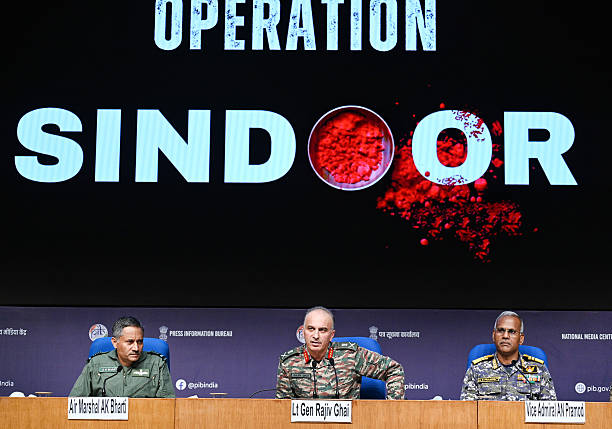
The important thing to wonder is what Modi expected to happen by way of a Pakistani response. Was he really briefed by RAW (?), Jaishankar (?) or someone else to believe that immediate post-strikes on M&B there would be no Pakistani miltary reaction? Not even after Director General, Military Operations, Lt Gen Rajiv Ghai’s call to his Pakistani opposite number, telling him about the very limited intent behind the hits on just the terrorist bases, and Major General Kashif Abdullah’s brusque and abrupt ending of that conversation?
It is clear that the Indian army was on alert but did not expect to go into action because there were no hard preparations whatsoever for any ingress into POK or across the international border and, CNS Tripathi’s statements about ships on station and his force’s readiness to rattle some Pakistani naval teeth, notwithstanding, the Indian Navy was not really expecting to blockade/blowup Karachi — harbour, city, or whatever.
Why was this so? Why did no one in the government or in the armed services, expect a military response? Could it be because the government was assured that the Pakistan military would swallow its pride and lump it? If so, by whom?
Or, was it the view in government, perhaps Jaishankar’s/MEA’s, that with so transparent and forthcoming an approach, the Pakistan military would be deterred from reacting “disproportionately” for fear of creating ruction with the US, etc.
That doesn’t however explain why if the Indian armed forces were on alert to thwart an angry reaction, the IAF — and this is where the CAS, Air Chief Marshal AP Singh, has some explaining to do, the Indian fighter planes were patrolling the border on a chowkidari mission without a clue about the Saab 2000 Erieye AEWACS (aerial early warning and control system) surveilling the Indian air space, tracking the Indian aircraft, and cueing the Pakistani JC-10s for the kills with the longrange PL-15Es fired safely from standoff range well within Pakistan.
The $ million Question: Where were the IAF’s radar mounted Embraer ERJ145 Netra AEWACS to monitor Pakistani air space and pick up on encrypted electronic signals passing between the Saab and the JC-10s? Obviously the Netras were altogether absent from the order of battle, why so? No Netras is why the Indian aircraft were flying in buddy formation, one behind the other, with the plane in the rear scanning the enemy air space. If so, then how is it that none of the buddy aircraft picked up on PAF’s loitering AEWACS or even the JC10s.
In this situation, it was natural that the PAF would capitalise on the opportunity — intimated by Ghai’s call to Abdullah which signalled to GHQ, Rawalpindi, that the Indians were not up for a full-fledged conflict, thereby setting up the unsuspecting IAF aircrft nicely for the kill. But after the first Rafale or whatever went down, why did the Air Ops under Air Marshal AK Bharti not instantly pull back the IAF patrollers deeper inside the country to avoid the easy targeting by the enemy, and reconsider how to neutralise the Erieye for starters. And how come the next four combat aircraft were downed in quick succession in like manner? Isn’t there a communications system linking aircraft to ground control and to each other — so how come none of the pilots in the aircraft downed later were aware of what was coming at them? And how come the IAF Ops centre couldn’t figure out the information fusing between the Saab, JC10s and the PL15Es, and how innovatively the PAF was using its assets?
Bharti’s statement at the May 11 media briefing that “We are in a combat scenario; losses are a part of combat. The question you must ask is if we have achieved our objective of decimating the terrorist camps. The answer is a thumping yes” was self-serving to say the least. Because the real question to ask is whether the downing of 5 combat aircraft — let’s take Tamtomo at his word, valued in excess of a BILLION DOLLARS worth the destruction of a few measly buildings in Muridke and Bahawalpur?
Sure, the strategic strikes on May 9 midnight-May 10 morning earned the IAF air dominance, OK. But what did the Indian military do with it? Why did the army do nothing with the open skies other than adhere so strictly to Modi’s orders that Ghai and Co. at the MO Directorate forgot they could use the freedom from aerial hindering by PAF to push for some real territorial gains — Haji Pir, etc as I have detailed in my previous posts, which would have radically changed the Kashmir reality.
But to return to the Prime Minister’s thinking: Surely there’s no equal to him on the political scene in his ability to read the politics of the country. But while he may have good common sense instincts, surely, he would have benefited from someone/anyone in the miltary, or from outside, telling him to drive the wedge when he could into POK.
And, by way of a lesson for the PM for the future: Decide your initial objective but warn the military that what follows after the first shot is fired is entirely their outlook, their business to see to the end, and for them to not do nothing while awaiting further instructions — but to rush through once the door is flung open!
The civilian control of the military is commendable, but once in war the control has to be ceded to the military. A war cannot be run from 7, Race Course Road. Not mind, that the Indian military would have done much with the control, had it been ceded to them in Sindoor. It is too passive-defensive-reactive a force by habit of mind to do anything of note in war
At the heart of the problem India has always had with Pakistan and China is this: While India in a fight always behaves, for no good reason, with an elevated sense of purpose, propriety and self-imposed restraint, the attitude of a scrappy Pakistan in particular is that it is in a knife fight. Guess what happens every time?!


 Security Wise
India need to follow Bismarck’s rule: “With a gentleman, I am equally a gentleman; but with a rascal, I am twice a rascal”.
@BharatKarnad
The mission planners. I have said this before and I will say it again.If they can’t even estimate the abilities of Pak before launching an op as simple as Sindoor, we are never going to survive a two front war.It’s not like the Pakis used novel tactics and we even had the upper hand.This was a royal nonsense and whoever made the plan of action should be canned ASAP.
what’s your take professor karnad shouldn’t the planners be court martialled
@BharatKarnad
Government wanted to show diplomacy — “Our attack was against terrorists and not Pak Army” as if they didnt realize that both are two sides of the same coin.
The non involvement of Navy even during peak clash itself confirmed armed forces weren’t given a free hand on their execution as hyped by the bjp bots and their supreme leader. But then tbh this was kinda expected, even many identified that the losses were due to not carrying out Sead/Dead few weeks back itself.There is a reason why these political constraints were given. Political leadership wanted to maintain the picture that India can’t be the aggressor that targets another country’s military infra first. Although this ideals seem good they realised a bit late if the opponent is radical jihadi these ideals are useless.Obviously they have to accept their mistake and have even mentioned they’ve corrected their flawed tactic. With paxtani t£rrorist’s entire family being wiped out except for him, this idiot will soon plan another attack. For this the govt has to target military infra first as they’ve established they will retaliate and also will not do the same mistake again. It is gonna be a showdown soon.
@BharatKarnad
professor karnad
you in past have suggested and recommended again and again to have dialogues with Pakistan to have talks with Pakistan so as too pacify our neighbourhood and south Asia to focus on a bigger enemy china
do you see that happening in future i don’t
do you still advocate that even after sindoor if yes then why ?
would like to know your opinion
regards
The plain geostrategic fact is without Pakistan, if not in our corner than at least actively not conspiring and acting against our interests, India has not a spitball’s chance in hell to become a great power. As simple as that! That’s why I advocate doing whatever is necessary to coopt the Pakistan army — difficult but doable.
I Believe PM Modi gave direction to the Military to go for a Punitive Strike against Terror Camps , but not attack any military establishment as he feared it would lead to an uncontrolled escalation or loss of “moral high ground” . The Air Force may have unwittingly agreed to his constraints .Not realising Saab-Link-17 Network Kill Chain put in place by the Strategic minded Fiza’ya , the IAF jets flew like the Rajput warriors Montgomery famously described as ‘moths to a flame, hence giving the pilots just enough time press the ejection button , and come home safely. With 3 Rafales a and 2 Sukhoi-30 destroyed which costs roughly a billion dollars( to put this in perspective , the Total IAF Allocation for the year 2025-2026 is 12 billion dollars.This Made Field Marshal Munir overconfident , hence the statement ,”Sort Out the Indians in 48 hours”. These heavy losses thrashed the “moral high ground – India is responsible power” thinking out of the PM’s head and hence him giving the order to IAF to start targeting Pak military assets. This resulted in roughly in destruction of AWACS, JF-17s and more which amounted to roughly 2 billion dollars worth of damage, along with them taking out Nur Khan Base which is C3 base of PAF. Now Air Superiority established , PM Modi should have given the orders to the Military to territorially “Sort Out the Pakis” i.e grabbing Haji Pir and Skardu , whose invasion btw was planned by the Gen Handoo in 1987 , then GOC Northern Command but unfortunately never acted on !!!! . Similar to how communal rioters in the subcontinent are satisfied by inflicting greater damage on the ‘other’ community than what was inflicted upon their own , PM Modi(and the military) it seems was not interested in anything more .
With a hot headed Field Marshal in charge and US-Pak relations warming up , PM Modi should know that it is not over yet. The next time Pakis would be more prepared and India should not be caught napping!
From Lt Gen Syed Ata Hasnain, former GOC, XV Corps
Tue, 1 July at 9:31 am
Bharat Karnad Sir,
The logic you explain makes a lot of sense. I am better educated.
However, I do not agree with your Haji Pir analogy.
Warm regards
Ata Hasnain
India needs to shove it’s so called ‘moral high ground’ nonsense where the sun doesn’t shine. I am an ex CIA operative and can confirm that the intelligence agencies of every country on this planet is well aware of the Indian support to separatists in Pakistan.
R.A.W agents are actively fighting with Balochistan Liberation Army. You cannot ride two boats simultaneously. Stop pretending as a saint while accusing Pakistan of activities your intelligence agencies themselves indulge in.
Janab,
Tharoor has answered your question. There is no moral equivalence between a terrorist state like Pakistan and India. You are getting bitten by the snakes you have yourself nurtured. You had an opportunity to build a successful state after the partition you engineered through violence. But you chose to be in perpetual war instead.
@primeargumemt- Tharoor is in demand only because he speaks English like Gora’s who vast majority of Indians look upto in awe furthermore if Shah and Modi want Tharoor will be in jail due to his third wife Simanda Pushkar’s mysterious death and the strong possibility of Tharoor’s involvement in it.
So please keep your Tharoor nonsense to yourself.
Moral equivalence hahaha there’s no place for this term in International Geopolitics. This phrase exists for cowards.
There’s no business like war business. We Pakistani army folks keep our politicians under our shoes.
Email from Vice Admiral Harinder Singh (Retd), former FOCINC, Southern Naval Command
Tue, 1 July at 6:13 pm
Bharat,
Whilst having pre decided and trying to fix the blame on the political leaders, I may mention that first national and political aims are decided and then the military operations follow and the armed forces consulted. If the political hierarchy decides that we have limited aims to strike only terrorist addas and not start a war that’s their right. If the aims are circumscribed it doesn’t give the service, in this case the AF to exceed its capabilities and to lose aircraft. You have sidestepped that issue. There is much for you and others to answer on this score
regards
Emai from Dr V Siddhartha, former Science Adviser to Defence Minister
Tue, 1 July at 12:58 pm
…. let us say you were/are CDS and Modi let you do all you say should have been done — successfully. Then what?
More than likely China would mount a campaign in UNSC to get India “to vacate its aggression” — and would back it with military probing in our NE (with active B’desh support — even Myanmar). Add B’putra water choking. And with China’s up-rated a/c and weapons, the next military engagement with Paki will be much more expensive.
Even if beggaring Paki instigates internal/PoK unrest majorly, that will still not alter Paki-Munir-Mullah behaviour one whit.
So what should we do?
We tell Trump to arm-twist Paki-Munir to propose LOC as border.
VS
@bharatkarnad Please comment on this if you have time. From what I have learned of geostrategy so far. It is no longer in India’s interest to accept LOC as the border. With China’s CPEC cutting though GB it is imminently in India’s interest to allow for GB to fall back in India’s lap when Pakistan balkanizes in future as is being predicted. Making China’s access to Arabian sea though our west difficult is in our interest.
Baltistan is Ladakh. Skardu was an administrative capital of the region in Winter months that is how it has been for 100s of years. We may or may not be willing to got to war for it, but we should no longer be interested in LOC as the border. Not without Skardu. If we have to reduce deployment from Siachen then again we need Skardu back.
@ Dr V Siddhartha– Actually what you mention in the last sentence is the only solution for everlasting peace in the region however, this will never happen due to the following reasons;
Respected Professor Karnad,At the outset, I would like to express my sincere appreciation for your foundational contributions to India’s national security framework, particularly your seminal role in the formulation of India’s nuclear doctrine. Your work continues to inspire those of us who follow India’s strategic and defence evolution with keen interest.I wished to respectfully seek your perspective on two interrelated matters.First, with reference to Operation Sindoor, in your considered view, what critical capability gaps were most evident in India’s operational posture? Was it the absence of cutting-edge AWACS and persistent ISR platforms, the relatively limited number of advanced combat aircraft (with only 36 Rafales in service, a partially upgraded Su-30MKI fleet, and an incomplete deployment of Tejas Mk-1A), or a more foundational limitation in credible naval power projection—particularly in the realm of undersea warfare, where India presently lacks an SSN fleet and operates relatively few advanced submarines?Second, recent developments in international defence cooperation have generated significant interest. Rolls-Royce has reportedly offered India a strategic partnership to co-develop the next-generation engine for the AMCA program, with the additional prospect of integrating India into its high-end marine propulsion and power systems portfolio. Concurrently, India has been approached with invitations to explore participation in not one, but both of the prominent sixth-generation fighter development programs: the UK-Japan-Italy GCAP and the France-Germany-Spain FCAS initiatives. Looking forward for you response?. Thanks
No real capability gaps were apparent, in the main, because the so-called “war” lasted only three days.
Any cooperation on a 6th gen fighter plane will be at the expense of AMCA, and that is intolerable.
Re: cooperation with RR on jet engines — who is to say the Brits won’t do to Kaveri what the French did?
Respected Professor Karnad,Thank you for your candid and insightful response. I hold your perspective in the highest regard, especially given your lifelong commitment to safeguarding India’s strategic autonomy and your foundational role in shaping our national security doctrine.I fully agree with your principled stance that foreign collaboration on a sixth-generation fighter must not come at the cost of the AMCA program. The pursuit of true indigenous capability is indeed non-negotiable for a sovereign technological base. At the same time, I wish to humbly raise a point for reflection — particularly from the perspective of operational necessity for the Indian Air Force.As someone who has been closely following the AMCA program since its announcement in 2018, I have observed with concern the continued slippages in its developmental timeline. Initially, a first flight was projected for 2021, then revised to 2024–25, and now, reports suggest 2029 as a likely target. Beyond the engine, several critical subsystems — including advanced stealth materials, active electronically scanned array (AESA) radars, and certain avionics suites — still appear to be in early stages of technological maturity within India.Given this context, one wonders whether the IAF can afford to wait two or more decades for a sixth-generation capability to materialize indigenously. With China advancing rapidly in next-gen combat aircraft and already fielding fifth-generation platforms in larger numbers, there may be a growing operational gap in the coming years that needs to be bridged.This is not to advocate for replacing AMCA, but perhaps to suggest that India might explore strategic collaborations in a manner that complements and accelerates indigenous development — rather than undermines it. If structured wisely, such partnerships could serve as a technology bridge while ensuring that sovereign control and domestic capability-building remain paramount.Of course, your deep strategic wisdom far outweighs my limited understanding, and I offer this reflection only in the spirit of respectful dialogue and learning.
@Professor Karnad- “The strikes went home, but obviously the Pakistanis had intel/forewarning, because they had emptied the madrassahs in these terrorist centres of people. It is a mystery though why the chief JeM villain, Masood Azhar, was in the know but his family was not informed,’
Pakistani army’s top leadership had the intel that’s why they took away Masood Azhar to a safe location. He is an important asset for the Pakistani establishment not Masood’s family furthermore the loss of his family will further motivate him to launch fresh offensives against India, which suits the Pakistani army’s leadership because then the Pakistani establishment can repeat its favorite claim “involvement of non state actors’
@BharatKarnad
sir let’s assume a scenario let’s say the adversary striked first
and they knocked out our SFC nuclear command bunkers located underground which are at bhopal(alleged)
all the commands and communication networks with the remaining and surving nuclear forces mainly the land based Agni missile groups and arihant and follow up S5 class SSBN are broken
What will happen then
how will the commanders of the SSBN and surviving Agni missile groups get to know that the nation has been attacked and he needs to retaliate there is no communication or contacts or incoming orders from SFC headquarters in bhopal
what then?
@BharatKarnad
professor karnad have you ever considered the fact that if we test maybe in future a strong willed government and a new PM tests thermonuclear armaments
Pakistan will also follow and get it’s own thermonuclear weapons
then we will have thermonuclear weapons aimed at our cities from both the sides and i think your war gaming scenario that 2 indian cities will be lost versus extinction of pakistan will not hold true
because that was for warheads of lower yield not incoming pakistani high yield weapon
What’s are your views on this
NK has tested 250 KT weapon. So we should assume that Pak has it too. It was indeed Pak-NK design.
For those who may be interested in the China-Pakistan-North Korea ‘rogue nuclear triad’, see my 2016 piece https://thewire.in/53338/countering-the-rogue-nuclear-triad-of-china-pakistan-north-korea/
@BharatKarnad
This government is absolute crap and the former governments too
first they ban pakistani youtube channels in india not that it will have any effect the Pakistani don’t give a damn about it and it is cringe.
but today today they unbanned them they have no self respect and they don’t stand on their words the same thing happened after Pulwama
you were hundred percent correct when you said in that latest seminar discussion that 3 days of absurdity is comparable to video games
no doubt nobody takes india pakistan seriously you don’t and i also
but professor karnad
Why does the indian government always wants to appease an adversary
during cold war it was soviet and Americans
They try to appease China and in few instances even Pakistan for god sake
Would like to know take on this mindset of appeasement?
@BharatKarnad
Sir in the previous article of the blog i had asked about future imperilled thanks for the response
and here I see another book from you it’s called strategic sellout well what exactly are you trying to tell through this book it mentions you as co author
you are the co author so the best person who can tell about it
Strategic Sellout opposed “the civilian nuclear cooperation deal” with the US — a collection of articles against the deal also by high nuclear personages, Iyengar, Prasad and Gopalakrishnan
@BharatKarnad
Sir you were in the NSAB during vajpayee government meaning you were in close contacts with thr decision makers and the diplomats
didn’t you advocate and recommend them your nuclear missile arm states on Chinese periphery strategy to counter and reciprocate because they armed pakistan
if no then why not and if yes then what was their response
it hasn’t happened till now
Yes, advocated in NSAB, and pushed the idea of N-eapons tech transfer through Jaswant Singh, whom I personally engaged with, resulting in the 2003 nuclear cooperation agreement with Vietnam signed during Vajpayee’s state visit to Hanoi in 2003. And this advocacy is in all my books since.
Mr Karnad I have my reservation on your comments. You are speaking like a financial executive when you are placing monetary cost of losses against strategic effect achieved through targeting. what is more important is that India Responded! Despite of the fact that the enemy were fully prepared, we didn’t back out and the courage and fortitude displayed deserve all praise.
First thing about war, if you have read any publication on it, is the uncertainty. Things will not happen the way you want. Friction is very much real in operations…what is important is resilience, decision making and faith in your abilities. India scored on all front and thus brought the enemy to its knees.
I would request your views on theaterisation post Op Sindoor. Has it triggered any evolution in your thought process concerning that?. would love to hear your opinion on that. Regards