There are numerous nuclear, military and foreign policy recommendations and suggestions in my books and writings over the last 40 years that have been picked up and implemented, naturally without any public acknowledgement, that have given me great satisfaction.
But, for the first time an idea of mine to advance seriously substantive defence cooperation with a foreign country, Israel, is being pursued by that country’s government, even though all along I had hoped and wished it was an Indian regime that would initiate it!
Some 22 years ago, the then Israeli Home Minister, Uzi Landau, and his adviser — one of the most influential heads of Mossad (1989-1996), Shabtai Shavit, on a visit to Delhi, met with me in my office at the Centre for Policy Research. The subject was defence cooperation. We talked about a number of things, but a programme for defence industrial cooperation involving a merger of our respective strengths that I proposed, is what perked their interest. After a meaningful exchange of glances, Landau and Shavit requested me to flesh out what I had in mind.
Based on the history of close but covert relations India had with Israel from 1948 to 1992 when formal diplomatic relations were established, and especially the memorable episode not widely known in India of Levi Eshkol, the long time Director General of the Ministry of Defense (1948-1963) flying into Mumbai, secretly, in a long range military cargo plane in late October 1962 with the first Israeli shipment of ammunition and artillery shells the Indian army desperately needed to fight the Chinese People’s Liberation Army at the Himalayan heights, I suggested the two countries needed to seriously enhance defence cooperation. (Incidentally, Israel was not only the first country to offer India military aid in 1962, but also the first promptly to deliver it. The next year, Eshkol became the 3rd Israeli prime minister.)
In the barest form, what I outlined to Messrs Landau and Shavit was that India and Israel jointly manufacture conventional arms and weapons platforms, and research, develop, and test advanced systems; that this would be economical, and the production scalable to meet the needs of the armed forces of both the countries, and ensure low unit price. And it would permit both states to avoid diplomatic pressure by powerful arms supplier countries in crises.
These aims would be furthered, I argued, by
the Israeli defence industry keeping some select production lines humming as fallback, but the Indian defence industry being tasked to produce, in bulk, the small arms, machine guns and light machine guns, and ammo, long range guns and shells to meet the requirements of both countries, inclusive of the Uzi automatic machine pistol (named, like the Kalashnikov, after its designer — Uziel Gal), artillery, and even the Merkava main battle tank (currently deployed in its Mark 4 version) — called the “mother tank” because of the protection it provides;
Indian defence firms paying royalty for technologies from Israeli systems that would be incorporated into Indian designed armaments and platforms;
having the surge capacity to replace on an accelerated basis the attrited war materiel to meet the suddenly spiking needs of either/or both countries engaged in war, or for stocking up in preparation for war, and free the two states from being disadvantaged on the battlefield owing to depleting stores;
the excess Indian manufacturing capacity, in peacetime, besides servicing the two militaries, producing slightly de-rated items in the product line for exports, with a suitable scheme for sharing profits — the objective being for this Combine to emerge as a leading arms supplier in the world;
India investing in and helping fund R&D in cutting-edge military technology projects by Israeli companies, and having Indian scientists and engineers work alongside their Israeli counterparts in India and Israel on shared project work in every aspect of systems design and development, to promote cross-pollination.
I put forward this proposal to Prime Minister Ariel Sharon when he visited New Delhi in 2003. And then followed up by making the case to Israeli ambassadors. The last time I did so was with Alon Ushpiz (2011 – 2014) who returned home to be appointed, a few years later, as DG, Foreign Ministry.
This proposal was, however, just a bridge too damned far for the persons in the Indian govt and military I conveyed it to.
But all the advocacy over time may have left some paper trails in Tel Aviv, and the Gaza War no doubt helped drive home the point about just how vulnerable Israel really is when engaging in high-intensity operations to find that, at high rates of war materiel attrition, the Israeli Defence Force (IDF) was coming perilously close to exhausting its War Stock and War Wastage Reserve and can’t sustain fastpaced warfighting for too long.
The skyrocketing war demand has led as, Indian Defence Research Wing reports (https://idrw.org/israel-looks-to-indian-defense-firms-for-weapons-production-amid-supply-strain/), to the Israeli government and defence industry approaching Indian companies to license produce Israeli weapons and systems for the IDF to offtake. Among these systems are drones, electronic warfare systems, precision guided munitions and missiles. This is far less than the more comprehensive cooperation plan to mesh the defence industries of the two countries I had pitched to Landau and Shavit, but it is a beginning.
There have been Indo-Israeli projects. Such as the one to produce a long range surface-to-air missile. Except, as I pointed out in my writings and to an Israeli ambassador, the division of labour was skewed — with India exclusively producing the low value backend items, while the Israeli company designed and produced the high value LRSAM motor, guidance paraphernalia like the thermal seeker, etc. — this even though India funded the project in its entirety — in other words Indian monies financed the R&D of a new missile for a tech that the Israelis retained! Can’t blame the Israelis for taking advantage of a clueless Indian defence ministry’s defence production department’s agreeing to such a one-sided deal which, after all, is par for the course. The defence ministry always drafts contracts beneficial to the foreign country/company! Baap ka paisa hai!
Hearteningly, the IDRW report hints at the Israelis approaching Indian private sector firms, which is a damn good thing, and would be just the course for the latter to gain foreign customers and credibility with an Indian government fixated on the wasteful and quite hopeless defence public sector units, and for the country’s defence industry as a whole to takoff.
[Jaishankar with his Chinese counterpart, Wang Yi]
Woke up this morning, and was startled by Indian newspaper headlines heralding a new dawn in Sino-Indian relations. All the breathless reporting about agreement being reached on the “patrolling points “northeast of the Y-Junction on the Depsang Plains — proximal to the strategic Chinese lifeline to its western Xinjiang province, is an instance of an over-eager Indian government jumping the gun. The clearest evidence of this? As of 2:30PM IST, there was no like intimation of this serious development by Beijing, which has said not a thing.
Assuming Jaishankar is right in that some outline of an accord has been reached — then it must be only an agreement in principle — as in agreeing to discuss how actual disengagement will take place. In real terms, this means next to nothing! Because, unless the modalities of the Chinese units withdrawing their stranglehold on the Charding-Ninglung Nala Junction and of Indian forward troops re-establishing their right by actually renewing patrolling, are worked out there is NO accord! And to hammer out the terms and protocols could take months, if not years! Indeed, this seems like the usual diplomatic tactic the Chinese have used in the past to string India along with an ‘Alice in Wonderland’ promise of jam yesterday, jam tomorrow, no jam today!
Jaishankar, however, has put himself in a spot because he told the Press that the modalities would be worked out within 10 days. TEN DAYS? Let’s wait and see! He may have set himself up to have egg on his face!
Why has the Modi government put itself in this situation? The upcoming BRICS summit is the reason some say. Because both Russia and China are keen that India decelerate its strategic cooperation efforts with the US and the West. If Beijing is so concerned, why hasn’t Jaishankar used it as leverage against the Chinese?
As a foreign service officer, Jaishankar’s chosen language for training was Russian. But Russia is the one place he never saw any significant time in. MEA’s tested and proven career management practices! But he did spend more than 3 years as our emissary to China without having a clue about the Mandarin language — its nuances and tonal complexities! So, if what the Chinese said to him was proverbial “Greek and Latin” to him, how did he communicate with Zhongnanhai during his tenure as ambassador? Through his fellow IFS juniors on his staff, of course. But how good was their Mandarin? By the way, the NSA, Ajit Doval, has even less Mandarin language skills, but he is the lead border dispute negotiator!
It is the same “failure to communicate” that may have always dogged Jaishankar’s current parleys with his Chinese counterpart Wang Yi. (Old timers may remember that this phrase refers to the most famous line uttered by the grizzled Hollywood veteran, Strother Martin, in the 1967 Paul Newman film — ‘Cool Hand Luke’ — “What we have here is failure to communicate!”) It may have led to our EAM misreading his Chinese interlocuters and, advertently, misrepresenting what was said to him, what with him having to rely on interpreters, and Beijing playing on the Modi regime’s desperation to show some progress, any progress, however ephemeral! Because, Modi’s China policy is one great big failure in which Beijing has held all the high cards.
This Chinese advantage is only because New Delhi is not willing to play the game by the rules of strict reciprocity. So, China proliferated nuclear missiles and technologies to Pakistan, and India did not respond by transferring nuclear missiles to states on the Chinese periphery as would have been justified by the UN’s Article 51 self-defnce provision.
And, since the 2017 Doklam and the 2020 Galwan encounters, it is the Chinese PLA that has strengthened its tactical positions in Ladakh, held Indian forces away from the Xinjiang Highway, even as the Special Frontier Force unit that occupied the Kailash Range heights with a bold and bracing nightime action, were ordered off the peaks for nothing in return. China has had to pay no price in terms of, say, losing its access to the Indian market that the Indian government generously affords it. Nor has Delhi insisted that Chinese tech companies, in particular, wishing to do business here, establish joint ventures and be required by law to transfer all the technology of the products they sell to the Indian people, to their Indian partners, and to manufacture every small sub-component and widget that goes into their products in India itself. Or, to get the hell out, and stay out! These are conditions, by the way, China insists on for any foreign company, including Indian firms operating in China. But no, the Indian government has no such set of pre-conditions. The result: a humungous trade imbalance — just in the first six months of 2024, the trade deficit grew to $42 billion — the highest it has ever been! Meaning $42 billion of India’s wealth has been shifted to the Chinese khazana!
New Delhi’s idea of sticking it to China is to take years and years before making a decision to permit Taiwan to set up a proto-consulate in Mumbai — when, India should have happily let Taipei convert its so-called Trade Office in Delhi into a full-fledged embassy which it really is, long ago — one that can fly the Taiwanese flag (which, by the way, it is not allowed to do!)
The Indian government acts so cowed down by China, it is ridiculous. The pusillanimity of the political class is mirrored by the military leadership with the armed services’ Chiefs of Staff regularly and routinely calling for resort to diplomacy as priority which, in turn, fuels the Modi dispensation’s desire to obtain a border agreement, and to resume trade and other relations with Beijing that are manifestly tilted against Indian interests. This is the unvirtuous cycle India is locked into. Go figure why this is considered good for the country.
Michael Rubin of the American Enterprise Institute in Washington has suggested something that’s never occurred to us Indians and even less to the Indian government — to lead the charge on branding Canada as “State Sponsor of Terrorism”. It would have devastating consequences for that country if the Financial Action Task Force follows up with sanctioning Ottawa. For years, New Delhi has focussed obsessively on Pakistan, leaving the equally dangerous source of international (Sikh) terrorism — Canada — free to continue stoking a cause that long ago became extinct in Punjab. The Modi government should now take up this task as top foreign policy priority, and on a war footing.
The blowing up of Air India plane Kanishka — flight AI-82 on June 23, 1985, over the North Atlantic Ocean killing 329 passengers and crew is the biggest aviation terrorism incident to-date. It took the Canadian government, the Royal Canadian Mounted Police (main police agency), and intel agency over 20 years to investigate and take the perpetrators to court, and then did not have enough evidence to convict the two men accused in the conspiracy, Ripudaman Singh Malik and Ajaib Singh Bagri, who got away scott free, and Inderjit Singh Reyat who put together the explosive device, served some jail time. The shoddy police work, no doubt overseen by Liberal Party ministers, is one thing. But that terrorist outrage should have prompted the Indian government to seek international condemnation of Canada as state sponsor of terrorism, and take it to the FATF. Now that the two countries have vacated their respective high commissions of senior diplomats, it is time Modi ordered the MEA to go hammer and tongs in a campaign to villify and isolate Canada as a promoter of terrorism.
The more the Liberal Party government’s popularity has eroded in Canada, the more strongly its leader and Prime Minister Justin Trudeau has sought to strengthen his support among the burgeoning Sikh immigrant community settled in large discrete pockets (around Toronto in the east and Vancouver in the west) — a policy initiated by his father and also PM, Pierre Trudeau — yea, dynastic politics is live and well in Canada as well!! — of affording Sikhs virtually free access to the country and encouraging the Khalistan cause.
Indeed, the Liberal Party in Canada has been the analog of the Congress Party in Assam where it helped enlarge its voter base by unscrupulous means — allowing Bangladeshis streaming illegally into the state across a porous border and immediately legitimizing their electoral clout by handing out voter cards, ration cards and other state and national identity documents. Such means helped Congress to rule Assam uninterruptedly for a very long time. It is exactly the same policy being followed by the Trudeau regime to hang on to power by its fingernails. He hands out resident visas to Sikhs once they somehow manage to reach the Canadian shores, often on forged passports and farzi visas. Until now when backing the Sikhs in their quixotic venture has become a political imperative for the ruling Liberal Party to retain power, even if the Khalistan Movement is really a cover for the growing criminal activity of Sikh gangs engaged in extortion rackets, trafficking in drugs and women, and running prostitution rings.
Rubin argues (https://www.aei.org/op-eds/opinion-india-should-designate-canada-as-a-state-sponsor-of-terror/ ) that Trudeau “errs by confusing militancy with legitimate religion” and suggests that Ottawa ponder the conclusion of the ‘Bloom Review’ — the report of the Independent Faith Engagement Adviser appointed by the UK government 5 years ago to monitor religious extremism among the immigrant population. That Review said that “Subversive, aggressive and sectarian actions of some pro-Khalistan activists and the subsequent negative effect on wider Sikh communities should not be tolerated.” And why the Canadian leader’s strategy of seeking protection for his otherwise legally unmaintainable Sikh policy by dragging the “Five Eyes” Intelligence sharing combine of exclusively English-speaking Anglosaxon countries (US, UK, Australia, Canada, New Zealand) into the fray, has precipitated a “crisis” with Trudeau asking the US government/CIA to validate his claims of New Delhi’s complicity in the killing of the Khalistani terrorist Hardeep Singh Nijjar last year. It has put the Biden Admin in an icky position. The “Five Eyes” members — US and UK, however, felt compelled to maintain solidarity with Trudeau and officially to wag a finger at India even though Trudeau himself confessed that what his government had by way of evidence is “intelligence information” not something that would stand up to legal scrutiny in court.
Rubin concludes: “Subjectivity, be it in the United Nations, the Financial Action Task Force, or on various country’s terror lists, undermines institutions; objectivity strengthens them. As such, India can do Canada, the United States, and Western Europe a service by designating Canada as a terror sponsor for its safe haven, if not support, for Khalistani militants. Western finger wagging does not defeat terror; financial crackdowns, arrests, and extraditions do. Ottawa and, for that matter, Washington (where President Joe Biden recently welcomed Sikh militants at the White House) may not like the limelight but as both capitals lecture others, the best way to avoid such unpleasant attention is to make substantive reform.”
Rubin followed up a few days later with an op/ed ( https://www.aei.org/op-eds/the-us-must-stand-with-india-against-canada/ ) in the Washington Examiner, pointing out that “Juxtaposing the Trudeau temper tantrum toward India with Canada’s muted response toward Pakistan in the aftermath of the 2008 Mumbai bombings simply reinforces the point” and that “Nijjar openly advocated violence against his opponents and endorsed terrorism to achieve his aims. His death, even if caused by India, was no loss.” Canada, he adds, “may be America’s neighbor and second-largest trading partner, but to side with Ottawa over New Delhi would be wrong. Trudeau’s progressivism may mirror the Biden administration’s, but his erraticism should concern Washington. He puts ego above national interest”. And he advised President Joe Biden for the US not to “sacrifice its India ties to help extricate Trudeau from a hole of his own digging. Biden must cut Trudeau loose and embrace Modi. Not only truth and justice but also 21st-century security and a grave and growing terrorism threat demand it.”
[Gurpatwant Singh Pannun]
But to focus on Gurpatwant Singh Pannun — the man at the centre of India’s differences with the US. Pannun realised sometime in the mid-2000s that there was a lucrative career to be made out of being a pusher and propagandist fulltime for Khalistan in North America and Britain, because his lawyering business in the US — such as it was, was not flourishing. Accordingly, the clean-shaven Pannun grew a beard, covered his head in a patka, to conform optically to the image of a Khalistani, and began frequenting and sounding off in anti-India protests in New York (such as the one against Modi for the killing of Muslims after Godra)! But Pannun and his ilk also saw how the early Khalistan backers in America, such as Ganga Singh Dhillon, funded by the US Central Intelligence Agency, made a very good living out of remaining in the public eye and playing on the grievance-fueled sentiments of the Sikh diaporas in the US, Canada, Britain, and Australia for a Sikh homeland carved out of Indian Punjab.
But first, a bit of history.
The Khalistan movement in the West got off the ground after the twin 1984 events: Operation Blue Star — a disastrous military operation Indira Gandhi ordered to rid the country of the Jarnail Singh Bhindranwale incubus she had created out of political whole cloth to contain the Zail Singh-dominated Congress party machine in Punjab and, later that year, her assassination by her Sikh bodyguards that led to the horrific massacre of Sikhs in the congested lanes and colonies of Delhi.
It was a cause the Pakistan Army’s Inter-Services Intelligence quickly converted with large dollops of funding, operational planning, and arms training of malcontents in Indian Punjab, into a potent separatist movement that began to gain traction among the youth of certain aggrieved sections of the Jat Sikh community. (The Jat Sikhs were especially incensed, it may be recalled, with the Indira G government’s decision to reduce the Sikh strength in the army from around 5+% to some 2% to make room in it for youth from other communities.) The charismatic Bhindranwale, always accompanied by a retinue of fierce-looking bearded youngmen with bandoliers strung across their chests and carrying bolt action Enfields — verily the vanguard of the Khalsa nation as they advertised themselves, struck fear in the Punjab population and occasioned admiration among the disaffected.
Except, that Khalistan dream died a lingering death when Jarnail Singh perished in the storming of the Golden Temple by the Indian army, and the redoubtable KPS Gill, heading Punjab Police, followed up by brutally finishing off what remained of the Khalistani presence in the state, both underground and overground. He did so by recruiting young Jat Sikh men from families who had seen their fathers, older brothers and relatives serving in the military or police, retired from the services, or employed at the lower levels of the state government, being bloodily shot by the Khalistanis seeking to impose a reign of terror in the countryside, and raping their sisters and looting their homes. These select young avengers in the ranks of Punjab Police commando were afforded the licence by the redoubtable Gill to hunt down these Khalistani killers, and eliminate them “like dogs”. The terrorised Khalistanis quite literally ran for their lives to Pakistan and from there to Canada, to Britain, to America, to Australia, to wherever they could find refuge, however they could get there.
The Khalistan movement in the West today is, for the likes of Pannun, mainly a commercial enterprise. They view it as a means of earning moolah by peddling dreams, and taking over gurdwaras there and channelling contributions by the faithful into their personal accounts. Thus enriched and on easy street, Pannun, in particular, finds that turning himself into a public nuisance pays, especially when he talks bombastically of dismembering India, and starting movements in the Indian northeast and elsewhere “to Balkanise and disintegrate the Union of India” as one of his posters declared. It gains him Delhi’s attention and alerts Washington to the possibilities. And this the dangerous aspect to this Khalistan game.
The Paki ISI still sees in these Khalistani yahoos a means of discommoding India and Indian interests and presence abroad — an activity Indian intelligence has been tracking diligently. But the wave of point blank shootings of state-protected terrorists (belonging to groups like Babbar Khalsa, etc) inside Pakistan responsible for planning and carrying out terrorist acts in India, sent shivers particularly through the Khalistani ranks abroad. They had not reckoned with the toothless Amma of an Indian government suddenly sprouting fangs. After Nijjar’s killing in June last year in Surrey, British Columbia, that Canadian intel had an inkling of but couldn’t prevent, Khalistani activists and sympathizers in the West were on tenterhooks — they didn’t know what awaited them round the corner.
And then the manifestly amateurish operation to take out Pannun came to light. It was appalling to find desi Intel minders who used whatsapp for communications and tasked a freelancer to recruit a hitman. Next they’ll do what? Advertise in New York Times that India is going after X, Y and Z? With the issue going so public, the Biden Admin’s ego was engaged, and they created a brouhaha. But Washington has been placated by the stringing up of a scapegoat — a mid-level RAW officer. (The lightweight Justin Trudeau and Canada can go stew in their own pot!)
It is an axiom of spycraft that governments think of the killings of their intel agents and assets as par for the course, as long as this is done on the sly and, to use an American idiom, “the shit doesn’t hit the fan”. This is the operating principle of all self-regarding intel agencies — create no public ruckus while conducting your business. By all means, kill off your enemies but do so without getting in the host country’s face. But, Pannun and others like him who know that survival depends on the protection provided them by Western laws and governments, have an incentive to cry themselves hoarse shouting wolf, and to be as publicly vocal as possible about real and imagined threats to their life and limb from Indian agencies. It is in this light that the fiasco related to the planned operation to kill Pannun must be seen.
But this shouldn’t fool anyone into thinking that Washington (CIA), London (MI 6), Ottawa, or Canberra don’t espy profit in keeping their fingers in the Khalistani pie, and cultivating that leverage for use in future contingencies.
That said, guardrails have to be erected, especially against a friendly America. Washington has to be told firmly that if CIA feels free to kill off “undesirables” for endangering its national interest — for God’s sake, it bumped off Homi Bhabha (by blowing up his Air India flight to Geneva) to prevent India from going weapons nuclear in the mid-1960s!, no person imperilling India’s territorial integrity would be spared, whatever the cost to bilateral relations. Unfortunately, this is not the attitude of the Modi government, which has served up a RAW officer as a sacrificial offering. Given the policy tilt, this is unlikely to be a one-off concession. Jaishankar has not brought up the matter of 61 Indian extradition requests to the US government, as a pink paper reported, for terrorists/criminals such as Tahawwur Hussain Rana who planned the 2008 Mumbai strike or Goldy Brar whose gang killed the singer Sidhu Moosewala or Ramachandran Viswanathan, a money launderer, residing in the US. Washington feels free to act tough on supposed Indian lawbreakers while shielding Indian criminals in its midst wanted by Indian authorities.
A contrary attitude to dealing with the enemies of state, is Israel’s. It tolerates not a smidgeon of danger from any quarter or source, from anywhere in the world. And shrugs off pressure. The Biden Admin warned against Israelis going into Rafah. This is precisely where the IDF advanced, and Mossad tracked down and killed the Hamas chief Yahya Sinwar. It goes proactively after those who mean Israel ill. Its reputation is so fearsome and inspires so much dread everwhere, that after Indira Gandhi got cold feet in 1982 and, to her great discredit, called off at the proverbial last minute the planned Israeli air strike operation to bomb the Pakistan nuclear weapons complex at Kahuta — a mission that was to be staged out of Indian bases in Jamnagar and Udhampur, an Islamabad, frightened out of its wits, thereafter assured Tel Aviv that it would never ever be part of any effort to do Israel harm in any way, including by giving its A-bomb to the Saudis, which was rumoured to be the deal for Riyadh’s financing the Chinese transfer of nuclear weapons and missile technologies to Pakistan, and to please therefore spare Kahuta!
Actually, there is a need in India for a ‘Special Operations Executive’-type of organisation that Churchill created in wartime Britain. It has to be outside RAW, operate under deep cover, and tasked to deal with dispatch against Indians and Indian-origin foreigners who grievously harm India and its national interest, or threaten its territorial integrity, because the fast-expanding Indian disasporas the world over, could source real problems in the future.
On the first anniversary of the Oct 7 Hamas attack on Israel that has unravelled the region and pushed the world, some alarmists claim, to the brink of the Third World War, it may be useful to look at certain salient developments. Anybody who is aghast or surprised at the sustained brutality of Israel’s retaliation in which the Israeli Defence Force (IDF) razed Gaza City to the ground using indiscriminate aerial bombing and heavy artillery fire, virtually eliminated Hamas by bombing whole residential areas where Hamas members resided and individually hunted down the cadre that survived such strikes, and eviscerated the Hezbollah organisation entrenched in southern Lebanon, is apparently unaware of the essential Israeli mindset animating its approach to national security problems — “Rise and Kill First”! This, incidentally, is the title of a book by Ronen Bergman dealing with Mossad’s seemingly endless campaign of targeted assassinations carried out the world over with lethal imaginativeness and ruthless efficiency.
These characteristics of Mossad’s working were illustrated, most recently, in the spectacular operation of exploding pagers that, at a stroke, decapitated Hezbollah, killing most of its top leadership, including its emir, Hassan Nasrallah, and communications chief, Mohammad Rashid Sakafi. It required penetrating and controlling parts of a global supply chain involving design units and factories stretching from Japan and Taiwan to Hungary. Ironically, the Hezbollah had switched to pagers to enable its leaders to communicate with frontline commanders, fighters, and support staff without worrying about Mossad listening in, which is what it feared was happening! That Prime Minister Benjamin Netanyahu activated the kill order despite Nasrallah agreeing to a temporary ceasefire, indicates both Tel Aviv’s bloody-mindedness but also just how determined it is to zero out threats, even if it means undermining the underway efforts at peacemaking. Tehran then responded, unwisely, by opening up with a barrage firing of long range ballistic missiles on Tel Aviv which did little consequential damage. But it provided the rightwing regime in Israel a ready excuse to extend hostilities to Iran if it chooses to do so. Netanyahu is now deciding whether or not to escalate in the face of intense presure from the Biden Administration against such action. And, this is where matters presently stand.
The biggest uncertainty now is not the goal Netanyahu will set Mossad and IDF as regards warring with Iran — because he has long made public his intention to take out critical Iranian nuclear facilities, and remove this nuclear threat to Israel once and for all, but whether he will actually order such a strike. In this respect, recall that in 2009, Mossad and the US Central Intelligence Agency launched a joint cyber strike with the deadly stuxnet software that put a large bank of centrifuges at Iran’s nuclear facility in Natanz out of action. Indeed, so severe were the results of that attack Tehran decided it needed time to recover and “rebuild” this uranium enrichment capability and agreed on an executive agreement — not a treaty — the Joint Comprehensive Plan of Action (JCPOA) with a consortium of leading states — the US, Britain, France, China, Germany, Russia and the European Union, in the hope of using it as a political-diplomatic cover but, formally, in return for a partial lifting of US sanctions.
What was surprising was the extent Tehran went to show good faith to obtain the JCPOA. According to a White House Fact Sheet, between October 2015 and January 16, 2016 when it was signed, the government of Hassan Rouhani “Provided unprecedented access to its nuclear facilities and supply chain; Shipped 25,000 pounds of enriched uranium out of the country; Dismantled and removed two-thirds of its centrifuges, & Removed the calandria from its heavy water reactor and filled it with concrete”, and shipped some 70 tons of Heavy Water to Qatar, presumably, for safekeeping.
And then the best thing that could have happened from Iran’s point of view, actually happened. Ill-advised, US President Donald Trump on May 8, 2018 announced US withdrawal from JCPOA, calling the agreement “a horrible one-sided deal that should have never, ever been made” and adding, as an afterthought, “It didn’t bring calm, it didn’t bring peace, and it never will.”
A relieved Iran quickly revved up its nuclear programme. With 19,000 centrifuges working, inside of 2-3 months enough bombgrade uranium was outputted for 9 nuclear weapons. Compare this to the situation under JCPOA when Iran had only 6,104 centrifuges cranking out high enriched uranium (HEU) that was barely enough for a single bomb and, as the White House Fact Sheet crowed, when “all 4 pathways to bomb [were] blocked.” The blocked pathways being HEU at Natanz and at another centrifuge facility in Fordow, weapon-grade fissile material via the Heavy Water route, and via covert production owing “to extraordinary and robust monitoring, verification, and inspection” by the International Atomic Energy Agency (IAEA).
Iran has three main targetable nuclear weapons-related installations, if the Heavy Water reactor at Arak able to produce around 9kg of weapons-grade Plutonium annually sufficient for a single bomb is discounted, because of the gutting of its core with cement, and which plutononium pathway to the nuclear weapons in any case is unavailable to Iran as it lacks a spent fuel reprocessing facility. There are the two centrifuge facilties at Natanz and Fordow, the installations in Isfahan to convert uranium to uranium hexafluoride gas — the Uranium Conversion Facility — for running the centrifuges for enrichment to bombgrade, and the one to convert HEU into metal — the Fuel Plate Fabrication Plant, to configure the metalised uranium into fissile cores for weapons, and the main weapons design centre — the Tehran Research Centre. Iran also has a nuclear power plant complex in Bushehr on the Gulf coast with a single 1,000MW VVER Russian light water reactor operating since 2013 and two more 1,000MW VVERs under construction. Hitting it might lead to the contamination of the Gulf waters.
But there are problems with some of these target sets. Natanz, for instance, is located near the shia religious city of Qom. Bombing it may result in collateral damage to religious sites, institutions and in the deaths of the shia clergy, and that would surely trigger an enhanced religious war and an anti-West upsurge in the region. Built for enrichment on a commercial scale with 50,000 potential centrifuges, of these around14,000 are said to be installed and only 11,000 actually functioning and capable of refining uranium to up to 5% purity. Except, post JCPOA the enrichment has gone up to 60% purity or nearly 90% weapon grade at both the Natanz and Fordow sites, with the latter having 1,000 plus centrifuges operating there, a small portion of them of an advanced type (IR-6 machines) enriching uranium to up to 60%.
Having learned from the Israeli strike on the Iraqi Osirak reactor in 1981, Iran installed the centrifuges in Natanz and Fordow in caverns excavated deep inside the Zagros Mountain Range in central Iran, rendering them nearly invulnerable. As General Frank McKenzie, retired commander of the US Central Command, told CBS News recently, “The Iranian nuclear target is a very difficult target. We have special capabilities that allow us to get at it. The Israelis do not have all of those capabilities. They can certainly hurt this target if they choose to, if they choose to strike it. But again, because of its size, complexity and scope and how it’s expanded over the last 10 years, it’s a very difficult target to take out.”
It is precisely these special American earth-burrowing weapons that Netanyahu craves in order to carry out strikes, which Washington is denying him. This is what has restrained Tel Aviv so far, and not as has been bandied about by some in the Indian media that Israel lacks tanker aircraft to facilitate the 2,000 mile flights to Iranian targets and back by Israeli strike aircraft. There is such a thing as “buddy refuelling” — additional F-15s and F-16s with transferrable fuel as payload for mid-flight refuelling accompanying the contingent comprising F-15s pulling combat air patrol for the striking F-16s. And the Tehran Research Centre is not singly worth attacking because the scientists and engineers will have been relocated to safety.
Or, Netanyahu can simply wait out the Biden Administration and hope Trump returns to power because in his presidential campaign he has been urging Israel to bomb Iran’s nuclear facilities “first” and “worry about the rest later”. But even an impulsive re-elected Trump may hesitate in allowing Netanyahu a free hand in 2025 because Russia will come in strongly against any such action, and Trump has never not deferred to Putin (whether on Ukraine, or other issues).
[The IISC team: seated in front: Sreetosh Goswami (left) and Navakanta Bhat (right). Standing behind (from left to right): Deepak Sharma, Bidyabhusan Kundu, Santi Prasad Rath, and Harivignesh S ]
The Security Wise Blog is doing something unprecedented — reproducing below an article published elsewhere. It is an account of a technological breakthrough in the field of ‘molecular kinetics’ announced September 11 and written up in accessible language by the Indian Institute of Science (IISc) for TechXplore and is available at https://techxplore.com/news/2024-09-neuromorphic-platform-significant-efficiency.html. It is featured here to give this phenomenal indigenous tech innovation the widest possible exposure.
The ‘integrated neuromorphic chip’ or ‘brain on chip’ that is expected to accrue from the R&D by the project team headed by Professor Sreetosh Goswami, combined with normal desktop computers will actually amount to an immensely more economical alternative to the still nascent Quantum Computing technology!!
The development of this tech innovation was revealed in a technical paper published in the reputed international British journal, Nature. The reference is: Sreetosh Goswami, Linear symmetric self-selecting 14-bit kinetic molecular memristors, Nature (2024). DOI: 10.1038/s41586-024-07902-2. www.nature.com/articles/s41586-024-07902-2
This Centre for Nano Science & Engineering at IISC, Bengaluru, is funded by the Indian taxpayer through MEITy (Ministry of Electronics and Information Technology). What the Modi government needs to ensure is that Goswami and his team — Deepak Sharma, responsible for “the circuit and system design and electrical characterisation, Santi Prasad Rath handling synthesis and fabrication, Bidyabhusan Kundu tackling the mathematical modelling, and Harivignesh S crafting bio-inspired neuronal response behaviour” are incentivised in every possible way to remain and conduct more research in India.
Because the neuromorphical chip has myriad uses, including military, the Indian armed services will be well advised to do something unusual for them — touch base with this IISc team to see how they can fund practical military applications for this chip. Because the molecular film concept was developed in collaboration with Stanley Williams of Texas A&M University and Damien Thompson of University of Limerick, Ireland, there is every likelihood the team members will now be tempted by universities and chip companies in the US and Europe to work for them. The reason why GOI needs to do whatever is necessary to keep these young IISc scientists and engineers in India is, therefore, obvious.
Indeed, for further development of the chip, it may be best to get Indian private sector Companies to join up with IISc, rather than channel the project into the “brain dead” public sector realm (DRDO, etc.)
————
The TechXplore article:
Neuromorphic platform presents significant leap forward in computing efficiency
Implementation of VMM. Credit: Nature (2024). DOI: 10.1038/s41586-024-07902-2
Researchers at the Indian Institute of Science (IISc) have developed a brain-inspired analog computing platform capable of storing and processing data in an astonishing 16,500 conductance states within a molecular film. Published today in the journal Nature, this breakthrough represents a huge step forward over traditional digital computers in which data storage and processing are limited to just two states.
Such a platform could potentially bring complex AI tasks, like training Large Language Models (LLMs), to personal devices like laptops and smartphones, thus taking us closer to democratizing the development of AI tools. These developments are currently restricted to resource-heavy data centers, due to a lack of energy-efficient hardware. With silicon electronics nearing saturation, designing brain-inspired accelerators that can work alongside silicon chips to deliver faster, more efficient AI is also becoming crucial.
“Neuromorphic computing has had its fair share of unsolved challenges for over a decade,” explains Sreetosh Goswami, Assistant Professor at the Centre for Nano Science and Engineering (CeNSE), IISc, who led the research team. “With this discovery, we have almost nailed the perfect system—a rare feat.”
Using their AI accelerator, the team recreated NASA’s iconic “Pillars of Creation” image from the James Webb Space Telescope data on a tabletop computer – achieving this in a fraction of the time and energy required by traditional systems. Credit: CeNSE, IISc
The fundamental operation underlying most AI algorithms is quite basic—matrix multiplication, a concept taught in high school math. But in digital computers, these calculations hog a lot of energy. The platform developed by the IISc team drastically cuts down both the time and energy involved, making these calculations a lot faster and easier.
The molecular system at the heart of the platform was designed by Goswami, Visiting Professor at CeNSE. As molecules and ions wiggle and move within a material film, they create countless unique memory states, many of which have been inaccessible so far. Most digital devices are only able to access two states (high and low conductance), without being able to tap into the infinite number of intermediate states possible.
By using precisely timed voltage pulses, the IISc team found a way to effectively trace a much larger number of molecular movements, and map each of these to a distinct electrical signal, forming an extensive “molecular diary” of different states.
“This project brought together the precision of electrical engineering with the creativity of chemistry, letting us control molecular kinetics very precisely inside an electronic circuit powered by nanosecond voltage pulses,” explains Goswami.
Tapping into these tiny molecular changes allowed the team to create a highly precise and efficient neuromorphic accelerator, which can store and process data within the same location, similar to the human brain. Such accelerators can be seamlessly integrated with silicon circuits to boost their performance and energy efficiency.
A key challenge that the team faced was characterizing the various conductance states, which proved impossible using existing equipment. The team designed a custom circuit board that could measure voltages as tiny as a millionth of a volt, to pinpoint these individual states with unprecedented accuracy.
The team also turned this scientific discovery into a technological feat. They were able to recreate NASA’s iconic “Pillars of Creation” image from the James Webb Space Telescope data—originally created by a supercomputer—using just a tabletop computer. They were also able to do this at a fraction of the time and energy that traditional computers would need.
The team includes several students and research fellows at IISc. Deepak Sharma performed the circuit and system design and electrical characterization, Santi Prasad Rath handled synthesis and fabrication, Bidyabhusan Kundu tackled the mathematical modeling, and Harivignesh S crafted bio-inspired neuronal response behavior. The team also collaborated with Stanley Williams, Professor at Texas A&M University and Damien Thompson, Professor at the University of Limerick.
The researchers believe that this breakthrough could be one of India’s biggest leaps in AI hardware, putting the country on the map of global technology innovation. Navakanta Bhat, Professor at CeNSE and an expert in silicon electronics led the circuit and system design in this project.
“What stands out is how we have transformed complex physics and chemistry understanding into groundbreaking technology for AI hardware,” he explains. “In the context of the India Semiconductor Mission, this development could be a game-changer, revolutionizing industrial, consumer and strategic applications. The national importance of such research cannot be overstated.”
With support from the Ministry of Electronics and Information Technology, the IISc team is now focused on developing a fully indigenous integrated neuromorphic chip.
“This is a completely home-grown effort, from materials to circuits and systems,” emphasizes Goswami. “We are well on our way to translating this technology into a system-on-a-chip.”
[CDS Gen Anil Chauhan with CAS, ACM VR Chaudhari, CNS Adm Hari Kumar, COAS Gen Manoj Pande — left to right]
Earlier this year in June, in an hour-long session with the Chief of Defence Staff in his South Block office, General Anil Chauhan, was forthcoming on many issues I raised. Regarding theaterisation, he seemed pleased when revealing to me that approval for it had been secured from the then three armed services’ chiefs of staff — General Manoj Pande, Admiral Hari Kumar, and Air Chief Marshal VR Chaudhari. “They have signed off on it”, he informed me. Pande and Hari Kumar have since retired. Chauhan then outlined the theaterisation blueprint with some of the details that were officially made public in Lucknow at the Joint Commanders’ Conference on September 4.
Among the proposed purportedly transformative changes is the restructuring of the current 17 separate commands under the three services — 7 with army, 7 with IAF, and 3 with navy, plus the two “integrated” commands — Strategic Forces Command (SFC), and the Andaman-Nicobar Command into three “theatre commands” — Maritime or Peninsular Command, China Front Command based in Lucknow, and the likely-Jaipur HQed Command for Pakistan contingencies, each to be headed by a 4-star rank officer. It means the elimination of the Thiruvananthapuram-based Southern Air Command and the Jaipur-based army’s South Western Command. Chauhan also clarified that his predecessor, the late General Bipin Rawat’s interest in fast-forwarding a single command for the air defence of the country had been de-prioritised. Perhaps, because of the complexities involved. (On this see my my blogpost of July 10, 2021 — “Maddening CDS-cum-Military Theaterisation Muddle (Augmented)” at https://bharatkarnad.com/2021/07/10/maddening-cds-cum-military-theaterisation-muddle/)
The Press has reported on how the political-bureaucratic circles may baulk at creating three new 4-star billets in the military who, like the armed services’ chiefs of staff, will outrank secretaries to the Government of India, and why such a step is necessitated by the fact that the theatre commanders will have operational control of fighting formations and units from all the three services.
Chauhan, in his quiet way, has achieved something quite spectacular — in that no one quite believed that he would be able to get theaterisation over the Air Force hump! IAF was the unmoveable barrier that frustrated all efforts at “jointness” in the past, arguing, in effect, that ceding any control over aerial fighting assets to a non-flier (from a sister service) would imperil India’s air power because only a professional combat fighter pilot sufficiently appreciates and understands the demands and vagaries of air warfare.
IAF had its way until now only because of lack of political will, even though the Kargil Committee and the Defence Higher Defence Reorganisation committee under the late KC Pant recommended theaterisation. Previous Prime Ministers having at best only a passing interest in matters military, did not care enough about more effective and efficient use of military resources via jointness and theaterisation. It was this political disinterest that an officer cadre of ignoramuses, domain expertise-wise — the generalist civilian bureaucrats, clogging up the Defence Ministry MOD who have long viewed putting the clamps on the military as part of their remit, stoked.
Chauhan, who was recalled from retirement to serve as the 2nd CDS, may have succeeded where Rawat failed maybe because he was expressly tasked by the Prime Minister with realising theaterisation and assured of every assistance to move the process along. There’s little doubt that the Chief of Air Staff was prodded by the PMO, or Chaudhari thought it prudent not to stick his neck out once he recognised the lie of the land. The only good thing about a military system where all the powers are vested in the Service Chief is, that with the bureaucracy falling in line with Narendra Modi’s wishes, any institutionalised reluctance would be at the cost of the Service chief himself and this rendered him more persuadable. Chaudhari, it is apparent, had no stomach to go up against the PM/PMO. Whatever the reason for the CAS’ playing ball, it smoothed the way for Chauhan to draw up his “blueprint”.
The plan for 3-Theatre Command setup, however, is problematic mainly because it amounts to partial theaterisation and has nested problems. To sketch a few of them:
A military reorganisation plan is likely to be successful if is geared to a total makeover, and its actual implementation is in steps. But if all that’s proposed, in this case, a 3-theatre command structure — then given the bureaucratic tendency — military and civilian, to tolerate as little change as possible, that’s where the jointness may, willy-nilly, terminate, assuming the 18-month timetable for establishing these Commands works out.
One obvious reason why theaterisation has been limited to 3 Commands is because there are three Armed Services and each can have a Theatre C-in-C, it simplifies the distribution of the loaves and fishes of office — Army takes the China Front Command, Air Force the Pakistan Front Command, and the Navy takes the Maritime Command.
This is bad news, because all the other other capabilities that would benefit from centralisation may be left out of the theaterisation programme for good, or postponed to the never-coming tomorrow! Thus, there will be no separate Joint Planning Command, no Joint Procurement Command, no Special Forces Command, no Joint Logistics Command, no Joint Transport Command, no Joint Training Command, no integrated Air Defence Command, no centralised Tri-Services Military Intelligence Command, and no Support Services Command. And the proposed theaterisation that is only partial will become an end-state, permanent. Meaning baby steps will result in stunted theaterisation.
And for the purposes of coherence, why has the maritime ANC (Andaman-Nicobar Command) not been folded into the Maritime/Peninsular Command, rather than have it hang out by itself awkwardly outside the ambit of the Maritime C-in-C? Won’t that lead to needless confusion over turf, and command and control?
And, finally, what’s the guarantee that this theaterisation schemata will not stumble when it comes up before the Cabinet Committee on Security for approval, considering the civilian bureaucrats in MOD will be trying desperately to torpedo the 3 extra 4-star rank posts under the guise of strengthening civilian control of the military? Recall that MOD babus manoeuvered for years to prevent SHFJ Manekshaw from getting the remuneration due his rank until an appalled President APJ Abdul Kalam visiting the old Field Marshal in his hospital bed in Coonoor (Nilgiris), ordered it.
Talking of ‘Field Marshal’, does it not make sense for the Theatre Commanders to be 4-star, and to salve the egos of the Services Chiefs, who will be stuck only with administrative roles, having lost their most prized operational control of forces to the Theatre Commanders, to elevate them to the active Field Marshal/Marshal of the Air Force/Admiral of the Fleet rank, making it easier for them to swallow the theaterisation pill? After retirement, these Field Marshals can go on half-pay. The small British Army — a fraction of the size of the massive Indian Army, for instance, has other than the 4 “Royal Field Marshals”, eight FMs on “half pay”.
There’s leadership transition at HAL, and Director (Engineering and R&D) DK Sunil is expected to take over at company HQrs in Bengaluru, replacing CB Ananthakrishnan, a former Chief Finance Officer. However this CFO got to be head of HAL, the results are there for everyone to see. HAL’s flagship programmes — the Tejas light combat aircraft and the Prachand Light Combat Helicopter are floundering in terms of production schedules. That’s what happens when a bean counter is put in charge of a strategically important programme.
(Look what David Calhoun, an accountant, did to the venerable Boeing Company. He ‘strip-mined’ the company’s industrial and other assets to pad up the revenues, drive up notional profit and the company’s stock price as also his own remuneration package, and ran a once great aerospace giant into the ground with the laxly manufactured Boeing 737 MAX — doors flying off mid-flight, etc.)
Dr Sunil is a software radio designer with several patents, who won his spurs at the Strategic Electronic Research Design Centre (SLRDC), Hyderabad, working on combat avionics systems. One can expect that his engineer’s mindset will help him to sort out some basic problems. So, what’s the trouble?
The same old ailment afflicting all defence public sector units, in the main, no honest acknowledgement of its limitations as a production entity. Having done little else than produce, under license, various foreign aircraft, starting with, as a private enterprise — Hindustan Aircraft Ltd, assembling the Harlow Trainer, Curtiss Hawk Fighter and Vultee Bomber during the Second World War, and after its nationalisation — a whole series of fighter aircraft — Gnat, MiG-21, Jaguar, Su-30, it did not know how to sell its own indigenously-designed combat aircraft. So, the Dr Raj Mahindra-designed Marut HF-71 happened. It was the successor fighter aircraft to, and derived from, the remarkable HF-24 engineered in Bengaluru by the German chief designer of the Focke-Wulfe fighter bombers for Hitler’s Luftwaffe, Dr Kurt Tank.
Even though underpowered, the 24 was so aerodynamically perfect, it could supercruise without afterburners! IAF veterans who flew it, can’t stop praising it as the stablest aircraft for low level flying they had ever piloted, certainly better than the Jaguar that IAF Chief, PC Lal, and defence minister Jagjivan Ram contrived to buy from the UK, and which deal kicked the legs from underneath the HF-71. Oldies may recall that during the post-Emergency government of Morarji Desai, Jagjivan Ram in MOD, was accused in an article in the magazine ‘Surya’ published by Maneka Gandhi, of taking millions of pounds sterling in commissions from British Aerospace for approving the Jaguar purchase.
The HF-71 was, like the 24, optimised for several roles but was more advanced, more capable, with longer range, and manifestly more effective in low level strike operations than the imported Jaguar. But between Lal and Jagjivan, it didn’t have a chance. The HF-71 programme was thus deliberately killed and, along with it, the country’s painstakingly cultivated homegrown capacity to design and make its own combat aircraft. So began the air force’s inglorious record of ensuring nothing came in the way of West European imports — the latest in the line of such acquisitions being the Rafale, and of HAL screwdrivering foreign aircraft together! The disheartened chief designer of the 71, Dr Mahindra, resigned — not that anyone in the IAF, the defence ministry, or the government of India, cared.
In fact HF-71 and that episode isn’t mentioned in any online official history of HAL, and even the HF-24, gets only a passing mention. Perhaps, it reminds too many people of why so much has gone wrong.
With the passing from the scene of Mahindra, that entire generation of aircraft designers trained by Dr Tank was lost. So, when in the mid-1980s, the indigenous Tejas project was cranked up, it had to start from a near zero baseline — the reason why the regaining of all the necessary designing skills and competencies took time. Something the illiterate Indian Press and media fed on Vayu Bhavan PR never questioned. Rather, the Tejas programme was blamed and still is, for time and cost over runs and for imperilling national security! It was a prelude to making the case for the air force needing imported aircraft to continue to keep in fighting trim — an exercise that included joy rides for TV reporters in pressure suits going gaga over Gripen, Rafale, and whichever other foreign aircraft was in the running for the multi-billion dollar Medium Multi-Role Combat Aircraft contract!
Meanwhile, Russian aircraft buys tootled along. But after the demise of the Soviet Union, when the Russian arms industry found it had to survive by itself, it discovered what the Western suppliers had done late 1940s onwards with the first purchases of the French Fuga-Mystere and the British Vampire, that a liberal distribution of commissions, etc to any and everybody in the Indian defence procurement loop, helped make the sale. Starting with the Su-30, the Russians too joined in this game of arms procurement bonanzas.
This diversion into a bit of history is to contextualise what the next chairman, HAL, Dr Sunil shouldn’t do. However full HAL’s orderbooks and however limited its production capabilities, his predecessors in office did what all DPSU heads do — insist every piece of hardware produced in the country be made within the DPSU’s premises. It is a wrong tack for HAL to take because it is impossible for it to produce 324 Tejas LCAs to equip 18 squadrons in any reasonable timeframe. Considering, its annual production rate is only 6-9 aircraft per year. With an additional production line that number will go up to 18 Tejas annually, meaning it will take HAL 18 years to fulfill the order if everything else works tickety-boo. Because the 2nd Tejas line is yet to get on stream, it will be the centenary year of the republic or later before the last of HAL’s LCAs enters service.
Except, Tejas is a 4.5 gen combat aircraft at a time when 6-gen combat aircraft will soon begin flying. Are you getting a whiff of what the IAF may be up to? How long, do you think, it will be before IAF and the media begin canvassing for a 5.5 gen or 6 gen MMRCA costing hundreds of billions of dollars because, well, HAL is falling way short of producing the Tejas? It is a fine way of also killing the successor Advanced Medium Combat Aircraft. Neat, and a very successful strategy!
This is the reason why I have been advocating for some 20 years now that GOI at least wise up and instruct NAL/DRDO to onpass the Tejas source codes to private sector majors — L&T, Tata, and Mahindra Aerospace and, if GOI is serious, for these three companies to be incentivised with tax holidays and whatnot, to open two production lines each for the 1A and subsequent models of Tejas and the AMCA, for a total annual production of 144 Tejas aircraft, such that the entire IAF requirement is met inside of THREE years from the green signal. It may end for good the military’s foreign fixation.
This is the way, hear me Pradhan Mantri Narendra Modiji, for high value employment to be generated at home rather than in France, UK, US and elsewhere, for the atmanirbharta programme to acquire teeth, for the rapid manufacture of Tejas also for the Trillion-dollar export market, for the Indian defence industry of private and public sectors working in tandem to become an aerospace tech power, and for India finally to take wing as a self-respecting, arms self-reliant nation!
Small in stature, with a wizened appearance, Dr. RN Agarwal looked like something out of the Lord of the Rings. He is the only bania — from a community that routinely produces traders and businessmen partaking of the nation’s commerce, I have known whose eyes lit up when speaking of ejection velocities and servorocket motor firings for inertial guidance. When the history is written of the strategic programme, RN will be identified as the father of the Indian MIRV (Multiple Independently-targetable Reentry Vehicle).
After meeting him at an annual meeting of the DRDO Directors Conference in Delhi I addressed in the early 2000s, he invited me to Hyderabad to speak to the scientists and engineers at the Advanced Systems Laboratory. It was an instant bond with the man, and I lost no opportunity to cement it by meeting him whenever I was in the city, in his modest home on the outskirts of a DRDO unit. And each time, I came away with a better understanding of how the Defence Ministry and DRDO misfunction!
The memory of RN Agarwal needs to be treasured, because his MIRV took the Integrated Guided Missile Development Project initiated by Dr APJ Abdul Kalam in the 1980s that produced the Agni-series of ballistic missiles, several giant steps forward and into the force multiplier-mode. He ensured that a single Agni missile would carry as many as three to five nuclear warheads on divergent targets 150 miles apart. The nosecone geometry of the Agni-5 Prime missile has since been modified to deliver 12 warheads. RN developed technologies, such as the heat shield with the ablating “skin” to protect the warheads homing in on targets, from the intense heat (approaching 5000 degrees Fahrenheit) on reentering the earth’s atmosphere, for the MIRV project that he led and which, most significantly, as head of ASL, Hyderabad, he prioritised and propelled forward. He oversaw the MIRV development from research, design, and development to sub-assembly, assembly prototype-testing phase. The MIRV was ready for test-launch by 2002. A full TWENTY TWO YEARS later the Indian government got up the nerve to order a test launch of the MIRV-ed Divyastra Agni-5 Prime, four months ago in March.
RN’s greatest regret was he couldn’t persuade the lilly-livered BJP government of Atal Bihari Vajpayee, to allow him to test the MIRV, even greater than his disappointment at being passed over for promotion to be the boss of DRDO and Secretary to the Government of India. The head of the Arjuna MBT project was selected to be the top honcho in DRDO Bhavan. So much for the government’s strategic thinking. As a sop, Agarwal was awarded the Padma Bhushan, that he’d have gladly traded in for a testlaunch of a MIRV-ed Agni.
In both these decisions — to not test the MIRV tech, and to not promote Agarwal, Vajpayee’s National Security Adviser and Principal Private Secretary, Brajesh Mishra, was the man who counselled caution. He feared that testfiring MIRV would upset Washington, and appointing Agarwal to lead DRDO would result in the fastforwarding of the MIRV tech, which would again be the proverbial red rag before the American bull. The tragedy is it is this fear of what the US would do/might do to India by way of sanctions, etc. that has animated India’s strategic policy ever since, topped by the 2008 Civilian Nuclear Deal negotiated by S Jaishankar, then Joint Secretary (Americas) in MEA and now Modi’s Minister for External Affairs. For all intents and purposes, by barring India from resuming thermonuclear tests, this Deal has frozen and capped India’s nuclear arsenal to the tested and proven low yield 20 kiloton fission level — Pakistan’s level, as the US government intended.
The two greatest damagers of India’s strategic national interest — the Mir Jaffers of the modern era, are firstly Dr R Chidambaram, who, from the Bhabha Chair he fills in his decrepitude in Trombay, still propagates the nonsense he did as chairman of the atomic energy commission and, for a decade and half as Manmohan Singh’s and then Modi’s “Science & Technology Adviser”, that the Indian thermonuclear bomb that fizzled in 1998 is, with a little computer-jiggery, fit to feature in the Indian Strategic Forces as a credible high-yield thermonuclear weapon/warhead! It was advice Chidambaram’s distant nephew, Jaishankar — yes they are related! — apparently took to heart when he surrendered India’s right to have reliable and trustworthy fusion weapons, which requires India to resume underground testing, whatever the cost, because the hydrogen bomb that was tested in 1998, failed — the technical word is “fizzled”. Without the high yield Hydrogen Bomb/warhead, there’s no way India can reach even notional strategic parity with China.
In fact, Jaishankar’s virtual American opposite number, Ashley Tellis, has now come to the same conclusion, that India does indeed need to conduct many more thermonuclear tests to obtain proven thermonuclear armaments. And he has advised his government to not impose sanctions, if India does test again. But timidity is by now so hardwired into the Indian state, the Modi regime is unlikely to take this open hint to go ahead and test! Tellis, it may be recalled, shepherded the nuclear deal at the Delhi end as adviser to US ambassador Robert Blackwill, and at the Washington end as National Security Assistant to President George W Bush. That open-ended testing was an imperative was a conclusion that a few of us had reached on May 11, 1998 after the S-1 thermonuclear test owing to telltale signs of failure. It was backed up by the demi-official letter to the PMO by the director, field testing, Pokhran, Dr K Santhanam, who reported the fizzling of the fusion device and urged new tests.
This lot of sceptics included Drs PK Iyengar, Chidambaram’s predecessor, AN Prasad, Director, BARC, who should have succeeded Iyengar but was sidelined by Dr Raja Ramanna who chose his IISc fellow alumnus, the wretched Chidambaram instead, and A Gopalakrishnan, ex-head of the Nuclear Regulatory Commission. The failed fusion weapon test was the reason why we had all tried desperately hard, alas, in a losing cause, to stop that Deal in the period leading up to it in 2008, with a series of prophetic articles in the Press critical of it. (For those who are interested, these articles, still relevant, are collated in the book — “Strategic Sellout: Indian-US Nuclear Deal”, published by the local Pentagon Press in 2009.) In another setting, an enemy of the state, like Chidambaram, would have been sent to the Gulag.
The other enemy of state was Brajesh Mishra, who in many ways was much worse. He undermined two strategic technologies, when he sided with Chidambaram against Iyengar and, next, when he ditched the MIRV that Agarwal was pleading be tested. Mishra also negatived the policy I had proposed in 1998 in a meeting of the (First) National Security Advisory Board with the then Foreign Secretary, Krishnan Raghunath, of reciprocating China’s nuclear missile arming of Pakistan by nuclear missile arming all countries on China’s periphery, as an albeit belated, tit-for-tat gesture to equalise the strategic situations. This policy, in a diluted form, led to the Modi government — 20 years later — to selling the conventionally-armed Brahmos supersonic cruise missile to Philippines.
With Chidambaram in Trombay and an NSA like Mishra in PMO, what chance did the national interest have? Then again, Mishra was followed by ex-Foreign Secretary, MN Dixit, ex-chief, Intelligence Bureau, MK ‘Mike’ Narayanan, former Foreign Secretary, Shivshankar Menon, and now another former IB head, Ajit Doval. Between alternating IFS and IPS NSAs, India’s strategic fate has hung all along by a thread!
And true patriots and nationalists, like Agarwal, pass from the scene largely unknown, unheralded. Rest in Peace, Dr RN.
Dhaka University students have always been the vanguard of change in a benighted Bangladesh. The massacre by the Pakistan Army of students and select professors — proponents of Bengali nationalism in East Pakistan in March 1971 — killings expressly ordered (Operation Searchlight) by General Tikka Khan, GOC-IN-C, East Pakistan, to quell the nascent separatist movement, backfired spectacularly. Many date the inevitability of an independent Bangladesh to that sorry episode.
It was Dhaka Univerity students again leading the campaign against job quotas in government services for family members of the Mukti Bahini and other sections of society, which precipitated the ouster of Prime Minister Sheikh Hasina Wajed. It was the usual raucous agitation common to the subcontinent — a lot of thunderous speeches signifying nothing. And then Hasina sent in the special riot police to literally knock some sense into them. It angered the students into violence — the wedge the Jamaat-i-Islami’s student wing — Islami Chhatra Shibir were waiting for to kick in the door of the Awami League regime. Under the cover of this popular protest, it pursued its larger agenda of pogrom against the Hindu minority. Repeated bouts of ethnic cleansing of Hindus from Bangladesh by the Jamaat-Shibir have resulted over the years into a substantial 22% minority at the time of Partition being whittled down to less than 3% of the 170-odd million strong population today. The Shibir has been very clear about its objective of zeroing out the Hindus of the country by sword or by conversion. They are almost there.
The communal politics of the subcontinent are simply dreadful and a continuing tragedy. Pakistan has been nearly cleansed of Hindus, as is Bangladesh now. The trouble is these cleansings on either flank make the condition of Muslims in India tenuous, paradoxically, at a time when their numbers have grown healthily to some 14% of the population, or nearly 200 million — the only religious minority that, numbers-wise, is flourishing in South Asia. It sets up a deadly dynamic of Indian Muslims feeling more and more beleagured as the majoritarian sentiment grows less tolerant with newsreports and reliable personal accounts reaching India of Hindus in Pakistan and Bangladesh being subjected to ceaseless violence, dishonour, degradation, and death. These naturally stoke Hindu outrage in this country which, if it gains critical mass, could become unstoppable, snowball into something truly horrendous. The trouble is very soon there will be no atrocities to commit against Hindus, because there will be no Hindus left in either Pakistan or Bangladesh. A tipping point will then be reached as regards the Muslims in India because Jinnah’s principle of minorities as “mutual hostages” will be voided.
The pity is Jamaat-i-Islami in Pakistan and in Bangladesh and their youth wings do not care what happens to the sizable population of Muslims in India. But the view of the Hindu Mahasabha at the time of Partition that there be a complete exchange of populations between “Hindu India” and “Muslim India” to prevent the piecemeal elimination of minorities may then begin to make sense, gain new adherents, with what consequences can only be imagined.
But to return to developments to our immediate east, the speed with which the Awami League government fell apart, does arouse suspicions about a foreign hand. After all, Hasina had placed her Awami League loyalists and people close to her party chieftains, in almost all the strategic posts in the government, especially the police, and appointed Major General Mohammed Hossain Al Morshed in April this year as head of the National Security Intelligence and, earlier, a distant relation, General Waker-uz-Zaman (ex-East Bengal Regiment), as army chief in December 2023. So, what went wrong?
Hard to say, but some rumours suggest that Hasina’s denying permission for the use by the American Navy of a base, possibly Cox’s Bazar, led to the US conspiring with Generals Morshed and/or Waker to depose her — with the student protest providing ample cover. Another story has it that Beijing, upset with Hasina handing over the $1 billion Teesta River development project to India, to crown a series of connectivity projects across Bangladesh linking West Bengal to the states in the Indian Northeast, that she had approved, was only the latest move in a series that also saw her turn to India for arms supplies, and was the poverbial last straw. And that China used the same Generals the US is supposed to have done, to do its work. Choose whichever account you are partial to, because one thing is certain — the regime change did not happen because the denizens of Dhaka U willed it so, or because the Jamaat, whose leadership ranks were decimated by Hasina, was acting in cahoots with the opposition Bangladesh National Party of Khaleda Zia — a largely spent force!
However it happened, the Nobel laureate, Muhammad Yunus (whiling away his exile in Washington) was waiting in the wings, so to say. He did not need much coaxing to agree to lead an interim government in Dhaka, which could be in power for as long as it takes to obtain a regime acceptable to many internal and external interests. India is one of those external players who cannot be ignored. But, the Modi government did get a blackeye owing to its being lulled so easily into complacency by the RAW station, Dhaka, assuring NSA Ajit Doval that all was good. So, when the eruption happened the Indian government was as surprised, and had as short prior notice as Hasina did to pack a satchel and board a helicopter taking her to Kolkatta for an Indian VIP fleet plane to fly her from Dum Dum to Delhi.
The most impassioned, heartfelt, and insightful comments and writings about the happenings in Bangladesh in the Indian media are, not surprisingly, by Hindu Bengalis. In a strange but remote sort of way I feel drawn personally to the Bengal drama. My father, a newly minted civil engineer from the College of Engineering in Pune (at a time when there were only four other engineering colleges in British India — at Guindy, Karachi, Jadavpur, and the Thompson College of Engineering at Roorkie), was selected in 1944 to join the Indian Railway Service of Engineers. This was when the Warrant of Precedence was: Viceroy; C-in-C, India; Commissioner, Railways, etc. For graduating engineers in those days, the railways were it.
My father, an adventurer at heart and a topper in the merit list, who had never travelled north of Mumbai chose Bengal Assam Railway to see the rest of the vast country and the world, with his probationary period spent at the HQ, BA in Sealdah. As required, he quickly became proficient in Bengali, a prerequisite to serving there — a frontier railway in the east and counterpart of the North West Frontier Railway in the west that reached Landi Kotal through the Khyber Pass on the Afghan border — the two railway systems at its two ends tying India together.
Newly married in 1946, my Dad took his then 19-year old wife, who had not travelled beyond Mumbai either, from our home town of Dharwad in what was then the Bombay Presidency and is now in Karnataka, to Calcutta. They reached the once imperial capital just a few days before the great Calcutta killings of 1946 occassioned by the Bengal Chief Minister Shahid Suhrawardy’s call for “Direct Action Day” that saw some 6,000 people killed — the biggest mass murder in the Partition era 3-day stretch, August 16-19.
Protected by armed railway police, my parents were terrified witnesses to many of these random knifings in the street fronting on their home in Tollygunge (I think). My mother was so traumatised she aborted the baby — her first, that she was carrying — my would have-been older sibling. That was her introduction to Calcutta and the Bengal-Assam Railway. She never quite got over it. Over time the memory of the horrors faded, of course but, perhaps, not the fear that had settled deep down within her that no amount of absorbing Bengali culture — speaking the language fluently, engaging in “Rabindro sangeet”, etc., could eraze. My parents considered themselves honorary Bengalis. When I think of the Hindus in Bangladesh today, I speculate about my mother’s state of mind in Tollygunge in August 1946, and break out into cold sweat.
An AR-15 slug grazed US Presidential candidate Donald Trump’s ear. 2 cms to the right and the world would have witnessed in real time the splattering of his brains by the 5.56mm shell fired from 150 yards out from an unsurveilled elevation. Lucky for him, the 20-year old assassin didn’t use a proper sniper rifle and dial in the expected ballistic deviation at 100 yards as a professional might have done. But damned good shot any way.
(Between “the gas operated, air cooled” Armalite-15 designed by the legendary Eugene Stoner and the Kalashnikov it is hard to know which is the better infantry assault rifle. The former was in the running for the main US military personal weapon. The US Army chose the wrong, heavier, less versatile, rifle that jammed often in operations in Vietnam, forcing US troops to abandon their MR-16s for the AK-47s they picked from the dead Viet Cong they had killed in firefights. The selection of the MR-16, an AR-15 derivative created a big controversy in America. Looking at reports at the time and talking to some people in Washington — this was the mid-1980s and with the Rajiv Gandhi regime in Delhi — I had written that the Indian government/Indian Army should get the manufacturing license from the Colt Company and produce it here in India. It would have been a stupendously good choice for the Indian military. I am quite sure the Indian army never even looked at this option — but that’s another story, but par for the course for missing opportunities! And then compounded the mistake by not asking for a Kalashnikov factory from the Soviet Union. But I am straying!)
Surviving the assassination attempt is expected to buff up Trump’s image and may help him return to the White House. (But this guy is no hero. His rich father got a flunkie doctor to get him a deferment from serving in the Vietnam War in the 1960s on the pretext of a bone spur in the foot!). By sending a message to his “good friend” Trump, Modi may have reminded the would-be US president to keep India and the Indian PM in his good books. It won’t matter. It was after the ” Howdy, Modi” event in Houston that Trump, miffed by what he thought were unreasonable taxes on American goods, kicked India out of the list of developing countries benefitting from the Generalised System of Preferences programme that permitted Indian imports on concessionary terms. And abruptly terminated the then ongoing project for Indian production of the GE 414 fighter jet engine.
True, his deputy NSA Matt Pottinger, mindful of the growing threat from China, tried hard to prevent the Trump Admin from dumping on India — central to the US plans for the Indo-Pacific. And he may return in a high capacity in the 2nd Trump govt. And, unlike the Biden Admin which seeks to have Ukraine fight to the last Ukrainian, Trump is honest enough to want no skin in the Ukraine War and has repeatedly asserted that he would stop aid to Kyiv and pull out of NATO, affording Putin a clear run in Europe, should he chooose to do so. The American humourist Christopher Buckley cruelly mocked Trump and his MAGA (Make America Great Again) electoral base in his satire — Make Russia Great Again, an absolutely hilarious read but uncomfortably close to ground reality! But given how deeply Trump is disliked in America outside the 35% of the population he can rely on, hoisting him as a hero for surviving a kill attempt won’t assuage them, especially women appalled by his extreme views undermining liberal values and norms, including especially on abortion and access to means of contraception (birth control pills, etc). So, his chances in the US general elections are iffy at best, even if the doddering Biden at odds with his own molting Democratic Party, are contriving to hand the elections on a plate to Trump and his Republican Party.
How will Modi’s playing peacemaker in Ukraine as many here are urging, in the event, in any way serve India’s national interest? It won’t win any points with Trump — because he’s already with Putin! And as regards, the Biden dispensation, New Delhi’s exercising strategic autonomy has already gotten up Washington’s nose — as the US plenipotentiary Eric Garcetti untactfully made clear, putting the Modi govt on notice not to subject the Ukraine war to — laugh out aloud!! — ”cynical calculations”. Come again Mr Ambassador? Please explain how Indian realism is cynicism, and US cynicism (re;Ukarine, say) is realism? So, may be those who think India has more traction in Washington than is the case should hold off. Because if Biden or the Democrats return to power as may happen — they are already mad, they will get madder still. As far as they are concerned, India with this offer is only salting the American wound with Indian defiance.
[Old good friends]
And, such Ukraine do-gooding intent won’t sit easy with Putin either. It is one thing to smile and shrug off good friend Modi’s banal evocations of Ukrainian children being killed in a Russian missile strike, and quite another thing to have a Third World busybody poking his nose into what Moscow takes more seriously than New Delhi ever has — geopolitics, geostrategics, the imperatives of geography and the need for a chain of buffer states to check the adversarial encroachment in its near-abroad — its exclusive sphere of influence. Stalin understood that, and strongarmed Roosevelt and Churchill into conceding entire Eastern Europe at the 1945 summit of the Allies in Yalta as a buffer, a strong cordon sanitaire. What’s Crimea and the Donbas region of Ukraine in comparison?
But between Putin and Washington’s warnings issued by Garcetti, Modi is actually in a hard place. India still has leverage with US and Russia because both see it as strategically “indispensable” to containing/ handling China. But his colleague manning MEA, Jaishankar, will now have to begin earning his ministerial keep. So far he has gotten away largely by being facile, though his most memorable take alluding to the Ukraine war — “Europe has to grow out of the mindset that Europe’s problems are the world’s problems but the world’s problems are not Europe’s problems” uttered at the Global Security Conference in Bratislava in 2022, was on point, and stunning in its effect. But that effect was diluted with his follow on view that “But this idea that I do a transaction – I come in one conflict because it will help me in conflict two. That’s not how the world works.” Unfortunately, that’s exactly how the world works! Particularly because he had in mind India’s differences with China — and India would like nothing better than to have both the US and Russia assisting it to take Beijing on. Isn’t that the whole game right now? Or, am I missing something?
So, Jaishankar will have in fact to backtrack rhetoric-wise, because in reality India has gone some distance in servicing the military needs of these two powers — signing with Russia this year a logistics support accord of the kind signed with the US in 2016 as a quid pro quo, in transactional mode. So videsh mantriji, keep your eye on the ball!
[India and Persia a.k.a. Iran — still older friends?]
But if the itch to play peacemaker is irresistible, Modi has a better chance of success were he to get Iran into an entente with the UAE and Saudi Arabia, thereby also bridging the sunni-shia divide and winning the gratitude of the Islamic world in the bargain. The one truly tremendous foreign policy achievement Modi will be long remembered for is how he has transformed India’s relations with countries in the Arabian Peninsula, ranging from Saudi Arabia at one end to Oman and Muscat at the other end. At home in his carryings on, Modi sports a stern and severe persona. Abroad, he slips easily into his ‘Hail Fellow Well Met’ demeanour, winning over world leaders of every background and description. It is a talent no Indian Prime Minister outside of Jawaharlal Nehru has displayed. There’s not a single international or regional leader who seems to have escaped coming under his thrall. It might be as much calculation on their parts, as it is on Modi’s, but getting UAE’s Sheikh Mohammed bin Zayed Al Nahyan to authorise the building of a Hindu temple in Dubai is more than just a gesture of friendship. It is UAE signing up with India for a larger strategic purpose. And combined with Saudi ruler Sheikh Mohammed bin Sultan’s decision to invest in the $44 billion oil refinery and petrochemicals complex in Ratnagiri on the Maharashtra coast, indicates a serious India-Saudi-UAE strategic triad in the offing.
Considering UAE has already made overtures to Tehran, Modi’s jumping in at this moment in time as the diplomatic medium to get Iran, now under a new reformist management of a heart surgeon, Dr Masoud Pezeshkian, to agree to a peace conference with Saudi Arabia and UAE, and thereafter constituting a peace council to sustain amicable relations all round and to interface with the US and the West, would be a master stroke. The agreement for Chabahar port signed last fortnight is the wedge to get Tehran on board. And depending on how these forums fare, New Delhi could later cajole Israel into this combine as well. With India keeping its hand in, it could emerge as a hugely consequential regional entity. This is a deal Modi can crown his diplomacy with.
This is far easier for Modi to do than for him to muck around — even if he is so inclined — in Ukraine and getting his fingers burned. Because let’s be clear Russia has won, and will keep what it has annexed and considers integral to Russia — the three oblasts (administrative regions) of Crimea, Donetsk, and Luhansk habited by Russian-speaking people and declared by Moscow as merged into the Russian union. That’s a done deal, and there’s nothing, but nothing realistically the US and West-supported Zelensky regime in Kyiv can do about it. Except make peace with Putin. On Putin’s terms.


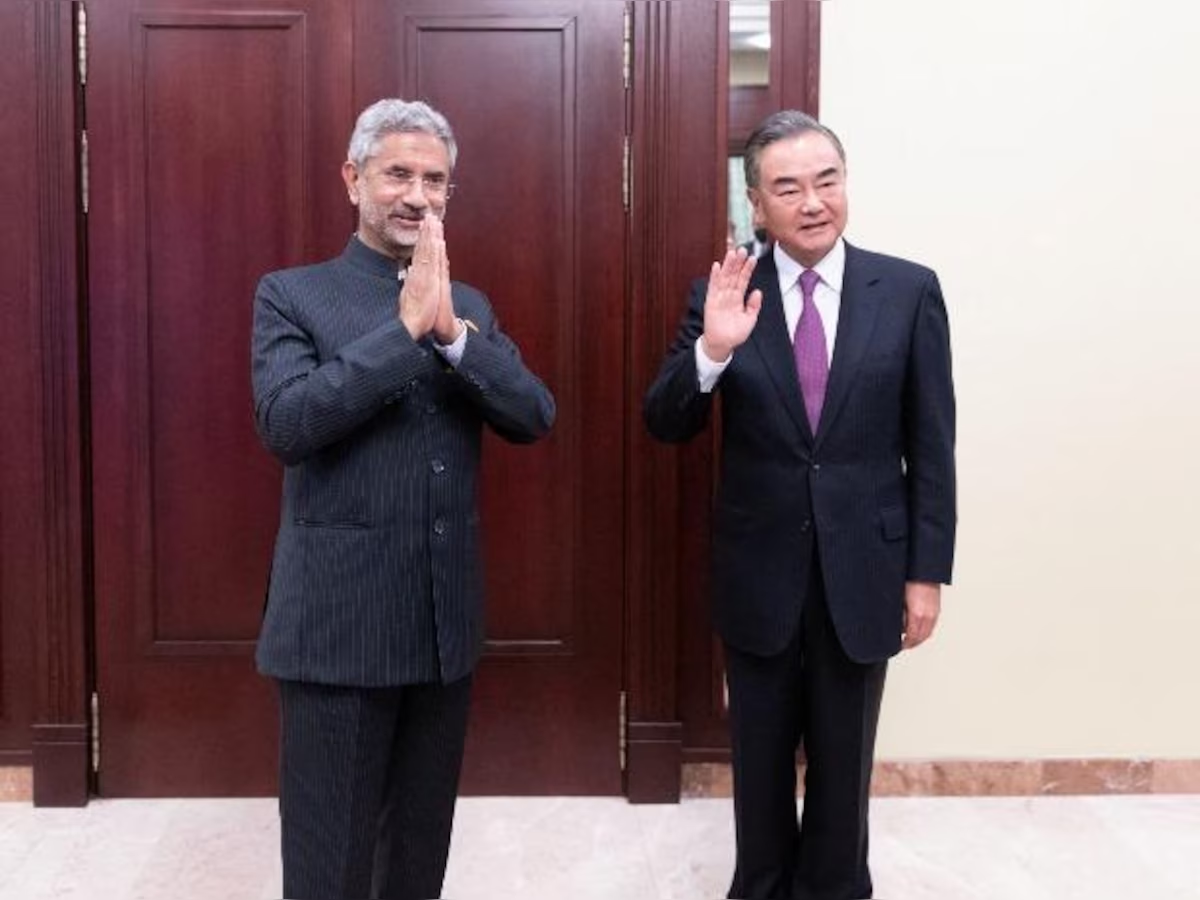

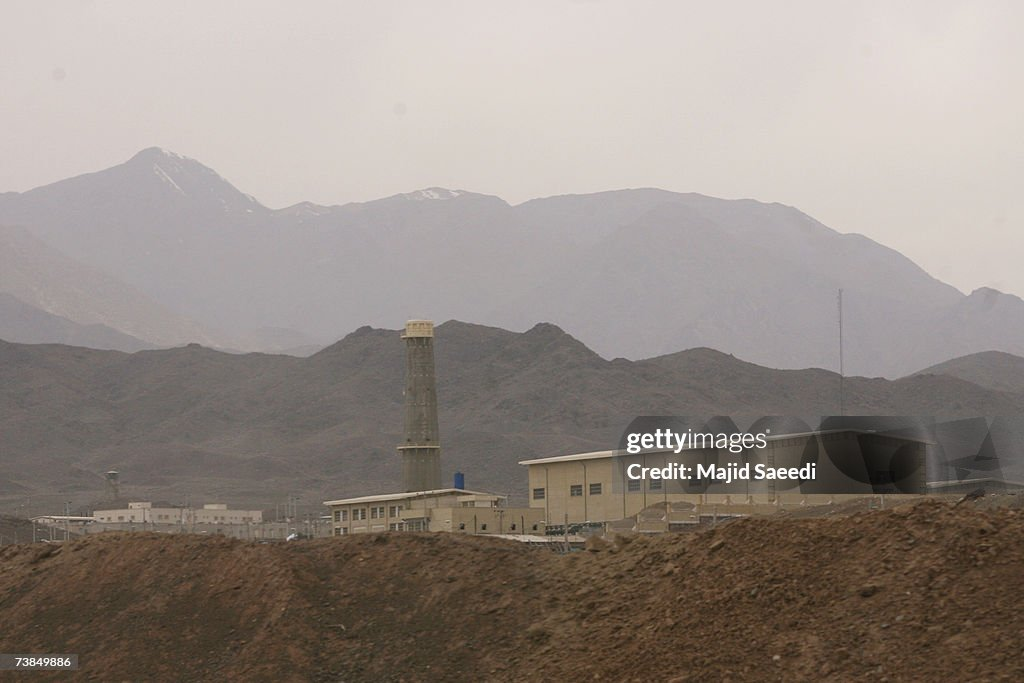
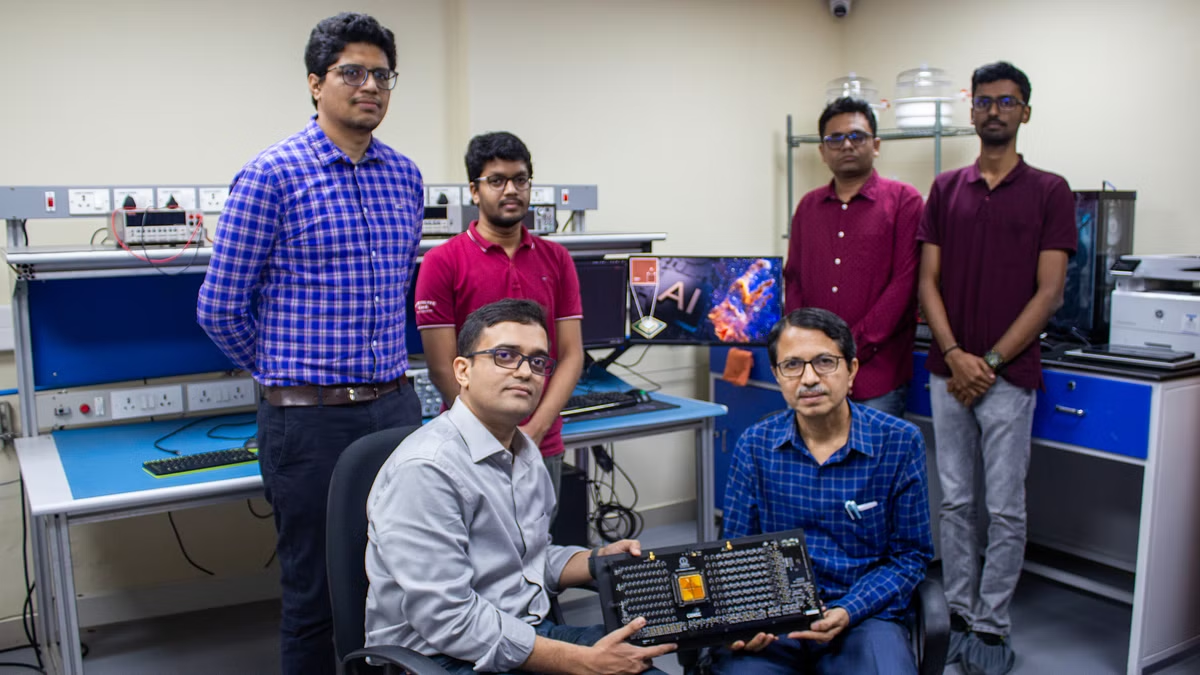

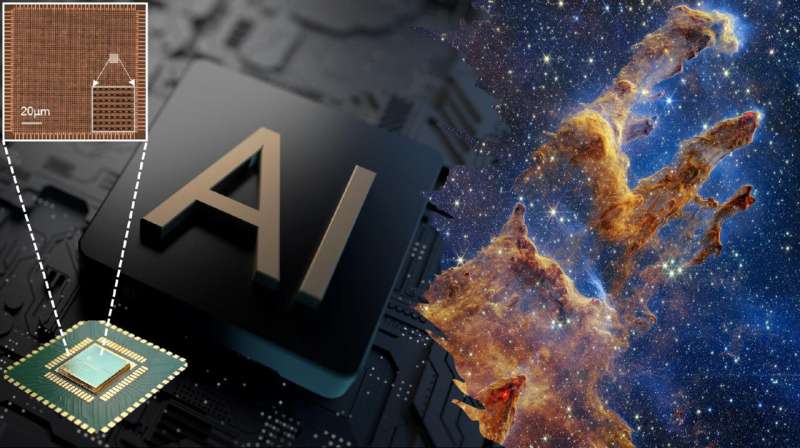
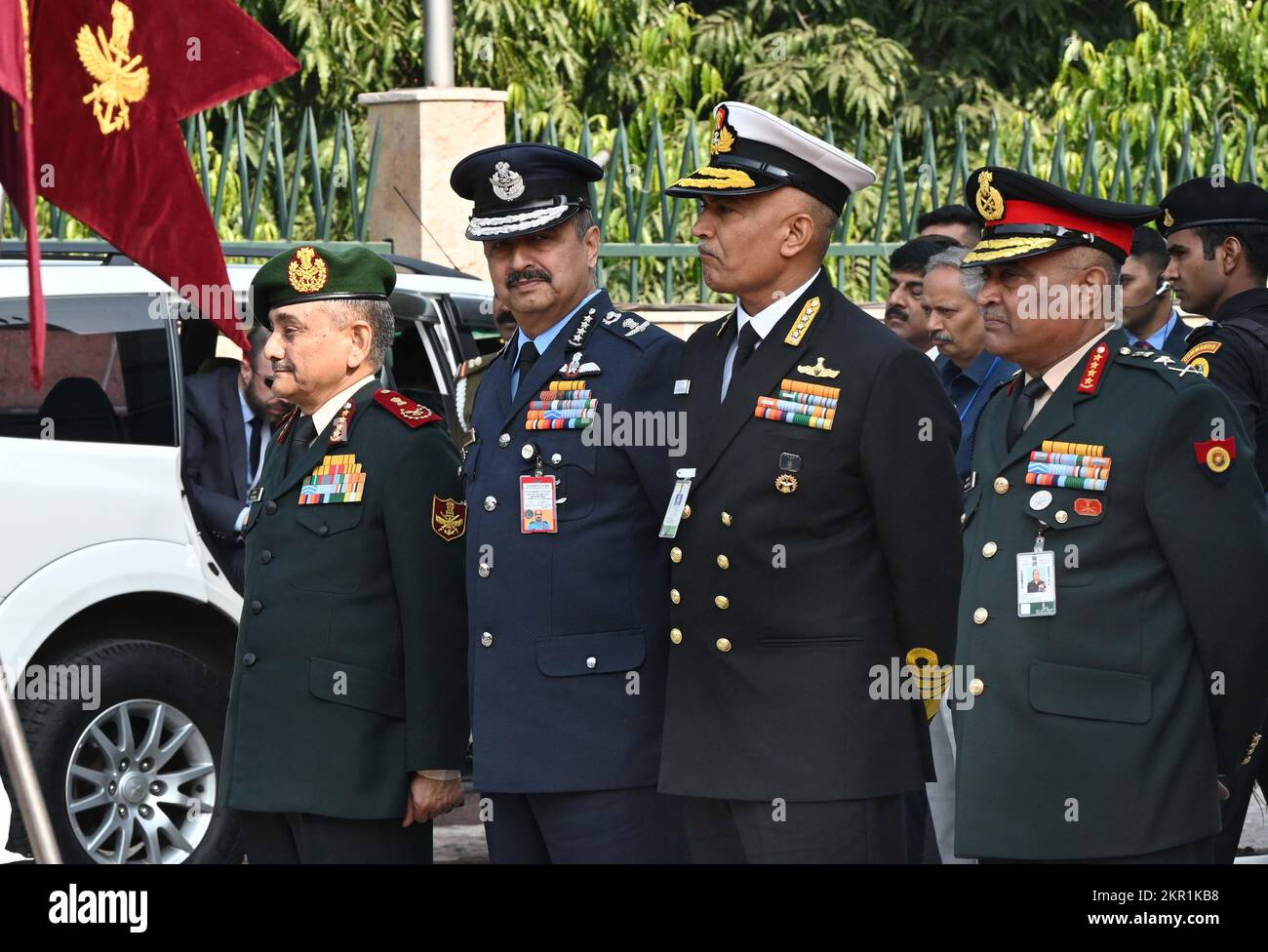
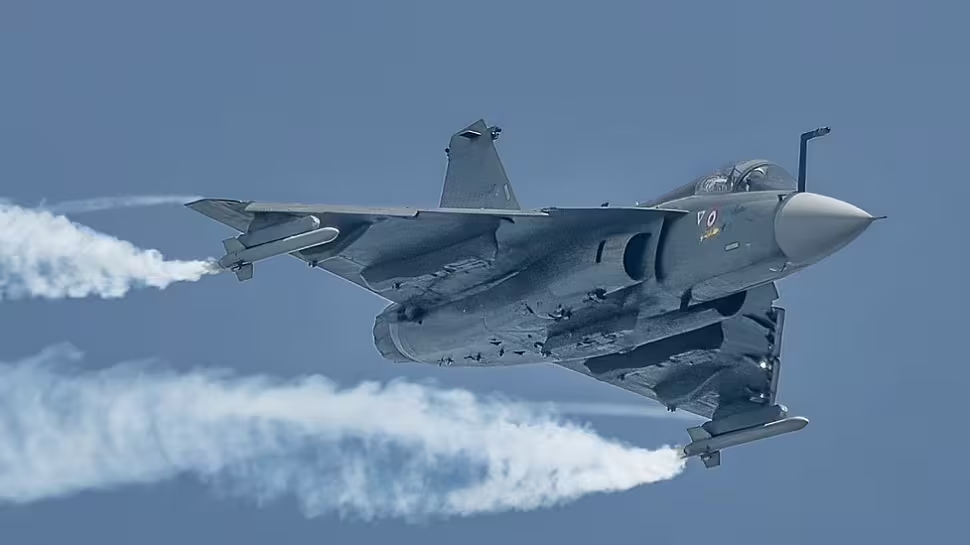
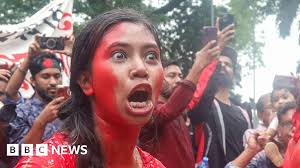
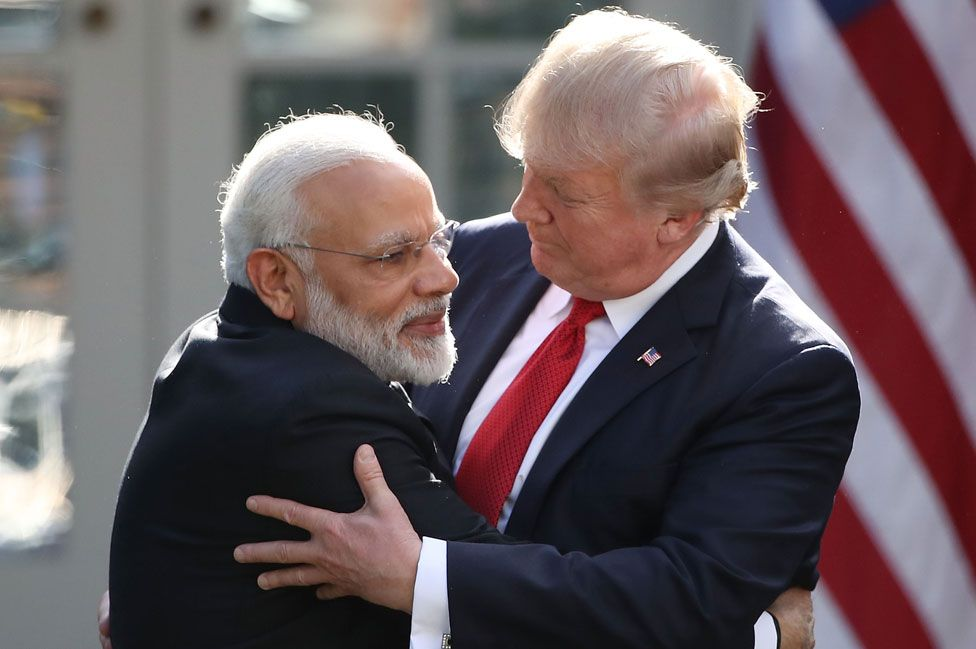
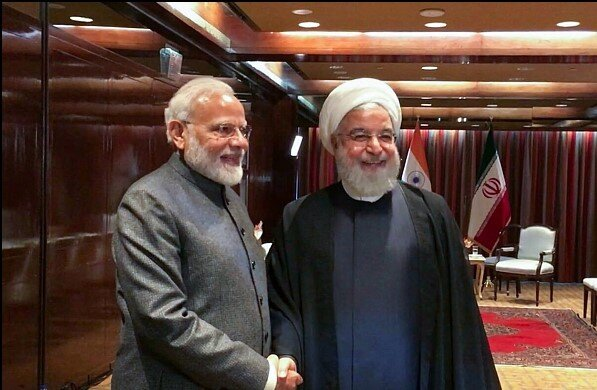

 Security Wise