Attacks launched at 1:44 AM this morning on nine terrorist targets within Pakistan and Pakistan-occupied Kashmir, including headquarters of the Lashkar-e-Tayyaba in Muridke outside Lahore and of the Jaish-e-Mohammad in Bahawalpur, both located in the Punjab heartland of Pakistan, are significant.
Significant, chiefly because a huge psychological barrier has been breached by the Indian government with precision guided munition strikes, to minimise collateral damage. This strike is something of a climacteric in that the Indian military will henceforth consider militarily engaging with Pakistan in a more frontal manner.
Per a statement by the Indian Ministry of Defense, the actions were “focused, measured, and non-escalatory in nature”; “No Pakistani military facilities” were targeted and “demonstrated considerable restraint in selection of targets and method of execution.”
The Pakistani government was, perhaps, distracted by the announcement of a major air drill scheduled for today that accounted for the massed presence of air assets strung along the border leading to the Pakistanis letting their guard down somewhat. It helped mask the execution of the first phase of Sindoor.
Islamabad first claimed downing two IAF aircraft, upped it to three aircraft, and a little later five Indian planes. On the face of it, these claims are an exaggeration; but a couple of drones may have been shot down. The ball is in General Asim Munir’s court. Depending on what’s struck by Pakistan’s in-coming, the 2nd phase of ‘Sindoor’ will be implemented.
For reasons not readily discernible, India has been inhibited in the past in using its marked conventional military edge against Pakistan. It has not fought “wars” with Pakistan to a decision, as happened in 1971. Inconclusive conflicts, and the reluctance of the Vajpayee (BJP) and Manmohan Singh (Congess) regimes to mount harsh and sustained military retaliation after terrorist strikes on Parliament — the symbol of India’s sovereignty in 2000, and on Mumbai in 2008, encouraged General Headquarters, Rawalpindi, to actually believe Pakistan is the military equal of India. And, worse, that India run by “lalas” (the usual Pakistani denigration of Indians) don’t have the stomach for a fight, etc further stoking the myth of “martial races” that the Pakistan army has a large stake in.
The Modi government has finally broken through the Indian state’s own system of self-deterrence, of inhibitions, by striking terrorist havens deep inside Pakistan, giving proof of its intent to physically demolish facilities and installations within Pakistan being utilised in the until now successful use of terrorism as asymmetric warfare, and going well beyond hunting down individual terrorist leaders, which programme too will continue. After all, the Hydra-headed monster needs to have its heads cutoff everytime a new set of heads are sprouted, in the manner Israel has contained Hamas and Hezbollah.
Sindoor has also signalled that India is prepared to escalate if the Pakistan army wants escalation — the choice of the escalatory level being Munir’s to make. The Pak COAS is under the pump. He can believe his own army’s well entrenched advertisements about itself and Pakistan, and choose to go disproportionate. He could order counter strikes on military targets within India, which will surely draw swift and heftier Indian conventional response at every turn. It should rightly open up the possibility of Indian military actions — which hopefully the army is preparing for, to take the Haji Pir Bulge, or even Skardu. This action-reaction sequence could lead to Munir contemplating what Pakistani strategists and commentators have a little too readily, albeit rhetorically, evoked — the nuclear button. Except, in their telling in a nuclear exchange “Hindu India” is destroyed but, magically, the “Land of the Pure” is spared damage!
Munir has no alternative other than to back down. After his vituperative Koran-spouting performance before an audience of Non-Resident Pakistanis the other day, that will mean losing face. But better a lost face, or even a rationalised LOC with Haji Pir and Skardu in Indian hands, than one’s own country lost as irradiated ruins. The fact is Pakistan’s threat of nuclear first use is manifestly silly besides being suicidal. Having brought the proceedings to this pitch, GHQ-R can do little else now than say nothing and lump it. Especially because no one is buying Pakistan’s case of Pahalgam as a “false flag” Indian operation, etc. Had it been otherwise, it would have registered at the UN Security Council meeting yesterday where Pakistan, a temporary member, found other member states openly voicing skepticism about Pakistan’s view.
Still, a Pak army chief mouthing the kind of Gazwaihind-nonsense that Munir did suggests, he is more likely to be deposed by a cabal of sensible corps commanders, prompted by Washington, Riyadh and UAE than that he will be left free to inflict even worse damage on his own country. Munir may want to go down as a ghazi. His fellow generals are unlikely to follow him, faced as they are with no good options but with every incentive to retire to their ill-earned farmhouses!
[And could we have a bit better informed media — PLEASE! Or does the Indian public have to learn from blah-blahing ignoramuses about “Pashtun regiments” in the Pakistan army; so, what next “Sindhi” formations marching through the Cholistan Desert to occupy India to fulfill Munir’s fevered dreams?!!]
[A PAF (ex-Chinese) F-7P taking off from possibly the Lahore-Islamabad motorway]
It is despairing to hear and see a string of former generals, RAW, IB officials and the like, prodded by television hosts, daily emitting a lot of nonsense and hot air about what the Indian military may be planning to do, or should do, without anybody coming up with any definite ideas of how the Indian military should proceed. The contemplated Indian retaliation is, of course, for the heinous killings of domestic tourists on the Baisaran meadow in Pahalgam April 22 by terrorists from the Lashkar-e-Tayyaba (LeT) and Jaish-e-Mohammad (JeM) groups operating under a newly created and secular sounding nom de guerre — The Resistance Front (TRF).
The situation reminds me of the competitive “yellow journalism” of the mid-1890s one has read about, practised by two American media barons of that time — William Randoph Hearst running the New York Journal and Joseph Pulitzer the New York World, each trying to out-do the other with sensational headlines and coverage of the Cuban rebellion against Spanish colonial rule, that eventually prompted US President William McKinley to intervene in Cuba. The story goes that Hearst hired a famous illustrator, Frederick Remington, to provide sketches of the action in Cuba. Remington reached the island state during a leantime and wired back that nothing much was happening in Havana, only to have Hearst famously instruct him to stay put, saying “You furnish the pictures, I’ll furnish the war”!
Whatever any one says everyone, including China and the US, wants a fight and the situation is being media primed to deliver it, if only to see what Modi will do. The irony, of course, is that Modi’s rhetoric about “This is not an age for war” that he freely ladled out to Russia and Ukraine, Israel and Palestinians, has come back to bite him. For too long Indian leaders have gotten away with moralising about war only to have war or threat of war on our borders reveal them as poseurs. Jawaharlal Nehru got his comeuppance in the 1962 War. It remains to be seen if Pahalgam will be a climacteric for Modi.
Except, a lot of time has been wasted by the PM and the MEA trying to drum up international support for prospective Indian retaliatory actions which, by the way, has not been forthcoming. As reported in the media, the Indian government failed to insert a bare mention of “Pahalgam” in the UN security council resolution. It shows up the meagre returns on Modi’s activist diplomacy.
India does not need anybody’s permission or support to retaliate harshly against Pakistan for its asymmetric terrorist warfare undermining national security. Get on with planning and successfully executing punitive military actions to capture the Haji Pir Salient and Skardu (described below in broad brush terms) and don’t stop until these geostrategic goals are achieved — even in the face of international opposition. The trouble is India has never shown the spine to stand up for itself and its interests.
The Indian media is not actively promoting war, it is true, but is doing the next worst thing — speculating inanely about what India may be planning to do. Something is bound to occur because, well, Prime Minister Narendra Modi is caught between — in the circumstances — his moderate rhetoric, “India will identify, track, and punish every terrorist, and their backers” and his more bombastic, almost Trumpian-sounding but inherently vaporous threat, of visiting something “unimaginable” upon Pakistan. Rising to the bait, Bilawal Bhutto, following in his grandfather’s footsteps, promised a river of blood should India deny his country the Indus waters — slightly scaled down rhetoric, I suppose, compared to then Foreign Minister Zulfikar Ali Bhutto’s thundering on about a “thousand year war” with “Hindu India” at the UN in the wake of the 1965 War.
General Asim Munir, Pak COAS, has suddenly gone silent after his incendiary speech, in the Zulfikar vein, to well-heeled nonresident Pakistanis (NRPs) last week at an event in Islamabad — a counterpart of the annual Indian jamboree — “Jan Pravasi divas” except with anti-Hindu/anti-India venom, befitting a progeny of a backwoods mullah from UP who ventured a hijr across the Radcliffe Line. There were copious quotations from Koran — which apparently Munir is well versed in. The better educated among the NRPs sitting on sofas were plainly bemused, some of them even managed to look appalled, by their slightly unhinged-sounding army chief holding forth in recognizably “butlerish” English.
But there was more drama in New Delhi yesterday when Modi, in a meeting with the armed services chiefs of staff did something the latter did not expect. Cleverly, he not only shifted the onus and responsibility of choosing an appropriate retaliatory response for Pahalgam on to their professional shoulders — a decision that rightly is in the political domain and for him and his cabinet alone to make, but also of its success or failure.
Apparently, the TV cameras were allowed into the room after the PM had authorised the military brass to do what they think best. Because, the CDS and services chiefs looked sort of ashen, perhaps, because they suddenly found their metaphorical plates piled high with too much “political” stuff, besides having to alight on a set of significant military actions. It is the proverbial hot potato a politically adept PM has tossed to them.
No matter what happens or does not happen by way of the usual slow to get started Indian retaliatory reaction and Pakistani riposte, Modi wins (in terms of domestic politics). He can point to the armed services chiefs being afforded the freedom to choose whatever military actions they thought would have impact; should they succeed, he will be praised for respecting the military and doing the right thing in leaving it to the professionals to garner success. Should the chiefs fail in their choice of telling action, or worse there are operational snafus and failure looms, or still worse — an Abhinandan sort of embarrassment recurs except this time there’s no return of pilot(s), the CDS and the service chiefs will get hung by their lanyards. But Modi will be in the clear, even if he is met with derision and, internationally, loses face.
Our chiefs of staff and military commanders, the great Sagat Singh (as GOC 17 Mountain Division beating the Chinese PLA into submission in 1967 and retaining the Nathu La Pass, and as IV Corps commander helilifting his units across the Meghna River to ensure the “surrender in Dacca” in 1971) aside, have been conspicuously hamhanded in conceiving and conducting actual offensive operations. To wit, the failed 2019 Balakot aerial strike misorganised by IAF. It will be interesting to see what the CDS and the armed Services chiefs come up with this time that will have a salutary effect on the pesky but professional Pakistan army, considering they are working with Modi’s carte blanche.
Assuming all the commotion created by the two sides has not dissipated the tension, and the situation is being propelled towards some kind of reckoning, there’s consensus at least that India cannot any longer be subjected periodically to excesses by Pakistan-sponsored terrorists, that this cycle has to be broken, and a price imposed on Pakistan.
Unfortunately, the less visible option Modi would have liked to chose is what he voiced — identifying, tracking, and punishing the terrorists, and their backers, along the lines of apprehending Tahawwur Rana. That will take a few years. This is so because the Indian government has gotten into a bad habit of reflexively bending its knee to US, China, any big power. And because US President Donald Trump, who says he is “running the world”, declares that India and Pakistan would resolve the tensions in their relations amicably and without ruction, and also because US Vice President-cum-India’s damaad, JD Vance, has urged a “responsible solution”. OK, then!
But the Indian military chiefs have been hoist by Modi with the popular demand for retribution. Because holding the Indus Water Treaty “in abeyance” means nothing. Abeyance is not abrogation. It merely means in practical terms that India will be more forceful, first, in exploiting the three eastern rivers — Ravi, Beas and Sutlej, before turning its sights on the three western Rivers — the Indus and its two tributaries — Chenab and Jhelum. So, denying Pakistanis even “a drop” of any of these waters is not a practical proposition in the here and now, and cannot be engineered out of thin air in the near or even mid-term. Constructing the dam infrastructure and system of subsidiary dams, etc on the eastern rivers to divert them fully to flow through India — assuming it is at all, practicable, will take India some two decades to realise. In all this time, the western river waters will be available to Pakistan. So, that is hot air and gas, and won’t silence the Indian public baying for blood.
Many militarymen have taken to writing, and most of them end up waffling, having little to offer. For instance, take the former army chief General MM Naravane. The title of his piece — “Pahalgam attack deserves retaliation, India can borrow from US, Israel playbook” (https://theprint.in/opinion/pahalgam-attack-deserves-retaliation-india-can-borrow-from-us-israel-playbook/2600084/) promised more than the article delivered. “Let [Pakistanis] be on tenterhooks for a while till they start jumping at shadows”, he advised. “Meanwhile, we must build up global support through political, diplomatic and military channels of communication, for our retaliatory measures for when (not if) it happens, which could be in multiple domains, both kinetic and non-kinetic. It is time for India to bare its fangs and not fall prey to calls for restraint, or third-party assurances. India can always borrow from the US or Israeli playbook and draw support from international law which allows for such responses.” There was no elaboration on what aspects of the Israeli and US “playbook” Naravane wishes the Indian armed forces to replicate. In short, hot air!
Lt General HS Panag (Retd), the former Northern Army commander, is more no-nonsense in his analysis and recommendations. So, I was surprised that he set no definite goals for the incursion he recomends across the LOC (https://theprint.in/opinion/dont-act-hastily-keep-pakistan-on-the-edge-then-strike-decisively-repeatedly/2600446/). Like Naravane, he is against India “hastily blowing the war bugle”. Fine, India is doing just that, taking its time. Next, Panag suggests prosecution of “a short and intense limited war below the nuclear threshold [to] be exercised preemptively when the adversary least expects it” with the aim of pushing back the LOC “0-15 km to threaten strategic objectives before nuclear weapons come into play [and for] All launch pads used for facilitating infiltration [to] be captured.” This, he argues, “would force Pakistan to sue for peace as the China-Pakistan Economic Corridor would come under threat.”
Good he mentioned the “0-15 km” depth to which he’d like Indian forces to penetrate into Pakistan-occupied Kashmir. Considering that almost all of Pakistan army’s cantonments and concentration areas are near the international border and the LOC, debouching from them will be easier for Pakistani army units to affect than for Indian army formations which have to travel longer distances with their trains of equipment. Panag, apparently, just wants an advance across the entire LOC front with no specific purpose in mind. In the event, instead of a “limited war” we may have a replay of the 2002 disaster — Operation Parakram, with all the eyeballing ending in a bored mutual withdrawal after Vajpayee called it a day. The worst that can happen with Panag’s sketch of a plan is the Indian army will be stuck at the Zero end of the “0-15km” depth he plans to occupy! So, no that won’t do.
Pravin Sawhney, a former Major (Artillery), who publishes a defence monthly, contends problematically that the Pakistan military (1) “will outmatch Indian military in a war by a convincingly huge margin”, (2) “has much stronger strategic level which directly impacts the operational level of war”, (3) has the battlefield edge owing to the Chinese Beidou satellite constellation it relies on in cyber warfare and in munition guidance and, more generally, in electronic warfare, air defence, drones, and owing to induction of certain Artificial Intel systems, courtesy CENTIAC (Centre of Artificial Intelligence and Computing) under the Pak Air Force, which also enjoys a better pilot to aircraft ratio.
Actually, by my assessment, the only real military edge Pakistan enjoys is in the quality of its fighter pilots. This has historically been the case.
The hot-headed Pakistanis have afforded us strategic opportunity. Time to exploit it. Reacting to India’s changed stance on the Indus water treaty, Islamabad announced a “suspension” of the 1972 Simla Accord, rendering the Line of Control (LOC) in J&K a live ceasefire line that can be changed by either side using military means to advantage itself. In this context, does it not make sense for the Indian army to cross it to achieve certain specific aims?
The first thing to do is to put the Indian army’s holding formations on alert along the international border from Gujarat to Gurdaspur to threaten imminent action at anytime anywhere across it.
Having thus nailed the Pakistan army to static defence and inviting it to risk moving additional units to the LOC, the Indian army can take the Haji Pir salient last captured by Indian 1 Para in the 1965 War but returned to Pakistan for Chhamb that the Indian army lost to Pakistani forces (and lost it again in the 1971 War, for good).
The Haji Pir Salient (HPS) is a fat thumb sticking into India, and integrating it into the Indian J&K is eminently doable. There are only so many defensive forces the Pakistan army can push into the salient. Engaging them from three sides, with Special Forces pinching off the salient on the Uri-Poonch Line with this line quickly reinforced and firmed up with induction of Indian forces, will compel the Pakistani forces inside the salient to fight, to fight to get out of the encirclement, or to face destruction in detail. Remember any territory lost across a ceasefire line remains lost. HPS could be a cauldron, a killing field. An Indian Haji Pir would at once rationalise that part of the border and cutoff the easy south-of-Pir Panjal route used by ISI to infiltrate its jihadis into the Valley, as they did the LeT/JeM cadre into Pahalgam.
A similar lightning foray can be made in the far north to take Skardu — HQ, Forces Command, Northern Areas, Pakistan army some 40 kms across the LOC. Skardu in Indian hands will rationalise the line of control to the Saltoro Muztagh and India’s Siachin Glacier, and weaken a Sino-Pakistani linkup in the area proximal to the Shaksgam Valley gifted by Ayub Khan to China.
Hard geographic-geostrategic objectives-endpoints have to be articulated for any operations the Indian military undertakes; just advancing on a broad front across the LOC as Panag recommends ill-serves the cause Modi has set the Indian armed services. Capture of Haji Pir and Skardu are the sorts of consequential actions the military brass tasked with doing something of lasting and visible effect, should prioritise.
By the way, there’s not a spitball’s chance in hell that either or both of these operations will trip the nuclear wire primarily because it is disputed territory across a ceasefire line. Secondly because Pakistan becomes extinct in an all-out N-war. And thirdly, because the pampered Pakistan army officer cadres have too much to lose and cannot afford such a nuclear exchange, all their threats being so much hollow posturing that Western thinktanks and their ilk inject with credibility to advance American interests in South Asia.
But, there are two things, the Modi government and the Indian military simply cannot allow to happen once the action starts. Firstly, India should under no circumstances succumb to pressure from Washington, Beijing, UN or anybody else and stop its operations short of taking Haji Pir and Skardu and otherwise substantively altering the Line of Control. It is this LOC alteration that will have a permanent effect on GHQ, Rawalpindi, and profoundly reorder its thinking, outlook and approach to J&K. Asim Munir and fellow-believers can keep rehashing the “Two Nation Theory” in the aftermath of Haji Pir and Skardu in Indian hands, should the General survive such Indian successes.
The fact is, after suspending the 1972 Simla Accord, Pakistan is in no position to stop India from hugely changing the LOC!
The terrorists have been identified, their antecedents ascertained, and the J&K Police Intel presently are involved in tracing the family connections, if any, of the above four attackers in Pahalgam who killed 26 tourists. The fact that Home Minister Amit Shah rushed from Delhi to Srinagar — even as Prime Minister Narendra Modi decided instantly to not cut short his state visit to Saudi Arabia, is the surest sign that no instant retaliation is in the offing. Because there’s simply no established system of instant retaliation. So the latest terrorist incident will be treated as sui generis and by the time investigations are completed, conclusions reached and the nature of punitive action decided on, the zest for a hardbitten response will have dissipated.
Predictably, “high level meetings” in Srinagar and in New Delhi have followed and, for all intents and purposes, little else will happen in the near time. That’s for sure, except more yacking.
Several generals featured on television news programmes talked of a menu of options available to the army and the government. To be realistic they are referring to the physical wherewithal for action — equipment, etc. It does not, however, amount to actual and ready plans for retaliatory action or ready target sets to be distributed to strike teams. There are no such plans to choose from and no prepared list of targets to go after, or set up for counterstrike/elimination. There was no instant retaliation after the December 13, 2000 terrorist attack on Parliament — the symbol of India’s sovereignty when even the US the usual pressurer of India to do nothing, expected an Indian reaction. Or after the seaborne attack on Mumbai in 2008, when US pressured the Manmohan Singh regime to do nothing. So India’s not reacting is, unfortunately, quite normal.
The Pahalgam incident is, of course, a Pakistan army-ISI operation propelled by COAS Munir’s notice soon after he took over from General Qamar Bajwa that the Pakistan army would give up its “passivism” on the border. That should have sounded the tocsin and the intel agencies and the state and central police agencies as well as the army ought to have gone on alert, which did not happen. Munir’s speech in Rawalpindi a few days ago, where he reiterated the basis of the “Two Nation” theory and Pakistan’s claims on J&K should have set our antennae whirring. This Pahalgam massacre that followed, marked a revival of terrorism with a bang that caught the Indian state unawares and flatfooted.
The ISI chose a strange time for a terrorist strike though. The US government arranged for the 26/11 terrorist attack planner Tawwawur Rana, a Canadian citizen, to be repatriated to India. Vice President JD Vance is visiting the country and this terrorist strike will, therefore, stay in his mind and when he returns to Washington he is likely to be amongst those who will argue with Trump for facilitating or, at least not hindering, an Indian military strike deep enough inside Pakistan to blow up, say, the LeT HQrs at Muridke — because that’s the level of response that is now called for. But, it is doubtful the Indian government will muster the boldness for such response. The former Pak foreign minister, Mahmud Kasuri, recalls in his memoirs that after the 26/11 attack, US senators John McCain and Lindsay Graham visited him to sound him out on the possible Pakistani reaction to India mounting a retaliatory strike against Muridke. Naturally, he hinted to the Americans that the action-reaction sequence could escalate to the nuclear level. That apparently dampened any enthusiasm the Manmohan Singh regime had for striking Muridke, and that was the last anyone heard about a like response.
Sure, in recent times, several terrorist leaders have been assassinated in Pakistan, But these are apparently not salutary enough for Munir and his gang who seem determined to stir things up because he calculates that Pakistan has less to lose in comparison to India with a healthy economy, etc. And that this fact alone should deter New Delhi from mounting a harsh response. The threat of Pakistan initiating nuclear weapons use is the stock backup card, Munir thinks, will work.
Have long maintanied and detailed in my books why the N-threat by Pakistan is hollow — the exchange ratio does not play out in GHQ, Rawalpindi’s favour. This scenario has been gamed so many times in so many locations and the results are the same: For the loss of two Indian cities, Pakistan will cease to exist, in the Spenglerian sense, as a social organism. Moreover, I have argued, it will never be allowed by the generals to get to that stage because such a war will zero out the 30% of the Pak economy controlled directly or indirectly by the army/military which has allowed Pakistani officers to live out prosperous retired lives. So, there’s great incentive for them to not cross the nuclear rubicon — reason why I have contended India can actually afford to conventionally escalate, to up the ante. That requires the Indian government to hold its nerve, and that is a big ask.
Further, as a cradle of Islamic terrorism, Pakistan is in the crosshairs also of the US Nuclear Emergency Support Teams (NEST) comprising Special Forces trained to take out terrorist state nuclear arsenals such as the Pakistani nuclear inventory. Something that special units within the Israeli Mossad are geared to do as well. May be it is time the Indian government actively cooperated in particular with Israeli agencies to contain this threat.
Modi’s statement from Riyadh could result, as in the past few years, in covert operations to bump off this or that Lashkar-e-toiba operative or field commander residing within Pakistan. But such plans take time to evolve and execute.
In the mean time a durable solution has to be considered. Assuming the Kashmiri youth in the Valley have jobs, gain from tourist traffic and generally don’t want to risk the attention of the army’s Rashtriya Rifles/Intel groups, and like the above identified perpetrators of the Pahalgam killings, are foreign born and, in any case, staged out of Pakistan/POK, then the Israeli border solution suggests itself as the remedy. It is a bloodyminded but high-tech solution worth pondering: An electronic wall of sensors — movement sensors, thermal imagers, audio sensors along the length of the LOC activating high rate of fire machine guns placed in overlapping arcs of fire along the border. Anyone trying to sneak in from the other side will immediately cue the machine guns in that area to range in on the intruders for immediate targeting-to-kill. In other words, these machine guns slaved to banks of sensors promise automaticity of fire response and almost certain death to intruders. This is what Israel created on the Gaza border, but were surprised when the Hamas countered it — which they were able to do only because the Israeli security forces were lulled into complacency. As were the Indian security forces in J&K today.
The machines guns firing first, for humans to ask questions later is, perhaps, the tandem the Indian government agencies need to implement. You intrude, you get shot. Good solution.
Sure enough, US President Donald Trump did what he promised he’d do — upset everyone’s economic applecart, including America’s. His “reciprocal tariffs” across the board on every country trading with the US makes no economic sense. But he is delusional enough to believe that disrupting the world trading order will somehow find America at the top at the end of a period of turmoil that he has loosed on the world. All the US Treasury Secretary had to say (to CNN) was that, instead of instantly retaliating, the affected countries should “take a deep breath” and do nothing, certainly “not escalate” by imposing more tariffs on American goods and commodities.
In one sense, it may be seen as the last gasp of a creaky old great power making its exit with a bang!
Charged by the Trump Administration of imposing an average tariff of 52%, the counter US tariff on India is 26%. China’s figures in the same categories are 67% and 34% over and above the 10% already imposed on Chinese exports to the US. America’s Asian partners are not spared. Japan’s 46% tariff rate draws 24% tariff; and corresponding figures for Israel are 33% and 17%, South Korea’s 50% and 25%, and Taiwan’s 64% and 32%. It proves, what I wrote in a post a few months back, that Trump is no one’s buddy and America is no one’s friend.
Taiwan is almost equated with China for tariff punishment, which is curious considering US Defence Secretary Pete Hegseth said in a ‘secret memo’ to the Pentagon brass disclosed by the Washington Post, that preventing Chinese takeover of Taiwan was the priority even if this means “assuming risk” in Europe. This last premise owes much to Trump’s pally relationship with President Vladimir Putin and his willingness to throw Ukraine overboard if that secures — and this plays on Kremlin’s historic apprehensions about China — a US-Russian entente to stop China — perceived as the more onerous threat to both the US and Europe.
Actually, such a concert serves India’s strategic purposes well, and New Delhi should stoke this policy tendency in Washington and Moscow as much as it can. With the US and Russia militarily stretching China in the east and the west on the Eurasian landmass, Southern Asia and the subcontinent will get less attention from the PLA, which’s in India’s national interest.
Yes, but what about Taiwan? With extortionist tariffs, whether intended or not, crippling the Taiwanese industry and economy, Trump has happily ensured, writes ‘Typhoonmax’ — a reader of this blog in response to the previous post, that China need never “invade Taiwan i.e. [Trump’s] tariffs will probably encourage the Taiwanese to cut a Hong Kong style ‘one China two systems’ type reunification deal with Mr Xi.” Exactly right, and the Goumindang (KMT) opposition party of the late Generalissimo Chiangkaishek that for a very long time ran the “nationalist” government in Taipei, may facilitate such a transition because, well, it too claims Taiwan is part of China it hopes to once again rule!
Such a denouement would be bad for India, because strategically, this’d permit Beijing the luxury of taking its eye off Taipei and redeploy its military forces now massed on the Fujian coast, to its “Western theatre” — Tibet and Xinjiang where Chinese strategists espy the most potent threats not just from India, owing to the disputed border, but also from Tibetan and Uyghur (in Xinjiang) secessionist sentiments and from the spread of Islamic terrorism.
The insurmountable problem for India — no great revelation this — is the phenomenal rise of China. Any visitor to China — and I have visited that country several times, cannot but be astounded by its spectacular and visible economic and technological growth. Shanghai is an obvious showcase for everything that’s gone right for China. Looking at Pudong from the Embankment in Shanghai is verily to see the future. Haven’t been there — but Thomas Friedman in the New York Times column, has talked up the newly constructed Huawei campus in Pudong as the centre of technological advances for the world.
Experts who have studied China’s rocketing rise attribute it to the Communist rulers from the beginning investing in STEM disciplines — science, technology, engineering, mathematics primary school level up, when Jawaharlal Nehru was building the “new temples” of India — the Bhakra Nangal Dam, etc. but in the education sector, the IITs and IIMs that have produced the feedstock for the US and West European economies — providing efficient engineers and managers for their burgeoning post-World War Two economies. It was a lovely fit. But Nehru paid no attention to primary schools in the countryside and in the cities and to raising the quality of education provided. So these “schools” other than remunerating the “teachers” who pocketed their pay and went home, offered such absymally bad education, virtually no formal education, they became assembly lines for producing rank illiterates, who joined mofussil “colleges” and graduated in illiteracy, and then hankered for sarkari jobs, and once in them lowered the quality of governance! It was, in effect, an unvirtuous cycle of scam sustained on public monies. But surely, Nehru did not intend all this to happen. But in a manner of speaking, he did encourage precisely the seeding of the urban talent pool groomed in IITs/IIMs for technology serfdom, different only in degrees from the indentured labourers from eastern UP, Bihar, and Tamil Nadu the British colonial government shipped off to run England’s lucrative plantation economies in the Indian Ocean (Sri Lanka, Mauritius, Seychelles) in the Pacific (Fiji) and in the Caribbean (Trinidad and Tobago). It made the Indian state and society incapable of technology creation and innovation on mass scale. Upskilling this sea of illiterates to service an AI-laced technological future is plainly beyond the Indian state’s capacity. What happens now? Who knows!
But sticking with the coolie stream seems to be still a policy priority. Look at the disproportionate political-diplomatic capital expended by the Modi regime in opening the H1B visa (and equivalent) route for swarms of would be IT coolies! The fact is IITs and IIMs have not produced technology inventors and innovators. All that the great software factories of Bengaluru and Cyberabad — Infosys, Wipro, TCS, et al, make money out of is by writing code — their bread and butter — which is glorified coolie job, that is now being done better and immeasurably faster by Artificial Intelligence. May be Indian engineers will become skilled in wielding the AI to, what else, get work abroad.
But the troubling and worrying question is this: Is there any original software written in India? The minister in-charge realised this only a couple of days back that there’s none! Even more where’s a ‘Deepseek’ kind of revolutionary technological invention? China seems to have these inventors and innovators coming out in droves. They are adding high-octane fuel to the already astounding pace of progress by that country. India is near zero in this realm of technology creation what with a bureaucracy-heavy state system configured to squelch innovation and technolgical advancement. For all the rhetoric — look at the state of tech MSMEs in India. And then look at the prime tech entity in govt sector — DRDO, the screwdrivering specialists, and one begins to appreciate how badly off the country really is in this sphere! Clearly, the necessary technology creation/innovation ecosystem is absent in India. But, how is it that the even more, bureaucracy-wise, turgid “state socialism with capitalist characteristics” ideology and system in China is now the source of endless and astonishing new technologies?
It may be because, as I have repeatedly mentioned on this blog over the years, Indian culture. It has refined the science of abstraction — most famously in conceiving the mathematical symbol “zero” and the decimal system. Great kings and empires in India, however, created no monuments of practical use. There was no tradition of science application. The zero and the decimals did not fetch the natives of this land engineering advances. It had to go via the Arabs to Greece and to spread to rest of Europe for its engineering possibilities to be actualised.
The Chinese culture on the other hand was high on the applications of knowledge — they invented just about anything one can think of — paper, paper money, gun powder, seisomograph, wheelbarrow, compass — oh-look up Wikipedia! And the merit-based civil service — the Mandarinate! Ruling dynasties were known by the massive public works they constructed — the Great Wall started in the 7th Century BC and built over the next 2,000 years — think of it!, the Grand Canal on the Yangtze River and associated system interlinking rivers, the oldest of these dating back to the 5th Century BC! Indian kings and that lot left behind nothing to remember them by — oh, sure, Taj Mahal, what good did that do for the people? In fact, the only enduring public work one can think of by an Indian ruler is what’s come to be known as the Grand Trunk Road built by Sher Shah Suri in the 16th Century, connecting Kabul to Bengal.
There’s a reason Indians are culturally attuned to not being good at creating anything practical from the knowledge they have — the caste system, which looks down upon those who work with their hands. I remember Sam Pitroda telling me in the late 1980s that he hails from a family of carpenters — work that won his father no respect. He somehow made it to America where working with his hands he designed electronic switching systems and got patents that made him rich! So culture, in effect, has been an obstacle to modernity, to the establishment of a flourishing industrial sector even. Of course, the caste restrictions are breaking down, and it is a good thing too, but not fast enough to make a difference. The other aspect encouraged by the British was to make servants of Indians who for a small but regular pay would do anthing for the firangi, serve anyone for a consideration! The Raj turned Indians into servitors, yes, and also dependents with the state portrayed as maibaap. Hence arose a nation of servile babus, from the ICS at the top to everyone down to the lowliest sweeper — who looked for security in his regular monthly pay. This was also the main reason for the military labour in the Mughal times shifting over to serving the East India Company and later the British Indian Army. There was nothing ‘martial’ about any of it.
China was never weighed down by such cultural impedimenta. It however needed a Communist apparatchik to release the brakes on the people’s aspirations — and this the great helmsman, Chairman Dengxiaoping, did with some common sense directives to unshackle the Chinese genius for craftsmanship and commerce, and build up the economy that way. Of course, he had America helping out by opening up its market and transferring military tech to firm up the PLA — all this as part of the Cold War game of turning the power balance against the Soviet Union. In the sheer mass and the drudgery of the Communist system in China, Deng’s successors still found that the country needed to catch up with the tech front rankers. So, the next thing they did was fast-forward the process by simply getting the very best brains from all over the world via its “Thousand Talents” programme which has spawned its adjunct — “Thousand Young Talents” programme for Chinese youth which is now advancing the economy with technology inventions and innovations.
And here’s India, which has yet to find its Deng.
I may have mentioned this but one of the pioneer theorists of quantum computing and one of the really heavyweight algorithm writers who once worked in our nuclear programme and then in the soul-crushing confines of CDAC (Centre for Development of Advanced Computing), Indore, took up the offer from an elite Chinese University after he failed to find Rs 3 crores here at home to set up a centre for algorithm writing. Mind you, he approached, I know, everybody from the highest in the govt and IT industry but got nothing from them except hot air and pat on the back. The Chinese so valued him, he was given his own newly established centre to run manned by the best and the brightest among Chinese STEM students for him to train. His annual remuneration package? $1 million (in hard currency) as virtually pocket money + beautiful house in the elite part of town + expenses! This was some 10 years ago. He may be making multiples of that money now and has the satisfaction of seeing his work manifested in high-tech devices and technologies. May be it is coincidence, but it is after he shifted there that China launched the first operational quantum tech satellite in the world!
But, I digress!
Sure, there’s no comparison between India and China. Each country has had to work through its set of problems. The Indian government works on the principle that there’s all the time in the world to do things, the slower, more evolutionary, the better — a legacy of the Indian freedom movement leaders being mostly lawyers working the margins of legal minutiae and comfortable with the system the British left behind that produced more paper than good decisions or good governance. In China, the revolutionaries with their peasant vigour uprooted the old system more thoroughly, and gave themselves a chance.
Realistically speaking, India is no match for China economically and technologically, and will never be because there’s no hint of radical reforms animated by an Elon Musk-ian type of “move fast, break things”-approach to making over the government and the improbably sluggish Indian system generally. So, besides hoping for a fruition of the Russian-US nexus strategically to contain China, is there anything India can do to brighten its prospects at a time when Trump — whom Modi painted as his good friend, has dumped on India? The Modi government, as has been suggested, can ease the entry of Chinese companies — the tech leaders in their fields — to set up factories in India with Indian investors, and repatriate profits but with the proviso that inside of 3-5 years all the components that go into the product lines would be manufactured here.
But economic cooperation should be no reason not to try and do China in, in terms of aiding and abetting two causes — those of a “Free Tibet” and of an independent Uyghur East Turkestan Movement, and in strategic military field by proliferating Brahmos supersonic cruise missiles to Southeast Asian countries and Agni SRBMs and MRBMs at “friendship prices” along with any other Indian produced military hardware, excluding nothing. That’s what secret understandings between states are for!
The greatest flaw in the Indian institutional strategic mindset is that it is not strategic, because it is too set along linear lines. If India trades with China, it cannot also undermine it in various military ways, etc. China believes in just the reverse– that good economic relations is no excuse for not screwing the adversary in every other respect. The twain don’t meet, and is the reason why the Indian government learns nothing and the country is supine, keeps getting it in the neck everytime.
One other lesson the Indian government refuses to learn. Trump has done India a favour by proving once again that he doesn’t care for India any more than he worries about — name any country, Uruguay! But the tariffs have done us one big favour — it is showing the way for Modi to “free marketise” Indian agriculture — get the Indian State out of the farmer’s life and business, scrap the minimum purchase price for agricultural produce, etc., and he can blame America for holding India’s feet to the fire! Once they become competitive, these same wealthy farmers (from Punjab and Haryana) who sit on well-fed dharnas at the slightest pretext and are as far removed from the subsistence agriculturists all over the country, as China is technologically from India, will thank Modiji for allowing them to find markets in the far corners of the world. This is potentially the only gain!
But, much worse, may be in the offing. Trump may cajole or coerce Modi into buying high-priced, ridiculously useless military hardware, like F-35 combat aircraft. Buying more C-130s/P8Is/C-17s is one thing. The Modi government, which made a humungous mistake by buying Rafale, will compound it many times over if it goes in for the F35 — it will be 100s of billion of dollars (in life time cost) down the gutter. It will, mark my words, spell the end of the indigenous Tejas programme — 1A, Mk 2, AMCA, the end of the IAF as a serious force, and of India as an independent and sovereign variable in the global balance of power system.
[IAF Chief, ACM AP Singh, taking COAS, Gen. Upendra Dwivedi, up for a Tejas spin]
The 42-squadron strength the IAF has flogged as its desired combat fleet size was originally spun out of the 50 squadron fleet recommended by the Committee chaired by JRD Tata in the wake of the 1962 War — fully 63 years ago, when ordnance was delivered by manned bombers. The 50 became 35 for want of resources before getting jacked up to 42 in the 1980s.
A 2-front wartime deployment plus reserve in the context of the PLAAF and PAF may have been the basis for settling on the 42 number. In reality though, it is just a number that’s gone up and down and up again — a function of the country’s finances, where it has been stuck for the last 35-odd years. But it is treated by the IAF as some kind of divine revelation, not to be trifled with. So, everytime any Chief of the Air Staff opens his mouth, it is to complain, issue dire warnings, about the “capability gap” attributed to the strength of the combat aircraft fleet declining to 30 squadrons, what with the phasing out of all MiG-21s from service by this year end, and the other fast obsolescing aircraft — Jaguars, Mirage 2000s and MiG-29s, that will need, the IAF brass claim, replacing inside of a decade, etc. The all-purpose panacea? 42 squadrons!
Sure enough, the recently elevated Air Chief Marshal AP Singh mouthed the same words. With print and television media faithfully relaying the CAS’ concerns and the talking heads on TV screens and press commentators echoing this oft-repeated nonsense — and this view, as intended, as always got a multiplier boost. The IAF has been very effective in getting what it wants by repeating this “procurement” spiel over the years, and pressuring the government into making ill-advised buys.
It led to the deal for 36 4.5 generation Rafales that Prime Minister Narendra Modi signed for during his April 2015 trip to France despite the by then deposed defence minister Manohar Parrikar’s well known doubts about this aircraft owing to the escalating unit cost, up from Rs 526 crores negotiated during the UPA government’s time, according to the Congress party, to Rs 1,670 crores, or over three-fold increase.
Further, the 36 Rafales in the Indian air orbat have nowhere met the the 70%-75% availability standard agreed on vide the Inter-Governmental Agreement of 23 September 2016, or 27 of the 36 Rafales being available at all times. This standard was demanded of Dassault because the frontline Su-30 MKI has serviceability rates of 55%-60% — the reason why Parrikar, by far the best defence minister the republic has ever had, suggested indigenously producing the Su-30MKI to meet IAF’s needs, and as the only imported component in the future fleet, with the Tejas (1A, 2, AMCA) as the bulk force aircraft. No wonder Parrikar was a bane, and pain in the you know what, for the IAF!
Whatever the Rafale deal has not done for India and the IAF, it did for the French aerospace industry — rescued it from insolvency. I had warned then — read my posts 2012 onwards! — that the initial 36 aircraft would be the wedge for additional 114 Rafales to fill IAF’s requirement of medium role fighter aircraft (MRFA). And also for the 26 Rafale Marine to equip the Indian aircraft carriers. The pitch for the naval version revolved around the commonality of spares and service support with the IAF Rafales. The flyoff of sorts then is pro forma, because now the IAF will argue it already has the servicing infrastructure for Rafale aircraft, and the Service would like very much to be less diversified to ease the logistics nightmare it has all along nursed!
In the event, there will be a “competition” for the MRFA deal — featuring versions of some of the same aircraft that have been in the running in the last 30 years — Lockheed F-21 — a differently designated F-16 Super Viper configuration, the Swedish Gripen, Russian MiG-35/57, and the Boeing Super Hornet F-18, that will be staged mostly for show. Unless…
Unless, the Modi government — like the preceding Congress and BJP regimes, again bends to Washington’s will. Except, Trump now will impose his terms, arm-twist Modi as he did on the tariffs issue getting New Delhi scrambling to accommodate. The question is which aircraft choice will he impose? Who knows why he publicly pushed Modi on the F-35 Lightning. May be he has bought stock in Lockheed! No US President has been so brazen in profiting from his office — it is almost refreshing! But he could go, equally, with the Viper or the Hornet. Whatever, India stands to be struck by Lightning or stung by the Viper/Hornet, and guess what gets hurt? Yep, the indigenous Tejas Mk 1A, Mk 2, and the advanced medium combat aircraft. The country cannot afford to buy yet another lot of foreign aircraft and, at the same time, develop and fly the Indian-designed, home-made Tejas family of fighter aircraft that could be the backbone of the country’s defence industry into the future. It can have one or the other.
Oh, yes, we have all heard IAF Chiefs crying crocodile tears over Tejas and how it is so dear to the service’s heart, how much it is committed to it, etc, etc. But, how, only for the nonce, the option of buying an imported combat aircraft off the shelf and assembling the balance of the requirement in India — preferably by private sector companies, will strenghten the Indian defence industry that, regretfully, cannot be avoided! It is a practised line that has been dutifully voiced by all CASs after PC Lal in the early 1970s. It was Lal who offered this explanation for choosing to kill off the advanced successor — the HF-71/72 to the HF-24 Marut, just so he could buy the British Jaguar. The Marut was created by the legendary World War Two Focke-Wulfe designer of the main Luftwaffe fighter FW109, Dr. Kurt Tank. The HF-71/72 was the product of the uber-talented Dr. Raj Mahindra, who resigned from HAL after IAF chose Jaguar, and with him into oblivion went the last purely Indian designed combat aircraft until the Tejas. The irony was IAF pilots flying the Jaguar vouched for the HF-24 as the better, more stable, low level strike aircraft!
That tragedy is endlessly repeated by the institutionalised shortsightedness of the IAF. The current chief, AP Singh, the former chief test pilot in the Tejas programme, and his successors, may end up doing to the Tejas 1A, 2, AMCA what Lal did to the HF-71, except it will be death by a thousand cuts. Meanwhile, the usual kind of defence minister — a military-wise illiterate, will read from whatever script is given him, and from one end of his mouth praise Tejas and, from the other end of his mouth, talk of meeting the “urgent” need of the IAF with imports. Jai Ho, Atm Nirbhar Bharat!!
The merciless tag-team beatdown of the Ukrainian President Volodymyr Zelensky by the US President and Vice President, Donald Trump and JD Vance, in the White House was unprecedented in the annals of history. Such humiliation in another era would have led to war. The new German chancellor, Friedrich Merz, called it “deliberate escalation”. In the present time, when Ukraine cannot fight without American arms, and Europe while showing solidarity with Ukraine cannot do much by way of rescuing Kyiv’s armed forces from backing into a military cul de sac, it is the humiliated Zelensky who has had repeatedly to bow and scrape and say how thankful he is for all the assistance rendered his country by the US. It didn’t work.
US Arms aid was cutoff, leaving the former Ukrainian Deputy Prime Minister Dmytro Kuleba to wince and write (in the New York Times) that “It is now Europe’s war”. Europe cannot, of course, mobilise its defence industry overnight, but even so war against whom — Russia? Except, Trump followed up the Zelensky encounter by halting all US offensive cyber operations against Russia. If such incentives and his promise of trade and investment and possibly a place for Moscow in the European community induces Russia to detach itself from China, then a very grand strategy is indeed afoot to isolate China, one geared to minimising its influence and power in Eurasia and in the Indo-Pacific. This is all to India’s good — and this is the prospect the Indian government has been offered to get it to commit more forcefully to the Quad. In that situation, NATO serves no useful purpose.
But a junked Atlantic alliance giving way to a European Treaty Organisation (ETO) of the kind hinted at by Emannuel Macron of France, or a “coalition of the willing” mooted by Keir Starmer of the UK, both of which are proposals the Chancellor Merz would happily support as a counterpoint to the fading NATO. But either or both of these groupings will do what? Range against Russia backed by the US? Meanwhile, the European Union, quite literally kicked to the curb by Trump hopes that by joining India, it can add to its international weight by association. This explains the visiting EU Commission’s pleas to the Modi government to forge comprehensive links. All these parallel developments offer tremendous opportunities to New Delhi, the possibilities boggle the mind. It is that kind of inflection point.
So, why the hesitation? Because Prime Minister Narendra Modi still sees benefit in putting great store by the US. This much is evident from the to-do list he returned from Washington with, which he is bent on realising. A lot of things mentioned in it are good for India, like deregulation, opening up the agricultural and dairy sectors to competition from American exports, and clarifying land and labour laws that remain untackled and have been huge impediments to the country’s quickly replacing China as a manufacturing hub and deal with rising unemployment. Other things in it, such as increasing the purchases of high value defence hardware — depending on what’s for sale, may not meet Indian military needs. And the push to get India to buy a whole bunch of Westinghouse AP 1000 enriched uranium-fueled light water reactors is also problematic. If such power plants are to be in the private sector as commercial enterprises, with combines of Indian and foreign companies investing in power complexes, then this option needs every encouragement. With the Adani group mustering the resources to get in big in the nuclear energy business, it is a welome sign. Because this will free the government to finance the building of 700MW CANDU and breeder power stations. There’s after all an insatiable hunger in the growing Indian economy for energy, and excess of power is good and, therefore, more nuclear plants the better.
But here’s the rub. With the Modi regime intent on propelling export trade but also a more diversified exports basket not dominated by software and Information Technology-related goods and services, India could quickly find itself at odds with the US, and more fully in Trump’s tariff crosshairs. And, as he has understood after his US sojourn, Trump is so not sentimental and would as readily screw India if he thinks it has complied inadequately with his demands, as he did Canada and Mexico by raising across the board tariffs (as of last night) of 25% on their exports.
Trump has proven he is no respector of friends or of the sanctity of security alliances. But he respects power, and therefore, is reverential, subservient even, with Vladimir Putin in Russia and Xi Jinping in China, who will brook no rhetorical nonsense from him, even less hurtful actions. Beijing promised immediate retaliatory tariffs to match Trump’s additional 10% over and above the previous 25% tariff hike that kicked in as of yesterday. And Canada and Mexico were not spared, in part because Chinese companies set up factories in these neighbouring countries to avail of trade on concessional terms under the North America Free Trade Agreement. Now NAFTA too stands trashed.
If Trump all but kowtows to Moscow and Beijing, he is equally admiring of recklessly defiant leaders who can do America harm. Like Kim Jong-un of North Korea who, it may be recalled, called Trump’s bluff in 2018 of “fire and fury” by aiming his IRBMs at Guam — the large US base mid-Pacific, and then testing intercontinental range ballistic missiles just so the next time Trump acts up, he can aim them at Los Angeles! Kim’s chutzpah made Trump eat his own threats and fetched him a deferential visit from the US President who makes foreign policy as he goes along and by his impulse of the moment! The proof? Trump sacrificed a draft agreement on February 28 which was there for the taking that, in effect, gave away the entire store of Ukraine’s mineral reserves for America to extract as reimbursement for the $350 billion worth of US arms Trump claims was delivered to Kyiv over the past three years of its war with Russia, just because, well, he felt like humilating poor Zelensky.
So, it is clear what works when dealing with Trumpian America — Power. Fair enough. That’s the way international relations have always worked. What’s new is the almost gratuitous pleasure Trump takes in beating up on lesser friendly states just because he can!
India does not have the kind of power that makes Trump go weak in his knees. But India boasts of two things of unmatched strategic value — its geographic location dominating the Indian Ocean Region that the US simply cannot do without if it means seriously to take on China. And, economically just as important, its vast market. These are powerful leverages India has so far not used to get what it wants by way of advanced technology, say. New Delhi should use the Indian location and access to its market more aggressively, doling out a little access at a time in return for good behaviour and friendly US policies. Instead, Modi and his predecessors, Manmohan Singh and Atal Bihari Vajpayee, have gone on bended knees to Washington, pulled their punches, and tried desperately hard not to give offence even when American policies, such as on nuclear nonproliferation, expressly targeted India.
The next time Modi is summoned for a “working visit” by Trump, the Indian PM should ask him to come over for a visit, instead, without fanfare to sort out issues. His ministerial lackey, S Jaishankar in MEA, can speak softly and wax rhetorical about “multialignment” or whatever else he thinks fit to dilate on — it is of little account. But the Prime Minister himself when meeting Trump should be hard as nails, not nice, when making it plain that there can’t be a compartmentalised US approach to India — Washington can’t be accommodating in one area and adversarial in another. And that he has been voted to power to further India’s interests, not America’s. And India would be compelled to put the bilateral relationship on the backburner if it finds its interests or sovereignty in any way undermined or impugned.
And, in summits with Trump or any future US President, he should conduct his business in Hindi, forcing the US to use interpreters, thus affording the Indian side the leeway to back out of commitments subsequently deemed as unwise — over “language differences”. This is the secret behind the consistent success of Chinese negotiators — they always use Mandarin, even as MEA and GOI negotiating teams generally give away the store speaking English! (For example, Jaishankar surrendered the country’s sovereign right to test its nuclear weapons in order to secure the ill-advised 2005 civilian nuclear cooperation deal with the US.)
But such a hard stand is never taken by Modi (and Jaishankar). They seem happy receiving a few pats on their backs for this and that from Western leaders, who view it as an Indian negotiating weakness to ruthlessly exploit. Varied Indian interests are not cohesively advanced also because of the Indian government method of functioning in silos, which meshes with Washington’s compartmentalised policy outlook. Each ministry and department of government acts as a sovereign entity, with its own singular view of the national interest and how to pursue it! Policy coordination is rare. In his decade in office, Modi has not addressed, let alone rectified, this basic structural-procedural problem at the heart of Indian policy and decision making, which is an immense liability when it comes to dealing with foreign countries. In tackling the US, it can result, more often than not, in self-goals.
Modi should also be aware of one other pitfall of meeting formally with Trump that the Zelensky episode highlighted — never again agree to a joint public press conference that can be turned into a media tamasha and, at any moment, into an occasion for Trump to put the Indian PM on the spot (as he did the last time by announcing the offer of the F-35 aircraft) or, if he feels like it, publicly insult him, upbraid him, or make fun of him.
[Family meet in the White House, or serious business?]
The Indian Prime Minister’s “working visit” with Donald Trump went off script in a major way now and again. As expected, Narendra Modi was publicly manhandled. In a bid to embarrass the visitor, Trump gleefully related to the media the Indian leader’s discomfitted reaction — “No, no, I don’t like that” — when told by the US President he would tariff Indian exports out of the American market if New Delhi failed to comply with his wishes, and made sure Modi would lump it. Whether he was adequately advised by S Jaishankar and his MEA on how to tackle Trump or not, the PM hoped to revive a measure of bonhomie from past years to help redirect the punitive threats. That went for a six and some!
Trump also pushed the F-35 as the priority defence item to peddle despite the lack of any serious Indian interest in it. After all, the Service’s procurement strategy was plain enough to all. Once the 36 Rafale buy went through, it was viewed as the gateway for more Rafales filling the 126 MRFA (multi role fight aircraft) requirement, making the F-35 redundant. Still many senior airmen nurse the view that 2-5 squadrons of F-35 can serve as sort of a bridging solution until the local advanced medium combat aircraft (AMCA) , which reportedly is at the “metal cutting stage”, becomes available a decade or so from now.
Those who instinctively go ga ga at the remotest possibility of Western, particulaly, American military hardware in Indian colours and that includes all of the Indian press, TV, and social media, should acquaint themselves with just how much of a costly headache the F-35 is proving to be for the US Air Force (and for the 19 other air forces) flying it, and why. They could read, for instance, the April 14, 2024, report on this aircraft by the US Government Accountability Office (GAO). Stealth — it’s prime attribute is not a problem. But everything else (propulsion system, cooling system, thermal management system, spares availability, etc.) apparently is!
The US GAO Report concludes that “The F-35 fleet is not meeting most of its performance goals, including those for availability and for reliability and maintainability, according to DOD and contractor data. We have reported on the performance of the F-35 fleet, especially aircraft availability, across several GAO reports. We have consistently found that the F35 fleet is not meeting its availability goals, which are measured by mission capable rates (i.e., the percentage of time the aircraft can perform one of its tasked missions), despite increasing projected costs.”
With just about anything that can go wrong regularly going wrong with it, this plane spends more time in the hangar than in the sky. Moreover, to-date some eleven F-35s have gone down in malfunction-related accidents worldwide. The F-35, in short is, if not a dud, than far less of an operational asset it was expected to be. By the way, with a price tag of $110 million, the plane currently costs nearly $40,000 per hour (twice as expensive as the Rafale) to fly, and $6.8 million annually to “operate and sustain” (as calculated by the USAF for reduced flight hours!).
So far, over a trillion US dollars have been invested by the US government into the F-35 programme, making this aircraft the costliest that America has ever produced with no end to the rising sustenance costs. That’s an awful lot of money and is the reason why Trump is determined to flog it to friendly foreign countries to recover some of the sunk cost. But cost-benefit and cost-effectiveness are not Trump’s concerns. He cares only to rack up a sale for the US defence industry. Made aware of the IAF’s reputation for preferring over-priced foreign armaments and of the Indian government’s policy of using arms purchases to improve bilateral relations, Modi was an easy mark. Trump teed up the India sale and tried to force Modi’s hand with a public announcement of the offer of the plane during the latter’s visit. It will be a disaster if this aircraft is allowed into the country’s fighter fleet. But should that somehow happen, the IAF chief of the day will have to carry the can, and have a lot of explaining to do.
On to “Muska chaska”. [To give credit where it is due, this phrase tripped off the tongue of my friend, Dr V Siddhartha, Principal Scientific Adviser to the Government of India, 2009-2010, and irrepressible wit!]
Yes, folks, we are getting the Tesla EVs, likely imported China-produced kits — the unkindest cut — from which the vehicles will be assembled here. Modi can mitigate the effects by tasking the defence public sector units that have done little else but screwdriver this and that for 60 years, to do the same with the Tesla. It will leave the better managed, more energetic, private sector defence industry to do the heavy lifting for a change, and prove how much better they are at innovating advanced technology and manufacturing military hardware of every description. Musk angled for Indian-assembled Tesla cars enjoying tax and other concessions the Indian government reserves for foreign companies investing in more complete manufacture of their products in the country! And that may have been the point of Musk’s motivation for meeting with Modi in the White House with Elon’s numerous children in attendance.
Modi’s intent was more obvious — it doesn’t hurt to do favours for the Number 2 in Washington or, as he is referred in some circles “co-President” — a word coined to get the Donald’s hackles up, and speed up a divorce between two ego-boosted persons which everybody expects will occur sooner rather than later. The terms Musk sought are not that big a thing. But if Modi and his advisers expected that pacifying Elon would help moderate Trump’s position on retaliatory tariffs, etc. that hope was short lived.
In fact, Trump followed up his meeting with Modi by doing something more gratuitous — deliberately roiling the political waters for Modi by publicly ranting about the misuse of the taxpayer’s money and holding up the $18-$21 million USAID grant to India to increase Indian voter participation as evidence of US government waste. Except, this sum turned out actually to be assistance to Bangladesh — something Trump was surely briefed about before he created trouble for Modi. Trump, moreover, did not budge an iota on the counter tariffs issue, but put the Modi regime under the pump. If Modi ever thought Trump gave a damn for him, for India, or for Indian interests, he should have been disabused of it by now.
The result was that a pressured Prime Minister did what he should have done immediately and on his own after he was elected in 2014 to implement his election promise — “less government, more governance”, announced the convening of a Deregulation Commission. The problem is such a Commission presided over very likely by some retired finance ministry babu will do little of any consequence in deregulating the economic landscape and leave the country exactly where it is now where the old system of interminable decisionmaking and graft still prevails and the system will only slouch towards genuine and farreaching improvement in the “ease of doing business” area.
Trump’s threats also prompted more urgent action by the Modi dispensation. A Committee was convened to ascertain from all ministries the list of things they allowed imports of, how much of it was of US origin, and what concessions to offer to Washington in terms of goods, like Bourbon whiskey and Harley Davidson motorcycles, where tariffs could be safely reduced with minimal hurt to local industry and agriculture. Such measures won’t satisfy Trump though, who is demanding virtually open access to US agricultural and dairy products to the Indian market — a political time bomb for Modi because of its domestic economic repercussions at the grassroots level.
Worse, Samsung, Motorola, and other topline manufacturers who switched to producing smart phones, automotive parts and ancillaries, and other quality goods in India for export to the American market after Washington’s nudging them to “friend shore” their production and supply chains as alternative to China, now find themselves up a creek, their products attracting the Trump tariff. The fact is Trump has said he’d rather transnational companies that produce all the stuff they sell to Americans to relocate to the US and make them in America and, in the process, increase jobs in the US and government revenue.
It puts Modi and India between a rock and a hard place, as it does a number of other countries, most notably South Korea and Thailand that are in the same rocky tariff boat. It reminds everybody — as Ukraine and the NATO European states are discovering in another context, the wisdom in the famous Kissingerism that it is dangerous to be America’s enemy, but fatal to be America’s friend!
But, this is exactly the path Modi has taken over the last 10 years — believing that playing by American rules, closing in with Washington, will gain for India a vantage point in global politics and economy it cannot otherwise secure. But, it is for a reason that Europe and the most powerful state in it, Germany, after nearly 75 years of US tutelage, wants out. The victor in recent German elections, Friedrich Merz, of the right-of-centre Christian Democratic Union party, has called for “independence” from America — think of that! — as his foreign policy priority. It is in this context that it was good to have a former ambassador in Moscow, DB Venkatesh Varma, actually ask in an op-ed for something I have been advocating for a long time — to stop India’s slide towards US proxy status, reminding his readers that “proxies always end up as the doormats of history”.
It is astonishing to witness how easy it has been for Washington to drive New Delhi’s foreign policy and economic agendas, and to see just how pliable Modi is and his sidekick, Jaishankar, always was. The proof of this was in Modi’s unwillingness to go toe to toe with Trump and exercise the leverage this country has. The PM could have told Trump in the clearest language possible that it is America that CANNOT do without India’s strategic location and helpful policies to militarily contain China in Asia, which may or may not be the US objective, and that US, Europe, and the rest of the world will have to EARN their access to the vast Indian market that will soon outstrip the Chinese market in potential customers, but he did not. Myopically, such market access is being given away to the US, UK, et al, by the Commerce Minister Piyush Goel for few substantive returns.
Then again, there’s no telling when Trump will cut a deal with Xi Jinping for a G2 kind of arrangement for America and China to rule the world. Indications of this happening is why I have argued for reversing the trend in the last few years of weakening India-Russia ties per US dictates, because of Moscow’s inherent fear of a revanchist and powerful China reclaiming all territory east of the Lena River in Siberia.
Instead, we saw a disconcerted Modi and Jaishankar returning from Washington, doing things Trump bid them do. President Volodymyr Zelensky may have overestimated Ukraine’s strength and staying power in warring against Russia but at least he stood his ground and won the world’s respect, however hopeless the task of protecting his country’s territorial sovereignty may have been from the beginning. But Modi is erring seriously in underestimating India’s strategic and economic value, and his habit of reflexively kowtowing to US, Russia and China, is disturbing and will end up selling India short.
There’s not an inkling anywhere in the media here about Narendra Modi’s “working visit” Feb 12-13 with President Donald J Trump — meaning there will be no state organised hoopla, piping of the visitor to the White House, etc. There’s business to be done and Trump is ready to shove the Indian PM into the corner. From what can be gleaned, there seems to be quiet confidence in Washington that Trump will, as he has in the domestic realm, have his way in the external world as well. With the Japanese Prime Minister Shiberu Ishiba standing unhappily by his side, Trump announced that trade would hereafter be conducted by America on strictly “reciprocal” basis with all countries. So Japan will be unable anymore to draw economic benefits as a treaty ally.
Modi is next in line to have his arms publicly twisted. Because Trump made it a point at the same press conference to first explain that hereon it will be tariff for tariff, and then to list the, primary targets. “I think that’s the only fair way to do it that way nobody’s hurt. They charge us, we charge them. It’s the same thing, and I seem to be going in that line as opposed to a flat fee tariff.” The old system with different countries having specific US tariff regimes to negotiate are over. The threat to impose tariffs on all imports was no empty campaign rhetoric.
Under the Reciprocal Trade Act that the US Congress is readying, foreign countries, Trump said in a campaign video, “will have two choices — they’ll get rid of their tariffs on us, or they will pay us hundreds of billions of dollars, and the United States will make an absolute fortune.”
“If India, China, or any other country hits us with a 100 or 200 percent tariff on American-made goods, we will hit them with the same exact tariff. In other words, 100 percent is 100 percent. If they charge us we charge them — an eye for an eye, a tariff for a tariff, same exact amount,” he stated at the press conference with Ishiba.
But where India is concerned, what is Trump really after?
It is clear India has disappointed the US Department of Defence and the strategic enclaves generally — the biggest supporters of a close relationship, with its standoffish attitude to military cooperation to obtain which Trump in his first term even coined the phrase “Indo-Pacific”. Other than hosting and participating in the bi-annual multinational Malabar naval exercise, New Delhi has done precious little to join the other Quad States (Japan, US and Japan) to strategically encircle and hinder China from realising it’s globe-girdling naval ambitions. In lieu of permitting the stationing of US carrier task force at an Indian base and otherwise to stage and embark American forces for operations in the proximal regions, which the Modi regime considers politically infeasible, it’d have been enough, many senior Indian naval officers in on the Indo-US policy dialogue claim, had the Modi government defined India’s strategic task and contribution to be, say, to actively and relentlessly press and pressure the Chinese naval forces west of Malacca to give the PLA Navy a pause.
Instead, Modi and his foreign minister, S Jaishankar have tried to once again pull off the old Indian diplomatic trick of playing the ends off against the middle and gaining from the willingness of major nations to afford New Delhi the necessary leeway to do this. Except, striving to keep so many balls in the air forever has made for a loopy foreign policy, especially because it has confused the US, China and Russia, in the main, that they are all equally the ends and the middle! These Big Three are nevertheless convinced they are being played. But the space India has exploited is precisely because the US and Russia are not willing to jerk India by pulling on the reins. That is, until now.
Trump is determined to end this, some experts here consider, artful Indian shilly-shallying. How much he succeeds will depend on whether Modi is willing to stand up for India’s vital national interests. The odds are — and this will be borne out by the outcome of the working visit — that like his predecessors and per his own record of two terms, he will succumb to Trump’s armtwisting, wishing all the while that he had the more manipulable Kamala Harris to deal with.
The main issues are these: Inadequate Indian military inputs into Quad to restrict China in the Indo-Pacific, large arms purchases from the US, the Russia arms and energy supply connection, and the Chabahar port in Iran at the centre of India’s North-South corridor project to attract Central Asian trade and commerce as alternative to the China-Pakistan economic corridor, and Tehran as a counterweight to the overwhelming sunni Muslim power in West Asia.
For all these issues Trump will push America as the answer.
He has already indicated he wants India to buy a whole lot of armaments from the US — most of them old hardware, with the potential Indian purchases seen as a means for American defence companies to clear their inventories of antique hardware discarded by the US and Western militaries that even Eastern European states are unwilling to accept as grant assistance. India in effect will part with tens of billions of dollars in hard currency to obtain a tech-wise incapable force. Recall the deal that fetched India the M-777 light howitzer that’s giving the Indian army no end of trouble? And the EMALS — electromagnetic launch system that was prioritised for Indian sale since 2015 and would have gone through had New Delhi not momentarily lapsed into common sense and rejected the 3rd carrier the Navy was gunning for at the expense of the nuclear-powered attack submarine. (Refer my May 2015 post — “US defence bait is potent but impractical symbolism”, https://bharatkarnad.com/2015/05/29/us-defence-bait-is-potent-but-impractical-symbolism/) Well, the Pentagon is preparing a list of more such items, with the Stryker nuclear battlefield combat vehicle at the top. Enamoured by this platform that its US counterpart, incidentally, opted out of, the Indian army will be hard put to find a role for it that is commensurate with its cost what with the availability of better more economical local options. (See my post “Stryker?! When local options are available”, https://bharatkarnad.com/2023/11/13/stryker-when-local-options-are-available/ )
For the Russian Smersh S-400 air defence system, Washington has long offered the less effective Patriot-3. And Trump has been touting American shale gas and oil for energy deficient countries relying on Russia, which alternative source Petroluem minister Hardeep Puri has already said the government is cottoning on to. The only question that remains is when will the point be reached when Moscow decides its interests are more effectively served by joining the Chinese bandwagon of arming Pakistan to the gills with first rate weapons systems that could paralyse India militarily because, truth be told, it won’t take much.
For the Chabahar port that India has invested in for strategic reasons and as the gateway to the sea for Central Asia, Trump will naturally bring up IMEC (India-Middle East Economic Corridor), which if chosen will leave India with no alternative or fallback communications line or geopolitical leverage.
If the Modi government had even the barest strategic sense and, more importantly, the guts, gumption and the will to stand up to Trumpian America (or, China for that matter), he would reiterate to Trump in the plainest possible terms what Jaishankar may have told his minions that concessionary terms for Indian exports of manufactures will accelerate China’s decline as the global workshop, that skilled Indian talent helps the likes of Elon Musk and the US to retain the technological edge even if at India’s expense, that Russia is both India’s and US’ friend and strategically helps by distracting the Chinese military at the Siberian end and that, in any case, India did quite well with Russian arms and can make do with them, once again should the ties with the US go south — a warning Trump cannot airily disregard.
As for the larger geopolitics, inclusive of Chabahar, India-Iran relations and Indo-Russian relations, Modi should have one response: An iron commitment as India’s contribution to Indo-Pacific security to hereon be militarily proactive vis a vis the Chinese Navy in the entire oceanic expanse west of Malacca, leaving two aircraft carrier task groups of the 7th Fleet out of Yokohama and its air complement to blunt the PLA Navy and its plans for the Taiwan Strait and the East Sea. Such an undertaking will immediately address Pentagon’s peeve about India doing less than nothing to help contain a galloping China, and to persuade Trump to let India be.
About allowing more Indian skilled talent into the US, the less Modi talks of the H1B visa the better. Everybody and his proverbial uncle in the leadership circles in the US and the West has about had it with the Indian PM’s pleadings to let in more Indian engineers and science grads as a way of pleasing his middle class voter base. The US’ intake of Indian STEMers will be whatever the American economy and system requires. The US is in a position to absorb what it needs because the best and the brightest from all over the world aree attracted to the promise it holds out. Instead of doing to the Indian government system what Trump is doing in Washington — taking an axe to the bloated government rolls, Modi is busy continuing to rely on the existing govt structure to deliver on his campaign rhetoric. Good Luck with that policy!
Because countries like Vietnam, that are following the Trumpian route to making the govt more receptive to the private sector, have already stolen a march over India, and will be beyond India’s ability to catch up with in the manufacturing sector. Time, therefore, for Modi to stop pushing the H1B stuff and regain a bit of self-respect for the nation. Or, there will be more humiliations in tow, like the C-17 returning the illegals in chains to Amritsar.
It is never too late for a pushback to Trump’s bullying. But that will require erecting guardrails for the India-US relations — something I have been advocating for several decades now (lately in a December 2023 post — “India needs to erect guardrails in its relations with America, https://bharatkarnad.com/2023/12/02/india-needs-to-erect-guardrails-in-its-relations-with-america/). It is what Jaishankar and his cohort in MEA are frankly incapable of doing, because they are all — virtually to a person — personally invested in good relations with America at any price, at any cost.
Couple of days ago, Prime Minister Narendra Modi, in a justly celebratory mood, commissioned three warships in Mumbai — INS Surat (4th and the last of the Project 15B) stealth missile destoyer, INS Nilgiri (Project 17A) multi-purpose stealth frigate, and INS Vaghsheer (last of the Kalvari-class, Scorpene) diesel submarine. Making a show of it was to sort of match, optics-wise, the enormous splash China made Dec 26, when it flew two entirely new stealth aircraft — the revolutionary, tailless, all wing, 3-engined J-36 that was, as intended, a gut punch to the US Air Force, which prides itself as being in the forefront of aerial combat tech, and the more conventionally designed lambda-wing J-50. And earlier, the Chinese had inducted the CH-7 long endurance armed drone even as the Adani Drishti-10 MALE (medium altitude long endurance) drone, a variant of the Israeli Elbit company’s Hermes 900, tumbled into the sea on its first flight off Porbandar.
Militarily pitting India against China even on paper is a one-sided game. In practice, as the army’s run-ins with the PLA on the LAC have shown, it is even more so because the Indian military lacks the ability to strategically surprise its adversaries. The Indian government in the national security field and the Indian armed forces are so predictable in thir actions, reactions, in their choice of armaments and weapons platforms, in their tactics and strategy, and so keyed to looking good, making a grand impression with pricey armaments, rather than building a cost-effective and efficient military, that even a mangy state like Pakistan has the gumption to challenge India and get away with it. In a sustained war with China, the outcome would be, well, shattering. Senior military officers agree with this assessment but won’t say it.
Weapons are the hard edge of any confrontation and the armaments a nation equips its military with tells a lot about the government, of course, but also the strategic quality of its armed forces. Case in point: The low quality Indian low yield fission based nuclear deterrent that succeeds more in self-deterring the government from flexing that particular muscle than dissuading the enemy! Contrasting case: China. In 1956, when Khruschev offered to permanently deploy Russian submarines carrying nuclear warheaded rockets in Shanghai, Maozedong’s response was, fine, but whose finger, he wondered, would be on the trigger! That sort of forward and offensive logic has permeated Chinese security thinking always, and led to the Mao regime initiating the project to produce nuclear-powered submarines alongside the programme to develop the Dong Feng family of strategic missiles headed by the prioritised intercontinental range ballistic missile able to reach the arch-enemy US’ heartland. India’s integrated guided missile project under APJ Abdul Kalam begun some 30 years later, in the 1980s, prioritised 150 km short range missiles (Prithvi)! So much for India’s “strategic” mindset — start small, stay small!!
The Indian government is once again on the cusp of a critical decision. Limited resources mean, it has to choose between approving large (60,000 ton) aircraft carriers with the navy pushing for nuclear propulsion, or six nuclear powered attack submarines (SSNs); the same 90MW miniature nuclear power plant driving the SSBNs is expected to power the SSNs and the proposed carrier. The larger carrier, if approved, will be built by the Cochin Shipyard that produced the IC-1, the new Vikrant, is in the process of building the second carrier (IC-2), and will be able majorly to refit (when it comes due) Vikramaditya (ex-Russian Gorshkov) to extend its life by 10 years.
The construction of a new class of boats — the SSNs, will be undertaken by the submarine manufacturing complex at Vizag headed by the navy and the private sector industrial giant, Larsen & Toubro, experienced in manufacturing the Arihant and Arighaat nuclear powered ballistic missile-firing submarines — SSBNs, with the third, Aridhaman, presently undergoing sea trials. For L&T to put together the SSN will be merely to extend its product line! So production is not the issue.
What is at issue, however, is the naval brass pushing for the carrier at the expense of the SSN. The carrier vs submarine is an old tussle within major navies, and has been resolved only in terms of both the carrier and submarine programmes being funded by the two countries with apparently the financial resources to spare — the US and China. But that option is unavailable to India.
A former CNS, Admiral Sunil Lanba summed up the attributes of the two types of vessels, fairly: “An aircraft carrier gains its strength from being visible, the submarine from being invisible. The carrier can show the flag, make a nation’s presence known, act as a show of force, or display support via a friendly visit. The submarine, on the other hand, is discreet. It can be quietly dispatched to keep an eye on things or it can apply pressure without being overt. This stealth allows a submarine to put a massive amount of uncertainty into the mind of an enemy.” (See his “Indian Navy Submarine Force – Way Ahead”, SP’s Naval Forces, Issue 3, 2022, https://www.spsnavalforces.com/story/?id=808&h=Indian-Navy-Submarine-Force-Way-Ahead )
The finest sailor-scholar the navy has produced, Rear Admiral KR ‘Raja’ Menon, a submariner who retired as Assistant Chief of Naval Staff (Operations) has been in the forefront in navy circles opposing the carrier. His argument that makes ample sense is this: Does the navy want a couple of very large ships or afford many more smaller warships, because the more the capital ships in the fleet the bigger the country’s sea presence in the vast expanse of the Indian Ocean. And that, the Indian navy has to be seen on the waters, and that counts for more than a single carrier with its escort flotilla steaming here and there, perhaps, making an impression whereever it goes exercising “sea control”, but leaving the rest of the ocean bare of Indian warships. It is an argument bolstered by the fact that for the cost of a single carrier with its combat aircraft complement, the navy can have 3-4 missile destroyers/frigates.
I restated Menon’s case against the aircraft carrier in my 2015 book — Why India Is Not a Great Power (Yet), and added two other factors. The first one was its immense vulnerability to supersonic cruise missiles like the Brahmos that the Chinese Navy has, and which technology has been transferred to Pakistan, so soon PN will have the Babar cruise missile in numbers. I did not then reckon — because the technology had not matured, with aerial/underwater drones and drone swarms that now pose the greatest threat to big warships, with aircraft carriers being manifestly the proverbial “sitting ducks”. The second argument I made — to augment Raja Menon’s point, was that for a relatively small navy, the force fraction dedicated to protecting the aircraft carrier at sea, would strip away what sea presence the Indian Navy would otherwise be able to muster. It is also worth bearing in mind that India has 50 capital ships (carriers, frigates, destroyers, submarines, mine sweepers, corvettes) in a fleet of 150 ships, China has some 140 capital ships in a fleet totalling some 360-odd ships!
The carrier-wallahs have not been able to offer convincing refutation of these anti-aircraft carrier theses and their utility to the navy and the nation at this point in time when resource scarcity stares the country in the face. But what they have been able to do, because several naval aviators have been naval chiefs, is to successfully institutionalise the carrier outlook in the Indian navy, even as no submariner to-date has risen to the top post to promote, preserve and protect the submarine arm. The value of the submarine is thus under-rated and the arm gets the short shrift in Nausena Bhavan. Not only are submarines less visible, so it seems are the submariners running these deadly weapons platforms because there are not many of them in the top ranks of naval leadership. And over the years that has led to the submarine’s derogation in the government’s approach and policy.
The aircraft carrier vs submarine debate toggled up to a higher gear ever since the “30-year (2000-2030) submarine building plan” was mooted in the mid-90s by the head of the submarine directorate, Rear Admiral AK Singh (later Vice Admiral, and FOCINC, Eastern Command) and okayed by the then naval chief, Admiral Vishnu Bhagwat, and the Vajpayee government. The modified version of the plan was for 18 diesel submarines (Project 75 and Project 75I) and 6 SSNs. The last of the six Project75 Scorpenes was just delivered by the Mazgaon Shipyard Ltd. Like the other defence public sector units, MSL is a money guzzler with the unenviable record of routinely clocking 20 year delays in delivery that upended the 30-year plan, until now when there’s money enough for SSNs or for carriers, not for both.
All things considered, the submarine is a better bet. An SSN is better still, because it is more potent, silent and lethal and, once out of the harbour, can remain on patrol for quite literally ever, but in practical terms, 3 months at a time — max endurance for a crew before it needs replacing with a new team — the only reason for the boat to touch shore. Nuclear power, moreover, endows the submarine with tremendous closing speeds (40 knots) to effectively shadow and kill Chinese aircraft carriers of the Liaoning-class or even the latest, 60,000 tonner, Fujian-class capable of of 30 knots speed, and thereafter to scoot.
It is a good thing that the commonsense virtues of the nuclear hunter-killer submarine are being appreciated by many within the Integrated Defence Staff under General Anil Chauhan and that matters. Because it is IDS that is tasked with inter se prioritisation of procurement programmes between the armed services, and between the combat arms within the armed services. India will have two light carriers, sufficient to show flag in peacetime, and stay safely quartered during wars! What is desperately needed are sharp naval teeth to tear into China’s globe-girdling pretensions, and that’s where a fleet of SSNs lurking in the approaches to the Malacca, Lombok and Sunda Straits, will ensure the Liaonings and the Fujians remain east of these narrows, and out of India’s and the Indian navy’s way. And further, that the Chinese trade, in the crosshairs of Indian submarines, generally, will remain for ever hostage to Beijing’s good behaviour.
And keeping PLAN out of the Indian Ocean can be touted to Washington as India’s seminal contribution to the Quad. Important because the US is frustrated with New Delhi doing so little to put military pressure on China — the principal aim of the Quad. An angry Trump has demanded allies and partners do more. India is unlikely to be exempted from such asks, nothwithstanding the good memories from the twinned “Howdy, Modi!”-“Namaste, Trump” events the reinstalled President may recall. The Indian Navy is not, after all, there principally to rescue Tsunami victims and sealift Indian labourers stranded in distant war-torn countries — a distinctly tertiary activity that foolish Indian politicians gush on about as if Indian naval forces are some kind charitable org, like Red Cross!
Many of us are waiting with bated breath for the decision of the Cabinet Committee on Security to come down. But many more, especially war planners in China’s Central Military Commission and in PLA Navy’s Southern Fleet HQrs on Sanya base in Hainan Island, will be curious to see which way the Indian worm turns.
The Government of India so lacks strategic sense, and makes grievously wrong military procurement choices so often, no one should be surprised if they screw it up again.
The external affairs minister, S Jaishankar, for some reason, dislikes “polemics”. Derived from the Greek word for war, polemos, and defined by Oxford Dictionary as “a strong verbal or written attack” and as the “practice of engaging in fierce discussion”, he has time and again attacked those he claims indulge in it. Because over the last 25 years, no other policy analyst or commentator has so consistently, relentlessly, substantively, and harshly criticized the country’s extant foreign and national security policies, and questioned the quality and credibility of India’s nuclear arsenal and related deterrence strategy — a particular bugaboo with Jaishankar — and fleshed out hardline alternatives to existing policies in some six-odd books and innumerable writings, I presume, his diatribes are directed at me! Whence this response.
Curiously, Jaishankar’s father, the late K. Subrahmanyham (KS), whose views he often indirectly invokes, and alludes to, if only to validate his own “realist” take on the world, appreciated — even if he did not wholly accept — my approach, that Jaishankar derides. KS and I agreed on almost nothing but our exchanges in the first National Security Advisory Board, in the drafting of the nuclear doctrine, in various conferences at home and abroad, and in one-on-ones in his offices in IDSA, and elsewhere, involved unresolved argumentation without ever lapsing into opinion-mongering which, alas, passes for strategic thinking within the portals of government, the military, and in the press and media — something Subrahmanyam readily agreed was the case.
It may be interesting to juxtapose Jaishankar’s abhorrence of hawkish policy polemics against his father’s more catholic (with small c!) attitude to it. Consider the ‘blurb review’ Subrahmanyam wrote for my 724 page 2002 tome — Nuclear Weapons and Indian Security: The Realist Foundations of Strategy (with a second edition in 2005) published on the book jacket. This is what he said in toto: “This is a monumental effort at interpreting the evolution of Indian national security perspective since Independence. Bharat Karnad has painstakingly researched into American and British secret documents recently declassified and released to the public. His comprehensive study encompasses the numerous shortcomings and failures in the decisionmaking structure and processes of political leadership, bureaucracy, and armed forces leadership over the last half a century.He has been able to unearth many hitherto publicly unknown facts in respect of the country’s nuclear policy and weapon acquisition process. He advocates a ‘hawkish’ policy. His advocacy based on vast research and logically coherent within his preferred framework of values and perceptions. There is a lot to learn from this book and a lot to contest. It is a very valuable, timely, and provocative contribution to the national security debate of a kind and quality not hitherto attempted.” He was gone by the time my later books were published, but I venture to say they would have met with, albeit, his grudging approval.
On Dec 15, 2024, Jaishankar, released a magazine — India’s World, apparently a “platform” for his alter ego in the Press and media, C. Raja Mohan — langotia yaar from their time together at the Jawaharlal Nehru University — an institution best known for producing ideological and other chameleons with a certain kind of talent but absolutely no convictions!
Jaishankar lauded the new periodical as “an additional forum for debate and argumentation in our country” and expressly as a vehicle to “change”, as he put it, the “Track 1-Track 2, government-think tank, official-academic” “dynamic” to promote “realism” through “our public space discourse” that should neither be “theological [nor] polemical.” Then, in his very next breath, as it were, he undercut the need for any such forum, with a startling declaration that “Track 1” — meaning the MEA habited by foreign service careerists like himself, “has been consistently ahead of Track 2 when it comes to diplomacy, foreign policy, and keeping up with the world. In fact, if you look at many of the big ideas, much of the advocacy of change, I would say really it’s interesting that Track 1 has outpaced Track 2” in the “last 25 years”! ( For his remarks, refer https://www.mea.gov.in/Speeches-Statements.htm?dtl/38804/Remarks+by+External+Affairs+Minister+Dr+S+Jaishankar+at+the+Launch+of+Indias+World+Magazine )
This must come as news to many, even as his paens to Track 1 display not only lack of humility but an exaggerated view of careerist infallibility — something the intellectually more gifted Subrahmanyam never betrayed.
I can understand and even empathise with the self-congratulatory tone but only if it is deserved! The Minister’s claims of Track 1 being “ahead” of the curve is maintainable only if by “Track 2” Jaishankar means the host of academics who act like echo chambers for the government and a welter of thinktanks, including those funded by the three armed services that are into event management (‘Raisina Dialogue’, anyone?) and who consider their brief as bounden duty to prop up the line the MEA, defence ministry, the military services, or whoever is paying their bills, is putting out, and whose research activity amounts to imitating the government-funded IDSA in embroidering the policy of the day of the regime, ministry, or patron armed service.
IDSA, it may be recalled was led for a long while by Subrahmanyam. Whatever he may have intended for it, this thinktank has evolved into something ineffably sad led mostly by a string of retired diplomats with little intellectual leanings. The quality of IDSA’s body of “research” is so unoriginal it disrespects the man whose name the institution now bears — Manohar Parrikar. Parrikar, the only defence minister to-date of the Indian republic who, as an IIT-trained engineer had a problem solving mindset, and in the face of political pulls and bureaucratic pushes within the defence ministry, settled unflinchingly on the right track. He tended to military hardware choices based on cost-benefit calculations (like more Su-30 MKIs, not new aircraft — Rafale), and preferred basic changes in the defence procurement policy framework that would have given the lead role to the more efficient, productive, and effective private sector defence industry in defence production. Unfortunately, Parrikar was found unsuitable and shunted back to Panjim, and far from following up on his innovative policy tracks, these were ditched, and the defence ministry babus recovered their generalist “know nothing, take the easy way out” decisionmaking turf. They succeeded in miring the atmanirbharta (arms self-sufficiency) programme, for instance, in the ‘Make in India’-‘Made in India’ confusion at the centre of it. Sure, if Track 2 is what this lot of thinktanks and academics is about, then Jaishankar is right — where’s the need for them?
Jaishankar’s claims about “Track 1” is preposterous nonsense, however, once, the Centre for Policy hoves into view. Unlike the sarkari/semi-sarkari “thinktanks”, CPR is the only one of its kind that took its role seriously as a source of alternative policy ideas and tacked to an independent policy wind, and was recognised worldwide for producing first rate policy research, offering alternative policy templates and advice to ministries and departments of government over the years. How many people know, for instance, that at the December 2009 Copenhagen climate summit, a CPR faculty member, now a young international law Don at Oxford University, was hired by the Danish government for its summit secretariat and channeled inside dope to the Indian delegation to help hone its tactics and shape its positions? Or, that CPR did the original work on river waters and the Farrakka Barrage? And that its faculty pretty much shaped the country’s environment laws? MEA has been particularly reluctant to give credit to CPR’s work in the foreign policy field, even though the 2012 ‘Nonalignment 2.0’ Report (https://cprindia.org/wp-content/uploads/2021/12/NonAlignment-2.pdf ) saw Manmohan Singh’s 2nd NSA, MK Narayanan, sing its praises at its release. Written under the then Centre’s President, Bhanu Pratap Mehta’s guidance it, in fact, forms the unacknowledged general policy framework of the Modi government, and is the basis for Jaishankar’s crowing about Track 1 being miles ahead of Track 2.
If CPR’s ‘Nonalignment 2.0’ was geared for the MEA mainstream, alternate thinking on national security-dominated foreign and military policies and calculus, was found in my many books. (This aspect is elaborated by third parties in several chapters, including by Manmohan Singh’s NSA, Shivshankar Menon in Kanti Bajpai, ed., How Realist is India’s National Security Policy? published by Routledge in 2023) The ideas and concepts in the books and my writings were transmitted and entered the government, ministerial, and military thought circles and policy streams through various routes — interactions with political leaders (in my case, direct contacts and communications with the late Jaswant Singh and KC Pant), seminars and conferences here at home and abroad, and interactions with senior officers of the armed services and paramilitaries via lectures at higher training institutions, formation “study weeks”, and conferences called by theatre commanders, and the Strategic Nuclear Orientation Course (SNOC) I was tasked to conceive and conducted for Brigadier rank officers and equivalent and above for many years. SNOC, incidentally, reflected the then chairman Chiefs of Staff Committee and CNS Admiral Arun Prakash’s singular conviction that the armed services needed, what he called “ginger groups”, within them that “thought outside the box” and challenged the mainstream views especially on strategic issues. The present state of strategic understanding of nuclear security and deterrence in the military generally can be gauged from the fact that the Centre for Joint Warfare Studies, run by the army, that was supposed to carry on with the course dropped it some years back resulting in the armed services having no worthwhile knowledge of nuclear warfare and deterrence. The Strategic Forces Command does not count because it is manned by officers on rotational postings.
Indeed, the 2008 Indian-US nuclear deal that Jaishankar believes is the crowning glory at least of his career and is being projected as the peak achievement of the recently deceased Prime Minister, Manmohan Singh, and as opening the doors for the Modi regime’s bettering of relations with the US, was also CPR’s “finest hour”. Providing realtime, technically proficient, analysis and warnings in op-eds and other media interfaces about the pitfalls for the country in this deal and its various provisions, a few stellar nuclear stalwarts — former chairman of the atomic energy commission PK Iyengar, ex-director of BARC, Trombay, AN Prasad, President of the Nuclear Regulatory Commission, A Gopalakrishnan, alongwith this analyst, almost derailed Jaishankar’s handiwork — the N-deal. (For these prophetic essays that are still relevant, see Iyengar, Prasad,Gopalakrishnan, Karnad, Strategic Sellout: Indian-US Nuclear Deal, Pentagon Press, 2009).
While the late Manmohan Singh was perfectly correct in seeking a rapprochement with the United States as a pathway to India’s economic prosperity, he did not dictate the contents of the deal nor how it was to be negotiated. That was left to the tender mercies of the “professional” — Jaishankar, as Joint Secretary (Americas) in MEA, the lead Indian negotiator. Rather than stick immovably to core principles protective of national security and the national interest — as, say, the Chinese negotiators invariably did in key negotiations with the US government, starting with the Nixon Administration in the 1970s, that obtained for China massive investment flows and manufacturing wherewithal to set it up as the premier trading nation it is today, and advanced military and aviation production tech from the US that has turned the PLA into a modern entity, Jaishankar compromised and compromised some more at the negotiating table and ended up stripping India of its sovereign security imperative to conduct thermonuclear tests.
When some 20 years from now the official documents of these talks will be declassified on the 30-year schedule of the US National Archives, it will be become plain just how much Jaishankar’s lack of appreciation of the nuclear military angle and his willingness to surrender the country’s strategic security — something the American negotiators sensed, and ruthlessly capitalised on, resulted in advancing America’s longstanding nonproliferation goal of gutting the Indian nuclear weapons programme. By then many of us will have been long gone, and Jaishankar’s heinous role in thus strategically hobbling India will have faded into history.
Had Jaishankar played hardball, the US would have relented because there were many powerful ‘long view’ elements in the Pentagon and the White House even then, for instance, who were pleading to have India in America’s corner in the coming clash against China in Asia. But then the country had Jaishankar, who is partial to a policy tilt US-wards as the steward at MEA, as was Subrahmanyam. And when is a father’s son in the same business not influenced by the paterfamilias?
Worse, from India’s point of view, another former generalist diplomat, Natwar Singh, as the Minister of State in MEA, far from reining in Jaishankar’s negotiating bias and tendencies, pushed Manmohan Singh to accept the final document that the US Secretary of State Condoleeza Rice’s team had managed to get out of Jaishankar. The last time I met the late Natwar Singh, some time before he passed away, he regreted his “haste” in seeking the nuclear deal, which I took as a confession that he had erred in bolstering the negotiating process and its end product. Conclusion: Jaishankar did his job reprehensibly, seemingly unmindful of the ramifications of signing away the nuclear testing option and was thus complicit in India’s nuclear and strategic reduction.
To clarify the record some more, Manmohan S was not convinced by Natwar’s case for Jaishankar’s draft agreement, and sought clearance from the then chairman, atomic energy commission, the lily livered Anil Kakodkar, whom Natwar coerced into acquiescing in the deal. By then the political situation, thanks to CPR’s public campaign against it, had heated up in Delhi with uneasy coalition partners making noises against it. It led to the Congress Party chief Sonia Gandhi asking Manmohan Singh to hold off on signing it. It is at this juncture that Manmohan Singh took ownership, saying essentially that he had negotiated in good faith and now that an accord was ready he could not back down from it, and offered his resignation. It was a power play Sonia G could not resist and the N-deal went through.
Kakodkar could offer no worthwhile defence when his senior colleagues such as Iyengar accused him of perfidious behaviour in accepting the deal. Slack-jawed, he, in turn, passed the buck to the still more disreputable R Chidambaram, whom he succeeded as the bossman in Trombay. Going against every evidence including the data produced by Director, Field Testing at Pokhran, Dr. K Santhanam, Chidambram farcically declared the fizzled 1998 S-1 thermonuclear test a great success and, further, that India never needed to test again! This last was apparently the scientific premise and the green signal for Jaishankar’s compromises that resulted in a ban on India’s resuming nuclear tests written into the N-deal text that has kept this country’s weapons technology frozen and capped at the basic low yield fission weapons level Washington wanted it at that a puny Pakistan is at— the better for the US to play off the two squabbling South Asian states. FYI, Chidambaram is Jaishankar’s uncle! Wheels within wheels! It shoved the Indian weapons programme into the well of despond it is presently wallowing in, even as Pakistan’s nuclear arsenal is marching ahead with an intercontinental ballistic missile and cruise missile tech the Chinese have helpfully provided Islamabad via the North Korean route.
By the way, all my books and writings in such severely realist vein, is what has got under Jaishankar’s skin, getting him to issue a warning against me for rubbishing the Indian nuclear weapons inventory and the country’s manifestly flawed deterrent posture. This I readily I admit, I do, because unlike him, I do not care for the country and its people, its government and military, to remain deluded about India being up to scratch on the thermonuclear front vis a vis China just so Jaishankar escapes his responsibility for crafting an accord massively damaging of vital national security interests.
Over the last 35-odd years, I have made the case for vigorously proactive foreign and military policies, expansive geopolitics (based on a collective security architecture in Asia to ringfence China, having Israel and Japan at the two ends, the Southeast Asian countries as the vulnerable underbelly poviding a fighting frontage on the South China Sea, and India as the pivot able to switch forces and resources east and to the west articulated in my 1994 book — Future Imperilled: India’s Security in the 1990s and Beyond), which the MEA has accepted as its plan form. And I have advocated in these books an LAC-deployed nuclear posture involving not only the resumption of open-ended thermonuclear testing which a properly primed Washington would happily accommodate because of the strategic necessity to shore up its Asian partnerships, but also the jettisoning of the No First Use principle exclusively against China to counter PLA’s manifest comprehensive conventional military superiority. It may not prevent the territorial creep by the PLA but it will deter China from escalating the hostilities that may occur. My stress has been on a singleminded focus on China as the primary threat, the realisation of a strictly reciprocal “eye for an eye”-China strategy inclusive of equipping China’s neighbours with nuclear missiles as a belated response to Beijing’s nuclear missile arming Pakistan — a recommendation that a gutless Indian government has, some 25 years after I first made it in NSAB, watered down to transferring conventional Brahmos cruise missiles to Philippines, Vietnam, et al.
These books also argued just why relying on the US is foolish and foolhardy — a point amply proved by the Trump Presidency the first time around that will be hammered in again come January 20, 2025 when he reoccupies the White House, cementing America’s record as an inconstant friend and partner, not one to be trusted in any manner, for any reason, certainly not with India’s strategic security or even for military high-tech. It is something other Asian states are beginning to acknowledge but the Modi-Jaishankar foreign policy blithely ignores. Consider just this: If the China behemoth is what America fears, why does it stop India from testing to get high yield Hydrogen Bombs to match China’s and thus somewhat neutralise Chinese strategic power? Wouldn’t that help the US cause as well? Do such actions inspire confidence in the US as friend and quasi-ally?
And yet, here we have Jaishankar trumpeting his supposed foreign policy successes in terms of depending on the very same US for India’s security, technology advancement, and access to its market for Indian talent, exports and economic wellbeing. This when the new avatar of Trump promises even greater stringency in tariffing all trade out of business, erecting walls to keep out foreigners, including the likely outcome of the MAGA clash with Vivek Ramaswsami-Elon Musk over an open green card regime that Indians have monopolised, and which will likely end, terminating the H1B visa joyride the Indian government has been witlessly promoting at the expense of improving the job prospects for the youth at home so they don’t have to seek a future abroad. Recall too that Trump shut down the US collaboration to develop the Indian Kaveri jet engine. But he will be overjoyed to sell anything the Indian military wants, but not the “know how and know why” to make India a competing seller of military goods. Oh, no! But Modi, Jaishankar and MEA, like the Bourbons in France remember nothing and learned nothing, and are positioning India to run into the new Trump Administration’s buzzsaw. With what results will become clear soon enough.
Jaishankar does not think any advocacy over the years for a “hawkish”, more nationalist, less compromising, stance should be the template for India’s foreign and military policy, plans and posture. Rather he is animated by the potential and possibilities promised by diplomacy and diplomatic methods, reflected in his flexible attitude to bartering away vital national interests.
Let us, in this context of clashing polemics, peruse Jaishankar’s other points made at the magazine function. He has propounded India as “Vishwabandhu” — a concept he settled on after Modi had strained everyone’s credulity with the vaporous notion of India as “Vishwaguru”. Except, vishwabandhu is a mirror image of the Nehruvian nonalignment — the same old, same old, especially because that’s how the Western policy audience it is targeted at, perceives it. Like in the 1950s, India has feet in both camps — US-West and Russia-China, and expects to gain from it. But Jaishankar insists it “signifies” something new — a “realism, which is contemporary [and] ambitious”. Is the nation’s terminal ambition then to remain content with managing this “feet in both camps” posture? Seemingly so, because he went on to describe this posture management policy as somehow ending in India becoming “a leading power”! Even this low level ambition may be beyond India’s reach but he, perhaps, believes in magic because reality is more unforgiving. “Positioning” India in this a manner, according to him, will result in the country having “the most friends, the least problems, the best relationships, the minimal baggage”. This “optimal” positioning, he suggests, is best in a “global landscape” that’s “become very volatile,…very turbulent, …very uncertain.”
Meaning, in troubled times he wants India to jump on to the American bandwagon as NATO countries and many Asian states have long done and chosen to continue to do, but are now questioning their wisdom in doing so, with many of them trying to take corrective measures. Such as an all-European armed force and nuclear deterrent. Jaishankar doesn’t reckon that by climbing on to Washington’s lap Modi will have to do what leaders in Tokyo, Seoul, Taipei, Singapore, Manila, Jakarta routinely do — kiss the US President’s….. That is where this kind of thinking will get India. All the fancy diplomatic traipsing around Jaishankar has done with the incoming Trump’s NSA, Mike Walz, will avail of little if the Modi regime refuses to dance to Trump’s tune.
The fact is the Vishwabandhu stuff is sustainable only for so long as the three major players — the US, Russia and China play along, and massage New Delhi’s conceit about India being above the fray and too important to alienate. What happens if the US sanctions India more frontally for its energy trade with Russia, or for buying more Russian hardware at the expense of counterpart American offers, and if China and the US reach a modus vivendi — the G2 conceived during Barrack Obama’s tenure to run the world, leaving India economically high and dry, and military-wise up a creek because one of the main tenets of keeping Washington humoured is, as Modi and Jaishankar have discovered, buying more of their high-value military hardware and weapons and surveillance platforms? Will THIS lead to “Viksit Bharat” that Jaishankar explained “means India’s rise”?
Still more problematic is his contention that amidst “uncertainty”, “predictability …and stability” are needed “more than anything else.” Actually, for a riser like India what is requried is for it to be disruptive like hell, to “move fast, break things” as Elon Musk is advising Trump to do. Instead, Jaishankar hopes to get the country over this hump with the same antique remedy, a “mixture of offense, of defense, of hedging, of prudence, of joining in rebalancing, of participating in globalization, or to be more accurate, re-globalization, hopefully on different terms, of taking advantage of interdependence, …accelerating multipolarity and of utilizing for our benefit fully the impact of technology.” In short, to carry on doing what New Delhi has been doing — fiddling on the margins as the statist Modi has done in not overhauling the economic system at home and proving himself the last true prop for the Nehruvian socialist state as I argued in my 2018 book Staggering Forward: Narendra Modi and India’s Global Ambition — a thesis now backed by his one time economic adviser Surjit Bhalla! (See Bhalla’s Dec 8 Indian Express op-ed — “When dreams of Viksit Bharat stumble over Nehruvian impulses”, https://indianexpress.com/article/opinion/columns/when-dreams-of-viksit-bharat-stumble-over-nehruvian-impulses-9709073/) So laggardly have been Modi’s economic, land, and labour reforms, Vietnam has raced ahead in replacing China in the global supply chain as the preferred source of quality manufactured goods, including mobile telephones, for the US and the West, even as India is scratching around, too late as always to do anything much or to benefit hugely from it.
But here’s Jaishankar articulating his geopolitics as a “world in concentric circles. So you have a neighborhood, first, you can say, a SAGAR in the oceans, the Act East and Indo-Pacific to the East, the Gulf and the whole Link West and the IMEC to the West, leading all the way up to Eurasia and to Europe.” Except, very little of any of this has actually taken off. Because, for one, the “neighbourhood first” is a disaster with MEA and Indian intel having no inkling, leave alone initiating prompt actions to preempt the ouster of Sheikh Hasina from Dhaka, or to prevent the turn of events in Kathmandu. With Pakistan army returning to Bangladesh and Nepal closing in with Beijing, our South Asia policy is in tatters — the rethink by Colombo and Male proving small consolation. Because the Indo-Pacific is contested primarily by the US and China, India is out in the cold as New Delhi has neither made bold to take forceful steps to undermine Chinese buildup east and west of the Malacca Strait nor is prepared to tie in more fully militarily with at least some of the Quad countries. And because, IMEC, I2U2, etc are still a gleam in the eye compared to Chinese BRI’s expanded footprint.
The second larger circle is “the world stage” where, with not much evidence by way of support, he Jaishankar claims India is “a player of consequence, a player to whom others turn to” before proceeding to mislabel India’s trademark risk averse policy as “bashful”, and to talk of “a multi-vector foreign policy” without anywhere mentioning that the single most powerful vector in a big country’s foreign policy quiver — distantly deployable hard military power, is missing in India. Because the Indian armed services, mirroring the government’s prejudces and reticence, never prioritised acquiring such capability. Without it, the country is minus an expeditionary forces muscle and is unable to make a splash as argued at length in my 2015 book — Why India is Not a Great Power (Yet).
But then Jaishankar shrinks our ambitions and horizons and sets us all straight by saying, without much ceremony, that India under Modi’s watch and during his time at the steering wheel, seeks nothing more than to become a “middle and upper middle power”. Almost as if India is a bright lower class Indian seeking a H1B visa hoping eventually to make good under the American sun! With this small goal in mind, he states, that “We need to focus and play regional contradictions to our benefit,…create sets of balances whose aggregate actually favors India’s rise” before rounding in on “a grand strategy” that he promises, will make the country a “leading power one day”. That “one day”, however, is seemingly so far away, he feels it necessary to amplify that his “plan [is not] for today or tomorrow, but for the next generation, maybe even beyond that” and that the BJP regime “is actually planning …., trying to expand its footprint [but] lightly”. He thereafter proceeds to console such countrymen as are by now thoroughly discombobulated by his verbal diarrhea as they have long taken Modi’s rhetoric of far grander results faster a bit more seriously than they should have done, by saying what his regime is attempting is only “a beginning, and beginnings, at the end of the day, are the start of processes.” So, there is is a process to contend with as well once the beginnings are done with. Oh, Boy!
Next, Jaishankar pitches in with some diplomatic backpedalling, referencing what he calls “a multi-generational foreign policy… a mix”, by his account, “of the old and new, the issues that we have historically confronted, many of them [that] have not gone away.” so, yea, insecure borders, terrorism, yadda, yadda, so what is new?
Further, he talks of the foreign policy laying “much greater stress on economic diplomacy” than in the past 10 years.And he regurgitates what the PM has been bellowing from the rooftops for a while now about making India central to the global supply chain by “rerouting”. Except, as already pointed out, such rerouting is limited by the Modi government’s seeming incapacity to create a business-friendly ecosystem more than in words, which the existing system of regulatory controls won’t permit because the babudom is in no hurry to speed the country’s progress if it cuts into their power, and because Modi is unwilling radically to transform it. So India is destined to trudge along, while Asian states like Vietnam and Malaysia with more nimble regimes steal a march.
He then muddles into an area that’s obviously beyond his ken by suggesting that the country leapfrog the grimy smokestack industrial stage, and step smartly into the “the digital era” — a bill of goods last sold by the former University of Chicago economist, Raghuram Rajan, who was imported as economic adviser to the PM and preached ridiculously that India need only specialise in software and financial services while relying on Chinese and other manufacturers for its material needs! Jaishankar finally alights on the “global workplace” to enlarge which, he says, has been the one point agenda of the Modi government over the last decade, with every passing leader from the West being pigeonholed for more H1B visas and equivalents for trained Indian manpower to use as an unemployment pressure valve. Really enthusiastic now, he next reels out statistics pertaining to the export of skilled talent “growing in leaps and bounds [and] of some 33-34 million Indian nationals and persons of Indian origin working abroad” before assuring everyone in the audience that “these numbers are going to go up dramatically in the coming years [and] going to see an explosion in mobility because there will be a demand for talent coupled with very sharp demographic deficits in different parts of the world.” And that’s a change this government is eagerly awaiting.
For most self-respecting countries, it’d be a matter of the greatest national shame for its prime minister and foreign minister to proclaim to the world that its economy and systems are so weak and rotten, the country simply cannot afford to have the local engineering, scientific and managerial talent stay at home and make good. For Modi and Jaishankar, however, it is an accomplishment to boast about!
And all the promised goodies, moreover, that are supposed to deliver prosperity to India are external and likely realised in the country’s “tomorrows” — India-Middle East Economic Corridor, the International North-South Transport Corridor, the trilateral highway ending up, in the minister’s words, “somewhere in the Gulf of Tonkin”. “When you put all these connectivity initiatives in place” Jaishankar purred, they [will] take years…, maybe a decade to realize” all of which is something to look forward to because “a lot of this connectivity is going to run through India”. This to say don’t expect any results anytime soon.
And he paints the international scene without “fixed point collaborations” as allowing India to be a member of QUAD one day, member of BRICS the next, and participate in SCO on the third day and simultaneously “lead the Global South” and “be present at G7 meetings.” It calls, he says, “for a different kind of flexibility and nimbleness” that will require India to be a first responder in the extended neighbourhood [and] part of an international response whenever such a thing is warranted.”
By way of summation, he talks of “open architecture, more multiple choices, but much deeper involvement, many more complex decisions” and no guarantee of success (it will be “very hard to predict how it’s going to go”) but India, Jaishankar says, will avoid getting into “the kind of defensive crouch into which we had, for a variety of reasons, got into”. Pray, how is the country to escape its “defensive crouch” if the Indian military, by its own devising and the government’s assistance, is reduced to a near nullity? Ah, yes, import arms– this Jaishankar does not recommend. But then he has found no role for the Indian military in regional and international relations for him to expatiate on in this or earlier speeches! Such is the pixilated reality Jaishankar is selling to Indians.
Having made it his business to think small, and to make India a dependency palpably shrinking, in the process, India’s ambitions to a middle power, and otherwise conceiving of every possible way and some to make the country a peonish secondary power surviving on the lifeline the West, the Gulf countries, or whoever else throws it as India sinks under the weight of its unemployed millions by offering a few lucky Indians jobs in their countries, Jaishankar, our minister for external affairs, asks us all “tothink big, to think long, but to think smart.”
OK, then!!!
I am frustrated and all tired out, as many others may be, by the small-time ambitions and plans and matching strategy and policies for this country that Jaishankar constantly, mind-numbingly, and endlessly verbalises. If any of it makes any sense to anybody, I am happy to be tutored in the intricacies of the current foreign policy because I, for one, can’t make head or tail of it, other than to point out that what the country may be getting into is a real national security pickle.


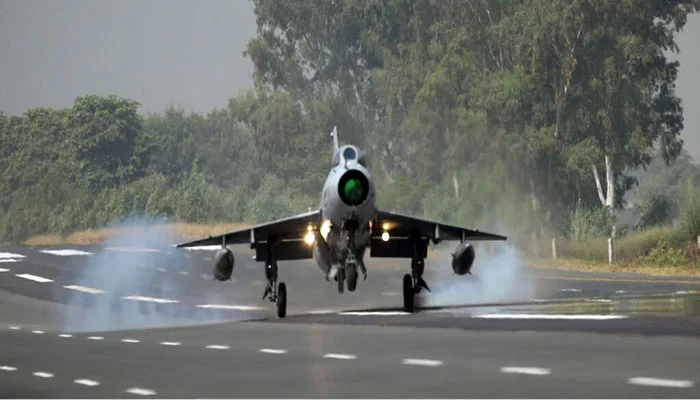
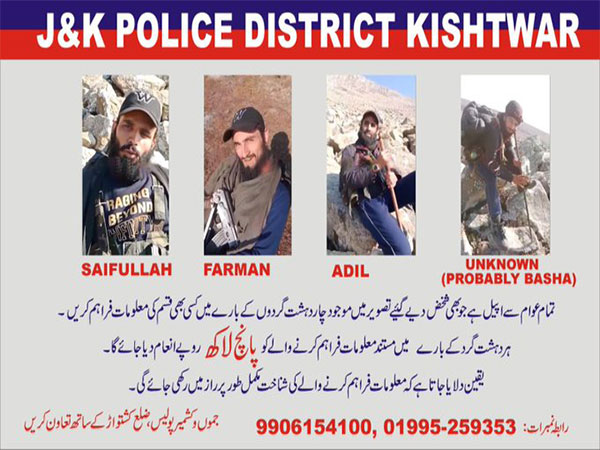
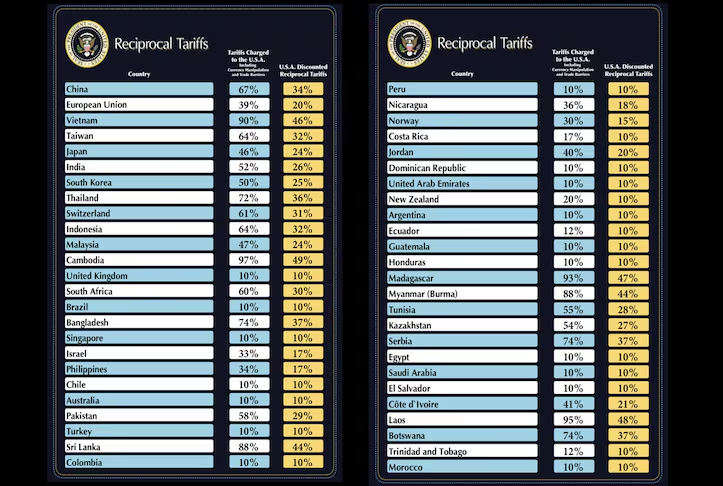
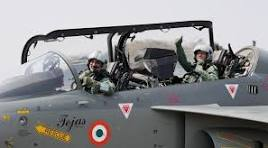
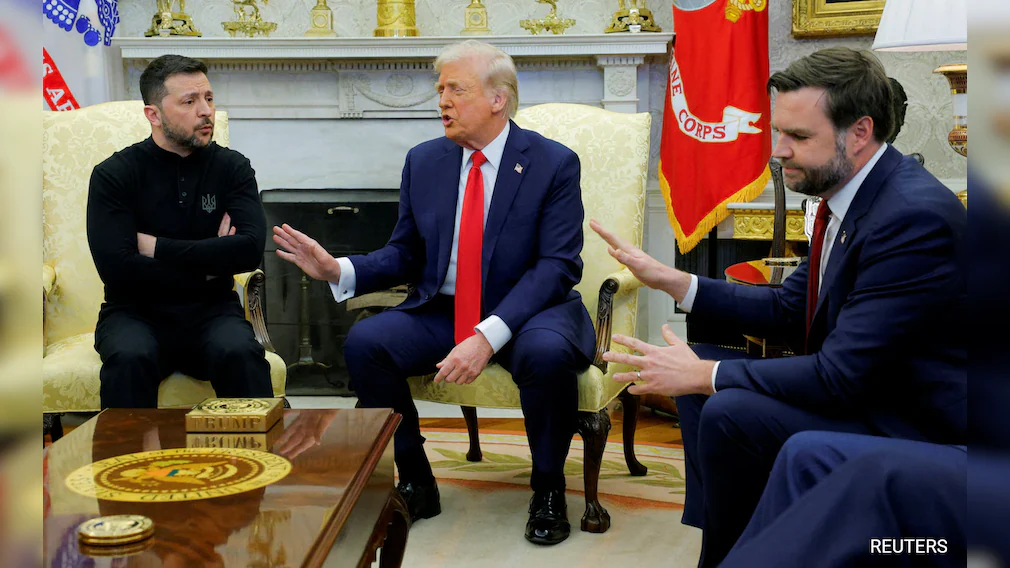
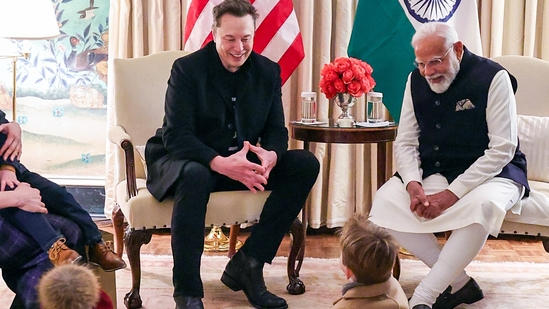

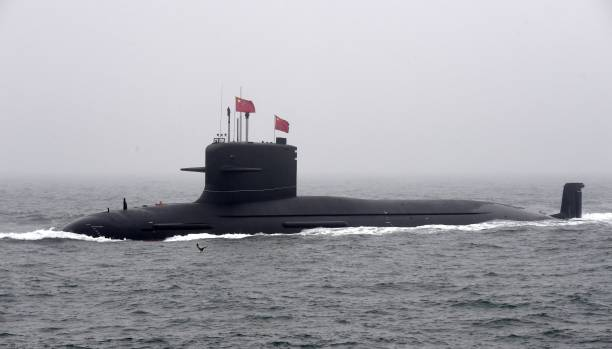


 Security Wise