Speaking at the Bloomberg Economic Summit yesterday external affairs minister S Jaishankar hinted at resolution of the border problems with China being sought through a yet higher channel than the Special Representatives level talks (Ajit Doval and Wang Yi) involving, apparently, Jaishankar and Wang. “Discussions are on, [but] what is going on [in that forum]”, said Jaishankar somewhat mysteriously, “is something confidential between us and the Chinese.” Well, Jaishankar better produce a rabbit out of that hat because nothing else has so far worked.
The MEA spokesperson was just as opaque, stating only that the two sides “exchanged serious proposals”. The Indian government says its sole interest is in arriving at a “comprehensive” disengagement covering all territorial friction points, meaning restoration of the status quo ante. Meanwhile, Beijing has been just as definite that if that’s what Delhi is waiting for it will have to wait for a very, very long time, if ever. Because it is interested for the nonce only in a Ladakh-specific remedy involving the Chinese PLA staying put in virtually all the areas they have intruded into across the LAC while asking the Indian army to decamp from its forward positions.
On this issue the Chinese urgently demand the Indian army vacate the heights it occupied around the Spanggur Lake in surprise moves that, for a change, froze the PLA out of the Rezangla ridge line that also includes ‘Black Top’ the highest point in that mountain range, which enables the Indian army to mount effective surveillance of the Chinese troop movements in the extended area and to launch timely counter actions to frustrate any offensive PLA activity.
But then, as happened very early in the confrontation when MEA offered the indistinctness of the LAC on the map and on the ground as reason for the hostile interface which the Xi regime thereafter used to justify all that transpired subsequently in eastern Ladakh, the MEA spokesperson this time around fouled up by once again offering the Chinese Foreign Office new talking points. He explained the lack of progress in the various parlays afoot by referring to the “complexity” of the disengagement process. “The two sides”, he averred, “have a better understanding of each other’s positions. Disengagement is a complex process that requires redeployment of troops by each side towards their regular posts on their respective sides of the LAC.” The Chinese negotiators can be expected to hereon gleefully embrace this so-called “complexity” of the mutual withdrawal process to stall all proceedings, and otherwise bring them to an impasse, and use it as plausible cause for refusing to back out of the annexed Indian territory.
Lately, and it is a bit a rich this, but Chinese Foreign Office spokesman have now taken to blaming India’s infrastructure buildup along the LAC as “the root cause of tensions” and implied that continuing with this activity besides “complicat[ing] the situation” would prevent “peace and tranquility” from returning on the LAC. To which his Indian counterpart, diffident and mealymouthed as always, stressed the need for both sides to adhere to all previous accords “in their entirety”.
Why can’t Jaishankar instruct his ministry spokesman to emulate the latter’s Chinese counterpart and vociferously demand the Chinese hand back all territory taken by force, and relinquish the infrastructure built up in the Aksai Chin — the first of which was the Xinjiang Highway constructed starting in 1955-56, and refer to this as, in fact, “the root cause” of all bilateral troubles and ill-will? These are two lines and their variants that should be iterated with vehemence and absolute conviction every time MEA spokespersons open their mouth.
But why do Indian diplomats come out like shrinking violets when compared to the Chinese Foreign Service staffers? In part because the former think their forte is the English language and they can weave a web of words to entangle the Chinese. In actuality, however, it is the new breed of Chinese diplomats posted to Delhi and in Zhongnanhai who speak good English, often are far better read and informed, and who, language-wise, end up hoisting Indians with their own petard.
Worse, when these MEA-wallahs can’t think of anything to say to the press they fall back on recounting the spurious tactical advantage the Indian army has supposedly gained on the Finger 4 feature on the Pangong Tso (spurious because the area Finger 4 to Finger 8 has already been lost to the PLA) and about the more real gain, courtesy the Spanggur-Rezangla area under Indian control. But what they never mention is the crucial and significant negative of the extant state of affairs — the 960 odd sq kms northwestwards of the Y-junction to the Karakorum Pass on the Depsang Plains in PLA’s hands.
The Chinese have achieved this by simply blocking Indian troops from accessing India’s traditional patrolling points beyond the junction. That XIV Corps and Indian army HQrs have not so far thought it worth their while to plan and execute an Indian army operation, obviously by Special Forces, to outflank and isolate PLA’s blocking force by going around the mountain range on the Y-junction rather than waiting for the PLA to permit Indian patrols, is pretty much allowing this bit of Indian territory to settle in China’s lap.
This lack of military initiative where China is concerned, alas, reflects the civilianizing of the military leadership — and not in a good way — to a point where risk-aversion has become part of the institutional DNA and central to the thinking of the military brass.
Like our political leaders, our armed services chiefs too have learned to talk big, act small.
[2×2 in Washington — Jaishankar evoking mirth in US Secretary of State Pompeo, but not in the Pentagon boss Mark Esper or, for that matter, Rajnath Singh]
Biegun, unfortunately (in Hindi) means, “without redeeming quality”!
Still, let’s give the US Deputy Secretary of State Stephen Biegun arriving in Delhi Oct 12 the benefit of doubt. He will be here to set up the scene, firm up the agenda, for the next edition of the 2×2 meeting Oct 27-28 involving the foreign and defence ministers of the two countries.
In the lead-up to this visit, Biegun made the sort of noises to the Indian media that Americans know will put the foreign policy establishment in Delhi in the right mood to, as has been typical of Indian representatives who go weak in the knees when dealing with their American counterparts, to give away far, far more than India can ever hope to receive. After all, heading the MEA is the arch symbol of India’s giveaway culture — S. Jaishankar who signed the unequal and entirely unfair 2005 nuclear deal, and then contrived to stay on to reap the rewards!
Biegun made clear the American approach. After the de rigeur comments about the shared democratic values, etc., at some do called by the US India Strategic and Partnership Forum, Biegun responded to a question about what more the US can do on defence cooperation, export controls and tech transfer, by playing to this country’s conceit as a “world power” and potential “net security provider” to countries in the extended Indian Ocean region. “We’re very eager to help India become and remain a world-class power in contributing [to] net security rather than worrying about net security and how it affects their interests. And I think defence cooperation is a key avenue for this.” He thus pointed out that Delhi does more talking about providing security than actually doing so.
Having slyly shown India its rightful place as talker more than doer, Biegun used his initial comments as launch pad for the business end of his trip and that of the Americans at the forthcoming 2×2 meeting — selling antiquated military hardware to squeeze the last cent for American defence companies before their production lines are junked, sold for scrap metal. He called India’s desire for self-reliance in armaments a “countervailing trend” that while appropriate in some sense, doesn’t jell with Washington’s ideas. “I get that”, he said. “No country wants to be entirely dependent on other parties.” But on this subject, he said, “Even…a partnership as close as the United States-India, can be tested… I understand that”, he continued smoothly, “but I think it can’t come at the exclusion of giving India the best-in-class defence capabilities, and I think India’s going to find a very willing and creative-thinking partner in the United States [in the time ahead] in that exact area.”
There’s no question that the US Government (starting in the George W. Bush era) has been very creative indeed in first fluffing up that tottering old granny of a combat aircraft from the Sixties — the toothless F-16 in new raiment, presenting it as an entirely new ‘F-21’ just for the yokels, and then pressuring India to go in for this bill of goods. Indeed, the Industrial Security Annex (ISA), as part of the General Security of Military Information Agreement, signed at the last 2×2 round in Washington in December 2019, is meant specifically to facilitate Lockheed Martin’s sloughing off the F-21 to the IAF and Boeing selling its F/A-18 Super Hornet for use on aircraft carriers to the Indian Navy. At the time of ISA signing, defence minister Rajnath Singh, hoped it would “enable smooth transfer of technology and information between private entities of the US and India.”
So, F-16 is apparently “the best-in-class” capability Washington is generous enough to want India to buy for billions of dollars that India does not have, and even if it did, it is money that could be better spent on stuff that is more critical to national security than aged aircraft looooong past their sell-by date.
It is another matter that the requirement for 114 single engine fighters was created by IAF at the Indian government’s behest to accommodate Washington. It was spun off from, and as an additionality to, the supposed need for Medium Multi-Role Combat Aircraft that the purchase of 36 Rafales partially met. Have presciently maintained all along — look up my posts- that the acquisition of the F-21 was always Jaishankar’s priority in whatever capacity he found himself in government, or outside of it. Chosen by Lockheed as its “strategic partner” per the Defence Procurement Procedure, the Tata Group has been itching ever since to produce the F-21 in India, and so hired Jaishankar as ‘President for Global Affairs’ in April 2018 to push for it. Jaishankar was appointed by Tata straight after he demitted office as Foreign Secretary, with the Prime Minister waiving the 2-year “cooling off” period rule applicable to all retiring civil servants. From this perch he canvassed for the Modi regime’s approval for the F-16 deal purchase. Tata hit the jackpot when little over a year later its President for Global Affairs was anointed foreign minister, putting him in a position to lubricate the F-16 transaction from within the cabinet. It’s just a matter of time.
So, as I had long ago warned, brace yourselves because the F-16 will soon be expensively in the IAF fleet for the Pakistan Air Force to make mincemeat out of in prospective encounters — and all this at the poor Indian taxpayer’s expense! It is necessary to reiterate Jaishankar-qua-Modi government’s follies because they are going to cost the country plenty.
But to return to Beigun; at the said Forum in Washington he emphasized that for US’ strategy for the Indo-Pacific to be successful “we have to tap into the full scale…of economics,…of security cooperation, and that’s impossible to do without India as centrepiece….So as important as I’d like to think the United States is to this strategy, it’s not going to be successful for us without India also standing side by side”. And then he went to dilate on the Quadrilateral — India, Japan, Australia, US, before re-emphasizing India’s importance to this geopolitical scheme, and urging India not be a “passive player”. And then as if to stress that it was beyond the Indian government’s ability to think expansively and strategically, he concluded, that “Quad concept has really helped India find a place in the Indo-Pacific — in the larger Indo-Pacific theatre [and] it’s…obviously…in our interest to have India as a partner in these issues.”
What is significant is that earlier this summer Biegun had for the first time called US’ China policy a failure, and issued a mea culpa for China-friendly policies of the last 30-odd years. Testifying before the Senate Foreign Relations Committee on July 22, 2020, he said — and this is worth quoting in extenso:
“Across multiple administrations the United States has supported China’s entry into the rules-based international order in hopes that China would be a partner in upholding international law, norms, and institutions and that the United States and China could develop a friendly relationship with reciprocal benefit. Over more than three decades, U.S. policies towards the PRC have advanced that goal through a massive outpouring of international assistance and lending, foreign investment, facilitation of Chinese membership in global institutions, and the education of millions of China’s brightest scholars at our best schools. Where this Administration diverges from previous Administrations is in the will to face the uncomfortable truth in the U.S.-China relationship that the policies of the past three decades have simply not produced the outcome for which so many had hoped, and that the United States must and take decisive action to counter the PRC.
“As stated in the 2017 National Security Strategy, despite the huge dividends to the PRC in terms of prosperity, trade, and global influence that United States support and engagement has delivered, Beijing has instead chosen to take increasingly hardline and aggressive actions, both at home and abroad; and China has emerged as a strategic competitor to the United States, and to the rules-based global order. We find the U.S.-China relationship today weighed down by a growing number of disputes, including commercial espionage and intellectual property theft from American companies; unequal treatment of our diplomats, businesses, NGOs, and journalists by Chinese authorities; and abuse of the United States’ academic freedom and welcoming posture toward international students to steal sensitive technology and research from our universities in order to advance the PRC’s military.
“Other areas of concern include China’s increasingly assertive use against partners and allies of military and economic coercion and state-sponsored disinformation campaigns, including, among others, India, Australia, Canada, the UK, ASEAN Members, the European Union, and several other European countries.”
The US Deputy Secretary of State then outlined the actions the Trump Administration was taking to counter China. “Across the Indo-Pacific region, the United States is deepening relationships with the countries that share our values and interest in a free and open Indo-Pacific. Last September, we held the first ministerial-level meeting of the United States, Australia, India, and Japan, marking a new milestone in our diplomatic engagement in the region. We are enhancing our alliances with Australia, Japan, the Republic of Korea, the Philippines, and Thailand, which have helped sustain peace and security for generations, and we are furthering our engagement with ASEAN, an organization central to a free and open Indo-Pacific. Our security assistance to South China Sea claimant states and our recent rejection of the PRC’s maritime claims helps partners protect their autonomy and maritime resources. We are working with the Mekong countries to ensure sustainable development and energy security.
“Last month, I joined Secretary Pompeo in Hawaii to meet with our Chinese counterparts. In the two-day discussion the Secretary stressed that deeds, not words, were the pathway to achieve mutual respect and reciprocity between our two countries across commercial, security, diplomatic, and people-to-people interactions. He made clear our determination to push back against Beijing’s efforts to undermine democratic norms, challenge the sovereignty of our friends and allies, and engage in unfair trade practices, but at the same time, he also outlined areas where the United States and the PRC could cooperate to solve global challenges.”
Two things to note: Firstly, that Washington has defined India’s centrality to America’s Indo-Pacific strategy and hence also Delhi’s leverage. The question is will Modi, Jaishankar, and the PMO-MEA lot habituated to giveaways rather than selling India’s participation dear, strictly condition Indian military involvement in Quad activities on monitorable tech-transfer and assistance to specific programmes, like the one to design and develop a scalable Kaveri jet turbine to power present and future Indian-designed combat aircraft? I think not. After all, the Trump Administration not too long ago shelved any collaboration in developing a jet engine in India because of Pentagon’s concerns about parting with cutting edge technologies and the Indian government did not even object. So one can expect the Modi government to make much of wasteful, vapid transactions for the F-16 and the like designed to keep India an arms dependency.
And secondly, refer to the last bit of Biegun’s Congressional testimony reproduced above: After cataloguing all the reasons why China cannot be trusted, he repeats Pompeo and Washington’s readiness to discuss with Beijing the “areas where the United States and the PRC could cooperate to solve global challenges”. In other words, as long as the US can however and by whatever means ensure that China does not step on its toes, it wouldn’t care a fig before throwing the interests of the other countries of the Indo-Pacific overboard. This is the harsh reality that ought to contextualize Foreign Secretary Harsh Shringla’s deliberations with Biegun, but won’t.
Indo-Pacific is absolutely crucial to India’s security, but an unreliable US as the central pillar of the Quad is a liability. The reason why I have been advocating the concept of the Modifed Quadrilateral — Mod Quad — of India, Japan, Australia and a set of Southeast Asian states to include principally Vietnam, Indonesia, Philippines, and Singapore that can more than even the balance of power with China. It is the only geostrategically organic and feasible solution the Modi government ought to be realizing instead of pursuing the chimera of the US as centrepiece in India’s security architecture. Combined with BRIS — Brazil, Russia-India-South Africa (BRICS minus China) as a complementary globe-girdling but loose security coalition harnessing the power and capacities of Russia, Brazil, and South Africa as well that Delhi should do its utmost to obtain, India could — with this twin security schema (elaborated in my 2018 book ‘Staggering Forward: Narendra Modi and India’s Global Ambition’) — get into a position to dictate terms to China. And to even win America’s respect that Delhi so craves.
But this’d require a sea change in the mindset of the Indian government and military and, more specifically, in the thinking and approach of Prime Minister Modi. Of this last, however, there’s no sign.
It is not difficult to read China. But the so-called Mandarin-speaking China experts in the government who comprise the China Study Circle/Group (CSG), or whatever it is they call this unit these days made up with diplomats, and military attache and Intelligence-types — careerists all, seem intent — as is their bureaucratic habit — on configuring what they say to what they think the jefe maximo (maximum leader) wants to hear. In this context, it is less important for these officials to have their fingers on the adversary Chinese establishment’s pulse than not to rock the proverbial boat in Delhi.
Distinguished mainly for being so wrong so often about China — wrong here refers to recommending over-cautious turns in policy that actually assist, enable and advance the enemy’s cause and interests, the CSG’s greatest achievement appears to be that it is nevertheless taken seriously, relied upon for advice in crafting the larger China policy as also the tactical ploys and stratagems attending on unfolding events and crises. It says more about the country’s leaders and the quality of advice they are satisfied with than about the said advisers.
Then there are the China specialists in the academe and thinktanks who cheer the CSG-GOI’s every fear-stricken move from the op-ed webinar galleries, taking care to dissemble, calling for moderation, de-escalation and standing down in the face of Chinese provocations, lest Beijing slam the door shut on their academic advancement by denying them visas, and access to official documents, official interlocuters, and the Chinese seminar circuit. The only sinologists in the world who get away with being critical of Beijing are American and then only because the power balance still tilts towards the US.
Recall that in the military confrontation in eastern Ladakh now in its sixth month, the Xi government initially denied anything was amiss. But then the Indian military and government provided Beijing with the perfect excuse and justification for its territorial aggression: the Line of Actual Control is not delineated on the map nor marked on the ground, hence the presence of the Chinese People’s Liberation Army units on the Indian side is, well, understandable! It has since become the standard rationale for the Chinese foreign ministry spokesperson to argue that not only have Chinese troops not crossed the LAC it is Indians who violated it, precipitating the June 15 clash in the Galwan Valley and, by preemptively taking the heights on the Rezangla range around Spanggur Lake, are inviting — and this is the favourite phrase PLA uses to cloak a military initiative — “a defensive counter-attack”! As I have said in my posts, this amounts to India withdrawing from its own territory.
Learning nothing and forgetting nothing, MEA’s reaction to Beijing’s reviving the old 1959 line as the disputed border, which upends 50 years of Sino-Indian diplomacy and some 4-5 agreements predicated on China’s acceptance of the present Line of Actual Control pending a final settlement of the border dispute, was again to soft-peddle the enormity of change in China’s position. Instead of a strong counter, it apologetically retailed the history of claims and counter-claims, and of various agreements since the 1950s. This has only reinforced Beijing’s view of India as a weak entity that can be railroaded into an agreement unfavourable to itself.
The tougher, more consequential, response ought to have been — and still can be — is for Delhi to declare that India too reverts forthwith to the border the colonial regime negotiated with the Tibetan government in 1913 in Simla disavowing, in the process, Nehru’s acceptance of Chinese suzerainty over Tibet and, even more emphatically, the Indian government’s later acceptance of Chinese sovereignty over that God-forsaken country over which Han China has no credible claim whatsoever other than in the abstract of the Chinese Emperor notionally denoting all adjoining states seeking a normal relationship as vassals, which tactic has been the Chinese norm in dealing with nations beyond its pale.
In practical terms, what China’s reaffirming the 1959 line means is that the PLA’s forcibly rearranging the Line of Actual Control in eastern Ladakh is being justified ex-post facto. It leaves over 1,000 sq kms of Indian territory annexed either by direct occupation in the Galwan Valley, the Hot Springs area, etc and, indirectly in the Depsang Plains, by simply blocking Indian access to the area northwestwards of the Y-junction. Unless this blockade is militarily removed at whatever cost, it will result in the Modi government, for all intents and purposes, surrendering vital Indian territory. Once passed into Chinese hands, this sector will then become the staging ground for holding the DSDBO highway and Indian presence on the Saltoro Ridge and the Siachen Glacier hostage to Beijing’s whim. What is just as definite is that all the WMCC meetings and discussions at the Special Representatives level won’t get Beijing to restore the status quo ante that external affairs minister S Jaishankar publicly said was the Modi government’s goal.
The point about dealing with China is never to bring up diplomatic understandings, refer to past documents and agreements, etc. but to make matching territorial claims that exceed Chinese ones in their outlandishness. And to have all Indian officials preface their statements about India’s claims as being “clear and unchanging” — the crossed t’s and dotted i’s in its negotiating record to the contrary notwithstanding. China’s going outre should signal India’s going ballistic with its own wordy excess.
What has India to lose? If the Indian government still believes that the Wuhan and Mamallapuram spirit that President Xi Jinping pumped up Prime Minister Narendra Modi with retains its headiness and relevance then we may be in deeper trouble than we think. Because Xi has made it plain that his larger objective has always been to expansively secure China’s territorial ambit in Central Asia and especially its strategic investment in Pakistan by firming up its hold over Aksai Chin that was centrally part of Maharaja Hari Singh’s domain in Jammu & Kashmir.
May be, it is time for the Gujarati businessman in Modi to recognize that he has been conned by Xi, that he has a bum deal on his hands. And that his China policy needs an overhaul, a radical course correction.
Because there’s a tendency in the government (and, dare I say, in the higher military echelons) to hyperventilate at the very thought of actual war in the Himalayas, let’s be absolutely certain about one thing: the PLA is in no position to wage a sustained war in Ladakh or anywhere else; that Xi has bitten off more than he can chew in terms of getting the gander up of all its neighbours, including distant maritime ones — the US, and Australia, and that it is time for the Indian government to shake off its strategic lassitude and make life as difficult for China as is possible.
The following steps, in order of priority, have been advocated by me for over 25 years (in my books and other writings) and now is the time to implement them on a war footing:
Condition India’s acceptance of the ‘One China’ concept on Beijing’s acceptance of ‘One India’ policy — with ‘One India’ to include all of Pakistan-occupied Kashmir, and Gilgit and Baltistan — the territory legally acceded by Hari Singh to the Union of India in 1947.
Should the Xi regime fail formally to accept ‘One India’ inside of a year, and in any case to renounce all previous Indian positions, and begin preparations to diplomatically recognize the sovereign Republic of Taiwan, and accept the Senkaku Islands as Japanese, denounce the Chinese nine-dash line in the South China Sea as fanciful and the sea-territories claimed by Vietnam, Philippines, Indonesia, Borneo, and Malaysia as entirely valid per UNCLOS guidelines and the verdict of the International Court of Justice at the Hague.
Begin expeditiously arming Vietnam, Philippines, and Indonesia, for starters, with supersonic Brahmos cruise missile batteries to be installed on the coasts fronting on the South China Sea on extreme priority basis, meaning even at the expense of equipping Indian army formations with this weapon. This should constitute the policy of belated but necessary payback for China’s nuclear missile arming Pakistan. It will instantly render inactive China’s powerful South Sea Fleet ex-Sanya base on Hainan Island and “narrow the seas” as I have contended for the Chinese Navy. The threat of loading nuclear warheads on these Southeast Asian Brahmos missiles can be an option Delhi can use to keep Beijing unbalanced.
Lead international campaigns in the the United Nations General Assembly and in the First Committee, and elsewhere for a ‘Free Tibet’ and for Muslim Uyghurs in Xinjiang to throw off the Chinese yoke, and materially and financially help sustain these Freedom Movements. And diplomatically begin referring to Tibet as ‘Chinese occupied Tibet’ and Xinjiang as East Turkestan. India can also channel and facilitate its friends with whatever assistance is appropriate among the Afghan Taliban to wage a full-fledged jihad in East Turkestan, again as payback for the longstanding Chinese help to rebel movements and insurgencies in Assam, Manipur and Nagaland, in particular.
Invest in factories to refine and produce rare earths to zero out dependence on China for these metals critical to sensitive electronics and other technology sectors.
Begin choking off all trade and commerce except that which is carried on in strictly reciprocal basis.
As I have argued, China has already done its worst, shot its bolt, as it were, where India is concerned. I mean, what worse can Beijing do to India after deliberately proliferating nuclear missiles to Pakistan? India so far has retaliated so meagrely as to merely confirm Beijing’s contempt for the Indian government and Xi’s perception of Modi as pliable.
What other provocation does Beijing have to offer India for you, Modiji, to wake up from your apparent China-induced stupor?
As people you know, love, respect and admire immensely depart the stage, a hollowness grows in the heart, and the world gets dimmer.
Major Jaswant Singh, long time Member of Parliament and erstwhile Foreign Minister, Defence Minister, and Finance Minister of India in Atal Bihari Vajpayee’s government and formerly Deputy Chairman of the Planning Commission (before that institution morphed into the present day Niti Ayog) passed away this (Sunday) morning after six years of being comatose. It was deliverance of sorts.
In over 40 years of living in New Delhi and becoming familiar with many political movers and shakers, there’s no person I found more policy wise and intellectually stimulating and engaging than Jaswant. Oozing old world charm, he combined courtliness with a sharp mind and a deliberate way of speaking in his deep gravelly voice that no doubt brought the regimental risaldar-majors to clicking their boots. He was delightful company, easy to converse with, his interests wide and varied. I remember sitting hours with him in his book-lined study with Western classical music — Brahms, Schubert, Franz Liszt playing softly in the background as he ruminated on some issue or the other that he wanted my views about.
Recently returned from California, I first met him in 1979 at his Tughlak Lane residence when he was the leader of the opposition in the Rajya Sabha. Apparently, some of my op-eds had jiggled his curiosity. By way of breaking ice and aware he had resigned from the army to enter politics I wondered which infantry regiment he belonged to. He reacted like it was a slap in the face. “Infantry?!” he growled, measuring my gall. “Cavalry, man, cavalry! Central India Horse!” He related how as a Gentleman-Cadet in 1953 at the Indian Military Academy, Dehradun, he had won the tent-pegging contest and was handed the prize by Prime Minister Jawaharlal Nehru.
Another faux pas on my part occurred soon thereafter when I was invited by him to dinner at his home. In my regulation uniform of those days — shirt and jeans, I entered his bungalow and advanced to the fireplace — it was winter — there to find a large man turning around and offering his hand, and saying “Jodhpur”! Astounded and uncomprehending — I mean, how can someone announce himself by calling the name of a city? — I gamely offered my hand in return and said “Karnad” this time eliciting like incomprehension on his part. What’s Karnad — a one-two gun salute wallah, at best? Had I been more observant, I would have noticed on entry to — instead of on my way out of — Jaswant’s ministerial compound the fancy car with a flying pennant and a red plate announcing ‘Jodhpur’, and correctly surmised that royalty would be in attendance. Instead, the two of us kept peering at each other, each as puzzled as the other until Jaswant scooted in to save the situation, explaining to “Baapji” — the Maharaja of Jodhpur, who I was. He thereby offered me a handle to now and then jocularly rib him with — “Jaswant, you are a feudatory!” and his mock admonition, “Bharat, you have respect for nothing!” It was the beginning of a warm and wonderful relationship. Among other things, he introduced me to dum phukt Rajasthani cuisine.
It turns out Baapji was responsible for first discovering Jaswant’s political talent that exceeded military careering, and helped him to get elected to Parliament from Jodhpur (if I remember right). It was a short, hop, skip and jump from that running start for the erudite Jaswant to be recognized as a leader in the Jan Sangh and then for him to rise as a founding member of the Bharatiya Janata Party and, in many respects, the political go-to person for Vajpayee (Brajesh Mishra being Atalji’s alter ego).
Even as the BJP was the government-in waiting during the years of Narasimha Rao, Jaswant was the undoubted shadow foreign minister. Then BJP was in power and it continued the Congress policy of cosying up to the US. Before almost every meeting in the series of 19-odd meetings to hammer out the Next Steps in Strategic Partnership that Jaswant had with the US Deputy Secretary of State Strobe Talbott in the Clinton Administration in various locations in the US, Germany, etc., I sent him a note anticipating the kind of positions the American might take and Jaswant’s options. More often than not, I was right because I’d receive hand-written notes from him saying so and how he had used this or that variation of my suggestion and why, in retrospect, he rued not taking this or that tack I had recommended! I didn’t mind his using me thus as a sounding board for ideas that he deployed in an attenuated form, always thanking me for my “impassioned” counsel. I kept warning Jaswant that the US means to hogtie India, prevent it from becoming a thermonuclear weapons power — a warning, unfortunately, he didn’t heed, arguing that an understanding would further the national interest! The NSSP was prelude to the 2005 nuclear deal with the US that, in fact, capped Indian nuclear capability at the 20KT fission weapons level.
He also didn’t take my advice that he should be the first one to write an account of his negotiations with Talbott on NSSP, reminding him that his interlocuter was a professional analyst who turned out books on a coin, and should Talbott beat him to a book, that would become the standard history, and he’d be scrambling to refute the American’s rendering of the facts, and how the unique Indian perspective Jaswant brought to the bargaining process would be lost. Jaswant kept putting it off until predictably Talbott produced his 2006 book — ‘Engaging India: Diplomacy, Democracy and the Bomb’.
The real crick in the Vajpayee regime’s joint was the unending clash of egos and bureaucratic turf battles between Jaswant (then in the Planning Commission) relying on MEA resources when negotiating with Talbott, and Mishra. The latter had parlayed the gratitude Vajpayee felt for Brajesh’s father, DP Mishra, the Congress party chief minister of Madhya Pradesh, who helped him get elected from Gwalior and tried to lure him into the Congress Party! — into first appointing him as India’s Permanent Representative to the UN in New York during the Janata Party rule when Vajpayee was foreign minister and, when BJP formed the government in 1998, into getting himself installed as Vajpayee’s National Security Adviser-cum-Personal Private Secretary thus becoming, in effect, the de facto prime minister! Time and again the two — Jaswant by now in his various posts as foreign minister, defence minister or finance minister, and Brajesh — collided on policy matters, requiring Vajpayee to referee, except it was invariably Mishra who came up tops. Jaswant couldn’t abide him.
When as foreign minister, we used to sometimes sit on his lawn or his verandah for Saturday sandwich and beer, MEA secretaries would scurry around with files, appalled at the informality with which I treated their Minister whom they sir-ed while I called him Jaswant! On one occasion, a discussion with Jaswant led to his asking me to send him a note. Apparently, he passed my note to the then Joint Secretary (Americas) with ‘for action’ penned on it, resulting in the said Joint Secretary exasperatedly calling me to say “Bharat, why don’t you tell me what you want done, rather than going through my Minister?!” This may have boosted my ego but I was aware that the MEA guys were doing everything and more to divert Jaswant, water down my suggestions. It was a game they predictably won, and Jaswant owned up to it! It was all done in good humour though. But he nominated me to the National Security Advisory Board when it was first formed in 1998 and kept abreast, in particular, of developments in drafting the nuclear doctrine, a job K. Subrahmanyam as the Convenor, one other person, and I were engaged in because we seemed to be the only ones in the 27-member NSAB conversant with the nuclear deterrence history and literature. Except, the draft doctrine, to our chagrin, was made public to win some brownie points with Washington. And Jaswant was designated by Vajpayee (prompted by Mishra) to publicly refer to the finished doctrine paper as only “a draft” the better, I was informed, to preserve for the government some room for diplomatic maneuver.
Jaswant was the fixture in all my book launches, starting with my 750-page tome — ‘Nuclear Weapons and Indian Security’ in 2002 in which I was critical of the BJP government’s nuclear weapons policy and for misdirecting and limiting the country’s nuclear weapons programme. I remember Jaswant sitting stoically on the podium, with a slight smile playing on his face, as I laid out the main points in the book and then had K. Subrahmanyam and Arundhati Ghose, India’s ambassador to the UN Disarmament Commission in Geneva, dissect and debate my thesis.
He asked me in 2006 to be a panelist at the launch of one of his books — ‘Travels in Transoxiana’. At that event, I expressed my astonishment at how beautifully he wielded the English language and why I simply didn’t believe him when he said that he had a Hindi medium school education, and was introduced to the language only when he was 15 years of age! One has to read his Transoxiana written almost in Curzonian style to appreciate just how polished Jaswant’s intellect was. I often take this book down from the shelf to read a passage here, a page there, to remind me how lucky I am to have had Jaswant Singh for a friend. For my money, he is the most intellectually accomplished, culturally rooted foreign minister/defence minister/finance minister India has ever had.
I am grateful to Jaswant for great many things. Among these was that he persuaded his cousin and fellow-cavalryman, the legendary Lt General Hanut Singh of Poona Horse-fame, to meet with me. It was the most educational three days I spent in the latter’s last command, the Armoured Corps Centre in Ahmednagar.
Jaswant is no more; he will be sorely missed but will stay on in the memory of those with the good fortune to have gained from his company.
[Defmin Rajnath Singh with his French counterpart, Florence Parly in Ambala]
Earlier this month, the Indian Air Force formally inducted five Rafale combat aircraft — two 2-seat trainers, and three combat-ready single seater aircraft, into the 17th ‘Golden Arrows’ Squadron in Ambala. Another five Rafales with IAF roundels are at the Dassault base in Merignac in southern France, being used for conversion of MiG-21bis pilots, ground handling and maintenance crews. The retraining stints are for six months for each lot of Indian pilots and technicians, with the pilots allotted the contracted number of training sorties alongside a French instructor.
Making allowance for the occasion, there was the expected hyperbole. The defence minister Rajnath Singh called the aircraft a “game changer” and, with less the Chinese adversary in Ladakh in mind than the domestic audience, added that it sent a “big and stern message to the entire world, especially those eyeing our sovereignty.” The French defence minister Florence Parly not to be outshone in exaggeration said that “India has world class capability and incredible sovereign tool. India has an edge over the entire region.” She was merely embroidering what her Indian counterpart had stated in Merignac on 8 October 2019 when formally accepting the first lot of Rafales. After a joy ride in the plane, the Indian leader had declared “the new Rafale Medium Multi-Role Combat Aircraft (MMRCA)” as making “India stronger” and giving the IAF an “exponential boost” to “its air dominance” capability.
Why Rajnathji was briefed to say this is not important. But how the IAF means to actually obtain air dominance with just 36 of these aircraft is a mystery. Sure, Rafales working in tandem with Su-30MKIs can plausibly achieve this objective as former Air Chief Marshal BS Dhanoa stated, but by themselves even twice this number of Rafales in Indian colours cannot. But, as the late defence minister Manohar Parrikar was convinced, larger numbers of Su-30s would alone have sufficed for the purpose. Moreover, the additional Su-30s could have been secured at a fraction of the Rs 59,000 crore upfront cost of the Rafales or, to repeat myself, for just a “truckload” of the exorbitantly-priced Meteor, Scalp and Hammer missiles that these aircraft will be armed with, and which have been tested and proven by the French Air Force against such military heavyweights as Libya and Syria!
This begs the question I long ago asked — where was the need for the Rafale in the first place?
But whether India dominates the skies is not Parly’s interest; that the IAF procures an additional 36 Rafales is. In a meeting with the French press at the embassy that evening, Parly was reportedly confident that Paris will be able to ring up such a sale on the same terms, but without the ‘sunk costs’ of attending infrastructure — airconditioned hangars, special diagnostic and testing machines, etc.
When reminded by a pesky French journo that such a follow-up deal clashes head-on with Prime Minister Narendra Modi’s ‘atm nirbharta’ policy and the thrust of Rajnath Singh’s ‘negative list’ thinking, Madame Parly dissembled but did not budge from her stand, indirectly hinting that such a deal would be signed for the same reason the original was approved in April 2015: Modi will agree to buy ’em. End of argument! Irrelevant considerations like, where’s the money? are obviously not expected to intrude into the Indian government’s calculations, or at least Paris does not expect them to.
Both France and the IAF had gamed this out right, and their plan is working. IAF was the decisive actor here. It had sought the 36 Rafales it was partial to from the beginning as a wedge purchase easing the buy, as I had predicted, of more such aircraft to fill the Service’s entire 126 MMRCA requirement without having to go through the transfer-of- technology and licensed manufacture cycle.
As part of Indian Prime Minister Narendra Modi’s ‘self-reliant India’ policy, Defence Minister Rajnath Singh issued a list of 101 defence items in August with different timelines beyond which their import will be banned, with a second list soon to follow. From December 2020, the armed forces will not be able to purchase some 69 types of foreign-sourced military goods, including many major weapons systems and platforms: ship-borne cruise missiles, diesel submarines, missile destroyers, light combat aircraft and helicopters.
Most of these are already produced in India under licence, so the government is confident the ban will force the Indian defence industry to achieve self-sufficiency within a decade. Because imports will not be allowed for any reason, the military will be compelled to become stakeholders in indigenous programs. However, there has been minor pushback, with immediate purchases from abroad being approved to fill ‘voids’ in the war wastage reserve and the war stock just in case hostilities flare up with China in Ladakh.
Singh promised contracts worth US$54 billion to the Indian defence industry, but instead spawned scepticism because this figure includes funding for procurements that are already underway. The reality is that the Indian government has awarded US$34 billion of contracts to foreign arms suppliers, far exceeding the US$20.25 billion for Indian companies. Since defence budgets are written annually, there is no hint of long-term government funding for particular programs.
There are also more fundamental problems with the plan. It is ironic that a country more-or-less capable of making its own strategic armaments — nuclear warheads, long-distance missiles and ballistic missile submarines — is unable to produce conventional weapons. Because strategic weaponry is not available at some arms bazaar, these were developed in-country under a special dispensation — the ‘technology mission’ mode — directly under the Prime Minister. This precluded the procedural hassles, niggling financial oversight and bureaucratic foot-dragging usually faced by conventional weapons development projects. The arms self-reliance policy will be boosted if all indigenous conventional weapons projects too are developed under a similar regime.
India’s mindbogglingly complex defence procurement system, tilted against local industry, has been only superficially reformed. The latest version of the Defence Procurement Procedure defines a hierarchy topped by indigenously designed, developed and manufactured (IDDM) items. Next are items satisfying the ‘Make in India’ (MII) initiative, which includes equipment reproduced by foreign companies from their international product lines — Lockheed Martin’s F-16 fighter aircraft, for example, which will be sold as the new F-21.
IDDM items must include at least 60 per cent Indian content (whether by weight or value is unclear), with the same requirements applying to spares, special tools and test equipment. The MII category allows foreign firms to get away with only 40 per cent, skewing the competition cost wise in their favour. This pushes the armed services towards the MII option, involving munitions that are proven but that quickly become obsolete.
This process is complicated by the lack of procedures to assess the use of local content in either category — the defence force will have to take foreign firms at their word, which isn’t always reliable. In this case, kicking the crutch of foreign weaponry from underneath the armed services will not advance the cause of a ‘self-reliant India’ without first removing the anomalies in the procurement procedures.
The military has a habit of finding anything imported acceptable and anything Indian-made suspect. The travails of the Indian-designed and developed 4.5 generation, near all-composite Tejas light combat aircraft are well known. The Indian Air Force (IAF) contributed little to the project other than frequently changing the Air Staff Qualitative Requirements, imposing delays in the prototype and certification stages and, when the aircraft rolled out, claiming it was technologically dated. The IAF was finally pressured into buying a squadron’s worth of Tejas, and, with the push for indigenisation, will soon order an additional 83.
The Indian Armed Forces were also unconvinced by the Indian-designed Arjun main battle tank, buying too few to support the necessary economies of scale. Despite outperforming the Russian T-90 MBT in all field tests, the army contends the Arjun is wider and heavier than the specifications. Meanwhile, their T-90 fleet keeps growing.
The precedent for the stepmotherly treatment of locally-produced armaments was established in the mid-1970s, when the IAF favoured the British Jaguar low-level strike aircraft at the expense of the HF-73, the advanced variant of the Indian-designed Marut HF-24 — the first supersonic jet fighter to be produced outside of North America and Europe.
Compared with their peers in the public sector, private-sector defence industrial firms boast better designing wherewithal, work ethic and labour productivity. But the Modi government continues to relegate private firms to the role of sub-contracting for the apathetic and wasteful defence public sector units, resulting in time and cost over-runs, delayed delivery schedules and alienated military customers.
The government has so far ignored the economically sensible solution of making the defence industry more profit and export-minded. That would entail Hindustan Aeronautics Ltd. sharing the design and source code for the Tejas LCA with Tata Aerospace and Mahindra Aerospace, creating multiple production lines for a combat aircraft with a ready market in the developing world. They could also task Larsen & Toubro, the engineering giant that puts together the Arihant SSBN, with producing conventional submarines.
A more ambitious approach would be to divide the public-sector research and development and defence industrial assets into two giant competing combines, each under the managerial control of leading private sector companies such as Tata and L&T. These two complexes would then bid for weapons contracts, with the Defence Ministry funding development in the prototype and selection phase.
Absent such optimal use of defence industrial resources, prospects are bleak for a militarily self-sufficient India.
Four months into the Chinese annexation of Indian territory in eastern Ladakh, specifically in the Galwan Valley, the Hot Springs-Gogra-Kugrang area, and in the stretch of the northern shore of the Pangong Lake from Fingers 3 to 8, the BJP government is unwilling to call China out.
Its case is that while the PLA intrusions and build-up are in the ‘dead zone’ 2kms on either side of the Line of Actual Control — meaning in the 4km belt astride it, there otherwise is no hint of Chinese aggression! This in the face of overwhelming evidence that the PLA has indeed gobbled up Indian land and will not stir out of it for any reason. If the government hopes that it will be able to leverage the “preemptive” occupation of Black Top and other peaks by the Indian army in the Kailash Range south and southeastwards of the Pangong, around the Spanggur Gap, to get the PLA out of where it has encroached and is now consolidating its presence, then it has misread China’s intentions terribly enough to render Indian diplomacy it is banking on, futile. Not that it has prevented foreign minister S Jaishankar from doing the obligatory rounds of Moscow, etc. and hoping to realize by these means the restoration of the status quo ante.
In this reality denial mode, the ruling party in Parliament yesterday stuffed the opposition, daring it to not support the motion of support for the armed forces in this their time of trial. The positive vote was then construed as a general backing for government policy. Neat! Except this policy teeters between doing nothing to reverse the Chinese capture of Indian territory and approving military actions, such as taking Black Top, etc., that while disadvantaging PLA forces some in that sub-sector, did not in its execution entail great risk of things going wrong.
On the basis of what the Indian army has done and not done in Ladakh so far, several worrisome aspects of Prime Minister’s approach driving Indian policy are becoming clear. Modi definitely does not want more Indian casualties. Containing the public ire after the gruesome killing by the PLA troops of the 16 Bihar Regiment personnel June 15 was a touch and go thing, and resisting the people’s desire for just retribution a delicate political operation the Modi regime barely pulled off.
The lesson learned was that the best way of avoiding Indian deaths on the LAC is to avoid hostilities as much as possible. Nor is Modi in a mood to countenance military escalation for any reason. This rules out any action by the army to force the Chinese out of areas on the Indian side of LAC they are presently entrenched in.
The August 29 Black Top action, in the event, was a perfect symbolic act showing a strong Indian army that far from taking guff from the PLA was taking the fight to the Chinese. Except it involved little real risk to Indian troops, as it was “preemptive” action. It was sort of the Ladakhi version of the Balakot strike on the other front. There was less physical harm done the adversary than that the operation suggested a dynamic Indian response and salved India’s ego.
Escalation has been avoided also by studiously ignoring the inconvenient fact of PLA’s territorial aggrandizement by rhetorically beating around every bush but that one. Modi has thus at once legitimated the Chinese moves and absorption of Indian territory into the ‘Tibet Autonomous Region’, incentivized President Xi Jinping to stop the PLA from grabbing more Indian territory than it had perhaps planned to do but far more land than Modi wants to lug around as political liability.
This has led to a counter Indian military build-up but one that seems designed for the army to stay put, weather the winter, rather than fight the PLA. It serves Modi’s aim of capping the military confrontation at the existing level of to-ing and fro-ing.
This is the logic of Modi’s “no casualties and no military escalation, at all cost”-approach, his brave sounding words during his day-trip to Nimu with references to the sudarshanchakra wielding Lord Krishna notwithstanding. After all, when the Modi regime, indirectly claims in Parliament that there’s no sign of Chinese aggression anywhere, nothing that cannot be explained by the indistinctness of the LAC on the ground, there’s no reason for Beijing to either disagree or, importantly, be disagreeable.
Happily, this policy conforms to the Indian armed services’ mindset of not provoking the PLA, not taking ‘pangas’ with the Chinese. And it is in line with the country’s traditionally defensive-passive-reactive military posture where China is concerned. Except, Modi’s over-cautious policy is the reverse of “no risk it, no biscuit” — a phrase a famous American football coach mouthed to urge his team to show initiative and aggro on the field. Transposed to the Sino-Indian confrontation, it means just the opposite — do less, do nothing, so less harm comes to you, with the ‘biscuit’ going to the PLA and Indian territory being lost permanently to China.
This includes the loss of access to all the patrolling points and land northwestwards of the Y-junction on the Depsang Plains and will lead to the DSDBO Highway becoming vulnerable to a Chinese pincer closing in from the Galwan and the Depsang endangering, in the process, India’s access to the Siachen Glacier and, incidentally, negate any Indian plans for striking at the Sino-Pakistani joint at the Karakorum Pass. This last objective is what the PLA had uppermost in mind strategically to achieve and, thanks to Prime Minister Modi, it has now done it.
As predicted in my last post, the extended S. Jaishankar-Wang Yi pow-wow in Moscow that reportedly concluded well after midnight, India-time, in substantive terms produced zilch. Keeping in mind Russian sensitivities and the Russian foreign minister Sergey Lavrov’s determination to see the two not end their meeting with nothing, the Indian and Chinese minister reached a laboured 5-point agreement that far from brightening the prospects of peace may have set the scene for more military exchanges in eastern Ladakh. Depending on what transpires and however the intensity and scale get ratcheted up by the forward units of either side, we may yet have full bore hostilities.
The first point repeated the tired line of “not allowing differences to become disputes” — Jaishankar’s signature tune. The second, cleverly from the Chinese point of view, puts the onus on the military level talks — yes, the same patience-sapping talkathons conducted in Moldo-Chushul by the XIV Corps commander Lt Gen Harinder Singh and Major General Liu Lin, PLA in-charge of the southwestern border sector, and at less senior levels — to reach a modus vivendi and “quickly disengage, maintain proper distance and ease tensions”. The third point features the Indian government’s insistence that both sides “abide by all the existing agreements and protocol on China-India boundary affairs” starting with the 1993 peace and tranquillity agreement “in the border areas and avoid any action that could escalate matters” — though the 1993 accord is nowhere mentioned. In the fourth point, they agreed that the military-to-military interactions continue, on parallel tracks, with the Special Representatives level talks and the WMCC (Working Mechanism for Consultation and Coordination) meetings. And the final point, putting cart before the horse, voiced the unwarranted hope that the two countries “expedite work to conclude new Confidence Building Measures”.
That the 5-points mean little was stressed by Wang who, in response to Jaishankar’s saying that India “would not countenance any attempt to change the status quo unilaterally” and expressing his desire that bilateral ties resume their earlier “largely positive trajectory”, reiterated China’s “stern position” on the situation in the border areas. He emphasised “that the imperative is to immediately stop provocations such as firing and other dangerous actions that violate the commitments made by the two sides”, adding that it is also “important to move back all personnel and equipment that have trespassed” and the “frontier troops must quickly disengage so that the situation may de-escalate”. Meaning, that Beijing will not compromise a whit on its stance that because Indian troops violated the LAC, they’d have to withdraw to obtain peace premised on Delhi accepting the new LAC secured by the PLA. This frontally contradicts the Indian government’s goal articulated by Jaishankar June 17 of restoring “the status quo” as existed in Ladakh in April 2020.
It is clear though what the Chinese strategy is in the non-military sphere. It is to sow confusion with a plethora of negotiations — each negotiating channel, at least on the Indian side, getting in the way of every other, and seeding a mess that Indian official and military circles will be preoccupied with, while Beijing conveys the impression of progress being made, however haltingly, in this or that or the other channel. As mentioned in the previous post, at the apex level Wang Yi is discussing ways to resolve issues simultaneously with Jaishankar and with the NSA, Ajit Doval. Why Delhi agreed to this twin-apex track in the first place many years ago is not a mystery. In theory, the National Security Adviser in the PMO has the ears of the prime minister — the only person in the Indian system who counts — and is the channel the PM can use for directed intervention bypassing the bureaucratic maze in MEA. So far, some 22-23 sessions of the Special Representatives level talks have been held with nothing to show for them. And it doesn’t seem to matter if the NSA is a Mandarin-speaking China expert or not. Doval was preceded as Special Representative by Shivshankar Menon — NSA to Manmohan Singh, and former Foreign Secretary, who cut his diplomatic teeth in China. It made no difference — there are no results.
That China nevertheless is happy plugging for multiple active negotiating streams suggests they serve China’s purpose, not India’s. It is time Delhi called a halt to this farce of negotiations, and restricted all negotiating with the Chinese to a single forum, a unitariness of command Beijing has achieved by making Wang the go-to guy even as on the Indian side there’s a whole bunch of people mucking up the works. So, the negotiating strategy needs to be sorted out.
To add to India’s troubles, the two principals while alighting on the 5 points in Moscow entirely ignored the fluid reality on the ground in eastern Ladakh, which is hurtling towards some serious military engagements. Except, no one on the Indian side seems to be very clear about what the field reality is, not even the army.
Consider the situation on the north shore of the Pangong Lake. Per press reports, there is supposedly an Indian troop concentration on the Finger 3 ridge to match the strength of the Chinese force on Finger 4 and to deter it from advancing towards Finger 3 via the connecting “knuckle” — the site where the two sides are presently facing each other at not too great distance. But what is really confusing is the Indian army sources have told the press that the PLA is physically blocking Indian troops from reaching a high point — presumably the highest point — on Finger 3 ridge by suddenly appearing with flags every time an Indian detail tries to reach it. (Refer https://indianexpress.com/article/cities/delhi/pangong-fingers-hot-up-scramble-for heights-as-pla-men-mass-on-ridge-india-sends-more-troops-6591327/ )
So what is it? Are Indian troops really in control of all of the Finger 3 area or not, the knuckle connecting the fingers apart? Because if the PLA is entrenched on Ginger 4 alone, how can they suddenly appear on Finger 3?
Or, is it an unpalatable truth the army is unwilling to own up to that it has lost or nearly lost all of Finger 3 to the PLA as well? Or, if this feature has not been wholly lost, that the Chinese military units have been somehow allowed to get on the Finger 3 ridge? Because a source in the above-mentioned news story is reported as saying: “The assessment was that sooner than later, the Chinese would descend to cut off our access to Dhan Singh Thapa Post. We had to make sure they were blocked. Now along the entire Finger 3 ridge, Indian troop strength has been increased at different places to match the Chinese.”
If Finger 3 is being contested with the PLA, besides the Major Dhan Singh Thapa post at the foot and on the western side of Finger 3, Indian military presence in, and control of, Fingers 1 and 2 too are imperilled. After all, if the Chinese have taken Finger 3, why would they not try and also push Indian troops out of Fingers 1 & 2, thereby occupying all of the northern shore and completing a route of the Indian army? This reading of the situation fits in with HQ XIV Corps’ apparent belief that the PLA will seek to displace Indian troops from the Finger 3 ridge and add it to all the Indian territory already annexed to the west of it — the extended area from Fingers 4 to 8. Still, Indian military sources explain these aggressive PLA moves as merely a reaction to the Indian occupation post-August 29 of the commanding heights on the Kailash range around Spanggur Lake, proximal to the south bank of the P-Tso. This has only heightened the uncertainty about what’s happening as regards these hilly spurs on the Pangong.
Of course, the Chinese encroachment and permanent occupation of all the Fingers is a worrying prospect, and vacating the PLA from these areas will be a fairly major military undertaking. But the move to contest Finger 3 (and logically also Fingers 1& 2) could be a feint, to divert the Indian military’s focus and resources from the Kailash range that makes the disposition of Chinese forces on the Spanggur Tso and the southern end of Pangong untenable.
The fact is realizing the government’s objective of status quo ante will require the army to vacate the PLA from Fingers 4 to 8, remove Chinese troops from the Y-junction in the Depsang Plains, and PLA presence from the Galwan Valley and the Hot Springs-Gogra-Khugrang area, and protecting the DBO highway by securing the mountain heights on the eastern bank of the Shyok River, will necessitate the Indian army being more aggressive and proactive.
One can only hope the preemptive occupation and fortifying of Black Top and other heights in the Kailash range was not a one-off thing — a rare island of aggression in an otherwise bland sea of caution.
Hearing the Chinese Foreign Ministry spokesman say the near-clash September 7 at Mukhpari was due to the Indian army offering “serious provocation of an egregious nature” and then have the MEA accuse the People’s Liberation Army (PLA) for “blatantly violating agreements and carrying out aggressive manoeuvres” and firing small arms, a third country tuning in may find it hard to blame one or the other side for ratcheting up proceedings. This confusion would have persisted but for a picture of the incident snapped by a mobile camera and flashed to the India media.
It shows 15-20 Chinese troops, some of them unusually large-bodied – specially chosen for this intimidation mission in padded body armour. They had automatic rifles slung across their shoulders, standing over a small stone wall marking Indian territory, shouting and gesturing with ‘guandaos’ in their hands. Guandao is a Chinese polearm – a long lance with a slightly curved scything blade, a weapon from the 3rd Century AD in the time of the Eastern Wu Dynasty. It conforms with the PLA use of the slightly more modern, but still medieval, nailed maces in the June 15 confrontation in the Galwan Valley that led to the killing of 20 personnel of the 16 Bihar Regiment.
The PLA may not think such regression is the future of war. But it apparently believes it can use museum pieces, instead of in-date arms, to escape the charge of initiating military hostilities, and to shove the forward-deployed Indian mountain infantrymen, not similarly equipped, into escalating matters by reacting with automatic gun fire. Post-Galwan clash, Indian troops, if attacked, are instructed to use their assault weapons. By such contrivances, Beijing hopes to make India responsible for starting a fracas, violating existing agreements on the use of force on the disputed border, and to secure an excuse for military escalation. It is a clever ruse the Indian government and military seem to be dumbfounded by when such PLA tactics can be easily countered by arming troops with nail-spiked steel maces, etc. to enable them to respond in kind, which hasn’t been done.
The fact that the Indian jawans at Mukhpari neither flinched nor reacted precipitately in the face of jeering PLA troops itching for a fight and discharged their weapons in the air only in response to the Chinese doing the same, indicates tremendous discipline on their part. Following on the success of the Tibetan-manned Special Frontier Force (SFF) to surreptitiously secure Black Top on the night of August 29, it is a genuine psychological and tactical military reverse for the Chinese.
Black Top is the highest point in the Kailash mountain range surrounding the Spanggur Lake and Indian occupation of it renders vulnerable the PLA presence at lesser heights and its post at Moldo hosting artillery and a fleet of armoured vehicles. It does three other things – dominates all east-west routes in the vicinity, blocks the PLA from realizing its original objective — capturing the southern shore of the Pangong Tso and, according to the former Northern Army commander, Lieutenant General HS Panag, enables Indian units to move to the south bank of the Spanggur Lake and even advance northeastwards towards Rudok.
A more confident Indian army, rather than waste time gloating over its so far small successes, should prepare, with fast moving Special Forces (such as the SFF and the Ladakh Scouts) in the van, to take back the area — Fingers 4 to 8 — on the northern bank of the Pangong Tso, remove the PLA blockade at the Y-junction on the Depsang Plains, dislodge the Chinese from Indian territory around the Hot Springs-Gogra-Kugrang area, secure the mountain ridge on the east bank of the Shyok River to protect the new highway to Daulat Beg Oldi and the access route to the Karakorum Pass, and to fortify the hilltops it occupies in the Kailash Range.
General Panag, for one, rues the Indian army’s “error of judgement” in not occupying the “plateau-like areas” to the east of the Kailash Range which would have preempted their use by the PLA as staging areas for Chinese offensives he expects will be mounted to clear the Indian presence from the Chushul sector, in particular Black Top, which he thinks the Chinese cannot afford to have remain under Indian control. To thwart PLA attacks, he advises that the approaches to Indian-held positions be mined and embedded with Improvised Explosive Devices.
The uptick in the Indian army actions in eastern Ladakh, however, is not matched by equally efficacious Indian diplomacy. Commenting on the Chinese disregarding numerous “understandings” since 1993 to limit forces that can be deployed on the LAC and to restrain them, the external affairs minister (EAM) S. Jaishankar, had nothing very profound to say other than that this “raises very, very important questions” and “calls for very, very deep conversations between the two sides at the political level.” All this may be very, very good but doesn’t progress a diplomatic solution any.
In fact, it hints at the EAM kicking the can down the road, putting the onus on Prime Minister Narendra Modi to resolve the problem at his level with Chinese President Xi Jinping.
This is a reasonable conclusion to reach considering Jaishankar in his video conversations achieved nothing and is unlikely to accomplish much in the luncheon meeting with his Chinese counterpart Wang Yi in Moscow, September 10, and neither did the National Security Adviser (NSA) Ajit Doval who video-conferenced with Wang on July 5. If anything, there’s every possibility that Wang is playing Doval off against Jaishankar. Because policy- and decision-making processes in the Government of India are famously stove-piped and coordination is nonexistent, NSA and EAM on separate tracks negotiating with the same Chinese interlocuter, may further differently nuanced aims and agendas — a situation Wang is bound to milk.
Whatever gains the Indian army may register in eastern Ladakh could thus be squandered by Messrs Doval and Jaishankar at the negotiating table.
India does not have a good record when it comes to negotiating post-military success. With the 161 Brigade under ‘Bogey’ Sen poised to take Muzzafarabad, Nehru decided to halt all operations in the 1947-48 conflict over the erstwhile princely kingdom of Jammu & Kashmir and trust the UN to resolve the issue. In 1965, at the Tashkent peace talks that the Soviet Union hosted to end the “war” with Pakistan, the diminutive Indian Prime Minister Lal Bahadur Shastri succumbed to the size-wise towering Field Marshal Ayub Khan’s plea for “rahmat” (kindness) and unthinkingly returned the Haji Pir Bulge to Pakistan, whose capture lopped off some 200 kms between Jammu and Srinagar. It laid waste to the singularly bold and resolute effort by 1 Para commanded by Major (later Lieutenant General) Ranjit Singh Dyal, MVC, that led to the capture of this salient from where Pakistan had infiltrated its soldiers in mufti into the Srinagar Valley as part of Operation Gibraltar, and has ever since done the same with jihadis.
Such stupidity was repeated six years later and then in trumps when, instead of imposing a victor’s peace — which is never fair or equitable to the losing party and so sanctified by international law, and compelling Pakistan to hand over Pakistan-occupied Kashmir, Gilgit and Baltistan to India and formalizing the boundary or, at a minimum, cementing what is now the Line of Control in J&K into a delineated border, Indira Gandhi unconditionally returned 93,000 Pakistani Prisoners of War in Bangladesh to Pakistan. She was persuaded to do so by Pakistan PM Zulfiqar Ali Bhutto’s promise of delivering on this latter boundary solution once he stabilized the political situation back home. That Bhutto desperately needed this generous Indian gesture to establish his creds with GHQ, Rawalpindi, and to shore up his domestic standing and support was known to Indira’s advisers in Simla, not that they or the PM cared. India thus surrendered the single most significant leverage Delhi had to obtain a permanent politico-military fix for Kashmir, and said Good Bye to the last opportunity for durable peace in South Asia.
Sure, the situation in eastern Ladakh is nowhere comparable to these previous military successes, nor is it militarily settled in any way. After parroting for four months the Chinese-cum-Indian government/MEA line that the indistinct LAC was the reason for China’s aggression, and expecting Delhi to resolve the matter by reasoning with the Chinese at the twin (military and diplomatic) negotiating table, the army brass finally stirred. And then only because prime minister Modi prodded them. During his briefing in Nimu, Ladakh, he reportedly told Rawat, Naravane, Harinder & Co. to tell him what the army would do, not what the Chinese had done.
The actions to preemptively occupy the commanding heights (Black Top, Magar Hill, etc) in the mountains on the southern shore of the Pangong Tso followed and are fine, coming as a relief after an unbelievable period of passivity. But these cannot be counted as other than minor tactical gains that surprised the PLA. The Chinese plainly did not expect the Indian forces to take even such small initiatives. Whatever else these actions achieved, Beijing was alerted to India stiffening its spine somewhat and, after four months of unresisted occupation activity that may have added in excess of 60-odd sq kms in the Galwan and the Pangong (Fingers 4 to 8) areas to China’s bag, signaling it is in the game after all.
But now, Russia’s peacemaking foray intervenes. S Jaishankar, the giveaway expert — how can we forget the unforgetable! — the 2008 nuclear deal where he handed India’s nuclear testing option on a platter to Washington? — in the Foreign Office riding herd as minister, heads for Moscow, there to confer, September 9-11, with his Chinese and Russian counterparts, Wang Yi and Sergei Lavrov, respectively. Ostensibly to transact whatever Shanghai Cooperation Organization business there is to handle, Lavrov will push Jaishankar and Wang to, on the sidelines, hammer out a deal to end the Sino-Indian confrontation. That, in the process, Putin-ite Russia’s reputation as honest broker and go-between will be polished, explains Moscow’s motivation.
But what and where’s the danger? It lies in neither Modi nor Xi Jinping to-date saying anything that is directly accusatory or about the other’s culpability for things going askew in Ladakh. Modi has been scrupulous in avoiding making any reference to Chinese annexation of Indian territory and has consoled himself and the country by drawing an analogy to the “chakradhari” Lord Krishna in the Mahabharata epic and such like — how aptly I cannot say because my reading of English translations has been episodic, even as Xi has waxed authoritative about sinicizing the stubborn Dalai Lama-loving Tibetans. So, unless Modi gives the clearest instructions to Jaishankar, like the direct and clear order by the short time PM Deve Gowda to Arundhati Ghose, the Indian ambassador to the UN disarmament conference, to veto the draft comprehensive test ban treaty that was in the works in Geneva and which the Indian government was being pressured to sign, Jaishankar may take it upon himself to sell Indian interests down the drain.
Delhi’s declared position is that it wants the restoration of the status quo ante and rejects the Chinese terms of the two sides withdrawing an equal distance from wherever their forces currently find themselves. Jaishankar may believe that he can convince Modi that because this is all the give Wang offered him, and because peace with Xi’s China is so much the PM’s personal stake and priority, that he took it. Whence the Indian army will be asked to back down from the heights in the Chushul sector even as the PLA by and large retains its position on the newly realigned LAC there as also on the Galwan and the Pangong Tso.
Twenty-two years ago, the establishment IDSA journal — ‘Strategic Analysis’ published a research paper of mine in its January 1998 issue [“Getting Tough with China” (https://idsa.in/system/files/BhartKarnad1998.pdf — my name is misspelled in the URL!]. It argued for “equitable” not “equal” security, showing just why the peace and tranquility agreement signed by Narasimha Rao in 1996 was injurious to the national interest, as it required the two forces to pullback 40 kms. And how, in “as the crow flies”-terms, especially in the east, it would mean the Indian army backing all the way down to the foothills even as the PLA remains on the Tibetan Plateau in striking distance of the LAC. I had suggested that the pullback distance should involve the time it takes either side to mobilize a certain military mass on the LAC in each of the sectors. Should this be the Indian negotiating standard today, it would have to additionally factor in the differential in the extent and quality of the border infrastructure (roads, telecom connectivity, etc) which, in a comprehensive agreement, would necessitate the PLA retreating all long the disputed border roughly, at a minimum, to the west-east line Rutog-Shiquanhe-Zanda-Zhongba-Xigase-Yarlung-Bowo-Zayu. This, incidentally, in some ways is the true measure of the conventional military superiority the PLA presently enjoys over the Indian army in a long war.
In the shorter time frame, however, India is not that severely disadvantaged. And the Indian army may be better off carrying out actions in eastern Ladakh to permanently entrench itself on the heights that it has recently secured. And more particularly, it should get on with forcefully displacing the PLA from the Y-junction in the Depsang Plains and to occupy the tops of the range abutting on the eastern bank of the Shyok River in a salutary show of strength and intent, to protect the new highway to Daulat Beg Oldi and maintain its proximity to the Karakorum Highway. And Indian Special Forces (SF), with the Tibetan-manned Special Frontier Force and the Ladakh Scouts in the van with the Navy’s marine commando coming in from lake-side in a pincer attack, ought to be tasked with eliminating the PLA strong points on the ridges above Fingers 4 to 8 on the northern shore of the Pangong Tso. Fast-moving SFs are better suited for such ops than even the acclimated troops of the new mountain offensive corps. This part of Ladakh was inaccessible in 1962, a fact the PLA mercilessly exploited. In 2020 with the stocking and prepositioning of stores proceeding apace, the Indian Air Force in the worst case will hopefully be able to sustain an air bridge, periodically topping off supplies for forwardly deployed Indian formations in the winter.
One fervently prays the CDS General Rawat finds the above suggestions to be, in his own words from another context, “the best, suitable” course for the Indian military to follow. It will free Modi to tell Jaishankar to engage Wang in pleasantries about the Bolshoi theatre’s current production of Don Carlo, and do nothing else. The less our foreign minister is asked to do by way of negotiating, the less harm he will end up doing the country.

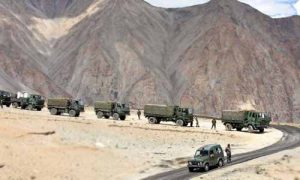
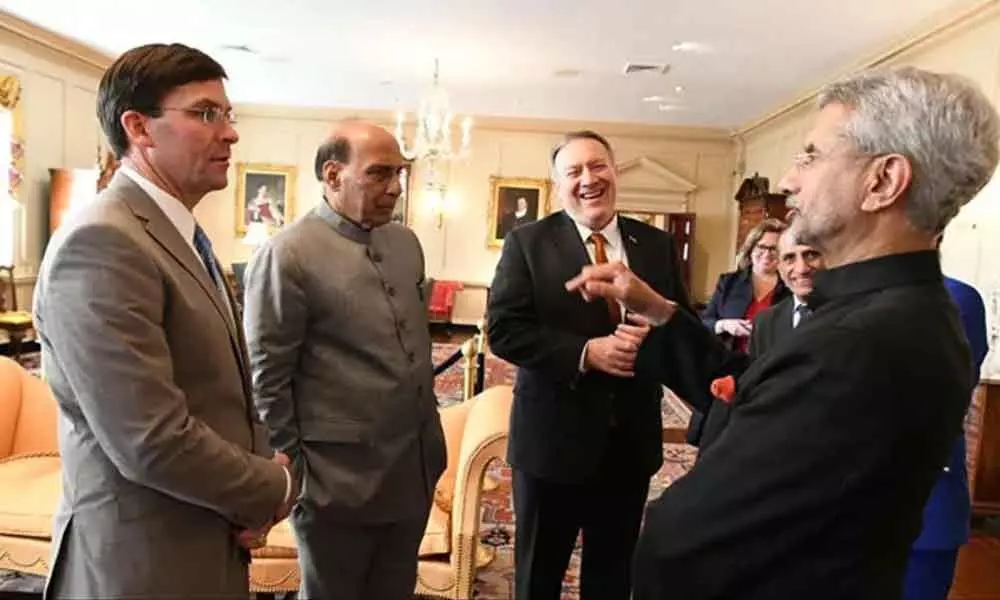

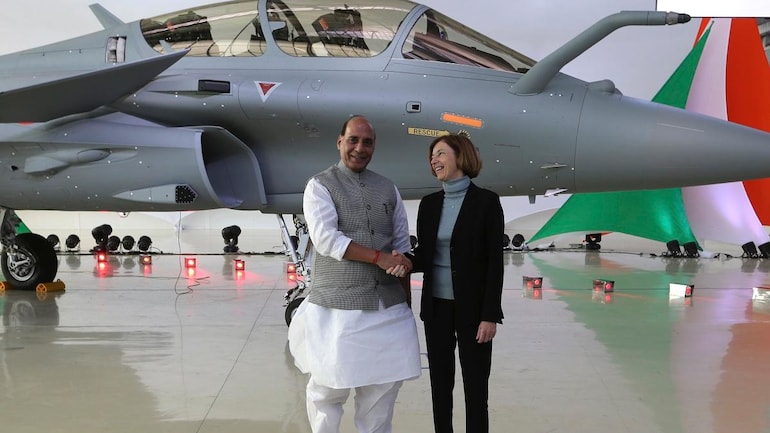


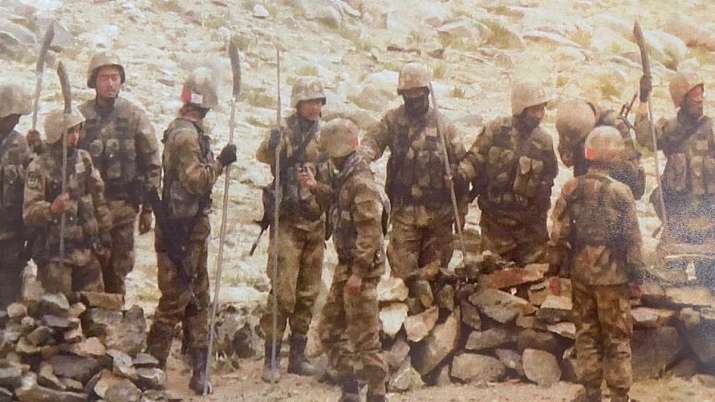


 Security Wise