How not to tackle Trump

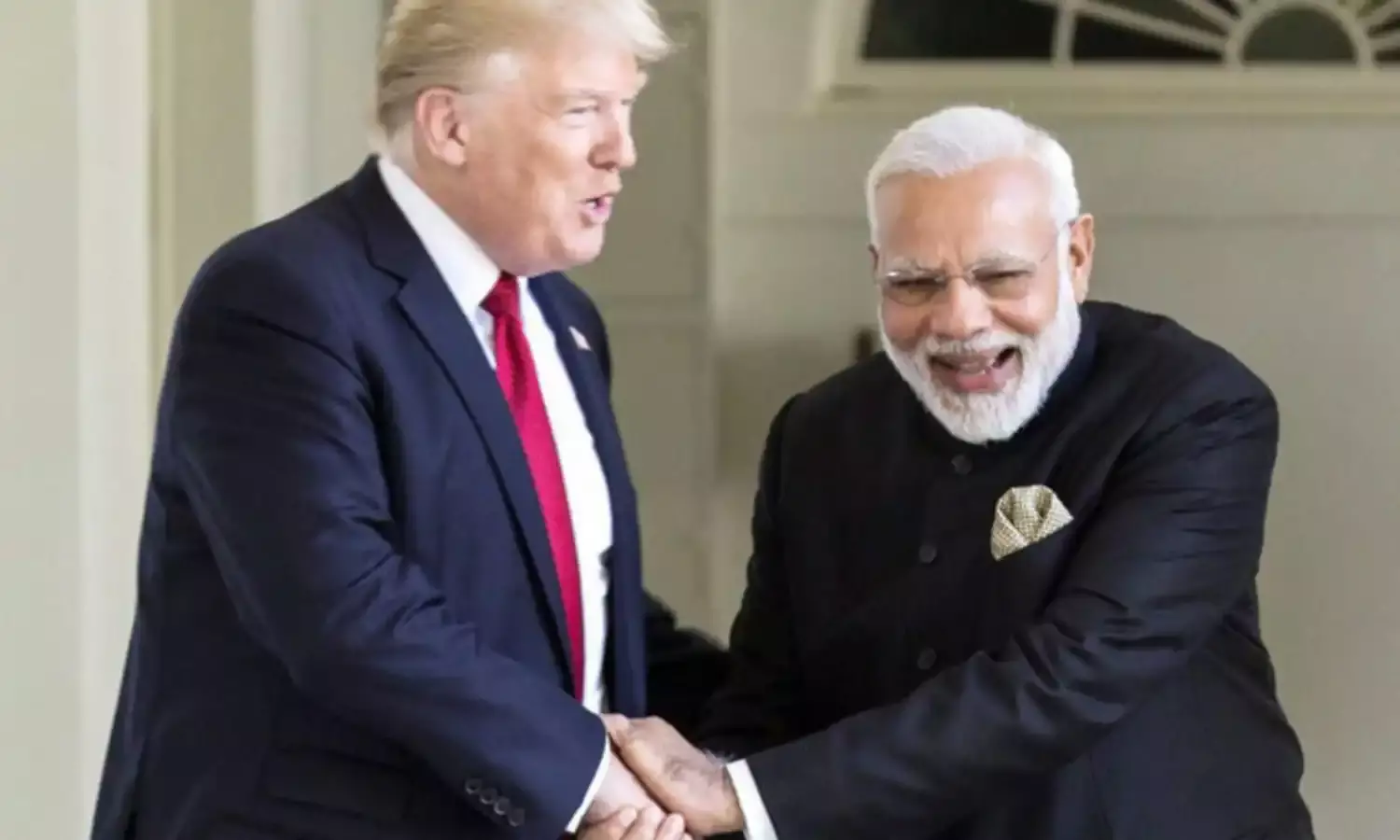
[Modi & Trump]

Canadian PM Mark Carney caused a sonic boom at the World Economic Forum in Davos, Switzerland, last week by deflating US President Donald J Trump without much ceremony. He called a spade a shovel, told Trump where to get off, and won rousing acclaim from everyone for showing the gall that leaders of other countries, who have been at the receiving end of Trump’s increasingly wayward, intentionally hurtful, policies, have gritted their teeth but shied away from doing. Carney also laid out a road map for those countries that fear they cannot do without the US on their side and without Trump’s benevolence. He advised Middle Powers to cast aside complacency, and come together to mind their trade and security and to thwart “American hegemony”.

It was an extraordinary address because it broke through the barrier of fear and reticence of confronting America. Particularly, for Canada because the US accounts for 77% of Canada’s goods exports, 46% of total foreign direct investment, and over 60% of Canada’s merchandise trade (per 2023-2024 figures). If despite such US stranglehold on his country’s economy, Carney stomped on Trump and dared him to do his worst, it shows that Ottawa has had it with Trump and his unending shenanigans — a sentiment evidenced in the speeches by European leaders who followed Carney, such as the German Chancellor, Friedrich Merz, and President Emmanuel Macron in Paris who warned the US about the European Union retaliating with a trade “bazooka”, and by an European legislator who in parliament told Trump “to f***k off”!

Even as the Davos meet ended, a bunch of European NATO members, perceiving a serious military danger from Trump, airlifted troops to Nuuk to show solidarity with a Danish military contingent deployed for the defence of Greenland against America, indicating just how radically the security situation has changed, resulting in NATO, along with the liberal, rules-based, international order, coming apart. In Carney’s words — “We are in the midst of a rupture, not a transition” — a phrase that sounded the gong on the prevailing disorder. (If you haven’t heard Carney’s Davos speech, do so — it is stunning in its eloquence and refreshing in its unvarnished view of the current international affairs. See https://www.youtube.com/watch?v=izDAOvHz5Wc )

Further, as if to show that Canada and the world had economic alternatives, Carney sought rapprochement with China, slashing the 60%+ tariffs on Chinese electric vehicles to 6% as a curtain raiser to a possible trade agreement with Beijing. A discombobulated Trump, used to foreign leaders letting him walk all over them, and shaken by Carney’s unexpected and devastating onslaught, threatened, what else, 100% tariffs. Ho hum!

Less exposed than Canada but visciously targeted by Trump with 50% tariffs, India ended up doing a bit of what Carney recommended. Its exporters found alternative markets for their wares but this trend did not motivate Delhi to up the ante and, in callibrated fashion, pull away from America. Buckling under pressure, it chose instead to comply, acquiescing in Trump’s demand to stop the buys of Russian oil. The Centre for Research on Energy and Clean Air reports a 29% month-on-month drop in the Indian offtake of Russian energy.

Restraint is unlikely to earn India and Narendra Modi any respite, because Trump will only pile on more pressure because, alone among large countries, it succumbed. A bully will not relent unless the bullied stands up to him — the reason for Carney and even the British PM Keith Starmer growing a spine, and then he will slink away. As Trump has time and again done when confronting a Putin or a Kim Jong-un, and now Carney.

The former BJP Rajya Sabha MP Swapan Dasgupta somewhat optimistically thinks the stereotype of the Hindu as “mild” and “patient” that Swami Vivekananda decried, has been replaced by Modi’s “assertive” Indian, and that India has acquired a more aggressive persona. If so, this change is nowhere reflected in the country’s America policy. In fact, the Modi government’s non-reactive, submissive attitude will only impel Trump to heap more scorn and humiliation on Modi and the country.

So far the Narendra Modi dispensation has studiously avoided saying or doing anything (Re: Trump projects — 50% tariffs, Venezuela, “Board of Peace” for Gaza, FTA under negotiation) that it fears would aggravate already bad relations. The external affairs minister (EAM) S Jaishankar, on his part, limited himself in this period to his politically safe and favourite schtick of dumping on terrorism and Pakistan, and getting passing foreign dignitaries to nod sympathetically. Thus, we had the Polish and the Spanish foreign ministers clucking censoriously even as Islamabad, on US instructions, funnels Pakistan Ordnance Board-produced artillery shells and small arms ammunition to Ukraine through the Warsaw-Kyiv rail link. And, just as futilely, the EAM has been plugging multilateralism from every available forum when it is actually on its last legs, just as the United Nations is. It proves that, as always, Delhi is the last in the station to know that the train it had long hoped to ride first class in, has gone off the rails. More generally, the Indian government seems to not even understand anymore what matters in international affairs, or even what the currency of exchange is. Psst.. it is hard power! Like in the good old days of gunboat diplomacy!

The rest of the world seems to have grasped this reality. And is responding as Carney, Merz and other European leaders did at Davos, including the President of the European Commission Ursula von der Leyen, all of whom said the old order is gone, never to return, and called for “independence” from the US, for military self-sufficiency, and for seeing the old style alliance as a vehicle for national subordination. They also agree on genuine free trade agreements as the solution, with von der Leyen referring to the FTA with India to be announced this Republic Day week as potentially the most economically potent agreement EU is signing.

Then there is Modi’s India, that still believes America is the answer to its prayer, when Trump has made it abundantly clear that he is contemptuous of Modi and his pretensions, and that he’d take every opportunity to kick India in the teeth. But that’s the sum and substance of Modi-Jaishankar’s “three monkeys” US policy — see nothing, hear nothing, say nothing, verily fitting into Carney’s box of states that “go along to get along”. Delhi seems entirely oblivious to, or completely in sync with, the truism the Canadian leader also mouthed that “Sovereignty is the ability to withstand pressure”. What we are, therefore, witnessing is the Indian government’s determination to make good on relations with the US even if as an appendage, notwithstanding the traditional ally-appendages in Europe seeking an escape from thralldom.

It suggests that there is no one in the Indian government that can read Washington, or indeed Beijing. Because, if there were, in fact, somebody of note, Delhi would not step repeatedly into traps set by the US (civilian nuclear deal, Op Sindoor, technology transfer, free trade agreement) and China (LAC, trade imbalance), and look foolish. Sure, the commentariat has finally woken up to the perils of proximity to the US, but warnings had been repeatedly and consistently issued by this analyst in his books, blog, and other writings over the past 30 years about an absolutely unreliable America that Delhi needs to deal carefully with.

A deeper understanding of a foreign country comes from spending a lot of time there. But where America is concerned, there is no one in the government — not a single person that I know of, who has resided there for any length of time (Jaishankar pulled a short 3-year stint as political counsellor in the Washington embassy in the mid-1980s), and can leaven policy discussions within establishment circles with any special insights. Our diplomats and civil servants are like Indian academics and media persons — acquainted with America in arranged settings (official interaction, university and think tank seminars and conferences, or US State Department-hosted tours, and the like) that leave them dazzled, and yearning to somehow relocate there or, better still, to get their progeny settled with green cards!

From the enduring Indian national interest perspective, what Trump has done is to be welcomed! He has clarified the options for the Modi regime by closing the H1B visa gate for techies and prospective Silicon Valley millionaires, and the daily news of Indians getting shot, mugged, or harrassed, has put the NRI community on notice. The overconfidence of the Indian settler in the pre-MAGA days led to excesses. Such as the 90-foot-tall statue of Lord Hanuman, dubbed by some over-clever NRIs who installed it, as the “Statue of Union” in Sugar Land, Texas. Besides being considered an eyesore by the enraged local Texans, it is a goad for the Christian Nationalists of the American south and southwest that make up the MAGA flock. So far they have restricted themselves to mocking the Monkey God, reviling Hindus as savages, Hinduism as satanic, and Hindu religious symbols as an affront to Christianity. Soon they may take a hammer to the statue, and run the Indians out of the town.

The US east and west coasts are considered relatively liberal. But so was Texas until recently, whence the large NRI community in Houston, say. The upside is that the pesky Khalistani element among the Sikh Americans has gone quiet, and will stay quiet. After all, they can’t tell when Trump and MAGA will turn fully on them, and they may need Delhi’s support. As it is, the turbaned Sikhs are in the same category as the Hanuman statue — a magnet for the crazies to beat up on “bin Laden” look-alikes. Just as the red tika on sari-ed women’s foreheads, in the 1990s, drew the skinheads into physically attacking them in New Jersey.

What Messrs Modi, Jaishankar, et al, have not learned is that Trumpian transactionalism is not some stumble that will pass in 2029, but here to stay as the new pillar of American foreign policy. Delhi can still strike a deal here, a bargain there, if the price is right, and here Modi, to earn goodwill, has gone overboard with a spate of government-to-government deals for assorted military hardware and weapons platforms. But, rather, by its very nature, transactionalism will lead only to more transactions, not to what Modi had hoped — some grand scheme of comprehensive cooperation organically linking India to the US through intermeshed economies and the large NRI community in America, to stabilise South Asia, Asia and the Indo-Pacific!

With the FTA with the EU round the corner — what with von der Leyen and her colleagues as special guests at tomorrow’s Republic Day parade, I fear a disappointed Modi government will now think the EU will be what the US failed to be, and fall with relief into the European lap, to be as thoroughly exploited this time by the Europeans!

Posted in arms exports, asia-Pacific/Indo-Pacific, Asian geopolitics, China, civil-military relations, Culture, Decision-making, Defence procurement, domestic politics, Europe, Geopolitics, geopolitics/geostrategy, Great Power imperatives, India's China Policy, India's Pakistan Policy, India's strategic thinking and policy, Indian Air Force, Indian Army, Indian ecobomic situation, Indian Navy, Indian Ocean, Indo-Pacific, Internal Security, MEA/foreign policy, Military Acquisitions, Military/military advice, nonproliferation, North Korea, Pakistan, Pakistan military, Russia, sanctions, society, South Asia, Strategic Relations with the US & West, Technology transfer, technology, self-reliance, Terrorism, Trade with China, UN, United States, US., war & technology, Weapons | Tagged , , , , | 53 Comments

Indian Air Force — the most luckless air force in the world

[Rafale]

The Indian Air Force is the most luckless airforce in the world and its leadership is to blame for it. Once marked out as the leading force of an “Icarian India” with its span stretching from the Maghreb to Australasia, it is now reduced to something that is repeatedly beaten by so puny a thing as the Pakistan Air Force. What a fall! To pretend the IAF can take on the PLA Air Force, is to dream! But dream on!

In a pattern of longstanding, the IAF has been led by persons apparently determined to steer the force into the ground, much like the hot-dogging pilot with deficient flying skills, who destroyed the export potential of the Tejas by flying the plane into the desert sands at the UAE airshow a few months back.

It is nevertheless a mystery — the kind of hook Paris has into the Indian government. It is as if the Quai d’Orsay can make the Modi regime, the latest in the line, to do virtually anything it wants it to do. Forget about how French defence companies keep tabs, nurture support for the wares they peddle by courting promising military officers, Wing Commander level up, with all kinds of comfy attention, and by conducting lavishly hosted trips to Paris with all its allurements for the flagrank, and even media persons. And one hears too tid-bits of information pertaining to monies diverted into accounts of the ruling party of the day. But these are secondary factors. The real reason for France’s success lies elsewhere — in its promises relating to nuclear technology that it does not intend to ever deliver on, but means to use to successfully string India along. Our Prime Ministers, who are as inncocent of any technical knowledge as their generalist civil servants they rely on for advise, are seduced by such promises.

At the top are the twin nuclear promises relating to the transfer of miniature nuclear reactor technology to power submarines and aircraft carriers, and to provide Indian nuclear scientists access to the French Inertial Confinement Fusion (ICF) chamber — the Laser Megajoule facility near Bordeaux. The ICF creates extraordinarily high temperatures by firing lasers at nuggets of fusion fuel to create miniature thermonuclear explosions that help refine Hydrogen Bomb designs, something sorely needed because the Indian thermonuclear device tested in 1998 was a dud. What with the late, little lamented, Dr R Chidambaram, the greatest disaster to befall the nation’s nuclear weapons project, singlehandedly ensuring the capping of the Indian arsenal at the low yield fission level with his argument that India needed no additional testing beyond the 1998 tests, and then seeing to it that the small ICF facility in Indore was run into a state of such disrepair as to render it non-functional.

Hence, the importance of the French carrots dangled before the donkey of an Indian government that made Delhi successively buy the Mirage 2000, the scorpene diesel submarine, and now the Rafale — all incredibly wasteful deals that because of time and cost overruns have ended up costing the exchequer a third more than their original price tags of tens of billions of dollars — totaling hundreds of billions of dollars, and all because the Indian government never applied its mind, because it has no mind to apply.

The IAF’s procurement priorities are realised, aided and abetted by the apparatus of state that does not know its arm from its elbow where air warfare or any other military or mil-tech issue is concerned, and relies on advice from the very source — the Chief of the Air Staff who, personally, has the most to gain from it. Isn’t there a conflict of interest here? I am referring strictly to the metric the military services informally use to evaluate their chief of the day — whether he acquires for the service a prized foreign fighter plane, an aircraft carrier, or an imported tank, helicopter fleet, or artillery system. To be fair, the navy and army are no different — but these services are less egregious, less in the public’s face, in their acquisition objectives. The IAF keeps cawing about such deals enabling the service to reach its 42.5 squadron strength, that was recommended by the JRD Tata Committee post-1962 War. Technology has since moved on, but not so the IAF — it is sticking to that figure to cover up for its ills.

Because, performance-wise, what has the IAF, outfitted with the latest Western aircraft as per its wishes, done in war? In the 3-day farce — Op Sindoor, for instance, it managed to get one or more of its Rafales — supposedly the most advanced plane in its inventory, shot up on the very first day, and just like that over a billion dollars went down the drain. It matched the 1999 Kargil conflict record, when again, it lost two aircraft on the trot on the very first day.

What the IAF has done magnificently well, however, is burnish the reputation of the Pakistan Air Force and its indigenously assembled ex-Chinese JF-17, even though it was the J-10Cs that secured for the PAF its IAF Rafale kills. So much so, that combined with the IAF piloted Tejas mishap, countries like Indonesia that had seriously considered buying the Indian aircraft begged off, bought the Pak-built JF-17s instead and then, by way of spillover beneficial effect, also bought the drones the Pakistan defence industry produces! Bangladesh, Iraq, and Libya have lined up to buy the Block II version of the 4.5 generation Pakistan-made Chinese aircraft complete with an AESA (Active Electronically Scanned Array) radar and a Chinese off boresight air-to-air missile from a family of PL missiles that brought down the Indian Rafales, all available for a paltry $30 million.

India excepted, there are no Third World countries around anymore for Western countries to rip off. They have all wisened up. Why would they go in for a 4.5 gen Rafale — Iraq and Libya are also where the French feverishly pitched this plane, that India is paying $337 million per piece for when, for the same amount, they can buy ten JF-17s? Or, the $337 million could have bought 2-3 Tejas Mk1A, an aerodynamically and otherwise far superior aircraft to the JF-17. So, India remains the lone village idiot who gets fleeced left and right!

However, the math indicates an even more ruinous outcome: With Rs 3.2 lakh crores, or US $38.4 billion (at the conversion rate of INR 83-84 for a US dollar) committed for 114 Rafale, where’s the money for the Modi government to spare for any indigenously designed and developed aircraft? And, mind you, this sum only accounts for the platforms, all the weapons — the A2A Meteor and the A2G Hammer missiles cost a whole deal of extra, again in the billions of dollars! But comfortingly for HAL, the deal will only have it do what it has ever done — screwdriver 96 Rafales from semi-knocked down kits at its assembly lines, as it did the MiG-21s, MiG-27s, Jaguars and Su-30MKIs without, in the process, gaining for the country even an iota of combat aircraft design and development capability.

Further, the Rafale draft-contract stamps India as the go-to country for any Western government keen on having its defence industry subsidised by the Indian taxpayer. Not to miss out out on the feast, the German Chancellor Merz too came hither, happily flew kites with Modi and, for his troubles, pocketed a multi-billion dollar contract for the HDW 214 diesel submarine. This when the country makes nuclear-powered submarines for God’s sake!, and needed only to buy a conventional sub design and few select technologies, like optronic masts, which the Germans would have happily sold for a fraction of the cost of the entire, and entirely redundant and useless, HDW 214 package!

To return to the Rafale, the French were so brazenly confident that they could force the issue that Dassault did not concede a millimeter, and the final contract involves no transfer of source codes. This means that integrating every little Indian designed and produced ordnance or avionics tech, will necessitate going to the French company which will charge a hefty sum to do the needful — talk of bleeding a customer to death, and this will be for the duration of the aircraft’s 35-year service life. Moreover, indigenisation of the Rafale production starting at 30% will never exceed 60%! The negatives of such deals are many, and have been publicly raised for years and years now — mostly, I confess, by me in my writings. But these issues are not unknown to Indian defence ministry negotiators. In the event, the price negotiation team, involving IAF brass, should be held accountable for defalcation. May be a future government will investigate these deals.

Then again, official Indian negotiating teams are the darlings of Western governments for a reason — they play the perfect saps and suckers, and can be sold any bill of goods. Go ask the American negotiators how surprisingly easy it was to get the Jaishankar-led MEA team to agree to non-resumption of nuclear testing as condition for “civilian nuclear cooperation” in the 2008 nuclear deal with the US!

But for Air Chief Marshal Aman Preet Singh the Rafale purchase will prove a boon, cementing his reputation within the air force, at least. But it will just as surely relegate the IAF to the category of a third rate, foreign-dependent force — a status it was sliding towards for some time now, and fully deserves. In comparison, PAF is a second rate air force because it does more with less, even as the IAF, in contrast, is habituated to doing less with more. And, of course, the Rafale deal, as expected, will sound the deathknell for the Tejas Mk1A, Mk 2, and the advanced medium combat aircraft programmes — starved of funding so that the French firms led by Dassault can prosper.

But what does Aman Preet Singh care? Like his army and navy counterparts, he has specialised in talking up atmbirbharta to please the ignorant political bosses while plonking for imported goods. Predictably, Singh is in the running to replace General Anil Chauhan as CDS! If his record as CAS is any guide, Good Bye theaterisation!

The Prime Minister ceaselessly lectures the people about taking pride in swadeshi, and asks young talent to contribute to India’s startup-nation credentials, but his government still ends up getting pressured into buying imported weapons systems even as the military services chiefs pay no end of lip service to the desirability of arms self-sufficiency! But the record is irrefutable that, other than impoverishing the country, none of these exorbitantly priced Western armaments have done much of anything in actual military operations other than failing.

Posted in arms exports, asia-Pacific/Indo-Pacific, Asian geopolitics, Australia, Bangladesh, China, China military, civil-military relations, corruption, Culture, Decision-making, Defence Industry, Defence procurement, DRDO, Europe, Geopolitics, geopolitics/geostrategy, Great Power imperatives, India's China Policy, India's Pakistan Policy, India's strategic thinking and policy, Indian Air Force, Indian Army, Indian ecobomic situation, Indian Navy, Indian Ocean, Indo-Pacific, MEA/foreign policy, Military Acquisitions, Military/military advice, Missiles, Pakistan, Pakistan military, SAARC, society, South Asia, Strategic Relations with the US & West, Technology transfer, technology, self-reliance, United States, US., war & technology, Weapons | Tagged , , , , | 67 Comments

Gor is no solution for India-US relations

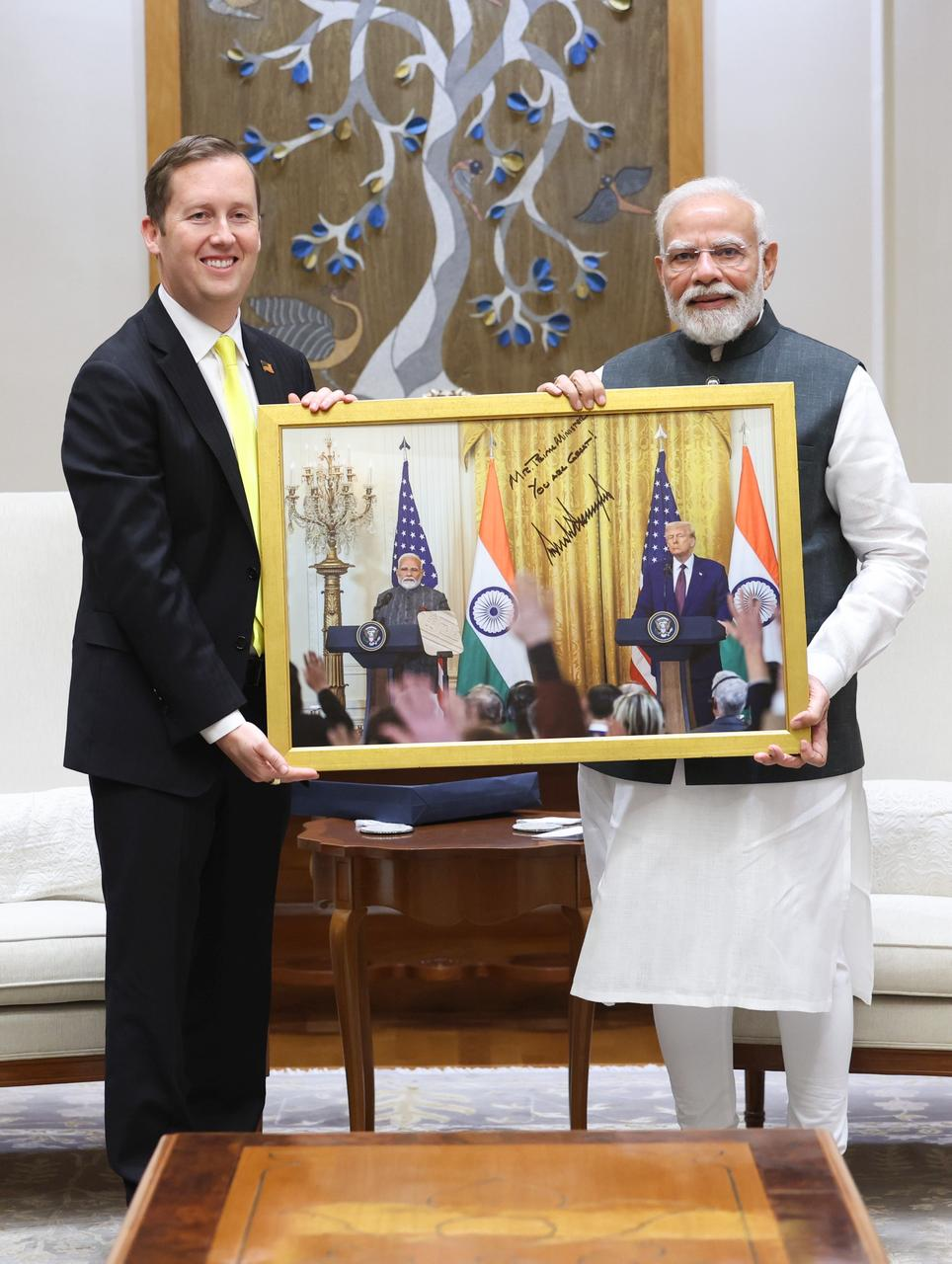
[Ambassador-designate Sergio Gor and the PM]

The Tashkent-born, Sergey Gorokhovsky, rechristened Sergio Gor, is seen by many in the MEA and in the Modi government as a deus ex machina that will put the derailed bilateral relations wih the United States back on track. They are apparently as unfamiliar with the Washington reality and the relative standing of people in Trump’s vicinity as the Indian media and commentariat.

Gor has the usual chequered history of a foreign-born trying desperately to fit in any which way and to find his place in the American society. Gor’s Jewish parents left the disintegrating Soviet Union for Israel in 1994 before relocating to the US five years later. Along the way, the young Uzbek got Catholic schooling and converted to Catholicism. Predictably, he chose rightwing anti-Communist Republican party political channels to make a mark and serve his ambition. Gor is like any of a host of Indian-origin Americans, some of whom latched on to the liberal Democratic party ideology and followed a similar path to visibility in the political realm.

Essentially, the Russian-speaking Gor, a publicist and pamphleteer, who worked with the late Senator John McCain before tacking to the Trumpian wind that took Washington by storm, was rewarded with a not too important line job as head of personnel appointments at the White House. This designation sounds grander than is actually the case because most senior appointees in the current US Administration represent different constituencies and had their separate lines to Trump. Indeed, Gor began canvassing for the ambassadorship to India, perhaps, after realising that he was losing out in the race for an influential policy-making job as assistant to the US President that Stephen Miller was closing in on. The Delhi embassy was an attractive consolation prize, considering he would enjoy four years of vice-regal life, of being fawned over by the Indian government, its functionaries at his beck and call, genuflecting before him at Roosevelt House.

Yes, it is the same Miller who fleshed out the US designs for Venezuela by saying, in effect, that America had a greater right to Venezuelan natural resources (mainly oil) than Russia and China which had heretofore hogged them, and who, with condescension dripping from his lips, explained to CNN the Hobbesian world Trump is shaping. “We live in a world, in the real world… that is governed by strength, that is governed by force, that is governed by power”, which he said defined “the iron laws of the world since the beginning of time.”

Misreading of Gor’s relative importance in the Washington hierarchy by the Indian Establishment is of a piece with Jaishankar and his MEA cohort believing that Trump’s second term as President would herald the Golden Age of India-US cooperation! Op Sindoor saw the dunking of such expectations in a tank of ice-cold water. It occasioned Trump’s show of utter contempt for Modi and for India because of his conviction that he had read the Indian PM well enough to know that slapping him down would not lead to Delhi reacting adversely, and that he could personally insult Modi and put India’s economic nose out of joint with the imposition of tariffs that no other country faced, as long as Trump now and then salved the Indian PM’s ego by calling him a “good friend” and, as Gor did, talking of India as “essential” to peace in the Indo-Pacific, and just so long as America continued to draw benefits from the four foundational accords — General Security of Military Information Agreement (GSOMIA), Logistics Exchange Memorandum of Agreement (LEMOA), Communications Compatibility and Security Agreement (COMCASA), and Basic Exchange and Cooperation Agreement for Geospatial Intelligence (BECA).

Thus, the offer of membership in the Pax Silica, conceived to counter China’s advances in the microchip field and to firm up a stable supply chain, as a curtain-raiser to Gor’s ambassadorial tenure was counterpoised the very next day by Trump musing about a 25% tariff for any country with economic links with Iran atop the 50% tariffs Indian exports already face, with the threat held out of the tariffs being increased to the 500% level when all trade becomes nonsense. In like vein, the US Commerce Secretary Howard Lutnick dismissed the free trade agreement under negotiation as of little account and asked the Indian government to get to the back of the line of countries seeking FTAs, just because, as he revealed, Modi failed to call Trump when the latter expected him to!

So much for India’s essentiality and Modi’s closeness to Trump! But Modi’s and India’s being treated as doormat is acceptable to the PM’s advisers, who have been counselling restraint and still more restraint in dealing with Trump, who knows a punching bag when he sees it. This when the evidence clearly shows that a display of self-respect as reflected in a coldish reception to Gor, graduated standoffishness, and dilution of the foundational accords, combined with showy assertions of common interest with the EU and the leading European states and with Russia, would have had a tremendous impact, conveying to Washington the costs of taking Delhi for granted, and daring Trump to seek some other counterweight to China in Asia, which is not there.

But back to Gor, and his supposed access to Trump, and how it is expected to benefit India. If he was as valuable to Trump as people here make him out to be, why would the American President let him go, cart him off to distant Delhi? The fact is Gor cannot just pick up the phone, call Trump, and get some wrinkle or the other the Modi regime wants ironed out, to be done in a jiffy. With regard to Trump and Gor, it is more a case of a servitor being accommodated. But out of sight, out of mind, really matters where a US president like Trump is concerned, whose attention span is as short as his impulsiveness is electric. Gor did little in policy terms whilst in Washington, and can do even less from Delhi other than to snuffle Trump’s insults

Posted in asia-Pacific/Indo-Pacific, Asian geopolitics, China, China military, Culture, Decision-making, Europe, Geopolitics, geopolitics/geostrategy, Great Power imperatives, India's strategic thinking and policy, Indian Air Force, Indian Army, Indian democracy, Indian ecobomic situation, Indian Navy, Indian Politics, Indo-Pacific, MEA/foreign policy, Pakistan military, Russia, sanctions, society, South Asia, Strategic Relations with the US & West, Terrorism, United States, US. | Tagged , , , , | 16 Comments

Trump, Maduro and the End of the UN — good riddance!


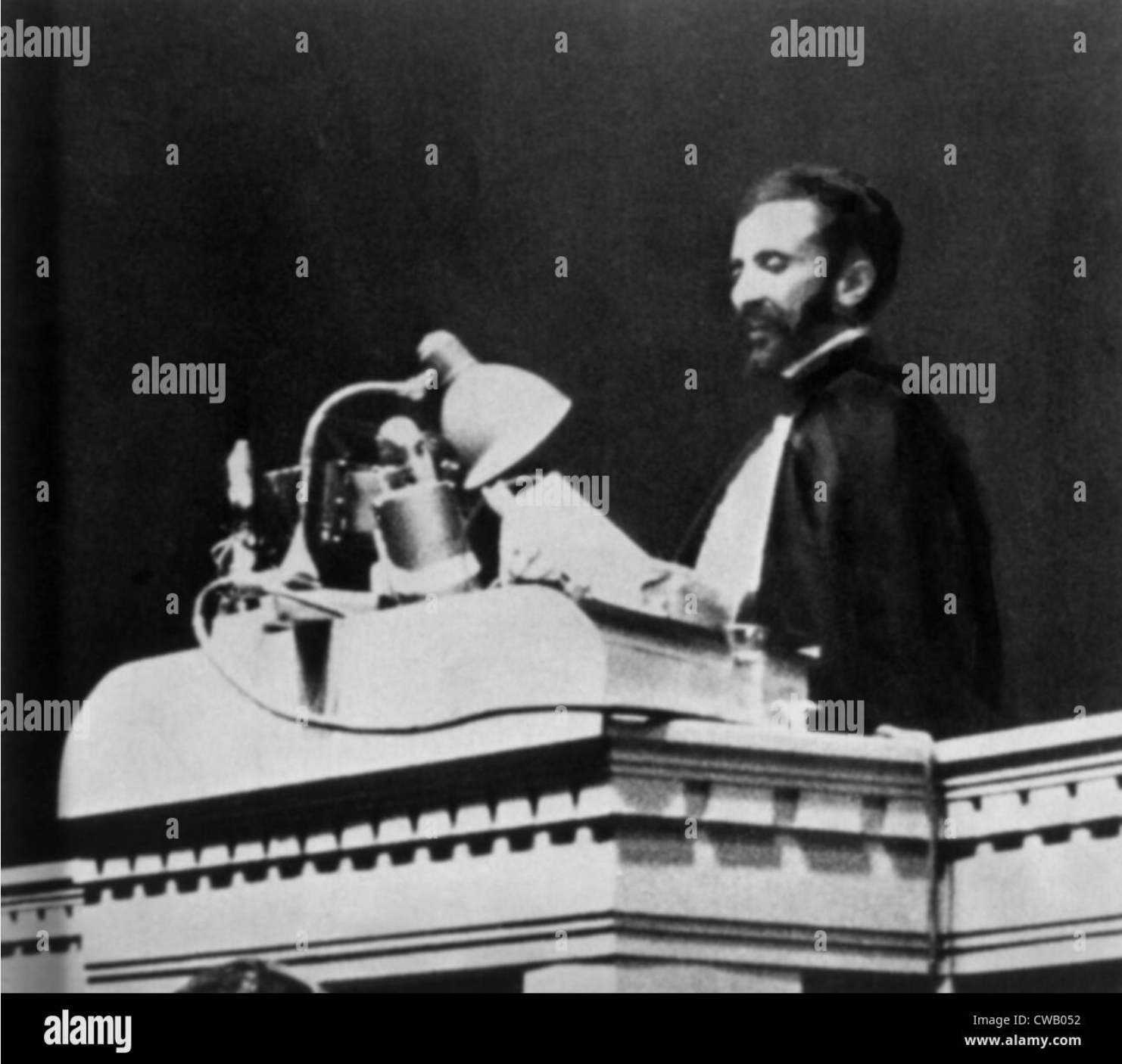
[Emperor Selassie addressing the League]

Haile Selassie, Emperor of Ethiopia, addressing The League of Nations in Geneva on June 30, 1936, invoked the collective security clause and, with great gravitas and grace, asked this council to act against the aggressor, Italy, with no confidence whatsoever that his pleas would beget the desired action. The Italian dictator, Benito Mussolini, had used a small dispute over an Ethiopian oasis town in the Ogaden region to invade Ethiopia a year earlier to realise what he considered Italy’s right to it’s own set of colonies in Africa to match the British East African Territories, and German Tanganyika — the very grandly conceived Africa Orientale Italia, comprising other than Ethiopia, an annexed Somalia and other smaller principalities. It was an age when even middling European powers thought nothing of carving up parts of the non-white world as their own eminent domains. “What reply shall I have,” Selassie famously asked the League, as great power representatives tried to avoid meeting the Emperor’s fierce gaze, “to take back to my people?”

It marked the beginning of the end of the League of Nations set up by the victorious powers of the First World War at the 1919 Treaty of Versailles to preserve peace, their interests and their order.

Nicolas Maduro, the erstwhile President of oil-rich Venezuela, is no Selassie. But, Ethiopia’s fate consumed the League. Maduro’s forcible removal by US Special Forces may have started the unravelling of the UN in slow motion.  Unexpectedly for Trump, the independently elected Vice President of the country, Delcy Rodriguez, has asked for an expeditious return by the US of Maduro, and otherwise demanded America keep it’s hands off her country. Moscow, and Beijing — which has invested over USD 70 billion mostly in it’s oil industry, will definitely want a restoration of the status quo ante, failing which a Rodriguez dispensation with no obvious links to the US, when what Trump wants is a pliable government in Caracas which will hand over the country’s oil fields to US companies to run, a’la Aramco in Saudi Arabia.

But, as the UN Secretary General warned, such unilateral action bodes ill because, he declared, it will set a precedent. So, what’s new? Even for the level of brazenness, the manner in which the hemispheric hegemon — the United States of America, exercised it’s geostrategic Monroe Doctrine imperatives and ordered  the capture of the presidential compound in Caracas, after securing a nearby military airfield, and spirited away Maduro and spouse out of the country aboard USS Iwo Jima, must surely herald something unprecedented — a return to a time when powerful countries did what they pleased. The US President Donald J Trump made plain his reasons — no, not the violation of democratic norms by Maduro, but that America now had the largest oil field in the world under it’s control, and can force the price of oil down to cents on the barrel. It is the hoary issue of controlling natural resources. If China did the same thing by cornering rare earths reserves worldwide over the last 15 years but by stealth, Trump means to do it by rougher and readier means.

On Venezuela’s request the UN Security Council will be convening to discuss the matter today. For the record, Washington claims “narco-terrorism” as instigating its military intervention and has justified it under the self-defence provision of the Charter. Russia and China have accused America of straightforward aggression, violative of all UN norms of peaceful conflict resolution.

It will be interesting to see what India’s official position will be — as of 0530 hrs IST 4th January 2026, there was no reaction from Delhi. Will it stand by the principle of inviolate sovereignty and join in condemning the US at the UN and elsewhere. Or do what it did in 2019 when the Venezuelan-US relations last flared up, and Delhi urged peace, neutrality, and similar pablum.  Because Maduro’s hijacking sets another kind of precedent.  Thus, a country can charge and try in absentia leader of another country and then arrange for his shanghai-ing out of his country to face imprisonment in the country that indicted him.  It would be a free for all, and no leader will be able shake off the fear of a similar thing happening to him. Specifically, Narendra Modi has been held legally responsible by many Western human rights agencies for the killings of Muslims in Gujarat when he was CM. He could be waylaid in any foreign country he’s visiting and transferred to face trial. If it happened to Maduro today, it could happen to Modi, or Mohammad bin Sultan of Saudi Arabia or anyone else, tomorrow. It’d be chaos. I mean, who is to stop, say, the Local police apprehending (with Xi Jinpeng’s connivance, of course) Trump when he is visiting Beijing for breaking some Chinese law, in which case what can Washington and the US military do short of initiating WW3? Such are the complications, the Trump actions have set in motion, considering the UNSC will do no more than what the League did faced by Ethiopia’s case.

Actually, it is in India’s vital interest to ensure a complete breakdown of the UN system by sharpening the big power clashes of interest.

India has benefitted nothing from the UN once Nehru, in his surfeit of good feelings for China offered the permanent security council seat offered India by the US and the Soviet Union in 1955-56 to it’s mortal enemy — Maozedong’s China. India has ever since been like the beggar with its nose on the glass panes — wanting what those in the inside have. The Indian government, with the benighted MEA in the lead, believe that it is only a matter of time and turn of events before India is permanently seated. That is about as likely as snow in The Delhi summer, because there’s China barring India’s entry. No, there has to be a new system, a new order, and it is time the Modi regime does what is needed — ek dhakka or dau, to collapse the UN as is.

The only Indians who benefitted from the UN and the Bretton Woods financial institutions — truth be told — are the hordes of diplomats and civil servants — and only because they could speak and draft documents in passable English language better than their Third World counterparts, and who parlayed short stints at these orgs and their numerous agencies into comfortable dollar-indexed pensions and residence abroad, or at home. The country otherwise got a short shrift. Recall how the US and the UK played Nehru such that he submitted the Kashmir issue to the UNSC in 1948 and permanently stymied India?

India  has no stake in the existing structures and systems of international order. The pity is our political leadership lacks the strategic druthers to break and disrupt such that a new order emerges where India has more say.

Posted in Afghanistan, asia-Pacific/Indo-Pacific, Asian geopolitics, China, China military, Culture, Decision-making, domestic politics, Europe, Geopolitics, geopolitics/geostrategy, Great Power imperatives, India's China Policy, India's strategic thinking and policy, Indian Politics, Indian state/administration, Indo-Pacific, Internal Security, Islamic countries, MEA/foreign policy, Russia, russian military, society, South Asia, Special Forces, UN, United States, US. | Tagged | 59 Comments

A Foreign Policy So Adrift — in the New Year, that’s Bad News

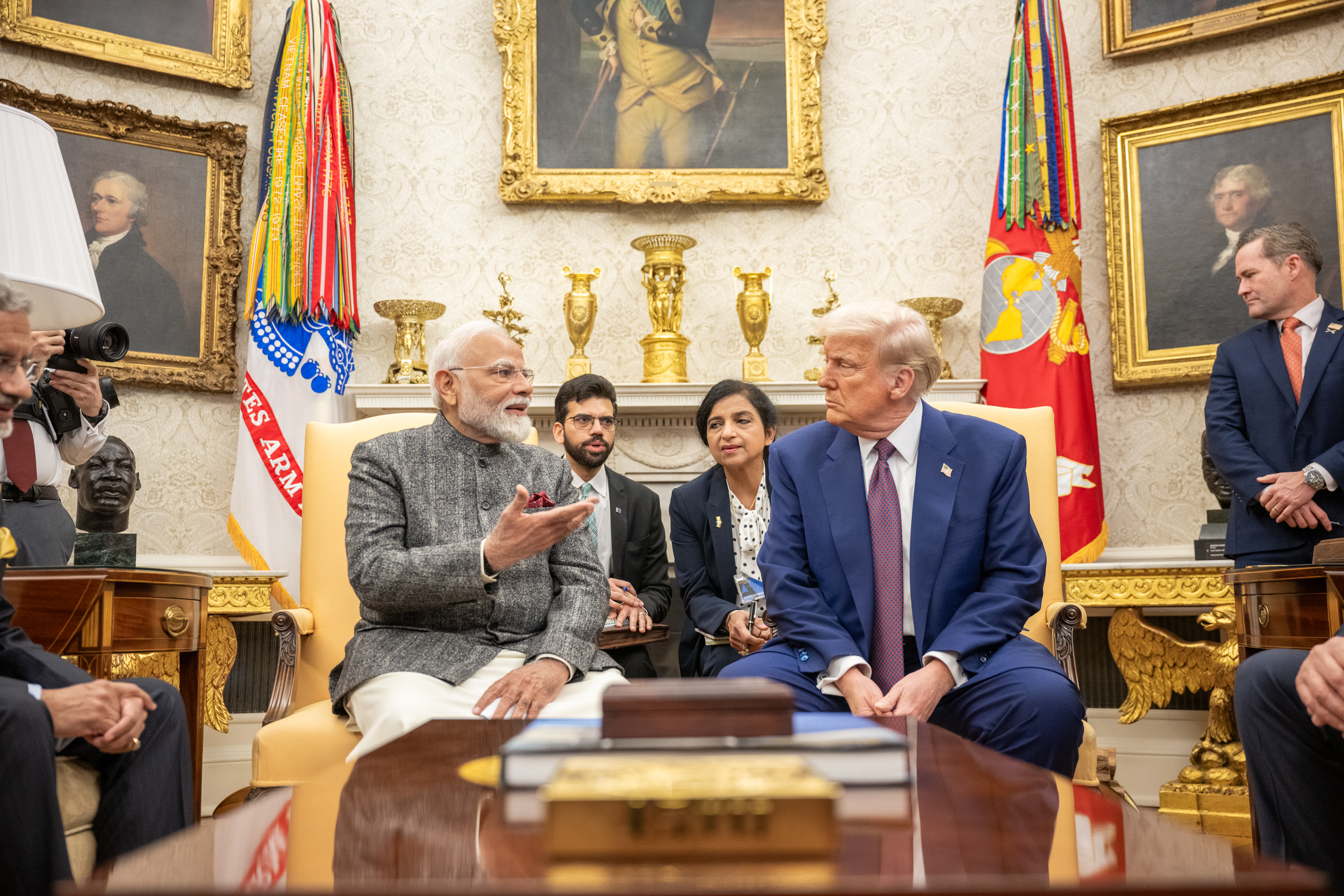
President Donald Trump hosts a bilateral meeting with Prime Minister Narendra Modi of India, Thursday, February 13, 2025, in the Oval Office.(Official Photo by Molly Riley)

As 2026 rolls in, the jauntiness and confidence in the country’s foreign policy on display just a year ago is nowhere in evidence. Then, Donald J Trump had been re-elected to a second term, and Prime Minister Narendra Modi, egged on by his minister for external affairs with skin in the game, S Jaishankar, who had doubled down on centering India’s foreign policy on the United States and riding it’s coattails, felt they had hit jackpot. They acted as if Trump was the answer to their fervent prayers and they had four years to capitalise on the Howdy-doody spirit they hoped would propel bilateral relations to another level and pitch India into the big league. They plainly did not expect the cratering of ties that happened instead.

Op Sindoor was supposed to benchmark the convergence of interests. Of India and America reaffirming their interest in dealing squarely with terrorism in the process of stamping it out. Delhi had given Washington notice of the retaliatory action in the works for the ISI-managed Pahalgam massacre in April. Washington waited with interest. Except, Trump saw it as an easy occasion to claim a supernumerary role for himself as peacemaker in an operation Delhi had assured him would be so limited as to end before anything really started. And was genuinely surprised when the Modi regime in high dudgeon rejected any such role, putting a crick in his campaign for the Nobel Peace Prize —which Trump thought was his by right because his bête noire and predecessor, Barack Obama had won one in 2009 for doing even less!

But why was Trump surprised? Because he read Modi as another Third World hanger-on and anticipated he’d fall in line with the Trumpian charade of a great peacemaker let loose on an unwary world. The reaction to show Modi and India their place in his scheme of things swiftly followed. The foolish-sounding Asim Munir — replay his silly speech to a bunch of startled NRPs, comfortably settled in the West, getting an earful of jihad when all they sought was a photo op with the new Emir of Pakistan, suddenly was given audience at the White House he had been hankering for. Not to miss out on the main chance, he applied the grease on thickly for the gilded Trump to slide in on. And just as suddenly, Munir found himself anointed Trump’s man in S Asia and Pakistan as US’ go-to friend in the region. To fit his newly exalted station, he elevated himself to Field Marshal!

More importantly, Munir is now installed as the guardian of Trump Family’s billion dollar crypto interests and newly developed interest in that country’s gold and copper reserves in Reko Diq. Depending on how willing Trump is to protect his mining concessions, American secret forces — courtesy private armies run by Blackwater, a company controlled by Eric Prince, ex-US SEAL, for the Pentagon, will be deployed in Baluchistan and get into a fight with the hardy Baloch fighters, perhaps the doughtiest in the world. It’ll involve the Baloch gangs lording it over Karachi — these are not Dhurandhar fiction, turning fully against the intruder-invader Americans, and the facilitator Pakistani state, and then THE GAME will be on! Hopefully, India will have a say in what transpires. Because Russia and China will certainly be there and active, doing their utmost to make life immensely difficult for Washington, and putting the future of the state of Pakistan in serious jeopardy.

For the nonce, it has left Modi and Jaishankar baffled, seeing their foreign policy edifice of cards come crashing down around them. But, when in doubt, they reverted to what they consider safe — carrying on with the US on American terms. Thus, even as Trump has left Indian foreign policy in a shambles, Jaishankar continues with the country’s Indo-Pacific policy as Secretary of State Marco Rubio has decreed it as if nothing’s amiss, nothing has happened to push relations southward. It is Jaishankar’s touching belief in a policy of being more loyal than the king, nursing the fond hope that things will be back to normal. But when the new normal is less forgiving India should be more prepared, not less as is the case now.

Lacking any show of guts, will, and wiles by India, China is seemingly the master of all it surveys in Asia, daily offering not just Japan but also America provocations as an indecisive Trump recedes with tail between his legs, talking up a big ship navy one moment, and displaying readiness to cut a separate deal with Xi the next, leaving Delhi in particular up the proverbial creek.

Alas, these facts staring the Modi government in the face cannot be long ignored. Trumpian Washington has moved on from Modi, and India has to wean itself away from the chimeric comforts of a one-sided never-never relationship. The sooner it does so the better for the country and for Modi to save what face he is still left with. Rather than gear up for the challenge, the Indian government is choosing to show its rump to Beijing — more trade, more visas for Chinese businessmen, and more talk about more talks, as a gesture of submission.

Posted in asia-Pacific/Indo-Pacific, Asian geopolitics, China, China military, civil-military relations, Europe, Geopolitics, geopolitics/geostrategy, Great Power imperatives, India's China Policy, India's Pakistan Policy, India's strategic thinking and policy, Indian Air Force, Indian Army, Indian ecobomic situation, Indian Navy, Indo-Pacific, Islamic countries, Japan, MEA/foreign policy, Military/military advice, Pakistan, Pakistan military, Russia, society, South Asia, Special Forces, Technology transfer, Terrorism, Trade with China, United States, US., war & technology, Weapons, Western militaries | Tagged , , , , | 28 Comments

Widen the Siliguri Corridor, annex Rangpur Division of Bangladesh (Augmented)

[The latest anti-India protest in Bangladesh]

Bangladesh is once again on the boil, and the internal situation there is trending such that India’s intervention may become necessary to once and for all to not only lance the Bangladeshi boil but to end a geostrategic problem threatening India’s territorial integrity. India cannot and should not any longer tolerate a country on its eastern flank threatening to become China’s military proxy and extremist Islamist outpost. With an inimical Dhaka making things difficult, potentially the Indian army’s XXXIII Corps can be pincered between Dok La and the Siliguri Corridor. It is time for India to militarily pinch off Bangladesh’s northern Rangpur Division, thereby straightening and rationalising the border roughly on the west-east Balurghat-Gaibandha line.

Delhi has a strong justification for a couple of territorial revisions. Firstly, the forcible amalgamation of Pakistan-occupied Kashmir (POK) – a campaign that would have had a head start had the army been sprightly and offensive-minded enough to take the Haji Pir Salient in Operation Sindoor, as argued in a post anticipating Indian retaliation after Pahalgam in late April. And secondly, widening the 60 km long, 17–22 km wide Siliguri Corridor — India’s “Achilles’ heel”, by absorbing Bangladesh’s northern-most Rangpur Division, because in Dhaka’s hands, it poses an existential threat. Widening the Corridor is, therefore, a national security imperative, especially now that Bangladesh is in military cahoots with China.

Integrating the Rangpur Division into Assam (not West Bengal) would increase India’s margin of error when dealing with the Chinese PLA entrenched in the Dok La trijunction of India, Bhutan, and China just 30 kms uphill from the Corridor. India can do it the easy, or the hard way. The ideal solution would be, of course, to induce Dhaka to negotiate a peaceful handover of the 16,185 sq km sized Rangpur Division to preempt a Bangladesh-China military hookup. The Indian government can offer to buy off outright the Division adjoining the Corridor on the  Bangladesh side for $10-$20 billion — thereby easing that country’s outstanding debt-problem (of $104 billion), as a one-time permanent settlement. Failing that, Dhaka would have to give an absolute and enforceable guarantee with a treaty that it will not, under any circumstances, create a strategic nexus or work militarily in concert with China (or Pakistan).

Should Dhaka ever, at any time, for any reason, resile from this undertaking, or falter on this guarantee– formalised in a bilateral agreement, India should feel free to slice off what a keen student of geostrategy, the Bharatiya Janata Party Chief Minister of Assam, Himanta Biswa Sarma, who has been ahead of the curve on this matter, identified in a May 2025 post on ‘X’ (previously Twitter), as the two corridors in Bangladesh at even greater risk – its ‘two chicken necks’ as he put it. He was referring to the 80 km long ‘North Bangladesh Corridor from Dakhin Dinajpur to the South West Garo Hills’, which if cut off would sever the  Rangpur Division from Bangladesh.

And the ‘Second [being] the 28 km Chittagong Corridor, from South Tripura to the waters of the Bay of Bengal. This corridor, smaller than India’s chicken neck,’ Sarma correctly observed, ‘is the only link between Bangladesh’s economic capital and political capital.’ But the threat of annexing the Chittagong Corridor as well can be held in abeyance to moderate any severe reaction by Dhaka to the loss of Rangpur. Indian government and the Assam state government and their agencies should keep up a steady drumbeat about the strategic vulnerability posed to the Indian northeast by an ill-disposed Bangladesh conniving with adversaries, so that a valid and substantive justification is available for decisive action to realise territorial revision.

The absorption of the Rangpur Division would firm up an already strong Indian military presence in the Corridor with the S-400 centered layered air defence now augmented with an additional brigade distributed over three strong points at Bamuni, Kishanganj and Chopra – a standing force that can, at any time, move in on the Rangpur Division.  Provocative statements about capturing the Siliguri Corridor and detaching the Indian northeast from the mainland regularly emanating from many quarters in Bangladesh only build up the Indian case for a surgical operation, offering India a rationale for militarily grabbing the territory that it must have. Assimilating a small piece of Bangladesh and converting the Siliguri Corridor into a toughened neck of a mountain goat — not anymore a chicken’s neck, would moreover give more room for the three army brigades deployed there.

In such a situation Bangladesh, aided by Pakistan, will no doubt canvas for the usual political US intervention to prevent Delhi’s remapping its border. But a  stern warning, quietly conveyed, about such interference imperilling the foundational accords and the FTA, should prove dissuasive. The US is far from  the super power it once was and needs every bit of help to deal with China, and India is not the country the Nixon-Kissinger duo tried to bully in 1971.  Further, America’s criticality to India’s economic future is exaggerated. After the initial downturn in exports post-Trump tariffs, did Indian industry and exporters not find alternative markets? Further, where else can Apple, Microsoft, Google, Amazon, and Facebook sell their wares or gather the massive data for their AI large language models under development? And can Silicon Valley import talent in bulk from anywhere else as it can from India? It would really help if the Indian government did not buckle under the slightest US pressure, rather than imposing counter-pressure, by accelerating the country’s movement to de-dollarising trade as BRICS is doing, and using other leverages. Stiffening the stance vis a vis the US combined with nuclear missile arming of states bordering China — conventional Brahmos missiles should only be a start, will send a complementary message to Beijing. A payback, like vengeance, is best served cold.

But the Modi government is unlikely to stand up to Washington or, nearer home, even initiate a diplomatic dialogue with Dhaka to explore a territorial transaction — a latter day “Louisiana Purchase” to buy the Rangpur Division, or to configure a treaty guaranteeing a denatured Sino-Bangladeshi threat to the Siliguri Corridor on the pain of decisive Indian military action. Moreover, a military operation for territorial revision against Bangladesh is beyond anything the Modi regime can even contemplate, considering it is, among major governments, possibly the last true believer in a liberal international order that frowns upon such activity and is nearly extinct, because the main props of this order — the US and Russia, are torpedoeing it. US President Donald Trump is spoiling for a fight with Venezuela, and is on the cusp of starting military hostilities to oust the Nicolas Maduro government, besides warning of other military actions to hive off Greenland from Denmark, at the European end, and at the Central America end, the Panama Canal Zone from Panama. And Russia is bloodily dismembering Ukraine.

But like the previous Indian governments, Modi’s too preemptively stumbles, bumbles, and bends its knee to Washington and Beijing, and inspires no confidence it will aggressively do the right thing by the country where national security is concerned. Look what happened in Sindoor, when Trump insulted and humiliated Modi and deliberately pedestalised “Field Marshal” Asim Munir, and all the Indian government did was diplomatically shuffle its feet.

If the ruling BJP — an avowed nationalist party lacks the guts to revise the Siliguri Corridor map, what can be expected from political parties — Congress and Trinamool Congress who, over decades, methodically padded the electoral rolls with Muslims from Bangladesh to stay in power in the bordering states of Assam and West Bengal?    

The issue of the 18 million-odd residents in the Rangpur Divisional area, however, is a socio-political problem that will have to be given careful consideration, and reasonably should, as part of the military operation, lead to this population being pushed into Bangladesh, to eliminate the possibility of Bangladeshi revanchism. Or it will only enlarge the communal demographic Bomb in the Indian east, and in the context of the diminution of the Hindu population in, and the institutionalised mistreatment of Hindus, in Bangladesh, it is a potentially volatile and nested issue the country cannot afford to have.

Hindus, who in 1947 constituted over 28% of the then East Pakistan territory, and 13% in 1971 at the time of the creation of Bangladesh with India’s military help, is now whittled down to less than 8% (some 13 million). The religious rightwing Jamaat-e-Islami party never forgave India for midwifing an independent Bangladesh — and its anti-India bias is what Jamaat and its extremist offshoots have been propagating, attended by progressively greater levels of violence. In Pakistan, the condition of Hindus is lots worse. The Hindu population plummeted from 14.6% of the population in 1947 to 1.2% (or, 3.1 million) today, in good part because the Hindu population transferred en masse to India, and since then owing, among other things, to regular abduction and forcible marriage and conversion of teenage Hindu girls — a programme backed by the mullahcracy.

This did not occur to me when I posted the original. But the 13 million Hindus remaining in BD are near about in size to the 18 million Muslims in Rangpur Division for full and clear transfers of populations — zeroing out Hindu population in Bangladesh for the 18 million Muslims in Rangpur Div, rendering BD a fully religiously homogenous country per Jamaat-e-Islami’s desire, and helping India obtain a more secure border in the east. This is a clean break solution that, as I argued in an earlier post, should have been the basis of Partition in 1947 as Dr BR Ambedkar, the sanest leader in the freedom movement, had strongly advocated.

By way of context, Muslims in India — 9.8% (35.4 million) of the population post-Partition has grown unhindered to some 14% (200 million) in the present day– the third largest Muslim population in the world.

Posted in asia-Pacific/Indo-Pacific, Asian geopolitics, Bangladesh, Central Asia, China, China military, civil-military relations, Culture, Decision-making, domestic politics, Europe, Geopolitics, geopolitics/geostrategy, India's China Policy, India's Pakistan Policy, India's strategic thinking and policy, Indian Army, Indian Politics, Indian state/administration, Indo-Pacific, Internal Security, Islamic countries, MEA/foreign policy, Pakistan, Pakistan military, Russia, russian military, society, South Asia, Strategic Relations with the US & West, Terrorism, United States, US. | Tagged , , , , | 49 Comments

Trump’s veto on India’s military transactions with Russia?

[Modi & Putin]

Before Prime Minister Narendra Modi and Russian President Vladimir Putin sat down to talk turkey at the 23rd India-Russia summit yesterday, the Wall Street Journal published a story by its Delhi Bureau chief (https://www.wsj.com/world/india/putin-and-modi-deepen-relationship-that-has-drawn-trumps-anger-bef8f813) saying that Dmitry Peskov was wrong in signalling that the visit would result in consequential deals for “Russian jet fighters” (Su-57) and “missile air-defence systems” (S-400). “Indian officials”, the story said, “have quietly discouraged the idea that any such agreements will emerge during the visit.” US President Donald Trump’s displeasure at any arms deal in the offing was known to Delhi.

Considering that Peskov is the official spokesman for Putin and, in some circles, tagged as the man to succeed him in the Kremlin, calling him out this way was an extraordinarily risky thing to do — because what he said represented Putin’s views. While the Russian President may forgive the Indian government because, well, Modi, as if to compensate, laid on the praise for Putin a bit thick at the formal state dinner last night, Peskov may be less forgiving. Being publicly contradicted is a variety of personal slight, and diplomatic slights are rarely forgotten by men on the way up who eventually make it to the top. (Remember Mani Shankar Aiyar’s “chaiwallah” jibe against Modi that ended up in a huge circle of collateral damage around the Congresswallah?)

The official Indian position, moreover, was anticipated by Tina Dolbaia, a Russia expert at a WashingtonDC think tank — the Center for Strategic and International Studies, who said, as the Journal reported, that “India would need tacit US approval to pursue major new deals [because] A US law allows for sanctions on countries that purchase major defence hardware from Russia.” What? Really?!!

So, Trump is driving India’s Foreign and Military Policy? I’d like to give the benefit of the doubt to the Modi regime, thinking it cannot be so daft, and believe that the formal decision to go in for the Su-57, S-400, and the miniature nuclear reactors with total tech transfer and production rights, is being held in abeyance — a ruse to be used in the mean time as leverage against America. Fine, but leverage to get what?

Surely, Delhi was not expecting a turnaround in the US strategy and to commit more fully to the Indo-Pacific because that, as the US National Security Strategy document released by the White House two days back, said clearly, won’t happen. The Trump Administration has indicated it will concentrate on itself — on one-sided trade deals, capturing energy sources and critical mineral reserves anywhere by any means, and on hemispheric security — Central and South America (whence the underway efforts to remove the Maduro regime in Venezuela). So, India cannot expect to once again be a free rider on security. It will have to rely on itself.

But, whatever Washington says, what does the Modi regime really desire from the US — ah, yes, technology! It is difficult to see just why people like Modi, Jaishankar (and the entire MEA caboodle — and, in this respect, refer the op/ed in today’s Indian Express by Shyam Saran, a former Foreign Secretary) see the US as a leader in advanced technology and as willing to part with it to India! When the facts are that, by almost any metric China is now in the technology vanguard in the most cutting edge areas — Artificial Intelligence, Quantum computing, semiconductors, digital connectivity, biotech, and greentech (see the eye-opening report on China’s tech leap by the Mercator Institute in Germany, https://merics.org/en/china-tech-observatory ), and the US has transferred NO technology or military hardware of any note to India in the last 70-odd years!

The only reason India may end up getting the F-35 is because Trump will succeed in pressuring Modi to buy this phenomenally useless combat aircraft — an absolute lemon and operational liability that spends more time on the ground than in the air. The US Government desperately needs foreign buyers to amortise the $2 trillion programme cost sunk into it by Lockheed and the American tax payer — and guess who stands out as the prime sucker they can unload this dud on? The petro-rich, brain-empty Arab states aside, you guessed it — INDIA with some officers holding high posts in the IAF actually salivating over getting it — the very definition of masochism! Trump is confident he can arm twist Modi and India to do anything and, with Jaishankar and IAF assisting, get him to buy anything, and that “good friend” Modi won’t hold his being repeatedly humiliated on Sindoor, or having his nose rubbed in the dirt by rewarding Pakistan and being pally with “Field Marshal” Asim Munir, against him!

But does the Indian government think it cannot do without the US on its side? When the 50% tariffs were imposed, Delhi hyperventilated but, after a period of discomfiture, found that the Indian exporters had found other markets. And that the Indian industry was generally humming, the dip in exports to the US notwithstanding. The lesson that Delhi should have drawn was that if the US is not all that critical to the country’s economy, it is even less relevant to India’s defence. This then should have been the baseline seriously to mobilise an “all of nation” effort and become genuinely atmnirbhar. Whenever the government has trusted local entrepreneurs and talent to deliver, they have. That hasn’t occurred.

One also despairs about the Indian government ever getting anything right at any time in the geostrategic field, even as one marvels at China getting every thing right all the time in every sphere, and now has Trump’s America running for its life! And this is the formidable adversary India, willy nilly, has to take on. Or, it can opt for the easy way out as it has always done — just lie down and let Beijing walk all over us, doing which India has had lots of practice over the years.

Posted in arms exports, asia-Pacific/Indo-Pacific, Asian geopolitics, China, China military, civil-military relations, Culture, Decision-making, Defence Industry, Defence procurement, DRDO, Europe, Geopolitics, geopolitics/geostrategy, Great Power imperatives, India's China Policy, India's Pakistan Policy, India's strategic thinking and policy, Indian Air Force, Indian Army, Indian ecobomic situation, Indo-Pacific, Latin America, MEA/foreign policy, Military Acquisitions, Military/military advice, nuclear industry, Nuclear Policy & Strategy, nuclear power, Pakistan, Pakistan military, Relations with Russia, Russia, russian assistance, russian military, society, South Asia, Strategic Relations with the US & West, Technology transfer, technology, self-reliance, United States, US., war & technology, Weapons | Tagged , , , , | 23 Comments

A US Congress Report says Pakistan won Sindoor — the standard narrative hereon

[Field Marshal Asim Munir presenting a picture to PM Shehbaz Sharif of Pakistani guns supposedly in action against India in Sindoor, except it is a 2019 picture taken from the net of PLA firing guns in an Exercise in China!]

Having US President Donald Trump mouth off something or the other about Pakistan getting the better of India in the “3-day war” in May this year, is one thing. But when a US Congressional Report repeats it, and fleshes out the points, one may conclude that this is now the settled view of the US government. Given the power of the Western media and academia, this will be the standard narrative the world over that the Indian government and military will find impossible to counter.

This was predictable because, like on earlier occasions, the Indian military in this fracas again ended the Sindoor proceedings without a decisive result, handing the Pakistan army — which is more competent in crafting a winner’s narrative than actually fighting anybody (India, Baloch freedom fighters, Tariq-e-Taliban Pakistan), the opportunity with Trump’s help to put out the story of its great victory over Indian arms!

This is the reason I have long warned in my writings that if Delhi carries out military retaliation against Pakistani for terrorist acts within India, it should not go half-cocked or settle for other than a decisive physical result that cannot be denied by GHQ-Rawalpindi or Islamabad. Thus, immediately after the 2019 Balakot strike I pointed out that, if the message to be sent to Pakistan was not to resort to terrorism, it made no sense for the IAF to use a precision weapon — the Israeli Spice 2000 that, because of targeting errors, actually missed hitting what needed to be hit anyway, and uprooted a few trees. What should have been sent in was waves of strike aircraft dropping 500 kg bombs to flatten the Balakot hilltop, accompanied by a combat air patrol component for protection, inviting the Pakistan Air Force into a full-fledged fight.

That would have been unexpected and stunned the PAF and GHQ-R into inaction and compelled them to reconsider its use of the asymmetric weapon — terrorism. I said all this in a subsequent meeting in Vayu Bhavan with the then air chief, Air Chief Marshal BS Dhanoa, and a few of his Principal Staff Oficers, none of whom could come up with a satisfactory explanation for the selection of the weapon or, generally, the tactics.

After the Pahalgam massacre and with the Modi government preparing for an appropriate response, I made out the case on April 30 — a week before Op Sindoor, for the army to take the Haji Pir Salient and/or Skardu in Pakistan-occupied Kashmir which, because these features are across a ceasefire line, can be legally captured and assimilated into J&K. See “Capture of Haji Pir Salient and Skadru — eminently doable, is what the Indian military’s goals ought to be for the retaliatory actions” (at https://bharatkarnad.com/2025/04/30/capture-of-haji-pir-salient-and-skardu-eminently-doable-is-what-the-indian-military-ought-to-be-the-goals-for-the-retaliatory-actions/).

I argued in that and subsequent posts that the the loss of large chunks of POK alone would be disincentive enough and deter GHQ-R in the future from conducting terrorist strikes. But once again — talk of the Indian government and military happily repeating the same mistake! — the army stopped its action after hitting Muridke and Bahawalpur and offered a ceasefire on May 7 that was contemptuously rejected by Director General, Military Operations, Pakistan army — according to his Indian counterpart Lt Gen Rajiv Ghai. Then, as I disclosed, in reaction to Indian intelligence picking up Munir’s boast to Prime Minister Shehbaz Sharif based on the downing by PAF of several IAF aircraft that he’d “finish of” India in 48 hours, the Indian military attacked the night of May 9/10 and preemptively destroyed a whole bunch of value targets on the other side including, significantly, the PAF’s central command and control centre on Nur Khan Base, Chaklala. See “The ’48 hours” — is why Munir beame a Field Marshal?” posted on May 24, 2025https://bharatkarnad.com/2025/05/24/the-48-hours-is-why-munir-became-a-field-marshal/

With air dominance achieved, the army was offered on a platter an extraordinary opportunity to take Haji Pir, which it did not. Instead of instantly triggering Indian army units to converge on the Bulge from Uri, Mandi and Poonch, to take Haji Pir with the Indian Special Forces cutting of the salient on the north-south Uri-Poonch line, the army sat on its hands. Haji Pir is the area through which Pakistan army’s Inter-Services Intelligence infiltrates terrorists into Jammu and the Srinagar Valley.

If an “arm chair” strategist like myself could, see the political-military value in it, and conceive of such an operation, why did the army’s MO Directorate not plan and push for such action? Because, it turns out, nobody had anticipated the success of the Indian May 9/10 missile attacks and, therefore, no one in the army had planned for a contingent operation to capture Haji Pir, or any other major feature in POK.

The lack of decisive military results has time and again, cost India, the Indian government and military dear (a phrase I keep repeating!) in terms of serious reputational damage. Sindoor has incurred, perhaps, worse damage.

On November 18 was released the 2025 Report to US Congress of the US-China Economic and Security Review Commission (at https://www.uscc.gov/annual-report/2025-annual-report-congress). Most such reports while attributing information in them to public sources are published after they are vetted by American intelligence agencies. Saying the May 7-10 clash “drew global attention” because Pakistan “leveraged” Chinese weapon systems and “live inputs” from Chinese intelligence, the Report stated categorically that “Pakistan’s military success over india…showcased Chinese weaponry” with the aerial combat, in particular, “serving as a real world field experiment.” And then added that “Pakistan’s use of Chinese weapons” had resulted in the downing of “French Rafale fighter jets” before conceding that of the three Indian combat aircraft shot down — a scaling down of Trump’s latest figure of loss of eight Indian aircraft, “not all may have been Rafales”, meaning at least one was (the one shot over Bhatinda that I mentioned).

Going forward, this then will be the narrative attached to Sindoor. All the bleatings by Indian government and military officials to the contrary, notwithstanding. Because we never learn any lessons, India, its government and its military are fated to repeat the mistake of retaliating small. Already, there have been a number of terrorist attacks since Pahalgam without an Indian response. So what’s the worth of Prime Minister Narendra Modi’s threat he made after Sindoor that any terrorist incident will occasion a hard Indian reaction?

There’s something after all to the Israeli attitude — not the Hamurabi Code of an eye for an eye, but both eyes for just looking as if you mean to hurt!

Posted in Afghanistan, asia-Pacific/Indo-Pacific, Asian geopolitics, China, China military, civil-military relations, Culture, Decision-making, Europe, Geopolitics, geopolitics/geostrategy, Great Power imperatives, India's China Policy, India's Pakistan Policy, India's strategic thinking and policy, Indian Air Force, Indian Army, Indian Politics, Indo-Pacific, Intelligence, Internal Security, Military/military advice, Missiles, Pakistan, Pakistan military, society, South Asia, Special Forces, Strategic Relations with the US & West, Terrorism, United States, US. | Tagged , , , , | 27 Comments

Putin and Modi’s moment of reckoning

[Putin & Modi]

Sometimes developments come to such a pass and a situation emerges that, one senses, teeters on a consquential turn of events. The Russian President Vladimir Putin’s December 4-5 visit for the 23rd India-Russia Summit is one such event. In many ways, it is a make or break situation for Prime Minister Narendra Modi’s foreign policy. To its great demerit it early discarded his “India First” dictum, latching on, curiously, to Donald J Trump’s “America First” edicts, based on a complete and thorough misreading of the US President and American policy generally. It put a dunce’s cap on 30 years of Indian policy that espied premium and profit in edging closer to the US — a move begun by PV Narasimha Rao in the mid-1990s, and recommended by just about any and everybody prominent in the public opinion space at the time and since.

Among the policy influencers giving the lead was the late K. Subrahmanyam, ex-IAS, who held a special place in the Indian establishment, not least because he was virtually the institutional memory on national security matters whom, political leaders across the board, heeded. Unmoored from a Soviet Union that was falling apart by the hour, it was perhaps understandable that KS and others believed, as Narasimha Rao did, that India should close-in with America in the hope that doing so would benefit the country, help it to take giant economic and technological strides in the manner China did when assisted by the US.

The difference is China had Dengxiaoping India, unfortunately, had no comparable leadership. Modi promised much and delivered some, but consider how much more the country would have gained from a genuine unshackling of the private sector.

If the Nixon-Kissinger US policy raised China’s stock to an extent that it now rivals America, power-wise, this outcome has made Washington wary of repeating the same mistake with India. India will simply not be allowed to unilaterally mine the US for technology — one of the Modi government’s main reasons for intimate relations, nor will its exports enjoy the kind of sustained economic penetration Chinese industry was permitted. And almost every meaningful transaction will come with strings attached.

Thus, India was originally promised a total transfer of technology for the GE 404IN20 jet engine technology by Trump in his first term. He reversed it soon thereafter to Delhi’s chagrin, with the US President insisting Delhi buy these power plants. The demand is relatively huge — engines for as many as 352 Tejas light combat aircraft to be inducted into the Indian Air Force. In a 2021 deal, India contracted to pay $716 million for 99 engines. Only TWO engines were delivered as of September 2025! Undeterred, HAL signed a still bigger $1 billion deal for 113 jet engines. We can expect that the supply will be strung out and the Tejas bulk production delayed sporadically and in a manner to disrupt the smooth and steady induction into IAF and to periodically bring Delhi to its knees, as a means of extracting some concession or the other. In short, the Modi regime has made the success of the Tejas programme and IAF’s effectiveness hostage to passing American foreign policy interests.

In his second term, Trump has been especially harsh on Modi, believing that the Indian PM’s unwillingness to publicly acknowledge his fake role in ending Sindoor, cost him the Nobel Peace Prize. Trump’s bitterness led to his latest outburst a couple days back when he not only repeated his claim that it was the Indian PM who pleaded with him to restore peace with Pakistan, but — something new — that he had to threaten 350% tariffs on both countries to bring the military clash to a close!

Trump’s personal vendetta resulted in the imposition of 50% tariffs on Indian trade. And his threat to sanction Indian companies for importing Russian energy was activated just when he gave Kyiv a November 27 deadline to fall in line with his peace solution for Ukraine, or face an immediate cutoff of military aid and intelligence assistance! The timings of these two developments indicate that Russian energy imports by India was only an excuse for threatening US sanctions and increased tariffs — a punitive policy Trump had decided way back that Delhi would be subjected to no matter what, just so Modi was shown his place!

Except, Trump’s peace deal involves UKR President Volodymyr Zelensky agreeing to surrender all of the eastern region of Donbas to Russia that the two states have been bloodily fighting over for the past three years, and for Ukraine not to join NATO or even have an army! It is a warning to allies and partners alike that it is perilous for any country to have the US for an ally or partner, or rely on America for anything, least of all national security.

Yet, here was Defence Minister Rajnath Singh flying to Honolulu to sign on Oct 31 a 10-year framework for India-US defence partnership! Even as in the previous week, petroleum minister Hardip Puri, signed an accord for annual import of 2.2 million tonnes of liquified natural gas, declaring that this deal had nothing whatsoever to do with the Free Trade Agreement being negotiated, or the threat of US sanctions. The government agencies and private companies meanwhile moved to shutdown the Russian energy import channels! And the FTA negotiators from the commerce ministry too prepared to cede ground by incorporating provisions in it already offered the UK, EU, etc of opening Indian government procurement to international bidders, and to not require foreign tech companies to part with source codes or anything else that might remotely help India’s self-sufficiency drive in the military technology sector! And Delhi is on the point of surrendering the country’s digital sovereignty. The Modi government then showed just how much Trump means to his diplomacy, by having a rethink about the next G20 Summit just because Trump declined to attend it!

With Trump intentionally insulting and humiliating Modi any time a TV camera is near by, and his Administration missing no opportunity to hurt India’s economic and security interests, Modi and his government’s response has been startlingly submissive. There is so much holding back and ingratiating behaviour by the PM, his minions, and the Indian government, it is unbearable! It is as if Washington has done India no wrong, and even if it has, that it doesn’t really matter! It is an attitude that ulimately reflects on the country. To be so taken for granted reveals just what Trump thinks of India under Modi — not all that different, it appears, from how he perceives a pliant Pakistan under his favourite “Field Marshal”, Asim Munir!

If after 5 years of dealing with a wayward and impulsive Trump, who’s proved himself a consummate bully who will kick you in the nuts if you bend, Delhi keeps bending. May be even at this late date, Modi and Jaishankar and the rest of them could learn from Mira Nair’s spawn and New York city’s mayor-elect, Zoran Mamdani’s meeting in the White House with Trump. He won the elections in the face of Trump doing everything he could to defeat him. He held his own, talked back, and won praise from the US President, and had political analysts announce something known to all, except our MEA and Indian government, that Trump respects “strength and winners”. But, Modi and India are seen by Washington as neither strong nor as winners and is, perhaps, why the US President thinks that India can be reined in and jerked around at will to suit America’s purpose. Delhi to-date has, by its compliant posture and policies, only confirmed Trump-Washington’s view.

Why hasn’t Modi built on the political-economic understanding with Brazil and South Africa, by coupling the military cooperation aspects of IBSA (India-Brazil-South Africa) which periodically has its navies in the southern oceans, stressing this unique “three continents” initiative in military-security terms? And why doesn’t he talk to Putin about joining IBSA which group I have elsewhere advocated as BRIS — BRICS minus China, which would seminally serve India’s security interests at the expense of China’s? Delhi has to begin seeing its external relations in their military aspects, and stop leaning on the US whose attitude is “what can you do for me?”, not what we can do together.

It is in this situation that Putin visits Delhi. Russia’s biggest concern is not NATO or Europe, but how to keep America and China at bay. India is Moscow’s high card, and Kremlin is leaving nothing to chance. Russian commentaries suggest Moscow is a bit shaken by Modi regime uncharacteristically wagging its tail around Trump, even as he kicks India around. Putin thinks that this is the time to draw India closer, and decided to restore the relationship by pulling out all the stops. The Russians are offering a genuine 5th-gen Su-57 stealth twin-engined Su-57 — the US F-35 equivalent — with absolute complete technology transfer — no ifs and buts, including the jet engine, AESA radar, and the weapons load at around @$60 million — about $10 million more than what an off-the-shelf buy’d cost. It’d be a far more economical bridge to an era of unmanned aerial warfare.

Indians, who have been under the impression that Russian combat aircraft and other military hardware are not the equal of the Western items, must take publicity campaigns and advertisements a little too seriously. In metallurgy and rugged construction Russia excels; the difference in electronics/avionics is “athara-bees” (18-20) — in operational terms this slight gap means nothing. The real difference as I have stated repeatedly are innumerable pleasure trips for everyone in the procurement loop to Paris and Istress versus those to Moscow and Irkutsk (the main Sukhoi factory site)!

The Russian terms compelled Dassault to up its game for 114 Rafale as MFA (medium fighter aircraft) in addition to the 36 already contracted for, and to propose its production in India to supply the supposed overflow of international demand unmet by its French manufacturing units. But, it is a transaction that involves transfer of only 60% of the technologies!!

Dassault has made clear it will not budge from its position of “No source codes” for the aircraft — so it is just the usual assembly-screwdrivering deal from imported Semi-Kocked Down/Completely Knocked Down kits — HAL’s specialty. And Paris’s attitude was reflected in Dassault’s rather angry response to the German company Thyssen-Krupp Marine’s willingness to onpass the diesel HDW 214 submarine technology, including source codes, to India for the navy’s Project 75i. Because source codes means affording India not just the ‘know how’ but also the ‘know why’, and Paris was mad as hell that Berlin was giving away the store. It is the sort of development by a fellow West European arms supplier France would do its damndest to dissuade, deter and prevent.

With Dassault and France treating India with such disdain, the real question is why does Modi’s Delhi and the IAF show the Frenchies so much respect — getting slapped in the face only to have the Indian government turn around and want more of the same? It is as if official India sees no other source for military products!

Then again, if not India, which sucker, would keep buying over-rated, over-priced military goods? Ah, yes, I forget — we have oodles of dollars, we are a trillion $ economy!!

In this respect, see how the US government and Western arms suppliers quickly rose up as one to charge China with waging a public opinion campaign to bad-talk Rafale and try and push its own JC-10 post-Sindoor. When the Rafale is, if not a bonafide dud, it is near enough to one in that it nowhere delivers the promised performance. Its supposedly fantastical Spectra avionics suite at the heart of the machine, was a manifest disaster. It failed to pick up, as was revealed in my first post at the time of Sindoor, not just the Pakistan Air Force JC-10, the Chinese PL-15E air-to-air missile it fired from a safe standoff range deep withing Pakistan, but also the Saab 2000 Erieye airborne early warning and control system loitering and cueing the PAF aircraft and missiles to Indian aircraft that were then targeted. So, when the Indian Rafale was brought down over Bhatinda, its pilot had no idea who downed his aircraft, and how.

In the charged milieu of contested narratives, the Tejas 1A’s going down at the Dubai Air Show will provide fodder for the very strong foreign lobby in the IAF — which has always made a monkey out of the Indian government and the country, and will use this incident to push the acquisition of more Rafale. At a stroke, it will kill the Tejas programme and its successor AMCA project as retired Air Marshals publicly canvas for this aircraft even as those serving whisper into ever-receptive ears that Tejas is desi maal, nothing as good as the French stuff, and push for the “safer” Rafale aircraft!

The unpalatable truth is this: It was again a hot-doggin’ pilot who was at fault. Abhinandan in a MiG-21 picked a fight with a Paki F-16 and got shot down over Pakistani territory, begetting us the military-diplomatic embarrassment in February 2019. In Dubai, the Tejas pilot, Wing Commander Namansh Syal — trying to show off to a captive audience, over-estimated his own aerobatic-combat flying skills and competence and, as likely happened, in his downward roll, got disoriented — which happens to the best of fliers, and came too close to the ground to pull up safely — it was NOT loss of power! It is a clear enough case of “controlled flight into terrain”. The machine — the Tejas LCA — is NOT at all to blame. One hopes the court of inquiry investigating this mishap will come to this obvious conclusion. The record of such in-Service inquiries in the past, however, does not inspire confidence that it will do other than blame the machine rather than own up to pilot error, and put the Tejas programme in danger.

The Modi government — defence Minister Rajnath Singh ji, please ensure that this accident is not used as an excuse by the IAF to sideline the Tejas 1A, 2, and AMCA in any way — as the service may be inclined to do and as, in fact, it has done in the past. The Dr Raj Mahindra-designed HF-71/72 — successor to the Marut HF-24, was run right off the drawing board and into the trash bin in the 1970s by the IAF brass, just so the Jaguar — an Anglo-French plane could be purchased — a decision that sank the budding indigenous aerospace industry like a stone. Ironically, the Jaguar was far less steady in low level flight than the HF-24 it replaced. Indeed, in a straight contest the HF-72 would have beaten the Jaguar hands down.

More Rafales in the fleet is a bad option and should be ditched along with the ridiculous deal for producing the 1970s vintage M-88 jet engine that only a brain-addled combo of HAL-DRDO-IAF-Defence Ministry could have preferred over the Kaveri jet engine project that the private sector tandem of L&T and Godrej Aerospace had offered to takeover — which was negatived. This is how local defence industry gets (dis)incentivised by Modi’s atmnirbharta policy.

In any case, more Rafales would be disastrously wrong for two main reasons that the Modi government better ponder seriously. Firstly, because Rafale is only a 4.5 gen combat aircraft, just like the Tejas, when what the Russians are offering is a fully 5th-generation Su-57 and, as a 2-for-1 deal, also the single-engined Su-75. The two-seat configuration that IAF insisted on for the Su-57 (then labelled T-50) when the proposal for collaboration to jointly produce this aircraft was first mooted 15-20 years ago, is what is available to the IAF. And secondly, turning down this offer would signal Moscow that India is not interested in getting close to Russia or in retaining its “strategically autonomous role” in world politics, and that it will bandwagon with America — a proven high-technology Scrooge, whatever the cost. The occasional buys of S-400s and such, won’t convince Putin otherwise. India will then face the music of being frozen by Washington into a third rate power bereft of choices and without the latitude to stand up for itself, and being played by the US. This is what Trump has done to all of America’s allies of long standing — and Delhi wants to join this disillusioned crowd?

In contrast, the Russians assisted us in the most sensitive technology programme — the nuclear-powered ballistic missile firing submarine, and has never quailed from handing over the latest, most advanced tech, while the US makes a song and dance about parting with even 1970s technology, and cannot be expected to do any better in the future. Washington, for instance, is rethinking giving Australian Navy its Virginia class nuclear powered attack submarines. Australia! — part of AUKUS (Australia-UK-US), a revived Anglosaxon confederacy! In 1971, the Soviet Union offered the Tu-22 Backfire longrange high altitude strategic bomber the IAF led by PC Lal and the Government by Indira Gandhi lacking strategic sense, rejected. Now there are people in high places convincing themselves and Modi that Trump and his successors in office can be relied on to hand over remotely first-rate tech. What foolishness is this?!

The IAF Chief of Staff, Air Chief Marshal Aman Preet Singh is personally in a difficult spot, for another reason. He is reportedly in the running along with the more dyed-in-saffron army chief, General Upendra Dwivedi, to replace General Anil Chauhan as Chief of Defence Staff next year, with an additional 3 years of service tagged on. One false step, or a decision that is seen as going awry, will tank his chances. And the potential false step/flawed decision may pertain to the Su-57 or Rafale issue.

Posted in Africa, arms exports, asia-Pacific/Indo-Pacific, Asian geopolitics, Australia, Brazil, Central Asia, China, China military, corruption, Culture, Decision-making, Defence Industry, Defence procurement, DRDO, Europe, Geopolitics, geopolitics/geostrategy, Great Power imperatives, India's China Policy, India's Pakistan Policy, India's strategic thinking and policy, Indian Air Force, Indian Army, Indian ecobomic situation, Indian Navy, Indian Ocean, Indo-Pacific, Intelligence, Latin America, MEA/foreign policy, Military Acquisitions, Military/military advice, Missiles, Pakistan, Pakistan military, Pakistan nuclear forces, Relations with Russia, Russia, russian assistance, russian military, sanctions, society, South Asia, South East Asia, Strategic Forces Command, Strategic Relations with the US & West, Technology transfer, technology, self-reliance, Tibet, Trade with China, United States, US., war & technology, Weapons, Western militaries | Tagged , , , , | 31 Comments

‘Gandhian fantasy has destroyed India’s strategic mind’ | Dr. Bharat Karnad

[Modi at the Gandhi statue outside the Indian embassy (the building to his left) on Massachusetts Avenue, Washington DC]

A recent extended interview of mine conducted by Dr Hindol Sengupta, a professor at OP Jindal University, for his ‘Global Order’ podcast, may be of interest. It deals with a bunch of issues pertinent to current developments

An earlier interview, post-Sindoor — “India’s biggest mistake in Op Sindoor and why India must get a megaton bomb” may also be of interest at https://www.youtube.com/watch?v=W5Bsxwn_bKc

Posted in Africa, arms exports, asia-Pacific/Indo-Pacific, Asian geopolitics, Australia, Brazil, Central Asia, China, China military, civil-military relations, corruption, Culture, Decision-making, Defence Industry, Defence procurement, disarmament, domestic politics, Europe, Geopolitics, geopolitics/geostrategy, Great Power imperatives, India's China Policy, India's Pakistan Policy, India's strategic thinking and policy, Indian Air Force, Indian Army, Indian democracy, Indian ecobomic situation, Indian Navy, Indian Ocean, indian policy -- Israel, Indian Politics, Indo-Pacific, Intelligence, Internal Security, Iran and West Asia, Israel, Japan, Maldives, MEA/foreign policy, Military Acquisitions, Military/military advice, Missiles, nonproliferation, North Korea, Northeast Asia, NRIs, nuclear industry, Nuclear Policy & Strategy, nuclear power, Nuclear Weapons, Pakistan, Pakistan military, Pakistan nuclear forces, Relations with Russia, Russia, russian assistance, russian military, sanctions, satellites, society, South Asia, South East Asia, Special Forces, Sri Lanka, Strategic Forces Command, Strategic Relations with South East Asia & Far East, Strategic Relations with the US & West, Taiwan, Technology transfer, technology, self-reliance, Terrorism, Tibet, Trade with China, UN, United States, war & technology, Weapons, West Asia, Western militaries | 19 Comments