Before Prime Minister Narendra Modi and Russian President Vladimir Putin sat down to talk turkey at the 23rd India-Russia summit yesterday, the Wall Street Journal published a story by its Delhi Bureau chief (https://www.wsj.com/world/india/putin-and-modi-deepen-relationship-that-has-drawn-trumps-anger-bef8f813) saying that Dmitry Peskov was wrong in signalling that the visit would result in consequential deals for “Russian jet fighters” (Su-57) and “missile air-defence systems” (S-400). “Indian officials”, the story said, “have quietly discouraged the idea that any such agreements will emerge during the visit.” US President Donald Trump’s displeasure at any arms deal in the offing was known to Delhi.
Considering that Peskov is the official spokesman for Putin and, in some circles, tagged as the man to succeed him in the Kremlin, calling him out this way was an extraordinarily risky thing to do — because what he said represented Putin’s views. While the Russian President may forgive the Indian government because, well, Modi, as if to compensate, laid on the praise for Putin a bit thick at the formal state dinner last night, Peskov may be less forgiving. Being publicly contradicted is a variety of personal slight, and diplomatic slights are rarely forgotten by men on the way up who eventually make it to the top. (Remember Mani Shankar Aiyar’s “chaiwallah” jibe against Modi that ended up in a huge circle of collateral damage around the Congresswallah?)
The official Indian position, moreover, was anticipated by Tina Dolbaia, a Russia expert at a WashingtonDC think tank — the Center for Strategic and International Studies, who said, as the Journal reported, that “India would need tacit US approval to pursue major new deals [because] A US law allows for sanctions on countries that purchase major defence hardware from Russia.” What? Really?!!
So, Trump is driving India’s Foreign and Military Policy? I’d like to give the benefit of the doubt to the Modi regime, thinking it cannot be so daft, and believe that the formal decision to go in for the Su-57, S-400, and the miniature nuclear reactors with total tech transfer and production rights, is being held in abeyance — a ruse to be used in the mean time as leverage against America. Fine, but leverage to get what?
Surely, Delhi was not expecting a turnaround in the US strategy and to commit more fully to the Indo-Pacific because that, as the US National Security Strategy document released by the White House two days back, said clearly, won’t happen. The Trump Administration has indicated it will concentrate on itself — on one-sided trade deals, capturing energy sources and critical mineral reserves anywhere by any means, and on hemispheric security — Central and South America (whence the underway efforts to remove the Maduro regime in Venezuela). So, India cannot expect to once again be a free rider on security. It will have to rely on itself.
But, whatever Washington says, what does the Modi regime really desire from the US — ah, yes, technology! It is difficult to see just why people like Modi, Jaishankar (and the entire MEA caboodle — and, in this respect, refer the op/ed in today’s Indian Express by Shyam Saran, a former Foreign Secretary) see the US as a leader in advanced technology and as willing to part with it to India! When the facts are that, by almost any metric China is now in the technology vanguard in the most cutting edge areas — Artificial Intelligence, Quantum computing, semiconductors, digital connectivity, biotech, and greentech (see the eye-opening report on China’s tech leap by the Mercator Institute in Germany, https://merics.org/en/china-tech-observatory ), and the US has transferred NO technology or military hardware of any note to India in the last 70-odd years!
The only reason India may end up getting the F-35 is because Trump will succeed in pressuring Modi to buy this phenomenally useless combat aircraft — an absolute lemon and operational liability that spends more time on the ground than in the air. The US Government desperately needs foreign buyers to amortise the $2 trillion programme cost sunk into it by Lockheed and the American tax payer — and guess who stands out as the prime sucker they can unload this dud on? The petro-rich, brain-empty Arab states aside, you guessed it — INDIA with some officers holding high posts in the IAF actually salivating over getting it — the very definition of masochism! Trump is confident he can arm twist Modi and India to do anything and, with Jaishankar and IAF assisting, get him to buy anything, and that “good friend” Modi won’t hold his being repeatedly humiliated on Sindoor, or having his nose rubbed in the dirt by rewarding Pakistan and being pally with “Field Marshal” Asim Munir, against him!
But does the Indian government think it cannot do without the US on its side? When the 50% tariffs were imposed, Delhi hyperventilated but, after a period of discomfiture, found that the Indian exporters had found other markets. And that the Indian industry was generally humming, the dip in exports to the US notwithstanding. The lesson that Delhi should have drawn was that if the US is not all that critical to the country’s economy, it is even less relevant to India’s defence. This then should have been the baseline seriously to mobilise an “all of nation” effort and become genuinely atmnirbhar. Whenever the government has trusted local entrepreneurs and talent to deliver, they have. That hasn’t occurred.
One also despairs about the Indian government ever getting anything right at any time in the geostrategic field, even as one marvels at China getting every thing right all the time in every sphere, and now has Trump’s America running for its life! And this is the formidable adversary India, willy nilly, has to take on. Or, it can opt for the easy way out as it has always done — just lie down and let Beijing walk all over us, doing which India has had lots of practice over the years.
[Field Marshal Asim Munir presenting a picture to PM Shehbaz Sharif of Pakistani guns supposedly in action against India in Sindoor, except it is a 2019 picture taken from the net of PLA firing guns in an Exercise in China!]
Having US President Donald Trump mouth off something or the other about Pakistan getting the better of India in the “3-day war” in May this year, is one thing. But when a US Congressional Report repeats it, and fleshes out the points, one may conclude that this is now the settled view of the US government. Given the power of the Western media and academia, this will be the standard narrative the world over that the Indian government and military will find impossible to counter.
This was predictable because, like on earlier occasions, the Indian military in this fracas again ended the Sindoor proceedings without a decisive result, handing the Pakistan army — which is more competent in crafting a winner’s narrative than actually fighting anybody (India, Baloch freedom fighters, Tariq-e-Taliban Pakistan), the opportunity with Trump’s help to put out the story of its great victory over Indian arms!
This is the reason I have long warned in my writings that if Delhi carries out military retaliation against Pakistani for terrorist acts within India, it should not go half-cocked or settle for other than a decisive physical result that cannot be denied by GHQ-Rawalpindi or Islamabad. Thus, immediately after the 2019 Balakot strike I pointed out that, if the message to be sent to Pakistan was not to resort to terrorism, it made no sense for the IAF to use a precision weapon — the Israeli Spice 2000 that, because of targeting errors, actually missed hitting what needed to be hit anyway, and uprooted a few trees. What should have been sent in was waves of strike aircraft dropping 500 kg bombs to flatten the Balakot hilltop, accompanied by a combat air patrol component for protection, inviting the Pakistan Air Force into a full-fledged fight.
That would have been unexpected and stunned the PAF and GHQ-R into inaction and compelled them to reconsider its use of the asymmetric weapon — terrorism. I said all this in a subsequent meeting in Vayu Bhavan with the then air chief, Air Chief Marshal BS Dhanoa, and a few of his Principal Staff Oficers, none of whom could come up with a satisfactory explanation for the selection of the weapon or, generally, the tactics.
I argued in that and subsequent posts that the the loss of large chunks of POK alone would be disincentive enough and deter GHQ-R in the future from conducting terrorist strikes. But once again — talk of the Indian government and military happily repeating the same mistake! — the army stopped its action after hitting Muridke and Bahawalpur and offered a ceasefire on May 7 that was contemptuously rejected by Director General, Military Operations, Pakistan army — according to his Indian counterpart Lt Gen Rajiv Ghai. Then, as I disclosed, in reaction to Indian intelligence picking up Munir’s boast to Prime Minister Shehbaz Sharif based on the downing by PAF of several IAF aircraft that he’d “finish of” India in 48 hours, the Indian military attacked the night of May 9/10 and preemptively destroyed a whole bunch of value targets on the other side including, significantly, the PAF’s central command and control centre on Nur Khan Base, Chaklala. See “The ’48 hours” — is why Munir beame a Field Marshal?” posted on May 24, 2025https://bharatkarnad.com/2025/05/24/the-48-hours-is-why-munir-became-a-field-marshal/
With air dominance achieved, the army was offered on a platter an extraordinary opportunity to take Haji Pir, which it did not. Instead of instantly triggering Indian army units to converge on the Bulge from Uri, Mandi and Poonch, to take Haji Pir with the Indian Special Forces cutting of the salient on the north-south Uri-Poonch line, the army sat on its hands. Haji Pir is the area through which Pakistan army’s Inter-Services Intelligence infiltrates terrorists into Jammu and the Srinagar Valley.
If an “arm chair” strategist like myself could, see the political-military value in it, and conceive of such an operation, why did the army’s MO Directorate not plan and push for such action? Because, it turns out, nobody had anticipated the success of the Indian May 9/10 missile attacks and, therefore, no one in the army had planned for a contingent operation to capture Haji Pir, or any other major feature in POK.
The lack of decisive military results has time and again, cost India, the Indian government and military dear (a phrase I keep repeating!) in terms of serious reputational damage. Sindoor has incurred, perhaps, worse damage.
On November 18 was released the 2025 Report to US Congress of the US-China Economic and Security Review Commission (at https://www.uscc.gov/annual-report/2025-annual-report-congress). Most such reports while attributing information in them to public sources are published after they are vetted by American intelligence agencies. Saying the May 7-10 clash “drew global attention” because Pakistan “leveraged” Chinese weapon systems and “live inputs” from Chinese intelligence, the Report stated categorically that “Pakistan’s military success over india…showcased Chinese weaponry” with the aerial combat, in particular, “serving as a real world field experiment.” And then added that “Pakistan’s use of Chinese weapons” had resulted in the downing of “French Rafale fighter jets” before conceding that of the three Indian combat aircraft shot down — a scaling down of Trump’s latest figure of loss of eight Indian aircraft, “not all may have been Rafales”, meaning at least one was (the one shot over Bhatinda that I mentioned).
Going forward, this then will be the narrative attached to Sindoor. All the bleatings by Indian government and military officials to the contrary, notwithstanding. Because we never learn any lessons, India, its government and its military are fated to repeat the mistake of retaliating small. Already, there have been a number of terrorist attacks since Pahalgam without an Indian response. So what’s the worth of Prime Minister Narendra Modi’s threat he made after Sindoor that any terrorist incident will occasion a hard Indian reaction?
There’s something after all to the Israeli attitude — not the Hamurabi Code of an eye for an eye, but both eyes for just looking as if you mean to hurt!
Sometimes developments come to such a pass and a situation emerges that, one senses, teeters on a consquential turn of events. The Russian President Vladimir Putin’s December 4-5 visit for the 23rd India-Russia Summit is one such event. In many ways, it is a make or break situation for Prime Minister Narendra Modi’s foreign policy. To its great demerit it early discarded his “India First” dictum, latching on, curiously, to Donald J Trump’s “America First” edicts, based on a complete and thorough misreading of the US President and American policy generally. It put a dunce’s cap on 30 years of Indian policy that espied premium and profit in edging closer to the US — a move begun by PV Narasimha Rao in the mid-1990s, and recommended by just about any and everybody prominent in the public opinion space at the time and since.
Among the policy influencers giving the lead was the late K. Subrahmanyam, ex-IAS, who held a special place in the Indian establishment, not least because he was virtually the institutional memory on national security matters whom, political leaders across the board, heeded. Unmoored from a Soviet Union that was falling apart by the hour, it was perhaps understandable that KS and others believed, as Narasimha Rao did, that India should close-in with America in the hope that doing so would benefit the country, help it to take giant economic and technological strides in the manner China did when assisted by the US.
The difference is China had Dengxiaoping India, unfortunately, had no comparable leadership. Modi promised much and delivered some, but consider how much more the country would have gained from a genuine unshackling of the private sector.
If the Nixon-Kissinger US policy raised China’s stock to an extent that it now rivals America, power-wise, this outcome has made Washington wary of repeating the same mistake with India. India will simply not be allowed to unilaterally mine the US for technology — one of the Modi government’s main reasons for intimate relations, nor will its exports enjoy the kind of sustained economic penetration Chinese industry was permitted. And almost every meaningful transaction will come with strings attached.
Thus, India was originally promised a total transfer of technology for the GE 404IN20 jet engine technology by Trump in his first term. He reversed it soon thereafter to Delhi’s chagrin, with the US President insisting Delhi buy these power plants. The demand is relatively huge — engines for as many as 352 Tejas light combat aircraft to be inducted into the Indian Air Force. In a 2021 deal, India contracted to pay $716 million for 99 engines. Only TWO engines were delivered as of September 2025! Undeterred, HAL signed a still bigger $1 billion deal for 113 jet engines. We can expect that the supply will be strung out and the Tejas bulk production delayed sporadically and in a manner to disrupt the smooth and steady induction into IAF and to periodically bring Delhi to its knees, as a means of extracting some concession or the other. In short, the Modi regime has made the success of the Tejas programme and IAF’s effectiveness hostage to passing American foreign policy interests.
In his second term, Trump has been especially harsh on Modi, believing that the Indian PM’s unwillingness to publicly acknowledge his fake role in ending Sindoor, cost him the Nobel Peace Prize. Trump’s bitterness led to his latest outburst a couple days back when he not only repeated his claim that it was the Indian PM who pleaded with him to restore peace with Pakistan, but — something new — that he had to threaten 350% tariffs on both countries to bring the military clash to a close!
Trump’s personal vendetta resulted in the imposition of 50% tariffs on Indian trade. And his threat to sanction Indian companies for importing Russian energy was activated just when he gave Kyiv a November 27 deadline to fall in line with his peace solution for Ukraine, or face an immediate cutoff of military aid and intelligence assistance! The timings of these two developments indicate that Russian energy imports by India was only an excuse for threatening US sanctions and increased tariffs — a punitive policy Trump had decided way back that Delhi would be subjected to no matter what, just so Modi was shown his place!
Except, Trump’s peace deal involves UKR President Volodymyr Zelensky agreeing to surrender all of the eastern region of Donbas to Russia that the two states have been bloodily fighting over for the past three years, and for Ukraine not to join NATO or even have an army! It is a warning to allies and partners alike that it is perilous for any country to have the US for an ally or partner, or rely on America for anything, least of all national security.
Yet, here was Defence Minister Rajnath Singh flying to Honolulu to sign on Oct 31 a 10-year framework for India-US defence partnership! Even as in the previous week, petroleum minister Hardip Puri, signed an accord for annual import of 2.2 million tonnes of liquified natural gas, declaring that this deal had nothing whatsoever to do with the Free Trade Agreement being negotiated, or the threat of US sanctions. The government agencies and private companies meanwhile moved to shutdown the Russian energy import channels! And the FTA negotiators from the commerce ministry too prepared to cede ground by incorporating provisions in it already offered the UK, EU, etc of opening Indian government procurement to international bidders, and to not require foreign tech companies to part with source codes or anything else that might remotely help India’s self-sufficiency drive in the military technology sector! And Delhi is on the point of surrendering the country’s digital sovereignty. The Modi government then showed just how much Trump means to his diplomacy, by having a rethink about the next G20 Summit just because Trump declined to attend it!
With Trump intentionally insulting and humiliating Modi any time a TV camera is near by, and his Administration missing no opportunity to hurt India’s economic and security interests, Modi and his government’s response has been startlingly submissive. There is so much holding back and ingratiating behaviour by the PM, his minions, and the Indian government, it is unbearable! It is as if Washington has done India no wrong, and even if it has, that it doesn’t really matter! It is an attitude that ulimately reflects on the country. To be so taken for granted reveals just what Trump thinks of India under Modi — not all that different, it appears, from how he perceives a pliant Pakistan under his favourite “Field Marshal”, Asim Munir!
If after 5 years of dealing with a wayward and impulsive Trump, who’s proved himself a consummate bully who will kick you in the nuts if you bend, Delhi keeps bending. May be even at this late date, Modi and Jaishankar and the rest of them could learn from Mira Nair’s spawn and New York city’s mayor-elect, Zoran Mamdani’s meeting in the White House with Trump. He won the elections in the face of Trump doing everything he could to defeat him. He held his own, talked back, and won praise from the US President, and had political analysts announce something known to all, except our MEA and Indian government, that Trump respects “strength and winners”. But, Modi and India are seen by Washington as neither strong nor as winners and is, perhaps, why the US President thinks that India can be reined in and jerked around at will to suit America’s purpose. Delhi to-date has, by its compliant posture and policies, only confirmed Trump-Washington’s view.
Why hasn’t Modi built on the political-economic understanding with Brazil and South Africa, by coupling the military cooperation aspects of IBSA (India-Brazil-South Africa) which periodically has its navies in the southern oceans, stressing this unique “three continents” initiative in military-security terms? And why doesn’t he talk to Putin about joining IBSA which group I have elsewhere advocated as BRIS — BRICS minus China, which would seminally serve India’s security interests at the expense of China’s? Delhi has to begin seeing its external relations in their military aspects, and stop leaning on the US whose attitude is “what can you do for me?”, not what we can do together.
It is in this situation that Putin visits Delhi. Russia’s biggest concern is not NATO or Europe, but how to keep America and China at bay. India is Moscow’s high card, and Kremlin is leaving nothing to chance. Russian commentaries suggest Moscow is a bit shaken by Modi regime uncharacteristically wagging its tail around Trump, even as he kicks India around. Putin thinks that this is the time to draw India closer, and decided to restore the relationship by pulling out all the stops. The Russians are offering a genuine 5th-gen Su-57 stealth twin-engined Su-57 — the US F-35 equivalent — with absolute complete technology transfer — no ifs and buts, including the jet engine, AESA radar, and the weapons load at around @$60 million — about $10 million more than what an off-the-shelf buy’d cost. It’d be a far more economical bridge to an era of unmanned aerial warfare.
Indians, who have been under the impression that Russian combat aircraft and other military hardware are not the equal of the Western items, must take publicity campaigns and advertisements a little too seriously. In metallurgy and rugged construction Russia excels; the difference in electronics/avionics is “athara-bees” (18-20) — in operational terms this slight gap means nothing. The real difference as I have stated repeatedly are innumerable pleasure trips for everyone in the procurement loop to Paris and Istress versus those to Moscow and Irkutsk (the main Sukhoi factory site)!
The Russian terms compelled Dassault to up its game for 114 Rafale as MFA (medium fighter aircraft) in addition to the 36 already contracted for, and to propose its production in India to supply the supposed overflow of international demand unmet by its French manufacturing units. But, it is a transaction that involves transfer of only 60% of the technologies!!
Dassault has made clear it will not budge from its position of “No source codes” for the aircraft — so it is just the usual assembly-screwdrivering deal from imported Semi-Kocked Down/Completely Knocked Down kits — HAL’s specialty. And Paris’s attitude was reflected in Dassault’s rather angry response to the German company Thyssen-Krupp Marine’s willingness to onpass the diesel HDW 214 submarine technology, including source codes, to India for the navy’s Project 75i. Because source codes means affording India not just the ‘know how’ but also the ‘know why’, and Paris was mad as hell that Berlin was giving away the store. It is the sort of development by a fellow West European arms supplier France would do its damndest to dissuade, deter and prevent.
With Dassault and France treating India with such disdain, the real question is why does Modi’s Delhi and the IAF show the Frenchies so much respect — getting slapped in the face only to have the Indian government turn around and want more of the same? It is as if official India sees no other source for military products!
Then again, if not India, which sucker, would keep buying over-rated, over-priced military goods? Ah, yes, I forget — we have oodles of dollars, we are a trillion $ economy!!
In this respect, see how the US government and Western arms suppliers quickly rose up as one to charge China with waging a public opinion campaign to bad-talk Rafale and try and push its own JC-10 post-Sindoor. When the Rafale is, if not a bonafide dud, it is near enough to one in that it nowhere delivers the promised performance. Its supposedly fantastical Spectra avionics suite at the heart of the machine, was a manifest disaster. It failed to pick up, as was revealed in my first post at the time of Sindoor, not just the Pakistan Air Force JC-10, the Chinese PL-15E air-to-air missile it fired from a safe standoff range deep withing Pakistan, but also the Saab 2000 Erieye airborne early warning and control system loitering and cueing the PAF aircraft and missiles to Indian aircraft that were then targeted. So, when the Indian Rafale was brought down over Bhatinda, its pilot had no idea who downed his aircraft, and how.
In the charged milieu of contested narratives, the Tejas 1A’s going down at the Dubai Air Show will provide fodder for the very strong foreign lobby in the IAF — which has always made a monkey out of the Indian government and the country, and will use this incident to push the acquisition of more Rafale. At a stroke, it will kill the Tejas programme and its successor AMCA project as retired Air Marshals publicly canvas for this aircraft even as those serving whisper into ever-receptive ears that Tejas is desi maal, nothing as good as the French stuff, and push for the “safer” Rafale aircraft!
The unpalatable truth is this: It was again a hot-doggin’ pilot who was at fault. Abhinandan in a MiG-21 picked a fight with a Paki F-16 and got shot down over Pakistani territory, begetting us the military-diplomatic embarrassment in February 2019. In Dubai, the Tejas pilot, Wing Commander Namansh Syal — trying to show off to a captive audience, over-estimated his own aerobatic-combat flying skills and competence and, as likely happened, in his downward roll, got disoriented — which happens to the best of fliers, and came too close to the ground to pull up safely — it was NOT loss of power! It is a clear enough case of “controlled flight into terrain”. The machine — the Tejas LCA — is NOT at all to blame. One hopes the court of inquiry investigating this mishap will come to this obvious conclusion. The record of such in-Service inquiries in the past, however, does not inspire confidence that it will do other than blame the machine rather than own up to pilot error, and put the Tejas programme in danger.
The Modi government — defence Minister Rajnath Singh ji, please ensure that this accident is not used as an excuse by the IAF to sideline the Tejas 1A, 2, and AMCA in any way — as the service may be inclined to do and as, in fact, it has done in the past. The Dr Raj Mahindra-designed HF-71/72 — successor to the Marut HF-24, was run right off the drawing board and into the trash bin in the 1970s by the IAF brass, just so the Jaguar — an Anglo-French plane could be purchased — a decision that sank the budding indigenous aerospace industry like a stone. Ironically, the Jaguar was far less steady in low level flight than the HF-24 it replaced. Indeed, in a straight contest the HF-72 would have beaten the Jaguar hands down.
More Rafales in the fleet is a bad option and should be ditched along with the ridiculous deal for producing the 1970s vintage M-88 jet engine that only a brain-addled combo of HAL-DRDO-IAF-Defence Ministry could have preferred over the Kaveri jet engine project that the private sector tandem of L&T and Godrej Aerospace had offered to takeover — which was negatived. This is how local defence industry gets (dis)incentivised by Modi’s atmnirbharta policy.
In any case, more Rafales would be disastrously wrong for two main reasons that the Modi government better ponder seriously. Firstly, because Rafale is only a 4.5 gen combat aircraft, just like the Tejas, when what the Russians are offering is a fully 5th-generation Su-57 and, as a 2-for-1 deal, also the single-engined Su-75. The two-seat configuration that IAF insisted on for the Su-57 (then labelled T-50) when the proposal for collaboration to jointly produce this aircraft was first mooted 15-20 years ago, is what is available to the IAF. And secondly, turning down this offer would signal Moscow that India is not interested in getting close to Russia or in retaining its “strategically autonomous role” in world politics, and that it will bandwagon with America — a proven high-technology Scrooge, whatever the cost. The occasional buys of S-400s and such, won’t convince Putin otherwise. India will then face the music of being frozen by Washington into a third rate power bereft of choices and without the latitude to stand up for itself, and being played by the US. This is what Trump has done to all of America’s allies of long standing — and Delhi wants to join this disillusioned crowd?
In contrast, the Russians assisted us in the most sensitive technology programme — the nuclear-powered ballistic missile firing submarine, and has never quailed from handing over the latest, most advanced tech, while the US makes a song and dance about parting with even 1970s technology, and cannot be expected to do any better in the future. Washington, for instance, is rethinking giving Australian Navy its Virginia class nuclear powered attack submarines. Australia! — part of AUKUS (Australia-UK-US), a revived Anglosaxon confederacy! In 1971, the Soviet Union offered the Tu-22 Backfire longrange high altitude strategic bomber the IAF led by PC Lal and the Government by Indira Gandhi lacking strategic sense, rejected. Now there are people in high places convincing themselves and Modi that Trump and his successors in office can be relied on to hand over remotely first-rate tech. What foolishness is this?!
The IAF Chief of Staff, Air Chief Marshal Aman Preet Singh is personally in a difficult spot, for another reason. He is reportedly in the running along with the more dyed-in-saffron army chief, General Upendra Dwivedi, to replace General Anil Chauhan as Chief of Defence Staff next year, with an additional 3 years of service tagged on. One false step, or a decision that is seen as going awry, will tank his chances. And the potential false step/flawed decision may pertain to the Su-57 or Rafale issue.
[Modi at the Gandhi statue outside the Indian embassy (the building to his left) on Massachusetts Avenue, Washington DC]
A recent extended interview of mine conducted by Dr Hindol Sengupta, a professor at OP Jindal University, for his ‘Global Order’ podcast, may be of interest. It deals with a bunch of issues pertinent to current developments
An earlier interview, post-Sindoor — “India’s biggest mistake in Op Sindoor and why India must get a megaton bomb” may also be of interest at https://www.youtube.com/watch?v=W5Bsxwn_bKc
It is a fascinating subject — how leaders take the measure of each other, what happens subsequent to the first few meetings when the impression gets cemented, and how that impacts policy. In one of their first meetings, the wartime US President Franklin Roosevelt, seeking to convey an idea that had occurred to him, barged into the British Prime Minister’s living quarters to discover Winston Churchill standing stark naked in the room. Unruffled, the PM famously drawled “Britain has nothing to hide!” The two leaders got along rather well thereafter!
Nothing as revealing has happened between the Indian Prime Minister Narendra Modi and the US President Donald J Trump. But both being, personality-wise, in the same narcissist-autocrat mould — with everything that happens within their governments, and by their governments, being about themselves, may have had mirror impressions of the other.
Very likely, Modi must have been reassured that, unlike the quicker-on-the-ball and more cerebral Barack Obama, who had a Pakistani as his room mate at Columbia University and was familiar with the subcontinental ways — Trump could be pata-oed with a lot of people screaming it up in support, and the colour and the frenzy of a big Indian tamasha. Whence the two big “get to know” PR events in Houston (“Howdy, Modi!” — arranged by the Indian embassy and the Indian NRI community) and in Ahmedabad (“Namaskar, Trump!” — courtesy the Gujarat State and Central governments) would have convinced him of this, especially as Trump, in his first term, wanted to make sure that every noisy American at the Houston circus would convert into a vote for him in the 2020 Presidential elections. Modi, perhaps, calculated that having Trump attend the Ahmedabad do would signal his closeness to Trump, and his ability to get India’s interests realised in the US and the West, and also help him out in the 2024 general elections.
Modi’s belief that he could get what he wanted from the Trump Presidency was, however, misplaced. Indeed, over the past decade, he was able to extract nothing of note from America, even as his government has shaped not just its energy policies around American santions, but India’s relations generally with Russia, and with Iran, while surrendering a great deal of digital sovereignty to boot as well (as revealed in the previous post). But Modi’s flattering of Trump reached its limit when the US President virtually demanded the Indian leader endorse the American’s self-propagated case for the Nobel Peace Prize for terminating Sindoor. Had Modi given in, there was no guarantee Trump’d have kept from hosting Munir and moving the US policy Pakistan-wards. But there was every certainty the Prime Minister would have had the somewhat tenuous credit for Sindoor from being slashed from underneath him providing, at the very least, a lot of campaign fodder to the opposition in the Bihar state elections.
So, it is clear Trump has got most everything he desired from Modi, including huge multi-billion dollar purchases by Delhi of transport aircraft, P-8I maritime recon planes, and vintage M-777 mountain-use light howitzers. And, especially, the “four foundational accords” — the 2016 Logistics Exchange Memorandum of Agreement (LEMOA), the 2018 Communications Compatibility and Security Agreement (COMCASA), the 2019 Industrial Security Agreement (ISA), and the 2020 Basic Exchange and Coooperation Agreement (BECA). India thus placed itself squarely in the crowded American security tent in Asia without obtaining any real security benefits and, worse, shortchanged itself in terms of negotiating leverage. Sharing of spatial digitised data vide BECA has permitted the US, for instance, an entry point into the Indian satellite communications setup, meaning it may have gained for Washington access that can be used, if its interests so dictate, to onpass critical military information to Pakistan, China, any other adversary!
The only thing the Modi regime retained for Delhi was the decision on the logistics support the US forces could avail of, but only on a case-by-case basis, and the level of participation in the military activity of the Quadrilateral of US, Japan, Australia, India. The fact that India had, in fact, got little in return for putting out with so much was evidenced in the tremendous frustration expressed by many who served in the US government about India’s not doing that little bit extra!
Of course, Delhi’s stalling tactics, and unwillingness to engage militarily in Quad Indo-Pacific operations more fully were also because Russia had to be kept in good humour both as arms supplier and as source of critical mil-tech that Washington would not part with, and as counterweight to both America and China. The US understood this as India furthering its traditional balancer role. With the Quad not pulling its weight, the Biden Administration in 2021 announced the formation of AUKUS — Australia, UK, US, an uncomfortable reminder to the peoples of the Indo-Pacific of an old world Anglo-saxon confederacy.
Now, let’s view this picture from the American angle.
Trump is a professional New York city schmoozer — who cultivated pals everywhere — no knowing when someone might be of use! — to advance his family-commercial-real estate interests. As President in his second term, he has only become more brazen in exploiting his position, leaving no opportunity unexploited to increase his personal and family wealth. This was the reason why Trump cottonned on to Asif Munir, who promised to lay Pakistan at Trump’s feet to use as he saw fit. Islamabad facilitated a crypto currency base in the country — a move to personally enrich Trump, who has invested hugely in it, and offered concessions to US mining companies to extract whatever minerals they can find in the country. And he hinted, after his 2nd White House lunch and meeting with Trump of Pakistan’s pleasure in playing the Central Asia frontier policeman and outpost for America and Western interests, and assist in curtailing China in the region. And Pakistan’s history of having its generals in the US pocket and, more formally, as a longtime American client state quickly cemented the new deal. The US has enough of a hold on the Pakistan establishment and armed forces — as it has, to be fair, on the senior-most echelons of the Indian bureaucracy, MEA, and military (with liberal entry visa/green card issuals for progeny, as well), to ensure this.
Modi was a less known commodity to Trump, but the deals he secured from the Indian PM without parting with much in exchange was because Modi wore his admiration of America and American life too much on his sleeve not to have his American counterpart exploit it to the fullest, which Trump did. All it required was for Trump to pay Modi attention, talk up their supposed “friendship” and, from the other end of his mouth, skewer the Indian Prime Minister with his insistence that it was he who stopped Op Sindoor cold, and in his latest pronouncement, that 8 aircraft were shot down in the 3-day fracas — the tally of Indian losses apparently going up everytime Trump opens his mouth! It is, in fact, Trump turning Modi’s trademark hugs and embraces inside out to string Modi along, even as he plays kitty-ball with Munir, letting slip a reference about Pakistan conducting “nuclear testing” aimed at simultaneously unsettling India and pumping up Islamabad.
What could be plainer? Well, the Panchtantra tales has precisely such cautionary story — recall the one about the monkey inserting itself between two cats squabling over a pat of butter only to have the ape, doling out a “balanced” share of the goody to each, which involved, it first divying up the butter and, in the process of balancing, taking a little from the portion of one cat and then from that of the other cat until the monkey consumed all of it! Same monkey business here, once again, which, as on earlier occasions, has ended up equating/hyphenating India and Pakistan, cutting Modi and India to Pakistan’s size and proportionately elevating Munir and Pakistan!!!
The Modi government has not learned anything after repeated humiliations heaped on the Prime Minister and insults to India. Now the Trump Administration is dangling a US presidential visit to keep Delhi on the hook. Not sure why such visits are so prized by the Indian government and why Indians generally so desire to please the US and the West, and are prepared to suffer no end of indignity, and to jump through all kinds of hoops.
The irony is that while Munir and Islamabad are entirely aware that whatever the cost to the country of playing up to Trump and the US, the benefit to Pakistan is in the deliverables by way of military assistance — especially crucial tactical military intelligence feeds in realtime that have made a difference in the past, Modi and New Delhi have deluded themselves into believing, evidence to the contrary notwithstanding, that it is they who are in the driver’s seat, and able to get more out of continuing to be nice to Washington!
The question to ponder is whether there’s a point in the bilateral relations beyond which the Modi regime will not allow itself to be pushed, and won’t budge? There seems to be no such point — to wit, the Free Trade Agreement being negotiated which, reportedly, has all sorts of giveaways and concessions to America. Except, there is a worrying trend for Modi, who has invested so much political capital to stay on the right side of Washington. One of the main pillars of his US policy — Indians and the NRI community in America cultivated as potential South Asia policy influencers, are under assault from Trump’s MAGA (Make America Great Again) support base what with the techie flow channel (higher education visa = green card, Indian IT techie posting = green card) being shut down, is crumbling right before our eyes.
According to sources not far removed from the policy Establishment, the 1994 Manipur cadre IAS officer and Commerce Secretary, Rajesh Agarwal, has surrendered India’s digital sovereignty by succumbing to, what else, US pressure. A draft-Free Trade Agreement (FTA) he has negotiated and awaiting Prime Minister Narendra Modi’s approval, accepts the American viewpoint that India’s “digital trade barriers” are a hindrance to free trade and will have to be done away with.
Nothing in New Delhi ever remains secret for long, and the bureacratic grapevine about the arrangement to further the FTA with the US, is even more revealing. Significantly and, perhaps, with the PM’s consent, where the FTA negotiations with America are concerned, Agarwal reports NOT to his own minister, Piyush Goel, but directly to the Minister for External Affairs, Subrahmanyam Jaishankar. Jaishankar, it may be recalled, has engineered the policy of appeasing Trump. And, yes, is the same person who, as Joint Secretary (Americas) in MEA and lead negotiator in 2008 of the 123 Agreement for civilian nuclear cooperation with the US, surrendered India’s sovereign right to conduct nuclear testing and to obtain a tested thermonuclear deterrent. It advanced, in the process, not the country’s interests but the longstanding American nonproliferation goal of restricting India to the low-yield fission weapon threshold.
There’s no end to how much, and how methodically, Jaishankar is stripping India of its strategic independence. The surrender of digital sovereignty now — a generous giveaway to the US, is something that American trade representatives plainly did not expect so easily to obtain. Jaishankar is the Indian government’s expert in waving the white flag before the engagement even begins and, it is hardly surprising that he wrangled the authority to shape the FTA to benefit America. Courtesy Jaishankar, Bye! Bye! India’s absolute right to thermonuclear security and now digital security. Jaishankar can plead that in 2008 he did the Prime Minister’s bidding, and that it was Manmohan Singh who demanded he secure that agreement at any cost, because it would be an economic “Open Sesame” for the country to tap into the wealthy US market and, in the bargain, to reform and liberalise its own economy. Is Jaishankar’s excuse henceforth to be that sacrificing India’s digital sovereignty is what Modi instructed him to do?
Modi and India are not in the same league as Xi and China, of course. But the contrast in the reaction of the two countries to Trump’s economic bullying could not be starker, more different. It reflects in China’s case the “long view” strategic mindedness that has always animated Chinese policies leading to its capture over the past two decades of all rare earth resources outside PLA-occupied Tibet and Xinjiang for use in case the US ever acted up. That time was now, and no sooner Trump issued a ban on advanced software and semiconductor chips to China, Xi cutoff all supply of Chinese-controlled rare earths magnets in particular — central to electric vehicles, the automobile industry and industry in general, and to the production of sophisticated American military hardware, until Trump cried Uncle! The US President’s request for a meeting with Xi is being pondered by Zhongnanhai even as Trump is getting hot under the collar! This is strict reciprocity — an immediate tit-for-tat measure that merely confirmed to Washington that it was China, and not Modi’s India, it was dealing with.
The Modi goverment, on the other hand, quickly fell in line with the ever fluctuating Trump diktat. It bought energy from Russia initially because Washington okayed it. It was misrepresented by Jaishankar among others in the government as India asserting its sovereign right to buy oil cheaply from wherever it is available. Indeed, Trump publicly declared and repeated at the recent ASEAN summit in Kuala Lumpur that Modi in fact ended Op Sindoor after he threatened India with “250% tariffs”, and how the Indian PM promised to zero out Russian oil imports. Sure enough, the pretence of ‘national interest’ prompting Indian oil buys from Russia lasted only until Trump sanctioned the Russian energy majors Rosneft and Lukeoil earlier this week whereupon the public sector Indian Oil and the private sector Reliance, taking their cue from the government, quickly changed tack and stopped buying Russian oil on a coin. So, the conclusion was right after all that India is suseptible to pressure on all issues and on all counts, Trump’s pressing Modi led to the Indian government terminating the oil trade with Russia.
Trying to cover the government’s tracks on preemptive compliance with the US policy changes, Jaishankar complained ineffectually about the energy import standards being unfairly imposed — China has not been so sanctioned, etc. Boo-hoo! And to squawk about the Ukraine War needing to end so India can resume oil supplies from Russia implying, note this, acceptance of the fact that Trump’s decision is what persuaded the Modi dispensation to sever India’s connection to Russian oil!! So Trump essentially decides who India buys oil from, not India’s national interest! If one part of Trump’s public declaration is correct — that his oil sanctions on Russia ended India’s Russian oil purchases, how can the other part of the same Trumpian statement issued in the same breath — that he forced an end to Sindoor be “arrant nonsense” as senior Indian officials got up the guts to label it some 5 months after the event?
Meanwhile, surprise, surprise, Indian imports of American oil shot up to nearly to half a million barrels per day, making up the projected Russian oil cutoff. The Indian government’s patent inability to look beyond its nose meant that it was not prepared to react by instantly switching its trade, except an alternative market for Indian goods was not cultivated. It placed India in its familiar role as beggar, pettitioning Trump for reduced tariffs and for a waiver of sanctions on Chabahar — the Iranian port central to India’s Afghanistan and Central Asia policy, when keeping this channel open for trade serves the US interest as well. With Washington extending its waivers, the impression of India as a client state was confirmed. Trump then bolted down this impression and worse by saying as regards Sindoor that both Munir and Modi told him that “You should let us fight”!! At a stroke it elevated Trump/US as the entity to decide whether the two countries fight at all, and personally equated Munir and Modi and, at one remove, Pakistan and India! And then cushioned the blow by calling the two countries “tough people”. REALLY!
Whatever the truth, the fact is Trump at once mocked Modi and to, blunt the sharp edge of his mockery, laid it on a bit thick on the flattery front, hoping the Indian PM can be flattered out of reacting badly as well. Trump: “I’ll tell you what, Prime Minister Modi is the nicest looking guy, [someone] you’d like to have as your father” and then added, “[Modi] is a killer,…tough as hell.” [All Trump quotes in Jennifer A. Dlouhy, “Trump says He Threatened 250% Tariffs on ‘Killer’ Modi”, Bloomberg, Oct 29, 2025, https://www.bloomberg.com/news/2025-10-29/trump-says-he-threatened-250-tariffs-on-killer-modi-pakistan ]
Flattery works — who should know this better than Trump?! Succumbing to its also covers up for the Indian government’s strategic myopia — intrinsic to its decision and policy making, and is an official trait welcomed hugely by the US, the West, and China who waste no time exploiting to the max.
So the US not only dictates who India buys its energy from, who it can fight and how, but also its geopolitics!
With regard to the FDA with the US, what has Agarwal got in return for India giving up its digital sovereignty, pray? Reportedly, reduced tariffs to the 15% level!? Satisfactory, Mr. Jaishankar?
When Shakespeare’s Richard III had his horse lanced from underneath him at the Battle of Bosworth Field, his lament — “My kingdom for a horse” is apparently taken literally as a negotiating strategy by Messrs Jaishankar and Agarwal — who, between them, have, in fact, given away strategic India for a song!
The Polish sociologist Stanislaw Andrezki aptly described India as a “land of subjugations”, but know this, that in the nuclear-digital age that is upon us, foreign subjugation is actually internalised and mainstreamed in the manner Jaishankar has done in gutting India’s thermonuclear weapons, and now his bureaucratic tool, Agarwal, is doing in kicking India’s digital sovereignty over the side, vide negotiated accords, albeit accompanied by rousing nationalist rhetoric on the sidelines voiced by Modi, Rajnath Singh and assorted others. Cry, the beloved country (the title of Alan Paton’s sorrowful account of his benighted homeland — the apartheid-ridden South Africa, that now fits the 21st century to-date India to a T, but for quite different reasons)!
Agarwal’s resume’ refers to an MA from IIFT (Indian Institute of Foreign Trade) run on subventions from Commerce Ministry. That makes him, unusual for GOI, a round peg in a round hole. But, does he understand even a bit of the digital world he has to have a grasp of? Assuming he does, the trouble is in the talks to hammer out an FTA with the US, he is taking his marching orders from Jaishankar — a generalist with no known specialisation other than international affairs (JNU) but with talent for an aphoristic turn of phrase — useful in a diplomat, but not essential, and a pronounced tilt US-ward, evidenced in his career in MEA. So, lack of domain knowledge bothers Jaishankar little, as long as the negotiation is tending in the direction of the Big Tech Companies — almost all American, which is what Agarwal is meant to ensure.
But what’s digital sovereignty all about?
No country in recent times has been as profligate as India in gifting away the technology space and space for technological growth and development with indigenous talent and resources within the country. The government sector does not seem to be even aware of what’s at stake. Take the example of the National Payments Corporation of India (NPCI) — a single platform for all financial transactions described as a “unique achievement and only sovereign digital ecosystem winning worldwide appreciation” according to one assessement by experts. News reports suggest that NPCI is teaming up with OpenAI — the leading US Artificial Intelligence firm — talk of getting the fox into the henhouse! — OpenAI could then weaponise the platform, unbenownst to NCPI, and discover one day, as Nayara Energy — the Indo-Russian oil refining and marketing company did, that Microsoft hired to provide services, shutdown Nayara operations without any notice! This is but a taste of what may be in the offing by being reckless in allowing big tech companies entry into the Indian milieu. Imagine the disruptive power Washington would wield through the agency of OpenAI over the Indian economy should this collaborative venture take off! The Modi PMO should instruct NCPI to void the deal immedately and kick OpenAI out of its premises before any real harm is done. In fact, no Indian LLM (large language model) under development should be allowed any foreign connection for any reason. And that guardrail has to be erected as of yesterday!
Nayara Energy is but one instance, of the Indian government allowing a noose to be placed around NCPI. Amazon Web Services (AWS) is actually working with Indian government tech incubators to guarantee that the next IP (Internet protocol) model is erected on AWS platform! Talk of lacking any common sense, leave alone displaying tech competence. The US-led West and China, moreover, have been relentless in compromising the World Trade Organisation (WTO). This is no bad thing to happen because under its aegis the Indian government has surrendered “significant industrial policy space”. The threat to undermine it would be enough during this WTO crisis for India to win back this space. Instead, the Commerec Ministry has made concessions on source code access — India cannot anymore demand source codes for any capital hardware purchase, including in a license production deal, cross-border data flows, open government data, compulsory licensing, and asymmetrical access to government procurement — most of them made during Agarwal’s time as Commerce Secretary.
Movement of skilled labour is a big agenda point for Modi to consolidate his electoral hold on the growing Middle Class, but even when the US and European states have conceded this point, it has not stopped Trump, say, from closing the H1B visa channel, or protecting the rights and the physical wellbeing of Indian techies working in America, what with MAGA gunning for them and for any ethnic Indian, in fact. But this seamless flow of skilled labour surely cannot explain, leave alone justify yielding on the country’s “core digital interests”. Rather than using Indian brainpower, as the abovementioned assessment says, “as leverage ” we are actually allowing the US and the West through their Big Tech Companies to pay them with what they most want from India — high-tech manpower hires to assist them in digitally colonising India.
The US is, moreover, insisting on provisions in the FTA that prevent “(1) India from imposing taxes on digital players headquartered in the US, (2) India from leveraging its data advantage and creating national digital champions, including through sharing anonymised government data exclusively with Indian domestic entities, and (3) India from effectively regulating the digital sector.”
How does all of this serve the National Interest, Modiji??
The US, according to those who have knowledge of trade negotiations, “can secure the above and many other [insidious] objectives in the digital sector by getting India to agree to JUST THIS ONE SENTENCE in the trade accord: Both countries agree to grant non-discriminatory treatment to digital services, and suppliers of these services, from the other country.” It cannot be allowed to be inserted/included in the FTA text — and Agarwal better be alert to any variations on this theme being brought into the working draft document.
The homework has already been done by well-meaning Indian entities desirous of protecting the country’s sovereignty and digital space in its entirety that people like Jaishankar have made playthings of. The pity is Prime Minister Modi does not seem to quite appreciate the looming digital danger staring the country in the face. He seems happy to give audience to Sundar Pichai of Microsoft and Satya Nadella of Google/Alphabet in the expectation that these India-origin types will think of India’s interest, when, in reality, these NRIs, as the Indian government, ought to have realised by now are worse than useless in speaking up for India and its interests, what to speak of advancing them.
Recall that with Trump’s punitive policies at a high pitch not a single NRI notable spoke up for India; many of them actually argued that India had a “bad narrative” on Op Sindoor they couldn’t possibly propagate, when the truth is the Indian techies in America are fair weather sailors, happy to board the Indian ship, join in Howdy Modi! kind of circuses in America, but just a bit of headwind gets them into a tizzy and into a “distanced from India”-mode. India owes them nothing. The Nadellas and the Pichais of the world look out for themselves and the US firms they head, especially when the bottomline suggests that “the potential gains of a digital sovereignty framework could be in the trillions of dollars [for India] as compared to a few billions invested [in India]” by these foreign entities.
And if the United States of America is Modi’s great model to emulate, perhaps, the Prime Minister and his minders should look at how the Trump government has moved to impose sovereign oversight on foreign companies, like Tik Tok. It ringfenced it from its Chinese parent, subjected its algorithm use to domestic control/royalties, and confined sensitive operations to ‘transparent’ clean rooms” thus ensuring foreign tech companies “comply with national rules when governments act decisively.”
Ironic then that this is the US that insists the presumably free, independent and sovereign Republic of India not take steps needed to guard its own sovereign digital space and industry in every way possible in the manner Washington has done to protect its digital environment. And, more alarmingly, that this is the United States of America dictating to the Modi government to leave “Digital India” open to “free trade” and extremely vulnerable to American companies, and to other international predators.
The digital peril Messrs Jaishankar and Rajesh Agarwal have deliberately, and with great forethought, put the Indian nation in, suggests that Digital Sovereignty is no part of the Indian government’s thinking on internal or external security. The supposedly hypernationalist regime that Narendra Modi runs in New Delhi is seemingly OK with all this.
The 47th summit of the 10-member ASEAN (Association of South East Asian Nations) and five dialogue partners — India, Japan, South Korea, US, and China is set to begin in Kuala Lumpur on Sunday, October 26. Prime Minister Narendra Modi will be attending, as will US President Donald Trump. The MEA hopes that the two can meet on the sidelines. What the ASEAN expects to get out of this conference is Trump’s promise to reduce US tariffs.
The Indian government, which has no sense or instinct for US domestic politics or American foreign policy, has in mind something more ambitious. Modi means to use the occasion to turn on his charm and try and put the derailed bilateral ties back on track, and otherwise to convince Trump about the wrong path he has taken by befriending Munir and Company at India’s expense.
This effort has about as much chance of success as a spitball’s in hell!
In fact, there is every reason to expect that Trump will exchange some inanities with Modi, mention their warm friendship a couple of times, and agree with Modi on issues a, b, and c, only to come out to the waiting media and announce that Modi had approved x, y and z, involving matters the two leaders never touched on! And that’s the danger no leader can avoid when meeting Trump. But Modi has lots more to lose than the run of the mill European leaders massaging his ego.
Trump’s trademark diplomatic method of confusing, inventing issues out of thin air, bamboozling the world, and forcing the leader he has lately been with to scramble and backpedal, and generally to be on the defensive, pleading that something else all together was actually discussed. It is as unique as Modi’s equally familiar opening with hugs and embraces that have by now grown stale, lost its element of novelty and surprise. Trump has time and again bet on the fact that India wants more from the US than America seeks from India, and the difference is what, he thinks, provides him with the leverage and the latitude to sculpt a narrative designed to show him as beating up on a difficult and recalcitrant India.
Modi and his MEA minders should ensure that the Indian PM never again agrees to any one-on-one meetings with Trump, even less a joint Press conference — the US President’s favourite stomping ground!
Fiction and sheer invention being Trump’s diplomatic oeuvre, Modi is at a distinct disadvantage with the Western media, and why I have been warning against the Indian PM meeting with Trump alone at any time for any reason. Because that only offers the American another opportunity to make a monkey out of Modi. Trump’s diplomacy was recently on display when he loudly claimed the Indian Prime Minister had promised to terminate all energy imports from Russia when, as the MEA was at pains to point out, Modi had undertaken to do no such thing. On Sept 16, Trump called to offer Modi birthday greetings, and on Oct 22 Diwali Greetings!
No publicly personal relationship has quite crashed and burned as the ties between Modi and Trump did, post-Sindoor, with the latter making it a point to insult the Indian PM and go full-punitive against India and all because the latter would not, pet cockatoo-like or, more appropriately, Field Marshal Asim Munir-like, roll over and parrot to the Press the US President’s worthiness for the Nobel Peace Prize for ending Op Sindoor and, nonsensically, saving the world from a nuclear armageddon!
In retrospect, Modi made the gravest strategic error by calling the White House after the Indian missiles had been fired at the terrorist facilities in Muridke and Bahawalpur on May 7 to inform the US President that the Indian strikes were limited retaliation for the Pahalgam massacre.
Why did Modi feel compelled, besides Jaishankar putting him up to it, to inform Trump at all? The US National Security Agency — the largest most technologically advanced and powerful intelligence agency in the world whose satellites would have picked up the Indian missile firings and relayed it instantly to the NSA processing centre outside Washington DC via the Australian relay station at Pine Gap, outside Alice Springs and, with a time lag of just a few minutes, reached Trump. So Modi was telling him nothing he did not already know. But the act of Modi telling him is what marked India out in the pecking order as a subsidiary power trying to preempt Trump from lashing out. It did not work.
Not sure why Modi feels it imperative to please the US President, when Trump insults and humiliates in return. Because going strictly by his transactionalist tilt, it is Trump’s America that will be hard put strategically to replace India in the Indo-Pacific, to economically find a market as vast as India’s to sell to, and to replenish its STEM talent pool with year-on-year hordes of incoming Indian graduates from IITs and regional engineering colleges that provide state-subsidised education that American companies polish up. Indian talent has fueled the Silicon Valley’s rise and helped the US remain on top of the technology mountain.
And yet it is India and Modi that act the supplicant when they hold more cards than Delhi credits itself with. Trump’s cabinet colleagues are beginning to realise this and why India cannot be bullied into a Free Trade Agreement (FTA) or anything else, or force it away from buying Russian military hardware — more S-400s and possibly also the Su-57 multi-role combat aircraft (after the fiasco the French Rafale turned out to be in Sindoor, leading to whole squadrons being restricted to faroff tarmacs). And why India will continue to buy oil from Russia, soon from the Arctic Sea reserves as well — and Trump can go take a hike! Have you seen how all the loud mouths talking trash to India — Counselor to Trump, Peter Navarro, Treasury Secretary Scott Bessent, and Commerce Secretary Howard Lutnick, have gone silent?
But Trump is motivated foremost by pecuniary benefits to self and family, and here the burgeoning market for high end luxury apartments/villas with the Trump stamp — the characteristic goldish blingy garishness, offers Delhi direct leverage. The Wall Street Journal the other day carried a newsreport that proclaimed India as the “Trump Organisation’s biggest foreign market for real estate projects”. Trump is raking in the moolah (some $12 million in 2024) for simply lending his name to real estate developers in Gurgaon and elsewhere in the National Capital Region (NCR) — among them Pankaj, Roop and Basant Bansal (and their M3M Group), the Lodha Group, and the RDB Group in Kolkatta, most of them, unsurprisingly, in trouble with the law on charges of money laundering, securities fraud, bribery, tax evasion, and/or defrauding customers.
May be the best way to impress Trump would be to darken the prospects of his family’s 12 new NCR real estate development projects that have been anounced, by dragging these Indian real estate developers deeper into a legal morass and begin, for instance, by restricting the flow of license fees on these new projects to the Trumps. As many investigations have shown, like the Indian developers he consorts with, Trump too has had serious run ins with the law. Better still, the Indian Tax and Enforcement Division, and Haryana state police and other agencies, can begin turning on the heat until these Trump-friendly Indian developers start squealing and, the Bansals, who are supposed to be in thick with the ruling Bharatiya Janata Party, ask Modi to treat them with kindness, and approach Eric Trump, the President’s son, fronting the Trump enterprise, to have his father talk to Modi for relief that can then be doled out in spoonfuls to keep the Trumps hanging. It will give the Indian PM and government the much needed upper hand.
This is what a pink paper, not known for criticism of government policies, said on Oct 3 about the Modi regime’s move to allow Indian subsidiaries of foreign arms manufacturing corporations to bid for defence procurement contracts as Indian entities. “In a move that could severely undercut India’s domestic defence industry, the Modi government is considering allowing wholly owned local subsidiaries of foreign original equipment manufacturers (OEMs) to qualify as ‘Indian vendors’ in defence procurement. This long-pending demand of multinational arms makers, discussed by a special task force led by former cabinet secretary Rajiv Gauba, threatens to hand the lucrative defence market to global giants while sidelining homegrown firms. Instead of strengthening indigenous manufacturing, the government appears set to empower foreign corporations at the expense of Indian companies, raising questions about its oft-repeated rhetoric of Atmanirbhar Bharat.” (https://economictimes.indiatimes.com/news/defence/govt-likely-to-recognise-foreign-defence-companies-local-arms-as-indian/articleshow/124278267.cms)
The instant conversion of a foreign company into an Indian one that foreign equipment manufacturers have been clamouring for just so they can crowd the genuinely home-grown Indian companies out of the bids for military hardware, is recommended by a taskforce chaired by Gauba, whose tangential exposure to defence issues was as a young IAS officer appointed private secretary to defence minister George Fernandes in the late 1970s. It means, essentially, that he is another successful babu, our very own “Sir Humphrey” (from that BBC comedic takeoff on the British civil service — “Yes, Prime Minister!”), who has next to no domain expertise in defence and national security but does fine winging it in all policy areas, just so things don’t change very much! And a policy failure is portrayed as roaring success!
It is exactly the sort of civil servant Prime Minister Narendra Modi seems to have a liking for even if what Gauba advises be done will gut especially the Indian private sector defence industry that is still at the takeoff stage because it has been prevented from actually taking off by the BJP government’s atmnirbharta policies that promote only superficial arms self-sufficiency.
That Modi, like Gauba, cannot distinguish between “Made in India” — where the entire weapon system is designed, developed, and produced in the country, and “Make in India” where any foreign goods can be imported in disaggregated kit-form and assembled or screw-drivered — something the Defence public sector units — HAL, Mazgaon, the Avadi tank factory, et al, have been doing for the past 70 years, was pointed out by me way back in 2015 or thereabouts when the PM started talking about atmnirbharta without detailing his agenda. 11 years later we know what that means.
It is not that Modi (or a Gauba) does not understand the difference, but that he is into taking a shortcut for a policy that far from making the country atm nibhar will drive it further into foreign arms dependency while sounding the deathknell for worldclass private sector companies that have come up — not because of, but despite, the government. The L&Ts, Godrej Aerospace’s, Bharat Forge’s, Mahindra, and hundreds of other large firms and SMSEs that produce components, ancillaries, and sub-assemblies that have together built nuclear submarines, complex space systems and what not, now find themselves up a creek, even as the state-funded DPSUs who are corporatised only in name and wouldn’t survive a day were they to actually compete with L&T, Bharat Forge, and so on, prosper.
But Modi, a couple of months back, publicly disclosed what he meant by atm nirbhar — his “Make in India” policy, he said, involves “Indian toil”. So, for the PM it is enough that Indians employed in these Indian factories of foreign arms companies, being set up here in the hope of getting the exact bonanza they are getting now, will be screwdrivering vintage second rate military hardware the Indian military seems to be enamoured by. So, at least, the country should have no illusion that it is getting anything more than an ersatz arms self-sufficiency. And the contracts these foreign companies masquerading as Indian firms will generate will be but a channel to divert national wealth into defence industries abroad, but now indirectly! But, this policy wrinkle will simplify procurement by bypassing the “jhanjat” of tech transfer. So nothing has changed, will change! This is next generation reform.
It is clear why the Gauba Task Force on “next gen reforms” was constituted — mainly to provide justification for a policy that already had Modi’s stamp — the policy in the PM’s words of “GLOCAL” — GLObal + loCAL! Hurray, Go Glocal!!
There would be NO problem at all if foreign arms producers established their manufacturing units here to avail of lower labour and running costs, produce military goods exclusively and strictly for EXPORT. But now when this policy is implemented, the local private sector defence industry — the sharp edge, will suffer the proverbial double whammy. It will not be able to underbid these foreign-companies in Indian guise in deals from the Indian armed services, and the armed services will indent for major weapons platforms directly in g2g (govt-to-govt) deals with foreign countries because there’s no restriction to their global tendering. That’s how a whole bunch of exorbitantly priced items made their way into the Indian order of battle — Rafale aircraft, Scorpene diesel submarines, T-90 tanks, and similar ridiculous buys whose sell-by date has long since expired.
Welcome to India — the dumping ground for antique Western weaponry, and at humoungous hit to the national exchequer! But India is a rich country with a $21.87 trillion economy (in Purchasing Power Parity terms) per International Monetary Fund data — the third wealthiest in the world (after China and the US), don’t you know!
Anytime the Government of India ends up doing the country’s national security apparatus real harm, there’s always a government commission, committee, or taskforce providing the road map, that it can blame for things going wrong. That dirty work is now being done by the Gauba Taskforce that has striven to kick the legs from underneath the halfway, half-hearted effort mounted so far by the Modi regime to have the country become a supposedly militarily significant power propped up by a hollow indigenous defence industrial might.
Surely, in the Gauba taskforce report the case will be elaborately made about out how and why foreign arms companies permitted entry into the Indian market through such means will ultimately help Indian defence industry “mature” and thrive. There will be lots of technical business jargon, and colourful “pies” and venn diagrams — stuff Modi likes in the presentations made to him. And very likely that part of the report will be authored by someone called Janmeya Sinha, chairman, Boston Consulting Group (BCG), India. BCG is a major consultancy hired by American defence companies when they make their sales pitches to the Pentagon. The Indian station of the BCG now is part of the Indian government’s decision making to ease the entry of US companies into the Indian defence sector. Can there be a more obvious Trojan Horse that we are pulling right into our battlement? Guess whose instructions the Indian branches of Lockeed, General Atomics, General Dynamics, Boeing, Northop Grumman, etc. will follow? Government of India’s/Indian Defence Ministry’s or Washington’s — and that too, Trump’s America???
But this turn in India’s defence economics of putting the foreign fox — BCG — in the Indian hen house — India’s defence procurement decisionmaking process, seems by now quite routine. There’s no ministry or Department of the Government of India that has not recruited one of these Western consultancy firms — Mckinsey & Co., Pricewater-houseCoopers (PwC), Deloitte Touche Tohmatsu Limited, Ernst & Young Global Limited and KPMG International Limited, to tell them what they already know but want the imprimatur of foreign consultants. In the period 2017-2022, 308 consultancy assignments valued at some Rs 500 crore from various government ministries, departments and organisations, are in the books. (https://indianexpress.com/article/express-exclusive/in-5-years-16-ministries-gave-rs-500-crore-work-to-big-five-consultants-9018061/) This is a new kind of scam the Indian government is now a willing partner in. It begets the kind of situation the country had until recently when the Department of Telecommuications was a Huawei fort inside the BSNL and government.
But this development seems in the mainstream of the Modi government’s recent initiatives that see nothing wrong in signing Free Trade Agreements left and right drawn up by that shortsighted commerce minister, Piyush Goel, and his bunch of babus, with provisions in them to permit British and European companies to bid for all Indian government procurement contracts at the central, state and local levels worth $750 billion annually, which will void the Indian industry. There are other provisions in them that will bar Indian entities from demanding the transfer of source codes as part of sales deals to enable the re-engineering, say, of weapons and other systems for retrofitment on imported hardware and weapons platforms, to fit India’s needs and requirements. Hence, Dassault Avions’ refusal to part with source codes for the Rafale aircraft means that DRDO cannot integrate Indian designed and produced missiles and ordnance into the IAF Rafales. And even for the most minor modifications the IAF will have to go to the French company — an endless revenue stream for Dassult! Apparently Paris had alerted the French defence industry to New Delhi’s agreeing to such provisions in the soon to be formalised FTA with EU (and also with the UK and the US).
Is there to be no end to India’s sucker-hood? Apparently not, because Modi’s atmnirbharta policies are cementing India’s reputation as a classic sucker, the yokel who time and again is taken for a ride! But worse, considering this trend of foreign elements dictating the course of the nation’s security, economic, commercial, and trade policies, and everything else, India can’t be far from full-blown Banana Republic status.
——–
[ACM AP Singh, Chief of the Air Staff, in the Tejas cockpit]
Three months after Operation Sindoor, Air Chief Marshal Amar Preet Singh, just the other day came out with the fantastical claim that the IAF had shot down/shot up/destroyed as many as 12 to 13, even 15, Pakistani military aircraft, ranging from F-16 and JF-17 fighter planes, C-130 transporters, to the Saab Erieye airborne early warning aircraft, besides damaging numerous PAF air bases and radar installations while, ironically, rubbishng Pakistani claims of IAF losses as so much fiction. Why he suddenly woke up this late in the day to voice such patent nonsense, is not clear.
If it was IAF’s belated attempt to challenge the successful Pakistani narrative pushed by Field Marshal Asim Munir that convinced US President Donald Trump — the wrecking ball bringing down the bloated US government, who was inclined any way to give the benefit of doubt — if there was any, to Pakistan about just how the three day “WAR” panned out, it failed! Trump has repeatedly stated publicly that 5 to 7 IAF were lost in that operation.
This is credible information because, as I keep iterating, the Indian government and military are so fully penetrated through human intelligence, electronic intel, and most importantly, and so transparent because of the high resolution 24/7/365 satellite imagery, especially from low earth orbit satellites with sub-10 cm resolution that can spot a football from space. Do you reckon, Washington does not know in excruciating detail just how many aircraft and air bases were shot up in either India or Pakistan? Are aircraft, Brahmos missile, drones and loitering munitions not bigger than a football?
So, even if we believe nothing else the US President says, one can trust what Trump said about IAF losses. If the Air HQ knows better, now is the time for AP Singh to furnish the evidence to contradict Trump’s figures, and to back his own claims of the destruction of 12-15 PAF aircraft — any photo imagery, satellite imagery (even if nowhere reaching the minute resolution levels of the US Kh-11 ‘Big Bird’ optical intel satellite constellation), infrared thermal imagery, sensor reads, signals intercepts, absolutely anything to prove the Air Chief Marshal was right, will do. But, of course, no such proof or evidence will be provided. This only doubles the mystery about why such ludicrous claims were made at this time.
The air chief said he would not help out the Pakistanis by releasing information about Indian losses in Sindoor. Ummm! So he thinks the Americans won’t give it to GHQ, Rawalpindi? And then he wondered if there was even a single photo evidence of a downed IAF aircraft, when actually there is –hasn’t he seen the Rafale debris video from a Bhatinda native — it is there, available on the internet. In the day of mobile telephony it is always better to say nothing, than to open your mouth and get immediately refuted.
AP Singh’s boast of a 300 km deep “kill” within Pakistan and of radar suppression is, however, more believable — but some evidence will be helpful, if only to inspire confidence that when the Indian military brass speak, they are not always serving up dollops of “khyali pulao”! And when thrown a dolly about declining squadron strength, the IAF chief promptly talked of 114 more Rafale, what else! Yea, the same Rafale, whose high-value Spectra avionics and electronic warfare suit laid such a big egg in Sindoor. The same Rafale whose source codes are unavailable, so DRDO is unable to retroactively mesh Indian missiles with its fire control system. So, a fleet of this frightfully expensive and intrinsically flawed aircraft is going to go up against the Chinese Air Force? Good Luck!
Talk of volunteering one’s neck for the Israeli chopping block! Pakistan has gone and done it.
At least two things, known for quite some time now, have come out of the nuclear closet. Firstly, that Saudi Arabia has finally owned up, formalised an arrangement with a nuclear proxy. Having financed Pakistan’s acquisition of nuclear weapons and missile technology from China in the 1980s, Riyadh is now asserting its seignorial rights to the Pakistani Bomb but cleverly putting Pakistan up as its nuclear front man to face Israeli ire. And secondly, that it is, in fact, what was always claimed for it but mostly by foreign analysts — an “Islamic Bomb”, meaning that it will be at the service of shia and sunni rulers alike, enlarging in a very real sense the role of Jinnah’s “New Medina” as the literal protector of the Prophet’s estate — the old “Medina” spreading over South Asia, Southeast Asia, the Gulf, and the Maghreb.
The statements by an Iranian general and Pakistani ministers support just such a reading. “Pakistan has told us that if Israel uses nuclear missiles, we will also attack it with nuclear weapons.” So declared Mohesen Rezai, Senior Islamic Revolutionary Guard Corps (IRGC) general to the Press in Tehran (http://timesofindia.indiatimes.com/articleshow/121873943.cms). Pakistan defence minister Khwaja Asif dilated on the topic some more. “We have not named any country whose attack would automatically trigger a retaliatory response”, he stated coyly. “This is an umbrella arrangement offered to one another by both sides…not an aggressive pact”, he clarified. “This agreement will not be hegemonical arrangement…We don’t have any plans to conquer territory or attack anyone” — which must come as a relief to someone — but who, it isn’t at all clear! Further, he described offering its nuclear weapons to other Islamic states as a “fundamental right”, and “sacred duty” to protect the holy Islamic sites in Saudi Arabia. Not to be outspoken by a cabinet colleague, foreign minister Ishaq Dar disclosed, more mysteriously, that “some other countries want to enter into an agreement of this nature.” Abbas then topped of by going overboard. “What we have, our capabilities, will absolutely be available under this pact” to the regime of the Saudi ruler, Crown Prince Mohammed bin Salman, before iterating Pakistan’s bonafides as a “a responsible nuclear power” — a status, he claimed, has “never” been challenged. So all the regular N-sabre rattling emanating from west of the Radcliffe Line must be sounds of one hand clapping — do you hear it?!
It is plain that it was Riyadh that put Pakistan upto it — though the grand opportunity to project Pakistan’s “power” in the Islamic world and beyond must have appealed strongly to Asif Munir FM, because he is thus annointed the “Guardian of Mecca and Medina”! That such a treaty has been in the works for a while now is a load of nonsense. A couple of things happened that made Salman want a nuclear weapon at his beck and call: The Israeli air strike on the Hamas leadership in Qatar carried out with Trump’s consent, showed that the “good faith” notions cementing the September 2020 Abrahamic Accords between Israel, UAE and Bahrain that Trump orchestrated his first time around, has come unglued. Indeed, Trump now wants to expand these Accords to include Saudi Arabia, Syria and Lebanon. That won’t succeed. What Riyadh has realised is Israel can’t be stopped, and America is only a bystander once Tel Aviv decides to act. In the event, Salman apparently believes that having a live nuclear option offers him better leverage with the US and in the region than relying on Trump’s word, which counts for nothing — a view his “good friend” Modi no doubt now agrees with! That was the fun part for Munir and Pakistan.
Now comes the hard part – MOSSAD!
Ever since the news got out in the Eighties — I was the vehicle for this bit of news being made public, courtesy my chance meeting in the Kiryat Shimona kibbutz during the June 1982 Lebanon War with the redoubtable Major General Aharon Yaariv, former Head of Military Intelligence — that Israel, in cooperation with India, had almost pulled off the bombing of the Pakistani nuclear weapons labs at Kahuta in early 1982.
General Yaariv, who cut his teeth in the pre-Israel paramilitary, Haganah, in 1948, at the age of 63 was called up from the Reserve for active duty, for the Israeli advance into Lebanon. He relayed to me the details of the planned joint Indo-Israeli air strike operation that Prime Minister Indira Gandhi pulled out of at the last minute, creating no end of frustration in Tel Aviv. Yaariv, who directed the mission to hunt down and execute the killers of the Israeli athletes at the 1972 Munich Olympics, was exasperated as hell, telling me, as I remember vividly, that India doesn’t seem to know its own interests. Who is to say he was wrong? The Indian goverment is like that only!
Incidentally, the Kahuta op was to be a near repeat of the Israeli strike to take out Saddam Hussein’s nuclear power reactor — Osiraq, near Baghdad in June 1981, an attack ordered by PM, Menachim Begin. It too involved F-16s for ordnance delivery, and F-15s flying escort, and was to be staged out of Jamnagar and Udhampur.
It put the fear of Allah in Pakistan army Generals, because thereafter they began making representations to the Israeli government saying the Pakistani nuclear weapons would under no circumstances be used for other than against India. It was during Parvez Musharraf’s tenure as COAS and then President that Pakistan’s efforts to reassure the Israelis were at their strongest.
Neither Tel Aviv nor Mossad was ever convinced, however. Now with Salman flaunting his finger on the Pakistani nuclear weapons, and Rezaei in Tehran sounding off, guess who has been pushed up and centre into Mossad’s crosshairs?
Munir and cohort don’t quite know, to mix metaphors, the noose they have stuck their necks into. Watch out, and consider the ingenious ways other than the more straightforward tactics, the Israelis will now be mobilising against them. They would be well advised to at least become familiar with the methods that may be used to eliminate the more prominent among them who had a hand in this decision, along with the leading scientists and engineers working for the Strategic Plans Division, Chaklala. Strange things may begin to happen! Field Marshal sahab, order your copy fast of ‘Rise and Kill First’ — Mossad’s operational motto, and the title of a book by Ronen Bergman, on targeted Israeli assassinations! Some of these kill ops were nursed over years.
Israel is not India, Mossad is not RAW, and Benjamin Netanyahu is not Narendra Modi. Expect action.
Good Luck, Pakistan army flag rankers! You’ll need it.
You can never go wrong under-estimating the Indian Air Force and the Indian government’s strategic foresight. They prove this again and again until now when attaching the adjective ‘strategic’ to any defence-related decision they take, is to stray into oxymoron territory.
Why? Well, consider just the following two cases.
Three weeks back we learnt from defence minister Rajnath Singh that the French jet engine maker, Safran (earlier Snecma) would help India design and develop its own jet engine — no, not by building on the Kaveri 35VS engine that produced 81 kiloNewtons (kN) of thrust in a dry test — which, incidentally, is some 9kN more than the 73kN thrust developed by the engines on the Rafales flying with the IAF currently. And, notwithstanding some Rupees 20 BILLION the country has sunk into the Kaveri project, including setting up the impressive jet engine facility at the GTRE (Gas Turbine Research Establishment), Bengaluru. But rather by forking over $10 BILLION to Safran for passing off the Snecma M88-4 engine with some tinkering, as some new fangled power plant for the Tejas 1A and Mk2.
Except, the M88 is a design product of the 1970s, that is, it is an over 50 year OLD jet engine!
The defence minister very proudly declared that the indigenous twin-engined advanced medium combat aircraft (AMCA) would be powered by this engine. Sure its power is going to be increased to 120kN but on the same old design. In other words, by the time the AMCA — a supposedly 5th generation aircraft is airborne realistically no earlier than 2040, the engine it will be outfitted with will already be 70+ years old!!!
Why is soooooooo wrong a decision not obvious to the Defence Ministry and Government of India?!!!
Well, if the old turbofan technology is what the IAF and defence ministry were satisfied with, then why did they turn down the joint proposal by the Indian industrial giants — Larsen & Toubro and Godrej Aerospace to develop the Kaveri Derivative Engine (KDE) with 75 kN thrust for the Tejas 1A and a 98kN version for the Tejas Mk-2, predicated on their accessing all Kaveri source codes, testing data, and design and structural knowledge? The KDE proposes to incorporate, moreover, the afterburner tech developed by Godrej in collaboration with Brahmos Aerospace and a prototype is here, meaning it would be an ALL INDIAN jet engine from start to finish, or isn’t that what the Modi government wants? It will void relying on the American GE 404 and GE414 engines whose flow is susceptible to America’s geopolitical interests of the moment. Consider that between 2021 when the contract was signed for the GE 404 and now, exactly one or two engines have been delivered, along with no end of excuses! Indeed, Godrej AS have already delivered two fully operational 48kN dry thrust turbofan engines for the longrange Ghatak drone (unamanned combat aerial vehicle), displaying its tech mastery plus its promise that it can scale up its capability to manufacture 98kN jet engines to power the Tejas Mk2. In any case, KDE is the way to go for India to become a jet engine maker.
For a government that incessantly crows about atmnirbharta, NOT trusting Indian private sector companies in the military tech sector is incomprehensible, while TRUSTING GE and Safran, whose interest is in stringing India along, not in making it self suffcient. In this regard, there are two reasons why the choice of Safran as partner is mighty suspicious. It had a consultancy-collaboration contract to help get the Kaveri over the hump with the help of Snecma M88 engine technolgies. And this was part of the 2015 offsets deal! (So we know how offsets are treated by foreign companies. In fact, I know of many of these firms including the cost of “seminars”, trips for Indian military personnel, etc as part of the offsets!!) Except that contract collapsed two years later because GTRE accused Snecma of reneging on the transfer of critical technology that was promised and contracted for! So, the latest deal with Safran is a double payment — it pocketed its part of the contract for the 36 Rafale in 2016, and now gets another $10 billion to transfer the technology it was supposed to in 2016 but did not!
This leads to the second factor — France’s utmost reluctance to part with technology. French defence companies, recently publicly upbraided the German submarine Thyssen Krupp Marine company for offering the source codes for its HDW 214 submarine for the Indian navy’s Project 75i — another boondoggle (we will get to it another time)! They were upset that Thyssen would set a precedent, and they too’d be compelled to do the same thing in the future. But here the Indian government came to the rescue of French, German, and every other Western supplier. The Free Trade Agreement the Piyush Goel-led commerce ministry negotiated with the UK and is negotiating with the EU and the US, permits Western supplier firms to deny transfer of source codes for their wares!
To get back to the M88. It is OLD tech. The latest advances in jet engine design and technology — the Variable Cycle Engine (VCE) that will soon be equipping modern combat aircraft is in its final stages of development in many leading countries. The VCE is distinguished by the fact that its turbofans rotate at different speeds enabling the optimising of fuel efficiency and thrust in subsonic, transonic and supersonic flight modes. The M88 and other engines of that generation and their variants had to be designed to optimise either thrust or fuel efficiency, they could not have both. With VCE you do.
Two foreign companies were in the running for the engine deal — Rolls Royce of the UK, and Safran. The curious thing is that Rolls Royce, it is said, promised the VCE but over a longer time span because it is still under development. France-Safran has no such underway project, and is into extending the life of the basic M88 design as much as possible, and which design improvements now will be subsidised by the Indian taxpayer with the $10 billion payout! Safran originally offered only 50% tech transfer but matched Rolls Royce after the latter offered 100% tech transfer with source codes, et al. On the source codes, despite Indian government pressure, Dassault did not relent on transferring Rafale source codes. Hence integrating Indian missiles and other armaments on the Rafale aircraft, is impossible. Dassault is angling for separate contracts to integrate specific Indian weapons! There go more billions of dollars into Dassault account! Why because no one in the Indian defence ministry had the wit to include transfer of source codes in the original contract.
Sure, Britain is an American hanger-on trying to humour Trump by doing things like having King Charles entertain him soon at the Windsor Castle to massage his ego just so he reduces the tariffs on British exports! And yes the bad experience, for instance, with the British Sea King anti-submarine warfare helicopters with the Indian Navy may have influenced the decision to go with Safran. Sea Kings were instantly grounded when the US imposed sanctions on India for the 1998 nuclear tests, because the rotary aircraft had American Pratt & Whitney engines. But the record shows that France is no more trustworthy.
Recall that in the 1982 Falklands War, the Argentine Navy operated the Super Etendard armed with the anti-ship AS 39 Exocet cruise missile. After the Argentines sank the Royal Navy destroyer HMS Sheffield (on May 4) as also several landing ships not long after the establishment of the British naval blackade on April 30, London asked Paris for the performance parameters and other design details of the Exocet, which the French promptly handed over. It helped the British to neutralise the Exocet — there were no further sinkings of RN ships. The point is there is no guarantee of what France may do by way of informing adversary nations about their hardware in Indian employ. Not, of course, that the Indian military has any secrets — just about every weapon system used by the armed services has a Western or Russian pedigree. And weapons platforms wholly of Indian design, like the Tejas light combat aircraft, are actively disfavoured by the services. And lest there be any misunderstanding, the Tejas LCA was imposed on the IAF by the Modi government.
But having done the right thing by the Tejas, the government went ahead and torpedoed the plane’s chances by handing the full production contract over to the defence public sector unit HAL — supposedly a “navratan”! This wretched DPSU like its kindred Mazgaon Dockyard, Avadi Heavy Vehicles, etc., guzzles money and survives only because the Department of Defence Production in the Defence Ministry thinks it is its remit to keep these DPSUs afloat. In all the years since their inception thay have not done anything remotely innovative by way of technology. Unless you count screwdrivering weapons platforms from knocked down kits innovation!
The more obvious solution would have been to have DRDO transfer the Tejas source codes, etc to L&T and Godrej Aerospace for them to set up additional Tejas production lines of their own, as I have been advocating in these posts, thereby augmenting the HAL production rate of 16 aircraft per year. With the second HAL assembly line that rate would go up to 32 aircraft annually. But the IAF requirement already contracted for is 180 Tejas 1A and Mk2 aircraft. At a 32 aircraft production clip, it will take HAL 6 some years — and that is a theoretical minimum. In reality, HAL delivered just TWO this past year because, well, of GE’s delay in sending the F404 engines! Precisely the reason why the Defence ministry should still choose the indigenous KDE option.
Additional L&T and Godrej production lines for Tejas and for the 73kN KDE power plant would have made the Tejas enterprise entirely independent of foreign engines and potentially a huge revenue generator if these private firms were also tasked,simultaneously, to sell Tejas abroad, find an international market for it. And this is the option NOT selected by the Defence Ministry.
The Defence Secretary Rajesh Kumar Singh at a media event last week explained why the IAF and the other two services bank on imported hardware. “There is always a tradeoff between what you can buy of the shelf and what you develop over time in terms of what the forces need immediately. We have trid to provide them”, he said, ” the flexibility through the emergency procuremenrt process….There is a tradeoff in the short term, but in the long run, the intent is to go fully indigenous in all of these capabilities.”
This immediate need-indigenous capability tradeoff as I pointed out in my 2015 book Why India is not a great power (yet), is not convincing, and is actually the reason why India remains an arms dependency and will continue to do so into the future. This is because a small number of Rafale aircraft, say, bought to meet urgent needs becomes the wedge in the door for the IAF to get more of the same foreign aircraft at the expense of the indigenous, also 4.5 generation Tejas aircraft. The Tejas programme was put through the meat grinder to realise a perfect aircraft without kinks, in the hope that it would simply die! The funding for the imports as a consequence is assured, not so for the home grown item which is made to jump through unending hoops. Does anybody care to remember that the Tejas was found unacceptable by the IAF because weapons had not been integrated into it, delaying its induction by 4-5 years. BUT, the IAF was happy to fly the Mirage 2000 without any weapons for several years before they were outfiited with them! Because IAF had not contracted for the weapons! Or, did but did not get them with the platforms as contracted.
And, does anybody ask about the deficiences of the imported plane? So, how did Rafale fare in Sindoor, pray? The Spectra electronic warfare suite at the heart of this supposedly advanced high-tech combat aircraft and constituting — by rule of thumb — some 20% of the price of the plane, proved a DUD. Spectra is described by Wikipedia as a system incorporating “radar warning, laser warning, and missile appoach warning for threat detection plus a phased array radar jammer and a decoy dispenser for threat countering”. OK. So, what happened? None of these do-dahs worked! Its radars and sensors could not pick up the Pakistani Saab 2000 Eriye Airborne Warning and Control System surveilling the Indian skies and specifically tracking the Rafale once it came into its view as target of interest. And the Spectra had even less clue about the Pakistan Air Force JC-10 loitering in passive mode before closing in for weapon release, leave alone about the PL15E air-to-air missile it fired, resulting in the targeted Rafale getting downed in Aklia village outside Bhatinda. And, the country is supposed to pay tens of billions of Euros for 114 more such lemons?!!!
In the IAF and the Indian Navy brass, the French defence industry has found a bunch of connivers who are making a perennial sucker out of India. (On the navy and 75i, another time.) Then again, with Mirage-Rafale-Scorpene buys requiring repeated trips to Paris and its allurements catered for as part of the offsets, no one will object to buying these pieces of hardware, especially as the Indian government is complicit. It behaves as if it has all the money in the world to waste, except when it comes letting the Indian private sector in, when every paisa gets counted. The fear among many military personnel and defence civilians is that this easy channel of corruption — Paris trips being only the proverbial tip of the iceberg, would be eliminated.
India paid some Rs 59,000 crores for 36 Rafales, or Rs 1,640 cr per aircraft in 2015, and Rs 62,000 crores for 26 Rafale Marine, or Rs 2,385 cr for each aircraft to adorn an Indian deck, for a total of Rupees one lakh twenty-one thousand crores, so far for 62 aircraft. Notice the inverse relationship between the cost of aircraft and their price. How much will the 114 more Rafales cost? Who knows! Dassault can quote any damned price they want, and the supplicant Indian government will pay it, with dozens of guaranteed trips to, oh yes, Paris by the Price Negotiation Committee! Another among the routine Third World country scams that go unnoticed! That’s the price the country pays for NOT DESIGNING and making its own weapons systems, even when it is perfectly capable of doing so, if only Modi and Rajnath Singh looked beyond the DPSUs.
The fact, specifically, is that the IAF is a foreign aircraft junkie and has been since its birth, doing whatever it can to get its next fix of non-performing junk of flying metal. The reason this is allowed is that the Defence Ministry and PMO act like indulgent parents of a dope addict — who, they think, can do no wrong. Except in real life, the defence ministry-PMO are bereft of domain expertise and very nearly oblivious to developments in warfare generally, and air warfare in particular, and choose to leave it to the “professionals” to do right by the country. But all the Vayu Bhavan brass seem to do is make self-serving decisions.



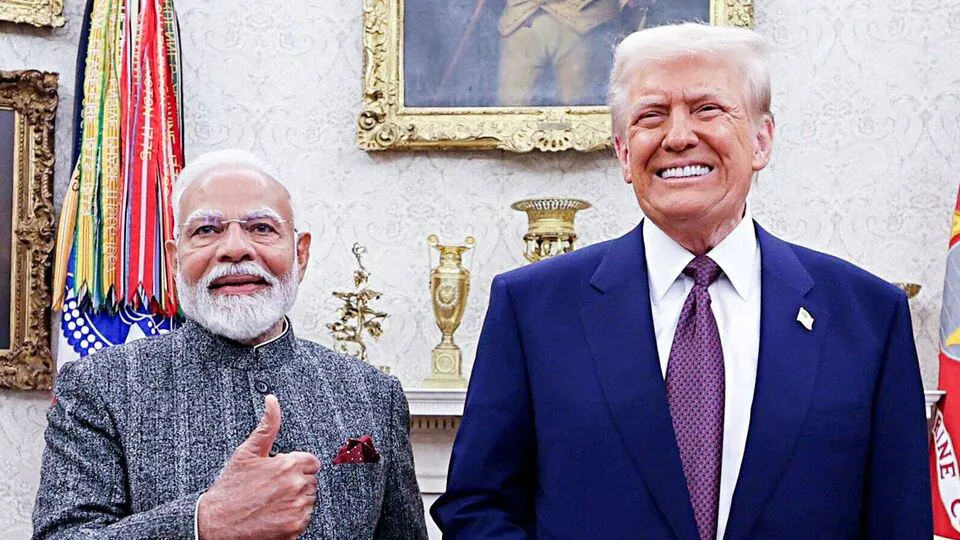
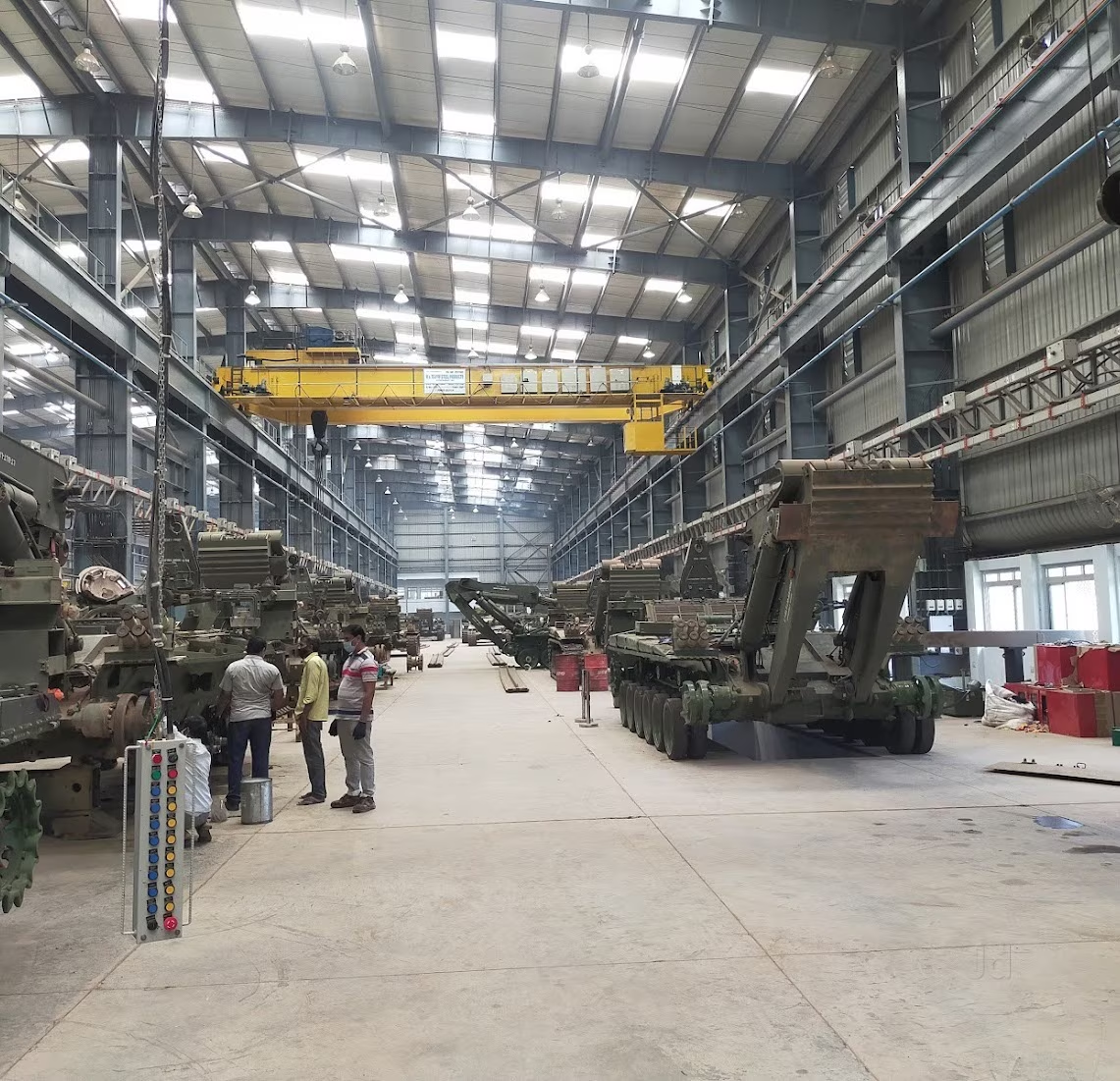
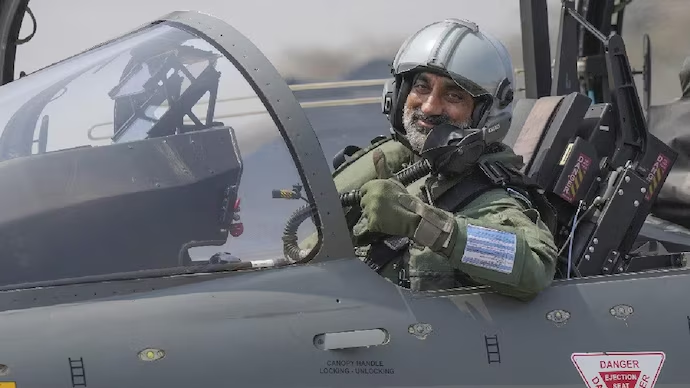
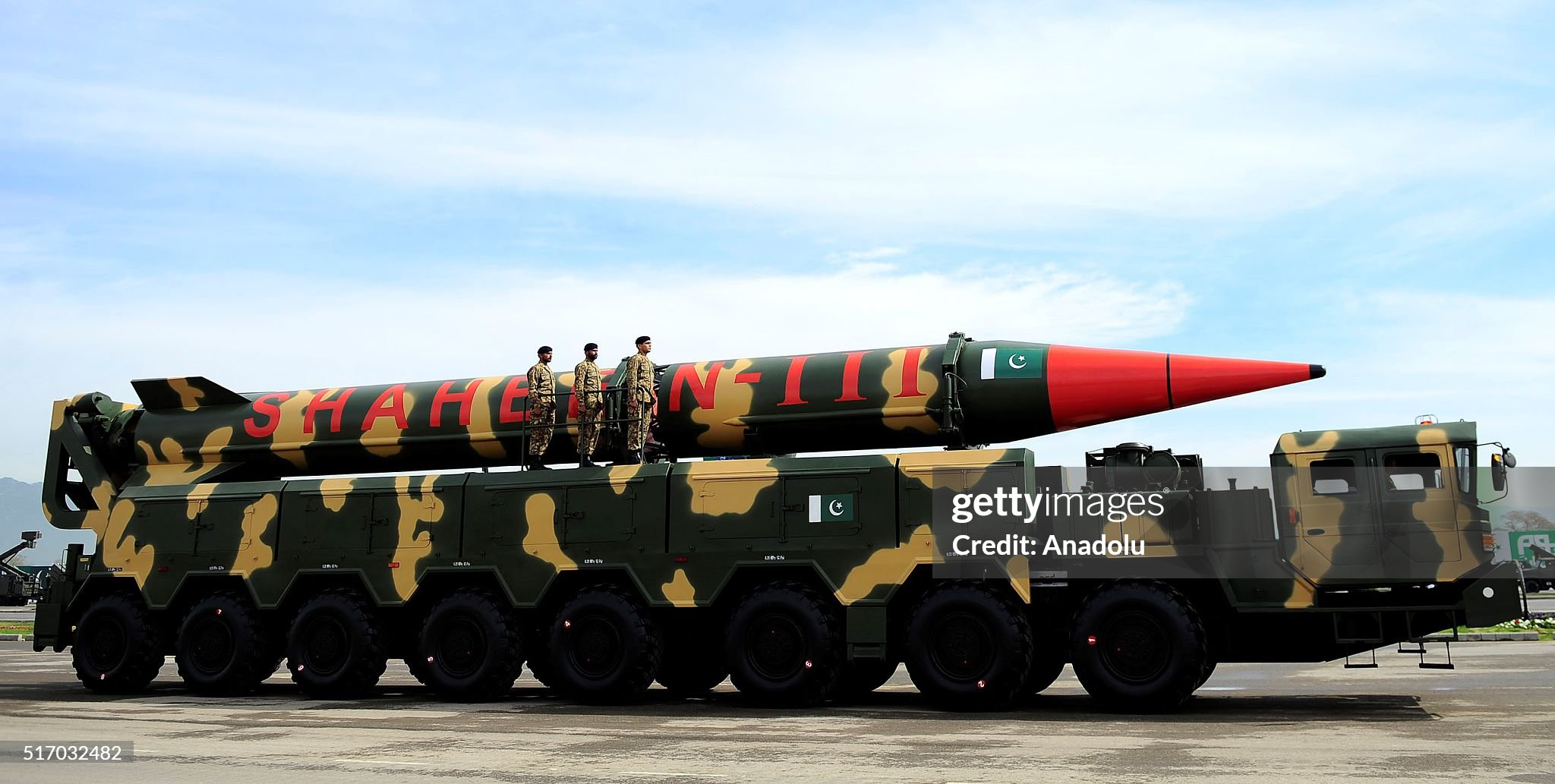
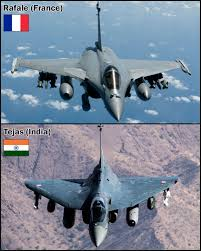

 Security Wise